23rd May 2025: Valletta {Malta, May 2025}

Around 5:00, I was woken up by a group of guys singing, and I thought they were outside, drunk and going back to their hotel. It turns out that Saint Julian’s | San Ġiljan is a party area. I had absolutely no idea – I would like to chalk that up to the improvisation again, but to be honest the concept of a “party town” is one that had not even crossed my mind till then. I did not sleep much afterwards, so a bit after 7:30, when breakfast opened, I headed there, then I took the bus towards the capital, Valletta.

My first stop was a compulsory one – the City Gate | Bieb il-Belt which I had to cross to walk into the city. The capital of Malta was declared a Unesco World Heritage in 1980 under the name City of Valletta because with 320 monuments in 55 hectares, it is one of the most concentrated historic areas in the world. The city was erected by the Knights Hospitaller around a watch tower that was demolished to create a large defensive fort. After said fort fell during the Great Siege of 1565, the Grand Master of the Knights Hospitaller Jean de Valette decided to build a grand fortified city with plans by Francesco Laparelli. Neither Valette nor Laparelli saw the city complete, which happened in the 1570s, when it became the capital. The Gate is the entrance to the fortification itself, separating Valletta from the city of Floriana. Protected by its the walls, Valletta thrived and though 17th the century it became filled with manors and palaces, some of which have now been repurposed as hotels or museums.

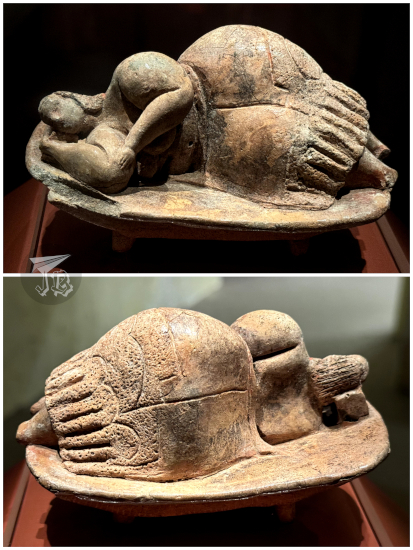
One of such buildings is the National Museum of Archaeology, which hosts artefacts from the Neolithic (around 5900 BCE) to the Phoenician period (circa the 6th century CE). On the ground floor they have all the items that have been removed from the Neolithic temples for protection, including some of the carvings from Ħal Tarxien Prehistoric Complex. A tiny clay figuring called The Sleeping Lady captured my attention. It was a lovely detailed little representation from the so called Temple Period of Maltese history (4000 – 2500 BCE), which was recovered from the Ħal Saflieni Hypogeum. There are also headless bodies and bodiless heads found at other temples.

Archaeological Museum Valletta: pieces taken from the Temples in order to protect them: carved rocks, statues (most of them of bodies without heads), trilithons...

Archaeological Museum Valletta: Sleeping lady. A small figurine of a woman sleeping made in clay

I proceeded upstairs, where there is a small exhibit on “cart ruts”, a network of tracks in the rock. The analysis seems to show that they were made by carts with wooden wheels eroding the limestone. However, there are no… traces of whatever pulled on them – no tracks, no trails, nothing but the wheels. There is another room displaying Phoenician civilisation, and one showing some amphorae from a shipwreck off Xlendi Bay in the island of Gozo, at a depth of 110 m. The ship sank in 700 BC, it was discovered in 2007 and it was finally excavated between 2018 and 2021.

The final room I saw hosts a few skulls from the Ħal Saflieni Hypogeum. I might have to return to Malta just to finish exploring all the prehistoric sites – aside from that, there is sea, the food is delicious and when you open the tap, the water is warm. I felt right at home, really. Anyway, some of these skulls are described as “elongated” and for a while there was even a conspiracy theory about them being alien… They are not. The elongation was not artificially created, like in some Mesoamerican cultures. They belonged to a few individuals who had… long heads. Which is a bit anticlimactic, but only a few remains have been recovered from the calculated thousands, so there is very little that can be inferred from whomever was interred in the burial chamber.

Archaeological Museum Valletta: Phoenician pottery, skulls from the Hypogeum, anforae from the shipwreck

There was actually a last-last area, a ball room from the Baroque palace, but that was under construction and I could barely have a bit of a look. Afterwards, I walked towards the St. John’s Co-Cathedral | Kon-Katidral ta’ San Ġwan. The Catholic co-cathedral shares responsibilities with the one in Mdina, and was built between 1573 and 1578 in a Mannerist style. The interior was redecorated in the 17th century in a very Baroque style and lots – and I mean lots – of gold and golden decoration. Downstairs, there is a crypt where some Grand Masters of the Knights Hospitaller are buried. On the main floor, the nave is surrounded by nine chapels, eight of which are dedicated to the different chapters of the Order and their patron Saint, and the last one is dedicated to and one to the Virgin Mary. .

Though you can get tickets online, there is no chance to buy same-day tickets but on site. I queued for a while, maybe 20 minutes or so, before I was scanned for… guns and explosives… then I was allowed in. There were small restoration works being carried out. Not a Baroque person in general, but I have to admit it was impressive. I declined climbing to the dome because the fun views are from across the harbour, not from inside the city itself.

The co-cathedral holds two pieces of art by Caravaggio – The Beheading of Saint John the Baptist and Saint Jerome Writing, both in the chiaroscuro style – with high contrasts of light and dark. Michelangelo Merisi da Caravaggio (1571 – 1610) was one of the maximum representatives of chiaroscuro, with usually violent and gruesome topics, usually disguised as hagiography.

Baroque interior of the cathedral, with dark walls decorated with frescoes and golden wood

After I exited the cathedral, I headed down a small alley opposite for something that is not a monument but… made me happy anyway. Malta has Costa Coffee – something which, unlike the plugs, I had thought of checking beforehand. I actually had a shop near my hotel. Had I known that, I might have skipped booking breakfast. What I did worked really well though, so no big deal. I managed to balance breakfast and dinner, which made my moving around more convenient, not needing to find a place for lunch. Of course, a medium vanilla latte from Costa does not count…

My next stop was the Grand Master’s Palace | Il-Palazz tal-Granmastru. It was the first building erected by the Knights Hospitaller around 1574, and it is considered the seed of both Valletta and the country of Malta itself. The building was first the residence of the eponymous Grand Master of the Knights of Malta until the 18th century, then the residence of British Governors, the Seat of the Parliament, and it currently houses the Office of the President of Malta. That explains why the security is tight enough you’re not even allowed a bottle of water in.

The building was designed by Gerolamo Cassar. The exterior is Mannerist, severe and simple, but the interior is richly decorated with paintings and frescoes. Some of the rooms have coffered ceilings and tapestries on the walls. There is a huge armoury, organised chronologically, and a throne room, which felt a bit out of place for a republic. The building has two courtyards – the so-called Prince Alfred’s Courtyard has a clock tower which is claimed to date from the 1530s. Oh, and apparently, it’s haunted? I did not feel anything out of the ordinary, not even a temperature drop. That would have been handy.

Grand Master's Palace - clock tower, throne room and corridors decorated with frescoes

After the Palace, I walked down Valletta’s narrow streets and until I reached St Paul’s Pro-Cathedral | Il-Pro-Katridral ta’ San Pawl, the Anglican “temporary” cathedral, established in 1839 – and still in use. It is a Neoclassical building with a very characteristic steeple and an organ imported from England.

Interior of the cathedral, with corinth columns and a small altar.

I then took a walk towards what is called Lower Valletta, at sea level. I walked around Elmo Bay and reached Fort Saint Elmo | Forti Sant’Iermu. The origin of the star-shaped fort was defence against the Ottoman Empire (which would eventually yield to Türkiye), and it is a large structure in limestone. It was key in the 1565 Great Siege of Malta and the Maltese victory. However, the interior is a War Museum, and I did not quite feel like that. Instead, I walked around and went down to the beach to enjoy the waves and the views of Fort Ricasoli | Forti Rikażli across the bay.

Fort St Elmo - a sea-side fortification made in golden limestone

Later, I found the Lower Barrakka Gardens | Il-Barrakka t’Isfel, a green terraced with trees, monuments and fountains, along with a nice view. I was heading upwards again, towards Upper Valletta.

Lower Barrrakka Park: Mediterranean plants, a temple-like building and a pond.

I thought I ought to get some food as I passed by the Valletta Food Market | Is-Suq Tal-Belt, but I did not find anything I fancied. I bought a soda in a small market in the basement, where I was charged 10 cents for the “reusable cap” (fair) and 10 extra cents for buying a chilled drink (LOL). The soda gave me calories and hydration enough to continue on, so I found the Upper Barrakka Gardens | Il-Barrakka ta’ Fuq. Aside from a nice mixture of architecture and nature, the gardens are linked to the Saluting Battery | Batterija tas-Salut, which stands under the terraced area of the gardens as part of the St. Peter & Paul Bastion. It was constructed in the 16th century for ceremonial gun salutes. Today it hosts cannon replicas that are fired at 12:00 and 16:00. I was there for the Evening Salute, with the firm plan to watch from above.

Then a nice gentleman in a nifty uniform said something akin to “for just 3 € be the closest to a firing cannon you can be in Europe” and there went all my restraint. I mean it was only 3 € and being the closest to a firing cannon you can be in Europe. Yes, I’m easily distracted. Yes, I paid the 3 €.

Entry included a brief explanation, including what a “smooth-bore breech loading 32-pounder gun” is: basically, a cannon designed in the 1880s with a smooth barrel, which can be loaded from the breech end of the barrel and… can fire shells weighing 55 pounds (24.95 kg). They were made modifying guns that could only shoot 32-pound shells though. The soldier-actor explained about cannons, how to load them, what the process was and the security protocols. Oh, and that the weapons were anything but accurate in real life. That was cooler than I thought it would be, so I was happy I had decided to get the ticket.

Saluting Battery: cannons and still of the shooting

 
When the demonstration was over, I left the gardens. I walked past the Tower Port and The Lascaris War Rooms, another war museum, on my way to the Herbert Ganado Gardens and the Kalkara Steps. Doing this, I temporarily left Valletta and stepped into Floriana, then walked back into Valletta until I found The Valletta Waterfront, a group harbour warehouses from the 1700s which have been converted into restaurants, bars and souvenir shops. Since it was that silly time when the restaurants have closed after lunch time and are not yet open for dinner, it was almost empty, so it was nice to see all the buildings.
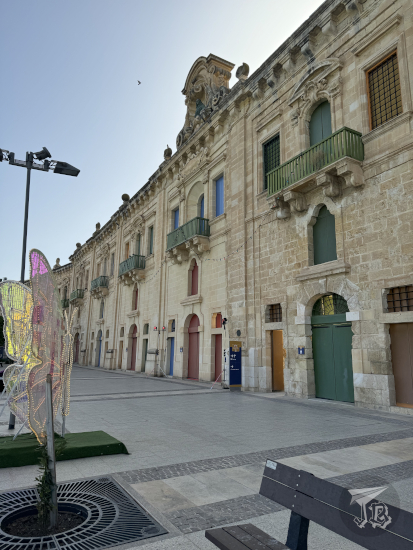
Valletta Waterfront: a line of neoclassical warehouses and buildings turned into shops and eateries

I had two options then – one was walking back towards the city centre to see two churches that I had missed, or head back to Saint Julian’s | San Ġiljan. Since I was quite closer to the bus station than to any of the churches (Shrine of Our Lady of Mount Carmel | Bażilika Santwarju tal-Madonna tal-Karmnu and The Collegiate Matrix Parish church of Saint Paul | Il-Knisja Kolleġġjata Arċipretali u Matriċi ta’ San Pawl), I decided to return.

Once in Saint Julian’s | San Ġiljan, I had the largest pizza I’ve ever had the pleasure or disgrace to be served. I mean, good thing that I ordered a plain Margherita (in all honesty, it was the house special with extra cheese) because I would not have been able to eat anything with toppings, even after having basically skipped lunch. I somehow made space for ice-cream afterwards…
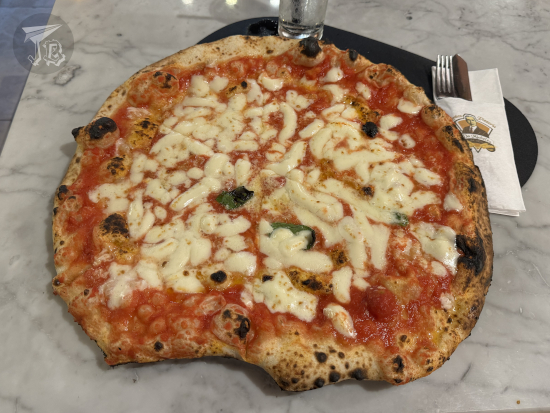
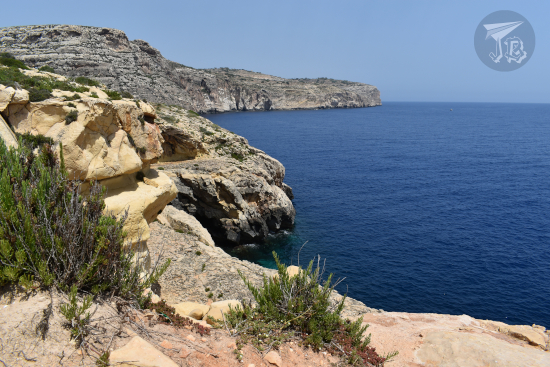
Huge Margheritta pizza

22nd May 2025: Blue Grotto, Tarxien & Saint Julian’s / Sliema {Malta, May 2025}

My flight departed at 9:55 from Madrid-Barajas, which is actually a very bad time for a flight, as you have to drive to the airport through the daily rush-hour traffic jam. However, for a change, I was given a lift there instead of driving myself – my car failed a few days before and I was not feeling too trusting. The inbound plane was delayed, and we ended up landing at Malta International Airport around an hour late.

It turns out that Malta has done a smart thing – the airport is also a coach hub, and there was a bus which went directly where I wanted to go first 20 minutes afterwards – that was lucky because the bus only comes every hour. It did not take long to reach the Blue Grotto | Taħt il-Ħnejja in the village of Qrendi | Il-Qrendi.

I got off in an aptly-named bus stopped called Grotto, next to which stands Xutu Tower | Torri Xutu. The history of Malta cannot really be understood without mentioning the Order of Knights of the Hospital of Saint John of Jerusalem, the Knights Hospitaller, today also known as the Sovereign Order of Malta. This Catholic military order was founded during the Crusades in the 12th century and the knights were established in Malta between 1530 and 1798, acquiring the name. They fortified the island and created the city and defences of Valletta, so-named after Grand Master La Valette. The knights built hospitals – along with medicine schools – and turned Valletta into a centre of art and culture with a university, a school of navigation, and a school of mathematics. Through the centuries, the order transitioned from a warring and defensive army to an organisation centred in humanitarian, medial and social assistance.

Xutu Tower | Torri Xutu was one of the towers built during the operation to fortify the coastline of Malta, probably around 1650. It is a two-story tower with a square ground plan and vaulted ceilings inside, setting the example of the towers that would be built afterwards. As many buildings in the island, the tower was erected using limestone, and restored in 2014 using the same type of material. It also yields to impressive sights – even without climbing it – of the ocean and the islet of Filfla, uninhabited and turned a bird sanctuary.

Qrendi cliffs, made if whiteish - grey rock, over a calm dark-blue ocean

I bought a ten-euro ticket to sail to the Blue Grotto | Taħt il-Ħnejja from the Blue Grotto Boat Service. This is just a way to amalgamate all the captains and boats who do trips to the caves, I think, and not a bad one. It is a quick trip that does not even take half an hour and charters you to snoop the different caves, created by the erosion of sea water and waves against the cliffs. Each has its name: Blue Window Cave, Circle Cave, Calscave, Honeymoon Cave, Cat’s Cave, Reflection Cave and the main archway which gives the name to the whole area, the Blue Grotto. The water is very clear and since the sun was out, there were extremely beautiful reflections. I stuck my hand in the ocean a few times when I was not taking pictures.

Blue Grotto: Sea level caves with bright blue water

Afterwards, I decided to stop for food. I was not really hungry, but I wanted to tackle the walk to the viewpoint, which was 15 minutes. I thought it would be more efficient to have a late lunch first. There were a couple of restaurants and I chose Step in Malta. It had a terrace, was less than half full, and most importantly: offered calamari fritti. When I researched Maltese food, I read about this dish – fried squid with garlic and parsley mayonnaise , and I really wanted to try them.. I think I broke the poor waiter’s brain when I told him I did not need the menu and ordered directly. They were delicious.

Calamari fritti: a plate of breaded and fried squid

I then did the short walk to the Blue Grotto Viewpoint – and though I won’t be mentioning it much, just assume I just used a lot of sun lotion all the time. It did not take as long as I expected, even if the shortcut was closed down. It yield to pretty views, but not as impressive as expected.

Blue Grotto viewpoint, showing the cliffs from above

I was about to go back towards the original spot to wait for the 201 bus again, when a Valletta-bound bus stopped by. I hopped onto that one to use the Wi-Fi and replan the rest of my evening. An idea had been to head towards Valletta indeed, but instead I decided to try my luck to reach my first Megalithic temple in Tarxien | Ħal Tarxien. The Blue Grotto is actually quite near another archaeological complex, but that one was covered by the tour I had booked on Saturday.

The trip to Tarxien turned out to be a great idea. When I arrived, I was surprised by the sheer amount of Christian images that were in the streets. That weekend the Catholics celebrated the Feast of the Annunciation. Malta is officially a Catholic country with over 80% of the population adhering to the religion, so while it was slightly surprising to see so much decoration, it is not shocking. I wanted to get to the Ħal Tarxien Prehistoric Complex | Il-kumpless Preistoriku ta’ Ħal Tarxien because it had a closing time.

A street crossing in Tarxien, with a movable Catholic altar brought out. The houses on the corners have flags with religious motives, and the altar is guarded by angels carved in wood

The Megalithic Temples of Malta are considered amongst the oldest free-standing structures in the world. They were erected between 4100 and 2500 BCE (making them older than Stonehenge, whose rocks were placed between 2600 and 2400 BCE), though the remaining structures probably date from the 3600 – 2200 BCE. In 1980, the UNESCO created the Heritage protection for one of the temples, and in 1992, the Site expanded to six temples / structures in total.

The Ħal Tarxien Prehistoric Complex | Il-kumpless Preistoriku ta’ Ħal Tarxien has been dated between 3000 – 2500 BCE, and it is considered the greatest example of the Temple Period (4100 – 2500 BCE). It was first excavated by Maltese archaeologist Themistocles Zammit around 1913 following complaints of a local farmer that he kept hitting stone while ploughing. The main excavation and restoration took place between 1915 and 1920, and some of the most delicate structures were moved to the Malta Museum of Archaeology to protect them from weathering. The site is covered by a protective tent that makes it look a bit alien, and being alone made it even more magical.

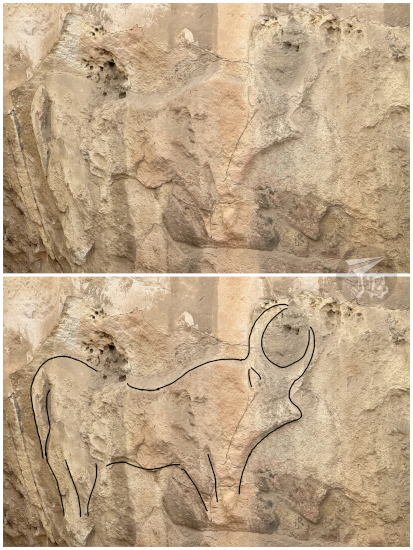
The temple is built in limestone, showcasing three constructions which are independent but attached to one another. The rooms are round, and there is evidence that they had a roofing. There are several chambers, and in some of them there are spiral decorations and domestic animals carved into the rock. There is even a small hearth where fire could be lit. I spent about an hour there, nearing closing time, which meant I was almost alone. I was extremely happy to be there.

Hal Tarxien temples - ruins of Neolithic temples with round rooms and trilithon entrances, from outside

Hal Tarxien temples - ruins of Neolithic temples with round rooms and trilithon entrances, from inside, showing spiral decorations and areas that have been restored, such as a hearth

Relief of a bull on a limestone wall

I could not visit the related Hypogeum of Ħal-Saflieni because tickets are released – and sold – months in advance, and this whole trip was planned in a couple of weeks. But I could explore around.

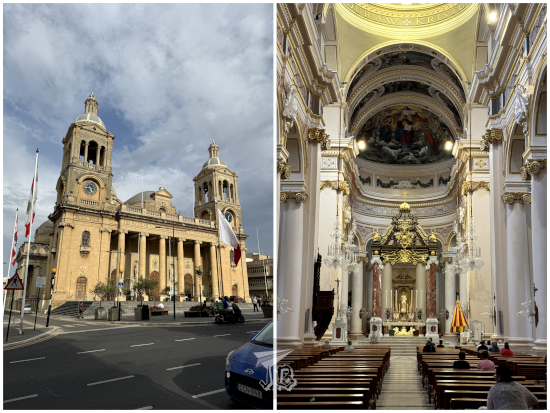
Due to the festivities, some of the bus stops were out of order, so I followed the bust route until I found one that was in use. At some point there I crossed my first “invisible frontier” between the village of Tarxien and Paola. Still in Tarxien, I stopped to look at the Catholic sculptures, and in Paola, I came across the Minor Basilica of Christ the King | Il-Bażilika ta’ Kristu Re. The church was erected at the beginning of the 20th century and, compared to the buildings around it, it feels huge – over 80 metres long, 40 metres wide and 60 metres high. It was full, which I found strange for a weekday at 18:00, but then I thought it might be part of the Feast of the Annunciation programme.

Minor Basilica of Christ the King: a Neoclassical basilica with two towers on the outside, and a sober interior design

I took a bus again and after a few changes I reached my hotel in the town of Saint Julian’s | San Ġiljan. Though I was driven through a few towns, it felt like a huge stride of buildings one after the other, with no real break. It was weird, that the whole area is just one big urban sprawl. I found changing buses easier than I expected, even not knowing the layout of the area. I got to my stop, Ballutta and checked into my hotel.

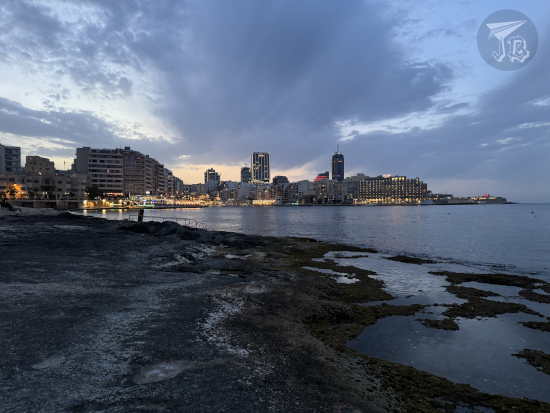
Aaand at that point I realised that there was a consequence of “British colonisation” that had not even crossed my mind – Malta has Type G plugs. So on my supermarket run I had to add an adaptor (despite having a few at home) to my bottled water and sandwich shopping list. I dropped the groceries at the room and then I went off to explore the coastline. That way, I inadvertently crossed to Sliema. I walked along Ballutta Bay and Exiles Bay, two of the three lobes that make up the larger St Julian’s Bay. I was a bit surprised when all the beaches were made of rock and limestone, which made them great to walk on. I had a lovely walk – except at one point, when I slipped and realised that my totally-sensible-for-airport shoes were not the best choice for limestone beaches. Eventually, I went back to the hotel to eat my supermarket-bought dinner.

Balluta Bay at dusk. The ocean is calm, and the buildings at the other side of the water have started turning on their lights

14th May 2024: Three Museums and Tea, Madrid (Spain)

On a whim, I put together a plan for Tuesday, as it is currently my free day. I was too lazy to drive, so I decided to catch a train to Madrid. There was a temporary exhibition I wanted to check out, and it was close to several museums and eateries.

My first idea – breakfast at a French crêperie – went bust, because the place was still closed when I arrived in town – I swear, this is like the fourth time I try to have something there, and it just won’t work. Instead, I ended up at a Starbucks for breakfast, before heading out to my first destination – the exhibition The Art of Manga, held in the Architecture Bar Association building Colegio Oficial de Arquitectos de Madrid, COAM. The Art of Manga is a small exhibit that runs through the history of manga – Japanese comics – with a few snippets of what it was and what it has become, especially in Spain.

The entrance was a sort of tunnel with manga sheets hanging from the ceiling. It ended at a traditional scroll with animals acting like people – Chōjū-jinbutsu-giga 鳥獣人物戯画, which translates to “Animal-person Caricatures”. Some people consider that this is the origin of manga (note the “ga” at the end), though if there is one thing that the exhibition makes clear, it’s that nobody knows when manga actually started. Thus, it just runs through all the possible theories and important names. From the Edo Period, there were a few wood prints (ukiyo-e) – which are claimed to be original – among them two by Katsushika Hokusai [葛飾 北斎], The Great Wave off Kanagawa [神奈川沖浪裏, Kanagawa oki nami-ura] and Fine Wind, Clear Morning [凱風快晴, Gaifū kaisei]. Hokusai is another of the supposed starts (“the father”) of manga. There were also a few toba-e [鳥羽絵], similar to the first scrolls – for the first time in the evolution of drawings, there was text alongside the art. Then came the books, where texts dominated – though there were still drawings – and they became extremely popular during the period.

With the end of the isolation of Japan, Western influences – mainly comics – influenced local artists, and “speech bubbles” appeared. In the late 19th and early 20th centuries, Kitazawa Rakuten [北澤 楽天]’s works were published in newspapers. He is (also) considered the father of modern manga, and several of his works are displayed. There are also early 20th-century scrolls, painted in a style similar to toba-e depicting the Tokaido Road, which separated Edo (old Tokyo) and Kyoto, and its checkpoints. There were also kamishibai [紙芝居] cards – kamishibai is a traditional form of theatre involving telling a story using a narrator and different “postcards” with images drawn on it.

In the middle, the exhibit had a rock garden, and a torii gate with a lot of lanterns gave way to the second part – modern manga. Here there were pieces and mementos from famous artists and works – Osamu Tezuka [手塚 治虫], known as “The god of manga”, and one of the driving forces of anime. According to the exhibition, they were showing all of his works. There was a bit about Shigeru Mizuki [水木 しげる], and big international hits like Sailor Moon, Naruto, Dragon Ball and One Piece. After a screen showing a video about a cosplayer – which I did not care much about – there was a section on manga magazines, some of the early manga published in Spain, and a stand where you could get some stamps.

Snaps from The Art of Manga Madrid

Finally, there was a bit on merchandising and figurines. The shop did not even have a catalogue, which I would have bought. All in all, it was all right, smaller than I had expected.

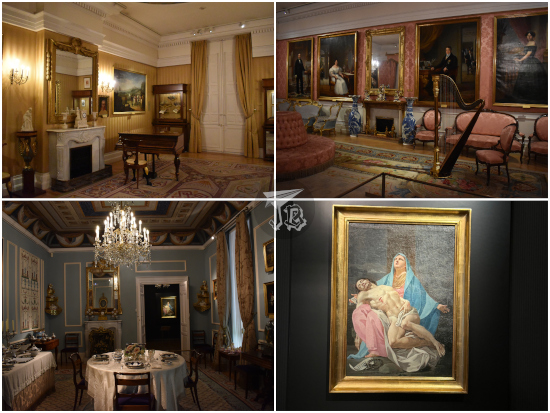
Then, I went to the nearby museum of the Romantic period, where I got a national museums card – I’ve been wanting one for a while, but unfortunately you still have to queue to use it. I had hoped you could just walk into museums with it, but I guess crowd control is a thing since Covid. Anyway. The Romanticism museum, Museo del Romanticismo is a small palatial residence which tries to recreate the ambience and atmosphere of the dwellings of the bourgeois families at the time. It had a lot of nice furniture, similar to the one in Riofrío, but I found it lacked on the landscape paintings I like. The museum is currently exhibiting an early painting by painter Francisco de Goya, a Pietà.

Museo del Romanticismo Madrid

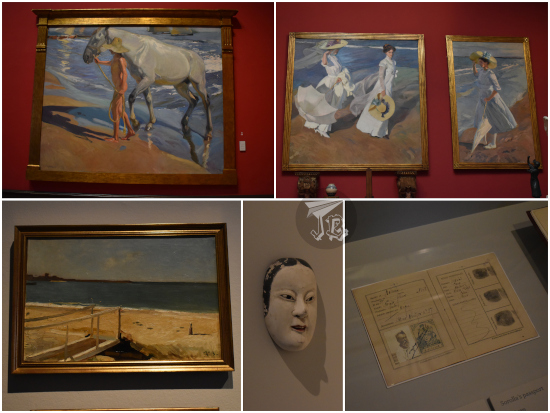
Afterwards, I headed out to line for the Sorolla Museum Museo Sorolla. I had to queue for nearly 40 minutes, but I was finally admitted in. Joaquín Sorolla (1863 – 1923) was a generally-impresionist painter (impressionist, post-impressionist and luminist) from Valencia. The museum was built in the artist’s own house, completed with some of his iconic artworks, including Paseo a orillas del mar, Walk on the Beach, and El baño del caballo, The Horse’s Bath. Sorolla excelled in portraits and landscapes, especially the sea side, and social criticism. He was a master depicting light, water, and the combination of both. He became one of the most important Spanish artists of his time – and probably the most famous. He participated in the Paris Universal Exposition of 1900, and was invited to exhibit his art in New York City.

Furthermore, there was a current exhibition called Sorolla in 100 objetos – Sorolla in one hundred objects – which had just opened to the public. It included personal items the artist collected, – some a bit bizarre–, photographies, his passport, the last painting he worked on, the medal he received from the US president, a photograph of his studio in Italy…

Snaps from Museo Sorolla

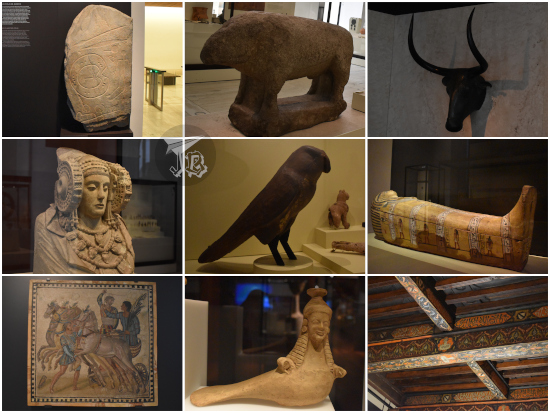
I then went off towards the archaeological museum Museo Arqueológico Nacional. I used to love this museum – when they remodelled it and they made it all modern and aseptic, it lost most of its allure. Of course, I still enjoy it, as the important items are the exhibits, and the museum has a lot of important items from the Celtiberian cultures – Celts and Iberians inhabited Spain before the Roman conquest, which started in the 2nd century BCE. Iberians were prevalent in the east and south of Spain before their arrival. The north and west were populated by the Celts, and there was a vague area in-between whose people have been called Celtiberian. the Talaiotic culture flourished in the Balearic Islands, and it has recently been declared World Heritage. These cultures were eventually assimilate by Romans, but Celts lived on elsewhere. Iberian and Talaiotic cultures, however, diffused with time. Today, there is little known about it, and most is just interpretation from archaeologists, even less about the more ancient tribes that lived in the areas during the Bronze Age.

Among the objects from pre-Roman Spain, there are mysterious steles from the late Prehistory. However, it is the Iberian funerary art which stands out the most – such as the bust called the Lady of Elche, La Dama de Elche, found in the town of the same name, and the full sculpture named the Lady of Baza La Dama de Baza. Both are fantastic, to the point that it was thought they were Hellenic for some time. Other items include bulls – both metal cattle heads with wide eyes, and vaguely-shaped stone sculptures, verracos. I remember going to the museum when I was little, and the importance of these bulls, called “Bulls from Guisando” Toros de Guisando was drilled into my head, to the point that I thought that the ones exhibited there were the only ones – it also made me sad that they were in the museum and not in the field where they had been found. I was petrified when I learnt, years later, that there are a bunch more…

The museum also hosts a nice collection of Moorish art, and what apparently is a special Egyptian exhibit, as Spain worked with Egypt during the 20th century, and got a lot of objects from that excavation from the Egyptians “in the split of the new discoveries”. I am not sure whether that’s accurate, or the story has a lot of make-up on. I had to leave around 16:15, but as this museum is also covered by the national museums card, I can come back any time within the year for free. I skipped most of the Medieval period.

Museo Arqueologico Nacional Madrid

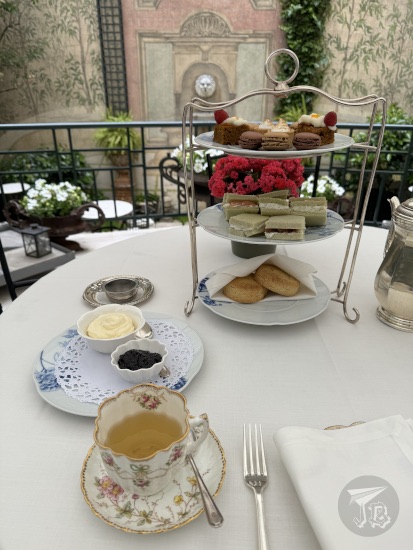
I had a reservation for afternoon tea a few minutes away from the museum, at 16:30 – I might be doing a bit of a rally around all the places in Madrid which have it. This time around, I went to El Jardín de Orfila – and good thing I had decided to only have breakfast and skip lunch and go straight from breakfast to tea. I was seated in a lovely outward area and I chose a delicious green tea with cherry. The food was plenty – finger sandwiches: pastrami, salmon and cucumber and cheese cream; macarons, carrot cake, meringue, and scones, along with clotted cream and berries jam. It has probably been the best afternoon tea I’ve had in Madrid up to date. The scones were a bit under-baked though.

Afternoon tea at El Jardín de Orfila

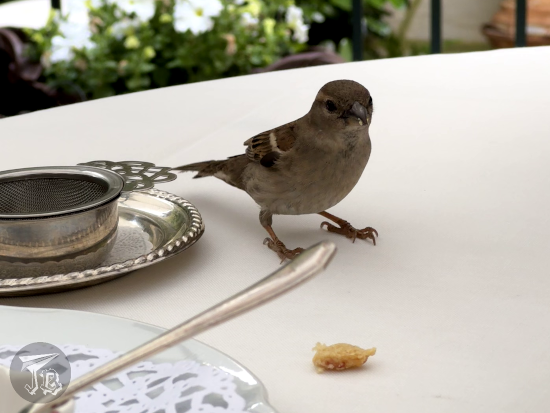
I was alone in the outer area for most of the experience, the waiter checked on me once after bringing my tea. It was actually so calm and quiet that I had a visitor – a little house sparrow (Passer domesticus) was very interested on the remains of my scone, so I shared with her. She was happy after two crumbs, and left – or maybe it was because another couple walked into the area.

Sparrow hopping towards a scone crumb

I left a bit before the two-hour timeslot was up so I could catch a timely train home – and because the couple came in, talking loudly, and kind of broke the spell.

16th September 2023: Archaeological Site of “Los Casares” (Spain)

I took an almost two-hour drive to the municipality of Riba de Saelices, which involved having to fill up the tank in the middle of nowhere – ouch. It was early in the morning, and once I got off the motorway I saw a bunch of roe deer grazing dawn away. A couple of them got spooked by the noise of the engine and jumped towards the road, and another was uncomfortably close to the asphalt, but I was careful not to run any of them over – of course!

I went past the village and took a turn at an unpaved road, and reached the parking spot of the site, 3.5 km later, around 9:10, which was great for my free 9:30 visit. . My main interest in the archaeological site Conjunto Arqueológico de Los Casares was the cave Cueva de los Casares, which can only be visited by appointment and in small groups. Post Covid recovery plans have made some archaeological sites free until the end of the year, and I wanted to visit before the end of good weather. The cave holds important carvings from the Upper or Median Palaeolithic period. However, the site also comprises the remains of a Muslim village, a defensive tower, and an ancient oven, with the latest findings dating from the 14th century.

I found the parking spot – a clearing at the foothill of the area. The whole place was empty except for a kettle of griffon vultures (Gyps fulvus) circling up above. It was a bit creepy, I’ll be honest, and I joked with myself that maybe the webpage for the archaeological site was just the way the vultures ordered food. From the parking lot I saw a small clearing with tables, and up the hill, a small tower, which I thought was the tower from an old Muslim castle. Since I had some time I decided to climb up and I found the entrance to the cave, with a notice that visits started there. By then it was already 9:30 so I thought maybe my ticket was wrong and the winter timetable had already started so the visit was at 10:00. A bit before 9:40 I saw two cars approaching – yay.

Vultures flying

Archaeological site Los Casares: cave, ruins, and tower

Finally, the guide arrived and she told me that the visitors in the other car had lost their way, so she had had to guide them down the track. We started late as the group also took a while to come up. We stayed at the entrance of the cave for a little as the guide explained about the civilisation that inhabited the area in the Palaeolithic, and a bit about the cave bears that used it as a lair before them.

The cave Cueva de los Casares was inhabited by Neanderthals some 60,000 to 40,000 years ago. The stonework and industry have been classified as the European Mousterian; among objects found inside the cave there are flint points, arrow tips, scrapers, and even pottery. Animal remains, both from predatory events and human consumption have also been recovered. The most important archaeological items found in the cave are the carvings on the walls. Though there are carvings from later periods, some experts think that the cave holds the oldest anthropomorphic carvings in the Iberian peninsula – not carved by Homo sapiens (modern humans) but the previous Homo neandertalensis.

Entrance to the cave Cueva de los Casares

Only the first third of the cave can be visited, and we got to see horses, cattle and the human-like figures. Once you know what you’re looking for, it gets easier to identify the shapes. One characteristic about the human depictions of the period is that humans are represented to have weird heads, though nobody really knows why – possibly animal attributes to represent their qualities. The humanoids are represented alone and in groups, and sometimes they are one above another. There are families, activities – such as diving – and copulation (apparently this is important because the carving in question might be the first ever recorded). It is an interesting experience, though no pictures are allowed inside, there are some on the official page – you don’t get to see half of them anyway. I’m disappointed we were not shown any mammoth carvings either, those are restricted to the expert-only area, but at least I saw something, and it was original.

After the cave, I climbed up the gully to the hilltop and the Berber tower – called Torre atalaya (“Watchtower tower”) – which hangs above the entrance to the cave to look at it. On the way up I also had a good view of the Muslim settlement underneath, Poblado Hispano-musulman. I also looked down the gorge and the valley called Valle de los Milagros, which I may or may not hike in the near future in search for fossils. However, I really did not feel like staying at that point, so I just drove back.

Watchtower Los Casares

Muslim village of Los Casares

Valley Valle de los Milagros from above

13th September 2022: Wadi Rum (and the bus) {Jordan, September 2022}

I had a boiled egg, potato hash-browns and coffee breakfast because my body was craving salt, I guess. Then we set off on the bus, where we ended up spending around seven hours (the 412 km are supposed to be done in 5 hours and a half, but that does not take into account bad traffic). Urgh. Our first stop was a viewpoint over the whole canyon area.

Wadi Musa valley panorama, showing the deep gorge from above

The second stop was a souvenir shop that had probably somehow bribed our guide or driver for it. None of us even bought anything, but we were forced to be there for about half an hour before we could continue to the only organised activity for the day – a two-hour jeep tour throughout the Natural Reserve and Unesco World Heritage Site of Wadi Rum | Wādī Ramm [وادي رم]. It is the largest wadi “valley”, created by alluvial fans and wind deposits, rather than the idea of a river bed. They are often found in deserts.

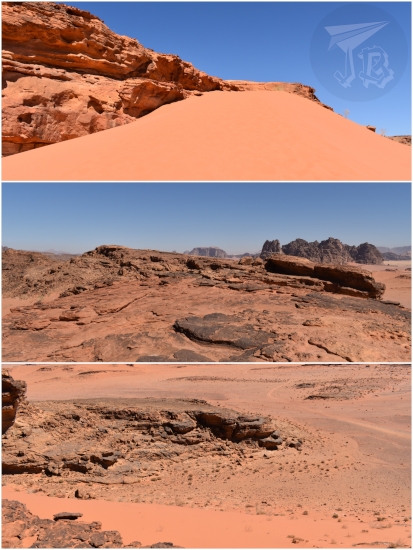
During the tour in Wadi Rum Reserve [محمية وادي رم] we drove through the desert and stopped at some rock formations that had built a gigantic dune. Wadi Rum used to be a granite and sandstone rocky formation. Thousands of years worth of wind eroded the sandstone back to sand, forming and shaping the desert dunes. Huge granite structures still stand, such as the Seven Pillars of Wisdom [عمدة الحكمة السبعة], just at the beginning of the route. One of the stops is the tourist-named Big Red Sand Dune, which you can climb for kicks, giggles and some nice views of the landscape.

Driving into Wadi Rum. The roof of the jeep is visible, along with a rock formation in the background. Between us and the rock formation there is the other jeep, causing a dust cloud

Back of a dune we had to climb, and the rock + sand landscape that could be seen from the top. Wind erosion marks have created soft ridges. The rocks are red-grey and the sand is rose-gold

Then we drove off to see some petroglyphs, and were offered dromedary rides. These petroglyphs, depicting early humans and their cattle – bovines and dromedaries – are the reason for the Heritage status.

A rock wall with some dromedaries in the foreground + a close up of the petroglyphs engraved in the rock, also showing dromedaries (by JBinnacle)

Finally we were shown a Bedouin tent at the feet of the Lawrence Canyon, a beautiful rock formation with faces of Jordan monarchs. Unfortunately, we did not get to see any onyx or fennec foxes, but I did see a small lizard. The Bedouins treated us to a cup of tea, but then we had to tip the driver about 10€…

Lawrence Canyon, a deep cut in the rock filled with sand at the bottom + details of engraved faces and Arab script, a lizard and a bit of tea, along with a traditional Bedouin coffee maker

Afterwards, we started off our trip back northwards back to Amman | ʻAmmān [عَمَّان]. Though the trip is supposed to take about 4 hours, it was way more than that, and we did not arrive at the hotel until way past 18:00. We went through the security checks and ended up learning that we could not travel between floors, so we could not go to the others’ rooms using the lifts, and the stairs were blocked… Well, at least we had… views?

A view of Amman skyline in the dark

After we managed to regroup, we had dinner and decided to try to check in online for the flight next day’s flight – and I was successful. Apparently, the airline only cared about us filling in our Covid certificate to enter Jordan, we were on our own for the way back.

12th August 2022: Stones, the reason for the trip. Lots of Stones {England, August 2022}

I was convinced I’d sleep like the dead and set a couple of alarms. Unfortunately, laundry and house service got going at 6:30, and woke me up. At least, the room had a kettle and some instant coffee which, along with one of the sandwiches I had procured the previous day, got me going. I made sure that the camera was charged, put everything I needed into the backpack and strolled off. My hotel was close to Earl’s Court, and I was walking to South Kensington to check out sandwich and coffee shop. And – to my eternal surprise – to queue for a museum! I don’t think I’ve ever seen so many people waiting for a museum to open in my life.

I’m referring to the Natural History Museum, one of my favourite ones. This time, it was a must, so I booked free entry with the special exhibition – “Dippy is Back”. Dippy is the diplodocus cast replica that used to stand in the middle of the museum, the Hintze Hall (where now the whale skeleton hangs). Dippy was the first of its kind to go on display in the world. The original skeleton was discovered in 1898 by railroad workers in an area called Sheep Creek, in Wyoming, USA. At the time, Andrew Carnegie had made a fortune in the American steel industry, and become one of the most important philanthropists in the US and the British Empire. He paid for casts of the bones to be made (some sources also say that he bought the actual skeleton, some that he had sponsored the dig) and sent to museums in Europe and South American. For the first time the public got to see a whole dinosaur skeleton, which was actually named Diplodocus carnegii after Carnegie. Dippy was gifted to the National History Museum in 1905, and was exhibited there until it went “on tour” around the United Kingdom in 2017.

Here is a little trip down memory lane: back in the mid-nineties I was a teenager in London with my English class. We had free time and they wanted to go to Harrods, so… instead I got myself into the Tube to go to the Natural History Museum just to see this dinosaur (I also ditched the group in the British Museum, but that’s another tale). The point was that I was around 14 or 15, bouncing through London by myself, on my way to see this very cool dinosaur! And I did not have to listen to people being rowdy, nor try to keep the peace in group – I was alone (scared out of my skin, true), but I was free by myself. And for me, that was very important, even if I would not come to realise that until recently.

The fossilised skeleton of a diplodocus, seen from the front. Lots of people are trying to take pictures with it

I saw Dippy again in 2011 when I went to London, but I was surprised when he was not there in 2018, shipped around the country in a travelling exhibition. For some reason, knowing that it was there made me really, really want to see it again. Since the pandemic, you need to reserve at ticket at the Natural History Museum, even if it’s free, so I booked mine for 10:00, to be there first thing as they opened – thus the queuing-before-opening.

Originally a gallery of the British Museum, the Natural History Museum was first designed by civil engineer Captain Francis Fowke, and then it was revised by Alfred Waterhouse, who redesigned the façades in a Romanesque-like style, with architectural terracotta tiles to withstand the British weather. These tiles have flora and fauna decoration and reliefs. The building was finished in 1880, and all the material had been moved by 1883. In the 20th century, the museum rebranded itself as a separate entity from the British Museum, and in recent years different areas and expansions have been opened.

Anyhow. The gates opened a little before 10:00 (If I lived in London I would totally be a member and stroll the museum before opening hours), and the queue started moving. There were lines for ticket holders and non-ticket holders, but my ticket was not even checked. Thus, I just moved towards the area where Dippy was and spent a while there. I felt a little emotional, thinking that, in a way, I owe that dinosaur one.

After seeing Dippy, I wandered around the dinosaur gallery for some time, then I went to buy a sandwich and have a coffee and a painkiller, because I had a long day ahead of me and my head was buzzing a little – I needed to get that under control beforehand. At 11:40 I took a coach with a company called Anderson Tours for an organised day trip: Stonehenge Special Access – Evening. Even though I am not too keen on guided tours, I will admit that they can be handy at some particular circumstances. They will never become my preferred choice of travel, in this case, choosing a tour was the best option.

Regarding Stonehenge, if you want to get up close and personal with the stones, you need a VIP ticket, which means you have to be there before they open to the general public, or after they close, and for that you need transportation – either a taxi, or renting a car, and a hotel as close as possible. The Stonehenge VIP ticket is around £50, and I booked my tour for £135, a full-day tour, including coach, Stonehenge at sunset, and two other destinations, with pick up and drop-off near my London hotel. In the end, that was cheaper than a taxi or a rental plus a hotel near the site (I did a lot of maths before deciding to book this). Anderson Tours offers different combinations of “Stonehenge and…”, with places like Bath or Bristol. However, those are easily reachable by train, and I can explore them on my own. Nevertheless, there was a particular trip that interested me – it went along two or three spots that are a bit off the beaten track, and related to the theme – a Neolithic tomb and another stone circle. This particular tour happens only on certain specific Fridays, thus why my “weekend” away was not such a weekend, as I had to make sure I was in London on the 12th.

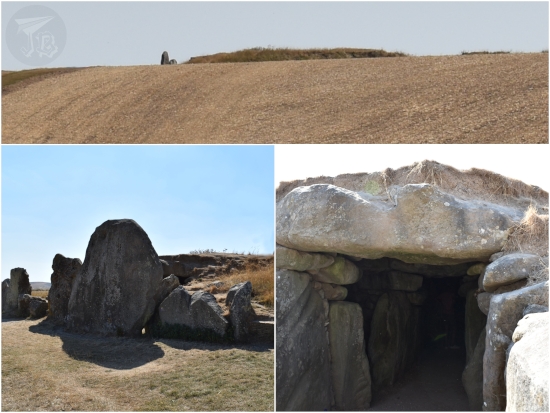
The first stop of the day was West Kennet Long Barrow. A long barrow is an elongated prehistoric (3800 – 3500 BCE) stone monument that has been linked to the worship of the dead and the ancestors. Sometimes, human remains have been found in them. If one imagines what Great Britain was at that time, the south-east area would be the one with less tree coverage, and therefore the best option for primitive people who had started to settle and use agriculture. The counties of Gloucestershire, Wiltshire, Somerset and Dorset have a lot of chalk-rich soil (the Salisbury Plain), which makes it difficult for tress to root and grow. Thus, it would have been easy for the primitive humans to settle and build their villages and monuments. Today, the whole area is known as Stonehenge and Avebury World Heritage Site, listed by Unesco in 1986, and it includes over 700 prehistoric monuments from the Neolithic and Bronze Age.

Collage: elongated mound of dirt on top. On the borrom, the gate. On the left the protective slabs, standing upright, and on the right, the entrance. It is a construction of vertical walls made from grey slabs and another slab on top. The interior is dark.

West Kennet Long Barrow is situated in the middle of a farm. There is a tiny parking lot to the side of the road, and a fifteen-minute walk to the barrow itself. It is one of the largest built in Britain, and around 50 sets of remains have been identified, along with pottery, beads and other personal items. Around 2000 BCE, it was closed down and barricaded, then discovered in the 19th century and scientifically excavated and restored in 1956. It is private property under the care of British Heritage. Apparently, all these sites have become a point of pilgrimage for neo-pagans, and on this day, there was a bunch of them chanting inside the barrow…

On the opposite side of the road from the barrow stands Silbury Hill, a mound or artificial mountain. It stands 30 metres high, with 160 metres in diameter wide, and it is estimated that half a million tonnes of material (mostly local chalk) were used to build it throughout several generations of humans. It cannot be climbed, due to a collapse a while back, that would have been neat!

View of a small hill and dry grass.

After that, we headed off to the village of Avebury, which hosts the largest Neolithic stone circle, with smaller circles inside. It originally had over 100 stones, and it might have built between 2850 and 2200 BCE. Today there is a village in the area, with a few shops and museums in the centre, and a lot of sheep grazing the area. Around three quarters of the circle is still standing, along the henge (long ditch that used to be built with the stones in Neolithic circles).

We had two and a half hours in Avebury – a bit too much, I would say – to explore the Avebury Stone Circle and Henge and its sheep. The guide told us about ley lines and trees that were supposed to have inspired Tolkien’s Ents from “The Lord of the Rings”, and I needed to ask about the geology of the stones – here I learnt that they are made out of sarsen, like the Stonehenge ones. Sarsen refers to silicified sandstone blocks, common in the area, and it has been proven that the ones used in the megaliths come from Marlborough Downs, some 25 km away (35 km from Stonehenge). Once we were dismissed for our “free time”, I walked along the three fourths of stone circle remaining.

A collage showing different megaliths from the Avebury stone circle. Small pillars mark the spots where the stones have been lost. There are some sheep grazing on dry grass.

There are other places to visit in town, such as a Medieval manor with a dovecote. The stables of the manor are the site of the archaeological museum is hosted, and here I made a mistake. I should have got in, but I wanted to visit the church, and by the time I was done, the museum was closing down. Live and learn. There is also a tiny chapel, and a lot of souvenir and “crystal” shops.

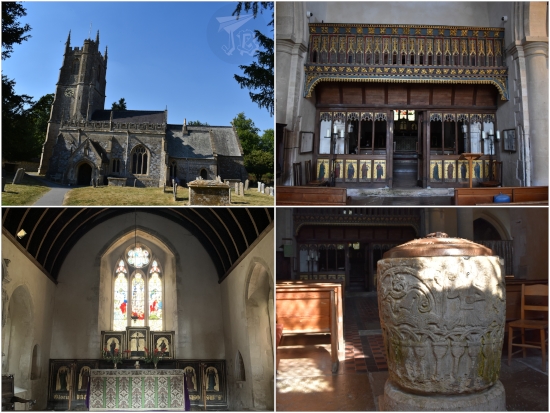
The Church of Saint James dates back to the 1000s, though later centuries saw the addition of many items, such as the aisles and the 15th-century wooden roof. The nave and the chancel are separated by a one-of-a-kind wooden rood / screen with an original 13th century base. There are Saxon windows and a Norman font. It is a fantastic little church.

Gothic church, from the outside. The inside shows a wooden Normand altar, the standard altar, and a carved stone baptismal font

Finally, the time came. At 17:30 we met up on the way to the coach, and then we started off towards the highlight of the day – Stonehenge. Stonehenge was erected between 3000 and 2000 BCE – the primitive human somehow got the sarsen stones into Salisbury plain and planted them so they stood in a circle. They measure up to four metres long, and some of them are arranged in the shape of trilithons – two large vertical stones (posts) support a third one (lintel) which is set horizontally on top of them, with carved studs so the structure fits like a snap. There is a tear-shaped monolith standing a few metres away called “Heel stone”, which marks the entrance.

Some of them are indeed collapsed now and some are covered in lichen – there is a special type of lichen that only grows in three places in the world, and that is one of them. For thousand of years, these stones have remained standing, and the first historical study of them dates from 1666, carried out by an English antiquary, natural philosopher and writer John Aubrey, and has been restored a several times, especially during the 20th century, when they were roped off and a fee charged for entry.

Currently, the stone circle belongs to the Queen of England, and according to the British Ancient Monuments Bill, it cannot be touched or altered in any way that is not to preserve its current status. In 2020, a core taken from the stones during the 1958 restoration was returned. This allowed researchers to analyse the composition and prove that the megaliths are indeed sarsen from the Malborough area.

The rules when you are allowed into the stone are “simple”: do not touch the stones, do not step on the stones, do not hug the stones, do not lick the stones, do not get naked among the stones. Judging by the tone in the guide’s voice, all that has happened before. Apparently, there are a lot of ley-line believers, neopagans and neodruids wanting to “connect” with the earth energy there (there is even a “yoga at sunset group”). In a kind of compromise, they allow you to take off your shoes and socks – which I did not do.

According to archaeologists, Stonehenge was designed in alignment the Winter Solstice sunset. The site was probably a celebration of the end of the worst of the winter before days started getting longer again. Other theories propose that it was originally a burial site that became a place to worship the ancestors.

The great thing about the after-hours tour is that you get to see the sunset around the site. Our timing was 18:45 – 19:45. The guide was nice too, and gave us “permission” to wander around and did not expect to listen to him all the time – don’t tell me twice. I explored and wandered to my heart’s content. We stayed there for about an hour, and it was really cool. I mean, not magical or “I feel the magic of the earth” or anything, but the circle is a fantastic piece of engineering, especially considering it was built five thousand years ago, before writing was even invented. Sometimes, humans are neat.

Stonehenge collage. Two shots of the megaliths standing on dry grass, from the outside; the sun shines between the darkened stones. One shot from the inside of the circle, showing the megaliths circling inwards.

It was over sooner than I would have liked, but about an hour later we were back on the bus after hitting the souvenir shop – where I got a guidebook – and we arrived in London around 22:00. When I got off the bus I just walked to the hotel, had my sandwich. Good thing I had left the window open, too, as it made the temperature slightly more tolerable – I own up though, I slept with the fan on, but… like a rock. Or a stone.

Walking distance: 11.96 km / 18742 steps
Coach distance: 317 km

13th August 2019: Steamy steamy Tokyo {Japan, summer 2019}

Following recommendations from some Japanese acquaintances, I headed off to the Shinagawa [品川区] area to visit Hebikubo Jinja / Kamishinmeitenso Jinja [蛇窪神社 / 上神明天祖神社], a pretty shrine where I got a pretty shuuin (aaaand discovered another stamp rally).

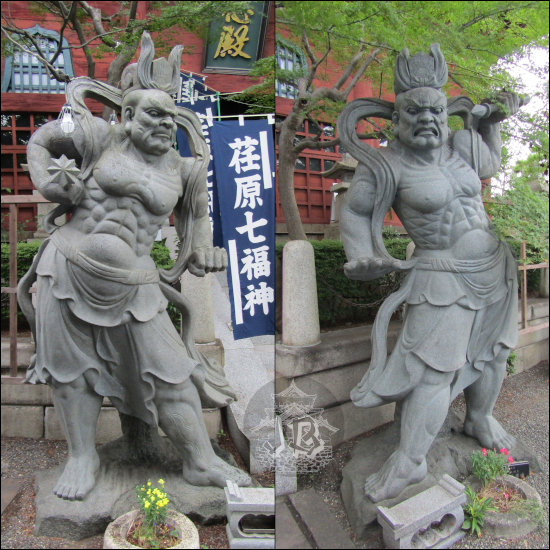
Among rain, sun and drizzle it was exhaustingly hot. I continued on to find Kimyozan Yogyokuin Nyorai [帰命山養玉院如来寺], a temple with amazing guardians.

And then I found an obviously very dangerous and aggressive tiny pond, I mean, look at those meshes (yes, I know that it’s probably for children safety, but I shall still make jokes about it). It was the Hara no Suijin-ike [原の水神池].

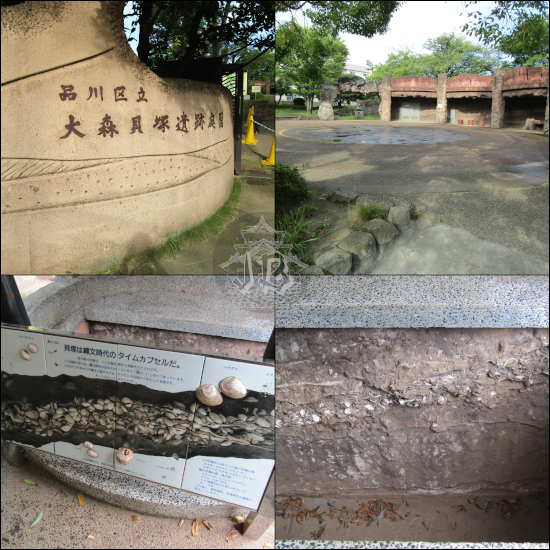
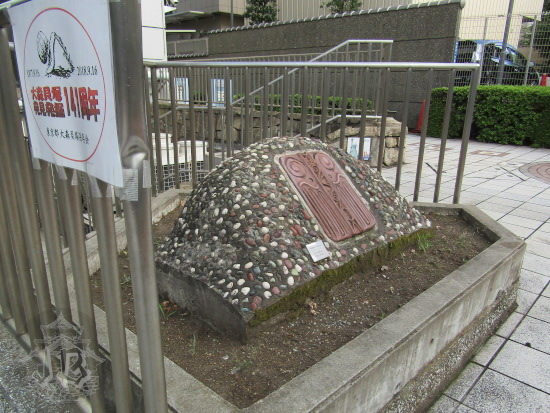
Checking how to come back I came across Ōmori Shell Mound Ruins Garden, Ōmori Kaidzuka Iseki Teien [大森貝塚遺跡庭園] and the Statue of Ōmori Shell Mound, Ōmori Kaikyo no Ishibumi [大森貝墟の碑]. The Ōmori Shell Mound was apparently the first archaeological excavation in Japan. They dig out a seaside village from the Jomon period (14,000 to 300 BC).

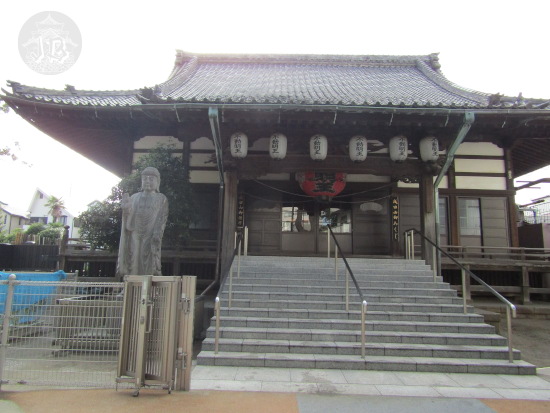
Opposite I found Naritasan Ennoji [成田山圓能寺].

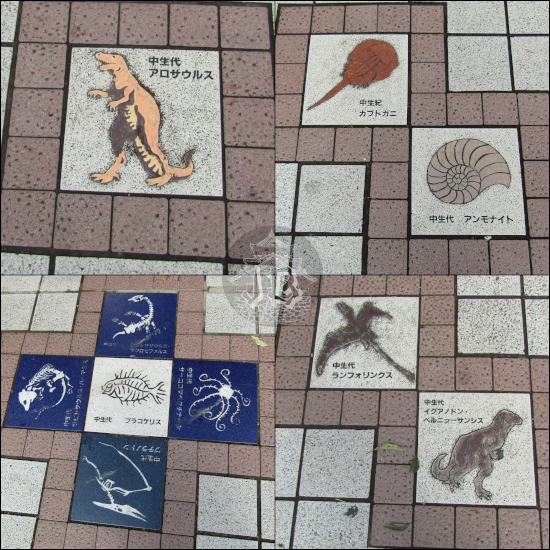
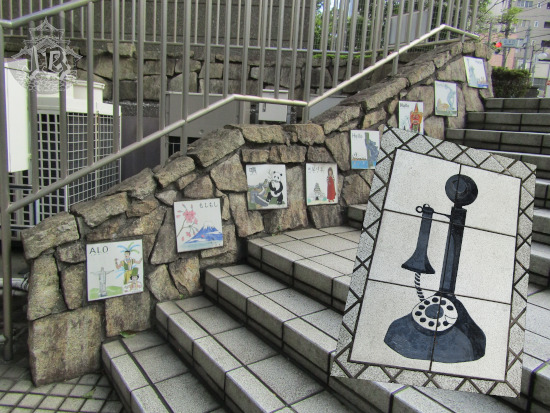
And before I left I noticed the ground decoration on the pavement – life evolution and… telephone greetings. Because Japan, I guess…
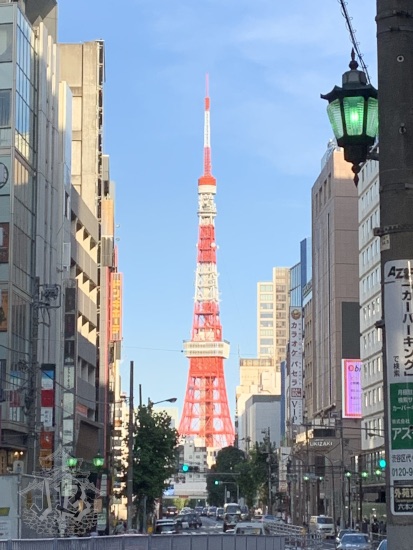
Then I looked at Tokyo Tower [東京タワー] from Roppongi [六本木], as I checked the Don Quijote for Tokyo Coke bottles, without success.

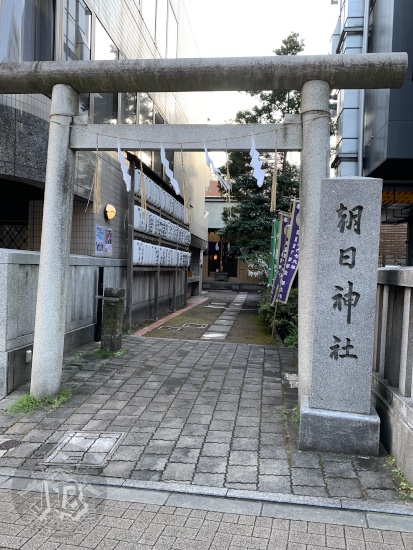
I also came across tiny Asahi Jinja [朝日神社].

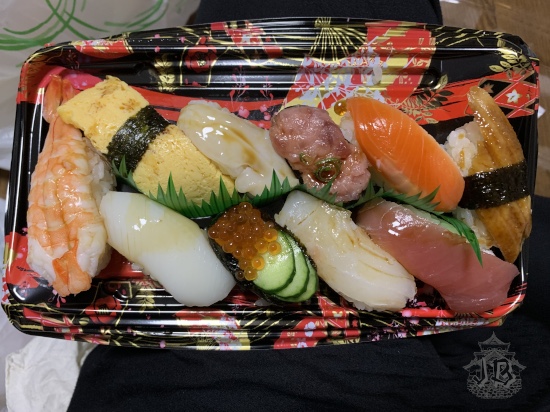
Then dinner was supermarket sushi, which was very, very yummy.

Walked distance: 14009 steps / 10.0 km

18th & 19th May 2019: Madrid (Spain) for Jupiter (and fesFE[M]!)

The weekend started extremely early on Saturday, when I took the first bus out to Madrid, and I think I was there around 7:30 to meet my friend C*****. She had been having a rough time and she had asked me to “keep her head off things”. Up until a couple of days before, we did not even know whether she would be able to come to the concert, so I had a whole plan up my sleeve. Unfortunately, a couple of steps backfired slightly. The main event – which we had been planned since the previous December – was Jupiter’s concert for the ZEUS Europe Tour on Sunday the 19th, but we made a whole weekend out of it. I was not actively following Jupiter at the time of the announcement, but C***** and I decided to attend because Madrid is easy and convenient, well-communicated and an opportunity to spend a weekend decompressing somewhere. As the time drew near and we could access more material, the excitement built up – I also managed to find the album they were promoting and it sounded really well, actually.

Her bus arrived earlier on Saturday than mine, and when we met, we decided to have breakfast at the coach station, to catch up and to give shops and so on the time to open up. When it was a reasonable time, we took the underground to drop our luggage at the hotel – the lovely EXE Moncloa. I had selected it because it was near the concert venue, and I hoped that we could hang out the terrace and the swimming pool, which unfortunately did not open until June. After getting rid of the luggage, we rode the underground towards the neighbourhood of Chueca, where I had looked up a bunch of Goth apparel shop which were right up her alley and… did not open at 10:00 as the internet said, but at 12:00.

Fortunately, other shops were already open and we were able to pass the time amicably. We were actually close to the Telefonica building, so I suggested we headed up there for the TeamLab exhibit, which I had already seen, and I thought she might like the digital art.

Teamlab logo and digital art: Waves, butterflies in red and green, and a dripping circle as if it were painted with a brush. All of them are light or bright colours on black.

Afterwards, we moved onto Callao Gourmet Experience for a snack. I wanted to introduce C***** to the Niji Mochi shop, and we also shared a chocolate ice-cream shake.

Mochi and coffee with whipped cream

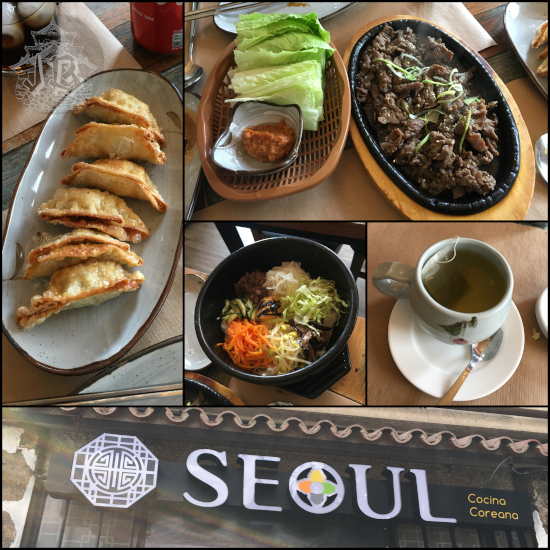
Afterwards, we were shopping for a little longer before we moved on to have lunch. I had a surprise for her. While I care little to nothing about Korean food, she is a fan of everything Korean. Thus, we hit one of the best Korean restaurants in Madrid, called Seoul. I gave her free reign to order for both of us and we shared, though being honest, the only thing I enjoyed was the green tea at the end.

Lunch: fried dumplings, roasted meat, rice with vegetables, and green tea.

After lunch, we went on and found an underground station. We rode towards the Museo Arqueológico Nacional, National Archaeological Museum, although we had not realised that it was museum day so instead of a quiet exhibition I was used to, we had to deal with a ton of families! On the bright side, it was free, though. The museum, which shares a building with the national library Biblioteca Nacional, was founded in 1867, at a time when creating national museums had become popular among European governments. It was the start of the development of archaeology in Spain. I remembered it from the time I was a kid, dark and with wooden floors, but it was recently renovated with wide spaces and modern interiors.

Exhibits at the archaeological museum: bones from a mastodon, boar statue, lady statue, Neanderthal skull, Roman mosaic of an octopus, Horus statue, Iberian stelae, primitive animal that looks like a boar or a bull carved out of stone, Grecian vase

C***** was tired from spending all night in the bus, so we left the museum and headed back to the hotel to finish our check in process and then catch a break. On the way, we stopped and bought a few snacks for the following day because you always have to be ready for a post-concert low.

We had to look for a place to have dinner, and I found a few interesting places. There were not one, but three Japanese restaurants in the area where we were staying. One of them required queueing and sounded quite self-important, so we were left with two options. We decided to try one in the evening and the next for lunch the following day. Thus, I booked a table at the nearby Naniwa. We had some decent sushi, chicken, and takoyaki… then ordered takoyaki seconds because we had a discount (and I was hungry because I barely picked on lunch).

Dinner: sushi, fried chicken, octopus balls, chicken skewers

The next morning, we headed to the venue Sala Copérnico door around 9:00 and upon seeing nobody queueing yet, we went to have breakfast at a nearby café. Then, we walked around the Moncloa park area, mostly chatting, until we went back to the venue – no queue. And later went back to the venue – no queue. And afterwards, we went back to the venue again, just to find there were still no people in the queue.

Coffee and bread breakfast

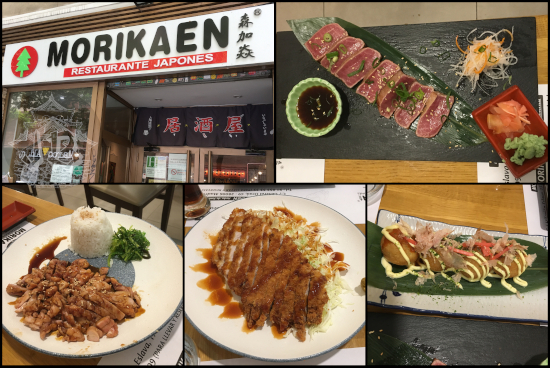
In the end we ran into the supporting bands went to have lunch to the second Japanese restaurant in the block, Morikaen. It was around 13:30 as we were heading there, and I said something along the lines of “I feel sorry that they’ll arrive and there’s nobody here to greet them”, and as we turned the corner we almost literally ran into the whole crew coming out of the bus. Talk about timing. They looked tired so we just walked by, but we were rather sure that we had been noticed. On our way to the restaurant, we walked past a family all clad in “Sunday church clothes”, and their small girl wearing aaaall white just stared at us – in rock-goth black clothing – with pure envy in her eyes. Here’s to you, little one. You’ll get there too.

Lunch was all right – tuna tataki, tonkatsu, takoyaki. A bit more expensive than the previous day’s dinner, but we also ordered higher-class ingredients and more complicated dishes.

Lunch. Tuna tataki, rice and chicken, breaded pork, octopus dumplings

Jupiter is a Japanese band who define themselves as “melodic metal band”. It could be said that it is a visual kei symphonic power metal, which means they combine a very particular image (or a bunch of images, the most iconic being Hizaki’s Baroque-inspired dresses) with a subgenre of metal that combines hard drumming, metal guitars, and elements of classical music. On the 22th November 2018, Jupiter announced their new album, a Japanese Tour, and a European Tour, ZEUS Europe Tour. Bassist Rucy left between the announcement and the album release due to creative differences, and I really thought they would cancel the tours, but luckily everything went ahead. The remaining members – guitars Hizaki and Teru, current vocal Kuze, and drummer Daisuke were joined by support bassist Shoyo.

Schedule for the tour

There were two promoters involved for this concert. The local promoter, which in Spain was Madness Live, sold general admission tickets – they have a clean and neat webpage and buying from them is easy; I got ours on the 12th of December. The other, Editions Hikari, was in charge of coordination of the European tour, general information, and ticket upgrades. I think they are one of the worst organisers I have ever come across.

Hikari announced those upgrades in January. There would be VIP experiences, on sale on the 14th of February. Besides that there would be two kinds of upgrades, there was no real information about them until a few days before the sale. The best tickets were called “Venus Premium” (40€ face value + 5€ reservation costs) included autographs + handshake + backstage access before or after the show or soundcheck access (if possible) + photo with 1 member taken by a professional photographer (sent by e-mail later after the tour) + priority access to the merchandise, and there were five per show. The “Venus” upgrade (25€ VIP + 3€ reservation costs) comprised autographs + handshake + priority to the merchandise, there were 20 available per show. Getting the tickets was chaotic, but in the end, C***** managed to buy the two Venus Premium tickets we wanted – luckily. A lot of people did not even find out about the option to upgrade. In the end, the backstage pass / soundcheck was not available for any concert in the tour, and the priority access to the merchandise was impossible in Madrid due to the two independent promoters. Either of the VIP upgrades granted the option to buy an “Instax” (Polarid) photograph with the whole band at extra cost.

Hikari’s Facebook instructions were that Venus and Venus Premium ticket holders had to go to the merch booth – to which they supposedly had priority access – at the beginning of the concert. However, as the access to the actual venue was controlled by the local promoter ticket, there was no way they would access the merch booth with any kind of priority unless the managed to somehow skip the queue. Any kind of communication with Hikari was impossible as “they could not check emails, Facebook messaging, nor reply to comments.” However, they still made posts, and that is how we found that the CDs which Jupiter brought to sell at the merchandise booth were confiscated by customs’ officers before the first concert!

On the 10th of May, we received an email form the local promoter, Madness Live, informing us that the door timing had been changed and they were nice enough to send us the following schedule: Doors at 19:00, VII ARC (German support band) at 19:15; fesFE[M] (Japanese support group) at 20:20; Jupiter at 21:30. There was no information on the upgrades, because they had no clue about those, as Hikari was in charge. The day of the concert thus arrived and we had no actual about that, except for rumours and comments of what had happened in previous concerts. That was why, even if there was no queue, we had decided to stick around Sala Copérnico instead of heading into the city centre.

Eventually, after lunch, I decided that I was too tired to keep going up and down the streets, so around 16:00 we settled at the venue doors until they opened so we could get into the chaos that was the concert. At 16:30, other people arrived, so we got talking – that was how we found out that many people had never even heard about the upgrades. Doors opened around 19:00 – without any kind of priority access to the merchandise, nor separating VIPs and GA. C***** and I decided to divide and conquer – she went to secure a spot on the first row, while myself checked in at the merch booth to get the Instax tickets with the whole band.

That is when I saw the lousy, half sheet of paper taped there saying “Venus and Venus Premium ticket holders, gather at the merchandise booth at 20:00”. That placed the “Venus experience” in the middle of the support act, which meant either having very good friends who saved you the first row spot, or sacrificing it. We decided to give the place up and find somewhere more convenient so we could move about. Without holding spots for the VIPs, this was totally unacceptable in my opinion, especially since there had been no early entry, or priority merchandise. A bunch of people who did not want to buy anything missed out on what they had paid for.

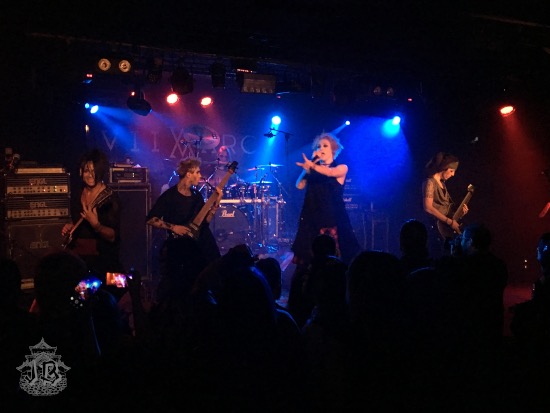
The first support band was VII ARC. They were okay, a bit of stereotypical German heavy metal. I can see how they might appeal to the general metalhead crowd, but it feels that they were chosen because “they dress up sometimes”, and Hikari thought they would fit. It is formed by Kay (vocals), Fū (lead guitar), Bena (guitar, screaming), Grazel (Bass) and Z’ev (drums), and they could probably fit a bit on the “visual” style, but they did not bring any distinctive gear.

VII Arc playing in Madrid

At 20:00, as fesFE[M] prepared to take the stage, the Venus Premium and Venus ticket holders gathered around the merch booth and we were ushered past a barrier, towards the bar. There, we had to wait for about 10 minutes while the second support act started. A Japanese staff lady with little to no English came to “check” the Premium tickets and “sort of explain” to us the whole thing. First the Venus Premium would be shown backstage one by one for the one-on-one photograph – there were four of us, we never knew if the fifth was never sold, they did not come, or they missed the whole experience. Afterwards, we would come out again and joined the regular Venus for the autographs and handshake, then the Polaroid would be taken for the ones who had bought it. We were ushered past a curtain and the backstage door towards the mess room where the remains of the lunch buffet were.

As I entered, I caught sight of Shoyo, the support bassist, who was sitting down on a low mattress in a room to the left, looking bored. I greeted him in Japanese, and he greeted back. C***** turned to see whom I was talking to and her eyes were wide. I asked Shoyo if he felt lonely, he said a little. Another attendee who also spoke Japanese asked for a picture (beating me to it, actually) but he said he was not allowed.

The conversation died out when it was time to go into the private band area for my picture with one of the members. As I walked in, there was Kuze to my left, Daisuke to my right and Teru and Hizaki in front of me, Teru dead centre and Hizaki a little to the right. I was asked whom I wanted my picture with and chose Teru, as I had long ago decided that I would if I could. He smiled and posed with me, then he shook my hand. I have got to learn to look into Japanese musician’s eyes when I talk to them.

We said good-bye to Shoyo on the way out, and almost left, but it was now time for autographs, handshakes and Instax. I pulled out the CDs I had brought for C***** and myself, and I got to shake hands with all four of them and receive the band’s autographs. Since the CDs the band brought had been seized, we might have very well been the only ones in the whole country that produced some official material for signing. Then, we took the Instax and the staff would ask with a thumbs up sign “okay?” to check the picture was good, before we left.

CDs signed by Jupiter members

All in all, the band was very friendly and amazing, but the timing and organisation was horrid. We lost out first row – despite having “priority access”, and we missed half of the fesFE[M] concert. As Copérnico has two levels though, we found a nice spot at the stairs that connect both, and I could lean against the handrail to watch the rest of the act.

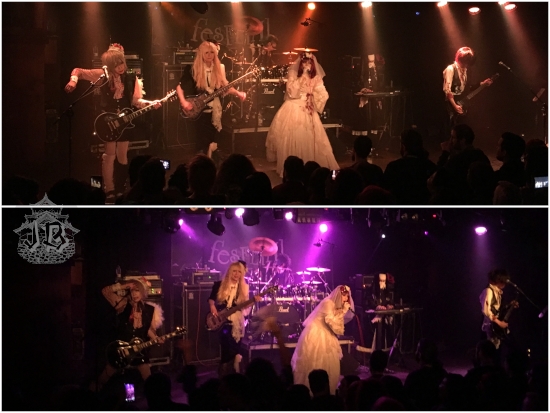
fesFE[M] is a relatively new visual kei band where all the members take up “doll” personas. Their career in 2017 and released their first mini-album in May 2019, just in time to come over to Europe for Jupiter’s tour. For each album / season, the band dons a doll theme, and they were currently on the “horror genre” dolls. The members and their doll types are: Lion [リオン], vocal, Distress Coppelia doll (from the namesake ballet, dressed as a bloody bride); Aito [アイト], guitar, Apathetic Prince doll; Zeno P [ゼノP], guitar, Bloodthirsty Child Killer doll; Toru [徹], bass, Emotional Princess doll; Rensa [蓮沙], drums, Psycho Butler doll; and Jun, keyboards, Scalded Dollmaster doll (dressed as a nun because… reasons?).

The first time I heard a song by fesFE[M], I was not extremely impressed – the PV was a bit too creepy. However, they are really good in person, even with the bad sound quality and reverberation in the venue – and the fact that we missed about half of their act. They were really engaging. The whole visual part was amazing, and the coordination was great! Their music was much more powerful live. The band played some songs from their mini-album enseMble autoMata: Doll in blueberry jam [Doll in ブルーベリィジャム], Arachne ni haitoku wo [アラクネに背徳を], Psychological stolen heart, and Freiya [フレイヤ].

Fesfem live in Madrid

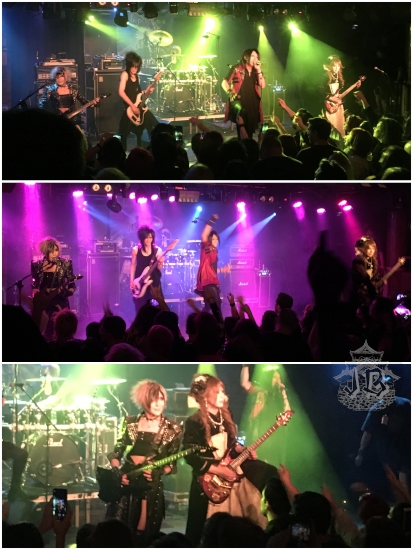
The Jupiter concert was as expected, very energetic and fun – it actually went beyond expectations. Our spot was really good in he end, a bit raised, without getting pushed, and we actually watched the concert next to fesFe[M]’s bass Toru. Sometimes he smiled and waved at us, and we waved back without fail.

Kuze, Jupiter’s vocalist held his ground better than I thought he would be able to. I was kind of impressed when I listened to the Jupiter single Theory of Evolution and later to the album Zeus: Legends never die. While we were expecting the guitar and metal power, Kuze’s voice range in the recording was rather wild, and I did not think that he would be able to keep it up live, especially on a final concert after touring both Japan and Europe. He proved me wring, and he held all his notes and his vocal range, just like the recording. He had practised his English a lot and learnt the MCs, but he switched to Japanese quite often, and he spoke too fast for me to get! He did a great job even with songs that had been released in the previous vocalist’s time.

Daisuke was pretty much hidden by his own drums from where we were, but we did see him bounce a couple of times. Hizaki was on the other side of the stage from us, and he looked divine in his Baroque dress. I don’t understand how he can even move in those clothes, much less play guitar or crouch, which he did so a few times in order to interact to first-row fans. A couple of times I did fear for his safety as someone grabbed either him or the guitar. Most of the songs that were played were his. It’s fun to imagine what he would be thinking when writing “die, die, die, go fuck yourself”, when he presents as such a beautiful and innocent lady, but it surely was fun to yell.

And finally, Teru had a blast. He kept twirling around as he played, his stud-leather coat swirling around him. He played with a huge smile on his face all the time and he gave off the vibes that he was having a lot of fun. He also interacted with fans a lot.

Jupiter Live in Madrid

Setlist:

  1. Arcadia
  2. Last Moment
  3. Angel’s wings
  4. Drastic Night
  5. Bring me out
  6. Show Must Go On
  7. No cry no more
  8. The spirit within me
  9. Tears Of The Sun
  10. Memories of you
  11. B.L.A.S.T
  12. Blessing of the Future
  13. Zeus: I. Legends Never Die / II. Conversations with God
  14. Symmetry Breaking [Encore 1]
  15. Theory of Evolution [Encore 2]

While the concerts were a lot of fun, the whole event was stressful due to the abysmal organisation. I actually feel a bit ripped off, because they did not deliver a lot of what they had sold in the upgrades. At least C***** and I are lucky enough that we managed to get our pictures, autographs, and saw the concert from a relatively good place. All in all, Jupiter are amazing, they were super nice, and so were the guys from fesFE[M]. The concert was great, and we don’t regret going for a second.

After the event, waved at Toru for what we thought was the last time. When lights went on, we also saw Rensa, who stopped for us when we told him he had done a good job. C***** and I decided to pool our money together to buy the CDs fesFe[M] had brought – and not got seized. Apparently, it is typical that the entry-level bands hang around merchandise booths after concerts, and we were lucky enough that they agreed to sign the CDs and take a photo with us. Lion was extremely surprised and nice – or acted so. He complimented me on my poor attempt of Japanese and complied with what we requested.

CD signed by Fesfem members

Finally, C***** and I headed back to the hotel, and we went home the next day – fortunately we left from the same bus station so we could maximise our time together.

Hikari took a few days to send out the VIP pictures, but they eventually arrived on the 1st of June. Getting them was also hard, and amateurish – they wanted to put them in a Google Drive link and post that on Facebook. At least we got them to send them via email, citing European Data protection laws at them… I really, really hope to avoid this promoter in the future, but if I do, I’ll be on the lookout in order not to miss anything.

16th September 2016: Some Madrid (Spain) Museums

I woke up one morning, a silly weekday that I did not have to work for some reason and I decided to wander off and take a day trip to Madrid to see some museums, just because I could.

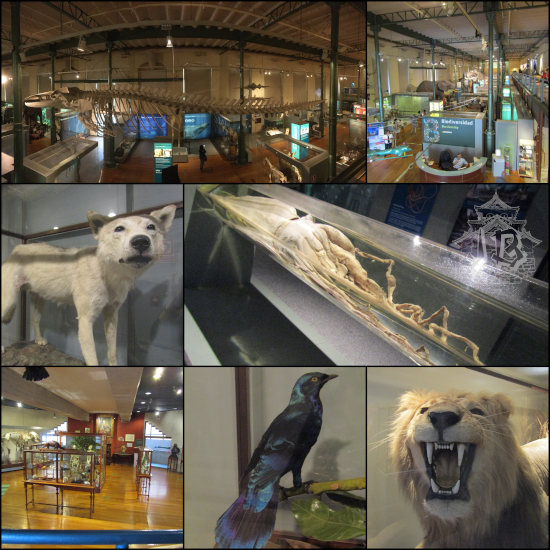
My first stop was the Museo Nacional de Ciencias Naturales, the museum of natural science. The museum is divided into several buildings. The first building holds the “Biodiversity” collection. This includes preserved specimens – in better or worse shape, mostly stuffed, and some skeletons.

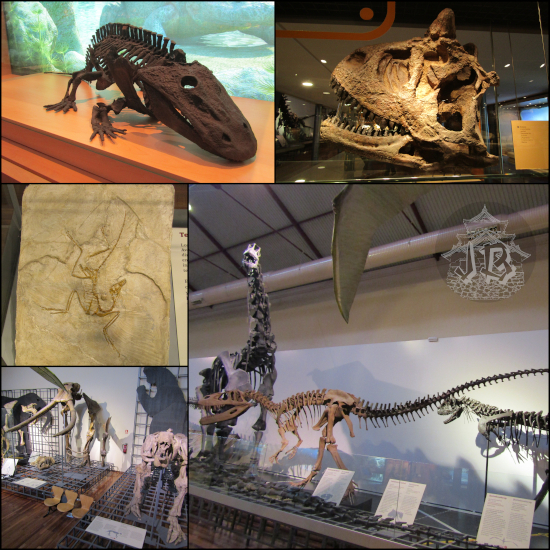
Then I walked over to the palaeontology and mineral museum, where at the moment most of the collection is composed of replica, sometimes it feels that you see the same diplodocus or arsinoitherium (two-horned rhino) skull everywhere. Of course, however, I hunted down every megalodon tooth on site and sight.

After this, I walked around the mineral collection and walked down Castellana Avenue until Colón Square, where I had lunch somewhere before I walked around to see the Museo Arqueológico Nacional – National Archaeological Museum. There were a few things that interested me there.

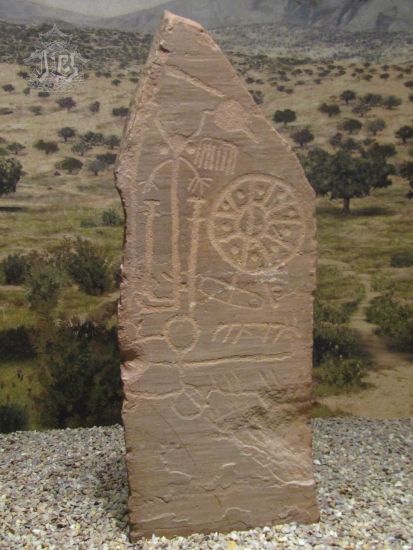
My first goal was to study the Iberian stelæ . Nobody really knows what they are or what their meaning is, but it is thought that they were funerary monuments, maybe of fallen warriors.

An interesting thing to see in this museum is the sculpture of La Dama de Elche, the Lady of Elche, the limestone bust of an Iberian lady dated back to the 4th century BC. It is supposed to be a woman who belonged to the aristocracy that was later revered as a goddess, or maybe a reinterpretation of the Goddess Tanit of Cathage. The back part has an opening, which suggests that it could have been a funerary urn. It was originally polychromated, but it has lost its colours. I really like her expression, and probably due to the Hellenistic influence. I have a thing for Greek sculpture, after all.

A second “lady”, the Dama de Baza (Lady of Baza), stands next to the first. This one still keeps some of its colours. This one is full-body, also carved out of limestone, and it traces back to the fourth century too. This lady seems to have been designed in pure Iberian style, without Hellenistic influences.

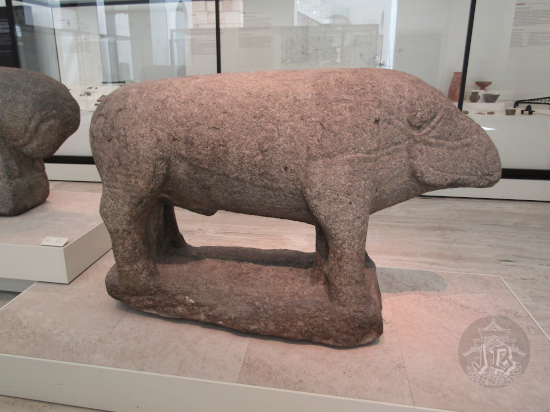
The last key pieces of Iberian sculpture in this museum are the verracos – sort-of headless boars, pigs or bulls (depending on the interpretation), but it is commonly accepted that they are symbols of protection of cattle routes. Most of them are… visibly male.

Once I had seen what I really wanted to see I wandered over the rest of the museum, stumbling upon the currency exhibition, which was strangely interesting.

I walked past the Medieval rooms and then I found the Egyptian area, which is humble, but has some interesting things like the X-rays of a mummified falcon. Finally, I checked out the classical Greek area before calling it a day and making it back home.

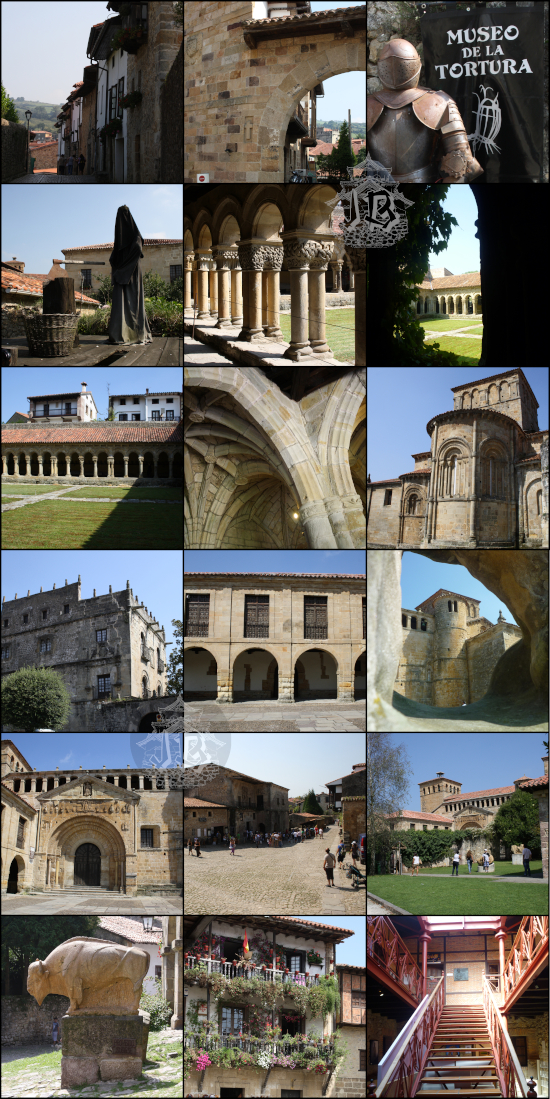
Flashback to 13th August 2011: Altamira & Santillana del Mar (Spain)

Altamira Caves Museum

Santillana del Mar

  • Museo de la Tortura (Torture Museum)
  • Plaza Mayor de Ramón y Pelayo (Main Square)
  • Iglesia de la Colegiata (Colegiate Church)

Note: This is a flashback post, which means it is just a collage regarding a trip I took before I started the blog in 2012. Tags may be incomplete or slightly off.