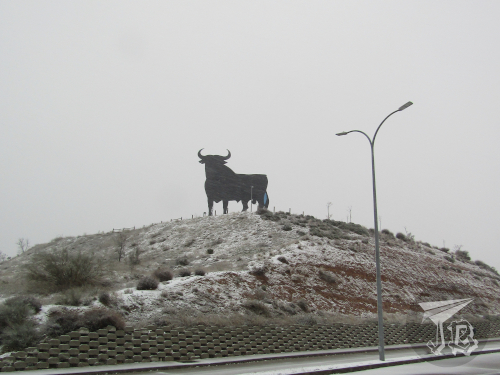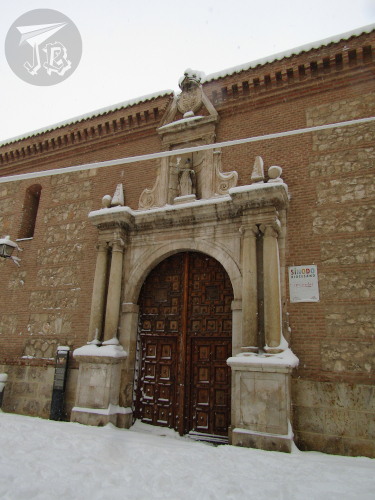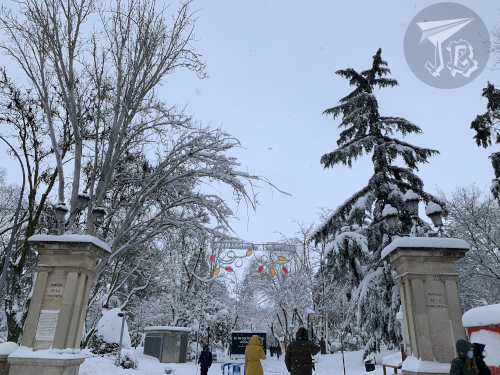
4th September 2020: Alcalá de Henares (Spain)

After looking for a place to park the car for 12 minutes, I left the car and I went off on foot towards the centre with a relative who is living in Alcalá de Henares. The town centre has been a Unesco World Heritage Site since 1998.

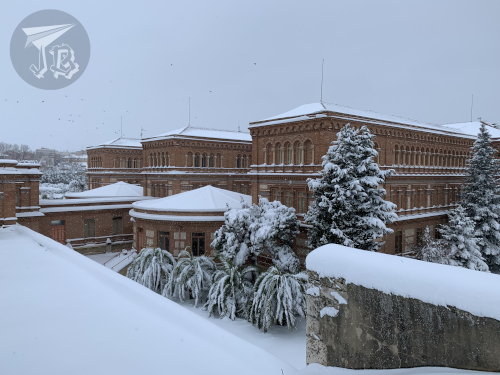
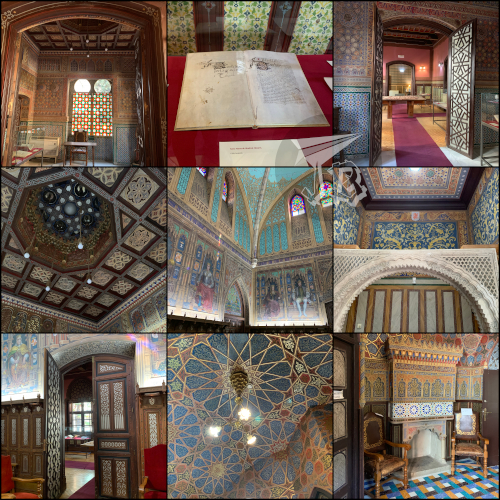
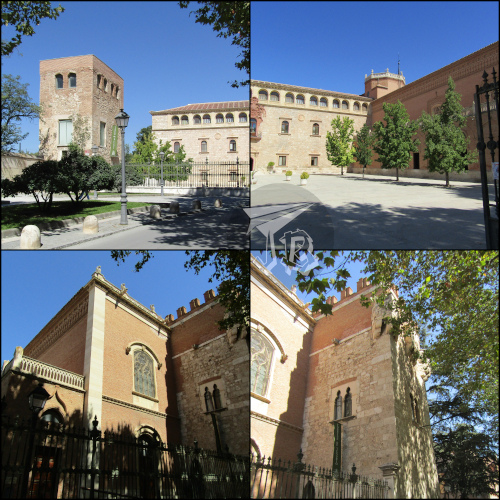
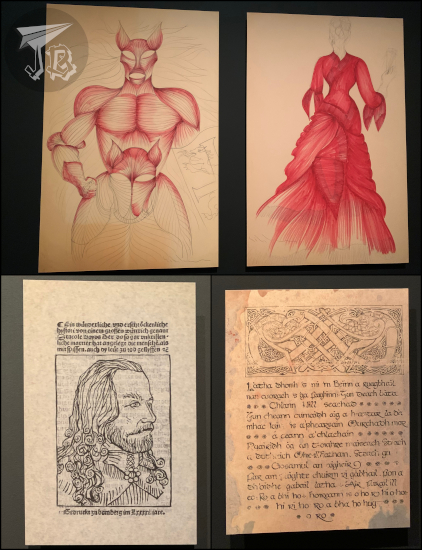
Our first stop, at 10:30 almost sharp was the Palacete Laredo, a small palace built in the Neo-Mudéjar style, a type of Moorish Revival architecture. It was designed and built between 1880 and 1884 by the Spanish artist Manuel José de Laredo y Ordoño. After a century in private hands, it passed to the town hall, which allows the university to use it as a museum, showing a collection of ancient documents.

The palace is built in brick, it has two floors and a minaret-like tower. The inside is decorated with coloured-glass window, tiles and paintings. The visible ceilings on the first floor are wooden artesonado (decorative beams joined together). There is also a garden, but it was closed.

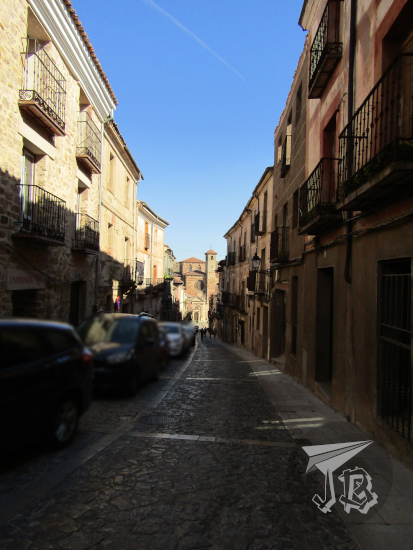
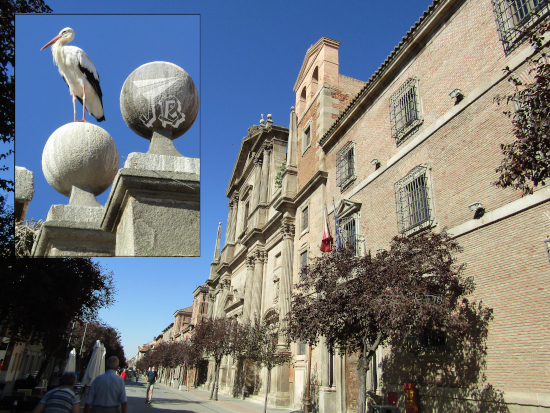
Afterwards, we headed off towards the centre. We walked by the church Parroquia de Santa María la Mayor and is inhabitant the stork on photo duty.

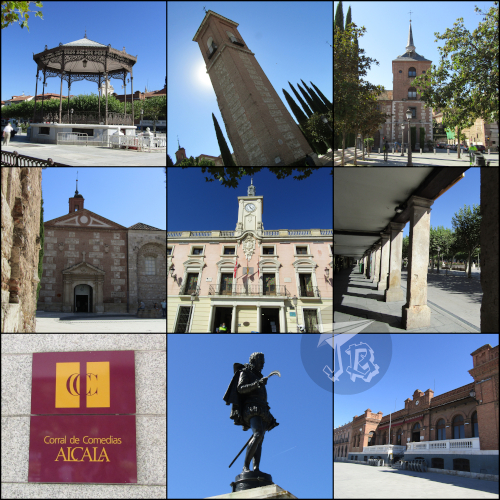
We had tickets to see the Corral de Comedias, a theatre built in the site of an ancient “theatrical courtyard”. These were open-air theatres that were common during the late middle ages and exploded in popularity in the 16th century. The Corral in Alcalá de Henares was built in 1601 by Francisco Sánchez, member of the Carpenters Guild. It suffered several changes – the ceiling was built in the 18th century, then it became a cinema, and eventually was “lost” in the 1970s. In the 1980s, it was rediscovered, restored, and finally opened as working theatre in 2003.

Alas, we were too late for the 12:00 visit to the university, so we wandered around the town’s main square Plaza de Cervantes – Alcalá de Henares was Cervantes’ birthplace. Miguel de Cervantes was a 16th century Spanish writer, most renown for his novel “The Ingenious Gentleman Don Quixote of La Mancha”, which many authors consider “the first modern novel” and “the best literary work ever written” (though… I disagree). The square features a bandstand, the statue of Cervantes, and is surrounded by several buildings of importance – the ruins of the church Iglesia de Santa María, the Town Hall and the Círculo de Contribuyentes, former casino, and the Corral de Comedias.

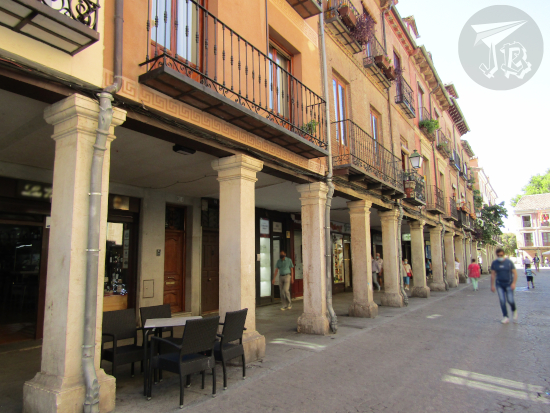
Then we walked down Main Street Calle Mayor, until we got down to the Obispado de Alcalá de Henares, the bishopric, with two towers from the former wall at their sides. That reminds me – we did not visit the cathedral or any religious buildings because they were all closed to tourism.

At 13:00 we took the guided visit to one of the university buildings, the Colegio Mayor de San Ildefonso. The university was established in 1499 by Cardinal Cisneros, an influential Spanish religious and statesman in the time of the Catholic Monarchs. A colegio mayor is basically a dignified “classic” dormitory. The façade was built between 1537 and 1559 in the Plateresque style, an architectural style that developed in Spain between the late Gothic and the early Renaissance. The architect was Rodrigo Gil de Hontañón.

Inside, we saw the cloisters and yards, the gate of honour (from where the successful students left the university), the classroom where the students defended their final thesis, and the chapel, with the tomb of the founding Cardinal (but not his body, which is in the cathedral).

We had a reservation to have lunch at the Parador de Alcalá de Henares, which is a rather modern building and not a historical one, but a stamp was needed (≧▽≦). Lunch was a looong affair because our waiter might not have been the… most efficient. We tried the combos with a little bit of everything to share (entrées and desserts), and some bull tail. Oh and coffee. Yay coffee. (Also, kudos to me for cutting that nut in half.)

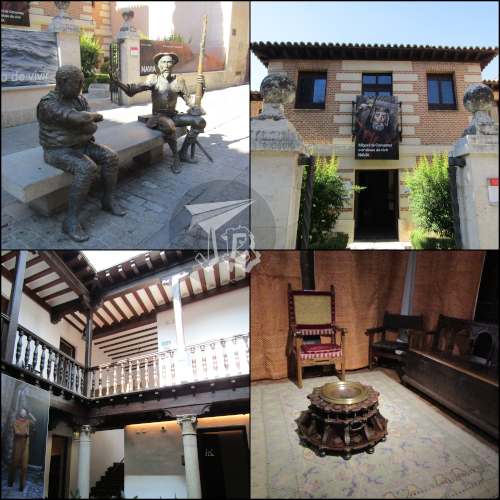
After lunch, we walked down the Calle Mayor again and we made a stop at what is supposed to be the house where Cervantes was born, or at least a reconstruction, with a bunch of ancient objects thrown in – the Museo Casa Natal de Cervantes. There was also a photography exhibition. To be honest, it had a great quality-price relation. It was free, and the quality was… lacking. Or maybe I’m old and I have seen most of the stuff they showed in action, and used a few.

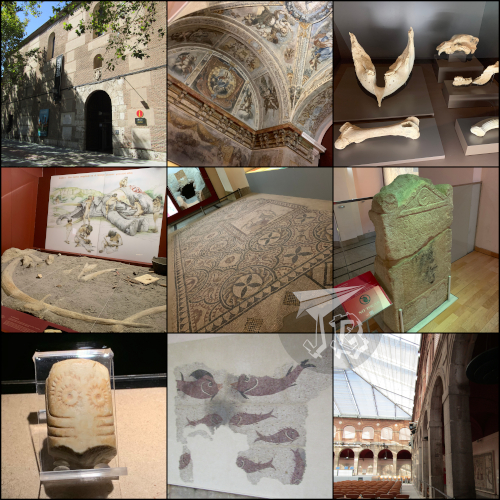
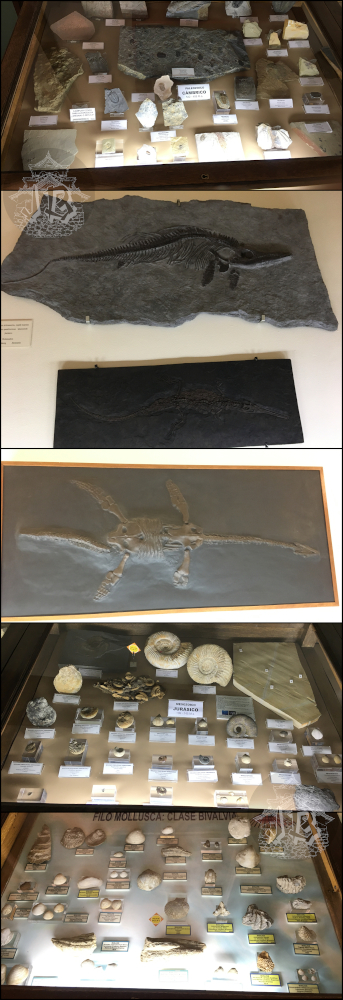
We continued on to the regional archaeological museum Museo Arqueológico Regional, located in the old Archiepiscopal palace. That was unexpectedly good, with the fossil record and the old Roman mosaics.

Pending for a future visit to Alcalá de Henares: Roman and Medieval areas, and the religious buildings, as the day finished up doing some necessary and work-related shopping before I drove back home.

Driven distance: Around an hour? I dumped the car as soon as I could and we walked the hell out of the town (≧▽≦)
Walked distance: 14.61 km

30th July 2020: Vampires in Madrid (Spain)

The world is pretty much topsy-turvy these days, isn’t it? I’ve been literally staring at the computer screen for about an hour, wondering how to start, how to explain. I’ve erased the opening paragraph about four times too (≧▽≦). Thus, I will just spare you the introduction, explanations, justifications, and so. It took me a while to decide in favour of my little trip to Madrid.

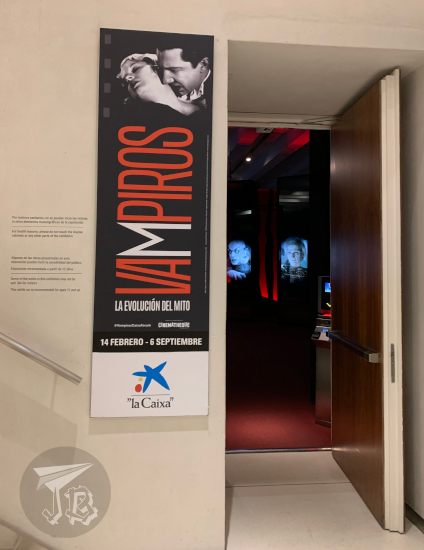
Vampires, the Evolution of the Myth, or Vampiros, la Evolución del Mito (#VampirosCaixaForum) was scheduled before the whole COVID-19 debacle. Once things started opening up in Spain, the exhibition was rescheduled to run in Madrid for a couple of months through summer. And for a while I pondered whether it was… I’m not sure how to put it… worth the risk? For months we had been told to avoid public transport, which is my main mean of moving around, so in the end I decided what the fuck, if I was doing this, I was going to drive into the centre of Madrid – for the very first time in my life. For the record I don’t particularly enjoy driving, I much prefer being driven, and my sense of directions when driving is… not the best, so I borrowed a GPS, picked up my sister, and drove off.

After only getting the wrong exit once, we left the car in an underground parking lot and walked ten short minutes and we were in front of the Caixa Forum Madrid. Caixa Forum is a cultural space owned by a savings bank in search of tax deductions that organises shows and exhibitions. We had a compound ticket for 12:00, which included both exhibitions in the building, and a theme lunch. And so we went.

Vampiros: La Evolución del Mito, “Vampires, the Evolution of the Myth” is an exhibition originally organised by La Cinémathèque française, which is a French French non-profit film organisation that holds one of the collection of cinema-related objects and documents in the world. As they are specialised in films, the vampire exhibition focuses on the figure of the preternatural being throughout cinema.

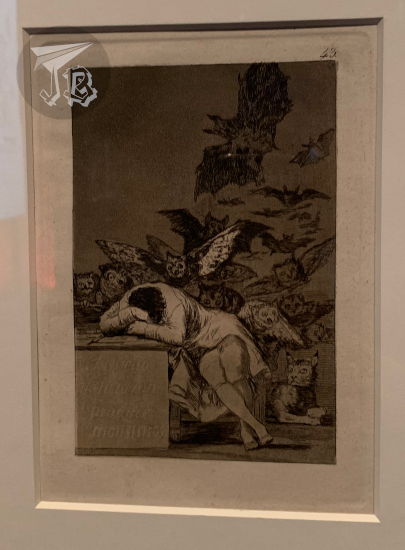
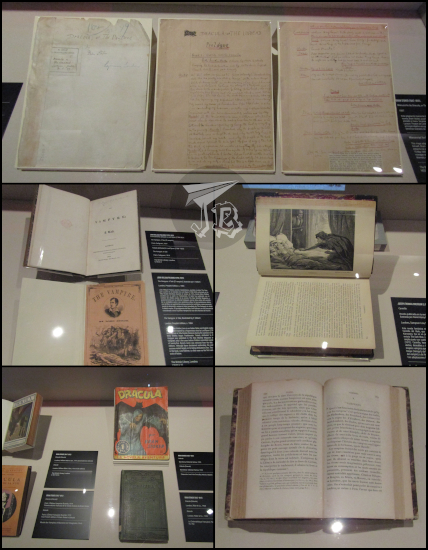
The first room is focused on the book Dracula, and the Romantic interpretation of the myth – Romantic as the literary period, not the lovey-dovey stuff. Highlights include a facsimile of the first scene of the manuscript of Bram Stoker’s version of Dracula for theatre, aside from early editions of the novel and other vampire books such as John William Polidori’s The Vampyre and Joseph Sheridan Le Fanu’s Carmilla. There were also some surprising items – some of Francisco de Goya’s wood-prints. Goya was one of the most influential painters in Spain, also grounded in the Romantic movement. Good stuff.

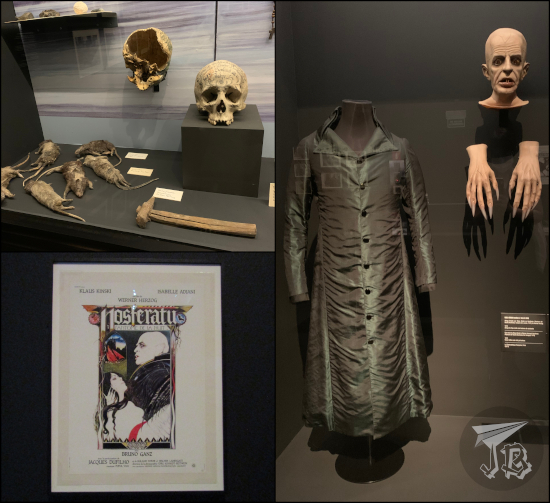
The second room was dedicated to Nosferatu, one of the key films in the vampire genre, with some promotional material and film props – this was the ward with best and most important number of items.

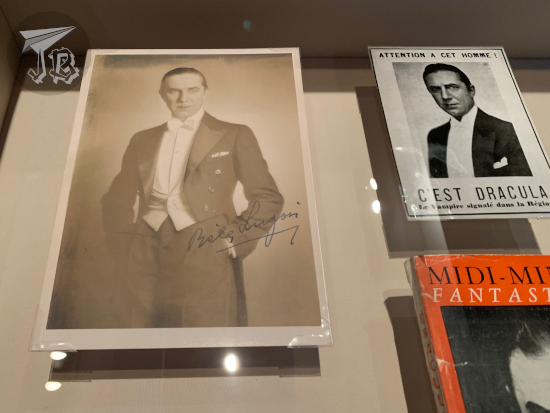
The following room was dedicated to the romantic, erotic and sexual vampires. It had two main focuses – one was the Dracula portrayed by Bela Lugosi as the epitome of the elegant, seductive vampire, first in Broadway, then in the 1931 film by Universal Studios. The centrepiece of the room featured two pieces of the wardrobe in Coppola’s Bram Stoker’s Dracula worn by Gary Oldman and Winona Ryder, along with several designs for the wardrobe (which could not be photographed, but you can peek at in some of the pics). Finally, we got to see the suit worn Tom Cruise as Lestat and Kirsten Dunst as Claudia in the 1994 film Interview with the Vampire. I missed some more Christopher Lee, as there were barely some photographies of his performance in Dracula (1958) and its sequels.

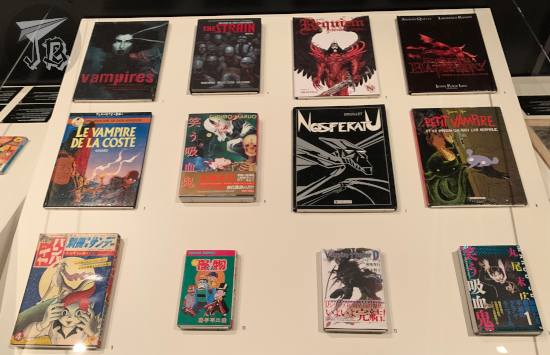
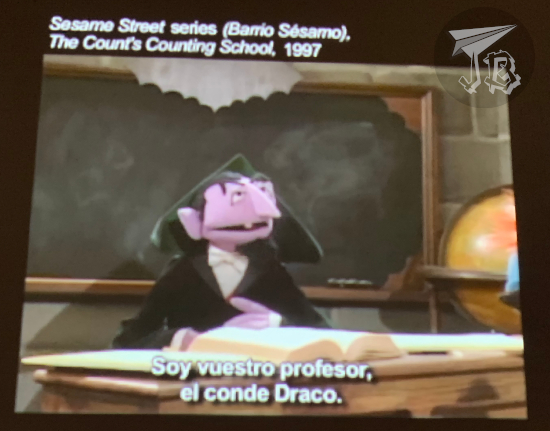
On one side there was a small area dedicated to the vampire as a political metaphor. The final area was dedicated to the pop vampire, including magazines, comics and graphic novels, some Japanese manga, and so on – even Count Dracula from Sesame Street! Then again, he was on a screen. I would have killed to see the real puppet.

All in all I got the impression that the exhibit lacked ‘the real thing’ and abused the film montages. I was expecting a few more props and less bits of films which… after all I’ve seen most (≧▽≦). The truth is that the myth of the vampire starts much earlier than the “Medieval” vampire featured in the Romantic fantasies, and can be traced to early succubi or the Lamia myths in Ancient Greece if you think about Western Culture alone. The Romantic and Victorian writers just made the myth cool as it was once more popular due to a sort of “vampire hysteria” that crossed the Balkans the previous century – that’s probably the main reason why Bram Stoker chose the figure of a Transylvanian warlord to create his character. But in the end it was a good way to break the activity fast.

Then we moved on to the next exhibition, Cámara y ciudad. La vida urbana en la fotografía y el cine, “Camera and the city: urban life in photography and the cinema” which… was okay, I guess. I guess I’m not a photography / video kind of person (≧▽≦).

After perusing the shop for a while, we moved to the cafeteria, where a “theme menu” had been designed. Let me detail that for you:

  • El frenesí vampírico / Vampire frenzy: virgin – I think – Bloody Mary
  • Estacas de la muerte / Death stakes: aubergine tempura with sweet and sour sauce
  • Reencarnación / Reincarnation: Goat cheese, sweet beet and raspberries salad
  • Inmortalidad / Immortality: Macerated sea bass with lime, orange, coriander, salt and pepper, with a side of mango and tortilla chips
  • Embalsamamiento / Embalmment: Duck magret with a red wine sauce and mushrooms
  • Drácula / Dracula: Crème anglaise, jelly and raspberry mousse.

Let me tell you, this was amazing – and fortunately the portions were small so the final amount was more than adequate.

It was a little later than 15:15 when we left the CaixaForum centre and headed off the Museo Nacional Thyssen-Bornemisza, the Thyssen-Bornemisza National Museum, a museum built from a noble family’s art collection which also hosts temporary exhibitions. The permanent exhibition is chronologically organised, and here are some of the pieces by famous artists: Rubens, Rembrandt, Van Gogh, Degas, El Greco, Tiziano… and hm… many very modern painters I… can’t understand.

Finally we decided to call it a day before people started coming out of work and leaving town so that we did not get into a traffic jam, and I am very proud of myself for taking the drive – which was my wee white whale for a while. I’ll see myself out now (≧▽≦)

Distance: Approx. 120 km driving; 6.08 km walking

Also, as an afterthought, I ordered the Vampire exhibition book online. I did not at first because I did not feel like carrying it around as it is thick. But they home-delivered and I actually saved 2.5 bucks?

PS: New logo! What do you think?

26th January 2020: Royal Palace and Norwegian salmon (Madrid, Spain)

A friend was over visiting for the weekend and we headed off to Madrid. It had been raining and the weather the previous evening had been rather miserable. Actually, when we left home it was rather foggy and dark, but upon stepping out the Avenida de América bus station, it had become sunny and not cold at all.

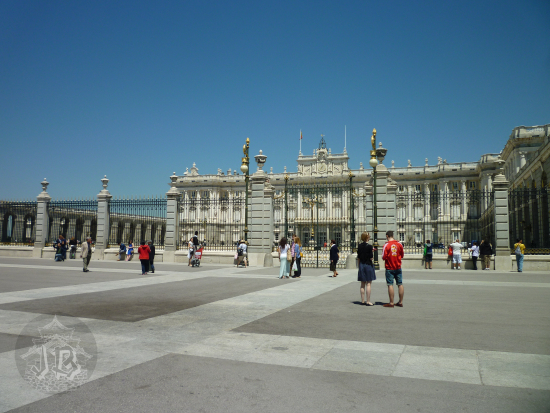
My friend wanted to see the Palacio Real de Madrid, the Royal Palace – we had been playing Madrid Cluedo the day before and she had mentioned that she had never been there. At first, we only wanted to see building. As it was Chinese New Year, the blunt of tourists was somewhere else watching the Parade, and we had a short queue to go inside, so she decided to wait as it was not expensive, either.

You can’t take pictures in most of the palace, but the yard looked really nice and you could see the cathedral from there. We also heard all the bells tolling at noon, which was fun. When you go into the palace you see several rooms, including the throne room and the old sleeping quarters. One of my favourite rooms is the one with the Stradivarius violins and other instruments.

While there aren’t that many pictures taken inside, here is a shot of the cathedral, Catedral de la Almudena .

After visiting the Palacio Real, we went to have lunch. She wanted ham, and I wanted a poke bowl I had seen announced in El Corte Inglés cafeteria, so it was a win-win situation. I had a “Poke bowl de salmón noruego”, Norwegian salmon poke bowl that was amazing – a sushi rice base with avocado, spring onion, purple onion, wakame, a soft-boiled egg and Norgweian salmon marinated with soy sauce, rice vinegar and kimchi.

She declared that she was happy after this, so we called it a day.

4th May 2019: Museo Naval & TeamLab in Madrid (Spain)

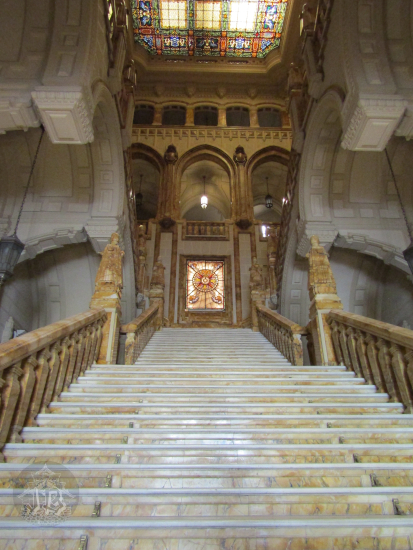
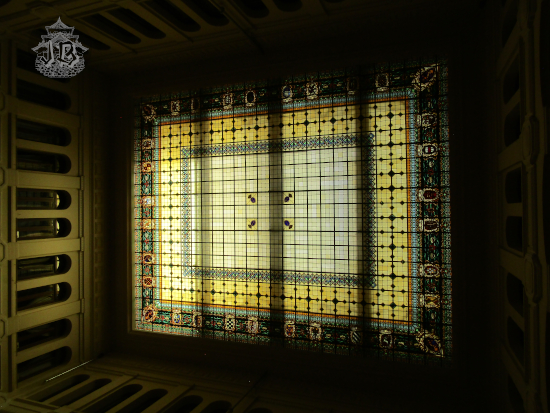
There were a couple of exhibitions in Madrid that I wanted to see, and my mother decided to tag along. We took a train and walked to the Museo Naval, the Navy museum, which was being renovated – so the permanent connection was not being shown. In the end, that turned out to be awesomely lucky because it allowed us to see the marble staircase and stained glass of the classical building, which is very rarely shown.

The exhibition that I wanted to see was related to the trips to Asia, mostly China, Japan and Philippines, and it was interesting for 3€. one of these days I would like to come back to see the whole museum when the renovations are over. It’s on the bucket list, I swear. One of these… I’m not sure, months, because I’d been saying I want to go to the Museo Naval for years.

After seeing the “Asia in the Naval Museum” exhibit and the ceiling, we walked towards the Telefónica Building. There, there was an Exhibition by TeamLab, the museum of virtual art from Tokyo! I really want to see it.

There were three exhibits:

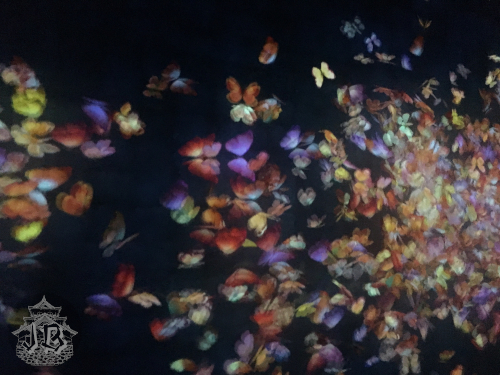
  • Flutter of Butterflies, Born from Hands (2019), a magical wall where you can rest your hands for butterflies to come up.

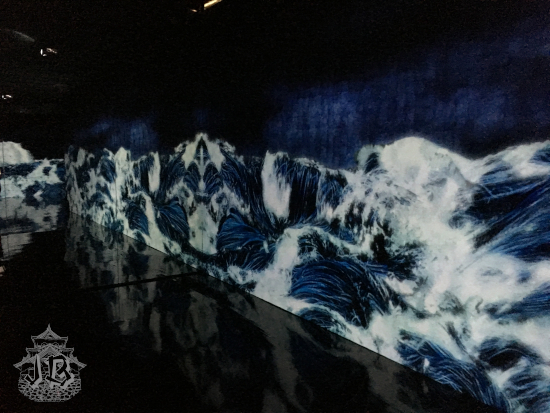
  • Black Waves: Lost, Immersed and Reborn (2016), an amazing scenery of breaking waves.

  • Enso – Cold Light (2017), a self-tracing enso (perfect circle traced with one stroke in calligraphy).

I was very happy to see this, and then we walked around the “Evolution of phones” exhibition- however, I apparently have not taken pictures of that one. I think it was too nostalgic, because god did it make me feel old (≧▽≦).

Before we returned home, we had lunch at a De María restaurant – an Argentinean meat-grill where we got a glass of rose champagne to go. Another place I want to return! However, this time I did not take pictures because the atmosphere did not feel adequate to do so.

17th April 2019: La Almudena & Mercado de San Miguel (Madrid, Spain)

A Japanese friend had a layover in Madrid, so I took the day trip to see her and stay with her until she moved on to her final destination. We dropped off her luggage at the coin lockers in Atocha station and I asked her what she wanted to see.

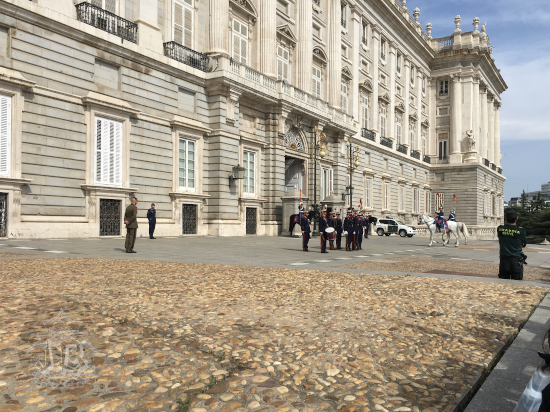
Our first destination was quite accidental. We were heading towards La Almudena cathedral when we stumbled into the Changing of the Guards in front of the Royal Palace of Madrid, the Palacio Real de Madrid.

The Catedral de la Almudena, Madrid’s cathedral, is right next to the Palace, and we were there a few minutes later. We walked around the upper area. It was a nice, sunny day so the coloured windows made neat reflections on the walls and floors.

Afterwards we found our way to the cathedral crypt.

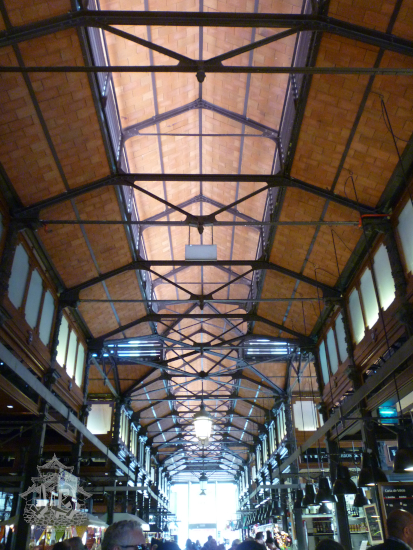
Then we moved on towards Mercado de San Miguel, St. Michael’s market, a bit of high-end foodcourt. I’m still traumatised due to the 6€ we paid for four lousy croquettes, but that’s life and she really wanted to go there.

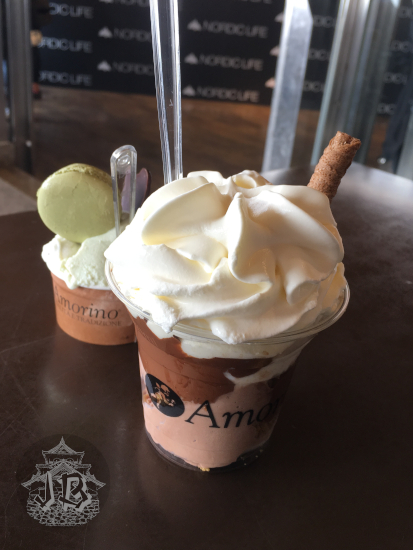
It was very hot, so we took shelter in some of the shops and then we headed off to have some ice-cream in the Callao Gourmet Experience and enjoy the view. Afterwards I dropped her off at her train so she could go on her merry way and I went back home.

16th February 2019: A day at Japan Weekend (Madrid, Spain)

Having nothing better to do, my sibling and I headed over to IFEMA to spend a few hours in the Japan Weekend convention of “Japanese culture and other stuff”. It took place in Madrid over the weekend, and I had read that there were a couple of Japanese musical numbers that looked interesting.

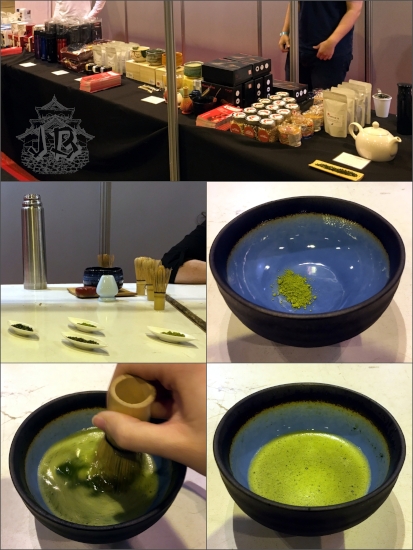
Aside from the two mini-concerts, there was nothing fixed on our schedule. I saw the stand of a teashop called Punto de Té (Tea Point). It looked like a really nice place – judging by the prices. They offered small Japanese matcha “workshops”, and I signed us up for one of them. Matcha [抹茶] is my favourite type of tea, after all – especially freshly made. It comes from the plant Camellia sinensis, which is kept in the shade for the last four ways before harvest so it produces extra theanine and caffeine. The leaves are trimmed, dried and finely ground into a powder.

The workshop was not really a tea ceremony, more like a mock-up, but we were able to whisk our bowl (chawan [茶碗]) of matcha using a real chasen [茶筅], a sort of bamboo brush that is used to dissolve the tea powder in the boiling water until it makes foam – the best part. I am not an expert, but the tea was really good, and my sibling enjoyed the experience. We decided that we would come back to buy some stuff when we were about to leave as we did not want to be carrying around stuff all day. Fortunately for the shop, when we came back the had sold almost everything!

Collage showing how matcha dissolves into water, from powder to whisked to foamy green liquid.

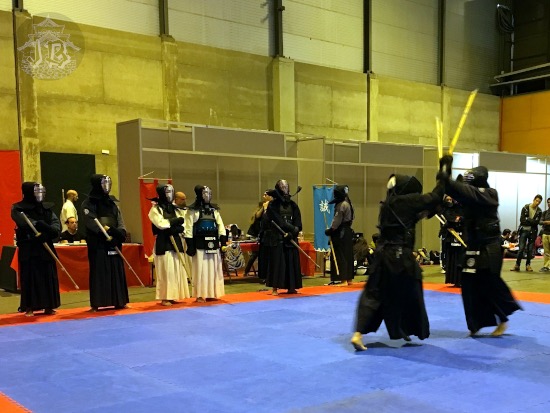
Afterwards, we watched a kendo exhibit for a while. It was not a competition or anything, but those people were living the fights. That was cool. I don’t know one thing about kendo, but they did look like they were having fun, while at the same time taking everything very seriously.

A group of kendo practitioners, showing two of them engaged in a fight.

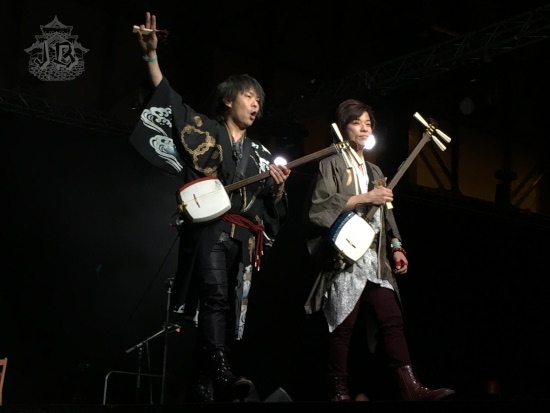
One of the mini-concerts I wanted to watch was that of Kuni-Ken. Older brother Kuniaki and younger brother Kenji play “shamisen rock”, mixing classical sounds with modern tunes. Their instrument of choice is the shamisen [三味線], a three-string guitar or lute played with a pick. It is not the first time I’ve seen shamisen applied to rock or other modern rhythms – Kennichi Yoshida does something similar.

The concert started a bit late and to our astonishment, people wanted to watch sitting down! My sibling and I were on the first row, and we got yelled and poked at until we crouched down. I am getting too old for these events, really. Kuni-Ken came on stage with masks from their Zero to One promotional video. They played a few cover songs, and some original ones. The last song was a cover of City Hunter’s theme Get Wild.

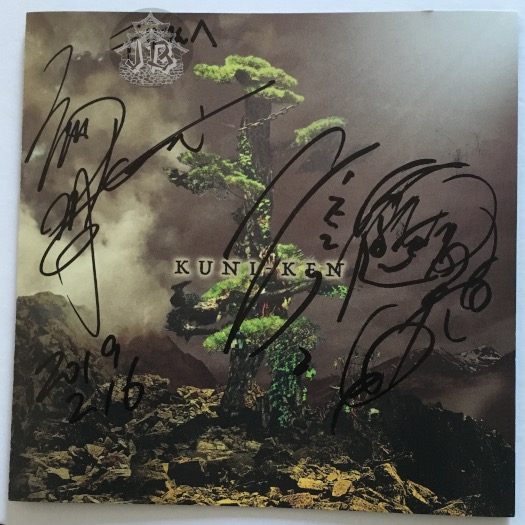
The concert lasted around 30 minutes, and afterwards we headed off to the meet and greet area. Kuni-Ken had a problem as they could not open the suitcase they had brought their merchandise in, and in the end they had to rip it open. We bought some CDs and they were kind enough to sign them – even doodle. They also gave us a sticker and took a photograph with us.

Kuni-Ken waving from stage

Kuni-Ken signed CD

Later, we stopped at Japanese drummer-turned-rapper AKKOGORILLA’s concert, a young woman who tries to defy a stereotypes of how “good girls” – and especially Japanese girls – are supposed to behave. She chose her name during her drumming times because she learnt that gorillas communicate using rhythm. Her songs invoke themes of feminism, LGBT+ and gender ideas.

She has a very particular style and moves as if she had batteries or something. She bounced and jumped on and off stage and never seemed to catch a break. She totally blind-sided the organisation by going into the crowd and pulling people up to dance with her. She was not close to us, but I got some cool pictures.

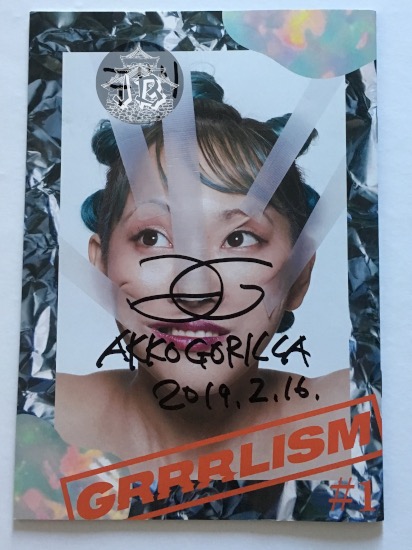
AKKOGORILLA calls her own style #GRRRLISM. She’s bouncy and vibrant on stage and she invites the listener to bounce along her catchy tunes. She sings a lot in English. The concert was again only 30 minutes though. Her songs included Yoyu and GRRRLISM, in which she clearly expresses “my body, my choice” – because she apparently commits the deadly sin of not shaving, and people seem to have opinions about that.

After the concert, I hoped to get a signed CD – I liked her more than I thought. Unfortunately, she had not brought any music, so we got her Zine signed instead. I also got a photograph.

Akkogorilla singing on stage

Akkogorilla autograph

Before leaving, we went to check the tea shop, but they had sold out everything we wanted. They offered to restock for the next day, but I was coming down with a migraine – the yellow lights at IFEMA are horrible. I also think I’m getting too old and cranky to hang out with the younger crowd though. In the end, I don’t care much about the shops – having credit cards, I don’t need a physical stand at a convention to buy stuff, and I avoid bootleg merchandise… Going to this kind of places for short live music displays… is starting not to cut it.

2nd January 2019: Jurassic and 19th Century Madrid (Spain)

I was in the middle of winter holidays and a couple of family members asked me if I had plans – I said I was getting tickets for a dinosaur exhibit in Madrid, and they jumped in. We made arrangements to head over there on the 2nd of January and spend the day in Madrid. I don’t think they really realised what it meant to be around me and the “terrible lizards” (≧▽≦). But off we went.

General entry ticket for 2nd January 2019

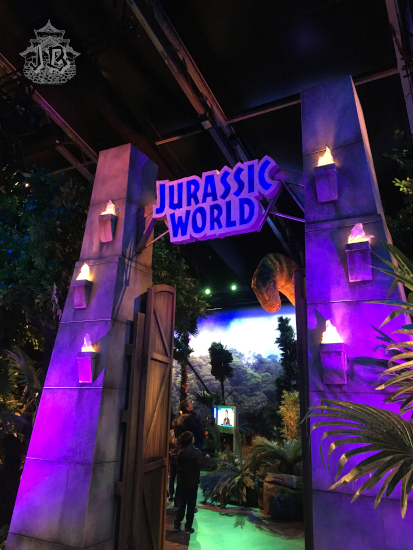
The Jurassic World: Exhibition was held in Madrid. The whole thing is organised in-verse, as if you actually visited the island.

Jurassic World the Exhibition logo and title

After you walk in, there is first a small introduction on the “boat” as you travel towards Isla Nublar. There you are given the instructions (mainly, keep your hands to yourself), the boat makes dock and you are let into the Park. Keeping in touch with the spirit of the films (not the book though *giggles*) there’s a Brachiosaurus there to greet you, just like the first animal you see in Isla Nublar (and later the last).

Pretencious gate with two columns on the side, reading Jurassic World. A brontosaurus head peers down at you

You also catch a glimpse of a Parasaurolophus.

The head of an herbivore dinosaur (parasaurolophus) peering through the bushes

Then you get to the “stables” where you get to see a Triceratops mama with her baby.

Mom and baby Triceratops behind a fence that reads Gentle giants petting zoo

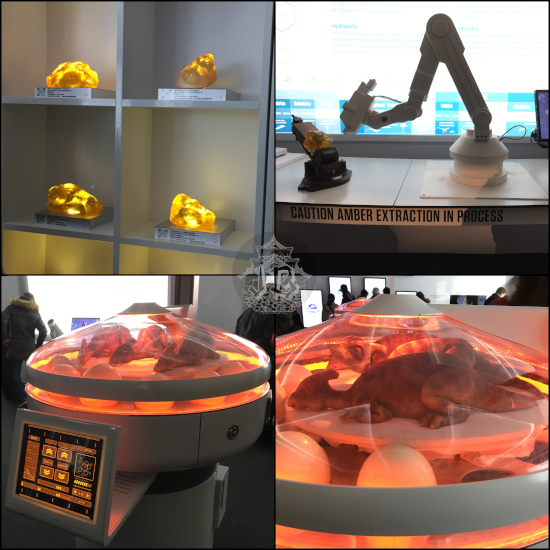
Afterwards, there is a small room that represents the laboratory where the dinosaurs are made – I could have made it out with a critter but there were only baby Iguanodon.

Fake amber pieces and DNA extactor along with an incubator with eggs and baby dinosaurs

Next, you walk into a tiny museum with some fossil reproductions and actual scientific information…

Reproduction of carnivore dinosaurs skull and bones, along with the drawing of a huge T-rex fooot print drawn on the ground to compare it to a human one

… right before everything goes to hell and back when you’re shown a hologram of Owen Grady talking to his velociraptor Blue and you get a… guy in a velociraptor costume prancing around (≧▽≦).

Person disguised as a verlociraptor

The next room shows the Tyrannosaurus rex cage (by the way #TeamTRex here, in case you did not know) behind her cage, menacing and staring.

T-rex animatronic, showing the huge head behind a fence

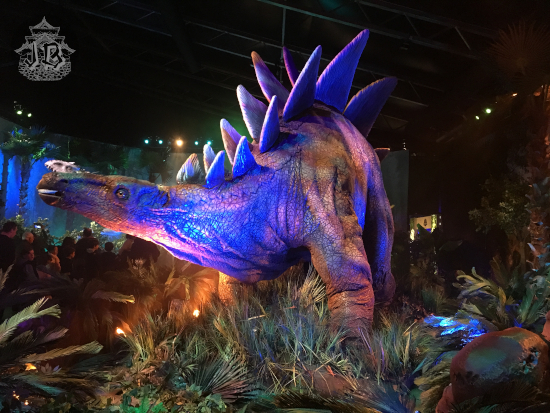
The final room is another garden in which you get to see a Stegosaurus being stalked by the made-up Indominus rex.

Stegosaurus

Head of the Indominus rex, looking like it's stalking prey

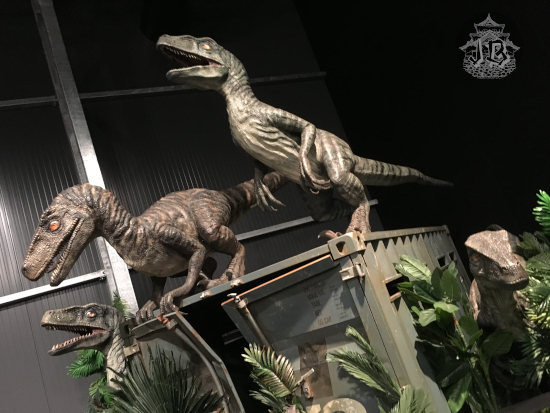
And at the end of the exhibition, after the shop even, you find the velociraptors, which have apparently escaped and are ready to attack!

Jurassic world velociraptors on a wrecked crate

All in all, being the dinosaur geek I am, I had a blast. I’m not sure that my poor family members that had wanted to tag along with me knew what they were bargaining for (≧▽≦).

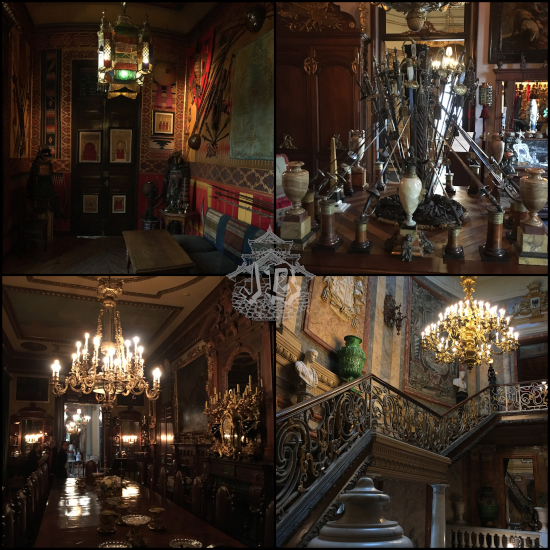
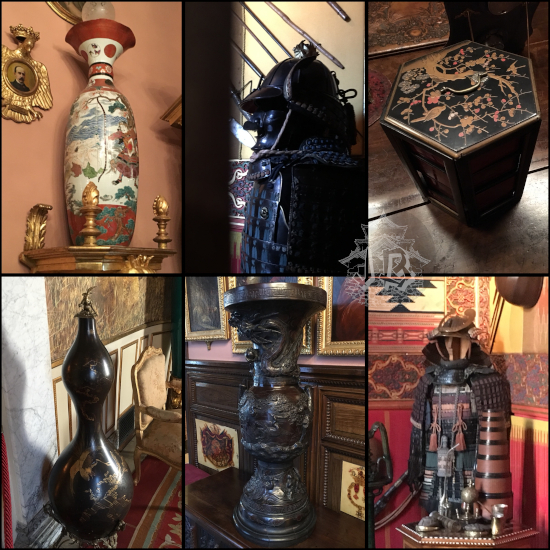
However, they were still willing to put up with my for a little longer, and together we drove off to the centre of Madrid, and somehow ended up at the Museo Cerralbo. They asked if there was something I wanted to see, and the Cerralbo Museum was running a couple of Japan-related specials I was curious about. The museum stands in the Palace of the same name, and it holds the collection of the late Marquis Cerralbo.

The museum is… crammed and chaotic, but interesting in its own way. It holds thousands of pieces, from worthless-looking mementos to priceless paintings by masters such as El Greco. Art experts say that the Cerralbo collection was the most valuable of its time.

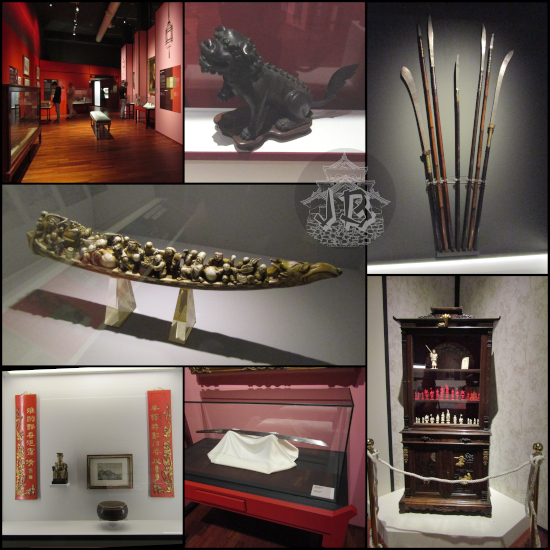
Collage of cerralbo museum. A room with two samurai armous. A centrepiece made with swords. A long table, set, with chairs along and an ellaborate lamp hanging from the ceiling. The hall of the museum, with a staircase with an ellaborate balaustrade and a glass lamp hanging from the ceiling.

The museum was holding a designated route focused on the Japanese pieces it has, including samurai armours.

Collage of Asian and Japanese pieces of the museum: hars, a samurai armour, and an hexagonal carey box

Furthermore, there was an origami exhibition on the lower floor.

Origami pieces: a phoenix, a snake, an orca, corals, and a life-sized hippo

After the museum we sat down for lunch at a fusion Asian-Japanese restaurant, because the family members “wanted to try” – although they were rather scared of the food. Eventually they managed to enjoy it too, and even have seconds – however I needed to make a run to get my tablet serviced.

Lunch. Sushi, chicken skewers, rice dish and noodles dish

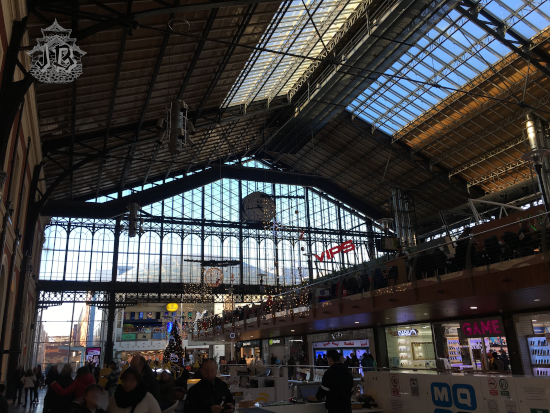
Once it was up and running, and family had come to find me, we walked towards the shopping centre in Principe Pío for dessert – yoghurt ice cream with berries and smarties. A great way to end the day!

An old station from iron architecture epoch repurposed into shopping centre

Frozen yoghurt with berries sauce and smarties

30th June 2018: Spanish breakfast, Japanese entertainment (Madrid, Spain)

30th June 2018: Spanish breakfast, Japanese entertainment (Madrid, Spain)

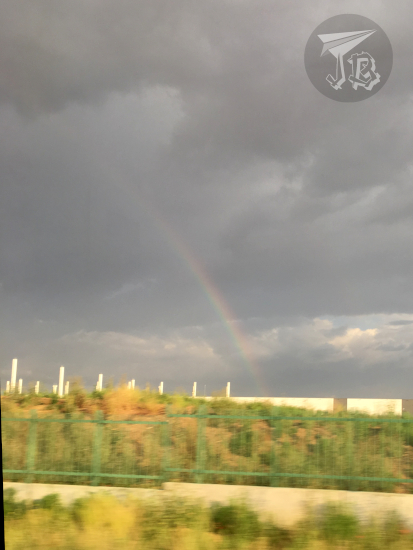
My friend C***** came over to Madrid for one of those crazy crazy things that we do – a crazy Saturday. She took a bus overnight and I went to meet her up for breakfast. The day started with a good omen, because I caught a rainbow around 7:30.

To celebrate that we had met up for the first time in a long while, we went to the most famous chocolaterie in Madrid, Chocolatería San Ginés for chocolate and churros. As her bus arrived in the early morning, I think we were there around 8:30 as I took the first train available.

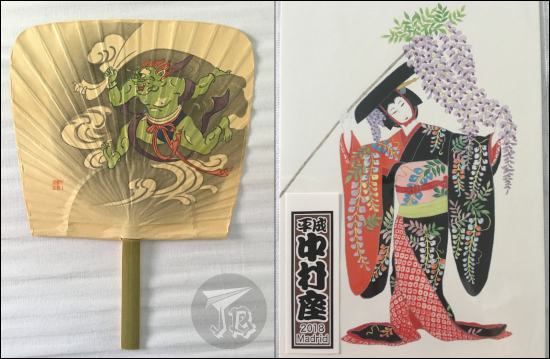
After breakfast, we head over to the area of the theatre, Teatros del Canal, for the main event at noon – a piece of Kabuki [歌舞伎], a piece of classical Japanese dance. In this case we were going to see an adaptation of Fuji Musume and Renjishi. First, we checked out the little market of Japanese craftsmanship and decided that we wanted everything, because of course we did.

Then we walked into the theatre. The company Heisei Nakamuraza was bringing two key pieces in the history of kabuki. The first was Fuji Musume [藤娘] “The Wisteria Lady”. It is a representation of unrequited love, dancing under the wisteria tree that represents femininity, and the pine that represents masculinity. During the dance there are several kimono dances and it is visually stunning. The second piece, Renjishi [検索結果], “The Two Lions”, is a very spectacular dance, in many ways mirrored between two dancers. The first part represents a parent lion-dog and its cub, then there is a small comical interlude and finally the lion dogs come out again in celebration. No pictures allowed of the performance, but have some of the theatre:

The show was over much too quickly, sadly. We went out of the theatre and raided the matsuri / market.

Then we walked a few minutes to the Japanese restaurant Hayama, where we had some sushi, gyoza, takoyaki, curry and ramen to share.

As C***** had an early-evening train to get back (I did mention that this was a crazy escapade specially for her), I tagged along to the station and I saw her off. Awesome way to spend a Saturday, though I wish we could have hung out for longer!

11th March 2018: An old-fashioned museum and a strike in Madrid (Spain)

I was looking at a work-related trip and wanted to use up Sunday morning to visit “a couple” of museums, then meet some relatives for lunch. Unfortunately, I was caught in the middle of a public transportation strike, so in the end I had to walk for a long while instead of doing what I wanted! Anyway, what I managed to do was getting to the Museo Geominero Nacional, the “Geomineral Museum” in Madrid. It is located in the headquarters of the Geological and Mining Institute of Spain, in a classical-looking building finished in 1925. It was designed by Franciso Javier de Luue. It is a classical-looking museum with wooden cases and an impressive stained glass ceiling, comprised by a central room and three surrounding balconies.

The access is through a marble staircase and the first corridor is already packed with display cases, even before you get to the main area. These cases show small and not-so-small fossils and replicas, displaying the first taste of the evolution of life on earth.

Once in the main room, most of the floor is taken up by the standing cases holding minerals, fossils and meteorites.

In the centre of the room lie the remains of a mastodon, located in the area of Ciudad Real in the 20th century, one of the crown jewels of the museum.

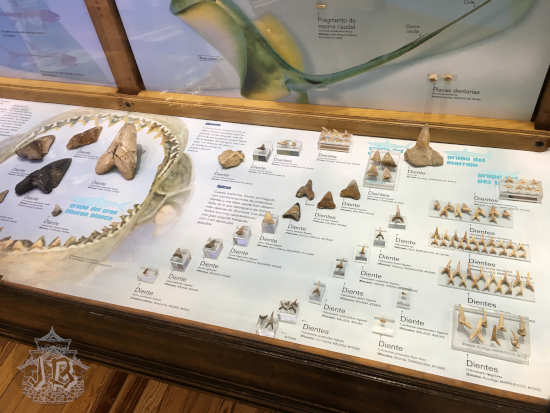
Of course I have been able to locate the collection of megalodon and shark teeth that are on display on the balcony.

Other displays on the upper floors include Spanish mountain goats, cave bears, and a human-evolution collection. Unfortunately, those did not photograph well due to the sun reflection.

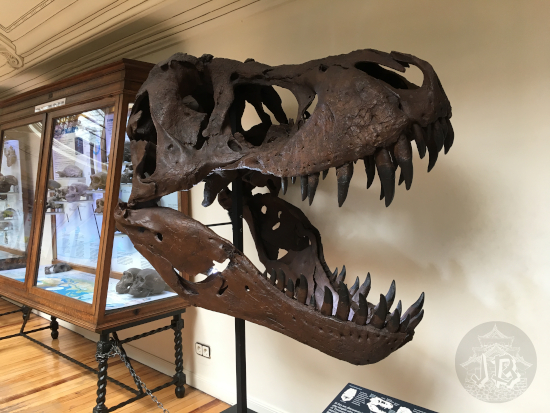
And finally, my favourite piece of the collection is the Tyrannosaurus rex skull replica that presides the museum for the second floor.

When I came out, public transport was not running any more, so I had to walk through the Madrid backstreets until I got to the area where we had arranged to meet, and we went to a restaurant called El Escarpín, where I had an awesome pan of… wait for it… gratin meatballs with molten cheese on a bed of potatoes (Albóndigas gratinadas con queso de tetilla sobre cama de patatas). Amazing! Either that, or I was really ravenous after my hour and a half walking. Serves me right for not keeping up with the news! I learnt my lesson!

28th January 2018: Amusement Park in Madrid (Spain)

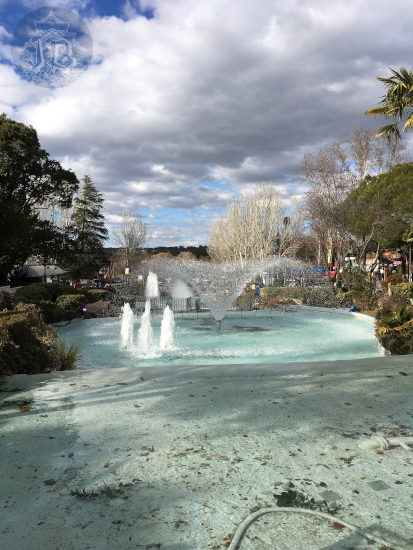
I had a friend over for the weekend and she wanted to “do something” so I got thinking. She is adcenturous, so I thought that the Madrid amusement park could be a good idea. The Parque de Atracciones de Madrid was established in 1969. I’ve never been much of a rides person, for two reasons. One, it is one of those things that you take up when you’re young, and when I was young my parents were rather opposed to funfairs and rides and so on (with good reason, to be honest, but that’s another story). Two, I tend to be worried that random rides are going to trigger my headaches, especially when I have to take my glasses off.

For this trip, I decided to wear my contacts, so I actually got to go on a few of the rides. I was mostly happy staying back and letting my friend do the roller coasters though.

I was all good with the ride called “The Jungle”, which turned out not only to have animals, but… different cultural approaches.

I enjoyed the “Zeppelin”, and the sights…

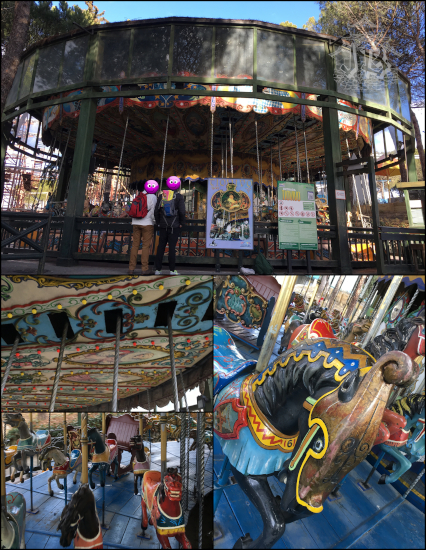
And, of course, I rode the carousel “Tiovivo”. Several times to be honest.

It was low season, so the price was much cheaper than normally. Unfortunately, it also meant that a few of the rides were closed. Then again, I wouldn’t have wanted to go onto anything with water in January…

16th September 2016: Some Madrid (Spain) Museums

I woke up one morning, a silly weekday that I did not have to work for some reason and I decided to wander off and take a day trip to Madrid to see some museums, just because I could.

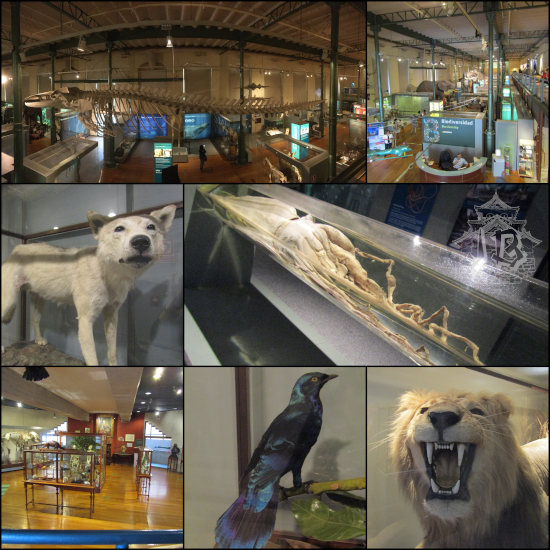
My first stop was the Museo Nacional de Ciencias Naturales, the museum of natural science. The museum is divided into several buildings. The first building holds the “Biodiversity” collection. This includes preserved specimens – in better or worse shape, mostly stuffed, and some skeletons.

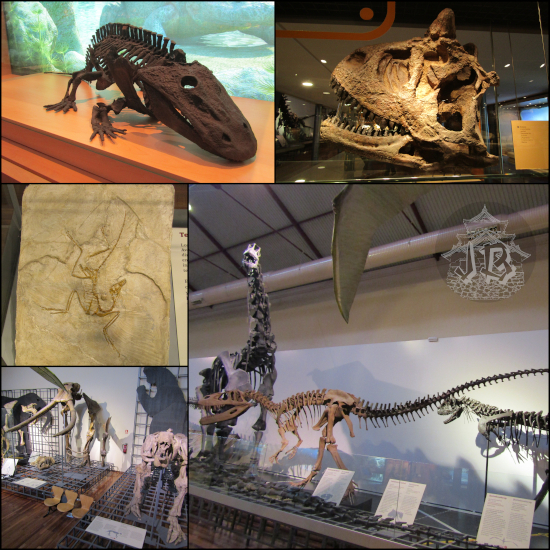
Then I walked over to the palaeontology and mineral museum, where at the moment most of the collection is composed of replica, sometimes it feels that you see the same diplodocus or arsinoitherium (two-horned rhino) skull everywhere. Of course, however, I hunted down every megalodon tooth on site and sight.

After this, I walked around the mineral collection and walked down Castellana Avenue until Colón Square, where I had lunch somewhere before I walked around to see the Museo Arqueológico Nacional – National Archaeological Museum. There were a few things that interested me there.

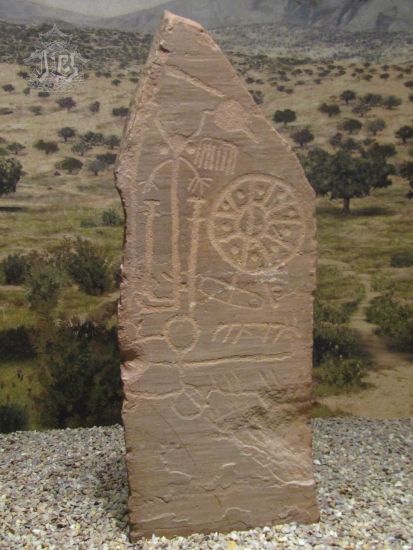
My first goal was to study the Iberian stelæ . Nobody really knows what they are or what their meaning is, but it is thought that they were funerary monuments, maybe of fallen warriors.

An interesting thing to see in this museum is the sculpture of La Dama de Elche, the Lady of Elche, the limestone bust of an Iberian lady dated back to the 4th century BC. It is supposed to be a woman who belonged to the aristocracy that was later revered as a goddess, or maybe a reinterpretation of the Goddess Tanit of Cathage. The back part has an opening, which suggests that it could have been a funerary urn. It was originally polychromated, but it has lost its colours. I really like her expression, and probably due to the Hellenistic influence. I have a thing for Greek sculpture, after all.

A second “lady”, the Dama de Baza (Lady of Baza), stands next to the first. This one still keeps some of its colours. This one is full-body, also carved out of limestone, and it traces back to the fourth century too. This lady seems to have been designed in pure Iberian style, without Hellenistic influences.

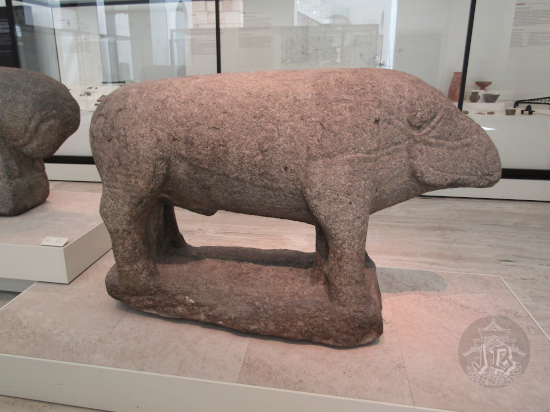
The last key pieces of Iberian sculpture in this museum are the verracos – sort-of headless boars, pigs or bulls (depending on the interpretation), but it is commonly accepted that they are symbols of protection of cattle routes. Most of them are… visibly male.

Once I had seen what I really wanted to see I wandered over the rest of the museum, stumbling upon the currency exhibition, which was strangely interesting.

I walked past the Medieval rooms and then I found the Egyptian area, which is humble, but has some interesting things like the X-rays of a mummified falcon. Finally, I checked out the classical Greek area before calling it a day and making it back home.

27th December 2014: A stroll in the cold (Guadalajara, Spain)

I had a couple of friends over for that silly blursday period between Christmas and New Year’s and we decided to get to Guadalajara for a walk or two. Not that there is much to see, but it has a small zoological park. The Zoológico Municipal de Guadalajara had a rocky start, with small cages and sad animals, but it seems to be trying to do better. The main activity that goes on in the zoo is the recovery of birds of prey, and there are some education programs too.

We had lunch in an all-you-can-eat Asian restaurant that I enjoy because it is one of the few places where I can get myself some sushi.

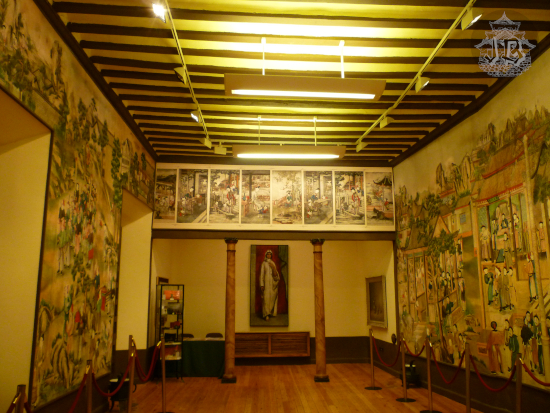
Afterwards, we visited the Palacio de la Cotilla, Cotilla Palace – whose name ‘palace’ is more than overrated. It is a 17th century is a downtown manor in Guadalajara, Spain, formerly owned by the Marquis of Villamejor. One of the rooms, named the “Chinese Room”, Salón Chino de la Cotilla, is decorated with hand-painted rice paper, brought from Beijing, and several Japanese Edo-period paintings which were probably purchased in France from Dutch sailors or merchants.

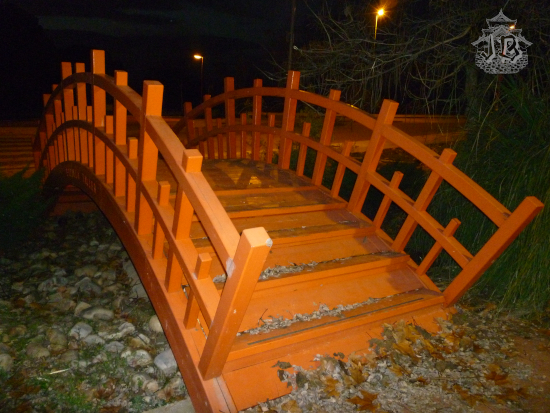
Finally we took a stroll towards a silly spot in the middle of nowhere that has a Japanes-like bridge over… nothing, really, but it is a cute bridge, in the Parque de las Esculturas, Sculpture Park.

After that we just headed back home because it was dark and cold and pizza could be ordered (≧▽≦).

14th June 2014: Falconry & Birds of Prey Exhibition in Guadalajara (Spain)

Falconry is one of those things that I’m torn about – on the one hand I’m not really keen on animal labour and shows, but being close to those animals is an amazing experience. The town of Guadalajara was celebrating the 900th anniversary of the passing of the Medieval Hero Minaya’s passing, and falconry was common technique at the time.

Rodrigo Díaz de Vivar was a Castilian knight and warlord who lived in the 11th-century Spain. He was called El Cid Campeador which roughly means the Master of the Battlefield. He was a glorified mercenary, and has made history books as one of the most important history heroes. He was exiled when he confronted the King about killing his predecessor. One of his generals, Álvar Fáñez Minaya, is credited with liberating the town of Guadalajara from the Moors. Just as El Cid represents courage and strength, Minaya represents loyalty.

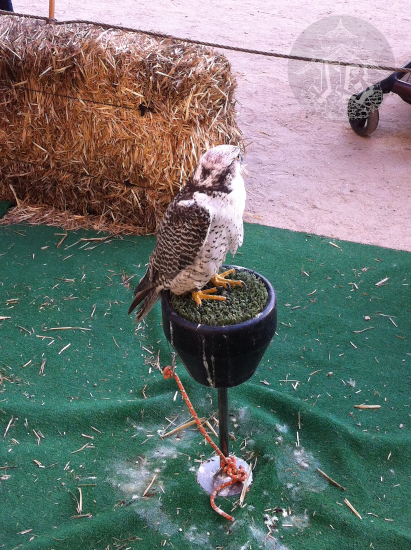
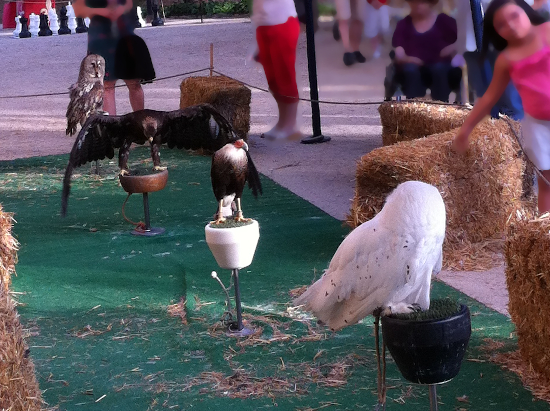
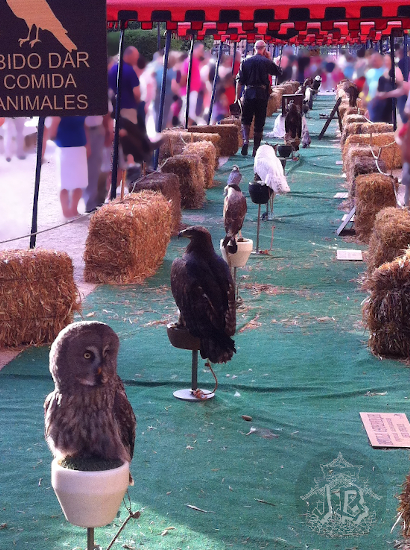
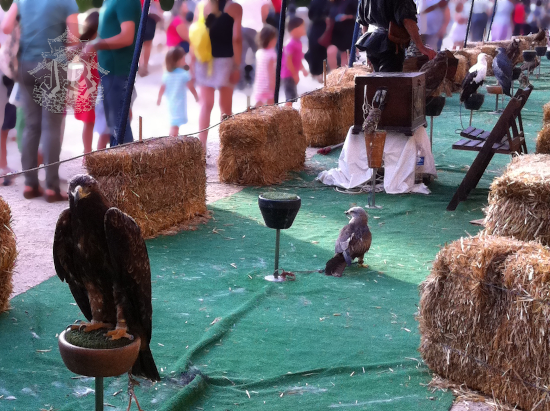
Guadalajara really likes the figure of Minaya – he is in the local coat of arms and flag, there’s a school and a Moorish tower named after him. And as he was supposed to have been an excellent falconer, the exhibition was organised. I never caught the name of the owners of the animals, but there were some very impressive birds over there – Steppe eagle, Eurasian eagle-owl, Iberian imperial eagle, Turkish vulture, a hawk / falcon and… and that’s the end of my ornithology knowledge. All in all the animals were beautiful, although people not respecting their space made me a little bit sad.

27th December 2013: The Terracotta Army in Madrid (Spain)

This was a bit of an unplanned event. I had been in Madrid the previous day with a friend and we had seen that the exhibition was going on. Unfortunately, there was a huge queue to go in, so we could not stay. Instead we got tickets on the internet and chose a standard “lunchtime” hour so we were almost alone watching the exhibit. That was awesome. The exhibition was held in the Fernán Gómez Centro Cultural de la Villa underneath Plaza de Colón (Colombus Square) in Madrid.

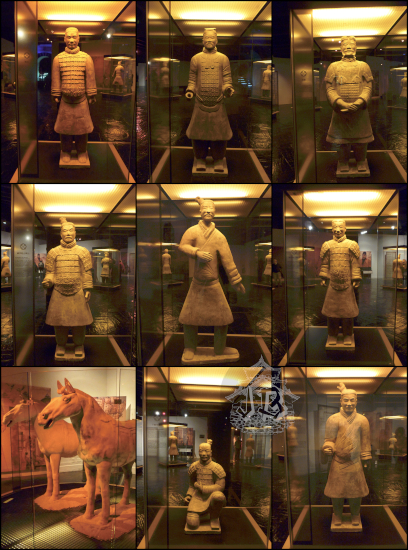
The Terracotta Army is called the Eighth Wonder of the Ancient World. It was discovered in 1974 close to the city of Xi’an (Shaanxi Province). It is comprised by hundreds of larger-than-life soldier statues built out of terracotta. They are part of the Mausoleum of the First Qin Emperor, the first emperor of China. There are over 8,000 soldiers, 130 chariots with 520 horses, aside from 150 cavalry horses. There are different types of soldiers and they have different ranks. Their function would have been to protect the Emperor from the spirits in the afterlife. Forty thousand bronze weapons have been found among the soldiers. For reference, they were buried with the Emperor around the year 210 BCE!

The Exhibition “Terracotta Army – Guerreros De Xi’an” displays about 150 replicas of the best-preserved soldiers, weapons and chariots, along with different decorative elements and a reproduction of the Pit 1, where the bulk of the warriors were found. It was a very interesting exhibition that made me actually want to travel to China to see the actual Mausoleum for real!

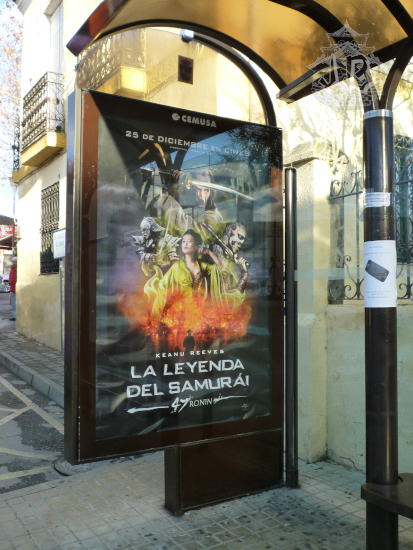
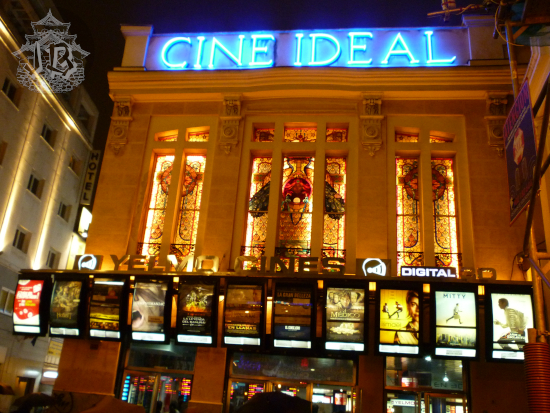
Afterwards we had tickets for the cinema, because “47 Ronin” was running, and the Cines Ideal show non-dubbed films, and basically… there was Akanishi Jin in it. The films has its… merits… somewhere… I mean I loved it but it was pretty bad – I’m not precisely known for liking deep, intellectual films anyway (≧▽≦).

26th December 2013: Japanese Exhibitions & Christmas Lights in Madrid (Spain)

Over the Christmas break, there were many activities related to the celebration of the establishment of diplomacy between Spain and Japan, so-called Año Dual España Japón. We decided to kick off the day going to a Japanese restaurant, my favourite in Madrid, the Nagoya (believe it or not, this is the daily menu).

There was a Calligraphy exhibit in the national library, Biblioteca Nacional. On the way, we also found that there was an exhibition about the Chinese terracotta warriors, but the queue was insane! We decided to try to get tickets online for another day.

We went to Caixa Forum to see a Japonism (19th-century European art influenced by Japanese concepts and aesthetics). Honestly, pictures were forbidden, but I snuck one because I really loved the painting.

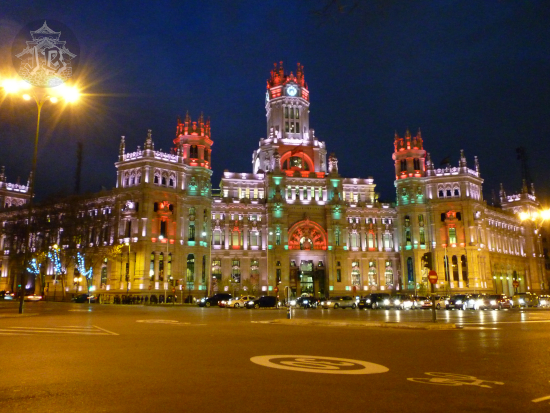
We also took a walk to see the Christmas lights. Here’s the Postal Service building, Edificio de Correos.

And a view of Gran Vía, one of the main arteries of Madrid, all lit up.

15th June 2013: Maratón de los cuentos de Guadalajara (Spain)

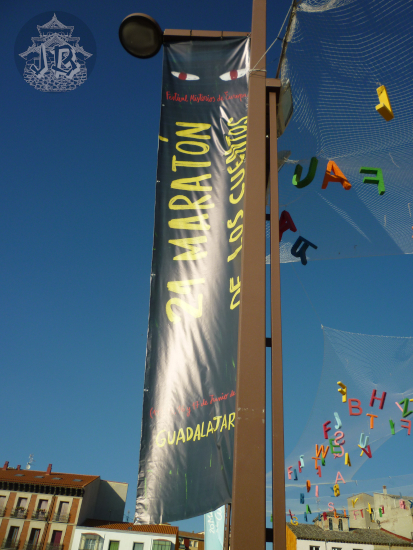
The Maratón de los cuentos de Guadalajara, Storytelling Marathon of Guadalajara, is an annual event that has been taking place in the town since 1992. During a weekend, Friday to Sunday, in June, stories are told non-stop. For a couple of days the town becomes alive with the idea of telling stories, is decorated and so on.

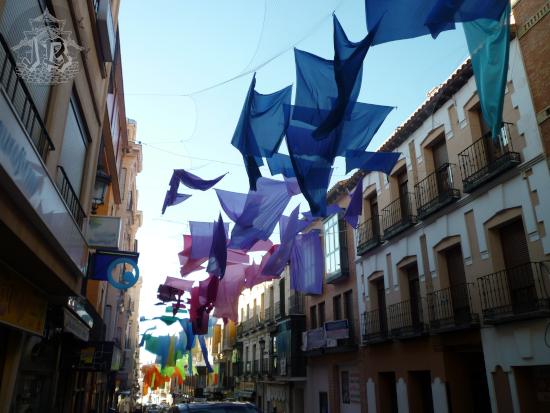
I decided to attend the marathon and listen to a few stories. I walked down Main Street, which had been adorned with flags and hanging letters.

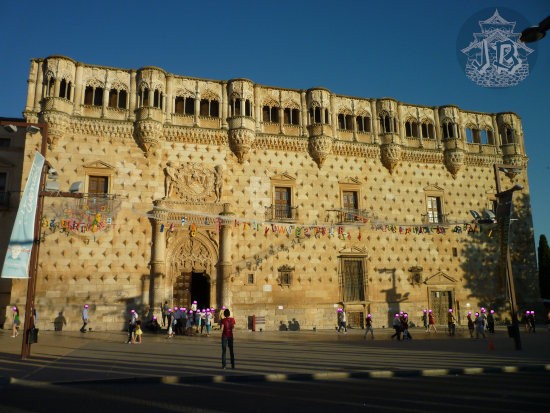
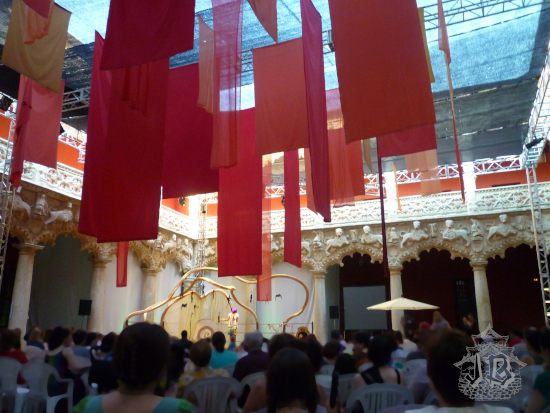
The marathon was carried out in the Palacio del Infantado, a Gothic palace that belonged to the Infantado Dukes. The most important feature, the façade, was completed in 1483. Both the Palace, the gardens, and the patio were also decorated for the event.

After a walk around I sat down to listen to a few stories inside the Palace, before I headed back home.

14th April 2013: Brihuega (Spain)

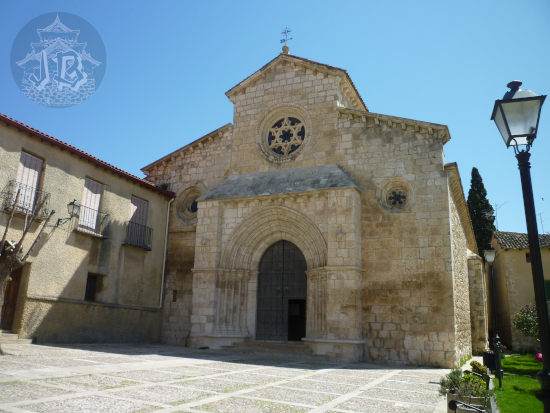
Brihuega is a little town in the centre of Spain. It is considered a historical site in 1973 due to its Medieval buildings. In this little getaway we got to visit the Iglesia de San Felipe, St. Philip’s Church, which dates back from the 13th Century.

We also saw the Parque del Molinillo, which roughly translates to “The small mill park”…