8th March 2015: Saint Seiya Legend of Sanctuary in Guadalajara (Spain)

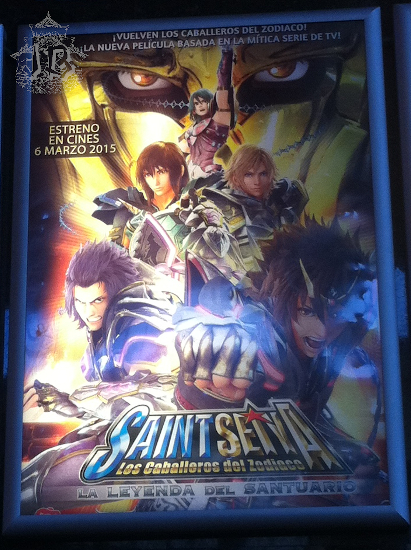
When I was young I used to love the anime Saint Seiya. Then, as I grew older, I read the manga, then I sort of drifted away from it, until somehow new fandoms and old fandoms collided – and it as announced that YOSHIKI was writing the theme song for the film Saint Seiya Legend of Sanctuary. That grabbed my attention, and eventually Selecta Visión announced that they would release them in cinemas in Spain.

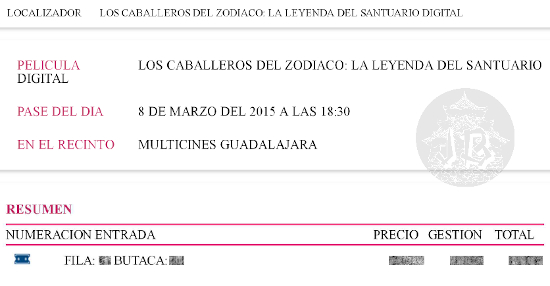
When it was announced that it would be showing in the shopping centre cinemas in Guadalajara for a couple of sessions only, I decided to buy my ticket online. It was strange for me for several reasons – the main of them was that I rarely go to the cinema to watch something dubbed. Also, the online shopping was weird -instead of getting a ticket, you got a number and then you had to input that number on a machine to get your actual traditional ticket printed.

I drove to the shopping centre, which was rather dead as it was a Sunday at half past six, the shops were closed and the restaurants not open yet. The audience of the cinema was comprised by a class of special needs kids and a lot – and I mean a lot of super-excited fathers with their young sons, who had no idea what the whole fuss was about. I enjoyed the film – I had resisted watching it bootleg although it had leaked on the Internet. It was a different, lighter take on the Battle of Sanctuary. I did, however, miss the Virgo Shaka vs Phoenix Ikki battle – because after all they’re my favourite characters. When the film ended, I stayed behind for the whole credits and YOSHIKI’s song “Hero”, beautifully sang by Katie Fitzgerald. I was literally the only person left in the cinema through it, and I had to apologise to the cleaning crew, who told me no problem. And hey, I got to see the mid-credit scene on my own!

Saint Seiya Legend of Sanctuary

After the film, I walked to the car and drove home to watch it again in its original version, because I am that kind of geek, and I was not too impressed with the dubs – but hey, that’s me, I’ve always preferred the originals.

1st February 2015: Space Pirate Captain Harlock. Madrid (Spain)

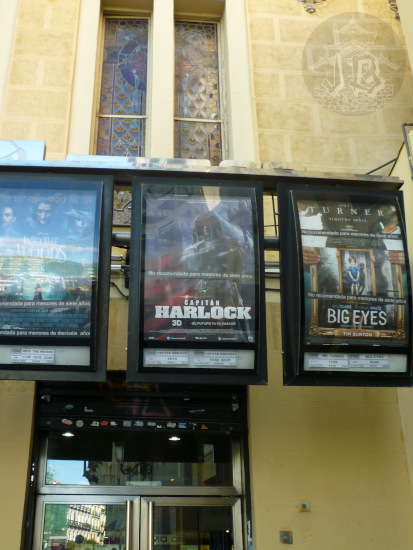
You can say that this was a bit of a spur-of-the-moment improvisation – I literally woke up and decided that I wanted to go and see the Space Pirate Captain Harlock. I found a cinema in Madrid that showed the film and I hopped on a train to get there. I arrived in time for an early lunch before I headed off for the film, as the only version in Japanese was at half past three.

This was one of the first times I ate and went to the cinema alone in Madrid, and it was a strange experience. My relatives always say that a person eating alone is sad, and as I’ve been hearing that for a long time, and sometimes it resonates, specially when I’m in Spain. I originally wanted to eat sushi, but in the end I decided against it and went to UDON instead, where I ended getting the membership card. I decided to try the Chicken Yaki Udon – much better than the ramen, in my opinion, as they were real udon noodles, unlike the ramen which uses tallarini – and a koroke (croquette), and I had cheesecake mochi for dessert.

After lunch I headed off to the Yelmo Cines Ideal to watch the film. I had no seat number and I did not need one as we were literally… five people in the cinema. It was a small cinema theatre, and when I arrived there were three or four people, I figured that more would come, but when the previews started we were just five, and five we stayed. When the film finally started, I was really impressed by the quality of the CGI – I already knew that the voice-over was going to be great, what with Oguri Shun and Miura Haruma.

The plot of the film reminded me a little of Space Battleship Yamato, but that might just be me being biased. Even if I vaguely remember watching the anime from the times I was a child, the film felt at the same time nostalgic and new, so I could really enjoy it. Although it is a bit on the predictable side, it wraps up really well.

After the film, I backtracked and it turns out I was home before anyone even noticed I was gone. I should get away more often (≧▽≦).

15th July 2014: Robots and Drums (Madrid, Spain)

A bit over ten years ago, when I was in universe one of my neighbours was paying for a proto-on-demand TV subscription, and it turned out that my TV caught it for some reason. At that time I got to watch a bunch of anime – in Spanish, badly-translated and rather… altered. Among the series I watched was Gainax’s “Neon Genesis Evangelion”, or Shinseiki Evangerion [新世紀エヴァンゲリオン]. Evangelion is a rather confusing series in itself, but the creative translation and censorship made it almost impossible to understand. Evangelion tries to be a giant robot anime with a religious / philosophical background, where humans piloting huge robots (“EVA”) battle monsters called “angels” which apparently seek to destroy humanity. Or something.

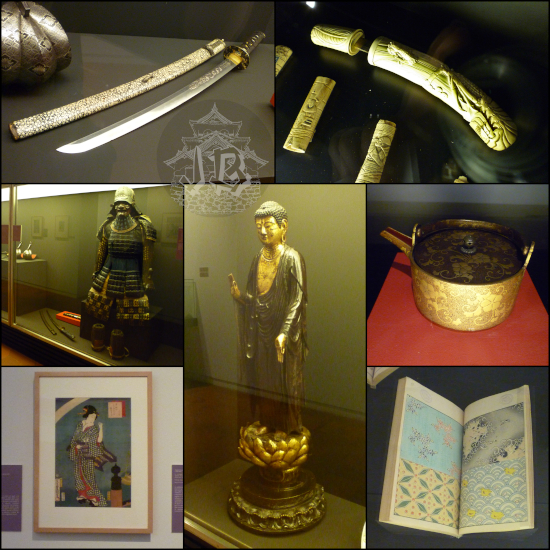
The point of this anime-history paragraph is to explain how I ended up at the Museo ABC de Dibujo e Ilustración, the drawing and illustration museum in Madrid. They were running an exhibition about Evangelion and the Japanese katana Evangelion y las katanas japonesas. It was something interesting to see, and the first time I’ve ever seen actual Japanese katana information. The exhibition has three focuses – actual katana, recreations and figures of elements of the series, such as the robots, pilots or weapons, and weapons inspired by the anime.

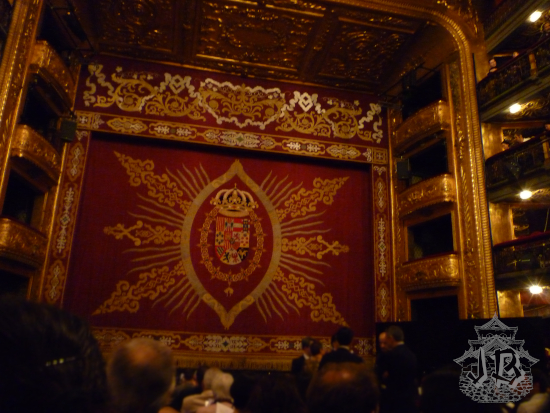
After the exhibition I took the underground towards the thratre Teatro Circo Price to watch a taiko exhibition: “Taiko Performing Arts Ensemble: Dandan” by Kodo. Taiko are the traditional Japanese drums and there is a whole drumming style for them. It was really, really fun. Due to a fluke of destiny, I had very good seats, so I could enjoy to the fullest – far away from the reverberation and echoes, close enough so I could even sneak in a good picture or two!

The performance was amazing. I think this was the first time I’ve ever seen something so grandeur. Even when I saw a taiko school in Japan, it was just drumming, while Kodo added a lot of acrobatics to the mix. It was really great!

Unfortunately, I could not even check the merchandise after the performance as I had to run for my train, or risk getting stranded overnight in Madrid.

1st June 2014: “La Mirada Interior” exhibition in Guadalajara (Spain)

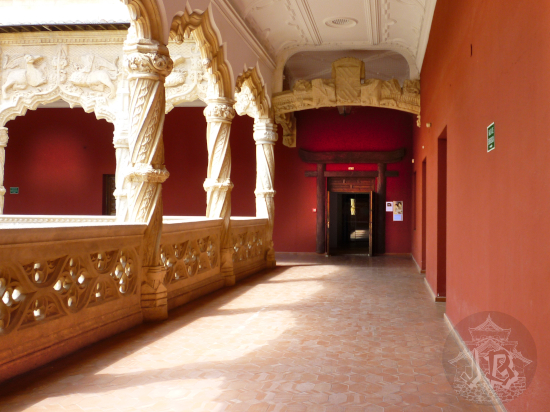
This Japanese-culture exhibition was held in the Palacio del Infantado in Guadalajara and I dropped by because seeing Japanese stuff in a Gothic palace was… well… weird. Here are some pictures:

22nd December 2013: Derelict Monastery in Tendilla (Spain)

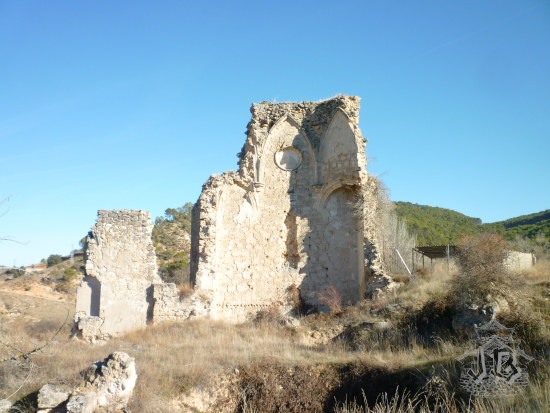
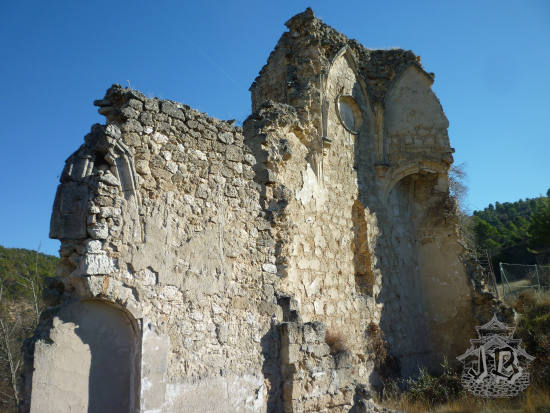
Here are the ruins of the church of a long-forsaken monastery dedicated to Saint Anne, the Monasterio de Santa Ana, a Hieronymite convent built in the 15th Century in Tendilla. Originally, it was built half-way between the Gothic and the Renaissance styles. The monastery was abandoned in the 19th century due to the The ecclesiastical confiscations of Mendizábal, a of laws and strategies that resulted in the expropriation and privatisation of religious and monastic properties. The building was later “sold” for stone, and the tombs it contained were sent to other churches.

I used to be terrified from it when I was a child, but I had an hour or two free in the village so I decided to climb up the mount to have a look.

27th September 2013: Bunraku at Teatro Español (Madrid, Spain)

Oh, Gods, this was an odyssey. Seriously, can’t we just figure out print-at-home tickets? When the announcement for the event came up, I got tickets. I actually called my parents to ask them if they wanted to tag along, and they said yes, so I bought three tickets. There were only two performances, and the tickets were selling out fast.

Let me start at the beginning – the announcement involved the Sugimoto Bunraku 2013 European Tour. Bunraku [文楽] is a type of Japanese theatre that uses puppets to perform about serious topics, mostly classic dramas (as far as I know). The puppets are dressed in amazing costumes and manoeuvred by artists dressed in black as if to become invisible. Sugimoto’s company is collaborating with The Japan Foundation to show this art to the world, in this case holding a European tour with the play.

Anyway, back to track: I bought the tickets, and the next step was actually getting them. I had to go to a cashpoint to get them printed (because, again, print at home? It seems to be for lesser beings), which was not easy as I was living in a small town at that point. On top of that, I got the wrong bank cashpoint at first (≧▽≦). Sometimes excitement gets the best of me, but in my defence a) I did not even know the actual bank existed and b) the mistaken bank had a similar name. And on top of that… in the end my parents decided not to come at all! In the end I gave the tickets to my cousin and her kid, who were curious about the whole thing.
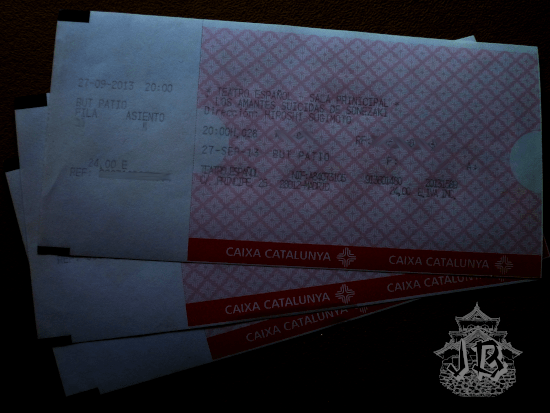
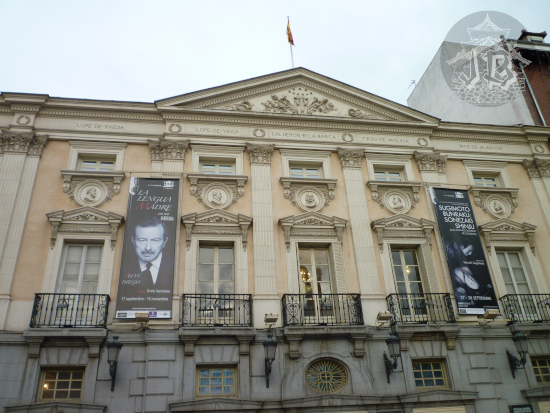
We met up in Madrid, in front of the theatre Teatro Español, where the event took place, and it was interesting to see how the whole thing was sold out. The work that was performed is called Sonezaki Shinjū, which translates to The Suicidal Lovers of Sonezaki, or the Love Suicides of Sonezaki, written by Chikamatsu Monzaemon in the early 1700s. It tells the love story of a poor merchant and a courtesan. When the merchant is set to marry off another woman, tragedy ensues until the two of them decide to die together in the forests of Sonezaki Shrine. I’ve actually got myself the book (well, my cousin insisted on getting it for me as thanks for the tickets) to read, as there were no subtitles on the play, just a summary brochure.
Even though I’m no fan of the whole romantic drama thing, I have to admit that the music and the puppets made the whole thing eerily captivating. Aside from the puppeteers, the key figure in the play were the musicians and the narrator, which explained (in Japanese) and narrated the play. The way the puppets are dressed, the shamisen and koto music, and the way you see the puppeteers and yet not see them is super cool. Unfortunately, no pictures allowed that I can show you.

Afterwards, we met up with my cousin’s husband (I did try to get a ticket for him, but it was too late already) and we… had McDonald’s, because that’s what we do when he hang out.
7th May 2013: The inner works of the Geomineral Museum in Madrid (Spain)

Due to work reasons I ended up in the Museo Geominero, the Geomineral Museum, in Madrid. The Museo Geominero is a rather anachronical place – it displays a great mineral and fossil-replica collection in an early 20th-century building. The inner area is used for research and hides all the high tech. However, they work with really old and cool geological elements.

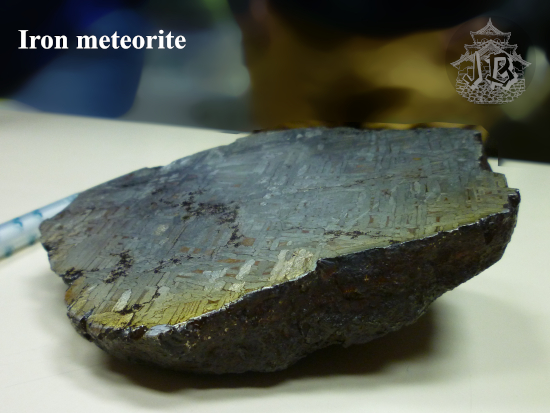
This was the firs time in my life I ever held a meteorite – just imagine, this thing floated around space, and I got to hold it. It was heavier than I would have ever imagined. You can see the zig-zags on the surface, those are magnetic markings because the main component of this space rock is iron.
There was a session going on about identifying fossils, and this is what I came up with:

Out of the bunch, I also got to play with the ammonite…

… counted the corals…

… and I petted the trilobite…

As you can see, I snuck quite a few pictures. It did not work so well during the museum walkthrough, so I guess I will just have to come back for the main exhibit some other time (≧▽≦).

9th January 2013: Inside the Zoology Lab in the University of Alcalá de Henares (Spain)

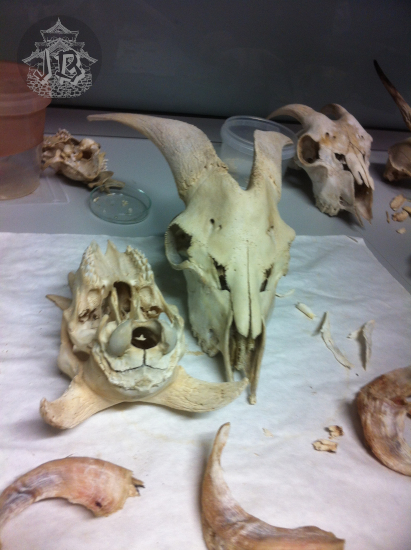
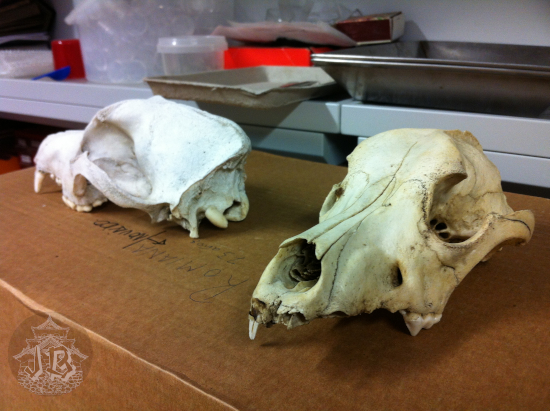
The biology building in the University of Alcalá de Henares has a small collection of Zoology and Anthropology specimens. For a number of reasons, I was invited to see it, even if it is usually only opened to researchers. Taking pictures in the Gallery Collection was not allowed, but it was all right in the laboratory where they prepare and preserve the bones. Or I was sneaky. Take your pick ☆⌒(ゝ。∂)

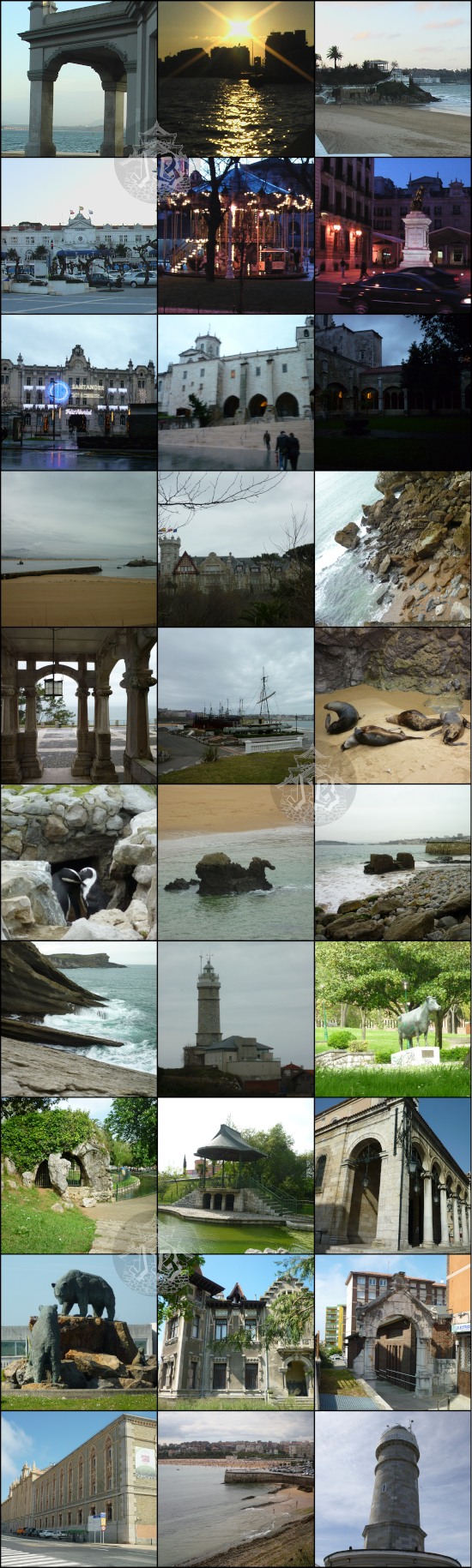
Flashback to a bunch of walk-arounds and visits in Santander (Spain) 2008 – 2011

I’ve realised I’m very bad at exploring (or at least documenting) areas close to where I live…

  • Palacete del Embarcadero (Small Palace at the Quay)
  • Bahía de Santander (Santander Bay)
  • Parque y Playa de Piquío (Piquío Park and Beach)
  • Casino de Santander (Santander Casino)
  • Parque de Las Cachavas (Cachavas Park )
  • Plaza Porticada (Plaza Pedro Velarde) (Square of the Arcs)
  • Ayuntamiento de Santander (Santander Townhall)
  • Catedral de Nuestra Señora de la Asunción de Santander (Cathedral Basilica of the Assumption of the Virgin Mary)
  • Playa del Camello (Beach of the Camel)
  • Palacio de la Magdalena (Magdalena Palace)
  • Faro de Cabomayor (Cabomayor Lighthouse)
  • Parque de la Vaca (Park of the Cow)
  • Iglesia de Santa Lucía (Saint Lucy’s church)
  • Glorieta de los Osos (Bears’ roundabout)
  • Parroquia de San Juan Bautista (Saint John the Baptist’s church)
  • Colegio Salesianos (Salesianos School)