25th September 2022: Ruta de las Caras (Buendía, Spain)

As I had a visitor, I proposed a hiking route I had heard about as a silly adventure. The area around the reservoir Pantano de Buendía is home to an… interesting hiking route.

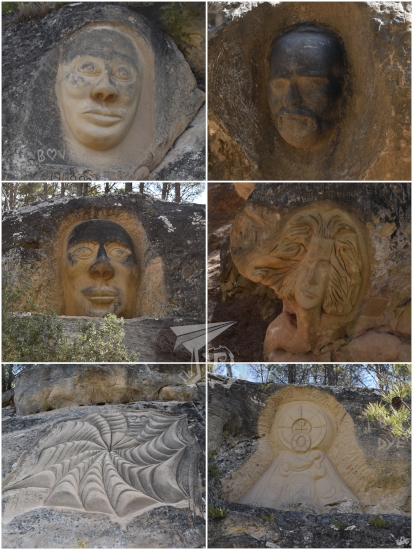
In the early 1990s, a couple of friends called Eulogio Reguillo and Jorge Juan Maldonado, a builder and a pottery maker, got the idea to create a sculpture on the rock. That, which in other circumstances could have be just been considered “defiling nature” became a Land art project – the two “artists” have carved gigantic faces into the sandstone, and the route has become a tourist spot – the Route of the Faces or Ruta de las Caras.

The route has been on my radar for a while (but I’d been feeling lazy about the drive) and I thought it would be a fun bizarre thing we could do together. It did not disappoint. You can do the complete route from the nearby village of Buendía, which is around 9 km, or drive up to the beginning of the route at the edge of the reservoir and hike around 2 km. We decided to do this, as the complete route did not offer much else to do / see.

The route features a lot of official and unofficial sculptures, along with graffiti on the rocks. It is circular and runs through a pine forest which makes it suitable for both warm and cold weather – as long as the roads to get to the village are not frozen. Though temperature had plopped down compared to the previous day, it was still mostly over 20 ºC, so nice enough to be out in a sweatshirt.

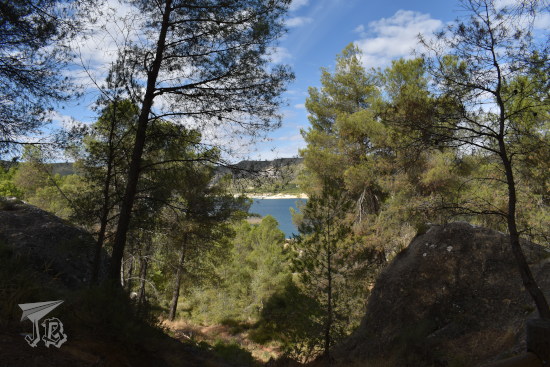
Pine trees with a bit of water in the background - the reservoir

The rock carvings vary in size, style and elaboration. There are some religious motives, such a couple of Christian Virgin Marys, and some figures from Indian (Hindu and Buddhist) inspiration, but the ideas are so all over the place that they probably just let the artists do whatever they felt like. While the first carvings date from the 1990s, the route is still being carved, and we missed one of the faces as it is in a “new” area which is still not signalled. Some of the sculptures we did see include:

  • Moneda de Vida – The Coin of Life
  • Cruz Templaria – Templar Cross
  • Krishna (Hindu deity)
  • Maitreya (future Buddha in Buddhist eschatology)
  • Arjuna (a character in one of the Hindu epics)
  • Espiral del brujo – The Male Witch’s Spiral
  • Chemary (short for the name “José María”, Joseph Mary)
  • Sin nombre – Unnamed (and unfinished)
  • La monja – The nun
  • Chamán – Shamman
  • Beethoven (the composer, yes)
  • Duende de la grieta – Goblin in the Crack
  • Dama del pantano – Lady of the Reservoir
  • Virgen de la flor de Lis – Virgin of the Fleur-de-lis
  • Virgen de las caras – Virgin of the Faces

Different faces and shapes carved in sandstone

Different faces and shapes carved in sandstone

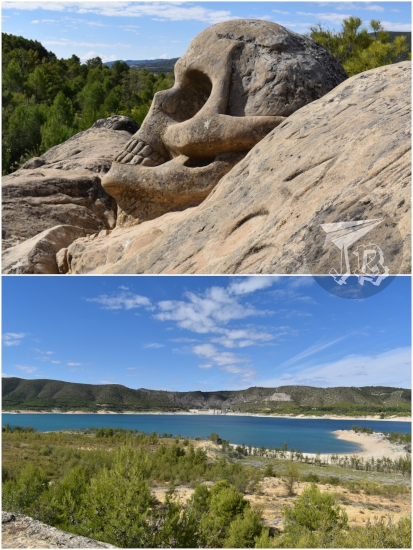
Our favourite was the skull overlooking the reservoir, called De muerte – Deadly – which one could actually climb – noooot absolutely sure it was “legal”, but the rules only said “do not carve or alter the rocks” and the sculptures are coated in a protective liquid. And after all, this started as a random art-vandalism thing.

Large skull carving (top) + the look from the viewpoint - the reservoir is pretty depleted, there is a lot of sand, but also some green trees (bottom)

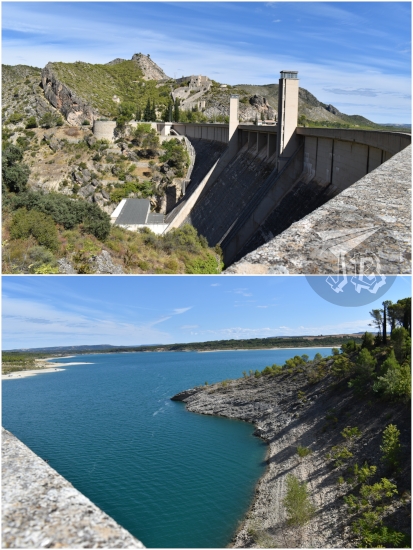
On the way back we stopped at the dam that closes off the Reservoir Presa del Pantano de Buendía, where we played with the echo.

Massive concrete dam, and the water behind it, a rich azure. The water looks cool.

Then, we moved on and once again stopped at the dam in the Entrepeñas reservoir Presa del Pantano de Entrepeñas – and I got the exit wrong again afterwards, exactly like the previous time. We saw a flock of vultures, and as they were circling in search for prey, they were a ‘kettle’.

The silhouette of two vultures circling

To end the day with befor my friend was off to the airport, we headed back and stopped to have lunch at a tiny Mexican place in the shopping centre on our way. And there I discovered that yes, there is such a thing as too much cheese on nachos. In the end, we walked around 4.11 km (6464 steps), so I think we were allowed to deal with the junk-y food.

Nachos + tacos. Everything looks a bit greasy.

10th July 2022: Reservoirs (Buendía & Entrepeñas, Spain)

I tried going for a hike because I was feeling cooped up, and tried to make the most out of the draught Spain is going through. The centre of Spain is sprinkled with large reservoirs, a lot of them built during Franco’s dictatorship as part of the efforts to get the country to recover from the war. The reservoir Embalse de Buendía is fed by the river Guadiela and it was finished in the year 1958. Before that, there used to be a bathing complex used by the royals, along with a village there. I have wanted to get there for a while, but it is tricky because the trail is reported to be in bad condition. So I decided to walk down the trail Camino de La Isabela to gauge whether my small city car would make it. Thus, think about this as a recognisance mission.

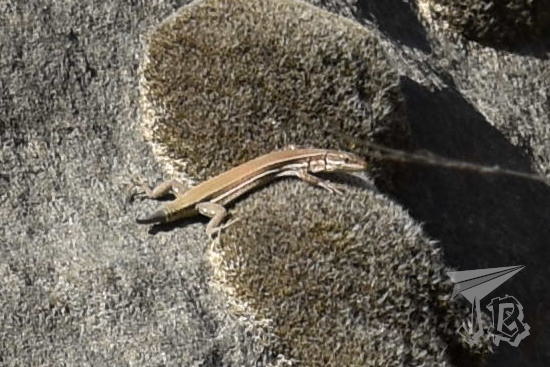
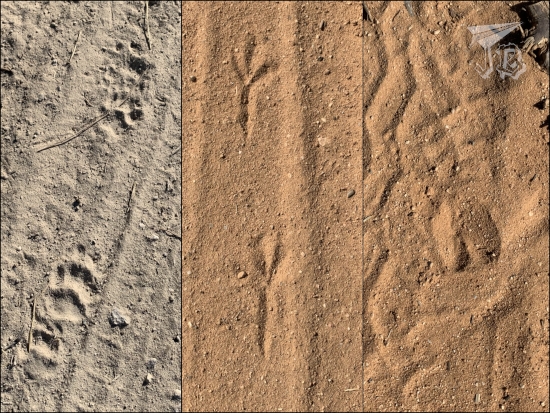
I parked the car at the beginning of the trail around 8:10 in the morning and started walking. I saw a small lizard which had shed off its tail, and some footprints – birds, canid, and I’m pretty sure a deer.

Close-up of a brown lizard which is growing its tail back.

Collage of animal footprints: paws, tallons and hooves

The temperature was nice at that time and I walked for about an hour until I got to the shore of the reservoir, then another 20 minutes or so until I got to see the derelict settlement. The water was still too high so I decided not to walk there.

A view of the reservoir. The sun is shining and there are some green / yellow plants ashore.

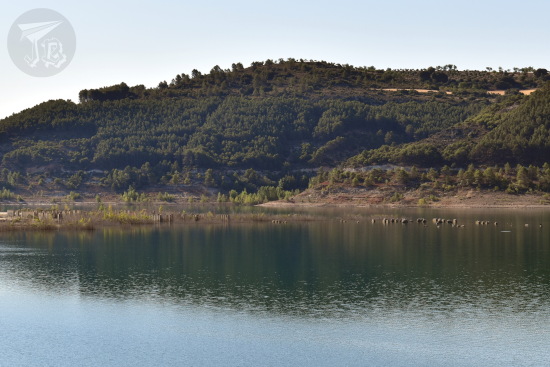
The reservoir. On one of the inlets you can guess the ruins, along with some columns that peek over the water.

I just hung out at the shore and found a bunch of dragonflies (I think Trithemis annulata, violet-marked darter (female and male), from a helpful comment on social media). Then I started walking back, because the temperature was rising fast.

A yellow and a red dragonfly.

I made it back to the car around 11:00 and drove off towards a second reservoir in the area, Embalse de Entrepeñas. I have driven by more than a few times, and I would always be drawn to a little side road that seemed to overlook the reservoir. It is actually the beginning of a hiking trail, but it was already too hot to keep going. Instead, I peered around the actual dam and hydroelectric station.

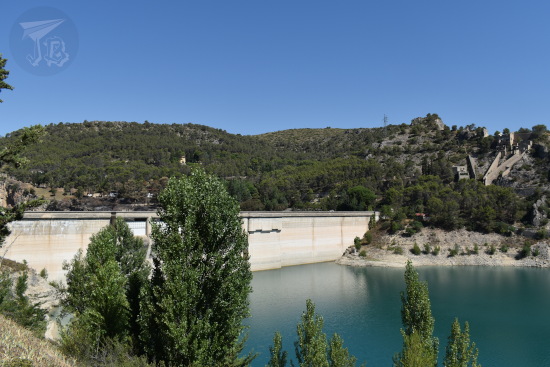
A white-grey dam closes the reservoir. There are trees in the foregrond and the water looks almost turquoise.

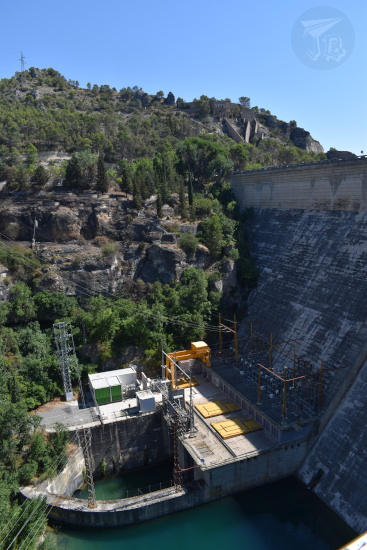
The electricity power-plant that is fed by the water behind the dam. There are a lot of wires coming out at different heights.

It was too hot to do anything, the beginning of the heat wave, so I just drove off and made a stop to see some friends on the way. I’ll keep an eye on the water level of the reservoir Embalse de Buendía in case I can come back to the area, now that I’ve figured out how far I can reach with the car.

Walking distance: 16846 steps / 11.76 km

14th December 2021: Navilandia (Guadalajara, Spain)

Back when I visited Torrejón de Ardoz in November, they were already preparing their Christmas display, which is famous in the area. In a smart way to curve attendance though, this year the town hall decided to charge non-locals to enter. Towns around quickly noted this and decided to organise their own magnificent displays, and in the case of Guadalajara, give a hand to the people who live off the carnivals and fairs, as most regional summer festivals have been cancelled for the last two years. They called it Navilandia (Christmasland), the biggest “Christmas Theme Park” in the region.

The “theme park” is divided in several areas. The first one is the palace Palacio del Infantado, its gardens and the adjacent square. The Palace features the same Christmas tree as last year, and the gardens have been decorated with lights, Disney characters, a Zeus sculpture, music and… dinosaurs. I have no idea what dinosaurs have got to do with Christmas, but you won’t hear me complaining about dinosaurs. They are called the magical gardens Jardines Mágicos del Infantado. There is also a small flea market.

A gothic façade with a Christmas Tree made out of green and gold lights in front, along with some more decorations: Felices Fiestas, another tree, a reindeer made out of light

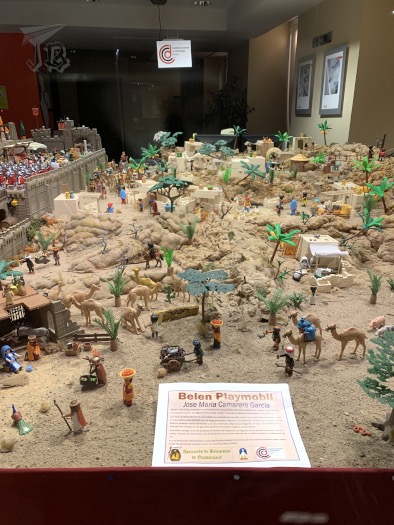
As I walked up Main Street I saw the traditional Playmobil Nativity they always set in one of the shops. However… I’ve never been able to spot the actual Nativity scene here. It is rather cool, though.

A Nativity made out of Playobil figurines, the stable is on the left and a bunch of toys are coming towards it through the desert. There a lots of dromedaries.

The second “Christmas hotspot” is the town hall square Plaza Mayor had a tasteful light decoration, a childish representation of the Three Wise Men, and a very beautiful – and lit up – carousel. I really wanted to ride it, but there were too many toddlers. It would have looked… weird. I need to find out when it closes so I sneak in after the kiddies have gone home (≧▽≦).

A caroussel with bright lights on in a square. Hanging above the square there are lots of lights and stars in gold colours. There are also four Christmas trees

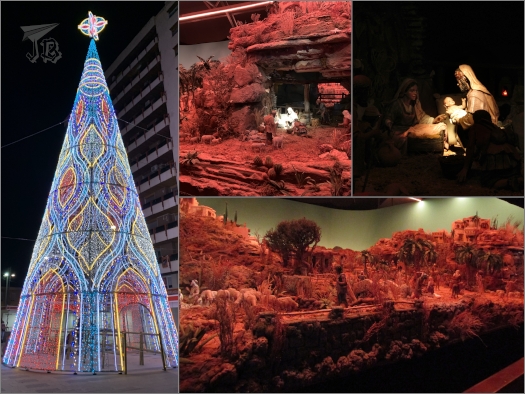
Third spot was half-closed but that is okay. The square Plaza de Santo Domingo hosts another flea market, that was not open – they are setting three rotating markets there, basically one each weekend, and we were between them. There was a big walk-in Christmas tree and the “monumental Nativity” there.

Collage: A Christmas tree made out of eye-shaped lights in blue, purple, red and yellow. A picture of the classical nativity with realistic figures. The Holy Family is illuminated in white - Joseph is placing the Child on a crib that Mary is holding.

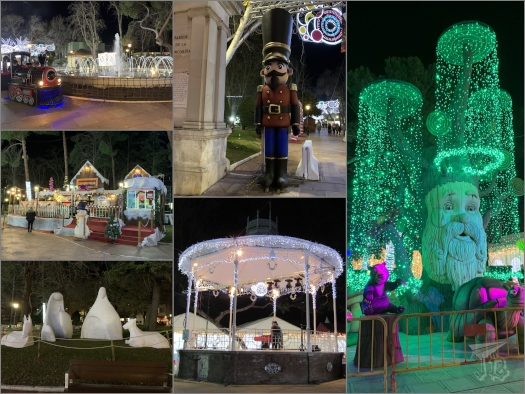
The final area extends along the parks Parque de la Concordia and Parque de las Adoratrices. The entrance is flanked by two nutcrackers; it hosts a talking tree, lights, food trucks, yet another flea market, and rides that again… are only Christmassy by name. There is another Nativity, this time an “abstract one”, a cute train and a “Polar Express” ride, some lights and… a “talking tree”, which broke into telling some tales out all of a sudden. Then, there was a bunch of rides, but they looked like your average travelling carnival rides, and I was not going to go onto any of those, so I made my way back. Also, I was strong and did not buy any cotton candy nor similar treats, though I was tempted to get some roasted chestnuts.

Bizarre Christmas decorations and motifs in the park: A giant nutcracker / soldier, an abstract nativity, some gingerbread-house-shaped shops, a Polar Express mini train, and a... something that looks like a tree with a face on the trunk and leaves made from green lights.

It was weird because for the second time in a couple of months I’ve been asked if I’m an actual photographer. True, this time it was a drunk guy who then proceeded to yell fascist slogans. I decided it was the right time to call it an evening and go home for the day…

30th November 2021: Naturaleza Encendida – Explorium. Royal Botanical Garden in Madrid (Spain)

After being in semi-lock down last year, my sibling, who loves Christmas lights, asked me to accompany them to the Real Jardín Botánico, the botanical garden in Madrid. The Botanical garden was founded in 1755, adjacent to the planned museum of Natural Science, which would later become the art gallery Prado Museum. Today, it is a research centre. The garden is divided into four terraces, a main building (Edificio Villanueva), and a back terrace, and it serves as museum of live plants of sorts.

For the last few years (at least three that I’m aware), the botanical garden has spiced up its winter downtime with light shows and displays. This year, the display is called “Lit Nature: Explorium”: Naturaleza Encendida: Explorium by the company Let’s go. The topic is ocean explorers and exploration, spread throughout the three main terraces and an extra exhibit in the building.

In order to have flexibility, I got us Premium tickets in case we needed to cancel last minute, which had the extra advantage that spared us from any queues, as we had full-access between 18:00 and 19:00. We also got to see the extra exhibit without paying extra. I drove up to a mid-way train station that allowed me better schedule flexibility – and my sibling lives close-by so it gave us the option to have dinner afterwards. I took the first train and we met at the botanical garden station at 17:30. We wandered around for a little while we waited until twilight faded, and we got in, avoiding all the lines – I did a bit of astronomy maths when planning this, regarding latest sunset and shortest twilight.

The exhibit is organised so you are free to wander around each terrace, but you can only cross from the lower to the upper terraces upwards, you cannot backtrack, in order to control capacity and people in each area. It only felt a bit crowded at a couple of points, mostly around the checkpoints, as it was very difficult to hear the staff.

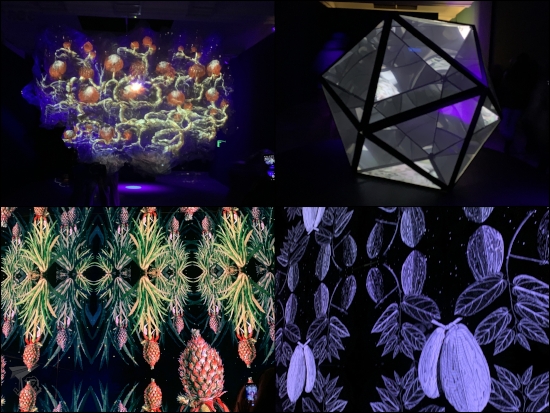
The whole display has thousands of little blue LEDs to get you on the ‘ocean’ scenery. The first terrace sets the mood – there are Christmas-tree looking build-ups and different types of colour-changing sculptures: turtles, pufferfish, and sea horses. The second focuses on laser and smoke, and reflection displays, and some serious-looking grouper. On the third, where the building stands, there is a little pond from where a few gigantic tentacles rise, and jellyfish hanging from the trees. The exhibit in the building itself is similar to the projections done by Team Lab.

Collage. A garden lit up at night, with different shapes: pufferfish, seahorses, a turtle... The trees and bushes are decorated with thousands of tiny blue leds

Collage. Light flashes in a dark garden, along with a colour gouper fish

Collage. Huge tentacles coming out of a pond, illuminated in red and blue; and blue jellyfish lamps hanging from trees

Collage. Light effects repeating the same patterns: a pineapple, a thisle, a khaki

We wandered around for a couple of hours, and believe me or not… the lights went out at some point! This was like climbing up (rope-way-ing up, to be honest) aaall the way up to see Nagasaki’s lights from Inasayama and getting caught in the clouds, but fortunately shorter (≧▽≦).

We left the botanical garden and took a train back. There were a few places to grab a bite around the station, so we ended up at a cosy Italian place and shared some stuff – too much to then grab some dessert though. When we left it was so cold that my car gave me the first heart attack of the winter by bleeping and showing me an orange alarm in the dashboard that means “the roads might be frosty” but scares me to death whenever I see it for the first time in the winter season. I drove off home, had a shower, went straight into work at 23:00 because how was I going to manage a free Tuesday evening without consequences?

Final waking distance: 8.50 km (though I really think that the wristband confuses my stress-driving with activity.

15th October 2021: Torija & Brihuega (Spain)

The castle of Torija is another of those things I’ve regularly driven by and thought ‘I have to visit one day’. Even though I had been warned that it might be disappointing as it had nothing inside but some touristic promo. Boy, was I in for a ride.

I arrived in Torija at around 10:30 in the morning and upon entrance I saw the demand that a reservation had to be made using a QR – the thing was free but it did not allow for 10:00 or 10:30 reservations – you had to pick it up for 11:00.

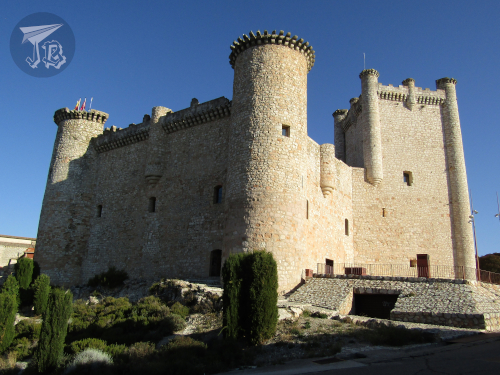
The castle Castillo de Torija was built in the 14th century, during a time of strife among all the factions and kingdoms of Spain. Later, in the 19th century, it was taken over by the French during the so-called Peninsular War against Napoleon’s troops, after basically the king Ferdinand VII gave Napoleon Spain wrapped in a bow. Napoleon made the king abdicate and installed his brother on the Spanish throne. There was a popular uprising in 1808 to fight off “the French”, who did not like this new attitude. During the war, the castle was occupied and then blown up. The current reconstruction dates back from 1962.

So there I was. The castle was empty – literally – but nobody was allowed before the reservation time because of ‘capacity rules’. So everybody in the castle was in the hall – yours truly, two other tourists, and four employees. All in the hall. Rules are rules again, but in the times of Covid, it feels utterly stupid to do this to ‘control capacity’ – since the rest of the castle was empty.

There was nothing really worthwhile to see in the castle – none of the interiors were even interesting and some of them were almost embarrassingly bad. Just a few pictures and models and mentions of the famous regional honey. I had been warned that it was going to be ‘disappointing’ but this was utterly ridiculous.

Thus, I continued off on my drive and I reached the village of Brihuega, which aside the lavender fields has a number of historical buildings and curiosities and was declared historical site in 1973. I had left the visit to this village for Friday because there were online tickets for the castle on sale, and therefore I had gathered that it was visitable that day. Right? Wrong, but that comes later.

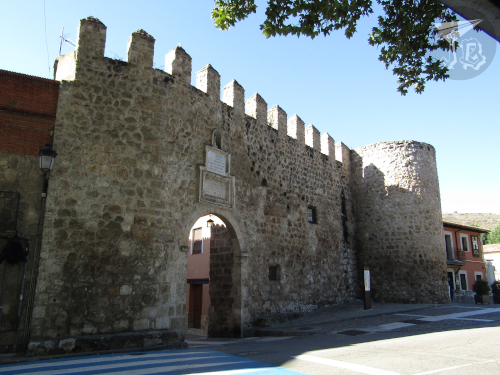
After being unable to find the spot I wanted my Sat-Nav to take me due to blocked streets, I dropped the car at a public parking lot at the edge of the village, then I walked towards the medieval core of the city. The first item I came across was one of the gates to the medieval wall Puerta de la Cadena.

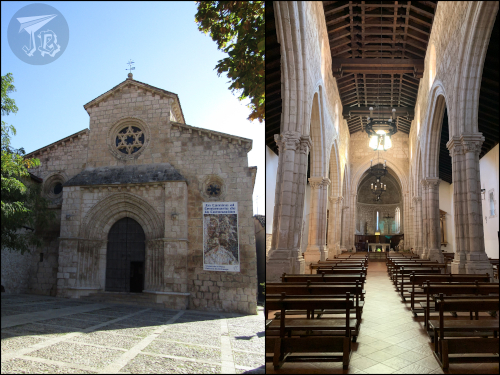
I strolled towards the centre but after a block or so I saw an archway that drew my attention. Upon turning towards it I found myself in front of the church of Saint Philip, Iglesia de San Felipe, which I had seen in my previous flash-trip. The church dates back from the 13th century, and it is a ‘transition’ church from the Romanesque to the Gothic building styles.

I backtracked towards the main street and reached the main square where the tourist information office stands. Here I learnt that there was going to be a popular festival the following day and that explained why some of the streets were blocked. After a quick stop at the tourist information office, where I got a map and a pamphlet, then I check about the process I had read for visiting the Arab caves – Cuevas Árabes. What the Internet told me was that I had to go to the butcher’s and ask the owner to let me in.

It was true – it turns out that the caves are private property and only he has decided to open up his. The Cuevas Árabes are a number of tunnels excavated into the rocky bed in the 10th and 11th centuries. They run around 8 km underneath the village, but only around 700 metres can be visited. The temperature is constant throughout the year at around 12ºC, so it is thought that they were used for food storage, and several sites say for wine. There are a number of large earthenware jars that are indeed used by winegrowers, but Arabs historical Arabs wouldn’t be drinking wine? I’d put my money on oil, but I really don’t have information to make more than a guess.

The butcher asked me what I wanted, I answered that I wanted to visit the caves. Then he proceeded to ask if I wouldn’t be scared – I paid (2.50€) and I went in after reassuring the guy I would be okay and he explained that I would also find some Visigoth archways, older than the Arab caves themselves and probably a starting point for them. The caves were the highlight of the day, really cool and mystifying, although I kept half-expeciting the owner to jump at me and try to scare me.

After the caves I headed out to the castle area, for which I had to cross another of the wall gates Arco de la Guía.

I found myself in a small square with the castle Castillo de la Peña Bermeja to my left. The castle is mixed with the graveyard in a very strange organisation. Unfortunately, it was closed (despite the fact that the website was selling tickets for the day – so glad I did not want to pay almost double in advance!). The castle is of Arab origin, built between the first and third centuries, and it gathers its name from the reddish colour of the mountain it stands on (Peña Bermeja means Vermillion Crag).

I also got to visit the inside of the church of Saint Mary, Iglesia de Santa María de la Peña by pure chance. The church was built during the 13th century, and it hosts the image of the patron virgin of the village.

Then I walked back towards the car, passing by the corridor they were building for the running of the bulls, I saw some more buildings, such as the convent of Saint Joseph, and the traditional fountains. Then I deviated towards the medieval walls Murallas de Brihuega, which was the last spot for my three-day on-and-off adventure.

Driving distance: Around 68 km (without counting the Sat-Nav merry-go-round)
Walking distance: 7.33 km

14th October 2021: Roman city of Complutum (Alcalá de Henares, Spain)

Around this time in 2020 I took a small tour around Alcalá de Henares. However, the Roman ruins were not near the town centre, and we exchanged walking there for a walking tour the university and the archaeological museum. This time I exclusively drove to the ruins (or tried to, somehow my phone and my GPS have different layouts, so ended up parking 15 minutes away when I should have parked… right by it).

Complutum was founded as a Roman town in the first century BCE, when the locals moved in looking for fertile lands for crops and cattle. The area, near the Roman road and at the bank of the river, was great – and who cared about the original Iberian settlers anyway? The city grew and a newer town started being built in the first century CE. Soon, the town became a religious (dedicated to the goddess Diana and the water nymphs), economic and strategic hub, so that several Roman roads (viae Romanae) started and died there. The town’s influence expanded for kilometres until the 8th century, when the Islamic population took over the city and the population re-settled to what is now the centre of Alcalá.

The city was eventually lost as the town developed around and over it, but part of it was excavated in the 19th century. The modern excavation was organised in the 1970s trying to salvage as much as could be from the urban developments. Most of the mosaics from the archaeological museum are from this time, apparently.

In the 1980s, the city of Alcalá decided to protect and excavate the town and as of now there are two areas that can be visited. However, they are separated and you have to walk or drive from one to the other.

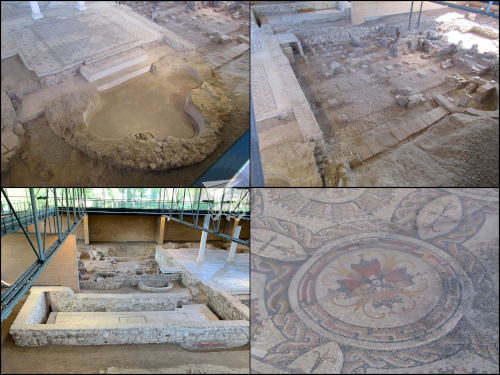
I first visited a building called Casa de Hippolytus, Hippolytus’ House, which was a school dormitory for boys. The building hosts a thermal area, a bathroom, and a garden.

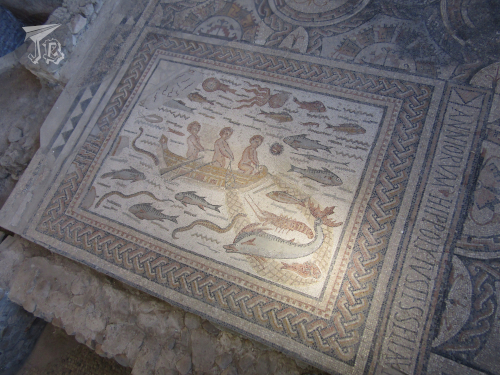
The key part of the house is the “fish mosaic”, commissioned by the rich family who sponsored the school (Anios) to the merchant Hippolytus, who signed the mosaic. The mosaic. is thought to have been a teaching tool as it depicts with a lot of detail a number of aquatic species from the Mediterranean Sea (in contrast with the people in the boat) – there is a dolphin, a sea urchin, a lobster, a cuttlefish, a moray eel, a sea bream…

I walked to the other site afterwards, Foro y Regio II, and it’s divided in several parts – it has a residential neighbourhood, some public buildings (therms, curia, basilica…), and the oracle building, along with remains of the sewers and water supplies.

The most important building, called ‘the house of griffin’ due to to the decoration, was unfortunately closed. But you can be sure that the place is kept safe by the kitty queen on call and her dutiful apprentice.

Driving distance: around 64 km
Walking distance: 6.79 km

13th October 2021: Poblado de Villaflores (Spain)

Poblado de Villaflores (Settlement of Villaflores) is a long-abandoned farm settlement was erected between 1886 and 1887. In 1882, María Diega Desmaissières y Sevillano, countess of Vega del Pozo and duchess of Sevillano (among other titles) came to own the land where the village now stands. She was known for her philanthropy and ordering several buildings be built. The settlement was one of these – the duchess commissioned architect Ricardo Velázquez Bosco to design a ‘rural colony’. The buildings were erected in limestone masonry and exposed brick, and the most important items in the settlement were the main hamlet, a dovecote, four several-family houses and a hermit church. There is confusing information on whether it has been declared an “interesting” or talks of the the declaration were finally archived.

I have driven by the settlement several times, but at one point I made up my mind to visit, even if the area has been in decline for years – as a matter of fact, a clock tower that used to be part of the hamlet collapsed in 2016, and the first alarms had been rung as early as 1980. Since then, most of the buildings have had the entrances either boarded up or walled, and the collapsed areas seem to unstable to come in explore. I wish I had decided to visit earlier, when real urbex was doable, but oh well.

The actual entrance to the area – which is paved – has been fenced off since at least 2011, despite the different announcements about recovering and restoring the settlement. However, next to the settlement there is an official cattle way (Cañada real ), used to guide the herds from winter to summer pastures (the practice of transhumance). This was a common practice in the Middle Ages, but it died away with time, and today most of them have been turned into hiking trails. The key thing is that as they cross roads, there are big clearings where you can park, and that is the way to go in this particular case. The area is named Cañada Real de las Matas (Área Recreativa Francisco Rodríguez).

At the edge of the holm oak (Quercus rotundifolia) forest, Chaparral de Villaflores someone installed a children recreational area and some tables and benches, maybe mid-1990s, and called it a park Parque del Sotillo. While the tables are still in use – judging by the rubbish around it – the swings and other elements have been plundered.

As I approached the hamlet, antigua casa de labranza, I saw the chicken wire fences but most of them were actually open and torn down, so I guess I just decided to wing it. The hamlet was open but I decided not to enter it, just in case I broke an ankle or something. This is the building that lost the clock tower, and the only one whose property is private – it belongs to a real estate company which at some point planned to develop the area, but backed out for some reason.

I went on to the church, which used to be consecrated to Saint Didacus of Alcalá – antigua ermita de San Diego de Alcalá.

I deviated towards the mill, then backtracked to the houses, crossing the actual road that is blocked. It is weird, seeing roundabouts in such a dilapidated place (≧▽≦). As I was exploring the houses, I heard shots and saw ducks try to fly away, so the cars I had come across, which I expected to belong to people looking for mushrooms ended up belonging to hunters.

That made me a bit apprehensive, but I was finally close to the most attention-grabbing building of the whole settlement – the dovecote, called La Tabalta in Spanish. It has two floors and it could home ten thousand doves – which were kept for recreative hunting in the 1880s.

I did not try to enter the winery because it was too dilapidated, nor the more modern barn, but this was a fun little visit that thankfully did not end up with me getting shot! I might try to visit this again in winter when there is less vegetation. Though since it is in the middle of nowhere the wind will be freezing…

Walking distance: 4.48 km

8th October 2021: Tamajón & Cogolludo (Spain)

When I went to the waterfalls of the Aljibe I drove past a little village I had never heard of before – Tamajón, and a side sign reading “Pequeña Ciudad Encantada de Tamajón”. The term “Cuidad Encantada”, meaning Enchanted or Magic City, is used in Spanish to refer to karst formations. Karst is the name of a particular topography, created by the dissolution and chemical weathering of soluble rocks, chiefly but not just limestone.

The particular Spanish karst landscapes were formed by precipitation of salts – calcium carbonate – in the quiet waters of the Tethys Ocean during the Mesozoic Era (251-66 million years ago). Plate tectonics made central Spanish arise during the Cretaceous (the later subdivision of the Mesozoic, 140-66 million years ago) emerge, and the calcium carbonate became exposed to the elements, which started the erosion process. The most famous karst landscape in Spain is the Ciudad Encantada near Cuenca, which I guess spread the name.

Tamajón has a short hiking route around its karst formation, and while it is true that they are on the relatively smaller size, there are different shapes. I started my hiking route at the Ermita de la Virgen de los Enebrales, hermitage church dedicated to the Virgin of the Juniper Forest – the current building was reformed in the Renaissance style, thought the actual dates are shaky.

I started on the hiking route from the hermitage, along the road, and there were no markings there, so I kind of winged it for a while. After I took the first turn and started going up the rocks, I found the painting marking the routes – I had a handmade map because someone had shared it online, so I just went along it, and when I finished I redid about a fourth of it to take a detour to the other side of the road. There are cracks, arches, caves, cavities and capricious forms. I spent about an hour and a half walking around almost completely alone, which was awesome.

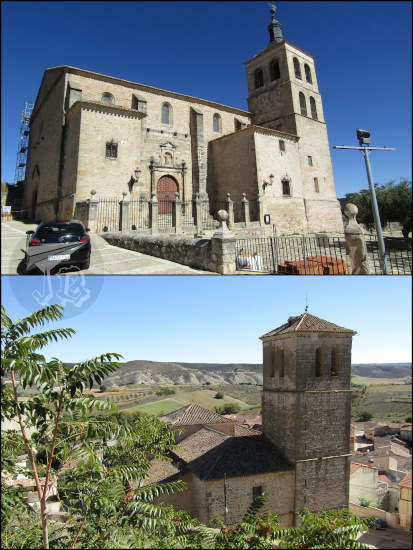
On my way back I stopped by the Church of the Assumption Iglesia de la Asunción, also a Romanesque – Renaissance mixture. The porch is typical of Romanesque churches in the Camino de Santiago (St. James’ Way), to shelter pilgrims.

As it was still early and I was relatively close, instead of driving home I headed off to another village called Cogolludo. I parked the car at the edge of the village and walked towards the main square, where there is a famous Renaissance palace Palacio de los Duques de Medinaceli. It is considered the first Renaissance Palace built in Spain, and it is reported to have been finished in 1492. The palace was designed by Lorenzo Vázquez de Segovia, with exquisite decoration, and the blaring lack of towers, which were very popular at the time. If I’m ever in the area again I might want to try to see the interior, which is only open in the guided visits.

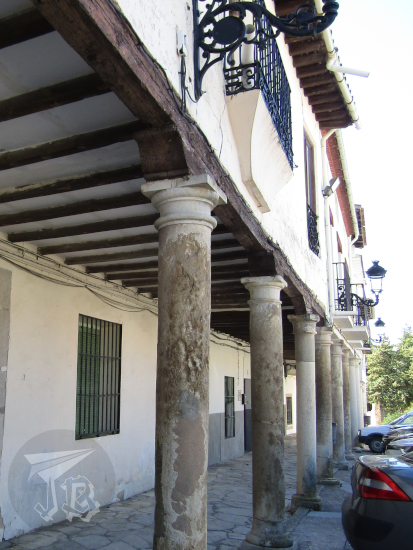
The Palace stands in the main square Plaza Mayor which has a typical Castilian arcade with stone columns (unfortunately workers, sun and cars made it hard to take a good picture of it).

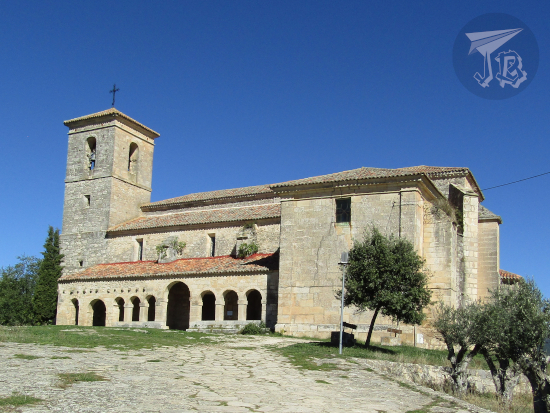
Cogolludo has two churches, Iglesia de Santa María de los Remedios (Our Lady of Remedies) and Iglesia de San Pedro (Saint Peter), both dating from the 16th century, but both completely closed down.

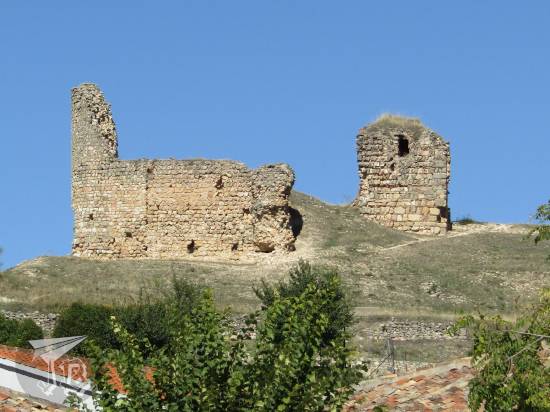
Finally, there are also the ruins of the Medieval Castle Castillo de Cogolludo, but there was not much incentive to climb up. All in all, it was a short but interesting morning – though I glad I teamed the two visits up, going to Cogolludo on its own would have not felt productive.

Driven distance: around 115 km
Walking distance: 7.27 km

8th September 2021: Impromptu Madrid Run! (Spain)

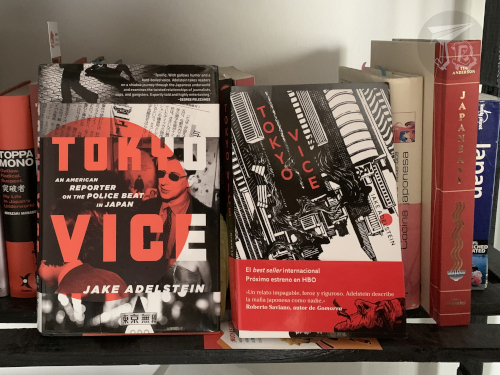
This was oh my god so unplanned that I kept improvising throughout the whole day! It all started because a Spanish publisher decided to translate a non-fiction book I’ve loved for ages – Tokyo Vice by Jake Adelstein. The publisher flew the author in for interviews, and I guess I was disappointed that no signing event was organised. I asked the author once and the publisher another time, then shrugged it off when I got no answer. There were some interviews scheduled for him, and a book fair coming up. I guessed it was just not meant to be, but I did feel disappointed.

And then, on the 7th, Mr Adelstein shot me a message that he would sign my book if I could go to Madrid and meet him at one of his breaks. As you can imagine I just… said yes (I could not meet him that very same evening because of travel times, but I could make it on the 8th. And there I went).

It was the first time taking the train since the whole pandemic thing (hell, I had not even been on a train since Paris 2020), and a weekday so I chose the times carefully to hopefully get close to as few people as possible – it worked, as both rides nobody sat next to me.

I arrived in Madrid and transferred easily, then got out at a new station in the area of Gran Vía. The Tokyo Vice book came out that day, so I wanted to go to a big book store that would hopefully have it already. My first stop, FNAC, failed miserably, so I went to La Casa del Libro, where they told me I would find the book in a completely different section where I actually did. But at least I had it in my hands, even if I had apparently not used my credit card for so long, I got the right PIN for the wrong card (≧▽≦).

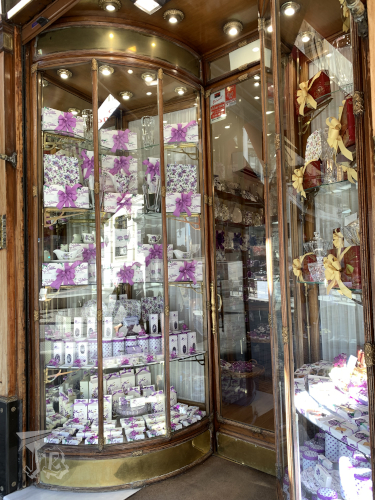
After I had the book in Spanish – I’ve owned a first edition copy in English since 2010 – I had thought that I should get a small detail for the author as he was making time for me. As he had to continue on his travelling, I decided to do something small and “consumable”, so I came up with buying some typical Madrid candy – violet sweets from La Violeta. I’d never been inside the shop, but it’s an adorable little place dating back to 1915.

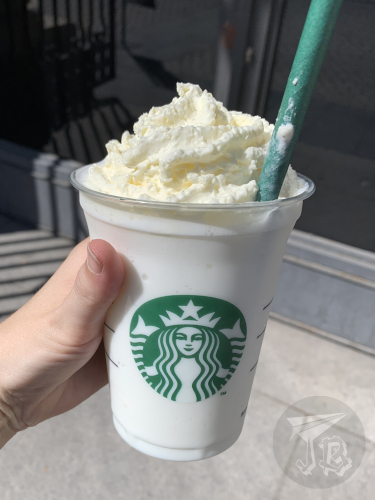
It was still early for my appointment at 14:00, so I decided to head towards a square that hosts an Egyptian temple of all things. On the way I made a stop at a Starbucks for a Vanilla Frappucino, I figured out that the amount of calories would get me going and I would not have to eat until I was back – looking back it was a weird thing, but it made sense in my head at the time. I strolled around the park next to the palace Palacio Real.

The way to the temple was completely blocked off due to construction, so I decided to backtrack. I walked up the great avenue in the middle of the city Gran Vía. As I walked around, minding my business and listening to music, I kept remembering a comic by Sarah Sanders, in which she makes fun of how people won’t leave you alone when you’re wearing headphones and, well, minding your own business.

I reached the square with the fountain to the goddess Cybele Fuente de la Cibeles and the related Palace Palacio de Comunicaciones (by Antonio Palacios). The fountain dates back to the 18th century, when king Carlos III revamped a lot of Madrid trying to make it more beautiful and similar to other European capitals.

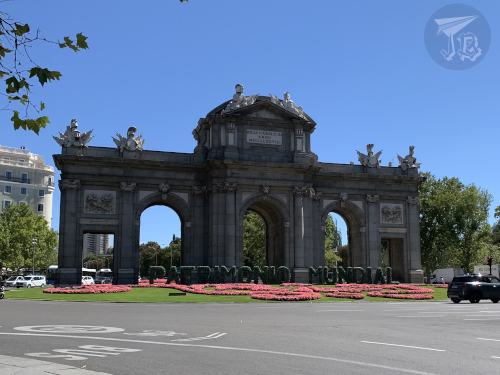
Carlos III is also responsible for the design of the modern version of one of the former wall gates, called the gate to Alcalá, the nearby town, Puerta de Alcalá. This area was declared Unesco World Heritage Site in summer 2021 as Paisaje de la Luz, so Madrid was in a celebratory mood.

I headed into the park Parque del Retiro, which is also included in the Heritage declaration. The park was initially built in the first half of the 17th century, as part of the royal recreational areas. Carlos III opened it up as public park a hundred years later. Aside from the obvious green areas, the park features fountains, palaces and sculptures. I walked past some of them. First I came across the fountain “of the turtles” Fuente de los Galápagos.

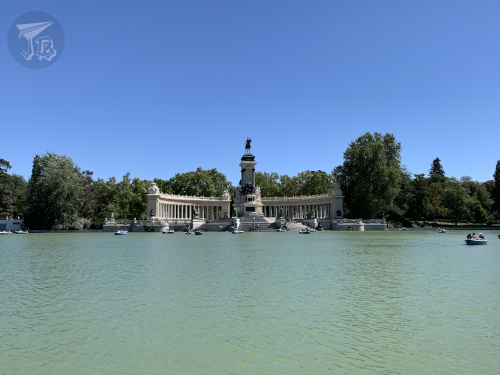
There is also a large pond, aptly called the big pond Estanque Grande del Retiro populated by carps, to whose side stands the monument to Alfonso XII – Monumento a Alfonso XII.

Nearby the pond stands the fountain called the artichoke fountain, Fuente de la alcachofa.

I walked to the fountain that depicts the fall of Lucifer from Heaven, Fuente del Ángel Caído. The fountain itself was built in order to exhibit the sculpture by Ricardo Bellve, who originally created it in plaster. The figure would then be cast in iron for the World Exhibit of 1878 in Paris, and eventually placed in the Retiro.

I strolled back towards one of my favourite points in the park, but that’s because I like iron-and-glass architecture – a little building called Palacio de Cristal, which has a small pond around.

Finally I headed over the little café where I had arranged to meet with Mr Adelstein. He arrived shortly after. He signed my book, but truth be told, I had also brought my first-edition copy, which happens to be full of post-its from the first time I read it. He was happy to sign that one too, and to my eternal mortification… he went over all the notes. I almost died right then and there. We chatted for a little, I gave him the violet candy and he had some umeboshi sweets for me too. I babbled that I was very happy that he had made some time for me, and he told me “but you were so polite on twitter and the publisher said no signatures!” and I kind of died again.

In the end, our meeting was only 15 minutes, but I have not felt so happy in a very long time – that he specifically took time felt amazing. We took pictures and even had a safe mask-hug. Afterwards I headed towards the nearest train station so I could be on my way before the afternoon rush came through, so that was it for the day.

Walking distance: 12.39 km

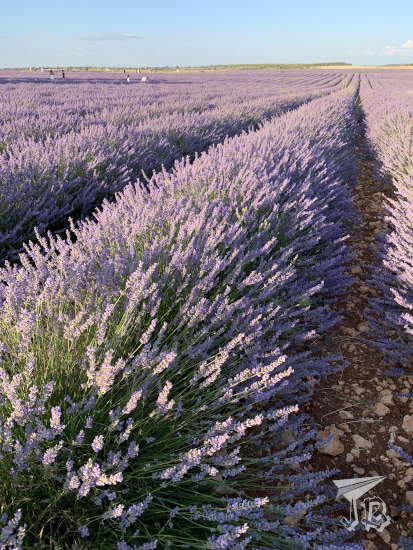
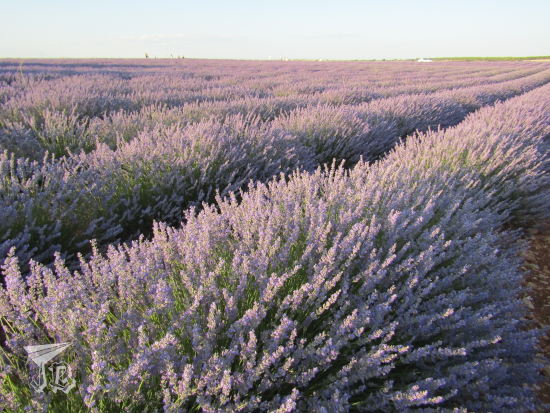
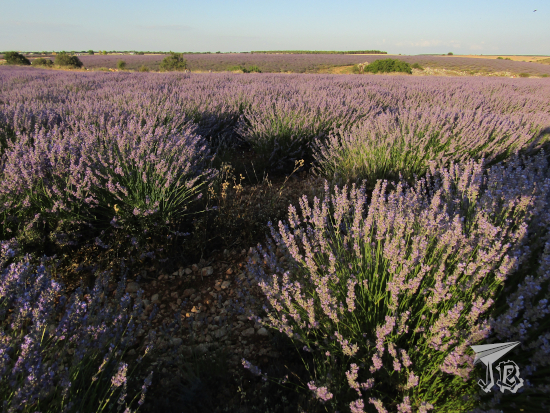
19th July 2021: The Lavender fields of Brihuega (Spain)

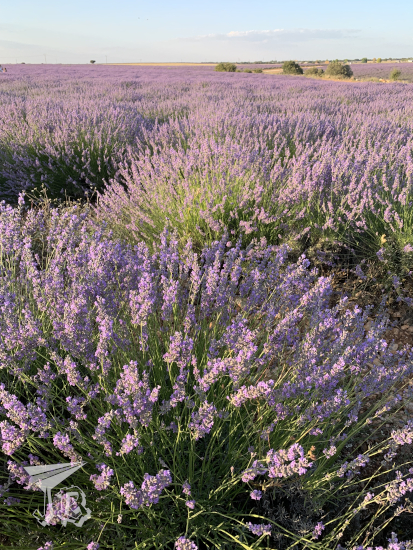
Brihuega is located towards the centre of Spain, in an area known as La Alcarria. The dates back to pre-Roman times, and although it claims to have a long and rich history, and it has been related to a few battles due to its strategic location. It received the denomination of historical site in 1973 due to the Medieval buildings that remain, among them the church of St. Philip. Today, that belligerent history is past, and Brihuega prides itself in being the the garden of La Alcarria, el Jardín de la Alcarria. The village and its related neighbourhoods are home to thousands of lavender flowers – the so called Campos de lavanda.

There are over one thousand hectares of lavender fields in the village. Lavender (genus Latifolia) does not need a high-quality soil to grow, so it adapts perfectly to the area. The flowers are widely used in cosmetics (distilled into an essential oil) , and also dried up for scent. Furthermore, the fields feed the bees in the area, also famous for its honey.

Lavender flowers in June – July and it’s harvested at the beginning of August, so it was a good moment to drop by and see the fields. The town hall advises not to visit the fields at the weekend, ad I thought it might be a nice place to see the sunset – how many people may there be around the fields on a random Monday evening?

Way more than I expected. Nevertheless, when I reached the parking lot I made the lucky decision to walk to the smaller fields and not the ones most visitors seemed to be heading for. They may have yielded to less impressive pictures, but it felt a bit safer – and far enough from other visitors so I could take off the my face mask and – literally – smell the flowers, while I tried hard not to disturb the bees at work.

I left just as the sun was about to set because I did not want to be caught in a jam as all the cars came out of the parking lot, and did enjoy catching a glimpse of the sun going down as I drove back. No pictures of that, obviously.

19th June 2021: Dino World Expo in Madrid (Spain)

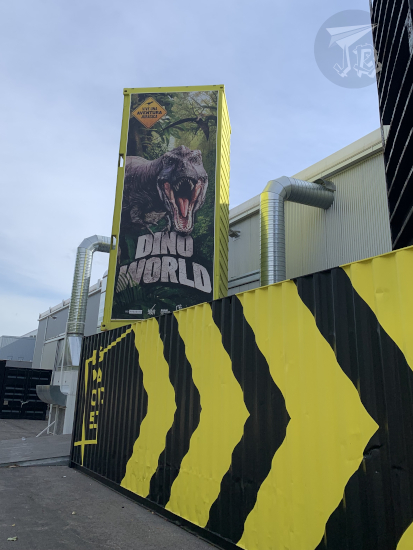
Upon finding that the exhibit Dino World Expo was opening in Madrid on the 18th, I decided to book myself a ticket for the first pass on Saturday morning, 10 AM. I guessed that it would not be too full since it was the first weekend, early, and before school was out for the summer and all the reviews popped up so everyone found about it and brought their kids.

The exhibit was held in Madrid’s fair grounds, IFEMA Espacio 5.1, a short drive away, and aside a small mishap with setting the Sat-Nav. When I arrived, about 15 minutes later there were about ten families with little kids. I walked around for a little and came back when the doors opened. There were several types of tickets, the basic one was 13.50€. The exhibit included an extra “Virtual Reality experience for 3€” (it was 4€ if you bought it during the exhibit itself), so I decided to get the “premium entry ticket” which for 23.50€ included entry, a printed picture (10€ otherwise), the VR experience, a lanyard and a poster – both of which have been distributed around kids who might have want them.

When my ticket was scanned, the system roared and I was given my “VIP lanyard”, and told that I just had to show it around. Then again, let me tell you that I almost called this post “normalise people doing stuff alone” but that would go into the ranting territory and I did not want to do that – it is enough to say that from the beginning to the end of this exhibit, every staff member gaped at me for being in a dinosaur exhibition alone / without kids.

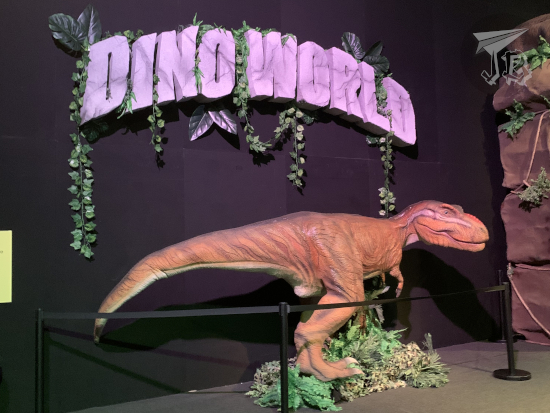
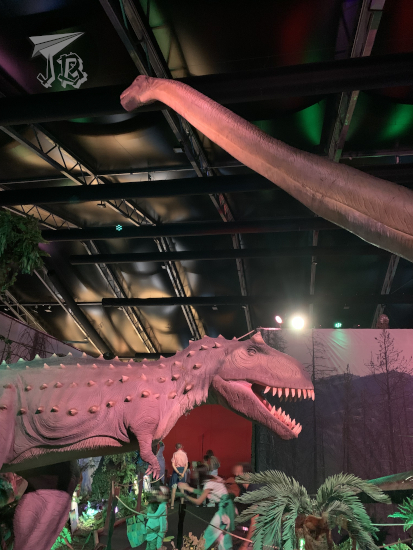
Upon entrance I got my picture taken, then had to wait a little with a couple of families before me until the first room cleared. We got an explanation about the audio-guide app and the exhibit rules. The exhibition itself was composed mostly of animatronics that moved and roared – when they had remembered to turn them on, some of them were still asleep. Aside from the life-sized animatronics, there was a CGI film and at the end of it, the VR experience which… was okay I guess. I learnt that I am not a VR person, as I got more than a bit queasy from the “flying” with the pterodactyl, swimming with a few anachronic species, and then following the T-Rex hunting.

From the shop I got my picture and the promised poster, although I had to show my ticket, not only the pass, in order to do so. All in all it was a cute little experience, but not really worth a detour if you are not in the area – one day I’ll learn that “for all the family” means “kid-oriented”, but that day was not today. On the way back the Sat-Nav got me confused and I took the wrong exit (“stay left on exit 9A” is not the same as “take exit 9A and then 9B to the left” in my books), but I was home by noon, and of course I took a lot of pictures.

Approach

Entrance

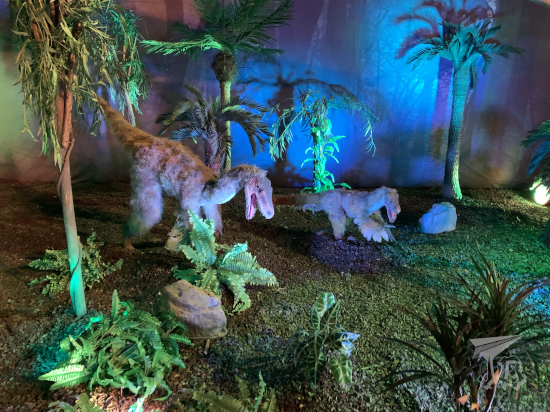
dinosaur animatronics: diplodocus

dinosaur animatronics: carnotasaurus and brontosaurus

dinosaur animatronics: pteranodoon

dinosaur animatronics: iguanodoon and Eustreptospondylus

dinosaur animatronics: feathered dinos

dinosaur animatronics: T-rex and triceratops

3rd June 2021: Hike to the Aljibe Waterfalls (Spain)

The Ayllón Mountain Range or Sierra de Ayllón is the of the chains that conforms the Spanish Central System Sistema Central, on its easternmost edge.

The Central System was formed during the early Cenozoic Era (the current geological era) in a process called the Alpine orogeny – when the African tectonic plate crashed against the Eurasian plate, a geological event that gave way to the main European and Asian mountain ranges, from Spain in the west to Java in the east.

It rests on a granite base that became first folded, then fractured during the formation of the system. As the rocks eroded, the sediments deposited and formed new sedimentary socks. Other processes that influenced the formation and shape of the ranges have been the action of glaciers and rivers and the subsequent weathering of the exposed rock.

The most common rocks in the Ayllón Range are granite, as expected, gneiss, and slates, some of the latest mixed with clays. For centuries, the villages of the area have been known as “black villages” (pueblos negros) as slate has been extracted to build them. One of such villages is Campillo de Ranas, which translates to something akin to “Little Field of Frogs”, and one of the neighbourhoods adjoined to them is Roblelacasa (literally Oak-the-House).

Roblelacasa happens to be the start of a hiking route to one of the highlights of the range – the Pozas del Aljibe (Aljibe Pools), with Aljibe being a word of Arab origin that means “cistern” or “well”, so not that original a name, I guess. I had been wanting to see these pools – also called a waterfall – for a while, so I decided to drive off and hike the route to see the Aljibe, which is considered one of the most beautiful in the centre of Spain. The hike is about 3.3 km each way – but guess what? I ended up taking a detour or two (≧▽≦). The pools are formed by the Soto Creek, Arroyo del Soto, a tributary to the river Jarama which in turn flows into the river Tagus.

Off I went. The drive took about an hour and twenty minutes. I left home around 8.20 and arrived in Roblelacasa around 9:40. The drive went well, most of the road was a nice national road, and as it was a local holiday traffic was scarce. Some people were in a great hurry though, ignoring speed limits. This was my first time driving on my own with the Sat-Nav, and it went all right. However, as I drove towards the range, there was a dark cloud I did not like one bit.

Just after reaching the “village”, I found a parking spot right behind the panels, as the expected parking lot was closed off. I had packed some frozen water, biscuits, the camera and my cap – but I had forgotten the umbrella, and it was a bit grey. I decided to leave taking pictures of the village for later, and I started walking just behind a couple who had arrived virtually at the same time, but I passed them as they stopped to take pictures.

Information

Roblelacasa

The route is officially named “PR-GU 09: Sendero de los pozos del Aljibe” and it is part of the natural park Parque Natural de la Sierra Norte de Guadalajara. Upon leaving Roblelacasa, the first couple of hundred metres crossed fractured and weathered rock before crossing a symbolic gate that marks official the beginning of the trail with a white and yellow double-line. Then, I walked onto a gravel path flanked by the remains of old fences. To the left opens a valley, and looking back I could see the village, in black.

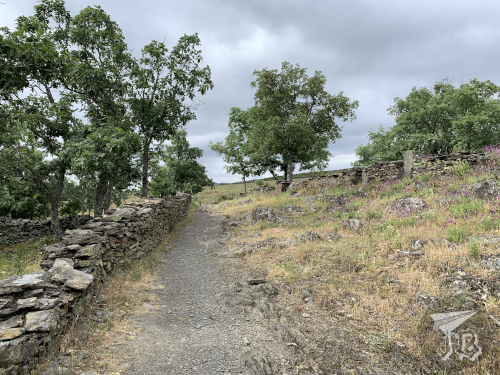
Start of the route

Old slate fences

Valley

Valley and village

The route widens into a dirt track that is obviously travelled by car sometimes, as the range peaks stand in front of you. There are no trees but a lot of bushes and aromatic herbs, and as you walk the scent is very pleasant. Then there is a small forest and a second barrier, which marks the turn where you are going to start climbing a new hill – slowly, the terrain rises to your left while it lowers on your right, giving way to the creek’s valley. Just before reaching this I passed a family who had started walking before me.

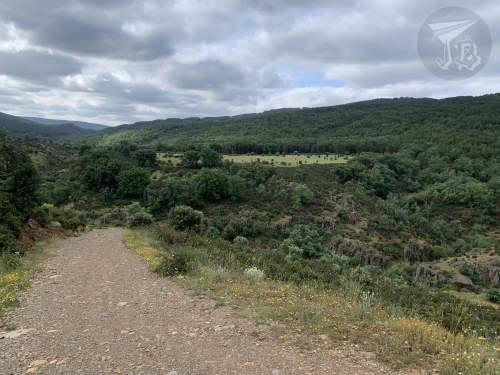
Mountain Range in front

Mountain Range around

Eventually, you reach a fork in the trail, with the choices of going left towards the waterfall or right down the valley to see a former dam-turned-bridge. I went to the waterfalls, figuring out that I could always go down to the dam on my way back. The track became narrower and rocks started popping up again.
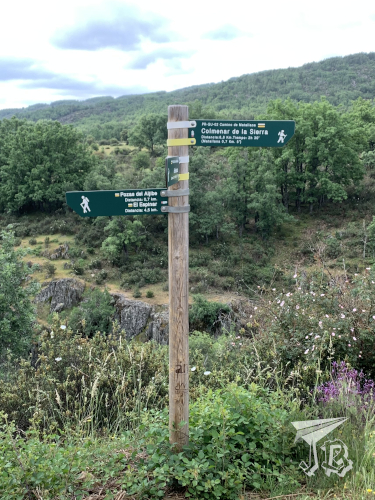
Fork on the way

Valley

Creek in the valley

Geological formations

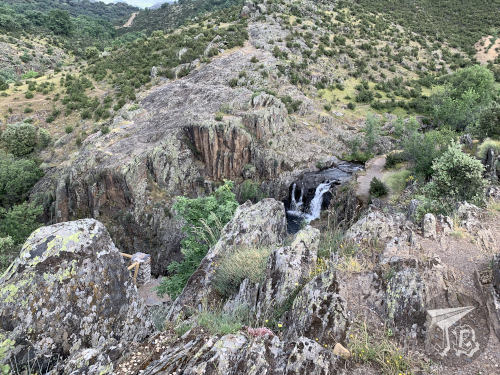
I wandered off the trail (you can see the markings on the upper picture) a couple of times because the views were neat, but a few minutes later I crossed a little bridge to get access to the waterfalls viewpoint on the left-hand-side bank… which was closed. Believe it or not, the actual waterfall area had quite a few “do not walk, falling risk” signs that… okay, I have to be honest… I pretended not to see. I hiked up to the viewpoint and sneaked a little to the side to see both waterfalls. As it has been storming, there was a good amount of water flowing, so the view was pretty cool.

Wooden Bridge

First waterfall

The upper waterfall is about three metres high, and the easier one to see, without needing to ignore any warning sings. When I walked up to the viewpoint I got an amazing view of both the upper and lower waterfalls, the latter being about 7 metres high. It is easy to see how they are called either waterfalls or pools.
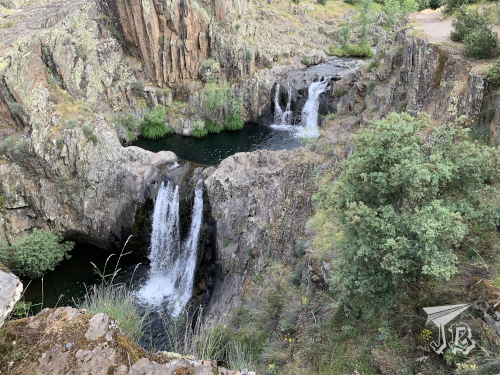
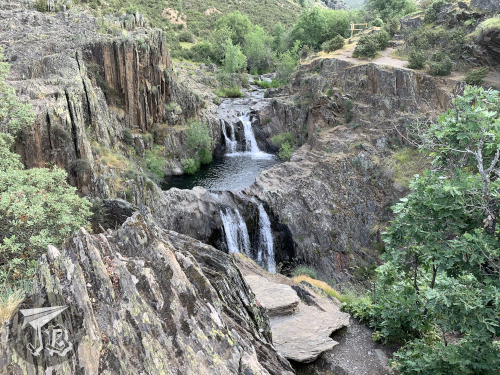
Both waterfalls from the left bank

Both waterfalls from the right bank

Remember that I said that I passed a family on my way up? This is kind of important because it means that I was basically alone in the waterfall area for about ten minutes, enough to take a good bunch of pictures from both banks of the creek without having to edit people out. I was however very cautious about cracks and faults. I think most of the rocks in the area are quartzes but my geology skills are a bit rusty.
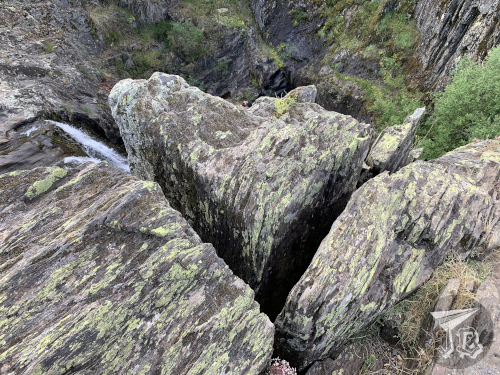
Cracks on the rock

As I decided to turn around, the family arrived, and so did the couple I had first passed and another group that must have started behind me. That was okay because I was done, and on my way back I could stop for a lot of pictures that I had not taken before. Here you can see the difference between the quartz /gneiss (surrounding the flowers) and the slate (in the middle).
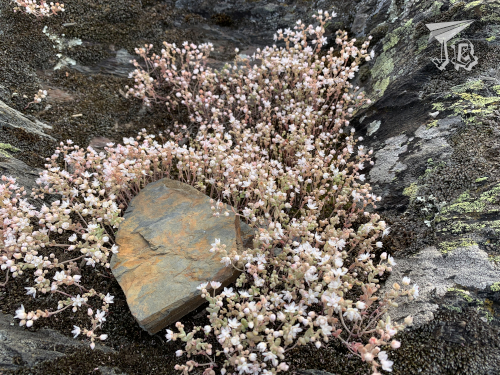
Flowers growing from the rock

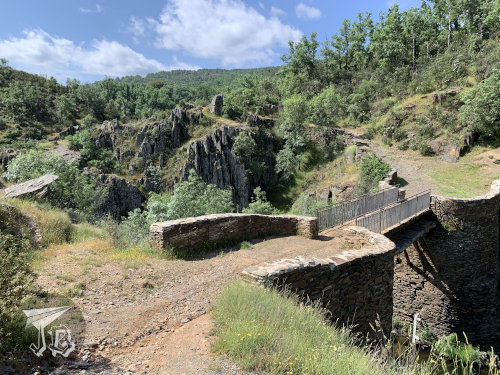
Also, at some point before I started my return hike, it cleared up. All of a sudden it was hot so first I shed off my sweatshirt and when I reached the crossroads again I really needed a drink and some shade – but I had packed water and the cap, so everything was fine, and I could divert to see the old dam, Presa de Matallana over the creek Soto – from both sides. This must have been around 11 am.

Valley on the way back

Presa de Matallana from the left bank

Presa de Matallana from the right bank

I turned back towards Roblelacasa and I noticed that the wide track was a bit more “upwards” than I had noticed the “downwards”. I had a bit of a tired moment as I adjusted to hiking up in the heat – why is it that normal hills tire me more than uneven paths? But it was over in five minutes and I was back in the village a bit before twelve. On the way now I stopped to take pictures of the flowers and bushes around, and of the valley that Roblelacasa overlooks – and ran into four or five more groups / couples who must have started walking around 11, so it was a good call to get there early.

The track back

Roblelacasa from the outskirts

Flowers on the way

This is how the village looks in the light of day, just before I took the car and drove back around noon. I decided that I would go back to the area some other time to explore other villages around, mainly Tamajón, which is reported to have an interesting geological area, and some other black villages.

The village

Oh, and a the pictureless anecdote of the trip, for obvious reasons. There were a lot, and I mean a lot of “caution wildlife” traffic signals, and on the drive there I thought that I had very rarely encountered any wildlife crossing the road. I had also not come across any wild (or domestic) on the trail, aside from some little lizards and a few pet dogs with their owners. Well, good thing I was driving a good 10 kph under the speed limit, because on the drive back I had to yield to a wild boar! Live and learn (to drive slowly in wildlife areas)!

Driven distance: around 130 km (2h 30min)
Hiked distance: 6.7 km / 11,106 steps (2h 20min)

9th June 2019: Gold fields and bull billboard (Guadalajara, Spain)

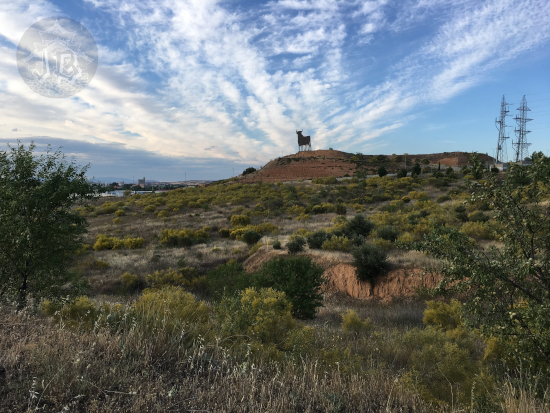
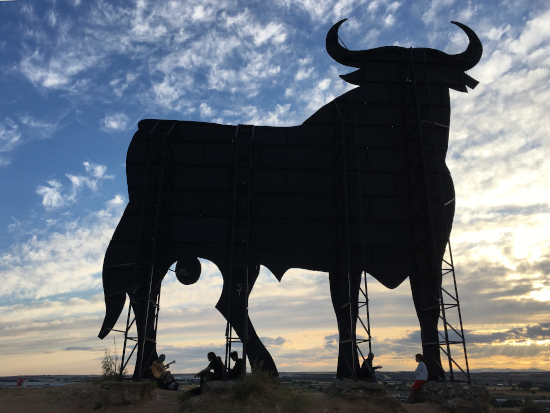
A friend was over and she was curious about the huge black bull billboard that stands next to the entrance to Guadalajara, so we headed there. We had a big Chinese late lunch, and afterwards we decided to walk to the bull.

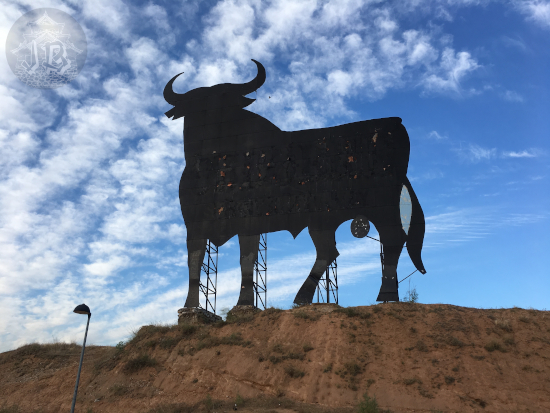
The so-called Toro de Osborne (Osborne bull, and… hm… you can tell… he’s a male, right?) was conceived as a publicity billboard for the Osborne winery. The bulls were originally designed in 1956 as by-road advertisement for one of the winery’s drinks. The first set of bulls was installed in 1958, and the current ones date back to 1962, made with metal, and around 14 metres high. In 1988 the lettering was removed. Although in compliance to the 1994, laws the bulls should have been removed, but a motion was filed to keep them as ‘cultural items’ as people had grown fond of them. In 1997 a law was passed ordaining that the bulls were to remain due to “cultural and visual interest”. There used to be about 500 bulls throughout all of Spain, but today only 91 remain, although there are others around the world. For example, there is one in Japan, because… Japan, I guess. The area with most of them is the one where the winery headquarters stand.

The Guadalajara bull stands next to the N-320 exit number 53. you can reach it by car or on foot. We took a walk around the area and we got to see the wheat and barley fields that give the area its typical brown / gold colours in summer. These are called the Calstillian fields, Campos de Castilla.

When we finally got to the bull, we were expecting nobody around, but there were a bunch of people, mostly drinking and smoking weed. Apparently it had also been vandalised and used for target practice, because people are civilised and all that. If you squint, you can actually see the word “Osborne” on the billboard.

26th May 2019: “Komeko Sin Gluten” event in Madrid (Spain)

After almost literally everybody and their dogs ditched me for a cooking workshop in Madrid, literally the day before I decided to bite the bullet and go by myself, so I bought my ticket on Saturday night, barely 12 hours before the event, a promotion of a Japanese-Spanish shop and its products based on rice flour. The shop is called “Komeko Sin Gluten”, which translates as “Gluten-Free Rice Flour”.

Evenbrite ticket for the event: Taller de Cocina de Komeko: crepe, helado y tarta 10 euro

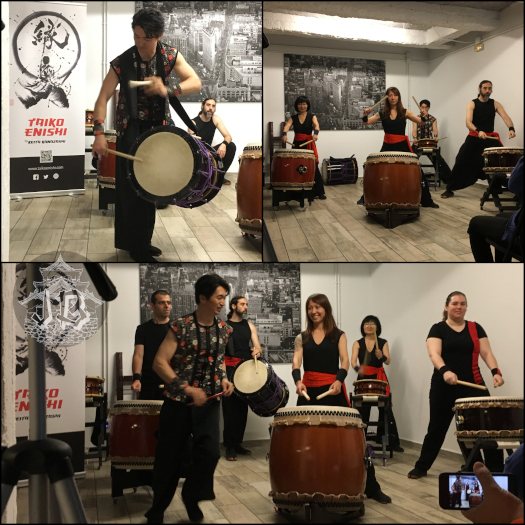
The event happened in a venue-for-hire in Madrid, and consisted in three distinct parts: a small market in which I would have spent a lot if I had not got a few samples with my ticket, a cooking workshop and a taiko concert. I arrived early due to Sunday having awful public-transport connections, and I arrived in Madrid an hour before the event even opened, and then we got a delay with the start of the workshop because someone was missing. During that time I got to sit around among aaaall the Japanese people around, including the head drummer of the taiko group, , whom I admired a lot since I watched him in HA·YA·TO: Drum Masters.

The small market was comprised, of course, of gluten-free products, especially Japanese ones, most of them can be found online, yay. I decided not to buy things upfront as the workshop included a sample of products, and I wanted to buy what I did not get. In the end, I did not have to buy anything because I got next to everything!

Pictures of the rice flour items - flour, noodles, snacks...

Anyway, the cooking workshop:

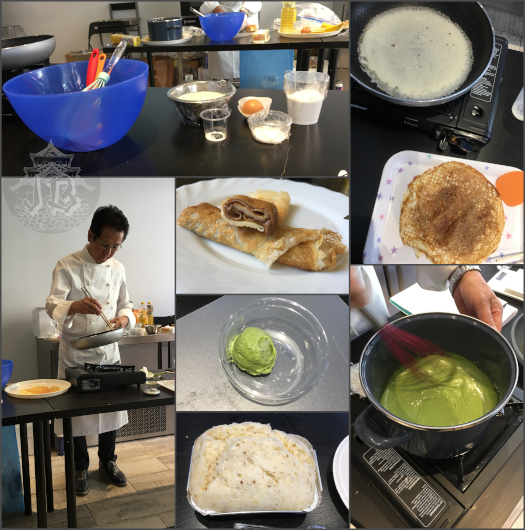
  1. Komeko crêpes: We made the crêpes on portable pans. There was a mini drama as the cook refused to start until we had chopsticks to flip the crêpes, and I was amused at first until I realised how convenient they actually were. While he was worried that I ahd any problems with the chopsticks, I’m happy to report that I was not the clumsiest in the class! After they were cool, we filled one up with ‘pastry cream’, banana and whipped cream for presentation – but we got to take the rest home and I tried them with chocolate. Serious improvement!
  2. Steamed banana sponge cake: this was really interesting to make, and also really easy – it involved mixing all the ingredients in a plastic bag, and then cutting a corner off the bag to pour that into little trays so we could steam it. That was… neat, and a team effort.
  3. Japanese green tea (matcha) ice-cream: Double team effort! (≧▽≦). As the paste needed time to freeze, we actually observed the chef prepare the ingredients and ate the one that had been prepared in the previous workshop.

Collage. Chef preparing crepes, and a picture of the materials, the matcha ice cream and my own creppes and banana spongecake

We had a snack with our crêpes and the matcha ice-cream. Then we got the haul of goodies: ramen and spaghetti noodles, komeko, komeko with glutinous rice, and komeko with cocoa, well worth the price (10€) I had paid for the whole workshop… Talk about promotion ☆⌒(ゝ。∂).

Different flours and noodles I got as present

Afterwards, I headed downstairs for the taiko concert. Enishi Taiko is a Spanish group, and Keita Kanazashi usually collaborates with them rather often. The concert was, of course, more humble than the one with HA·YA·TO, but it was still a lot of fun.

Taiko group playing and having a lot of fun

Afterwards, I got Kanazashi to sign the HA·YA·TO DVD and the picture I had with him from that time, which was really cool. Furthermore, the main drummer in Enishi Taiko remembered me from the X Gran Exposición de Ikebana y Semana Cultural Japonesa session, and another session I took at their headquarters.

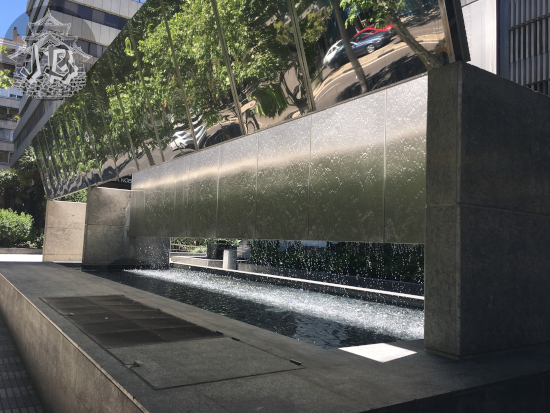
I had thought that I would be eating in Madrid but as I had snacked on the komeko products I was not hungry at all, so I decided to head home. On the way towards the station I found this really cool fountain.

Urban waterfall. The fountain looks like a massive bench, with a thin layer of water dripping from the top

3rd November 2018: Samurai Spirit in Madrid (Spain)
I booked tickets to see the show Kamui x Mika Kobayashi: Utakatana Sekai – Samurai Spirit in Madrid. In a last-minute change, my parents decided to tag along, so we just drove there in time for the show. It took place in the theatre Teatro Fernando de Rojas, one of the halls in the Círculo de Bellas Artes building.

Publicity poster with the show's date

Samurai Artist Kamui [剱伎衆かむゐ, Kengishuu Kamui] is a “samurai sword artist troupe” . They perform stories through “samurai communication” using music, sound and light to work on the atmosphere, along with of course, Japanese sword – katana – performances. The founder and leader of the troupe is Tetsuro Shimaguchi [島口哲朗], who played a part in Quentin Tarantino’s Kill Bill vol.1, a film for which he also served as choreographer for the swordfighting.

Mika Kobayashi [小林未郁] is a singer, pianist, and songwriter from Hiroshima. She is known for her vocals on anime, such as Attack on Titan or Gundam UC, and video games like Final Fantasy XI. She established her own style and record label in 2016 and has been doing her own thing since then.

The collaboration Kamui x Mika Kobayashi: Utakatana Sekai – Samurai Spirit seems to be designed for touring overseas as there is no trace of that name in Japanese. Utakatana Sekai would roughly translate as “the world of singing swords”. It features Kobayashi as singer and pianist providing the background voice for the show.

Through artistic sword-fighting and music, the performance conveys a story about the old samurai ways giving way to a new world. Short self-contained scenes tell the story of a samurai warrior who gives way to the new generation – played by a lady. A bit subversive from the Japanese traditional way, I guess.

The show has three parts. The first act comprises fights and individual actors showing off their individual skills. Younger or less experienced fighters, who get “swordsman #4” roles end up being killed two or three times. I liked a short story about a blind samurai better than the romantic ones. Unfortunately, I was a bit to the side – I only bought the tickets with a week or so when I found out – and my angle was awkward at times. I could see the gaps between the swords when they did not clash for real.

During the interlude / break, they brought two volunteers from the public to learn some moves and get the mood lightened up. This showed off Shimaguchi’s language and teaching skills, along with a flair for the dramatic, and it was really funny.

Different scenes from the show

The last part was more spectacular, full of stunts and coordinated exhibition acts. That was the part I enjoyed the most. All in all, the whole ninety-minute show was very fun. Mika Kobayashi’s melodic voice and piano tunes fit really well with the whole theme, and everybody seemed to have fun, and at the same time take their jobs very seriously. However, I’d need a better seat next time, in order to keep the suspension of disbelief and not see all the stunts as… stunts.

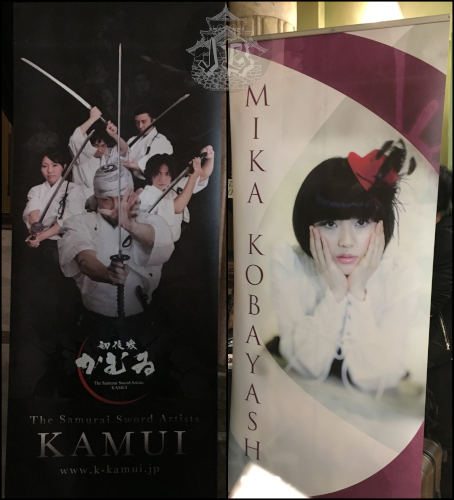
Artists’ publicity banner

Afterwards, many artists came out to take pictures with the audience. We got to take pictures with Mika Kobayashi too, and I bought a signed CD of hers.

Mika Kobayashi's signed CD

28th October 2018: HA·YA·TO: Drum Masters (Madrid, Spain)

Out of all the taiko [太鼓] shows I have attended, this was without a doubt the one I enjoyed the most. HA·YA·TO is a wadaiko [和太鼓] (Literally ‘Japanese drum’) group formed by the three Kanazashi brothers: Keita, Ryota and Yuta (Keita Kanazashi spends a lot of time in Spain, we’ve seen lots of ‘taiko workshops’ organised with him as a special trainer). This time they’re touring Spain with their show Drum Masters, accompanied by a number of renown musicians: Koji Hada, Takayuki Hashiguchi, Makoto Sekine and Syunchiro Kamija, aside from two special guests: Chieko Kojima (dancer and first female wadaiko master in Japan) and Masato Shibata (shamisen world champion).

Hayato Premium Ticket I found by chance

I was lucky enough to get a premium seat as I attended a matinee show in the theatre Teatros del Canal in Madrid. The show represents the four seasons of the year, and each part has its own rhythm and characteristics, along with energy and colour. At one point there were seven drummers and sixteen drums being played on stage at the same time.

Hayato Drum Masters Poster

The show was divided into the four seasons. During the first part, spring and summer, energy was abundant. Spring brought all the musicians to the stage, so while the great weight of the show rested on the drums, we also got shamisen (Japanese guitar) and Japanese flute. Kojima showed us her dancing skills in front of a black background with a flurry of cherry blossoms.

Then came summer, with a torii background and the matsuri (festival) atmosphere. The big central drum was put into action. This was when Keita Kanazashi showed off his Spanish and used the audience as another instrument, making them clap and stomp their feet in a sort of call and response routine which was really fun.

The most impressive number had the seven drummers on a row, and sixteen drums in total, all in a line. Thus, each drummer had three taiko, one in front, and one on each side, all lined up. However, they were actually sharing the side taiko with the drummer next to them, so at any given time that they banged they could collide with the musician next to them. It was amazing to witness the crazy-you-dont-get-to-see-the-batons-fast speed slamming the drum.

The second part started with autumn, that had the four supporting drummers playing ‘tennis’ with the small crash cymbals, first one on stage, then two, then three, then four, then with the audience, and then with each other all around the theatre. Then we had a demonstration of Chieko Kojima’s art on stage, first dancing, and then with the taiko – it was impressive to see how such a small lady can bang the drum in a ethereal red kimono. First she did it with the free sleeves, then she danced with a sash that she used to tie them back so she could play more forcefully.

Winter was a bit slower on the uptake – though with impressive technique – but it grew into an amazing mix of sounds and visual arts, again with dancing, taiko, crash cymbals, flutes and shamisen. In the end, Chieko Kojima danced with her parasol making it ‘snow’ (at a point her sleeve got caught in her hair décor and she needed a tiny stop). It was beautiful.

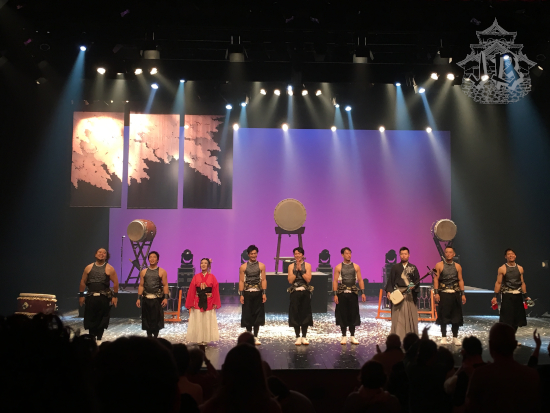
Hayato Drum Masters ensemble greeting at the stage

Theatre window with the Hayato Drum Masters poster

Finally, Keita Kanazashi introduced the musicians and informed us that they would be outside to take pictures after the show. I was lucky I could do so with everybody! All the artists were nice and friendly and it was a great experience. I also bought a DVD.

24th March 2018: The day I saw Hatsune Miku (Madrid, Spain)

“Vocaloid Opera – The End” is an opera for an in the digital world. It was written by Keiichiro Shibuya and performed by Hatsune Miku. Hatsune Miku [初音ミク] is a vocaloid idol. In case you’ve never heard of vocaloids, the idea is a bit complicated. A voicaloid is a singing voice synthesizer software product, basically a computer-generated singing voice. The software was released in 2004 and it exploded with popularity in Japan. Hatsune Miku was given a humanoid shape when it was released in 2017 – and it was definitely a she. So, in a way, Hatsune Miku is a voice synthesiser with a cartoon-female-human form.

Yeah, weird. I have always thought so too. But it was dirt-cheap (8 quid), and there was a session at 18:00 on Saturday that I could attend without a late train back. So I dyed my hair purple (because no, I’m not showing up to a blue-haired character’s show in blue hair), got out my thick faux-fur-neck coat and off I went.

The show was being held at Naves Matadero is a former slaughterhouse turned arts centre. It has turned the buildings into theatres, showrooms and so on. As I walked around the area, looking for my theatre I saw a hell of a lot of families with kids under ten, there to see “the doll” or “the cartoons”. I’m not kidding, during the first ten to fifteen minutes of the show, about twenty families left (≧▽≦).

Entrance to the venue, showing the sign of Naves Matadero Nave 11 and Vocaloid Opera the end

“Vocaloid Opera – The End”, composed by Keiichiro Shibuya [渋谷慶一郎], explores the concept of an artificial being obsessing about death. The whole show is digital, just like Miku, as she wanders the world wondering about “the end”. She seems trapped in a surreal nightmare, with several scenarios that don’t make that much sense. Miku is followed in her trip by a plush rabbit (Alice much?), she talks on the phone and there is a multiple-eye monster around.

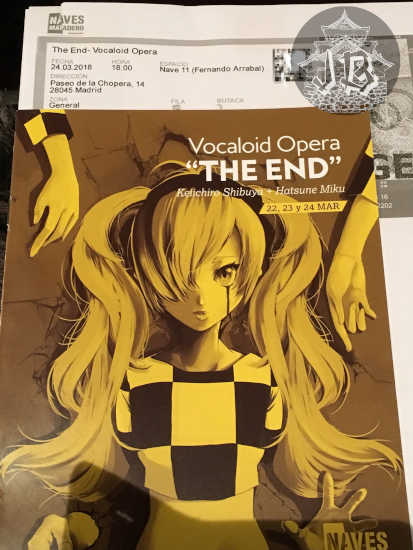
Booklet and ticket. Both read Vocalod Opera the end, with the dates. The booklet shows an image of Hatsune Miku, crying blood, the whole booklet is tinted yellow

The music has an electronic flavour, and at times repetitive. It’s loud and you feel it more than hear it. There warnings about bright and strobe lights all around and I understood why – the whole thing relied heavily on CGI and lighting. The chosen topic, along the images were claustrophobic, and I think that was on purpose – there are different “dying” options: drowning, gas masks, withering off.

The climatic “aria” peaks with Miku asking the spectator “Am I dead? Or just asleep? You decide. It makes little difference to me.” In the end, she is a human creation so, like humans, she will “die” sometime too (aaaaand I have opinions about this because I believe that some human creations transcend their authors). And a final downside: knickers. Seriously, what’s with Japanese people and knickers?! She’s a CGI doll – true, wearing CGI clothes designed by the former artistic director of Louis Vuitton, Marc Jacobs, but a CGI doll!

That was all that I did, but here are some pictures I managed to snatch a few pictures, including of the actual 3D rendering of Miku.

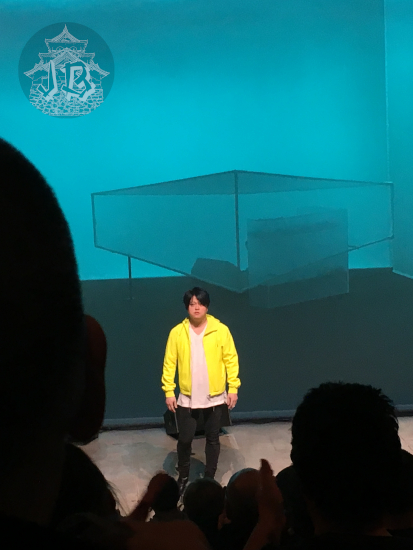
Picture of the composer, dressed in yellow

Life-sized sculpture of Hatsune Miku, wearing a chequered dress that shows her waist, and heels. Her hair is flying as she turns.

21st January 2018: Zoology at the Zoo (Guadalajara, Spain)

This was just a stroll down the Zoológico Municipal de Guadalajara, the local town zoo. I just thought I could look up some of the animals I came across and see if I learn any interesting facts. It was not as easy as I thought!

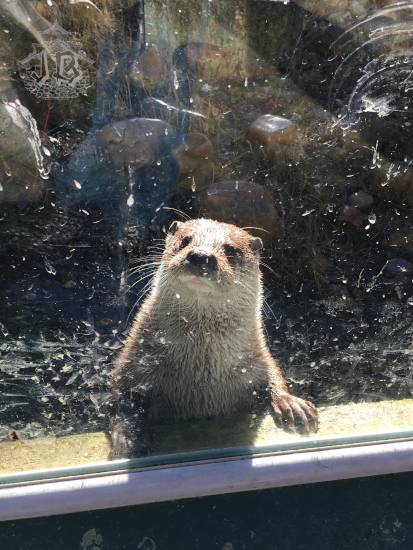
Eurasian otter (Lutra lutra): it is a semiaquatic mamal that is fortunately not threatened. It lives near rivers and coasts in Europe and Asia. It mainly eats fish. They are pretty smart and playful, but they are also very territorial, so they usually live alone. They have webbed claws for swimming and catching fish. Mother otters teach the kits to fish by a game of “catch and release” the fish.

Peafowl (Pavo cristatus ): technically “peacock” is the male (colourful) and “peahen” is the female (brown). The male has long tail feathers that he displays when he wants to impress a female or another male. In India, it was used as ‘guardian animal’ as it screams when tigers approach and it can eat young cobra snakes. Now, that’s pretty cool, and here I thought he was just a pretty tail!

Fallow deer (Dama dama): Fallow deer are native to Europe, and have been introduced to many other places. The bucks (males) are very aggressive and competitive during mating season, and they use their horns to fight. The does (females) do not have horns.

Iberian red deer (Cervus elaphus): The imagery of the red deer has been so powerful in the human psyche that some it can be found in paintings dating 40,000 years back. Normally the males and the young create big family groups. Males create smaller groups that cooperate.

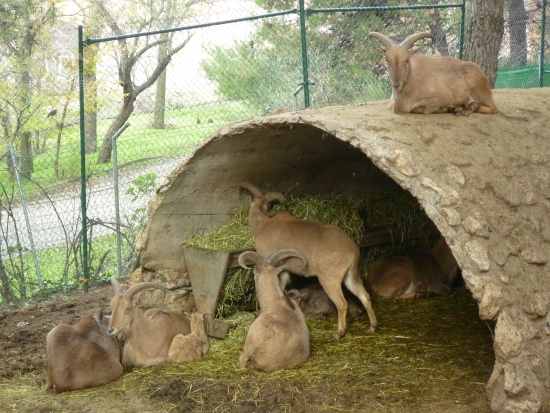
Barbary sheep (Ammotragus lervia). Also called arrui, it is an African mountain goat which lives in arid mountains and canyons and graze grass, bushes and lichens. They were artificially introduced in Southern Europe and became a bit of an invasive species. However, the truth is that they look super chill and zen.

European mouflon (Ovis orientalis musimon): It was originally a mountain creature but it moved to the forest when humans started bothering them. They thrive in rocky areas, though. They tend to live in herds with a lead female.

Wild boar (Sus scrofa): This is the omnivore animal by its own right. It can and will eat anything – from fruit to berries to even baby deer (O_O)!. Many old Indo-European cultures considered the boar a symbol of warrior virtues. In Greek mythology, the hero Herakles had to capture a boar as one of his Labours. In the east, it is considered a symbol of determination and even recklessness.

Iberian wolf (Canis lupus signatus): Unfortunately, the Iberian wolf is a vulnerable species and culling is still legal in Spain (•̀ω•́ ). The Iberian wolf is brown-grey and had a characteristic white area around its mouth. They also have black vertical lines along the front legs, and other dark marks on the leg and the tail. They are predators and prefer hunting big animals, especially deer. Wolves are social creatures, they live and hunt in groups.

Something really cool about wolves in general is that when they run, they place their hind legs on the footprint created by the front paw. Talk about coordination. Wolves have a very bad reputation in Spain, but there have not been confirmed attacks on cattle, much less on people, in recent years. Pictograms of the Iberian wolf have been found in archaeological artefacts from the tribes that lived in Spain before the Romans.

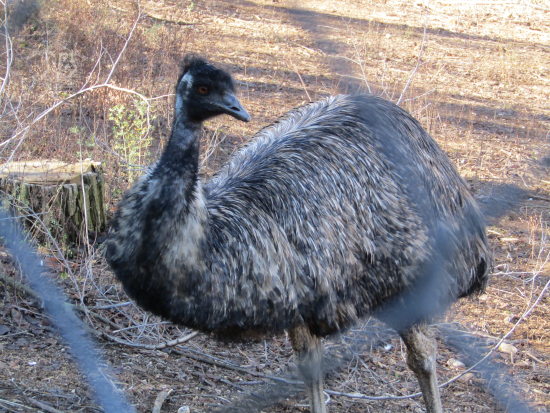
Emu (Dromaius novaehollandiae): Yay for another non-threatened animal. Emu originated in Australia, and are the second-biggest bird in existence after the ostrich. They are flightless, and they eat plants, grasses, insect and arthropods, depending the seasonal availability. Because females can lay several clutches of egg in one season after mating with different males, the male takes care of the incubation, and the chick-rearing. According the mythology of some aboriginal tribes of what now is called New South Wales, the sun had been created by throwing an emu egg into the sky.

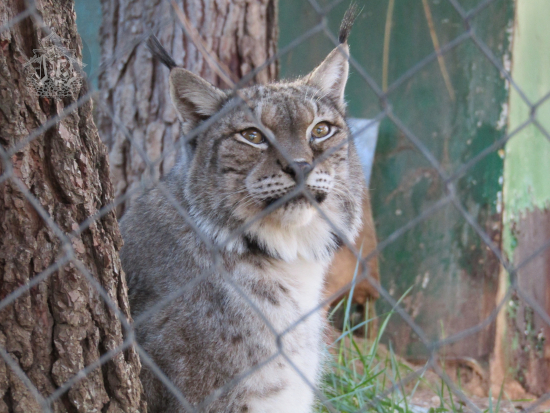
Eurasian lynx (Lynx lynx): Native of Europe and Asia, it is widely distributed, which lowers its conservation concerns. The Eurasian lynx is mainly a nocturnal predator, and tends to live solitarily as an adult, although hunting areas may overlap for several individuals. They can hunt small animals, but they are known to prefer bigger prey, such as roe deer and common deer. Conversely, they may be hunted by wolves.

Red fox (Vulpes vulpes): The red fox is one of the animals with the widest habitat range in the whole world. It can be found almost everywhere in the northern Hemisphere, including many cities in Europe. It is an invasive species in Australia, where it was introduced in the 19th century. In European mythology it’s considered symbol of deceit. In Asian mythology it has two-faces, some of them are messengers of the gods, some are tricksters and dangerous. Arab folklore considers the fox cowardly and weak. Native American mythology considers it a crafty creature that steals the coyote’s food – in all cultures however, it seems to be intellingent and able to trick other animals or people. Interesting.

Griffon vulture (Gyps fulvus): A scavenger bird of prey, it feeds mostly off the carcasses of dead animals. It tends to live in flocks or colonies and makes nests on rocky walls. Even if they have a bad rep, they are very cool animals.

White stork (Ciconia ciconia): Credited with bringing babies from Paris, storks used to be long-distance migrants, which lived in North Africa in winter and returned to Europe in summer to breed. For the last twenty years or so, the storks have stayed, at least in Spain. They are also famous for making nests on belfries and other man-made structures, and because they are considered a good omen they have rarely been chased away – until the weight of the nest has made belltowers collapse!

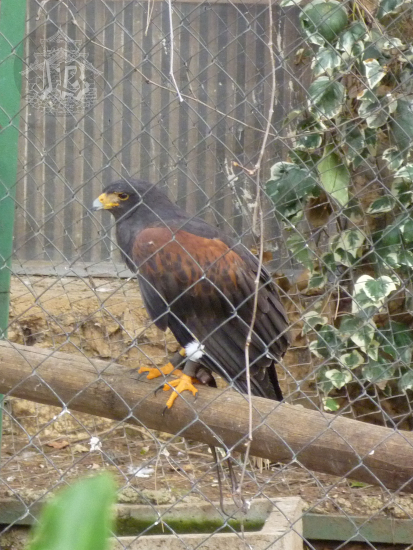
Common kestrel (Falco tinnunculus), I think. Feel free to correct me if I’m wrong. The best thing about the small zoo is the work they carry out recovering injured birds of prey. The birds are nursed back to health and if everything works out they are released into the wild. I really hope this little guy can leave soon! ⋛⋋( ‘◇’)⋌⋚

8th December 2017: Ferrari in Guadalajara (Spain)

There was a tiny (five) Ferrari sport cars exhibition in Guadalajara, Spain, so I thought I would drop by, just to be able to appreciate what they call “Ferrari red”. I loved the cars, but I don’t think that I would ever be able to get in and out of them. You could not sit down at the wheel though, so I can’t say if I would be able to drive them (≧▽≦).

Ferrari was established in 1939 by Enrico Ferrari out of the racing car division of Alfa Romeo. In 1947, the first Ferrari-branded car was completed – there had been a racing car in 1940, but WWII stopped most competitions at the time. After the war, the racing team, called Scuderia Ferrari, was rebuilt, and went on to become the most successful Formula One Team.

Ferrari produced its first road car in 1949. the original road cars were two-seaters and usually customised. Throughout the 50s and 60s, customers used to personalise their cars, which would eventually become one of the brand’s selling points. Since 2011 clients have been able to work directly with designers so the cars are completely personalised.

The exhibition was organised by the car-maintenance watchdog, and the cars shown were recent models, such as the Ferrari F430 Scuderia (2007), the Ferrari 458 Speciale (2014), or the Ferrari 355 berlinetta (1994).