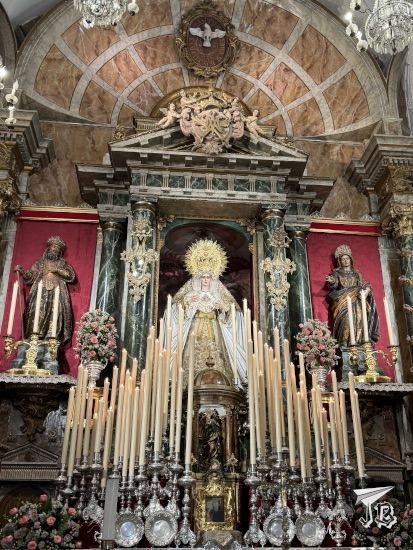
8th August 2024: The Museums in Moncloa (Madrid, Spain)

It’s quite hot out there, but I decided to hit a couple of museums in Madrid. A few months back, I got a card for the national museums, thinking I was getting a better deal than I did. Though it is true that you can get enter (most of) the national museums for free, you have to ID yourself, so you still have to queue, which is what I was expecting to avoid. However, it has at least pushed me to try and see a couple of museums I would not really visit (or even be aware of!) otherwise.

There are two museums in the district of Moncloa-Aravaca, an area I’m not usually around. One, I was curious about. The other is one I would not have even considered without the card: the Costume or Fashion Museum and Ethnographic Heritage Research Centre Museo del traje. Centro de Investigación del Patrimonio Etnológico (CIPE). It is a collection of pieces of clothing, textiles and accessories from the 17th century onwards, and I’m sure it is amazing if you know anything about fashion… which I don’t. The museum is organised chronologically, with a few pieces from the Middle Ages, then fabrics, costumes and complements since they became a thing.

There is also a collection of traditional outfits from different regions throughout Spain. The visit finishes with some of the big names in fashion, including Coco Chanel, Balenciaga, or Christian Dior. There was also an area for visually-impaired visitors, which allowed them to touch mannequins and fabrics from different style periods in history.

Costume and Fashion Museum Madrid

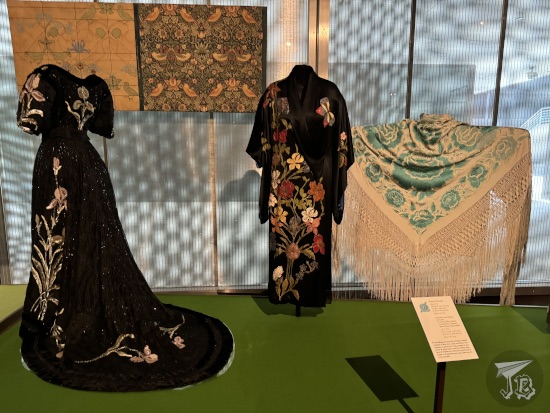
They were running a temporary exhibition called Vistiendo un jardín (Wearing a garden). It deals with the nature and flowers in fabric and costumes from the Baroque period onwards. They were in the middle of a guided visit so there was a big group, and I could only have a quick walk.

Wearing a garden Temporary exhibition

I walked over to the museum of the Americas Museo de América. The institution exhibits archaeological and ethnographical artefacts from the Americas, alongside art from the Palaeolithic period to the present, with a strong presence of Colonial art.

The origin of the collection was the Royal Cabinet of Natural history that Charles III had established in 1771. The collection increased with objects brought from discovery expeditions and Spanish colonies in America, especially those unearthed during archaeological excavations. In 1815, the science artefacts from the cabinet were integrated into what became the National Museum of Natural Sciences, and in 1868 the antiquities, ethnography, and art were transferred to the Museum of Archaeology. In 1941, the American artefacts were transferred to the newly formed museum. A more recent source has been that of donation and legacies.

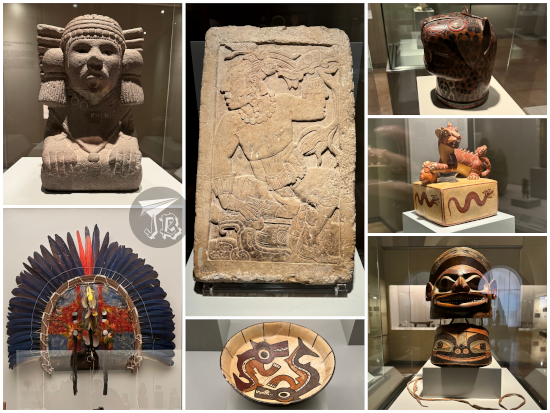
Nowadays, the collection comprises around 25,000 artefacts and about 2,500 of them are exhibited – though the most important ones are copies due to “conservation issues”. The archaeological artefacts include Mayan, Inca, Aztec, Nazca, Amazonian, and even from North American native cultures who lived in what we now call the Great Plains or Alaska. The Colonial art pieces mostly include religious art and what is called pintura de castas, which tries to represent the appearance and daily life of the peoples of mixed race, descendants of European, African and Indigenous inhabitants of the colonies. There is also a ward dedicated to modern art and social criticism against colonisation. I found the organisation of the museum a bit strange, by theme areas instead of time-and-place.

Artefacts from the Museum of the Americas

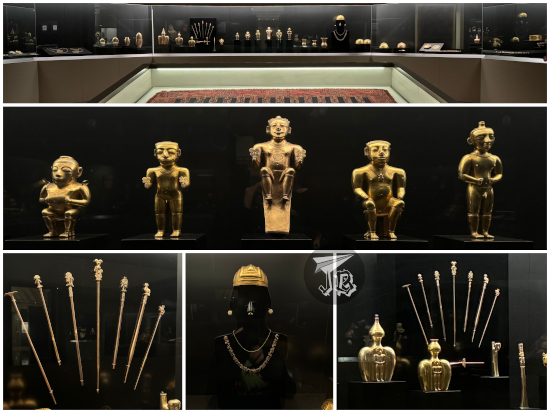
Arguably, the most important group of pieces that the museum exhibits is the so-called Tesoro de los Quimbayas (Quimbaya Treasure). The Quimbayas were a small indigenous group from precolonial America, who lived south of what is now Medellín, Colombia. They were known for their works in gold and an alloy of copper and gold called tumbaga. The treasure comprises 122 pieces, which represent about one fifth of the original findings. It is believed that the belonged to two sets of grave goods, and dates from the 5th or 6th centuries CE. The treasure was dug up during the Colombian gold fever, when archaeological items were sold for their weight in gold. The artefacts include figures, crowns, jewellery (nose- and ear-ornament, necklace beads, pins, pendants), containers, ceremonial vessels and poporos (used to keep coca leaves for religious ceremonies), and musical items such as bells.

Quimbaya treasure

I actually had been thinking about staying in Madrid and do something else, like the observatory known as Faro de Moncloa, which is literally next to the Museum of the Americas. Or a nice themed restaurant or something. But it was ridiculously hot and I just did not feel like it. It was early for lunch too, but by the time I got anywhere cool, it would be right in the middle of the rush. So I just went back into the transport system. Of course, the train was delayed. I need to stop planning around the official train schedules, especially around food times…

22nd June 2024: Roman ruins in the Cuenca region (Spain)

This was actually the second try for this road trip. We (read: my parents) chickened out the first time because there was a slight storm chance. Since they were organising the day, I did not complain either time. I just stayed home when it was cancelled, and happily tagged along when it was carried out.

My parent’s curiosity was piqued upon learning that a bunch of archaeological sites were free until the end of 2024. I might have been responsible for that information, but to be honest I thought nothing of it at first. They randomly asked if I knew Recópolis, and I mentioned having visited it as it was free for the year. Thus, on the 22nd of June – a few weeks later, and on the second try – with a forecast temperature at noon of 31 °C and sunny, we set off around 7:30 towards the Roman villa Villa Romana de Noheda. The villa belongs to the hamlet Villar de Domingo García, and it was discovered in agricultural land by sheer chance, as it often happens. The complex was a farm and noble residence in use between the 1st century BCE and the 4th century CE, but it had been abandoned by the 6th. While most of the villa is gone, and not even half-excavated, the floor of the main house has been dug-up. It is covered by what is said to be the largest figurative Roman mosaic in the world, and it can only be visited with a guided tour.

The mosaic would have been in the room used to receive guests, the atrium. Right in front of the main door, the mosaic tells the story of Pelops and Hippodamia. In this mythological tale, the oracle told King Oenomaus that he would be killed by his son-in-law. Thus, whenever a suitor came to ask for his daughter Hippodamia’s hand in marriage, he would challenge them to a chariot race. If they lost, they would die – this happened 18 times until Pelops came along and Hippodamia fell in love with him. For his race, Pelops received a chariot drawn by winged horses from the god Poseidon. He then offered Oenomaus’ charioteer, Myrtilus, half of the kingdom, and a night with the princess, in exchange for his help to win the challenge. Myrtilus sabotaged Oenomaus’ chariot, and the king was killed during the race. When Myrtilus tried to collect, Pelops threw him off a cliff, and before dying, Myrtilus cursed the couple’s lineage. Several of their descendants were protagonists in myths of disgrace, madness and war – such as Agamemnon, Menelaus and Orestes.

Noheda mosaic

In the middle of the room there would have been a fountain or a pool, and the mosaic surrounding it has water fauna motifs. To the sides, there are representations of male and female actors of charades. On the final side there’s a double mosaic, meaning there was a refurbishing project and a new layer of tiles was laid over a previous one, both showing different geometrical designs. There is also a parade of gods and goddesses, and the representation of the myth of Paris. Paris was chosen to judge who among the goddesses Hera, Aphrodite or Athena was the most beautiful by giving her the Apple of Discord. Each goddess promised him a reward, and he chose Aphrodite, who offered him the most beautiful mortal woman: Helen of Sparta, King Menelaus’s wife. Paris and Helen ran away, Menelaus tried to recover his wife, and the whole episode lead to the Trojan War – Menelaus was one of Pelops and Hippodamia’s descendants, so one could say that Myrtilus’ curse was at work, and the mosaic was in continuity.

Noheda Mosaic

The villa really has nothing to see besides the mosaic, so we moved on. The trip to the next spot should have been around 20 minutes, but I do not know whether we got lost, or the Sat-Nav really, really overestimated the quality of the roads. Almost an hour later, we finally made it to Ercávica, a former Roman city in the tiny municipality of Cañaveruelas that overlooks the reservoir Pantano de Buendía. It clicked then that I had been thinking about getting there before but eventually dropped it in favour of other plans.

Before the tour through the ruins, we were shown a cave where a hermit-abbot, Donato ‘The African’, lived and died, and some graves excavated in the rock. The abbot lived in the 6th century, and after he died, his followers wanted to be buried around him. He actually managed to build a monastery, but everything is gone – and excavations cannot be carried out as it is in private property.

Ercavica cemetery

The Roman city of Ercávica was built around the year 179 BCE, as a new settlement after the Romans defeated the Celtiberian tribes in the area. The new dwellers were granted citizenship of the Empire, which made the city grow as neighbouring towns were abandoned and people moved there. The city reached its greatest splendour during the 1st and 2nd centuries CE, but it declined after the 3rd until it was abandoned in the 5th century CE.

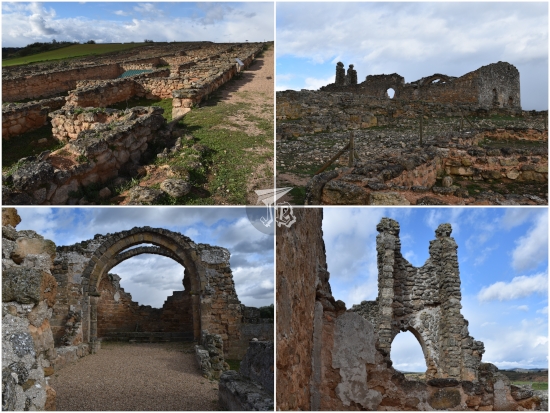
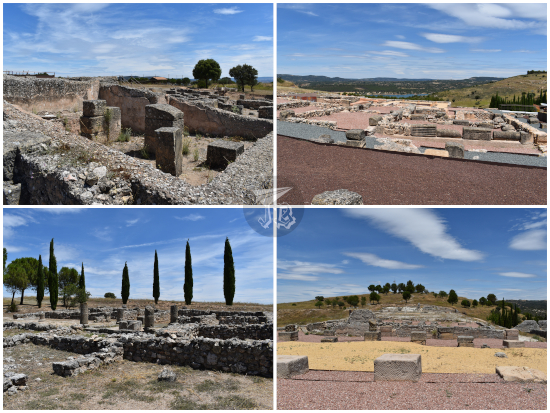
There is not much left of the city but its foundations, a few centimetres of wall above ground, and some of the underground structures, such as cisterns and a small sauna – where a number of bats had made its home. The guided visit took about two hours, from noon to 14:00. It was hot and sunny, and besides the layout of the town, there was not much to appreciate – or did I get too picky after Pompeii? There were some remains of painting left, which was cool until the guide said they were printed reproductions glued on top the real ones. Bummer.

Snapshots of Ercávica ruins

There is what they call a volumetric reconstruction of one of the houses, to give you an idea of how big it would have been, and a lot of walking around up and down the hill. There are also some good views of the reservoir. Nice seeing the whole thing at least once, but I would not put it on my to-repeat-when-possible list. I could have done without the sunburn though.

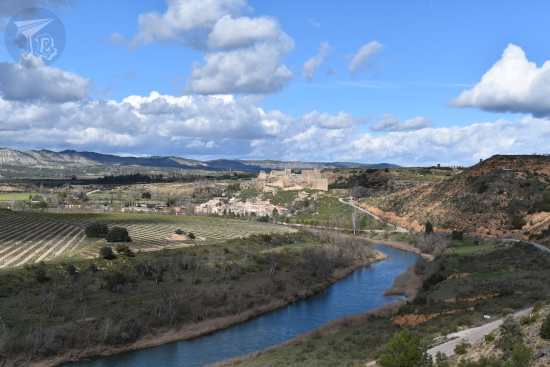
Buendía Reservoir from Ercavica forum

However, my parent had planned the road trip this way because it could be combined with lunch in a famous restaurant, Casa Goyo in the village of Alcocer. It is not a particularly good place, but it has made a name for itself by serving enormous portions. The most famous dish is the sanjacobo – a type of schnitzel cordon bleu with two fillets of pork wrapped around slices of cheese and Spanish ham, then breaded and fried. It is actually better than it sounds. Casa Goyo’s sanjacobo is 2.5 kg of meat. Quite a lot. I tried to tell my parent that combining it with a salad was too much, but they did not want to listen – which in the end it meant that I came back home with about half of the sanjacobo to consume at a later time. Unfortunately, that meant cutting the time to explore Alcocer short – to none. It was probably too hot anyway.

Sanjacobo at Casa Goyo

All in all, three experiences unlocked that I don’t think I ever need to repeat again. The best one was the mosaic, but I do not think Ercávica was worth the heat nor the roads. Nevertheless, I am glad that I could see both Roman ruins at least once. I however stand behind the idea that the cloudy day would have been better…

14th May 2024: Three Museums and Tea, Madrid (Spain)

On a whim, I put together a plan for Tuesday, as it is currently my free day. I was too lazy to drive, so I decided to catch a train to Madrid. There was a temporary exhibition I wanted to check out, and it was close to several museums and eateries.

My first idea – breakfast at a French crêperie – went bust, because the place was still closed when I arrived in town – I swear, this is like the fourth time I try to have something there, and it just won’t work. Instead, I ended up at a Starbucks for breakfast, before heading out to my first destination – the exhibition The Art of Manga, held in the Architecture Bar Association building Colegio Oficial de Arquitectos de Madrid, COAM. The Art of Manga is a small exhibit that runs through the history of manga – Japanese comics – with a few snippets of what it was and what it has become, especially in Spain.

The entrance was a sort of tunnel with manga sheets hanging from the ceiling. It ended at a traditional scroll with animals acting like people – Chōjū-jinbutsu-giga 鳥獣人物戯画, which translates to “Animal-person Caricatures”. Some people consider that this is the origin of manga (note the “ga” at the end), though if there is one thing that the exhibition makes clear, it’s that nobody knows when manga actually started. Thus, it just runs through all the possible theories and important names. From the Edo Period, there were a few wood prints (ukiyo-e) – which are claimed to be original – among them two by Katsushika Hokusai [葛飾 北斎], The Great Wave off Kanagawa [神奈川沖浪裏, Kanagawa oki nami-ura] and Fine Wind, Clear Morning [凱風快晴, Gaifū kaisei]. Hokusai is another of the supposed starts (“the father”) of manga. There were also a few toba-e [鳥羽絵], similar to the first scrolls – for the first time in the evolution of drawings, there was text alongside the art. Then came the books, where texts dominated – though there were still drawings – and they became extremely popular during the period.

With the end of the isolation of Japan, Western influences – mainly comics – influenced local artists, and “speech bubbles” appeared. In the late 19th and early 20th centuries, Kitazawa Rakuten [北澤 楽天]’s works were published in newspapers. He is (also) considered the father of modern manga, and several of his works are displayed. There are also early 20th-century scrolls, painted in a style similar to toba-e depicting the Tokaido Road, which separated Edo (old Tokyo) and Kyoto, and its checkpoints. There were also kamishibai [紙芝居] cards – kamishibai is a traditional form of theatre involving telling a story using a narrator and different “postcards” with images drawn on it.

In the middle, the exhibit had a rock garden, and a torii gate with a lot of lanterns gave way to the second part – modern manga. Here there were pieces and mementos from famous artists and works – Osamu Tezuka [手塚 治虫], known as “The god of manga”, and one of the driving forces of anime. According to the exhibition, they were showing all of his works. There was a bit about Shigeru Mizuki [水木 しげる], and big international hits like Sailor Moon, Naruto, Dragon Ball and One Piece. After a screen showing a video about a cosplayer – which I did not care much about – there was a section on manga magazines, some of the early manga published in Spain, and a stand where you could get some stamps.

Snaps from The Art of Manga Madrid

Finally, there was a bit on merchandising and figurines. The shop did not even have a catalogue, which I would have bought. All in all, it was all right, smaller than I had expected.

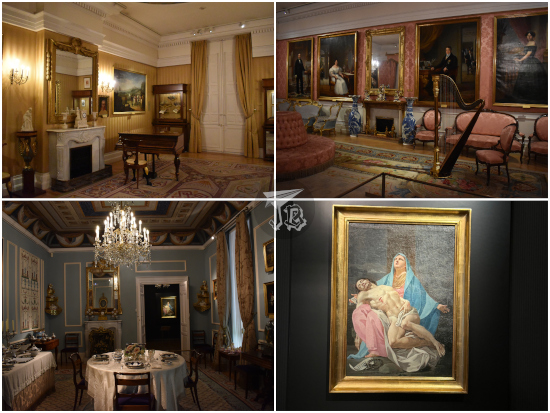
Then, I went to the nearby museum of the Romantic period, where I got a national museums card – I’ve been wanting one for a while, but unfortunately you still have to queue to use it. I had hoped you could just walk into museums with it, but I guess crowd control is a thing since Covid. Anyway. The Romanticism museum, Museo del Romanticismo is a small palatial residence which tries to recreate the ambience and atmosphere of the dwellings of the bourgeois families at the time. It had a lot of nice furniture, similar to the one in Riofrío, but I found it lacked on the landscape paintings I like. The museum is currently exhibiting an early painting by painter Francisco de Goya, a Pietà.

Museo del Romanticismo Madrid

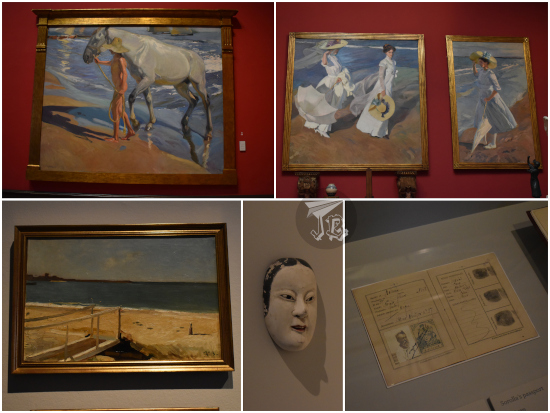
Afterwards, I headed out to line for the Sorolla Museum Museo Sorolla. I had to queue for nearly 40 minutes, but I was finally admitted in. Joaquín Sorolla (1863 – 1923) was a generally-impresionist painter (impressionist, post-impressionist and luminist) from Valencia. The museum was built in the artist’s own house, completed with some of his iconic artworks, including Paseo a orillas del mar, Walk on the Beach, and El baño del caballo, The Horse’s Bath. Sorolla excelled in portraits and landscapes, especially the sea side, and social criticism. He was a master depicting light, water, and the combination of both. He became one of the most important Spanish artists of his time – and probably the most famous. He participated in the Paris Universal Exposition of 1900, and was invited to exhibit his art in New York City.

Furthermore, there was a current exhibition called Sorolla in 100 objetos – Sorolla in one hundred objects – which had just opened to the public. It included personal items the artist collected, – some a bit bizarre–, photographies, his passport, the last painting he worked on, the medal he received from the US president, a photograph of his studio in Italy…

Snaps from Museo Sorolla

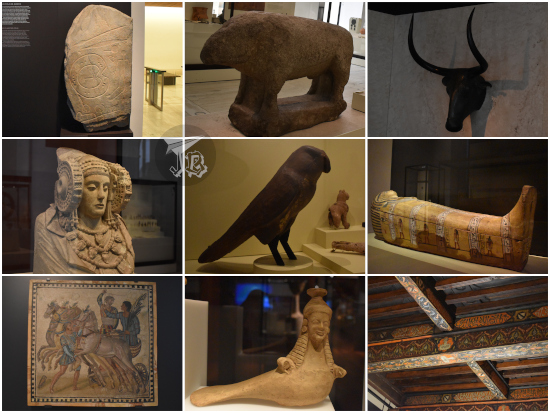
I then went off towards the archaeological museum Museo Arqueológico Nacional. I used to love this museum – when they remodelled it and they made it all modern and aseptic, it lost most of its allure. Of course, I still enjoy it, as the important items are the exhibits, and the museum has a lot of important items from the Celtiberian cultures – Celts and Iberians inhabited Spain before the Roman conquest, which started in the 2nd century BCE. Iberians were prevalent in the east and south of Spain before their arrival. The north and west were populated by the Celts, and there was a vague area in-between whose people have been called Celtiberian. the Talaiotic culture flourished in the Balearic Islands, and it has recently been declared World Heritage. These cultures were eventually assimilate by Romans, but Celts lived on elsewhere. Iberian and Talaiotic cultures, however, diffused with time. Today, there is little known about it, and most is just interpretation from archaeologists, even less about the more ancient tribes that lived in the areas during the Bronze Age.

Among the objects from pre-Roman Spain, there are mysterious steles from the late Prehistory. However, it is the Iberian funerary art which stands out the most – such as the bust called the Lady of Elche, La Dama de Elche, found in the town of the same name, and the full sculpture named the Lady of Baza La Dama de Baza. Both are fantastic, to the point that it was thought they were Hellenic for some time. Other items include bulls – both metal cattle heads with wide eyes, and vaguely-shaped stone sculptures, verracos. I remember going to the museum when I was little, and the importance of these bulls, called “Bulls from Guisando” Toros de Guisando was drilled into my head, to the point that I thought that the ones exhibited there were the only ones – it also made me sad that they were in the museum and not in the field where they had been found. I was petrified when I learnt, years later, that there are a bunch more…

The museum also hosts a nice collection of Moorish art, and what apparently is a special Egyptian exhibit, as Spain worked with Egypt during the 20th century, and got a lot of objects from that excavation from the Egyptians “in the split of the new discoveries”. I am not sure whether that’s accurate, or the story has a lot of make-up on. I had to leave around 16:15, but as this museum is also covered by the national museums card, I can come back any time within the year for free. I skipped most of the Medieval period.

Museo Arqueologico Nacional Madrid

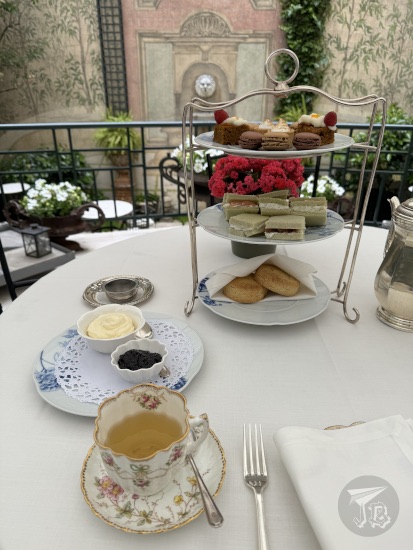
I had a reservation for afternoon tea a few minutes away from the museum, at 16:30 – I might be doing a bit of a rally around all the places in Madrid which have it. This time around, I went to El Jardín de Orfila – and good thing I had decided to only have breakfast and skip lunch and go straight from breakfast to tea. I was seated in a lovely outward area and I chose a delicious green tea with cherry. The food was plenty – finger sandwiches: pastrami, salmon and cucumber and cheese cream; macarons, carrot cake, meringue, and scones, along with clotted cream and berries jam. It has probably been the best afternoon tea I’ve had in Madrid up to date. The scones were a bit under-baked though.

Afternoon tea at El Jardín de Orfila

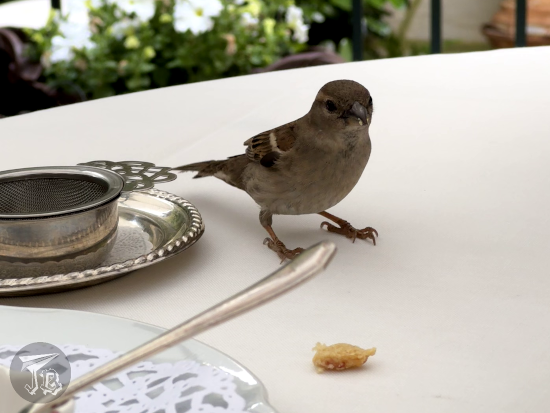
I was alone in the outer area for most of the experience, the waiter checked on me once after bringing my tea. It was actually so calm and quiet that I had a visitor – a little house sparrow (Passer domesticus) was very interested on the remains of my scone, so I shared with her. She was happy after two crumbs, and left – or maybe it was because another couple walked into the area.

Sparrow hopping towards a scone crumb

I left a bit before the two-hour timeslot was up so I could catch a timely train home – and because the couple came in, talking loudly, and kind of broke the spell.

27th & 28th April 2024: Paris & the Fan Festival (France)

27th April 2024: From the Fan Fest to Les Invalides

My grandmother used to say that nothing good happens before sunrise, and to be honest, when the alarm clock rang at 4:40 on Saturday, I was very tempted to believe so. However, there were planes to catch, and red-eye flights are called so for a reason. My sibling and I had tickets for Paris on a 7:25 flight, which required us to be at the airport with enough time to board ± 30 minutes in case we had to get to the Satellite Terminal. Since I started planning with time – back in January – I had booked a parking spot in the actual terminal parking lot, for just a couple quid more than the long-stay one, and I activated a service the airport has so your card is billed automatically when your licence plate is detected, for convenience.

We reached the terminal with plenty of time (± 30 minutes) but recent problems with French air controllers going on strike, I was anything but calm. However, we took off on time and I just huddled off to nap. Arrival in Orly was early, and we did not taxi much, nor need buses. We just stepped off at the gate, and headed towards the Orlyval. We bought a Paris Visit card each, in order to be able to ride the public transport system as much as we needed for the weekend, and hopped on the shuttle. After a couple of transfers and a short walk, we arrived at the exhibition centre Paris Expo Porte de Versailles, where Paris Fan Festival took place.

Paris Fan Festival is a yearly convention that focuses on everything geek / nerd / niche, whatever you want to call it: video games (and retro video games), Star Wars, TV series, Ghostbusters, manga, comics, K-pop, there’s something just for everyone. I think it’s a bit of what Japan Weekend aims to be, but openly. It felt a little like that Funko slogan “Everyone is a fan of something”.

My reason to be there was European comic, actually. Authors (and married couple) Stjepan Šejić and Linda Lukšić Šejić, whom I’ve been following for a few years now, were in attendance. Stjepan Šejić has worked for DC in works such as Aquaman, Harley Quinn, and Suicide Squad, but he has gone independent, focusing on his own content creation. So has Linda Šejić, who started off at Image Comics and currently works on her own web comics. I’m currently buying his works Sunstone, Fine Print and my favourite Death Vigil, and her Blood Stain and Punderworld, the latter based on the Greek myth of Hades and Persephone. I also have the Aquaman hardcover that compiles all of Stjepan’s issues, and the Batman-character self-conclusive Harleen.

Of course, I wore an appropriate “Velocirapture” T-shirt to the event. The goal was to get an issue of each collection signed, and maybe a commission and some merch. In the end, we could only get a commission from Linda – we almost got one from Stjepan too, but things did not work too well on that front. I hope to get one next time they’re reachable – I actually wanted to go and meet him a while back, but I was in the middle of a weekend in Cuenca back in 2017.

Paris Fan Festival: Stjepan Šejić and Linda Lukšić Šejić

My sibling and I wandered through Paris Fan Festival for a few hours. We had something to eat at a Paul’s bakery, which I had discovered in Toulouse, and whose prices were not stupidly inflated by being inside the convention. Unfortunately though, I had followed the instructions of the venue and I was not carrying any water, and just a small backpack. I could’ve completely ignored the rules though, just like… most everybody else did. I did learn a valiable lesson though – when travelling to conventions for people, you buy tickets for both days. Just in case.

One of the most interesting vendors at Paris Fan Festival was the Lyon Cinema and Miniature Museum Musée Cinéma et Miniature, which had brought many sci-fi props from their permanent exhibition. They had the tip of a pyramid, a hieroglyph stone and a mask from the original Stargate film, ), a compsognathus animatronic, and the velociraptor claws from the Jurassic Park saga (), Loki’s mask from The Mask, a xenomorph head from Alien, suits from one of the older Batman films and Armageddon, prosthetics from X-Men

Samples of the Lyon Cinema and Miniature Museum at the Paris Fan Festival

As every other niche convention, were tons shops with merchandise, books and comics, not all of them legal. They held an exhibit of figures and statuettes. There were also a number of conferences – pity that the one about Jurassic Park was in French, too. Also, I discovered that France has a lot of “replica” culture – there was an actual “Imperial Army” (Star Wars), someone who had customised a car into the Ectomobile from Ghostbusters (2016), even people impersonating Tolkien’s orcs… It goes a little beyond cosplay… Supposedly, there was someone walking around with a dragon, but we did not run into them.
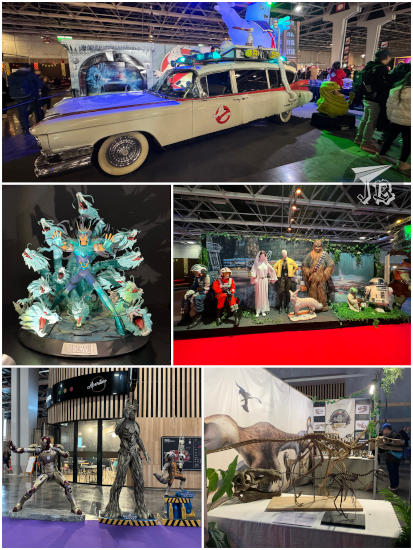
Paris Fan Festival snippets

Eventually, we left the convention to find our way to the hotel and drop the luggage, since comics are heavy, and Paris is on high alert and most places won’t let you through with backpacks. We wasted some time finding the hotel as it was raining cats and dogs – and they were remodelling, so the outer signal was not there. After check-in, we headed out again, and when we reached our next destination, it had literally stopped selling tickets – it was one hour and four minutes to closing time, and the recommended time is one hour and five minutes, so sadly, we could not get in.

It was a bit disappointing, but we moved on towards Arènes de Lutèce. Lutetia (Lutèce) was the Latin name for Paris when it was part of the Roman Empire, and the amphitheatre is one of the most important remains from that period. Built during the first century CE, it would have seated 15,000 spectators. It was restored and open to the public at the end of the 19th century. Today, it is the centre of a park.
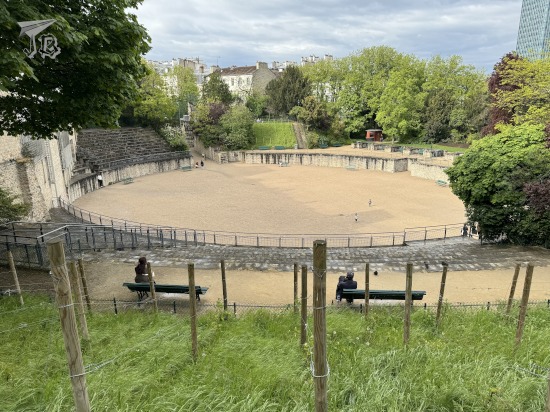
Lutetia Amphitheatre

After that, we took the underground towards the high-end department store Galeries Lafayette Paris Haussmann. In 1894, two Parisian businessmen opened a shop that would eventually become the biggest department store chain in Europe. Through the following decades, the businessmen bought buildings around the shop in order to grow their emporium. In 1907, architect Georges Chedanne carried out the first main renovation in the Art Déco style, and Ferdinand Chanut completed it with a Neo-Byzantine dome, built in 1912. Today, the galleries focus heavily on luxury products, and not that we could afford any, but I wanted to see the dome.

When we arrived, we snooped around – it was packed, full with high-end tourists, mostly Asians. The brands selling their products were the most expensive ones – from Chanel to Cartier. As we were admiring the dome, we saw there was a glass walk hanging from the balcony on the htird floor. Of course, we had to investigate. It was around 17:30. We found the end of the queue, and saw that there was a QR to reserve a spot. I was able to book us in for 19:20 – surprising, considering it was the same day, and access is free – maybe it was a language barrier or something? I’m not going to complain.

There was a nearby gallery I also wanted to see, Passage du Havre, a typical Parisian shopping passage. It was less impressive than the Lafayette, but also surprisingly cosy – as my sibling put it “the other guys have Chanel, they’ve got Sephora”. It had some nice decoration and quite a different crowd. Furthermore, we had been up since 4:00, and ate quite early, so when we found a Pret a Manger, we decided to buy dinner there.
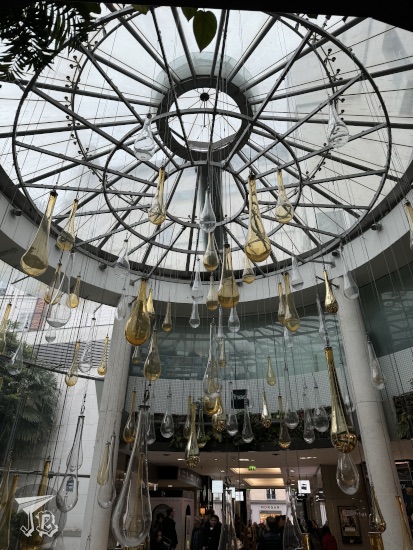
Passage Du Havre escalators

We went back to Galeries Lafayette for our “Glasswalk” experience, and it was really, really cool. The staff were also impressively friendly and we enjoyed ourselves immensely for the whole… five minutes of it. I really loved the dome.

Upper floor of the Galerie Lafayette

We finally headed off towards Napoleon’s tomb, the Dôme des Invalides in the complex Hôtel des Invalides. Hôtel des Invalids was originally commissioned by Louis XIV in 1670 as a hospital for disabled soldiers. The church-and-chapel complex was designed by Jules Hardouin-Mansart in several iterations from 1676 on. The complex is considered one of the most iconic examples of the French absolute monarchy Baroque style. When Napoleon’s remains were repatriated in 1840, a state funeral was held, and a mausoleum projected in the crypt under the Dome. Construction of the grave extended until 1861, when the former Emperor was finally entombed there.

We were going to see the light mapping event Aura Invalides, a spin off of sorts from the display in the Notre-Dame Basilica in Montreal (Canada). The show highlights the history, architecture and meaning of the monument through light and orchestral music. The event lasts about 45 minutes, and it comprises three parts: First Movement: Creation, which focuses on the architecture of the monument; Second Movement: Collective Memory, through which you get to wander, seeing different effects in the chapels; and finally Third Movement: Universal Elevation, more spiritual and ethereal.

Projections inside the Invalides church

Les Invalides church by night

Afterwards, we headed towards the hotel to have a shower and sleep.

28th April 2024: No plans, really

After a nice breakfast at our hotel, we tried our luck at the Paris Fan Festival again. We got our drawings from Linda Šejić, but Stjepan Šejić had brought all the wrong markers and was not doing any more commissions. I offered my own pen, just to test the waters, and it was unfortunate that he did not take the bait.

Oh, well. You can’t win all the time. Instead of wallowing in our bad luck, we decided to get going and do something cool. For me that meant the park known as Jardin des Plantes, to visit two sites of the French Natural History Museum Muséum national d’Histoire naturelle. The day had started weirdly, with my underground ticket not working, but my sibling’s doing so. A lady who did not seem to enjoy being stuck at work Sunday morning waved us through without exchanging it. As the ticket was still not working when we left Paris Expo, another employee exchanged it.

The first site we visited was the Great Gallery of Evolution, Grande Galerie de l’Évolution, the biggest site of the French Natural History Museum. It has four visitable levels – the upper balcony (third floor), focused on “Evolution of life”, the second floor “Impact of man in life”, and the first and ground floors that deal “Diversity of life” (terrestrial on the first, marine on the ground floor). The way it is arranged makes it, in my view, a companion to the Gallery of Compared Anatomy – (which I still like best, to be honest).

The collection finds its core in the disappeared Zoology Gallery, whose building dates back from 1877. Designed by architect Jules André, the interior was a cast-iron structure with a central nave and a skylight. Although the original project was never completed, the Galerie de Zoologie was inaugurated in 1889. It closed down in 1966 for restoration, although works were actually only carried out between 1991 and 1994. During this time, taxidermist also took care of about a thousand animals. Today, the gallery holds a cavalcade of savannah animals on the ground floor, and more conservative vitrines and glass cases on the upper floors. The museum still keeps the 19th century allure and entertaining aura – we did not go into any of the VR experiences, as they were sold out (and, you know, in French), so we did not see the more modern area of the museum.
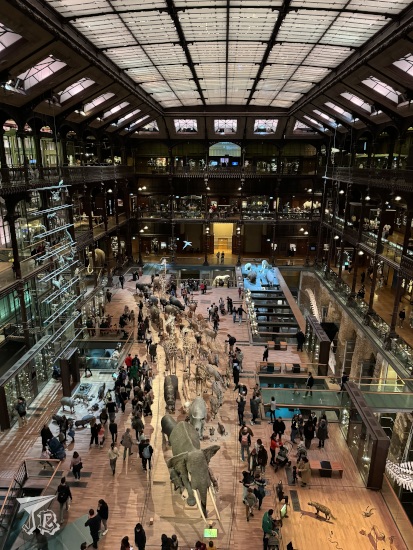
Great Gallery of Evolution

We started off on the third floor and made our way down to the ground level. There were a ton of taxidermy animals, collections of insects and shells, even a wool one, and some bizarre specimens such as a tiger attacking an elephant with a chair on top… To be honest, though, I think it is more of a regular zoology gallery, just arranged in a surprising way. I found the evolution angle better developed at Brussel’s Natural History Museum. The classical design is extremely cool, though, and it would have given a great feeling had it not for all the free-range kids wildly running around…

Afterwards, we headed off to the geology and mineralogy gallery, Galerie de Géologie et de Minéralogie, which had a really nice collection of gemstones, crystals and jewellery. And of course, fluorescent rocks which kept my attention for a very long while.
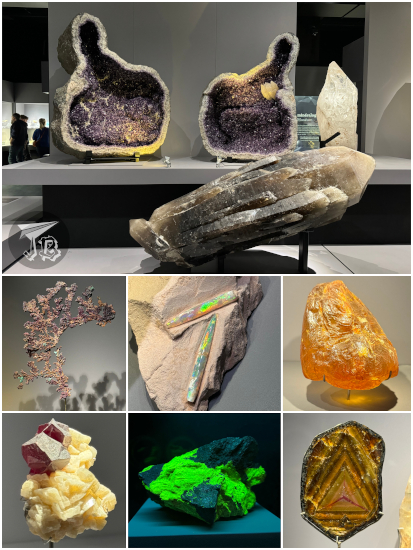
Mineral and geology gallery

It was almost lunchtime and we decided to head out towards a busier area to grab a bite. My Paris Visit ticket was not working again, and I exchanged it yet once more. I went through, but my sibling did not, so they had to wait in queue again to exchange that too. Apparently, I was keeping the tickets too close to my phone – even if it was the one without internet? I deemed my sibling responsible for the tickets from then on.

We stepped out at Palais Royal–Musée du Louvre, hoping there were places to eat, and we were right – there were a bunch of them along the street. The one that grabbed our attention was Café Brasserie Ragueneau, a small eatery close to the Louvre. There, I splurged on a Tartare de boeuf poêlé au foie gras (Pan-fried beef tartare with foie gras) just to be a snob. It was delicious. The foie gras version came slightly cooked, though the raw version would have been fantastic. Our waiters were extremely friendly too, and tolerated my poor French with a smile.

Pan-fried beef tartare with foie gras

After lunch, we walked to the last place on my list for the trip – the church Église Saint-Germain l’Auxerrois de Paris, which mixes elements of Romanesque, Flamboyant Gothic, Rayonnant, and Renaissance styles, though the tower – my favourite – was only added in 1860 as part of Baron Haussmann’s plan to reconstruct the city. The base of the church dates from the 12th century, and during the 14th and 15th centuries it was decorated with a balustrade by Jean Gaussel, multiple sculptures, and gargoyles. The interior is lighter than usual gothic churches, and there is a monumental set of carved wooden seats for the royal family. There are multiple windows with stained glass, although not all of them are the original Medieval ones, since they were destroyed during the French Revolution and replaced in the 19th century.

Church of Saint-Germain l’Auxerrois

The Louvre was not selling same-day tickets, so our idea to spend a couple of hours there went bust. Then, we decided to walk towards Île de la Cité to check on the cathedral’s progress, as it is supposed to reopen this year, when reconstruction from the 2019 fire has been completed. I wanted to check something called Tunnel des Tuileries, but I misunderstood – I thought it crossed underneath the Seine to get to the Isle of France; apparently I mixed it with a pedestrian tunnel under the Thames – it turned out to be a place of modern art, and it did not feel too safe. Thus, we continued under the sun, and reached the flower market Marché aux Fleurs Reine Elizabeth II.

We found out that a sort of stage has been built for visitors to sit in front of Notre Dame, and we saw a lot of people taking pictures of the pictures on the wall, which was a bit weird. We sat for a while, but not long because there was a guy singing really badly at the square.

Notre Dame under reconstruction

We went on and saw the park Square René Viviani, where the oldest tree in Paris stands. Next to the park is the church Église Saint-Julien le Pauvre and close to Église Saint-Séverin. We could not enter any of them, so instead we decided to sit down to have a coffee – in my case a “detox smoothie” because the orange-and-carrot blend reminded me of one in Japan I really like.

We finally set off to collect our things, and this is when I usually say I got home without an incident. Not this time. The public-transport tickets worked fine to get to the airport, we bought dinner and settled to wait. There was nothing much too strange, we were late – forty, forty-five minutes? I’m not sure, but not an obscene amount of time – the crew announced connections over the PA system, I thought that was nice of them. When we landed… I had a moment that I did not know where we were, which is strange, because the terminal is pretty straight forward. It turns out that in order for the travellers who had connections to South America to make it, we had landed at the Satellite Terminal, not the main building! Which meant over thirty minutes of “commute” back to the parking lot… I had taken a leeway of around an hour and a half after landing to get out, but we barely made it!!

A nice weekend to break out the routine, a lot of comics signed, and a lovely piece of artwork were achieved. Unfortunately, I caught a stupid, stupid cold, my first since the whole Covid thing started, and my immune system freaked out. It seems it’s back to facemasks on planes for me.
23rd February 2024: Zorita de Los Canes & Recópolis (Spain)

Zorita de los Canes is a hamlet at the bank of River Tagus, in the middle of nowhere in the Spanish Central Plateau. It was founded as an Almoravid dynasty fortress (alcazaba), however the stones that erected the castle are much, much older. The fortress was built around the 12th – 13th centuries, and although ruined, it used to be visitable – not at the moment though. The stones to build the castle were quarried from an even older settlement, which today is known as the archaeological site of Recópolis.

During the Middle Ages, Zorita was extremely disputed. After the Moors built the alcazaba, the town was taken over by the Christians, then recovered by the Almoravid dynasty, until it was conquered by Christian king Alfonso VII. The village was entrusted to the Order of Calatrava, the first military order to be founded in the Kingdom of Castile, who were to defend it against the Almohad Caliphate.

I’d been wanting to go to Recópolis for a while, and I found out that the archaeological sites in the area are free until the end of the year, so I thought it would make a nice mini-trip. I booked the ticket a few days in advance as it seemed that the weather would be cold but dry, albeit windy. I thought it could be a good chance before fuel prices go up again.

I had an early lunch and drove off with the idea to get to the archaeological site around quarter to three, as I was booked for three o’clock and the ticket said to arrive ten minutes in advance. The drive was a bit faster than I thought, but the Sat-Nav sent me on a completely different route than Google had, which made me a bit insecure about timings. That’s why, even if I saw a couple of villages that looked interesting, I decided not to stop and explore them, I could do it on my way back. Suddenly, the ruined castle came into view. I pulled over in a safe place to admire it and checked the time – I was good. Thus, I drove into Zorita de Los Canes and stopped at a small parking lot at the entrance of the village. I parked next to the river Tagus Río Tajo, which gave me a couple of nice views.

Castle in Zorita de los Canes, atop a hill

Part of the Medieval wall still stands, and access to hamlet’s core is done through an ancient gate, which I was happy to cross on foot. There was a small church, and at the summit of the peak stands the derelict castle Castillo de Zorita de los Canes. I decided not to climb as I knew it was closed, and after a few minutes, I got back into the car and drove off.

River Tagus and Castle in Zorita de los Canes

All in all, I was in town for about a quarter of an hour, and did not drive for longer than three or four minutes before I parked at the entrance of the archaeological site Parque Arqueológico de Recópolis. The interpretation centre was empty and locked, and I was the only car in the parking lot. The time was around 14:30 at that point and I decided to wander around for a bit, as there was what looked like a hiking trail amongst the fields. I found a nice lookout of the castle, but not the ruins themselves.

Zorita de los Canes from far away

The discovery of Recópolis is credited to Juan Catalina García López in 1893. Juan Cabré Aguiló started the excavation in 1945, and found a “little treasure” (tesorillo) of coins from looting (one of them fake). Of Visigoth origin, it predates the Moorish town by a few centuries. It was erected around the year 578 by king Leovigildo in honour of his son Recaredo, who would go on to become the first of the Christian kings of Spain.

The city followed the byzantine pattern. There were two perpendicular streets, one of which lead to the palatial area, with shops to the side. Recópolis became important enough to mint its own coins, but the crisis of the Visigoth state lead to it conquest by the Moors in the 8th century. The city was slowly abandoned and became a quarry for the nearby settlement of Zorita. Later, in the 11th century, Christian settlers built a church and a small village, which had been abandoned by the 15th century.

The whole archaeological area spreads 30 hectares, out of which eight have been excavated. The interpretation centre has a few replicas of artefacts that have been found – due to security concerns, no originals are kept on site. To be honest, I was not surprised – I could have walked into the site and left without anyone stopping or even seeing me. When I arrived, it was me and the vultures, and I had a bit of a flashback to that time at the cave Cueva de los Casares, and even fantasised a little about being alone to explore the site. The guide arrived on time and opened the centre, and I was still the only one there, which was weird – I know for a fact that there were a bunch of reservations for 15:00, but only I showed up. Maybe the others became discouraged because of the weather?
The nice tour guide suggested waiting for a few minutes to give time for others to arrive, and offered me the VR experience. I accepted, of course – I’m not going to turn down such a thing. It was really fun, because you could pick up objects as the local goddess and a little child showed you around a reconstruction of the town, the palace and a glass workshop.

Afterwards, we headed off towards the ruins – nobody else had shown up. The guide offered to let me stay after the tour to take all my pictures so I decided to just listen to him as he explained and pointed to some very interesting details – a bit giddy inside. Would I really be alone eventually? He showed me the church, the palace and the grain silos in the ground, where grain was stored. He also took me to the palace and pointed out the main streets, and taught me how to differentiate the Moorish construction (criss-crossed materials) from the original Visigoth one (parallel architectural stones).

We also chatted a little and I mentioned I hoped it did not rain – he said that it had been threatening rain all week, but it would be all right. I eyed the black cloud approaching and hoped he was right.

Spoiler alert: he was not.

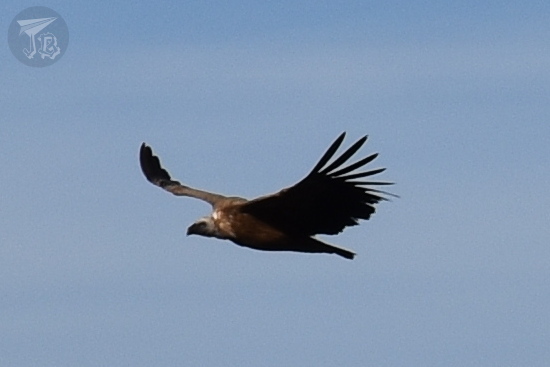
After finishing the guided visit, I was left alone indeed. I went around the main area of the archaeological site, and when I was in the church, the storm broke out. I had an umbrella, but I still got drenched. Interestingly though, even if it was raining and windy, it was suddenly not as cold as before. However, I had to give up eventually, since taking pictures was too difficult. As I decided to return to the visitor centre, the cloud finally moved through, and rain slowed down. I was heading down the hill towards the visitors’ centre when it finally cleared completely. I stopped, wondering whether to leave or come back, and when I looked up I saw a rainbow, sprouting right out of the castle. There were even vultures flying against the retreating cloud. It was really cool.

Rainbow hitting the castle, and a vulture flying

I felt motivated again, so I went back to the ruins of the city to take a few more pictures – after all, it was really cool to be all alone in the archaeological site. I wandered among the houses where it was allowed, and went to the edge of the site to take it all in, then I walked back. As I was in the middle of the street, a griffon vulture circled me a couple of times, maybe wondering if I was food – I think staying where I was taking pictures did not help? It eventually left, and I headed back to the centre, where I arrived just in time to watch the little video documentary about the Visigoth town.

Ruins of Recópolis

Recopolis ruins

Griffon vulture mid-flight

I left afterwards, and I got caught in the storm again – thus I did not stop in any village on the way. The first half of the drive was miserable in the rain, but then it cleared out, and the rest of it was all right. Fortunately, I did not run into too many other cars either. I got home around sunset and went to bed early since I had to wake up early the following day.

Nevertheless, now I’ve got a VIP (VOP? Very only person?) experience, alone in an archaeological site, which is added value to the whole thing and I loved every second of it, even with the rain.

3rd December 2023: Sushi, I“k”ons, Goddesses and Light Bugs (Madrid, Spain)

I had evening plans in Madrid with my sibling, and they wanted to have lunch in town and make a day trip out of it. Since I had previously ascertained that the Running Sushi franchise was all right and fun, I proposed to check out another of the locations. They agreed and I had booked a 13:00 slot at Running Sushi in Akihabara, near Plaza de España. It was even more fun than the one I had checked out before, with Godzilla, Taito Station signs, Pacman, neon, anime graffiti in the toilets, and Japanese music playing. From the outside, the restaurant is shaped like a train carriage, and the sliding doors relay the same message they do when Tokyo JR stops at the station at Akihabara. In general, Running Sushi Akihabara offered the same food as the In Market restaurant, but this time there was tuna. I don’t know if it is because of the location, or because it was a weekend – and thus more expensive. Reservation was a great idea, because though I had no problem booking for 13:00, there were plenty other people with and without bookings, and when 14:00 – standard Spain lunch time – approached, the place became almost crowded. We stayed for the whole hour since we had a late start due to missing chopsticks and napkins, and I own up that the last takoyaki might have been excessive. This time, I remembered to ask for the membership card – you get a reward if you visit all the restaurants in the holding, something I’m considering to aim for.

Running Sushi Akihabara

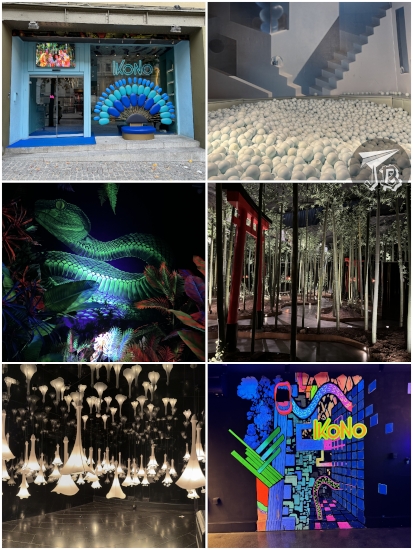
After lunch, we had a 14:50 ticket for a place called IKONO. I have to say I’m warming up more and more to these Instagrammable places – I’ve recently read one of them described as a “fun house” and I think it’s a more than accurate idea. I like them because they’re silly places for, quite literally, kicks and giggles. According to themselves, IKONO was born as a leisure option alternative to “restaurants, shopping and clubbing” for young people – I disagree with the “young people” take though. Out of the permanent establishments of its kind in Madrid, it is probably my favourite.

The IKONO mood kicks off even before you go in, with a peacock-like armchair just outside the main entrance. Spread over three floors, the venue has 15 different experiences / things to do. Once your tickets have been checked, the first “door” you go through is a thick wall of foil fringe curtains in a gradient of shiny colours,which felt like going through the Stargate! (I know, I know, niche comment). All through the place, there is bouncy music playing.

Once you have crossed the curtain – I somehow ended up in a weird inner space instead of where I was supposed to reach, but that’s just me – the first room is a ball pit, and a deep one at that. It was quite hard to move there. There are quite fewer rules than in other ball pits too – you can jump in, and throw balls up. Once you manage to drag yourself out of the ball pit, you get to go upstairs, what I’ve mentally named the “paper floor”. It has three rooms – the landing one has a pretty origami tree and some wings for you to take pictures with. There is a “psychedelic” ward with black-and-white décor and a blue-and-pink confetti cannon. The third one is a dark “jungle scenery” with glow-in-the dark colourings and paintings that I really loved – the frogs were adorable, and the serpent god quite impressive.

Back on the ground floor, the following room is a Japanese-style bamboo forest with wooden lanterns and a torii [鳥居], the traditional entryway to a Shinto shrine. As you may imagine, this was my favourite area. The room walls are covered in mirror, so it looks like a long path, that ends in the following room, a “bamboo forest” which a felt a little underwhelming in comparison. According to the website, the idea of IKONO cemented while visiting the Japanese Arashiyama bamboo grove, and these two rooms are a homage to that place.

Then we walked downstairs, to the “lights area”, with a few more rooms, including some hanging bellflower-shaped lamps, and another with lights made with marbles that went on and off to the music, some modern art inspired by The Last Supper, and a cube of infinite light dots. Back upstairs, there were a couple more panels for photo-ops, and a small souvenir shop. The staff offered a small present if we left a Google review, so we did. Oh, and they had a cloak option for coats, which was amazing.

IKONO Madrid highlights

We walked outside towards our following spot Caixa Forum Madrid, where there are two exhibitions at the moment. The one I really wanted to see was Veneradas y Temidas: el poder femenino en el arte y las creencias, “Worshipped and Feared: Feminine power in art and beliefs”, an exhibit on the female presence in the religion and spirituality of different cultures. The other one was Horizonte y Límite: Visiones del Paisaje. Colección de Arte contemporáneo, “Horizon and Limits: Views / visions of Landscape. Collection of Contemporary Art”, which I had not read about beforehand – because I am biased.

Veneradas y Temidas: el poder femenino en el arte y las creencias is a British Museum’s touring exhibition, Feminine power: the divine to the demonic (which I feel is a more appropriate name, but that’s just me and my problem with translations). It is a collection of artefacts (most of them not exhibited anywhere else) originating from different cultures, trying to convey the “female spiritual power”, though it also has snippets of erotism and homosexuality. One of the most important and impressive pieces include a copy of the Campo Iemini Venus, a “modest Venus”, halfway though covering herself – a copy of the Capitoline Venus, it was found in an Italian Roman villa in 1792. Aphrodite / Venus was the Greek / Roman goddess of Goddess of beauty, love, lust, passion, pleasure, and sexuality. Other Ancient Greece and Rome pieces include Hecate / Trivia (goddess of boundaries, crossroads, ghosts, magic, necromancy, transitions, and the New Moon), Athena / Minerva (Goddess of handicraft, warfare, and wisdom) or Eros / Cupid (God of desire, love, lust, and sex). There are several pieces of pottery, both red and black, depicting different scenes of various… degrees of erotism.

Halfway between Athena and Aphrodite, the goddess Ishtar, Queen of Heaven, and goddess of love and sexuality was worshipped in Mesopotamia (modern Iraq). Though according to the mythology, she had many lovers and was responsible for creation, she was not considered a “mother goddess”, and one of her advocations is the goddess of war.

The Divine to the Demonic: Greece and Mesopotamia

The first thing we saw from Asia were three masks. There was Taraka [Tāṭakā], a Hindu spirit, whose rage upon the murder of her husband turned her turned into a man-eating ogre (ogress?). From Bali, there was Rangda, the demon queen, antagonist of the forces of good, leader of an army of evil witches, and child-eater. From Japan there was a hannya [般若], the jealous vengeful spirit of a scorned woman.

Also from Hinduism, there is a creepily fantastic (or fantastically creepy?) devotional icon (murti [मूर्ति]) of Kali [काली], goddess of death, doomsday and time. The sculpture is the advocation Dakshina Kali – depicted with four arms, a scimitar, a collar made of heads of her slain enemies, and Shiva at her feet. The murti represents a passage in which Kali goes on a rampage after fighting demons, having lost control, and her consort Shiva throws himself at her feet hoping to calm her down.

Theatre masks and Indian Goddess Kali

Among the Egyptian representations, there was Sekhmet, the warrior goddess, represented as a lioness, who was also the goddess of medicine and one of the sun deities. There were also Bastet, who started off similar to Sekhmet but became more of a protector figure, represented as a cat. There were also references to the cosmic goddess Nut, who symbolises the sky, stars, astronomy, the universe, and mothers.

From China, there was a gorgeous Guanyin [觀音] as the Goddess of Compassion, a very different style from the one I had seen in either the British Museum and the Victoria and Albert Museum. There was also a Shiva porcelain which was astonishing.

Egyptian Sekhmet and Chinese Guaiying

From Meso- and South America, there was a beautiful sandstone of Toci, the “mother of the gods” who is depicted with bare breasts and her hands on her belly. There was also a statue of a Mexican cihuateotl. The cihuateteo were spirits of women who died in childbirth, and received the same honours as the warriors who died in combat. There were other references, such as the Hawai’ian goddess of the sea Na-maka-o-Kaha’i, talismans of sex and love (because the Victorians were a bunch of perverts), references to the Mesopotamian demon Lamashtu, Egyptian protection sculptures, funerary steles… and some modern art kind of thing, like a lady sitting down with a ball python slithering on her because… yeah? I really enjoyed the exhibition, though I have to admit I ignored the interactive art a little, to focus on the mythological aspect.

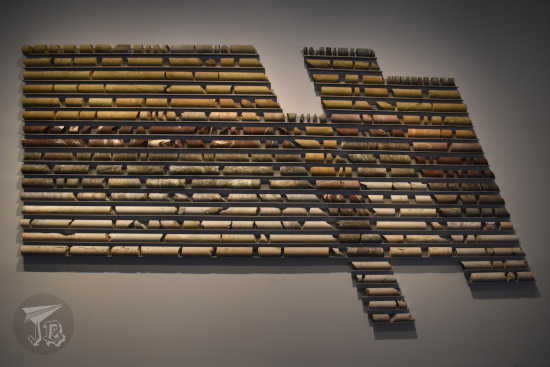
Afterwards, we visited the contemporary art exhibition Horizonte y Límite, which focuses on different… I’m not sure because I know squat about contemporary art (see above comment about the lady and the snake). There were paintings, imaginary photographs, a piece made from different geological cores representing a fault, a panel with postcards, a glass box filled with smoke to represent climate change… Pleasant, but not really my thing. Except the geology cores, they were cool.

Art piece fromthe exhibition Horizonte y Límite: Visiones del Paisaje

After seeing both exhibitions, we headed off towards our next stop. We took a break and sat down for a while to have a great banana-and-strawberry smoothie of all things. Then we walked towards the park Parque Enrique Tierno Galván, where we had tickets for the light show Naturaleza Encendida: Insectos “Lit-up nature: Insects”. The Naturaleza Encendida show used to take place in the Botanical Garden, which is smaller. This year, it has been relocated this year for “reasons unknown” and it feels a bit too long and almost unconnected. All that without taking into account that the idea of a larger-than-me butterfly and giant spiders is a bit creepy to be honest. We had premium tickets which gave us access to the enclosure at any time between 18:00 and 19:00 without queueing, and decided to arrive there around 18:30 as it would already be dark. We had also ordered a cute “magic lantern” – a bunch of sparkling LED filaments – for the giggles.

After an entrance of archways and carpets of light, there is a swarm of dragonflies as a centrepiece. You walk around it, and enter the zig-zagging path. Along the route, you encounter butterflies of different kinds, a line of hard-working ants, bees, grasshoppers, more bees, mosquitoes and flies, more bees, eggs, more grasshoppers, disco balls, larvae (I think? If I had to hazard a guess I’d call them anemones), beetles, ladybugs, spiders and a row of differently-coloured Christmas trees. There were “light corridors” in-between, hive-like hexagons projected onto the trees, and lots of artificial smoke. There are supposed to be some praying mantises somewhere but… I did not see those?

Naturaleza Encendida Insectos figures

All in all, Naturaleza Encendida: Insectos felt too spread out, as if trying to justify the bigger space. Though we had a premium ticket, there was no special premium-only area, and the only benefit was having an hour to go in, without having to queue – which is already enough in my books. I think you really have to be into the topic – we came across a lady who was very freaked out and mostly running so she could get away from the bugs. I have been to three editions of Naturaleza Encendida, and the only one I really enjoyed was the sea-creatures one, Explorium. I thought that the bad weather last year had damped the experience – literally – but I’m going to stop holding my hopes high.

Finally, we headed back to the train station. My morning train had had a five-minute delay, which by the early evening had progressed to the upper 40s. Joy. I’m hoping that when free ticketing is over, service will improve, but I’m not holding my hopes too high…