22nd February 2025: Architecture in Madrid, and folklore in Guadalajara (Spain)

By now, reaching Madrid by train without anything remarkable to comment on is actually remarkable all by itself – there were actually no problems for once. I had booked a spot for a visit at noon, but since I don’t trust the rail service, I hopped on a train to be at Atocha Station around 10:00, and for once I was there right on time, maybe even a minute early!

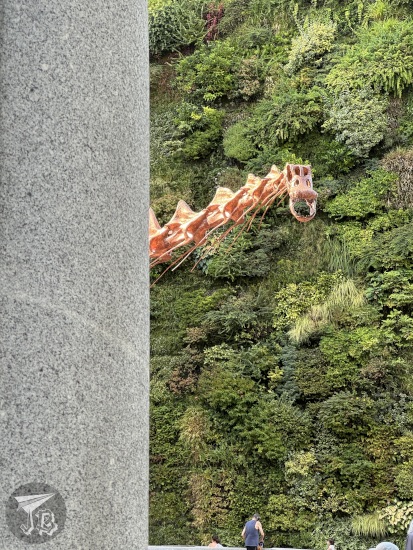
As I walked up the street Paseo del Prado, I passed by the exhibition centre CaixaForum, where the Patagotitan still stands. Since it was still winter, the trees on both sides had little to no leaves, and I could see it from the opposite side. I of course said hi.

Patagotitan skeleton

My first stop was the church Iglesia de San Jerónimo el Real, dedicated to St. Jerome, a late Gothic – early Renaissance building erected between 1502 and 1505. It belonged to a monkhood whose original monastery stood near the river. The stagnant waters caused illnesses among the brethren, who asked the Catholic Monarchs for a new location. The church for the new community was created from brick and masonry, and towers were added in the 17th century. The interior is decorated with two gothic altars to the sides, but no main altarpiece, as the original one has been lost to time. Instead, there is a painting by Rafael Tegeo La última comunión de San Jerónimo – Saint Jerome’s last communion – created in 1829.
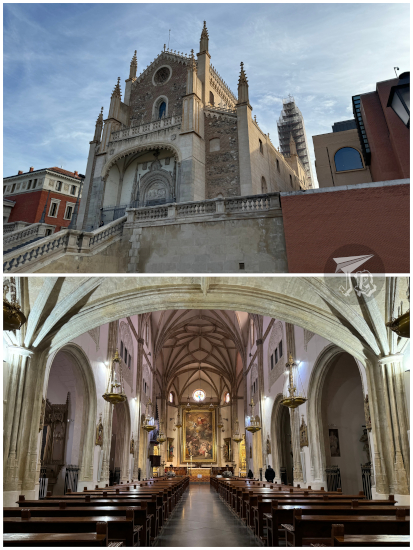
Monastery Monasterio de Jerónimos

Afterwards, I headed towards the National Museum of Anthropology Museo Nacional de Antropología, a small museum dedicated to the diversity of cultures in the world, particularly the Americas, Philippines, Africa and the “Far East”, focusing on traditions, culture and religion. It is covered by my national museum card.

At the moment, the museum is running a temporal exhibit on art based on myths, legends, and sacred texts from India, Caminos místicos. Tradiciones vivas del arte de la India – Mystic Paths. Living Traditions of art from India. I was curious about it, but not expecting how much I liked it in the end. The pieces of the exhibit were mostly based on Hinduism (Sanātana Dharma, सनातन धर्म), the oldest religion in the world. According to Hindu tradition, the Supreme Being Brahma exists as themself, but also as the manifestation of the deities Brahma the Creator, Vishnu the Sustainer and Shiva the Destroyer, all of who at the same time have different avatars (avatāra, अवतार) or incarnations. One of the core principles of Hinduism is the concept of cosmic cause-and-effect justice, karma [कर्म]. Another is reincarnation (saṃsāra, संसार), an eternal cycle of life and death until the individual is liberated from it through self realisation or illumination. The religion is based on values like righteousness, truth, love, peace, and ethical conduct, and it is quite open to other beliefs and ethics.
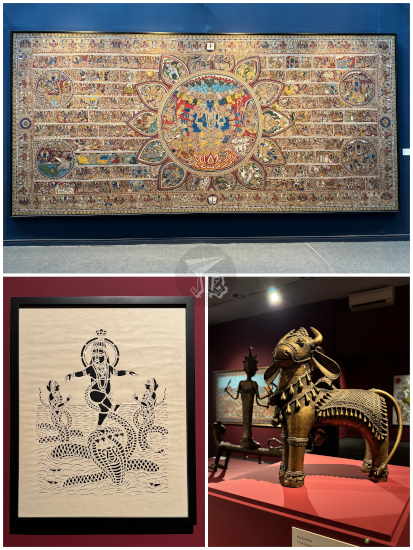
Religious Indian Art pieces

The Museum of Anthropology’s permanent exhibition has a lot of items from the Philippines on the ground floor, probably due to how long(1565–1898) the islands were a Spanish colony. There are clothes, tobacco items, ritual objects, and a small sample of how the local culture was throughout the 1800s. To the back, there is a room dedicated to the religions of Asia and the Middle East – Hinduism, Buddhism and Islam. The first floor is dedicated to Africa, combining a number of traditional exhibits with modern photographs of the traditional people’s way of life – baskets, pottery, leather and wooden objects, ritual masks… The second floor holds items from the Americas, especially from South America. Some of them include a Mexican Día de los Muertos (Day of the Dead) altar, Andean Carnival masks, Sioux-Lakota clothes, Inuit coats…
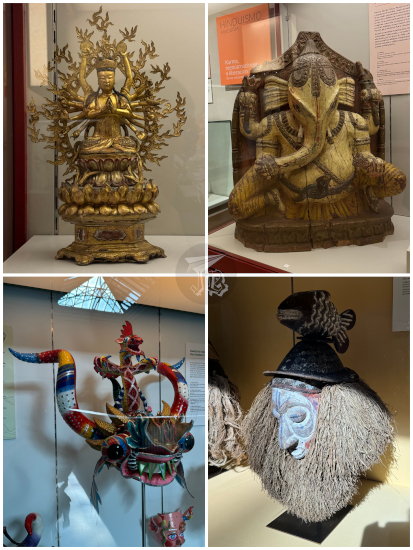
Religious icons and traditional masks

I remember visiting the museum when I was a child, and then feeling disappointed in it when I returned as an adult. This time around, I found the permanent and temporal exhibitions quite interesting, so it’s a good thing I headed there. It also helped make time until noon, when my next visit was due, to the only Ministry that can be visited – albeit not freely, by appointment and paying a fee – as it is a historical building.

The current Agriculture Ministry is housed in the historical building known as Palacio de Fomento – Palace of Development. Its plans were originally drawn by architect Mariano  Belmás y Estrada, aiming for an Arts and Craftwork School. Later, Eduardo Saavedra y Moragas took over to turn the design into a university. Finally, the project ended in the hands of architect Ricardo Velázquez Bosco, who erected the building between 1893 and 1897 to house the then Ministry of Development.

The Palace is an impressive construction. The original design had three floors, which have now been turned into five. From the outside, the building looks white and orange-brown, but a more focused look reveals decorative tiles by Daniel Zuloaga, who also collaborated with Velázquez Bosco in the ETSIME. The entrance is flanked by two caryatids and roof above there is a sculpture group – Glory and Pegasi La Gloria y los Pegasos, a bronze copy of an original marble by Agustín Querol.
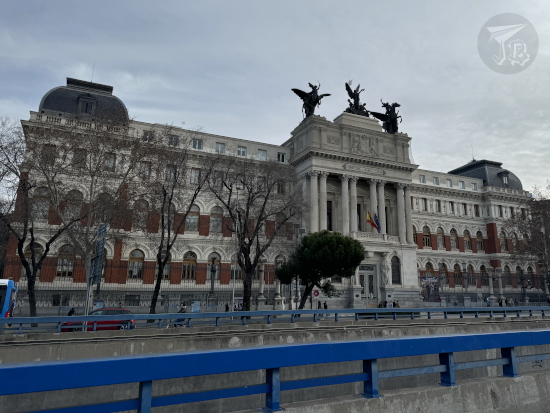
Palacio de Fomento, outside

Once you enter, you find yourself in a huge majestic hall, where we had to check in, since the building is a working Ministry. The email said to be there at 11:45 to go through security. I got there at 11:40 and went in at 11:44. They took my name (they did not care about the ticket) and they put my stuff in the X-ray machine. I had to go through the metal detector and when I asked whether I had to remove my belt, I was just told to put my hand over the buckle… So much for security, I thought, because I did not beep. Then I realised that I must look quite non-threatening as quite a few people were thoroughly searched as they set off the machine.

Beyond the hall where we were checked in, there is an imperial staircase in marble, and a vaulted frescoed ceiling. From there, we visited some offices and meeting rooms, and the portrait gallery – from which the ministers who held office during the Franco dictatorship had been removed. Finally, we visited one of the side inner courtyards, covered in a skylight with some ironwork.
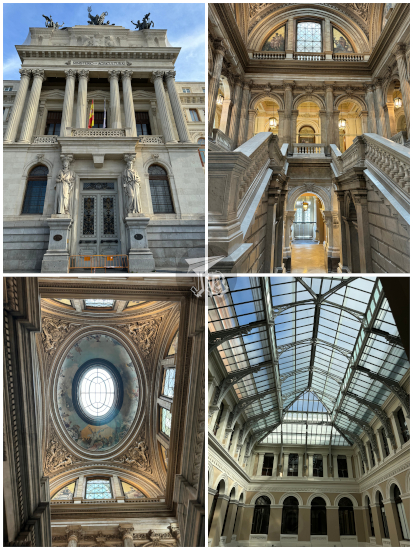
Palacio de Fomento, inside

After the visit was over, the security guards saw us out and locked the doors. I walked around the building, because I had honestly never realised it was square. As the place was next to the Retiro Park, I had been considering looking for some archaeological spot they had opened. However, there were more ideas – Guadalajara was having the Botarga parade, and it was the fair weekend in Tendilla, though, a phone call informed me that traffic was horrid and that it was not a good idea to head there so late in the afternoon.

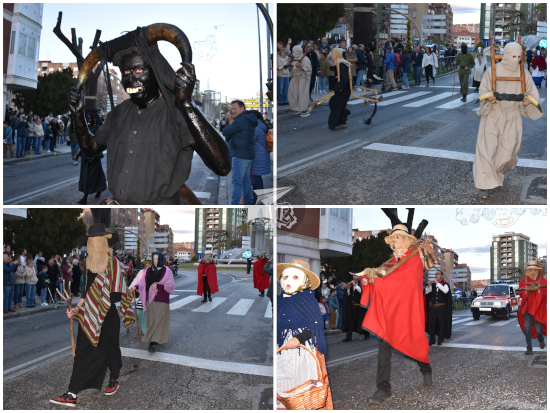
Eventually, I decided on the Parade. I bought some sandwiches and headed for the train. Though I got rained upon, it cleared up, and at 18:00 I was in Guadalajara to have a look at the traditional Parade of Carnival characters Desfile de Botargas – “creatures” from the whole area which meet up in the capital the Saturday before carnival, despite each character having its own schedule wherever it is rooted. The parade was a bit late, so I could talk the local botarga group – El Manda (the Order-giver), Los Mandaneros (the Order-receivers), and the Botarguilla (Little Botarga) – into posing for me. I watched and took pictures from two spots, but the parade moved really fast because they only had thirty minutes to do the route – last year they took well over an hour for that. I decided I did not want to run for it that much… I have to remember to find myself a vantage point next year, instead of trying to get the beginning of the parade…
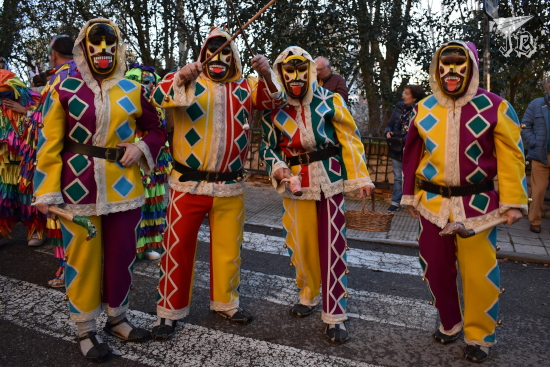
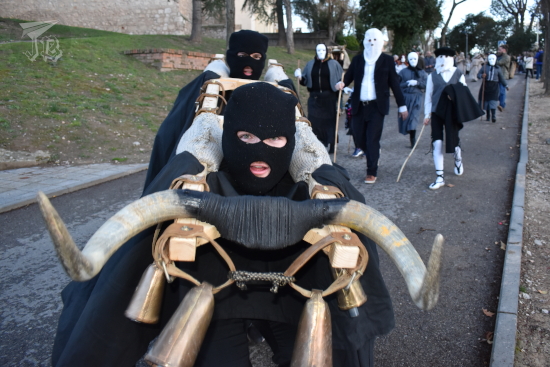
Guadalajara Botargas

Heifferette from Riba de Saelices

Botarga Parade 2025

I got “attacked” a few times, and ended up with soot all over my face, but at least I avoided the guy painting people with mustard… The botargas seemed to zoom in on children and cameras, and so did the devils Diablos (from Luzón) and the heiferettes Vaquillas and Vaquillones (Villares de Jadraque, Robledillo de Mohernando, Luzaga, Riba de Saelices). It was fun. One of these days I might have to try to follow the botargas in their own villages…
27th July 2024: Staying inside in Madrid’s heat (Spain)

I was so excited when I found tickets for the historical hall at Pacífico station that I did not stop to think I had booked for late July, at 16:00, in Madrid. The heat wave was an extra, but even without it, the Spanish central plateau is not precisely known for its mild summers. However, the hall only opens once a month, and not every month, and I had never been able to find a ticket on a weekend I could go, so honestly – when I saw these tickets, I did not think about the weather, just… that I could come.

The day came, and Madrid had a heat alert. It was around 37 ºC, and I thought I would stay inside, and just head out for the visit. Unfortunately, since trains are being horrible, I needed to take one with at least an hour’s berth to make sure I reached the underground station Estación de Pacífico. When I arrived, I looked around to finally realise that the hall was at the actual platform, warded off by a very modern nondescript door. I had brought a book to pass the time, because I knew I would either have a lot of time, or I would be stressed because the train was late. I found a bench and settled down to wait somewhere I could keep an eye on the door. Visitors are not directly admitted into the hall, but they are cleared at ticket control on the other side of the platform, then go back all the way to the entrance. In our case, we waited for a bit, and the guide decided to head through the platform right as a train arrived, so everything was full. Spanish logic.

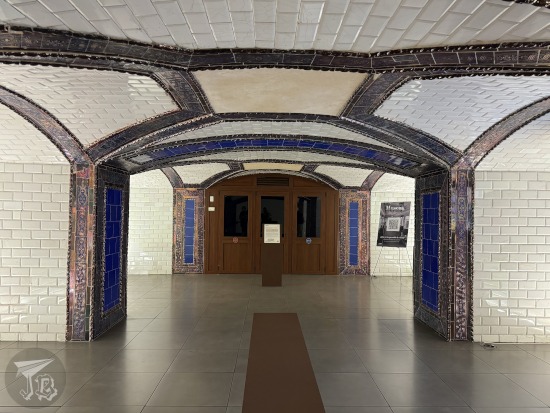
The former hall Vestíbulo de Pacífico is part of the network of Underground museums Museos de Metro de Madrid. Until it was walled off in 1966, it was the entrance to the station Estación de Pacífico, built in 1923 when the underground Line 1 was extended towards the south-west. The passengers climbed down a now-disappeared staircase and crossed the hall, which still had natural light. On the other side, there was some sort of metallic bridge with another set of stairs to access the platforms.

The station used to be part of a huge complex owned by Metro, which also comprised offices, control rooms, and the warehouse that housed the engines that created energy for the trains to run on. At the time, it was an unpopulated area, so land was cheaper. Today, most everything has been replaced by apartment buildings and only the station and the nearby Nave de Motores remain.

The whole complex was designed by architect Antonio Palacios, and the hall was built in white tiles with blue decoration – a homage to the Pacific Ocean, which gives the station its name. The hall is tiny by today’s standards, barely 119 square metres. It has three vaults that used to have skylights for the sun to light up the hall – now those are closed off as the street above them is busy. The station was renovated in the 60s so it could accommodate the longer trains, new accesses were built, and the hall closed down. That renovation was the same that made the station Estación de Chamberí close, and apparently another hall that has been uncovered in Ventas.

The hall was bricked away for almost half a century, until restoration work started in 2007. It took ten years, as budget was low and the process was labour intense – 60% of the hall had to be rebuilt. However, the final product is really good, you can see the newer tiles if you look for them, but the whole thing feels extremely well preserved. Even the staircase, which was built to access the hall after the iron bridge was destroyed, feels time-appropriate. A replica of the original doors was put up.

Pacífico Booking Hall

And right when I have seen all the five Underground museums that require appointment… I find out there is a passport of them – Pasaporte de Pasaporte de los Museos de Metro. Just my luck! Then again, maybe Metro will take these articles as proof of visit and backstamp me for them?

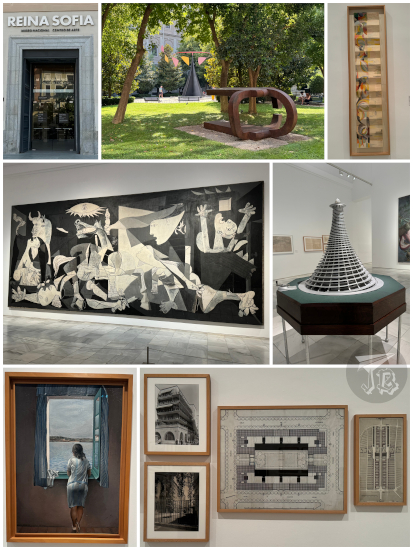
The visit took about one hour, then I rode the underground back towards Atocha, and bypassed it to the next station. I had decided to try my luck with the queue at modern art museum Museo Nacional Centro de Arte Reina Sofía, part of the national network of museums covered by my card. To be honest, I do not enjoy modern art that much, so I have been putting off this one visit. However, the museum holds a piece by Pablo Picasso that has become quite socially loaded – Picasso’s Guernica, which I have always thought I ought to see at least once.

Pablo Picasso (1881 – 1973) is considered one of the most important artists of the 20th century. He was co-inventor of collage, co-founder of Cubism, and inventor of the assemblage (basically, collage in 3D). He painted, sculpted, and made prints, ceramics and theatre sets. I have never connected much, if at all, with the kind of art he was making. I do not really understand the limits he broke, nor whatever he wanted to express. That is why I wanted to see this artwork in particular – to try to understand.

Arguably Picasso’s most famous painting is Guernica (1937). During the Spanish Civil War, German planes bombed the Basque town of Guernica, in the north of Spain, to aid the Nationalist army. The town was destroyed, and up to 300 people lost their lives – the raid opened the northern front for Franco to reach Bilbao. British reporter George Steer wrote a scoop on the event after he witnessed the destruction, and his reports made waves internationally. Picasso, who lived in France at the time, had been commissioned a piece of artwork for the Paris World’s Fair by the Republicans (at the time the rightful government of Spain). Upon reading the news, he scrapped his original idea and painted the Guernica instead.

The painting is one of the most important artworks that the museum has. It is a huge piece, in black and white, showing the carnage. As most men were out in the battleground, the majority of victims were women and children – along with a dead soldier, a horse and a bull, most of the figures in the pairing represent women and horror. I honestly find the description of the painting more chilly that the artwork itself.

One kind of feels that the museum itself as built as a huge sarcophagus for the Guernica, and other pieces are there just to fill up the space. A sculpture by Eduardo Chillida is exhibited in the gardens. There is also a space about architecture, with blueprints and photographs, including artwork by Le Corbusier. Other artists whose work is shown include Salvador Dalí, Joan Miró, Alexander Calder… Actually, I enjoyed the museum more than I thought, as I expected only abstract art that I would not understand. I enjoyed the blueprints and photographs of buildings, and the actual building too.

Exhibits at Museum Reina Sofía

I then headed up Paseo del Prado to find one of the local cultural centres. I was ridiculously amused when I reached the corner where CaixaForum stands. I was on my phone, and when I looked up, I saw the Patagotitan “looking” at me. It gave me a laugh.

Patagotiatan at Caixaforum

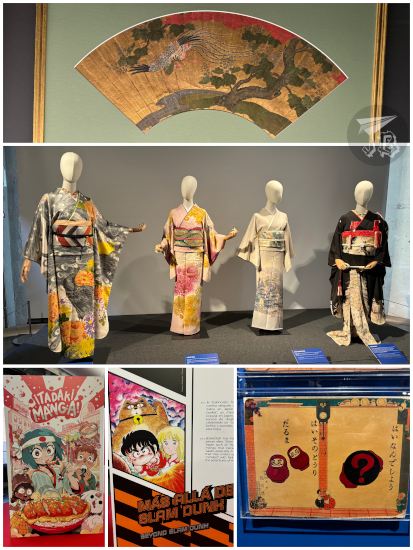
The cultural centre Serrería Belga is running a Japan-themed exhibit, divided in parts:

  • Kinpaku. Naturaleza, poder e imaginación en el arte japonés (Kinpaku: Nature, power and imagination in Japanese art): Kinpaku [金箔] refers to gold leaf artwork, often used in decoration in classical Japanese culture. A private collector has lent their items to exhibit – windscreens and fans, all painted in gold, so they can be enjoyed by everyone.
  • Kimono, identidad cambiante: un siglo a pie de calle (Kimono, changing identities: a century on the streets): Kimono [着物] is the traditional Japanese clothing – one that unlike many others is still common wear. There were twenty of these, including accessories.
  • Expokon: A series of panels discussing different hits in sports manga and derivatives.
  • Japan International Manga Award: Panels drawn by the Spanish artists who have won the awards in different years.
  • Kamishibai: Kamishibai [紙芝居] is (was) a form of Japanese street theatre using a small paper theatre with pictures to tell the stories. There were several sets of stories, some classical, some more modern.
  • Manga Kids Academy: A few panels showing Japanese school life through manga and anime.
  • Itadakimanga!: A series of panels showing different foods popular in manga and anime.
  • Gêmu: cultura visual y videojuego japonés (Gēmu: visual culture and Japanese video games): Some items regarding video games, and even a few arcade machines for playing.

Japanese exhibits at Serrería Belga

The exhibits were part of Madrid’s summer cultural program, which has named Japan “Guest Country”. They were a few cute little exhibits, and they were free too, so a good way to complete half a day trip. I headed back to the station afterwards, to wait for whichever train came, and I was lucky enough that one was there in a couple of minutes – I even found a good seat on my way back.

And I have finally seen the hall at Pacífico, which has been a goal since April 2023. Now I just have to figure out a way to obtain the passport and have it stamped…

21st July 2024: From the Sea to the Butterfly (Madrid, Spain)

When planning for the day, the one thing I did not count on was the heat wave. I did take into account problems with trains, but apparently a half-hour delay is a non-issue by now and not worth mentioning. I reached Madrid around 12:30, and I had a reservation at 13:00 for a themed restaurant which had caught my eye when I saw it online. It was honestly a big disappointment, though I refused to let it ruin my day.

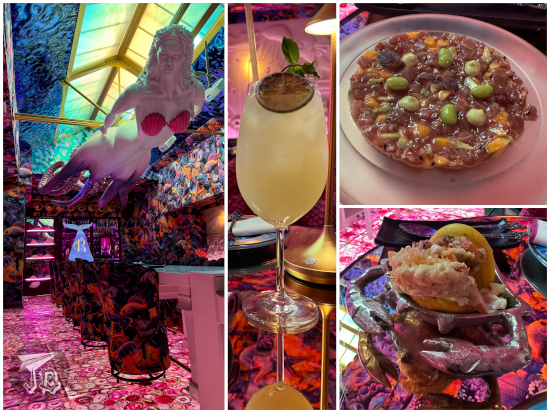
The restaurant is called Bestial, and it is ocean-themed. The pictures were awesome, it looked super cool, and I was pretty excited to go there. However, the experience was mediocre at best – I guess solo travellers are not their target audience, and it showed. As I was mainly ignored, I could watch how the restaurant worked. The waiters got the tables mixed up a few times, and they allowed others to take pictures with cocktails that were not theirs – that was weird, and I am pretty sure that against health code. I ordered a lemonade – the best thing – a tuna tartar and a crab bao without coriander, after checking that the coriander could be taken out. The tuna was tasteless, and the bao did have taste… coriander. All in all, I was not impressed by the food, even less by the service. Between the two dishes there were about 35 minutes waiting, and after an hour I just gave up and asked for the check, which was brought in a little book… and dropped halfway, then picked up from the floor… I just paid – the meal was not cheap – and left without dessert. A pity, really, but I really did not care any more.

Restaurante Bestial by Rosi La Loca

It was ridiculously early for my 16:00 visit, but I wanted to try my luck. I had chosen that day because CaixaForum Madrid was running two exhibitions that I wanted to see – Patagonian dinosaurs (which had just opened) and The Science of Pixar (which would end soon). The exhibition centre was booked out, so I could not sneak in before my time slot, but I managed to get my most burning question answered – how on earth were they going to fit a Patagotitan inside CaixaForum? Answer: they did not. They placed it outside, which was a fun surprise!

Patagotitan skeleton in front of CaixaForum Madrid

Since I had about an hour and a half, I decided to trot over to the painting museum Museo del Prado, part of the national network of museums, which I can access with my one-year card. I thought I might be luckier and the queue to enter without a reservation would work better. Indeed, I did not have to wait indeed, and I could have a look at a few of the masterpieces the collection holds (though not take photographs) – Francisco de Goya, Joaquín Sorolla, Diego Velázquez, Esteban Murillo, Fra Angelico, Hieronymus Bosch… Of course, not all the masters, because El Prado is enormous. It is also air-conditioned, and surprisingly, not as full as I half-expected. There was a queue when I came out, so I guess it worked out well!

I walked back to CaixaForum Madrid to see the two exhibitions I had booked. It was a bit before 16:00, but this time I did not ask, and just walked into the first exhibition – “Patagonian Dinosaurs”: Dinosaurios de la Patagonia, which had very little new information, and even fewer actual fossils, but a lot of dinosaur reconstructions. Those were cool. Aside from the Patagotitan mayorum placed outside, there were full skeleton replicas of Herrerasaurus ischigualastensis, Eoabelisaurus mefi, Leonerasaurus taquetrensis, Eoraptor lunensis, Condorraptor currumili, Brachytrachelopan mesai, Amargasaurus cazaui, Tyrannotitan chubutensis, Neuquensaurus australis, Carnotaurus sastrei, Gasparinisaura cincosaltensis and Manidens condorensis. There was also a Giganotosaurus carolinii skull. As for the real thing, a femur, a shoulder plate and a forelimb of Patagotitan, some teeth and vertebrae and a few invertebrates and leaves. It was really cool, and not extremely crowded for a dinosaur exhibit in summer. It was only the third day of the exhibit, so maybe it was not that well publicised yet? Out of the new species I discovered, Amargasaurus was my favourite – with the neck spikes it looked exactly like I would have imagined a dragon.

Patagonian Dinosaurs

Patagotitan front and back legs, along with a huge shoulderblade

The other exhibition that ran at the time was “The Science of Pixar”: La Ciencia de Pixar. It felt like a nerdy companion to Mundo Pixar, focusing on the maths and the process to create a Pixar film. Unfortunately, it was bustling with kids who – understandably – just wanted to smash buttons and make things light up. The exhibition had a lot of cool machines which simulate the different steps of creating a computer-animated film – rigging, modelling, lighting, rendering… The most interesting was an analysis called “What colour is this pixel?” taking into account movement, lights, shadows… It must be amazing to be able to visit the exhibit alone and be able to play with all the computers. I did find one where you get to simulate crowds using shoals of fish (from Finding Nemo) and I played with that for a while. There were also a few life-sized models from several films, miniatures and 3D mini-sculptures.

La Ciencia de Pixar

I left the venue after browsing the shop, and I walked down towards the theatre. It was still early, and I wanted to hit a couple of shops. Actually, I wanted to go to what is commonly known as the Primark flagship shop. The building Edificio Gran Vía 32 was originally erected in the 1920s to host the first department store in Madrid, Almacenes Madrid-París. It was designed by architect Teodoro de Anasagasti and used the most modern technology and materials at the time – reinforced concrete in the avant-garde style. The whole interior is built around an octagonal lightwell with a central staircase, and today the lowest four floors have been turned into the Primark shop, which has fitted screens and lightings while keeping the previous structures and railings. The modernisation project was undertaken by architectural studio RCCyP and it took three years until the shop opened in 2015.

Interior of Edificio Gran Vía 32

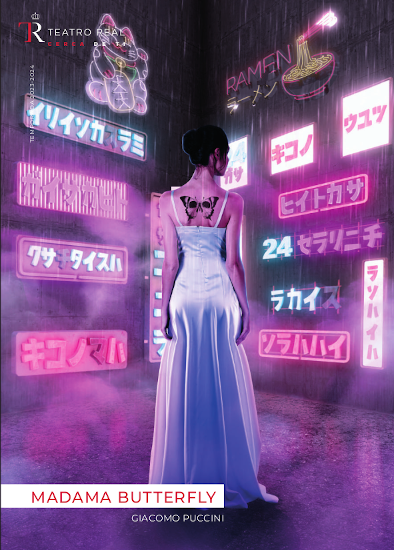
I continued off towards the theatre Teatro Real. I had a bit of time and some unspent calorie budget, so I decided to splurge at Starbucks with a whipped-cream Frappe for my pre-show snack. For the same price I had awesome third floor for Carmina Burana, I had a fifth-floor-in-the-back paradise ticket now. However, it was a lone seat with a great view, so I am not going to complain. I was going to watch the opera Madama Butterfly by Italian composer Giacomo Puccini – and sometimes I think that the better the singers are, the worse time I have with this show.

Madama Butterfly Promo

The main character is Cio-cio, a name that when pronounced in Italian sounds similar to 蝶々, [Choucho], butterfly in Japanese. When she is 15 years old, in 1904, Cio-cio marries an American navy man, Pinkerton, who intends to leave her and find a ‘decent’ American wife. Cio-cio is repudiated by her whole family when she converts to Christianity for her marriage. Three years later, she is alone, almost bankrupt, the mother of Pinkerton’s child, and a marriage broker is trying to sell her off to another prospective husband. Pinkerton returns to Japan with his American wife, who agrees to raise the child, but he cannot face Cio-cio because he is a coward. She (spoiler alert) prepares their son to go with him, then commits seppuku.

And even a bigger spoiler alert, I hate Pinkerton. Viscerally. My parents tried to start me into opera way too young to understand plots, I feel, and I did not want to do anything to do with it for a long time. However, at one point I wanted to see Madama Butterfly due to it taking place in Japan – being older helps, and I slowly learnt to appreciate the musical genre. Basically, by hating on Pinkerton.

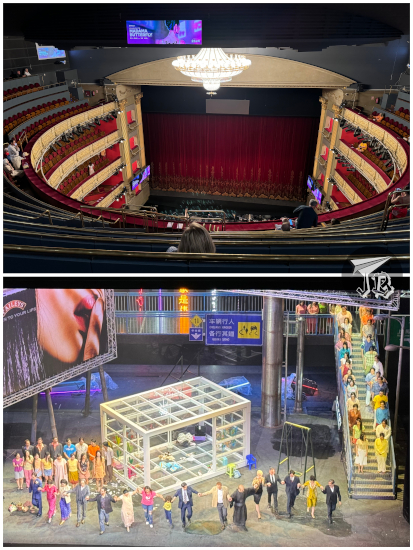
Apparently, Teatro Real is known for its alternative settings and takes on classical operas. In this case, they let go of the old Japanese cottage in order to use… a modern-ish undisclosed Asian country. There was an overpass with Chinese signage, a billboard with McDonald’s and Bailey’s spoofs in Japanese (that did not make any sense), and the traditional cottage was exchanged for a greenhouse of sorts. There is a scene in the traditional opera in which the characters fill the house with flowers. In this case, they coloured the glass panes with hand paint. It was a great show.

Cast:

  • Cio-Cio-san: Ailyn Pérez
  • Suzuki: Nino Surguladze
  • F.B. Pinkerton: Charles Castronovo
  • Sharpless: Lucas Meachem
  • Goro: Moisés Marín

Artistic team:

  • Musical conductor: Nicola Luisotti
  • Stage direction: Damiano Michieletto
  • Set design: Paolo Fantin

Madama Butterfly Teatro Real

The show finished around 22:20. I walked up Arenal Street towards Sol. While I missed my first train because some people love to take up space while walking slowly, I made it for a good connection at Atocha, and I was actually home before midnight.

3rd December 2023: Sushi, I“k”ons, Goddesses and Light Bugs (Madrid, Spain)

I had evening plans in Madrid with my sibling, and they wanted to have lunch in town and make a day trip out of it. Since I had previously ascertained that the Running Sushi franchise was all right and fun, I proposed to check out another of the locations. They agreed and I had booked a 13:00 slot at Running Sushi in Akihabara, near Plaza de España. It was even more fun than the one I had checked out before, with Godzilla, Taito Station signs, Pacman, neon, anime graffiti in the toilets, and Japanese music playing. From the outside, the restaurant is shaped like a train carriage, and the sliding doors relay the same message they do when Tokyo JR stops at the station at Akihabara. In general, Running Sushi Akihabara offered the same food as the In Market restaurant, but this time there was tuna. I don’t know if it is because of the location, or because it was a weekend – and thus more expensive. Reservation was a great idea, because though I had no problem booking for 13:00, there were plenty other people with and without bookings, and when 14:00 – standard Spain lunch time – approached, the place became almost crowded. We stayed for the whole hour since we had a late start due to missing chopsticks and napkins, and I own up that the last takoyaki might have been excessive. This time, I remembered to ask for the membership card – you get a reward if you visit all the restaurants in the holding, something I’m considering to aim for.

Running Sushi Akihabara

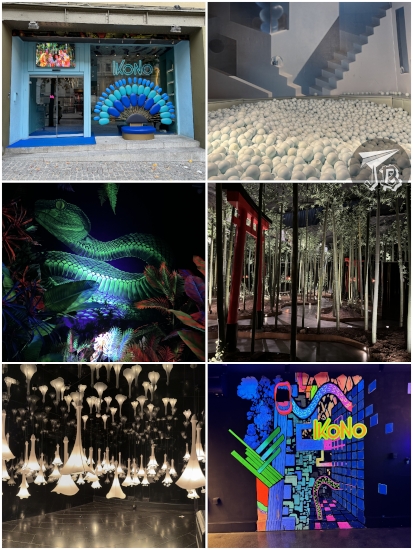
After lunch, we had a 14:50 ticket for a place called IKONO. I have to say I’m warming up more and more to these Instagrammable places – I’ve recently read one of them described as a “fun house” and I think it’s a more than accurate idea. I like them because they’re silly places for, quite literally, kicks and giggles. According to themselves, IKONO was born as a leisure option alternative to “restaurants, shopping and clubbing” for young people – I disagree with the “young people” take though. Out of the permanent establishments of its kind in Madrid, it is probably my favourite.

The IKONO mood kicks off even before you go in, with a peacock-like armchair just outside the main entrance. Spread over three floors, the venue has 15 different experiences / things to do. Once your tickets have been checked, the first “door” you go through is a thick wall of foil fringe curtains in a gradient of shiny colours,which felt like going through the Stargate! (I know, I know, niche comment). All through the place, there is bouncy music playing.

Once you have crossed the curtain – I somehow ended up in a weird inner space instead of where I was supposed to reach, but that’s just me – the first room is a ball pit, and a deep one at that. It was quite hard to move there. There are quite fewer rules than in other ball pits too – you can jump in, and throw balls up. Once you manage to drag yourself out of the ball pit, you get to go upstairs, what I’ve mentally named the “paper floor”. It has three rooms – the landing one has a pretty origami tree and some wings for you to take pictures with. There is a “psychedelic” ward with black-and-white décor and a blue-and-pink confetti cannon. The third one is a dark “jungle scenery” with glow-in-the dark colourings and paintings that I really loved – the frogs were adorable, and the serpent god quite impressive.

Back on the ground floor, the following room is a Japanese-style bamboo forest with wooden lanterns and a torii [鳥居], the traditional entryway to a Shinto shrine. As you may imagine, this was my favourite area. The room walls are covered in mirror, so it looks like a long path, that ends in the following room, a “bamboo forest” which a felt a little underwhelming in comparison. According to the website, the idea of IKONO cemented while visiting the Japanese Arashiyama bamboo grove, and these two rooms are a homage to that place.

Then we walked downstairs, to the “lights area”, with a few more rooms, including some hanging bellflower-shaped lamps, and another with lights made with marbles that went on and off to the music, some modern art inspired by The Last Supper, and a cube of infinite light dots. Back upstairs, there were a couple more panels for photo-ops, and a small souvenir shop. The staff offered a small present if we left a Google review, so we did. Oh, and they had a cloak option for coats, which was amazing.

IKONO Madrid highlights

We walked outside towards our following spot Caixa Forum Madrid, where there are two exhibitions at the moment. The one I really wanted to see was Veneradas y Temidas: el poder femenino en el arte y las creencias, “Worshipped and Feared: Feminine power in art and beliefs”, an exhibit on the female presence in the religion and spirituality of different cultures. The other one was Horizonte y Límite: Visiones del Paisaje. Colección de Arte contemporáneo, “Horizon and Limits: Views / visions of Landscape. Collection of Contemporary Art”, which I had not read about beforehand – because I am biased.

Veneradas y Temidas: el poder femenino en el arte y las creencias is a British Museum’s touring exhibition, Feminine power: the divine to the demonic (which I feel is a more appropriate name, but that’s just me and my problem with translations). It is a collection of artefacts (most of them not exhibited anywhere else) originating from different cultures, trying to convey the “female spiritual power”, though it also has snippets of erotism and homosexuality. One of the most important and impressive pieces include a copy of the Campo Iemini Venus, a “modest Venus”, halfway though covering herself – a copy of the Capitoline Venus, it was found in an Italian Roman villa in 1792. Aphrodite / Venus was the Greek / Roman goddess of Goddess of beauty, love, lust, passion, pleasure, and sexuality. Other Ancient Greece and Rome pieces include Hecate / Trivia (goddess of boundaries, crossroads, ghosts, magic, necromancy, transitions, and the New Moon), Athena / Minerva (Goddess of handicraft, warfare, and wisdom) or Eros / Cupid (God of desire, love, lust, and sex). There are several pieces of pottery, both red and black, depicting different scenes of various… degrees of erotism.

Halfway between Athena and Aphrodite, the goddess Ishtar, Queen of Heaven, and goddess of love and sexuality was worshipped in Mesopotamia (modern Iraq). Though according to the mythology, she had many lovers and was responsible for creation, she was not considered a “mother goddess”, and one of her advocations is the goddess of war.

The Divine to the Demonic: Greece and Mesopotamia

The first thing we saw from Asia were three masks. There was Taraka [Tāṭakā], a Hindu spirit, whose rage upon the murder of her husband turned her turned into a man-eating ogre (ogress?). From Bali, there was Rangda, the demon queen, antagonist of the forces of good, leader of an army of evil witches, and child-eater. From Japan there was a hannya [般若], the jealous vengeful spirit of a scorned woman.

Also from Hinduism, there is a creepily fantastic (or fantastically creepy?) devotional icon (murti [मूर्ति]) of Kali [काली], goddess of death, doomsday and time. The sculpture is the advocation Dakshina Kali – depicted with four arms, a scimitar, a collar made of heads of her slain enemies, and Shiva at her feet. The murti represents a passage in which Kali goes on a rampage after fighting demons, having lost control, and her consort Shiva throws himself at her feet hoping to calm her down.

Theatre masks and Indian Goddess Kali

Among the Egyptian representations, there was Sekhmet, the warrior goddess, represented as a lioness, who was also the goddess of medicine and one of the sun deities. There were also Bastet, who started off similar to Sekhmet but became more of a protector figure, represented as a cat. There were also references to the cosmic goddess Nut, who symbolises the sky, stars, astronomy, the universe, and mothers.

From China, there was a gorgeous Guanyin [觀音] as the Goddess of Compassion, a very different style from the one I had seen in either the British Museum and the Victoria and Albert Museum. There was also a Shiva porcelain which was astonishing.

Egyptian Sekhmet and Chinese Guaiying

From Meso- and South America, there was a beautiful sandstone of Toci, the “mother of the gods” who is depicted with bare breasts and her hands on her belly. There was also a statue of a Mexican cihuateotl. The cihuateteo were spirits of women who died in childbirth, and received the same honours as the warriors who died in combat. There were other references, such as the Hawai’ian goddess of the sea Na-maka-o-Kaha’i, talismans of sex and love (because the Victorians were a bunch of perverts), references to the Mesopotamian demon Lamashtu, Egyptian protection sculptures, funerary steles… and some modern art kind of thing, like a lady sitting down with a ball python slithering on her because… yeah? I really enjoyed the exhibition, though I have to admit I ignored the interactive art a little, to focus on the mythological aspect.

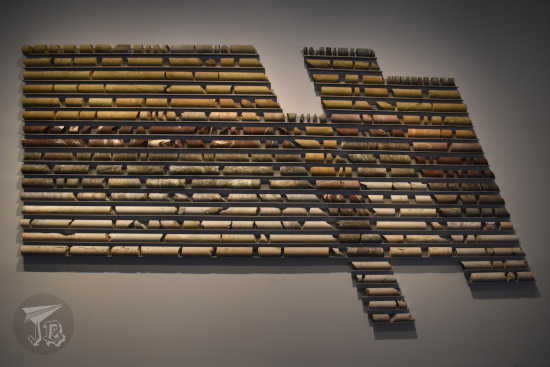
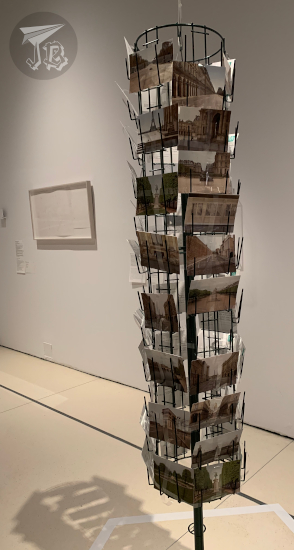
Afterwards, we visited the contemporary art exhibition Horizonte y Límite, which focuses on different… I’m not sure because I know squat about contemporary art (see above comment about the lady and the snake). There were paintings, imaginary photographs, a piece made from different geological cores representing a fault, a panel with postcards, a glass box filled with smoke to represent climate change… Pleasant, but not really my thing. Except the geology cores, they were cool.

Art piece fromthe exhibition Horizonte y Límite: Visiones del Paisaje

After seeing both exhibitions, we headed off towards our next stop. We took a break and sat down for a while to have a great banana-and-strawberry smoothie of all things. Then we walked towards the park Parque Enrique Tierno Galván, where we had tickets for the light show Naturaleza Encendida: Insectos “Lit-up nature: Insects”. The Naturaleza Encendida show used to take place in the Botanical Garden, which is smaller. This year, it has been relocated this year for “reasons unknown” and it feels a bit too long and almost unconnected. All that without taking into account that the idea of a larger-than-me butterfly and giant spiders is a bit creepy to be honest. We had premium tickets which gave us access to the enclosure at any time between 18:00 and 19:00 without queueing, and decided to arrive there around 18:30 as it would already be dark. We had also ordered a cute “magic lantern” – a bunch of sparkling LED filaments – for the giggles.

After an entrance of archways and carpets of light, there is a swarm of dragonflies as a centrepiece. You walk around it, and enter the zig-zagging path. Along the route, you encounter butterflies of different kinds, a line of hard-working ants, bees, grasshoppers, more bees, mosquitoes and flies, more bees, eggs, more grasshoppers, disco balls, larvae (I think? If I had to hazard a guess I’d call them anemones), beetles, ladybugs, spiders and a row of differently-coloured Christmas trees. There were “light corridors” in-between, hive-like hexagons projected onto the trees, and lots of artificial smoke. There are supposed to be some praying mantises somewhere but… I did not see those?

Naturaleza Encendida Insectos figures

All in all, Naturaleza Encendida: Insectos felt too spread out, as if trying to justify the bigger space. Though we had a premium ticket, there was no special premium-only area, and the only benefit was having an hour to go in, without having to queue – which is already enough in my books. I think you really have to be into the topic – we came across a lady who was very freaked out and mostly running so she could get away from the bugs. I have been to three editions of Naturaleza Encendida, and the only one I really enjoyed was the sea-creatures one, Explorium. I thought that the bad weather last year had damped the experience – literally – but I’m going to stop holding my hopes high.

Finally, we headed back to the train station. My morning train had had a five-minute delay, which by the early evening had progressed to the upper 40s. Joy. I’m hoping that when free ticketing is over, service will improve, but I’m not holding my hopes too high…

27th May 2023: Mammoths and Knights in Madrid (Spain)

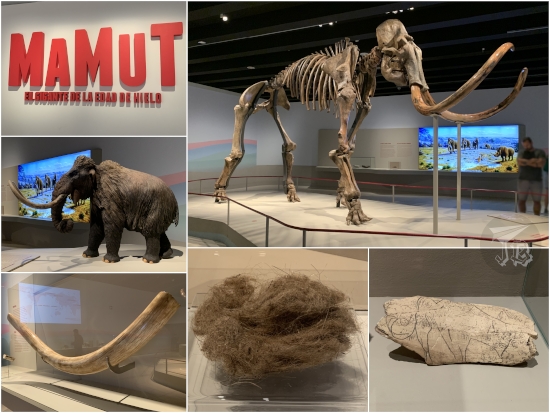
I headed off to Madrid to watch the Knights of the Zodiac film, the Hollywood remake of the 80s anime Saint Seiya – I’m not making any excuses (I mean, I still went to the Symphonic Adventure after it got cancelled trice), I just wanted to see it, even if I did not have much faith in it. I wanted to combine it with another activity, and I thought I lucked out when I found that Caixa Forum Madrid was running an exhibition on mammoths – Mamut, el Gigante de la Edad del Hielo (Mammoth, the Ice-Age Giant). I allocated about an hour and a half for the exhibition, which hosted an almost-complete fossilised skeleton and a hyperrealist sculpture “among other pieces”. Truth be told, there was not much else to see.

The exhibit has some molars from different species, some fur, a tusk and a few pieces of prehistoric art. There was also an evolutionary timeline and little models comparing the sizes of different mammoth species to the average human size. The pièce de résistance is indeed the complete mammoth skeleton that was the literal centre of the exhibit – hugely-tusked specimen of wholly mammoth (Mammuthus primigenius). It was a truly magnificent piece, but I was a little disappointed by how few pieces were actually on display. It’s not like there is not any material around – there used to be a Mammoth Museum in Barcelona that had actual tusks for sale. I had also seen another one in Muséum des sciences naturelles de Belgique in Belgium a couple of months back, which diminished the awe factor a little.

Mammoth - The Ice Age Giant exhibit featuring the giant skeleton with huge curved tusks, the smaller sculpture, a lone tusk, some hair and a piece of Paleolithic art engraved on the ivory of a tusk.

I was done in a bit over 30 minutes, so I had time to walk to the cinema – there was another exhibition in the same floor, but I had already seen it in Barcelona, and the Museum shop did not have anything interesting. I had planned to walk to the cinema, as public transit was only slightly shorter. The weather was not so nice, and there was a small storm. I did duck into a couple of shops but to be honest I ended up at the cinema 40 minutes before the session started while it poured outside. I found myself a seat to wait – I had got my ticket online the day the release was announced. This was my first time in a cinema since Jurassic World: Fallen Kingdom in 2018, and it was a weird feeling, being so close to strangers again. It was also extremely cold, and the previews were felt eternal.

The reason I sometimes choose Yelmo Cines Ideal is that some of their films are shown in their original language, and I tend to enjoy subs more than the dubbed versions. The Knights of the Zodiac film was… a choice, I guess. It is based on the newest remake – which I have not seen because I’m not a streaming-service person – and it changed a lot of the lore. Except for the main character (Seiya in the original material), all the names had been changed, but I noticed that the subs stuck to the original ones.

Knights of The Zodiac movie poster

It was not a bad film, all things considered. Entertaining, wannabe Marvel-like, tapping a little into mixing the cosmic magic and newer technology that was unimaginable in the 80s when the manga was made. It lacked on the music department though – considering how powerful the anime music is, that was disappointing, though here and there there are a few chords of the original song Pegasus Fantasy. That was cool.

But then again, I was half-expecting a disaster, so anything was an improvement, and the film made itself watchable. Sean Bean’s character died, but considering that in the original material his character is already dead at the end, I guess it could be considered some kind of record…
3rd & 4th February 2023: Final Fantasy Distant Worlds 35th Anniversary – Coral – in Barcelona (Spain)

3rd February 2023: Mummies, fish, and music

Though I would not have minded to become a gamer back in the day, my joint issues discouraged this. Thus, my relation with the Final Fantasy saga is tangential. However, my sibling is a big fan of one of the instalments, and last year I accompanied them to Final Fantasy VII Remake Orchestra World Tour in Barcelona in 2021. Having had more time to prepare for this one, we got VIP tickets, and I planned a two-day outing.

Our arrival in Barcelona happened right on schedule, and we walked from the station to Caixa Forum Barcelona to see the exhibit Momias de Egipto. Redescubriendo seis vidasEgyptian mummies; Rediscovering six lives, in collaboration with the British Museum. I am not sure whether the items are part of the actual collection over there or are in the archives, because I don’t really remember seeing any of the mummies. The Barcelona exhibits focus around six mummies and how they lives could have been before their deaths. Aside from the actual mummies and their sarcophagi or coffins, there are objects that they may have used in life, and images of what the bodies look like inside the wrappings.

It was at the very same time interesting and creepy, everything we can get to know through technology about these poor souls who passed away millennia ago. There was information about their age, illnesses, and objects they had been buried with – god statuettes, jewellery, funerary miniatures… One of the mummies in display was that of a small child with his face painted on the wrapping, that was more than a bit creepy, to be honest.

A collage showing a a mummy and a turquoise wrapping; a sarcophagus; four canope jars; three statuettes: Horus, an ibis, Thoth; close-up of a sarcophagus, with bright colours; a mummy and a plain wooden casket.

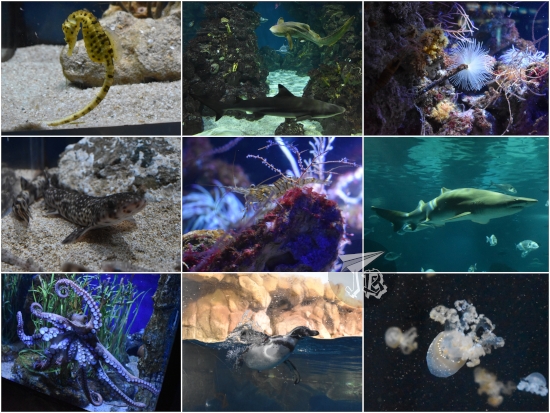
We took the underground towards the waterfront to visit L’Aquàrium de Barcelona, located in the harbour. With more than 11,000 animals and 450 species, it is the largest aquarium dedicated to the Mediterranean Sea. It was inaugurated in 1995 and it holds 35 aquariums, including an oceanarium with capacity for almost four million litres of water (36 metres diameter, five metres high) with two tunnels at the bottom. Species-wise, the aquarium does not have anything out of the ordinary, but the size of the tiger sand sharks is impressive. There are a few sharks, some tropical fish, axolotls, frogs… and a very fun sperm-whale room to keep the jellyfish in darkness.

A collage of the aquarium. Seahorse; swimming sharks; anaemone; baby dogfish shark; tiny crustacean similar to a prawn; sand tiger shark; octopus trying to eat the viewers; penguin showing off; fabulous tiny jellyfish

We grabbed an expensive-but-convenient bite to eat at the aquarium itself during some of the feeding events to make sure the cafeteria was empty. AFter we had finished viewing all the exhibits, we went on towards the hotel, which was well-placed between the auditorium and the shopping centre. Since check in had been so bad when we went to the previous Final Fantasy concert, this time we had booked different accommodation, and it was a total 180 – everyone in the hotel was super friendly, and we had zero issues. We procured some sandwiches for dinner, then got ready for the concert.

The Final Fantasy Distant Worlds 35th Anniversary – Coral – directed by Arnie Roth is a compilation of the background pieces from all the Final Fantasy games, from the first (1987) to the latest to date not counting the remakes (Final Fantasy XV, 2016). The concert was held at the CCIB – Centre de Convencions Internacional de Barcelona. We had no idea what time doors would open, but I calculated that an hour should be good for queuing for merch and then get to our seats.

By the time we got to the queue, the concert booklet had already been sold out. When we reached the front, my favourite plush toys were also gone. I decided to get the previous year’s CD in order to get it signed later at the meet & greet event that was included in the ticket we had bought. Looking back, maybe I should have asked for the autographs on the tote bag we got for the spending.

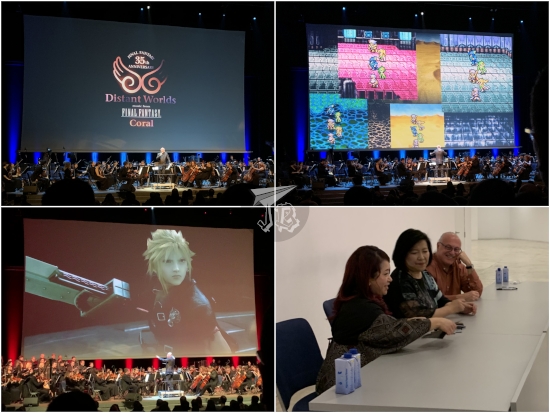
The concert had two halves and an encore, and was… strangely not very coral, for something called so. The choir was placed over to one side, and only did three or four songs – they actually did not show up for the whole first half. The set list was accompanied by projected images on the screen and it was super-impessive to see the first 8-bit games at first compared to what the technology of the latest Advent Children (movie from Final Fantasy VII) managed to create.

    First half

  1. Final Fantasy I~III: Medley 2002
  2. Final Fantasy III: Eternal Wind
  3. Final Fantasy IV: The Red Wings ~ Kingdom of Baron
  4. Final Fantasy IV: Main Theme of Final Fantasy IV
  5. Final Fantasy V: Home, Sweet Home ~ Music Box
  6. Final Fantasy V: A New World
  7. Final Fantasy VI: Phantom Forest ~ Phantom Train ~ The Veldt
  8. Final Fantasy VI: Kids Run Through the City
  9. Final Fantasy I~VI: Battle Medley 2022

    Second half

  10. Final Fantasy VIII: Liberi Fatali
  11. Final Fantasy XI: Ragnarok
  12. Final Fantasy XII: Flash of Steel
  13. Final Fantasy VII: Aerith’s Theme
  14. Final Fantasy XIV: Torn from the Heavens
  15. Final Fantasy XV: Apocalypsis Noctis
  16. Final Fantasy IX: Not Alone
  17. Final Fantasy X: 素敵だね [Suteki da ne] (Isn’t it wonderful?)
  18. Final Fantasy Main Theme with Choir ~ The Definitive Orchestral Arrangement ~

    Encore

  19. Final Fantasy X: Zanarkand
  20. Final Fantasy VII: One-Winged Angel

The concert was all right. I did not feel the general chill I had through the previous one. I really liked Liberi Fatali and One-Winged Angel, but I guess I don’t have enough of an emotional connection with most of the games. Aside from the conductor Arnie Roth, we had composer Yoko Shimomura present, and vocalist RIKKI, who is the original singer of 素敵だね in Japanese, and did the live version.

Collage. Three pictures show a classical orchestra with different things projected on the screen behind them - the logo of Distant worlds, several 8-bit screenshots of games, a very realistic depiction of a blond man with a very unrealistic sword. The last picture shows singer RIKKI, composer Yoko Shimomura and conductor Arnie Roth

The M&G was fun, and I got to tell Roth that when I grow up I want to have as much fun as he does at work. They signed autographs and took pictures with people – it was much less stiff than the usual, too. We headed off afterwards for a sandwich, a shower and a good night’s sleep. In general though, not much value for money considering how much more expensive the VIP tickets were, even though the seats were good. Also, the fact that most merchandising sold out showed poor planning.

Collage. The ticket reading the name of the concert, the autographs of the three main artists, and a plush of a Final Fantasy imaginary being, it looks like a white teddy bear with a huge pink nose, a red ball on top of it and cute wings

4th February 2023: Ramen with Friends

We had bed and breakfast at the hotel, and the latter was fantastic. The buffet had both a juice bar and a milk bar – both of which I sampled, of course. I overdid it with the fried egg, I fear, but they were just cooked and it looked just too appetizing not to fall for one. After breakfast, we packed up, vacated the room, and asked the hotel to keep our bags for a couple of hours. We went to the science museum Museu de Ciències Naturals NAT, where we spent a couple of hours. This is the only place where they refused to speak Spanish to us.

The museum is divided in several areas. The first one is “history of the Earth”, where you can see a few interactive exhibits, fossils and reproductions. The second one is the collection of living animals, most of the stuffed, some of them just skeletons. There was another one about fungi – with the edible ones exhibited in tins. Then there was one on plants, and finally rocks and minerals. Not a bad place to spend a couple of hours, but it is just one of those places that takes itself much more seriously than it should, to the point that it felt pretentious. Some items were exhibited over and over again, as if they just wanted to use up the room – I counted at least eight elbaite specimens in different locations, and there were a bunch of reproductions taking up important spaces, you would believe they were originals if not paying lots of attention to the writing, and the blue light made for horrid photographs.

Collage. Four pictures show prehistoric animals in blue light, stuffed animals, a tin of mushrooms along real specimens, a red algae and some shiny rocks.

We transited to Sants train station to drop off my sibling’s bag at the cloakroom there and went on to meet my Barcelona friends E**** and P***o who had offered to take us to eat really-real Japanese ramen. Since I had a feeling that the restaurant would be on the small-ish side, and my sibling’s luggage was a bit oversized since they had cosplayed for the concert, I decided on the Sants detour for convenience.

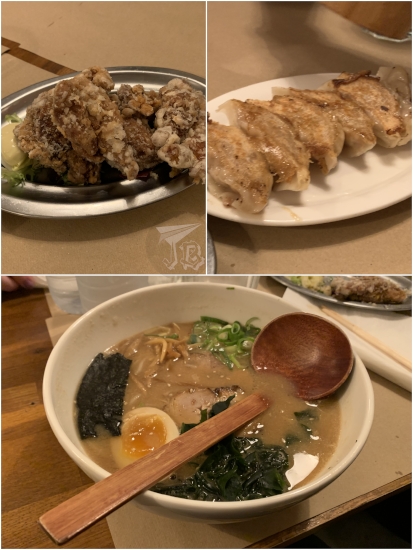
The restaurant is called KOBUTA ramen i més (Kobuta Ramen and More) and I was amused when all of us made the same choice – tonkotsu miso ramen with an extra of half an egg, and water; then we shared some gyoza (dumplings) and karaage (fried chicken). The restaurant is not cheap, but the food makes up for that, it is very authentic Japanese food.

Collage. A dish of breaded fried chicken, some dumplings, and a bowl of ramen, with the ingredients floating - algae, half an egg, noodles, pork meat and spring onion

Though P***o had to leave early, the rest of us headed off towards the bullfighting-ring-turned shopping centre Arenas de Barcelona. There, we climbed up the terrace for views, then sat down for drinks and a long chat. We also popped into the local comic store, since it was convenient, and eventually we headed off to the station.

Collage. Shopping centre las Arenas, a round building that used to be a bullfighting ring, there are two pictures, one by daylight and another one at night, lit up. There's a picture of the views- two clock towers leading to a palace; finally three glasses together showing brightly coloured drinks - yellow, orange and dark pink

The train ride home was surreal. People playing music on their phones, yelling, talking loudly and making the footrests squeak – apparently there had been some kind of sporting event for kids and a lot of families were coming back home. All in all, not a bad couple of days, lots of laughs, I got to see dear friends and eat nice food, and listen to cool music – in the CCIB, not on the train.

30th July 2020: Vampires in Madrid (Spain)

The world is pretty much topsy-turvy these days, isn’t it? I’ve been literally staring at the computer screen for about an hour, wondering how to start, how to explain. I’ve erased the opening paragraph about four times too (≧▽≦). Thus, I will just spare you the introduction, explanations, justifications, and so. It took me a while to decide in favour of my little trip to Madrid.

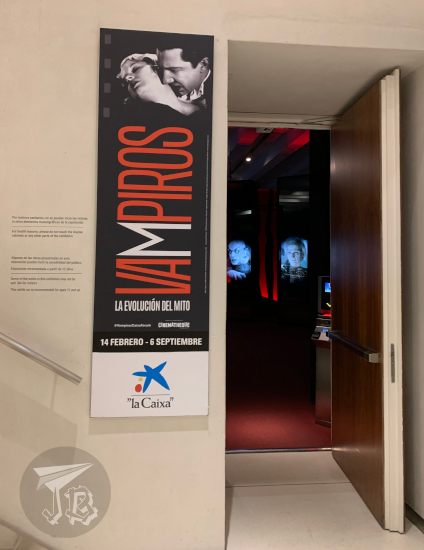
Vampires, the Evolution of the Myth, or Vampiros, la Evolución del Mito (#VampirosCaixaForum) was scheduled before the whole COVID-19 debacle. Once things started opening up in Spain, the exhibition was rescheduled to run in Madrid for a couple of months through summer. And for a while I pondered whether it was… I’m not sure how to put it… worth the risk? For months we had been told to avoid public transport, which is my main mean of moving around, so in the end I decided what the fuck, if I was doing this, I was going to drive into the centre of Madrid – for the very first time in my life. For the record I don’t particularly enjoy driving, I much prefer being driven, and my sense of directions when driving is… not the best, so I borrowed a GPS, picked up my sister, and drove off.

After only getting the wrong exit once, we left the car in an underground parking lot and walked ten short minutes and we were in front of the Caixa Forum Madrid. Caixa Forum is a cultural space owned by a savings bank in search of tax deductions that organises shows and exhibitions. We had a compound ticket for 12:00, which included both exhibitions in the building, and a theme lunch. And so we went.

Vampiros: La Evolución del Mito, “Vampires, the Evolution of the Myth” is an exhibition originally organised by La Cinémathèque française, which is a French French non-profit film organisation that holds one of the collection of cinema-related objects and documents in the world. As they are specialised in films, the vampire exhibition focuses on the figure of the preternatural being throughout cinema.

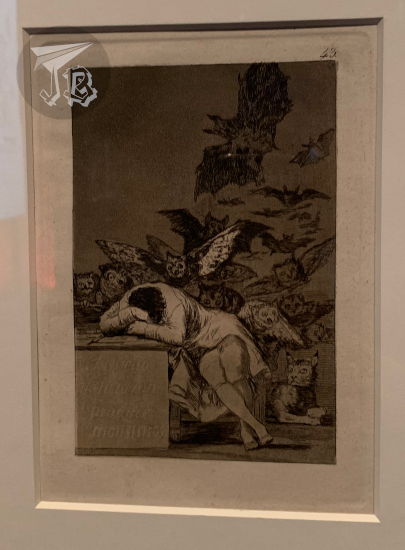
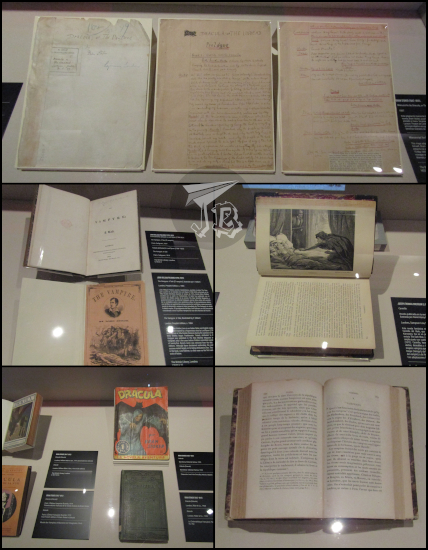
The first room is focused on the book Dracula, and the Romantic interpretation of the myth – Romantic as the literary period, not the lovey-dovey stuff. Highlights include a facsimile of the first scene of the manuscript of Bram Stoker’s version of Dracula for theatre, aside from early editions of the novel and other vampire books such as John William Polidori’s The Vampyre and Joseph Sheridan Le Fanu’s Carmilla. There were also some surprising items – some of Francisco de Goya’s wood-prints. Goya was one of the most influential painters in Spain, also grounded in the Romantic movement. Good stuff.

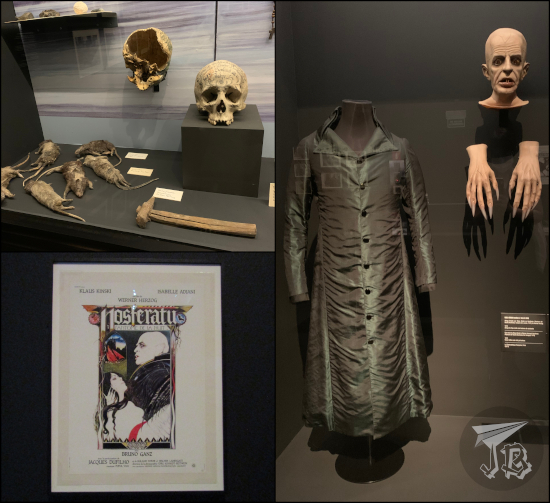
The second room was dedicated to Nosferatu, one of the key films in the vampire genre, with some promotional material and film props – this was the ward with best and most important number of items.

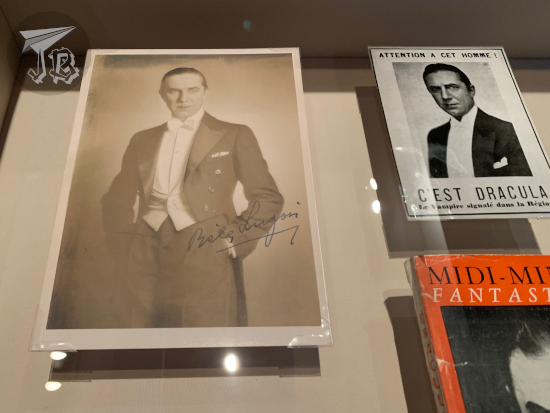
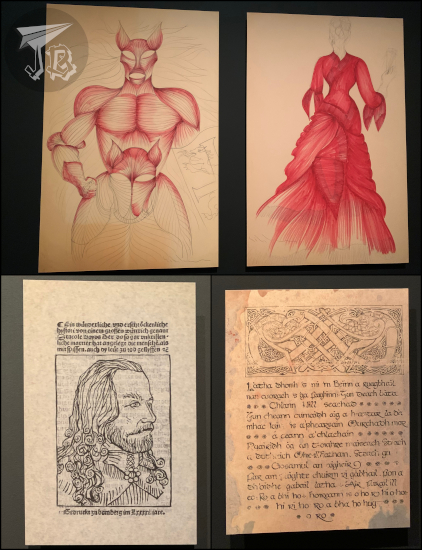
The following room was dedicated to the romantic, erotic and sexual vampires. It had two main focuses – one was the Dracula portrayed by Bela Lugosi as the epitome of the elegant, seductive vampire, first in Broadway, then in the 1931 film by Universal Studios. The centrepiece of the room featured two pieces of the wardrobe in Coppola’s Bram Stoker’s Dracula worn by Gary Oldman and Winona Ryder, along with several designs for the wardrobe (which could not be photographed, but you can peek at in some of the pics). Finally, we got to see the suit worn Tom Cruise as Lestat and Kirsten Dunst as Claudia in the 1994 film Interview with the Vampire. I missed some more Christopher Lee, as there were barely some photographies of his performance in Dracula (1958) and its sequels.

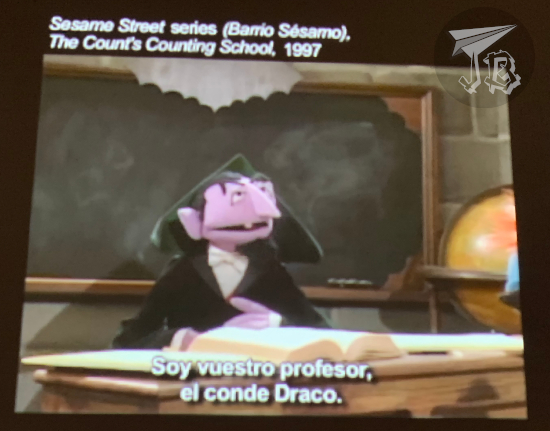
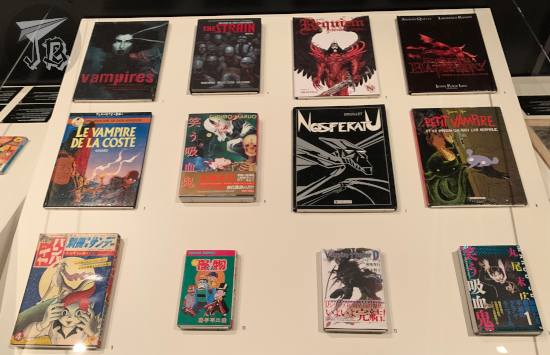
On one side there was a small area dedicated to the vampire as a political metaphor. The final area was dedicated to the pop vampire, including magazines, comics and graphic novels, some Japanese manga, and so on – even Count Dracula from Sesame Street! Then again, he was on a screen. I would have killed to see the real puppet.

All in all I got the impression that the exhibit lacked ‘the real thing’ and abused the film montages. I was expecting a few more props and less bits of films which… after all I’ve seen most (≧▽≦). The truth is that the myth of the vampire starts much earlier than the “Medieval” vampire featured in the Romantic fantasies, and can be traced to early succubi or the Lamia myths in Ancient Greece if you think about Western Culture alone. The Romantic and Victorian writers just made the myth cool as it was once more popular due to a sort of “vampire hysteria” that crossed the Balkans the previous century – that’s probably the main reason why Bram Stoker chose the figure of a Transylvanian warlord to create his character. But in the end it was a good way to break the activity fast.

Then we moved on to the next exhibition, Cámara y ciudad. La vida urbana en la fotografía y el cine, “Camera and the city: urban life in photography and the cinema” which… was okay, I guess. I guess I’m not a photography / video kind of person (≧▽≦).

After perusing the shop for a while, we moved to the cafeteria, where a “theme menu” had been designed. Let me detail that for you:

  • El frenesí vampírico / Vampire frenzy: virgin – I think – Bloody Mary
  • Estacas de la muerte / Death stakes: aubergine tempura with sweet and sour sauce
  • Reencarnación / Reincarnation: Goat cheese, sweet beet and raspberries salad
  • Inmortalidad / Immortality: Macerated sea bass with lime, orange, coriander, salt and pepper, with a side of mango and tortilla chips
  • Embalsamamiento / Embalmment: Duck magret with a red wine sauce and mushrooms
  • Drácula / Dracula: Crème anglaise, jelly and raspberry mousse.

Let me tell you, this was amazing – and fortunately the portions were small so the final amount was more than adequate.

It was a little later than 15:15 when we left the CaixaForum centre and headed off the Museo Nacional Thyssen-Bornemisza, the Thyssen-Bornemisza National Museum, a museum built from a noble family’s art collection which also hosts temporary exhibitions. The permanent exhibition is chronologically organised, and here are some of the pieces by famous artists: Rubens, Rembrandt, Van Gogh, Degas, El Greco, Tiziano… and hm… many very modern painters I… can’t understand.

Finally we decided to call it a day before people started coming out of work and leaving town so that we did not get into a traffic jam, and I am very proud of myself for taking the drive – which was my wee white whale for a while. I’ll see myself out now (≧▽≦)

Distance: Approx. 120 km driving; 6.08 km walking

Also, as an afterthought, I ordered the Vampire exhibition book online. I did not at first because I did not feel like carrying it around as it is thick. But they home-delivered and I actually saved 2.5 bucks?

PS: New logo! What do you think?

26th December 2013: Japanese Exhibitions & Christmas Lights in Madrid (Spain)

Over the Christmas break, there were many activities related to the celebration of the establishment of diplomacy between Spain and Japan, so-called Año Dual España Japón. We decided to kick off the day going to a Japanese restaurant, my favourite in Madrid, the Nagoya (believe it or not, this is the daily menu).

There was a Calligraphy exhibit in the national library, Biblioteca Nacional. On the way, we also found that there was an exhibition about the Chinese terracotta warriors, but the queue was insane! We decided to try to get tickets online for another day.

We went to Caixa Forum to see a Japonism (19th-century European art influenced by Japanese concepts and aesthetics). Honestly, pictures were forbidden, but I snuck one because I really loved the painting.

We also took a walk to see the Christmas lights. Here’s the Postal Service building, Edificio de Correos.

And a view of Gran Vía, one of the main arteries of Madrid, all lit up.