11th December 2024: CBA, hotpot and lights (Madrid, Spain)

Since I was meeting my sibling for the yearly event of Naturaleza Encendida in Madrid in the evening, I decided get there early and make the most out of the day. As I arrived, I headed to the Círculo de Bellas Artes (literally “Fine Arts Circle”). The CBA is a sort of NGO dedicated to culture and the arts. Its headquarters host many activities such as exhibitions, theatre plays, concerts, lectures… The building was designed by Antonio Palacios, one of my favourite architects. It has seven floors, some of them used for events, others for offices. There is even a small theatre.

The CBA was running an exhibition called “Messenger Species” Especies Mensajeras, by artist Álvaro Soler-Arpa. It is a collection of pieces created from animal bones and items found in dumps. Born in Gerona in 1974, Soler-Arpa is a multifaceted artist who does publicity illustration and creates distressing sculptures using animal bones as its medium to make the viewer to think about waste and pollution. This exhibition of modern art is described as “ecological art for reflection”. I thought that it could be either really good or a holier-than-thou approach, but my curiosity was piqued.

The exhibit collects selected pieces from four series of sculptures: “Toxic Evolution” (Evolución tóxica), “Devastated Nature” (Naturaleza devastada), “Design-methastasis” (Diseño-metástasis) and “Sculptures from the End of the World” (Esculturas del fin del mundo). It was… disturbing, but in a good way. It did not feel preachy. The idea is that nature is affected by the consumerism in current society, but not dying – adapting to it. The imagined futuristic animals are a warning sent through time – nature is resilient and it will survive. Us humans? Maybe not if we do not get any better.

Álvaro Soler-Arpa's Especies Mensajeras

There was another exhibition in the building about the consequences of war, but I decided I could not stomach that one. However, I had the access ticket, so I could take the glass lift to the famous terrace of the building – the one that kicked off a trend of opening terraces in Madrid to watch the skyline while having a drink. It was too cold and too closed to have anything, but I did get a nice view, especially of the Palacio de Telecomunicaciones and the Spanish language Institute Instituto Cervantes, both designed by Antonio Palacios too. The terrace is mostly flat, with a bar and an impressive sculpture of Minerva made in bronze by Juan Luis Vassallo. Minerva – Roman goddess of wisdom and art – is the symbol of the CBA. There is also a smaller and higher structure that looks like it could hold an even better view, but that was closed off.

Skyline from Azotea Círculo Bellas Artes

The CBA building has many cool spaces, such as the ball room (Salón de Baile) or the colonnade room (Sala de Columnas). However, my favourite part of the building are.. the stairs. They are designed as a double staircase with mirrors at the landings, and coloured windows alongside the steps. One of the sides is less bright now, because a building was erected and blocks the sun. I still find the staircase superb, so I hung around there for a while until the security guard gave me a weird look.
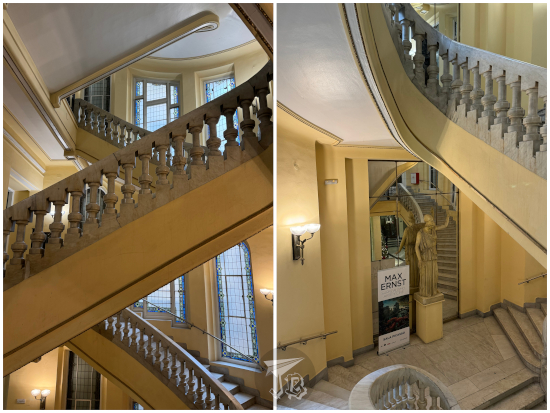
Stairs Círculo Bellas Artes

I left the CBA and walked down the street Calle Alcalá and stopped at Galerías Canalejas just to see what kind of decorations they had. It turned out to nutcrackers and elves inside and a huge Christmas tree outside. I still cannot afford anything they sell there.
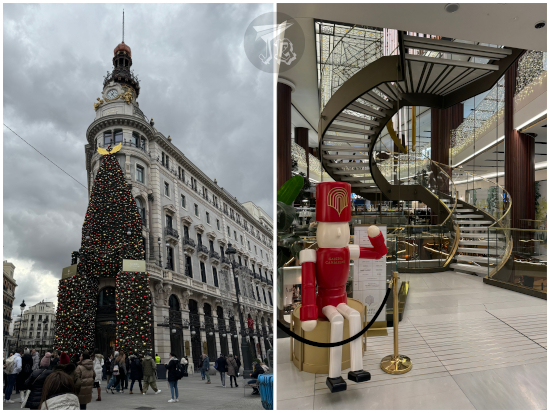
Chrismas at Galerías Canalejas

I continued down towards the square Plaza de Oriente, where there was a classic merry-go-round – empty and ready to be ridden. Thus, since I have no shame, I went on it. The salesperson was incredibly kind, since I was the only rider – and an adult at that – and yet they directed me to a horse which moved up and down and showed me how to climb on it.

Then, I backtracked to the shop Turrones Casa 1880 in the street Calle Arenal, which hosts a small Museo del Turrón. Turrón is a typical Spanish confectionery eaten mostly at Christmas. It is mainly made out of processed almonds, and 1880 is probably the most famous brand – and it prides itself on the most expensive one. I am not a fan of turrón, to be honest, but it was almost Christmas, and if I was ever going to do it, that was the right time frame. The museum is mostly an audiovisual in a decorated cellar, with a photo-op, but the staff was really nice.

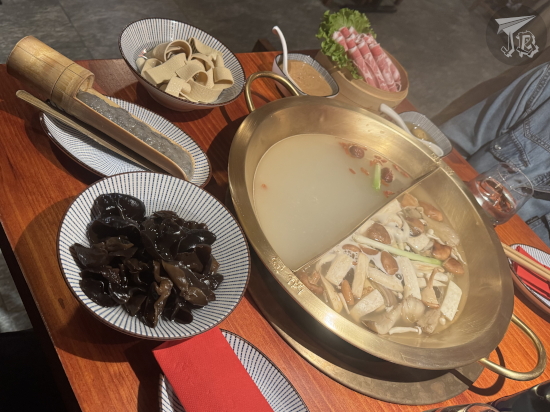
At 14:30 sharp, I met up with my sibling for a restaurant that I’ve been wanting to try for a while 壹锅火锅 Hotpot de Sichuan. Hotpot [火锅, huǒguō] is a Chinese type of stew based on a stock or soup that is kept simmering in the table itself, and you just grab the raw ingredients and dip them in the broth to cook them – imagine a fondue with broth instead of cheese. We ordered a menu for two, a pot with two broths, one mushroom-based and one meat-based. The dips were spring onion, coriander (which was not used, because I hid it), shrimp mince, thin beef slices, tofu stripes, Chinese black mushrooms, cabbage, and rice noodles, along with two sauces – one slightly spicy, and my beloved sesame and peanut sauce. The food was great, but at 15:40, the waiters popped up to tell us that they wanted to close the restaurant, and then stood up next to us until we finished and left. It was more than a bit awkward, so we hurried up to do so. While the food was great, the situation spoilt our experience a little, I think. We were still eating, not slouching around. I am not sure I would want to go back…
Afterwards, my sibling had to do some shopping, so we spent a while going up and down some shops and a department store, before we headed out to Naturaleza Encendida in the park Parque Enrique Tierno Galván. This is a yearly light show organised in Madrid parks – it used to take place in the Botanical Gardens, before it was moved to a larger area. The 2024 edition is titled Naturaleza Encendida: Life.

Naturaleza Encendida Life

To be fair, I was a little bit disappointed, as “Life” turned out to have mostly figures reused from the last few events. Though the organisers tried to build a narrative of water, land and air topics, the novelty had worn off. It was not bad, but the show keeps getting more and more expensive every year, with fewer and fewer perks for the VIP tiers. Furthermore, the new larger location does not imply more light sculptures – they’re just spread farther apart so they can fit more people without it feeling crowded, so it simply takes longer to walk it through. This has its advantages and disadvantages – it was good last year when we had to go on a weekend but this time around it just felt… colder. They also tried to give the whole thing an ecologist spin, and this time it did come out preachy… I mean, it is a show of lights, which technically could count as light pollution, without any actual… purpose… but charging you to watch pretty lights.
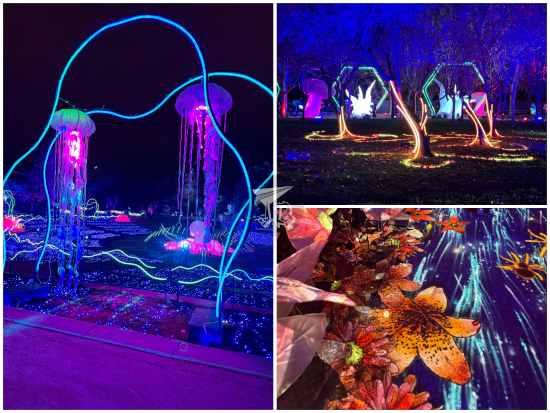
Naturaleza Encendida Life

Naturaleza Encendida Life

That was the end of the day, and we just headed home afterwards, but aside having to wait for the train for over half an hour, nothing to report on that end.

10th October 2024: The Trojan Horse & Bursa {Türkiye, October 2024}

We had to leave by 5:30 to go see the Trojan Horse. The reason why I had chosen this particular circuit was because it included “Troy”. The only thing I got to see of Troy was the Truva Heykeli Trojan Statue, – the horse which was used by Warner’s Bros to film the movie Troy in 2004. Not a damn ruin, not a damn rock, let alone be near the archaeological site. Damn it, did I choose the circuit badly or what? I do wonder what people thought of us taking structures of the stupid thing at 6:40 in the morning. As we drove north, we saw the Galipoli Peninsula, place of a huge battle between the Ottoman Empire and New Zealand and Australia regiments belonging as part of the British troups.

Çanakkale Trojan horse

We continued towards the city of Bursa, the first capital of the Ottoman Empire, and another of the World Heritage Sites – Bursa and Cumalıkızık: the Birth of the Ottoman Empire. It started off as a settlement around 5,200 BCE, which evolved into a Greek city. Under the Byzantine reign, it was a city known for its garrisons and its silk manufacturing centre. It is considered the origin of the Ottoman Empire, and throughout the period, it flourished through its local silk production. Following the foundation of modern Türkiye, it became an industrial city.

Our first stop was the Grand Mosque of Bursa Bursa Ulu Cami. Its first stone was set in 1399 an important building in the early Ottoman architecture as it found its own style. It is a rectangular building with a fountain from the 19th century at the centre – originally this area was open but it is now closed with glass, forming a skylight. It has two minarets. The interior is mostly white, but at the same time, quite decorated with calligraphy, medallions and vegetal themes.

Interior of the Great Mosque Bursa

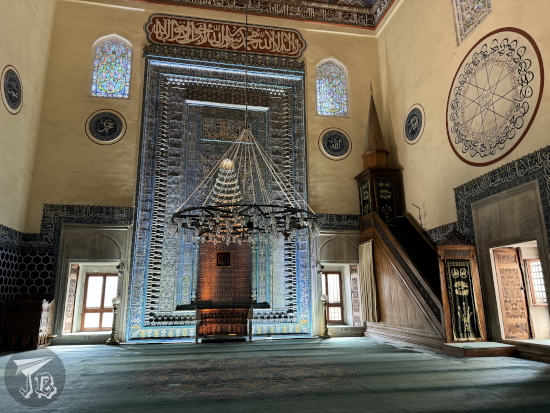
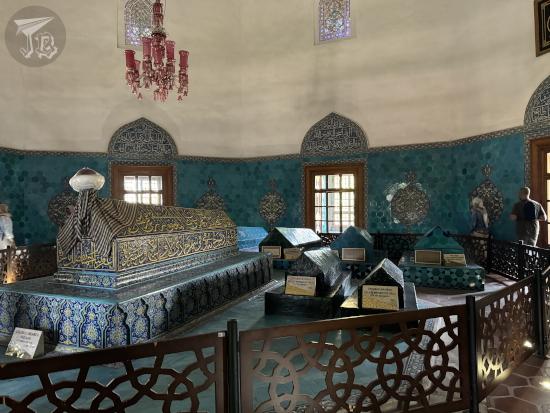
Then we drove to the Green Mosque Yeşil Camii complex. It was commissioned in 1412 by Sultan Mehmed I Çelebi, who is buried in the adjacent Green Tomb Yeşil Türbe – along with his children and their caretakers. Both the mosque and the mausoleum have beautiful decoration in blue-green tiles with gold inserts, which create the motifs and calligraphic inscriptions.

Mihrab of the Green Mosque Bursa

Bursa Green Tomb

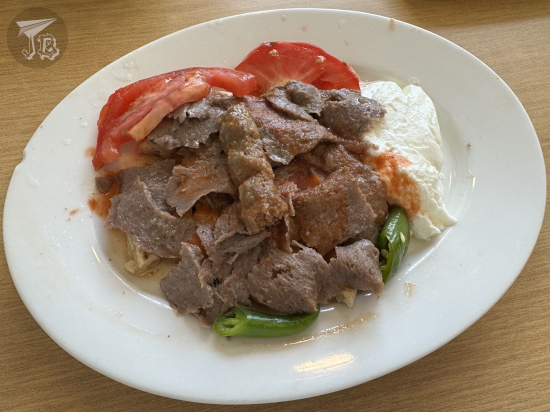
Next to the mosque stands a building which calls itself a Silk House, but is just a huge souvenir shop, nothing even close to the actual Silk Bazaar. Afterwards, we went for lunch, lentil soup and a traditional Bursa kebap İskender kebap, making this another sort-of actual Turkish meal. It uses meat cooked on a vertical rotisserie (döner kebap) on pita bread, with tomato sauce, yoghurt and sheep’s milk butter – which was poured at the table. Dessert was a honey pastry.

İskender kebap

Then we continued off back to Istanbul | İstanbul. We got there around 16:00 and I was considering maybe heading out to a church-turned-mosque to see some of the most important museums but… at that point it felt more like a self-imposed obligation that something I really wanted to do because I would enjoy it? It was more of a feeling of “you should do it because you are not going to come back to this country”. But the truth was that I really did not want to do it. I was disappointed in the whole trip experience, and in a way, I did not… I don’t know… care anymore? No balloon over Cappadocia, not enough time for Pamukkale travertines, no Troy. Whatever.

The nice group from the trip invited me to hang out with them for a walk. Together, we walked to the Grand Bazaar Kapalı Çarşı. Then we continued towards Sultanahmet Square Sultanahmet Meydanı, from where we crossed Gülhane Park Gülhane Parkı until we reached the coastline İBB Sarayburnu Parkı, the point in which the Golden Horn and Bosphorous Strait come together. On our way back, we stopped around Sultanahmet Square Sultanahmet Meydanı to take some pictures.

Gülhane Park at night

Bosphorous at night

Sultanahmed square at night

Finally, I headed back to my hotel – Hotel Bi·setun, the same as the first two nights – to order dinner, have a shower and get ready for the return trip.

4th October 2024: Istanbul, day 2 – Bosphorus Istanbul (plus, again) {Türkiye, October 2024}

It was warm in Istanbul | İstanbul when the sounds of the town woke me up. Since I was up early, I decided to find the Bozdoğan Kemeri (Aqueduct of the Grey Falcon), part of the Aqueduct of Valens Valens Su Kemeri. It was built using brick and stone in the 4th century in order to bring water to Constantinople. Construction started under the reign of Constantine II and finished during the reign of Valens, and the structure was in use under the Ottoman period. The Bozdoğan Kemeri bridge is 971 metres long, and its maximum height is around 30 metres. Today, it stands over a busy road, with cars running underneath.

I went back to the hotel for pick-up, which today happened on time. I had signed up to the other day trip offered to me at the airport Estambul Bósforo (55 €). My hopes were not too high, but at least I met with the nice ladies from the day before. This time around, the group was bigger, so everything was a bit more chaotic. Our first stop was Süleymaniye Mosque Süleymaniye Camii, an Ottoman imperial mosque commissioned by Suleiman the Magnificent to his imperial architect Mimar Sinan around 1550. The mosque has four minarets with a total of ten balconies. The interior is decorated with medallions, writings, geometrical decorations, and beautiful stained-glass windows. Outside, there is a cemetery with the mausoleum of Sultan Suleiman and his wife Roxelana.

Süleymaniye Mosque

After the mosque complex, the bus headed out towards the Asian side of Istanbul for a panoramic viewpoint up Çamlica Hill Çamlıca Tepesi, which implied getting stuck in traffic for a long time again and driving past a lot of interesting buildings – visiting any of those would have been a better use of our time.

View of Istanbul from Çamlica Hill

We went back to the bus for the boat ride, which despite being advertised as a Bosphorus trip, was only up and down the Golden Horn Altın Boynuz for about an hour. At first, I tried to pay attention to the guide as he explained things, but I got bored pretty quickly. This was not a good sign, considering this one guide was the one who was to take me onto the tour around the country…

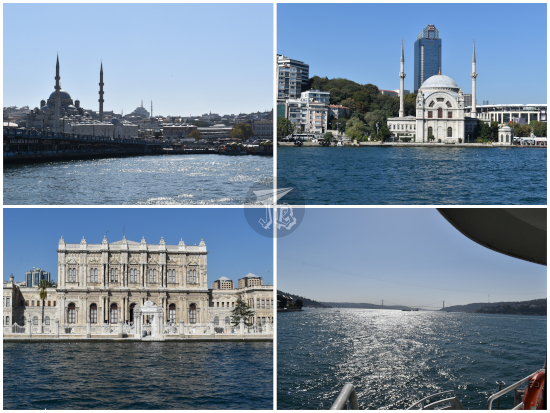
Bosphoros boat ride

For lunch, we had been asked to choose either bream or chicken. I had ordered the chicken because I had a feeling I could not trust a random restaurant in Istanbul… I was right. The bream turned out to be sea bass. Again, food was nothing remarkable. Then, we walked towards the New Mosque Yeni Cami, which was the next visit, but we did not get to go into that one for reasons that escape me. Instead, we were taken into the Spice Bazaar or Egyptian Bazaar Mısır Çarşısı, for a demonstration inside a particular shop. I do wonder how many and how much commissions go into decisions like that.

New Mosque Istanbul

Egyptian bazaar Istanbul

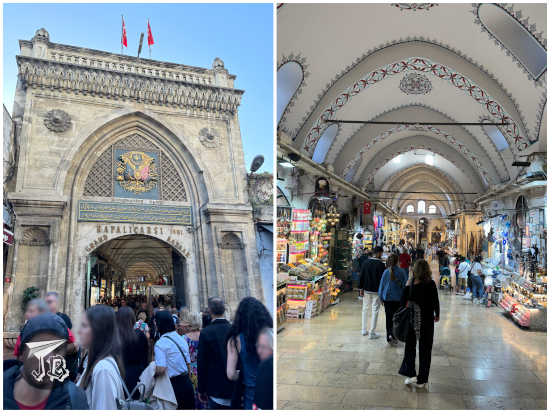
This was the end of the day trip, around 17:00, since the guide had once again stated that “your hotels are close, no need for the bus”. I said goodbye to the nice ladies, and headed out towards the Grand Bazaar Kapalı Çarşı, described as a “network of indoor souks and market streets”. It is actually one of the oldest and largest covered markets in the world, and it has thousands of shops – literally. It dates back from 1455, just after the Fall of Constantinople into the hands of the Ottomans. It was an interesting structure, but I only found trinkets and souvenirs, and it was packed with people.

Grand Bazaar

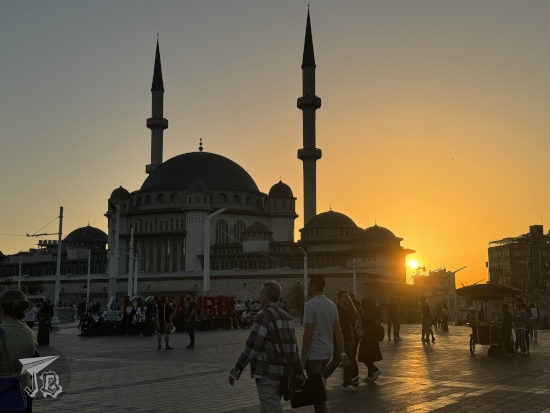
Thus, after crossing out the Grand Bazaar from the list, I headed towards the university İstanbul Üniversitesi, my reference for the metro stop Veznecıler. From there, I could take a train towards Taksim Square Taksim Meydanı, the gateway to Independence Avenue İstiklal Caddesi, on the other side of the Golden Horn but still in the European side. The area is a tourist hub with shops, fast food places, and ice cream vendors who play around before they serve you the ice cream cones. One of the highlights of the avenue is the “nostalgic tramway” İstanbul nostaljik tramvayı, a revival or heritage tramline with tiny cars, built from memories and photographies. It is not a novelty thing for tourists, but an actual working system that goes up and down the avenue, line T2. I was happy to be able to see it, the car was packed – mostly by tourists though…

Taksim square

At the end of İstiklal Caddesi, stands Galata Tower Galata Kulesi, a former watchtower, now a museum with an observation deck. The origin of the tower dates back from 1204 though the original tower was destroyed and rebuilt in the Romanesque style in 1350. At that point, it was the highest building in the city. At the moment, it is almost 63 metres high, with nine floors, and a renewed roof.

Nostalgic tram and Galata Tower

Afterwards, I caught the underground at the nearest stop – though I was a little bit tempted by the nostalgic tram – and I headed back to the hotel. I settled the bill for the water bottles I had bought and went up to my room, where I decided to order the same dinner as the evening before – kebap and yoghurt. I then had a shower and packed, because pick-up was at 6:00 the next morning. Good thing that I had found a vending machine in the underground system that sold canned coffee, even if it was “almond flavoured”.

3rd October 2024: Istanbul, day 1 – Classical Istanbul (plus) {Türkiye, October 2024}

I spent the day in Istanbul | İstanbul, probably the most important city in Türkiye, and certainly the largest, but not the capital. It was founded as Byzantium in the 7th century BCE, straddling the Bosphorus Strait, which is considered the boundary between Europe and Asia. In 330 CE, Roman Emperor Constantine renamed the city into Constantinople after himself, and made it the capital of his domains. The so-called Fall of Constantinople in 1453 started the Ottoman Caliphate – sometimes called the Ottoman Empire. The empire survived until it joined World War I and was subsequently defeated – Istanbul was the capital during most of that time, until the Turkish Independence War, when Mustafa Kemal Atatürk made Ankara the capital.

Istanbul is probably the only city in the world which stands between two continents, separated by the Bosphorus strait and the Golden Horn – an estuary flowing into the strait. To the west of the Bosphorus is Europe, and to the east Asia. The European area south of the Golden Horn is called the historic peninsula.

Istanbul has claimed its rightful place in history as a key step of the Silk Road and the spread of Christianity during Roman times. The historic peninsula is a Unesco Heritage Site, the Historic Areas of Istanbul, which the day trip I had hired, called “Classical Istanbul” Estambul Clásica (50 €) was supposed to cover.

I woke up around 7:00 and went down for breakfast. Coffee was… unexpectedly dull, considering the fame of Turkish coffee – and I had two cups to kickstart my brain. The scrambled eggs were particularly good, but the bread so-so. At 8:20, ten minutes before pick-up time, I was ready and waiting at reception. At 9:10 I wrote to the person who had picked me up from the airport, who had told me to text her with any question, and at 9:15 they showed up – there was apparently “a lot of traffic”, and we were stuck in it for a while. I spent the time checking out the ruins of Constantinople’s ancient walls Bizans Surları, which are also part of the Unesco Heritage Site.

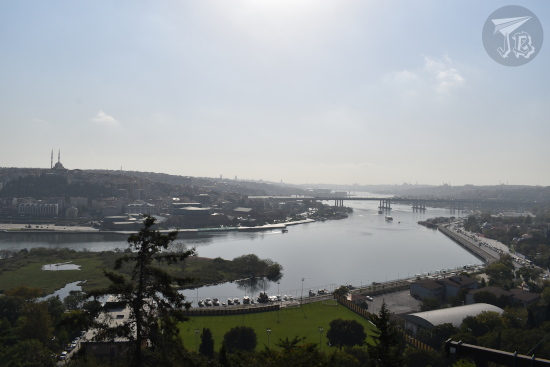
The group comprised around 30 people, and the bus headed towards an area called Pierre Loti Tepesi, Pierre Loti Hill, and reached there around 10:00. This is a viewpoint above the Golden Horn Altın Boynuz, with a viewing terrace, a café and the Eyüp Cemetery Eyüp Mezarlığı. We were told we’d visit the cemetery later, and were given twenty minutes to take in the views. Afterwards, we hiked (considering the speed, “marched”) down the hill through the cemetery, and saw several tombstones from the Ottoman period, but there was no visit whatsoever.

Istambul from Pierre Loti hill

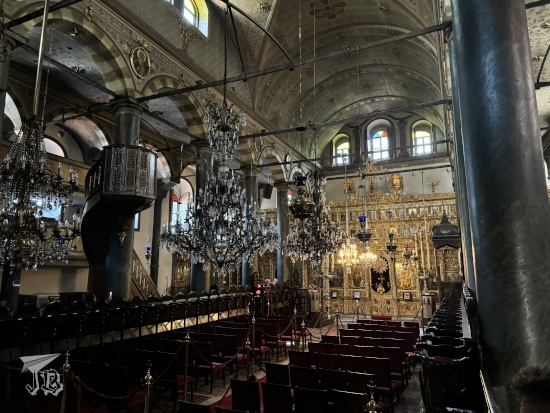
We hopped back onto the bus to drive towards the quarter called Fener, which we were told was “movie neighbourhood”. We were going to visit the Venerable Patriarchal Church of Saint George, the Orthodox cathedral of Istanbul Aziz George Katedrali, which closed down as we arrived for “an unknown length of time” because the Patriarch was coming out. Instead of letting us amble through the neighbourhood before the church, the guide insisted on us waiting for about 20 minutes before we all came into the church, and he gave a couple of explanations, and gave us free time to check out the church and the neighbourhood.

The church of St George was one of the few places with “real” security. We got through a lot of places with metal detectors and such with guards who would not even care, but the ones that did were ridiculously strict in contrast. The truth is that with the rise of Turkish nationalism, a lot of the church’s flock were deported, so the church and Patriarch are mostly symbolic and a pilgrimage point, and it has even been attacked by terrorists at times. The church itself used to be the centre of the quarter, which was historically the Greek quarter, even after the Ottoman Turks had taken over former Constantinople. Though the church existed previously, it became the seat of the Ecumenical Patriarchate of Constantinople since the early 1600s. It has been damaged and rebuilt several times, the latest as recently as 1991. It has three naves and aisles, with a rich iconostasis (decorated screen that separates the altar from the nave) in golden wood.

Church of St George Istanbul

After the cathedral, I wandered the quarter of Fener on my own for as long as was given us as free time. I found a colourful set of stairs Renkli Merdivenler, which led to nowhere but area pretty. The whole area was a hill, and I climbed up to try to catch a view of a very interesting building – the private school Phanar Roman Orthodox Lyceum Özel Fener Rum Lisesi. The building was designed in an eclectic style by Greek architect Konstantinos Dimadis, and built around 1882, though the school itself dates back from 1597. I also saw a film crew on a break in one of the streets.

Roman Orthodox Lyceum

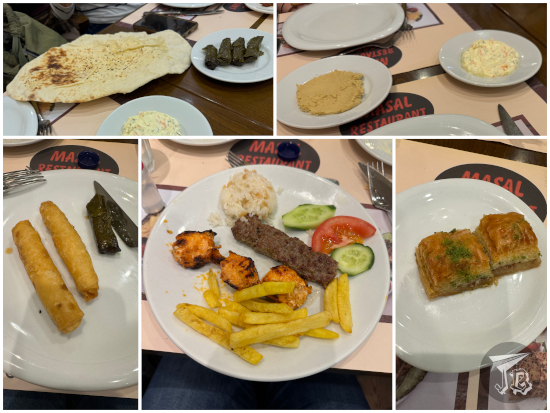
Once we were called back to the bus, we headed out for lunch. The entrées looked good, actually Turkish, including hummus, rolled paçanga böreği, dolma (stuffed vine leaves), cacik (Turkish tzatziki). The main was rather unremarkable, and something that I could have easily had in either Jordan or Egypt – a sad-looking plate with eight fries, two slices of cucumber, one slice of tomato, a mouthful of rice, and some chicken and lamb. Dessert were the ubiquitous Turkish delights, which are extremely sweet and I’m not a big fan of. Looking back, however, this was one of the most Turkish meals I ended up having, besides kebaps. During lunch, I made acquaintances with some nice ladies who promised to make sure I was not left behind – which has been a bit of a worry of mine when I’m in a guided tour since my last day in Egypt.

Turkish meal

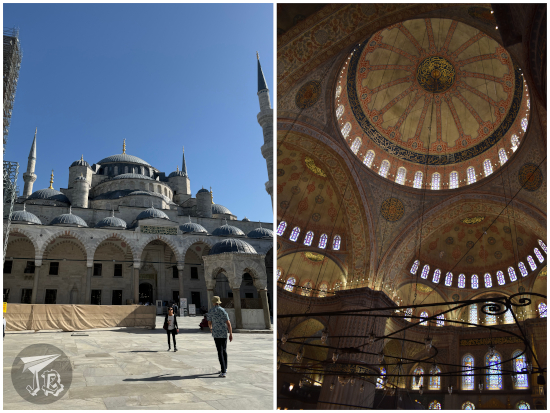
Around 14:00 we walked towards the area known as Sultanahmet Square Sultanahmet Meydanı, the neuralgic centre of historic Istanbul. There, the first stop of the afternoon was Sultanahmet Camii, the Sultan Ahmed Mosque colloquially known as the Blue Mosque. It was built between 1609 and 1617, during the Ottoman era. Designed by architect Sedefkar Mehmed Agha, it was the last great mosque built in the Classical Ottoman style, and combines Byzantine details and Islamic architecture. It has a central dome (43 metres high) with four semi domes and six minarets. The interior is decorated with tiles and mostly blue decoration, hence the name – though honestly I mostly felt it was… golden. The mosque has windows which originally had coloured glass, and are now modern, and it has chandeliers hung from the ceiling, with some of the lamps being ostrich eggs, a typical feature in Turkish mosques. One of the minarets was being restored.

Blue mosque

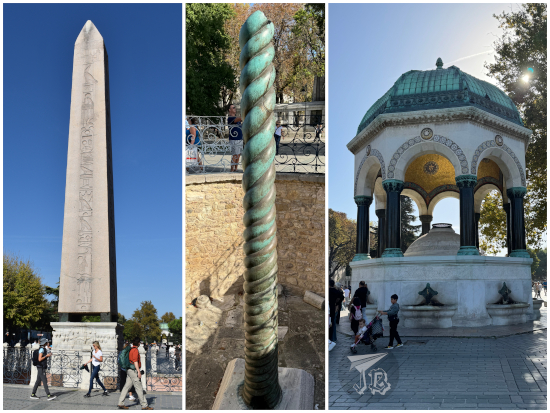
The mosque stands next to the square, which is long and narrow – it is actually built on the former Hippodrome of Constantinople Hipodrom, the centre of the city during the Byzantine period. Upon the founding of Constantinople, both Constantine and his successor Theodosius the Great brought works of art into the area. Today, there stands the Serpent Column Yılanlı Sütun, an ancient bronze column representing a hydra, whose heads are now missing (part of one is now in the nearby Archaeology Museum). Another monument of the square is the Egyptian Obelisk of Theodosius Dikilitaş, originally erected for Pharaoh Thutmose III (1479 – 1425 BCE, 18th century) in Karnak. It stands on a Roman pedestal from the time it was transported to Constantinople around the year 390 CE. The final construction in the square is the German Fountain Alman Çeşmesi (The Kaiser Wilhelm Fountain), a neo-Byzantine fountain that was constructed to commemorate the visit of German Emperor Wilhem II to Istanbul. It has eight sides, with marble columns and an inside covered with golden mosaics.

Monuments at Istanbul hyppodrome

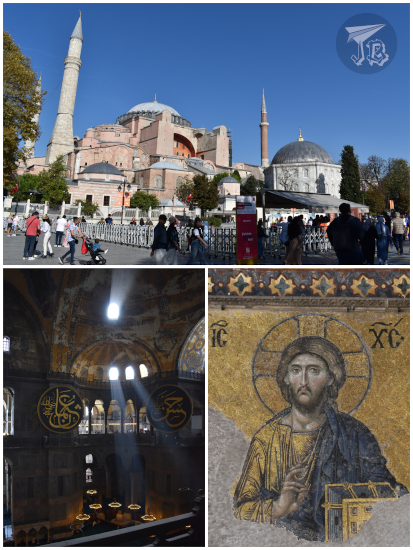
The official day trip ended there – though they were supposed to take us to the Grand Bazaar. However, the extended tour (25 € extra) included visiting the Orthodox church-turned-mosque-turned-museum-turned-mosque Ayasofya-i Kebir Cami-i Şerifi Hagia Sophia Grand Mosque. The current structure was commissioned by the Byzantine Emperor Justinian I to be the Christian cathedral of Constantinople as the Church of God’s Holy Wisdom, designed by Greek geometers Isidore of Miletus and Anthemius of Tralles. At the time it was built, it was the largest interior open space in the world.

It has a central dome with rises 55.6 metres from the ground and a diameter of around 31 metres. After the fall of Constantinople in 1453 it was converted into a mosque. In 1935, the new Turkish Republic turned it into a museum, but in 2020 the controversial decision to turn it back into mosque was made. With the first transformation into a mosque, minarets were erected and the Byzantine mosaics on the ceilings were covered or destroyed. They were recovered for the museum period, and now they are hidden away. While originally the mosque was going to be “open for all”, now the ground floor, covered with a carpet, is only for praying Muslims, and tourists have to pay to access the second floor and see the Christian mosaics. From the second floor, you can see the mosaics, and are close to the domes, which allows you to see the questionable state of conservation. The dome is fantastic, and there are mosaics of the archangels there. On the way out, there is another mosaic depicting the Virgin Mary with the child, and Constantine and Justinian giving them presents – Istanbul itself and Hagia Sophia. The walls however, are in dire need of restorations.

Hagia Sophia Istanbul

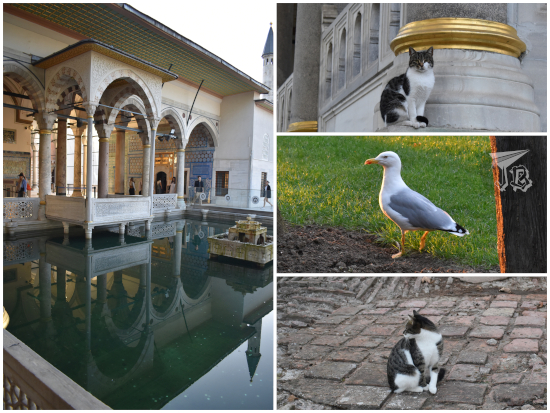
The day trip ended after an introduction to the building, and I wandered around for a while, seeing everything I was allowed to before I stepped out. At that point it was 16:50. I had the option of walking, as recommended, to the Grand Bazaar, but I decided that I had better things to do. I rushed towards the palace-turned-museum Topkapı Palace Topkapı Sarayı. Construction of the complex was ordered just after the fall of Constantinople by Sultan Mehmed the Conqueror overlooking the Golden Horn. Closed-off by walls, it has several buildings and palaces, some of which hold exhibitions. The palace closes at 18:30, and the ticket booths at 17:00. I was able to buy a ticket at 16:57 because I am very motivated, and I even saw most of the key areas of the palace in those 90 minutes. Though the recommended visit time is four to five hours, at least I felt accomplished – I wished I had prepared better for it, but I thought that I was standing next to the palace, and even if it was expensive I could return the next day if I felt I wanted to see more.

The first courtyard is free for everyone to see, and that is where the ticket booths are. I hurried towards the second courtyard, where I was able to see the Ottoman Empire Imperial Council, the Treasury, the Arms collection, the Gate of Felicity, the Chamber of the Sacred Relics, the Harem, the Baghdad kiosk, the Grand Kiosk, and even the panoramic view of Marmara Sea, among other smaller buildings – and of course, the feral cats. I did miss the porcelain and miniature collection, but I felt rather accomplished for the 90 minutes I had.

Topkapi palace Istanbul

Topkapi palace

I left the palace among the last visitors, as they closed the gates behind us. I had two options now – head back to the hotel and try to see the Grand Bazaar, or explore around for a while. To be fair, the area looked rather full and with a bunch of tourists looking more like a target than myself. That happened a lot during this trip, fortunately. I was not considered “targetable”.

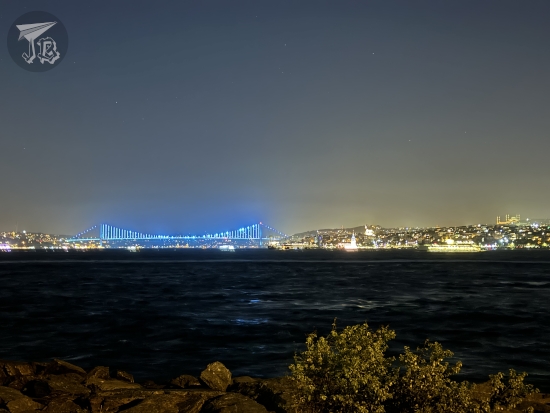
Most visitable monuments had closed or were about to at this point. However, I knew that the Basilica Cistern would reopen an hour later, so I decided to wander around and try to get to the promenade along Kennedy street Kennedy Caddesi, which allowed me for nice views of Bosphorus Strait İstanbul Boğazı, the Golden Horn Altın Boynuz and Galata Bridge Galata Köprüsü.

Golden Horn at night

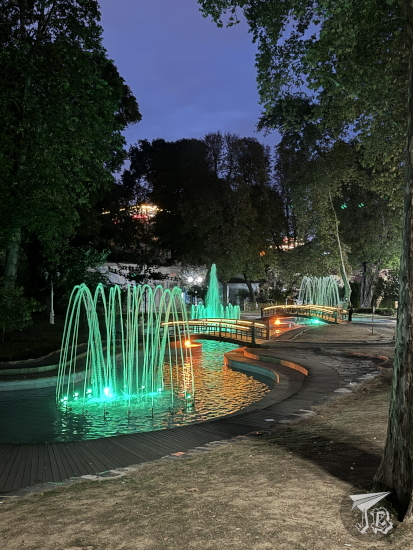
I went back towards the city centre through Gülhane Park Gülhane Parkı. At this point it was dark, so the fountains were on, and they looked very fun, all lit up.

I reached the queue to enter the Basilica Cistern Yerebatan Sarnıcı (Subterranean Palace). The ancient cistern has a normal opening schedule, and an evening schedule, which is a bit more expensive, with live music. But it worked for me. The cistern was built in the 6th century with the goal of providing water to the Great Palace of Constantinople, which stood where the Blue Mosque is now. It is an underground chamber with 336 columns that are up to 9 metres high, and it can hold up to 80,000 cubic metres of water. The columns seem to be recycled from ruined buildings, and at least one of them is carved with an upside-down Medusa face on the base. Today there is very little water, and there are modern art installations, and there are cool changing lights that give it a very interesting look and feel.

Basilica Cistern Istanbul

By the time I left, I kind of regretted having signed up for the second day trip, because I had been rather more efficient on my own, but again, I had not done much planning for the city. I went back to the hotel and I ordered food using the online room service. This time I decided on a kebap chicken wrap and a Turkish yoghurt, which was delicious. I had a shower and went off to bed.

Kebap and yoghurt

13th September 2024: Cádiz, Jerez, Puerto Real & back to Cádiz {Escapade to Cádiz, September 2024}

After making sure there were no ants in my breakfast – I had stored it in the mini-fridge, and they were all in the trash can with the decoy – I left for an early walk around Cádiz as the sun rose. I went to Puerta de Tierra (the Land Gate), the remains of the walls that closed off the city in the past, which today separates the old and new areas. The original redoubt was erected in the 16th century, embellished in 1756 with a portal, and a tower was added in 1850. In the early 20th century, arches were opened into the wall to allow traffic to come through. There was a temporary installation to commemorate the “Phoenician Week” activities, but it was so garish that I was not even sure whether it was real or a parody of sorts.

Puerta de Tierra Cádiz

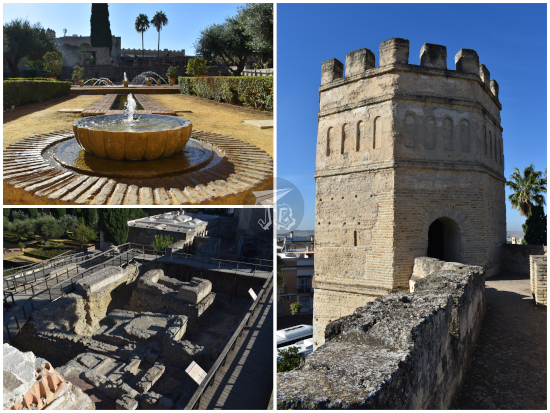
Afterwards, I walked to the train station to take the train to the nearby city of Jerez de la Frontera, where my first stop was the fortress-palace Conjunto Monumental del Alcázar. The first remains known of the alcázar date back from the 11th century, though most of what still stands was erected in the Almohad period (12th – 13th centuries). The fortress was repeatedly taken and lost in the war between Moors and Christians until the Catholic Monarchs finally conquered all of Spain. The building was owned by the crown, but it fell into disarray, and in the 18th century a Baroque palace was built.

Alcazar de Jerez de la Frontera - exterior

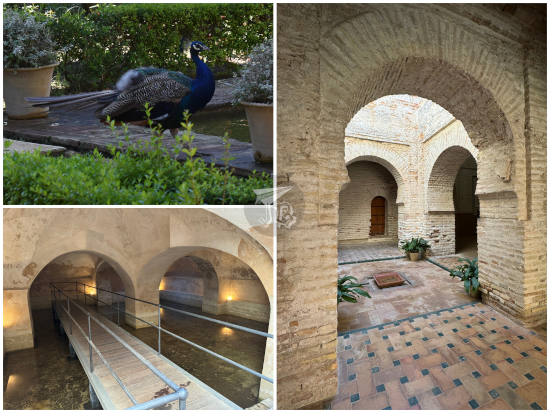
Today, this palace is the only intact construction, and the one I left for last. I moved towards the garden first, which lead to the Arab baths, the octagonal tower, the cistern, the Royal Pavilion, and the walls, with some of the machinery from the Medieval times. The gardens were patrolled by peafowl. On the other side of the complex stand the mosque, an area with a reproduction of ancient oil presses, and the original gates in the walls.

Alcazar de Jerez de la Frontera - cistern and mosque, and peacock

The Baroque palace Palacio de Villavicencio holds a wooden staircase, several rooms with rich decoration including hanging lamps and wall paintings, and a salvaged pharmacy from the 19th century.

Alcazar de Jerez: Palacio de Villavicencio

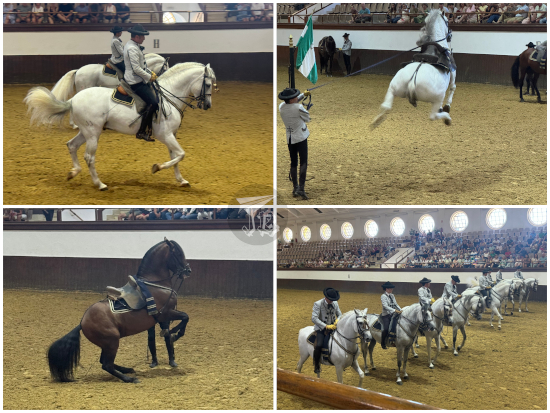
After the alcázar, which took longer than I thought to explore, I headed out to the Royal Andalusian School of Equestrian Art Real Escuela Andaluza del Arte Ecuestre to watch the show Cómo bailan los caballos andaluces (The way Andalusian horses dance), an eight-part show which has been performed since 1973. The exhibition showcases the different types of exercises that the horses are trained for – whether it is with a rider, or a handler on their feet, alone, or coordinating with other horses on the arena. It was a really impressive performance, and the horses were gorgeous.

Setlist of the show:
  1. Cómo se anda en el campo
  2. Al son de la garrocha
  3. Paso a dos
  4. Trabajos en la mano
  5. Fantasía
  6. Saltos de escuela
  7. Riendas largas
  8. Carrusel

Royal Equestrian Art School, Jerez

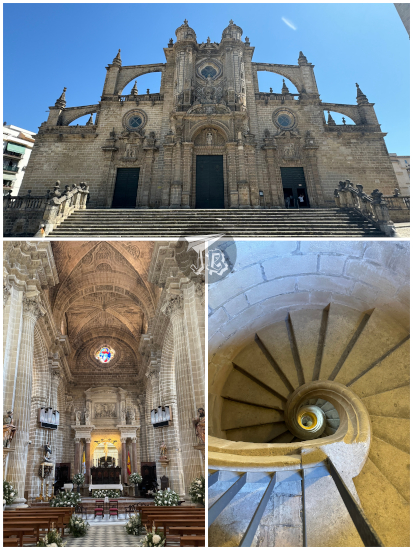
After the show, I hung around for as long as I was allowed to, snooping the horse riding museum and the small palace in the grounds until they closed down and I had to leave. I bought a sandwich and a bottle of water from a supermarket in the way, and went on to the cathedral Catedral de Nuestro Señor San Salvador. The current building was not originally conceived as a cathedral. It was founded in 1778, built between the 17th and 18th centuries, and consecrated as cathedral as recently as 1978. It has a gothic structure, with a Baroque façade and a Neoclassic altarpiece. Behind the altar there is small treasury / museum and a spiral staircase to a secret chapel which is barely the painting of a saint – but the staircase was pretty, it reminded me of the one in the church in Tendilla. I also walked up the tower so I could see the city from above.

Cathedral Jerez de la Frontera

By the time I was on my way back, it was too late to snoop into the farmers’ market Mercado Central Abastos, so I headed directly towards the train station to fight the ticket machine, then headed to Puerto Real. This is a town between Jerez and Cádiz where I used to live. After checking out some places out of nostalgia, I went towards the seaside. It was an eerie feeling, because it had changed very little from what I remembered from almost two decades ago, when I left, and still it was slightly different. I visited the beach Playa de la Cachucha and walked along the promenade Paseo Marítimo until I saw my old university building.

The Andalusian Centre for Marine Studies Centro Superior de Estudios Marinos, CASEM, is a helix-shaped building, originally conceived by Manuel López Vázquez. The building has three “arms” in 120-degree angles, and a glass dome at the centre. It is located in the middle of the natural reserve. However, going there would have made me extremely sad. Thus, I decided to walk back towards the station and take a train back to Cádiz.

Puerto Real: Playa de la Cacucha

Since I had visited the land gates, I also wanted to see the Sea Gate Puerta del Mar, the remains of the entrance to the harbour. Today it is more of a monument than an actual gate, but it is still there.

Cádiz Puerta del Mar

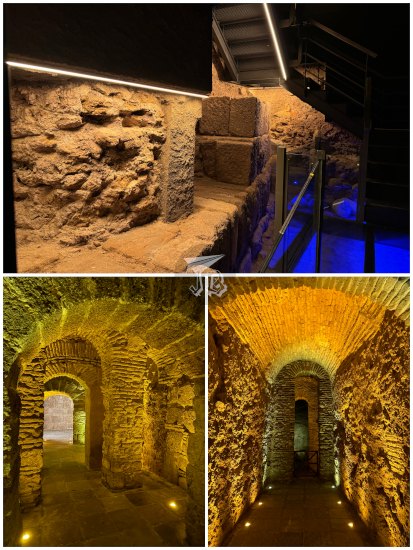
I was able to get there with enough time to head out to the archaeological site Yacimiento Arqueológico Gadir, one of the most important of its kind, since Phoenician settlement remains are far and few. The site, underneath a theatre, has two layers – the original one might date back from the 9th century BCE, with the remains of eight houses, complete with kitchen and oven, and streets. The settlement was destroyed in a fire, which also left two victims, a man and a cat, both of whose remains are exhibited there. The second layer is more recent – a fish processing factory with pools to preserve the product in brine from the Roman domination.

Yacimiento arqueológico de Gadir

Finally, I decided to end the day with a nice dinner. I went to the nearby market Mercado Central de Abastos de Cádiz, which has some eateries that work with local product. However, I did not locate the place I wanted to hit, and ended up distracted by El Viajero del Merkao, a place which advertised bluefin tuna, and offered it in tartar. I combined the tuna tartar with a typical tortillita de camarones, a fried batter made with water, chickpea flour, wheat flour and tiny shrimp, and a not so typical Taco de Cadi, Cadi, a tortillita with guacamole and salsa.

Tortillita de camarones & tuna tartar

I went back to the hotel to have a shower, then I turned in for the night (in a non-ant-infested room now).

12th September 2024: Cádiz {Escapade to Cádiz, September 2024}

My paperwork-related appointment was at 9:30 in Cádiz itself, and I got up around 7:30. I left the hotel, but unfortunately the café where I had expected to have breakfast was closed. Thus, I instead headed out towards the promenade Paseo del Vendaval to see the ocean again. I turned to my right, in the opposite direction from the previous night, and I walked towards the central beach in town – Playa de la Caleta, a mostly-rocky area with tidal ponds and a long bridge called Puente del Hierro which leads to an old castle Castillo de San Esteban. I chased a few birds on the way for photographs. They were not at all cooperative.

I reached the former bathhouse Balneario de Nuestra Señora de la Palma y del Real, built in 1926 from an original design by Enrique García Cañas with one main access and two corridors that form a semicircle towards the ocean, and end in domes. It was build directly onto the beach, in reinforced concrete, with a style gravitating among Art noveau, eastern historicism and local decoration with azulejo tiles. It was abandoned in the 1970s, but restored for administrative use in the 1990s.

I ventured away from the ocean into the narrow streets of Cádiz downtown until I got to the town’s theatre Gran Teatro Falla, in the Neomudejar style. It was built between 1884 and 1905, on and off due to lack of funds, after a design by Adolfo Morales de los Ríos and Adolfo del Castillo Escribano. The theatre is one of the key spots during Carnival festivities. The Cádiz Carnival is one of oldest and most famous in Spain, known for its groups of people who parade the town in costume to sing simple songs that make fun of every- and anything, normally current affairs – coros, cuartetos, comparsas and chirigotas. The great Carnival contest is celebrated in the theatre, and prizes are awarded in each of the categories. The carnival brings in about 400,000 visitors each year. I tried to get to visit the theatre, but I did not manage to do so.

Paseo del Vendaval & Gran Teatro Falla Cádiz

Around 09:15 I decided to try my luck with the paperwork issue, even if it was early for my appointment, and I was successful. Since it was an important document, I ran back to the hotel to drop it there, and then headed off to the square Plaza de La Mina, where the local museum Museo de Cádiz stands.

It is said that Cádiz is the oldest Western city, founded around the 9th century BCE. Mythologically, it is associated with Hercules’ Columns and the city of Tarsis. The oldest archaeological remains date back to the 7th century BCE. The now-peninsula was originally a small archipelago where the Phoenicians settled down as it was a strategic point for commerce and mining of copper and tin, naming the settlement Gadir. It was later conquered by Carthaginians, whose march to Rome led by Hannibal started there. When Carthage lost the war, the city was taken over by Romans and became Gades in the 2nd century BCE.

As the Roman Empire declined, the city was invaded by the Visigoths, then the Byzantine Empire, and again by the Visigoths. In the year 710 CE, it was the first stronghold to fall to the Moorish conquest of Spain. After the Christians took it over again, it became a key point in commerce with the American territories.

In 1755, Cádiz was damaged by a three-wave tsunami caused by the so-called “Lisbon Earthquake”, 8.5 degrees in the Richter scale. In 1812, during the Napoleonic Wars, the Spanish patriots wrote the first Spanish Constitution, and throughout the 19th century, it was key in the numerous wars and battles through the return of Alfonso VII, the Republic and the Restoration of the Monarchy periods. However, during the 20th century, the city decayed suffering from lack of infrastructures, and rampant unemployment. Thus, it is happy to focus on tourism and the money it brings.

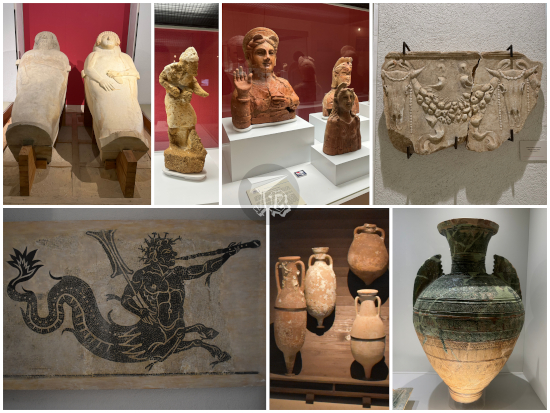
The Museo de Cádiz tries to follow this trail of history, but only the archaeological floor was open. The most important artefacts date from the Phoenician, Roman and Moorish periods. Of particular interest are two Phoenician sarcophagi which were found in completely different areas, but are presented as a couple of sorts, and a complete dowry. From Roman times, they exhibit a few dozen amphorae, sculptures and columns. Finally, the remains from the Moorish domination are quite colourful in comparison with everything else. The second floor of the museum was closed, so I was done earlier than expected.

Cádiz Museum

Thus, I decided to push my luck a little and try to get to the archaeological site called Cueva del Pájaro Azul for the 10:30 visit in English. The place is a former flamenco tavern built within the repurposed dry docks of the Phoenician Gadir. Most of the structure has been covered in brick and barely the original shape can be traced back, enough to calculate that the dry docks served war ships. While building new stairs, they did find part of the original Phoenician harbour though, the most important remain that survives. The tavern itself might be considered of minimal historical importance as it was a considerable cultural hub in the 1960s.

Archaeological site Cueva del Pájaro Azul

To keep in the mood, I decided to visit the archaeological site Yacimiento Arqueológico de Gadir, making a stop for a coffee first. Unfortunately, the site was closed that day. Thus, I decided to check out the Roman Theatre Teatro Romano de Cádiz – it might feel a little back and forth, but distances in central Cádiz are small and I wanted to prioritise Phoenician remains (I said I lived in the area, but all these archaeological remains are newly discovered). The theatre is the second largest one in what was Hispania, and dates from the 1st century BCE. It could host up to 10,000 people, and the stage, stands and the vomitorium (corridor underneath the seats) can be visited. There is an extra room with miniatures of the different stages of the history of the theatre.

Roman Theatre Cádiz

I left behind something called “The Elf’s Alley” Callejón del Duende, the narrowest street in town, now closed off. Very near both the alley and the theatre, I found the old cathedral Catedral Vieja de Cádiz officially Parroquia de Santa Cruz. This was the original cathedral of the town, commissioned by king Alfonso X around 1262. The original building was destroyed during the scuffles between the Spanish and the English at the end of the 16th century, and a new one was erected a few years later in a mixture of the Renaissance and the Baroque styles.

Former cathedral of Cádiz

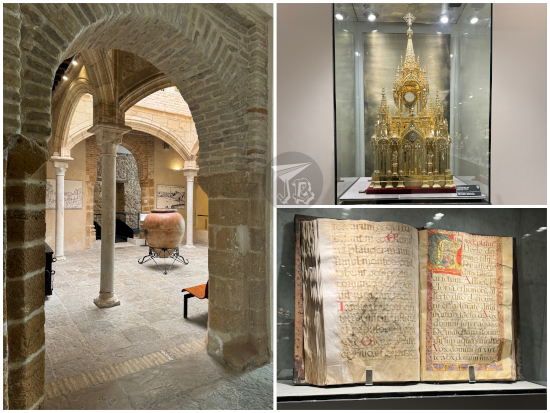
Next to the old cathedral stands the museum of the cathedral Casa de la Contaduría. The museum comprises a number of rooms disseminated in a conglomerate of buildings dating back from the 16th century – including the tower of the old cathedral and a Mudejar courtyard. The museum holds – obviously – religious items: paintings, sculptures, mass paraphernalia, codexes…

Cathedral Museum Cádiz

Afterwards, I crossed the city centre all over again, and reached the park Parque Genovés, a sort of botanical garden and the largest park in the old town. It has a small lake with a waterfall and a man-made cave with a lookout of the town and the ocean.

Park Parque Genovés in Cádiz

Then, I had booked lunch in the café of the Parador de Cádiz – Hotel Atlántico, a cute not-so-little place called La Tacita del Atlántico. I had set my heart on a grilled urchin dish – erizo de mar relleno y gratinado con huevos de arenque ahumado which I combined with a salmorejo (a creamy soup with a base of tomato and bread, garnished with ham and hard boiled eggs), though the dish had a local twist salmorejo cordobés, huevo y mojama. The urchins were delicious, but the salmorejo was lacking. I liked the idea of exchanging the ham for salt-cured tuna (mojama), but overall I found the food overpriced and the service mediocre. On my way out, I stopped by reception to get my stamp for the Red de Paradores rally.

Lunch at La Tacita del Atlántico

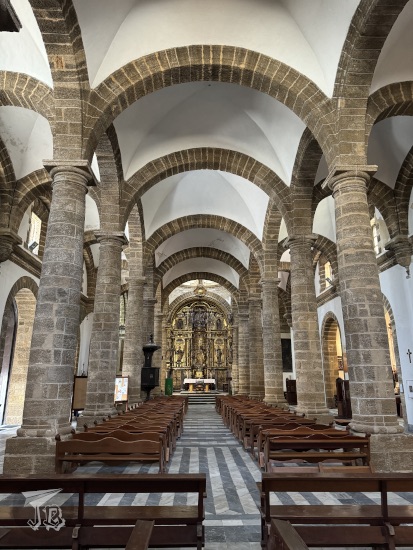
I stayed at Parque Genovés for a bit after lunch, then headed out towards the “new” cathedral Catedral de la Santa Cruz. The cathedral was built between 1722 and 1838, in a mixture of styles – Baroque, Rococo and Neoclassicism. It was erected in an assortment of materials, from noble marble to the humble local piedra ostionera, a sedimentary rock with a high concentration of seashells (biocalcarenite). The interior has three naves, and a Latin cross floor plan, over whose crossing there is a has dome, covered by golden tiles on the outside. The main altar is neoclassical.

Underneath the cathedral stands the crypt, and one of the towers can be ascended, leading to a great view of the town. The tower has very few stairs, most of the way is done on a ramp. Unfortunately, though, the cathedral is in rather poor state, and a net is cast under the ceiling to prevent debris from falling. I also climbed the tower since it was included in my combo ticket.

Cathedral of the Holy Cross in Cádiz

View of Cádiz from the cathedral tower

Behind the cathedral, I found myself back at the promenade Paseo del Vendaval, and I walked towards the beach Playa de la Caleta. In historical times, it was the natural port for Phoenician, Carthaginian and Roman shops, now it is a small-ish beach in the heart of the city. It is located between two of the castles of the old city, and its most characteristic structure is the bath house I saw in the morning.

The beach has a sand area where most people sunbathe, but there is a long bridge separated in two sections – one directly built upon rock, Puente de Hierro and the other with arches to let the water flow through, Puente Canal. At the end of the half-kilometre of bridges, stand the ruins of the castle Castillo de San Sebastián, which today includes a working lighthouse, and an archaeological site. The first structure in the ancient island dates back from 1457, and the castle itself was built in 1706. Though it was warm and sunny, I walked the bridges and around the castle walls.

La Caleta Beach Cádiz & San Sebastián Castle

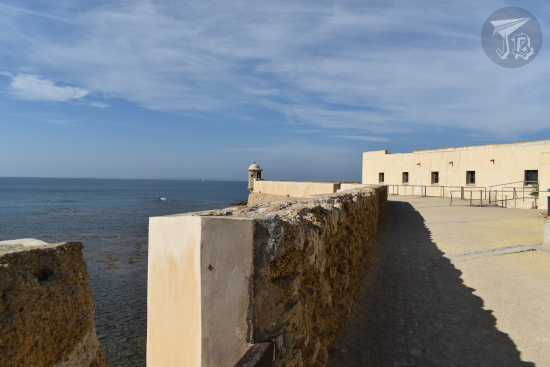
Upon my “return to mainland”, I passed by the bath house again and I reached a second castle, Castillo de Santa Catalina. The outpost, in the shape of a five-point star, was built towards the end of the 16th century to defend the city form sea warfare. In later years, a church and a sacristy were added, and from the 18th century onwards it was used as a prison. Today, it mostly hosts cultural or cinema-related events.

Santa Catalina Castle, Cádiz

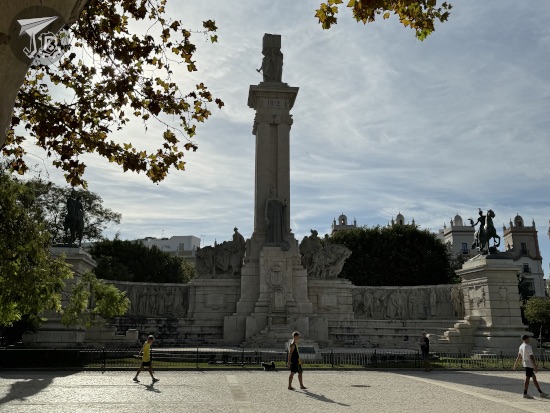
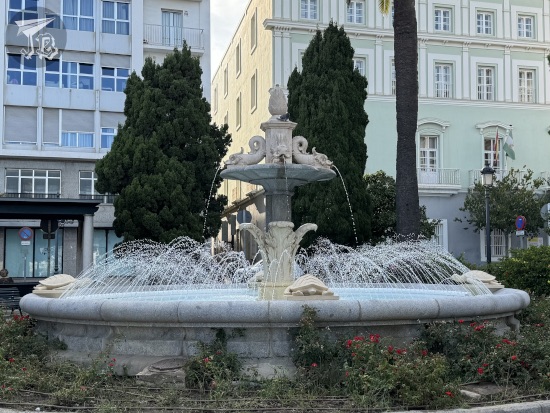
I continued on my walk around the city, left behind a knee cramp, the Parador de Cádiz and Parque Genovés until I reached the bulwark Baluarte de la Candelaria and the park Jardines Clara Campoamor. From there, I went on towards a second bulwark and the remains of the city walls Baluarte y Murallas de San Carlos. The bulwark was built towards the end of the 18th century to protect the harbour. Not far from there stands the square Plaza de España with the monument to the 1812 Constitution Monumento a la Constitución de 1812, the political response to the Napoleonic invasion. A bit further away stands the fountain Fuente de la Plaza de las Tortugas, with lots of cute turtles as decoration.

San Carlos Bulwark and Walls Cádiz

Monument to the 1812 Constitution Cádiz

Turtle fountain in Cádiz

At this time I decided to get an early dinner around 18:30, so I bought some fast food to take to the hotel. That is when the ant invasion started. It was something I was not expecting – one or two bugs is workable, but this was a whole nest out for my fries. It was not nice. I decoyed them into bathroom and decided to have the room cleaned the next morning.

I set off again about 20:15 to look for a place to watch the sunset at the beach Playa de la Caleta, which did not disappoint, and I sat there until the sun disappeared beyond the water line. Luckily, I made it today, as it would be ridiculously windy the following day.

Sunset at La Caleta, Cádiz

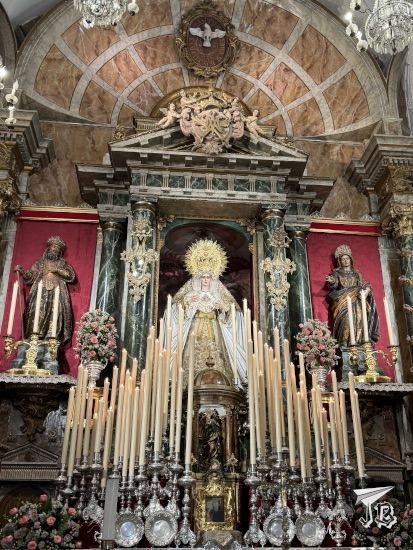
I then found the street Calle the la Virgen de la Palma, at whose end stands the small church Parroquia de Nuestra Señora de la Palma. It was built in the 18th century and it hosts a sculpture of the Virgin Mary credited with stopping the waters during the 1755 tsunami. In the street, there is a signal marking the highest water point, but there were so many restaurants and people that it was impossible to find it!

Sculpture of the Virgin Mary

I went back to the hotel afterwards to have some sleep – I was beat. I did manage to make a stop at a supermarket to buy coffee and pastries for breakfast the following morning though. Because one late latte per trip is enough.

17th June 2024: Horniman Museum and Gardens {London, England, June 2024}

I woke up early-ish and got ready to leave. I stopped by the local supermarket to grab a coffee and got on my way towards the closest Overground station – this being London, it was not far. This was an easy commute since there were no changes, and I could just relax on the train. I got off on Forest Hill and walked up the… well, the aforementioned hill, until I reached the Horniman Museum and Gardens, in the Borough of Lewisham around 9:00 – passing a Costa Coffee on the way. I filed this information for later reference.

Normally, I would not have gone to a museum which had a Natural History Gallery closed for renovations, but they were running a dinosaur exhibit that created the perfect excuse to go there, even if it was a bit out of the way. Frederick Horniman was the heir to his family’s tea emporium in the 19th century. He started travelling the world around 1860, collecting artefacts from his travels, and developed the museum to exhibit them. The original museum opened in 1890, and the gardens in 1895.

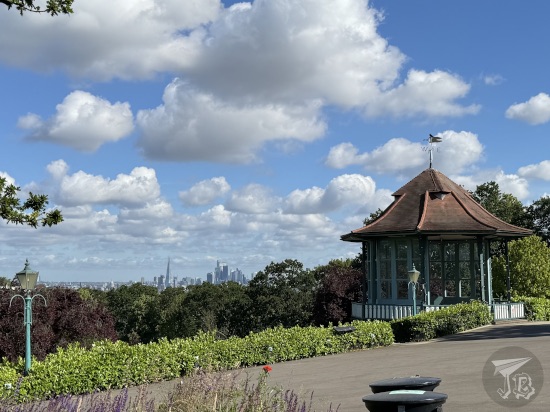
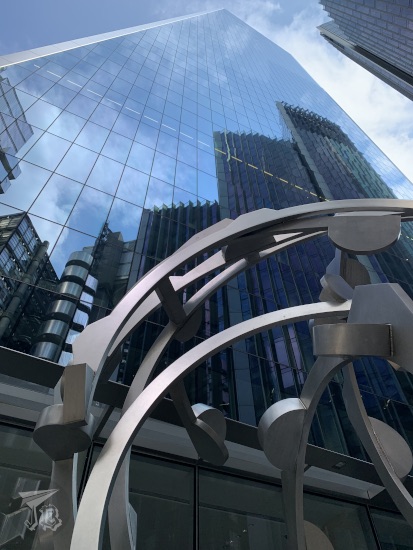
The gardens are almost 6.5 hectares (16 acres), divided in different areas, including a bee garden, a sound garden where you can make music with metal tubes, a grassland garden, a prehistoric garden, a grassland garden… I wandered around a little and was surprised to catch a glimpse of City of London by the 1903 bandstand. I knew the gardens were a bit far out, but I had not realised how much.

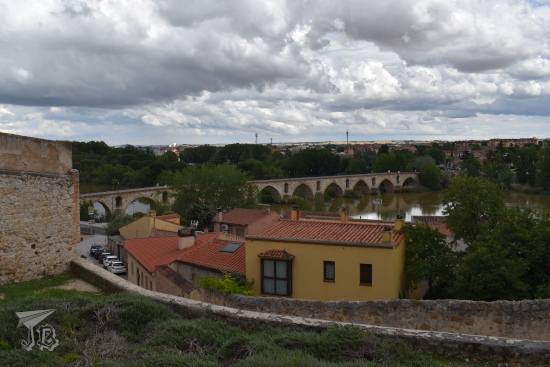
Horniman Gardens with the City in the background

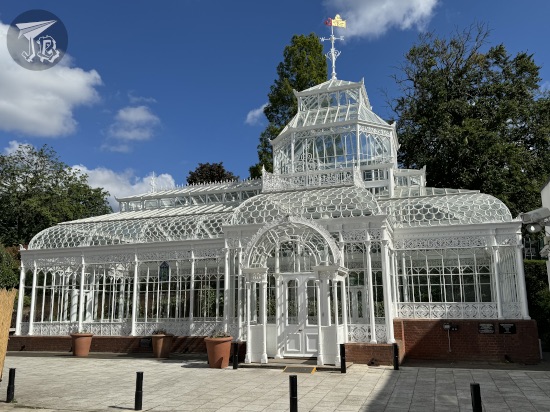
I explored for about an hour, then I headed towards the Victorian Conservatory, built in 1894 in Horniman’s private residence. A century later, it was transported to the gardens and restored by British Heritage. It is a quaint little greenhouse in white iron and glass, with pressed tiles on the floor. Next to it stands a little café that I would have stayed at if I had not wanted to see some of the themed flowerbeds.

The Horniman Conservatory

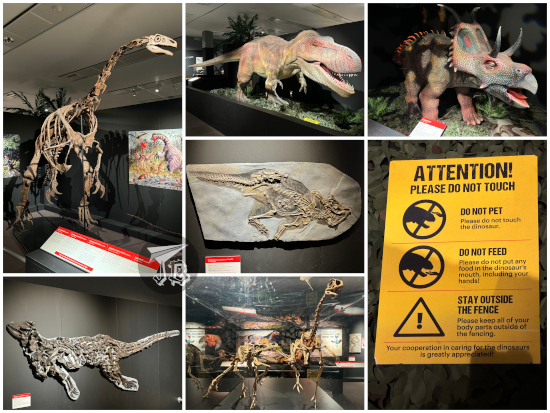
At 10:00, when the museum opened, I entered to see the exhibition Dinosaur rEvolution, which looked at the evolution of Dinosauria into birds. The travelling exhibition has five animatronics, a couple dozen cast fossils, several plushies and beautiful palaeoart. The T-Rex animatronic had some feathers, and the information notice asked the reader if they would find the Jurassic Park tyrannosaur less scary with them. I honestly would find a feathered Rexy even more terrifying. The exhibition was all right, with plenty of information, but there was nothing real, which was a bit of a bummer. But since it is a travelling exhibition, it makes sense they would not be moving around the real thing. However, given the ticket price, I expected something a bit larger.

Dinosaur revolution

After I was done, I decided to check out the rest of the museum. First, I saw the anthropological galleries, which had the most bizarre array of artefacts – from an Egyptian mummy to a Spanish inquisition chair, along Inuit costumes, European masks, African religious items, Indian masks, Easter eggs, prehistoric items from all around the UK… There was a wish tree, where you can write something on a colourful paper and hang it from the branches.

Horniman athropology museum

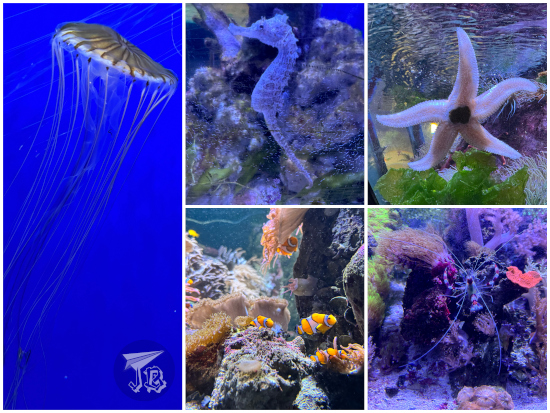
In the basement of the museum there is a small aquarium, which was full of schoolchildren on a day trip. I could have got the tickets online for that. However, I did not know how big the dinosaur exhibition would be, and I did not want to rush over. When I seemed to have the time, I decided to go down to the aquarium. It had a handful of tanks – jellyfish, coral reefs, Amazon rainforests, a lot of clownfish and a handful of poisonous frogs, mostly colourful stuff to grab attention. I managed not to get run over by the kids, which was a good thing.

Horniman Aquarium

After I had seen the aquarium, I considered checking out the Butterfly House, because those are always beautiful. However, since I knew I’d want to go back to the museum and gardens in a couple of years, when the natural history gallery reopens, I decided to head towards the train station. I would see the butterflies another time. That way I could be on my way to the airport with some buffer time without rushing my way through and stressed over connection. Instead, I checked the museum’s tea gallery, which summarised the history of tea and how it ties with colonialism, not pulling any punches towards the Horniman tea emporium itself. Funnily enough, the tea brand still exists in some Mediterranean and South American countries, but not in the UK.

On my way back to the station, I stopped at the Costa Coffee I had seen before for a drink and a snack. Unfortunately, the nice barista forgot to put the vanilla syrup into my vanilla latte – oh, the drama. Since the coffee was hot, I did not really notice until I was already on the Overground, and turning around was not worth it.

I had to change at Whitechapel into Hammersmith & City, but since I had the extra time, I decided to walk a little and go down into the Elizabeth Line, which, believe it or not, I had never used before. The commute time was the same anyway. The platforms felt so new and clean, lacking the grit that other stations have – not that they are dirty, really. They’re just… not that new or aseptic.

Even with the little detour, I reached Liverpool Street with time to take an earlier train than I had originally given myself as ideal – which is a couple of trains earlier than the one I would need to be right on time, but since that time the train just did not reach the airport, I’ve lost some faith in the Stansted Express. I went to the end of the platform, and sat down in the first carriage of the train. I was the only person there, even after the conductor announced that “the first carriage was almost empty, please move forward for comfort so the rear of the train is less crowded.” Happy to be an “almost”, I guess – and good that the carriage did not become anything close to full during the trip.

There were no issues reaching the airport, but security was crazy. I don’t think I’ve ever seen as many queues, and so long ever. When my backpack was flagged for secondary inspection I understood why – the person in front of me was told he was carrying “too many contact lenses”, and my tiny handcuffs key chain was apparently extremely threatening. Then they needed to check aaaall the electronics, and my boots. However, the security guard said that he was sorry and that I should not have been pulled over because of the key chain. I’ve never had a security officer apologise to me for pulling me over for secondary inspection – and honestly, that was the key chain I bought for my first apartment… in 2001? I’ve flown with it before countless of times… Hilarious…

I put on my boots, and headed off to buy some sushi at the Stansted Itsu. Sadly, the quiet area has stopped being so – they have closed the upstairs toilets and now they send everyone downstairs, so it was packed with holidaymakers and people hyping up toddlers, which I find a horrid mistake to make just before jumping on a plane. Thus, I drank my miso soup, ate my sushi, and buggered off to wander the airport – better than the cacophony of kiddos running, squealing and acting up. The airport was full, and while I am usually better at dealing with other travellers, I had been looking forward to the “quiet area”. Either that or I was a bit tired and everyone was rubbing me off the wrong way, I guess.

When it was time to board, queue went extremely slowly. The airline line personnel were being extremely picky with the luggage, measuring every backpack and trolley. Eventually, the slow process made departure late, so the end of the queue was rushed. They barely eyed my backpack, though I was asked to turn around to show it to the check-in agent.

The plane was full and way too many people were not aware of “boarding from the rear door” when their seat number was high, causing a bit of a jam. I found my seat, huddled in, and shut off for a while. I woke up with 40 minutes to land. When we did, we took a bus which conveniently left us right in front of passport control. The only problem on arrival? It was 31 ºC and sunny, and I was wearing clothes chosen for the 13 ºC and rain in London. I guess the order of digits is… important when you’re wearing longs sleeves, layers, and knee-high boots – which by the way I think have seen their last concert trip. RIP. You will be missed, cool concert boots.

15th June 2024: The Old Naval College, and a mishap {London, England, June 2024}

I am getting weirdly used to 5:00 wake-up calls. I drove to the airport and arrived at the long-stay parking lot just before 6:00, with the exact time to catch the bus at the nearest stop. I might be getting too comfortable with timings – either that, or the flights have started taking off a bit later, because I remember having to leave by 3:45 for the first Ryanair flight a few years back. Anyway, security was nice and smooth, but passport control was maddeningly slow – the shiny brand-new machines the airport has spent a fortune on were not working, and there were only two agents, and three flights leaving around the same time.

We left on time and landed on time too, and since works at London Stansted have been finished, I was fast out of immigration. I considered going to the hotel first thing in the morning in order to make sure the credit card went through – and have time to find an exchange office if it did not. When I was able to buy my usual breakfast in the Costa at the arrival area without an issue, I decided I should be all right. Thus, I just headed off towards the centre, reached Liverpool Street station, and transferred to the TfL system. I got a bit confused at the DLR. London’s railway is divided in the Underground, the Overground and the Docklands Light Railway or DLR, which are mostly automatic trains which involve more transfers than I had expected. I needed to backtrack a station or two before I got to my final destination, the area know as Isle of Dogs in the borough of Tower Hamlets. I’ve recently found out that there is a footpath under River Thames which connects the Isle of Dogs with Greenwich. The footpath, the Greenwich foot tunnel, was built from 1899 onwards, and it opened in 1902. You can literally walk from one bank of the Thames to the other in just a few minutes!

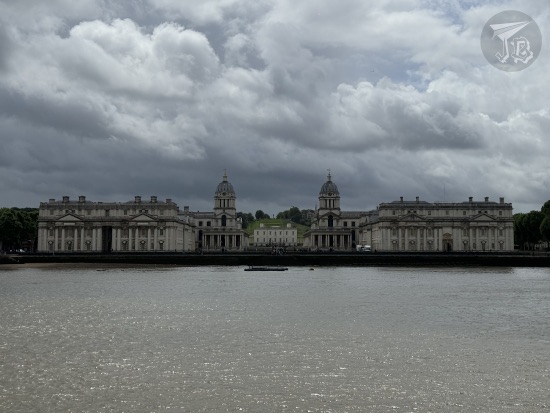
Old Royal Naval College from across River Thames

The tunnel was damaged during World War II, and there is a section which is held together by an inner steel lining. The whole tunnel is lit and either painted or tiled in white, so it does not give off any kind of claustrophobic feeling. Something cool that happened to me was that I could actually feel the water running above me, similarly to how I feel when I’m standing on a bridge and look at the river underneath. That was unexpected. Though there are lifts – the original ones were installed in 1904, but there are new ones from 2012 – I took the stairs.

Greenwich foot tunnel

I stepped out of the tunnel and into Greenwich, next to the Cutty Sark. I have already visited the museum inside the ship. This time around, I was going to try to see the Old Royal Naval College, which has been closed whenever I’ve tried to see it – they film rather often there. This time it was actually open to visitors.

The Old Royal Naval College, today part of the Maritime Greenwich UNESCO World Heritage Site, was originally designed as a veteran home and hospital. The current iteration of the building was designed by Christopher Wren – also responsible for St Paul’s Cathedral. The complex has two complexes or courts, Queen Mary Court on the left from the river, King William Court on the right. William III (reigned 1689 – 1702) and Mary II (reigned 1689 – 1694) were offered the throne as joint monarchs when their predecessor James VII and II was declared unfit because he became a Catholic. The building served as hospital and hospice until 1869; later, in 1873 it became a training academy for the Royal Nay until 1998.

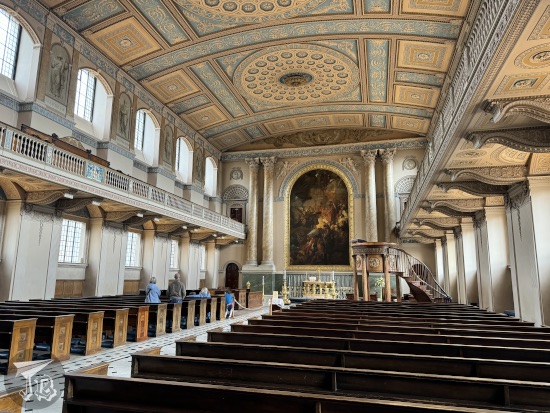
I first went into the Chapel of St Peter & St Paul in Queen Mary Court. It was reconstructed after a fire by James ‘Athenian’ Stuart in the neoclassical style. It has one nave, and a wood ceiling decorated with naval themes. The altar piece was painted by Benjamin West. I found the chapel quite beautiful, it gave off a warm feeling. The security personnel were also very nice.

Old Royal Naval College chapel

Then, I headed off to King William Court, to the pièce de résistance of the building. The Painted Hall is a huge ward decorated with Baroque paintings by Sir James Thornhill. The ceiling and walls are painted to honour the kings and queens who gave their patronage to the “Royal Hospital for Seamen at Greenwich”, depicting them surrounded by mythological and allegoric figures. The art was impressive, and the volunteer who explained it was a former teacher who made the whole tour really informative. While I usually avoid guided visits as much as I can, I found the painting too complex to interpret on my own.

Old Royal Naval College - Painted hall

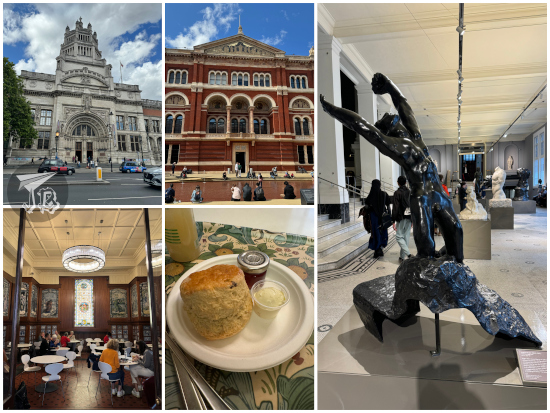
I backtracked through the Greenwich foot tunnel and took the Underground towards the Victoria & Albert Museum. Last time I was over they were running an exhibition I wanted to see… only this time around they had moved to another of their sites. I shrugged it off and decided to have a scone instead – any scone. I mention this because the couple before me wanted two particular scones from the basket. Afterwards, I went to see a gallery within the museum which I missed in 2023, which turned out to have bronze sculptures by French artist Auguste Rodin, considered the initiator of modern sculpture.

Snapshots at the V&A museum

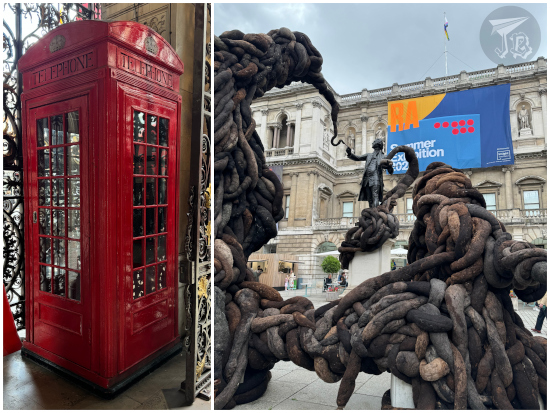
After that, I hopped back onto the Underground and headed off towards the Royal Academy of Arts, located in Burlington House. I was… surprised, to say the least, about the current display in the courtyard, but I was there to see oldest surviving red telephone box – Sir Giles Gilbert-Scott’s original prototype “K2” kiosk, made in wood in 1924.

Burlington house

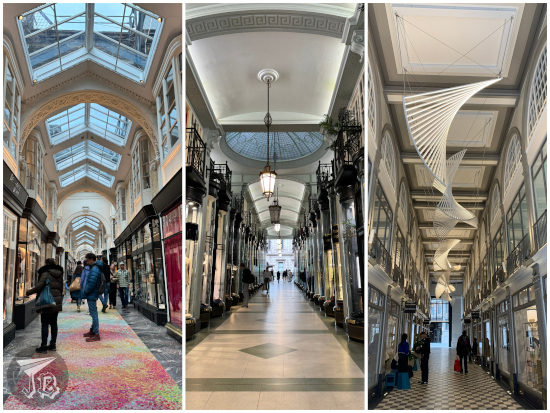
I then snooped around three of the high-class shopping centres along the Oxford Street area, all of them out of my price range, of course – Burlington Arcade, Piccadilly Arcade and Quadrant Arcade. I walked past Piccadilly Circus and Leicester Square, and headed off to Forbidden Planet to check out if they by any chance had a copy of a comic I’ve been looking for (Alligator Loki, if you ever find it, give me a shout?). I did not find the comic but I did see some stuff by Stjepan Šejić in the wild.

High-end London shopping arcades

Finally, I headed off towards the hotel / venue area, I found the venue – just outside the station. I bought some snacks for dinner and breakfast, then headed off to get to my hotel. The credit card thankfully went through and I got my room. I spent the rest of the evening watching films and snacking on salt and vinegar crisps. Truth be told, the weather was not that nice, but most of the rain happened when I was inside the buildings in the Old Royal Navy College. It’s been a long time since I was in London and there was not a heat wave, so I am not going to complain.

7th October 2023: The historical centre of Valencia (Spain)

I had the chance to spend a few hours – seven, to be exact – in Valencia | València (first name in Spanish, second one in local dialect) due to unforeseen circumstances. I’ve been there before, but it was to visit the Oceanogràfic, and I had not entered the historical area.

Valencia is the third-largest city in Spain. It is known for its love of pyrotechnia – Las Fallas – and its famous paella rice dish. The city dates back to the Roman period, in the 2nd century BCE. During the Middle Ages, it was one of the most disputed areas between the Christian and the Moor troops, changing hands a few times. The city flourished in the Late Medieval Period under Christian ruling. It played an important role during the Napoleonic war, and during the 20th century it became a great importer of wine and citrus, especially oranges. During the Civil War, it was the Republican capital, so it was heavily bombarded. With the advent of democracy, the city invested in development and tourism.

I arrived at the station Joaquín Sorolla around 11:30, which is not far from the centre. It was pretty hot, even if it was October, so I was ready for a few weekend-tourists. One detail that I had not planned on, nor thought about, was that it was a long weekend over there, Monday the 9th was a holiday, and there were way more than “a few” weekend-tourists. Also, I walked into a lot of preparations forfor institutional acts, which got in the way of photographs – the city hall square was cordoned off and it was really hard to get a good view. On one side of the closed-off area stands the town hall Ayuntamiento de Valencia | Ajuntament de València, on the other, the old central postal office Palacio de las Comunicaciones de Valencia | Palau de les Comunicacions de València. The town hall is actually a mash-up of two different buildings, one from the late 19th century, and another – the façade – from the 1930s, with Renaissance and Baroque inspirations.

Valencia town hall

I continued off towards the main market – Mercado Central | Mercat Central. This is an impressive Modernist building designed by architects Alejandro Soler March and Francisco Guardia Vial. Construction started in 1914 and finished in 1928 – the building was erected in iron, glass and ceramic tiles, the central dome is 30 metres high. This is one of those places I wish I were a VIP and could see closed, because it was fantastic. Unfortunately, though it is the largest market of fresh produce in Europe, it was extremely full, and it was hard to even stand to the side and take a photograph or two.

Central Market Valencia

Next to the market stands the church Royal Parish of the St Johns Real Parroquia de los Santos Juanes | Església dels Sants Joans also known as St John of the Market. When checking if the city tourist card was a good choice for me – it was not – I bought a combined ticket that included this church and two other buildings for 12 € (considering that each on its own was at least 7 €, it was a sweet deal.

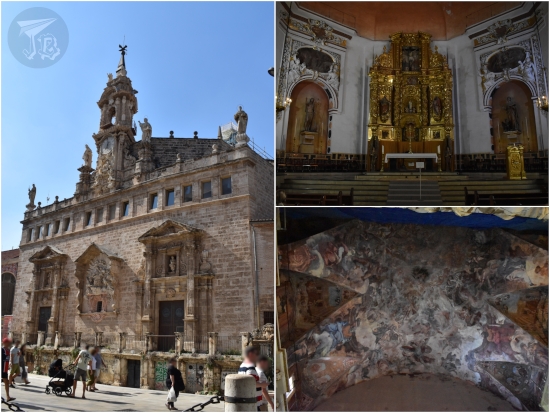
Church of the Saint Johns Valencia

Most of the original Gothic building has been destroyed, and its appearance today is mostly Baroque. It seems that the church is prone to fire accidents, and burnt down totally or partially at least three times. It is undergoing inner restoration at the moment, which takes away from the fresco decoration of the vaulted nave. The frescoes were carried out by Antonio Palomino in the 16th century, and the Baroque altarpiece was brought from another church in the north of Spain. An add-on to the church is the Capilla de la Comunión, the chapel of the Holy Communion was added in the 18th century. The church reminded me of the Italian Baroque I saw in Naples.

In front of the church, on the other side of the square, stands what I consider the most important building in the city – the Silk Exchange, or Lonja de la Seda | Llotja de la Seda, also called Lonja de los Mercaderes | Llotja de Mercaders. In Spanish, a lonja is a type of public building where merchants would negotiate and auction their produce, traditionally fish. In this case, instead, it was used for trading in silk during the Middle Ages. Silk was important for Valencia, and the city is considered part of the Silk Route. The Arabs introduced it in the 14th century, planting mulberry trees to produce it, and the trade became so important that it required its own building.

Lonja de la Seda Valencia

The Exchange was originally designed by Francesc Baldomar in the late 15th century, though he died before completing it. His disciples Joan Ivarra and Pere Compte finished the building according to Baldomar’s original plans and drawings. The building has four distinct areas: the Tower, the orange garden (Patio de los Naranjos), the Contract or Trading Hall (Sala de Contratación) – which were the original ones – and the Sea Consulate Hall (Sala del Consulado del Mar ). There is also a small basement.

The building is considered the masterpiece of the civil Valencian Gothic, a style that flourished in the east of Spain towards the end of the Gothic period. It is characterised by a heavy reliance of traditional Roman architecture and a little Mudejar influence. Wide open halls are typical, with decoration and sculpture influenced by Flaming Gothic. The Exchange is decorated with tiny gargoyles sprinkled all around the outside of the building towards the garden.

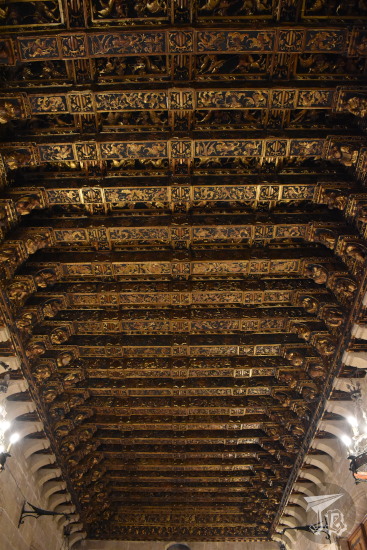
The Trading Hall has three naves which rest on eight helical columns and 16 pilasters that hold the vaults, eleven metres above ground. Further ribbing extends from the the columns, creating a net that spreads all over the ceiling. The combination of columns and ribbing tries to represent heaven – the palm tree trunks and the celestial sphere. Another ceiling that deserves admiration is the painted wooden one in the first hall of the Sea Consulate.

Lonja de la Seda Valencia

Wooden roof of the Consulado de Mar in Valencia

I loved the Exchange, but it is not as if I have ever scorned anything Gothic. However, I could not stay forever, so I pushed myself to leave. I went around the building once and then, after a short stop at a cute little round square, Plaza Redonda, I found my way to the large square Plaza de La Reina, where the cathedral stands.

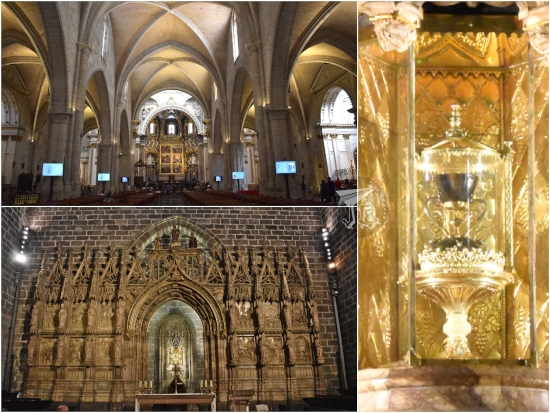
The Iglesia catedral-basílica Metropolitana de la Asunción de Nuestra Señora de Valencia | La Seu is also built in Valencian Gothic on Romanesque foundations. It was erected over a Roman Temple, and part of the Roman remains can be visited in the “archaeological area” of the museum, underneath the current church. The main building that stands today was erected between the 13th and 15th centuries, thus the prevalence of Gothic, but there are earlier and later styles – as recent as Neoclassical.

Valencia Cathedral

In a side chapel, in the middle of an alabaster Gothic altarpiece (1777), the cathedral holds and exhibits its most important treasure – the Holy Chalice (Santo Cáliz), sometimes called Holy Grail. According to the Christian tradition, the Holy Chalice is the vessel used by Jesus Christ during the last supper. If we follow the Spanish legend, when the Virgin Mary died, Jesus’ disciples gathered everything that belonged to him, and Saint Peter took it to Rome. During the persecution of Christians in the Roman Empire, the Chalice was entrusted to Saint Lawrence, who brought it to one of the former Spanish realms. It was eventually presented to the monarch in 1399. In 1437, King Alfonso V of Aragón donated it to the Cathedral of Valencia.

According to other legends, there was this King called Arthur, and something about a knights and a round table. In the Arthurian legend, there was a mystical object called the “Grail.” which was originally a Celtic cauldron with magic powers. However, the concept became mixed up with the Chalice when the story was “Christianised” – the chieftain on whom Arthur is based on, and his legend, originates in the 5th century BCE, so there is no way that Arthur looked for the Chalice anyway.

The Valencia Chalice itself is a stemless cup made of carnelian (dark red agate) – and that is the relic itself. It was most likely produced in Syria, Palestine or Egypt, and it has been dated between the 2nd century BCE and the 1st century CE. There is an Arab Kufic inscription on its base. I am not sure it fits what Indiana Jones would have called “the cup of a carpenter”. The cup is mounted on a gold stem embellished with gold, pearls and emeralds, with a foot and two handles, which were added in Medieval times. Now, the cathedral claims that it cannot be proven that it is not the Holy Chalice, and the translation of the Kufic script is supposed to be “Allah Josua”, translated as “Jesus God”.

Valencia Cathedral and Holy Chalice Chapel

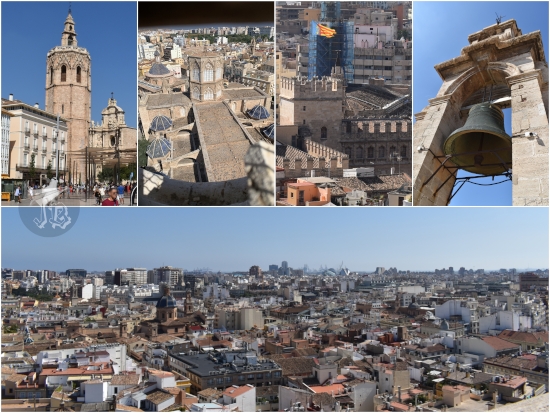
The cathedral also has a museum and the previously-mentioned archaeological areas, with a Roman road and human remains. The museum has sculptures and paintings from the cathedral itself and religious artefacts. The bell tower is famous in its own right. Erected between 1381 and 1429, it is called Miguelete | Micalet – “Little Michael”, which is actually the name of the bell at the top. . The tower has eight sides on the outside, and is circular in the inside, with 207 steps up to the terrace. The bell-gable was added in the 18th century, but the tower itself is Valencian Gothic just like the cathedral. The views are not as impressive as expected as the whole thing is netted off and it is hard to see anything unobstructed.

Views from Miguelete

The cathedral is connected to the Episcopal palace on the other side of the street by a sort-of bridge called Arco sobre la calle de la Barchilla | Arc del Carrer de la Barcella that I saw when I went round the cathedral. I also saw the Tribunal de Aguas de Valencia | Tribunal de les Aigües de València and Palacio de la Generalidad Valenciana | Palau de la Generalitat Valenciana on my way to the church of Saint Nicholas and Saint Peter Martyr (part of my combined ticket).

San Nicolás de Bari y San Pedro Mártir | Sant Nicolau de Bari I Sant Pere Martir stands at the end of an alleyway that comes from one of the main arteries of the city. It quite humbly calls itself “The Valencian Sistine Chapel”. It is a single-nave church, built in the 15th century on top of a Mosque which was in turn built on top of a Visigoth palaeo-Christian temple. During the Baroque period, the whole vault was decorated with frescoes, to the point that. And when I mean “whole” I mean… whole. There was no space for an extra soul, saint, angel or whatever. It was so full I could not process the painting as individual items, just as a whole.

Frescoed Vault of Saint Nicholas church in Valencia

Afterwards, I went into the small streets that led into the Arab Quarter, marked by the archway Portal de Valldigna. I also spotted an Islamic tower Torre islámica | Torre islàmica in side a private parking lot, and the remains of the Arab walls Muralla Árabe de Valencia | Muralla àrab de València.

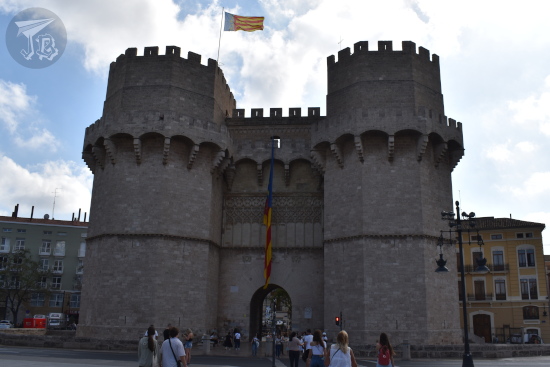
I finally reached one of the gates of the Medieval city walls – Torres de Serranos | Portal dels Serrans. The gate was flanked by two polygonal defensive towers built in the Gothic style and finished in 1398. They survived the destruction of the wall ordered in the 19th century as they were used as prison. Today, they can be climbed and hold a small museum, but I had already gone up the bell tower, so I decided I was good with heights for the day.

Serranos Towers Valencia

I headed back to the historical centre and reached the area of the cathedral. I decided to buy a stupidly expensive typical drink of the area, horchata de chufa | orxata de xufa, made from sweetened tiger nuts, usually with a severe quality control. I remembered trying it as a kid and that I did not like it much, but I decided to try it anyway – I had riskier culinary adventures in Egypt after all. It was not bad, but decided that I am still not a fan – and it was chilly, which helped against the heat.

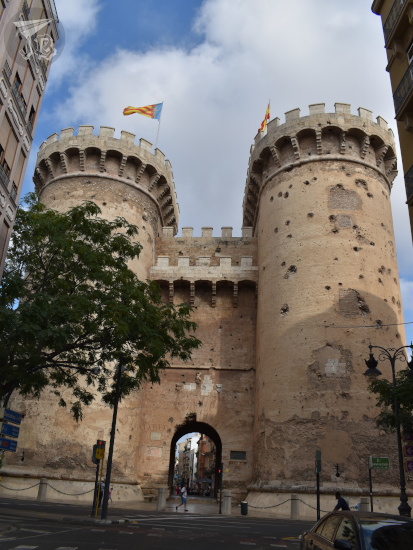
There is another surviving gate structure of the Medieval wall, the Torres de Quart | Portal de Quart. They were a bit out of my way, so I left them for the time when I started retreating back towards the station. Unlike the Serrano ones, the Quart towers are cylindrical, but they share the Valencian Gothic style. They were built between 1441 and 1460 have been damaged in the different wars that the city has survived, and holes from shelling are clearly visible on the stone.

Quart Towers Valencia

Taking a small detour from my way to the station, my next stop was the silk museum – Museo y Colegio del Arte Mayor de la Seda | Museu I Collegi d’Art Major de la Seda. I only went here because it was the “extra” museum my triple ticket had it, and I had the time to do. I was not impressed though, as more than on silk it focused on the local re-enactment of the Medieval battles in Valencia and the costumes.

Just next block over however, I found the park Jardines del Hospital | Jardins de l’Antic Hospital, where the 15th-century hospital used to be until it was demolished in 1974. The park was reorganised between 2009 and 2012, and an “archaeological garden” has been prepared next to the skate park, with free-standing columns, and a shelf with chapitels and the remains of sculptures that have been found in the area.

Archaeological Garden Valencia

Unexpectedly, I walked by the monument to Spanish Medieval warlord El Cid Monumento a Rodrigo Díaz de Vivar | Monument a Rodrigo Díaz de Vivar, a copy of the original sculpture of Anna Hyatt Huntington, which is in the Spanish Society of America in New York.Rodrigo Díaz de Vivar, El Cid, became Lord of Valencia. He besieged the Moorish city between 1092 and 1094, until the city surrendered. Having proclaimed himself Prince-Lord, he died in 1099 – the legend says that after he died, he was placed on his horse and just catching sight of him made his enemies run away.

Monument to El Cid in Valencia

My final stop was the gastronomic experience Mercado de la Imprenta | Mercat de la Imprenta. Aside from horchata, Valencia is known for its ice-cream, and I was hoping to find one. There were none, unfortunately, so I just walked the last bit towards the train station – and had a sundae there, because why not?

All in all, I think I spent as much time on trains / at stations as roaming and visiting monuments, but I reckon I did a good job out of getting a feeling off the old town of Valencia. Lots of pretty Gothic buildings to see, which was enjoyable. It probably warrants a whole weekend to see the dozen or so small public museums. It was bit too hot, especially for October, but it did not feel as humid as I imagined it might be.

10th June 2023: La Alberca & Plasencia {WNW Spain, with a splash of Portugal, June 2023}

We left off the castle to have breakfast at the village of La Alberca, a municipality known for two things. The first one is the timber framing of its houses. The buildings have a stony ground floor and a lime-white second floor with the post-and-beam style in dark wood.

La Alberca

The second one is the tradition of the whole village raising a piglet together. The swine is freed mid-June (we missed it by a couple of days) and everybody in the village keeps track of it – feeding and sheltering the animal – until it is auctioned for charity when the time for slaughter draws near, in January. There is a sculpture as homage to the animal in the middle of the church square, yielding to what I’d say is the most iconic sight. However, the amount of butcher and delicatessen shops makes the whole thing a little… weird.

Monument La Alberca pig

We drove through the natural area of Sierra de Francia, and stopped over at the viewpoint Mirador del Madroñal. From there we could see the abundant vegetation – oaks, chestnuts, and vine-fields. A bit further, we reached a second viewpoint Mirador Las Juntas.

Viewpoint Mirador del Madroño

Viewpoint Mirador de las Juntas

Our road was closed, so we had to take a detour, but we eventually reached Plasencia with a lot of big plans. Unfortunately, when we arrived at the Parador de Plasencia, built in the former convent Convento de Santo Domingo, we learnt that the town was in the middle of the local festival. Such thing meant outdoor bars and music – almost rave-like, and most monuments being closed. It had never even crossed our minds that we might run into such a thing, and it was a bit of a bummer that not even the cathedral Catedral de Plasencia was open.

Former convent turned Parador in Plasencia

Cathedral in Plasencia

We walked around for a while, and eventually we found the walls and their mini-museum Centro de Interpretación de la Ciudad Medieval de Plasencia. They reminded me of the wall in Ávila, but in a much-smaller scale.

Buildings in Plasencia

Wall in Plasencia

Plasencia

Plasencia is also a bird-protection area and nestling zone of the lesser kestrel (Falco naumanni), so that is what I guess we got to see (but it could totally have been an eagle…). We had lunch and dinner at the Parador as it was the least busy place, and they took forever both times. We did not feel like going out to check out the town in the evening considering how busy everything was even in the afternoon. Probably it was the first full-blown post-COVID festival, but it was a tad disappointing for me.

Krestel

8th June 2023: Tordesillas & Zamora {WNW Spain, with a splash of Portugal, June 2023}

Tordesillas used to be one of the Spanish Crown’s strongholds throughout the Middle Ages, starting around 1340 when Alfonso XI ordered the construction of a palace. In 1494, the Spanish and Portuguese monarchs signed a Treaty which divided the lands “discovered” by Columbus among them – of course, this Treaty was largely ignored by any other European powers which wanted to explore America, and never acknowledged by any indigenous people. In 1519, the town was part of the rebellion against Carlos I, naming his mother – and daughter of the Catholic Monarchs – Juana as queen, despite the rumours that she was insane. After the defeat of the revolts – and beheading of the instigators – the town lost importance.

We left early in the morning to try and ditch the traffic, but we were not successful – driving around Madrid, we ran into a couple of jams traffic caused only in part by the intermittent storms, which made the beginning of the road trip stressful. Thankfully, we parked at the outskirts of Tordesillas and the sun was shining again, as we had to cross the village on foot. Our first stopover was the Main Square Plaza Mayor. In the Castilian Main Square fashion, it is actually square in shape, with the main buildings supported by columns, where cafés and shops stand today. The current plaza dates back from the 16th century, and has been painted in a questionable bright mustard colour.

Main Square in Tordesillas

In the end, most of the history in Tordesillas is linked to Alfonso XI’s palace, known today as the Convent of Saint Clare Convento de Santa Clara, which stands a few minutes’ walk from the square. It was home, and later prison, to royal women, both loved and unwanted ones. It became a convent of the Order of Saint Clare in 1363, and the nuns living there were tasked with praying for the health and salvation of the Royal Family. Today, it is managed by the Spanish National Heritage Foundation Patrimonio Nacional. It can only be visited under supervision – seriously, aside from the guide, you get a security guard following you around – and photography is forbidden in all the interior areas.

The castle-convent was built throughout the 13th to 18th centuries. The oldest part of the building is a chapel dating from the 11th century, and the bulk of the construction was carried out in the 14th century. The monarchs employed Mudejar builders, a fact that yielded to multifoil arches, ceramic decorations, and Quran verses (officially “decorative nonsense”) in some of the chapels and the façade of the building.

Inside the palace there is a Baroque cloister and the gothic church, with a wooden ceiling painted gold and the emblem dragons of Carlos I’s shield. Truth be told, the church had been pretty much hyped up on me, so I found it a bit underwhelming.

Santa Clara convenent in Tordesillas

The party separated for a bit so I could explore on my own for a while. I got to the stone bridge over the River Douro Río Duero, just called “the bridge” el Puente, right at whose ends stands a monument to the fighting bull Toro de Tordesillas. The associated bullfighting festivity was one of the oldest in Spain until it was vetoed by the regional government – the fighting bull was set loose in the meadow, chased by horsemen and lanced to death. Today, the festivity is controversial and it’s trying to find its place in the midst of new sensitivities.

Tordesillas

I climbed up the medieval wall Muralla de Tordesillas to the park where the monument to Queen Juana Monumento a la Reina Juana I de Castilla stands, in front of the museum dedicated to the Treaty Casas del Tratado, and the church Iglesia de San Antolín.

Monuments in Tordesillas

We walked back to the car to drive off to the next spot in the route, and Tordesillas became the first spot where we spotted birds of prey during this trip, maybe a golden eagle Aquila chresaetos. Or, you know. Anything else.

Eagle

We drove off towards the municipality of Zamora, a Medieval town and villa by the Douro, known for its Romanesque churches. We reached the Parador de Zamora in the middle of a horrible downpour that was over as quickly as it had started. The Parador hotel is a former noble family’s Renaissance palace, with a military style and a middle patio with a glass-window gallery

Parador in Zamora

We had a late lunch and walked to the manor Palacio de los Momos, near the Main Square Plaza Mayor, home to a church Iglesia de San Juan de Puerta Nueva which has a sculpture representing two figures of the local Holy Week celebrations Monumento al Merlú. Other buildings include the old and new town halls Ayuntamiento Viejo and Nueva Casa Consistorial, and blocks of colonnaded buildings.

Buildings in Zamora

The first Romanesque building we came across was the church Iglesia de Santa María Magdalena, which contrary to many other places has got rid of the Baroque add-ons, and stands severe and naked in its stony glory. It is considered one of the most important and pure Romanesque constructions in Europe, sparsely decorated save for the tomb to the side.

Church of Saint Mary

From a side stop I overlooked the river Río Duero and the medieval bridge Puente de Piedra.

Zamora Medieval Bridge

We continued off to the cathedral Catedral del Salvador de Zamora. It is considered the first cathedral in the “Douro Romanesque” style. After the original cathedral was destroyed during the Muslim conquest of Spain, the reconstruction began around 1151. It must have been finished towards the beginning of the 13th century. The building has two particularities – the thick tower, and the umbrella dome, in a style that travelled from Byzantium to the Islamic architecture and reached Spain with the Nasrid artists. The inside holds a cloister and two small museum – one of religious art and the other of archaeology.

Zamora Cathedral

Afterwards, we visited the ruined castle Castillo de Zamora – a purely-defensive Romanesque fortress built around the 11th century. The castle has a moat, and you can wander up the walls and defensive towers. The interior is ruined, but the ancient structure can be guessed by the arches and different walls that would have separated the fortress’ halls.

Castle in Zamora

Finally, we explored a few more religious Romanesque buildings: Iglesia de San Pedro y San Ildefonso, Convento de Clarisas El Tránsito and Iglesia de San Cipriano. From the viewpoint next to this last church, we got to see a stork nest with a baby chick in it.

Zamora churches

Stork nest

We had dinner at a restaurant called El Horno, a traditional places that offers tablas – wooden trays full of treats to share. We shared a serving of tabla de fiambres – Iberian sausages (ham, loin, chorizo…) and cheese on a bed of crisps.

Zamora at night

22nd and 23rd April 2023: A date with a dinosaur (London, England, Great Britain)

Since I cannot keep my mouth shut, I offered to organise a trip to London with some people from work. Despite prices skyrocketing everywhere and my ridiculously hectic schedule, I managed to secure a weekend when flying would not be stupidly expensive, and an activity I would really be looking forward to – the Natural History Museum was running couple of things I was very interested in. One was an exhibition on a gigantic dinosaur: Titanosaur: Life as the biggest dinosaur. Well, twist my arm – NHM is much closer than the actual Titanosaur home in Argentina. Furthermore, there was a collaboration with Jurassic Park (‘an adventure 63,000,030 years in the making’ is the motto), and coming back to the museum would give me the chance to purchase the rock I wanted the last time I was over and did not get because I was heading out to Stonehenge on the same day.

In the end, only one person took up the offer, and I figured out that well, London is pretty much always a good idea for a weekend – so I figured I’d arrange myself a date with a dinosaur. Unfortunately, it turned that London Marathon was held that weekend. Hotel prices were bloated for the night and we ended up at Earl’s Court because I wanted to stay close to South Kensington and the other person wanted the cheapest place possible. We left on a red-eye flight to London Stansted which took a long time to land – we spent about an hour circling the airport, and eventually the head cabin attendant said that there was bad visibility at the airport, and that the pilot required all electronic devices to be turned off so he could use the autolanding system. I did not like that one bit – after I visited Santiago de Compostela in 2022, I felt that I had got over the bad-visitiblity near-miss when I was a teen. Apparently not, the feeling of uneasiness is still there. We landed over an hour late, but we were on our way on the first Stansted Express a few minutes after getting on it. After reaching Liverpool Street Station at around 9:30, I asked my companion to take us to Guildhall as part of the incentive of the trip was introducing them to international travel. It was not a good idea. Their phone trolled us and tried to take us to Guildhall… in Stratford upon Avon. The Costa at the station was closed, but at least I had got myself a sandwich and a latte before we started walking.

After backtracking, we were in known territory around 10:15. As it turns out, my companion was only interested in “walking the city” and shot down any activities I had proposed – thus, some things I just imposed in order not to feel that I had wasted the whole day away. By 11:00, I had confirmed that our travelling styles were not compatible. After some time at the docks next to the Tower of London, I wanted to enter the Anglican church All Hallows by the Tower. All Hallows is the oldest church in the City of London – founded in 675 CE, it predates the nearby Tower of London. The parish used to take care of a lot of the prisoners executed there. The building withstood the Great Fire of London (1666), but it was severely damaged through The Blitz – the German WWII bombing campaign against the UK throughout 1940 and 1941. The church was rebuilt and reconsecrated in 1975. Its windows are decorated with symbols from the different London guilds and some families.

Collage of a church. The outer building is brick and it has a tower crowned with a greenish metal spire. The inside has huge windows decorated with guild symbols. The small crypt inside is covered in white stone.

Underneath, there are a few chapels and a small Crypt. Most of the crypt is a museum which chiefly holds artefacts from the Roman period – including remains of an old road. There are other historical items from the Saxon and Medieval times, and the 20th century Crow’s Nest of the vessel Quest, in which Sir Ernest Shackleton sailed for Antarctica for the third time, and where he died.

When we were done, we went to Saint Dunstan in the East Church Garden. I was hoping to use this as a relaxing point for a few minutes, but there was work being done on the parterres. We continued towards the River Thames for some views of Tower Bridge, the museum HMS Belfast and The Shard skyscraper.

We walked by the Monument to the Fire of London on our way to the Sky Garden. The Great Fire burnt inside the Roman city wall for four days after breaking out a bakery after midnight on the 2nd of September, 1666. Though the number of victims is (theoretically) small, the fire destroyed over 13,000 houses (15% of the city’s housing), almost a hundred parish churches, governmental buildings, St Paul’s cathedral, and even some of the city gates.

Afterwards, we walked over to Leadenhall Market, a covered shopping street which can be traced back to a 1321 food market, and marks the centre of Roman Londinium (ruins from the Forum and Basilica are buried underneath). It was given to the city in the 15th century, and in the 19th century, the City Architect Sir Horace Jones designed an iron-and-glass arcade. Today, it holds restaurants, wine bars, varied shops and even beauty parlours.

A covered shopping gallery or street, in dark red and beige tones.

Around the market stands a mixture of modern buildings and traditional buildings, mostly small churches. Among the former:

  • The Lloyd’s Building (25 Gresham Street), sometimes called the “Inside-Out building”. It was finished in 1986 and it is consider a great example of Bowellism – an architectural style that maximises inside space by building ducts, lifts, and other structural necessities on the outside. It was designed by Richard Rogers & Partners, and it still maintains the original entrance of the building that stood in its place in 1928 – the East India House.
  • The Leadenhall Building (122 Leadenhall Street), designed by the Rogers Stirk Harbour + Partners. It opened in 2014.
  • The Willis Towers Watson (WTW), designed by Norman Foster, it was finished in 2008.
  • The Scalpel (52-54 Lime Street), which yields to cool reflections along with the WTW, and has a strange sculpture at the entrance – it made me think of several ship wheels fused together. The building was designed by Kohn Pedersen Fox and only completed in 2018.
  • And of course The Gherkin (30 St Mary Axe). It was designed by Foster + Partners and it is the first ecological building ever built in London. It opened in 2004.

The historical buildings we encountered (having survived both the Great Fire of London and the Blitz) include:

  • Saint Andrew Undershaft Church. It dates back from 1147, although it has been rebuilt several times. The current building was erected in 1532.
  • Saint Helen’s Bishopsgate Church, where Shakespeare himself used to worship in the 1590s. The building can be traced back to the mid 12th century, and it was restored during the Victorian period and later during the 20th century.

Skyscrapers reflected on the glass that covers yet another huge skyscraper

A small church built in Stone in the background with a huge modern high-rise building behind it

Afterwards, we headed towards Embankment on the Tube. There, I was happy to find a Costa Coffee and get my vanilla latte fix. In the area, we saw the Victoria Embankment Gardens and I wanted to visit Cleopatra’s Needle – half of a pair of obelisks (the other one is in New York), originally made and carved in Heliopolis, what is Cairo today. It has inscriptions from the 18th and 19th Egyptian dynasties (around 1450 BCE). It was presented to the United Kingdom by Sultan Muhammad Ali in 1819, and later transported to London in 1877. Two sphinxes and other decorations were added when the Needle was erected, and the plinth under one of the sphinxes was damaged during London Bombings – it was never restored as a tribute to memory.

An Egyptian obelisk standing against a cloudy background

We walked over to the Westminster area to see the Palace of Westminster and Elizabeth Tower. There was an environmental protest there, which made it packed, but at the same time diverted traffic, allowing for new views from the middle of the street. On the way, I encountered an adorable pit bull mix I got permission to pet – coffee and dog pets made everything better.

A view of the palace of Westminster, with the Elizabeth tower on the left

We continued off to Saint James’s Park, home to squirrels, geese, swans, pigeons, mallard ducks, robins… all of them extremely used to people and tourists, and rather unconcerned by dogs being walked. We ditched the marathon fencing and reached Buckingham Palace, but by then my companion was beat. Thus, we had to go to the hotel so they could get some rest. The hotel was better than expected for a London 2*. It was nice and warm, although the bathroom was tiny – it was difficult to stand inside and close the door.

Buckingham Palace and some of the animals at Saint James' parks

A couple of hours later, we were off into the evening to see Piccadilly Circus, the entrance to Chinatown, and Leicester Square. Companion was beaten, so they were not sure they would be up for anything the following day – we arranged to touch base at 9:00 for them to evaluate. Once in my room, I had a shower and booked a free time slot for the British Museum the following day, just to avoid the queues. I thought, even if we did not make it, at least we had assured entry if we did, and I could always cancel and release the ticket.

Central London at night - Picadilly Circus' Eros and entrance to Chinatown

The next morning, I left on my own around 8:00 to look for a nearby Costa Coffee for a large vanilla latte breakfast, and I came across Brompton Cemetery. This had not been on my radar, but since I had time, I decided to explore it a little. Brompton Cemetery, formerly West of London and Westminster Cemetery, opened in 1840, and it has belonged to the British Crown since 1852. It is on of the oldest garden cemeteries in Britain and comprises around 35,000 monuments. I wandered for about half an hour before I had to head back.

Brompton cemetery, a 19th century graveyard and garden

We managed to get to to the Natural History Museum on time for my date with a dinosaur just after opening. I had my Titanosaur ticket at 10:15, and left off my companion to wander on their own after agreeing to check with each other around noon. The exhibition Titanosaur: Life as the Biggest Dinosaur brings a cast of Patagotitan mayorum to Europe for the first time, along with a few real fossil bones, of a front leg, some teeth, and an egg.

Patagotitan mayorum is one of the largest known animals to have ever lived. It was a sauropod dinosaur – a tetrapod with extremely long neck and tail. It lived in forest regions during the Late Cretaceous (102 to 95 million years ago) grazing on ferns and tree leaves. The species was discovered in Argentina in 2010, and it’s calculated that it could have been up to 31 metres long and weigh over 50 tonnes. It is widely considered the most complete of the South American dinosaurs. The cast that the Natural History museum brought is considered the holotype, and it was reconstructed from the partial skeletons of six specimens.

Titanosaur skeleton. People walking around don't even reach its knees.

The best thing about the exhibit was being able to actually touch the cast, so I kinda hugged my date, I guess. As far as I know, there are only three casts of titanosaur – the one in Argentina (Museo Paleontológico Egidio Feruglio in Trelew), one in the US (Field Museum, Chicago), named Máximo, and this one.

After I had pranced around the exhibition to my heart’s content, and as it filled up with kids, I moved on to reason number two of this visit having to happen asap in 2023. To celebrate 30 (thirty!) years of the 1993 release of Jurassic Park, the Natural History Museum was running a limited-time-only collaboration pop-up shop – the Jurassic Park 30th Anniversary #NHMxJURASSIC store in which I did not even spend that much! I bought a replica badge and a commemorative coin, both limited, numbered editions. The shop had both Jurassic Park and Jurassic World merchandise, especially toys and T-shirts, and a few props, including a life-size sculpture of Blue the velociraptor.

Jurassic Park pop-up shop, with Blue the velociraptor just hanging out

I then headed to the official museum shop to get myself the rock I had wanted – a piece of aura silicon carbide, a shiny mostly-artificial mineral. I also bought a souvenir guide, just because. They did not have anything from the Titanosaur exhibit there, so I backtracked to the exhibition shop to buy a pin.

Whenever I got to the Natural History Museum, I end up in the dinosaur gallery (well, there was that one time I walked through the whole thing throughout a winter day). This time, however, I decided to wander the upper area of the historical building. I was drawn to the Treasures in the Cadogan gallery. I had not been there since it opened in 2013, and my mind was blown. The collection includes a first edition of Darwin’s On the Origin of Species, and some of the pigeon specimens that he used to develop the theory of evolution. I also got to see the first-ever-found iguanodon teeth (not the replicas), the first fossil ever found of the Archaeopteryx (the link between dinosaurs and birds), and a skeleton and egg of the great auk, the first confirmed victim of anthropogenic extinction (due to human activity). I was very impressed, these were all treasures indeed – no overselling.

Treasures at the Natural History Museum - ancient bird fossil, extinct penguin-like bird, a book, dinosaur teeth. Whale skeleton.

After wandering the second floor for a bit, I ran into my companion and at noon we left towards the British Museum, where I had booked entry for 12:40. I left them to their own devices again and headed off to the Japanese galleries, which had been closed the last couple of times I was in the museum. I was… a bit on the disappointed side, I remembered them being way more impressive from my early 2000s visits.

Japanese Galleries at the British Museum: Samurai Armour, lion dogs pair, articulated metal animals, a standing Buddha.

I visited the Moai, the Elgin Marbles, the Babylonian bulls and the Rosetta Stone, and I headed off to the shop to get myself a treat – retail therapy is a thing. Eventually, we left the museum and managed to get to Liverpool Street to take the Stansted Express to the airport. Security was smooth, not as crammed as other times, and then, as tradition calls, I got myself some sushi at Itsu.

When we boarded the plane, I had been assigned an emergency exit seat. In order to sit there, you need to be able to take responsibility about opening the exit if something happens. I flagged a flight attendant to inform them that I would be physically unable to do so. I had a new seat in 4.5 seconds, and it turned out to be a window seat. We took off a few minutes late, and landed with a delay of almost a quarter of an hour. Nevertheless, after passport control and all, I managed to reached the parking lot payment machines with a few seconds to spare the overstaying fee – all good!

Balance – The marathon barely interfered with the weekend. I had a date with a dinosaur and hugged them. That was awesome. I got limited edition Jurassic Park and Jurassic World merchandise. I found some Kettle Sea Salt and Balsamic Vinegar of Modena crisps at one of the supermarkets. I got two new books, commemorative coins and a shiny rock. I also discovered new places to explore in the future, and had Costa – twice. Unfortunately, we ran out of time for extra visits on Sunday – so I could not fit in either the HMS Belfast or the Jack the Ripper Museum. Furthermore, the Grant Museum of Zoology is closed for renovation, and the Petrie Museum of Egyptian Archaeology does not open on Sundays, so in the end I was not really able to scratch much off my list. Whoops!

Souvenirs from London: books, crisps, commemorative coins and Jurassic Park merch

13th September 2022: Wadi Rum (and the bus) {Jordan, September 2022}

I had a boiled egg, potato hash-browns and coffee breakfast because my body was craving salt, I guess. Then we set off on the bus, where we ended up spending around seven hours (the 412 km are supposed to be done in 5 hours and a half, but that does not take into account bad traffic). Urgh. Our first stop was a viewpoint over the whole canyon area.

Wadi Musa valley panorama, showing the deep gorge from above

The second stop was a souvenir shop that had probably somehow bribed our guide or driver for it. None of us even bought anything, but we were forced to be there for about half an hour before we could continue to the only organised activity for the day – a two-hour jeep tour throughout the Natural Reserve and Unesco World Heritage Site of Wadi Rum | Wādī Ramm [وادي رم]. It is the largest wadi “valley”, created by alluvial fans and wind deposits, rather than the idea of a river bed. They are often found in deserts.
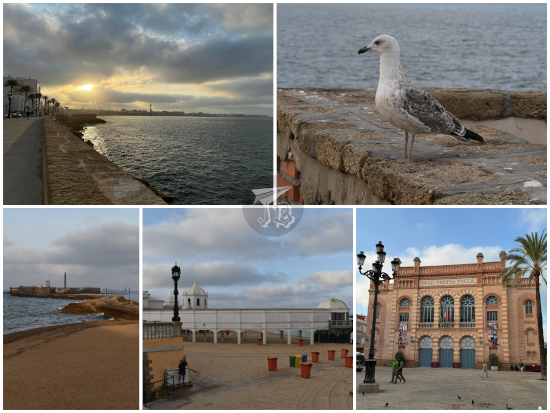
During the tour in Wadi Rum Reserve [محمية وادي رم] we drove through the desert and stopped at some rock formations that had built a gigantic dune. Wadi Rum used to be a granite and sandstone rocky formation. Thousands of years worth of wind eroded the sandstone back to sand, forming and shaping the desert dunes. Huge granite structures still stand, such as the Seven Pillars of Wisdom [عمدة الحكمة السبعة], just at the beginning of the route. One of the stops is the tourist-named Big Red Sand Dune, which you can climb for kicks, giggles and some nice views of the landscape.

Driving into Wadi Rum. The roof of the jeep is visible, along with a rock formation in the background. Between us and the rock formation there is the other jeep, causing a dust cloud

Back of a dune we had to climb, and the rock + sand landscape that could be seen from the top. Wind erosion marks have created soft ridges. The rocks are red-grey and the sand is rose-gold

Then we drove off to see some petroglyphs, and were offered dromedary rides. These petroglyphs, depicting early humans and their cattle – bovines and dromedaries – are the reason for the Heritage status.

A rock wall with some dromedaries in the foreground + a close up of the petroglyphs engraved in the rock, also showing dromedaries (by JBinnacle)

Finally we were shown a Bedouin tent at the feet of the Lawrence Canyon, a beautiful rock formation with faces of Jordan monarchs. Unfortunately, we did not get to see any onyx or fennec foxes, but I did see a small lizard. The Bedouins treated us to a cup of tea, but then we had to tip the driver about 10€…

Lawrence Canyon, a deep cut in the rock filled with sand at the bottom + details of engraved faces and Arab script, a lizard and a bit of tea, along with a traditional Bedouin coffee maker

Afterwards, we started off our trip back northwards back to Amman | ʻAmmān [عَمَّان]. Though the trip is supposed to take about 4 hours, it was way more than that, and we did not arrive at the hotel until way past 18:00. We went through the security checks and ended up learning that we could not travel between floors, so we could not go to the others’ rooms using the lifts, and the stairs were blocked… Well, at least we had… views?

A view of Amman skyline in the dark

After we managed to regroup, we had dinner and decided to try to check in online for the flight next day’s flight – and I was successful. Apparently, the airline only cared about us filling in our Covid certificate to enter Jordan, we were on our own for the way back.

11th August 2022: 21 hours straight of ups and downs in London {England, August 2022}

The first thing I had to do was waking up for a 6:30 flight – though considering I did not sleep very much that night due to the heat, I’m not sure if that it counts as waking up. The previous day, the airline had sent warning emails about arriving at the airport early – three hours before the flight would have meant being there at 3:30, so… not really. I arrived at the airport around 5:10, and I was at the gate by… 5:20, I’m not even kidding. While I normally do not queue to enter planes – the advantages of backpacks, I just kick them under the seat – I had been assigned seat 1A, which meant I had to put my luggage into the overhead compartment. I had decided to take a small backpack too, because I would be carrying it around for a while, and it would get searched in a couple of places.

Surprisingly, despite Brexit, the Ryanair strikes, airport chaos, and the fact that apparently the automatic passport reader cannot cope with my new look, I made it into the United Kingdom first and straight to London without a glitch. Not only that, I managed to get my Oyster recharged without any problems, and as soon as I had bought some food, I was on my way to the first stop of the day: Crystal Palace Park, for which I got to ride the shiny new underground line, the Elizabeth Line, then the Overground. Even though there are another couple of landmarks (that might warrant a visit when / if the restoration project finally goes through), what interested me in Crystal Palace was a collection of Victorian sculptures – the Crystal Palace Dinosaurs.

Though Ancient Greek already knew about fossils before the current era, it was in the 19th century when it hatched as a “science”, according to some spurred by Darwin’s “On the Origin of Species”. Fossil hunters ran amok, excavating and spoiling the North American badlands. In England itself, Mary Anning kept discovering cool things. There was a sort of a “Dinosaur fever” – the Victorians became fascinated with all things prehistoric. In 1852, a number of extinct animal reconstructions were commissioned to be erected in the gardens of the Crystal Palace, after the World Exhibition. Using the knowledge available at the time, Benjamin Waterhouse Hawkings, a natural history illustrator and sculptor, who did his best according to scientific knowledge at the time.

Not all the animals represented are real dinosaurs, but the nickname stuck. From today’s standards, most of the reproductions are extremely inaccurate, with some exceptions, such as the ichthyosaur (discovered by Mary Anning around 1811), and the plesiosaur (of which Mary Anning also found a skeleton in 1823, and then another in 1830 – I love that woman). Today, the park is organised in several “islands” where you can see the sculptures, though the water was a bit down due to the heatwaves:

  • Amphibians and therapsids: Dicynodon and Labyrinthodon
  • Marine reptiles: Ichthyosaur, Mosasaurus, Plesiosaur and Teleosaurus
  • Dinosaurs and pterosaurs: Hylaeosaurus, Iguanodon, Megalosaurus and Pterosaur
  • Mammals: Palaeotherium, Anoplotherium, Megaloceros and Megatherium

I have been aware of these sculptures for a long time – since I was a child and started liking dinosaurs. However, only recently did I find out that they really existed, and where they were. I arrived at Crystal Palace station a little after ten (making whole travel from the airport about two hours). I walked by a small farm with typical fauna such as… an alpaca, then I ate my sandwich overseeing the first island.

A collage showing differet statues of prehistoric creatures. Some try to be dinosaurs, and they look almost comically wrong, like giant iguanas or chameleons. There is one plesiosaurus looking rather acurate - it has a long neck and flipers. Finally, some mammals: a deer with huge antlers and a tiny horse-looking creature

I walked around for about an hour and then I set on my way back. Though I had planned to have a relaxed day at first, I had to adjust due to cancellations and train strikes. It was around that time that I calculated that I could actually cram my original Thursday and Saturday plans onto Thursday, plus the alternative plans I had made if I tweaked the time a little. So I back-rode for another hour towards the city.

Near Tower Hill stands the Sky Garden, on the 35th floor of the 20 Fenchurch Street building, designed by Rafael Viñoly. Sky Garden is considered the highest garden in London, and a fantastic viewpoint of the city. I almost accidentally came across the option to book a free access ticket for this – while I had not wanted to pay for any morning / early afternoon activities in case my plane was delayed, I figured out that I could book this for free, especially as they go stupidly fast! I made my 12:30 timeslot with a few minutes to spare, but I was let in after a queue, ID check, X rays and metal detection.

The Sky Garden features two terraces full of plants (landscaped by Gillespies), a couple of restaurants and bars, and an “open” gallery which has glass above your head so the feeling of opening dissipates – the glass is stained and scratched. It was one of the “must-do’s” in London I had never visited before, so I thought it would be a good opportunity. Fortunately, they have relaxed the rules on no bottles because of the unusual high temperatures.

After wandering around for a bit, I continued onto Saint Dunstan in the East Church Garden, the ruins of an old Wren church destroyed by The Great Fire of London and destroyed again during the Blitz (World War II bombings). Dating back to the 1100s, it was opened as a public park in 1970. Aside from being a very cute building park I wanted to see for a while, a music video by the band VAMPS was filmed there.

Ruins of a gothic church turned garden, with hanging ivy and bushes overgrowing the walls and windows

As it was lunchtime, the park was bustling with people, so I just had to move on rather quickly, and went back to the underground to get to the area of Westminster. I had originally booked tickets for Saturday (back in May) but then they were cancelled due to “repair work” going on that day (I do wonder if it was a security measure related to the strikes though).

But of course, first I feasted my eyes on the very new Elizabeth Tower clock tower aka Big Ben – though Big Ben is one of the bells in the tower, but nobody really cares about that any more.

Elizabeth Tower, shining gold with the restoration. It almost looks fake. The clock marks Quarter to two.

The Palace of Westminster or Houses of Parliament is the centre of the United Kingdom’s turbulent political life. The current palace was built after the previous one was destroyed by a fire in 1834. The new palace was erected in the Neo-Gothic style, and it was mostly finished by 1860, although it did open to be used in 1835. There was a competition regarding the design, which was won by sir Charles Barry. The Palace of Westminster holds the two chambers where the British government meets – the House of Lords and the House of Commons – alongside the Norman Porch, St. Stephen’s chapel, and the different corridors where the MPs vote or discuss state matters. I’ll forever be amused that “for security reasons, photography is not permitted in these chambers with dozens of cameras for TV broadcasting and Internet streaming”, but alas. The woodwork on the Norman Porch ceiling is fantastic, and some of the decoration choices, such as Churchill’s sculpture are… interesting. It is noteworthy that it is part of the Unesco Heritage Site “Palace of Westminster, Westminster Abbey and St Margaret’s Church”.

Collage: a view of the houses of parliament (London), with the Elizabeth Tower on the left. Two shots of the Norman Hall, a huge ward with an intrincate design of wooden ceiling. A gothic corridor with a wooden door and some coloured glass panels

Afterwards, I just found my way to the hotel – though I had to wander a little to find the nearby supermarket, bugger those never-ending attached-house neighbourhoods, rested for a little and then went to the station to go to the theatre – I wanted some extra time to check out where my airport coach would leave, so I gave myself 45 minutes for a 22-minute trip. It turns out there was train trouble and I was barely on time, taking an alternative route instead of the direct one.

When I realised my flight timing would give a free evening in London, I booked tickets for the Apollo Victoria Theatre to watch the “Wicked”. This musical tells the story of “The Wonderful Wizard of Oz” from the point of view of the witches, and somehow gives the “Wicked Witch from the West”, Elphaba, an amazing personality and backstory that resonates a lot with me. For the same price as the ticket I was eyeing back in the day, I found a VIP upgrade just one seat over, so I was entitled to a drink and “snacks”, an early entry, along with access to the “Ambassador Lounge”, a tiny reception hall with access to a private restroom.

“Wicked” was great. The actress who plays the main character, Elphaba (Lucie Jones) came out a little yelly though in her solos. The duets with the other female singer (Glinda, Helen Woolf) were fantastic, and the male love interest’s (Fiyero, Ryan Reid) song was absolutely great, even though he is a character I have never cared for.

Apollo Victoria Theatre: the inner theatre, showing a dragon and a closed curtain showing a map of Oz. The outer theatre: there is a sign reading Apollo Victoria Wicked, and everything is lit green. The VIP lounge, with a glass of soda, and some chairs. The cast at the end of the show, taking their goodbye bows.

By the time I was out, the trains were running again, and one-to-three-minute delay on a line that runs every five minutes or so, and I was at the hotel by 23:00, absolutely beat. The room was extremely hot, because London is absolutely not ready for heat, so I had a snack in front of the fan, took a shower and then got some sleep – 21 hours on the go were over. Funnily enough, by the time I went to bed, I had that wobbly-world jet-lag feeling I have after my first day in Japan. It must have been the barely sleeping the night before. I fell asleep very fast.

Walking distance: 30.52 km / 46192 steps

24th July 2022: Up, up and down {Salamanca, July 2022}

After a latte and the best croissant I’ve had in a long time, we went over to see the gothic palace Casa de las Conchas, which was built between 1493 and 1517. The façade is decorated with sandstone-carved shells (concha, in Spanish). The exterior sports ironwork-protected windows, and the interior a patio with artistic arches.

The gothic palace called House of Shells. There are hundreds of them carved on the façade. The inner patio is carved in golden stone, with very thin columns and lots of decoration

It was still early for our visit to Palacio de Monterrey, a 16th-century Renaissance palace inspired in the Italian style of the time, combined with Plateresque decoration, which was heavily imitated later on in the 19th century. The building currently belongs to the House of Alba, probably the most prominent Spanish noble family. The House opened the palace to the public, and the inner area cannot be photograph – it was weird anyway, with some antiques and art pieces, but all of it was… prepared and staged, though the carpets were rolled out of the way. In this case the only option to sneak out a picture was from the tower, as a member of the staff followed us all the time.

Monterrey palace, built in golden-like masonery. The roofs and towers are decorated, and there is a row of windows alongside the upper floor.

Next, just in front the palace, we visited the 17th-century church Iglesia de la Purísima, in Italian Baroque style. Its altarpiece is considered to have one of the best images of the Virgin Mary in her Immaculate Conception advocacy.

A Catholic altar showing the Inmaculate conception in the centre, she is dressed in blue, and standing in front of golden clouds, with angels around her. The back of the altar is built in white stone, and ornate.

Our next spot was the second university of Salamanca, the see of the Universidad Pontificia de Salamanca, a building called La Clerecía. As the original university went secular, the Jesuits built a clerical university. The building, built in Baroque style between the 17th and 18th centuries is composed of a church, a cloister, a patio and a magnificent staircase, forming the complex (read: guided tour) called Vita Ignatii.

Collage: On the left, a very baroque church from the outside, also showing the gold inner altar. On the right, some shots of the upper and lower cloister, the patio is ornate and reddish, the staircase is made completely out of stone.

Then there are two towers that give out really awesome views of the town, named Scala Coeli, the stairs to the Sky.

Views of Salamanca from the above: the dome of the church from the outside, the cathedral, the House of Shells, and the bells.

It was rather hot, so we had some unremarkable lunch and went to the hotel to wait out the blunt of it. It did not really work, and we eventually tried our luck with some more sightseeing. The first stop was the garden known as Huerto de Calixto y Melibea, based on a literature work Tragicomedia de Calisto y Melibea or La Celestina. It is considered the first Renaissance writing in Spanish, and it echoes with Romeo (Calisto or Calixto) and Juliet (Melibea), with an extra character, the old matchmaker Celestina, who is a horrible person trying to break the lovers up to marry Melibea to someone else. Though the writing does not have a firm setting, some say that it is probably Salamanca, where the author attended university. It was nicely shaded and had nice views.

Gate to the gardens, a bust of Celestina (the fictional character), from the cathedral, and some flowers: star-shaped and orange, bell-shaped and red.

Then, we wandered off to see the bridges over the river Río Tormes again: both Puente de Enrique Estevan and Puente Romano. Next to the Roman bridge there is a statue of a verraco (ancient Celtic sculpture) Verraco del Puente Romano, which is supposed to have been there since the 16th century. A bit to the side, there is yet another literary monument, which represents the book El Lazarillo de Tormes, Lazarillo being the word for “guide dog (for the blind)” in Spanish (such an eye-seeing dog). Also written in the 16th century, it is considered another of the peak writings in Spanish, telling the story of a young lad who learns to survive by gathering street-smarts and shedding off any morals he ever had, finally settling in Salamanca with his unfaithful wife: Monumento al Lazarillo de Tormes.

Collage. The historical bridges in Salamanca: the Roman one, made from stone with wide archs, and the iron-architecture one, in greyish-green. Sculptures: Lazarillo with his master, and a prehistoric bull or pig, with a flat head

Then we found a very air-conditioned and interesting place – the automobile museum Museo de la Historia de la Automoción (which reminded me a little of the Megaweb Toyota City Showcase and History Garage in Tokyo). It has a lot of classic cars, and some historical pieces such as vehicles that belonged to dictator Francisco Franco or the writer Camilo José Cela (and air-con).

A collage of some cars: A Rolls-Royce, a Ferrari, a Wolkswagen 600; and a Harley-Davidso

I had then booked myself an evening visit around sunset time, to go up the towers of the cathedral, an experience called Ieronimus, with the hope to see some cool sunset and night views. It makes sense, right? Wrong. I should have realised when it turned out to be a guided visit that most of it would be inside, listening to the guy fanboy his own city – then he started speaking about the Lisbon earthquake and its effects in Salamanca and gave out wrong information. I stopped listening to him at that point. There was a light/music show in the cathedral, and I did get some neat pictures, but honestly? The choir concert in the old cathedral would have been a much better choice, had we known about it.

Views of Salamanca at night, with the gothic architecture highlighted by the illumination. The city looks Romantic and mysterious.

Walking distance: 13017 steps / 8.00 km

18th – 20th February 2022: Extremadura, the not-at-all-wild west of Spain

With everything that keeps going on in the world, my little travel gig seems insignificant. Here it is, anyway, for the sake of completion.

18th February 2022: Jam and Ham

After a crazy crazy period, and within a just-slightly-less-crazy period, we made space for a mini escapade – just under 48 hours, but it was an interesting mental reset. We took the car and drove off to Cáceres after I finished work in the afternoon. The trip should have taken a little over 3 hours and 15 minutes, but we spent about 70 minutes caught in several traffic jams – or just a very long jam with different instalments.

Sunset from the road. The orange light zigzags through the grey and blue clouds

Cáceres is located in the autonomous community of Extremadura, which is famous because of its particular grassland with dwarf trees called a dehesa. The typical animal farmed in the area is the native Black Iberian pig – a traditional breed of the domestic pig (Sus scrofa domesticus). Through breeding with wild boars and millennia of adaptation, the Iberian pig has grown accustomed to eating oak acorns, and thus it has become a key part of the ecosystem. Furthermore, the breed has great tendency to accumulate intra-muscular fat. This means that its meat is delicious, especially as sausage. The most famous treat is the “Black label” (Etiqueta Negra or Dehesa de Extremadura) ham: a pig raised in the dehesa, fed acorns and natural grass, and whose meat has been cured for at least 20 months.

The area of Cáceres is also known for its sheep-milk cheese, Torta del Casar. It is a strong-flavoured creamy cheese that comes from controlled sheep, also raised in the dehesa. The cheese is especially curded with rennet made from cardoon (Cynara cardunculus). Another typical food from the area is the local paprika Pimentón de la Vera, which is made from smoked local red peppers. All three – ham, cheese and paprika – hold European Protected Designation of Origin certificates.

Of course, not everything is food in Cáceres. After we checked into our hotel near the historical centre, we headed off to the Main Square Plaza Mayor de Cáceres, which features the town hall, the former wall gate called Arco de la Estrella (Star Arch), and one of the watch towers Torre de Bujaco.

The medieval square of Caceres by night. It looks like a castle, with arches, battlements. The sky is completely black.

We found a place inside to grab a bite, and we tried the sausages for dinner before turning in – acorn-fed pork ham, loin, chorizo, morcón (similar to chorizo), salchichón, and patatera (pork mixed with potato and paprika in sausage form).

A plate of sausage slices and ham

Walked distance: 1.79 km (2838 steps)

19th February 2022: The Old Town of Cáceres

The Old or Walled Town of Cáceres, Ciudad Vieja de Cáceres was declared a Unesco World Heritage Site in 1986, and it is easy to see why. It is a small knot of streets between the ancient city walls and the gorge where cars can barely drive, sprinkled with Medieval and Renaissance palaces and manors. After finding an open café, we had breakfast, then headed off to explore that. Since it was a bit before 9 am, most everything was closed – but it was also empty, which was good. We crossed the Arco de la Estrella next to the Torre de Bujaco and walked into the walled area.

The medieval square of Caceres by daylight. It looks like a castle, with arches, battlements, and irregular bricks making up the walls.

We walked past the co-cathedral – to which we would come back later and several palaces, and we ended up at a two-level square called Plaza de San Jorge (St. George Square), towered over by the peculiar-looking church Iglesia de San Francisco Javier – note the white-painted towers.

A church with two twin bell towers, both in white. Between them, the body of the church, in grey rock. In order to access it, you have to climb a staircase, which has a small sculpture of St George attacking the dragon

There was a small palace to the left, and while the building was closed off, the gardens Jardines de Doña Cristina de Ulloa were open, albeit as it was early February, still in winter mode but for some berries and roses.

Wintery garden with bare tree. There are also evergreen bushes and trees, stairs, and benches.

We wandered around for a while, the headed off to a visit we had booked in advance – the manor / palace of the Lower Golfines Palacio de los Golfines de Abajo, which has nothing to do with their position in the social scale, but literally the position within the city hill – in the lower part. The family is known to have owned the palace from the time of the Catholic Monarchs, in the 15th century, till the death of the last descendant in 2012. This woman willed all the heirloom to a foundation that today manages the palace. The foundation got the palace renovated and brought some of the furniture from other properties belonging to the family – among them a glass lamp way too big for the room it was set in, and a sofa which was identical to the one that used to be in my great-aunt’s living room… The lower floor holds the recreated rooms – with more or less success and taste – and a smaller area decorated with Medieval paintings which were discovered by accident. The upper floor holds a small ethnography museum and some documents from the family’s library. Unfortunately, the foundation takes itself a little too seriously and won’t allow you to roam freely in the palace or take pictures, except for the inner Castilian patio.

Gothic palace, with an ornate roof and a small cloister or patio.

After the palace, we walked a whole minute and a half for the co-cathedral Santa Iglesia Concatedral de Santa María. It is the oldest church in town, built around the 15th century, in a Romanesque-going-Gothic style. Outside the church, at the base of the tower, there is a sculpture of Saint Peter of Alcántara. Inside, the altarpiece was carved between 1547 and 1551, in unpainted pine and cedar. The tower can be climbed, and I decided that I wanted to do that, despite not being what I usually do. It was empty enough that I felt comfortable doing so, and I was treated to some nice views.

Collage: a gothic church with a bell tower; the inside showing a bare-wood altarpiece; the sea of columns from above, and a view from the belltower, showing another church and the roofs of some low houses.

By the time we went out, the city had already been taken over by walking tours and guided visits. There were so many companies that the guides put stickers on their tourists so they could herd them round. We backtracked to the Baroque church with the white towers Iglesia de San Francisco Javier (also known as Iglesia de la Preciosa Sangre), where there is no worship today. Instead, there is a huge collection of nativities (hundreds of them, literally). In order to visit the nativities you have to go up a perilous metal staircase. Once on the second floor – after having survived the peril – I decided to continue on the relatively safer stone staircase to one of the towers – only one, I did not climb up both of them. The lower floor holds two last nativities, a classical one and a hilarious set up made out of Playmobil, a German company that makes plastic figure toys.

Collage: The interior of a church with a baroque golden altarpiece, and a collection of Nativities.

We moved onto the following manor, to the side of the square, Casa Palacio Becerra, which shows some antique elements, and the house structure.

Inside a Renaissance palace, with a low arch, a glass lamp and a red carpet that try to look eclectic and end up looking bizarre

Later, we walked to Stork Square Plaza de las Cigüeñas. European white storks (Ciconia ciconia ciconia) are typical birds in Extremadura, and one wonders how they have not decided to make food out of them. In the tower stands one of the few towers that has kept its merlons, as the Catholic Monarchs were very into tearing tower tops down when they conquered a site. The adjacent manor, Casa de las Cigüeñas, hosts the military museum Museo de Armas Aula Militar.

A building with a tower. The inside is a museum, and there are some swords, firearms and Moorish decoration

At the end of the square, in yet another palace – two of them, actually – lies the Museo de Cáceres, the local museum. The part in the Casa de Las Veletasis a regular archaeological museum, with the kind of things you would expect – prehistoric, Roman and Celtic remains, more modern artefacts. The other area, Casa de Los Caballos, hosts the modern art gallery.

Gothic building turned into a museum. The pieces shown are funerary stelae, prehistoric animal representations - bulls or pigs - and jewells, a boat, and Roman emblems

However, the palace was erected on top of the local Arab cistern or aljibe. It is the best preserved in Spain and it has been gathering the rainfall water since the 10th century. Pretty impressive piece of engineering if you ask me.

The aljibe: a moorish basement filled with water. The columns sustain horseshoe shaped arches

Afterwards we still had some time to kill until it was time for lunch, so we wandered around the area of the Jewish quarters or Judería, under the watchful gaze of the local Cerberus.

Narrow streets, and a guarding dog looking suspicious

We had lunch in the local Parador de Cáceres, so I of course got my stamp. As a started we ordered the famous local cheese Torta del Casar cheese.

A tray with bread slices and breadsticks, and a cream cheese with spoons to be spread on the bread

In the afternoon we had a look at another church Iglesia de Santiago de los Caballeros. The church of St. James of the Knights was built in the 14th century over an older temple dating back from the 12th century. The altarpiece was carved and coloured by one of the most important sculptors of the Spanish Mannerism, Alonso Berruguete (1490 – 1561). This time I did not climb the tower – which had been happily colonised by a couple of storks.

Gothic church with a golden altarpiece. A stork snoozes on one of the towers.

After a little while, after sunset, I decided to skid around and have a walk through the old city at night. The artificial light made it look eery and romantic in the most… historical sense of the word. I came across some cats begging for food from a bunch of schoolgirls, and one of them very indignant because the girls would not beg it to take the food!

Different buildings of Cáceres at night. The are lit wit strategic lamps to give a mysterious feeling. There is also a white fluffy cat sitting and expecting food

Walked distance: 9.04 km (14766 steps)

20th February 2022: Trujillo & Oropesa (Toledo)

On this day I managed two more Paradores stamps. Trujillo is a town a meagre 30 minutes away from Cáceres. It also has a traditional / Medieval city centre, set around the main Square Plaza Mayor de Trujillo. It was the birthplace of one of the so-called conquerors during the colonisation of South America, Francisco Pizarro, whose equestrian statue, Estatua ecuestre de Francisco Pizarro (by American sculptor Charles Cary Rumsey). Other highlights in main square include the corner balcony in the “Conquest Manor” Palacio de la Conquista.

The large Reinassance square of Trujillo with decorated palaces and a sculpture of Hernan Cortez on his horse

One of the most interesting churches in the area is Iglesia de Santa María la Mayor. Its tower dates back from the 13th century, but was almost completely rebuilt in the 16th century. Inside the richly painted altarpiece was erected around 1490. Apparently, my newly-discovered activity of climbing towers yielded to a new adventure, as for a few minutes I ended up locked down in the bell tower – I guess I’m a Disney Princess now (≧▽≦).

Gothic church with gothic golden altarpiece.

I got an hour and a little to wander round the town, so I climbed up to see the Muslim fortress Alcazaba de Trujillo (also called castle). Built between the 9th and the 12th century, it is a huge building with a defensive wall, an aljibe or cistern, several towers and a Christian chapel.

Moorish castle, from the outside and the inside. The walls and the battlements are amazingly well-preserved. It seems that the castle is built around the natural rocks defending the area

Then I hurried towards the other edge of the city to get my Parador de Trujillo stamp (only cheating slightly. I was there, after all). On my way I happened upon the Torre del Alfiler, with a family of storks happily clattering away the late morning.

Storks on top of a bell tower

I backtracked to the Plaza Mayor and I had twenty minutes before our rendezvous time, so I decked into the church Iglesia de San Martín. Its origins date from the 14th century, but it was not finished till the 16th century – which makes it so that the thick Romanesque walls are mixed with Gothic and Renaissance elements. No tower this time, but the second floor holds a religious museum.

Romanesque turning Gothic church. The inside is plastered in white and the celing above the altar and the nave retains the original decorated stone ceilings

After getting a general idea of the Medieval town of Trujillo, but it being a “working Sunday”, we moved on rather quickly, and drove off until we made it for lunch in Oropesa (Toledo) which also holds a Parador – Parador Museo de Oropesa, the first monumental Parador opened in 1930. That makes three stamps in two days, I’m almost impressed with myself!

Plain building with ornate balconies, and cars parked on a row in front of it.

The Parador is adjoined to the castle Castillo de Oropesa, which was unfortunately closed, but I shall put in on my list of “to re-explore”. It was built by the Arabs during the 12th – 13th century, probably on a former Roman fortress. Today, the Old Castle is joined to the New Palace and both belong to Paradores.

Classical Romanesque castle with towers and turrets. It looks heavily restored.

After that, we drove back home, and as we got a couple of wrong turns, we ended up avoiding the traffic jam we had found on our way to Extremadura, which was convenient!

Walked distance: 5.57 km (8836 steps)

11th & 12th December 2021: Final Fantasy Remake Orchestra World Tour, Barcelona (Spain)

11th December 2021: El Triángulo Friki

When the tickets for the FINAL FANTASY VII REMAKE Orchestra World Tour first came out, 2020 promised to be an amazing year. True, we all know how that turned out, but the point was that I did not have enough fun funds at that moment. So I just looked at the Barcelona dates, sighed, and never bought tickets because I decided that it was a low-priority event for me. Then, what happened happened and the tour was pushed forward to 2021. By chance, back in summer this year, I saw that it would take place on a Saturday, the 11th of December 2021. My sibling overheard me mulling whether I wanted to try to go or not this time over, since I had not done much on the nerdsphere for a while, and the low priotity was conflagrating with higher priortity and the still lacking fun budget. They didn’t know about this, though, and they proposed we went together. I thought it was a good opportunity for a weekend out, so I did some checking. We found some tickets that had been turned back, in an amazing place, actually – row #5 on the stalls. We booked a hotel and trains, and just went on with our lives.

The train left around 8:00 and arrived in Barcelona short from 11:00 – both of us had been in town before and were looking for an “alternative” plan. I had been checking out different options, and by pure chance, on Thursday, I found out that there is an area in Barcelona called Triángulo Friki, something akin to “the nerd triangle”. It is an area near Arc de Triomph that holds a bunch stores which specialise in comics, manga, figures, merchandising and so on. I thought it could be a fun thing to see, as Japanese stuff a hobby I share to some extent with my sibling.

We took the commuter train to the area (commuter train tickets are complementary with long-distance ones, which helps, as the Barcelona public transport is very expensive) and wandered around a bunch of shops, under the agreement not to spend too much money nor to buy anything that did not fit in our backpacks. We… failed the mission successfully. On the sixth or so shop I got myself a Christmas present that sure as hell did not fit in the backpack.

A collage showing the entrance to a bunch of comic and gaming stores. Most of them have a window showing Funko pops

One of the shops we visited was Tsume Store, in association with Global Freaks. Tsume is a business that 3D-prints statuettes from anime designs, and Global Freaks is a merchandise shop. They have a partnership and Tsume is selling some of its statuettes through Global Freaks – we saw one of them, priced at 1400€. Most of the figures were just for show. On the other hand, Global Freaks had several things we bought (remember the “mission failed successfully” comment? We spent way too much money on stuff that did not fit in the backpacks). Furthermore, they had a reproduction of a motorbike from Akira (アキラ), a famous manga / anime – a cyberpunk action story whose main character, Shōtarō Kaneda, rides it through Neo-Tokyo.

Tsume / Global freaks store in Barcelona. There are different pictures of resine statues of different sizes (and prices), and a reproduction of an anime motorbike.

We walked towards the area where the basilica designed by Gaudí, and consecrated to the Holy Family, Basílica de la Sagrada Família, which had been decorated with a new twelve-point 7.5-metre 5.5-tonne star. As there was a Christmas market around the basilica, I thought that the start was just for Christmas, but it turns out that it is there for good.

A modernist cathedral. It looks a bit like it's melting. It has four towers, plus one with a star, and a triangular façade

We took an underground train to the area where the venue was, and we were there around half an hour before hotel was open to check ins so we decided to have lunch first in the adjoining shopping centre. We ended up at an Udon, a wannabe fancy noodle bar chain. This was our first time getting our Covid passport checked as it’s not necessary where we’re from. The whole process was fast – open the PDF, zoom in, get it read with a device, and a green light with our names on it lit up (eventually I just screenshot the zoomed-in QR). I still felt a little uncomfortable due to the amount of people in the restaurant, so we ate as quick as possible before heading off to the hotel.

A bowl of ramen and a peek of a tempura plate in the background

It was the worst check-in experience ever. First of all, I think it’s stupid to demand a payment deposit on an already-paid booking. Second, they tried to charge me for the room again, we were given one card key for two people which didn’t even work, and we were “upgraded” to a room with a city view (16 € more expensive than our booking), but that only had amenities for one guest. We needed to get off the lift to request another card in order to get to the 21st floor, and we finally got two working cards. Oh, and the hotel was hosting a bunch of teams for some kind of handball championship who thought masks were for lesser beings and got away with it, despite the super-strict Covid-policy the hotel claimed to have, and with the obvious blessings of the clerks, despite other guests’ complaints.

Two views of Barcelona from above, one with daylight, the other one at night. The buildings are apartment blocks, rather regular, and you can guess the long streets that separate the different areas

We stayed in the room, just chatting and taking in the astonishing views (nah, I’m not being sarcastic (≧▽≦).) The FINAL FANTASY VII REMAKE Orchestra World Tour concert was to start at 20:00, but doors were at 18:30. It took place in the convention centre CCIB – Centre de Convencions Internacional de Barcelona, which… actually turned up to be the auditorium of the local Natural Science Museum. That was confusing for a minute.

We were quite literally across the square so we just had to go down. It took just a few minutes to enter, and then we went into the goods queue, because my sibling absolutely needed a chokobo plush. We were in line for about half an hour, as we debated how expensive everything was! They decided that I needed a chokobo too, so I’m the proud owner of a Chokobo Black Mage now.

An adorable chokobo plush with a mage cape sitting on the leaflets we got from the concert.

After we had all our goods, we headed off to our seats – which had been occupied by two different people who had bought row five on the dress floor – but had tried the main floor stands, never mind that a lady told you which door you had to use when you went in, in order to avoid these “mistakes” . I decided that I did not care about causing a scene, so I just grabbed an usher and had her clear our seats. The guy on mine took my flyer too, but I found some more when the concert was over. I’m amused though that someone would buy a ticket on the first floor and then happily stroll down to the fifth row on the stalls – more than double the price.

Let me start by saying that I’m not a video-game player, that’s why this event was originally a low-priority one. When my wrist problems started, I was recommended not to play them any more. But I love video-game graphs and Final Fantasy VII designs more than any. I mean, I own the Advent Children DVD just because it’s pretty. I have to admit though that the concert blew my mind. The stage was full with a complete orchestra indeed, and a choir – the Ensemble Symphony Orchestra & Chorus. At the back of stage there was a screen that projected scenes from the game, both animations and gameplay. In the little emcees by conductor – and producer – Arnie Roth we also got messages from composers and producers from Japan. Furthermore, the composer Hamauzu Masashi was in attendance. We did not get Yosh Morita, from The Prophets, as it was originally announced, but singer Ricardo Afonso did a very decent job out of the power ballad Hollow.

Empty stage with chairs for the orchestra. There is a screen in the background reading Final Fantasy VII Remake Orchestra World Tour in front of a futuristic cityscape

    Part 1

  1. Prelude – Reunion –
  2. Opening medley
  3. Mako Reactor 1
  4. Flowers Blooming in the Church
  5. The Turks’ Theme
  6. Tight rope
  7. Stand up
  8. Words left unheard
  9. Tifa’s Theme – Seventh Heaven –
  10. Those who fight – Battle Medley –

    Part 2

  11. Anxious Heart
  12. Hurry!
  13. Jessie’s Theme
  14. Shinra’s Theme
  15. The Arsenal
  16. Those chosen by the Planet – Fate’s Calling –
  17. Arbiters of Fate – Singularity –
  18. Hollow
  19. Final Fantasy VII Main Theme

    Encore

  20. Aerith’s Theme
  21. One Winged Angel

I loved the Those who fight – Battle Medley –, and I’d say that one of the highlights was the song Hurry Up. Apparently, during a specific part of the game you have to put the rather-uptight main character in a dress and teach him to dance in a night club. I also really liked the choir interventions. The concert ended on a hype – for a second I thought it would end in the slow song, but no, we got the fantastic theme for the bad guy Sephiroth, One-winged angel.

The stage again, this time it is full with the orchestra and the director. The screen shows the main character of the game, Cloud, with blond spiky hair and a ridiculously big sword, holding a bright ball in his hand.

The concert lasted for two hours and a half, including the intermission – in which I got to see (and hug!) friends. After the ending, we tried to go and grab some sushi at the shopping centre, but they were already closing down – so in the end we just got a salad and some chips at McDonald’s and took it to the hotel – then we showered, rearranged luggage and purchases, and went to bed.

12th December 2021: Walk by the ocean

Our original plan after breakfast was to take a walk by the beach, then check out and ride the underground, but we realised that we had a train station about 20 minutes away, and we could get a detour by the seaside and make it a bit longer – and if we took the train, we had a free ride.

When we checked out we got the same person who had checked us in. They still had to charge us for the tourist tax, and I had that ready in cash. They insisted that they had to deduct that from the deposit and give us the change, they could not give us a fifty-buck note. They had to give us the change. With lots of coins. They did not even check the room for damage, so what was even the point of the deposit?

We left the hotel, and walked towards the station. We spent a little time at the beach Platja del Fòrum and the mouth of the river Río Besòs before we reached the station – lots of people walking their dogs, and lots of happy dogs playing on the beach and with the waves. In the background, the former thermal station with three chimneys looming over the sand – Central Tèrmica de Sant Adrià de Besòs. Had we had more time, we would have taken the time to try and get to it, but due to external reasons we had tickets for the noon train and it was already 10:45 – and I am paranoid about schedules.

A sandy beach with a factory building in the background, it has three chimneys made of brick. The waves are coming in gently.

We took the commuter train, then the long distance train. When we arrived, before going home, we made a short stop to have some make-up sushi for the one we could not get the previous night. And some side Chinese dumplings.

Sushi and bao plate

Walking distance Saturday: 9.05 km
Walking distance Sunday: 5.54 km

20th August 2021: A Monastery and a Castle… again {Spain, summer 2021}

Sos del Rey Católico, formerly just Sos, is a small town still in the province of Zaragoza in Aragón. Its historical centre is so historical that it has been around since the 1400s. In 1452, the infante Fernando, who would go on to become the Catholic King, was born there. Back in the Middle Ages, the Kingdoms of Aragón and Castille became intertwined when Queen Isabel I of Castille and Fernando II of Aragón got married, earning the moniker of Catholic Monarchs due to their relentless fight against the Muslim Caliphates that had conquered the country long before. The trick of their marriage was that both of them remained the king / queen of their own kingdom in a very delicate equilibrium that sometimes was referred to as tanto monta.

A walk through the town yields to viewing a lot of Medieval buildings and palaces – too many to keep tack of. The wall is still standing in several places, built around the natural rock in order to make the most of the natural defences. There are a number of palaces that have been repurposed with new functions – the town hall, a school, and so on, and you can see them all in a short stroll, which we of course took. We left the hotel at around 9 in the morning because our breakfast turn was from 8:00 to 8:30 and there was not much else to do anyway.

The second reason why Sos del Rey Católico became known was the filming of an absurd Spanish comedy back in 1985. Thus, the village erected a sculpture to the director, Luis García Berlanga, Estatua a Berlanga.

The sculpture lies at the feet of the church of Saint Stephen Parroquia de San Esteban, which we could not enter, unfortunately, due to a scheduling conflict. The church has a Romanesque-style entrance carved in the 12th century, but protected from the elements by an outer portico from the 16th century. The church has an interesting shape, which tunnels and stairs, owning to the actual relief of the area.

Beyond the church stands the remains of the castle Castillo de Sos del Rey Católico, out of which the keep and a little turret still stand, albeit heavily restored. The old town was a frontier fortified area between the kingdoms of Navarra and Aragón, and it was a strategic point in Medieval times. This is why Fernando II’s mother fled there when the war started and why Fernando was born there.

The short climb yields to being able to survey the surroundings.

The whole “Fernando the Catholic King” was born here reaches its peak in the old palace called Palacio de Sada, where the King was born. Today they have turned it into an “interpretation museum” and holds some panels, an audiovisual, and reproductions of both the Catholic Monarch’s Last Will and Testament. The highlight of the palace is the Romanesque chapel and former Church of Saint Martin, Iglesia de San Martín de Tours, which still shows the painting and polychrome on the altar walls.

Shortly after 11 we went back to the car to drive to the other side of the Aragón – Navarra border, both the old kingdoms and the current areas. We had a booking for the monastery of Leyre Monasterio de Leyre at 12:30 and considering how much our Sat-Nav was trolling us we wanted to give ourself an hour of leeway. The device behaved itself and we arrived there at the right time.

Leyre is a still-active Benedictine monastery has been rebuilt and renovated, but at its core stands the church of Leyre. Standing in the middle of the mountains, it used to be a fortified monastery.

The church is based on an early Romanesque “crypt” whose goal was to flatten the terrain in order for the church to be built above it. It is an amazing engineering work, and not at all usual.

The original Romanesque church was consecrated in 1057, and it is one of the most impressive and highest Romanesque buildings I’ve ever seen. The main nave is also Romanesque, but the dome is already Gothic. There is a beautiful sculpture of the Virgin of Leyre. The entrance of the church is magnificent, carved in the 12th century with dozens of carving in stone.

We were lucky enough to have timed the visit with the monks’ Sext prayer, in Latin and Spanish, and mostly sung in the Gregorian style. Ah, and this was also a burial point for the Monarchs, but this time of Navarra… then again, eventually the Kingdoms of Navarra and Aragón became one so…

After Leyre, we got onto the car again and crossed over to the other side of the highway to the Castle of Xavier Castillo de Javier. We had lunch around the castle before we even approached the building, under Saint Francis Xavier’s glance.

The castle was the birthplace and childhood home of this Catholic saint (born 1506), famous for trying to spread Christianity in India, South-East Asia and Japan. He was a co-founder of the Jesuit order, which owns the castle now. The building has been turned into a museum about the saint.

The origins of the castle date from the 10th century, though most of its current appearance can be traced to the 11th and 13th century. Later the towers were destroyed, and in the 19th century they were re-erected, and the adjacent basilica was built. There is also a reconstructed little church were the saint was christened.

The inside of the castle holds some items from Francis Xavier’s times – real or not – some Japanese paintings and scrolls, trinkets that were brought from Asia during the preaching missions, and a bunch of dioramas. You can climb up to the keep and look at the surrounding area. Unfortunately, the guide was horrid and he just regurgitated facts that were dubious or plain wrong – for example, he claimed that a diorama that looks like a Hindu temple represented the Emperor of Japan.

One of the most interesting artefacts in the castle is a late-Gothic oak carving of Christ on the cross, which sports a faint smile. The piece is located in a tiny chapel decorated with dancing skeletons referring to the Latin expression “Carpe Diem” (seize the day).

After the castle we drove over the “border” back to Sos del Rey Católico, and after a shower and a drink, I decided to explore de historical building of our hotel, Parador de Sos del Rey Católico, and the gardens.

Driven distance: 56 km. Walking distance: 6.17 km.

8th – 12th July 2021: Beach weekend (El Campello & Elche, Spain)

The sea is far, far away and due to a number of situations coming together, we rented an apartment near the ocean for a couple of days. Our usual summer destination was not a good option this year due to – as everything that is going less than great these days – to Covid, so we gave a try to the town of El Campello. The town likes boasting itself as a beach paradise-resort, while it’s barely a standard Mediterranean village eaten which boomed along other, bigger resorts such as Benidorm. The apartment was not anything marvellous, but it was extremely close to the ocean – just beyond the waterfront promenade, Paseo Marítimo.

8th July 2021: The arrival

We arrived in El Campello at around 4pm, did a fast sweep of the apartment in order to feel safer Covid-wise and I decided to go for a walk at the beach, jeans and all. There were surprisingly fewer people than expected, and not as hot as I thought it would be – all in all we were pretty lucky, weather-wise.

El Campello is built parallel to the coastline. The more traditional area has a small marina Puerto de El Campello to the north, and then a sand beach that extends towards the south divided into Platja de la Illeta and Platja del Carrer de la Mar. Though the beach has a couple of breakwaters, they are for protecting the beach against erosion and not to separate the different areas – the east of Spain has a reputation for building quite close to the beaches. Over the years, that caused the winds and waves to shift and the once amazing and long beaches started being washed away – now all those groins are necessary to keep the sand in place, and are liberally built along the Mediterranean coast.

I climbed on one, of course, more than once – and more than one too (≧▽≦).

In the evening we walked along the waterfront promenade. While most of it is fronted by restaurants and souvenir shops, I did see this cute little house.

Eventually, we chose a place to have dinner – some fish and the area speciality: honey-soaked aubergine (berenjenas con miel), which is not actually made with honey, but a type of molasses – which actually makes this a vegan dish, as bees are not involved in making the “honey”, what do you know? The first time I tried this I was not too convinced, but if prepared well, this dish is absolutely delicious.

9th July 2021: The lady’s town

Elche is a nearby town a bit inland, and the third most populated in the area. It is famous due to the Iberian sculpture bust found nearby and because of its palm grove. The history of the town can be traced back to the current archaeological site Yacimiento Arqueológico de La Alcudia, whose stratigraphic sequence dates to the Bronze Age. There are ruins and artefacts, mostly from the Iberian and Roman ages, though there are findings until the Islamic era.

In 1897, a young farmer found the bust named La Dama de Elche, the Lady of Elche, which can be seen in Madrid’s archaeological museum Museo Arqueológico Nacional – it is the limestone bust of an Iberian woman, probably with funerary purposes, what was carved around the fourth century BCE. Since that time, a great deal of work has been carried out in the area of La Alcudia, and today is a full-fledged archaeological site with a Roman wall, several Iberian and Roman houses, a Roman temple and an Iberian one, a basilica, and hundreds of sculptorical and clay artefacts.

We visited the site in the morning, hoping to finish the stroll before it became too hot. There are still works carried out in the site, but you can visit and walk around the area – as long as you don’t step on the red ground. There are two museums on site, aside from the outer ruins. In one of them there is a reproduction of the lady, which yields to easier pictures than the glass protection in the National museum. There are also interpretations and reconstructions about what the Lady may have looked like when she had her colours. Unfortunately, reaching the site is hard, and probably not worth the detour unless you’re an expert in archaeology, but it turned out interesting to see.

… Except for the “commemorative site” of where they found the Lady. That was hideous.

After La Alcudia, we drove off to the town centre to walk around Palmeral de Elche, the biggest palm grove in Europe, with around 200,000 – 300,000 trees, most of the date palm species, Phoenix dactylifera. The palm tree grove originates in the 10th century CE (planted by the Caliphate of Cordoba conquerors), and it has been a Unesco World Heritage Site since the year 2000. The most important palm grove is in the centre of the town (and we missed the dragon that stands on one of the trees 。゚(゚´Д`゚)゚。).

Close to the grove stands the local archaeological museum, Museo Arqueológico y de Historia de Elche, divided between the new building and the old Moorish castle or alcázar, Palacio de Altamira, which drinks from La Alcudia and other findings from the area.

After the museum, we headed off to see the main church Basílica de Santa María, but we had just missed opening times. It stands on the place of the original mosque, and the current building – the third church that has been built – is Baroque. The bold blue dome is typical of the area, found all over the region on towers and churches.

As we could not see the basilica, we just had lunch! After a bit of a banter with an over-friendly waiter we had some fish-based lunch to share – salt-preserved fish bits, grilled octopus and tuna tataki.

On the way back we got to see a different view from the palm grove and the castle and the palm grove – maybe it looked like this in the old Arab times?

It was too hot to stick around and wait for the museums and church to open up again, so we drove back and after a while I headed back to the beach. This time I reached the end of the sand beach and got to the boulder one at the end of the waterfront promenade.

We had a quiet dinner at the apartment, then went out for ice-cream. We ended up walking to the marina, Port d’El Campello and caught sight of the Torre Vigía De La Illeta in the background.

10th July 2021: Not much to report

Just some pizza and a night-time walk along the waterfront promenade yielding tries to take artistic pictures without much success.

11th July 2021: The Tower

I woke up with a lovely reaction to the sun – not a sunburn, more like an allergy flare-up (here’s the plausible explanation for that), so we went out rather early for a walk, to then shield from the sun.

From the Roman times, a number of watchtowers were build along the Mediterranean coast to be on the lookout for pirates. The tower in El Campello, Torre Vigía de la Illeta was built between 1554 and 1557 (and restored in the 1990s), was part of a watch system commissioned by the Viceroy of Valencia at the time. The tower was manned by two infantry and two mounted soldiers – in case a pirate ship was spotted, the former would make smoke signals and the latter would ride to raise alarm in town.

The tower overlooks the marina, the town, and the archaeological site Yacimiento Arqueológico La Illeta dels Banyets, with ruins and artefacts dating from the Iberian and Roman times, but we did not walk to them as it was early in the morning and it was not even open.

It was hot, so most of the day was spent under the air-con, to later have dinner out – some mussels, more aubergine with honey (not so good this time), and squid rings. But the highlight of the night was the final ice-cream waffle, which is a great, great idea.

And that was it, as we left early in the morning the following day, as soon as we could check out, as the trip is – as mentioned – long.

29th & 30th May 2021: The Walls (and churches) of Ávila (Spain)

There was a little-talked about consequence of the Industrial Revolution in Spain. While it is widely known that it drew a large number of people to the cities and towns, few stop to think of the subsequent steps that had to be adopted. More people in town required housing, and thus a number of projects denominated ensanches or “widenings” were projected and carried out. Even though such a thing makes sense, here lies the problem – in order to enlarge the urban area, many Spanish cities and towns tore down their Roman and Medieval walls, leaving either bare traces or nothing at all.

Legend has it that the town of Ávila lacked the money to demolish the wall. In retrospect, that was a good thing, because today, the walls that surround Ávila, Murallas de Ávila are among the most impressive Europe, some say that even better preserved than Carcassonne (France).

Ávila is a couple of hours away by car, so we drove off on Saturday morning at around 8 am and were there just before 10 am. We entered the city through one of the city wall gates, Puerta del Carmen.

Approach to the walls

We parked (100% ditched the car) at the hotel and checked in – even if it was quite early, they told us that one of the rooms was already prepared and gave us the keys. Unfortunately, it was not, and since the blunder was a Covid-protcol blunder, they upgraded us as an apology. The hotel, Parador de Ávila, belongs to the Spanish network of Paradores, and it is located in a 16th century palace, Palacio de Piedras Albas. We booked late-check-out for the following day, which can be done “for free” booking lunch in the restaurant (which is obviously not free).

Parador

Our first stop was the tourist office, but not the one that is clearly signalled in the middle of the town – the one that is located outside the wall and you have to turn around and around to find. But we needed it to buy the 48-hour pass to the monuments. Then we stuck around to wait for the nearby church to open, which gave way to observing the wall for the first time.

The Muralla de Ávila has been a Unesco World Heritage site since 1985. The structure is clearly defensive and it was built towards the end of the 11th century, quite probably as extension or reinforcement of a previous one, either Roman or Arab – though the Roman theory is the most credible as some pieces used in the original wall seem to come from a now-lost Roman cemetery, and there are documents about a Roman camp with similar shape. The wall has been restored in several occasions, and after surviving the ensanche risk, it was declared national monument and cleared of attached houses. Today most of the wall belongs to the Spanish government, and it is managed by the town hall, though there are some private parts, such as the ones that are part of the cathedral. The walls close off all the historical centre. They have a perimeter of 2,515 metres, with around 2,500 merlons, almost 90 turrets, and nine gates. Our second gate was Puerta de San Vicente.

Puerta de San Vicente

The first monument we stopped by, as soon as it opened since we were already there, was the basilica church Basílica de San Vicente (officially Basílica de los Santos Hermanos Mártires, Vicente, Sabina y Cristeta, three Christian siblings who were martyred nearby). It is one of the most important Romanesque buildings in the whole country, built between the 12th and the 14th century. It is protected as part of the World Heritage Site declaration. One of its characteristics is the golden rock in which it is built – sandstone-looking granite.

Iglesia de San Vicente

The inside of the basilica is, in the typical way, a mix of more modern styles. The grave of the martyr siblings is Pre-gothic, and the large altarpiece is Baroque. In the crypt there are proto-Christian pieces and a Romanesque Virgin which we did not get to see and which is the patron of the town.

Iglesia de San Vicente

Afterwards we headed off to the cathedral Catedral de Cristo Salvador, which is considered the first gothic cathedral in Spain (something that other people say about Cuenca), with clear French influences. It was designed as a fortress church as its abse dubs as one of the turrets of the city wall.

Catedral de Cristo Salvador

In later years, a choir was added, along with a Baroque altarpiece. The walls are also sandstone-looking granite, but some elements inside are limestone and wood.

Catedral de Cristo Salvador

To the side of the cathedral stands the cloister, which holds the grave to the first modern president of Spain, Adolfo Suárez, and the entrance to the cathedral’s museum. It yields to views of the tower and… the storks that squat there.

We headed off towards the Museum of Ávila. First we stopped at the former church Iglesia de Santo Tomé, which today is a warehouse for the museum, but can be visited anyway. When I was young, I studied the statues / sculptures called verracos, built around the 5th century BCE by the Vettones, a Celtic pre-Roman civilisation that faded upon the arrival of the Romans. The verracos are crude statues that represent four-legged animals – bulls, boars or pigs. At the time, I had only heard about a number of them, and was somehow under the impression that there were two or three around. I was quite wrong, apparently they pop up from the snow like daisies or something. In the church-turned-warehouse there were like twenty, one outside, there was one at the hotel garden… so no, apparently they are quite common. Other artefacts in the building include some carriages, Roman sculptures and mosaic, Muslim funerary artefacts and roof boards…

Iglesia de Santo Tomé

Then we moved onto the museum itself, Museo de Ávila, with a beautiful patio and a number of archaeological and ethnological items which represent the history and folklore of the town.

Museo de Ávila

It was almost time for lunch, so we headed off towards the restaurant where we had booked. Before, we made a small stop at an old palace Palacio del Rey Niño, built in the 12th century, today turned into the Post office and the public library, with a patio closed off by the Walls themselves.

Palacio del Rey Niño

Then we walked by the modern marketplace.

mercado

Which happened to be right in front of the restaurant, named La Lumbre. Aside from its walls, Ávila is famous for its cattle, a particular breed called Raza Avileña – Negra Ibérica, and of course the meat the animals produce, especially the matured and grilled meat from older oxen. After the animal has been sacrificed, the meat is matured in a traditional process called “dry maturation” for six weeks before it is grilled. We ordered the rib steak, chuletón to share, along with some grilled vegetables, a “tomato salad” that was a… one-tomato with dressing. And then there were desserts, aside from chocolate cake, we ordered yemas de Ávila – a typical confectionery made with egg yolks, lemon juice, cinnamon, and caster sugar. Lots of typical stuff, as you can see!

lunch

Our next stop was the main square, called “little market square”, Plaza del Mercado Chico, along with the town hall or Ayuntamiento. The square was rebuilt in the 19th century and is flanked by arcades. The town hall was built in 1862.

Plaza del Mercado Chico

Plaza del Mercado Chico: Ayuntamiento

After a brief stop at the Parador for some rest, we headed off to find a convent / monastery on the other side of town. On the way we came across some ruins that I assume are the church Iglesia de San Jerónimo, as they sit in the square of the same name.

Ruinas de San Jerónimo

We reached the convent Convento de San José, a reconstruction of a previous monastery and church, the first founded by Santa Teresa de Jesús (Saint Teresa of Ávila), a Christian “doctor of the church” and mystic Carmelite nun, known for her ‘raptures’, her reforms, and her literature work. More on her later though. The convent and church were a little… underwhelming, even if is a World Heritage building.

Contento de San José

Then we walked back towards the historical centre, and walked past the church Iglesia de San Pedro, a 13th-century building with a great rose window, but which was closed (reforms).

Iglesia de San Pedro

On the other side of the square, Plaza del Mercado Grande (Big Market Square) stands another of the wall gates, Puerta del Alcázar, and a monument to Saint Teresa Monumento a Santa Teresa: La Palomilla.

Puerta del Alcázar

Next we separated and I went off to climb the walls Murallas de Ávila. Well, to walk on the parapet. Due to Covid, there is only one access, next to the Cathedral and its gate Puerta de la Catedral. The walkable area is around 1.4 km, including walking over some of the gates and up and down more than a few turrets. It allows for some amazing views of the town and its outskirts…

Views from the walls

… but also of the wall itself, both the original walls and the add-ons from later eras (and a magpie).

When I reached the end of the walk, I went down and crossed the bridge gate Puerta del Puente, named that way because it overlooks the bridge over the Adaja river. I could not take a picture of it because the traffic police was checking cars at the roundabout in front of the gate. Thus, I headed off to the pedestrian bridge to cross over towards the tiny hermit popularly known as “the four posts”, Los Cuatro Postes, which yield to an impressive view of the town and its walls.

Cuatro Postes

Views on the wall

Avila and View

I walked back to see the walls from the base. Then I crossed the gate we had driven through in the morning, Puerta del Carmen, and I headed back to the hotel for a drink.

At the feet of the walls

Puerta del Carmen

After a while we headed off for dinner and tried another of the typical dishes in Ávila, patatas revolconas – mashed potatoes with paprika and pork rashers, and waited for the sun to go down so the city lit up.

Patatas revolconas

A walk around the town yielded to views of the Iglesia de San Vicente and Puerta de San Vicente, some of the inner streets leading to the town hall Ayuntamiento, the longer area of the Muralla and the Puerta del Carmen.

Night view

And then I had a very, very long shower and went to bed.

In the morning, breakfast was had – not a fan of the “we can’t have a buffet so we prepared this and this is what you get” plate, but whatever. I mentioned Santa Teresa before, let’s get into that a bit further. She was a 16th-century nun born near Ávila, canonized in the 17th century, and elevated to doctor of the church in the 20th century. She is conisdered one of the great mystics and religious women in the Roman Catholic church, author of a number of spiritual classics, and the reformer of the Carmelite nun order into the Discalced Carmelites. She founded convents all over Spain and was known for her mystics raptures which may have been messages from God or epileptic attacks. She is one of Ávila’s most important historical figures and wherever you go there are traces of her. In the place where her house stood now there is a convent, a church, a reliquary room and an interpretation museum, with really strange hours on Sundays. We could see the convent / church Convento de Santa Teresa de Jesús / Iglesia de la Santa and the reliquary room where no pictures were allowed Sala de Reliquias between services.

Iglesia de la Santa

On the way, however, I found some interesting ruins – the gate to the former hospital Hospital de Santa Escolástica, and we walked past a bunch of palaces.

Portada de Santa Eulalia

Then we moved onto a long walk to the 16th- century Gothic monastery Real Monasterio de Santo Tomás, which we could see due to lucky timing as there was a First Holy Communion Mass happening and the local little old ladies were not to keen on cultural visits of the church.

The monastery has a church, three cloisters and two adjacent museums. The church has an impressive Gothic altarpiece (by Pedro Berrugete, one of the key painters riding the wave between Gothic and Renaissance arts), and hosts the grave to the Catholic Monarch’s only male son.

Santo Tomás

The three cloisters: Claustro del Noviciado, Claustro del Silencio, and Claustro de los Reyes Católicos (Novitiate, Silence and Catholic Monarchs).

Santo Tomás Cloisters

The Museum of Natural Sciences Museo de Ciencias Naturales, an occupational therapy project could… be better, and sets the expectation bar rather low for the next one.

Museo de Ciencias Naturales

However, the Museum of Eastern Arts Museo de Arte Oriental is pretty impressive. It contains pieces and artefacts that the Dominican missioners brought from China, Japan, Vietnam and the Philippines.

Museo de Arte Oriental

And in the end, that was it for the weekend. We walked back, decided to give the museum of Saint Teresa a miss, had a drink, had lunch and went back on our merry way – with a a view of the train tracks over the dam of the reservoir Embalse de Fuentes Claras.
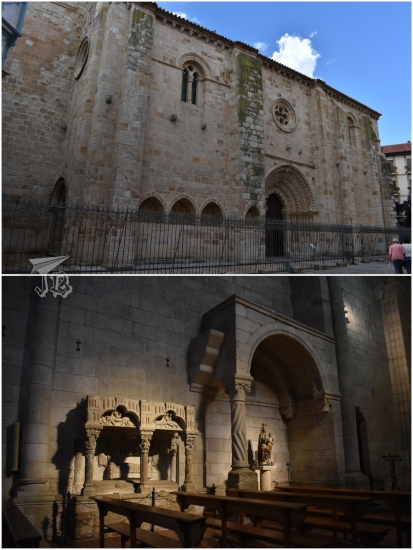
Train tracks over Embalse de Fuentes Claras

Walked distance (Saturday): around 12.5 km
Walked distance (Sunday): around 6 km
Total distance driven (both days): around 340 km