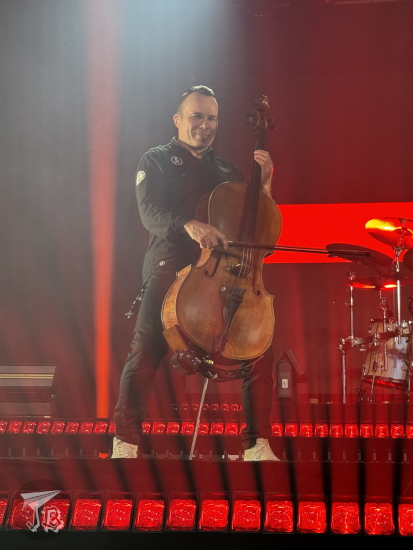
30th May 2025: Retiro Park, Alice’s sushi & Jurassic World (Madrid, Spain)

I had been on the waiting list to buy tickets for Jurassic World: The Exhibition in Madrid since it accepted sign-ups, so I was able to be amongst the first to buy tickets – albeit a few days later than originally scheduled due to the blackout. Thus, I got tickets for the first session on opening day, at 17:00 on the 30th of May. Exciting! And – almost as important – it guaranteed a spoiler-free experience…

I decided to fill the morning beforehand, and I arranged to meet some relatives at Retiro Park Parque del Retiro north-east corner. There stands one of the Romantic constructions of the park – the artificial mountain known as Montaña de los Gatos. It is a space that can be used as an exhibition venue erected during the 19th century, when follies where all the rage. A folly is a decorative building placed in a garden, usually extravagant or out of context, without a real use save from looking cute for the owner’s amusement.

The artificial mountain is literally a hollow mound covered in flowers, with a waterfall that was turned off, a sad-looking pond with a duck family, and a glass ceiling to illuminate the inside. It was closed so I could not snoop the “archaeological remains” that were found during the recent restoration.

Montaña de Los Gatos in Retiro Park, artificial mound covered in flower

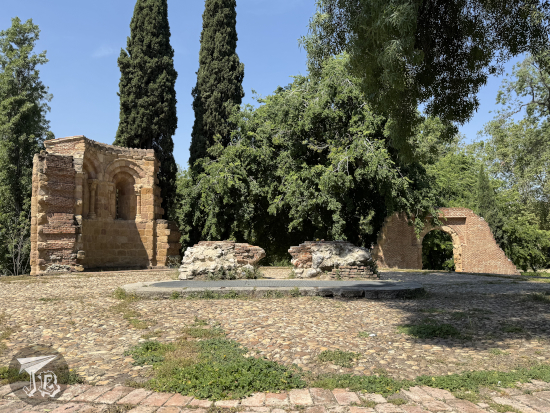
Next to the mountain there is another folly, La Casita del Pescador (Fisherman’s little house). Besides that stand the remains of an old church Ruinas de San Pelayo y San Isidoro. This tiny hermit church was originally erected in Ávila during the mid 1200s. Built in the Romanesque style, it was first dedicated to Pelagius of Córdoba, and then this was changed to Isidore of Seville. During the Spanish confiscation of the Catholic church properties, it was dismantled and eventually rebuilt in Madrid as Romantic decoration in a project directed by Ricardo Velázquez Bosco. It looks weirdly out of place, but rather pretty.

Ruins of the Romanesque church Ruinas de San Pelayo y San Isidoro, in brick

The yearly book fair Feria del Libro de Madrid had started, but as my relatives were late, we could only have a quick walk before we headed off to Wonderland – The Kaiten Lab – , a running sushi restaurant with hot-dish orders on the side, with decoration inspired by Alice in Wonderland, with a twist. According to the restaurant “you step into Alice’s mind, though Alice was a psychiatric patient”. I am not sure how I feel about the mental hospital thing – I think they were just trying to cash on the entrance that was already there when they bought the venue. However, I can state that it’s a pretty mediocre sushi restaurant. With a menu price about 10 € over a Runni sushi, I was expecting something at least as good, not worse. It sells the decoration, and that is the only thing that makes it special.

Wonderland – The Kaiten Lab –. A funky restaurant themed around Alcie in Wonderland which serves sushi

We went somewhere else for dessert, and I had a smoothie. Afterwards we said goodbye and I headed off towards Espacio Ibercaja Delicias for the opening session of Jurassic World: The Exhibition, which was full of parents with children and a bunch of actual fans, some of them being parents too. I was actually the first in line to enter, but they pulled me to the side to wait for a card called “credit photopass”, which was a free perk from having been on the list. Unfortunately, the fact that they did not have that ready put a bunch of families with kids in front of me. I got my photo taken against a green screen and they added digital dinosaurs later.

As we were waiting, the whole “dinosaurs are for kids” thing popped up again. I knew things were not going to be as awesome as expected when one of the “park guides” said that her favourite dinosaur was Mosasaur. Despite what Jurassic World: Rebirth claims, Mosasaurs are not dinosaurs, but marine reptiles, which lived in the Cretaceous period (94 – 66 million years ago).

Like the previous show, the experience starts on the ferry to the island, which then opens to the main gates with a Brachiosaurus peering from overhead. The whole exhibition runs on the story that you’re a VIP visitor to the Jurassic World complex, getting a special tour. A couple of guys and myself stayed a bit behind to take pictures without kids and families, and the “ranger” scolded us because “we were going to miss the explanations” in front of a pachycephalosaurus. At that point I felt that they were herding us like cattle…

The second room is the laboratory, with Mr DNA included. There are reproductions of eggs, amber, and baby parasaurolophus, one of them a puppet brought out for kids to take pictures with. The staff did not seem to keen on catering to anyone older than eight, again…

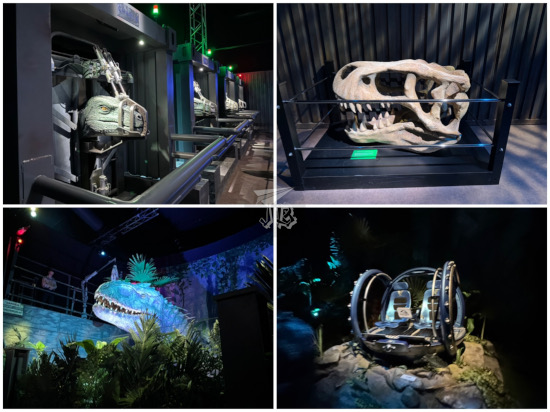
The following two rooms were the Jurassic World movie velociraptors (Deinonychus, in real fossils): Charlie, Delta and Echo were in their confinements and there was a bit of a “training show” with Blue and Owen Grady.

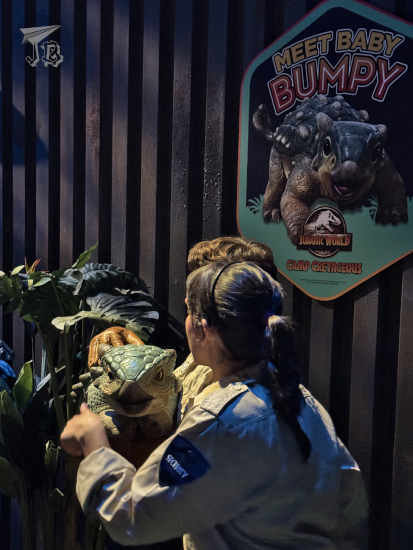
Then there was a bit of a “reprieve” room with fossil replicas and a make-believe excavation, where they brought out a puppet of Bumpy, the baby ankylosaur from Camp Cretaceous. Afterwards came the hybrid Indominus rex jungle, which had a hilarious moment when a kiddo shouted “Hello Indominus, I love you” while the thing was supposedly mangling its food. This was probably the best-made animatronic, it looked a lot like the beast they invented for the movie.

The next room held the Gyrospheres from the Jurassic World film, and a baby velociraptor puppet. This one I could take a picture with after all the kids had had their turn.

Jurassic World The Exhibition. Gate with a Brachiosaurus peering above: Collage showing the velociraptors, a carnivorous dinosaurs skull, the Indominus rex and a Gyrosphere

Jurassic World The Exhibition Baby Bumpy the ankylosaurus

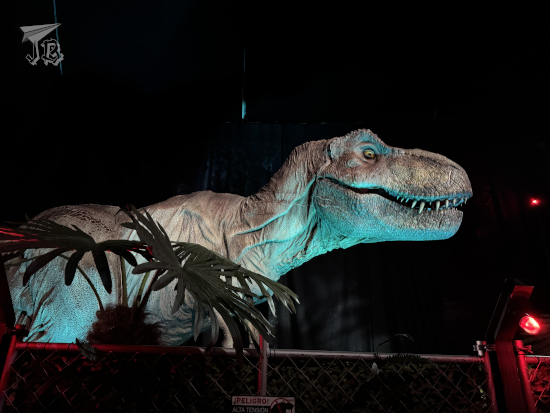
Finally, the last room was Rexy the Tyrannosaur – scars from the first movie and all. In universe, she almost broke containment and almost escaped. There were noises and sparks and roaring, honouring the exhibition’s motto: the closest you’ll ever be to real dinosaurs.

Jurassic World The Exhibition Rexy the T-rex. We know she's the one from the first movie because she has scars down her cheek and neck.

All in all, the dinosaur animatronics were amazing, but the staff had instructions to get everyone in-and-out in one hour, so it felt rushed and, as I said before, herded. And honestly, I am not going to listen to “park rangers” who don’t know their dinosaurs from their reptiles… Which would later be one of my beefs with the upcoming Jurassic World: Rebirth movie anyway…

However, there were dinosaurs, and they felt pretty real, especially the Indominus and Rexy. I missed the mosasaur, though (even if there was a super-cute plush toy in the souvenir shop). All in all, the exhibition was really fun. The animatronics were very lifelike and Bumpy looked exactly like she does in the animation. All in all, it was a good day with ruins, sushi, dinosaurs and geeking out. There’s not much more anyone can ask for…

11th December 2024: CBA, hotpot and lights (Madrid, Spain)

Since I was meeting my sibling for the yearly event of Naturaleza Encendida in Madrid in the evening, I decided get there early and make the most out of the day. As I arrived, I headed to the Círculo de Bellas Artes (literally “Fine Arts Circle”). The CBA is a sort of NGO dedicated to culture and the arts. Its headquarters host many activities such as exhibitions, theatre plays, concerts, lectures… The building was designed by Antonio Palacios, one of my favourite architects. It has seven floors, some of them used for events, others for offices. There is even a small theatre.

The CBA was running an exhibition called “Messenger Species” Especies Mensajeras, by artist Álvaro Soler-Arpa. It is a collection of pieces created from animal bones and items found in dumps. Born in Gerona in 1974, Soler-Arpa is a multifaceted artist who does publicity illustration and creates distressing sculptures using animal bones as its medium to make the viewer to think about waste and pollution. This exhibition of modern art is described as “ecological art for reflection”. I thought that it could be either really good or a holier-than-thou approach, but my curiosity was piqued.

The exhibit collects selected pieces from four series of sculptures: “Toxic Evolution” (Evolución tóxica), “Devastated Nature” (Naturaleza devastada), “Design-methastasis” (Diseño-metástasis) and “Sculptures from the End of the World” (Esculturas del fin del mundo). It was… disturbing, but in a good way. It did not feel preachy. The idea is that nature is affected by the consumerism in current society, but not dying – adapting to it. The imagined futuristic animals are a warning sent through time – nature is resilient and it will survive. Us humans? Maybe not if we do not get any better.

Álvaro Soler-Arpa's Especies Mensajeras

There was another exhibition in the building about the consequences of war, but I decided I could not stomach that one. However, I had the access ticket, so I could take the glass lift to the famous terrace of the building – the one that kicked off a trend of opening terraces in Madrid to watch the skyline while having a drink. It was too cold and too closed to have anything, but I did get a nice view, especially of the Palacio de Telecomunicaciones and the Spanish language Institute Instituto Cervantes, both designed by Antonio Palacios too. The terrace is mostly flat, with a bar and an impressive sculpture of Minerva made in bronze by Juan Luis Vassallo. Minerva – Roman goddess of wisdom and art – is the symbol of the CBA. There is also a smaller and higher structure that looks like it could hold an even better view, but that was closed off.

Skyline from Azotea Círculo Bellas Artes

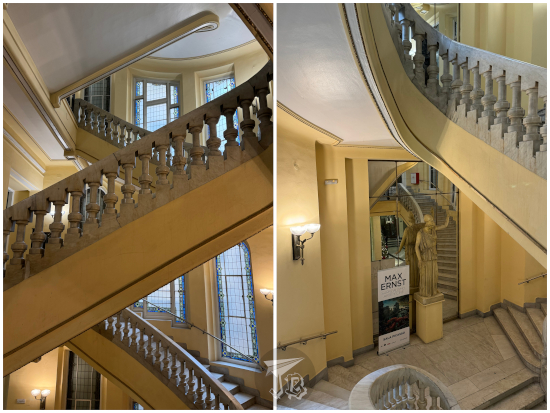
The CBA building has many cool spaces, such as the ball room (Salón de Baile) or the colonnade room (Sala de Columnas). However, my favourite part of the building are.. the stairs. They are designed as a double staircase with mirrors at the landings, and coloured windows alongside the steps. One of the sides is less bright now, because a building was erected and blocks the sun. I still find the staircase superb, so I hung around there for a while until the security guard gave me a weird look.

Stairs Círculo Bellas Artes

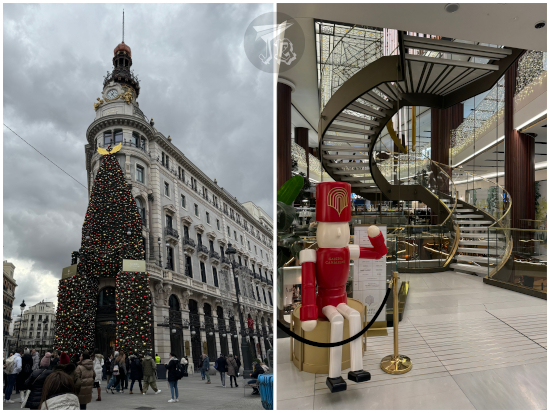
I left the CBA and walked down the street Calle Alcalá and stopped at Galerías Canalejas just to see what kind of decorations they had. It turned out to nutcrackers and elves inside and a huge Christmas tree outside. I still cannot afford anything they sell there.

Chrismas at Galerías Canalejas

I continued down towards the square Plaza de Oriente, where there was a classic merry-go-round – empty and ready to be ridden. Thus, since I have no shame, I went on it. The salesperson was incredibly kind, since I was the only rider – and an adult at that – and yet they directed me to a horse which moved up and down and showed me how to climb on it.

Then, I backtracked to the shop Turrones Casa 1880 in the street Calle Arenal, which hosts a small Museo del Turrón. Turrón is a typical Spanish confectionery eaten mostly at Christmas. It is mainly made out of processed almonds, and 1880 is probably the most famous brand – and it prides itself on the most expensive one. I am not a fan of turrón, to be honest, but it was almost Christmas, and if I was ever going to do it, that was the right time frame. The museum is mostly an audiovisual in a decorated cellar, with a photo-op, but the staff was really nice.

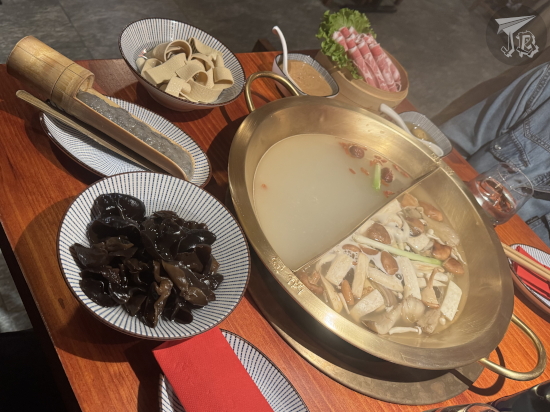
At 14:30 sharp, I met up with my sibling for a restaurant that I’ve been wanting to try for a while 壹锅火锅 Hotpot de Sichuan. Hotpot [火锅, huǒguō] is a Chinese type of stew based on a stock or soup that is kept simmering in the table itself, and you just grab the raw ingredients and dip them in the broth to cook them – imagine a fondue with broth instead of cheese. We ordered a menu for two, a pot with two broths, one mushroom-based and one meat-based. The dips were spring onion, coriander (which was not used, because I hid it), shrimp mince, thin beef slices, tofu stripes, Chinese black mushrooms, cabbage, and rice noodles, along with two sauces – one slightly spicy, and my beloved sesame and peanut sauce. The food was great, but at 15:40, the waiters popped up to tell us that they wanted to close the restaurant, and then stood up next to us until we finished and left. It was more than a bit awkward, so we hurried up to do so. While the food was great, the situation spoilt our experience a little, I think. We were still eating, not slouching around. I am not sure I would want to go back…

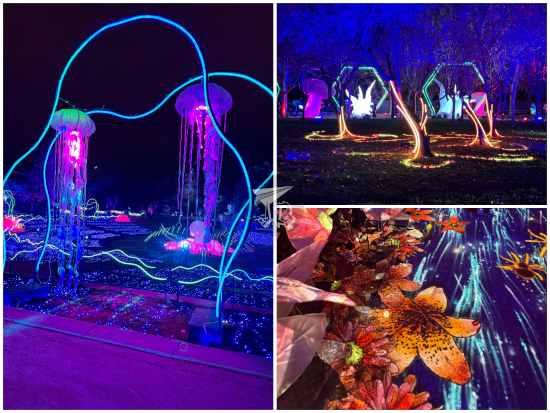
Afterwards, my sibling had to do some shopping, so we spent a while going up and down some shops and a department store, before we headed out to Naturaleza Encendida in the park Parque Enrique Tierno Galván. This is a yearly light show organised in Madrid parks – it used to take place in the Botanical Gardens, before it was moved to a larger area. The 2024 edition is titled Naturaleza Encendida: Life.

Naturaleza Encendida Life

To be fair, I was a little bit disappointed, as “Life” turned out to have mostly figures reused from the last few events. Though the organisers tried to build a narrative of water, land and air topics, the novelty had worn off. It was not bad, but the show keeps getting more and more expensive every year, with fewer and fewer perks for the VIP tiers. Furthermore, the new larger location does not imply more light sculptures – they’re just spread farther apart so they can fit more people without it feeling crowded, so it simply takes longer to walk it through. This has its advantages and disadvantages – it was good last year when we had to go on a weekend but this time around it just felt… colder. They also tried to give the whole thing an ecologist spin, and this time it did come out preachy… I mean, it is a show of lights, which technically could count as light pollution, without any actual… purpose… but charging you to watch pretty lights.

Naturaleza Encendida Life

Naturaleza Encendida Life

That was the end of the day, and we just headed home afterwards, but aside having to wait for the train for over half an hour, nothing to report on that end.

18 & 19th November 2024: Apocalyptica Played Metallica in Madrid (Spain), so there I went

Planning for this short getaway started on the 23rd of February, when I bought my ticket for the Apocalyptica Plays Metallica Vol. 2 Tour 2024 stop in La Riviera in Madrid (50.50 €). Almost immediately, I headed off to Apocalyptica’s website to buy the VIP Tour 2024 Upgrade (58,90 €). The upgrade consisted on early access, photograph / meet & greet / autograph session (the important part), VIP lanyard, fabric patch, pin and tote bag. Honestly, all that for barely 100 € was a sweet deal. Back in Antwerp for Starset, someone I was queueing with complained that VIP tickets were too expensive for “a broke uni student”, but for me, meeting with the artist, albeit briefly is usually worth it – early entry is a plus, too, because for some concerts I either find a barrier spot or I just have to go to the back. The bundle was dispatched on the 9th of June (according to the email. Do Finnish post offices open on Sunday?) and it arrived on the 18th.

I originally booked a cheap hotel about half an hour’s walk from the venue. Later, I decided that I preferred the more expensive one less than 10 minutes away, so I changed my booking a week before the concert. I did not book there originally because it required prepayment, and my card was playing up..

On Friday the 4th of November I received an email with instructions for the Meet & Greet, which was to start at 18:30, and I should be there at 18:15. All right, I could do that. It was only a matter of waiting.

On Monday, 17th of November, I took a morning train to head out to Madrid with some leeway for time because I needed to do some small item shopping. I had to dodge some guys trying to get people to sign up for an NGO, but at 11:40 I made it to my first stop of the day – the light museum Museo de la Luz. I had been putting this visit off to go with someone who had expressed interest. However, I also waited for another exhibit and I missed my chance as it turned out to be only temporal. Thus, I decided to head to the Light Museum on my own – it was also one of the few exhibitions open on a Monday morning.

The Light Museum is a modest exhibition with interactive artworks that are mainly made out of lamps, lasers and lights. When you come in, you are given covers for your shoes and a key for a locker – all for free. Then you wait until an attendant takes you in and shows you how to interact with the first artwork “The birdcage” (La Pajarera), a box made out of light and metal that you make change colours with the movement of your arms. Once you know how to “play” with the art, you are left on your own to wander for an hour. At first I thought it would be tight, but the place was small – a bit too small for the price, I thought. I was there for around 40 minutes in total.

There were few people and I was able to check out most of the artwork uninterrupted. The next exhibit is made out of a number of old music festival lights – those that gave a lot of heat from the 90s, which are supposed to be a reference to climate change. Then there is a giant kaleidoscope you can walk in – this one became my favourite. Other rooms or works include a wall of lights that follow you as you move or dance, something with lasers (that I think was broken), some light illusions, a room full of hanging lights, a cube of mirrors and light… At the end there is a wall reading “light museum” in differently coloured lights. When I left, the lady at reception gave me a badge for booking with the official website.


Light Museum Madrid

Light Museum Madrid

I walked out and headed towards the restaurant where I wanted to cheat the system. I crossed the square Puerta del Sol, where they were setting up the Christmas tree – it was about 45% Christmas. On my way, I walked by the underground stop Metro Banco de España which has a tiny door for Little Mouse Pérez – Ratoncito Pérez, the Spanish equivalent to the tooth fairy. I never remember to check it out when I am around, but I made the connection this time.

I finally made it to the James Joyce Pub – which is technically a sports bar. I was not there for the TVs though. I had a while back found the place looking up places which served English breakfasts in Madrid. The James Joyce prides itself in being an Irish pub and offers Irish All-Day Breakfast (12.00 €) – two pork sausages, two rashers of bacon, baked beans, fried egg, sautéed mushrooms, grilled tomato, blood pudding, chips, two half-toasts and butter. No, I would not survive that for breakfast, so I ordered it for lunch (and dinner), thus tricking the system indeed. Unfortunately, it was really good and authentic, so now I’ve got to come back for the sausages and the shepherd’s pie, so at least twice.
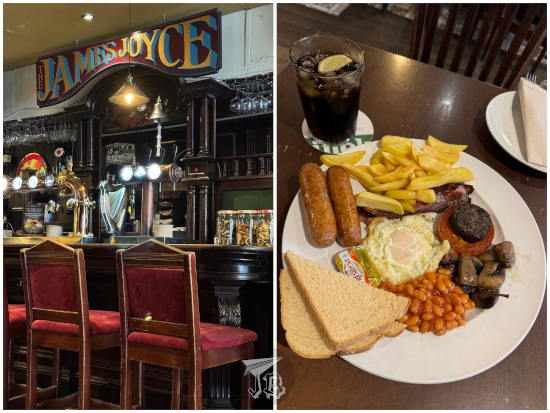
James Joyce Irish breakfast

After lunch, I headed out towards the park known as Madrid Río. The park runs along the banks of the river Manzanares. It covers 121 hectares, and it was designed after to cover the space emptied when the belt road M-30 was rebuilt as an underground tunnel. The original project was created by a team of architectural studios and landscapers, with strong ecological consideration – aiming to help the area recover from the degradation and pollution caused by years of road traffic. The project was carried out between 2006 and 2012. In 2015, a second project was carried out to “renaturalise” the river, opening the dams to allow the water to flow freely, which in turn caused the recovery of many plant and animal species (to the detriment of… the local rowing team).

There are also bridges that connect both banks of the river. One of them is the one I crossed – just because I could. It is the pedestrian bridge Puente Monumental de Arganzuela, designed by Dominique Perrault. It is a bridge in two parts – one crosses the river, the other overlooks the park and connects to the urban area, and a total length of 278 metres. It is a tube made out of steel and wood that I’ve been wanting to check out for a while.

Arganzuela bridge

Another important bridge is the completely different Puente de Toledo, a baroque bridge built by Pedro de Ribera. It was erected in granite between 1717 and 1732 as the previous ones had been taken down by torrential floods. This one was made to stay, with nine solid arches opened to allow for the river floods. It was… ready for Christmas.

Madrid Río and bridges

It was weirdly warm for a November afternoon, so when I went to my hotel I opened the window while I had a shower. Around 17:00 I headed out to the venue, where there was a small group of people waiting already. La Riviera is a 1,500 people venue, with really good acoustics – and very dedicated staff. The place was originally a cinema, which was turned into a disco, and then into a music venue and nightclub. It is the same place I saw Epica and Apocalyptica in 2023, and I was surprised how many people came for the M&G considering that last year we were… six. We were around 30 this time around.

At first we were chatting in front of the main door, but soon a queue started forming. A little later, the nice security guy (who last year told me “I looked the part of an Apocalyptica fan”) took us to a secondary door, and the queue was properly organised. Surprisingly, bags were not checked – while last year they even took markers from people.

Apocalyptica is a Finnish symphonic metal band. It was formed in 1993 as a tribute to Metallica with a classical touch – playing with cellos. Their debut album Apocalyptica plays Metallica by Four Cellos was released in 1993. They slowly moved from covering other bands in a neoclassical style to their very own repertoire. Today, the members are Eicca Toppinen, Paavo Lötjönen and Perttu Kivilaakso, three classically-trained musicians with a deep love for metal. In 2024, they have gone full circle with the album and tour Apocalyptica Plays Metallica Vol. 2, performing with drummer Mikko Kaakkuriniemi.

Apocalyptica Tour 24/25

We were ushered into a queue for signatures, and afterwards we would go at the end of the line to wait for photographs. I had brought a print-out of the picture from the previous year, and I told them that whenever they came to Madrid, I would come see them. I got a smile for that. It was an awesome photograph, after all. After everyone had their stuff signed we had the photographs. I asked for “a big metal hug” and got trolled instead. Fun times though!

After the photograph, I found a spot at the barrier. Last time I got on the right, this time I went left. Just a little. I did not want to go dead centre in case anyone decided to moshpit, but I might next time as there was no issue – everyone was too entranced for anything like that, I’d say.

The opening act was the Finnish band Arctis, a baby band who has just debuted with their first CD. They were pretty fun, maybe… a bit… too happy bouncy for metal? I’ve read their act described as metal-pop. It might be. I liked them okay, and they were nice.

Setlist:
 1. I’ll Give You Hell
 2. Remedy
 3. Tell Me Why
 4. WWM
 5. Bimbo (Lambretta Cover)
 6. Fire
 7. Frozen Swan
 8. When The Lights Go Out
 9. Theater of Tragedy

Arctis at La Riviera 2024

Arctis at La Riviera 2024

Apocalyptica came on stage at 21:00 sharp, and the live was glorious. All the songs were Metallica covers, from the new album, the first one, or the remastered version of Plays Metallica released in 2016. Despite that, one would not even have to be a Metallica fan to enjoy the concert, because the three men that compose Apocalyptica have an amazing magnetism. Perttu reminds me of the Duracell Bunny, he just did not stop for a second throughout the whole concert, which lasted a good two hours. Paavo seemed to be in his own little world, as he usually does. Eicca is the one doing most of the talking, and he is hilarious when he delivers his puns with a total deadpan voice and face.

Setlist:
 1. Ride the Lightning
 2. Enter Sandman
 3. Creeping Death
 4. For Whom the Bell Tolls
 5. Battery
 6. The Call of Ktulu
 7. St. Anger
 8. The Four Horsemen
 9. Blackened
 10. Master of Puppets
 11. Nothing Else Matters
 12. Seek & Destroy
 13. One

The audience was mostly moved by Nothing Else Matters, I’d say, judging by how they chorused it. Perttu was all in for that. Personally, I found Seek & Destroy and One, particularly, to be extremely powerful. Also, knowing that they dug up the original bass track from deceased Metallica member Cliff Burton for The Call of Ktulu was half-amazing and half-chilling. All in all, it was a fantastic concert, no matter how one looked at it.

Apocalyptica La Riviera 2024

Eicca Toppinen . Apocalyptica La Riviera 2024

Paavo Lötjönen. Apocalyptica La Riviera 2024

Perttu Kivilaakso. Apocalyptica La Riviera 2024

Apocalyptica La Riviera 2024

Afterwards, Arctis was hanging out by the merch. I got their CD, they signed it, we took a photo. It was fun!

I left the venue and I brought an ice-cream and a sports drink for “dinner” of sorts, because I was thirsty. I had both in the hotel room before my shower – the second of the day – and collapsing onto the king-sized bed. I had to wait for the phone to finish charging before I slept though, so I watched a movie before I zonked out.

I woke up on Tuesday, 18th of November and drank my coffee before I set out. It was freezing out there, with frost on the grass, in spite of the warm afternoon the day before. On my way, I found the ancient walls of the city, remains from the old Moorish fortress alcázar, which stand to the side of the Royal Palace and the Almudena cathedral. I walked towards the centre of Madrid – The Sol Christmas tree was about 60% ready – to meet up with my relative for breakfast at a new place called Kawaii Cafe. Inspired by the Japanese kawaii [可愛い]. Kawaii means pretty, childlike, cute, and the Kawaii Cafe has taken the idea to heart, maybe not not in a complete accurate manner though. Everything is pink, full of fluffy and glitter. The food is not only tasty, also pretty. However, the wait staff is dressed as “maids” [マイド], which I tend to associate more to the… hm… more risqué side of hospitality. When food is brought out, you are offered to chant a spell for it to be even tastier.

I found the place existed by chance, and I was instantly smitten by the rainbow waffles, because they were adorable, and very, very rainbow-like. Thus, I ordered them, along a matcha latte. My relative tried the pancakes with a cocoa. She was ecstatic at the quirkiness of the place.
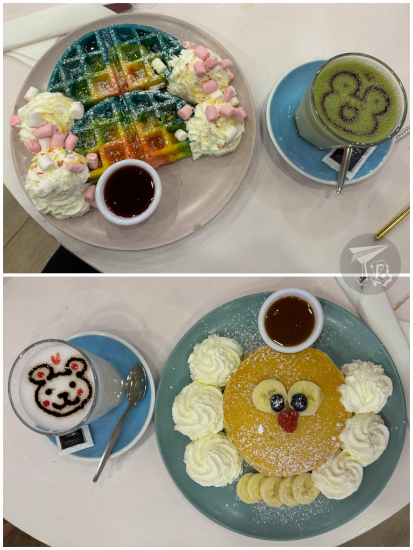
Kawaii Cafe Madrid order

We stayed for well over an hour, and then headed out to one of the local museums Museo de San Isidro – Museum of Saint Isidore the Labourer. Isidore is the patron saint of Madrid. He is credited with several miracles – multiplying wheat and food, having his oxen plough on their own, and rescuing a child from a well making the waters inside rise. According to tradition, the museum is housed where he used to work, and legend has it that the old well is the one he pulled the child from.

Today the museum hosts some palaeontological and archaeological exhibits, from a mastodon and ancient rhinos to Medieval artefacts, running through the Roman occupation and the Muslim period. The place is a complement to the Museo de Historia de Madrid, or maybe its competition, though I think both belong to the same institution – and both are free. As the building is a historical place, it offers the chance to enjoy its small but beautiful Renaissance courtyard, with sculptures of mythological heroes, and of course St. Isidore and his wife. There is also a tiny Baroque chapel.
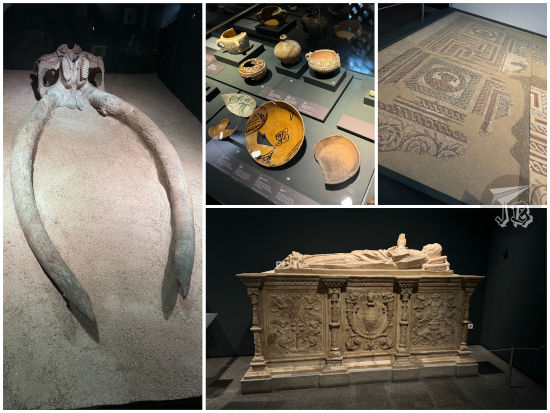
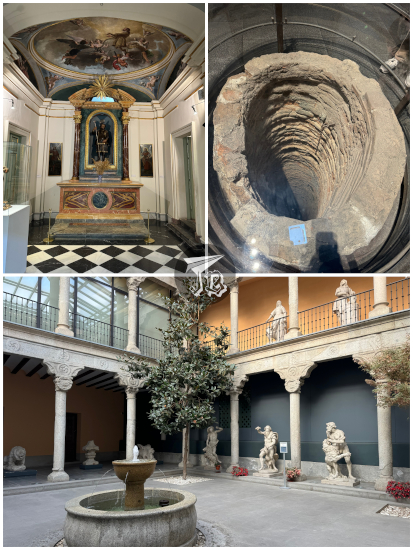
San Isidro Museum

San Isidro Museum: chapel, well, and courtyard

Right next to the museum stands the Baroque church of Saint Andrew the Apostle Iglesia de San Andrés Apóstol , which was getting ready for Christmas. The church is one of the oldest in town, though it was rebuilt after its destruction during the Civil War, and it has been recently restored. It hosts a number of religious sculptures and a painted vault above the altar.
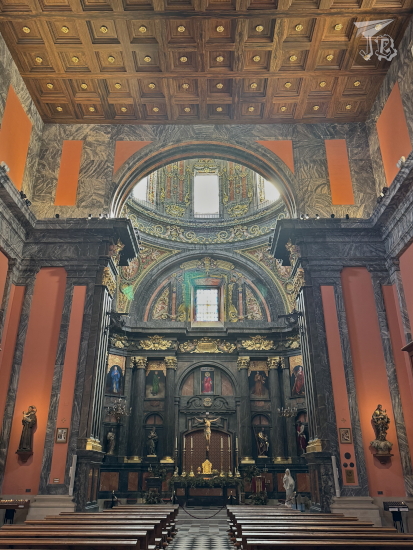
Saint Andrew church Madrid

We took the underground at the station Tirso de Molina, which can still be accessed through the historical entrance hall, which is similar to the one that was closed off in Pacífico. It was beautiful, though of course busier than the museum one. Over the entrance to the platform there is a tile mosaic with the old shield of Madrid, dating back from the original station. It was installed in 1921, and it is the oldest artistic item in the underground network.

Access Hall at undeground station Tirso de Molina

From there we commuted to Nuevos Ministerios, where they had just kick-started the Christmas market. It seemed to be the “brands” market, with Lego, Disney, and so on. There was also a food truck by a famous chef selling basically chicken sandwiches at outrageous prices. I had been vaguely curious but not going to break the bank for a chicken sandwich, especially after such a breakfast!

I took a train from there back home, with no incidents whatsoever (because by now I’m desensitised to trains being late…)
27th August 2024: Arganzuela Greenhouse, British Cemetery and a ‘palaeontological site’, Madrid (Spain)
I have been feeling dizzy on and off these last few months, so I’m avoiding long drives – that has left me dependent on public transport, which is not too reliable. Thus, instead of all the hikes I wanted to take, I’ve been doing day trips to Madrid.

My first stop was in the district of Arganzuela. Although I’ve been to Matadero a few times before, I had never wandered to the side, where a boring-looking metal roof peeked over some trees. I recently discovered that I should have ventured beyond the brick walls that close the Matadero area. This building is called Arganzuela Crystal Palace Palacio de Cristal de la Arganzuela, and is an example of the wrought iron functional architecture of the early 20th century.

Invernadero de Arganzuela - structure

The building was designed by Luis Bellido y González and erected between 1908 and 1928 as a vegetable warehouse. In 1992, the building was remodelled – the wrought iron structure was consolidated and the original fibre cement panels were substituted by glass ones. The warehouse, 7,100 square metres, was divided into different sections, each one transformed into a different greenhouse: two for tropical plants, one for subtropical species, and the last one for desert plats and cacti. The centre has four long fountains with tiny sprouts and waterfalls. I expected a few plants to be in second bloom, but apparently that does not work for tropical or desert species?

Invernadero de Arganzuela - inside

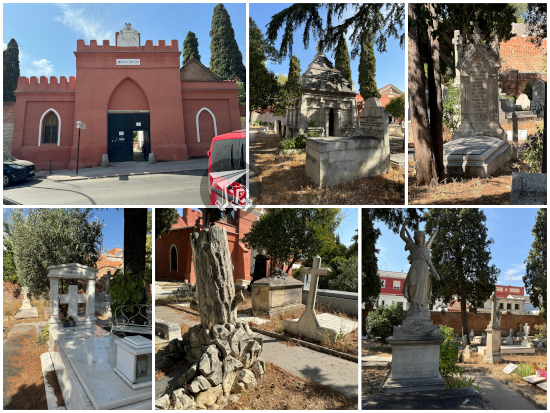
I then hopped onto the underground towards the district of Carabanchel, where I could visit an unusual place – the British Cemetery Cementerio Británico de Madrid. Around 1854, the British government bought the terrain with the intention to turn it into a cemetery, since during that time Catholic cemeteries did not accept interments from other denominations.

The burial ground hosts about 600 graves and about 1,000 tombs, most of them British citizens – but there are also Americans, Germans, Swiss and French, even some Spanish. Though it is now closed to new burials, in the 20th century it was open to non-Christians. Inscriptions on the markers are in Latin, English, French, German, Hebrew, Cyrillic and Spanish. Some of the people buried here include part of the Georgian royal family, historian Alice Bache Gould y Quincy, members of the fashion family Loewe, photographer Charles Clifford… There is also a memorial to the American soldiers who died in a plane accident. There is only one pantheon, belonging to the Bauer family – owners of an important commercial emporium in the 19th century.

British Cemetery Madrid

I have to say that the charm of a Victorian cemetery fades more than a little in the middle of the Spanish plateau’s scorching summer. Though there are several artistic markers – ever-present angels, a couple of tree trunks, and a very gothic grave – most of them are simple headstones with a cross or just a name. One of the graves asked a good question: If good things lasted forever, would we appreciate how precious they are? All in all, it was a quaint little cemetery that felt slightly out of place in the middle of Madrid.

Afterwards, I went back into the underground. The cemetery is a couple of stops away from Carpetana. On the connection, I got checked for a ticket, sort of – they were controlling that passengers had a valid ticket, and just as the train was arriving they waved me through, maybe not complaining about it and just looking for the card made me trustworthy or something? (For the record, I did have a ticket). Anyway, I reached my destination in about 10 minutes or so. When they were working on the Carpetana underground station, they found a few fossilised bones and jaws, and they have turned it into another of the spots of Museos de Metro de Madrid – palaeontological site Yacimiento Paleontológico de Carpetana. I saw reproductions a few mammal jaws and took a picture. Good thing I was close, this would not have warranted a trip from further away.

Reproduction of the prehistorical habitat of Carpetana

I had a reservation for late lunch, but I decided to cancel it. I wanted to check a shop for something I needed, and that would take me in the complete opposite direction from the restaurant. Instead, after the shop, I grabbed a Matcha Frappuchino and headed back to the train station to return home.

Starbucks Matcha Frapuccino with a lot of whipped cream

6th July 2024: O fortuna! (Madrid, Spain)

A couple of days before going to London to see Kamijo, I found out that a local music non-profit was staging Carmina Burana by Carl Orff in Madrid. Buying tickets (for that, and the upcoming opera Madama Butterfly) broke havoc with my credit cards, but everything was eventually fixed – I think. It had me stressed at the beginning of that trip, but it seems to be finally fixed. Again. I did have to miss Swan Lake in London because the credit cards would not go through.

Anyway, I had my ticket and though I would have loved to spend the day out, I was too ridiculously tired to take a whole day of sightseeing. Furthermore, the place I wanted to have lunch out was not taking reservations since they broadcast sports, and there was some big match or another. Yes, I want to go somewhere that defines itself as a sports bar, but that’s a story for another day (like the time I thought I could go to a sports bar during the Olympics because “Oh, well, there’s nothing sporty going on, right?”).

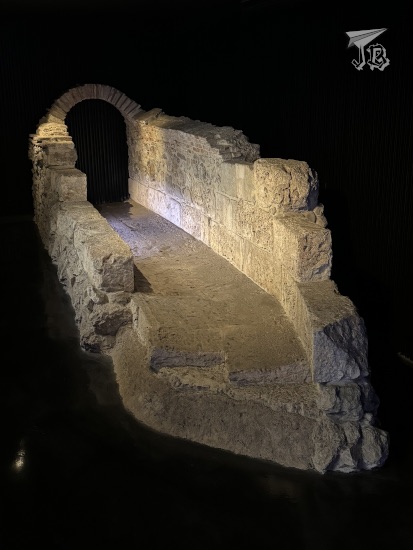
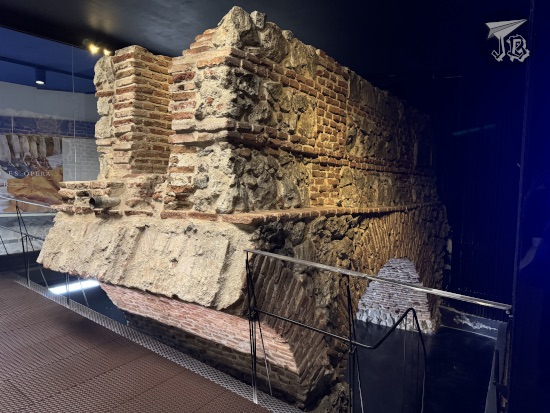
I thus decided to head off with a small pre-show plan, which turned out to be a great idea. When I alighted from the train station, the streets were clear for the Pride parade – I do not think I have ever seen the area surrounding Estación de Atocha so empty. I walked towards the theatre Teatro Real, but my first stop was the underground station of Opera, home to one of the Underground museums Museos de Metro de Madrid. Unlike the others, this is only tangentially related to the underground system itself – it is an archaeological museum, hosting an ancient fountain, part of an aqueduct, and the remains of a sewer.

King Felipe II made Madrid the capital of Spain in 1561, and aside of some brief periods of strife, it remains so to the present day. That has implied a lot of changes through history – among them, the destruction of the city walls, and the construction of an aqueduct to provide the city with water. When the court moved there, the villa of Madrid was little more than a village whose population skyrocketed in a couple of years. The new city needed services as it grew.

One of these was the fountain called Caños del Peral (literally something like “Peartree faucets”). The fountain was 34 metres long and it channelled water from the stream that ran down what is now Arenal Street. It was built in local limestone, had six faucets, and it probably was the largest fountain in the area where it was built in the late 1500s – the outskirts. Ironically, today it is quite close to the centre of the city, even the middle of Spain, the so-called “Zero Kilometre” in the square Puerta del Sol.

Fountain Caños del Peral

The fountain was destroyed during the reign of José I (Joseph Bonaparte, Napoleon’s brother, who was installed as king of Spain between 1808 and 1813). Caños del Peral, along with the buildings around the square, were demolished and used to fill the gorge that until then had separated Madrid in two. And in that filled gorge it was discovered in the early 2000s during works to refurbish the underground station of Ópera. Further works uncovered the sewer from the same period, a structure that channelled black waters away from the drinking streams for sanitation.

Sewer at el Arenal

The aqueduct Viaje de Amaniel was built around 1615 century to bring clean water to the Royal Palace, and with time it also supplied other properties. The infrastructure was heavily remodelled in the 18th century, after the Royal Palace was rebuilt into its current form after the fire that destroyed the original alcázar.

Section: Viaje de Amaniel

As I was coming out from the little museum and the underground system, I noticed a display reading that the underground / train station that I needed after the show was closed “until end of service”. Which was good to know beforehand, since I had time to replan my route – the trains were a mess in the evening due to Pride, and a few stations being closed off for crowd control. I grabbed a snack at the local Starbucks and headed into the theatre.

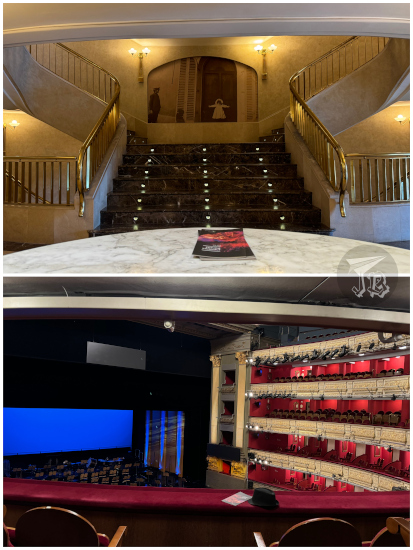
The Royal Opera of Madrid Teatro Real opened in 1850. It was originally designed by José Manuel González-Valcárcel, though it has been widely renovated, with the latest iteration dating from 1997. It is considered the most important venue for performing and musical arts in Spain – despite having been closed for decades at a time. Curiously, the theatre has the shape of a coffin – at first, I really thought that was my imagination, but apparently it is not only real but intentional.

Teatro Real: stairs and interior

I had found really good tickets, first floor next to the Royal Booth – for the same price, I would later get a fifth / sixth floor ticket for Madama Butterfly. The repertory had been put together by Fundación Excelentia, a non-profit foundation dedicated to promote and divulge lyrical heritage and musical values.

Carmina Burana Promo

Programme:
  First part:
  1. Beethoven: Egmont. Overture: Sostenuto, ma non troppo – Allegro
  2. Beethoven: Symphony No. 8 in F major, Op. 93
  Second Part:
  3. Carl Orff: Carmina Burana

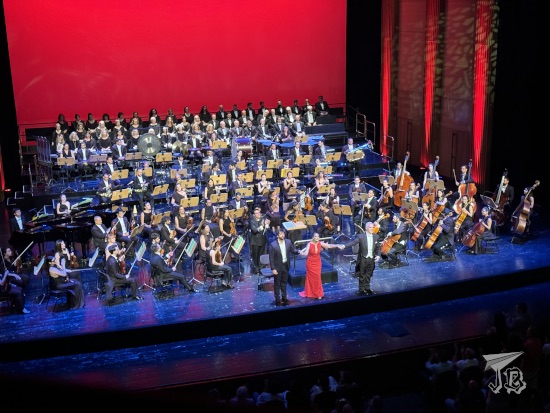
The show was conducted by Juan Pablo Valencia and interpreted by the orchestra Orquesta Clásica Santa Cecilia, the choir Sociedad Coral Excelentia de Madrid, soprano Rocío Martínez, baritone Manuel Mas and countertenor David Miranda.

Ludwig van Beethoven (1770? – 1827) is considered one of the most important figures in Western music. Born in Germany, his works bridged the classical and romantic periods in classical music. His works are amongst the most performed in the world, even though he began losing his hearing halfway through his career. He composed Egmont around 1810 for a full symphonic orchestra, and Symphony No. 8 in F major, Op. 93 in 1812. The Symphony has four movements: Allegro vivace e con brio (F major), Allegretto scherzando (B flat major), Tempo di menuetto (F major), and Allegro vivace (F major). I am not the biggest Beethoven fan, to be honest, but it was good. The conductor had a great time.

My main reason to be there was the second part of the show: Carmina Burana (Officially Carmina Burana: Cantiones profanae cantoribus et choris cantandae comitantibus instrumentis atque imaginibus magicis which translates from Latin as “Songs of Beuern: Secular songs for singers and choruses to be sung together with instruments and magical images”, quite a mouthful). German author Carl Orff (1895 – 1982) composed the cantata between 1935 and 1936. Most of the lyrics are in Latin, though there is a bit of old German and even old French. The cantata has 25 movements based on 24 Medieval poems, with the first and last movements being the same: O fortuna, which happens to be one of my favourite choir pieces ever. There is one instrumental-only piece, and all the others have vocals – for choir, soprano, baritone and countertenor.

The twenty-five movements are organised in sections, which are officially five, but divided as:

  • Fortuna Imperatrix Mundi (Fortune, empress of the world): 1. O fortuna (Oh, fortune), as I mentioned, I love this choir; 2. Fortune plango vulnera (Regret for the wounds of fortune).
  • I. Primo vere (In spring): 3. Veris leta facies (The joyous face of Spring); 4. Omnia Sol temperat (All the things are warmed by the sun); 5. Ecce gratum (Behold the welcome)
  • Uf dem anger (In the meadow): 6. Tanz (Dance), the only instrumental movement in the cantata; 7. Floret silva nobilis (The noble woods bloom); 8. Chramer, gip die varwe mir (Monger, give me a coloured paint); 9a Reie (Round dance); 9b Swaz hie gat umbe (Those who dance around); 9c Chume, chum, geselle min (Come my dear companion); 9d: Swaz hie gat umbe reprise; 10. Were diu werlt alle min (If the whole world were mine)
  • II. In taberna (In the tavern): 11. Estuans interius (Seething internally); 12. Olim lacus colueram (I once swam in lakes) – this is the piece the countertenor sang, and I am not completely sure the guy was drunk, or playing drunk. 13. Ego sum abbas (I am the abbot); 14. In taberna quando sumus (When we are in the tavern)
  • III. Cour d’amour: 15. Amor volat undique (Love flies everywhere) I have to admit that I did not love the soprano, who sang for the first time at this piece – she sang well, but too low, it was difficult to hear her at times; 16. Dies, nox et omnia (Day, night and everything); 17. Stetit puella (There stood a girl); 18. Circa mea pectora (Inside my chest). 19. Si puer cum puellula (If a boy with a girl). 20. Veni, veni, venias (Come, come, please come) – these are the same lyrics that Final Fantasy VII’s theme for Sephiroth, One-Winged Angel has, and looking at the translation, now I understand why it was never intended to be the psychotic mass-murderer theme… 21. In trutina (On the scales); 22. Tempus est iocundum (Time to jest); 23. Dulcissime (Sweetest lad)
  • Blanziflor et Helena (Blancheflour and Helen); this refers to the romance story of Blancheflour and to Helen of Troy. 24. Ave formosissima (Hail to the loveliest)
  • Fortuna Imperatrix Mundi: 25. O fortuna (Oh, fortune)

All in all, it was a great experience, and I had a privileged seat. I really enjoyed the show, as it was expected from something at the Teatro Real. The gentleman next to me slept through the first part and hummed along the second, which was weird. The soprano’s voice was too faint and she tended to sing towards the other side of the theatre, making it hard to hear her, but the baritone was good. The choir was fantastic, and the percussion musicians had a perfectly choreographed exchange of positions to play all the small parts which was really amusing to watch. Especially one who hugged the gong to quiet down the reverberations.

Artists after the Carmina Burana Show

When I came out the theatre, I headed off towards the underground system and reached the train station, which took over 20 minutes – normally, I would have just walked to Sol and take the first train there to connect faster, and stay within the same system. As Sol was closed, this was not an option. When I arrived at Atocha, the platform was almost overflowing as the trains were running with long delays. I think I took a train that should have passed through around 22:30… at 23:00. I was not sure everyone would fit in the train, to be honest. Good thing that they announced a second one for a few minutes later. I made it home past midnight, took a shower and crashed because it was hot – Spain in July. What else is new?

12th March 2024: A free afternoon – the bullring & Pompeii Exhibition (Madrid, Spain)

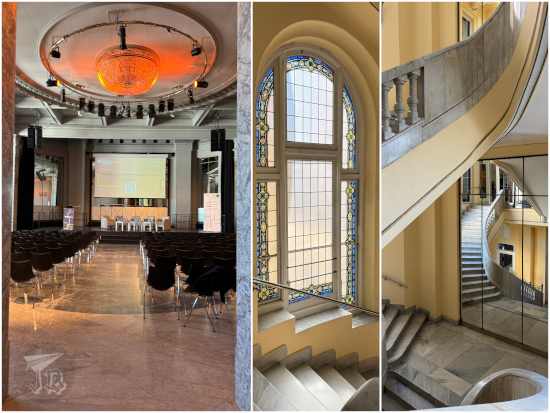
Due to life being weird sometimes, I was summoned to a work-related event in Madrid on the morning of the 12th. The event took place in one of the buildings erected by Antonio Palacios, the cultural centre Círculo de Bellas Artes (CBA). The centre hires out its facilities for conventions, gatherings and theatre plays. In our case, we were there for the presentation of a new product in the Column Hall Sala de Columnas on the fourth floor.

Interior of the Círculo de Bellas Artes

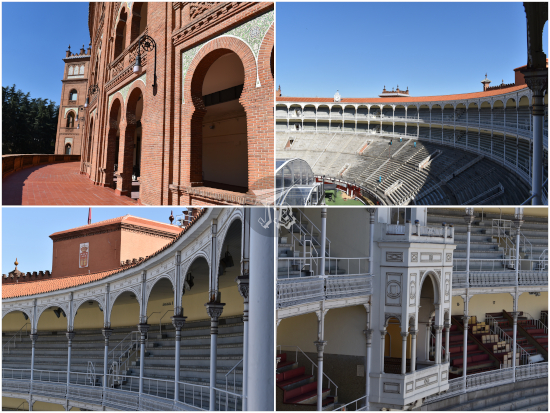
After all the necessary chatting, networking, and a disappointing (and rather questionable) choice of canapés, the event was over at 14:30. I ditched my companion then and headed out to Plaza de Toros de Las Ventas, the local bullring. I am not a bullfighting fan – my personal view is that it is not an art, nor a “fair fight” as it is presented, and I hope we humans evolve to phase it out. And while I would not attend an event, I was curious to get to know the building and its architecture.

Las Ventas bullring, outside

The ring is the largest of its kind in Spain. It was designed by José Espelius in the neo-mudéjar style and erected between 1919 and 1931. The central ring is just over 60 m in diameter, with a metallic structure holding the stands around it, and a façade of reddish brick and porcelain tiles. Aside from bullfighting, it is also used for concerts and other events.

I took a self-guided tour with an audio-guide Las Ventas Tour Experience, because I actually know nothing about bullfighting – I learnt that it actually has “rules”, I thought it was just taunting and hurting the bull. The passes have names, and there is a whole colour code of handkerchiefs – I had no idea. The tour takes you past the “Great Gate” through which bullfighters come out through when they are deemed to have done a great job. Then you climb up to the first floor balconies, and you can even go up to the highest point to have a panoramic view. You see the outside of the Royal Box, the gate through which the dead bull is brought out through, and then you walk down to the ring itself. There you can stand in the areas where the bullfighters and their helpers wait, and peer towards the stables, the closed door to the infirmity and finally the chapel. There are two VR experiences too that I did not care for, so instead of the expected 75 minutes, I took a bit less than an hour to do the whole tour.

Inside the bullring of LasVentas

Afterwards, I was curious to check out an immersive exhibition regarding Pompeii called “the last days of Pompeii” Los Últimos Días de Pompeya in the cultural hub Matadero Madrid. It was designed by Madrid Artes Digitales, the same company which organised the Tutankhamun one. At first I was not overly interested in it, but when I went to Recópolis the guide mentioned an actual VR tour, and I became curious (read: it was totally FOMO in the end).

The exhibit has a couple of replicas of archaeological artefacts, but it’s mostly a digital display. The first time I went to the Madrid Artes Digitales building I thought they had rented the place, but now I saw that they might actually own the warehouse and design the exhibits into it. There is a huge room where they project a sort-of film on the walls, a small circuit that you walk doing different activities, and a sitting VR ward, where you get to see a fictional world in 3D.

Of course, there were replicas of the Pompeii casts, and a copy of the novel The Last Days of Pompeii, written by Edward Bulwer-Lytton, which has inspired the exhibit. The novel, in turn, was sparkled by the painting The Last Day of Pompeii. The projection recreated a few passages from the book, then Mount Vesuvius erupted and you were taken “into” the crater, seeing lava bubbling and lightning bolts. Then one was back in the city as the pyroclastic cloud rolled into the city, along with volcanic bombs falling into buildings.

Last Days of Pompeii exhibition

The circuit was a VR walk-through that took you though a house, both in ruins and reconstructed, as a woman led you through it. Walking with the VR glasses was a new experience, I have to admit, but going through doors was strange. Unfortunately, my set had a finger print in one of the lenses which spoiled the view a little. In the final ward, there was a representation of a circus fight with gladiators and tigers that turned into a naumachia (ship games in the amphitheatre) while Mount Vesuvius erupted in the background. All in all, it was a bit weird, and maybe… a tad on the morbid side, if you ask me.

Afterwards I just headed off, and I was lucky to make it into the train, it was so full! The car emptied out enough to sit down after a few stops, but just wow.

3rd December 2023: Sushi, I“k”ons, Goddesses and Light Bugs (Madrid, Spain)

I had evening plans in Madrid with my sibling, and they wanted to have lunch in town and make a day trip out of it. Since I had previously ascertained that the Running Sushi franchise was all right and fun, I proposed to check out another of the locations. They agreed and I had booked a 13:00 slot at Running Sushi in Akihabara, near Plaza de España. It was even more fun than the one I had checked out before, with Godzilla, Taito Station signs, Pacman, neon, anime graffiti in the toilets, and Japanese music playing. From the outside, the restaurant is shaped like a train carriage, and the sliding doors relay the same message they do when Tokyo JR stops at the station at Akihabara. In general, Running Sushi Akihabara offered the same food as the In Market restaurant, but this time there was tuna. I don’t know if it is because of the location, or because it was a weekend – and thus more expensive. Reservation was a great idea, because though I had no problem booking for 13:00, there were plenty other people with and without bookings, and when 14:00 – standard Spain lunch time – approached, the place became almost crowded. We stayed for the whole hour since we had a late start due to missing chopsticks and napkins, and I own up that the last takoyaki might have been excessive. This time, I remembered to ask for the membership card – you get a reward if you visit all the restaurants in the holding, something I’m considering to aim for.

Running Sushi Akihabara

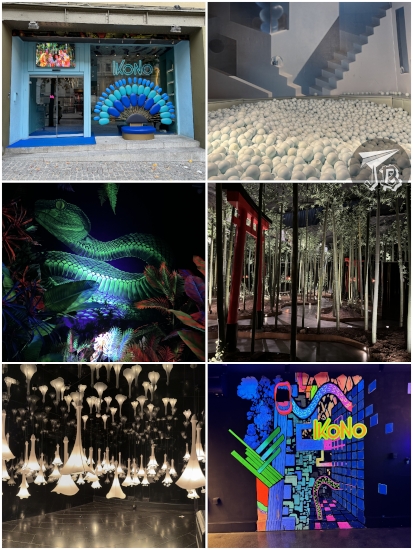
After lunch, we had a 14:50 ticket for a place called IKONO. I have to say I’m warming up more and more to these Instagrammable places – I’ve recently read one of them described as a “fun house” and I think it’s a more than accurate idea. I like them because they’re silly places for, quite literally, kicks and giggles. According to themselves, IKONO was born as a leisure option alternative to “restaurants, shopping and clubbing” for young people – I disagree with the “young people” take though. Out of the permanent establishments of its kind in Madrid, it is probably my favourite.

The IKONO mood kicks off even before you go in, with a peacock-like armchair just outside the main entrance. Spread over three floors, the venue has 15 different experiences / things to do. Once your tickets have been checked, the first “door” you go through is a thick wall of foil fringe curtains in a gradient of shiny colours,which felt like going through the Stargate! (I know, I know, niche comment). All through the place, there is bouncy music playing.

Once you have crossed the curtain – I somehow ended up in a weird inner space instead of where I was supposed to reach, but that’s just me – the first room is a ball pit, and a deep one at that. It was quite hard to move there. There are quite fewer rules than in other ball pits too – you can jump in, and throw balls up. Once you manage to drag yourself out of the ball pit, you get to go upstairs, what I’ve mentally named the “paper floor”. It has three rooms – the landing one has a pretty origami tree and some wings for you to take pictures with. There is a “psychedelic” ward with black-and-white décor and a blue-and-pink confetti cannon. The third one is a dark “jungle scenery” with glow-in-the dark colourings and paintings that I really loved – the frogs were adorable, and the serpent god quite impressive.

Back on the ground floor, the following room is a Japanese-style bamboo forest with wooden lanterns and a torii [鳥居], the traditional entryway to a Shinto shrine. As you may imagine, this was my favourite area. The room walls are covered in mirror, so it looks like a long path, that ends in the following room, a “bamboo forest” which a felt a little underwhelming in comparison. According to the website, the idea of IKONO cemented while visiting the Japanese Arashiyama bamboo grove, and these two rooms are a homage to that place.

Then we walked downstairs, to the “lights area”, with a few more rooms, including some hanging bellflower-shaped lamps, and another with lights made with marbles that went on and off to the music, some modern art inspired by The Last Supper, and a cube of infinite light dots. Back upstairs, there were a couple more panels for photo-ops, and a small souvenir shop. The staff offered a small present if we left a Google review, so we did. Oh, and they had a cloak option for coats, which was amazing.

IKONO Madrid highlights

We walked outside towards our following spot Caixa Forum Madrid, where there are two exhibitions at the moment. The one I really wanted to see was Veneradas y Temidas: el poder femenino en el arte y las creencias, “Worshipped and Feared: Feminine power in art and beliefs”, an exhibit on the female presence in the religion and spirituality of different cultures. The other one was Horizonte y Límite: Visiones del Paisaje. Colección de Arte contemporáneo, “Horizon and Limits: Views / visions of Landscape. Collection of Contemporary Art”, which I had not read about beforehand – because I am biased.

Veneradas y Temidas: el poder femenino en el arte y las creencias is a British Museum’s touring exhibition, Feminine power: the divine to the demonic (which I feel is a more appropriate name, but that’s just me and my problem with translations). It is a collection of artefacts (most of them not exhibited anywhere else) originating from different cultures, trying to convey the “female spiritual power”, though it also has snippets of erotism and homosexuality. One of the most important and impressive pieces include a copy of the Campo Iemini Venus, a “modest Venus”, halfway though covering herself – a copy of the Capitoline Venus, it was found in an Italian Roman villa in 1792. Aphrodite / Venus was the Greek / Roman goddess of Goddess of beauty, love, lust, passion, pleasure, and sexuality. Other Ancient Greece and Rome pieces include Hecate / Trivia (goddess of boundaries, crossroads, ghosts, magic, necromancy, transitions, and the New Moon), Athena / Minerva (Goddess of handicraft, warfare, and wisdom) or Eros / Cupid (God of desire, love, lust, and sex). There are several pieces of pottery, both red and black, depicting different scenes of various… degrees of erotism.

Halfway between Athena and Aphrodite, the goddess Ishtar, Queen of Heaven, and goddess of love and sexuality was worshipped in Mesopotamia (modern Iraq). Though according to the mythology, she had many lovers and was responsible for creation, she was not considered a “mother goddess”, and one of her advocations is the goddess of war.

The Divine to the Demonic: Greece and Mesopotamia

The first thing we saw from Asia were three masks. There was Taraka [Tāṭakā], a Hindu spirit, whose rage upon the murder of her husband turned her turned into a man-eating ogre (ogress?). From Bali, there was Rangda, the demon queen, antagonist of the forces of good, leader of an army of evil witches, and child-eater. From Japan there was a hannya [般若], the jealous vengeful spirit of a scorned woman.

Also from Hinduism, there is a creepily fantastic (or fantastically creepy?) devotional icon (murti [मूर्ति]) of Kali [काली], goddess of death, doomsday and time. The sculpture is the advocation Dakshina Kali – depicted with four arms, a scimitar, a collar made of heads of her slain enemies, and Shiva at her feet. The murti represents a passage in which Kali goes on a rampage after fighting demons, having lost control, and her consort Shiva throws himself at her feet hoping to calm her down.

Theatre masks and Indian Goddess Kali

Among the Egyptian representations, there was Sekhmet, the warrior goddess, represented as a lioness, who was also the goddess of medicine and one of the sun deities. There were also Bastet, who started off similar to Sekhmet but became more of a protector figure, represented as a cat. There were also references to the cosmic goddess Nut, who symbolises the sky, stars, astronomy, the universe, and mothers.

From China, there was a gorgeous Guanyin [觀音] as the Goddess of Compassion, a very different style from the one I had seen in either the British Museum and the Victoria and Albert Museum. There was also a Shiva porcelain which was astonishing.

Egyptian Sekhmet and Chinese Guaiying

From Meso- and South America, there was a beautiful sandstone of Toci, the “mother of the gods” who is depicted with bare breasts and her hands on her belly. There was also a statue of a Mexican cihuateotl. The cihuateteo were spirits of women who died in childbirth, and received the same honours as the warriors who died in combat. There were other references, such as the Hawai’ian goddess of the sea Na-maka-o-Kaha’i, talismans of sex and love (because the Victorians were a bunch of perverts), references to the Mesopotamian demon Lamashtu, Egyptian protection sculptures, funerary steles… and some modern art kind of thing, like a lady sitting down with a ball python slithering on her because… yeah? I really enjoyed the exhibition, though I have to admit I ignored the interactive art a little, to focus on the mythological aspect.

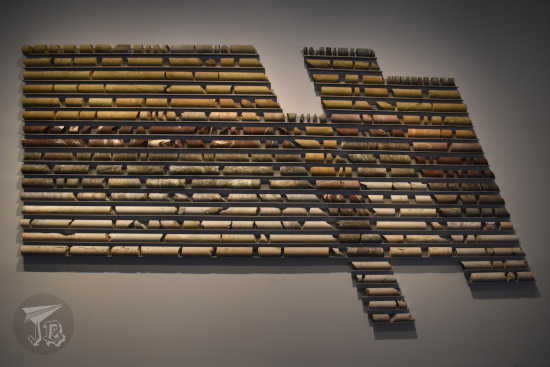
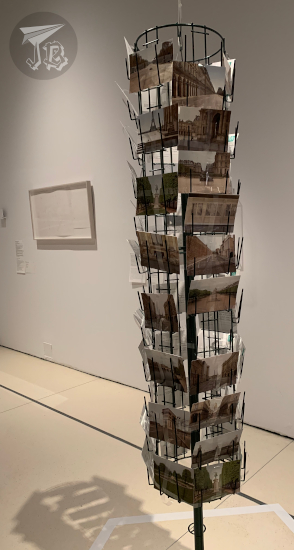
Afterwards, we visited the contemporary art exhibition Horizonte y Límite, which focuses on different… I’m not sure because I know squat about contemporary art (see above comment about the lady and the snake). There were paintings, imaginary photographs, a piece made from different geological cores representing a fault, a panel with postcards, a glass box filled with smoke to represent climate change… Pleasant, but not really my thing. Except the geology cores, they were cool.

Art piece fromthe exhibition Horizonte y Límite: Visiones del Paisaje

After seeing both exhibitions, we headed off towards our next stop. We took a break and sat down for a while to have a great banana-and-strawberry smoothie of all things. Then we walked towards the park Parque Enrique Tierno Galván, where we had tickets for the light show Naturaleza Encendida: Insectos “Lit-up nature: Insects”. The Naturaleza Encendida show used to take place in the Botanical Garden, which is smaller. This year, it has been relocated this year for “reasons unknown” and it feels a bit too long and almost unconnected. All that without taking into account that the idea of a larger-than-me butterfly and giant spiders is a bit creepy to be honest. We had premium tickets which gave us access to the enclosure at any time between 18:00 and 19:00 without queueing, and decided to arrive there around 18:30 as it would already be dark. We had also ordered a cute “magic lantern” – a bunch of sparkling LED filaments – for the giggles.

After an entrance of archways and carpets of light, there is a swarm of dragonflies as a centrepiece. You walk around it, and enter the zig-zagging path. Along the route, you encounter butterflies of different kinds, a line of hard-working ants, bees, grasshoppers, more bees, mosquitoes and flies, more bees, eggs, more grasshoppers, disco balls, larvae (I think? If I had to hazard a guess I’d call them anemones), beetles, ladybugs, spiders and a row of differently-coloured Christmas trees. There were “light corridors” in-between, hive-like hexagons projected onto the trees, and lots of artificial smoke. There are supposed to be some praying mantises somewhere but… I did not see those?

Naturaleza Encendida Insectos figures

All in all, Naturaleza Encendida: Insectos felt too spread out, as if trying to justify the bigger space. Though we had a premium ticket, there was no special premium-only area, and the only benefit was having an hour to go in, without having to queue – which is already enough in my books. I think you really have to be into the topic – we came across a lady who was very freaked out and mostly running so she could get away from the bugs. I have been to three editions of Naturaleza Encendida, and the only one I really enjoyed was the sea-creatures one, Explorium. I thought that the bad weather last year had damped the experience – literally – but I’m going to stop holding my hopes high.

Finally, we headed back to the train station. My morning train had had a five-minute delay, which by the early evening had progressed to the upper 40s. Joy. I’m hoping that when free ticketing is over, service will improve, but I’m not holding my hopes too high…

11th July 2023: Museum of Dreamers in Madrid (Spain)

After I had so much fun in the Balloon Museum, I decided that I also wanted to see the Museum of Dreamers, which is something similar. Furthermore, it Madrid exhibit will close down at the end of July, too.

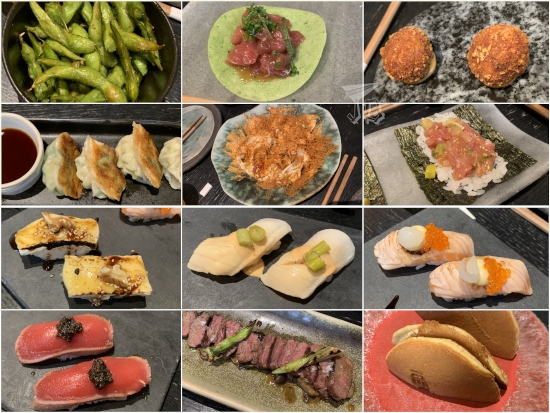
After I finished French school in Madrid, I headed headed off to the Japanese fusion restaurant Nomo Braganza, part of the Nomo Group. Nomo was established in 2007 under the culinary direction of Japanese chef Naoyuki Haginoya. I have to say that I don’t really trust the Spanish-Japanese fusion too much, but in this case, it really panned out. I met my sibling for a late lunch, because I was curious about the chef’s menu, what in Japanese would be called omakase [お任せ], which means leaving the choice of food to the chef. The menu was was a whooping 12 small-sized courses for 50€ – drinks not included, and considering it was 39 ºC outside, we ended up ordering a few rounds of water.

The menu, which changes periodically, comprised in July 2023:

  • Age Edamame Truffle – fermented edamame beans fried with white truffle scent. I personally prefer my edamame boiled, but the truffle scent was a nice touch.
  • Sukiyaki Croquette – oxtail croquette breaded with panko breadcrumbs. This was surprisingly good – and the actual flavour was strong.
  • Maguro Taco – mini taco of tuna tartar with wasabi and shiso (the “taco” was weirdly… not taco-shaped, more like cracker-shaped). The tuna was really good, albeit the base was a bit strange.
  • Gyu Niku Gyoza – aged beef dumplings with caramelised onion and yuzu, two of them per person. It was all right.
  • Ebi Chili – spicy king prawns and fried egg on kataifi noodles, mixed at the table. When we are talking spicy, it means… really spicy. The prawn bits were sizeable, but this was really something I would not miss should it disappear from the menu.
  • Toro Tartar No Temaki – tuna tartar prepared at the table: raw tuna belly mixed with Japanese onion, turnip, egg yolk, chilli pepper and wasabi on a bed of nori and rice so you can roll it yourself (spoiler: you really can’t). This was probably one of my favourite items – but I guess that after all I am a raw tuna fan.
  • Brie Nigiri – flamed Brie cheese nigiri with honey and walnuts. This was probably the weakest sushi bite, but it was still good.
  • Butter Fish Nigiri – butterfish nigiri with kimchi and chilli peppers. Butterfish is only good raw anyway.
  • Aburi Salmon Nigiri – flamed Norwegian salmon nigiri, with Japanese mayonnaise, salmon roe and onion. I still prefer raw salmon, but the flame was light so it was barely perceptible.
  • Maguro Tataki No Nigiri Trufa Nose – tuna tataki nigiri with soy and black truffle sauce. This was also really good.
  • Gyu Niku No Tataki – aged beef tataki with caramelised mushrooms and miso sauce. The combination of meat and the mushroom was strange, but when taken separately it was all good.
  • Caramel dorayaki – two halves of a dorayaki filled with salty caramel paste. Unexpected, because the menu listed something else, but it is not as if it was bad at all!

Chef's choice menu at Nomo Madrid

My sibling ordered some green tea out of the menu, and in the end, the drinks did not add as much to the price as I expected. Also, I have to give a shout-out to the pickled ginger we got. Really good.

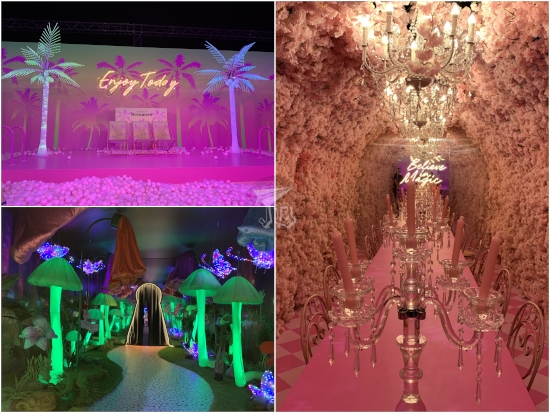
After having lunch, we took a train towards the Museum of Dreamers, which is stands in Espacio Ibercaja Delicias, a place that seems to always look somewhat abandoned, even when it is stupidly hot and sunny. The exhibit was designed by sisters Elena and Giulia Sella, founders of Postology, an agency specialised in “phygigal” experiences. This concept merges the words “physical” and “digital”, allowing for a number of immersive and surreal experiences. The Museum of Dreamers is one of those things that you have to see with an open mind to have some fun. It comprises sixteen interactive installations which are basically photo-ops – after all, the word instagrammable has been officially accepted on dictionaries. I guess it is a new niche that can be exploited, and to be honest, I can get behind that, because some of these activities are hilarious.

Entry is timed, but they do not hold a very strict waiting policy – at least not on a Tuesday at 17:00 and 39 ºC. There were no timed exhibits or performances either. The first installation is a dark room with a starry sky of sorts, designed maybe to isolate the rest of the exhibition from the outside, maybe as a metaphor (100 Dreamers). Then you get to a semi open space that opens to the smaller installations that allow for fun pictures. All through the space there are motivational sentences and “rules” for safety in the different installation.

There is some kind of cosmic tube with mirror that was dizzying to walk into (Free your power), a tunnel made of hearts with an encouraging message at the end (Do what you love), an upside down room (Change perspective), an downside down bedroom with a giant plush and fun bed covers (Never stop dreaming), one full of disco lamps (Sparkle more), and a neon staircase flanked by colourful palm trees (Step by Step).

Museum of Dreamers exhibits

Afterwards, there is a ball pit – you know, it’s not like I had ever stepped into one before Friday, and now that’s twice in one week – with a “relaxing island” in the middle (Enjoy Today). In front of that, a tunnel made of fake pink flowers with a long table, set for a tea party (Believe in Magic). That managed to make you think of Alice in Wonderland imprint on your brain. Thus, you are in the right mindset for the following room, full of giant mushrooms and flowers that open up at will – theirs, for sure, not the visitors – whole giant butterflies hang around with their wings made out of lights (Wonder).

Museum of Dreamers exhibits

The final part of the exhibit consists on a second row of booths – a colour wheel, a door that opens to a fantasy scenery, a VR experience (Choose your Way), a stage (The stage is yours), some pink telephones (Your Dreams are Calling you), bright lights commanding you to DREAM (Be Bright)… There were two more rooms, one with a sky background and swings (Sky is not the limit), and the other with punching bags reading FEAR, STRESS, ANXIETY and so on (Never Give Up). I can’t punch, but I can strangle, so I choked the hell out of these last two.

Museum of Dreamers exhibits

That was the end of the escapade. It was a fun half-day out.

12th & 13th February 2023. The Epic Apocalypse Tour in Madrid (Spain)

The year 2020 was going to be so amazing that I actually would have had to choose the things I wanted to do and sacrifice others. It didn’t turn out that great in the end, with lots of rescheduling and cancellations. I was eventually able to budget time and money for one of those rescheduled events – the joint concert by the metal bands Epica and Apocalyptica in their Epic Apocalypse Tour. For a while, however, there was a bit of uncertainty with dates, as they bounced between Sunday 12th and Monday 13th of February, so I needed to juggle work dates in order to make sure I’d be free on Monday. In the end, I was all clear, all the concert-related activities were set for Sunday evening, and I decided to make a two-day trip out of it – I needed to take a hotel for Sunday anyway.

I arrived in Madrid around 9:30 in the morning. I had some time before my first appointment so I walked into one of the large parks of the city Parque del Buen Retiro, which is part of the Unesco World Heritage Site Paisaje de la Luz (Light Landscape), officially called Paseo del Prado y el Buen Retiro, paisaje de las artes y las ciencias, declared in 2021.

Parque del Buen Retiro was built in the 17th century for one of Felipe IV’s palaces, and it was opened in the late 18th century as public park. The park was almost destroyed during the war against Napoleon’s troops in the early 19th century, so most of it has been rebuilt. Aside from the obvious flora, it features sculptures, fountains, buildings… It is home to a lot of birds, and unfortunately a large number of invasive and fearless monk parakeets (Myiopsitta monachus), whose culling has been controversial in recent years. I got to see common blackbirds (Turdus merula), a European green woodpecker (Picus viridis) and a European robin (Erithacus rubecula).

One of the most important features of the park is the sculpture Monumento al Ángel Caído, which represents an angel falling from grace. It was originally designed by Ricardo Bellber, who made it in plaster in 1877. It was later cast in bronze and the original plaster destroyed, and eventually the sculpture was made into a part of a fountain in 1885. Around the area, there is also an ancient water mill, and to my surprise, the almond trees (Prunus amygdalus) had started blossoming.

Retiro Park collage: a pathway with trees and bushes on both sides, ducks, and a robin.

Retiro Park collage: a water mill, blossoming almond trees, and the fallen angel fountain

At 10:15 I had a guided visit to the Real Observatorio de Madrid (ROM), commissioned around 1785 by Carlos III, as an centre to develop and study astronomy, geodesy, geophysics and cartography. The main building is the astronomical observatory, built by Juan de Villanueva in what then was the outskirts of the city. Today, ROM belongs to the National Geographical Institute (IGN), and it is home to the National Astronomical Observatory, the Central Geophysics Observatory, and the data gathering division of the National Volcanic Service, though no measurements are taken there. The main astronomy measurements are carried out in the Centro Astronómico de Yebes, in a town around 80 km north-west of Madrid. The observatory is also part of the Unesco World Heritage Site.

The visit comprises three stops. The first one is the main building, called Edificio Villanueva, which has three rooms – the main rotunda with a Foucault pendulum, the library, with the spot where gravity was first measured in Spain, and the “Time room”, where the sun used to be traced to determine the hour.

ROM collage. A small Neoclassical building, an inner room with a pendulum and telescopes, a telescope and a 19th century library.

The second stop is the Great Telescope, a replica of one that William Herschel built in the 18th century – Hershchel was one of the greatest telescope makers of the time, and is credited with discovering the planet Uranus, two of its moons, and two moons of Saturn. The telescope was destroyed during the war against the French, but later rebuilt thanks to the number of laminates that had been preserved – the original had a focal distance of 7.6 m and a 61-cm diameter mirror (which is displayed in the main building), and Herschel himself considered it the best he ever built.

Herschel grand telescope: a wooden scaffolding structure keeping a huge black tube pointing at the stas

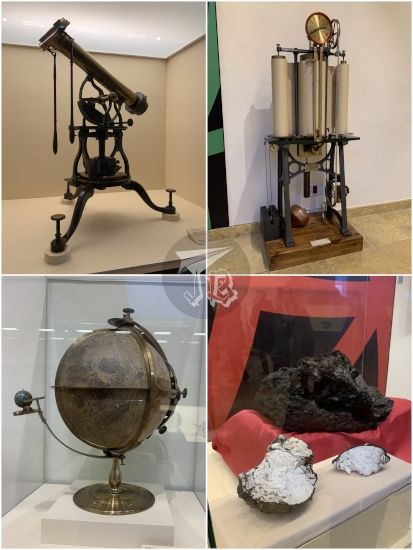
The final stop, the little museum of “Earth and Universe Sciences” has a small collection of ancient instruments used for astronomy, navigation, and geophysics. There are also a couple of seismographs – one of them new, which is up and running – and material retrieved from the volcanic eruptions of El Hierro in 2011 and La Palma in 2021.

Collage. Ancient telescope, old tide measuring device, an old globe, and lava bombs

I had planned for a typical sandwich at an iconic bar afterwards, but I ran into a political demonstration. Thus, I scratched that idea and took the underground westwards. When I was in Egypt, one of the places I visited was Lake Nasser, created by the Aswan High dam. The lake swallowed a lot of villages and monuments, but a few of them, such as Abu Simbel and the Temple of Philae were saved by Unesco. Between 1960 and 1980, a total of 24 monuments were saved, and five out of these were presented as “grants-in-return” to five countries which had offered exceptional technical and financial assistance to the campaign – Germany, Italy, Netherlands, the United States and Spain, the latter being impressive as Spain was in the middle of the dictatorship, and pretty shunned by the international community at the time.

The monument was a small and ruined temple in the now-flooded town of Debod, to which it owns its name Templo de Debod (Temple of Debod). Dedicated to the god Amun, it was built around the location of the First Cataract of the Nile, some 15 km south of Aswan, about 2200 years ago, though the core of the building may have been older. The monument was actually affected by the original dam at the beginning of the 20th century, and it was covered in water for most of the year, which destroyed its colours and damaged the reliefs.

During the Unesco salvage mission, it was dismantled, and eventually granted and taken to Spain, and “freely” reconstructed – a lot of information had been lost, and there were missing blocks. National stone was used to fill in the gaps, and the gates (remains of the pylons) were built in the wrong order, according to some old pictures. The restorers built an air-conditioning system, a wooden roof, and the main hall was closed off with a glass door and window panes. Today, the temple is open to the public at weekends, but unprotected from the Spanish weather – rather different from the Egyptian one – and pollution, it is rapidly deteriorating.

I went inside the temple once when I was a child, and I had a clear memory of it that kept surfacing when I was in Egypt – so I wanted to go back. The entry is free, but capacity is reduced, so I had to queue for almost an hour to enter. I finally matched my memory to reality. The interior of the sanctuary has a small chapel and some carved stones had been taken to a makeshift second floor to display them as a little museum.

A collage of a small Egyptian temple - it has two floating gates that lead up to the main building, which is small with four columns. One picture shows a tiny and dark inside room with an altar.

After the temple, I got lunch on the go, then walked towards the hotel to check in and change clothes. Around 16:15, I set off to La Riviera for the concert. I had a Meet and Greet ticket and had to be there before 17:00. Personnel from the venue were extremely nice, and there was no chaos at all, even if things had been a little disorganised and some fans were lacking M&G confirmation emails. Everything was well-handed and everyone who had paid for an upgrade got through. There were about 30 people to meet and greet Epica and we were ten for Apocalyptica.

Apocalyptica is a Finnish four-man band – Eicca Toppinen, Perttu Kivilaakso, Paavo Lötjönen and Mikko Sirén – founded in 1993. They are “semi-officially” a symphonic metal band, but they’ve ventured into everything from Metallica covers (which was their origin) to pure classical works. They have a very specific style heavily using classical cellos and combining them with modern drums. They currently collaborate with American – self-identified as Cuban in the concert – singer Franky Perez for vocals.

Meeting the four of them was really fun. I got autographs and took the most epic picture I’ve ever taken with a band or artist before. As we were only ten, after it was over, I had time to buy some merchandising and still be the second person to settle on first row – despite having decided that I was going to sit back and relax.

Apocalyptica white and black poster, signed by the four members

General admission started at 18:00, and the crowd was surprisingly tame throughout the whole thing. The venue filled up and the supporting band, Wheel, came up at 18:30. Wheel is a Finnish progressive metal band that consists of James Lascelles (Vocals/Guitar), Santeri Saksala (Drums), Aki ‘Conan’ Virta (Bass) and Jussi Turunen (Lead Guitar).

Wheel Setlist

  1. Hyperion
  2. Blood drinker
  3. Movement
  4. Vultures
  5. Wheel

Wheel playing, each member at his insturment: bass, guitar, singer and drummer

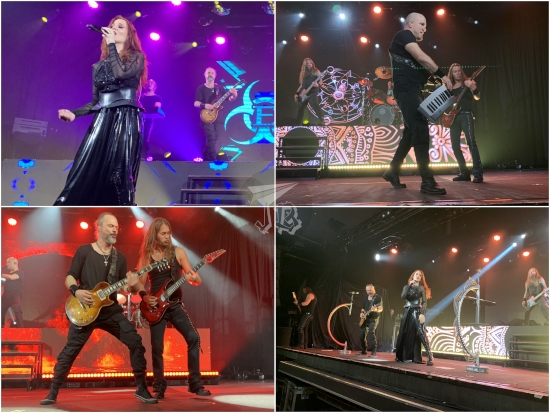
The second band was Epica, which I remember having listening to back when the world was young. They are a Dutch symphonic metal band currently composed by Simone Simons (lead vocals), Mark Jansen (rhythm guitar, vocals), Coen Janssen (keyboards, synthesizer), Ariën van Weesenbeek (drums), Isaac Delahaye (lead guitar) and Rob van der Loo (bass). Simone can go insanely high with her voice, and she has an amazing presence on stage, and the whole band has an immense amount of energy – she also reminded me of a comic character. The keyboardist had a lot of personality too, and he was extremely fun.

Epica Setlist

  1. Abyss of Time – Countdown to Singularity (recording)
  2. The essence of silence
  3. Victims of contingency
  4. Unleashed
  5. The final lullaby
  6. The obsessive devotion
  7. The skeleton key
  8. Rivers
  9. Code of life
  10. Cry for the moon
  11. Beyond the Matrix
  12. Consign to oblivion

Collage of Epica playing, showing different members at their choice of insturment - singer, bassist, guitarist, and keyboardist with a portable keyboard

Finally Apocalyptica came on stage, and it was extremely fun. The things those guys do to their classical cellos would make some classical musicians cry, but the sound is super-powerful. We had Franky Perez for vocals, and a very fun moment regarding “listen to our classical music album at home, because we still feel like death metal”. They interacted a lot with the public, and it felt somehow very friendly / warm – yes, I’m talking about metal here. It was really that fantastically weird.

Apocalyptica Setlist

  1. Ashes of the Modern World
  2. Grace
  3. I’m not Jesus
  4. Not strong enough
  5. Rise
  6. En route to mayhem
  7. Shadowmaker
  8. I don’t care
  9. Nothing else matters
  10. Inquisition Symphony
  11. Seek & Destroy
  12. Farewell
  13. In the Hall of the Mountain King

Apocalyptica playing with Franky Perez. Perez is in the foreground, dressed in black. The thee cello-playing members are in the frame, playing. The drums peek behind them, but you can't spot the drummer

Apocalyptica playing at La Riviera. They have classical cellos. Two of the members stand on the sides, playing their cellos. Another one is walking swinging his as if it weighed nothing, The final one is slamming drums in the background.

We finished off just short of 23:00, I bought off some fast food for dinner, and headed back to the hotel to have a shower and get some sleep. I was woken up early in the morning due to the cleaning crew and the garbage mini-vans noises, but I did not leave bed until 9:00, then set off at 9:30. I bought some cold coffee on the way and walked into the former royal palace gardens, now public park Jardines del Campo del Moro.

Though I’d seen the gardens a few times before, this was the first time I actually walked into them. Despite the frost covering everything, I got a nice view of the palace and different fountains and buildings sprinkled throughout the green – Chalet de Corcho, is a small hut with coloured windows; and Chalecito de la Reina a wooden house that is currently closed. I was insanely amused by a little grass-cutting robot.

Jardines del Campo del Moro. Collage. It's winter and most trees are grey and bare. At the end of the walkway stands the Neoclassical Royal Palace. Two smaller buildings - one of them is white with brown beams, reminscing of German architecture; another one is a small kiosk with colourful windows - red, green...

I wandered around for an hour or so, then headed off via underground to the National library of Spain Biblioteca Nacional de España for the absolutely worst guided visit of my life. Like… it’s true that it’s free, but tickets run out within hours of coming out – on the 20th of the month, for the following month. I’d actually been trying to do this since Covid lockdowns ended… It turns out, we did not see any real books, we could not even peer into the reading area, the book and reading museum is closed and the only information we got was… that the guide did not like the Library. We did not get to see anything interesting or that we could not see on our own, and we did not get to learn anything, so this was a huge blunder. Live and learn – but it was one of the few things that was open on a Monday. The library is a huge Neoclassical building with a fantastic marble staircase inside. The doors and gates are protected by intrincate ironwork fences.

Biblioteca Nacional de España. A Neoclassical building in white and grey tones. The exterior has columns and statues of writers. The interior showcases a pair of twin staircases with the statue of one of the most important library directors between both.

I met with family for a quick lunch and then we went for a walk. We had thought about going to one of the terraces to see the cityscape, but it was closed because it was a Monday. We ended up at the Parque del Retiro park again to make some time and walk. We sat in the sun for a while, then went to see the Palacio de Velázquez there. Currently, it’s part of the modern art museum Museo de Arte Reina Sofía, and I did not really care much about the exhibits, but I like the building. Architect Ricardo Velázquez Bosco built it in brick (with ceramic tiles by Daniel Zuloaga) for the Mining Exhibit in 1883, inspired by London’s Crystal Palace, now gone. The interior is pristine white with hints of iron architecture, but the building’s official style is “neorenaissance historicism” whatever that means.

Palacio de Velazquez: A brick building with large windows and tile decoration. The inside is all white with bits of iron architecture.

Velázquez Bosco and Zuloaga also came together when they designed another building I really like, the glass-and-iron greenhouse Palacio de Cristal, which was built to home tropical flora and fauna from the Philippines in an exhibit in 1887. In front of the palace, there’s a small pond home to some cheeky ducks and geese.

Palacio de cristal. A huge greenhouse with a dome, and two wings. A white duck wanders in the foreground. Between the greenhouse and the duck there's a small pond.

Then, we went to have a snack. Trying to find something on the map before the trip, I’d come across a place called La Mejor Tarta de Chocolate del Mundo, which translates to “The best chocolate cake in the world” and that had to be tried! It was really nice, even if the place was pretty small and felt a bit cramped.

A slice of chocolate cake in front of mugs and teapots

We finally took a stroll down towards the sunset, and I took the train back without much of a hitch, then drove home

6th December 2022: Tim Burton’s Labyrinth (Madrid, Spain)

Despite having decided that immersive exhibits were not for me and the fact that I’m not a Tim Burton fan, here I found myself in Madrid to see this one: Tim Burton’s Labyrinth El Laberinto de Tim Burton. Truth be told, I was only there because my sibling asked me to accompany them. I did not find premium tickets for any of the dates either of us was available, but the 6th of December is a national holiday in Spain, and I calculated that if we were there at opening times it might not be too busy, and we would not come across too many kids.

Tim Burton is an American film-maker born in 1958. His first “hit” may have been Stalk of the Celery Monster, which he wrote, directed and animated when he was a student in the California Institute of Arts, in 1979. It presumably earned him a good grade, but more importantly, an animator’s apprenticeship at Disney Animation Studios. With time, he developed a shrill eerie style, with lots of colours and creepy designs that have increased as years have passed, sometimes defined as “gothic fantasy” – I would refer to it as strident and macabre at times, to be honest. His greatest or most famous works include Beetlejuice, Charlie and the Chocolate Factory, Edward Scissorhands, The Nightmare before Christmas, and the first two Batman films.

The exhibition is hosted in a weird place in Madrid, Espacio Ibercaja Delicias, which might look less… abandoned… when it hasn’t been raining for days, I guess. The space consists on a big tent – where we were not going, it might be designed for circuses or so, some kind of bar / cafeteria, and the monster-like building that hosts the exhibit. It is called a labyrinth because out of the thirty-ish wards, you have to go around choosing doors to see different rooms of the exhibit, insomuch that you would need four rounds to see the complete thing. In the end, you choose 15 rooms to see, out of which some are common, and you reach them from whichever previous place you were in. Others are “less common” and you can reach them through several doors, but not all. You enter the labyrinth through a toothy monster’s mouth, then there’s a big button that “decides” on the first room for you.

Collage: exterior of the Labyrinth, which looks like a one-eyed tentacle monster, and the inner entrance monster whose mouth is the curtain you have to cross to enter the different rooms.

In the rooms there are sculptures that represent the characters, some of them with the original clothes that were designed for them (if the film is a live-action), the plain clothes, and on the walls sketches and animations, some original, some “inspired”, and some made specifically for the exhibit. Some rooms are small and rather empty, others are decorated like the movie sets. There are tricks with lights, and some mirrors, but nothing “immersive” about it, and way too many people around considering the size of some rooms.

The idea of a labyrinth is interesting, but I don’t think the price warrants just seeing half of the exhibit, especially considering the big “misses” of not seeing all the The Nightmare before Christmas. We took about 40 – 45 minutes to go through the 15 rooms.

What I am aware we saw included:

  • Beetlejuice
  • Edward Scissorhands
  • Batman and Batman returns
  • Mars attacks!
  • Charlie and the Chocolate Factory
  • Alice in Wonderland or Alice Through the Looking Glass
  • Corpse Bride
  • Frankenweenie
  • Jack from The Nightmare before Christmas

Collage of Tim Burton's characters: Batman's Pengun, Edward Scissorhands, Emily from Corpse Bride

Collage of Tim Burton's characters: Alien from Mars Attack; the clothing from the Chocolatier (I think) in Charlie and the Chocolate factory, surrounded by twirling candy canes; Beetlejuice

Collage of Tim Burton's characters: Jack from The Nightmare before Christmas; The Mad Hatter from Alice in Wonderland, with some giant mushrooms behind; the boy and the dog of Frankenweenie

I think this is an exhibit for die-hard fans that are willing to pay for the premium ticket and see the whole thing twice. What it’s not, and that’s for sure, is for kids.

On both ways, we had some train trouble – delays and technical problems, but nothing too dramatic, and I was home before sunset – but after buying a stack of Christmas candy canes! And my sibling enjoyed, which was the goal anyway.

2nd December 2022: “Tutankhamun Immersive Exhibition” in Madrid (Spain)

In 1922, an archaeologist named Howard Carter discovered the tomb of Pharaoh Tutankhamun in the Valley of the Kings, Egypt. Tutankhamun belonged to the Eighteenth Dynasty. He reigned over Egypt around 1330 BCE, and restored the Ancient Egyptian religion. When he died, he was buried in a smaller-than-expected tomb, probably because his death was sudden and unexpected – for a while, it was hypothesised that he had been murdered, but it seems that he died from a combination of an infection and several previous pathologies (nothing to do with the fact that his parents were brother and sister, I’m sure).

The tomb was robbed and restored twice within a few years of Tutankhamun’s death, but it was eventually buried by alluvium brought by flash floods, and the debris from other tombs being built nearby. Thus, when Carter found it in 1922, it was mostly untouched and unspoilt. The death of Carter’s sponsor George Helbert, five months after visiting the tomb, sparked the rumour about a Curse of the Pharaohs, which has inspired countless works of fiction.

In 2022, Spain is living through a fad of “immersive exhibitions”, heavily based on technology, virtual reality and computer games. I was curious about what it would be about, exactly, so I decided to celebrate the end of work season by hitting the exhibit. I was early as the day before there had been a bit of public transport trouble and you usually have more chances of getting in if you’re early rather than late. Thus, I reached Centro Cultural Matadero in Madrid about half an hour earlier than my ticket read, and I was let in without any issue.

The “immersive exhibit” Tutankamón: La Exposición Inmersiva was devised by MAD, Madrid Artes Digitales, which specialises in digital creation and immersive experiences such a this. The exhibit has been designed in cooperation with the History Channel.

The first bit was a number of panels, explaining the “Egyptmania” that swept the world after the discovery of the mummy, the process of mummification, or life in ancient Egypt. The second held a replica of the inner and outer sarcophagus, along with the mummy, then replicas a few artefacts that had been found in the tomb, including the famous golden mask the pharaoh was buried with.

Three part collage: The upper picture shows the mummy of Tutankhamun suspended from the floor, imitating an open sarcophagus with the lid open on top of that. Bottom left: reproduction of the mortuary mask, in gold and blue, it has the typical Egyptian hair and beard. Lower right: reproductions of small objects found in the grave: estelae and human-like small sculptures.

Afterwards, you go into a huge ward with a projection on all four walls plus the floor, which is very spectacular but does not tell you much about the real history of either Tutankhamun or the tomb, it was just a cool video of flashy images with a narration in first person, showing the interior of the tomb, yes, but mostly vaguely-related imaginary, including some of the Egyptian gods. What it did have, and that was neat, was an original newsreel about the opening of the tomb, including Howard’s voice.

Collage of a 3D projection. Left, from top to bottom, views of Tutankhamun's grave: the outer area, in sandstone with sculptures, and two views of the inner painting an decoration, showing figures and hyeroglyphs. On the right, a projection of lotus flowers blooming and turning into gold, representing the soul of the pharaoh.

A large ward with a projection of a starry sky on the walls. At the front, a view of Tutankhamun's mortuary mask, eyes glowing.

A projection of Tutankhamun's mortuary mask, eyes glowing. Around it, golden writing symbols, maybe hyeroglyphs.

The following area had an augmented reality game, which I won (didn’t get anything though), a photo booth that I skipped and some “I bet you didn’t know” facts – about one third of them were common knowledge, and another third was information from previous panels though.

Finally, there was a room with virtual reality glasses and headphones, but my headphones wouldn’t work – I later realised they were not plugged into anything. This represented – I think – the trip to the Egyptian underworld, as I “started” at Tutankhamun’s tomb, then there were volcanoes, and I ended up in front of Anubis, who weighed a heart against a plume – the Judgement of the Dead.

The VR experience there was the last spot in the exhibition – because I skipped the photo booth – before one went into the shop. In the end, I was there for about an hour and a half, but it almost took me two hours to arrive and an hour and half to come back.

Though I don’t regret the mental break, I have decided that immersive experiences are not for me.

30th July 2020: Vampires in Madrid (Spain)

The world is pretty much topsy-turvy these days, isn’t it? I’ve been literally staring at the computer screen for about an hour, wondering how to start, how to explain. I’ve erased the opening paragraph about four times too (≧▽≦). Thus, I will just spare you the introduction, explanations, justifications, and so. It took me a while to decide in favour of my little trip to Madrid.

Vampires, the Evolution of the Myth, or Vampiros, la Evolución del Mito (#VampirosCaixaForum) was scheduled before the whole COVID-19 debacle. Once things started opening up in Spain, the exhibition was rescheduled to run in Madrid for a couple of months through summer. And for a while I pondered whether it was… I’m not sure how to put it… worth the risk? For months we had been told to avoid public transport, which is my main mean of moving around, so in the end I decided what the fuck, if I was doing this, I was going to drive into the centre of Madrid – for the very first time in my life. For the record I don’t particularly enjoy driving, I much prefer being driven, and my sense of directions when driving is… not the best, so I borrowed a GPS, picked up my sister, and drove off.

After only getting the wrong exit once, we left the car in an underground parking lot and walked ten short minutes and we were in front of the Caixa Forum Madrid. Caixa Forum is a cultural space owned by a savings bank in search of tax deductions that organises shows and exhibitions. We had a compound ticket for 12:00, which included both exhibitions in the building, and a theme lunch. And so we went.

Vampiros: La Evolución del Mito, “Vampires, the Evolution of the Myth” is an exhibition originally organised by La Cinémathèque française, which is a French French non-profit film organisation that holds one of the collection of cinema-related objects and documents in the world. As they are specialised in films, the vampire exhibition focuses on the figure of the preternatural being throughout cinema.

The first room is focused on the book Dracula, and the Romantic interpretation of the myth – Romantic as the literary period, not the lovey-dovey stuff. Highlights include a facsimile of the first scene of the manuscript of Bram Stoker’s version of Dracula for theatre, aside from early editions of the novel and other vampire books such as John William Polidori’s The Vampyre and Joseph Sheridan Le Fanu’s Carmilla. There were also some surprising items – some of Francisco de Goya’s wood-prints. Goya was one of the most influential painters in Spain, also grounded in the Romantic movement. Good stuff.

The second room was dedicated to Nosferatu, one of the key films in the vampire genre, with some promotional material and film props – this was the ward with best and most important number of items.

The following room was dedicated to the romantic, erotic and sexual vampires. It had two main focuses – one was the Dracula portrayed by Bela Lugosi as the epitome of the elegant, seductive vampire, first in Broadway, then in the 1931 film by Universal Studios. The centrepiece of the room featured two pieces of the wardrobe in Coppola’s Bram Stoker’s Dracula worn by Gary Oldman and Winona Ryder, along with several designs for the wardrobe (which could not be photographed, but you can peek at in some of the pics). Finally, we got to see the suit worn Tom Cruise as Lestat and Kirsten Dunst as Claudia in the 1994 film Interview with the Vampire. I missed some more Christopher Lee, as there were barely some photographies of his performance in Dracula (1958) and its sequels.

On one side there was a small area dedicated to the vampire as a political metaphor. The final area was dedicated to the pop vampire, including magazines, comics and graphic novels, some Japanese manga, and so on – even Count Dracula from Sesame Street! Then again, he was on a screen. I would have killed to see the real puppet.

All in all I got the impression that the exhibit lacked ‘the real thing’ and abused the film montages. I was expecting a few more props and less bits of films which… after all I’ve seen most (≧▽≦). The truth is that the myth of the vampire starts much earlier than the “Medieval” vampire featured in the Romantic fantasies, and can be traced to early succubi or the Lamia myths in Ancient Greece if you think about Western Culture alone. The Romantic and Victorian writers just made the myth cool as it was once more popular due to a sort of “vampire hysteria” that crossed the Balkans the previous century – that’s probably the main reason why Bram Stoker chose the figure of a Transylvanian warlord to create his character. But in the end it was a good way to break the activity fast.

Then we moved on to the next exhibition, Cámara y ciudad. La vida urbana en la fotografía y el cine, “Camera and the city: urban life in photography and the cinema” which… was okay, I guess. I guess I’m not a photography / video kind of person (≧▽≦).

After perusing the shop for a while, we moved to the cafeteria, where a “theme menu” had been designed. Let me detail that for you:

  • El frenesí vampírico / Vampire frenzy: virgin – I think – Bloody Mary
  • Estacas de la muerte / Death stakes: aubergine tempura with sweet and sour sauce
  • Reencarnación / Reincarnation: Goat cheese, sweet beet and raspberries salad
  • Inmortalidad / Immortality: Macerated sea bass with lime, orange, coriander, salt and pepper, with a side of mango and tortilla chips
  • Embalsamamiento / Embalmment: Duck magret with a red wine sauce and mushrooms
  • Drácula / Dracula: Crème anglaise, jelly and raspberry mousse.

Let me tell you, this was amazing – and fortunately the portions were small so the final amount was more than adequate.

It was a little later than 15:15 when we left the CaixaForum centre and headed off the Museo Nacional Thyssen-Bornemisza, the Thyssen-Bornemisza National Museum, a museum built from a noble family’s art collection which also hosts temporary exhibitions. The permanent exhibition is chronologically organised, and here are some of the pieces by famous artists: Rubens, Rembrandt, Van Gogh, Degas, El Greco, Tiziano… and hm… many very modern painters I… can’t understand.

Finally we decided to call it a day before people started coming out of work and leaving town so that we did not get into a traffic jam, and I am very proud of myself for taking the drive – which was my wee white whale for a while. I’ll see myself out now (≧▽≦)

Distance: Approx. 120 km driving; 6.08 km walking

Also, as an afterthought, I ordered the Vampire exhibition book online. I did not at first because I did not feel like carrying it around as it is thick. But they home-delivered and I actually saved 2.5 bucks?

PS: New logo! What do you think?

24th March 2018: The day I saw Hatsune Miku (Madrid, Spain)

“Vocaloid Opera – The End” is an opera for an in the digital world. It was written by Keiichiro Shibuya and performed by Hatsune Miku. Hatsune Miku [初音ミク] is a vocaloid idol. In case you’ve never heard of vocaloids, the idea is a bit complicated. A voicaloid is a singing voice synthesizer software product, basically a computer-generated singing voice. The software was released in 2004 and it exploded with popularity in Japan. Hatsune Miku was given a humanoid shape when it was released in 2017 – and it was definitely a she. So, in a way, Hatsune Miku is a voice synthesiser with a cartoon-female-human form.

Yeah, weird. I have always thought so too. But it was dirt-cheap (8 quid), and there was a session at 18:00 on Saturday that I could attend without a late train back. So I dyed my hair purple (because no, I’m not showing up to a blue-haired character’s show in blue hair), got out my thick faux-fur-neck coat and off I went.

The show was being held at Naves Matadero is a former slaughterhouse turned arts centre. It has turned the buildings into theatres, showrooms and so on. As I walked around the area, looking for my theatre I saw a hell of a lot of families with kids under ten, there to see “the doll” or “the cartoons”. I’m not kidding, during the first ten to fifteen minutes of the show, about twenty families left (≧▽≦).

Entrance to the venue, showing the sign of Naves Matadero Nave 11 and Vocaloid Opera the end

“Vocaloid Opera – The End”, composed by Keiichiro Shibuya [渋谷慶一郎], explores the concept of an artificial being obsessing about death. The whole show is digital, just like Miku, as she wanders the world wondering about “the end”. She seems trapped in a surreal nightmare, with several scenarios that don’t make that much sense. Miku is followed in her trip by a plush rabbit (Alice much?), she talks on the phone and there is a multiple-eye monster around.

Booklet and ticket. Both read Vocalod Opera the end, with the dates. The booklet shows an image of Hatsune Miku, crying blood, the whole booklet is tinted yellow

The music has an electronic flavour, and at times repetitive. It’s loud and you feel it more than hear it. There warnings about bright and strobe lights all around and I understood why – the whole thing relied heavily on CGI and lighting. The chosen topic, along the images were claustrophobic, and I think that was on purpose – there are different “dying” options: drowning, gas masks, withering off.

The climatic “aria” peaks with Miku asking the spectator “Am I dead? Or just asleep? You decide. It makes little difference to me.” In the end, she is a human creation so, like humans, she will “die” sometime too (aaaaand I have opinions about this because I believe that some human creations transcend their authors). And a final downside: knickers. Seriously, what’s with Japanese people and knickers?! She’s a CGI doll – true, wearing CGI clothes designed by the former artistic director of Louis Vuitton, Marc Jacobs, but a CGI doll!

That was all that I did, but here are some pictures I managed to snatch a few pictures, including of the actual 3D rendering of Miku.

Picture of the composer, dressed in yellow

Life-sized sculpture of Hatsune Miku, wearing a chequered dress that shows her waist, and heels. Her hair is flying as she turns.

16th January 2016: Un Planeta Enloquecido: Fantasmas, Monstruos, y Alienígenas en el Manga (Exhibition in Madrid, Spain)

Naves Matadero in Madrid was holding a free exhibition on Japanese “monsters, ghosts and aliens” in manga and Japanese pop culture, and since I was around I decided to drop by. Here are some pictures.

I did not stay over but took a bus right back home because it was too cold for anything else.

26th December 2013: Japanese Exhibitions & Christmas Lights in Madrid (Spain)

Over the Christmas break, there were many activities related to the celebration of the establishment of diplomacy between Spain and Japan, so-called Año Dual España Japón. We decided to kick off the day going to a Japanese restaurant, my favourite in Madrid, the Nagoya (believe it or not, this is the daily menu).

There was a Calligraphy exhibit in the national library, Biblioteca Nacional. On the way, we also found that there was an exhibition about the Chinese terracotta warriors, but the queue was insane! We decided to try to get tickets online for another day.

We went to Caixa Forum to see a Japonism (19th-century European art influenced by Japanese concepts and aesthetics). Honestly, pictures were forbidden, but I snuck one because I really loved the painting.

We also took a walk to see the Christmas lights. Here’s the Postal Service building, Edificio de Correos.

And a view of Gran Vía, one of the main arteries of Madrid, all lit up.