3rd June 2021: Hike to the Aljibe Waterfalls (Spain)

The Ayllón Mountain Range or Sierra de Ayllón is the of the chains that conforms the Spanish Central System Sistema Central, on its easternmost edge.

The Central System was formed during the early Cenozoic Era (the current geological era) in a process called the Alpine orogeny – when the African tectonic plate crashed against the Eurasian plate, a geological event that gave way to the main European and Asian mountain ranges, from Spain in the west to Java in the east.

It rests on a granite base that became first folded, then fractured during the formation of the system. As the rocks eroded, the sediments deposited and formed new sedimentary socks. Other processes that influenced the formation and shape of the ranges have been the action of glaciers and rivers and the subsequent weathering of the exposed rock.

The most common rocks in the Ayllón Range are granite, as expected, gneiss, and slates, some of the latest mixed with clays. For centuries, the villages of the area have been known as “black villages” (pueblos negros) as slate has been extracted to build them. One of such villages is Campillo de Ranas, which translates to something akin to “Little Field of Frogs”, and one of the neighbourhoods adjoined to them is Roblelacasa (literally Oak-the-House).

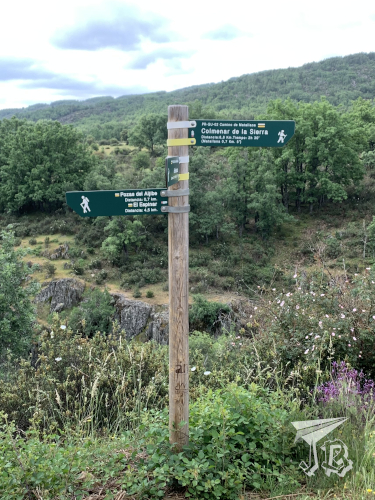
Roblelacasa happens to be the start of a hiking route to one of the highlights of the range – the Pozas del Aljibe (Aljibe Pools), with Aljibe being a word of Arab origin that means “cistern” or “well”, so not that original a name, I guess. I had been wanting to see these pools – also called a waterfall – for a while, so I decided to drive off and hike the route to see the Aljibe, which is considered one of the most beautiful in the centre of Spain. The hike is about 3.3 km each way – but guess what? I ended up taking a detour or two (≧▽≦). The pools are formed by the Soto Creek, Arroyo del Soto, a tributary to the river Jarama which in turn flows into the river Tagus.

Off I went. The drive took about an hour and twenty minutes. I left home around 8.20 and arrived in Roblelacasa around 9:40. The drive went well, most of the road was a nice national road, and as it was a local holiday traffic was scarce. Some people were in a great hurry though, ignoring speed limits. This was my first time driving on my own with the Sat-Nav, and it went all right. However, as I drove towards the range, there was a dark cloud I did not like one bit.

Just after reaching the “village”, I found a parking spot right behind the panels, as the expected parking lot was closed off. I had packed some frozen water, biscuits, the camera and my cap – but I had forgotten the umbrella, and it was a bit grey. I decided to leave taking pictures of the village for later, and I started walking just behind a couple who had arrived virtually at the same time, but I passed them as they stopped to take pictures.

Information

Roblelacasa

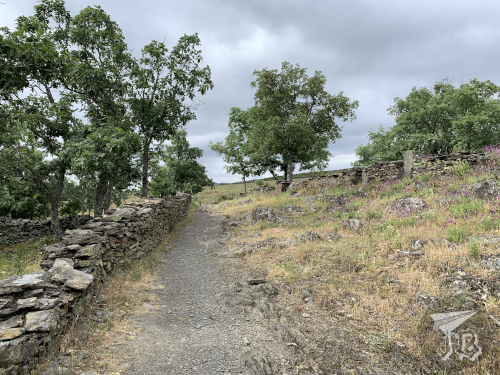
The route is officially named “PR-GU 09: Sendero de los pozos del Aljibe” and it is part of the natural park Parque Natural de la Sierra Norte de Guadalajara. Upon leaving Roblelacasa, the first couple of hundred metres crossed fractured and weathered rock before crossing a symbolic gate that marks official the beginning of the trail with a white and yellow double-line. Then, I walked onto a gravel path flanked by the remains of old fences. To the left opens a valley, and looking back I could see the village, in black.

Start of the route

Old slate fences

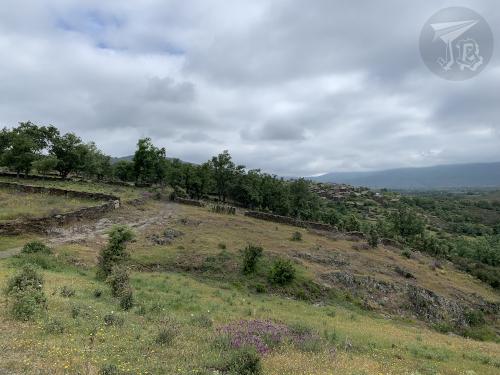
Valley

Valley and village

The route widens into a dirt track that is obviously travelled by car sometimes, as the range peaks stand in front of you. There are no trees but a lot of bushes and aromatic herbs, and as you walk the scent is very pleasant. Then there is a small forest and a second barrier, which marks the turn where you are going to start climbing a new hill – slowly, the terrain rises to your left while it lowers on your right, giving way to the creek’s valley. Just before reaching this I passed a family who had started walking before me.

Mountain Range in front

Mountain Range around

Eventually, you reach a fork in the trail, with the choices of going left towards the waterfall or right down the valley to see a former dam-turned-bridge. I went to the waterfalls, figuring out that I could always go down to the dam on my way back. The track became narrower and rocks started popping up again.

Fork on the way

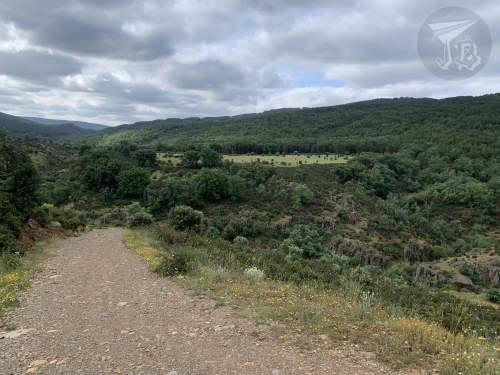
Valley

Creek in the valley

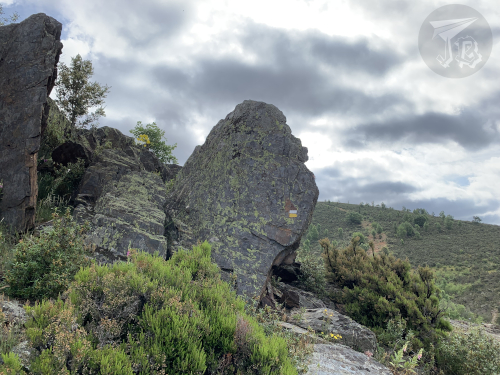
Geological formations

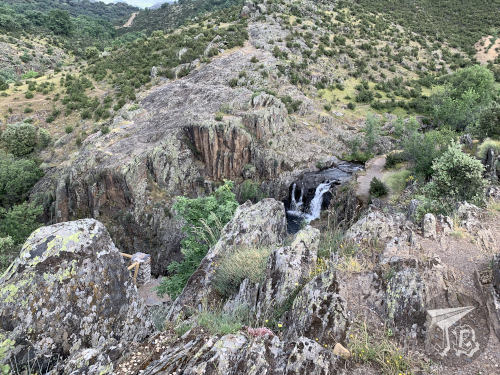
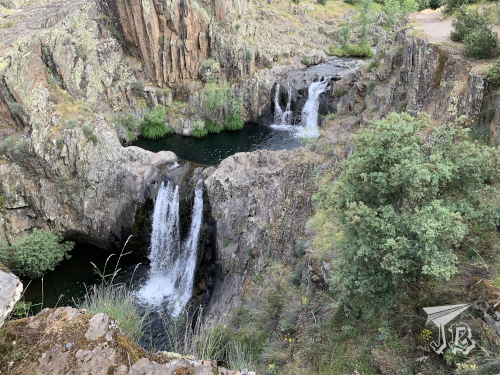
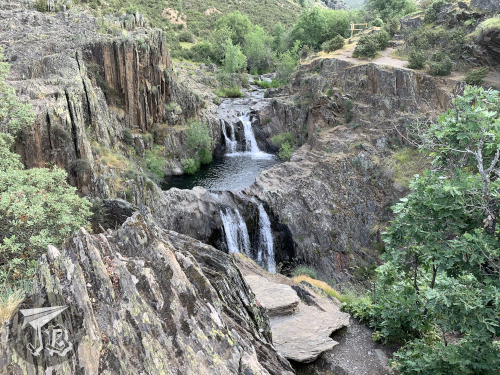
I wandered off the trail (you can see the markings on the upper picture) a couple of times because the views were neat, but a few minutes later I crossed a little bridge to get access to the waterfalls viewpoint on the left-hand-side bank… which was closed. Believe it or not, the actual waterfall area had quite a few “do not walk, falling risk” signs that… okay, I have to be honest… I pretended not to see. I hiked up to the viewpoint and sneaked a little to the side to see both waterfalls. As it has been storming, there was a good amount of water flowing, so the view was pretty cool.

Wooden Bridge

First waterfall

The upper waterfall is about three metres high, and the easier one to see, without needing to ignore any warning sings. When I walked up to the viewpoint I got an amazing view of both the upper and lower waterfalls, the latter being about 7 metres high. It is easy to see how they are called either waterfalls or pools.

Both waterfalls from the left bank

Both waterfalls from the right bank

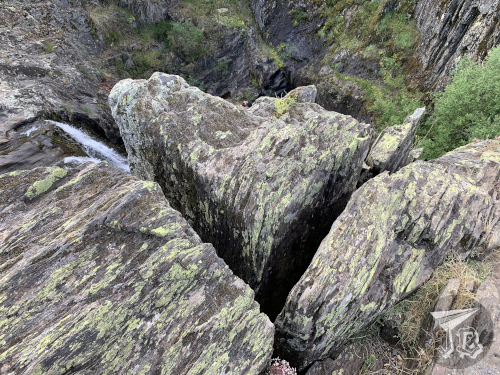
Remember that I said that I passed a family on my way up? This is kind of important because it means that I was basically alone in the waterfall area for about ten minutes, enough to take a good bunch of pictures from both banks of the creek without having to edit people out. I was however very cautious about cracks and faults. I think most of the rocks in the area are quartzes but my geology skills are a bit rusty.

Cracks on the rock

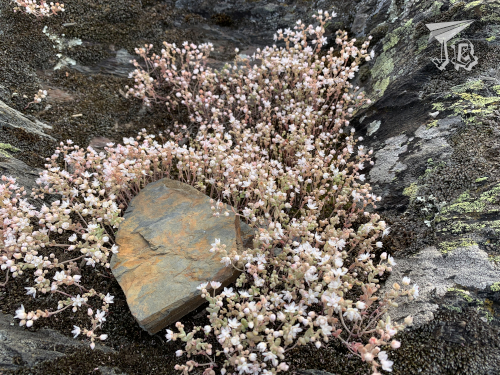
As I decided to turn around, the family arrived, and so did the couple I had first passed and another group that must have started behind me. That was okay because I was done, and on my way back I could stop for a lot of pictures that I had not taken before. Here you can see the difference between the quartz /gneiss (surrounding the flowers) and the slate (in the middle).

Flowers growing from the rock

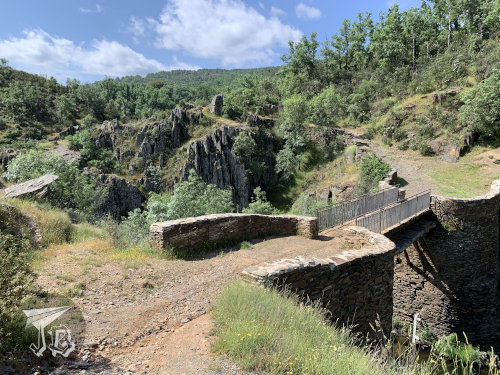
Also, at some point before I started my return hike, it cleared up. All of a sudden it was hot so first I shed off my sweatshirt and when I reached the crossroads again I really needed a drink and some shade – but I had packed water and the cap, so everything was fine, and I could divert to see the old dam, Presa de Matallana over the creek Soto – from both sides. This must have been around 11 am.

Valley on the way back

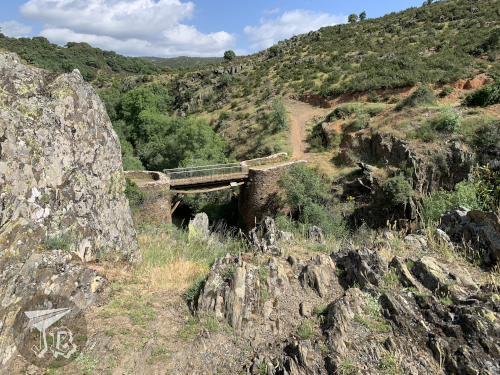
Presa de Matallana from the left bank

Presa de Matallana from the right bank

I turned back towards Roblelacasa and I noticed that the wide track was a bit more “upwards” than I had noticed the “downwards”. I had a bit of a tired moment as I adjusted to hiking up in the heat – why is it that normal hills tire me more than uneven paths? But it was over in five minutes and I was back in the village a bit before twelve. On the way now I stopped to take pictures of the flowers and bushes around, and of the valley that Roblelacasa overlooks – and ran into four or five more groups / couples who must have started walking around 11, so it was a good call to get there early.

The track back

Roblelacasa from the outskirts

Flowers on the way

This is how the village looks in the light of day, just before I took the car and drove back around noon. I decided that I would go back to the area some other time to explore other villages around, mainly Tamajón, which is reported to have an interesting geological area, and some other black villages.

The village

Oh, and a the pictureless anecdote of the trip, for obvious reasons. There were a lot, and I mean a lot of “caution wildlife” traffic signals, and on the drive there I thought that I had very rarely encountered any wildlife crossing the road. I had also not come across any wild (or domestic) on the trail, aside from some little lizards and a few pet dogs with their owners. Well, good thing I was driving a good 10 kph under the speed limit, because on the drive back I had to yield to a wild boar! Live and learn (to drive slowly in wildlife areas)!

Driven distance: around 130 km (2h 30min)
Hiked distance: 6.7 km / 11,106 steps (2h 20min)

8th & 9th January 2021: Guadalajara & Filomena (Spain)

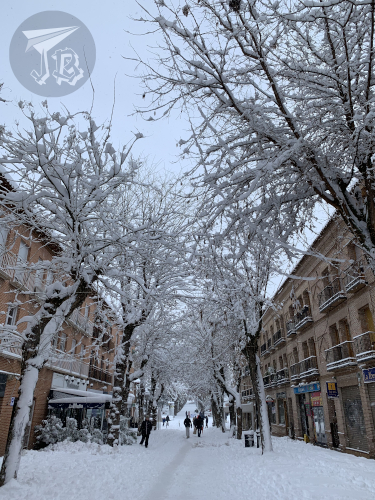
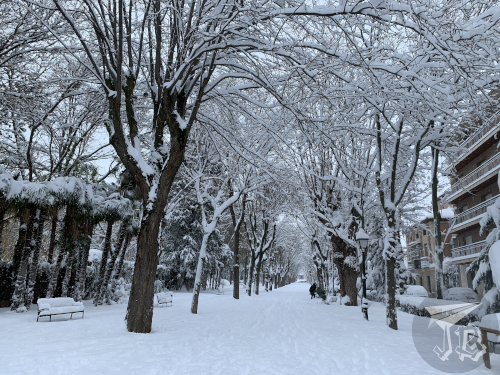
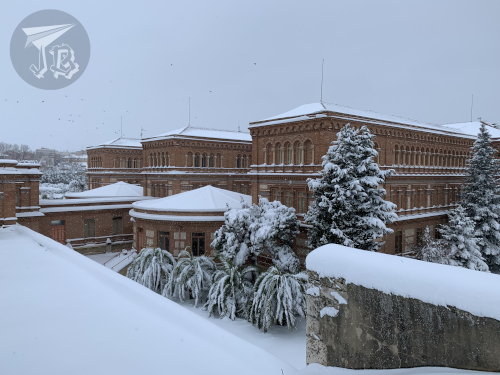
Since 2017, Spain (alongside Portugal and France) has taken up the custom of naming bad storms, and this season we are up to ‘F’, the 6th bad storm. In this case, the storm, named Filomena, entered Spain from the south west and collided with a polar air mass that happened to be coming from the north. The result – snow. Lot’s of it, with low temperatures and snow-heights not seen in a very long time. Some call it “the snowfall of a lifetime”.

As Covid-19 has made travelling impossible – or at least pretty unsafe / irresponsible (choose your pick), plans have been pushed back again, and plain cancelled. While truth be told I still hold tickets for the Saint Seiya event in Paris in late May, I have no hope I will be able to attend. Even if the Covid crisis fades away, there’s the extra issue of the economic blow 2020 caused.

Anyway, back to Filomena – it brought something that is rarely seen in these parts. Snow. Lots of it. So before everything went to hell, I just decided to ignore the stay at home recommendation and took a couple of walks around Guadalajara for a rare sight – the monuments covered with snow. Furthermore, as the snow is expected to freeze into ice plates, I had to go out when the snow was still fresh.

I took two different walks. On the eight of January, Friday, as soon as I got out of wok I put on my snow boots (perks from the time living in Scotland) and winter coat, then threw my raincoat over it – it was a tricky movement, but I managed not to dislocate my shoulder doing so. By this time there was a coverage of a few centimetres, and I decided to head out to the outer area of town where I could sneakily take my mask off if my glasses fogged too much, which I had to do when I crossed the road, because there’s no actual crossing.

There was a surprising amount of people around! Fortunately I was able to keep my distance, especially at the times when I tried to breathe – even if I went out with the smaller glasses, at points I had to take them and the mask off to be able to breathe and see anything.

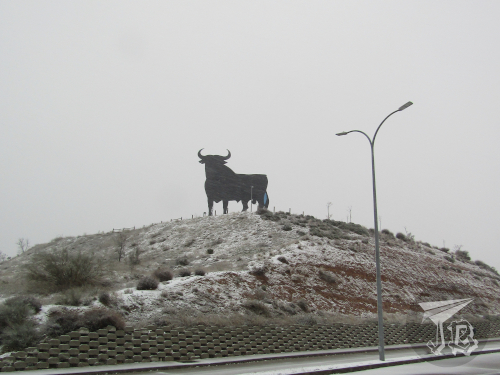
I walked up to the Toro de Osborne a winery-billboard-turned-item-of-cultural-and-visual-interest which as you can see is shaped as a bull – representing the species used in bred for bullfighting, because the Osborne winery is located in an area also famous for the livestock. It is made of metal and measures around 14 metres high, one of the 91 that remain around Spain. It stands in an area that was supposed to become urbanised but never did, so it has several unfinished alleys and corners. There has been a statue there since 1975, called El Abrazo, (The Hug), which has always reminded me of a decomposing DNA strand. It was erected by Francisco Sobrino, the most famous sculptor from the town.

I went back right before sundown, and the roads were already difficult. It continued snowing throughout the night, and when I woke up on Saturday morning, no cars could run, there were no buses, trains had been stopped and some trees had collapsed under the weight of the strongest snowfall in decades. But… temptation won. I only wanted to peek around the corner a little, but then I decided that as there was a good chance I would run into people, I could not cheat on mask policy – so I put my contacts on. That warranted for a longer walk as those are disposable, and… not cheap (≧▽≦).

First I walked down the Avenida del Ejército, one of the main arteries in town, which had already been somewhat cleaned of snow, which was good, because… well, there was a bit more of a cover than the day before

I reached the park built after the ancient Arab structure, Parque de la Huerta de San Antonio. To the left stands one of the towers of the old walls, Torreón de Alvar Fáñez.

I saw the snowed Palacio del Infantado. This palace was built in the late Renaissance style, designed by Juan Guas and commissioned by the Marquis of Santillana. Although the main construction happened between 1480 and 1497 but has been reformed in several occasions, even recently as it was turned from public library into monument and museum. Infantado is a name related to the concepts of infante or infanta, which are the Spanish terms that designate the children of monarchs who are not the direct heirs (so no the crown prince or princess). The most important feature is the main façade built with sand-coloured rocks and diamond protuberances as decoration. It was suspected to have suffered from aluminosis concrete a couple of years back, but after a small political struggle, it the palace was deemed healthy again. Magic, I guess.

Up the central street of the old town, I took a small detour to check the Iglesia de Santiago Apóstol to the left. The church, built in bricks, used to belong to a now-gone convent.

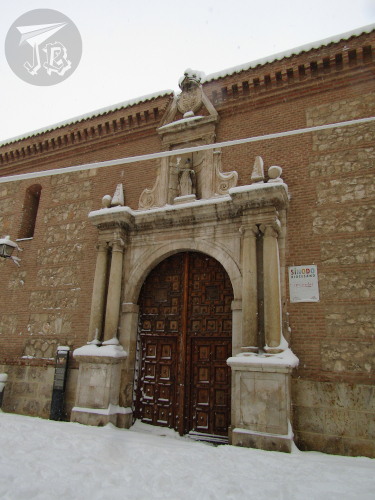
In front of the church stands the convent-turned-palace-turned-high-school Convento de la Piedad / Palacio de Antonio de Mendoza. The convent-palace represents the start of the Renaissance influence in Spain, especially the former grand entrance.

At the end of the street stands the main square and Ayuntamiento, the town hall, and main square, where the street turns into the main street, Calle Mayor. The town hall, built at the beginning of the 20th century, sports an interesting bell tower in iron.

The square Plaza del Jardinillo (square of the little garden) where the Baroque church Iglesia de San Nicolás el Real stands. You can’t really recognise him under all the snow, but there is a Neptune standing in the middle of the fountain in the square.

Main Street continues until the square Plaza de Santo Domingo. The square is half park-like, half built, and one of the trees that died in the park area was carved into a book-stash sculpture.

On the other side of the road stands another church, Iglesia de San Ginés, built in the 17th century with two towers and a Romanesque-looking entrance.

The police tape around the main town park, Parque de la Concordia, had been partially taken down and I interpreted (wrongly) by the sheer number of people inside that it was allowed to walk in. Only when I reached the other side I realised that the park was considered unsafe, and of course I did not risk any other trespassing. The park dates to mid-19th century, and hosts a gazebo-like structure built in brick and iron by Francisco Checa in 1915.

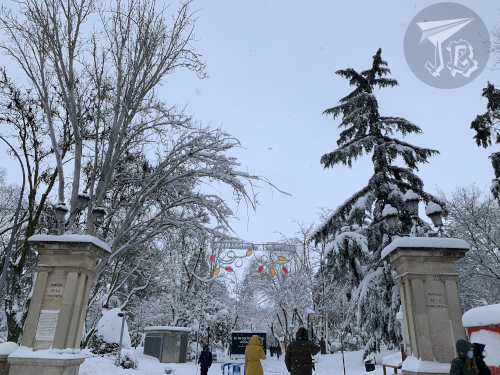
I went on to the Paseo de San Roque, only on the street area, as the more park-like one was taped off. This is one of the most diverse parks in town, and some say that it could / should have been considered a botanical garden.

I walked alongside, peeked into the park Parque de las Adoratrices, but it was packed, so I continued on. Although this park is rather recent, opened in 2009, the walls and fences were built a century earlier. The town festival used to be celebrated here, but it was moved away to the outskirts as the town grew.

At the end of the street stands the chapel Ermita de San Roque , which originally was outside the town when it was built in the 17th century, in the typical brick of the area.

I walked around the walled area of the Colegio de las Adoratrices, with some really cool views of the pantheon that stands there, Panteón de la Duquesa de Sevillano, the school building and the church Iglesia de Santa María Micaela. This whole area used to belong to the Duchess, who commissioned the architectural complex in the 19th century. The pantheon is a particular example of the eclectic architecture, with a purple dome. The church is a mixture of different styles, out of which maybe neo-Gothic would be the most prominent one.

The street I wanted to go along next was a) taped off and b) waaaay too steep for a safe climb-up, so I decided to turn towards another of the important squares in town, Plaza de Bejanque. You can guess the old fortress Fuerte de San Francisco behind it, but it was also full of people, so I walked fast.

One of the features of the square is the old gate from the walls, Puerta de Bejanque, one of the access gates through the 14th century wall. This used to be part of a house that was built around it, and it was unearthed, so to speak, in the 90s.

I went down towards the co-cathedral Concatedral de Santa María. Originally built in the 13th century, this catholic church has been redesigned and rebuilt in several styles. It is best characterised by the horse-shoe arches in the main façade.

And sneaked up towards the chapel Capilla de Luis de Lucena, a small and compact chapel built like a tiny fortress that used to be an oratory part of a larger church.

I walked past the old palatial house Palacio de la Cotilla, a palatial house from the 15th century.

The convent Convento de las Carmelitas de San José. This convent, where cloistered nuns still live (tradition says that couples that are going to marry should bring them eggs for sun on the day of the wedding) was built in 1625, and the inside is decorated in the Baroque style.

And finally reached the lookout over the park built within the old torrent, Parque del Barranco del Alamín.

I finally saw the former church Iglesia de los Remedios. Today it is used as the grand hall for the nearby university, but it was originally a Renaissance temple, with three characteristic arches guarding the entrance.

And turned back towards the Palacio del Infantado from the square Plaza de España.

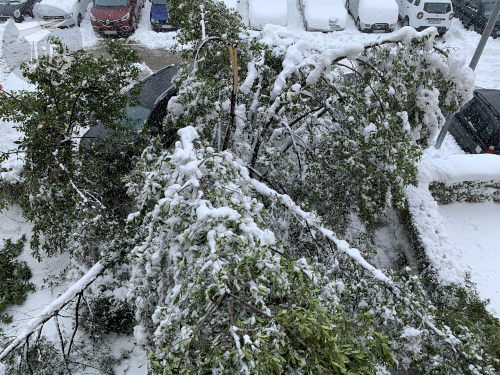
It had started snowing more heavily by then and my legs were getting tired. The sloshy snow on the roads had become frozen so it was slippery, and when I was walking on the actual snow, it was up to my mid-shins, so I was feeling the strain in my legs and my back. Thus, I decided to go back home and not to return in the afternoon again because the trees had lost more and more branches under the weight of the snow. The temperature going down also meant that the snow was going to freeze and it would be more slippery as it became ice…

I mean, this is the tree that used to stand in front of my balcony… So better safe than sorry. But all in all, the snowfall of a lifetime in these latitudes!

4th September 2020: Alcalá de Henares (Spain)

After looking for a place to park the car for 12 minutes, I left the car and I went off on foot towards the centre with a relative who is living in Alcalá de Henares. The town centre has been a Unesco World Heritage Site since 1998.

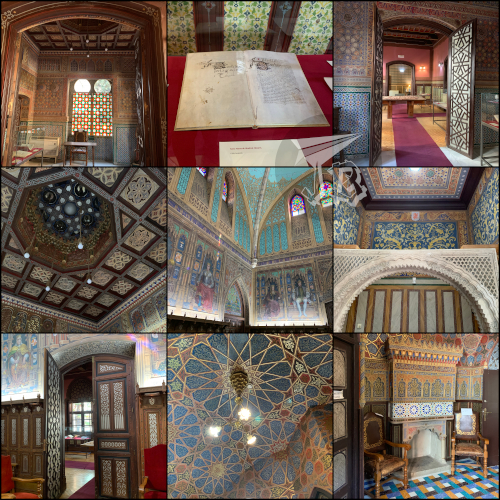
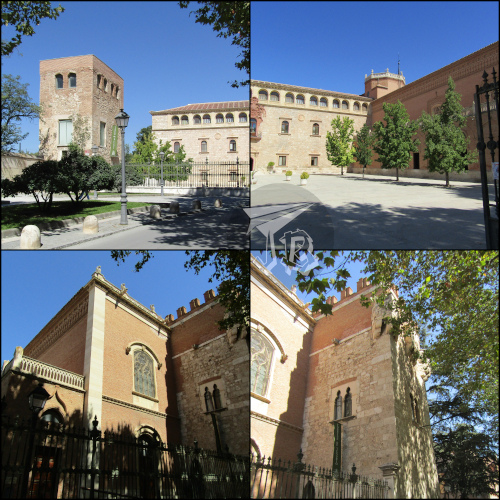
Our first stop, at 10:30 almost sharp was the Palacete Laredo, a small palace built in the Neo-Mudéjar style, a type of Moorish Revival architecture. It was designed and built between 1880 and 1884 by the Spanish artist Manuel José de Laredo y Ordoño. After a century in private hands, it passed to the town hall, which allows the university to use it as a museum, showing a collection of ancient documents.

The palace is built in brick, it has two floors and a minaret-like tower. The inside is decorated with coloured-glass window, tiles and paintings. The visible ceilings on the first floor are wooden artesonado (decorative beams joined together). There is also a garden, but it was closed.

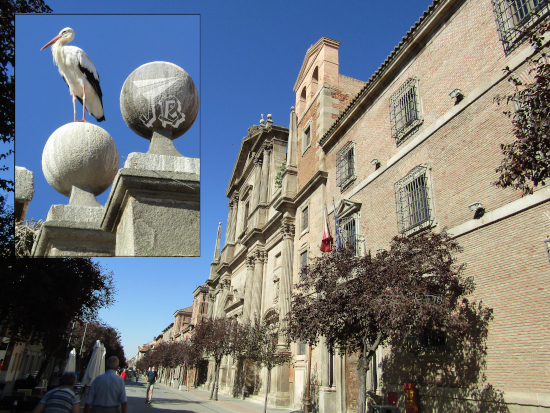
Afterwards, we headed off towards the centre. We walked by the church Parroquia de Santa María la Mayor and is inhabitant the stork on photo duty.

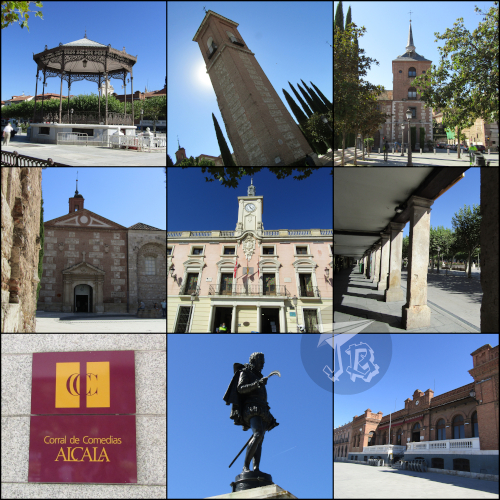
We had tickets to see the Corral de Comedias, a theatre built in the site of an ancient “theatrical courtyard”. These were open-air theatres that were common during the late middle ages and exploded in popularity in the 16th century. The Corral in Alcalá de Henares was built in 1601 by Francisco Sánchez, member of the Carpenters Guild. It suffered several changes – the ceiling was built in the 18th century, then it became a cinema, and eventually was “lost” in the 1970s. In the 1980s, it was rediscovered, restored, and finally opened as working theatre in 2003.

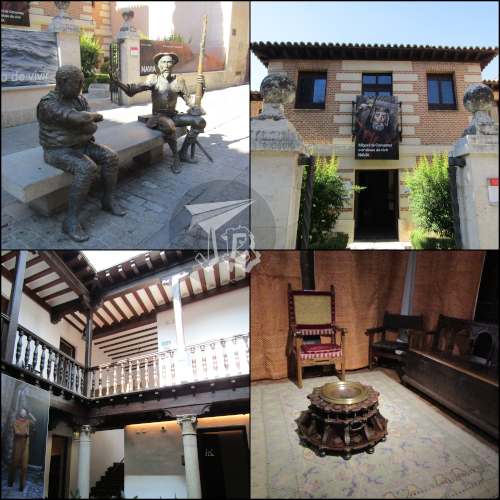
Alas, we were too late for the 12:00 visit to the university, so we wandered around the town’s main square Plaza de Cervantes – Alcalá de Henares was Cervantes’ birthplace. Miguel de Cervantes was a 16th century Spanish writer, most renown for his novel “The Ingenious Gentleman Don Quixote of La Mancha”, which many authors consider “the first modern novel” and “the best literary work ever written” (though… I disagree). The square features a bandstand, the statue of Cervantes, and is surrounded by several buildings of importance – the ruins of the church Iglesia de Santa María, the Town Hall and the Círculo de Contribuyentes, former casino, and the Corral de Comedias.

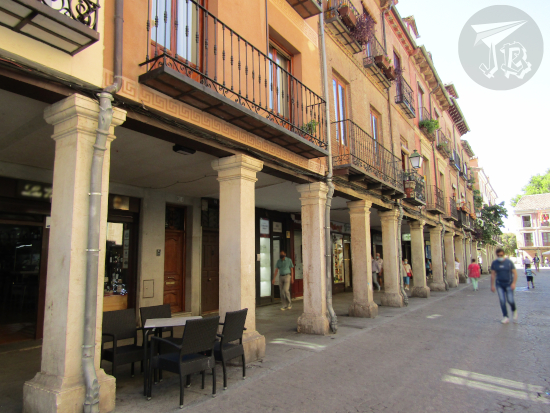
Then we walked down Main Street Calle Mayor, until we got down to the Obispado de Alcalá de Henares, the bishopric, with two towers from the former wall at their sides. That reminds me – we did not visit the cathedral or any religious buildings because they were all closed to tourism.

At 13:00 we took the guided visit to one of the university buildings, the Colegio Mayor de San Ildefonso. The university was established in 1499 by Cardinal Cisneros, an influential Spanish religious and statesman in the time of the Catholic Monarchs. A colegio mayor is basically a dignified “classic” dormitory. The façade was built between 1537 and 1559 in the Plateresque style, an architectural style that developed in Spain between the late Gothic and the early Renaissance. The architect was Rodrigo Gil de Hontañón.

Inside, we saw the cloisters and yards, the gate of honour (from where the successful students left the university), the classroom where the students defended their final thesis, and the chapel, with the tomb of the founding Cardinal (but not his body, which is in the cathedral).

We had a reservation to have lunch at the Parador de Alcalá de Henares, which is a rather modern building and not a historical one, but a stamp was needed (≧▽≦). Lunch was a looong affair because our waiter might not have been the… most efficient. We tried the combos with a little bit of everything to share (entrées and desserts), and some bull tail. Oh and coffee. Yay coffee. (Also, kudos to me for cutting that nut in half.)

After lunch, we walked down the Calle Mayor again and we made a stop at what is supposed to be the house where Cervantes was born, or at least a reconstruction, with a bunch of ancient objects thrown in – the Museo Casa Natal de Cervantes. There was also a photography exhibition. To be honest, it had a great quality-price relation. It was free, and the quality was… lacking. Or maybe I’m old and I have seen most of the stuff they showed in action, and used a few.

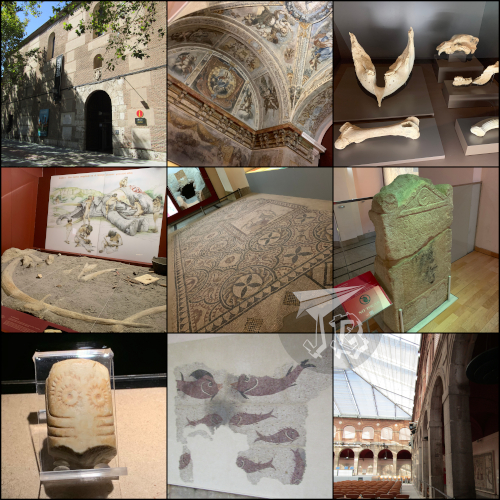
We continued on to the regional archaeological museum Museo Arqueológico Regional, located in the old Archiepiscopal palace. That was unexpectedly good, with the fossil record and the old Roman mosaics.

Pending for a future visit to Alcalá de Henares: Roman and Medieval areas, and the religious buildings, as the day finished up doing some necessary and work-related shopping before I drove back home.

Driven distance: Around an hour? I dumped the car as soon as I could and we walked the hell out of the town (≧▽≦)
Walked distance: 14.61 km

30th July 2020: Vampires in Madrid (Spain)

The world is pretty much topsy-turvy these days, isn’t it? I’ve been literally staring at the computer screen for about an hour, wondering how to start, how to explain. I’ve erased the opening paragraph about four times too (≧▽≦). Thus, I will just spare you the introduction, explanations, justifications, and so. It took me a while to decide in favour of my little trip to Madrid.

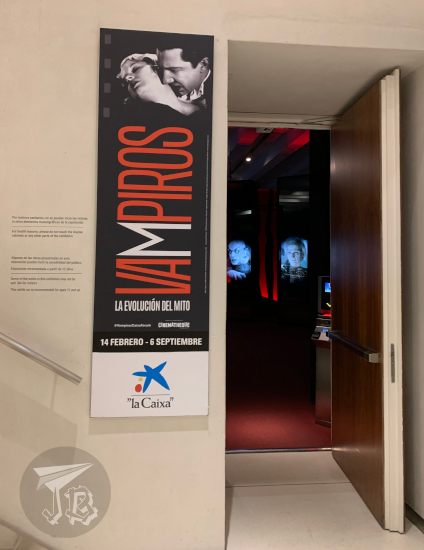
Vampires, the Evolution of the Myth, or Vampiros, la Evolución del Mito (#VampirosCaixaForum) was scheduled before the whole COVID-19 debacle. Once things started opening up in Spain, the exhibition was rescheduled to run in Madrid for a couple of months through summer. And for a while I pondered whether it was… I’m not sure how to put it… worth the risk? For months we had been told to avoid public transport, which is my main mean of moving around, so in the end I decided what the fuck, if I was doing this, I was going to drive into the centre of Madrid – for the very first time in my life. For the record I don’t particularly enjoy driving, I much prefer being driven, and my sense of directions when driving is… not the best, so I borrowed a GPS, picked up my sister, and drove off.

After only getting the wrong exit once, we left the car in an underground parking lot and walked ten short minutes and we were in front of the Caixa Forum Madrid. Caixa Forum is a cultural space owned by a savings bank in search of tax deductions that organises shows and exhibitions. We had a compound ticket for 12:00, which included both exhibitions in the building, and a theme lunch. And so we went.

Vampiros: La Evolución del Mito, “Vampires, the Evolution of the Myth” is an exhibition originally organised by La Cinémathèque française, which is a French French non-profit film organisation that holds one of the collection of cinema-related objects and documents in the world. As they are specialised in films, the vampire exhibition focuses on the figure of the preternatural being throughout cinema.

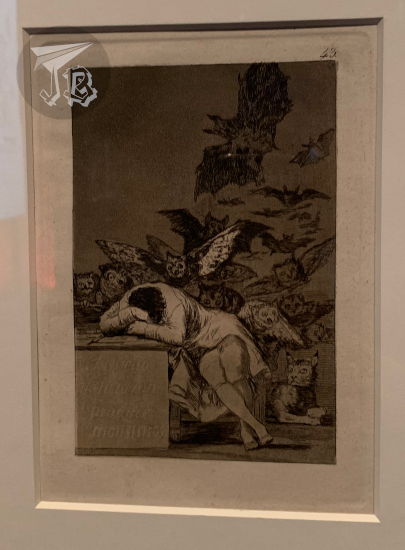
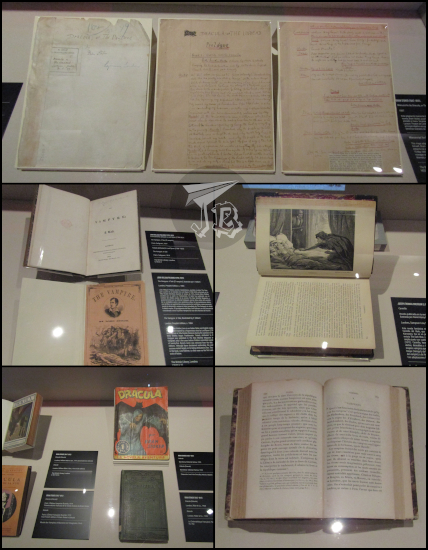
The first room is focused on the book Dracula, and the Romantic interpretation of the myth – Romantic as the literary period, not the lovey-dovey stuff. Highlights include a facsimile of the first scene of the manuscript of Bram Stoker’s version of Dracula for theatre, aside from early editions of the novel and other vampire books such as John William Polidori’s The Vampyre and Joseph Sheridan Le Fanu’s Carmilla. There were also some surprising items – some of Francisco de Goya’s wood-prints. Goya was one of the most influential painters in Spain, also grounded in the Romantic movement. Good stuff.

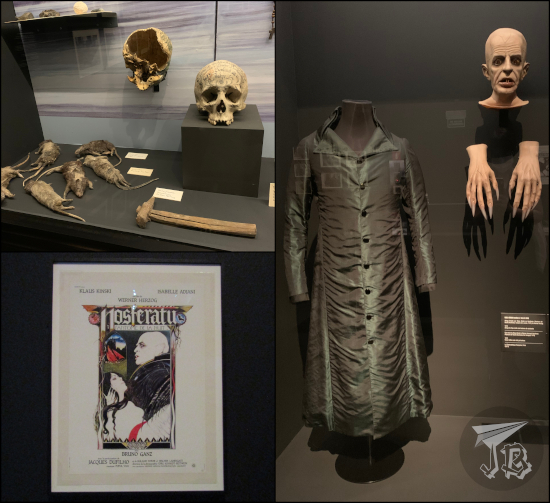
The second room was dedicated to Nosferatu, one of the key films in the vampire genre, with some promotional material and film props – this was the ward with best and most important number of items.

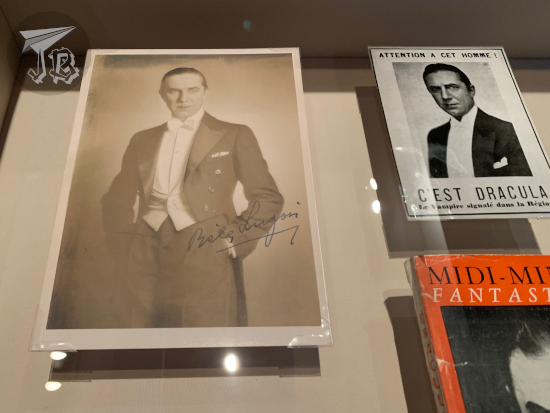
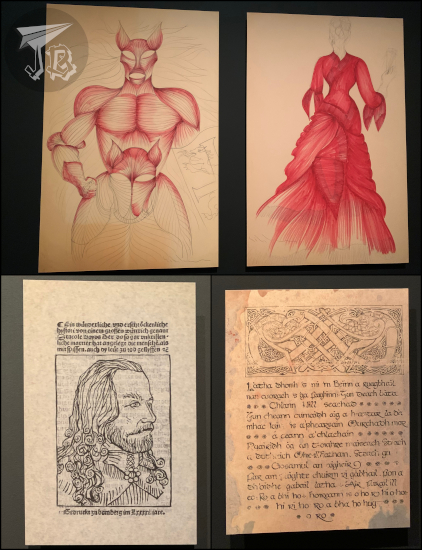
The following room was dedicated to the romantic, erotic and sexual vampires. It had two main focuses – one was the Dracula portrayed by Bela Lugosi as the epitome of the elegant, seductive vampire, first in Broadway, then in the 1931 film by Universal Studios. The centrepiece of the room featured two pieces of the wardrobe in Coppola’s Bram Stoker’s Dracula worn by Gary Oldman and Winona Ryder, along with several designs for the wardrobe (which could not be photographed, but you can peek at in some of the pics). Finally, we got to see the suit worn Tom Cruise as Lestat and Kirsten Dunst as Claudia in the 1994 film Interview with the Vampire. I missed some more Christopher Lee, as there were barely some photographies of his performance in Dracula (1958) and its sequels.

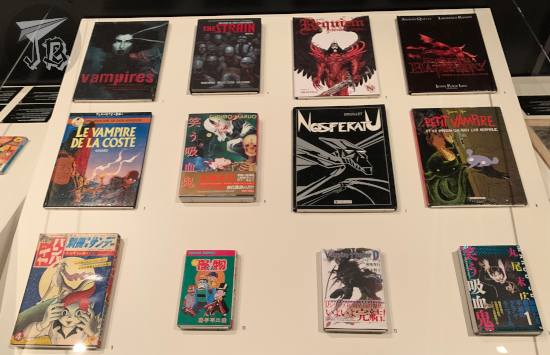
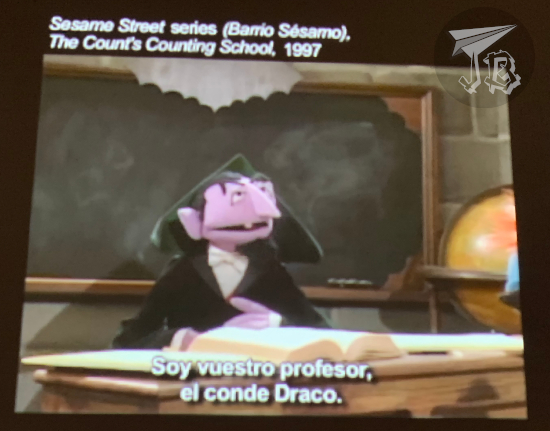
On one side there was a small area dedicated to the vampire as a political metaphor. The final area was dedicated to the pop vampire, including magazines, comics and graphic novels, some Japanese manga, and so on – even Count Dracula from Sesame Street! Then again, he was on a screen. I would have killed to see the real puppet.

All in all I got the impression that the exhibit lacked ‘the real thing’ and abused the film montages. I was expecting a few more props and less bits of films which… after all I’ve seen most (≧▽≦). The truth is that the myth of the vampire starts much earlier than the “Medieval” vampire featured in the Romantic fantasies, and can be traced to early succubi or the Lamia myths in Ancient Greece if you think about Western Culture alone. The Romantic and Victorian writers just made the myth cool as it was once more popular due to a sort of “vampire hysteria” that crossed the Balkans the previous century – that’s probably the main reason why Bram Stoker chose the figure of a Transylvanian warlord to create his character. But in the end it was a good way to break the activity fast.

Then we moved on to the next exhibition, Cámara y ciudad. La vida urbana en la fotografía y el cine, “Camera and the city: urban life in photography and the cinema” which… was okay, I guess. I guess I’m not a photography / video kind of person (≧▽≦).

After perusing the shop for a while, we moved to the cafeteria, where a “theme menu” had been designed. Let me detail that for you:

  • El frenesí vampírico / Vampire frenzy: virgin – I think – Bloody Mary
  • Estacas de la muerte / Death stakes: aubergine tempura with sweet and sour sauce
  • Reencarnación / Reincarnation: Goat cheese, sweet beet and raspberries salad
  • Inmortalidad / Immortality: Macerated sea bass with lime, orange, coriander, salt and pepper, with a side of mango and tortilla chips
  • Embalsamamiento / Embalmment: Duck magret with a red wine sauce and mushrooms
  • Drácula / Dracula: Crème anglaise, jelly and raspberry mousse.

Let me tell you, this was amazing – and fortunately the portions were small so the final amount was more than adequate.

It was a little later than 15:15 when we left the CaixaForum centre and headed off the Museo Nacional Thyssen-Bornemisza, the Thyssen-Bornemisza National Museum, a museum built from a noble family’s art collection which also hosts temporary exhibitions. The permanent exhibition is chronologically organised, and here are some of the pieces by famous artists: Rubens, Rembrandt, Van Gogh, Degas, El Greco, Tiziano… and hm… many very modern painters I… can’t understand.

Finally we decided to call it a day before people started coming out of work and leaving town so that we did not get into a traffic jam, and I am very proud of myself for taking the drive – which was my wee white whale for a while. I’ll see myself out now (≧▽≦)

Distance: Approx. 120 km driving; 6.08 km walking

Also, as an afterthought, I ordered the Vampire exhibition book online. I did not at first because I did not feel like carrying it around as it is thick. But they home-delivered and I actually saved 2.5 bucks?

PS: New logo! What do you think?

18th June 2020: The Comet Neowise fail

My parent heard that I had been trying to catch a glimpse of Comet Neowise, and decided that their roof was the best place to set a telescope to watch. Thing is that their telescope is not an astronomy one, but a shooting one. I’m actually pretty sure that the comet was just behind the opposite roof as it should be just underneath Ursa Major, but we had a few laughs and took a picture that after a lot of postprocessing looks semi-decent.

Ursa Major

After everything Covid, being able to do something silly like this feels at the same time bizarre and great. What a crazy ride of a year…

7th – 10th February 2020: Paris (France) for DIR EN GREY & BABYMETAL

I organised a weekend in Paris because two concerts conveniently aligned on Saturday and Sunday, and I had Friday free, as well as Monday morning. It was a great mental break that I needed badly. ETA: There were rumours about a flu from China, and some of the airport workers were wearing masks. We had no idea what was about to hit us…

7th February 2020: Through the Strikes

I had found quite a convenient flight that left at 9:00 on Friday for 35 €, which was a great deal. At first, I did not understand why it was so cheap. It turned out, the plane came from South America and it was on a Madrid stopover – so it was pretty much full already. It was a huge aircraft with on-board entertainment. That came in handy when the pilot informed us that we were going to have to wait something between one and two hours to be able to take off due to the air controllers’ strikes in France. But at least we were flying and I had films to watch.

We took off at about 10:00 and our big plane made the jump in just one hour, as opposed to the 2h10 minutes of estimated travel, which meant we were almost on time! Of course, this did not sit well with the strikers, who had us wait first for the parking spot, and then for the stairs to deplane. I finally managed to leave the airport and get onto the train so I reached downtown Paris around 13:00. I wanted to inspect the damage caused to the cathedral Cathédrale Notre-Dame de Paris by the 2019 fire. My first impression, looking at the main façade and towers, was optimistic, but as I walked round the building, I could see the real damage and reconstruction efforts. Furthermore, it still reeked of burnt wood, probably because they were still pulling out debris. My optimism did not linger long, I’m afraid.

Collage of Notre Dame showing the cranes and scaffoldings in the repairs

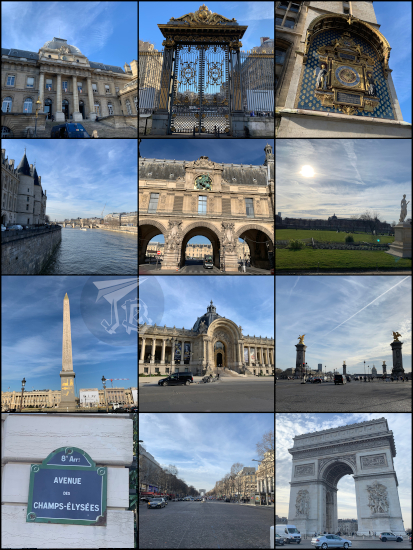
As it was sunny, I decided to walk to the Sainte-Chapelle (Holy Chapel) and see its windows in good weather. The Sainte-Chapelle is a small two-level chapel inside the Justice Palace Palais de Justice de Paris in the Île de la Cité, smack in the middle of Paris and not far from Notre Dame – actually, both of them belong to the same Unesco World Heritage Site, Paris, Banks of the Seine. The chapel has a lower early Gothic level, and an upper level with impressive stained-glass windows which I love. As the sun was shining outside, the views were stunning.

Collage. Sainte-Chapelle: outside showing the spire, inside with some colourful windows and pointed arches

Collage of the upper floor of the Sainte-Chapelle. It shows different angles of the long gothic windows, covered in colourful glass

The weather was great – especially considering February in Paris, which is always more to the north than I mentally place it. Unfortunately, the forecast for the following day was quite miserable, and thus I decided to just walk along from the Île de la Cité towards the Arc de Triomphe (some 5 km away). On my way, I walked by the Louvre, Les Tulleries, the Grand Palais, the Petit Palais, the Alexander III Bridge, and into the Avenue des Champs-Élysées – the Banks of the Seine that the Unesco declared World Heritage.

Collage with different landmarks of Paris - the river, neoclassic palaces, Luxor obelisk, Champs-Élysées.

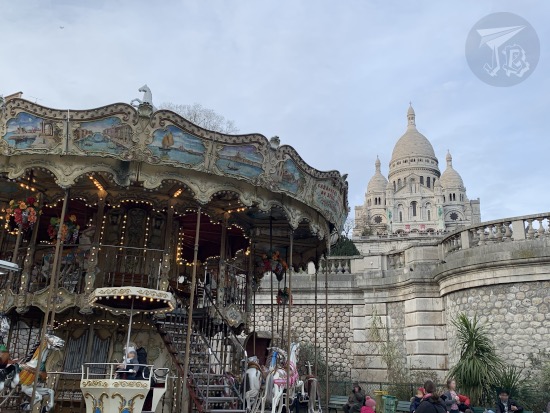
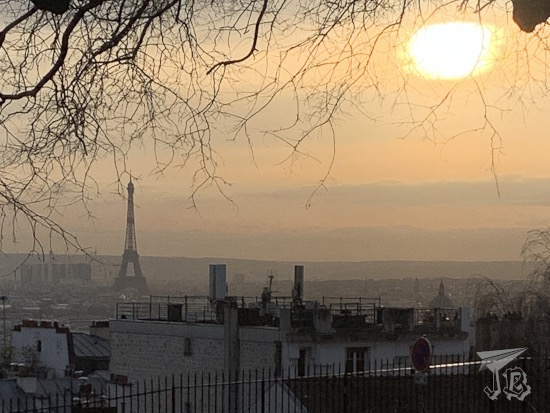
Finally I reached the Arc de Triomphe, which honours the fallen in the French Revolutionary and Napoleonic Wars. It was commissioned by Emperor Napoleon in 1806, and completed in 1836, and you can actually climb it, which I might do some day. From there, I took a train towards Montmartre, where I had booked my hotel. I dropped off my luggage and walked up Square Louise Michel, a sort of urban park which leads up to the church Basilique du Sacré-Cœur (222 steps). There was a pretty carousel Carrousel de Saint-Pierre, and from the square, I could watch the Eiffel Tower Tour Eiffel against the sunset from the lookout Vue de Paris.

A view of the Sacre Coeur with a classical carousel in front of it

A profile of the Eiffel Tower in a blurry sunset in orange tones

I went back to the hotel for a while during twilight. On the way, I bought a snack in a nearby supermarket for dinner as I waited for the evening to get dark and the lights to come up. When it did, I took my last adventure for the day, and walked off to see the Moulin Rouge while I listened to KAMIJO’s song of the same name. It was a few minutes’ walk away from my hotel, and Moulin Rouge [ムーランルージュ] is one of my favourite songs of his. Since the man is obsessed with France, he has a few songs that fit my weekend. Truth be told, I did consider dinner and a show there, it is after all the most famous cabaret in the world. However, it was a bit expensive and I had read quite a few reviews about bad seats if you are alone. I did not want to waste money, and I did not know how tired I would be that evening in the end – and to be brutally honest,I really had not felt like packing fancy clothes for the evening.

The Moulin Rouge cabaret, all lit up in bright red for the night

8th February 2020: Louvre and DIR EN GREY

The weather forecast was accurate, and despite the lovely weather on Friday, Saturday dawned stormy and dark. I decided to go to the Louvre Museum Musée du Louvre, even if I had been there before. It is after all one of the greatest museums in the world.

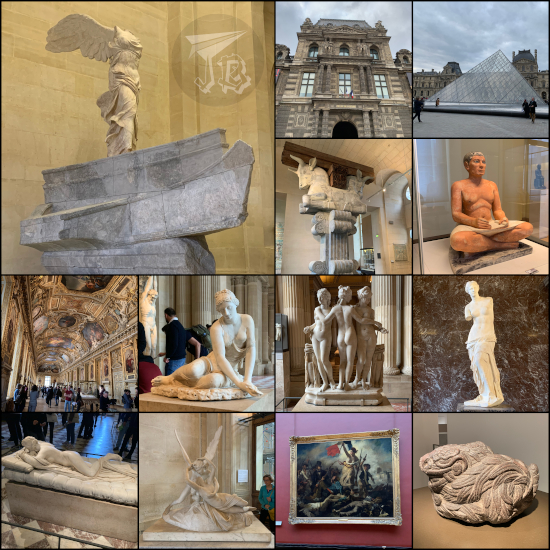
The Louvre holds so many pieces (over 600,000) that it would be impossible to describe them all, but for me, its core is the Winged Victory of Samothrace, a Greek sculpture from the Hellenistic period, around the 2nd century BCE, and my favourite piece of art. The Louvre is a national art museum, which opened in the post-revolutionary France in 1793. It exhibits around 35,000 items – Egyptian antiquities, Sumer and Assyrian pieces, Greek, Etruscan and Roman items, Islamic art, neoclassical and Baroque sculptures, a collection of objets d’art (Decorative arts), paintings, prints, drawings… It is located in the former French Royal Palace of the same name.

A collage with several Louvre pieces of art - Winged Victory, sitting scribe, the three graces, Diane washing her hair, Hermaphroditus sleeping, Psyche and Eros kissing, Liberty guiding the people, Venus de Milo

I wandered there for a few hours and I might have lost my way in the galleries a few times. In the end, I managed to (re)visit all the artefacts and artworks that I wanted. Because there are hundreds of thousands of items, but I must always see the Sitting Scribe, the Borghese Hermaphroditus, Canovas’ Eros and Psyche, and the remains of the Gates of Istar. I had a bit of a headache, so I eventually went back to the hotel to get some rest and prepare for the DIR EN GREY concert and VIP experience in the Élysée Montmartre live house. DIR EN GREY or “Diru” is a Japanese heavy metal band known for its dark themes and scenography that I thought I needed to check at least once (the final verdict was that I don’t need to repeat the experience, but it made for a nice mental break). The band has remained stable since its formation in 1997, and it is composed by Kyo [京] (lead vocals), Kaoru [薫] (rhythm guitar, backing vocals), Die (lead guitar, backing vocals), Shinya (drums) and Toshiya (bass, backing vocals).

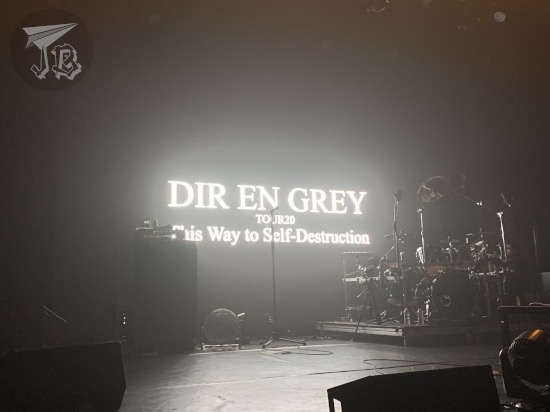
A dark stage with a drum set. Letters projected on the screen behind the stage read Dir en Grey Tour 20 This Way to Self-Destruction

Setlist:

    1. 絶縁体 [Zetsuentai]
    2. 人間を被る [Ningen wo Kaburu]
    3. Rubbish Heap
    4. Devote My Life
    5. 軽蔑と始まり [Keibetsu to Hajimari]
    6. Celebrate Empty Howls
    7. 赫 [Aka]
    8. Merciless Cult
    9. Downfall
    10. Values of Madness
    11. 谿壑の欲 [Keigaku no Yoku]
    12. Ranunculus
    13. The World of Mercy
First encore:
    14. Followers
    15. THE DEEPER VILENESS
    16. 詩踏み [Utafumi]
Second encore:
    17. Sustain the untruth

Listing of all the concerts in the Dir en Grey 2020 tour

The concert was the final of DIRU’s 2020 European Tour TOUR20: This way to Self-Destruction. When I walked by the venue on Friday evening, around 18:00, there was a small number of people queueing already. I did not care enough to queue all day, and I had a VIP ticket with early entry, so I just headed to the line about 15:00. When the queues were separated and organised, around 16:30, I was VIP number 42. The weather was miserable, and I could have totally skipped the downpour while waiting, but I was lucky enough to be against the live house and not in the middle of the boulevard, where the General Admittance queue was. Doors opened at 19:30 for GA, and the VIP experience was held beforehand. The VIP queue started getting in around 17:30. As present we got a VIP pass and an “exclusive VIP only merchandise item” which turned out to be a scarf – very appropriate with the weather. The experience itself was a group photo with the band. There were five cushioned chairs for the fans, and the band stood behind. They did not say a word, nor interacted with fans in any way, not even acknowledging a hello or a thank you.

Afterwards, I headed for the hall, and I found an almost-barrier spot in the left area, on the second row. The people in front of me let me grab the barrier between them so I had something to hold on while I waited. The special guest was a DJ, who was more focused on getting recorded by his buddy on the phone than mixing music. The main show started a little after 20:30.

DIR EN GREY’s music is quite powerful, with a heavy focus on strings and drums. They also have a huge flare for theatricality and they enjoy the shock factor as part of the aesthetics. The singer, Kyo, donned a Joker-like make-up appearance, with a fake-suicidal attitude on stage, using the microphone to mimic stabbing his chest, or the wires to hang himself. It became a bit disturbing because it was repeated more than once. The act also felt rather distanced, there was very little interaction with the fans. At some point, a pick flew in my direction and the person behind me actually felt me up to try and find it in the folds of the coat I had tied around my waist. That was probably even creepier than the act.

The guitars and bass were tremendously powerful, and the drumming was amazing. The crowd was extremely loud, and the singer, Kyo, later confessed that he had been pretty exhausted and burnt out from the tour, which maybe explained why the concert felt so distanced. The encores were the probably best part of the concert, the part that felt more real and relaxed. After the concert was over, I headed off to the hotel to catch some sleep. Since I remembered that the area had felt a bit rough when I was there in 2014, this time over I wanted close accommodation so I could get back quickly without needing to use the underground.

9th February 2020: Destroy the Bastille!

Sunday morning was around 2 ºC, and it was windy. I lingered in bed for a while to recover from the previous evening, and then I headed out – I should have brought the merchandise-scarf with me! I saw the Place de la Bastille, where the revolutionary prison used to stand. In the middle of the square stands the “July column” Colonne de Juillet, which commemorates the Revolution of 1830 (which is not the “famous” French Revolution, which happened between 1789 and 1799). A few minutes away, in the Square Henri-Galli, I came across the base of the tower Tour de la Liberté (Freedom Tower), which was unearthed while building the first metro line. There are only a few stones remaining from the foundations, but I’ll take my fun wherever I can – so I stopped and used my music player to find another KAMIJO song, Bastille, just because I could.

Monument to the French Revolution

A few brick stones forming a circle, considered the last remains of the Bastille

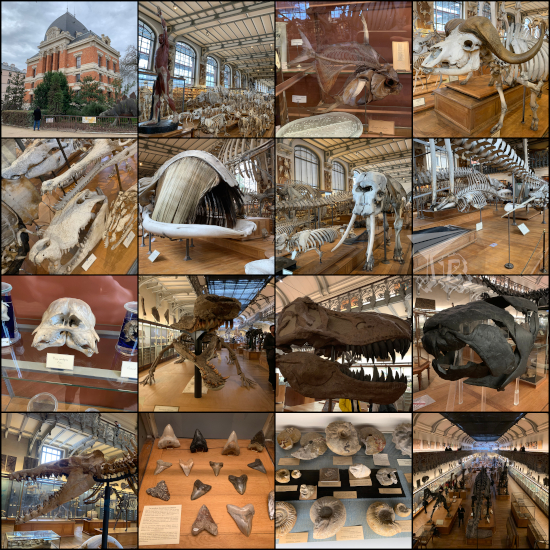
It was too cold to wander, but I had a great plan. I headed off to the science museum Galerie de Paléontologie et d’Anatomie comparée (Palaeontology and Comparative Anatomy Gallery), which was a short walk away. I had read about it and was curious. To be honest, I’m still trying to decide whether it was amazing, or the materials nightmares are made of.

The museum was founded in the 19th century, and it keeps the atmosphere – and the charm – of the old exhibitions. There are stands and wooden cases, and the smell of dust and old paper. The first floor holds a “Cavalcade of Skeletons” – the whole floor is occupied by preserved skeletons of mammals and birds. In the glass cases along the walls, there are taxidermy specimens, preserved animals and dissected specimens. In the far corner, there is “gallery of monsters” with natural oddities. It was enchanting, but at the same time deeply disturbing – especially the male human figure displaying muscles and blood vessels, with a vine leaf on his groin.

The second floor hosts the dinosaurs and other fossils, including a very cool toothed whale, giant crocodiles, a Bernissart iguanodon, a diplodocus, shark teeth… Most of the fossils are either casts or reconstructions – I swear I’ve seen that Irish elk at least three times before. Also, the T-Rex skull was adorably flawed, as it was imagined to be in the 19th century.

The third floor is… ammonite-land. There were cases upon cases of ammonites in different shapes, colours, rocks and materials.

Shots of the museum. Skeletons of animals - fish, oxen, crocodiles, elephants, whale. Fossils: Dinosaurs, fish, toothed whale, shark teeth, snails

After I was done with the museum, I decided it was too cold to wander the neighbouring Botanical Garden. Instead, I headed off to yet another one, the Musée national des arts asiatiques Guimet – the National Museum of Eastern Arts or Museum Guimet, which holds pieces of art from Cambodia, India, China, Japan, Korea and so on. There was a gorgeous dancing Shiva sculpture, collections of religious artefacts, calligraphy, samurai armours, even modern art and clothes inspired by the Far East. It was a really cool museum I had recently found about and was happy to visit.

Different pieces in the museum: Dancing Shiva, sitting Buddha, Calligraphy in the shape of a dragon, elaborate kimono, samurai armour, Indian goddess

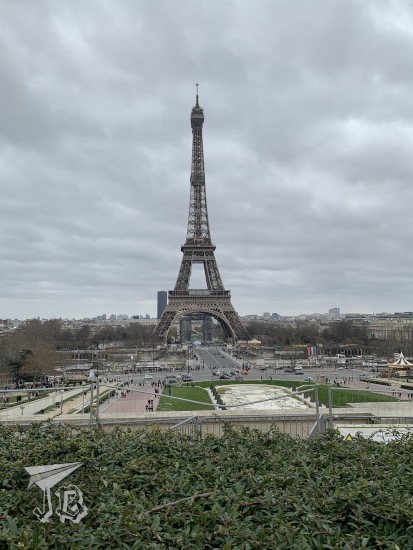
After leaving the museum, I walked towards Trocadero to take the underground. I made a small detour to have a look at the Eiffel Tower Tour Eiffel, and saw a bunch of peddlers playing shell games with tourists. Someone lost about 400 €, I really hope they were in on the game.

The Eiffel Tower in front of a cloudy sky

Since it was too cold to continue walking around to find something to eat, I decided to get take-out, and I headed back to the hotel to get ready for the BABYMETAL concert. I had never listened to them before, but they are a sensation, the basic ticket was not expensive, and two concerts in as many days seemed convenient. They actually played in the same venue as DIR EN GREY on Saturday, so I found out by sheer coincidence on the live house’s website. At that time, I thought “why the hell not?”. Afterwards, they added Madrid to their Europe tour, so if I had known that beforehand, I might have acted differently. BABYMETAL is one of those insanely-profitable Japanese marketing stunts involving cute girls that had never really been in my radar more than in passing.

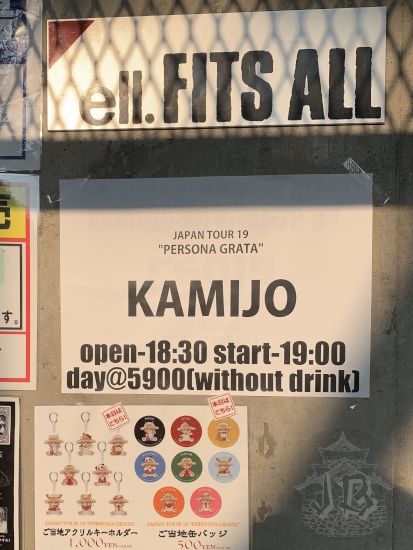
Notice with the date of Babymetal's concert

BABYMETAL is a product of the “Japanese idol factory”. It was created artificially to fill a market gap. Three girls were chosen to form an act that would mix the idealised cute idea of girl idols with the heavy metal genre. When they debuted in 2010, the term “Kawaii Metal” was coined. One of the girls left in 2018, so there are two main members and and support dancer on rotation. The members are Nakamoto Suzuka, “Su-metal”, the main vocalist, and Kikuchi Moa aka “Moametal” on back-up vocals and screams. The supporting musicians are called the “Kami Band”.

BABYMETAL’s long-awaited European tour is officially called Metal Galaxy World Tour. The VIP tickets sold for around 170€, and did not even entail a M&G, so even if I had had the chance, I would have not even considered them. Despite that, they sold out, along with the show itself.

When I left the hotel at 9:00, the queue had started organising, and the tour buses were already there. I had no intention to queue or try for a barrier. I had decided to sit back and relax, so I reached the venue around 18:45 for the 19:30 concert. There were tons of people waiting to buy merchandise, but I was good. Thus, I just headed to the floor, and found a spot in the back. Since the venue has sort a bit of an arena and some upper stands, there was a wall I could lean against and it was not the end of the room.

The crowd was quite different from DIRU’s, ranging from good ol’ metalheads to families with little girls between five and ten years old with a bizarre range of in-between: people with fox masks, goth and loli dresses, explicit heavy-metal t-shirts (a bunch of those T-shirts were much less kid-friendly than the show… everything you could imagine. I… don’t think most parents knew what they were getting into, and a few of the kids ended up crying.

At 19:30 sharp, the support act started – a German band called SKYND. Their sound was really good, but their lyrics are based on true crime, which makes them a bit on the disturbing side (and very much not kid-friendly). The name of the songs are all serial killers or similar criminals.

Setlist:

    1. Richard Ramirez
    2. Elisa Lam
    3. Katherine Knight
    4. Jim Jones
    5. Tyler Hadley
    6. Gary Heidnik

At 20:30, the BABYMETAL show kicked off with the projection of the Future Metal video as an introduction of sorts. The musical act relied heavily on the Kami Band, and Su-metal carried the weight of the vocals. She spent the whole one-hour concert jumping and dancing while singing, and her voice did not break even once. If she is not lip-synching, she has the most impressive lungs ever. Both she and Moametal encouraged the crowd, making a lot of eye-contact. Su-metal addressed the audience a lot, even – I think – trying French. The concert was non-stop, and it ended up feeling a bit short, but much better than I had expected. The one annoying thing were the daddies putting their babes up on their shoulders in the middle of the floor, when the kids gave clear signs of not caring or were distressed. But it was fun. Not sure I would repeat unless I made it a thing with friends or something, but I enjoyed the act, and had a good time.

Setlist:

    1. DA DA DANCE
    2. Gimme Chocolate!!
    3. Shanti Shanti Shanti
    4. BxMxC
    5. Kagerou
    6. Oh! MAJINAI
    7. メギツネ [Megitsune]
    8. PA PA YA!!
    9. Distortion
    10. KARATE
    11. Headbangeeeeerrrrr!!!!!
    12. Road of Resistance

A group of girls dressed in black dancing in front of a logo that reads Babymetal

I was back at the hotel before 22:00. Thus, I got a good night’s sleep before I left, once again happy that I had taken nearby accommodation.

10th February 2020: No bells of Notre Dame

My plane boarded at 10:00 so I had to leave early for the airport. The weather was rainy again, so I took the underground to Gare du Nord, and then the train to Orly. As I was riding the train, I had a nice view of the Paris at dawn, but the bells of Notre Dame were not tolling, and my inner child was sad about that. Despite issues with the airport security staff, the stupidly-expensive food, and the general unpleasantness of early-morning public transportation, I made it to my plane without actual problems. As it was a big plane again, I settled down to watch Jurassic World during the flight, because I’m a nerd. Going straight into work from the airport was not fun, but it a small price to pay

I only had three days, but this trip was a very welcome getaway, and even if the weather did not help, I got to do a lot of stuff. I had to discard a few plans and improvise due to the weather. However, there is that film quote, “We’ll always have Paris”. After all, I’ll be coming back for the Saint Seiya Symphonic Adventure. ETA: Or so I thought, at the time of writing the article…

26th January 2020: Royal Palace and Norwegian salmon (Madrid, Spain)

A friend was over visiting for the weekend and we headed off to Madrid. It had been raining and the weather the previous evening had been rather miserable. Actually, when we left home it was rather foggy and dark, but upon stepping out the Avenida de América bus station, it had become sunny and not cold at all.

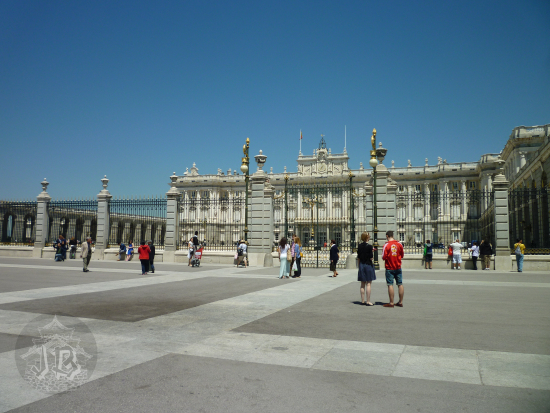
My friend wanted to see the Palacio Real de Madrid, the Royal Palace – we had been playing Madrid Cluedo the day before and she had mentioned that she had never been there. At first, we only wanted to see building. As it was Chinese New Year, the blunt of tourists was somewhere else watching the Parade, and we had a short queue to go inside, so she decided to wait as it was not expensive, either.

You can’t take pictures in most of the palace, but the yard looked really nice and you could see the cathedral from there. We also heard all the bells tolling at noon, which was fun. When you go into the palace you see several rooms, including the throne room and the old sleeping quarters. One of my favourite rooms is the one with the Stradivarius violins and other instruments.

While there aren’t that many pictures taken inside, here is a shot of the cathedral, Catedral de la Almudena .

After visiting the Palacio Real, we went to have lunch. She wanted ham, and I wanted a poke bowl I had seen announced in El Corte Inglés cafeteria, so it was a win-win situation. I had a “Poke bowl de salmón noruego”, Norwegian salmon poke bowl that was amazing – a sushi rice base with avocado, spring onion, purple onion, wakame, a soft-boiled egg and Norgweian salmon marinated with soy sauce, rice vinegar and kimchi.

She declared that she was happy after this, so we called it a day.

9th – 11th October 2019: Flash Barcelona (Spain) for Miyavi (and friends)

This was another of those flash trips, and it worked miraculously somehow. Miyavi’s concert was on the 11th, which was a Thursday. It’s not normally something I can do, but I managed to get away from Wednesday at noon to Friday at noon. So I worked on Wednesday morning, and in the late evening I took a train to Barcelona, where I met my friend C***** and we headed out to the hotel, which… turned out to be pretty bad. It was the closest we found in the general area of the venue for a different price but I draw the line at cockroaches, no matter how small they are. The bed was too soft, it was too hot and in the end we were both up at 6:00 to the point that we decided that we could get to the queue already.

Our tickets were VIP so they included a Meet & greet and a picture before the concert, which is one of the most fun I’ve attended lately. However, the road leading to it, and the organisation, was a bit of a chaos – there was a late-announcement of an opening act, the M&G time was changed and nobody really know what time it really was… It added a lot of unnecessary stress, as bad planning usually does. But in the end, Miyavi is an amazing human being and made up for it all. He greeted us when he came in, and when he left, and he gave his best on stage.

Miyavi kneeling on the floor playing guitar. He is wearing white trousers and a sleeveless black t shirt that reads No sleep till Tokyo

The concert was held in Barcelona’s Sala Salamandra as part of Miyavi’s European Tour No Sleep Till Tokyo. Miyavi, whose real name is Ishihara Takamasa [石原 崇雅], was born in 1981, and has been active in the Japanese musical scene since 1999. He started off as the guitarist of the visual rock band Dué le quartz, and went on a solo career after its disbandment. His first album Gagaku was released in October 2002.

Miyavi is known to fans as “the Samurai guitarist”. He has a very particular guitar-playing style, and does not often use picks – he calls this style “finger slapping”. He used to have a very characteristic style, with crazy visuals, piercings, and wildly-coloured hair, but he it tuned after he and his wife Melody had their first child in 2009.

Miyavi can compose, write lyrics, arrange, sing, and rap. However, he considers himself a (samurai) guitarist, and he has collaborated with some top-notch artists and vocalists. Back in 2007 he was part of the “ghost” supergroup S.K.I.N., along with Yoshiki, Gackt and Sugizo. Although the band had an official “debut”, they never got any further than a presentation concert at an American convention. Miyavi has also collaborated with a wide range of artists such as Hyde, Seann Bowe or Samuel L. Jackson on his most recent albums. As of recent years, he has started acting, both in American films (Angelina Jolie’s Unbroken or Maleficent: Mistress of Evil) and Japanese productions (Bleach or Gangoose). He moved to the US with his family in 2014. Aside from his musical work, Miyavi is also known for being a Goodwill ambassador with the United Nations, working against the Refugee Crisis. He regularly participates in events and visits refugee camps to try and help in whatever way he can – usually with his guitar and some footballs.

After three collaboration albums, Miyavi switched from his own company to a larger distributor and announced the release of No Sleep Till Tokyo in July 2019. Soon after, dates were set for a Japan Tour, North-American Tour, Eastern Europe Tour and Europe Tour..

Tickets went on sale on the 28th of June through the venue’s website. There were two types – General admission and VIP, which included early entry, laminated lanyard, Meet & Greet and picture with Miyavi, using your own phone. Though C***** and I were considering either Barcelona or London, we ended up with VIP tickets for Barcelona.

The week before the concert, the Spanish promoter announced a change of schedule and a Spanish support band. In the days leading to the concert, the Meet & Greet also changed times, along with entry and concert start. VIP ticket holders were worried that GA would come in before the pictures were done and they would lose part of the advantage they had paid for, and thus the Meet & Greet was set to after the concert, only to be rescheduled to before the concert again barely 24 hours before.

The day of the concert, the black tour bus arrived around 12:30, and Miyavi came out a little over an hour later. He was nice enough to come greet the fans who were waiting, and asked how to say “hello” in Spanish. He talked to some people for a little longer and shook hands with everyone waiting before walking into the venue.

Doors opened at 18:40. The Meet & Greet consisted on basically that, you could exchange a few words with him and the manager would take the pictures. Afterwards, we got positioned at the barrier for the concert. The support act Suzy & Los Quattro did not fit much into the mood. The lead singer was all right but she screamed too much for my taste. I am sure that she has her audience, especially considering how much underwear she showed. Finally the main event started – Miyavi brought a DJ and a drummer along, but he took all the weight of the music himself. Clad in a two-piece white suit, flashing his tattoos and sweating like there was no tomorrow, he did not stop for a second – good thing he had plenty of ice water to cool down.

As much as his guitar-playing style, Miyavi has a very powerful stage presence, based on being everywhere at the same time – he jumps and stands and stares and plays the guitar, without a stop, without a breather except for his ice-water.

Throughout the concert, he showed off some Spanish – very well practised, to be honest, but mostly spoke English. Through different emcees he talked about coming back to Spain after eight years, and how he knew the word “eight” is “ococho” because it’s his favourite tequila. He mentioned Maleficent: Mistress of Evil, and brought up that he has been shooting films, and how he finally got to play a non villain character – although killing people in films is so much fun. He also talked about his work at the United Nations, and that there were UN representatives and refugees in the venue.

Setlist:

1. Stars
2. Flashback
3. In Crowd
4. Rain Dance
5. No Sleep Till Tokyo
6. Tears on Fire
7. Other side
8. Secrets
9. Guard you
10. Wonderful World
11. Under the same sky
12. Ha!
13. Fire Bird
14. Day 1
Encore:
15. Fragile
16. Señor, Señora, Señorita
17. Long Nights
18. The others
19. What’s my name?

The concert lasted about two hours, in one long act and a short encore. The setlist was a combination of songs from the new album No Sleep Till Tokyo and older albums and singles, . There were very high-energy moments and some heart-wrenching ones. Tears on Fire and Long Nights are excellent pieces of music, but they have a poignant underscore.

Some of the highlights of the night included the rendition of No Sleep Till Tokyo or Under the Same Sky. There was a hilarious moment when some of the crowd asked for Señor, Señora, Señorita and he claimed to have forgotten – then proceeded to google it in order to “sing it if we helped”. Furthermore, The Others was fantastic – but that is one of my favourite songs of his, so I don’t think I’m objective. The final What’s my name with the quip “me llamo Miyavi” in Spanish couldn’t have been more powerful.

After the concert was over, Miyavi came back to stage to high five fans to the very last minute before the venue emptied. Even after a couple of hours, he shook hands with every fan who was waiting on the way to the bus. We waved him goodbye and left, exhausted and happy. My general feeling after this event is that Miyavi is adorable (and huge, I had not realised how much when I saw him in London) and I would love a hug from him. The M&G was over super quickly but he had a smile for everyone and that’s a super nice detail.

We went back to the hotel to catch some sleep and the next morning we met our other friend E****, who had not attended the concert, for breakfast. I took the early afternoon train and I was home for the afternoon-evening shift, so it worked.

Cup of coffee with fern art.

19th & 20th August 2019: Bye-bye for a while, Japan {Japan, summer 2019}

For my last day full day in Japan, I dropped my luggage off at Shinjuku station and met with D****e for lunch to say goodbye for now. I also got to say goodbye to Tokyo Tower [東京タワー] from Roppongi Hills [六本木ヒルズ].

Lunch was a bit sad, but the yakiniku was very yummy. After she had to come back to work I met with B**** for drinks and wandering around for a while in Shinjuku [新宿]. We mostly sat at Wendy’s, talking and drinking… whatever this is…

And then she took me to CocoCurry for goodbye-curry.

Then she came with me to Nippori station to help me carry my luggage to the train. I was so mentally exhausted that I did not even stop for a stamp at Narita Terminal 1. I had booked myself a hotel for the night at the airport because I felt that was the best thing for my mental health at that time, and I am glad I did. It was very handy and the transport to the terminal was very smooth.

I had been worried about my Fuji-climbing stick, but I had been told I could check it in. I bought a suit-cover which I sewed, and had no problems with it – I mean, I saw people checking-in kayaks, for fuck’s sake. My stick was tiny in comparison to that! The flight back was a-okay, unremarkable, mostly.

Walked distance: 19th: 11099 steps / 7.94 km. 20th: 5045 steps / 3.60 km. The displacement was a bit longer though… something around the 11000 km (≧▽≦)

The 2019 trip was a long one, full of awesome experiences that I won’t forget any time soon. I hope to gather experience from what went wrong, but not cling onto the bad feelings. I chose not to write about that, and look for the best in every day. Also, I did not really feel it, but a bunch of Japanese friends told me that my language skills had improved, so that made me happy. Now it’s time to go back to the real world and do adulty things, and start dreaming about the next adventure. また今度ね。

18th August 2019: 500 points at Swallowtail {Japan, summer 2019}

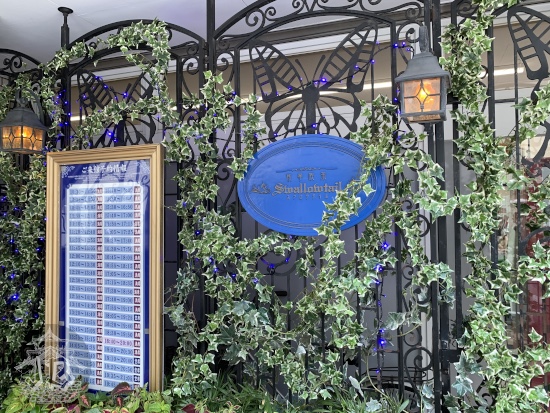
I asked D****e to come with me to Swallowtail at Ikebukuro [池袋] once more because I can’t do them alone (yet). Hopefully next time. We got a very nice butler who wanted me to choose my teacup as I had already visited five times (500pts), but I always have my tea iced, so I wouldn’t be using a cup. That was a bit of a communication problem (≧▽≦).

I had a great salmon and salad set (though I pushed the pepper away, because… no thank you), and analysed the butler types. There was one so tall that the poor thing had to get backpain all the time from pushing the carts. There were the kawaii bouncy ones, broad manly ones, and one wearing lipstick. I guess catering to every trope out there.

Afterwards we sang some karaoke and then went back home until it was time for dinner. It was a quiet, unwinding day.

Walked distance: 12979 steps / 9.28 km.

16th August 2019: SAITAMA Summer Rock Festival 2019 {Japan, summer 2019}

After developing an unhealthy obsession for discovering fesFE[M] when they opened for JUPITER in Madrid in May 2019 I was very happy to be able to catch their act again in Saitama [さいたま市]. I also learnt a lot about the v-kei scene and how it works.

The event was the first day of SAITAMA Summer Rock Festival 2019 ~Shikokku no Symphony~ pump up!! [SAITAMA Summer Rock Festival 2019 ~漆黒のシンフォニー~ pump up!!] and it was held at Saitama Hall [埼玉会館ホール].

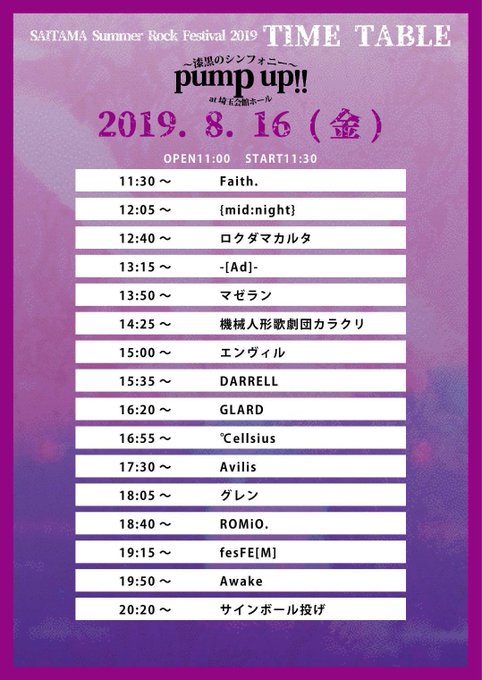
Schedule of the Event, in intervals of 25 - 35 minutes

Although fesFE[M] act was not scheduled until 19:15, I headed off to Saitama early because I needed a same-day ticket, so I was there around 12:15. I did not have any issues getting in, as it was a weekday in the morning. I had originally thought that I would just get the ticket and then snoop around Saitama city, but the event was held far away from most interesting stuff, so I decided to stay and see it all. It was, as I mentioned, an interesting experience.

Stuff I learnt:

  • I should have taken earplugs as seven hours in a small hall echoes hard
  • First rows are exchangeable according to which your favourite band is. Nobody bats an eye and people will make room for each other
  • The bands will sell their own merch to make new fans and even chat to you. They will be very surprised if they get two foreigners in their queue and they don’t know each other
  • Some of the bands are really good, some of them are really bad

After each show, the “leader” of the band would come out for a small interview. Some of them had to do stuff like playing with beach balls and stuff, but mostly it was promotion for upcoming band activities and stuff.

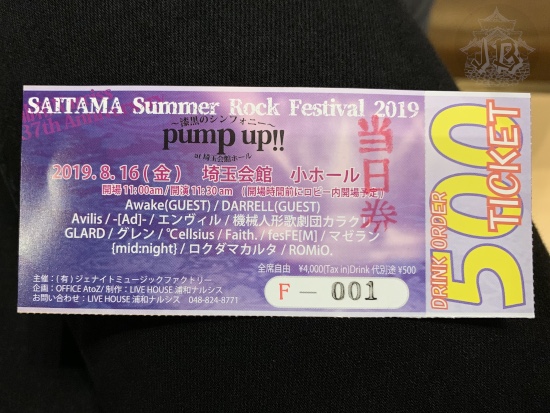
Ticket. It reads the names of the bands and the number F001

Here’s a curated version of notes I took after each act for the ones I attended:

{mid:night}: They are not bad but the vocalist (although tall) needs more stage presence.

ロクダマカルタ: Was not convinced, but the guitar is dressed as a schoolgirl and the furutsuke is fun.

[Ad]: Female vocalist. She’s good, but there’s something that does not completely click. They stayed the longest for selling their stuff and promoting.

マゼラン: They are really, really good, both music- and stage-presence- wise. I’m so glad I had not realised at this point that they would be outside selling stuff because I might’ve bought all the things.

機械人形歌劇団カラクリ: Didn’t like them

エンヴィル: They are the Kanjani 8 of v-kei. They troll each other really hard and they are fun, with passable music. They wear yukata and each has a different footwear. They also watched like half of the other bands from the back row and cheered like standard fangirls.

DARRELL: Not bad, but too yelly for my tastes

GLARD: They were fun. I got to talk to the vocalist and buy one of their CDs. As I was talking to him, another foreigner decided to talk through me, and translate the price for me? No idea, I think she was just trying to get his attention. The poor guy was very surprised when we did not know each other.

ºCellsius: I like them too, they are really fun (and they are wearing… tartans?).

Avilis: They are cute and bouncy

グレン: They look like a band put together for an anime that would later sing the OP

ROMIO: The male vocalist is very pretty, but I managed not to fall into the trap of his prettiness.

Finally it was fesFE[M]’s turn at 19:15. I moved to the second row (not the first because no idea what the furutsuke are) and I enjoyed the show. It was almost the same they did in Spain when supporting for JUPITER, including Doll in Blueberry Jam. I really loved the vocalist Lion (again) how the keyboardist Jun plays the dollmaster cutting all the ropes and bringing the dolls back together. Also, wow Rensa (drummer) for being able to twirl the baton in his hand for three minutes straight without moving any other muscle.

After the show, Lion came out for his interview and he explained that he would be there on Saturday with his “other” band. I felt tempted to come back, but I had plans for that day already.

Then I went outside to buy some merch, including some polaroids, but unfortunately the band did not come out (ó_ò). I would have loved to see them, but at least I got to tweet at them and some saw the tweet ヽ(^◇^*)/. I talked to some other fans who looked at trading the polaroids, but I did not have any Tohru (bass, aka “the blonde”) and he’s popular. I missed the last band while I was waiting, but it was all right. I decided to head back because I still had about an hour’s worth of train ride.

Walked distance (which no. This is 80% furutsuke): 15324 steps / 10.9 km

15th August 2019: Downpour Shinjuku {Japan, summer 2019}

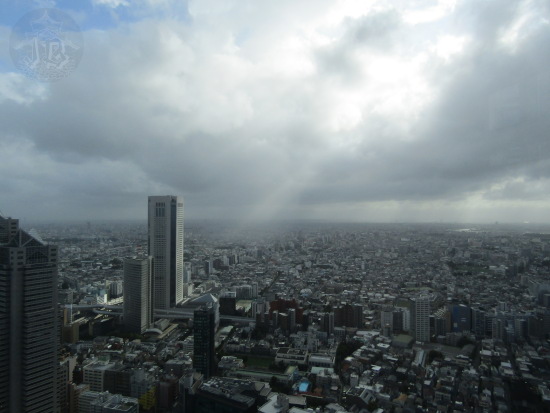
Once more in Shinjuku [新宿], I stepped out at Tochomae station to go to the Tōkyō Tochō [東京都庁] aka the Tokyo Metropolitan Government Building. To my surprise, there was a line for the observatory! Apparently they have closed the North Observatory for renovations (possibly 2020 preparation). When I got to the observatory there was a piano, and at that time, visitors were allowed to play it. I thought “Wouldn’t it be cool if someone did X Japan?”. And then two guys do 紅 with three hands. I was very impressed.

I hoped I would be able to walk around Shinjukucho Teien [新宿中央公園] before it started raining.

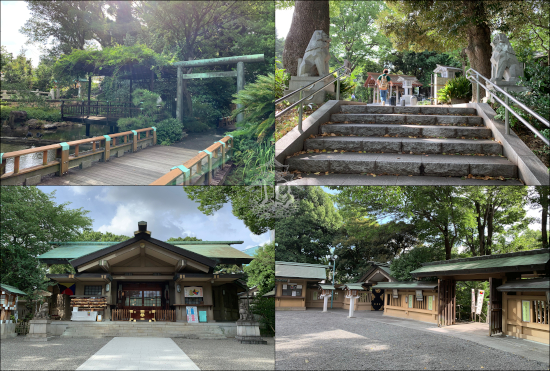
As I was in Shinjukujunisha Kumano Jinja [新宿十二社 熊野神社], where I got a shuuin, it started pouring.

Thus, I went back to the covered station underpasses as fast as I could and then tried to get my way round the inner passages… with dubious success. I did find the Shinjuku tourist office, because they had Coke packs there, but I could not find one that had sakura and Tokyo bottle in it (ó_ò).

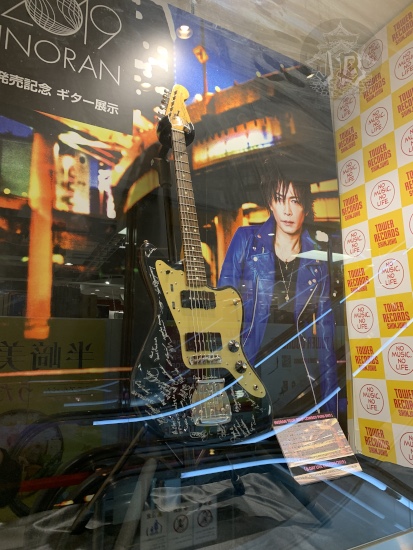
Then I went to Tower Records to see INORAN’s guitar, which was on display prior to his tour.

And then I headed off to Roppongi [六本木]. And you know what I found in the first random vending machine I came across? The freaking Tokyo Coke bottle, which turned out not to be only in Shinjuku! I had been looking for it for days (;¬_¬)

Afterwards, I met D****e and M*****san for a nice shabu-shabu dinner.

Walked distance: 10978 steps / 7.85 km.

14th August 2019: The other side of Harajuku {Japan, summer 2019}

After a sweep around the V-kei shops in Shinjuku [新宿], I dropped by Shibuya [渋谷区] (finally) to go to the big Tsutaya there, along with the Mandarake and Tokyu Hands. And there, in the most random vending machine in a backstreet, I managed to find the Shibuya coke bottle (which I drank with glee as I had approached the vending machine as I was thirsty). Then I walked towards Harajuku [原宿], but instead of Takeshita Doori, this time I turned towards the other side. I wanted to see the LemonEd flagship shop, as the Nagoya one did not convince me. LemonEd is a brand created by the deceased X Japan’s guitarist Hide, known for his bright colour combinations and hearts. I wanted to see the shop at least once, I guess, even if “bright” is probably not my thing (≧▽≦). There were many items, T-shirts and so on and I sneaked a couple of pictures.

I went on a little and arrived at Tōgō Jinja [東郷神社], which I really liked. I got a shuuin there too, and almost lost my shuuincho there because the miko would not call my number to give it back (;¬_¬).

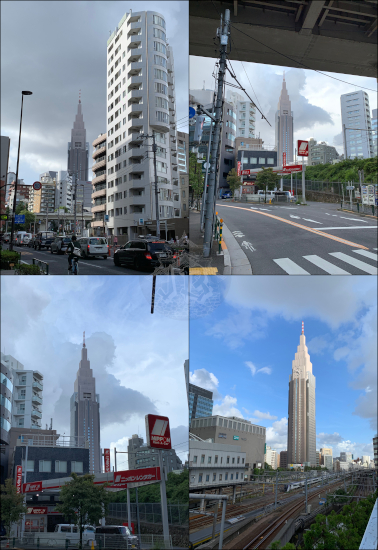
I walked from Harajuku back to Shinjuku via Yoyogi [代々木], and I pretty much went around the NTT Docomo Yoyogi Building [NTTドコモ代々木ビル] from all angles (and weather backgrounds).

When I arrived at Shinjuku station [新宿駅] though, I came across… the Salamander God in a Takashiyama Window… I’m not kidding you.

Once I was in Shinjuku I tried to find the Tokyo Coke bottle in another random vending machine… It did not work, but I found the Kabukichō Benzaiten [歌舞伎町弁財天], which I had seen in passing, and wanted to snoop around.

After kushikatsu dinner, we called it a day.

Walked distance: 19234 steps / 13.7 km.

13th August 2019: Steamy steamy Tokyo {Japan, summer 2019}

Following recommendations from some Japanese acquaintances, I headed off to the Shinagawa [品川区] area to visit Hebikubo Jinja / Kamishinmeitenso Jinja [蛇窪神社 / 上神明天祖神社], a pretty shrine where I got a pretty shuuin (aaaand discovered another stamp rally).

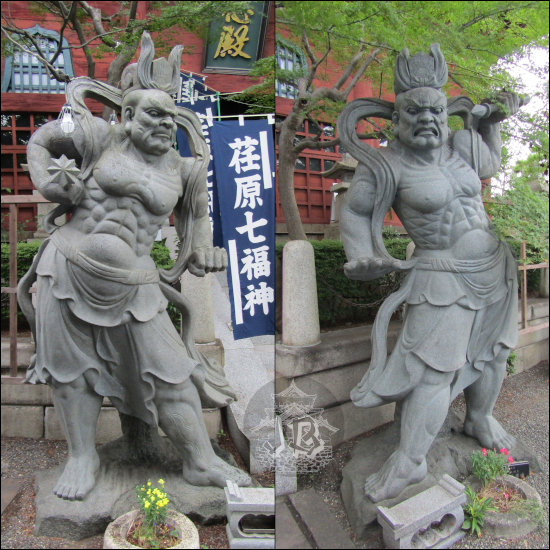
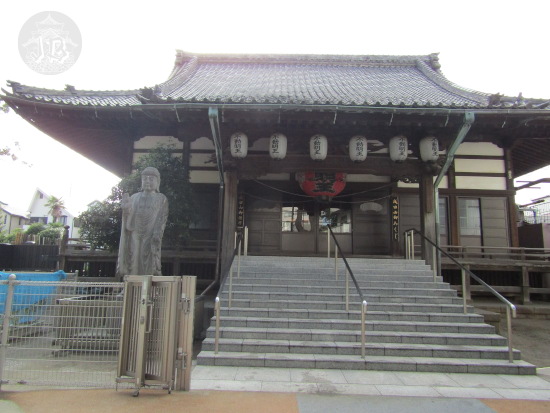
Among rain, sun and drizzle it was exhaustingly hot. I continued on to find Kimyozan Yogyokuin Nyorai [帰命山養玉院如来寺], a temple with amazing guardians.

And then I found an obviously very dangerous and aggressive tiny pond, I mean, look at those meshes (yes, I know that it’s probably for children safety, but I shall still make jokes about it). It was the Hara no Suijin-ike [原の水神池].

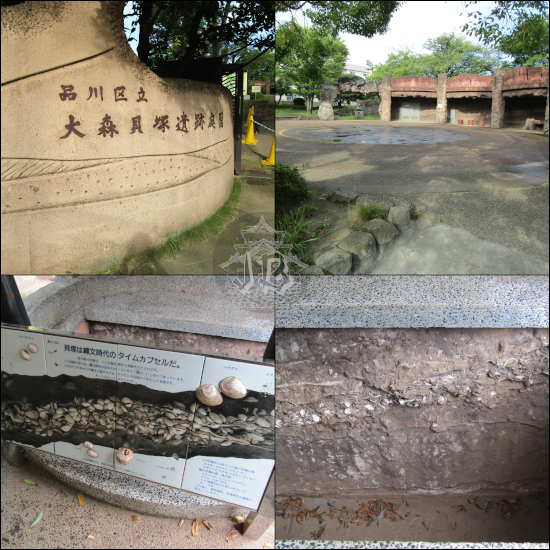
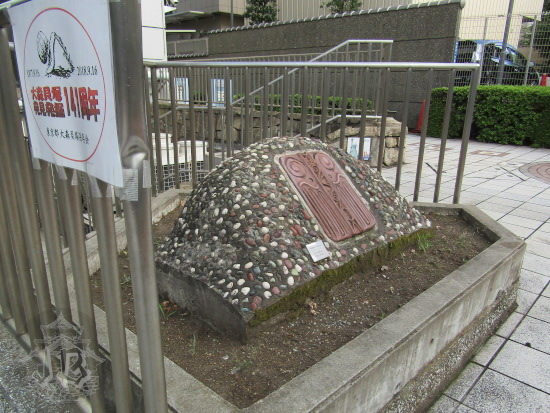
Checking how to come back I came across Ōmori Shell Mound Ruins Garden, Ōmori Kaidzuka Iseki Teien [大森貝塚遺跡庭園] and the Statue of Ōmori Shell Mound, Ōmori Kaikyo no Ishibumi [大森貝墟の碑]. The Ōmori Shell Mound was apparently the first archaeological excavation in Japan. They dig out a seaside village from the Jomon period (14,000 to 300 BC).

Opposite I found Naritasan Ennoji [成田山圓能寺].

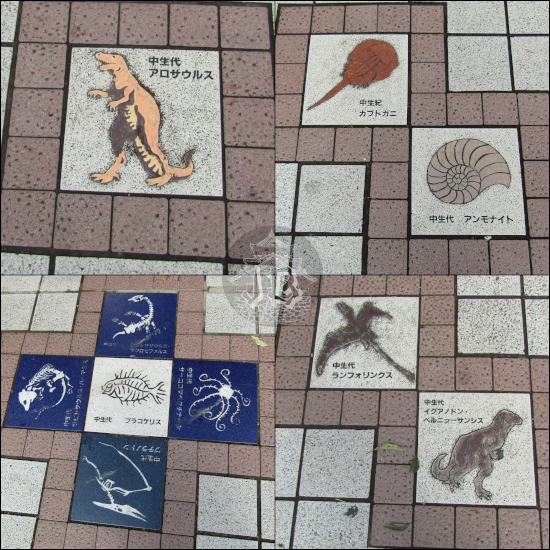
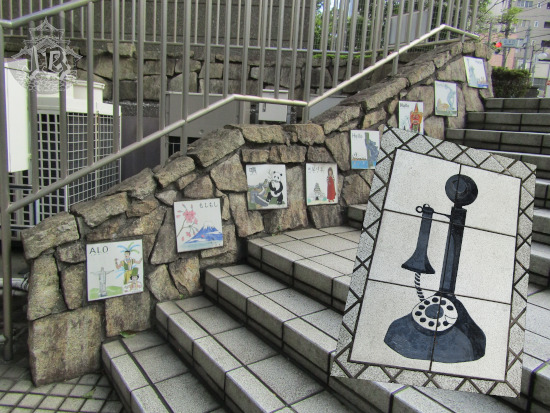
And before I left I noticed the ground decoration on the pavement – life evolution and… telephone greetings. Because Japan, I guess…

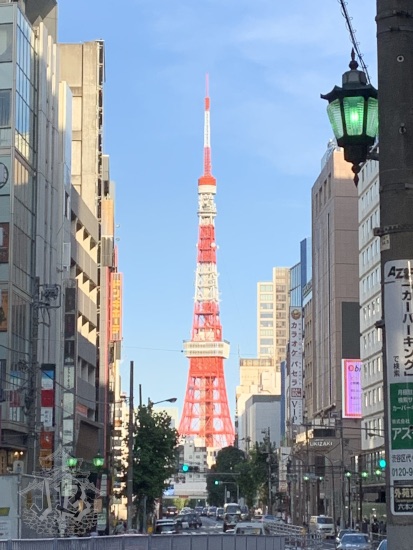
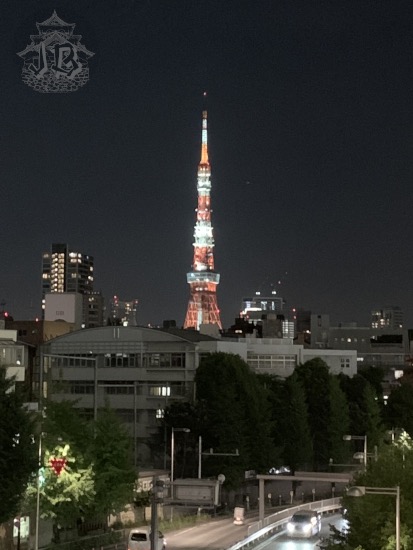
Then I looked at Tokyo Tower [東京タワー] from Roppongi [六本木], as I checked the Don Quijote for Tokyo Coke bottles, without success.

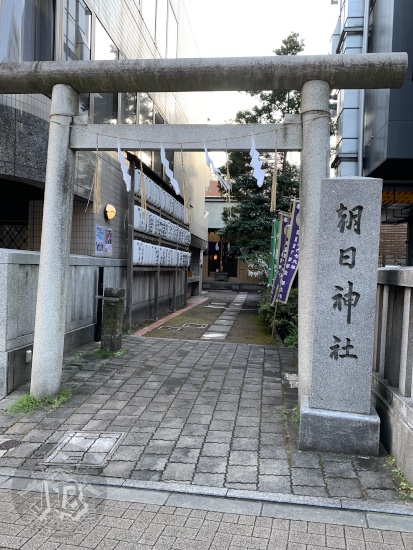
I also came across tiny Asahi Jinja [朝日神社].

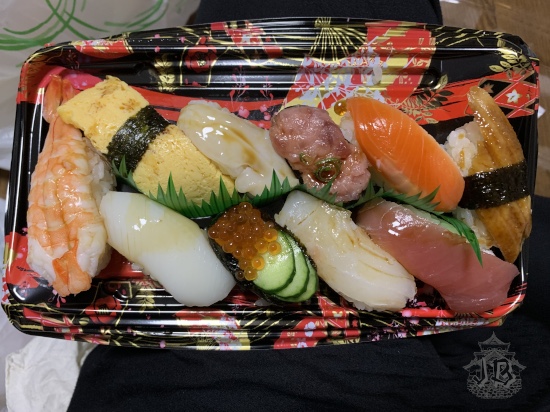
Then dinner was supermarket sushi, which was very, very yummy.

Walked distance: 14009 steps / 10.0 km

7th August 2019: Dragons & kappa {Japan, summer 2019}

It is by now a tradition to go Ueno [上野] and the National Museum of Nature and Science, Kokuritsu Kagaku Hakubutsukan [国立科学博物館] to see the summer exhibition this time it was about kyouryuu [恐竜博], “fear dragons” aka dinosaurs – this year the exhibition was called 恐竜博 2019 THE DINOSAUR EXPO 2019. So it was a must-go for me (^o^)/

And then of course I wandered a little around the evolutionary wards of the museum, because of course I did.

I came out and I turned right instead of left, so I walked right into Kaisan-do (Ryo-daishi) [開山堂 (両大師)] (which on google maps appears as Rinnoji. Note to self: explore the area beyond next time over.

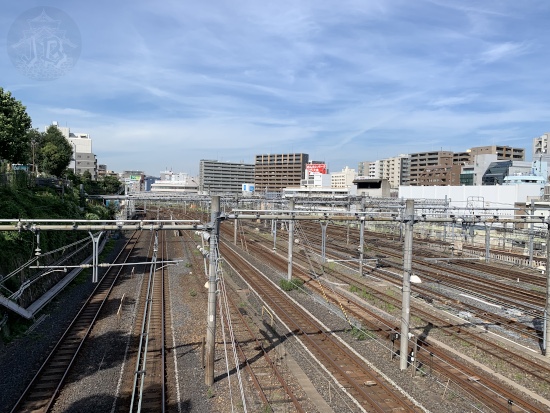
Then I crossed above all the railways leading in and out Ueno station.

I continued on until I got to Sogenji [曹源寺] also known as the temple of the kappa, Kappa-dera [かっぱ寺]. There is a legend related to a raincoat maker who was helped by a kappa when he wanted to build a drainage system in the area. There are a lot of kappa in the temple.

They also populate the nearby area, Kappabashihon [かっぱ橋本].

After that, I backtracked back to Ueno and from there I took a train to Ikebukuro [池袋] to do some window shopping. Then I looked at Tokyo Tower [東京タワー] from Roppongi [六本木] before D****e and I had dinner and called it a day.

Walked distance: 13384 steps / 9.57 km

6th August 2019: Tokyo & Yokohama Book Off Rally {Japan, summer 2019}

To be honest, this was a weird day because my mind was full with some personal stuff, so I just wanted to keep busy. I did a Book Off marathon and I found a lot of interesting things, both in Tokyo and Yokohama [横浜市]. I wanted to visit the Tower there, but it was closed for renovation!

At 6pm I met up with Sr-san for way beyond amazing sushi! Lots of new things to try too!

In the end what I was worried about was solved ε-(´・`) フ and I went back without any problems (on the way out the regular train line was down).

Walked distance: 17438 steps / 12.4 km.

5th August 2019: Vampire Rockstar… I mean Vampire Café {Japan, summer 2019}

After doing laundry (sweaty clothes and lingering smells of smoking rooms demanded those), I met up with B**** around Nakano [中野] station for lunch. Since I arrived earlier than her, I wandered around the shopping centre, and I saw yet another long jacket that I loved at a great price, so all in all, jacket success.

We did some karaoke and then she was kind enough to indulge me and accompany me to the Vampire Café in Ginza [銀座]. Themed cafés are rather popular in Japan. They are establishments that combine food, drinks, or both, with some kind of attraction or theme that makes them unique and / or special. A lot of them are are “animal cafés”, which have living animals as mascots. Back in 2013, B****, D****e and myself visited the Sakuragaoka Cafe, where you can feed the goats. Other cafés choose a topic or particular atmosphere, such as the butler café Swallowtails.

The problem with themes cafés is that one usually needs better Japanese than I have got in order to get by, so I have not visited as many of them as I would have liked. There quite a few reviews on the internet that complain about small portions and high prices for the cafés. It is true that they tend to be a bit more expensive than a regular shop, but you are paying for the experience on top of your food. I don’t think they are overpriced. Regarding the portions, I’ve always found them reasonable. So they are not like the hugely posh European restaurants that you get tiny amount of food at an exorbitant price.

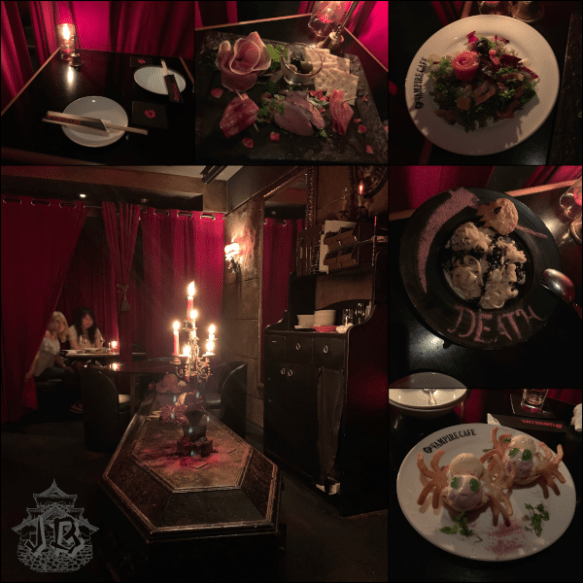
We got off the train at Ginza station and found the La Paix Building or LapeBiru [ラペビル]. We spotted the café logo on the outside, and later in the directory next to the lifts. As it was a Monday, the place was not crazy full. I think they would have turned us down otherwise as we did not have a reservation. There was a direct lift to the entrance of the café, already decorated in style, with dim lights, cobwebs, lots of red velvet, even a skeleton.

We were given a note that informed us that each customer needed to order at least “a food and a drink” and that the time limit was two hours. While in general the experience was fun, I think that this café needs to be visited in groups so you’re in the main area and not the tiny booths to the sides. The main room had a coffin to the side, and there is a table for the groups. The walls were black, and the booths closed with heavy red drapes. There were candles (real candles, not lookalike lamps) for light, and a soft “music box” chamber music in the background in order not to disturb conversations.

Our waiter was clad in a long burgundy gown and she had bat wings on her hair. We’re not sure whether she was in character, or just unamused, but she looked very serious and a little unfriendly – she was probably just not in the mood to deal with the poor-Japanese-skills customers. Since we were only two, we were taken to one of the little booths with red sofas, a small black table, and black walls. As she drew the curtains closed – maybe for a casket-y feeling – we found ourselves giggling.

The food was not bad at all. We decided on a set for two, called Mankitsu Course [満喫ココース], literally “Enjoyment course”, and a couple of cocktails – a non-alcoholic ブルッドオレンジジュース “blood orange juice” for me, and a ブルッドオレンジサワー “blood orange sour” for B****. What was really on-spot was the presentation though – very in synch with the place, and rather cute, with roses made out of salmon, scythes and skulls sprinkled on the places and ice-cream spiders… and even those were cute.

Collage. The two-people booth is surrounded by red curtains, and the food is gothic-looking. The cold sausages have been stylised to look like roses, as has the salmon in the salad. The pasta has a black cross and a grim reaper drawing along the word Death. Ice cream scoops have little cookie legs so they look like spiders. A general shot of the room shows a coffin-looking table with a chandelier on top

Food consisted on:

  • Hamu moriawase [ハム 盛リ合わせ]: Ham assortment, more like sausage assortment with biscuits.
  • Shiisaa Sarada [シーザー サラダ]: Caesar Salad, really nice but not “Caesar”, it had a salmon rose.
  • Garikku Toosuto [ガリック トースト]: Garlic toast, in the shape of coffins, really adorable.
  • Ika sumi pasuta [イカスミ パスタ]: Squid pasta, surprisingly good and with an adorable Grim Reaper presentation.
  • Haabu & supiisu chikin [ハーブ & スパイス - チキン]: Herb & Spice Chicken, flambéd at the table.
  • Nishiki Aisu [2色アイス]: Two-colour ice-cream, strawberry and vanilla in an edible cookie mini-bowl with little spider legs and glazed-cherry eyes.

Our waiter tried to make us chant once, but we did not manage to understand what she wanted us to do until we heard it echoed in a nearby booth. The truth is that we did not get to communicate with her too well. The booth was cute and all, but it was a bit disappointing to be “enclosed” behind the velvet all the time and miss on part of the experience – “Dracula” skipped our booth, apparently because we did not have enough Japanese for him?

The place felt rather quiet. As the velvet curtains muffled the sounds from other customers, only the creepy music-box ambience could be heard, albeit very faintly. When the two-hour limit was nearly over, we got our bill. The meal, including drinks, was actually cheaper than I expected. They did not add the cover charge despite saying they would, so the total came up to 7,776 ¥ (6,000 ¥ for the set menu, 550 ¥ for the non-alcoholic drink, 650 for the alcoholic cocktail plus taxes), so it did not even reach 4,000 ¥ per person.

Reading the bill slowly later, we thought that what the waiter wanted us to chant was a Dracula invocation: koyoi wa sonata [コヨイハソナタ] “tonight is a sonata”, and chi wo itadaku [血ヲイタダク] “(I) receive the blood”. I might want to come back to this place if my Japanese ever improves enough to enjoy the whole experience. But I got it out of the bucket list, and that was great. After all, I might have been on a bit of a vampire high due to both KAMIJO’s concert.

Walked distance: 15168 steps / 10.8 km, again somehow.

3rd August 2019: Higashiyama Sky Tower and ELL {Japan, summer 2019}

In the morning I headed out of the Nagoya centre and to Higashiyama Sky Tower [東山スカイタワー]. This was a bit far out and I had slept in – did I mention tiredness catching up? I also considered the zoo/aquarium but in the end I decided against it.

A collage of the Higashiyama Sky tower, a rectangular building with a cylindrical core, mostly built in glass and metal. The smaller pictures show the view of the park, and the earthquake damper

I had an amazing lunch set in the shopping mall underneath / connected to Nagoya Station on my way back.

Lunch set: cold soba, white rice, breaded prawns, pickles, and green tea

Then I headed out for Electric Lady Land. To increase my chances of actually seeing KAMIJO this summer, I balloted for two concerts of the 2019 Japan Tour Persona Grata through the fanclub Rose-Croix international. I was lucky enough to hit for both. When I arrived at the venue, I queued to buy goods – I only wanted the collectible badge, but ended up getting way too many. I waited around, and this time, the Japanese members of the fanclub were let in before the international ones. We did not get a physical ticket, either, just the passport and the reference ticket were enough.

Notice reading ell. Fits all. Japan Tour 19 Persona Grata. Kamijo. Open 18:30, Start 19:00

ELL is a small venue and we were not many people there for the concert – it was strange that there were so much people in Tokyo to fill up the Blitz, but not enough in Nagoya to fill ELL. It was a more humble concert, with a smaller screen for the projections, but it was fun none the less. I was able to stand close to the stage, but I chose the wrong side – I stood left while KAMIJO donned right. I shall learn from that. The set list was the same as the opening concert, which gave me the chance to appreciate the new songs even better. Even if the hall was smaller (tiny, actually) and thus held fewer people, it felt more energetic as attendees were jumping and yelling further – it seemed like the Blitz opening had felt more formal. Glad I got to attend both concerts, never mind how different and similar at the same time they were.

Kamijo Persona Grata poster

Walked distance: 16231 steps / 11.6 km. We don’t trust this measure either as it counts the furutsuke as walking (≧▽≦).

2nd August 2019: Ise Bunkamura {Japan, summer 2019}

When I was in Ise [伊勢市] in 2018 I could not budget (neither time nor money) to visiting the… you know what, I’m confused as hell as what the actual official name is. In English it is Ninja Samurai Kingdom – Ise, but in Japanese it is Azuchi Momoyama Jōkamachi (Ise Azuchi Momoyama Castle Town) [伊勢安土桃山城下街]. Anyway. I went there.

It is a sort of theme park where you can cosplay and walk around in costume, watch shows and play games. In theory, you can also visit the castle, but the bus there was not running that day, and a few of the areas were closed. Not that I regret going, but looking back it would have been skippable – now I know. But I had to go to know and get it out of my checklist ☆⌒(ゝ。∂) .

I think I actually spent more time travelling there and back than doing actual things. I had to wait an hour and a half between the shows that I had thought I’d use on seeing the castle… but nope.

Once back in Nagoya [名古屋], I went to the Book Off to check if there was anything interesting, as after Nagoya I would be heading back to Tokyo, and I could now go on a shopping spree.

Walked distance: 16136 steps / 11.5 km.

1st August 2019: Takehara’s Little Kyoto in Aki {Japan, summer 2019}

Takehara [竹原市], in Hiroshima Prefecture, claimed to have its own Gion-like district, and they are trying really hard to promote it. I decided to check out whether it was true / worth it. And after half an hour what I kept wondering was “are you sure you’d want this to become as crowded as Kyoto?”

The historical area consists on a few streets, temples and shrines dating back to the Edo period. Let’s see whether I can retell the route accurately. My first stop was Izumo Jinja [出雲神社]
After I had taken the wrong turn a couple of times because the map was cute but not that accurate, I found the “Takehara Historical District”, actually Takehara Townscape Conservation Area Takehara Machinami Hozon Chiku [たけはら町並み保存地区]. The main tourist route runs along Honmachi [本町] Street, and during my whole walk I ran across maybe ten other tourists.
My first diversion was Choseiji [長生寺].

After this I had a better idea of where I was, so things rolled more easily. I continued along the houses and turned right to climb up Saihoji Fumeikaku [西方寺普明閣].

Afterwards I visited Okakae Jizo [おかかえ地蔵], who will grant you wishes if you pick him up

Then Ebisu Jinja or Kodo [胡堂].

Afterwards, Shōrenji [照蓮寺].

Historical alley, holding Shumpukan [春風館] and Fukkokan [復古館].

I diverted then to Sumiyoshi Taisha [住吉神社].

And Kusunoki Jinja [楠神社].

Isonomiya Hachimangu [磯宮八幡] was under construction, so I did not bother the workers.

After this I wandered a little around the river, considering whether going to the harbour or not, but in the end I decided against it and headed off back to the station, where I took a train towards Mihara [三原], where I visited the site of Mihara Castle Remains, Mihara jōato [三原城跡].

I also found… Rakkii Jinja [らっきー神社], which I think it’s actually “Lucky Jinja”… in Mihara Station… I don’t ask anymore… but apparently Mihara is the “Octopus Town” and this is their mascot?

Then I went on back towards Nagoya via Kobe. This took around three and a half hours, so I was in Nagoya [名古屋] around late afternoon. Once there, I continued on my search for long jackets and I was finally successful in acquiring two of them in the Midland Square Mall, where I actually went to check out on a LemonEd pop-up shop… which I almost didn’t find because it was way too discrete.

Walked distance: 17438 steps / 12.4 km.