12th March 2024: A free afternoon – the bullring & Pompeii Exhibition (Madrid, Spain)

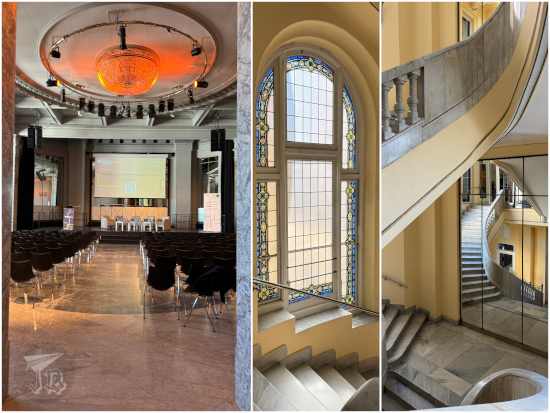
Due to life being weird sometimes, I was summoned to a work-related event in Madrid on the morning of the 12th. The event took place in one of the buildings erected by Antonio Palacios, the cultural centre Círculo de Bellas Artes (CBA). The centre hires out its facilities for conventions, gatherings and theatre plays. In our case, we were there for the presentation of a new product in the Column Hall Sala de Columnas on the fourth floor.

Interior of the Círculo de Bellas Artes

After all the necessary chatting, networking, and a disappointing (and rather questionable) choice of canapés, the event was over at 14:30. I ditched my companion then and headed out to Plaza de Toros de Las Ventas, the local bullring. I am not a bullfighting fan – my personal view is that it is not an art, nor a “fair fight” as it is presented, and I hope we humans evolve to phase it out. And while I would not attend an event, I was curious to get to know the building and its architecture.

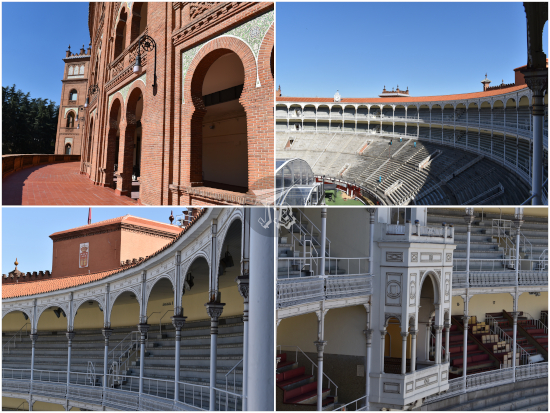
Las Ventas bullring, outside

The ring is the largest of its kind in Spain. It was designed by José Espelius in the neo-mudéjar style and erected between 1919 and 1931. The central ring is just over 60 m in diameter, with a metallic structure holding the stands around it, and a façade of reddish brick and porcelain tiles. Aside from bullfighting, it is also used for concerts and other events.

I took a self-guided tour with an audio-guide Las Ventas Tour Experience, because I actually know nothing about bullfighting – I learnt that it actually has “rules”, I thought it was just taunting and hurting the bull. The passes have names, and there is a whole colour code of handkerchiefs – I had no idea. The tour takes you past the “Great Gate” through which bullfighters come out through when they are deemed to have done a great job. Then you climb up to the first floor balconies, and you can even go up to the highest point to have a panoramic view. You see the outside of the Royal Box, the gate through which the dead bull is brought out through, and then you walk down to the ring itself. There you can stand in the areas where the bullfighters and their helpers wait, and peer towards the stables, the closed door to the infirmity and finally the chapel. There are two VR experiences too that I did not care for, so instead of the expected 75 minutes, I took a bit less than an hour to do the whole tour.

Inside the bullring of LasVentas

Afterwards, I was curious to check out an immersive exhibition regarding Pompeii called “the last days of Pompeii” Los Últimos Días de Pompeya in the cultural hub Matadero Madrid. It was designed by Madrid Artes Digitales, the same company which organised the Tutankhamun one. At first I was not overly interested in it, but when I went to Recópolis the guide mentioned an actual VR tour, and I became curious (read: it was totally FOMO in the end).

The exhibit has a couple of replicas of archaeological artefacts, but it’s mostly a digital display. The first time I went to the Madrid Artes Digitales building I thought they had rented the place, but now I saw that they might actually own the warehouse and design the exhibits into it. There is a huge room where they project a sort-of film on the walls, a small circuit that you walk doing different activities, and a sitting VR ward, where you get to see a fictional world in 3D.

Of course, there were replicas of the Pompeii casts, and a copy of the novel The Last Days of Pompeii, written by Edward Bulwer-Lytton, which has inspired the exhibit. The novel, in turn, was sparkled by the painting The Last Day of Pompeii. The projection recreated a few passages from the book, then Mount Vesuvius erupted and you were taken “into” the crater, seeing lava bubbling and lightning bolts. Then one was back in the city as the pyroclastic cloud rolled into the city, along with volcanic bombs falling into buildings.

Last Days of Pompeii exhibition

The circuit was a VR walk-through that took you though a house, both in ruins and reconstructed, as a woman led you through it. Walking with the VR glasses was a new experience, I have to admit, but going through doors was strange. Unfortunately, my set had a finger print in one of the lenses which spoiled the view a little. In the final ward, there was a representation of a circus fight with gladiators and tigers that turned into a naumachia (ship games in the amphitheatre) while Mount Vesuvius erupted in the background. All in all, it was a bit weird, and maybe… a tad on the morbid side, if you ask me.

Afterwards I just headed off, and I was lucky to make it into the train, it was so full! The car emptied out enough to sit down after a few stops, but just wow.

22nd and 23rd April 2023: A date with a dinosaur (London, England, Great Britain)

Since I cannot keep my mouth shut, I offered to organise a trip to London with some people from work. Despite prices skyrocketing everywhere and my ridiculously hectic schedule, I managed to secure a weekend when flying would not be stupidly expensive, and an activity I would really be looking forward to – the Natural History Museum was running couple of things I was very interested in. One was an exhibition on a gigantic dinosaur: Titanosaur: Life as the biggest dinosaur. Well, twist my arm – NHM is much closer than the actual Titanosaur home in Argentina. Furthermore, there was a collaboration with Jurassic Park (‘an adventure 63,000,030 years in the making’ is the motto), and coming back to the museum would give me the chance to purchase the rock I wanted the last time I was over and did not get because I was heading out to Stonehenge on the same day.

In the end, only one person took up the offer, and I figured out that well, London is pretty much always a good idea for a weekend – so I figured I’d arrange myself a date with a dinosaur. Unfortunately, it turned that London Marathon was held that weekend. Hotel prices were bloated for the night and we ended up at Earl’s Court because I wanted to stay close to South Kensington and the other person wanted the cheapest place possible. We left on a red-eye flight to London Stansted which took a long time to land – we spent about an hour circling the airport, and eventually the head cabin attendant said that there was bad visibility at the airport, and that the pilot required all electronic devices to be turned off so he could use the autolanding system. I did not like that one bit – after I visited Santiago de Compostela in 2022, I felt that I had got over the bad-visitiblity near-miss when I was a teen. Apparently not, the feeling of uneasiness is still there. We landed over an hour late, but we were on our way on the first Stansted Express a few minutes after getting on it. After reaching Liverpool Street Station at around 9:30, I asked my companion to take us to Guildhall as part of the incentive of the trip was introducing them to international travel. It was not a good idea. Their phone trolled us and tried to take us to Guildhall… in Stratford upon Avon. The Costa at the station was closed, but at least I had got myself a sandwich and a latte before we started walking.

After backtracking, we were in known territory around 10:15. As it turns out, my companion was only interested in “walking the city” and shot down any activities I had proposed – thus, some things I just imposed in order not to feel that I had wasted the whole day away. By 11:00, I had confirmed that our travelling styles were not compatible. After some time at the docks next to the Tower of London, I wanted to enter the Anglican church All Hallows by the Tower. All Hallows is the oldest church in the City of London – founded in 675 CE, it predates the nearby Tower of London. The parish used to take care of a lot of the prisoners executed there. The building withstood the Great Fire of London (1666), but it was severely damaged through The Blitz – the German WWII bombing campaign against the UK throughout 1940 and 1941. The church was rebuilt and reconsecrated in 1975. Its windows are decorated with symbols from the different London guilds and some families.

Collage of a church. The outer building is brick and it has a tower crowned with a greenish metal spire. The inside has huge windows decorated with guild symbols. The small crypt inside is covered in white stone.

Underneath, there are a few chapels and a small Crypt. Most of the crypt is a museum which chiefly holds artefacts from the Roman period – including remains of an old road. There are other historical items from the Saxon and Medieval times, and the 20th century Crow’s Nest of the vessel Quest, in which Sir Ernest Shackleton sailed for Antarctica for the third time, and where he died.

When we were done, we went to Saint Dunstan in the East Church Garden. I was hoping to use this as a relaxing point for a few minutes, but there was work being done on the parterres. We continued towards the River Thames for some views of Tower Bridge, the museum HMS Belfast and The Shard skyscraper.

We walked by the Monument to the Fire of London on our way to the Sky Garden. The Great Fire burnt inside the Roman city wall for four days after breaking out a bakery after midnight on the 2nd of September, 1666. Though the number of victims is (theoretically) small, the fire destroyed over 13,000 houses (15% of the city’s housing), almost a hundred parish churches, governmental buildings, St Paul’s cathedral, and even some of the city gates.

Afterwards, we walked over to Leadenhall Market, a covered shopping street which can be traced back to a 1321 food market, and marks the centre of Roman Londinium (ruins from the Forum and Basilica are buried underneath). It was given to the city in the 15th century, and in the 19th century, the City Architect Sir Horace Jones designed an iron-and-glass arcade. Today, it holds restaurants, wine bars, varied shops and even beauty parlours.

A covered shopping gallery or street, in dark red and beige tones.

Around the market stands a mixture of modern buildings and traditional buildings, mostly small churches. Among the former:

  • The Lloyd’s Building (25 Gresham Street), sometimes called the “Inside-Out building”. It was finished in 1986 and it is consider a great example of Bowellism – an architectural style that maximises inside space by building ducts, lifts, and other structural necessities on the outside. It was designed by Richard Rogers & Partners, and it still maintains the original entrance of the building that stood in its place in 1928 – the East India House.
  • The Leadenhall Building (122 Leadenhall Street), designed by the Rogers Stirk Harbour + Partners. It opened in 2014.
  • The Willis Towers Watson (WTW), designed by Norman Foster, it was finished in 2008.
  • The Scalpel (52-54 Lime Street), which yields to cool reflections along with the WTW, and has a strange sculpture at the entrance – it made me think of several ship wheels fused together. The building was designed by Kohn Pedersen Fox and only completed in 2018.
  • And of course The Gherkin (30 St Mary Axe). It was designed by Foster + Partners and it is the first ecological building ever built in London. It opened in 2004.

The historical buildings we encountered (having survived both the Great Fire of London and the Blitz) include:

  • Saint Andrew Undershaft Church. It dates back from 1147, although it has been rebuilt several times. The current building was erected in 1532.
  • Saint Helen’s Bishopsgate Church, where Shakespeare himself used to worship in the 1590s. The building can be traced back to the mid 12th century, and it was restored during the Victorian period and later during the 20th century.
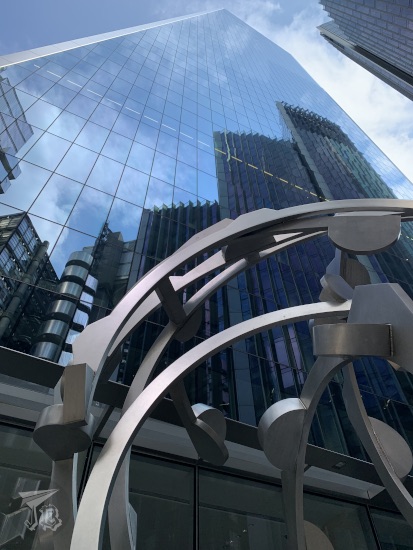
Skyscrapers reflected on the glass that covers yet another huge skyscraper

A small church built in Stone in the background with a huge modern high-rise building behind it

Afterwards, we headed towards Embankment on the Tube. There, I was happy to find a Costa Coffee and get my vanilla latte fix. In the area, we saw the Victoria Embankment Gardens and I wanted to visit Cleopatra’s Needle – half of a pair of obelisks (the other one is in New York), originally made and carved in Heliopolis, what is Cairo today. It has inscriptions from the 18th and 19th Egyptian dynasties (around 1450 BCE). It was presented to the United Kingdom by Sultan Muhammad Ali in 1819, and later transported to London in 1877. Two sphinxes and other decorations were added when the Needle was erected, and the plinth under one of the sphinxes was damaged during London Bombings – it was never restored as a tribute to memory.
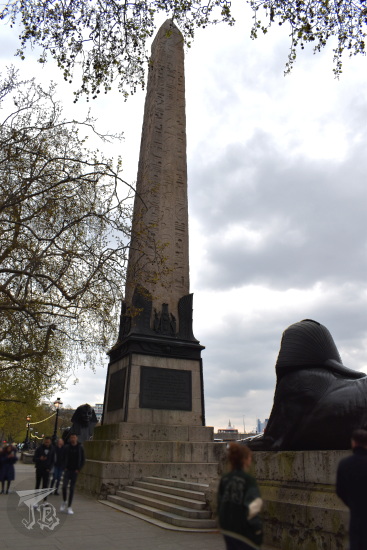
An Egyptian obelisk standing against a cloudy background

We walked over to the Westminster area to see the Palace of Westminster and Elizabeth Tower. There was an environmental protest there, which made it packed, but at the same time diverted traffic, allowing for new views from the middle of the street. On the way, I encountered an adorable pit bull mix I got permission to pet – coffee and dog pets made everything better.

A view of the palace of Westminster, with the Elizabeth tower on the left

We continued off to Saint James’s Park, home to squirrels, geese, swans, pigeons, mallard ducks, robins… all of them extremely used to people and tourists, and rather unconcerned by dogs being walked. We ditched the marathon fencing and reached Buckingham Palace, but by then my companion was beat. Thus, we had to go to the hotel so they could get some rest. The hotel was better than expected for a London 2*. It was nice and warm, although the bathroom was tiny – it was difficult to stand inside and close the door.

Buckingham Palace and some of the animals at Saint James' parks

A couple of hours later, we were off into the evening to see Piccadilly Circus, the entrance to Chinatown, and Leicester Square. Companion was beaten, so they were not sure they would be up for anything the following day – we arranged to touch base at 9:00 for them to evaluate. Once in my room, I had a shower and booked a free time slot for the British Museum the following day, just to avoid the queues. I thought, even if we did not make it, at least we had assured entry if we did, and I could always cancel and release the ticket.
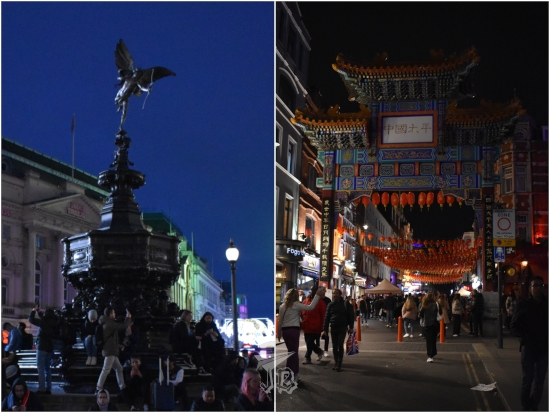
Central London at night - Picadilly Circus' Eros and entrance to Chinatown

The next morning, I left on my own around 8:00 to look for a nearby Costa Coffee for a large vanilla latte breakfast, and I came across Brompton Cemetery. This had not been on my radar, but since I had time, I decided to explore it a little. Brompton Cemetery, formerly West of London and Westminster Cemetery, opened in 1840, and it has belonged to the British Crown since 1852. It is on of the oldest garden cemeteries in Britain and comprises around 35,000 monuments. I wandered for about half an hour before I had to head back.

Brompton cemetery, a 19th century graveyard and garden

We managed to get to to the Natural History Museum on time for my date with a dinosaur just after opening. I had my Titanosaur ticket at 10:15, and left off my companion to wander on their own after agreeing to check with each other around noon. The exhibition Titanosaur: Life as the Biggest Dinosaur brings a cast of Patagotitan mayorum to Europe for the first time, along with a few real fossil bones, of a front leg, some teeth, and an egg.

Patagotitan mayorum is one of the largest known animals to have ever lived. It was a sauropod dinosaur – a tetrapod with extremely long neck and tail. It lived in forest regions during the Late Cretaceous (102 to 95 million years ago) grazing on ferns and tree leaves. The species was discovered in Argentina in 2010, and it’s calculated that it could have been up to 31 metres long and weigh over 50 tonnes. It is widely considered the most complete of the South American dinosaurs. The cast that the Natural History museum brought is considered the holotype, and it was reconstructed from the partial skeletons of six specimens.

Titanosaur skeleton. People walking around don't even reach its knees.

The best thing about the exhibit was being able to actually touch the cast, so I kinda hugged my date, I guess. As far as I know, there are only three casts of titanosaur – the one in Argentina (Museo Paleontológico Egidio Feruglio in Trelew), one in the US (Field Museum, Chicago), named Máximo, and this one.

After I had pranced around the exhibition to my heart’s content, and as it filled up with kids, I moved on to reason number two of this visit having to happen asap in 2023. To celebrate 30 (thirty!) years of the 1993 release of Jurassic Park, the Natural History Museum was running a limited-time-only collaboration pop-up shop – the Jurassic Park 30th Anniversary #NHMxJURASSIC store in which I did not even spend that much! I bought a replica badge and a commemorative coin, both limited, numbered editions. The shop had both Jurassic Park and Jurassic World merchandise, especially toys and T-shirts, and a few props, including a life-size sculpture of Blue the velociraptor.

Jurassic Park pop-up shop, with Blue the velociraptor just hanging out

I then headed to the official museum shop to get myself the rock I had wanted – a piece of aura silicon carbide, a shiny mostly-artificial mineral. I also bought a souvenir guide, just because. They did not have anything from the Titanosaur exhibit there, so I backtracked to the exhibition shop to buy a pin.

Whenever I got to the Natural History Museum, I end up in the dinosaur gallery (well, there was that one time I walked through the whole thing throughout a winter day). This time, however, I decided to wander the upper area of the historical building. I was drawn to the Treasures in the Cadogan gallery. I had not been there since it opened in 2013, and my mind was blown. The collection includes a first edition of Darwin’s On the Origin of Species, and some of the pigeon specimens that he used to develop the theory of evolution. I also got to see the first-ever-found iguanodon teeth (not the replicas), the first fossil ever found of the Archaeopteryx (the link between dinosaurs and birds), and a skeleton and egg of the great auk, the first confirmed victim of anthropogenic extinction (due to human activity). I was very impressed, these were all treasures indeed – no overselling.

Treasures at the Natural History Museum - ancient bird fossil, extinct penguin-like bird, a book, dinosaur teeth. Whale skeleton.

After wandering the second floor for a bit, I ran into my companion and at noon we left towards the British Museum, where I had booked entry for 12:40. I left them to their own devices again and headed off to the Japanese galleries, which had been closed the last couple of times I was in the museum. I was… a bit on the disappointed side, I remembered them being way more impressive from my early 2000s visits.

Japanese Galleries at the British Museum: Samurai Armour, lion dogs pair, articulated metal animals, a standing Buddha.

I visited the Moai, the Elgin Marbles, the Babylonian bulls and the Rosetta Stone, and I headed off to the shop to get myself a treat – retail therapy is a thing. Eventually, we left the museum and managed to get to Liverpool Street to take the Stansted Express to the airport. Security was smooth, not as crammed as other times, and then, as tradition calls, I got myself some sushi at Itsu.

When we boarded the plane, I had been assigned an emergency exit seat. In order to sit there, you need to be able to take responsibility about opening the exit if something happens. I flagged a flight attendant to inform them that I would be physically unable to do so. I had a new seat in 4.5 seconds, and it turned out to be a window seat. We took off a few minutes late, and landed with a delay of almost a quarter of an hour. Nevertheless, after passport control and all, I managed to reached the parking lot payment machines with a few seconds to spare the overstaying fee – all good!

Balance – The marathon barely interfered with the weekend. I had a date with a dinosaur and hugged them. That was awesome. I got limited edition Jurassic Park and Jurassic World merchandise. I found some Kettle Sea Salt and Balsamic Vinegar of Modena crisps at one of the supermarkets. I got two new books, commemorative coins and a shiny rock. I also discovered new places to explore in the future, and had Costa – twice. Unfortunately, we ran out of time for extra visits on Sunday – so I could not fit in either the HMS Belfast or the Jack the Ripper Museum. Furthermore, the Grant Museum of Zoology is closed for renovation, and the Petrie Museum of Egyptian Archaeology does not open on Sundays, so in the end I was not really able to scratch much off my list. Whoops!
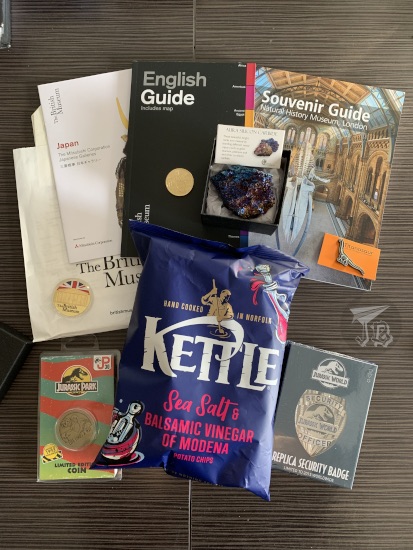

Souvenirs from London: books, crisps, commemorative coins and Jurassic Park merch

9th & 10th June 2018: Wicked London (England, Great Britain)

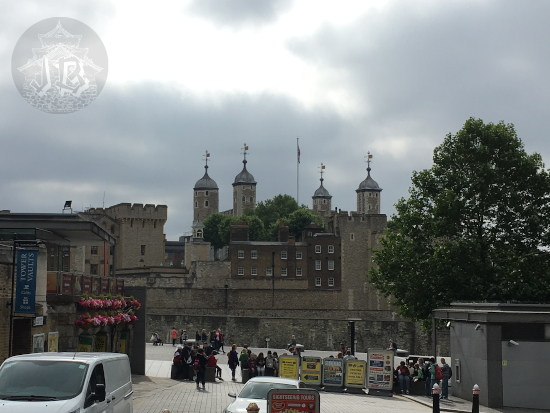
This will be the last work-trip, at least for a while. I might change my mind later, but for now I’m done with them (although there’s an upcoming family trip rather soon…). Again, we flew in early Saturday morning, and we went to walk around the Tower of London and the Tower Bridge.

Then we went to the British Museum. I left them for a couple of hours there and I went to visit some of the lesser-seen galleries.

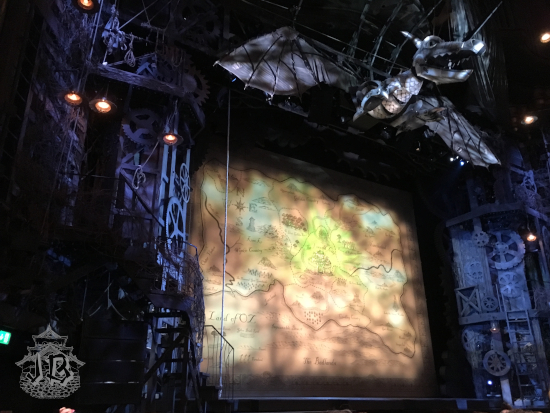
We had booked tickets for the musical “Wicked” in the Apollo Victoria Theatre at 14:30, so we headed over there. Wicked is a parallel story to “The Wizard of Oz”, focusing on the story of the Wicked Witch of the West, who becomes a social outcast due to her tendency to speak her mind and the strength of her magic. I had really wanted to watch this for a long time, so I used this chance and convinced the group to get there. I absolutely loved it ♥.

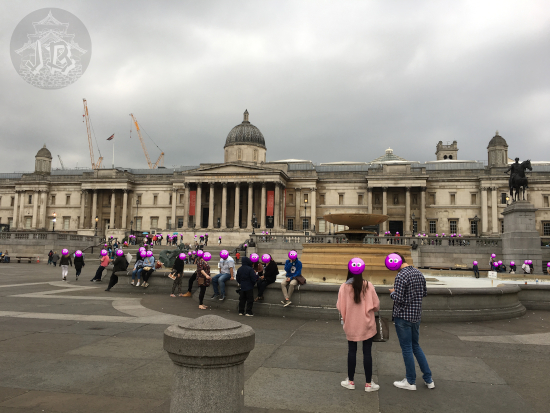
After the show, we dropped our things at the hotel. The group wanted to get some rest, so we stayed there for a while, then got out again. We took the underground towards London central and we were in Trafalgar Square for a while.

Then, we went to Chinatown for dinner.

Later, we walked around Piccadilly Circus, checking out some shops and so. We even stopped for cake.

On Sunday morning we went to Saint James’s Park, where we got to meet the local fauna, especially a very adventurous squirrel.

Then we dropped by Buckingham Palace. Although we did not watch the Guard Change, we did see one of the relief marches.

We walked from there to Westminster, saw the Houses of Parliament and the Big Ben, along the outside of Westminster Abby.

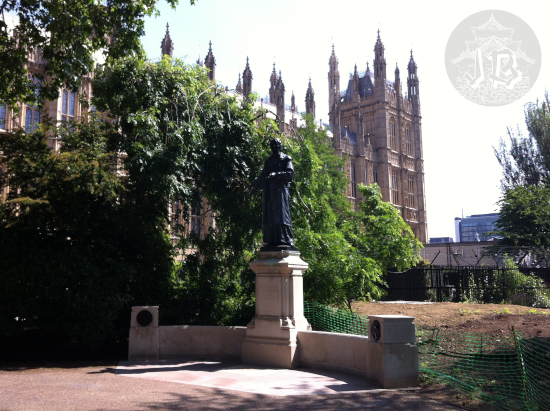
We visited the Monument to Emmeline Pankhurst and stayed for a while in the Victoria Tower Gardens.

As a final visit, we went to the Natural History Museum.

Finally, we headed off to the airport, and the icing of the cake was that we got caught in a controllers’ strike, so we had like a three-hour delay on our flight and it took forever to get home (;¬_¬). All in all, this was a very… strange trip, and without a doubt the highlight was going to see Wicked, which is something I had wanted to do for a long time, and gave me a couple of hours of enjoyment to myself.

10th – 12th February 2018: Highlights of Glasgow and Edinburgh (Scotland, Great Britain)

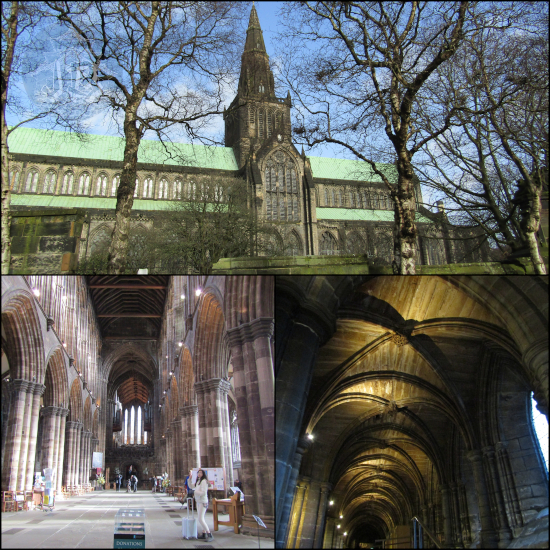
This is another trip that I took with customers. We flew into Edinburgh and took a bus directly to Glasgow, where we arrived at around 9:00 on Saturady morning. We made a stop for breakfast, then we walked to Saint Mungo Cathedral.

Then, of course, I guided them up the Necropolis Hill. The weather was very nice for a chance – because I have the exclusivity of good weather in London, but not in Scotland, which yielded to a nice walk.

We had lunch in my favourite Greek restaurant, and then walked around Glasgow – some of the members of the party wanted to go clothes-shopping so I took the opportunity to get into a bookshop or two. We dropped our things off at the hotel and walked in and out some of the shopping centres in the Central Glasgow area. In the evening, I took them to try Wagamama, a ramen / British fusion food chain. I’m always in for ramen (≧▽≦).

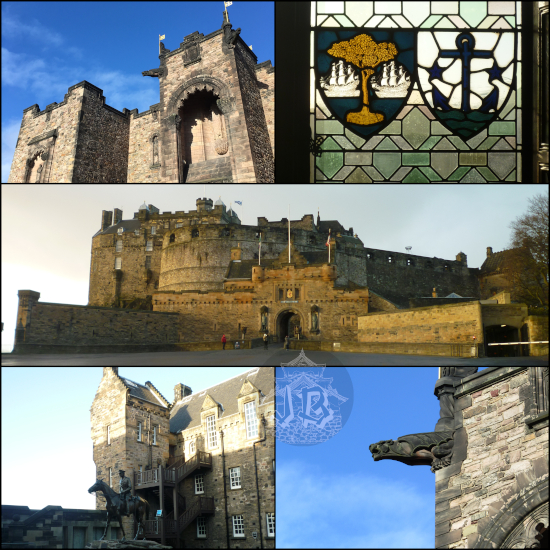
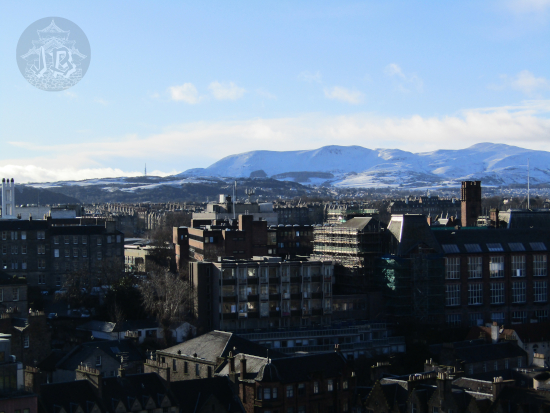
On Sunday morning we took the train to Edinburgh. We visited the Old City and Edinburgh Castle, with some awesome sights (because again, the weather was really good – albeit cold as hell, because, have you seen that snow??) and fumbled around for a while.

We had lunch at the Deacon Brodies Tavern, a traditional a restaurant in Castlehill – mince pie here.

We also took a walk towards the New City – and there was shopping again. In the end we had an amazing cup of chocolate as early dinner before we went back. I was supersuprised they wanted dinner, but I had had enough with that chocolate and just some tea at night. The shop where we had chocolate was called Coro: The chocolate Café, and I have no doubt I would go back to that shop.

Just before we headed back to Glasgow, we came across an art installation in Prince Garden, which had lots of pretty coloured lights.

And when we woke up on Monday to go to the bus station and head off to the airport… it was snowing! Honest to god snow on the streets!

We reached Spain without further incident in the afternoon, and that was another weekend wrapped up.

11th & 12th June 2017: Highlights of London (England, Great Britain)

As part of my day job, I took a group of customers on a trip to London. Not the best decision in my life, but one that I would repeat a couple of times before I had enough. This was a short getaway – we took off on a red-eye flight on Saturday and we came back on Sunday evening.

Our first stop was The Tower of London, officially called “Her Majesty’s Royal Palace and Fortress of the Tower of London”. The main Tower, “White Tower”, was built in the 11th century, and additions to it were made up to the 1400s. It was designated Unesco World Heritage Site in 1998. The Tower holds an armoury, some treasure, documentation offices, a few shops and the Crown Jewels of England. And, according to the legend, quite a few ghosts.

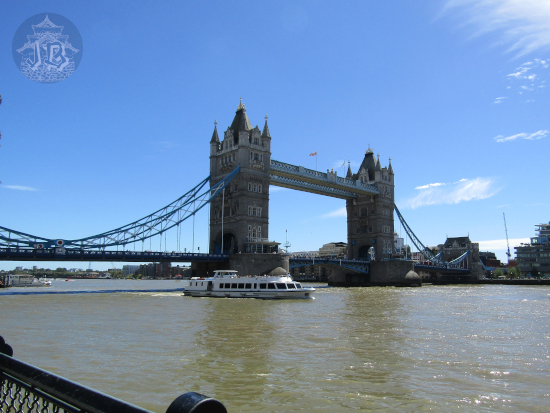
After the Tower, we took a moment to see the Tower Bridge.

We had a hotel basically at the end of the world, and we decided to go to drop our things off before we continued on the visit. We saw the Wellington Arc in Hyde Park on the way to the royal palace.

Then we fooled around Buckingham Palace.

Finally we went to Chinatown to have dinner…

… and rounded up the day at Piccadilly Circus.

The next morning we headed off to the British Museum. We had breakfast outside because of course it was one of those times when it’s all warm in London. Waffles = ♥

The British Museum was established in 1753, and opened to the public, in its current location, in 1759. It focuses on human history and art, having branched the natural history items to the Museum of Natural History and all the documentation to the British Library. The museum holds the awe-inducing number of 150 million of artefacts from dozens of cultures of the world, both ancient and modern, with amazing Grecian and Egyptian collections (albeit having disputed ownership…)

Inside the British Museum we separated. I left them to have a walk around the most important areas and I walked into my favourite spots (although the Japanese galleries were still closed. I also got a ticket to see the Hokusai – beyond the Great Wave exhibition, which presents a number of Hokusai’s works organised in series or topics. One is waves, and it shows how Hokusai experimented with textures, shapes, swirls and foam until he found the “perfect” wave – his most famous work, the Great Wave. There is a series on people, another one on mythology, and another one on himself and his family.

After I was done and we had met up again, I helped them found some stuff that they had not seen but still wanted to. Then, we headed off to the Westminster area to see the Big Ben, and although there was some scaffolding already visible, we managed to see the whole thing.

Finally, we headed off to the airport to get back home.

7th May 2013: The inner works of the Geomineral Museum in Madrid (Spain)

Due to work reasons I ended up in the Museo Geominero, the Geomineral Museum, in Madrid. The Museo Geominero is a rather anachronical place – it displays a great mineral and fossil-replica collection in an early 20th-century building. The inner area is used for research and hides all the high tech. However, they work with really old and cool geological elements.

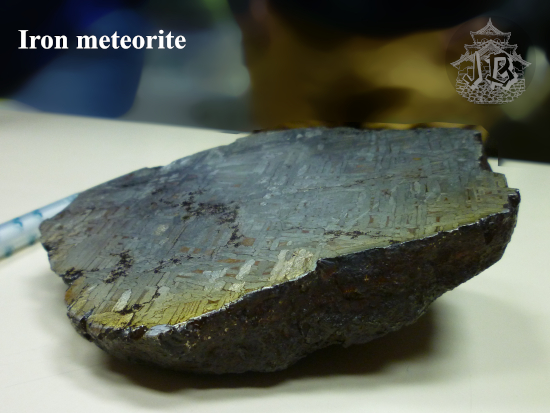
This was the firs time in my life I ever held a meteorite – just imagine, this thing floated around space, and I got to hold it. It was heavier than I would have ever imagined. You can see the zig-zags on the surface, those are magnetic markings because the main component of this space rock is iron.

There was a session going on about identifying fossils, and this is what I came up with:

Out of the bunch, I also got to play with the ammonite…

… counted the corals…

… and I petted the trilobite…

As you can see, I snuck quite a few pictures. It did not work so well during the museum walkthrough, so I guess I will just have to come back for the main exhibit some other time (≧▽≦).

Flashback to 26th & 27th June 2011: First time in Glasgow

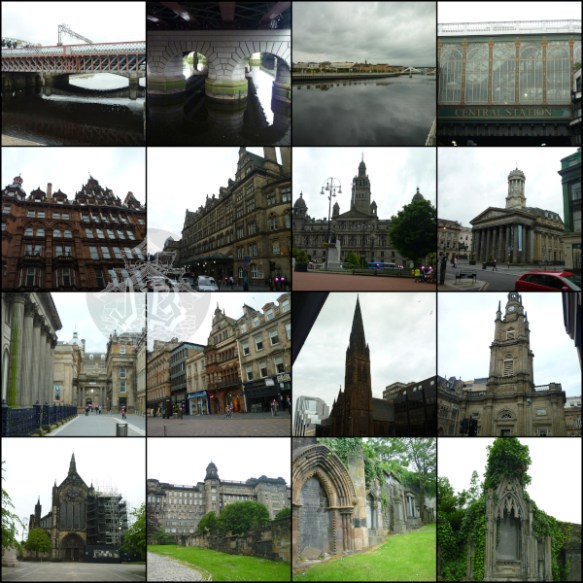
  • Central Glasgow
  • Glasgow Central Station
  • River Clyde
  • Glasgow City Chambers
  • Glasgow Necropolis
  • Saint Mungo’s Cathedral
  • Glasgow Museum of Modern Art

Note: This is a flashback post, which means it is just a collage regarding a trip I took before I started the blog in 2012. Tags may be incomplete or slightly off.

Flashback to 28th – 30th November 2010: Worktrip to San Sebastián and Bilbao (Spain)

San Sebastián

  • Playa de la Concha [Beach of “The Shell”]
  • Teatro Victoria Eugenia [Victoria Eugenia Theatre]
  • Iglesia de San Vicente [Saint Vincent’s Church]
  • Puente de Santa Catalina [Saint Catherine’s Bridge]
  • Plaza Mayor de San Sebastián [Main Square]

Bilbao

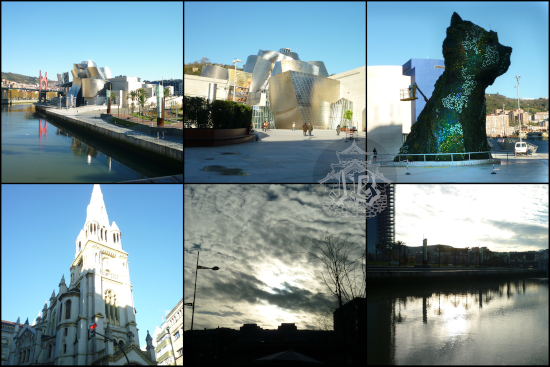
  • Guggenheim Bilbao Museoa [Guggenheim Museum Bilbao]
  • River and Estuary
  • Iglesia de San José [Saint Joseph’s Church]

Note: This is a flashback post, which means it is just a collage regarding a trip I took before I started the blog in 2012. Tags may be incomplete or slightly off.