30th December 2013 – 1st January 2014: New Year’s in Toledo (Spain)

30th December 2013: Arrival in Toledo

We took an early train to get to Madrid, and transferred to the high-speed line (AVE) to get to Toledo – the ride from Madrid was barely half an hour. Toledo is known as “the city of the three cultures” as during the Middle Ages, Christians, Muslims and Jews managed to live in peace there, and make it prosper. Today it is a tourist hub in the centre of Spain.

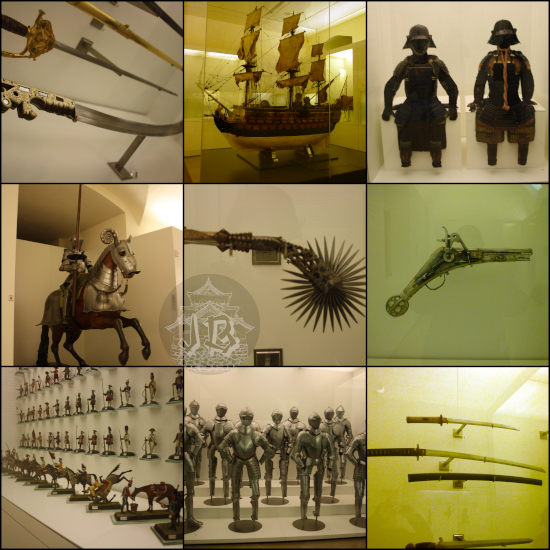
The first thing that we did was head off to the Alcázar (Muslim castle) – although it was originally built by Romans in the third century, its current look is owed to the restoration carried out in the 1540s. However, it had to be restored after the Spanish Civil War. The Siege of the Alcázar was one of the most symbolic victories on the Nationalist band. The Alcázar was under siege during the whole summer by Republicans trying to take it over, but in the end, Nationalist reinforcements arrived, chasing the Republicans away. Today, the Alcázar is an important cultural building (where the bullet holes can still be found) and hosts the Museum of the Army, Museo del Ejército.
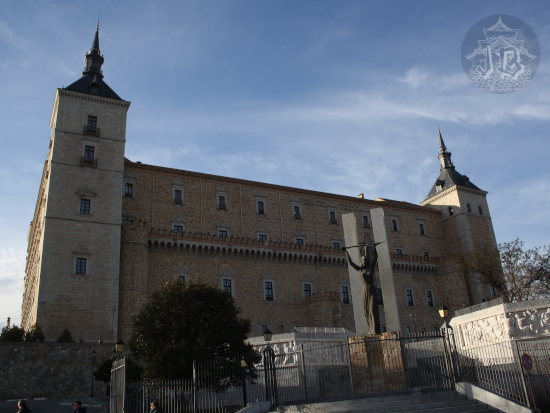
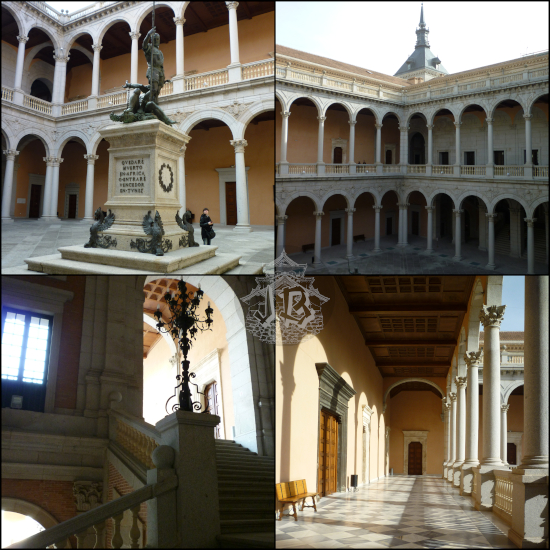
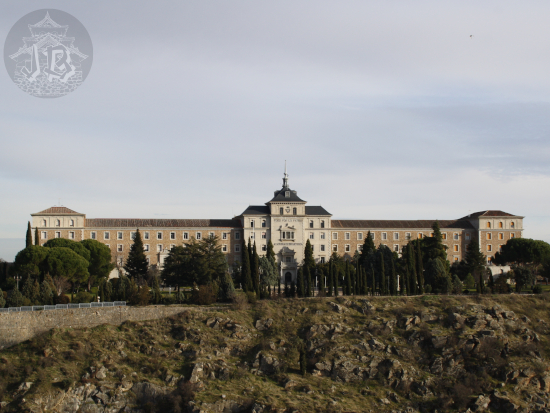
From the vantage point of the Alcázar, we could see the Academia de Infantería (Toledo Infantry Academy), built in the 20th century in imitation of the Renaissance and Herrerian style.
We also saw the Castillo de San Servando, the Castle of San Servando, a fortified Knights Templar enclave. Fine, it started off as a regular monastery, but it was later given to the Knights Templar in order to protect the city.
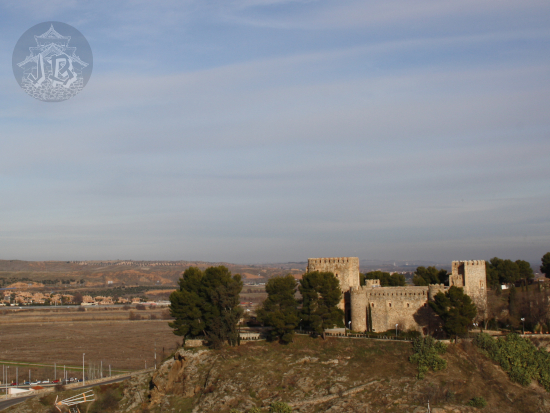
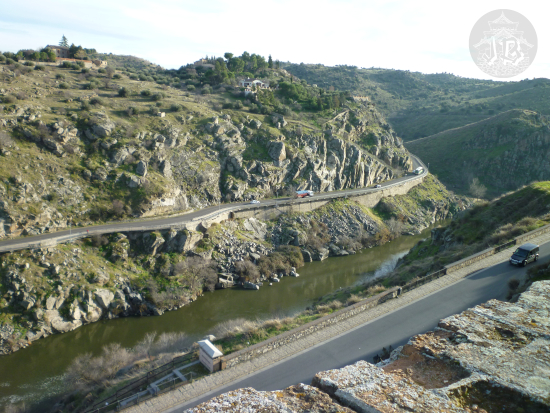
Both buildings are on the other side of the Río Tajo, the Tagus river, the longest river in Spain.
After having lunch and checking into the hotel, we visited the cathedral Catedral Primada Santa María de Toledo (Primate Cathedral of Saint Mary of Toledo). The cathedral, built in Gothic Style, was erected mainly throughout the 13th century, even if it was only finished in the 15th century. It sports two asymmetric towers, well, one tower and a small Mozarabic chapel in place of the other one.
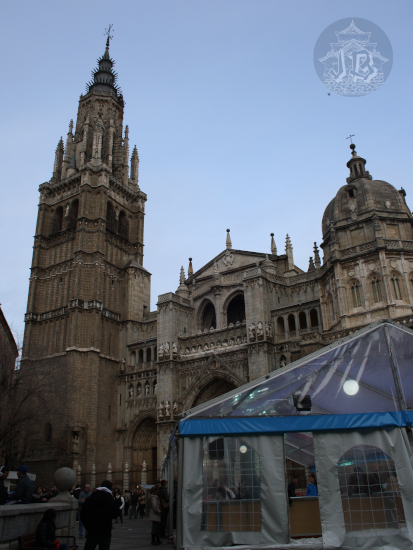
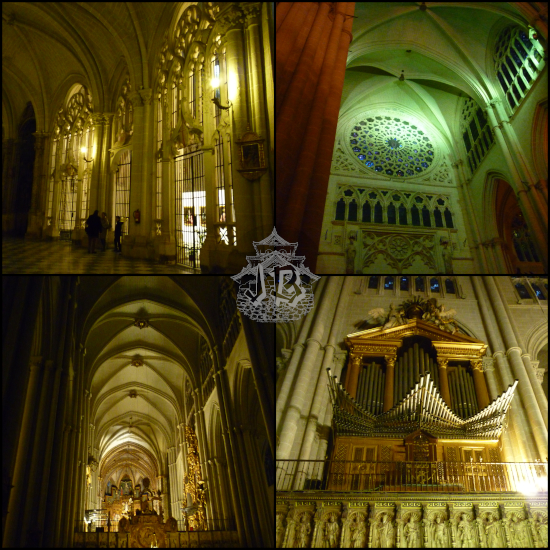
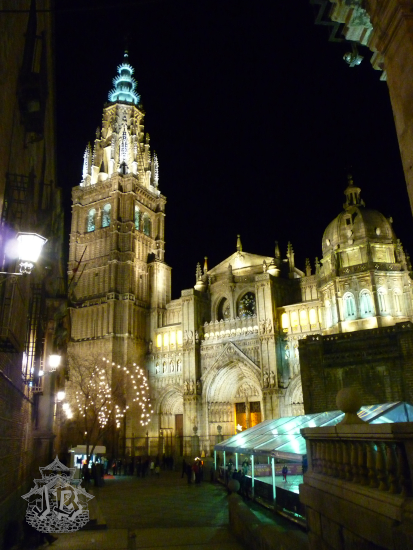
By the time we came out of the cathedral, night had fallen – truth is that we missed a little on the pretty windows due to it being darkish outside already. Nevertheless, this treated us to some nice night views. First of all, of course, the cathedral itself…
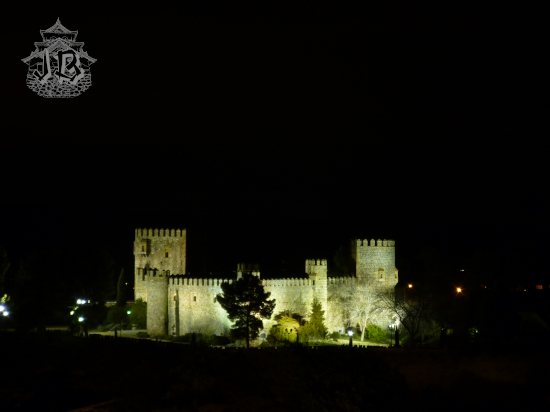
The Alcázar once again…

… and the Castle of San Servando.
We then walked through the Plaza de Zocodover, one of the city squares, where the old Muslim for cattle and horses was. The current layout was set in the 16th century after it burnt down in a fire.

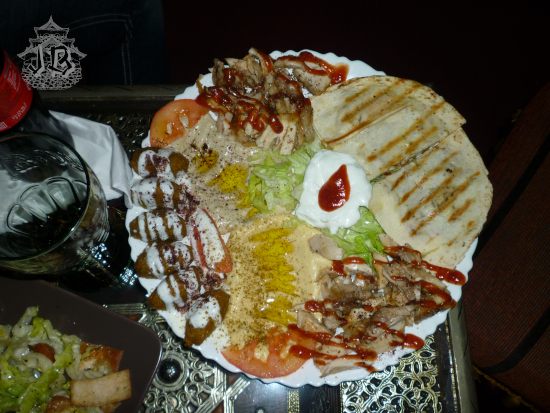
We walked around the old town for a while until we found a place to have dinner, a Middle-East restaurant called La Casa de Damasco, one of the few times I’ve had real food from this area. I have to say I really enjoyed it.

31st December 2013: Churches and Birds

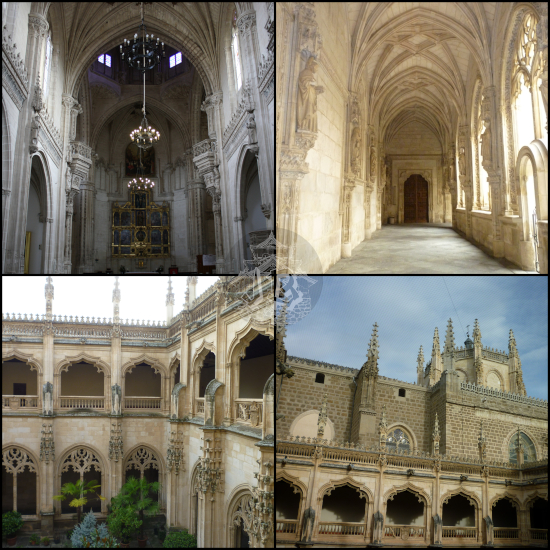
We started off the day at the Monasterio de San Juan de los Reyes (Monastery of Saint John of the Monarchs) is an Isabelline style Franciscan monastery. It was founded by the Catholic Monarchs to celebrate the birth of their son along with their victory in the Battle of Toro, in the late 15th century. It has a beautiful Gothic cloister.
Our next stop was one of those things that breaks my brain, a Christian Mosque, Mezquita del Cristo de la Luz. It was built in the year 999 as Bab-al-Mardum mosque, but it was turned into a Christian Church in 1085. I’m torn between rolling my eyes at Religions needing to assert dominance and being grateful the Mosque was preserved for us to visit.

Close to the Mosque stands one of the gates of the old walls, the Puerta del Sol, the Sun Gate, of the city walls.

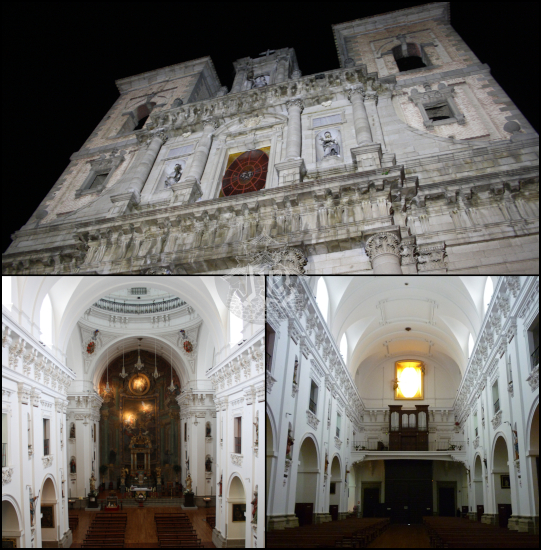
Our next stop the Iglesia Jesuita de San Ildefonso, a church dedicated to Saint Ildefonsus, the patron saint of the city. Construction started in the early 17th century and ended in the mid 18th century, in the Baroque style.
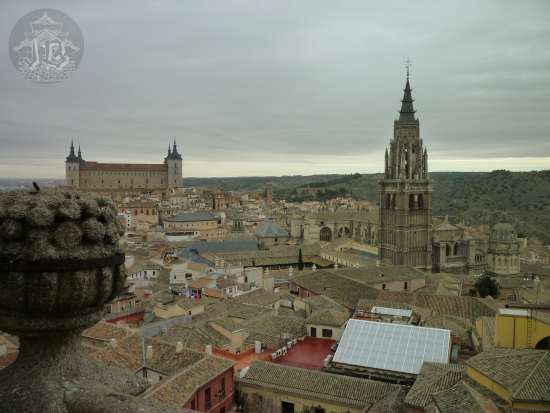
From the upper towers of the church, there was a great view of Toledo.
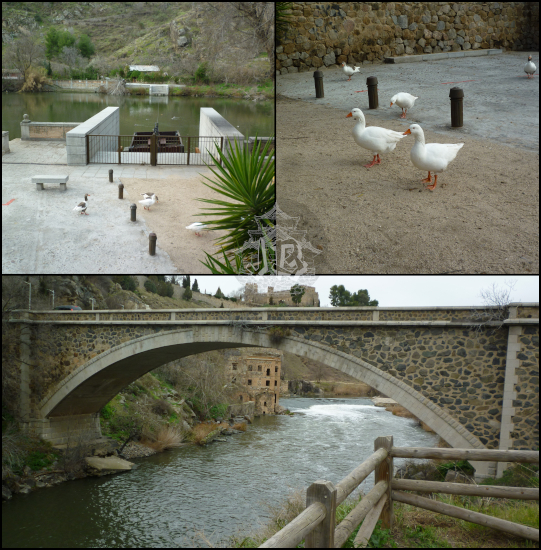
We decided to walk down towards the river, Río Tajo, where we met a flock of geese (which I’m happy to report had not lost their heads to any kind of stupid animal-hurting tradition).
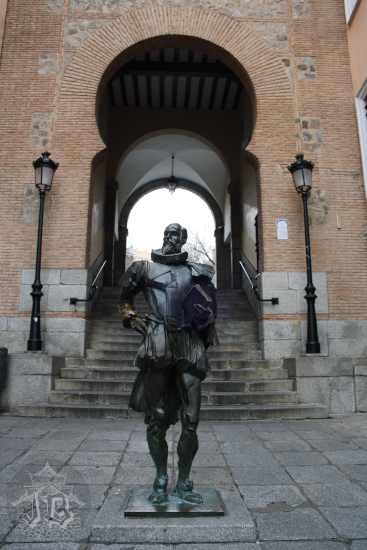
As we continued, we walked past a sculpture to Miguel de Cervantes, Estatua de Miguel de Cervantes, the author of the acclaimed “Don Quijote” book. The statue is placed beyond the Arco de la Sangre , the Blood Archway, that leads into the Zocodover Square.
As darkness rose, we had dinner in a Chinese restaurant. While we did, the lights turned on, and the city got ready to welcome the New Year with fireworks.
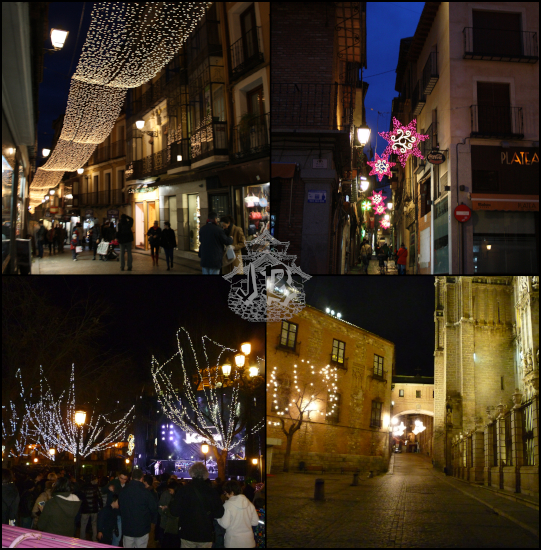
1st January 2014: Views of Toledo

We slept in, and after an early lunch (Chinese, again, as we were feeling decadent), we booked a ride in the “tourist train” that took us to see some of the most amazing views of the Medieval Town from the vantage points on the other side of the Río Tajo.
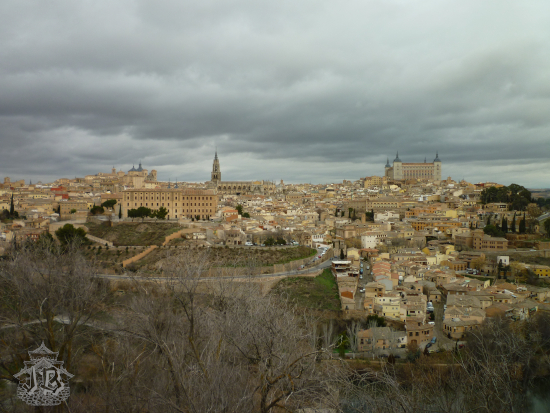
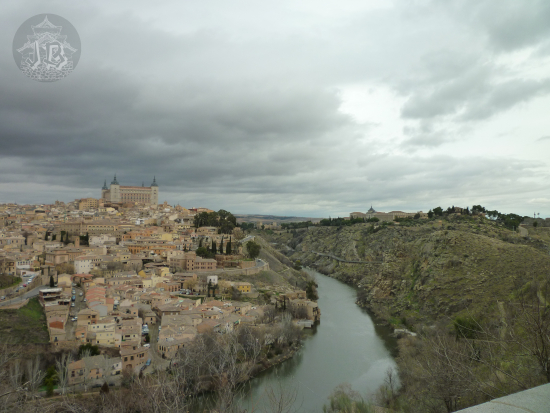
On the way back we saw the Puente de Alcántara, a Roman arch bridge built upon the foundation of the city after the Celtic settlement was taken over.
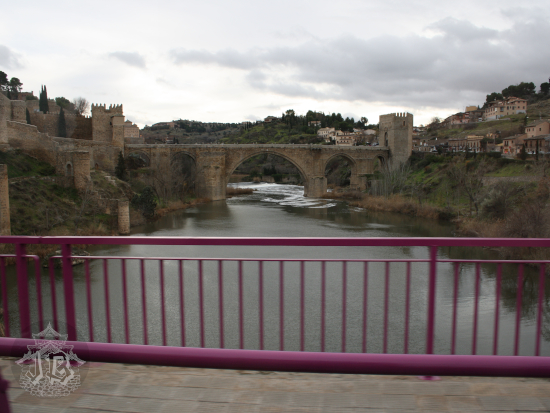
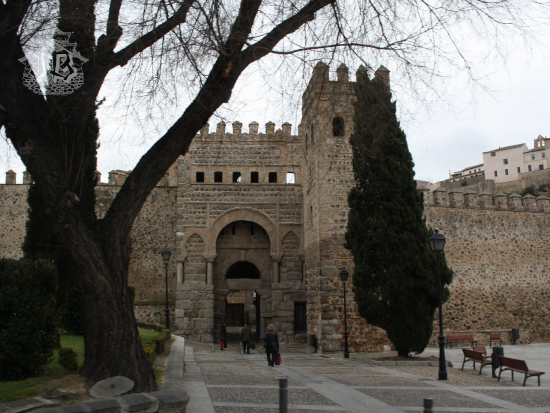
The ride ended up on the other side of the city than the one we had been favouring, so we just walked round the walls that fortify the city, the Murallas de Toledo, which are of Muslim origin over Roman foundations. King Alfonso VI is credited with finishing off the walls, and he named one of the gates after him: Puerta de Alfonso VI.
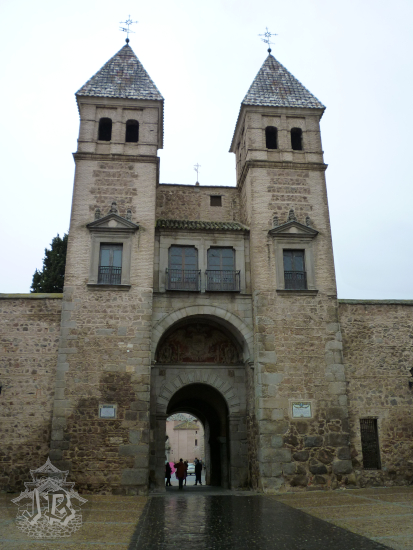
Another of the gates is the Puerta de Bisagra, the last of the monuments we visited before we headed back home the following morning.
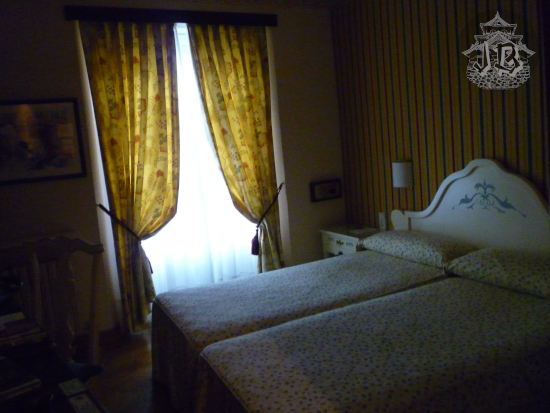
One of the creepiest moments in this trip was realising that our key could open a room which was not ours – we got off on the wrong floor and we went down the corridor to the room door, and opened it. It was not our room. We were very quite put off by this, and it turns out that we had a master key. Finding this was a little freaky, and we tried to complain to the hotel. Furthermore, they wanted to charge us for keeping our luggage for a few hours.

Oh, and I caught a cold during our 31st at night escapade. Because of course I did.

27th December 2013: The Terracotta Army in Madrid (Spain)

This was a bit of an unplanned event. I had been in Madrid the previous day with a friend and we had seen that the exhibition was going on. Unfortunately, there was a huge queue to go in, so we could not stay. Instead we got tickets on the internet and chose a standard “lunchtime” hour so we were almost alone watching the exhibit. That was awesome. The exhibition was held in the Fernán Gómez Centro Cultural de la Villa underneath Plaza de Colón (Colombus Square) in Madrid.

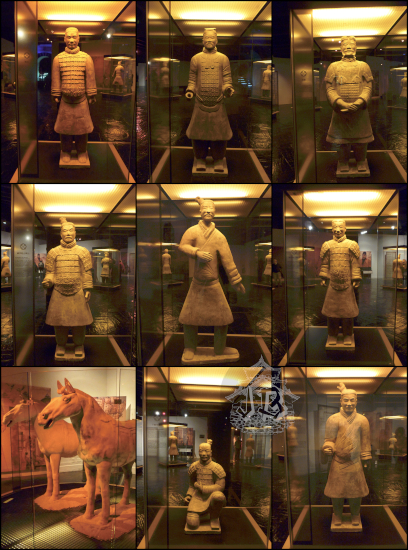
The Terracotta Army is called the Eighth Wonder of the Ancient World. It was discovered in 1974 close to the city of Xi’an (Shaanxi Province). It is comprised by hundreds of larger-than-life soldier statues built out of terracotta. They are part of the Mausoleum of the First Qin Emperor, the first emperor of China. There are over 8,000 soldiers, 130 chariots with 520 horses, aside from 150 cavalry horses. There are different types of soldiers and they have different ranks. Their function would have been to protect the Emperor from the spirits in the afterlife. Forty thousand bronze weapons have been found among the soldiers. For reference, they were buried with the Emperor around the year 210 BCE!

The Exhibition “Terracotta Army – Guerreros De Xi’an” displays about 150 replicas of the best-preserved soldiers, weapons and chariots, along with different decorative elements and a reproduction of the Pit 1, where the bulk of the warriors were found. It was a very interesting exhibition that made me actually want to travel to China to see the actual Mausoleum for real!

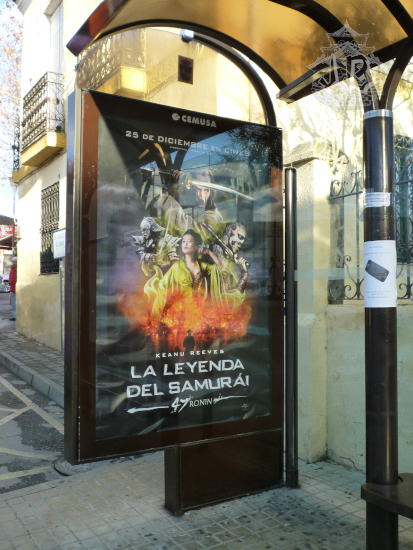
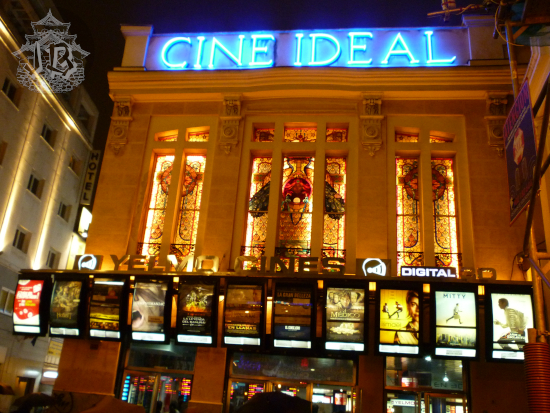
Afterwards we had tickets for the cinema, because “47 Ronin” was running, and the Cines Ideal show non-dubbed films, and basically… there was Akanishi Jin in it. The films has its… merits… somewhere… I mean I loved it but it was pretty bad – I’m not precisely known for liking deep, intellectual films anyway (≧▽≦).

26th December 2013: Japanese Exhibitions & Christmas Lights in Madrid (Spain)

Over the Christmas break, there were many activities related to the celebration of the establishment of diplomacy between Spain and Japan, so-called Año Dual España Japón. We decided to kick off the day going to a Japanese restaurant, my favourite in Madrid, the Nagoya (believe it or not, this is the daily menu).

There was a Calligraphy exhibit in the national library, Biblioteca Nacional. On the way, we also found that there was an exhibition about the Chinese terracotta warriors, but the queue was insane! We decided to try to get tickets online for another day.

We went to Caixa Forum to see a Japonism (19th-century European art influenced by Japanese concepts and aesthetics). Honestly, pictures were forbidden, but I snuck one because I really loved the painting.

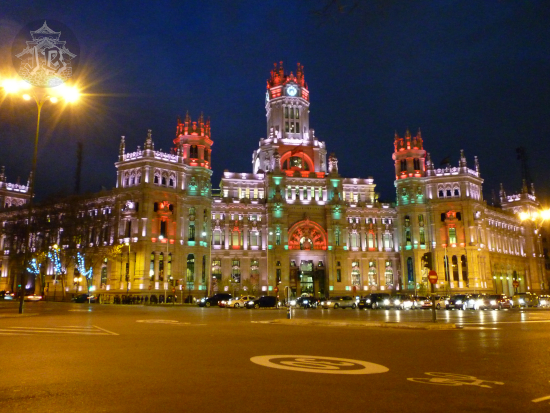
We also took a walk to see the Christmas lights. Here’s the Postal Service building, Edificio de Correos.

And a view of Gran Vía, one of the main arteries of Madrid, all lit up.

22nd December 2013: Derelict Monastery in Tendilla (Spain)

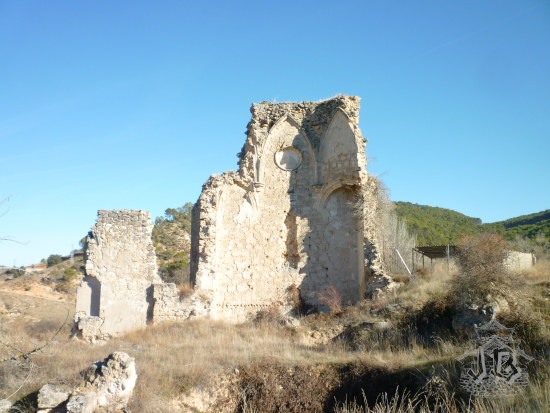
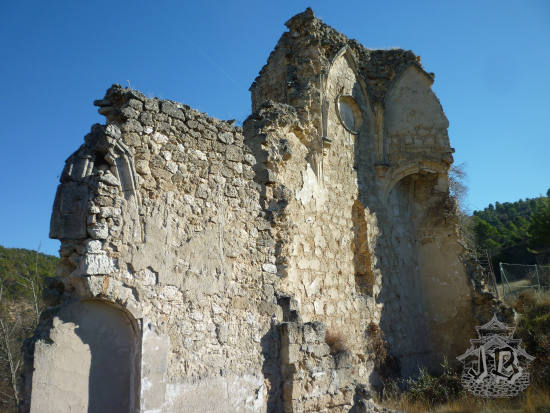
Here are the ruins of the church of a long-forsaken monastery dedicated to Saint Anne, the Monasterio de Santa Ana, a Hieronymite convent built in the 15th Century in Tendilla. Originally, it was built half-way between the Gothic and the Renaissance styles. The monastery was abandoned in the 19th century due to the The ecclesiastical confiscations of Mendizábal, a of laws and strategies that resulted in the expropriation and privatisation of religious and monastic properties. The building was later “sold” for stone, and the tombs it contained were sent to other churches.

I used to be terrified from it when I was a child, but I had an hour or two free in the village so I decided to climb up the mount to have a look.

28th & 29th September 2013: Barcelona (Spain), VAMPS, and friends

I had just started a new job so getting to Barcelona for the Saturday concert had to be undertaken on that same day. I missed all VAMPS members and supporting musicians coming in and signing autographs but I got a good place as someone had been “saving” my spot at the queue. I have some awesome friends ^^

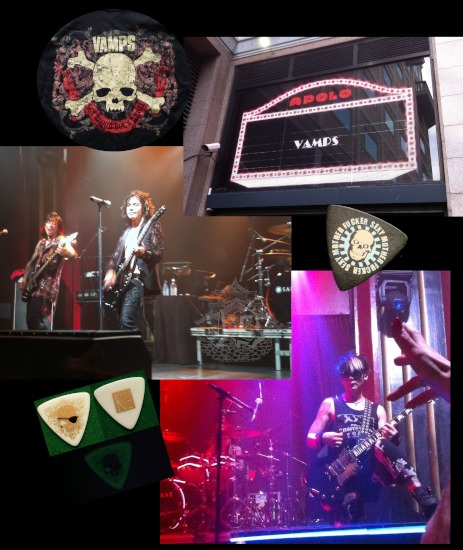
This was unfortunately a rather empty concert, even if a fun one. Hyde tried his best at Spanish, which was not too good to be honest, but kudos for trying. The setlist had a couple of my favourite songs, so that was a plus. I also managed to catch one of KAZ’s picks, and got one of the bunch that bassist Ju-ken’s left on stage!

Collage showing the band, the stage, and the picks I got from them

I slept over at a friend’s house, and “sleep” means we stayed up talking until the wee hours of the morning, but then I was meeting up yet another friend for breakfast. We went to the Parc de la Ciutadella [Park of the Citadel], which features a… mammoth and a really nice fountain / pond.

Collage of the park, showing the pond, a wooden elephant, some palm trees, and the lookout point over the lake

Afterwards we went to the area of the harbour, Puerto de Barcelona (harbour), to have something to drink.

Harbour, showing the different quays and the cablecar

Finally, we all got together to have lunch in a Japanese restaurant before I headed back off to the station to head back home and work on Monday.

Japanese food lunch to share, including sushi, salad, dumplings, breaded meat and sweets

27th September 2013: Bunraku at Teatro Español (Madrid, Spain)

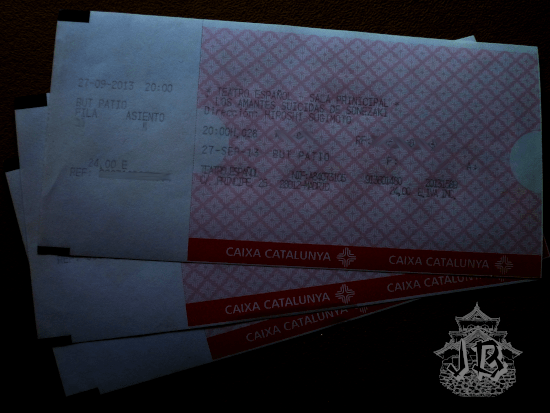
Oh, Gods, this was an odyssey. Seriously, can’t we just figure out print-at-home tickets? When the announcement for the event came up, I got tickets. I actually called my parents to ask them if they wanted to tag along, and they said yes, so I bought three tickets. There were only two performances, and the tickets were selling out fast.

Let me start at the beginning – the announcement involved the Sugimoto Bunraku 2013 European Tour. Bunraku [文楽] is a type of Japanese theatre that uses puppets to perform about serious topics, mostly classic dramas (as far as I know). The puppets are dressed in amazing costumes and manoeuvred by artists dressed in black as if to become invisible. Sugimoto’s company is collaborating with The Japan Foundation to show this art to the world, in this case holding a European tour with the play.

Anyway, back to track: I bought the tickets, and the next step was actually getting them. I had to go to a cashpoint to get them printed (because, again, print at home? It seems to be for lesser beings), which was not easy as I was living in a small town at that point. On top of that, I got the wrong bank cashpoint at first (≧▽≦). Sometimes excitement gets the best of me, but in my defence a) I did not even know the actual bank existed and b) the mistaken bank had a similar name. And on top of that… in the end my parents decided not to come at all! In the end I gave the tickets to my cousin and her kid, who were curious about the whole thing.

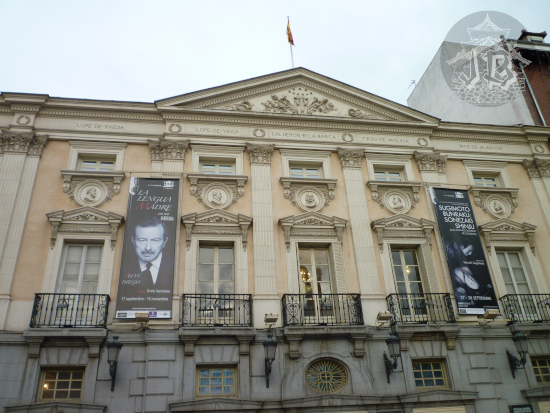
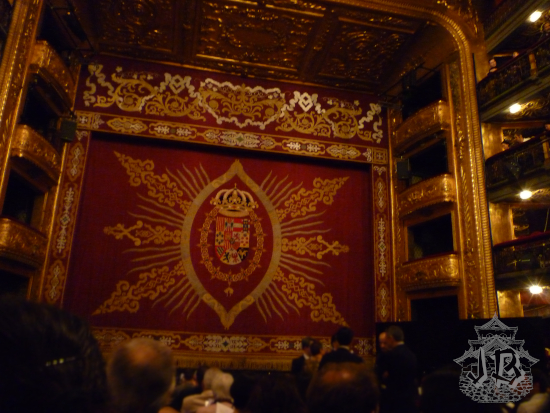
We met up in Madrid, in front of the theatre Teatro Español, where the event took place, and it was interesting to see how the whole thing was sold out. The work that was performed is called Sonezaki Shinjū, which translates to The Suicidal Lovers of Sonezaki, or the Love Suicides of Sonezaki, written by Chikamatsu Monzaemon in the early 1700s. It tells the love story of a poor merchant and a courtesan. When the merchant is set to marry off another woman, tragedy ensues until the two of them decide to die together in the forests of Sonezaki Shrine. I’ve actually got myself the book (well, my cousin insisted on getting it for me as thanks for the tickets) to read, as there were no subtitles on the play, just a summary brochure.

Even though I’m no fan of the whole romantic drama thing, I have to admit that the music and the puppets made the whole thing eerily captivating. Aside from the puppeteers, the key figure in the play were the musicians and the narrator, which explained (in Japanese) and narrated the play. The way the puppets are dressed, the shamisen and koto music, and the way you see the puppeteers and yet not see them is super cool. Unfortunately, no pictures allowed that I can show you.

Afterwards, we met up with my cousin’s husband (I did try to get a ticket for him, but it was too late already) and we… had McDonald’s, because that’s what we do when he hang out.

27th & 28th July 2013: Segovia (Spain)

27th July 2013: Echoes of a Roman Past

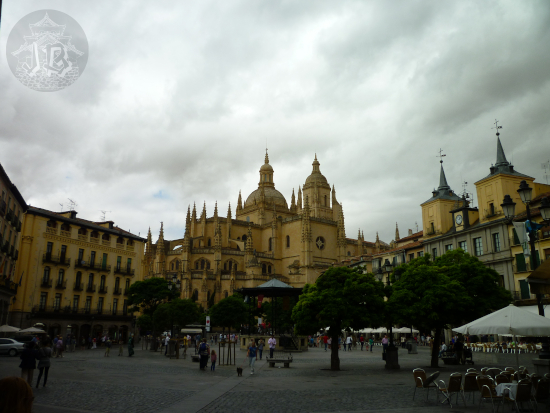
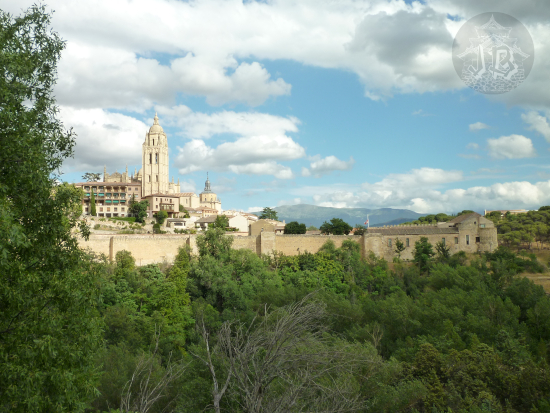
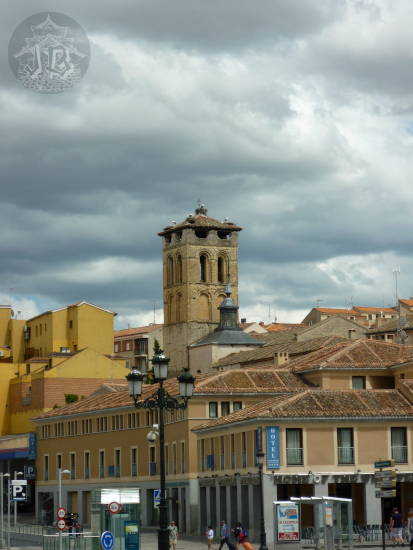
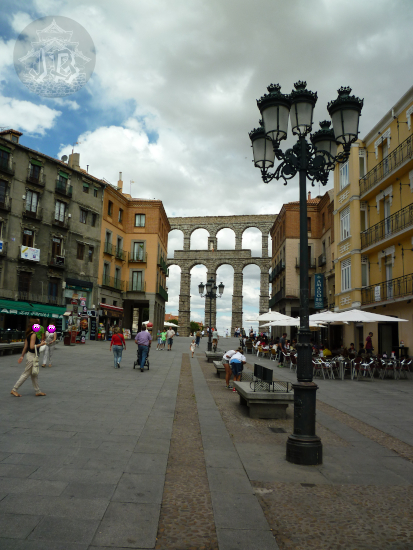
We took the train early on Saturday and arrived in Segovia in mid-morning. Segovia is a Spanish city of the Inner Plateau, located in the autonomous community of Castilla León. It has gained fame because of its many monuments and landmarks, the main being the Roma aqueduct in almost perfect condition, the cathedral and the castle (which may have served to inspire certain mouse-company for the Cinderella Castle). The city centre has been a world Heritage site from 1985 and the aqueduct received the title of International Historic Civil Engineering Landmark in 1999.

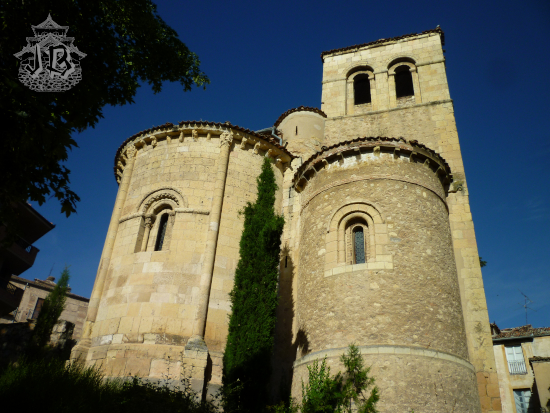
We checked into the hotel, which was dead in the centre of the Main Square and then we visited the Catedral de la Virgen María, the cathedral. The building was constructed between 1525 and 1577 in a late Gothic style that had already phased out in the rest of Europe. We saw the cloister, the chapels and the apse.

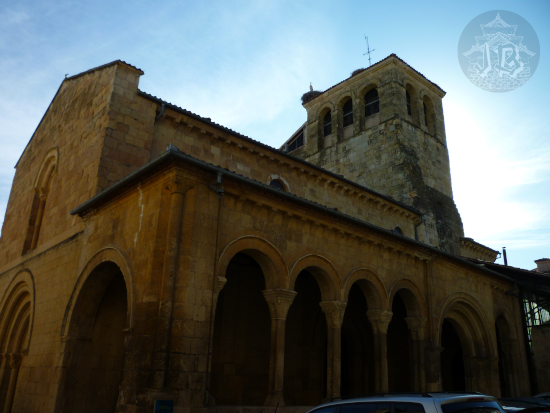
Then we moved onto the Iglesia de San Martín, St Martin’s church, built in the 12th century in the Romanesque style, with a Romanesque-Mudejar tower bell.

We then took a walk around the city centre, and we came across the Palacio de Cascales, a 15th century palace that belonged to the Alpuente Count.

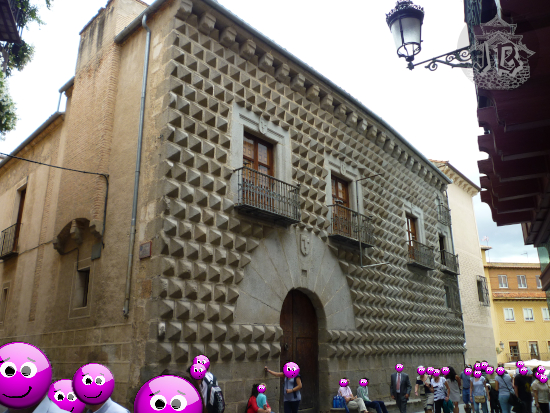
We passed by the Casa de los Picos, the “House of Peaks”, also built in the 15th century.

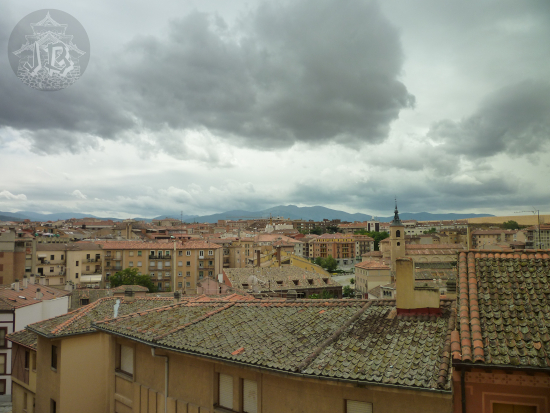
We somehow ended having these nice views of the rooftops of the city, too.

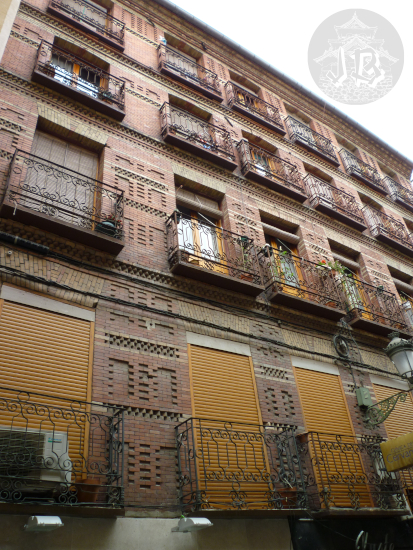
And passed by a very interesting house.

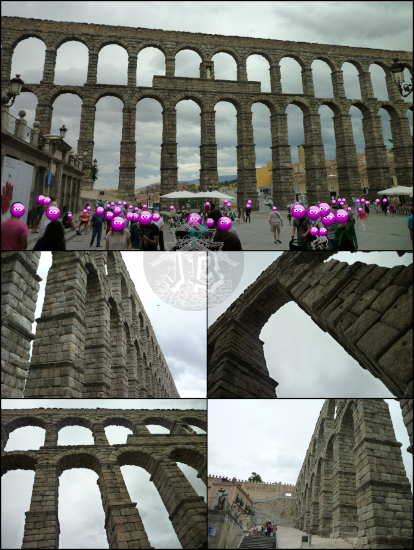
We finally got to the main event, the Aqueducto, the aqueduct. An aqueduct is a “water bridge”, a construction designed to carry water from one side of a valley or a ravine to the other. The Aqueducto was built by the Romans in the late first or early second century. It once transported water from the Frio River into the city, and it ran for a whooping 15 kilometres. It is one of the best preserved aqueducts in the world, as it was reconstructed several times through history, and it was working to get water to the city up to the 19th century.

We passed by the Casa de Ejercicios del Seminario one of the buildings of the Seminary.

We reached the Main Square, the Plaza Mayor again.

And saw the Romanesque Iglesia de San Andrés, St Andrew’s church, with a particularly nice bell tower.

After this we decided to take a break and have the typical pork meat lunch. Then we moved on towards the Alcázar. An alcázar is a type of castle or fortress built during the Muslim rule in Spain and Portugal. The Alcázar of Segovia has been through several redesigns and renovations, but it is a pretty impressive building. The current form was reached during the reign of King Alfonso VIII, so it dates from the 13th century, but it was retweaked by several kings and queens after that. It was the royal residency until the Spanish court moved to Madrid in 1561.

On the way we could see some views and the Iglesia de la Vera Cruz, the True Cross Church.

The Alcázar is quite an impressive building, in Herrerian style, with impressive towers. Part of it is a history museum the other part is a military museum.

It also offers nice views of the cathedral from the other side.

We walked back to the city centre and along the aqueduct again.

This trip was in July, and scorching hot back home, so we had not considered much of a temperature change. Unfortunately, Segovia in the late afternoon became more than chilly and we had to walk into a random shop to buy a thin jacket, then headed off to the Plaza Mayor.

Funnily, when we were having dinner there, someone warned us that the shop assistant had left the alarm tag on my jacket! That was amusing. We called it a day heading off to the hotel, and being duly impressed by the illumination put in place for the cathedral.

28th July 2013: Churches while the city sleeps

On Sunday morning, most everything was closed, so we took a strolling tor if the Medieval area, and saw a bunch of churches from the tenth and eleventh centuries:

Iglesia de la Trinidad (Trinity Church).

Convento de las Carmelitas Descalzas (Barefoot Carmelite Monastery).

Iglesia de San Nicolas (St. Nicholas’ Church)

Iglesia de San Quirce (St. Quirce’s Church)

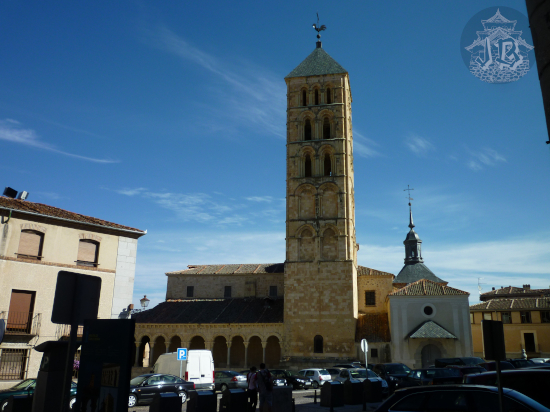
Iglesia de San Esteban (St. Stephen’s Church)

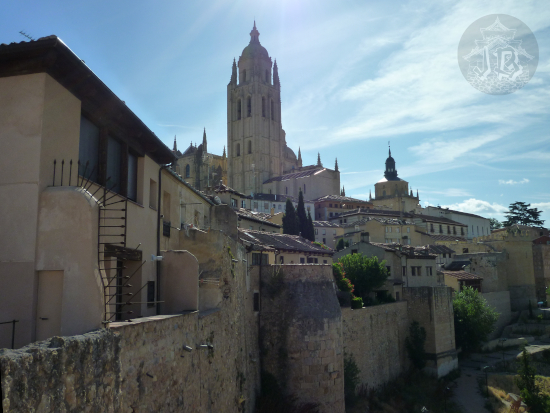
We also had yet a different view of the Cathedral.

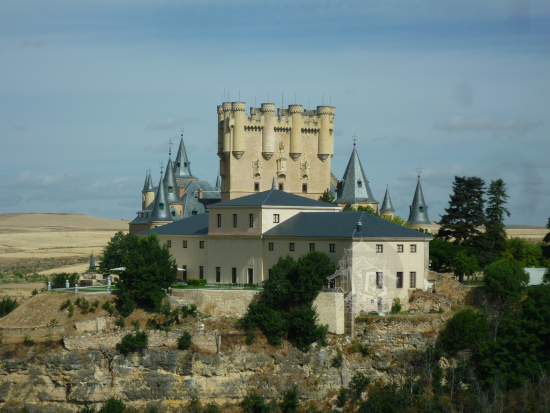
And we could see the Alcázar in all its glory.

Then we returned to the city centre, where we caught a glimpse of the Iglesia de los Santos Justo y Pastor (St. Just and St. Pastor’s Church).

We had lunch and said one last good-bye to the Aqueduct before we headed back to the train station.

5th July 2013: Enoshima {Japan, summer 2013}

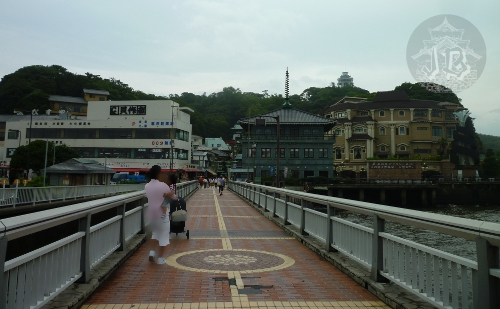
Enoshima [江の島] is a bridged island not far from Tokyo where there are three shrines that have been merged into one for convenience, a local dragon legend and an asphyxiating hot and humid weather. It was also the last stop for this trip.

I guess that’s why the local rhythm is so chilled:

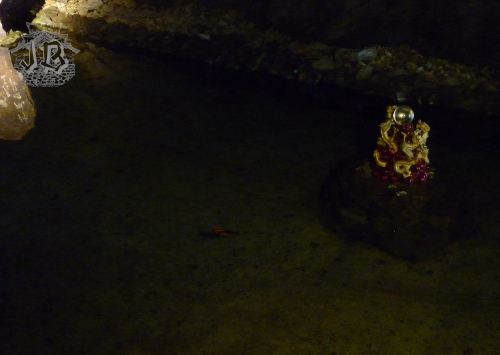
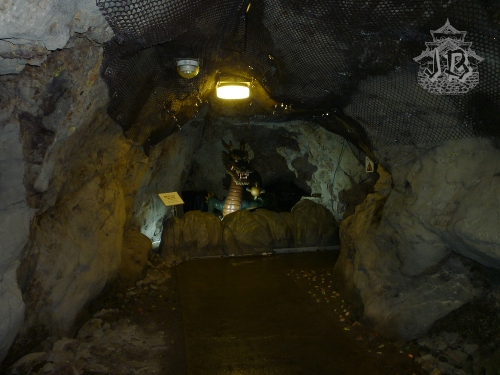
Enoshima Iwaya [江の島岩屋], the Enoshima caves, are beyond amazing.

The legendary dragon, which roars when you get close and produces flashlight when you clap your hands.

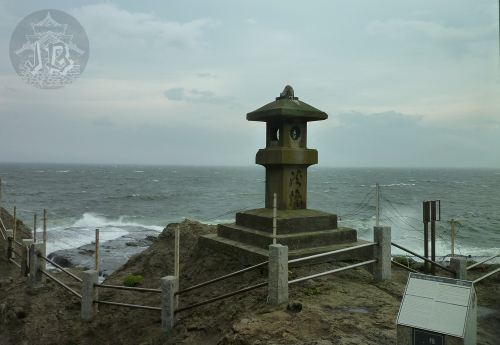
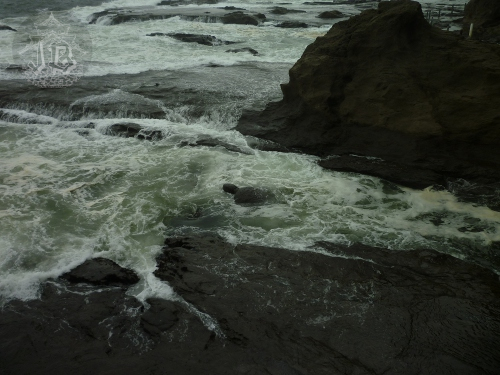
There was a bit of wavy weather due to wind, which allowed for a couple of good pictures of the seaward area:

Including the “turtle rock”, even in high tide. You just need to know how to count the wave frequency to know when the water is going to retract enough to let you see it ^_~

It was so windy that at points it was difficult to keep the camera straight for pictures, but we also visited Enoshima Jinja [江の島神社]

Well, the actual last stop was a bunch of Shinjuku [新宿] Book Offs but… don’t tell anyone XD. Then, the next morning I was off to the airport to go back home, fortunately the flight was much, much better.

4th July 2013: Yokohama Sea Paradise and GACKT 40th Birthday Concert {Japan, summer 2013}

The day started Yokohama [横浜]-bound towards Hakkeijima Sea Paradise [八景島シーパラダイス].

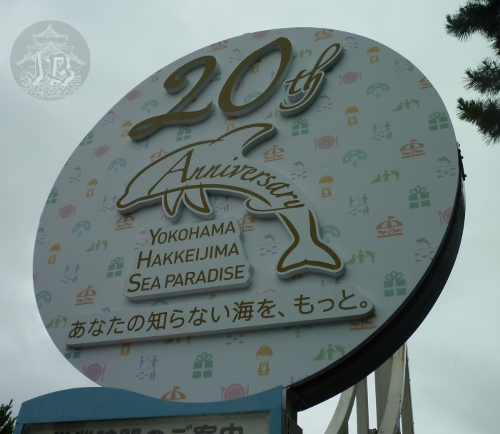
The logo of the Yokohama Hakkejima Sea Paradise aquarium for its 20th anniversary, a jumping dolphin in the middle of a circle

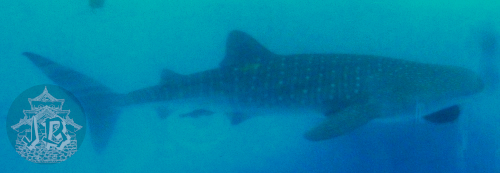
I have tried to spare you fishy pictures, especially those I have shared already (read: I overcame the urge to post hammerhead shark pictures!! And deep-sea crabs too!!), but when I went to the Yokohama Sea Paradise, there was one main thing in mind that I had to see: the whalesharks.

A whale shark swimming

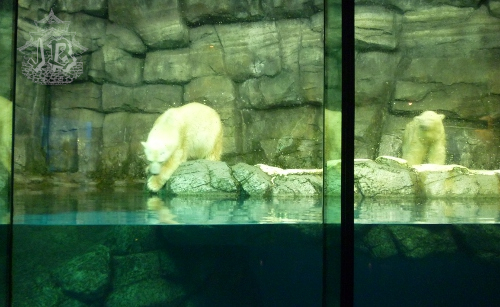
The polar bears seemed to be having a bit of a lover’s quarrel, but the camera did not do a good job focussing on them at the right times.

Polar bears exhibit. One is about to jump into the water, the other one is looking at the first

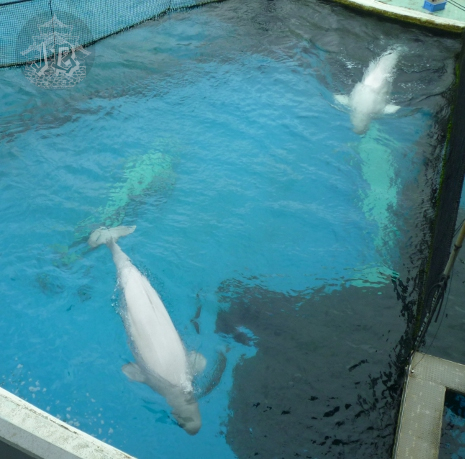
They also had an impressive amount of beluga whales.

Beluga whales swimming, the picture is taken from above, showing two of them clearly, and two at the bottom

And a very attention-demanding pufferfish or two.

A picture of benthic fish, with a pufferfish photobombing and swimming in the foreground

Finally I headed off to the other side of Yokohama, to the Yokohama Arena [横浜アリーナ], for the GACKT Best of the Best concert for his 40th birthday, which was beyond amazing.

Yokohama Arena, a massive white building

GACKT is a Japanese soloist music known for his ego and his… you may call it delirium of grandeur if you wish. He loves doing things big, so when I saw him in Barcelona in 2010 and 2011 I could only imagine how a big stage would feel. To be honest, it did not disappoint, and it was indeed grandiose. Furthermore, the 4th of July happens to be GACTK’s birthday so there were a lot of fun shenanigans going on, and a very nostalgic tone for old fans.

3rd July 2013: Tsutaya, Manatsu and Odaiba (yes, again) {Japan, summer 2013}

Being the fanby I am, I wanted GACKT’s Best of the Best CD set, the special pack, and I headed for Shibuya [渋谷] first thing in the morning for it. After a successful buying, I headed off for TOHO Cinemas to watch the Galileo movie, Manatsu no Houteishiki. Fortunately enough, it was not Suspect X, so not depressing at all (don’t get me wrong, Suspect X was awesome, but it still left me heart-wrenched XDDD)

galileo-manatsu_poster

After that there was an Odaiba trip, changing into the yukata and attending the VAMPS Tanabata festival. The idea of the Tanabata Event was to make a sort of “summer festival” and you had to attend in yukata – I bought one I did not feel comfortable in, and I got quite a few stares and felt the most unwelcome I’ve ever felt in anything related to J-rock. It was most a talk show than anything else and after the event was over I did get to meet very nice fans… so it was a bit on the strange side, all things considered.

After that there was purikura and exhaustion XD. Very, very fanbying day, right? XD At first I felt a bit bad that there was nothing “cultural” to be done that day, but after all everything I did could only be done in Japan so I figured out that it was all right ^^

2nd July 2013: Yet more Odaiba, and Ueno Zoo {Japan, summer 2013}

Once more I headed out to Odaiba [お台場], this time to try and get tickets to the VAMPS Tabata Event and buy the single. The whole idea was that if you bought a CD you got entered into a lottery for a ticket to attend the Tanabata Event the following day. If you bought the three versions of the CD, you also got a poster. They were expecting a huge crowd, but it turned out that crowds of fans on a weekday morning… It was all a bit chaotic because… there were two few people. One can expect staff to get overwhelmed, but this was totally… underwhelming for them, and they did not know what to do about it.

I finally managed to get tickets to ensure my and my friend D****e after the third or fourth round. Once that was successfully taken care of, I went to Fuji TV to get myself some Galileo merch, just because I could, and rode back downtown Tokyo to do one of those things I would ever like to do if I had some time to spare – Ueno Zoo, Ueno Dobutsu Koen [上野動物園].

The iconic image of Ueno Zoo is any of their Giant Pandas. Here’s one getting stuffed:

Panda play-eating bamboo

A secretary bird, which made me remember an old movie and greatly amused me:

Secretary bird, a bird similar to a stork with crazy feathers - like a Native American hairdress - on its head

And a friendly and bored Hokkaido bear which came to say hello at the glass:

A Hokkaido bear prowling its enclosure. It could use with some enrichment.

Aside from the animals (I’ll spare you more pics, though I have an amazing close-up of the polar bear), Ueno zoo holds the pagoda of the former Kan-eiji Temple:

Five-story pagoda in reddish-brown wood

After the zoo was closed, I headed for Shibuya [渋谷] where we had scheduled a meeting at the Hachiko Memorial Statue (one of those things you should do in Tokyo at least once), the Chūkenhachikō-zō [忠犬ハチ公像].

Statue of a sitting akita dog

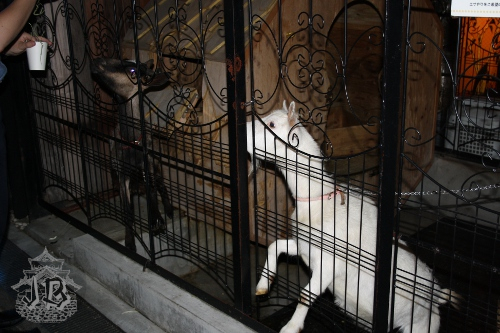
Meeting successfully achieved, dinner was acquired in a goats cafe, Sakuragaoka Cafe. Then the goats got dinner too.

Two goats, one white and one tan, behind a fence, being fed straw by a person with a cup in their hands

1st July 2013: Wandering on a Monday {Japan, summer 2013}

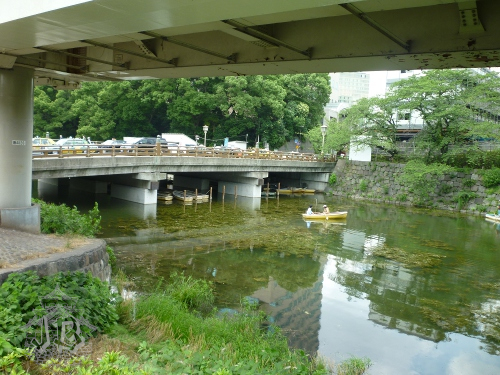
Many national places like museums are closed in Japan on Mondays, so I thought I would visit the Imperial Palace East Gardens, Kōkyo Higashi Gyoen [皇居東御苑], which are considered a public park and should therefore be open, right? Wrong. Closed too. Thus I got a few pictures of… the moat and wall XD

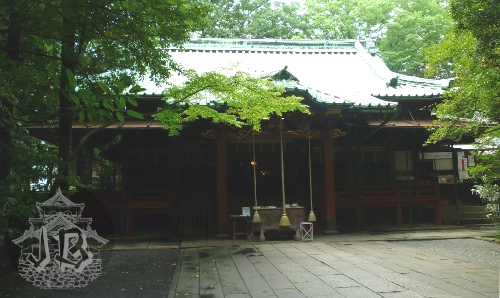
I decided to head down to Yoyogi Kōen [代々木公園] and Meiji Jingu [明治神宮], as it was a place I enjoyed a lot last year and was closer than most my other options – and bound to be open. I took a few pictures I could not because it was raining in 2012, among them one of the daitorii up.

I met with a friend in the Minato-ku area, as Tokyo Tower [東京タワー] is a good meeting point and I still had to see Zojoji open. It was finally a success and I got an awesome omamori that turns bad luck into good luck (summer special, too!). What, you thought I had gotten over my omamori liking? You thought wrong XD

Finally I headed back to Roppongi [六本木] to meet with D****e and try the Roppongi Hills [六本木ヒルズ] observatory again, which was a success this time:

30th June 2013: Odaiba (revisited) {Japan, summer 2013}

Once again heading to Odaiba [お台場] we lined for a couple of hours to get access to VAMPARK same-day tickets. I was honestly expecting something a bit more impressive than a 20-minute movie, crane games, and pictures, but the company made it fun. There was cute Chupacabra merch to be bought, too.

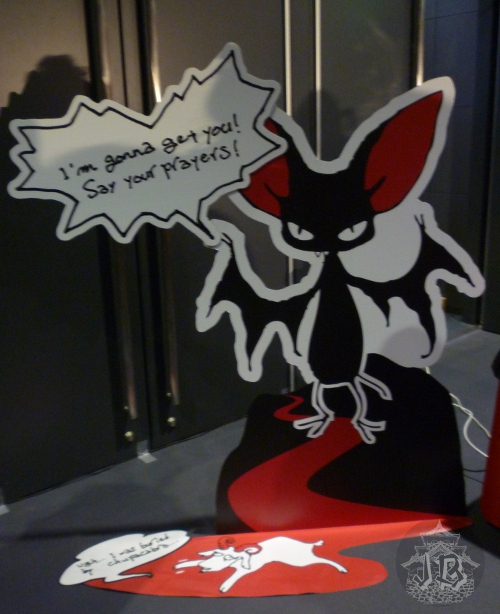
Chupacabra was designed by Hyde and looks like this. It is just too cute:

After that there was okonomiyaki and we headed off to Madame Tussauds Tokyo. Let me be honest here, the main goal of the event was finding Yoshiki in there, and of course there were pics. Quite a few (≧▽≦)

Then we went for a stroll on the beach to see the original reason why the island was built in the first place. Odaiba is an artificial island that was built to protect Tokyo from Admiral Perry’s ships as a daiba [台場], a battery of cannons. There were several fortifications around Tokyo bay, the Tokyo-wan yosai [東京湾要塞]. The battery we saw in Odaiba is the third one that built – although there was little left.

On our way back, as the sun set, we had some amazing views of Rainbow Bridge [レインボーブリッジ].

29th June 2013: Tea Ceremony and Nakano Broadway {Japan, summer 2013}

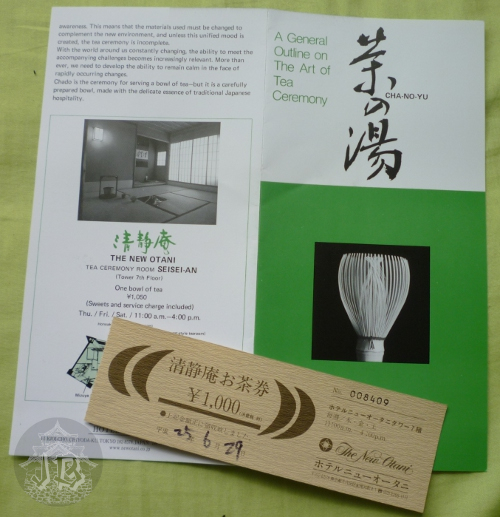
We attended a tea ceremony in the New Otani Hotel, a small event for tourists that was really nice on the geeky traditional kind of way. The lady was very friendly and did her best to be understood in English, so I did not feel off at any point – only sore as my hip seems out to kill me lately XD”

Later on there was Nakano Broadway [中野ブロードウェイ], where lots of money was spent, and Shibuya [渋谷] yakiniku and karaoke, although I was so tired that reading was kind of impossible XD”

28th June 2013: Odaiba {Japan, summer 2013}

Odaiba [お台場] is big and quite empty actually, which can give off a bit of an eerie feeling after bee-hive-like Tokyo. It however has beach (as in duh, it is an island, albeit an artificial one) and some awesome sights, found after Google Maps trolled me sending me on a scenic route ¬.¬

Rainbow bridge over Tokyo bay. It is white, not rainbowy at all

After the Marine Science Museum seemed to be 90% closed, I headed off to the Miraikan [日本科学未来館] (National Museum of Emerging Science and Innovation), which was unfortunately a bit disappointing. Works well for the regular peer (and awesome for kids) but when you are a bit knowledgeable in science, it comes… short. Lots of English, though, so that was at least good.

A massive amount of screens bundled together in a sphere. They show the earth with clouds and atmospheric currents moving around it

This is what I liked the most about the exhibition, a little corner on abyssal ocean info, including a bit of a hydrothermal vent and some colourless abyssal crabs:

An irregular rock that happens to be a bit of hydrothermal vent

A white crab in the dark

I headed to the Diver City Mall for VAMPS 2013 Live concert which was to be held in the the Zepp Diver City later in the evening. I queued for about an hour to buy some goods, and when that was done, I walked around. The shopping centre has an 1:1 Gundam reproduction near its main entrance, which I did not know about:

Zepp Diver City logo

Gundam robot, almost as tall as the two-story building behind it. It's mostly white, with red, blue, and yellow chest

The concert was really fun, as VAMPS concerts tend to be. There were rocky-fast songs and some ballads, even some nostalgic ones from the time Hyde was working solo. I enjoyed second half best, but all in all it was a good, fun concert, even if a painful one, as my right hip did not approve of the day’s effort. After the concert we went off the long way home, which involved several train changes drenched in sweat. Ew XD.

27th June 2013: Shinjuku, Ōji and Ikebukuro {Japan, summer 2013}

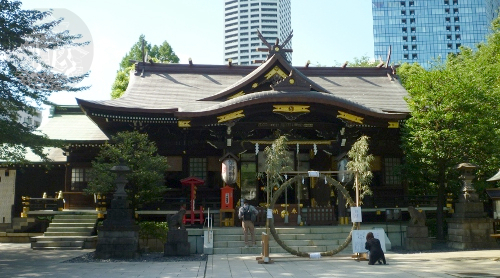
One of the fun things about Tokyo is that combination of modern and traditional that you find merged in quite a bit of harmony. Take for instance Shinjuku [新宿]. When one thinks of Shinjuku, one imagines skyscrapers and neon lights, but just a few minutes away, you find Hanazono Jinja [花園神社]:

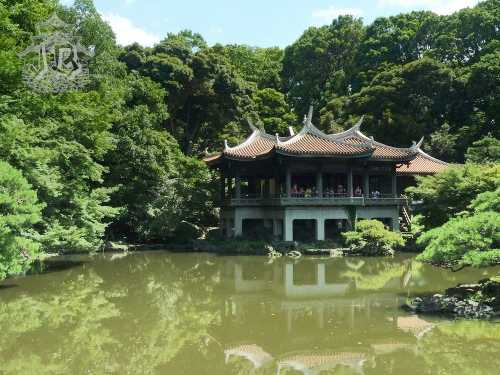
Five minutes away from the station there is Shinjuku Gyoen [新宿御苑], which is huge, and holds small wonders like this, Kyūgoryōtei [旧御涼亭], or Taiwan Pavillion (Taiwan Kaku [台湾閣]):

Of course, there are lots of skyscrapers in the Skyscraper District:

There is also this sculpture:

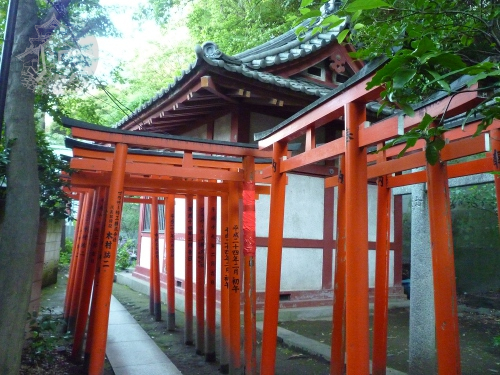
And yet another shrine, Shinjuku Juniso Kumano Jinja [新宿十二社 熊野神社]:

After Shinjuku I went to Ōji [王子] to see the Ōji Inari Jinja [王子稲荷神社].

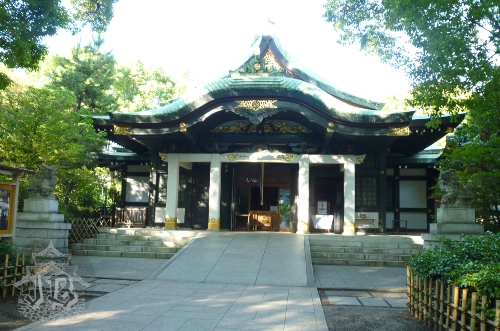
And just the Ōji Jinja [王子神社]:

Then I headed to Ikebukuro [池袋] where we had a reservation at Swallowtail for 80 minutes of indulgence, and hell did we enjoy it XD”””

26th June 2013: Yokohama Cup Noodles Museum {Japan, summer 2013}

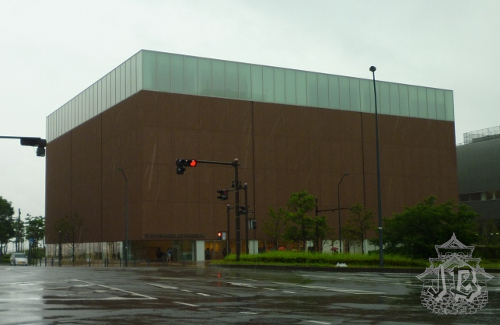
It was raining, raining, raining. We decided to do a museum day, but not just any museum. We went to Yokohama [横浜], to a very special one. The Yokohama Cup Noodles Museum (Andō Momofuku Hatsumei Kinenkan [安藤百福発明記念館]), might not look much from the outside, but it is quite very awesome in more ways than one.

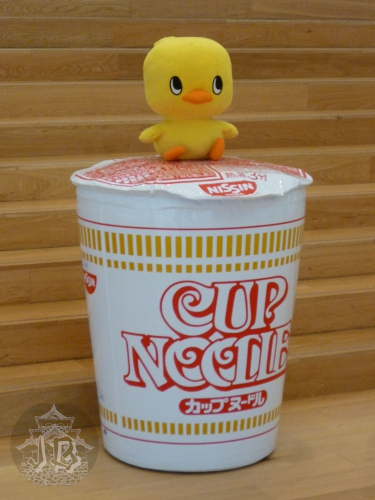
For starters, this is their mascot, on top of the regular instant ramen cup.

For just a bit extra though, you can go around to design your very own ramen cup in the “Cup Noodle Factory”. It was endlessly fun:

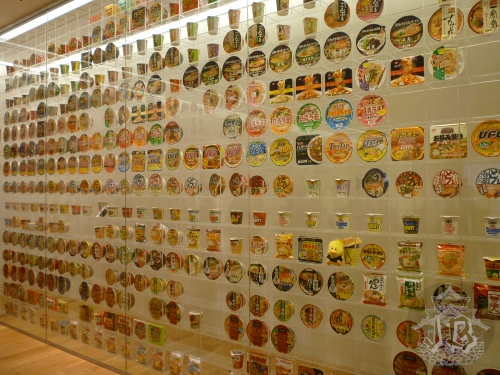
Oh, yeah, and you get to see some ramen afterwards, along with some motivational stuff:

As it was still raining like hell when we were done, we went back to Tokyo [東京] for some karaoke, and a stroll down Harajuku [原宿], where pretty stuff was bought. And eventually it stopped raining, too!!

25th June 2013: The Not-so-lucky Cat Day {Japan, summer 2013}

I set off to find Gotoku-ji [豪徳寺], the Temple of the Lucky Cat, in Setagaya [世田谷]. It was easily found from the station following the train racks. Unfortunately two unlucky things happened: it started raining like crazy and the temple was closed down. And it is not like I did not find the right entrance, I did. It was still closed down.

As it kept raining cats and dogs (oh, so much pun) I decided to find myself something under cover to do, so I headed off to the Edo-Tokyo Hakubutsukan [江戸東京博物館], the Edo-Tokyo Museum, in Ryōgoku [両国]. According to their webpage (here),

The Edo-Tokyo Museum was founded on March 28,1993, as the place where visitors come to learn more about Tokyo’s history and culture , and which also serves as a projection onto the city and the living of the future. In the Permanent Exhibition area, there can be found original and replicated exhibits, as well as large-scale models, faithful representations of their originals, which have been reproduced after painstaking investigations and research.

Here’s a ship:

Inner area of the reproduction of an Edo house. Damn I love tatami mats:

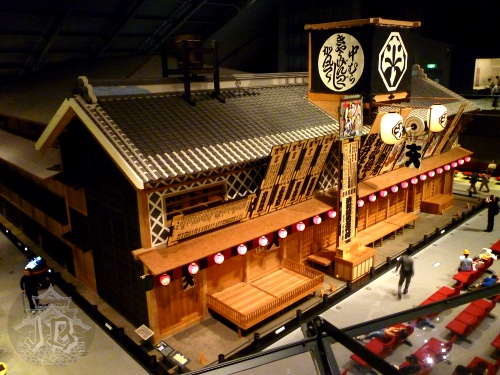
Kabuki theatre, scale 1:1:

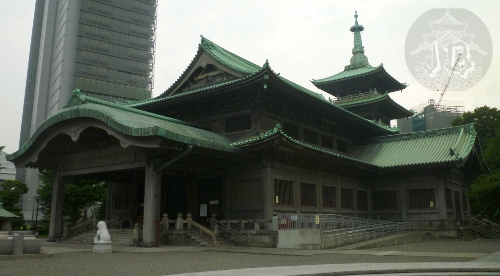
When I came out it was not raining anymore, so I headed out to Yokoami-chō Kōen [横網町公園], where the pagoda of this building got my attention – I latter discovered that it is Tokyo-to Ireido [東京都慰霊堂], the Tokyo Metropolitan Memorial Hall, a shrine to honour those who died in the 1923 Great Kanto Earthquake. Unfortunataly, I ran out of battery in my camera in the park.

The day ended with a trip to Akihabara [秋葉原] to a particular cafe, which unfortunately had been closed down. We made up for it in the nearest Book Off though, and went to Shimokitazawa [下北沢] for Avocado Burger.

24th June 2013: Less-known Tokyo Shrines {Japan, summer 2013}

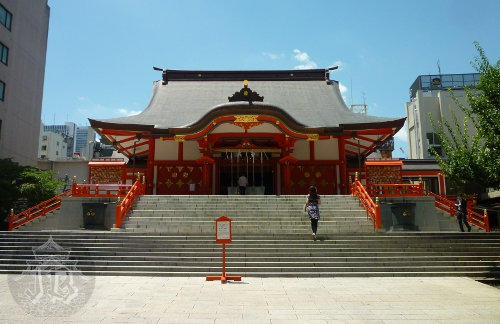
Most of Monday was spent wandering around Tokyo [東京] trying to find my way between shrines, since as you might have suspected, I like those. Akasaka [赤坂] was the first stop of the day to visit Nogi Jinja [乃木神社], which I managed to find even if I had missed all the landmarks that should have led me there.

As I headed towards Roppongi [六本木] for my next stop something went wrong. The station I was supposed to find was wrongly marked on Google maps, or another exit was marked or… I am not sure (looking back, probably a signal disruptor). My route ended up being a bit meandering. I crossed Tokyo Midtown [東京ミッドタウン]’s Hinokicho Kōen [檜町公園].

Once in Roppongi I took another detour (this time it was my own fault though XD) to Hikawa Jinja [氷川神社], which is one of the most creepy places on this earth. I liked it, but it did give off one hell of an eerie feeling.

After this I headed down the Minato Ward where the Tokyo Tower can be found. There I was to explore around for a few things, including Atago Jinja [愛宕神社], which was having a matsuri and thus crowded.
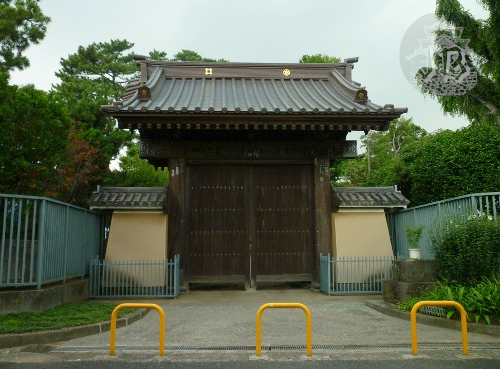
On my to-find list was, among other things, this mini-Inari shrine:

Then I headed down to Shiba Koen [芝大公園], Zojo-ji [増上寺] and the Tokyo Tower [東京タワー], just because I could.
I was to meet D****e back at Roppongi [六本木] to go up to the observatory in Roppongi Hills [六本木ヒルズ], but it did not pan out due to weird closing hours. However, we did manage a cool shoot or two of the Tokyo Tower lit up and the supermoon next to it.

We walked to Shibuya [渋谷], where we made a stop at Book Off. Money was spent XD

22nd & 23rd June 2013: Odawara and Hakone {Japan, summer 2013}

One of the few perks about a tectonically-active area is the volcanic landscapes, and Hakone has plenty of those. We headed off to Odawara [小田原] early on Saturday morning to visit the local Castle, Odawara-jō [小田原城].

Then we headed off to Ashi no Ko [芦ノ湖], Ashi Lake, which formed in the caldera of a supervolcano after a huge eruption millions of years ago. We crossed the Hakone Sekisyo [箱根関所], the Hakone Checkpoint, which back in time prevented undesired people from moving around – which meant anyone who was not friends with the shogun.

We made it to the city of Hakone [箱根] later in the day. There, we visited Hakone Jinja [箱根神社], which has a torii set within the lake itself. This torii is called the Torii of Peace, Heiwa no torii [平和の鳥居]

Then there was onsen – Japanese hot springs. No pictures of that XP.

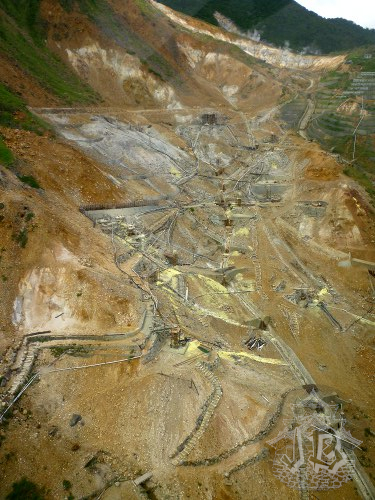
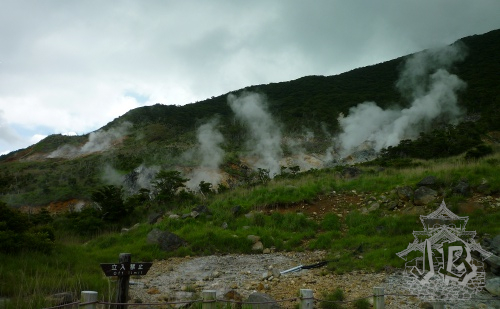
The following morning we went up one of the mountains, to an area called Ōwakudani [大涌谷] via murderous device called the Hakone Ropeway [箱根ロープウェイ] to watch the sulphur mines, the volcanic gases eruptions and to eat the famous black eggs, kurotamago [黒卵], which are normal eggs cooked in naturally-boiling sulphurous water puddles.

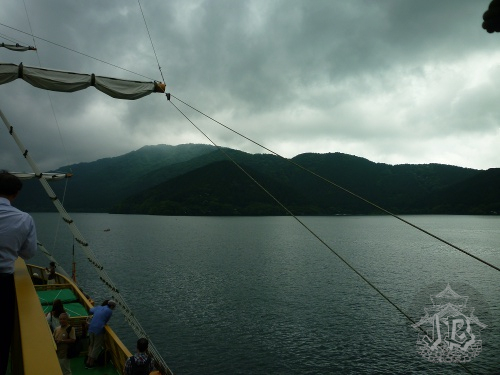
Finally, we crossed the Ashi no Ko in a “pirate ship” before heading back to Tokyo [東京] to karaoke the last hours of the weekend away. Unfortunately it was too cloudy to see the supermoon.