15th July 2017: 1,176.2 km with a stop {Japan, summer 2017}

Shinkansen are a wonderful invention (although the air-con regulation could use some work). D****e and I jumped on one to go to Nagoya [名古屋] from Yokohama at around 8.20. We were to be at Zepp Nagoya at 11:00 for the VAMPARK that was held there, which was a sort of exclusive film documentary of the previous year’s activities.

Zepp Nagoya Logo with a notice that reads Vampark 2017 and the date - 15th July 2017

After the VAMPARK and a forgettable lunch at an Indian restaurant in Nagoya station D****e headed to the airport and I continued on another shinkansen to head off to Kumamoto, where we had a concert the following day. This was because I had a RailPass but for her flying was cheaper.

In the end, it took me about 5 hours 20 minutes on trains from Yokohama to Kumamoto [熊本] in three different shinkansen. Once in Kumamoto, I got to meet the city’s mascot, Kumamon, a huge friendly black bear.

A giant Kumamon head rising from the floor. Kumamon is the Kumamoto mascot, a cartoon giant black bear with red cheeks and white snout and eyebrows

I had to invest a bit until I figured out the tram system, and that made it that – funnily enough – both D****e and I arrived at our hotel within 10 minutes of each other. After checking in we headed off to have a bite with a bunch of VAMPS fan friends at a freezing izakaya where I tried raw horse (basashi [馬刺し]) for the first time o.o.

Plate of raw meat with lemon and wasabi

14th July 2017: X JAPAN WORLD TOUR 2017 WE ARE X Acoustic Special Miracle ~Kiseki no Yoru~ {Japan, summer 2017}

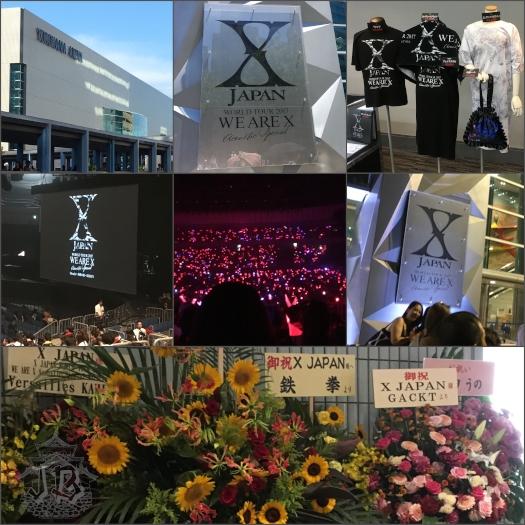
This was the first day of my JR pass (in hindsight, I should have not have activated the pass this day, but the next), and also the day to go to the third day of Yokohama [横浜] to enjoy the X JAPAN WORLD TOUR 2017 WE ARE X Acoustic Special Miracle ~Kiseki no Yoru~ 6DAYS at Yokohama Arena [横浜アリーナ].

I headed to Yokohama early in the morning to line up for goods, and I took a book to the queue as I would be waiting along for a while. At around noon my friend B**** came along to keep me company and we had lunch together after I had bought everything that I wanted and had not been sold out (such as the Yoshiki keyrings). In theory my tickets were arena, but they were actually on the stands, though much closer than the previous time I had been there – for Gackt’s Best of the Best, when I was on the second-to-last row. This time I was close to the stage to the right-hand-side.

The mere fact that the concert was carried out is a miracle itself. Yoshiki has been recently had an operation on his cervical vertebrae to try to correct the nerve damage he has suffered through the years. The man can barely move, but he tried his best, and the concert was very emotional. It started with the documentary We are X, and then it moved on to a very powerful ballad-based concert – though it had its hardcore moments with ToshI’s solo. The highlights for me were La Venus, Hero, Miracle with guest singer Ashley Knight, and a very unexpected I.V.. I was very moved throughout the whole set list, and the whole thing was very emotionally-draining, if I am to be honest.

Collage of pictures of the venue, outside and inside. Yokohama Arena, which is just a massive white building. The X Japan We are X symbol. T-shirts from the merch. The logo on the screen. People waving red penlights in the dark. Good luck flowers from different artists.

Then we slept over at a hotel in Yokohama in order to avoid last train stress and be able to sleep in a bit the following day.

13th July 2017: Shinkai (Deep Ocean) {Japan, summer 2017}

I headed off to Ueno Kōen [野公園]. The first thing I did was exchanging my JR Pass. Then I hit the Natural History Museum Kokuritsu Kagaku Hakubutsukan [国立科学博物館] because I had seen on Tuesday that they were running a temporary exhibition on Deep Ocean. Since last year’s Hunters of the Sea was good, I had decided to check it out.

The exhibition, called Shinkai [深海] ran several parts. The first of them (bioluminescence and Hadal zone) had a bunch of interesting specimens both kept in formol, along with there being big screen showing the creatures in their natural habitat. Of course, Japan, being Japan, was much more fascinated by the screens rather than the actual fish. Some of the most interesting things that they had exhibited included: a giant Antarctic octopus ( Megaleledone setebos), a Pacific footballfish (Himantolophus sagamius, those that have a little light on an antenna on their head), a huge chimera and a lepidion (Lepidion schmidti). However the central pieces of the exhibition were the Pacific sleeper shark (Somniosus pacificus) and the Atlantic giant squid (Architeuthis dux).

Another part focused on geology and ocean floor exploiting, alongside some earthquake research, especially on the Great Tohoku Earthquake. The most interesting part here were the chimneys and the Manganese nodules.

There was a bit on augmented microbiology but that is not that key XD

After I left the exhibition I headed off to Yushima Tenmangu [湯島天満宮], which is associated with plum trees, but none of them were blooming at the time. It also enshrines the Kami of Learning, so I hope it helps with my Japanese.

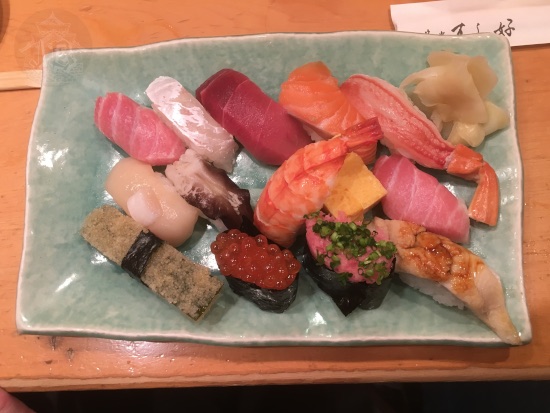
Afterwards, I took the Ginza line to Shibuya [渋谷] to meet up with B**** for some Starbucks and sushi. Sushi is always good!

12th July 2017: Sugamo or how Google maps trolled the hell out of me {Japan, summer 2017}

You might remember that last year I was living in Komagome, which is a stop away from Sugamo [巣鴨], also known as “Grandma’s Harajuku”. That in itself did not sound too appealing, but it after some research I found out that it had a couple of interesting temples. However for some reason Google maps screwed up my route with several stops and sent me on the way it wanted.

In the end the first thing I snooped around was what I think was Edorokujizoson Shinsho [江戸六地蔵尊 眞性寺], then I continued down the Jizo Dori shopping street.

I continued for about 20 minutes until I reached Chisen-In [智泉院], which should have been the last place I visited.

Then I backtracked towards Honmyou-ji [本妙寺] under the heat.

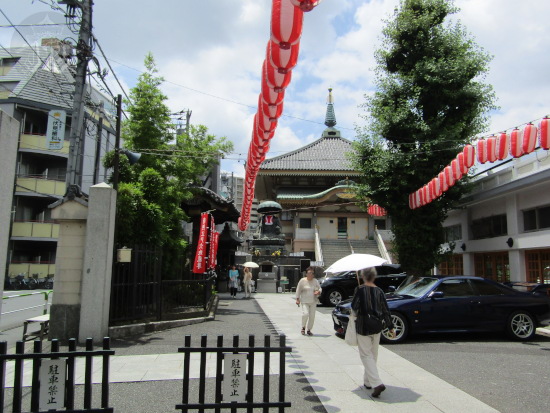
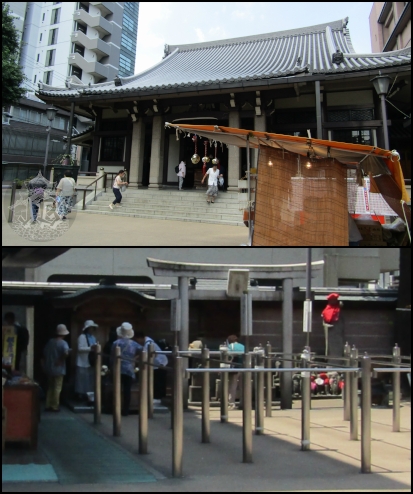
Finally I found myself at Kogan-ji [高岩寺], which hosts the Togenuki Jizo [とげぬき地蔵], which is a jizo (monk) statue. Tradition says that if a part of your body hurts, you wash that part on the monk for him to heal it.

Then I headed off to Shinjuku [新宿] (where yes, this time there was fandom shopping) and I met with D****e at the station. We went for dinner at Steak Gusto, which was okay.

11th July 2017: Ueno on the first full day is a thing {Japan, summer 2017}

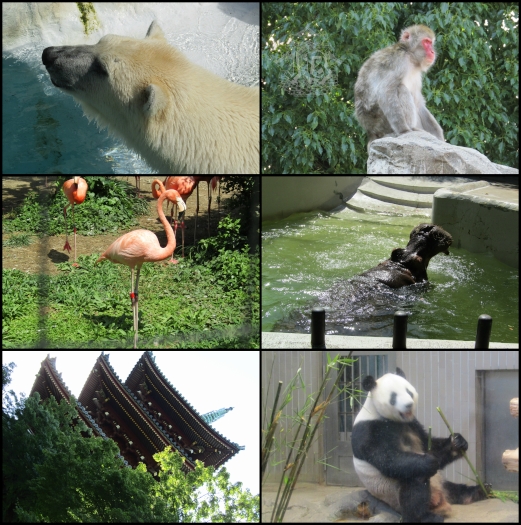
I headed off to Ueno because I wanted to wander around the zoo. Don’t ask me why, but it was what I felt like doing. First I dropped by the Shinobazunoike Bentendo [不忍池弁天堂] where I got the shuuin and I entered Ueno Zoo through the new Benten gate. The zoo had not changed much, I think, but I saw things I did not remember seeing the first time around. They have moved the petting zoo to something closed, probably to fight off the heat.

I had lunch at the zoo around 1:30 pm, then continued my way towards the upper part of the zoo. There I was observed by a bird of prey and it made me feel like food XD. I stayed at the zoo until 16:30 I did not get to see the baby panda because it is too small to be up and about.

Then I headed off to Shinjuku [新宿] which was a convenient place to meet up with D****e for dinner and an hour of karaoke. I did some shopping as I waited – and for some once, that was not (only) fandom related. I was in Kinokuniya getting myself some Japanese books (because as I passed N4 I have to continue studying). Bummer. We also stopped by a random electronics shop which had a big Yoshiki poster. That’s always nice to see.

10th July 2017: Smooth arrival {Japan, summer 2017}

And that was a first. We were on time even if we had taken off slightly late and I was downtown Tokyo at noon. Japan is ‘trying’ to make arrival more friendly and now your fingertips are taken by someone who is not security, but it’s still the same process – you arrive, they take your fingerprints, take a photo of you (without glasses) and then you go through immigration. Then you pick up the luggage and go through customs, where they may or may not open your suitcase. This time, I did not get mine open, even if I had a perfect answer for why I was there.

I had lunch with D****e, then went to her place to have a shower and change clothes and then met up with B**** for ice cream, because I was back in Japan in melting hot weather. And then I met up with D****e as I had borrowed her keys, went back home, had some dinner and crashed.

6th & 7th May 2017: Cuenca (Spain)

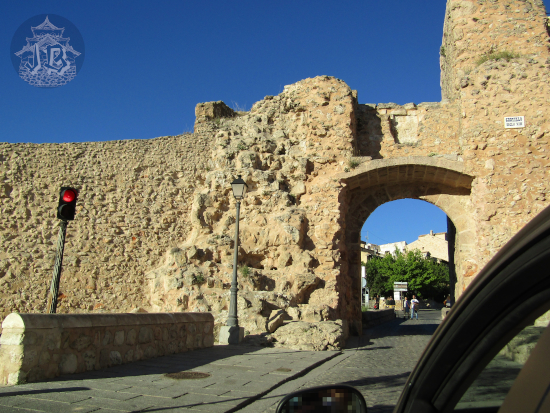
If I ever go missing, especially with my car, don’t go around looking for me in Cuenca . I would have a nervous breakdown trying to drive through the streets and slopes. I’m not sure what time we arrived, maybe mid-morning. We had a reservation to have lunch at the Parador. However, to get there we had to drive up a horrible, horrible hill with a terrible paving and park too close to the cliff so #no.

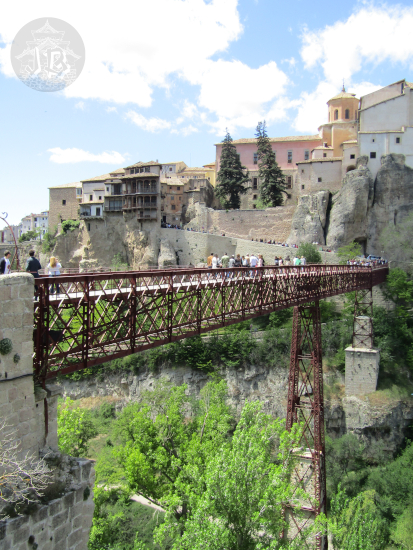
Cuenca is considered a World Heritage City. It has a classical, mostly Medieval area, and a normal / standard area surrounding that. The inner cluster is virtually carless as the streets are narrow and steep. It is perched on the Huécar Gorge and as you can see, a vertical rock wall.

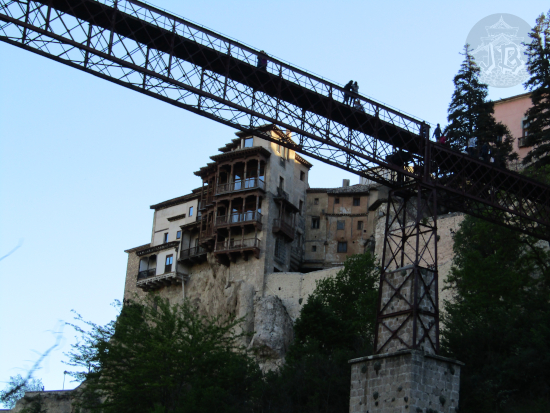
We had some time before we had to go for lunch, so the first thing we did was go have a look at the Casas Colgadas, the hanging houses that overlook the Huécar Gorge. Inside there is a contemporary art museum that I visited once already so there was no incentive to look again – you know, the kind of abstract art that showcases a plus-symbol and you’re supposed to interpret.

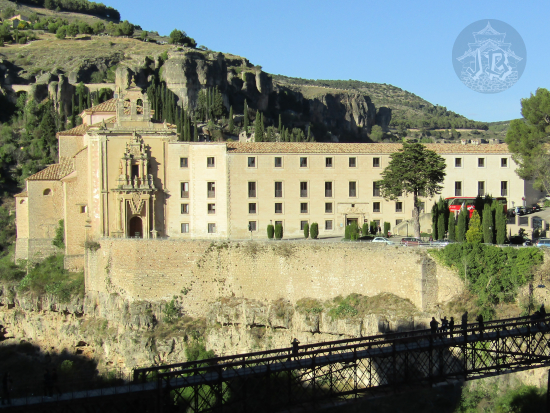
We had lunch at the Parador de Cuenca. A Parador is a high-end state-owned hotel usually with a good restaurant. More often than not, a Parador is located in a renovated historical building. This one is a former monastery, and the restaurant is located, if I remember correctly, where the original dining room would have been.

Main dishes were forgettable (and not photogenic) but the curd or “cuajada” for dessert was to die for – and it came with a lot of extra goodies.

In order to get to the town centre you have to cross the scary, scary bridge aka the Puente de San Pablo, St Paul’s Bridge, over the gorge, but I survived – without a freak-out (≧▽≦) and you might be aware that I am not a fan of heights.

We had lunch, then moved (over the scary scary bridge) on to see the Museo de las Ciencias de Castilla la Mancha, the Science Museum of Castilla La Mancha – unfortunately the dinosaur area was closed, so we “only” got to see the super steampunk clock and the energy wards, and the tornado simulator, along to some kind of reproduction of the International Space Station.

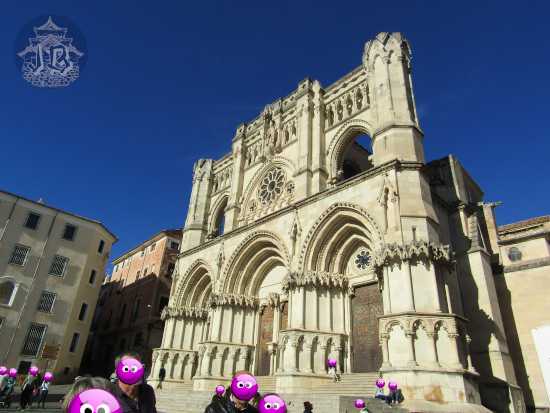
After the museum we walked a little around the town. We went to the cathedral, Catedral de Santa María y San Julián de Cuenca, but it was closed due to some religious service or another. I mean… that’s its main purpose I guess? (≧▽≦)

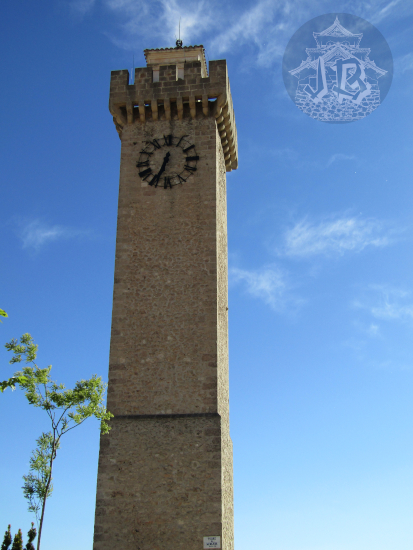
Then we found the Torre de Mangana, Mangana Tower, a clock tower dating from the Sixteenth Century. From underneath the tower there is quite an impressive sight of the area surrounding the city.

We went back to the car and we had a drive around the city. Cuenca is located in the middle of a karst area. Karst is a type of landscape formed by the dissolution of soluble rocks e.g. limestone or gypsum. You can see how the rock seems to be “molten” among all the pines.

We reached the Castillo and Murallas (castle and walls) on the other side of town but we had to drive back due to the streets being cut for the same religious event we had run into before.

Thus, on our way back, we drove at the bottom of the Huécar Gorge and headed back to the hotel.

This was about six or seven in the evening, and we did not go out again because we were way outside town. We had dinner in the hotel and called it a day eventually. I ordered the kids’ menu because everything else was too fancy and abundant.

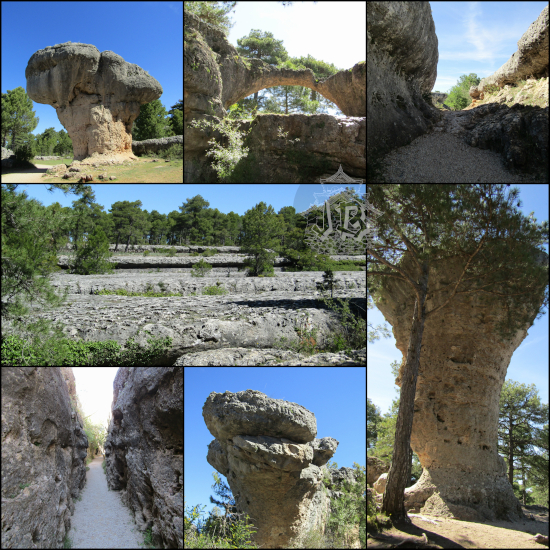
The next morning we woke up early to visit the Ciudad Encantada / Enchanted City. This is another karst topography which has somehow become very famous. Some of the rocks have interesting forms, and have been given names. It is a sort of geological park formed by rain falling on the rocks and dissolving them for millions of years. The original rocks were a mix of of limestone and dolomite in different proportions, which ended up dissolving in different shapes.

After walking around for a couple of hours we went on our return trip.

11th March 2017: “TAO: The Samurai of the Drum” show in Guadalajara (Spain)

More than a trip, this one is focused on an event I attended. There was a Drum Tao performance in Guadalajara, to which I was invited. The fun part the person who had invited me used to work at the theatre. As he still had “contacts”, I was allowed to peek a little into the backstage, so I could take a few special pictures.

There is not much of a description that you can write of a percussion performance, to be honest. TAO focuses on drumming, the Japanese taiko style, with bigger and smaller drums, but they also play traditional flutes, koto and samishen (traditional harp and three-string guitar). The show also displays a few acrobatics. It was pretty fun. In the end you could take pictures and get autographs from some of the staff members.

Aaand I own up that I did a little bit of trolling by speaking Japanese to random staff in the merchandise area…

Collage: the big drum, the back curtain reading Tao, and a CD with the booklet autographied

8th (and 9th) January 2017: The jump back to Tokyo… and then completely back… {Japan, winter 16/17}

At an insane hour in the morning, umbrella-less and in the middle of the rain, I got myself back to the point where buses were finally running to the airport. I dozed away the trip, because else I would have kept tying to read quizzes in Hiroshima-ben, the local dialect, that they were displaying on the bus screen.

I made it to Hiroshima airport and pulled a bunch of things off my backpack to conceal them before I got my boarding pass in case my carry on got checked, but once again the ‘I am a scary gaijin’ thing worked and I was free to go.

I was allowed to get my water bottle in, even with it being half-full, and I had a Calbee crisps breakfast because I could not find a sandwich inside, although in retrospective, maybe I should have gone out and back again as I had time. Then again, I would have had to explain that to security… never mind. So I had coffee and crisps. Not the best option, but what I had available.

When I landed and got back to downtown Tokyo [東京], I met B**** at Shibuya [渋谷] for gyoza, and boy did we eat gyoza. And afterwards she walked me to Shinjuku [新宿]to buy some stuff, and then we went to a cafeteria for cake… well, she had cake, I had a coffee jelly with vanilla which was my new favourite thing in the world. I seriously need to learn to make that.

After that there was a visit to Swallowtail in Ikebukuro [池袋], the butler café, which is as always very fun. We had a bit of a lost butler – he felt kind of new – and not the prettiest one. I noticed that they have uniformed the butlers, too, so now they are all wearing the same thing. After that we dropped by the shop and I got myself a bracelet I can’t wear because my wrist is too thin… and here I thought that I would get away with stuff prepared for Japanese girls… nope.

After that there were goodbyes and thank yous and tears because the only thing that I did the next day was going to the airport, more goodbyes, more tears. Very sad. As always.

Until next time, I guess.

Maybe.

Hopefully.

7th January 2017: Hiroshima and Oblivion Dust {Japan, winter 16/17}

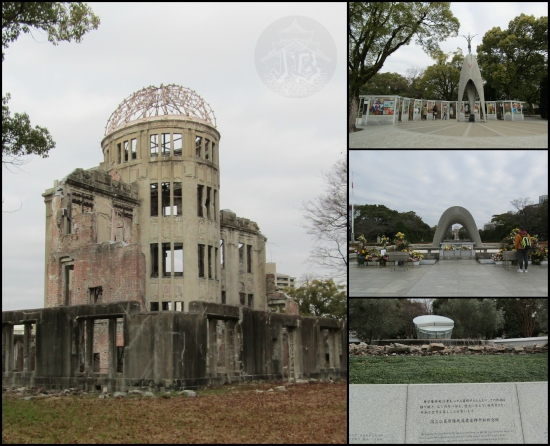
I caught up the 8 am ferry and was downtown in Hiroshima [廣島] round 9.10. my first stop was the quite-impressive and down-brining A-dome. This is the building above which the atomic bomb went off, and it is very, very sobering. What impressed me the most was the bottles of water still being offered to those who had been killed by the bomb.

I strolled around the Peace Memorial park, Hiroshima Heiwa Kinen Kōen [廣島平和記念公園] for a while, but I could not stomach the museum, to be honest. So after a while I decided to be on my way. Just imagining the amount of destruction and victimisation was spine-chilling.

My next stop was the old Hiroshima castle grounds. The first thing I saw there was Hiroshima Gokoku Jinja [廣島護國神社], which was full of people doing Hatsumode (I think this was kind of a pattern all through this first week of the year. Oh, the surprise (*≧▽≦)).

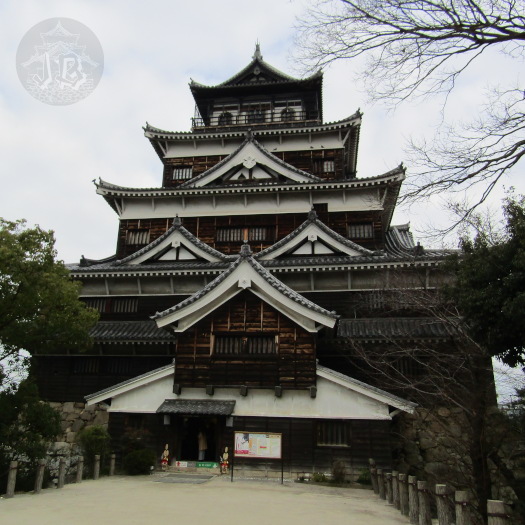
After that, I continued towards the castle, Hiroshima-jo [広島城], which holds a little antique museum, and was doing a demonstration on katana-making. However, I did not get to see the blades, they were just working on the guards, which is… I mean, don’t get me wrong. Not as cool? The castle was destroyed when the bomb went off, so it has been reconstructed since then. Part of the museum was dedicated to the reconstruction of the area. On the top floor there are a resting room and an observatory.

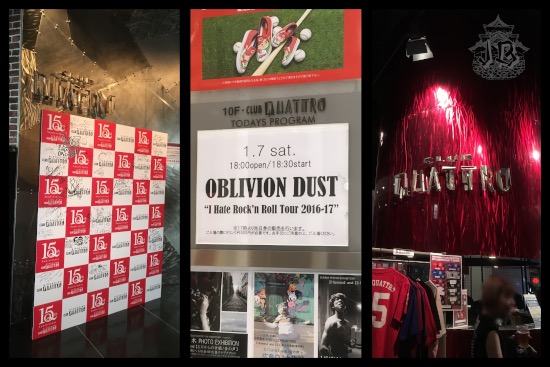
After the castle, I decided to head off to have some food and afterwards I went to Club Quattro, which was hosting an Oblivion Dust concert. Not that I am a hardcore (or much of a) fan – as a matter of fact I had never listened to any of their songs – but the guitarist is one of the VAMPS members, K.A.Z, and I kind of wanted to check them out.

I stayed over with Ms-san (who had helped me get the ticket) and some other acquaintances to see the band come in – and we got a half-assed wave from K.A.Z – and then I stayed to buy some merchandise. Then I realised that I had a… tiny problem. I had no transport to get to my hotel after the concert \(〇_o)/ because my last bus to the airport was at 7 pm, and I had a hotel very close to that!!! Well, I could have taken a taxi, but that was mover expensive than getting another hotel and losing the reservation for the previous one. It was a stressy hour until I could get there, check in, get some food and come back, but it all turned out nicely in the end.

The concert, part of Oblivion Dust’s 20 anniversary “I Hate Rock n’ Roll Tour 2016-17”, was really fun. Even if I had not heard any of the songs before, it felt familiar, as I could relate K.A.Z’s music style to what I knew from VAMPS and the long-gone Hide with Spread Beaver to some of thee songs I was listening to. The ‘average setlist’ for the tour was the following, so it is possible that this was what I listened to:

  1. In Motion
  2. Under My Skin
  3. Radio Song
  4. Red Light Green Light
  5. Come Alive
  6. Evidence
  7. Erase
  8. Easier Then
  9. Designer Fetus
  10. Elvis
  11. Sail Away
  12. Crawl
  13. Never Ending
  14. Lolita
  15. 24 Hour Buzz ’99
  16. Death Surf
  17. Nightcrawler
  18. Sink the God

K.A.Z was quite serious and concentrated most of the concert, and he only smiled a couple of times when he was exchanging glances with Arly, who is the support drummer for both Oblivion Dust and VAMPS. Most of the time I don’t even check on Arly that much, because I’m following Hyde around with my eyes, and that is a challenge, so I think this was the first time I was ever aware of how much fun Arly has at his job.

The bass player, Rikiji, was pretty fun. Ken, the singer, has a very different style from Hyde, but I could really see some parallelisms in the way he jerked around stage and jumped up and down. At one point, the guy climbed on the stage scaffolding-like thingy, hooked his knees, let himself and sang upside-down for a while. Now, that was quite impressive.

Surprising as it might, considering that in VAMPS he has to share the spotlight with something like Hyde, K.A.Z was quite… I’m not sure how to describe it… he did not have so much of that spotlight. No much guitar twirling, not that much jumping up and down either. At one point he went all zen in the back of stage where he could barely be seen. Seriously.

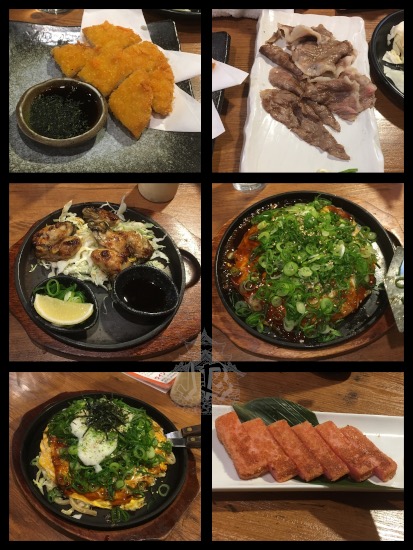
After the concert I went to eat with Ms-san and one of her friends and we had a few local specialities, such as Hiroshima okonomiyaki and roasted oysters. After that we all headed back to our respective hotels.

6th January 2017: Miyajima (in eleven hours) {Japan, winter 16/17}

I was, quite literally, out from sun to sun on this day, and then when it was night I came back for more. Miyajima [宮島] is a small island in Hiroshima Bay, famous for the ‘floating torii gate’, the o-torii [大鳥居], belonging to the Itsukushima Jinja [厳島神社]. About 17 metres high, it is planted on the beach in front of the shrine, and you can walk up to it in low tide. In high tide you see it in the middle of the water. The o-torii’s upper part is around 22 metres long and hollow. It is not nailed or glued, but is weighted down by fist-sized rocks stored in the hollow area. The pillars are solid.

And to the o-torii I headed off literally at dawn, after getting a warm coffee from a vending machine. The first few minutes cough half an cough hour cough were spent around the torii as it was low tide and you could walk up to it.

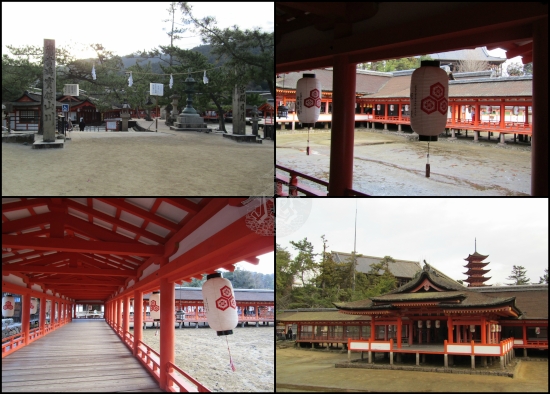
After I managed to peel myself off the o-torii, I headed off to the shrine it actually belongs, Itsukushima Shrine, which is the main shrine of the island. The shrine has a famous noh stage and when the tide rises it also becomes ‘floating’. It is the biggest shrine in the area. Itsukushima Shrine is dedicated to Ichikishima-hime, Tagitsu-hime and Tagori-hime, known as the Munakata goddesses, are the deities of the ocean, traffic safety, fortune and accomplishment.
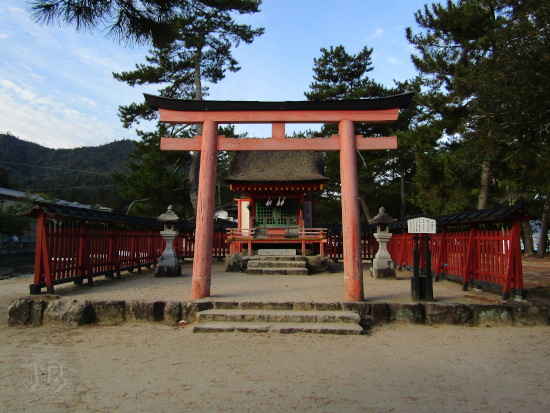
After Itsukushima shrine I ducked some deer, which abound, and are always hungry for maps and so on, and I walked down the breakwater to a little shrine named Kiyomori Jinja [清盛神社].
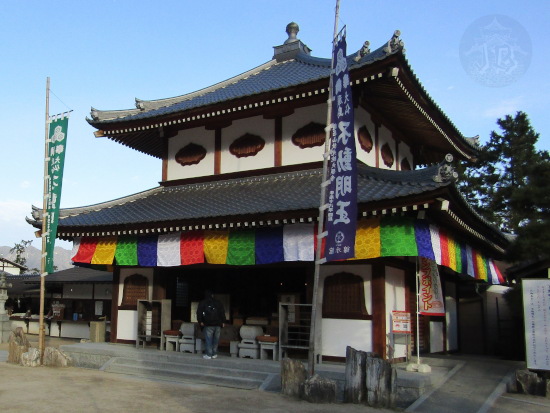
On my way back, I stepped on the grounds of the Buddhist temple of Daigan-ji [大願寺]. It was here where I realised that there were little stamps to be collected in the island, which is always a plus.
Then I got to Itsukushima Jinja Takaramono-kan [嚴島神社 寶物館], the shrine’s Treasure Hall, where they have a few treasures and old scrolls, armours and so on. Among them they have the ‘Story of Heike’ as well as several of the Heike family Buddhist Sutras. However, no pictures allowed. I continued on my way to the Tahoto [多宝塔] three-story Pagoda (also belonging to Itsukushima Shrine), which has a characteristic shape: it is square on the lower level and has a round shape on the upper level

From there I got to Daishoin [大聖院], another of the big Buddhist temples in the area, where I decided against hiking up mount Misen (2.7 km to the summit). The temple has a few up and downs, and it was here where I ate my karepan breakfast, around 9.30 – 10 am, I am not exactly sure. I do remember that my camera battery was already down one bar out of three.

Then I headed down and then up again to another of the low hills to the Senjokaku [千畳閣] pavillion and the Pagoda of Toyokuni Jinja [豊国神社] and the five story pagoda next to the main building. Toyokuni Jinja was supposed to be a library of Buddhist sutras – however, it did not get finished (although that has its own shuin for some reason (・□・;))
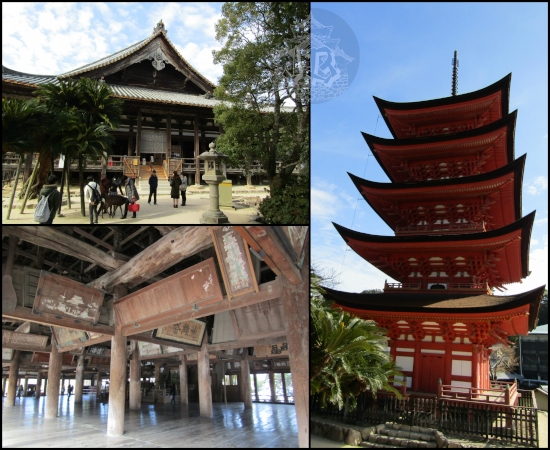
At that point it was barely half-morning I wondered whether to head downtown to Hiroshima, because high tide was only at 3 pm, and I really wanted to see the half-submerged torii, but I did not really know what to do. And no idea what got into me, but at that point I changed my mind and decided to go up Misen [弥山], the “island mount”. I actually decided to take the Miyajima Ropeway [宮島ロープウェー]. I crossed Momijidani Koen [紅葉谷公園], which is full of deer, and probably amazing when it is in full red, and took the ropeway from the park to Kayadani Station [榧谷駅] first and to Shishiiwa Station [獅子岩駅] then, about half an hour away from the summit. From there I took a few pictures and then decided to make my way up.
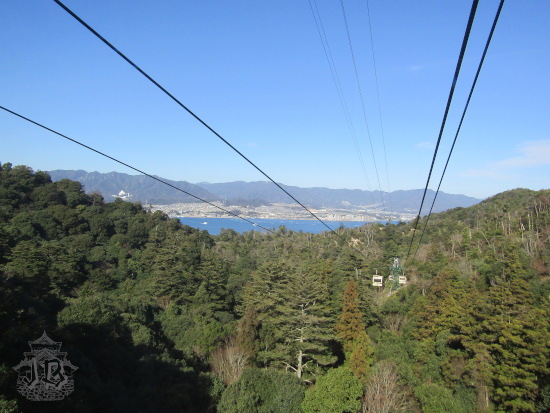
At that point I was not really thinking about getting to the summit (535 above sea level, and we’re talking 0 to 535 metres for real), but to Misen Hondo [弥山本堂] which is the temple where the ‘eternal flame’ was originally lit by a meditating Buddhist monk hundreds of years ago. The Peace Flame from Hiroshima was lit from here. There were two secondary halls, Sankido [三鬼堂] and Dainichido [大日堂].

But after Misen Hondo, I was ‘so’ close to the summit that it would be a pity not to finish the deed. That way, I could go up one route and down another one in order to see more things. On my way up and from the summit the sights were impressive, although it was a bit tiring. And a bit means a lot…

I think that at some point I considered using the ropeway down but time-wise it was going to be the same and walking down could be cheaper and would get me to see more stuff, such as Miyama Jinja [御山神社]. And I did not break my neck on the long hour and a half of hike-down, either. A greater plus.

All right, what time do you think I made it down? Not even 3 pm just yet, but as I had seen from halfway down the mountain, the tide was already up. Therefore I was able to see the floating o-torii, which was a high moment for me. The problem was that I was almost running out of battery in my camera already, and there was sunset to come! On my way around the bay I ate a very overpriced yakitori, but I was hungry and since Miyajima is ‘World Heritage’ it really does not have convenient stores.
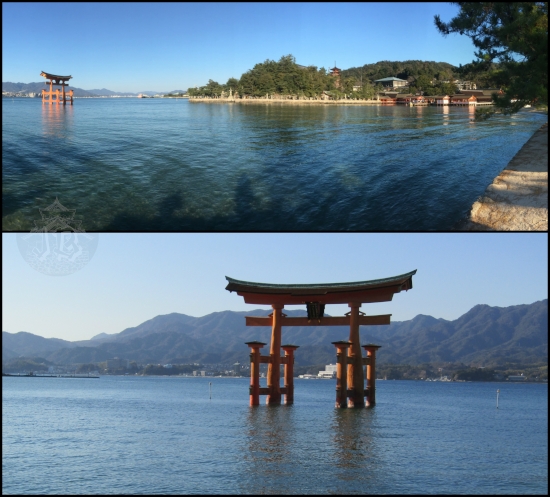
And thus, when I went towards the aquarium, Miyajima Suizokukan [宮島水族館]. I decided to take all my pictures with the phone over there to save camera battery for the sunset pictures. That it was awfully cold at that moment had nothing to do with my decision, of course and walking into K.A.Z. absolutely never ever crossed my mind either.

After the aquarium I was distracted by Omoto Jinja [大元神社], which was full of deer. Praying, I’m sure. There were baby deer too, being bullied cute but for some reason (probably lack of battery) the pictures did not come out.

Then I headed back to the o-torii area to watch it in the sunset and took pictures until I had no more battery on any device.

Once batteries were dead and the sun was too low, so I headed back to my ryokan to recharge – in every sense of the way, as it was after 5.30 pm. On my way back I bought a local speciality – ‘fishcake’ which in my case was shrimp because I did not dare try the oysters. It was yummy. Before going to the hotel, I got myself some groceries to recharge my own batteries and have dinner later.

I spent some time resting, charging all the devices and writing down notes on everything I had been doing during the day, and then, at around 9 pm I came back out again to take pictures of the shrines and o-torii at night.
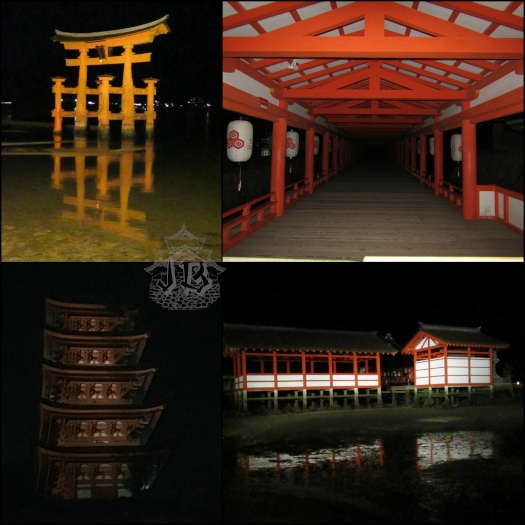
After that, dinner, shower, bed, and early check-out the following day in order to head down to Hiroshima, after very intense 11 hours running up and down Miyajima. Take that, nine hours in Kyoto.
5th January 2017: Narita squared, and a jump {Japan, winter 16/17}

I had a flight around 5 pm, not back just yet, but down south for my little excursion to Chūgoku. I headed out at 8 in the morning and missed my first train because stupid Google got me to the wrong station. Fortunately, I had a following train which still allowed me to make my final connection. Not making that would have sucked because I only had one train per hour to get to where I was going – which was the town of Narita, not the airport. But I was able to get the right train and I arrived in Narita [成田] (the town) at around 10.30 in the morning. my plan was visiting the complex of Narita-san [成田山], which holds the temple of Naritasan Shinshoji Temple and the Daikini Tendo Shusse Inari Shrine.

What I was not counting on was that a bunch of people were still going to be in Hatsumode-mood, and the area was the next thing from packed.

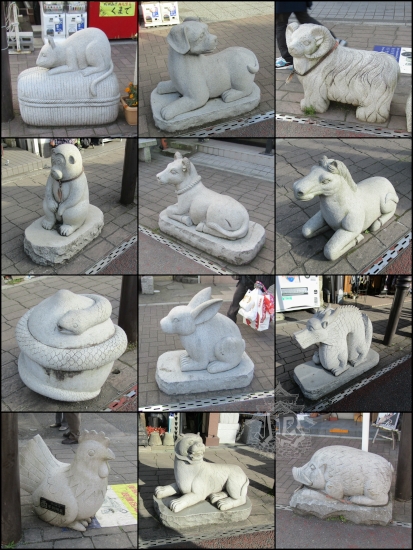
The lead-up to Narita-san complex is flanked by a bunch of souvenir shops and eateries, and two rows of little sculptures of the Chinese zodiacs – and one turtle, but the picture for that came out blurry (´;д;`)

Naritasan Shinshoji [成田山新勝寺] is a temple composed of several buildings and as mentioned it was quite full. That is why I did not manage to get all the shuin, but all in all it is quite a neat is place. However, I would like to see it when it is not this full (and the fact that I still have one shuin to get gives me the perfect excuse).

The other key building in the complex is Daikini Tendo / Shusse Inari Jinja [咤枳尼天堂 / 出世稲荷神社], the shrine of the white kitsune, where people were buying offerings to the fox in order to get favours from him, such as good luck in businesses.

The gardens were a good example of how things would work if it were less packed.

At around 2.30 pm I headed back to the station first and from there I caught a train to Narita (airport). My 5.20 pm flight departed from terminal three, which is the domestic low-cost terminal, and that was a bit of an experience. I have to say that I was awfully lucky because I was the scary foreigner and my bags were not checked, because I was for sure over the five-kilogram limit on my carry-on luggage.

I slept through my whole flight and I arrived in Hiroshima Airport a bit before 8 pm and I train-hopped towards the harbour to get on one of the last ferries to Miyajima [宮島], a place I had been wanting to visit since my first time in Japan. I had booked a nice little ryokan (traditional) room and I have to say I slept like a rock.

4th January 2017: Takao-san, the tengu mountain {Japan, winter 16/17}

For some strange reason I got into my head that I wanted to go to Takao-san [高尾山], a mount not too far away from Tokyo, in the city of Hachiōji [八王子]. From the summit of this 599-metre mount you get pretty sights… if the weather is clear. Which of course, was a no-go. D****e decided to tag along, so off we headed to “climb” a mountain – more like hike it up and then down.
There are different routes or trails to go up and down Takao-san. The “easy” route (trail 1) is paved and is the most walked. You may either hike it up completely or take the ropeway halfway. D****e hiked while I struggled my way up.

Mount Takao is said to be the dwelling place of Tengu and Daitengu, and about three-quarters up there is a Buddhist Temple, Takaosan Yakuōin Yūkiji [高尾山薬王院].

From the top of the mountain we got to guess Mount Fuji Fuji-san [富士山]. But it was there, and I have proof, albeit it has been a bit ‘enhanced’… Sorry that it does not look any natural, but here you have the original and the manipulated image:

Coming down Takao-san, we took trails 6 and 4, because D****e wanted to do the suspension bridge, because… reasons that I shall never understand. (Un)fortunately, we did not run into any tengu or related yōkai. On the bright side I did not break my neck \(≧▽≦)/. That is always a plus. Oh and we ate warm dango.

After that we met up with B**** for some karaoke and later on D****e left while I went off with B**** to have some quite amazing sushi down in Shinjuku [新宿].

3rd January 2017: Seven Lucky Gods, and a ship, Pilgrimage {Japan, winter 16/17}

As part of the shrine and temple visiting on the first days of the year there is the chance to do a “small” peregrination around several of them for luck – the whole thing is called the Shichifukujin Meguri [七福神 めぐり]. Together with D****e and Sh-san I set off to visit the Seven Lucky Gods of Minato-ku in their respective shrines and temples. Oh, and their ship.

The Seven Gods of Fortune or the Seven Lucky Gods, Shichifukujin [七福神, ] are a group of deities from different origin (India, China, and Japan itself). It is said that on New Year’s Eve the seven gods touch port in their treasure ship Takarabune [宝船] to bestow happiness to humans. The Seven are worshipped in a group, and there are a few temples that enshrine all ofthem together. However, in Minato-ku the Gods and their ship are scattered amongst a seven shrines and one temple. Visiting the Seven Gods of luck will bring you luck for the year (you can read all about the Seven Lucky Gods over at Buddhism & Shintōism In Japan A-To-Z Photo Dictionary Of Japanese Religious Sculpture & Art).

The Gods and Shrines/Temples in the order we visited them are:

  1. Benzaiten at Honjō-in [本成院]. Benzaiten [弁才天 / 弁財天] is the Goddess of the Arts and her virtue is Amiability. She is originally from India.

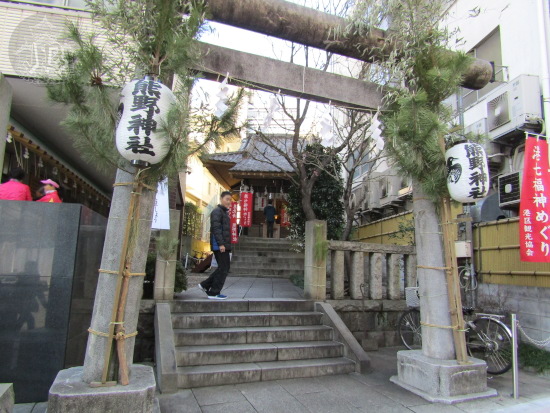
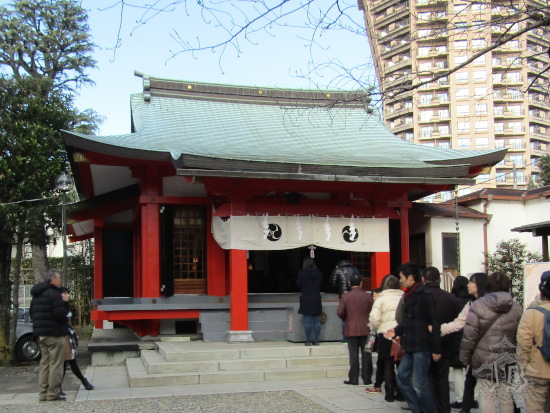
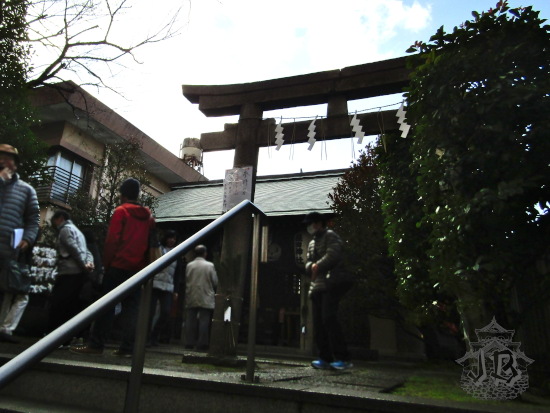
  2. Ebisu at Kumano Jinja [熊野神社]. Ebisu [恵比寿] is the God of the Ocean and his virtue is Fairness. He is originally from Japan.

  3. The Takarabume [十番稲荷神社] at Juban Inari Jinja. The ship carries all the attributes belonging to the Gods, and it is where they come to bring happiness.

  4. Daikokuten at Daioji [大雄寺]. Daikokuten [大黒天] is the god of the Earth and his vortue is Fortune. He originated in India.

  5. Bishamonten at Hikawa Jinja [氷川神社]. Bishamonten [毘沙門天] is the God of Treasure, and his virtue is Dignity. He comes from India.

  6. Jurōjin at Sakurada Jinja [櫻田神社]. Jurōjin [寿老人] is the god of Wisdom and his virtue is Longevity. Originally, he comes from China.

  7. Fukurokuju at Tenso Jinja [天祖神社]. Fukurokuju [福禄寿] is the god of Wealth and his virtue is Popularity. He originally comes from China.

  8. Hotei at Hisakuni Jinja [久國神社]. Hotei [布袋] is the God of Contentment and his virtue is Magnanimity.

In-between the gods, we had lunch at a very good yakiniku place in Roppongi [六本木].

2nd January 2017: Visiting the Imperial Palace {Japan, winter 16/17}

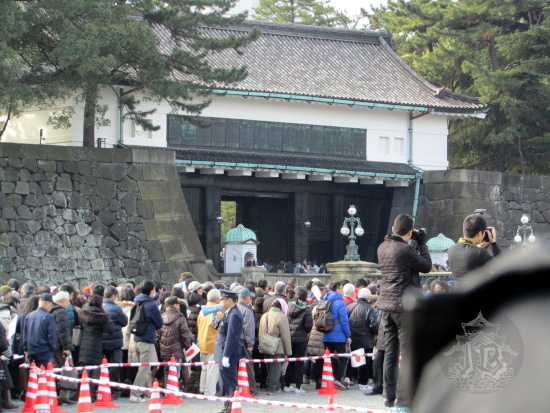
At roughly 9 am, we headed off to the Imperial Palace, the Kōkyo [皇居] for an audience with the Emperor. Sounds impressive, but so did several other some 80 thousand of people. We were going to the so-called “Visit of the General Public to the Palace for the New Year Greeting” (Kōkyo Shin-nen Ippan Sanga [皇居 新年一般参賀]) to wish the Emperor Happy New Year.

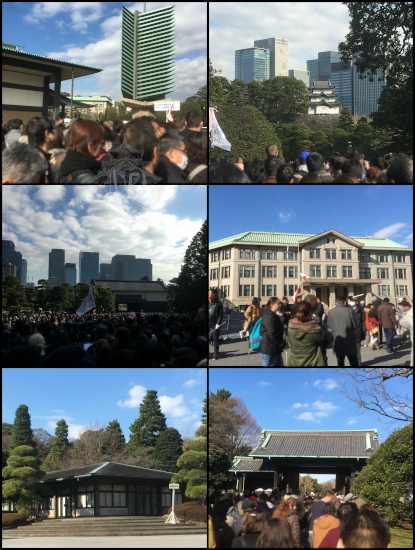
We arrived in the Imperial Palace area maybe around late 9.30s. First we got our flags to wave. Then our bags were checked, then there was a pat-down to make sure that we did not take anything dangerous into the palace. The weather was nice and sunny so it was not too cold, and it was nice. We ended up at the beginning of one of the lines so we had a nice view of the Nijubashi [環境省] Gate, which is usually closed. Then we walked up the gardens until we got to the main building. We were not allowed to stop to take pictures, so excuse random angles and compositions.

We made it to the grounds just in time for the 11:00h audience. We got to see the adult members of the imperial family and hear the emperor speak for a couple of minutes. There was cheering and flags.

After the audience we got to walk down the gardens, and take pictures and think that everything looked awfully mundane for an Imperial Palace. There were traffic signs and the max speed is 30… I don’t know, it was a weird feeling.

Afterward we visited Itoya in Ginza [銀座], which is a huge stationary shop, and I wanted all the things. Afterwards we had some Australian beef and then we headed off to Shibuya [渋谷], where there was Taco Bell (because reasons) and karaoke with B**** and a donut afterwards. The order might not have been exactly that one though (⌒▽⌒)☆

1st January 2017: Hatsumode {Japan, winter 16/17}

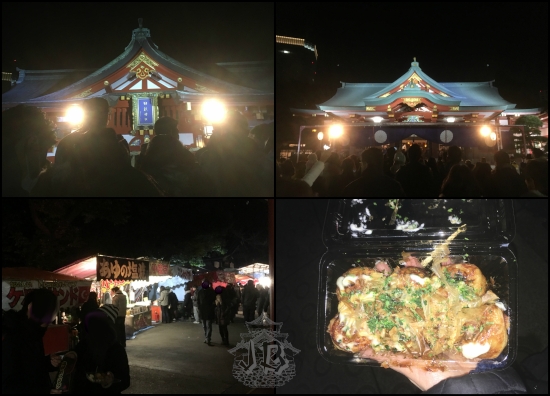
Hatsumode [初詣] is the Japanese custom of visiting a shrine or temple within the first three days of the year. Some people – like we did – actually wait the New Year to roll in the temple grounds. After the 108 (fast!) gongs that signal the entrance of the New Year, you are allowed into the shrine grounds to say the first prayer of the year in Hie Jinja [日枝神社].

After the prayer you can buy good luck charms, arrows which are ammunition for the kami to protect you (or something alike), enjoy some sacred sake, get your shuin, and once you’re outside, buy food and drinks. In my case I got some fresh takoyaki and ate them alone because apparently they’re stinky 。゚( ゚^∀^゚)゚。

Then we headed off home, and I got up at 8 am to have 12 grapes with Spanish TV as it has been my custom all my life. Then I went back to bed.

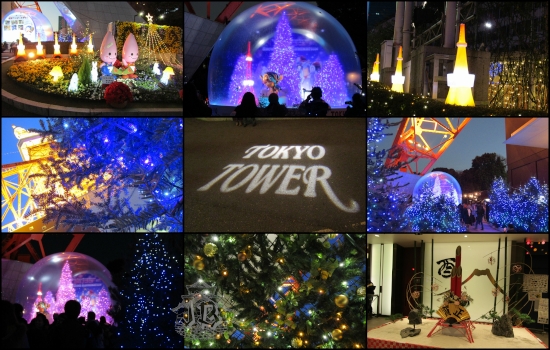
In the evening I headed off to Minato [港] to see Tokyo Tower [東京タワー]. Zojo-ji [増上寺] and Shiba Kōen [芝公園] were packed with Hatsumode parishioners and I had never seen such a line to go up Tokyo Tower. Thus I did not climb up, but I did take pictures of all the illumination around.

Afterwards I met with D****e and K***n. to go to Yokohama [横浜], to have dinner in Yokohama Chinatown, as Chinese people have their own New Year, they would be open to business as usual. It was my first time in Chinatown at night, too, so it was interesting seeing places like Kanteibyō / Kuan Ti Miao Temple [関帝廟 / 中華会館] in a new light.

On our way back we tried to see Shiodome [汐留]’s Winter Illuminations but they were off. We’re not completely sure of why…