3rd October 2024: Istanbul, day 1 – Classical Istanbul (plus) {Türkiye, October 2024}

I spent the day in Istanbul | İstanbul, probably the most important city in Türkiye, and certainly the largest, but not the capital. It was founded as Byzantium in the 7th century BCE, straddling the Bosphorus Strait, which is considered the boundary between Europe and Asia. In 330 CE, Roman Emperor Constantine renamed the city into Constantinople after himself, and made it the capital of his domains. The so-called Fall of Constantinople in 1453 started the Ottoman Caliphate – sometimes called the Ottoman Empire. The empire survived until it joined World War I and was subsequently defeated – Istanbul was the capital during most of that time, until the Turkish Independence War, when Mustafa Kemal Atatürk made Ankara the capital.

Istanbul is probably the only city in the world which stands between two continents, separated by the Bosphorus strait and the Golden Horn – an estuary flowing into the strait. To the west of the Bosphorus is Europe, and to the east Asia. The European area south of the Golden Horn is called the historic peninsula.

Istanbul has claimed its rightful place in history as a key step of the Silk Road and the spread of Christianity during Roman times. The historic peninsula is a Unesco Heritage Site, the Historic Areas of Istanbul, which the day trip I had hired, called “Classical Istanbul” Estambul Clásica (50 €) was supposed to cover.

I woke up around 7:00 and went down for breakfast. Coffee was… unexpectedly dull, considering the fame of Turkish coffee – and I had two cups to kickstart my brain. The scrambled eggs were particularly good, but the bread so-so. At 8:20, ten minutes before pick-up time, I was ready and waiting at reception. At 9:10 I wrote to the person who had picked me up from the airport, who had told me to text her with any question, and at 9:15 they showed up – there was apparently “a lot of traffic”, and we were stuck in it for a while. I spent the time checking out the ruins of Constantinople’s ancient walls Bizans Surları, which are also part of the Unesco Heritage Site.

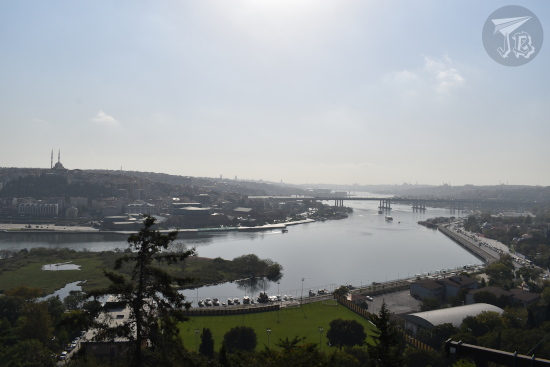
The group comprised around 30 people, and the bus headed towards an area called Pierre Loti Tepesi, Pierre Loti Hill, and reached there around 10:00. This is a viewpoint above the Golden Horn Altın Boynuz, with a viewing terrace, a café and the Eyüp Cemetery Eyüp Mezarlığı. We were told we’d visit the cemetery later, and were given twenty minutes to take in the views. Afterwards, we hiked (considering the speed, “marched”) down the hill through the cemetery, and saw several tombstones from the Ottoman period, but there was no visit whatsoever.

Istambul from Pierre Loti hill

We hopped back onto the bus to drive towards the quarter called Fener, which we were told was “movie neighbourhood”. We were going to visit the Venerable Patriarchal Church of Saint George, the Orthodox cathedral of Istanbul Aziz George Katedrali, which closed down as we arrived for “an unknown length of time” because the Patriarch was coming out. Instead of letting us amble through the neighbourhood before the church, the guide insisted on us waiting for about 20 minutes before we all came into the church, and he gave a couple of explanations, and gave us free time to check out the church and the neighbourhood.

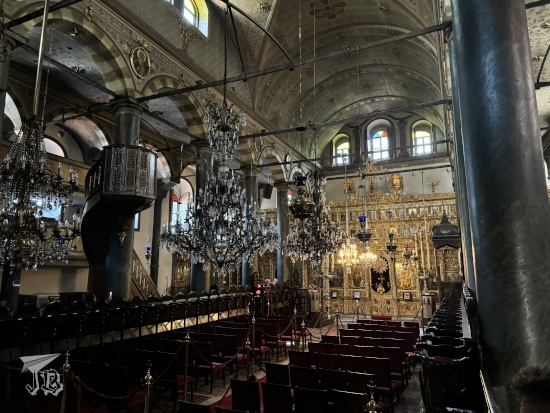
The church of St George was one of the few places with “real” security. We got through a lot of places with metal detectors and such with guards who would not even care, but the ones that did were ridiculously strict in contrast. The truth is that with the rise of Turkish nationalism, a lot of the church’s flock were deported, so the church and Patriarch are mostly symbolic and a pilgrimage point, and it has even been attacked by terrorists at times. The church itself used to be the centre of the quarter, which was historically the Greek quarter, even after the Ottoman Turks had taken over former Constantinople. Though the church existed previously, it became the seat of the Ecumenical Patriarchate of Constantinople since the early 1600s. It has been damaged and rebuilt several times, the latest as recently as 1991. It has three naves and aisles, with a rich iconostasis (decorated screen that separates the altar from the nave) in golden wood.

Church of St George Istanbul

After the cathedral, I wandered the quarter of Fener on my own for as long as was given us as free time. I found a colourful set of stairs Renkli Merdivenler, which led to nowhere but area pretty. The whole area was a hill, and I climbed up to try to catch a view of a very interesting building – the private school Phanar Roman Orthodox Lyceum Özel Fener Rum Lisesi. The building was designed in an eclectic style by Greek architect Konstantinos Dimadis, and built around 1882, though the school itself dates back from 1597. I also saw a film crew on a break in one of the streets.

Roman Orthodox Lyceum

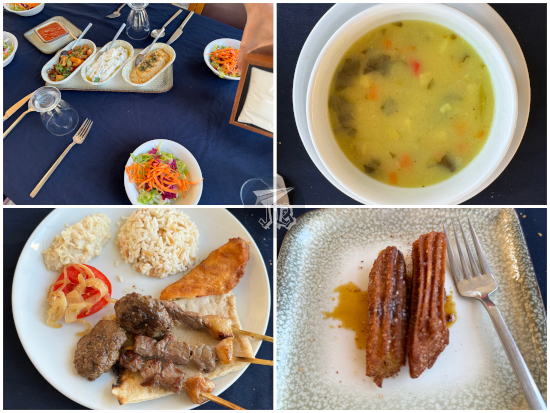
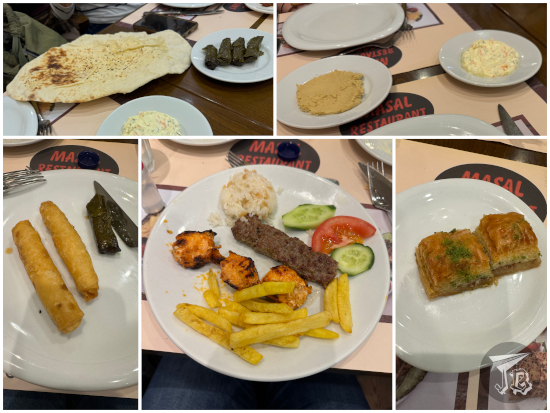
Once we were called back to the bus, we headed out for lunch. The entrées looked good, actually Turkish, including hummus, rolled paçanga böreği, dolma (stuffed vine leaves), cacik (Turkish tzatziki). The main was rather unremarkable, and something that I could have easily had in either Jordan or Egypt – a sad-looking plate with eight fries, two slices of cucumber, one slice of tomato, a mouthful of rice, and some chicken and lamb. Dessert were the ubiquitous Turkish delights, which are extremely sweet and I’m not a big fan of. Looking back, however, this was one of the most Turkish meals I ended up having, besides kebaps. During lunch, I made acquaintances with some nice ladies who promised to make sure I was not left behind – which has been a bit of a worry of mine when I’m in a guided tour since my last day in Egypt.

Turkish meal

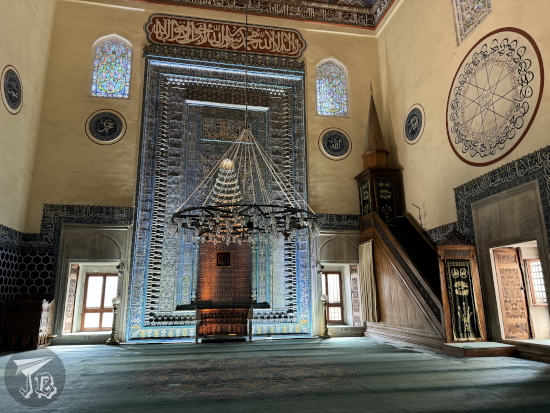
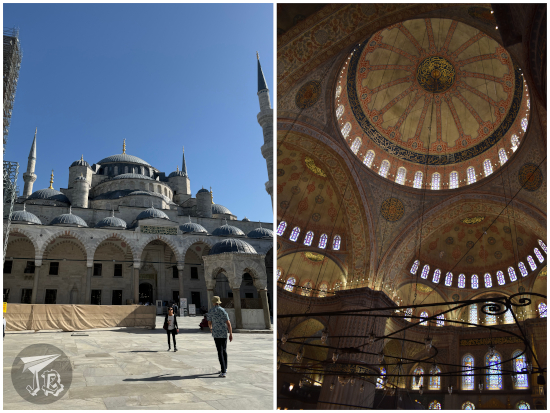
Around 14:00 we walked towards the area known as Sultanahmet Square Sultanahmet Meydanı, the neuralgic centre of historic Istanbul. There, the first stop of the afternoon was Sultanahmet Camii, the Sultan Ahmed Mosque colloquially known as the Blue Mosque. It was built between 1609 and 1617, during the Ottoman era. Designed by architect Sedefkar Mehmed Agha, it was the last great mosque built in the Classical Ottoman style, and combines Byzantine details and Islamic architecture. It has a central dome (43 metres high) with four semi domes and six minarets. The interior is decorated with tiles and mostly blue decoration, hence the name – though honestly I mostly felt it was… golden. The mosque has windows which originally had coloured glass, and are now modern, and it has chandeliers hung from the ceiling, with some of the lamps being ostrich eggs, a typical feature in Turkish mosques. One of the minarets was being restored.

Blue mosque

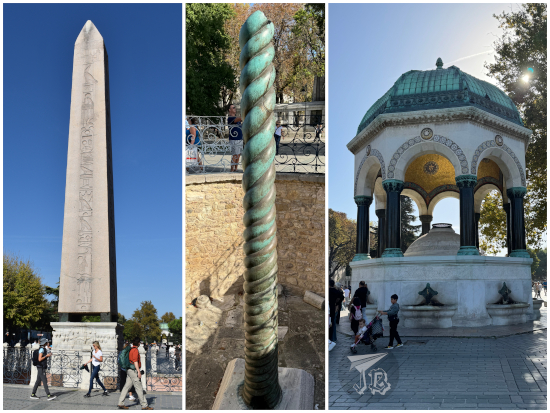
The mosque stands next to the square, which is long and narrow – it is actually built on the former Hippodrome of Constantinople Hipodrom, the centre of the city during the Byzantine period. Upon the founding of Constantinople, both Constantine and his successor Theodosius the Great brought works of art into the area. Today, there stands the Serpent Column Yılanlı Sütun, an ancient bronze column representing a hydra, whose heads are now missing (part of one is now in the nearby Archaeology Museum). Another monument of the square is the Egyptian Obelisk of Theodosius Dikilitaş, originally erected for Pharaoh Thutmose III (1479 – 1425 BCE, 18th century) in Karnak. It stands on a Roman pedestal from the time it was transported to Constantinople around the year 390 CE. The final construction in the square is the German Fountain Alman Çeşmesi (The Kaiser Wilhelm Fountain), a neo-Byzantine fountain that was constructed to commemorate the visit of German Emperor Wilhem II to Istanbul. It has eight sides, with marble columns and an inside covered with golden mosaics.

Monuments at Istanbul hyppodrome

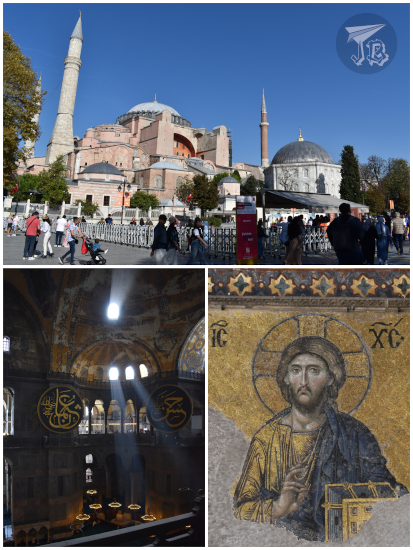
The official day trip ended there – though they were supposed to take us to the Grand Bazaar. However, the extended tour (25 € extra) included visiting the Orthodox church-turned-mosque-turned-museum-turned-mosque Ayasofya-i Kebir Cami-i Şerifi Hagia Sophia Grand Mosque. The current structure was commissioned by the Byzantine Emperor Justinian I to be the Christian cathedral of Constantinople as the Church of God’s Holy Wisdom, designed by Greek geometers Isidore of Miletus and Anthemius of Tralles. At the time it was built, it was the largest interior open space in the world.

It has a central dome with rises 55.6 metres from the ground and a diameter of around 31 metres. After the fall of Constantinople in 1453 it was converted into a mosque. In 1935, the new Turkish Republic turned it into a museum, but in 2020 the controversial decision to turn it back into mosque was made. With the first transformation into a mosque, minarets were erected and the Byzantine mosaics on the ceilings were covered or destroyed. They were recovered for the museum period, and now they are hidden away. While originally the mosque was going to be “open for all”, now the ground floor, covered with a carpet, is only for praying Muslims, and tourists have to pay to access the second floor and see the Christian mosaics. From the second floor, you can see the mosaics, and are close to the domes, which allows you to see the questionable state of conservation. The dome is fantastic, and there are mosaics of the archangels there. On the way out, there is another mosaic depicting the Virgin Mary with the child, and Constantine and Justinian giving them presents – Istanbul itself and Hagia Sophia. The walls however, are in dire need of restorations.

Hagia Sophia Istanbul

The day trip ended after an introduction to the building, and I wandered around for a while, seeing everything I was allowed to before I stepped out. At that point it was 16:50. I had the option of walking, as recommended, to the Grand Bazaar, but I decided that I had better things to do. I rushed towards the palace-turned-museum Topkapı Palace Topkapı Sarayı. Construction of the complex was ordered just after the fall of Constantinople by Sultan Mehmed the Conqueror overlooking the Golden Horn. Closed-off by walls, it has several buildings and palaces, some of which hold exhibitions. The palace closes at 18:30, and the ticket booths at 17:00. I was able to buy a ticket at 16:57 because I am very motivated, and I even saw most of the key areas of the palace in those 90 minutes. Though the recommended visit time is four to five hours, at least I felt accomplished – I wished I had prepared better for it, but I thought that I was standing next to the palace, and even if it was expensive I could return the next day if I felt I wanted to see more.

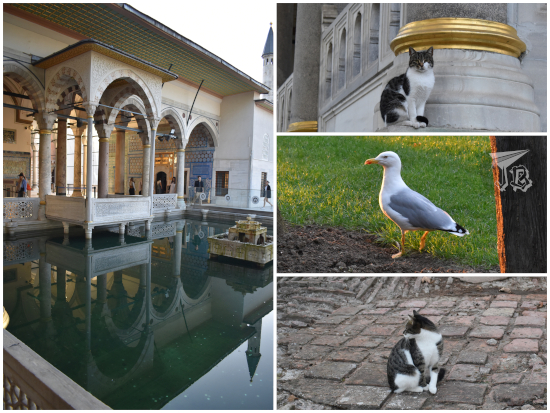
The first courtyard is free for everyone to see, and that is where the ticket booths are. I hurried towards the second courtyard, where I was able to see the Ottoman Empire Imperial Council, the Treasury, the Arms collection, the Gate of Felicity, the Chamber of the Sacred Relics, the Harem, the Baghdad kiosk, the Grand Kiosk, and even the panoramic view of Marmara Sea, among other smaller buildings – and of course, the feral cats. I did miss the porcelain and miniature collection, but I felt rather accomplished for the 90 minutes I had.

Topkapi palace Istanbul

Topkapi palace

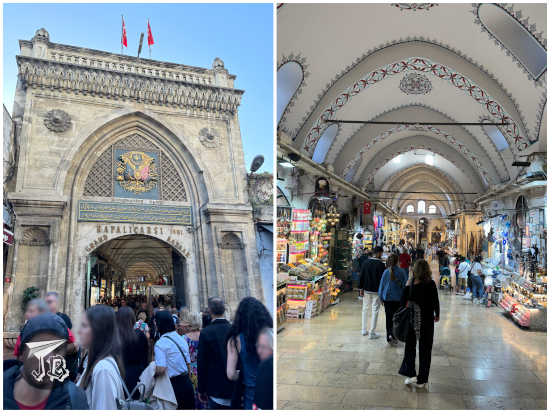
I left the palace among the last visitors, as they closed the gates behind us. I had two options now – head back to the hotel and try to see the Grand Bazaar, or explore around for a while. To be fair, the area looked rather full and with a bunch of tourists looking more like a target than myself. That happened a lot during this trip, fortunately. I was not considered “targetable”.

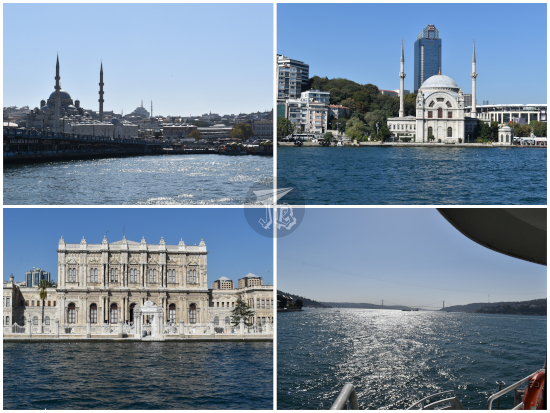
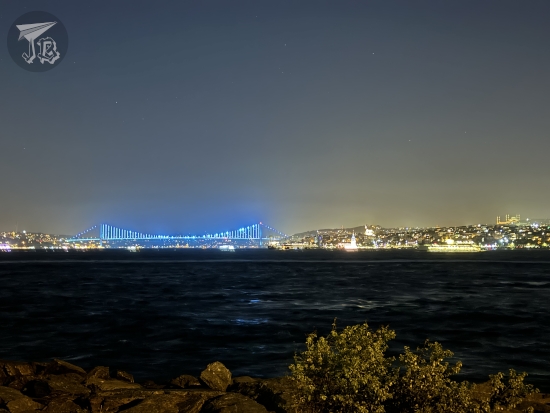
Most visitable monuments had closed or were about to at this point. However, I knew that the Basilica Cistern would reopen an hour later, so I decided to wander around and try to get to the promenade along Kennedy street Kennedy Caddesi, which allowed me for nice views of Bosphorus Strait İstanbul Boğazı, the Golden Horn Altın Boynuz and Galata Bridge Galata Köprüsü.

Golden Horn at night

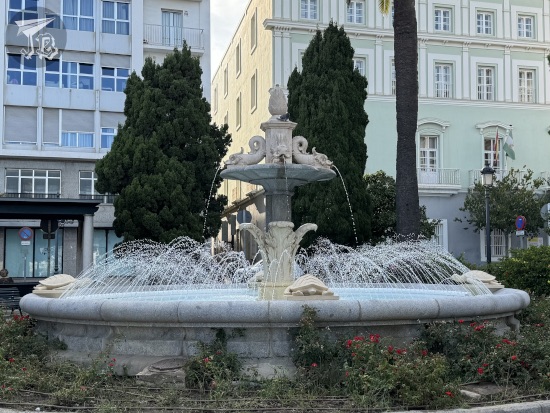
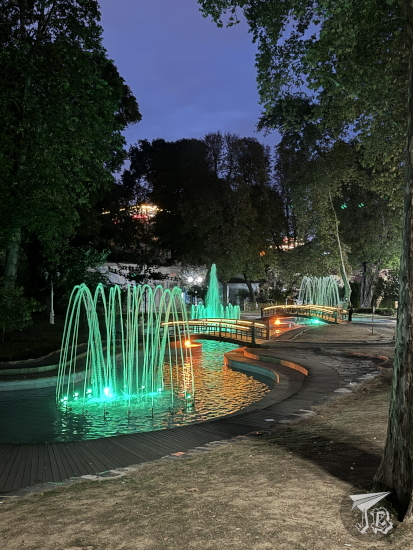
I went back towards the city centre through Gülhane Park Gülhane Parkı. At this point it was dark, so the fountains were on, and they looked very fun, all lit up.

I reached the queue to enter the Basilica Cistern Yerebatan Sarnıcı (Subterranean Palace). The ancient cistern has a normal opening schedule, and an evening schedule, which is a bit more expensive, with live music. But it worked for me. The cistern was built in the 6th century with the goal of providing water to the Great Palace of Constantinople, which stood where the Blue Mosque is now. It is an underground chamber with 336 columns that are up to 9 metres high, and it can hold up to 80,000 cubic metres of water. The columns seem to be recycled from ruined buildings, and at least one of them is carved with an upside-down Medusa face on the base. Today there is very little water, and there are modern art installations, and there are cool changing lights that give it a very interesting look and feel.

Basilica Cistern Istanbul

By the time I left, I kind of regretted having signed up for the second day trip, because I had been rather more efficient on my own, but again, I had not done much planning for the city. I went back to the hotel and I ordered food using the online room service. This time I decided on a kebap chicken wrap and a Turkish yoghurt, which was delicious. I had a shower and went off to bed.

Kebap and yoghurt

2nd October 2024: MAD → IST {Türkiye, October 2024}

I had a Turkish Airlines flight at 12:00, and a strong recommendation to get to the airport three hours in advance. Back in July 2024, the outage of Microsoft systems caused chaos at the airport, and apparently the system has not completely recovered. Thus, my travel agent insisted on the three-hour margin. Since the flight was not an insane time, my parent had offered to drive me to the airport, but they “don’t believe in being at the airport three hours beforehand”. In the end, I negotiated a drop off a bit after 9:00.

I got to the baggage drop counter, which should have been a fast affair, but it was held up by a passenger who was checking in firearms – I was in the plane with a party of hunters. It was a bit creepy, because at some point they opened the gun cases for everyone to see, in the middle of the check-in line. Finally, Turkish Airlines opened a second counter while someone dealt with this traveller. I had my boarding pass, and my luggage was about 13 kg. I had packed an extra pair of shoes, long sleeved T-shirts, jeans and a couple of sweatshirts, along with a long cardigan that can be used as outerwear, blanket or even pillow as the situation requires – and I knew there were a lot of bus hours to come.

After checking in the luggage, I went through security and passport control, and found a seat until it was time to board. The boarding process was extremely efficient and fast, and we took off on time. We got lunch on the plane, and there was on board entertainment, so time passed quickly. Upon reaching Istanbul International Airport, there was a passport control upon exiting the plane, but I’m not sure what they were checking for, as everyone got waved through. Most passengers went onto connecting flights, and I headed off to immigration. I obviously chose the wrong line, as it took me a long time to clear it. I got my passport stamped – a brand new passport, and they stamped it, upside down, on page number 19, because why bother, I guess.

Welcome to Istanbul

After clearing immigration – I was not even aware of customs – I had to go to a particular gate to meet the representative from Oxin Travel outside the airport. I had bought an e-sim for my phone to have “unlimited internet for ten days”, so I activated that on my way, and it worked very well. When I went out the gate, I was supposed to look for a person with the travel agent’s logo, but I was surprised that there was actually a woman screaming my name. I was the only passenger on the tour that came on that flight.

She took me to the car park, where she left me alone to find our driver. When she came back, she told me about Istanbul’s day trips and sent me the information via WhatsApp, and recommended stuff to do. I booked both day trips because the whole point was having to plan little and save mental energy. Hindsight being 20/20, I regret that choice.

The drive to Istanbul | İstanbul took just above one hour, 20 minutes of that were spent trying to get out of the airport. It was already dark when we arrived in town, and I was able to catch a glimpse of Galata Tower Galata Kulesi. We reached three-star Hotel Bi·setun around 19:00 maybe, and the representative and the driver left to have me do the check-in on my own – good thing that she had confirmed on the phone that the hotel was expecting me, because the way we pulled into the area made it look a bit shady.

During check-in, the hotel kept my passport, and that was a bit creepy. When I got to the room, I found that the hotel had a nice system where you could order food through a special webpage – it was like an outsourced room service that could be paid by credit card, which was extremely convenient. I ordered a pacanga pastry paçanga böreği, similar to a quesadilla, and a lentil soup mercimek Çorbası.

I then went down to reception to buy a bottle of water and retrieve my passport. After the food arrived, I ate, had a shower and settled down to sleep. It was a rather uneventful journey, to be honest, but somehow it did not feel… smooth. The bit about being the only person picked up at the airport was weird, and communicating with the representative via WhatsApp a bit awkward.

2nd – 11th October 2024: “Turquía Única” – A circuit in Türkiye {Türkiye, October 2024}

At the end of an already crazy, crazy work period, I had a very bad project. I determined to spend all the income from that one project on a big trip. However, at the same time, I was too exhausted to do a lot of planning. I decided to book a circuit, and since China was about 7,000 € above my budget, I ended up choosing to visit Türkiye. It also felt like a good moment to do so, before tensions in the Middle East escalate even further than they have, and while the country is still somewhat laic and not the Islamic Republic it seems on the path to turn into.

I booked my trip in August for October as that was when work would be over for the year. The only thing left was crossing fingers for good weather, and survive work till then.

Overall, the experience was on the wrong side of disappointing. The tour I chose looked good on paper, but it turned out to be badly managed and even more badly implemented. I’m not even a food-driven traveller, but none of the places we visited offered much in regards of Turkish dishes except the same sweets over and over again. Most hotels were falling apart – literally – and in the middle of nowhere, so when we arrived there around 18:00 at the latest, there was nothing around to explore. On top of that, pure bad luck this time, my flight connection were rather inconvenient – I arrived late on my first day in Istanbul, and left early on my last, so there was no way to enjoy those days.

One of the big problems I ran into was the diffusion of responsibility, as I booked a trip from Viajes El Corte Inglés, distributed by MapaTours and implemented by the local Oxin Travel, whose guides were… let’s say lacking.

I was excited when my travel agent called to give the documentation, a couple of weeks before the adventure started. There were some errors in formatting, and a reference to a photograph which was not there – I tried not to worry about that. A link can easily break when paperwork is prepared for printing. It was a sign (or a metaphor) for all the small things that would go wrong, I see now.

I am aware that I come from an incredibly privileged place, complaining about a nine-day to Türkiye. However, I paid for a service I did not receive, and that miffs me. On top of everything, the single supplement was 400€, because Türkiye does not do single rooms whatsoever, almost 20% of the total price excluding extra day trips.

I booked a circuit named Turquía Única (Unique Türkiye), which started and ended in Istanbul. The itinerary included Ankara, the region of Cappadocia, Pammukkale, Izmir, Pergamon, Çanakkale, Bursa and back to Istambul. I landed on the 2nd and returned on the 11th, but I was only up and about between the 3rd and the 10th. I also made the mistake of booking the optional Istanbul day trips trying to avoid long queues at ticket booths and monuments.

14th September 2024: The long way back {Escapade to Cádiz, September 2024}

I woke up before dawn and took a train out of Cádiz to El Puerto de Santa María to spend a few hours with a friend. We had breakfastand caught up, and I headed back to Cádiz around noon for food and my train back.

I returned to the area where the market Mercado Central de Abastos de Cádiz stands, and found a place for lunch Cervecería Boquerón Barbudo for puntillitas fritas, which is a dish of battered and fried squid, and one last tortillita de camarones before heading back home.

Tortillita de camarones and puntillitas

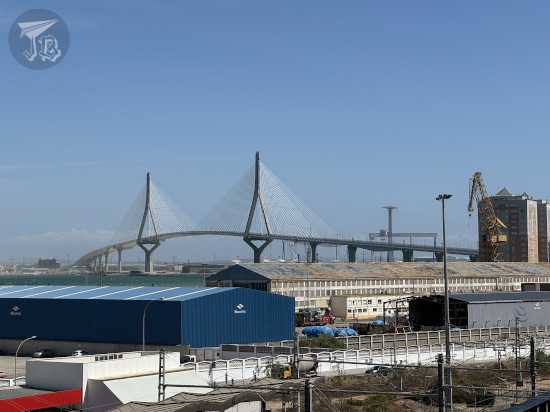
I had some time to kill before the train, and I thought about walking back towards the beach, but there was a strong wind coming from the west – nothing unusual, this wind even has a name, Poniente. Instead, I headed towards the harbour. I wanted to reach a specific quay to take pictures, but it was too hot and I was carrying the backpack. I ended up turning towards the city at the last pedestrian crossing in sight. I climbed up the stairs to the station and went out the other side. There, I found a lookout above the harbour and the bridge Puente de la Constitución de 1812, a cable-stayed bridge which joins Cádiz and Puerto Real which was built between 2007 and 2017. It measures just above 3 km, with 37 pillars, and there is actually a removable part in order to let ships of unlimited size to go through. As what I actually wanted was to get a sight out of said bridge, it worked well.

Constitution bridge Cádiz

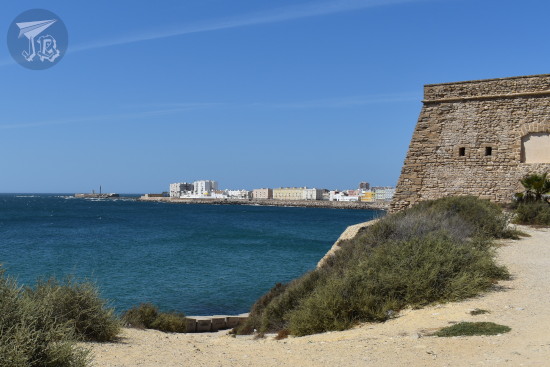
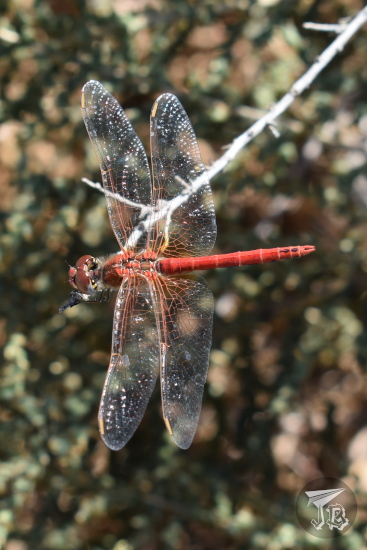
I walked towards Puerta de Tierra once more, to look at the temporary monument to the Phoenician gods – still garish. I walked alongside the wall until I reached the sea front promenade Paseo Marítimo, from where I could see the castle Castillo de San Sebastián and the bridges that lead to it. There was also a (tiny) swarm of damselflies which seemed to pose for pictures.

Puerta de Tierra (Semana Fenicia)

San Esteban Castle

Damselfly

I finally headed off towards the station to take a string of trains in the opposite direction I had done on Wednesday. First, I took the medium-distance train towards Seville, where I had an hour or so. I bought a sandwich and a soda to go (at exuberant prices, of course), and an ice-cream (at McDonald’s, with a regular price) while I waited. Then, the AVE took me to Madrid, which I reached a few minutes early, even. I hurried towards the commuter train system, hoping to catch a good connection, but – surprise, surprise – it did not let me in.

I had to go queue for help, and an employee let me through, assuring me that the system would let me out. Not trusting that, upon arrival I asked a security guard what I should do, and he said that the gate would be open if my pass did not work. To no one’s astonishment by now, the pass did not work, and the gate was closed. And of course, there was no Renfe employee to man the exits at nearly 23:00. I called for assistance on the inter-phone, and after a minute of ringing without an answer, I gave up and scurried after someone as they went out. Because, really, it was absolutely ridiculous.

All in all, it was a good trip. Cádiz was still an open chapter in my life, and I had always been worried that I would be overwhelmed by sadness if / when I returned to the area. Fortunately, that was not the case, and I was able to enjoy the escapade, along with getting my paperwork. However, the stupid commuter train thing was frustrating. Because Renfe, if the combined ticket works, why doesn’t it work? And if it doesn’t work, why are we told it works? Confusing, isn’t it? I had the same feeling.

13th September 2024: Cádiz, Jerez, Puerto Real & back to Cádiz {Escapade to Cádiz, September 2024}

After making sure there were no ants in my breakfast – I had stored it in the mini-fridge, and they were all in the trash can with the decoy – I left for an early walk around Cádiz as the sun rose. I went to Puerta de Tierra (the Land Gate), the remains of the walls that closed off the city in the past, which today separates the old and new areas. The original redoubt was erected in the 16th century, embellished in 1756 with a portal, and a tower was added in 1850. In the early 20th century, arches were opened into the wall to allow traffic to come through. There was a temporary installation to commemorate the “Phoenician Week” activities, but it was so garish that I was not even sure whether it was real or a parody of sorts.

Puerta de Tierra Cádiz

Afterwards, I walked to the train station to take the train to the nearby city of Jerez de la Frontera, where my first stop was the fortress-palace Conjunto Monumental del Alcázar. The first remains known of the alcázar date back from the 11th century, though most of what still stands was erected in the Almohad period (12th – 13th centuries). The fortress was repeatedly taken and lost in the war between Moors and Christians until the Catholic Monarchs finally conquered all of Spain. The building was owned by the crown, but it fell into disarray, and in the 18th century a Baroque palace was built.

Alcazar de Jerez de la Frontera - exterior

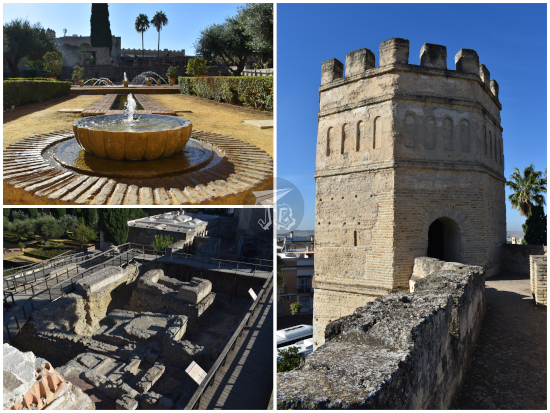
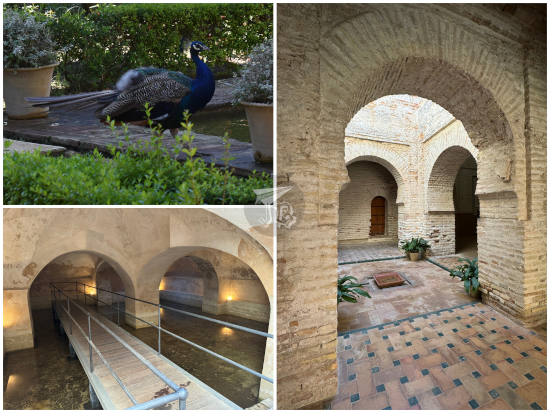
Today, this palace is the only intact construction, and the one I left for last. I moved towards the garden first, which lead to the Arab baths, the octagonal tower, the cistern, the Royal Pavilion, and the walls, with some of the machinery from the Medieval times. The gardens were patrolled by peafowl. On the other side of the complex stand the mosque, an area with a reproduction of ancient oil presses, and the original gates in the walls.

Alcazar de Jerez de la Frontera - cistern and mosque, and peacock

The Baroque palace Palacio de Villavicencio holds a wooden staircase, several rooms with rich decoration including hanging lamps and wall paintings, and a salvaged pharmacy from the 19th century.

Alcazar de Jerez: Palacio de Villavicencio

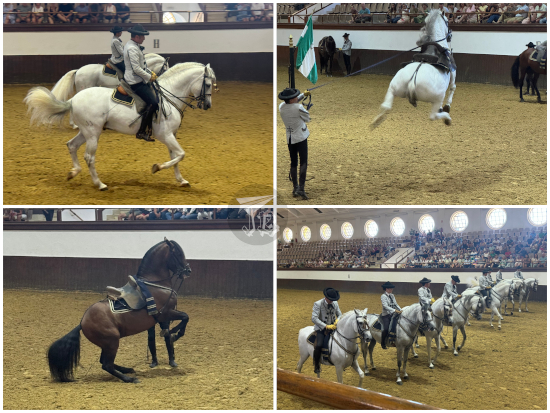
After the alcázar, which took longer than I thought to explore, I headed out to the Royal Andalusian School of Equestrian Art Real Escuela Andaluza del Arte Ecuestre to watch the show Cómo bailan los caballos andaluces (The way Andalusian horses dance), an eight-part show which has been performed since 1973. The exhibition showcases the different types of exercises that the horses are trained for – whether it is with a rider, or a handler on their feet, alone, or coordinating with other horses on the arena. It was a really impressive performance, and the horses were gorgeous.

Setlist of the show:
  1. Cómo se anda en el campo
  2. Al son de la garrocha
  3. Paso a dos
  4. Trabajos en la mano
  5. Fantasía
  6. Saltos de escuela
  7. Riendas largas
  8. Carrusel

Royal Equestrian Art School, Jerez

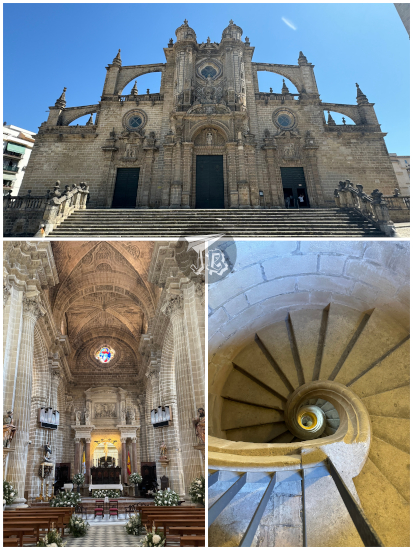
After the show, I hung around for as long as I was allowed to, snooping the horse riding museum and the small palace in the grounds until they closed down and I had to leave. I bought a sandwich and a bottle of water from a supermarket in the way, and went on to the cathedral Catedral de Nuestro Señor San Salvador. The current building was not originally conceived as a cathedral. It was founded in 1778, built between the 17th and 18th centuries, and consecrated as cathedral as recently as 1978. It has a gothic structure, with a Baroque façade and a Neoclassic altarpiece. Behind the altar there is small treasury / museum and a spiral staircase to a secret chapel which is barely the painting of a saint – but the staircase was pretty, it reminded me of the one in the church in Tendilla. I also walked up the tower so I could see the city from above.

Cathedral Jerez de la Frontera

By the time I was on my way back, it was too late to snoop into the farmers’ market Mercado Central Abastos, so I headed directly towards the train station to fight the ticket machine, then headed to Puerto Real. This is a town between Jerez and Cádiz where I used to live. After checking out some places out of nostalgia, I went towards the seaside. It was an eerie feeling, because it had changed very little from what I remembered from almost two decades ago, when I left, and still it was slightly different. I visited the beach Playa de la Cachucha and walked along the promenade Paseo Marítimo until I saw my old university building.

The Andalusian Centre for Marine Studies Centro Superior de Estudios Marinos, CASEM, is a helix-shaped building, originally conceived by Manuel López Vázquez. The building has three “arms” in 120-degree angles, and a glass dome at the centre. It is located in the middle of the natural reserve. However, going there would have made me extremely sad. Thus, I decided to walk back towards the station and take a train back to Cádiz.

Puerto Real: Playa de la Cacucha

Since I had visited the land gates, I also wanted to see the Sea Gate Puerta del Mar, the remains of the entrance to the harbour. Today it is more of a monument than an actual gate, but it is still there.

Cádiz Puerta del Mar

I was able to get there with enough time to head out to the archaeological site Yacimiento Arqueológico Gadir, one of the most important of its kind, since Phoenician settlement remains are far and few. The site, underneath a theatre, has two layers – the original one might date back from the 9th century BCE, with the remains of eight houses, complete with kitchen and oven, and streets. The settlement was destroyed in a fire, which also left two victims, a man and a cat, both of whose remains are exhibited there. The second layer is more recent – a fish processing factory with pools to preserve the product in brine from the Roman domination.

Yacimiento arqueológico de Gadir

Finally, I decided to end the day with a nice dinner. I went to the nearby market Mercado Central de Abastos de Cádiz, which has some eateries that work with local product. However, I did not locate the place I wanted to hit, and ended up distracted by El Viajero del Merkao, a place which advertised bluefin tuna, and offered it in tartar. I combined the tuna tartar with a typical tortillita de camarones, a fried batter made with water, chickpea flour, wheat flour and tiny shrimp, and a not so typical Taco de Cadi, Cadi, a tortillita with guacamole and salsa.

Tortillita de camarones & tuna tartar

I went back to the hotel to have a shower, then I turned in for the night (in a non-ant-infested room now).

12th September 2024: Cádiz {Escapade to Cádiz, September 2024}

My paperwork-related appointment was at 9:30 in Cádiz itself, and I got up around 7:30. I left the hotel, but unfortunately the café where I had expected to have breakfast was closed. Thus, I instead headed out towards the promenade Paseo del Vendaval to see the ocean again. I turned to my right, in the opposite direction from the previous night, and I walked towards the central beach in town – Playa de la Caleta, a mostly-rocky area with tidal ponds and a long bridge called Puente del Hierro which leads to an old castle Castillo de San Esteban. I chased a few birds on the way for photographs. They were not at all cooperative.

I reached the former bathhouse Balneario de Nuestra Señora de la Palma y del Real, built in 1926 from an original design by Enrique García Cañas with one main access and two corridors that form a semicircle towards the ocean, and end in domes. It was build directly onto the beach, in reinforced concrete, with a style gravitating among Art noveau, eastern historicism and local decoration with azulejo tiles. It was abandoned in the 1970s, but restored for administrative use in the 1990s.

I ventured away from the ocean into the narrow streets of Cádiz downtown until I got to the town’s theatre Gran Teatro Falla, in the Neomudejar style. It was built between 1884 and 1905, on and off due to lack of funds, after a design by Adolfo Morales de los Ríos and Adolfo del Castillo Escribano. The theatre is one of the key spots during Carnival festivities. The Cádiz Carnival is one of oldest and most famous in Spain, known for its groups of people who parade the town in costume to sing simple songs that make fun of every- and anything, normally current affairs – coros, cuartetos, comparsas and chirigotas. The great Carnival contest is celebrated in the theatre, and prizes are awarded in each of the categories. The carnival brings in about 400,000 visitors each year. I tried to get to visit the theatre, but I did not manage to do so.
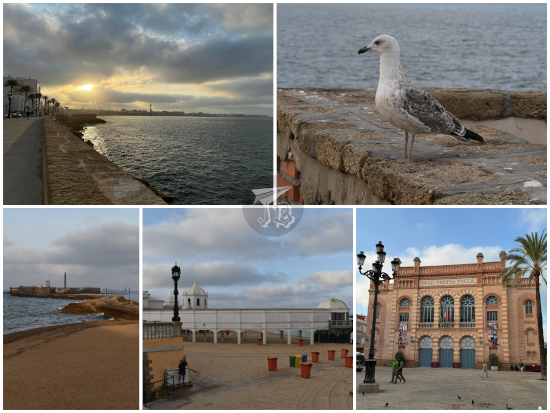
Paseo del Vendaval & Gran Teatro Falla Cádiz

Around 09:15 I decided to try my luck with the paperwork issue, even if it was early for my appointment, and I was successful. Since it was an important document, I ran back to the hotel to drop it there, and then headed off to the square Plaza de La Mina, where the local museum Museo de Cádiz stands.

It is said that Cádiz is the oldest Western city, founded around the 9th century BCE. Mythologically, it is associated with Hercules’ Columns and the city of Tarsis. The oldest archaeological remains date back to the 7th century BCE. The now-peninsula was originally a small archipelago where the Phoenicians settled down as it was a strategic point for commerce and mining of copper and tin, naming the settlement Gadir. It was later conquered by Carthaginians, whose march to Rome led by Hannibal started there. When Carthage lost the war, the city was taken over by Romans and became Gades in the 2nd century BCE.

As the Roman Empire declined, the city was invaded by the Visigoths, then the Byzantine Empire, and again by the Visigoths. In the year 710 CE, it was the first stronghold to fall to the Moorish conquest of Spain. After the Christians took it over again, it became a key point in commerce with the American territories.

In 1755, Cádiz was damaged by a three-wave tsunami caused by the so-called “Lisbon Earthquake”, 8.5 degrees in the Richter scale. In 1812, during the Napoleonic Wars, the Spanish patriots wrote the first Spanish Constitution, and throughout the 19th century, it was key in the numerous wars and battles through the return of Alfonso VII, the Republic and the Restoration of the Monarchy periods. However, during the 20th century, the city decayed suffering from lack of infrastructures, and rampant unemployment. Thus, it is happy to focus on tourism and the money it brings.

The Museo de Cádiz tries to follow this trail of history, but only the archaeological floor was open. The most important artefacts date from the Phoenician, Roman and Moorish periods. Of particular interest are two Phoenician sarcophagi which were found in completely different areas, but are presented as a couple of sorts, and a complete dowry. From Roman times, they exhibit a few dozen amphorae, sculptures and columns. Finally, the remains from the Moorish domination are quite colourful in comparison with everything else. The second floor of the museum was closed, so I was done earlier than expected.
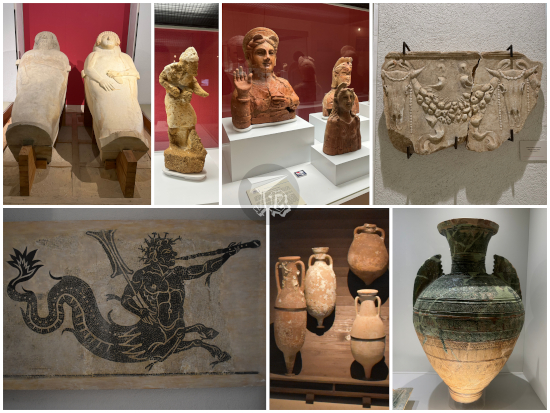
Cádiz Museum

Thus, I decided to push my luck a little and try to get to the archaeological site called Cueva del Pájaro Azul for the 10:30 visit in English. The place is a former flamenco tavern built within the repurposed dry docks of the Phoenician Gadir. Most of the structure has been covered in brick and barely the original shape can be traced back, enough to calculate that the dry docks served war ships. While building new stairs, they did find part of the original Phoenician harbour though, the most important remain that survives. The tavern itself might be considered of minimal historical importance as it was a considerable cultural hub in the 1960s.
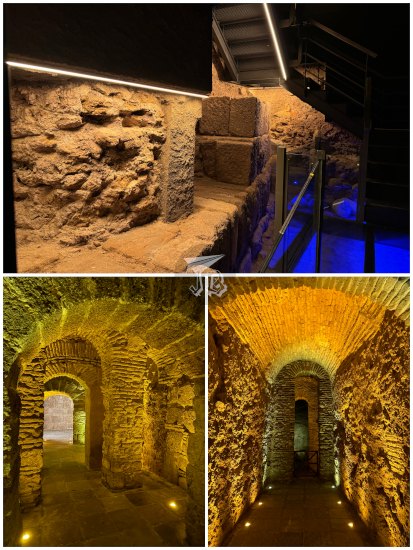
Archaeological site Cueva del Pájaro Azul

To keep in the mood, I decided to visit the archaeological site Yacimiento Arqueológico de Gadir, making a stop for a coffee first. Unfortunately, the site was closed that day. Thus, I decided to check out the Roman Theatre Teatro Romano de Cádiz – it might feel a little back and forth, but distances in central Cádiz are small and I wanted to prioritise Phoenician remains (I said I lived in the area, but all these archaeological remains are newly discovered). The theatre is the second largest one in what was Hispania, and dates from the 1st century BCE. It could host up to 10,000 people, and the stage, stands and the vomitorium (corridor underneath the seats) can be visited. There is an extra room with miniatures of the different stages of the history of the theatre.

Roman Theatre Cádiz

I left behind something called “The Elf’s Alley” Callejón del Duende, the narrowest street in town, now closed off. Very near both the alley and the theatre, I found the old cathedral Catedral Vieja de Cádiz officially Parroquia de Santa Cruz. This was the original cathedral of the town, commissioned by king Alfonso X around 1262. The original building was destroyed during the scuffles between the Spanish and the English at the end of the 16th century, and a new one was erected a few years later in a mixture of the Renaissance and the Baroque styles.
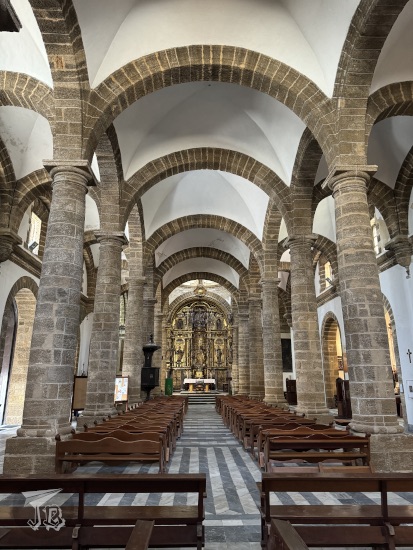
Former cathedral of Cádiz

Next to the old cathedral stands the museum of the cathedral Casa de la Contaduría. The museum comprises a number of rooms disseminated in a conglomerate of buildings dating back from the 16th century – including the tower of the old cathedral and a Mudejar courtyard. The museum holds – obviously – religious items: paintings, sculptures, mass paraphernalia, codexes…
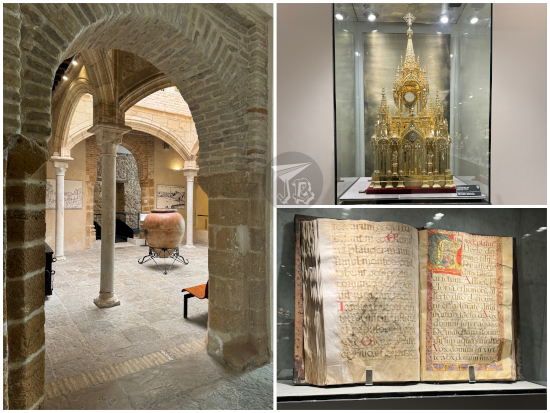
Cathedral Museum Cádiz

Afterwards, I crossed the city centre all over again, and reached the park Parque Genovés, a sort of botanical garden and the largest park in the old town. It has a small lake with a waterfall and a man-made cave with a lookout of the town and the ocean.

Park Parque Genovés in Cádiz

Then, I had booked lunch in the café of the Parador de Cádiz – Hotel Atlántico, a cute not-so-little place called La Tacita del Atlántico. I had set my heart on a grilled urchin dish – erizo de mar relleno y gratinado con huevos de arenque ahumado which I combined with a salmorejo (a creamy soup with a base of tomato and bread, garnished with ham and hard boiled eggs), though the dish had a local twist salmorejo cordobés, huevo y mojama. The urchins were delicious, but the salmorejo was lacking. I liked the idea of exchanging the ham for salt-cured tuna (mojama), but overall I found the food overpriced and the service mediocre. On my way out, I stopped by reception to get my stamp for the Red de Paradores rally.

Lunch at La Tacita del Atlántico

I stayed at Parque Genovés for a bit after lunch, then headed out towards the “new” cathedral Catedral de la Santa Cruz. The cathedral was built between 1722 and 1838, in a mixture of styles – Baroque, Rococo and Neoclassicism. It was erected in an assortment of materials, from noble marble to the humble local piedra ostionera, a sedimentary rock with a high concentration of seashells (biocalcarenite). The interior has three naves, and a Latin cross floor plan, over whose crossing there is a has dome, covered by golden tiles on the outside. The main altar is neoclassical.

Underneath the cathedral stands the crypt, and one of the towers can be ascended, leading to a great view of the town. The tower has very few stairs, most of the way is done on a ramp. Unfortunately, though, the cathedral is in rather poor state, and a net is cast under the ceiling to prevent debris from falling. I also climbed the tower since it was included in my combo ticket.

Cathedral of the Holy Cross in Cádiz

View of Cádiz from the cathedral tower

Behind the cathedral, I found myself back at the promenade Paseo del Vendaval, and I walked towards the beach Playa de la Caleta. In historical times, it was the natural port for Phoenician, Carthaginian and Roman shops, now it is a small-ish beach in the heart of the city. It is located between two of the castles of the old city, and its most characteristic structure is the bath house I saw in the morning.

The beach has a sand area where most people sunbathe, but there is a long bridge separated in two sections – one directly built upon rock, Puente de Hierro and the other with arches to let the water flow through, Puente Canal. At the end of the half-kilometre of bridges, stand the ruins of the castle Castillo de San Sebastián, which today includes a working lighthouse, and an archaeological site. The first structure in the ancient island dates back from 1457, and the castle itself was built in 1706. Though it was warm and sunny, I walked the bridges and around the castle walls.

La Caleta Beach Cádiz & San Sebastián Castle

Upon my “return to mainland”, I passed by the bath house again and I reached a second castle, Castillo de Santa Catalina. The outpost, in the shape of a five-point star, was built towards the end of the 16th century to defend the city form sea warfare. In later years, a church and a sacristy were added, and from the 18th century onwards it was used as a prison. Today, it mostly hosts cultural or cinema-related events.
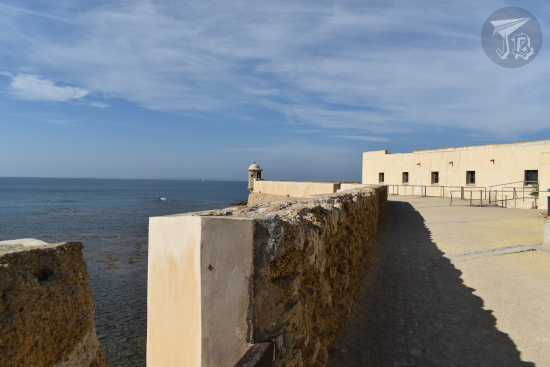
Santa Catalina Castle, Cádiz

I continued on my walk around the city, left behind a knee cramp, the Parador de Cádiz and Parque Genovés until I reached the bulwark Baluarte de la Candelaria and the park Jardines Clara Campoamor. From there, I went on towards a second bulwark and the remains of the city walls Baluarte y Murallas de San Carlos. The bulwark was built towards the end of the 18th century to protect the harbour. Not far from there stands the square Plaza de España with the monument to the 1812 Constitution Monumento a la Constitución de 1812, the political response to the Napoleonic invasion. A bit further away stands the fountain Fuente de la Plaza de las Tortugas, with lots of cute turtles as decoration.

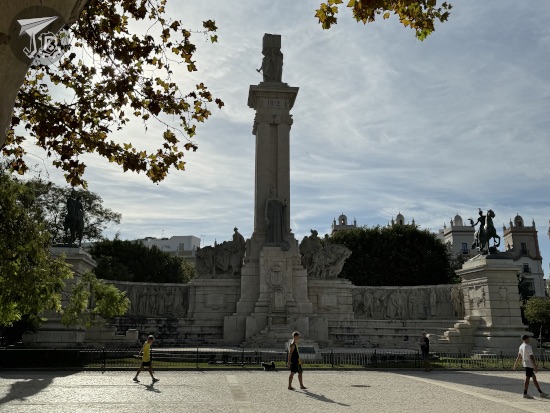
San Carlos Bulwark and Walls Cádiz

Monument to the 1812 Constitution Cádiz

Turtle fountain in Cádiz

At this time I decided to get an early dinner around 18:30, so I bought some fast food to take to the hotel. That is when the ant invasion started. It was something I was not expecting – one or two bugs is workable, but this was a whole nest out for my fries. It was not nice. I decoyed them into bathroom and decided to have the room cleaned the next morning.

I set off again about 20:15 to look for a place to watch the sunset at the beach Playa de la Caleta, which did not disappoint, and I sat there until the sun disappeared beyond the water line. Luckily, I made it today, as it would be ridiculously windy the following day.

Sunset at La Caleta, Cádiz

I then found the street Calle the la Virgen de la Palma, at whose end stands the small church Parroquia de Nuestra Señora de la Palma. It was built in the 18th century and it hosts a sculpture of the Virgin Mary credited with stopping the waters during the 1755 tsunami. In the street, there is a signal marking the highest water point, but there were so many restaurants and people that it was impossible to find it!
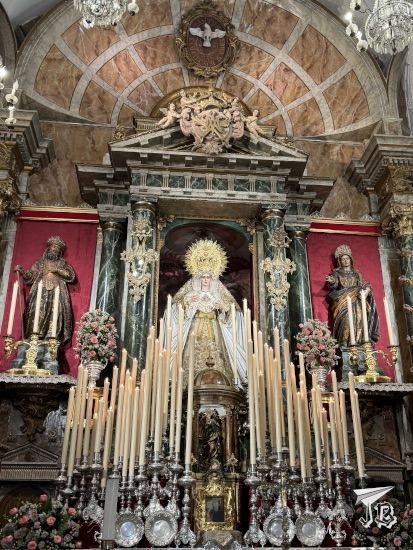
Sculpture of the Virgin Mary

I went back to the hotel afterwards to have some sleep – I was beat. I did manage to make a stop at a supermarket to buy coffee and pastries for breakfast the following morning though. Because one late latte per trip is enough.

11th September 2024: The long way there {Escapade to Cádiz, September 2024}

In order to reach Cádiz, I had to take one commuter train to Madrid Atocha. There, I either needed a high-speed train directly to Cádiz, or a connection via Seville. I chose this last option, because it was less than half the price round trip. The train company RENFE has three types of trains: the commuter trains Cercanías, the long distance system and the medium distance system, and I had to use all three.

Since I worked until the early afternoon, I bought a ticket for the 18:00 AVE (long distance and high speed). In order to be covered by the train company’s delay coverage, my Cercanías train to get to Madrid had to arrive an hour before departure, so at 17:00. The 16:00 train got there at 16:59, and I did not want to get caught in a technicality if there was a problem, so the aim was taking the 15:30 train. In the end, I was able to get on the 15:00 one, which left at around 15:20…

When I bought the ticket, I was issued a QR code which should have allowed me in and out of the commuter train systems as well as the long- and medium-distance ones. However, it just would not work. At first I thought because maybe it was a tad too early, but it turns out… It just did not work on either station – it did not let me either in or out the commuter train system. During the train rides, I had to take care of the process to check in online and get the codes to access the hotel and the room. It was a one-star hotel, the only thing I had found at a reasonable price for three nights that allowed me to check in late – the last train was due to arrive at 22:28. Since they did not have a physical reception, everything was done electronically.

After I talked to someone to let me out in Madrid Atocha, I went for ice-cream outside the station, and a sandwich to go so I could have dinner on the train or after arrival. Then, I went back to check out a magazine shop and buy the September numbers of National Geographic and Muy Interesante, both of which talked about dinosaurs, and there went my idea to be productive during actual travelling time. It turned out all right though, because in three out of the four long rides I ended up seating backwards, which means I get motion-sick if I look at a screen for too long.

After going through security into the AVE boarding area, I tried to find out how to connect with the final train, and I was told that there would be “someone waiting for me to take me to the other train”. I was highly sceptical of this, so once in the AVE I tried again. Once more I was told that there would be someone waiting to signal “connections”.

Guess what? There was nobody. However, I managed to easily find the correct track and my seat with a few minutes to spare – fortunately, I was travelling light. It is possible that the train waited for passengers that were coming from the AVE, but I made it without a problem – I wish I could say without stress. I had however checked online in my hotel, and if I missed the second train, the company would take responsibility, so worst case scenario was having to sleep in Seville on RENFE’s dime, and getting to Cádiz the next morning.

Fortunately though, there were no hiccups. When I finally arrived in Cádiz, about 15 minutes late, I walked towards the hotel, which was less than fifteen minutes on foot. It was around 23:00 when I walked into the room, so the whole trip took about eight hours.

The hotel was a refurbished traditional house built around a patio. The lift – which I used just twice – was just big enough for one person and you had to keep your finger on the button or it would stop. The walls in the common area were covered with azulejo ceramic tiles. The code reader in the main doors reacted quickly. However, it took me a couple of tries to get the code reader at the room working. There were two steps at the room that would threaten my safety if I got distracted – just before and after the door.

The room was bigger than expected for a one-star hotel, it looked reasonably clean, and it had enough sockets. There was a table, which was a little wobbly but did not fall during my stay there, and a small fridge which would be very handy.

What would a normal person do? Eat their sandwich, have a shower and go to bed, right? I did have the sandwich, but almost immediately I went out again. I had to say hello to the Atlantic Ocean. I was closer to the harbour, but instead I crossed the whole city centre until I reached the promenade Paseo del Vendaval, thus called because the little bit of the Atlantic in front of the town is called Mar del Vendaval (Sea of the Gale). The weather was not hot, but humid, and my long sleeves got a bit stuck to my skin. I had forgotten that sensation. I also had a weird feeling of familiarity. A lot of things had changed, but the layout of the town was still the same, so I sort-of knew where I was, though nothing was exactly what I remembered…

Promenade in Cádiz

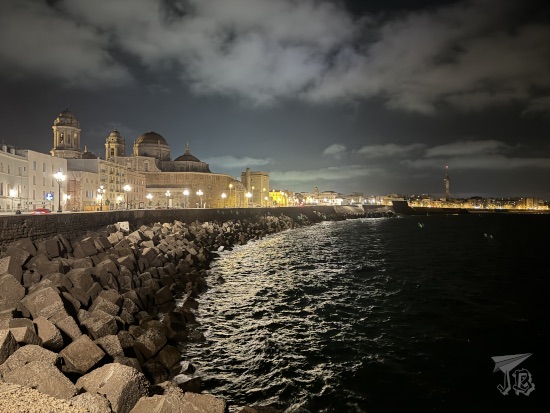
I walked along the promenade and reached the cathedral Catedral de la Santa Cruz, where I hung out a little. Then headed out for the square where the town hall Casa Consistorial stands. It was way past midnight, so I thought I should head back to the hotel. This time I had no problem making either pin code work, and took the stairs to get to my room on the third floor – it was good exercise after so long crammed in a train. I then finally took my shower and went to sleep.

Cádiz at night

11th – 14th September 2024: A trip to Cádiz, Jerez de la Frontera and Puerto Real (Spain) {Escapade to Cádiz, September 2024}

I used to live in the Cádiz area when I was younger, and since life is complicated, both living and leaving there were hard. Thus, although it is a beautiful area, I had never been back until this trip. I was never brave enough – I feared that the bad memories would be too much to deal with.

However, this time around, I had a long weekend and I decided to rip the bandage and get there. There was a piece of paperwork from my time there that had been misplaced and I had been trying to get there to fix the issue online to no avail. It is a long trip, but I thought that if I took a train after work, I would “waste” the afternoon / evening travelling, and then I would have three days to (re)explore. So I left on Wednesday the 11th and returned on Saturday the 14th, both in the late afternoon – leaving me with two days and a half in the area. Even if it was back to school season already, prices were crazy, so spending Saturday night over there would be too expensive – I later found out there was a congress in Cádiz, and an event in the Jerez F1 circuit.

I bought trains from Madrid to Cádiz with a change in Seville. In the outbound trip, I had seven whooping minutes for the change, and for the return journey just about an hour. However, I still had to get to and from Madrid, so in the end it was three trains and around eight hours on the go each time!

Spoiler alert – everything went well. Except the commuter train tickets.

8th September 2024: Dinosaur FOMO (Guadalajara, Spain)

Whenever I’m reasonably close to dinosaur stuff, I have to check it out, I just can’t help myself. About a year ago, I attended DinoExpo XXL in Guadalajara, which turned out to be rather disappointing. Apparently, the town hosts dinosaur exhibits in time with the yearly festivals – they must be profitable. I read about Dinosaurs Tour (or Jurassic Expo, according to the banners), and I thought I would skip it, but in the end… in the end I just had to go and see it, because the Fear of Missing Out was strong. Maybe this time over it would be cool…

The exhibit was small, and while some of the models were correctly covered with feathers, a few were mislabelled to conform to the popular imaginary (way more of a cash cow than anything scientific). The usual suspects were Tyrannosaurus Rex, brachiosaurus, pachycephalosaurus, iguanodon, parasaurolophus… For some reason, there was a stegosaurus half climbing a tree, and a few Jurassic Park inspired reproductions: questionably-represented dilophosaurus and too-big velociraptors. Something new was a sarcosuchus, a giant crocodile ancestor. Oh, and something I was completely unable to identify… like a diplodocus with a beak and spikes… Maybe it tried to be a homage to Littlefoot?

Dinosaur Tour Guadalajara

The lights made everything look weird, too, because there was a lot of colourful – pink, blue, green – lighting which made it for a very disco-like atmosphere. It was not a big or good exhibit – not even the toddlers were extremely impressed, but as I said: Fear Of Missing Out gets the best out of me when it’s about dinosaurs. Next time though, I’ll try to get over the FOMO, because I think they’ll just bring a wall lizard and call it a Velociraptor.

27th August 2024: Arganzuela Greenhouse, British Cemetery and a ‘palaeontological site’, Madrid (Spain)

I have been feeling dizzy on and off these last few months, so I’m avoiding long drives – that has left me dependent on public transport, which is not too reliable. Thus, instead of all the hikes I wanted to take, I’ve been doing day trips to Madrid.

My first stop was in the district of Arganzuela. Although I’ve been to Matadero a few times before, I had never wandered to the side, where a boring-looking metal roof peeked over some trees. I recently discovered that I should have ventured beyond the brick walls that close the Matadero area. This building is called Arganzuela Crystal Palace Palacio de Cristal de la Arganzuela, and is an example of the wrought iron functional architecture of the early 20th century.

Invernadero de Arganzuela - structure

The building was designed by Luis Bellido y González and erected between 1908 and 1928 as a vegetable warehouse. In 1992, the building was remodelled – the wrought iron structure was consolidated and the original fibre cement panels were substituted by glass ones. The warehouse, 7,100 square metres, was divided into different sections, each one transformed into a different greenhouse: two for tropical plants, one for subtropical species, and the last one for desert plats and cacti. The centre has four long fountains with tiny sprouts and waterfalls. I expected a few plants to be in second bloom, but apparently that does not work for tropical or desert species?

Invernadero de Arganzuela - inside

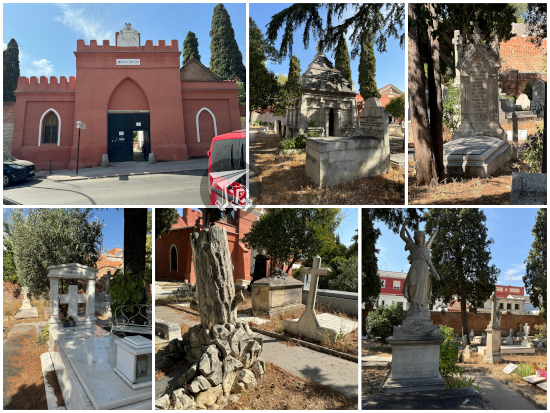
I then hopped onto the underground towards the district of Carabanchel, where I could visit an unusual place – the British Cemetery Cementerio Británico de Madrid. Around 1854, the British government bought the terrain with the intention to turn it into a cemetery, since during that time Catholic cemeteries did not accept interments from other denominations.

The burial ground hosts about 600 graves and about 1,000 tombs, most of them British citizens – but there are also Americans, Germans, Swiss and French, even some Spanish. Though it is now closed to new burials, in the 20th century it was open to non-Christians. Inscriptions on the markers are in Latin, English, French, German, Hebrew, Cyrillic and Spanish. Some of the people buried here include part of the Georgian royal family, historian Alice Bache Gould y Quincy, members of the fashion family Loewe, photographer Charles Clifford… There is also a memorial to the American soldiers who died in a plane accident. There is only one pantheon, belonging to the Bauer family – owners of an important commercial emporium in the 19th century.

British Cemetery Madrid

I have to say that the charm of a Victorian cemetery fades more than a little in the middle of the Spanish plateau’s scorching summer. Though there are several artistic markers – ever-present angels, a couple of tree trunks, and a very gothic grave – most of them are simple headstones with a cross or just a name. One of the graves asked a good question: If good things lasted forever, would we appreciate how precious they are? All in all, it was a quaint little cemetery that felt slightly out of place in the middle of Madrid.

Afterwards, I went back into the underground. The cemetery is a couple of stops away from Carpetana. On the connection, I got checked for a ticket, sort of – they were controlling that passengers had a valid ticket, and just as the train was arriving they waved me through, maybe not complaining about it and just looking for the card made me trustworthy or something? (For the record, I did have a ticket). Anyway, I reached my destination in about 10 minutes or so. When they were working on the Carpetana underground station, they found a few fossilised bones and jaws, and they have turned it into another of the spots of Museos de Metro de Madrid – palaeontological site Yacimiento Paleontológico de Carpetana. I saw reproductions a few mammal jaws and took a picture. Good thing I was close, this would not have warranted a trip from further away.

Reproduction of the prehistorical habitat of Carpetana

I had a reservation for late lunch, but I decided to cancel it. I wanted to check a shop for something I needed, and that would take me in the complete opposite direction from the restaurant. Instead, after the shop, I grabbed a Matcha Frappuchino and headed back to the train station to return home.

Starbucks Matcha Frapuccino with a lot of whipped cream

20th August 2024: The VIP treatment in Tendilla (Spain)

The catholic church in Tendilla is dedicated to the Assumption of Mary, thus the name Iglesia de la Asunción. It was designed in the 14th century CE, financed with money from the Mendoza family, one of the most important clans at the moment. It was projected as a great work, possibly the biggest church in the area – though Tendilla is a tiny hamlet now, it was an important villa during the Middle Ages, and the counts that ruled the enclave were very invested in it.

Church of the Assumption of Mary in Tendilla

The church was never finished – construction went on and off until the 19th century, when it was finally given up. Only one tower was erected, though two were projected, and this bell tower is separated from the building by a patio. The open area is actually a part of the nave that was not built in the end. The interior was decorated with a Baroque altarpiece, which still stands today.

Though still in use, the church has been gravely affected by time. The façade has greatly deteriorated in the last thirty years or so. The false floors have started collapsing and the roof is in dire need of repairs. The village is working on raising funds for a renovation.

A couple of relatives are very involved in the process, and at some point they offered to show me the inner areas of the church. I accepted, and was given the real VIP tour – they opened the church just for me too!

The temple is mostly Romanesque in style, aside from the Baroque altarpiece. The modern altar has been refurbished in marble. The altarpiece is golden wood, Baroque with columns, paintings and sculptures. To both sides of the altar, there are small rooms, connected to each other underneath the altar stairs. One of them has been transformed into the sacristy, the other one used to be an office, but now it is not in use because the floor is collapsing. Behind the altar, these two rooms give way to spiral staircases that ascend to the upper spaces, called La Gloria – Glory – and El Infierno – Hell – both of them unfortunately very abandoned and covered with pigeon excrement, feathers, rest of nests, and even dead pigeons. We climbed up to the Glory, but the Hell staircase is a bit unstable and crumbly, so we did not get far on that one. I scared the hell out of a pigeon though – it was mutual.

Church of the Assumption of Mary in Tendilla

Church of the Assumption of Mary in Tendilla

I climbed to the choir for a couple of pictures, and then we went up the bell tower together. It was a bit thrilling to do so, because I’ve seen that tower very often, but never gone up. It was all in all really cool – especially being alone and allowed complete freedom of pictures, including lightning and flash.

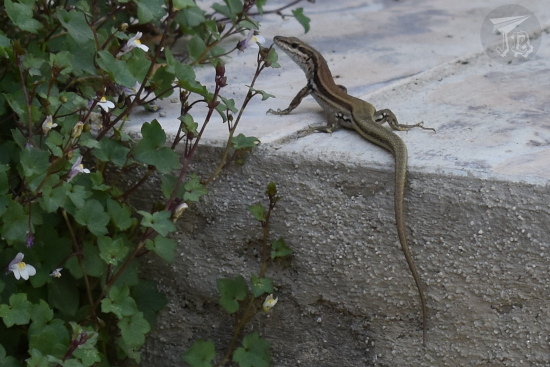
Afterwards, we went to the family home and had lunch. Later, in the yard, we “hunted” for the local fauna, including wasps, damselflies and wall lizards.

Wall lizard

Damselfly

11th August 2024: A road trip with three stops around Madrid (Spain)

Just like I kept trying to book a visit to the hall at Pacífico, I had been after a Burrolandia timeslot for a while. Burrolandia reservations are free, and the “tickets” are released around 9:00 on Monday mornings. I did not want to go in the middle of the winter as it is an open place, but when the weather became nicer, I was never around to book a spot before they ran out. Nevertheless, the Madrid area gets rather empty in August, so I could finally secure a visit. Once that was taken care of, I found myself facing another issue – after the pandemic, I developed a literal hay-fever, and straw makes me feel rather miserable. I’ve got tablets for that, but I should not drive after taking one.

Thus, I roped my sibling into driving for the day, because they are a fan of everything equine.

The non-profit Burrolandia – “Donkeyland” – is an animal protection organisation. It was founded in 1996 as a sanctuary / rescue for retired donkeys, mules (offspring of a donkey stallion and a horse mare) and hinnies (offspring of a horse stallion and a donkey mare, or jenny). Donkeys (Equus asinus) were domesticated from the African wild ass some 6, 000 years ago. There are millions of donkeys in the world, most of them kept as working animals in developing countries – however, as machinery substituted them, the number of donkeys in Europe plummeted. Burrolandia is involved in maintaining the species and the different Spanish sub-breeds.

The rescue is located at the end of a pretty run-down road in Tres Cantos, a municipality so close to Madrid that it could be a neighbourhood. The venue itself is mostly an open area where the resident animals get to interact with visitors, many of them freely. Besides the donkeys, mules and hinnies that the association has taken in, there are horses, a pony, goats, sheep, pot-bellied pigs, hens, geese, ducks, peafowl, helmeted guinea fowl, a deer doe, an ankole-watusi cow, a few dogs and a cat. Burrolandia is open to the public on Sundays, usually in two two-hour turns, one at 10:00 and the other at 12:30. Visitors can buy a bag of goodies to feed the animals for a nominal price to support the non-profit, get merchandise, or directly donate.

Donkey, goat, hinneys and mules, horse

Cow, black rooster, cat, sheep, hinney, deer

There are fewer visitors in August and it was easier to get tickets and for the day, there was only one long timeslot from 10:00 to 14:00. We arrived a few minutes after opening time, and I was surprised at how high “low demand” actually was. There were maybe twenty to thirty cars already there, with a ton of families with toddlers and kids going nuts about… the dogs, in most cases. Most kids were terrified of donkeys, though they were smaller than I had imagined. I would have expected them to be closer to a horse size, so I think that most of what I grew up considering “donkeys” were mules. Live and learn…

Burrolandia bans bringing food for the animals – both to control what the animals are fed, and as fundraising tool. We bought a bag of veggies, which contained mostly carrot, celery, some lettuce and a piece of dry bread. The donkeys, goats and sheep were all ambling outside, but most the mules, hinnies and horses were in “donkey jail” behind the fences. You could still feed them though, but they are bigger and possibly less docile than the smaller donkeys which roamed free. They were all very acquainted with the brown paper bags with the treats though, which made them very friendly. In general, I was reminded more of the Okunoshima bunnies than the Nara deer, even if one of the mules did get a bite out of my finger, and the baby goats kept trying to climb onto us. My sibling had the great idea to use some of their riding gloves to pet and feed the animals.

Feeding donkeys and goats

We stayed for about an hour and a half, and then moved on to Las Rozas de Madrid, another village in the area known for nothing except for the high-end “open shopping mall”, a street full of outlet brand-fashion boutiques selling discounted items. I had heard on and on how fantastic Las Rozas Village was. There are specific bus tours from Madrid that take tourists to the mall and back.

We parked the car in another shopping centre, Heron City Las Rozas, where we changed clothes and shoes because… we did not trust ourselves with the barn smell. We walked into the Village, and I don’t know what I was expecting, but for sure something with a big more… grandiose I guess. To my surprise, the shops were almost empty (both of produce, and customers) and every second shop was a Scalpers… I have to say I was quite underwhelmed. We did not even find a nice place to grab a bite to eat. Furthermore, I heard at least three other people commenting the same thing – they had heard a lot about the mall and it was disappointed.

Entrance to Las Rozas Village

We ended up having lunch back in Heron City Las Rozas. We found a Japanese chain restaurant named Sumo, a sort of buffet with a flat rate for a number of dishes. Since it was still quite early – and again, August – the place was mostly empty – we had sushi, takoyaki, wakame salad, and some gyoza. As dessert was not included, afterwards we went to Starbucks to have a matcha drink, named after a House of Dragon character for some publicity stunt – Dracarys Matcha Frappuccino. It was a cold matcha latte with white chocolate cream on top, to which I added some vanilla, just because I could, and it was a great idea. I think the matcha with strawberry cream on top was a better combination, but apparently that one was only available in spring. I guess I’ll have to try the standard Matcha Frappuccino at some point.

We went on to our last stop for the day. Xanadú is a shopping mall in Arroyomolinos, home to Atlantis Aquarium Madrid, a smallish oceanarium. Upon entering, you go down some stairs, and the first area are Rivers and Mangroves, with some mudskippers, and cute shiny fish. Actually, the first tank the visitor encounters hosts a shoal of red-bellied piranhas (Pygocentrus nattereri). Of course, there are a few axolotls (Ambystoma mexicanum) too.

Piranhas, discfish, axolotl, mangrove fish

Then come the Mediterranean anemones, jellyfish, starfish… Afterwards are the Tropical Reefs with the usual suspects – who does not try to find Nemo among the clownfish? There are also butterflyfish, surgeonfish, and of course all the corals. The Open Sea area, a typical central tank, has few species of sharks – blacktip sharks, grey reef sharks, bonnetheads, longtail carpet sharks… There are also rays and loggerhead sea turtles. In between the different views of the central tank are the penguins, which were pretty photogenic! The last area had a few small tanks with Coastal Ecosystems – anemones, sea cucumbers and hermit crabs mostly. Staff had put out some glass shells for the latter to move into, which was fun.

Anemones, clownfish, shark and penguins

Atlantis: hermit crab and sharks

The gift shop had a lot of cute souvenirs, and afterwards we walked around the rest of the mall for a while, had a smoothie, and eventually drove off. It was a good day, with lots of cute animals, some of which I even got to pat. Not the sharks, sadly, but I made a lot of donkey friends, even if they only liked me for my vegetables and stale bread.

8th August 2024: The Museums in Moncloa (Madrid, Spain)

It’s quite hot out there, but I decided to hit a couple of museums in Madrid. A few months back, I got a card for the national museums, thinking I was getting a better deal than I did. Though it is true that you can get enter (most of) the national museums for free, you have to ID yourself, so you still have to queue, which is what I was expecting to avoid. However, it has at least pushed me to try and see a couple of museums I would not really visit (or even be aware of!) otherwise.

There are two museums in the district of Moncloa-Aravaca, an area I’m not usually around. One, I was curious about. The other is one I would not have even considered without the card: the Costume or Fashion Museum and Ethnographic Heritage Research Centre Museo del traje. Centro de Investigación del Patrimonio Etnológico (CIPE). It is a collection of pieces of clothing, textiles and accessories from the 17th century onwards, and I’m sure it is amazing if you know anything about fashion… which I don’t. The museum is organised chronologically, with a few pieces from the Middle Ages, then fabrics, costumes and complements since they became a thing.

There is also a collection of traditional outfits from different regions throughout Spain. The visit finishes with some of the big names in fashion, including Coco Chanel, Balenciaga, or Christian Dior. There was also an area for visually-impaired visitors, which allowed them to touch mannequins and fabrics from different style periods in history.

Costume and Fashion Museum Madrid

They were running a temporary exhibition called Vistiendo un jardín (Wearing a garden). It deals with the nature and flowers in fabric and costumes from the Baroque period onwards. They were in the middle of a guided visit so there was a big group, and I could only have a quick walk.

Wearing a garden Temporary exhibition

I walked over to the museum of the Americas Museo de América. The institution exhibits archaeological and ethnographical artefacts from the Americas, alongside art from the Palaeolithic period to the present, with a strong presence of Colonial art.

The origin of the collection was the Royal Cabinet of Natural history that Charles III had established in 1771. The collection increased with objects brought from discovery expeditions and Spanish colonies in America, especially those unearthed during archaeological excavations. In 1815, the science artefacts from the cabinet were integrated into what became the National Museum of Natural Sciences, and in 1868 the antiquities, ethnography, and art were transferred to the Museum of Archaeology. In 1941, the American artefacts were transferred to the newly formed museum. A more recent source has been that of donation and legacies.

Nowadays, the collection comprises around 25,000 artefacts and about 2,500 of them are exhibited – though the most important ones are copies due to “conservation issues”. The archaeological artefacts include Mayan, Inca, Aztec, Nazca, Amazonian, and even from North American native cultures who lived in what we now call the Great Plains or Alaska. The Colonial art pieces mostly include religious art and what is called pintura de castas, which tries to represent the appearance and daily life of the peoples of mixed race, descendants of European, African and Indigenous inhabitants of the colonies. There is also a ward dedicated to modern art and social criticism against colonisation. I found the organisation of the museum a bit strange, by theme areas instead of time-and-place.

Artefacts from the Museum of the Americas

Arguably, the most important group of pieces that the museum exhibits is the so-called Tesoro de los Quimbayas (Quimbaya Treasure). The Quimbayas were a small indigenous group from precolonial America, who lived south of what is now Medellín, Colombia. They were known for their works in gold and an alloy of copper and gold called tumbaga. The treasure comprises 122 pieces, which represent about one fifth of the original findings. It is believed that the belonged to two sets of grave goods, and dates from the 5th or 6th centuries CE. The treasure was dug up during the Colombian gold fever, when archaeological items were sold for their weight in gold. The artefacts include figures, crowns, jewellery (nose- and ear-ornament, necklace beads, pins, pendants), containers, ceremonial vessels and poporos (used to keep coca leaves for religious ceremonies), and musical items such as bells.

Quimbaya treasure

I actually had been thinking about staying in Madrid and do something else, like the observatory known as Faro de Moncloa, which is literally next to the Museum of the Americas. Or a nice themed restaurant or something. But it was ridiculously hot and I just did not feel like it. It was early for lunch too, but by the time I got anywhere cool, it would be right in the middle of the rush. So I just went back into the transport system. Of course, the train was delayed. I need to stop planning around the official train schedules, especially around food times…

27th July 2024: Staying inside in Madrid’s heat (Spain)

I was so excited when I found tickets for the historical hall at Pacífico station that I did not stop to think I had booked for late July, at 16:00, in Madrid. The heat wave was an extra, but even without it, the Spanish central plateau is not precisely known for its mild summers. However, the hall only opens once a month, and not every month, and I had never been able to find a ticket on a weekend I could go, so honestly – when I saw these tickets, I did not think about the weather, just… that I could come.

The day came, and Madrid had a heat alert. It was around 37 ºC, and I thought I would stay inside, and just head out for the visit. Unfortunately, since trains are being horrible, I needed to take one with at least an hour’s berth to make sure I reached the underground station Estación de Pacífico. When I arrived, I looked around to finally realise that the hall was at the actual platform, warded off by a very modern nondescript door. I had brought a book to pass the time, because I knew I would either have a lot of time, or I would be stressed because the train was late. I found a bench and settled down to wait somewhere I could keep an eye on the door. Visitors are not directly admitted into the hall, but they are cleared at ticket control on the other side of the platform, then go back all the way to the entrance. In our case, we waited for a bit, and the guide decided to head through the platform right as a train arrived, so everything was full. Spanish logic.

The former hall Vestíbulo de Pacífico is part of the network of Underground museums Museos de Metro de Madrid. Until it was walled off in 1966, it was the entrance to the station Estación de Pacífico, built in 1923 when the underground Line 1 was extended towards the south-west. The passengers climbed down a now-disappeared staircase and crossed the hall, which still had natural light. On the other side, there was some sort of metallic bridge with another set of stairs to access the platforms.

The station used to be part of a huge complex owned by Metro, which also comprised offices, control rooms, and the warehouse that housed the engines that created energy for the trains to run on. At the time, it was an unpopulated area, so land was cheaper. Today, most everything has been replaced by apartment buildings and only the station and the nearby Nave de Motores remain.

The whole complex was designed by architect Antonio Palacios, and the hall was built in white tiles with blue decoration – a homage to the Pacific Ocean, which gives the station its name. The hall is tiny by today’s standards, barely 119 square metres. It has three vaults that used to have skylights for the sun to light up the hall – now those are closed off as the street above them is busy. The station was renovated in the 60s so it could accommodate the longer trains, new accesses were built, and the hall closed down. That renovation was the same that made the station Estación de Chamberí close, and apparently another hall that has been uncovered in Ventas.

The hall was bricked away for almost half a century, until restoration work started in 2007. It took ten years, as budget was low and the process was labour intense – 60% of the hall had to be rebuilt. However, the final product is really good, you can see the newer tiles if you look for them, but the whole thing feels extremely well preserved. Even the staircase, which was built to access the hall after the iron bridge was destroyed, feels time-appropriate. A replica of the original doors was put up.

Pacífico Booking Hall

And right when I have seen all the five Underground museums that require appointment… I find out there is a passport of them – Pasaporte de Pasaporte de los Museos de Metro. Just my luck! Then again, maybe Metro will take these articles as proof of visit and backstamp me for them?

The visit took about one hour, then I rode the underground back towards Atocha, and bypassed it to the next station. I had decided to try my luck with the queue at modern art museum Museo Nacional Centro de Arte Reina Sofía, part of the national network of museums covered by my card. To be honest, I do not enjoy modern art that much, so I have been putting off this one visit. However, the museum holds a piece by Pablo Picasso that has become quite socially loaded – Picasso’s Guernica, which I have always thought I ought to see at least once.

Pablo Picasso (1881 – 1973) is considered one of the most important artists of the 20th century. He was co-inventor of collage, co-founder of Cubism, and inventor of the assemblage (basically, collage in 3D). He painted, sculpted, and made prints, ceramics and theatre sets. I have never connected much, if at all, with the kind of art he was making. I do not really understand the limits he broke, nor whatever he wanted to express. That is why I wanted to see this artwork in particular – to try to understand.

Arguably Picasso’s most famous painting is Guernica (1937). During the Spanish Civil War, German planes bombed the Basque town of Guernica, in the north of Spain, to aid the Nationalist army. The town was destroyed, and up to 300 people lost their lives – the raid opened the northern front for Franco to reach Bilbao. British reporter George Steer wrote a scoop on the event after he witnessed the destruction, and his reports made waves internationally. Picasso, who lived in France at the time, had been commissioned a piece of artwork for the Paris World’s Fair by the Republicans (at the time the rightful government of Spain). Upon reading the news, he scrapped his original idea and painted the Guernica instead.

The painting is one of the most important artworks that the museum has. It is a huge piece, in black and white, showing the carnage. As most men were out in the battleground, the majority of victims were women and children – along with a dead soldier, a horse and a bull, most of the figures in the pairing represent women and horror. I honestly find the description of the painting more chilly that the artwork itself.

One kind of feels that the museum itself as built as a huge sarcophagus for the Guernica, and other pieces are there just to fill up the space. A sculpture by Eduardo Chillida is exhibited in the gardens. There is also a space about architecture, with blueprints and photographs, including artwork by Le Corbusier. Other artists whose work is shown include Salvador Dalí, Joan Miró, Alexander Calder… Actually, I enjoyed the museum more than I thought, as I expected only abstract art that I would not understand. I enjoyed the blueprints and photographs of buildings, and the actual building too.

Exhibits at Museum Reina Sofía

I then headed up Paseo del Prado to find one of the local cultural centres. I was ridiculously amused when I reached the corner where CaixaForum stands. I was on my phone, and when I looked up, I saw the Patagotitan “looking” at me. It gave me a laugh.

Patagotiatan at Caixaforum

The cultural centre Serrería Belga is running a Japan-themed exhibit, divided in parts:

  • Kinpaku. Naturaleza, poder e imaginación en el arte japonés (Kinpaku: Nature, power and imagination in Japanese art): Kinpaku [金箔] refers to gold leaf artwork, often used in decoration in classical Japanese culture. A private collector has lent their items to exhibit – windscreens and fans, all painted in gold, so they can be enjoyed by everyone.
  • Kimono, identidad cambiante: un siglo a pie de calle (Kimono, changing identities: a century on the streets): Kimono [着物] is the traditional Japanese clothing – one that unlike many others is still common wear. There were twenty of these, including accessories.
  • Expokon: A series of panels discussing different hits in sports manga and derivatives.
  • Japan International Manga Award: Panels drawn by the Spanish artists who have won the awards in different years.
  • Kamishibai: Kamishibai [紙芝居] is (was) a form of Japanese street theatre using a small paper theatre with pictures to tell the stories. There were several sets of stories, some classical, some more modern.
  • Manga Kids Academy: A few panels showing Japanese school life through manga and anime.
  • Itadakimanga!: A series of panels showing different foods popular in manga and anime.
  • Gêmu: cultura visual y videojuego japonés (Gēmu: visual culture and Japanese video games): Some items regarding video games, and even a few arcade machines for playing.

Japanese exhibits at Serrería Belga

The exhibits were part of Madrid’s summer cultural program, which has named Japan “Guest Country”. They were a few cute little exhibits, and they were free too, so a good way to complete half a day trip. I headed back to the station afterwards, to wait for whichever train came, and I was lucky enough that one was there in a couple of minutes – I even found a good seat on my way back.

And I have finally seen the hall at Pacífico, which has been a goal since April 2023. Now I just have to figure out a way to obtain the passport and have it stamped…

21st July 2024: From the Sea to the Butterfly (Madrid, Spain)

When planning for the day, the one thing I did not count on was the heat wave. I did take into account problems with trains, but apparently a half-hour delay is a non-issue by now and not worth mentioning. I reached Madrid around 12:30, and I had a reservation at 13:00 for a themed restaurant which had caught my eye when I saw it online. It was honestly a big disappointment, though I refused to let it ruin my day.

The restaurant is called Bestial, and it is ocean-themed. The pictures were awesome, it looked super cool, and I was pretty excited to go there. However, the experience was mediocre at best – I guess solo travellers are not their target audience, and it showed. As I was mainly ignored, I could watch how the restaurant worked. The waiters got the tables mixed up a few times, and they allowed others to take pictures with cocktails that were not theirs – that was weird, and I am pretty sure that against health code. I ordered a lemonade – the best thing – a tuna tartar and a crab bao without coriander, after checking that the coriander could be taken out. The tuna was tasteless, and the bao did have taste… coriander. All in all, I was not impressed by the food, even less by the service. Between the two dishes there were about 35 minutes waiting, and after an hour I just gave up and asked for the check, which was brought in a little book… and dropped halfway, then picked up from the floor… I just paid – the meal was not cheap – and left without dessert. A pity, really, but I really did not care any more.

Restaurante Bestial by Rosi La Loca

It was ridiculously early for my 16:00 visit, but I wanted to try my luck. I had chosen that day because CaixaForum Madrid was running two exhibitions that I wanted to see – Patagonian dinosaurs (which had just opened) and The Science of Pixar (which would end soon). The exhibition centre was booked out, so I could not sneak in before my time slot, but I managed to get my most burning question answered – how on earth were they going to fit a Patagotitan inside CaixaForum? Answer: they did not. They placed it outside, which was a fun surprise!

Patagotitan skeleton in front of CaixaForum Madrid

Since I had about an hour and a half, I decided to trot over to the painting museum Museo del Prado, part of the national network of museums, which I can access with my one-year card. I thought I might be luckier and the queue to enter without a reservation would work better. Indeed, I did not have to wait indeed, and I could have a look at a few of the masterpieces the collection holds (though not take photographs) – Francisco de Goya, Joaquín Sorolla, Diego Velázquez, Esteban Murillo, Fra Angelico, Hieronymus Bosch… Of course, not all the masters, because El Prado is enormous. It is also air-conditioned, and surprisingly, not as full as I half-expected. There was a queue when I came out, so I guess it worked out well!

I walked back to CaixaForum Madrid to see the two exhibitions I had booked. It was a bit before 16:00, but this time I did not ask, and just walked into the first exhibition – “Patagonian Dinosaurs”: Dinosaurios de la Patagonia, which had very little new information, and even fewer actual fossils, but a lot of dinosaur reconstructions. Those were cool. Aside from the Patagotitan mayorum placed outside, there were full skeleton replicas of Herrerasaurus ischigualastensis, Eoabelisaurus mefi, Leonerasaurus taquetrensis, Eoraptor lunensis, Condorraptor currumili, Brachytrachelopan mesai, Amargasaurus cazaui, Tyrannotitan chubutensis, Neuquensaurus australis, Carnotaurus sastrei, Gasparinisaura cincosaltensis and Manidens condorensis. There was also a Giganotosaurus carolinii skull. As for the real thing, a femur, a shoulder plate and a forelimb of Patagotitan, some teeth and vertebrae and a few invertebrates and leaves. It was really cool, and not extremely crowded for a dinosaur exhibit in summer. It was only the third day of the exhibit, so maybe it was not that well publicised yet? Out of the new species I discovered, Amargasaurus was my favourite – with the neck spikes it looked exactly like I would have imagined a dragon.

Patagonian Dinosaurs

Patagotitan front and back legs, along with a huge shoulderblade

The other exhibition that ran at the time was “The Science of Pixar”: La Ciencia de Pixar. It felt like a nerdy companion to Mundo Pixar, focusing on the maths and the process to create a Pixar film. Unfortunately, it was bustling with kids who – understandably – just wanted to smash buttons and make things light up. The exhibition had a lot of cool machines which simulate the different steps of creating a computer-animated film – rigging, modelling, lighting, rendering… The most interesting was an analysis called “What colour is this pixel?” taking into account movement, lights, shadows… It must be amazing to be able to visit the exhibit alone and be able to play with all the computers. I did find one where you get to simulate crowds using shoals of fish (from Finding Nemo) and I played with that for a while. There were also a few life-sized models from several films, miniatures and 3D mini-sculptures.

La Ciencia de Pixar

I left the venue after browsing the shop, and I walked down towards the theatre. It was still early, and I wanted to hit a couple of shops. Actually, I wanted to go to what is commonly known as the Primark flagship shop. The building Edificio Gran Vía 32 was originally erected in the 1920s to host the first department store in Madrid, Almacenes Madrid-París. It was designed by architect Teodoro de Anasagasti and used the most modern technology and materials at the time – reinforced concrete in the avant-garde style. The whole interior is built around an octagonal lightwell with a central staircase, and today the lowest four floors have been turned into the Primark shop, which has fitted screens and lightings while keeping the previous structures and railings. The modernisation project was undertaken by architectural studio RCCyP and it took three years until the shop opened in 2015.

Interior of Edificio Gran Vía 32

I continued off towards the theatre Teatro Real. I had a bit of time and some unspent calorie budget, so I decided to splurge at Starbucks with a whipped-cream Frappe for my pre-show snack. For the same price I had awesome third floor for Carmina Burana, I had a fifth-floor-in-the-back paradise ticket now. However, it was a lone seat with a great view, so I am not going to complain. I was going to watch the opera Madama Butterfly by Italian composer Giacomo Puccini – and sometimes I think that the better the singers are, the worse time I have with this show.

Madama Butterfly Promo

The main character is Cio-cio, a name that when pronounced in Italian sounds similar to 蝶々, [Choucho], butterfly in Japanese. When she is 15 years old, in 1904, Cio-cio marries an American navy man, Pinkerton, who intends to leave her and find a ‘decent’ American wife. Cio-cio is repudiated by her whole family when she converts to Christianity for her marriage. Three years later, she is alone, almost bankrupt, the mother of Pinkerton’s child, and a marriage broker is trying to sell her off to another prospective husband. Pinkerton returns to Japan with his American wife, who agrees to raise the child, but he cannot face Cio-cio because he is a coward. She (spoiler alert) prepares their son to go with him, then commits seppuku.

And even a bigger spoiler alert, I hate Pinkerton. Viscerally. My parents tried to start me into opera way too young to understand plots, I feel, and I did not want to do anything to do with it for a long time. However, at one point I wanted to see Madama Butterfly due to it taking place in Japan – being older helps, and I slowly learnt to appreciate the musical genre. Basically, by hating on Pinkerton.

Apparently, Teatro Real is known for its alternative settings and takes on classical operas. In this case, they let go of the old Japanese cottage in order to use… a modern-ish undisclosed Asian country. There was an overpass with Chinese signage, a billboard with McDonald’s and Bailey’s spoofs in Japanese (that did not make any sense), and the traditional cottage was exchanged for a greenhouse of sorts. There is a scene in the traditional opera in which the characters fill the house with flowers. In this case, they coloured the glass panes with hand paint. It was a great show.

Cast:

  • Cio-Cio-san: Ailyn Pérez
  • Suzuki: Nino Surguladze
  • F.B. Pinkerton: Charles Castronovo
  • Sharpless: Lucas Meachem
  • Goro: Moisés Marín

Artistic team:

  • Musical conductor: Nicola Luisotti
  • Stage direction: Damiano Michieletto
  • Set design: Paolo Fantin

Madama Butterfly Teatro Real

The show finished around 22:20. I walked up Arenal Street towards Sol. While I missed my first train because some people love to take up space while walking slowly, I made it for a good connection at Atocha, and I was actually home before midnight.

6th July 2024: O fortuna! (Madrid, Spain)

A couple of days before going to London to see Kamijo, I found out that a local music non-profit was staging Carmina Burana by Carl Orff in Madrid. Buying tickets (for that, and the upcoming opera Madama Butterfly) broke havoc with my credit cards, but everything was eventually fixed – I think. It had me stressed at the beginning of that trip, but it seems to be finally fixed. Again. I did have to miss Swan Lake in London because the credit cards would not go through.
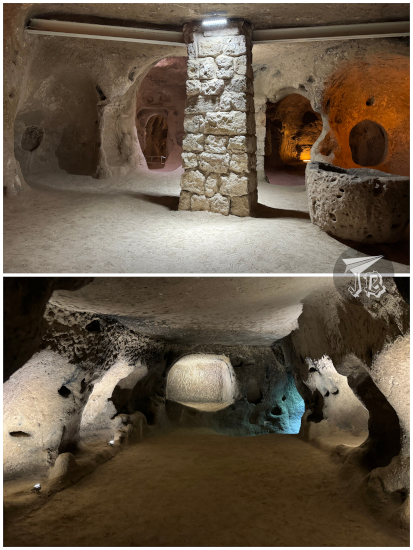
Anyway, I had my ticket and though I would have loved to spend the day out, I was too ridiculously tired to take a whole day of sightseeing. Furthermore, the place I wanted to have lunch out was not taking reservations since they broadcast sports, and there was some big match or another. Yes, I want to go somewhere that defines itself as a sports bar, but that’s a story for another day (like the time I thought I could go to a sports bar during the Olympics because “Oh, well, there’s nothing sporty going on, right?”).

I thus decided to head off with a small pre-show plan, which turned out to be a great idea. When I alighted from the train station, the streets were clear for the Pride parade – I do not think I have ever seen the area surrounding Estación de Atocha so empty. I walked towards the theatre Teatro Real, but my first stop was the underground station of Opera, home to one of the Underground museums Museos de Metro de Madrid. Unlike the others, this is only tangentially related to the underground system itself – it is an archaeological museum, hosting an ancient fountain, part of an aqueduct, and the remains of a sewer.

King Felipe II made Madrid the capital of Spain in 1561, and aside of some brief periods of strife, it remains so to the present day. That has implied a lot of changes through history – among them, the destruction of the city walls, and the construction of an aqueduct to provide the city with water. When the court moved there, the villa of Madrid was little more than a village whose population skyrocketed in a couple of years. The new city needed services as it grew.

One of these was the fountain called Caños del Peral (literally something like “Peartree faucets”). The fountain was 34 metres long and it channelled water from the stream that ran down what is now Arenal Street. It was built in local limestone, had six faucets, and it probably was the largest fountain in the area where it was built in the late 1500s – the outskirts. Ironically, today it is quite close to the centre of the city, even the middle of Spain, the so-called “Zero Kilometre” in the square Puerta del Sol.

Fountain Caños del Peral

The fountain was destroyed during the reign of José I (Joseph Bonaparte, Napoleon’s brother, who was installed as king of Spain between 1808 and 1813). Caños del Peral, along with the buildings around the square, were demolished and used to fill the gorge that until then had separated Madrid in two. And in that filled gorge it was discovered in the early 2000s during works to refurbish the underground station of Ópera. Further works uncovered the sewer from the same period, a structure that channelled black waters away from the drinking streams for sanitation.

Sewer at el Arenal

The aqueduct Viaje de Amaniel was built around 1615 century to bring clean water to the Royal Palace, and with time it also supplied other properties. The infrastructure was heavily remodelled in the 18th century, after the Royal Palace was rebuilt into its current form after the fire that destroyed the original alcázar.

Section: Viaje de Amaniel

As I was coming out from the little museum and the underground system, I noticed a display reading that the underground / train station that I needed after the show was closed “until end of service”. Which was good to know beforehand, since I had time to replan my route – the trains were a mess in the evening due to Pride, and a few stations being closed off for crowd control. I grabbed a snack at the local Starbucks and headed into the theatre.

The Royal Opera of Madrid Teatro Real opened in 1850. It was originally designed by José Manuel González-Valcárcel, though it has been widely renovated, with the latest iteration dating from 1997. It is considered the most important venue for performing and musical arts in Spain – despite having been closed for decades at a time. Curiously, the theatre has the shape of a coffin – at first, I really thought that was my imagination, but apparently it is not only real but intentional.

Teatro Real: stairs and interior

I had found really good tickets, first floor next to the Royal Booth – for the same price, I would later get a fifth / sixth floor ticket for Madama Butterfly. The repertory had been put together by Fundación Excelentia, a non-profit foundation dedicated to promote and divulge lyrical heritage and musical values.

Carmina Burana Promo

Programme:
  First part:
  1. Beethoven: Egmont. Overture: Sostenuto, ma non troppo – Allegro
  2. Beethoven: Symphony No. 8 in F major, Op. 93
  Second Part:
  3. Carl Orff: Carmina Burana

The show was conducted by Juan Pablo Valencia and interpreted by the orchestra Orquesta Clásica Santa Cecilia, the choir Sociedad Coral Excelentia de Madrid, soprano Rocío Martínez, baritone Manuel Mas and countertenor David Miranda.

Ludwig van Beethoven (1770? – 1827) is considered one of the most important figures in Western music. Born in Germany, his works bridged the classical and romantic periods in classical music. His works are amongst the most performed in the world, even though he began losing his hearing halfway through his career. He composed Egmont around 1810 for a full symphonic orchestra, and Symphony No. 8 in F major, Op. 93 in 1812. The Symphony has four movements: Allegro vivace e con brio (F major), Allegretto scherzando (B flat major), Tempo di menuetto (F major), and Allegro vivace (F major). I am not the biggest Beethoven fan, to be honest, but it was good. The conductor had a great time.

My main reason to be there was the second part of the show: Carmina Burana (Officially Carmina Burana: Cantiones profanae cantoribus et choris cantandae comitantibus instrumentis atque imaginibus magicis which translates from Latin as “Songs of Beuern: Secular songs for singers and choruses to be sung together with instruments and magical images”, quite a mouthful). German author Carl Orff (1895 – 1982) composed the cantata between 1935 and 1936. Most of the lyrics are in Latin, though there is a bit of old German and even old French. The cantata has 25 movements based on 24 Medieval poems, with the first and last movements being the same: O fortuna, which happens to be one of my favourite choir pieces ever. There is one instrumental-only piece, and all the others have vocals – for choir, soprano, baritone and countertenor.

The twenty-five movements are organised in sections, which are officially five, but divided as:

  • Fortuna Imperatrix Mundi (Fortune, empress of the world): 1. O fortuna (Oh, fortune), as I mentioned, I love this choir; 2. Fortune plango vulnera (Regret for the wounds of fortune).
  • I. Primo vere (In spring): 3. Veris leta facies (The joyous face of Spring); 4. Omnia Sol temperat (All the things are warmed by the sun); 5. Ecce gratum (Behold the welcome)
  • Uf dem anger (In the meadow): 6. Tanz (Dance), the only instrumental movement in the cantata; 7. Floret silva nobilis (The noble woods bloom); 8. Chramer, gip die varwe mir (Monger, give me a coloured paint); 9a Reie (Round dance); 9b Swaz hie gat umbe (Those who dance around); 9c Chume, chum, geselle min (Come my dear companion); 9d: Swaz hie gat umbe reprise; 10. Were diu werlt alle min (If the whole world were mine)
  • II. In taberna (In the tavern): 11. Estuans interius (Seething internally); 12. Olim lacus colueram (I once swam in lakes) – this is the piece the countertenor sang, and I am not completely sure the guy was drunk, or playing drunk. 13. Ego sum abbas (I am the abbot); 14. In taberna quando sumus (When we are in the tavern)
  • III. Cour d’amour: 15. Amor volat undique (Love flies everywhere) I have to admit that I did not love the soprano, who sang for the first time at this piece – she sang well, but too low, it was difficult to hear her at times; 16. Dies, nox et omnia (Day, night and everything); 17. Stetit puella (There stood a girl); 18. Circa mea pectora (Inside my chest). 19. Si puer cum puellula (If a boy with a girl). 20. Veni, veni, venias (Come, come, please come) – these are the same lyrics that Final Fantasy VII’s theme for Sephiroth, One-Winged Angel has, and looking at the translation, now I understand why it was never intended to be the psychotic mass-murderer theme… 21. In trutina (On the scales); 22. Tempus est iocundum (Time to jest); 23. Dulcissime (Sweetest lad)
  • Blanziflor et Helena (Blancheflour and Helen); this refers to the romance story of Blancheflour and to Helen of Troy. 24. Ave formosissima (Hail to the loveliest)
  • Fortuna Imperatrix Mundi: 25. O fortuna (Oh, fortune)

All in all, it was a great experience, and I had a privileged seat. I really enjoyed the show, as it was expected from something at the Teatro Real. The gentleman next to me slept through the first part and hummed along the second, which was weird. The soprano’s voice was too faint and she tended to sing towards the other side of the theatre, making it hard to hear her, but the baritone was good. The choir was fantastic, and the percussion musicians had a perfectly choreographed exchange of positions to play all the small parts which was really amusing to watch. Especially one who hugged the gong to quiet down the reverberations.

Artists after the Carmina Burana Show

When I came out the theatre, I headed off towards the underground system and reached the train station, which took over 20 minutes – normally, I would have just walked to Sol and take the first train there to connect faster, and stay within the same system. As Sol was closed, this was not an option. When I arrived at Atocha, the platform was almost overflowing as the trains were running with long delays. I think I took a train that should have passed through around 22:30… at 23:00. I was not sure everyone would fit in the train, to be honest. Good thing that they announced a second one for a few minutes later. I made it home past midnight, took a shower and crashed because it was hot – Spain in July. What else is new?

30th June 2024: Engines, illusions, history and tea (Madrid, Spain)

Since finding about my tea time outings, my sibling had been wanting to tag along to one. I was asked to organise something for the weekend that involved either Chinese hotpot or afternoon tea in Madrid. The hotpot place was booked out both days, but I found an afternoon tea opening on Sunday the 30th. I am too lazy to move out just for tea, so I organised a bit of a day out.

After an uneventful train ride, our first stop was at noon: Nave de Motores de Pacífico, the former energy centre that fed electricity to the original underground lines. Today, it is not in use and it has become part of the network of museums Museos Metro de Madrid. The warehouse was built by Antonio Palacios between 1922 and 1923 to home the diesel engines, transformers and fuel that single-handedly powered the underground system before the Spanish Civil War. The system was actually in place until 1972.

Warehouse containing the old underground engines

The building was erected in red brick, with white tiles inside, decorated with Palacio’s typical metallic green. The floors are ceramic tiles, and the engines are three monstrous vessel-powering pieces of engineering. These diesel engines created electricity, which then entered the transformers, and was sent to the power lines to feed the trains. At night, the excess was sold to the local street-light network.

Since we were going for afternoon tea to El Jardín de Orfila, where I have been before, I knew lunch was out of the question. However, we needed a snack. I planned that at Yatai Market, an… Asian food court of sorts. A number of stands come together to offer different cuisines and snacks, even full-sized meals. We tried a Chinese bao each and a couple of dim sums. I ordered a hoisin duck bao which was extremely yummy. I will definitely come back to try other stuff.

HotBao Yatai Market Cortezo

Afterwards, we headed off to the so-called Museum of Illusions. This museum is a compendium of optical illusion and installations designed to fool the brain into believing things that are either wrong or just not there: a distorted room so you look big in one corner but small in the other (Ames room), a vortex where you seem unable to walk straight, a rotated room, a room full of mirrors – there were a lot of illusions with mirrors actually – stereograms with hidden images, turntables, holograms…

We had a reservation for 14:00, and I was surprised at how chaotic entry was. I mean, they’ve been running the thing for a while now, someone should have figured out how to do crowd management, but no. Then, there were kids running and screeching all around, but it calmed down after a while. I had really hoped that the museum would be calm and half-empty at lunch time, but it was not so, not by a long shot. It was interesting though, and pretty fun.

Museum of Illusions Madrid

However, the experience was shorter than I had calculated, so I had to improvise an extra stop. Thus, we entered the local history museum Museo de Historia de Madrid, which tells the city’s history since Madrid became the capital of Spain. There are paintings, models, typical costumes, plans, maps, and Playmobil sets depicting of the uprising against the French in 1808. The museum is hosted in a former palace-like building which was actually built as a hospice. To the side stands the original Baroque chapel. It also has a lovely garden with a monumental fountain, which was relocated from its original place for conservation.

Museo de Madrid exhibits

Museo de Madrid - chapel and fountain

We spent some time there and then headed off to the building that now holds the office of the Copyright Owners’ association, a manor known as Palacio de Longoria. It was designed by José Grases Riera and built between 1902 and 1904. It is one of the few actual Art Nouveau buildings in Madrid, possibly the most important one. The façades were made in artificial stone, with sculptures and shapes resembling vegetation. I’ve wanted to visit it for a long time, but it is only open when there is an exhibition, and the stars had never aligned – until this time. There was an exhibition about urban music, and I was not going to let go of the chance to see the monumental staircase and the skylight.

Longoria Palace

We finally set off for afternoon tea at El Jardín de Orfila. Out of the several places I’ve tried afternoon tea in Madrid, this has been my favourite to date. The outside garden is lovely, but mostly, their scones are the best around.

We ordered green tea, and the snacks were finger sandwiches – smoked salmon and cheese cream, classic cucumber and cheese, pastrami – pastries – carrot cake, macarons, lemon curd – and the scones. This time round, I decided to eat the scones after the sandwiches in order not to be full when it was their time. The afternoon was pleasant, but we shared the terrace with another table, and later a loud lady who wanted a smoke. That broke the magic a little, but the tea was fantastic and the scones were great.

El Jardínde Orfila: tea serving for two

Afterwards, we just headed for the train station to get back to our places. Of course we missed the correct one since they run whenever they like. What else is new? But the fun part was being able to pull a fun day out from my sleeve, and it was not stupidly expensive either, so good fun, all in all!

22nd June 2024: Roman ruins in the Cuenca region (Spain)

This was actually the second try for this road trip. We (read: my parents) chickened out the first time because there was a slight storm chance. Since they were organising the day, I did not complain either time. I just stayed home when it was cancelled, and happily tagged along when it was carried out.

My parent’s curiosity was piqued upon learning that a bunch of archaeological sites were free until the end of 2024. I might have been responsible for that information, but to be honest I thought nothing of it at first. They randomly asked if I knew Recópolis, and I mentioned having visited it as it was free for the year. Thus, on the 22nd of June – a few weeks later, and on the second try – with a forecast temperature at noon of 31 °C and sunny, we set off around 7:30 towards the Roman villa Villa Romana de Noheda. The villa belongs to the hamlet Villar de Domingo García, and it was discovered in agricultural land by sheer chance, as it often happens. The complex was a farm and noble residence in use between the 1st century BCE and the 4th century CE, but it had been abandoned by the 6th. While most of the villa is gone, and not even half-excavated, the floor of the main house has been dug-up. It is covered by what is said to be the largest figurative Roman mosaic in the world, and it can only be visited with a guided tour.

The mosaic would have been in the room used to receive guests, the atrium. Right in front of the main door, the mosaic tells the story of Pelops and Hippodamia. In this mythological tale, the oracle told King Oenomaus that he would be killed by his son-in-law. Thus, whenever a suitor came to ask for his daughter Hippodamia’s hand in marriage, he would challenge them to a chariot race. If they lost, they would die – this happened 18 times until Pelops came along and Hippodamia fell in love with him. For his race, Pelops received a chariot drawn by winged horses from the god Poseidon. He then offered Oenomaus’ charioteer, Myrtilus, half of the kingdom, and a night with the princess, in exchange for his help to win the challenge. Myrtilus sabotaged Oenomaus’ chariot, and the king was killed during the race. When Myrtilus tried to collect, Pelops threw him off a cliff, and before dying, Myrtilus cursed the couple’s lineage. Several of their descendants were protagonists in myths of disgrace, madness and war – such as Agamemnon, Menelaus and Orestes.

Noheda mosaic

In the middle of the room there would have been a fountain or a pool, and the mosaic surrounding it has water fauna motifs. To the sides, there are representations of male and female actors of charades. On the final side there’s a double mosaic, meaning there was a refurbishing project and a new layer of tiles was laid over a previous one, both showing different geometrical designs. There is also a parade of gods and goddesses, and the representation of the myth of Paris. Paris was chosen to judge who among the goddesses Hera, Aphrodite or Athena was the most beautiful by giving her the Apple of Discord. Each goddess promised him a reward, and he chose Aphrodite, who offered him the most beautiful mortal woman: Helen of Sparta, King Menelaus’s wife. Paris and Helen ran away, Menelaus tried to recover his wife, and the whole episode lead to the Trojan War – Menelaus was one of Pelops and Hippodamia’s descendants, so one could say that Myrtilus’ curse was at work, and the mosaic was in continuity.

Noheda Mosaic

The villa really has nothing to see besides the mosaic, so we moved on. The trip to the next spot should have been around 20 minutes, but I do not know whether we got lost, or the Sat-Nav really, really overestimated the quality of the roads. Almost an hour later, we finally made it to Ercávica, a former Roman city in the tiny municipality of Cañaveruelas that overlooks the reservoir Pantano de Buendía. It clicked then that I had been thinking about getting there before but eventually dropped it in favour of other plans.

Before the tour through the ruins, we were shown a cave where a hermit-abbot, Donato ‘The African’, lived and died, and some graves excavated in the rock. The abbot lived in the 6th century, and after he died, his followers wanted to be buried around him. He actually managed to build a monastery, but everything is gone – and excavations cannot be carried out as it is in private property.

Ercavica cemetery

The Roman city of Ercávica was built around the year 179 BCE, as a new settlement after the Romans defeated the Celtiberian tribes in the area. The new dwellers were granted citizenship of the Empire, which made the city grow as neighbouring towns were abandoned and people moved there. The city reached its greatest splendour during the 1st and 2nd centuries CE, but it declined after the 3rd until it was abandoned in the 5th century CE.

There is not much left of the city but its foundations, a few centimetres of wall above ground, and some of the underground structures, such as cisterns and a small sauna – where a number of bats had made its home. The guided visit took about two hours, from noon to 14:00. It was hot and sunny, and besides the layout of the town, there was not much to appreciate – or did I get too picky after Pompeii? There were some remains of painting left, which was cool until the guide said they were printed reproductions glued on top the real ones. Bummer.

Snapshots of Ercávica ruins

There is what they call a volumetric reconstruction of one of the houses, to give you an idea of how big it would have been, and a lot of walking around up and down the hill. There are also some good views of the reservoir. Nice seeing the whole thing at least once, but I would not put it on my to-repeat-when-possible list. I could have done without the sunburn though.
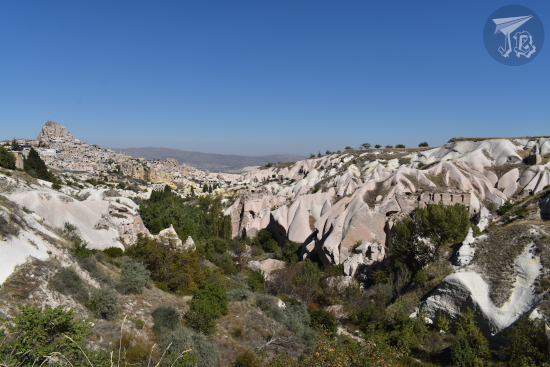
Buendía Reservoir from Ercavica forum

However, my parent had planned the road trip this way because it could be combined with lunch in a famous restaurant, Casa Goyo in the village of Alcocer. It is not a particularly good place, but it has made a name for itself by serving enormous portions. The most famous dish is the sanjacobo – a type of schnitzel cordon bleu with two fillets of pork wrapped around slices of cheese and Spanish ham, then breaded and fried. It is actually better than it sounds. Casa Goyo’s sanjacobo is 2.5 kg of meat. Quite a lot. I tried to tell my parent that combining it with a salad was too much, but they did not want to listen – which in the end it meant that I came back home with about half of the sanjacobo to consume at a later time. Unfortunately, that meant cutting the time to explore Alcocer short – to none. It was probably too hot anyway.

Sanjacobo at Casa Goyo

All in all, three experiences unlocked that I don’t think I ever need to repeat again. The best one was the mosaic, but I do not think Ercávica was worth the heat nor the roads. Nevertheless, I am glad that I could see both Roman ruins at least once. I however stand behind the idea that the cloudy day would have been better…

17th June 2024: Horniman Museum and Gardens {London, England, June 2024}

I woke up early-ish and got ready to leave. I stopped by the local supermarket to grab a coffee and got on my way towards the closest Overground station – this being London, it was not far. This was an easy commute since there were no changes, and I could just relax on the train. I got off on Forest Hill and walked up the… well, the aforementioned hill, until I reached the Horniman Museum and Gardens, in the Borough of Lewisham around 9:00 – passing a Costa Coffee on the way. I filed this information for later reference.

Normally, I would not have gone to a museum which had a Natural History Gallery closed for renovations, but they were running a dinosaur exhibit that created the perfect excuse to go there, even if it was a bit out of the way. Frederick Horniman was the heir to his family’s tea emporium in the 19th century. He started travelling the world around 1860, collecting artefacts from his travels, and developed the museum to exhibit them. The original museum opened in 1890, and the gardens in 1895.

The gardens are almost 6.5 hectares (16 acres), divided in different areas, including a bee garden, a sound garden where you can make music with metal tubes, a grassland garden, a prehistoric garden, a grassland garden… I wandered around a little and was surprised to catch a glimpse of City of London by the 1903 bandstand. I knew the gardens were a bit far out, but I had not realised how much.

Horniman Gardens with the City in the background

I explored for about an hour, then I headed towards the Victorian Conservatory, built in 1894 in Horniman’s private residence. A century later, it was transported to the gardens and restored by British Heritage. It is a quaint little greenhouse in white iron and glass, with pressed tiles on the floor. Next to it stands a little café that I would have stayed at if I had not wanted to see some of the themed flowerbeds.

The Horniman Conservatory

At 10:00, when the museum opened, I entered to see the exhibition Dinosaur rEvolution, which looked at the evolution of Dinosauria into birds. The travelling exhibition has five animatronics, a couple dozen cast fossils, several plushies and beautiful palaeoart. The T-Rex animatronic had some feathers, and the information notice asked the reader if they would find the Jurassic Park tyrannosaur less scary with them. I honestly would find a feathered Rexy even more terrifying. The exhibition was all right, with plenty of information, but there was nothing real, which was a bit of a bummer. But since it is a travelling exhibition, it makes sense they would not be moving around the real thing. However, given the ticket price, I expected something a bit larger.

Dinosaur revolution

After I was done, I decided to check out the rest of the museum. First, I saw the anthropological galleries, which had the most bizarre array of artefacts – from an Egyptian mummy to a Spanish inquisition chair, along Inuit costumes, European masks, African religious items, Indian masks, Easter eggs, prehistoric items from all around the UK… There was a wish tree, where you can write something on a colourful paper and hang it from the branches.

Horniman athropology museum

In the basement of the museum there is a small aquarium, which was full of schoolchildren on a day trip. I could have got the tickets online for that. However, I did not know how big the dinosaur exhibition would be, and I did not want to rush over. When I seemed to have the time, I decided to go down to the aquarium. It had a handful of tanks – jellyfish, coral reefs, Amazon rainforests, a lot of clownfish and a handful of poisonous frogs, mostly colourful stuff to grab attention. I managed not to get run over by the kids, which was a good thing.

Horniman Aquarium

After I had seen the aquarium, I considered checking out the Butterfly House, because those are always beautiful. However, since I knew I’d want to go back to the museum and gardens in a couple of years, when the natural history gallery reopens, I decided to head towards the train station. I would see the butterflies another time. That way I could be on my way to the airport with some buffer time without rushing my way through and stressed over connection. Instead, I checked the museum’s tea gallery, which summarised the history of tea and how it ties with colonialism, not pulling any punches towards the Horniman tea emporium itself. Funnily enough, the tea brand still exists in some Mediterranean and South American countries, but not in the UK.

On my way back to the station, I stopped at the Costa Coffee I had seen before for a drink and a snack. Unfortunately, the nice barista forgot to put the vanilla syrup into my vanilla latte – oh, the drama. Since the coffee was hot, I did not really notice until I was already on the Overground, and turning around was not worth it.

I had to change at Whitechapel into Hammersmith & City, but since I had the extra time, I decided to walk a little and go down into the Elizabeth Line, which, believe it or not, I had never used before. The commute time was the same anyway. The platforms felt so new and clean, lacking the grit that other stations have – not that they are dirty, really. They’re just… not that new or aseptic.

Even with the little detour, I reached Liverpool Street with time to take an earlier train than I had originally given myself as ideal – which is a couple of trains earlier than the one I would need to be right on time, but since that time the train just did not reach the airport, I’ve lost some faith in the Stansted Express. I went to the end of the platform, and sat down in the first carriage of the train. I was the only person there, even after the conductor announced that “the first carriage was almost empty, please move forward for comfort so the rear of the train is less crowded.” Happy to be an “almost”, I guess – and good that the carriage did not become anything close to full during the trip.

There were no issues reaching the airport, but security was crazy. I don’t think I’ve ever seen as many queues, and so long ever. When my backpack was flagged for secondary inspection I understood why – the person in front of me was told he was carrying “too many contact lenses”, and my tiny handcuffs key chain was apparently extremely threatening. Then they needed to check aaaall the electronics, and my boots. However, the security guard said that he was sorry and that I should not have been pulled over because of the key chain. I’ve never had a security officer apologise to me for pulling me over for secondary inspection – and honestly, that was the key chain I bought for my first apartment… in 2001? I’ve flown with it before countless of times… Hilarious…

I put on my boots, and headed off to buy some sushi at the Stansted Itsu. Sadly, the quiet area has stopped being so – they have closed the upstairs toilets and now they send everyone downstairs, so it was packed with holidaymakers and people hyping up toddlers, which I find a horrid mistake to make just before jumping on a plane. Thus, I drank my miso soup, ate my sushi, and buggered off to wander the airport – better than the cacophony of kiddos running, squealing and acting up. The airport was full, and while I am usually better at dealing with other travellers, I had been looking forward to the “quiet area”. Either that or I was a bit tired and everyone was rubbing me off the wrong way, I guess.

When it was time to board, queue went extremely slowly. The airline line personnel were being extremely picky with the luggage, measuring every backpack and trolley. Eventually, the slow process made departure late, so the end of the queue was rushed. They barely eyed my backpack, though I was asked to turn around to show it to the check-in agent.

The plane was full and way too many people were not aware of “boarding from the rear door” when their seat number was high, causing a bit of a jam. I found my seat, huddled in, and shut off for a while. I woke up with 40 minutes to land. When we did, we took a bus which conveniently left us right in front of passport control. The only problem on arrival? It was 31 ºC and sunny, and I was wearing clothes chosen for the 13 ºC and rain in London. I guess the order of digits is… important when you’re wearing longs sleeves, layers, and knee-high boots – which by the way I think have seen their last concert trip. RIP. You will be missed, cool concert boots.

16th June 2024: Southwark, the National Gallery and Kamijo at The Garage {London, England, June 2024}

According to the weather forecast, there was a chance of rain in London in the morning. When I got up and drew the curtains open, it was actually pouring, so I decided to wait the rain out. When I left the hotel around 9:00 to head to the queue, there was still a bit of drizzle which cleared as I was walking. However, when I reached the venue, I was surprised to find a notice on the door “We reserve the right to refuse entry. Anyone queueing before 16:00 will be refused entry.” Ho-kay, that sign had not been there the evening before – or I would have planned accordingly. I shrugged it off and resolved to make the most out of the morning and early afternoon, and be back at 16:00 sharp. I mean, what else could I do, mope at the hotel?

I took the Underground to the London Bridge stop, in Southwark. The first thing I came across was Borough Market, which had never even been in my radar before – I tend to stay on the other bank of the Thames. The market is an Art Decó building designed by Henry Rose in 1851. As a business, it had been in operation for centuries at the time though, and the building would get many refurbishments in the following years. Borough Market claims to be place for sustainable products with a short supply chain. There were wholesalers, coffee brewers, tapas bars and for some reason a bunch of guys yelling that everyone should try their mushroom risotto. The area was packed, and it was almost impossible to get a good picture.

Borough Market

Next to the market, stands Southwark Cathedral, officially Cathedral and Collegiate Church of St Saviour and St Mary Overie. London has four cathedrals: St. Paul and Southwark are Anglican, and Westminster and St. George are Catholic. Southwark Cathedral has stood in place for at least a thousand years. However, there is a legend that places its foundation in the early 600s, and there is archaeological evidence of a Roman road dating even further in time. The current structure is gothic, erected after the previous building was damaged in an area-wide fire in 1212, then transformed with the passing centuries. In the 19th century it was “remedievalised”, and in the 20th it became damaged by the Blitz and requited restoration. Today, it prides itself in being LGTB-friendly and having a resident cat, Hodge. It is also common that a fox, nicknamed Richard, visits the garden. Not sure either keeps the cathedral mouse- or rat-free, or they are too full with treats from the congregation.

Southwark cathedral - outside and nave

Southwark Cathedral details

After the cathedral, I headed to the actual reason I was in Southwark, The Old Operating Theatre Museum and Herb Garret. The museum is located in the attic of a former church – in other to access it, you have to climb up a spiral staircase with 52 steps, up the bell tower. The church was attached to a medieval hospital, in whose attic (or garret) the apothecaries dried medicinal herbs and stored medicines. In 1822, this garret became an operating theatre, with a huge skylight built in order to let light in – we are talking about a time when surgery was performed without anaesthetics, painkillers or antibiotics. The hospital was abandoned some 40 years later, and the theatre was lost to time, until it was rediscovered in 1952 – it is considered the oldest surviving operating theatre in Europe.

The museum has a small collection of pathology specimens, a bigger one of nightmarish medical tools, and a reconstruction of an apothecary shop, with a counter and a lot of herbs, and informative panels. Funnily enough, it also runs through the history of medicine, and the great London epidemics using… rubber duckies. Not collecting rubber duckies is becoming more and more difficult… Anyway, these particular rubber duckies have been painted and modelled over, and next to them there is a list of symptoms. From those, you need to diagnose the duckie with “silent killers of the past” – measles, tuberculosis, cholera…

The duckies were a good comic relief of sorts from the pathology collection and specimens, the pre-science artefacts, and the history underlying at the theatre itself. The theatre had several rows of stands where people watched / learnt from the operation while the patients were awake – allowing the procedures to be public was the only way poor people had access to medical treatment and the good surgeons. Honestly, the idea of surgery is scary enough, but just thinking about amputation without anaesthetics makes me shiver. Especially when you see what was used for it – basically a handsaw – with spectators.

The Old Operating Theatre and apothecary

It was still early afternoon, so I hopped onto the Underground towards Charing Cross and Trafalgar Square. I had not seen The National Gallery London since I was a child, and I remembered next to nothing of it, so I wanted to revisit it. The National Gallery, in the City of Westminster borough, dates back from 1824, when the government bought 38 paintings from a private collector – and it has been continuously expanding since then. The current building was designed by William Wilkings in 1832, and opened in 1838. the collection comprises over 2,000 paintings by 750 artists, among them Giotto, Leonardo da Vinci, Dürer, Michelangelo, Raphael, Tintoretto, Veronesse, El Greco, Caravaggio, Velázquez, van Dyck, Rembrandt, Vermeer, Canaletto, Goya, Constable, Delacroix, Degas, Monet, van Gogh…

Here’s the fun thing, I always thought I liked the impressionists, but it turns out that seeing Monet’s Water Lilies myself was rather underwhelming. Conversely, I found myself enjoying British landscapers a lot, especially Constable. I spent a few hours in here, looking for the masterpieces, but a lot of them were on loan to other sites.

National Gallery London

At one point I was taking a photograph and a gentleman thought he was on my way. When I reassured him he was not bothering me, he said something akin to “That’s because you’re a professional”. I wonder, a professional what? I was not carrying a camera or anything, just the phone…

I did a run throughout the whole gallery, and I was considering staying at the café for a bite, but… I was rather close to Leicester Square… so I thought I could walk there and check if I could have lunch at Coco Curry or somewhere in Chinatown. The line at Coco was rather short – surprisingly, since the Chinatown Coco is always pretty full. Thus, I decided to wait it out and have lunch there – after all, it is the “iconic” one, and the previous time I had only visited the Bond Street shop. I’m not sure when Coco became the feeling of a taste of Japan, but it is one of my favourite food places.

Coco Curry Leicester Square

I had a bit of extra time. Not much for exploring, too long to just stay at the restaurant. I wandered Chinatown a little, and then got to Leicester Square. I’ve been to the Lego store, and the M&Ms place, but there is also a tea boutique, the TWG Tea Shop which I had never stepped into. I did it this time, and I was really tempted by a few of the green teas in pretty tins. I however talked myself out of buying any, since it would be silly to take them to the concert, and if a water bottle is a hazard, I cannot imagine what would be thought of a metal box.

Instead, I headed back to Trafalgar Square and stepped into the church Saint Martin-in-the-Fields. This ancient church was rebuilt in the 1720s by James Gibbs – though it was originally “in the fields”, in the outskirts, by this time it was already part of the city. It is a simple rectangular nave with Corinthian columns and a vaulted ceiling. The church holds choir concerts every Sunday afternoon, and I sat there listening to the music for a bit. I then I headed off to Charing Cross to take the underground towards the venue and the surprise of my life.

The church of St Martin in the Fields

I arrived at The Garage for Kamijo’s Europa Tour 2024 “The Anthem” at 16:00 sharp thinking the queue would be assembling, but no. Apparently there was some “secret parallel queue” going on somewhere – there were between 40 and 50 people there already, so I only got the 18th place due to my type of ticket. I was a bit disappointed, but oh well, what can you do? Nothing any more, so I did not dwell on it. The promoter had actually sent a schedule in advance, saying that doors would be at 19:00 for the VVIPs and showtime at 20:30. Of course, it would not be followed, but it was good having an approximate timetable.

Queuing was okay, not extremely long since we actually went in around 18:30. There was a lady organising the line and giving out the numbers, and the venue staff were willing to go along that, so even if there was a “secondary queue”, there were no issues that I know of. The venue was a bit weird. There were a couple of stairs and a small hall before the actual concert hall. In that tiny hall, all painted black and stuck between the two fire doors, and under horrible lighting, stood Kamijo and his dazzling smile, ready for the meet and greets and pictures for the VVIPs and handshakes for the VIPs.

Kamijo The Anthem poster

I walked in, he gave me a warm smile, and said ‘bonjour’. I smiled back. I don’t know whether I’m getting old, or that sitting on the floor with Yoshiki was a game changer for my brain. And despite the fact that I’ve been neglecting my Japanese, I was able to convey my message. He was adorable. I said something like “There is no ‘I’ve missed you’ in Japanese, but it’s really been a long time.” A staff took our picture, he said thank you again, I said thank you back, then walked into the venue. I received my signed poster – a grey A4 signed in black. Apparently, gold or silver markers were out of the budget…

The barrier was almost completely full, but I was able to squeeze on the left, amongst the people I had queued with, closer to the centre of the stage than I had even hoped. Truth is that Kamijo tends to go to the right more often than to the left than the right, but since he holds his microphone with the left hand, you don’t see his face, so I was happy with my place. However, the hour and a half until concert started felt pretty long, since I was quite squeezed in. Maybe I should have sat, I don’t know. The concert started around 20:00, and it was no pictures of videos allowed.

The supporting musicians were Hiro on guitar – Hiro was also the guitar in La’cryma Christi, one of the most important V-kei bands in the 90s. Also on guitar came Yohio, a Swedish artist who managed to break into the Japanese scene a few years back – he actually got a lot of hate at the beginning, so good that he received some love. On bass came Ikuo (Bykk Zeichen 88, Rayflower), and on drums Ushi (Vorchaos). I’m not sure who the sound tech was, but he or she deserves to be yelled at – for about the first third of the concert Kamijo’s microphone was powerless, to the point that his voices was inaudible at times. There were a few songs I did not know (or was unable to identify due to the noise), amongst them the song that gives the tour its name: The Anthem.

Sound was so bad that at times I could not hear what Kamijo was saying, much less understand it. However, he sang two of my favourite songs, Moulin Rouge and Eye of Providence, and I was lucky enough that he repeated my favourite line twice. Despite my being amused by his idealisation of Napoleon, there is a line in Sang I (it took me stupidly long to realise that sang is French for ‘blood’) that resonates a lot with me: ‘Just like flying with the wind: no pain, only gain’. He started the song and interrupted himself halfway to make the musicians greet the audience in English. He either forgot he was going to do an emcee, or since he said it was his favourite song, he wanted to sing it twice.

He had fun, and unlike other times I’ve seen him, he indulged in a lot of “fan service” with the musicians, which sent the crowd screaming. Aside from the sound issue, there was one other hiccup during the concert. At one point Kamijo tripped over a wire, stumbled and ended up almost sitting down on the drums, but he did not fall, which was good.

Setlist:
  1. 闇夜のライオン (Yamiyo no lion)
  2. Conspiracy
emcee, with Kamijo saying he was glad to be back in London, and inviting the audience to go to Paris with him.
  3. Moulin Rouge
  4. The Anthem
  5. Louis 〜艶血のラヴィアンローズ〜 (Louis ~Enketsu no la vie en rose)
  6. 運命 (Unmei)
  7. Eye of Providence
  8. Habsburg
  9. mademoiselle
  10. CRIMSON FAMILY
  11. Castrato
  12. Beautiful Rock’n Roll
  13. 薔薇は美しく散る (Bara wa Utsukushiku Chiru; song by Lareine, Kamijo’s first band)
  14. Sang I & emcee, where the musicians said what the tour had meant for them
  15. Sang II
  16. Nosferatu
emcee
  17. Avec toi〜君と共に〜
  18. NOBLESS OBLIGE part 1
  19. Throne
  20. NOBLESS OBLIGE part 2
  21. Vampire Rock Star

During the emcees Kamijo said that he was glad to be back to Europe / the UK, and that he was especially happy to be in London. He talked about how great the tour had been, and how amazing an audience we were – though he tells that to everyone anyway. All in all, I had a lot of fun, enjoyed myself, clapped during mademoiselle and even jumped (once, I’m not that crazy) during Vampire Rockstar. Whenever his musicians or himself sing / yell the chorus, the words ‘vampire rockstar’ come out as ‘vampire lobster’. This time, he made the audience yell them all, so considering this was London, it sounded correctly for once.

Snippets pre and post Kamijo's The Anthem concert

After the concert, which lasted a bit over two hours, I bought a sandwich at the open-late supermarket next to The Garage, and headed to the hotel for a shower and sleep. I kind of… forgot to go to bed though. God, I love concert highs, as short as they are. It is always hard to come back to reality, but there was still half a day before that.