4th May 2019: Museo Naval & TeamLab in Madrid (Spain)

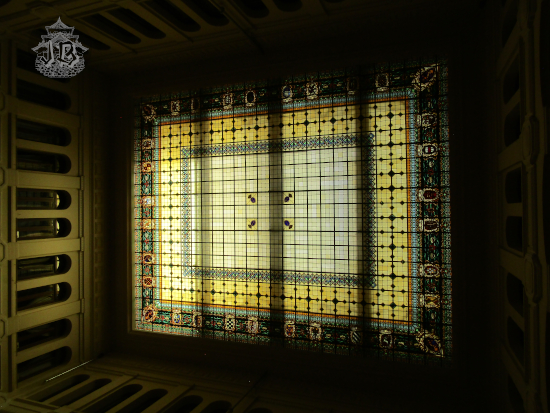
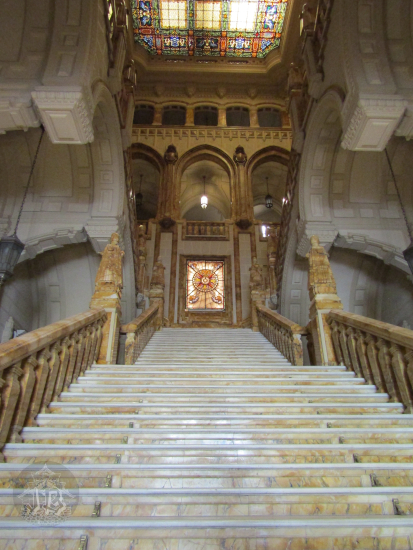
There were a couple of exhibitions in Madrid that I wanted to see, and my mother decided to tag along. We took a train and walked to the Museo Naval, the Navy museum, which was being renovated – so the permanent connection was not being shown. In the end, that turned out to be awesomely lucky because it allowed us to see the marble staircase and stained glass of the classical building, which is very rarely shown.

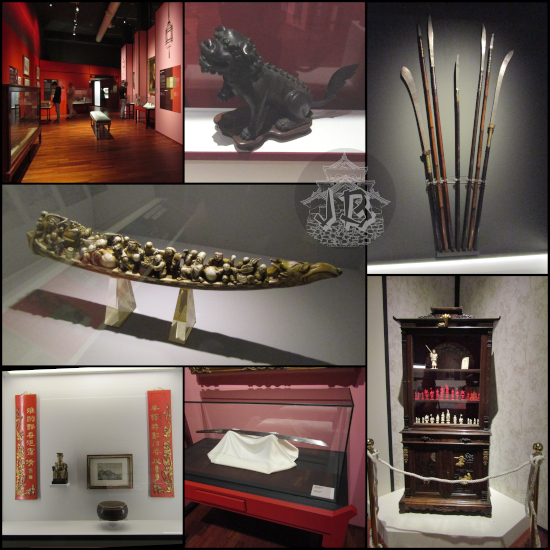
The exhibition that I wanted to see was related to the trips to Asia, mostly China, Japan and Philippines, and it was interesting for 3€. one of these days I would like to come back to see the whole museum when the renovations are over. It’s on the bucket list, I swear. One of these… I’m not sure, months, because I’d been saying I want to go to the Museo Naval for years.

After seeing the “Asia in the Naval Museum” exhibit and the ceiling, we walked towards the Telefónica Building. There, there was an Exhibition by TeamLab, the museum of virtual art from Tokyo! I really want to see it.

There were three exhibits:

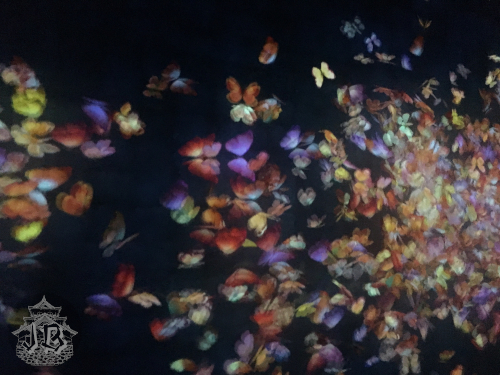
  • Flutter of Butterflies, Born from Hands (2019), a magical wall where you can rest your hands for butterflies to come up.

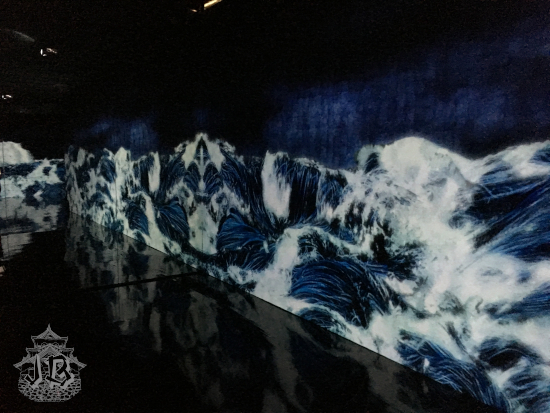
  • Black Waves: Lost, Immersed and Reborn (2016), an amazing scenery of breaking waves.

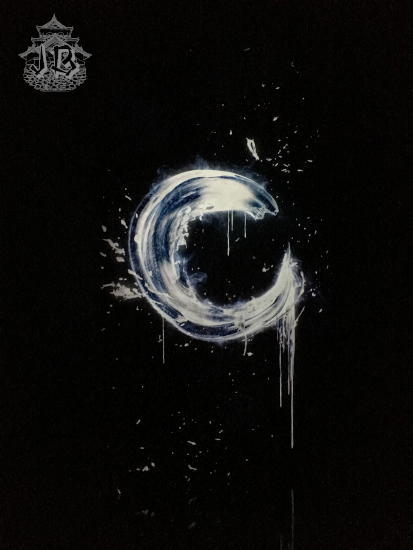
  • Enso – Cold Light (2017), a self-tracing enso (perfect circle traced with one stroke in calligraphy).

I was very happy to see this, and then we walked around the “Evolution of phones” exhibition- however, I apparently have not taken pictures of that one. I think it was too nostalgic, because god did it make me feel old (≧▽≦).

Before we returned home, we had lunch at a De María restaurant – an Argentinean meat-grill where we got a glass of rose champagne to go. Another place I want to return! However, this time I did not take pictures because the atmosphere did not feel adequate to do so.

23rd & 24th April 2019: El Escorial, Vizmalo & Lerma (Spain)

23 April 2019: El Escorial

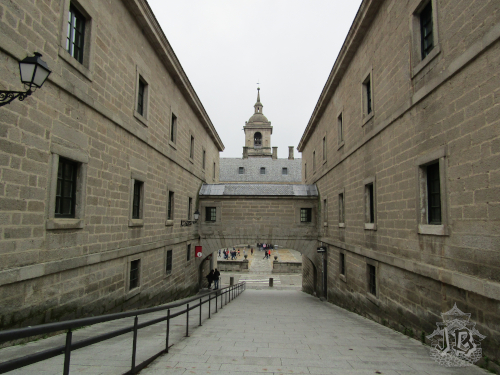
The Royal Site of San Lorenzo de El Escorial aka Monasterio y Sitio de El Escorial is located a shy hour away from Madrid. It is most known for the Monastery that used to be an official residence of the King of Spain. The Monastery was built between 1563 and 1584. It is the masterpiece of the Spanish architect Juan de Herrera, after whom the Herrerian style, a sub-style in the Spanish Renaissance, was named. The building is a sober building made of a granite, and it is the burial place of most of the Spanish kings and queens. Some urban legends say that it was based off the descriptions of the Temple of Solomon.

We drove in around 9:00, dropped off the luggage, and went out, as we had tickets for 10:00 – although the hotel did not want to let us in. Contrary to the nice weather that we had been enjoying, it was cold as hell. The whole town felt grey and sober, and the cloudiness helped the mood – we had breakfast at a nearby bar (the only one open) and headed off to the monastery. The building hosts many artworks, along with a chapel, the royal pantheon and the most amazing library ever. Pictures in the inner areas are forbidden, unfortunately. The Monastery is a Unesco World Heritage site.

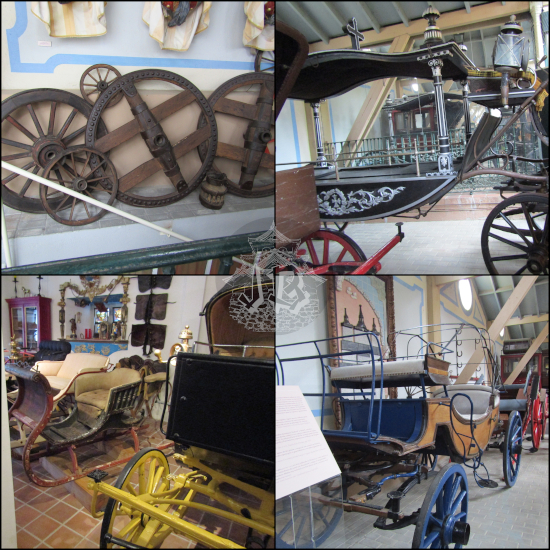
At lunchtime we walked out of the Monastery and headed off to the Royal Carriage House / Cocheras del Rey, a museum / restaurant. We had lunch, then visited the museum as the entry was free with lunch. It was raining like mad by then so we headed to the hotel to finalise the check in.

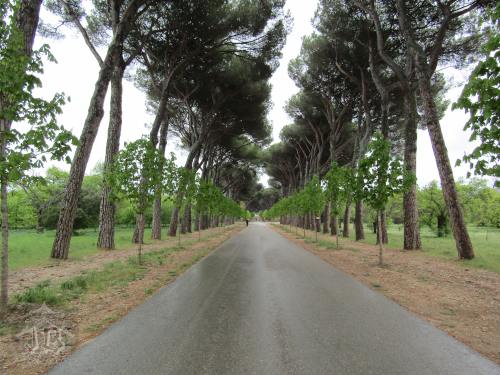
After an hour or so the rain had stopped so we decided to walk to the Prince’s House and Parks / Parque y jardines de la Casita del Príncipe. By the time we arrived it had started raining again – pictures were not allowed inside of the house either, but OMG was the inside Baroque, with flashy wallpapers.

On the way back, we could catch a glimpse of the monastery through the park. By now it was raining like crazy, so we spent the rest of the evening indoors.

24 April 2019: Vizmalo & Lerma

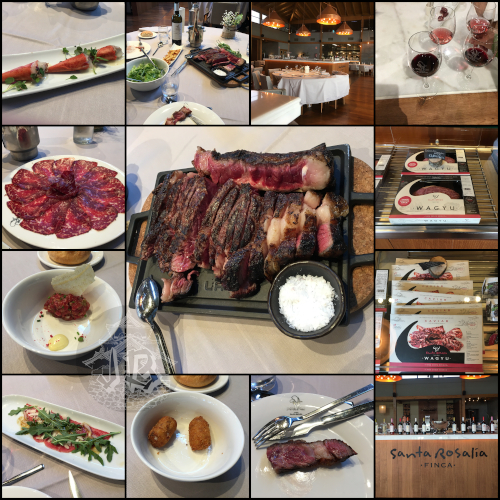
We left El Escorial early in the morning and we headed north for lunch. Yeah, well, let me explain. We had a reservation for lunch some two-and-a-half hours away, in Vizmalo (Burgos). This was a bit of a silly whim, but we were going to visit an estate / farm and have lunch there – the St. Rosalia Estate / Finca Santa Rosalía breeds wagyu for meat, and holy are they yummy. We had a booking to see the estate first.

While it was still cold, the weather was slowly improving, and in evening we had some sun. We saw the orchards, the grapevines, the cattle, the trees and so on. Then we moved into the wine cellars and saw the barrels, before we tried the wine and some of the meat-dishes that they prepare and sell. The selling point of Finca Santa Rosalía are the wagyu, cattle of Japanese origin. Wagyu meat is completely different from any other beef because it is soft and tender, and in general delicious.

Lunch was brilliant, based, of course on the wagyu meat. The T-bone was scrumptious and even if it was on the “a lot of money” side, it did not feel too expensive for a once-in-a-lifetime experience considering the amazing quality.

After lunch we drove off towards Lerma, a city which was revamped by the Duke of Lerma back in the 17th century. After finding our hotel and dropping our stuff off, we walked to the Duke’s Palace turned luxury hotel: Palacio Ducal & Parador de Lerma.

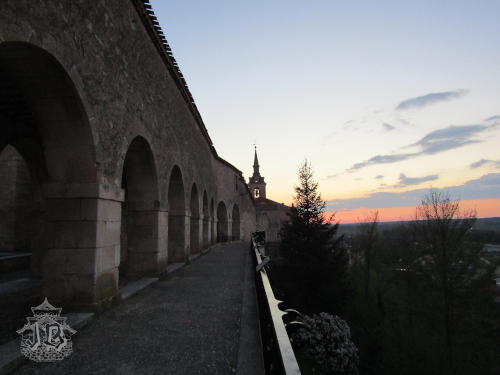
We walked around and came across the Mirador de los Arcos / Archway Viewpoint.

Then we saw Colegiata de San Pedro / St. Peter’s Collegiate church, where there was a religious exhibition being held (“Las Edades del Hombre”), with the topic of angels. Pictures were not allowed, or we would have shown you a few… interesting representation.

Sunset crawled upon us and it was nice view. We had dinner somewhere around the town centre, and called it a night before we drove home the following day.

17th April 2019: La Almudena & Mercado de San Miguel (Madrid, Spain)

A Japanese friend had a layover in Madrid, so I took the day trip to see her and stay with her until she moved on to her final destination. We dropped off her luggage at the coin lockers in Atocha station and I asked her what she wanted to see.

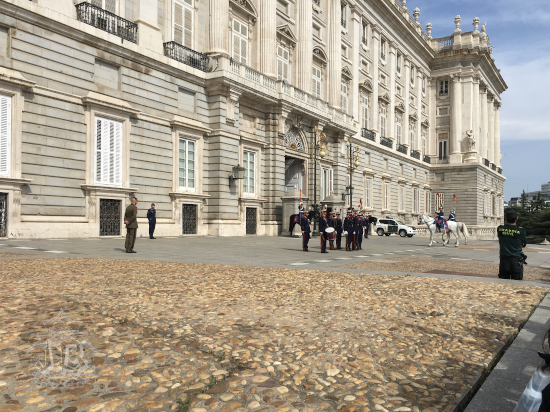
Our first destination was quite accidental. We were heading towards La Almudena cathedral when we stumbled into the Changing of the Guards in front of the Royal Palace of Madrid, the Palacio Real de Madrid.

The Catedral de la Almudena, Madrid’s cathedral, is right next to the Palace, and we were there a few minutes later. We walked around the upper area. It was a nice, sunny day so the coloured windows made neat reflections on the walls and floors.

Afterwards we found our way to the cathedral crypt.

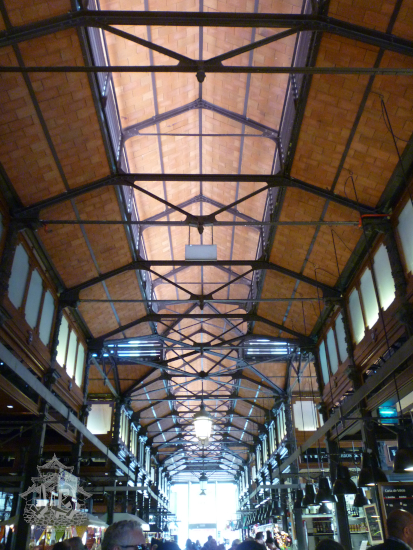
Then we moved on towards Mercado de San Miguel, St. Michael’s market, a bit of high-end foodcourt. I’m still traumatised due to the 6€ we paid for four lousy croquettes, but that’s life and she really wanted to go there.

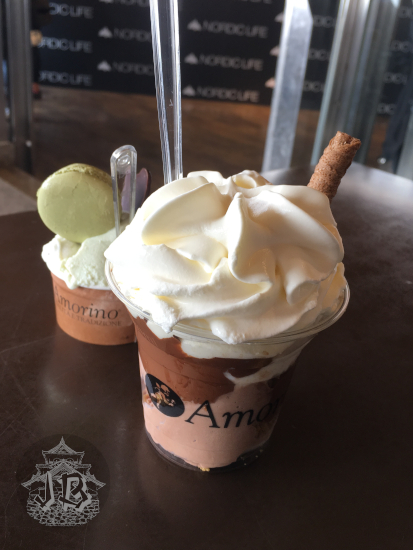
It was very hot, so we took shelter in some of the shops and then we headed off to have some ice-cream in the Callao Gourmet Experience and enjoy the view. Afterwards I dropped her off at her train so she could go on her merry way and I went back home.

11th March 2018: An old-fashioned museum and a strike in Madrid (Spain)

I was looking at a work-related trip and wanted to use up Sunday morning to visit “a couple” of museums, then meet some relatives for lunch. Unfortunately, I was caught in the middle of a public transportation strike, so in the end I had to walk for a long while instead of doing what I wanted! Anyway, what I managed to do was getting to the Museo Geominero Nacional, the “Geomineral Museum” in Madrid. It is located in the headquarters of the Geological and Mining Institute of Spain, in a classical-looking building finished in 1925. It was designed by Franciso Javier de Luue. It is a classical-looking museum with wooden cases and an impressive stained glass ceiling, comprised by a central room and three surrounding balconies.

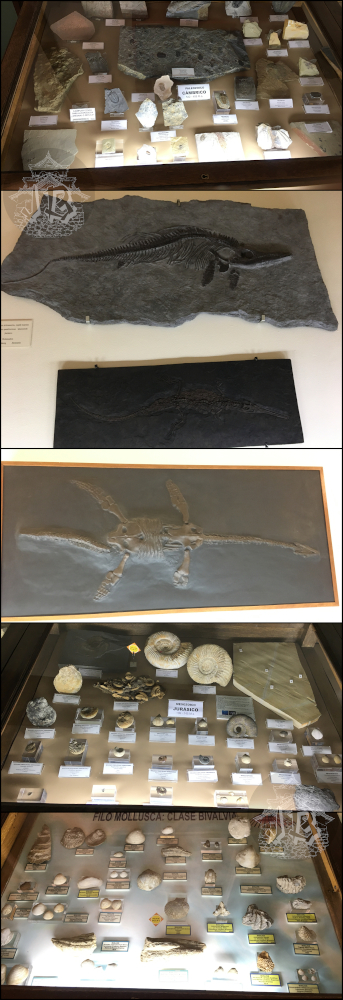
The access is through a marble staircase and the first corridor is already packed with display cases, even before you get to the main area. These cases show small and not-so-small fossils and replicas, displaying the first taste of the evolution of life on earth.

Once in the main room, most of the floor is taken up by the standing cases holding minerals, fossils and meteorites.

In the centre of the room lie the remains of a mastodon, located in the area of Ciudad Real in the 20th century, one of the crown jewels of the museum.

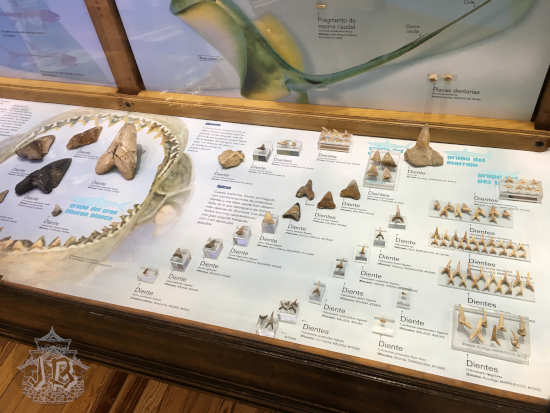
Of course I have been able to locate the collection of megalodon and shark teeth that are on display on the balcony.

Other displays on the upper floors include Spanish mountain goats, cave bears, and a human-evolution collection. Unfortunately, those did not photograph well due to the sun reflection.

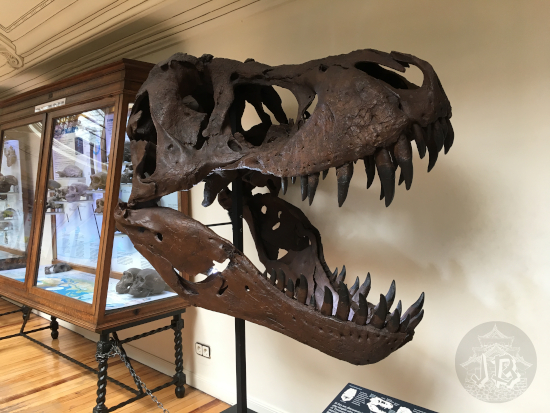
And finally, my favourite piece of the collection is the Tyrannosaurus rex skull replica that presides the museum for the second floor.

When I came out, public transport was not running any more, so I had to walk through the Madrid backstreets until I got to the area where we had arranged to meet, and we went to a restaurant called El Escarpín, where I had an awesome pan of… wait for it… gratin meatballs with molten cheese on a bed of potatoes (Albóndigas gratinadas con queso de tetilla sobre cama de patatas). Amazing! Either that, or I was really ravenous after my hour and a half walking. Serves me right for not keeping up with the news! I learnt my lesson!

14th – 16th October 2017: Vienna, Austria

14th October 2017: Arrival and the Inner ring: Butterflies and Dinosaurs

Between flight and transfer to the city on Saturday morning, I arrived in the city of Vienna at 1pm. As my hotel was between the station and the city centre, I took my chances for an early check in and I was lucky – it was. After dropping my luggage I headed off to walk around Vienna’s Inner Ring, the Ringstrasse, which is a big boulevard that runs around all the old city of Vienna (Unesco World Heritage Site). A bunch of things were on my way and it seemed easy enough to find one’s way around. My hotel was located in a building close to a park, and had three floors, on the 11th, 12th and 13th floors of a building, which gave me some views of the city.

On Saturday the plan was wandering around, but as I am who I am I ended up improvising. My first stop was the outer Vienna State Opera, the Wiener Staatsoper, where a young man dressed as Mozart tried to sell me tickets for a show.

Vienna opera house, a baroque building in light colours with huge windows and an arched entrance

I continued on my walk and I saw the Albertina, a modern art museum, but I was actually heading to the Imperial Palace greenhouse, which is the home of a café and the Schmetterlinghaus, or Imperial Butterfly House. This is an area of the greenhouse where a bunch of butterflies are free to fly around and feed on a bunch of flowers, plants and pieces of apple. I was lucky enough to catch a few good shoots and I was very happy to have decided to go in (albeit I have to say that I was really keen on going there since I had seen that it existed). I really had a blast and enjoyed this, so it was a must that I don’t regret having missed, especially since the 6.50€ for the ticket. I spent around forty minutes in there chasing butterflies.

Vienna Butterfly house: a former greenhouse, and a few close-ups of different butterflies on bushes.

Then I saw the Austrian National Library, the Österreichische Nationalbibliothek.

Severe-looking stone building with columns and windows.

After that I back I walked through the Hofburg Palace, Hofburg Wien, and the Michaelerplatz or Saint Michael Square.

Collage of the former Imperial palace. It is a stone building with columns and windows, and arches

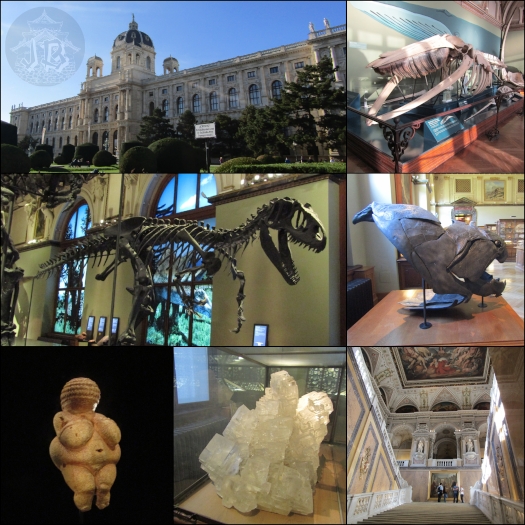
After that I crossed the palace in the opposite direction and ended up at the Heldenplatz, which gave way to Naturhistorisches Museum, the Natural History Museum to see dinosaurs, because there were dinosaurs, which is the home of the Venus von Willendorf, a tiny statue of stone dated back 29,500 years. The museum also holds a collection of minerals, meteorites, preserved animals, dinosaurs, an animatronics dinosaur and a multitude of artefacts from Prehistory to the Middle Ages. I also saw the same dunkleosteus that they have in the Tokyo Kokuritsu Kagaku Hakubutsukan. Have I mentioned dinosaur animatronics?

Collage of the Natural Museum: the building, with a dome, a whale skeleton, an Albertosaurus skeleton, the head of a Dunkleosteous fish, a huge salt stone and the Venus von Willendorf, a small naked woman statuette in golden stone

Following the museum I continued down the Ring Boulevard and it did not take me long to stumble up the Pallas Athene Brunnen (Monument to Palas Athena) and the Austrian Parliament Building, Parlamentsgebäude. The latter was under reconstruction.

Vienna parliament house, under renovation. There is a Palas Athena in white marble with a gold helmet standing in front of it.

I continued my walk until I found the Vienna Town hall, called the Rathaus, where there was a kind of Videogame trade fair or something going on.

Vienna town hall - neogothic building with a lot of towers and spikes.

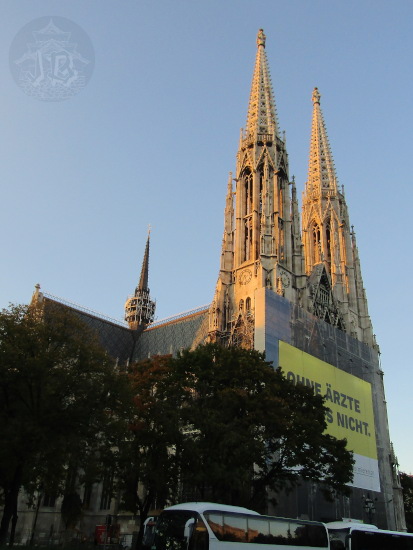
Then I went on walking towards the university and the church of Votivkirche, a neo-gothic building next to the university.

Gothic church under renovation

Afterwards I went down to the hotel because this is not summer vacations after all, just a weekend escapade and I seriously did not have that much energy. On my way I walked past the stables of the Spanische Hofreitschule (Spanish Riding School) stables and I saw some pretty horses.

Two white horses from the Vienna riding school

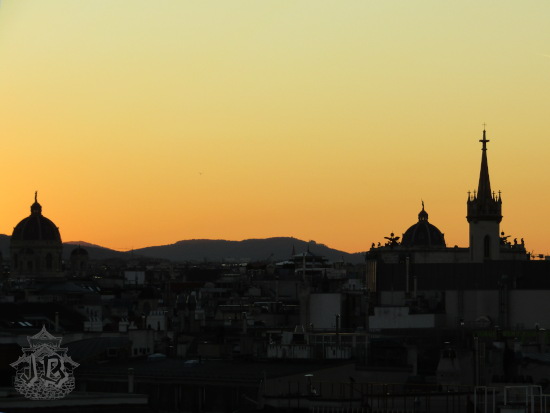
And even from the hotel (literally from bed), as my room had views, I could take some pictures of the sunset and the lit buildings. And then I went to sleep at a horribly early hour because I was beat and for some reason I managed over 8 hours of sleep.

Sunset over the skyline of vienna. The buildings are dark and the sky is orange

15th October 2017: Palaces, churches and the Cinema

Because my hotel was **** for a change (I have to say that when I think about the whole weekend the word “decadent” is what comes to mind), I had a kettle and instant coffee ready for me – this was my breakfast. After that I did the online for my flight the following day and of course running into technical difficulties, and I left the hotel at around 9:30, which was a bit later than I had intended.

I was coming up to the Belvedere Palace, and on my way there I took a diversion to see the Karlskirche or Karlskirche (St. Charles’ Church), which I could see from my hotel and illuminated at night. This is a baroque church that sometimes holds classical music concerts.

The church of St. Charles; a Baroque church. It has a dome, and two twisted columns in front.

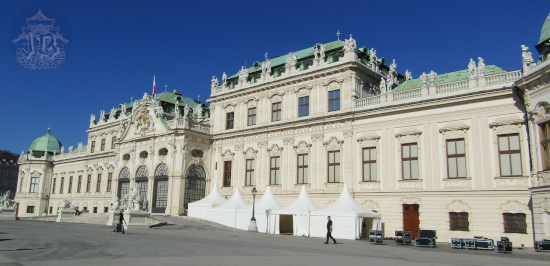
After taking a wrong turn once or twice this I headed out to my original target, the Schloss Belvedere (Upper Belvedere Palace). This is a Baroque Palace (seriously, Vienna is full of Baroque) that has been turned into a painting gallery. The most famous author in this gallery is Klint, but if I have to be honest, I’m not too appreciative of him – must be my likings for the realists. In the end, I liked the palace itself better than the painting collection, specially the reception room and the staircase.

The Upper Belvedere Palace, a Neoclassical building in white stone.

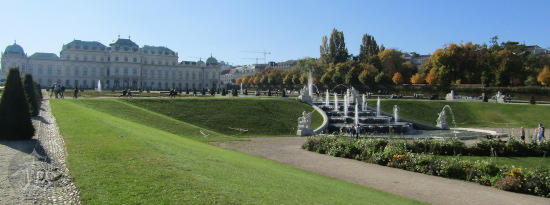
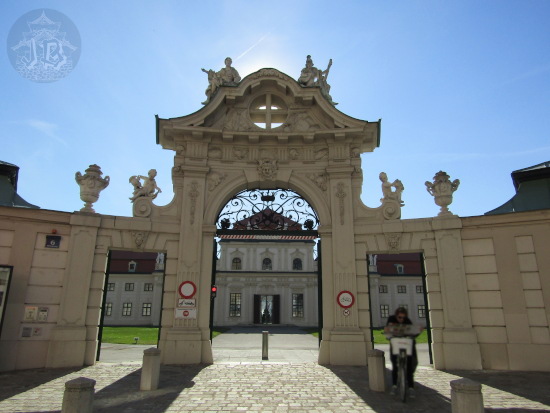
As I had bought a three-combo ticket including Upper and Lower Belvedere and the Winter Palace, I walked down the Belvedere Gardens to the Unteres Belvedere (Lower Belvedere), which holds the “Medieval Treasure” and temporal exhibitions. The best thing was the gold and mirror room and the marble gallery.

A huge garden with a palace in the background. The garden is artificial in a way, with perfectly-trimmed grass, fountains, and bushes.

The Baroque entrance to the lower Belvedere palace, a stone gate with sculptures on top. It looks like it wants to stare you down. The palace peers through the three open doors in the background

Then I headed off to the centre of the city to see the Winterpalais des Prinzen Eugen (Winter Palace of Prince Eugene), which was not the best thing ever but hey it came within the three-museum combo.

A Neoclassical palace with flags hanging over the door

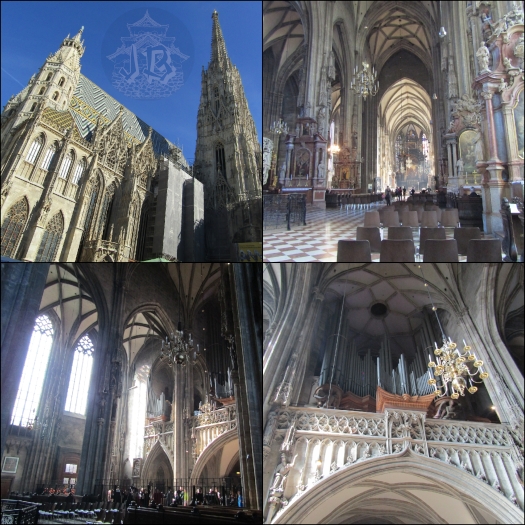
Then I headed off to Domkirche St. Stephan (St. Stephen’s Cathedral), which is the gothic Catholic cathedral. It is not Baroque but Gothic. The entrance was free, but it also had a paid area, including the catacombs. Unfortunately I was too late for the current tour and too early for the following one, so I decided not to stick around, else I would have got the combo for the catacombs, the tower and the treasure.

A gothic cathedral. Collage showing the outside, with the tower and the ornate windows, and the inside showing the pointed arches inthe nave, and the organ.

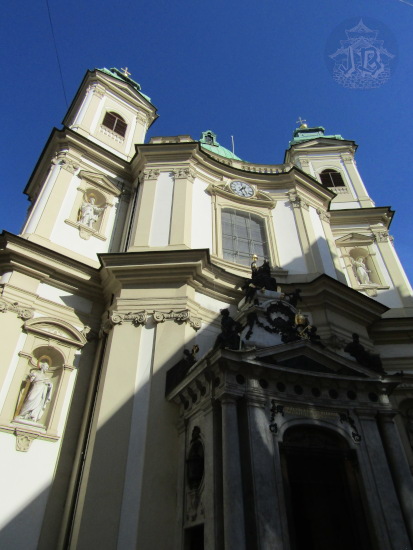
As it was, I saw the cathedral and then headed off down different streets and saw the outer area of Katholische Kirche St. Peter (Catholic Church of St. Peter).

Façade of a Neoclassical church

And then headed out to the Michaelerplatz to check the inside of the Michaelskirche (Catholic Church of St. Michael).

Neoclassical church, showing the white and pointy bell tower. The image is tilted so the tower fits in the frame

I checked the Spanische Hofreitschule (Spanish Riding School) for tour tickets, but I was late for that and it was all sold out, so I decided to go to the station and buy some food in the supermarket for both lunch and dinner. On the way I crossed the Stadtpark to see the floral clock and the Johann Strauss monument – Johann Strauß Denkmal.

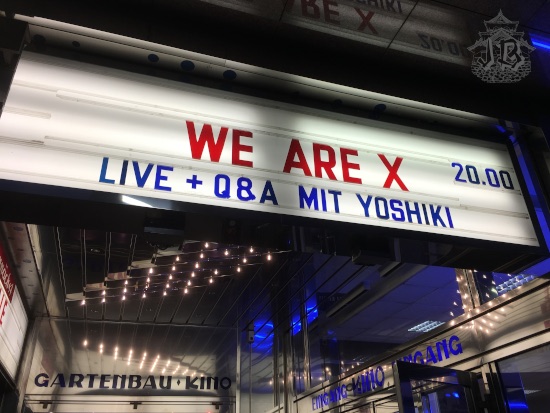
Finally, I headed off to get some rest at the hotel, and have a shower. At 18:15 I walked down to the cinema at the corner of my hotel building, the Gartenbaukino, because in the end that was the reason I was there – to attend the Austrian premiere of the X JAPAN documentary We are X as Yoshiki was going to be around for a Q&A session afterwards.

There had been a small mix-up with the ticket numbering (all of them had been printed out with the same seating number!), which was solved efficiently. We watched the documentary We are X and then there was a Q&A with Yoshiki himself. There were emotional moments as the fans thanked him for everything he had done and for his music.

Entryway to the cinema. It reads We are X Live + Q&A mit Yoshiki 20.00

Yoshiki sitting in front of a burgundy curtain. He is wearing his sunglasses and a black suit, boots and a golden blouse

After the Q&A some of us stayed talking at the cinema gate and the manager, who had solved the ticket problem, came out to close – and he told us where Yoshiki would be leaving from. And that’s… the story of how I got to talk to Yoshiki, I got his autograph and took a picture with him and I will never, ever, ever forget the rush of that.

I have to say I did not sleep much that night. All the excitement caught up with me and I kept replaying the scene in my head over and over again. in the end I think it was around 2:30 that I could turn the lights off.

16th October 2017: Airport Monday morning

After checking out of the hotel I walked back to the train station and took the CAT towards the airport. I had taken an earlier train than I had already planned and boy was I glad to do so when following arrows at the airport took me as much as 20 minutes. Something I learnt in this trip is how friendly Austrian people are, and that they have a great sense of humour, as apparently one of their star souvenirs is “no kangaroos in Austria”. The return flight was not as good as the first, but it was on time and I could arrive to work smoothly for a crazy week.

2nd January 2016: Palacio de Cristal (Madrid, Spain)

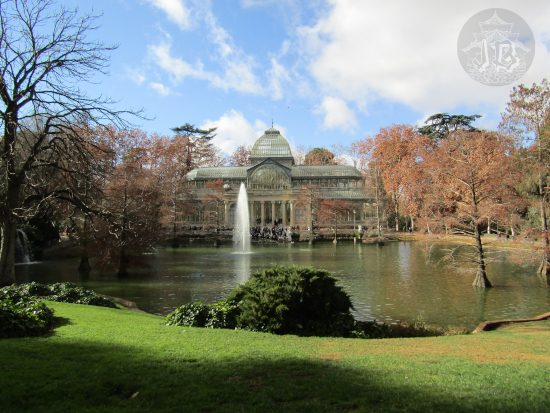
Right after landing back from Scotland there was a couple of things I needed to get going in Madrid. That afternoon I took up the chance and went to see the Palacio de Cristal, or Glass Palace, in the Parque del Buen Retiro (Park of the Good Rest, sort of). The building is a Victorian, iron-cast structure which is currently dedicated to exhibitions. It is a satellite building of the Reina Sofia Museum of Modern Art. It featured an exhibit by the Vietnamese artist Danh Vō – with a hanging Christ and fossilised bones?

And then we found out that there is indeed a parakeet invasion in the Retiro…

24th – 26th May 2014: Paris (France) for Yoshiki Classical

24th May 2014: Evening in Montmartre

I was going to atted Yoshiki Classical concert in Paris on Sunday, so I made planes with a a friend to meet up with her over the weekedn so we could do some stuff together. We booked a hotel close to the venue, Le Triannon. I arrived in Paris in the evening of Friday the 24th and met my friend direcly at the hotel – the first thing we noticed was that the area was not the safest, but we could still get to the Basilique du Sacré-Cœur to see it lit.

Sacre Coeur, a basilica on top of a mountain, lit in gentle green light at night

And also to see a nice view of the Eiffel Tower all lit up.
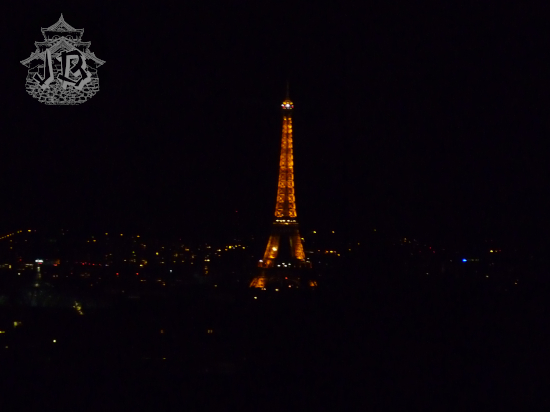
A shot of the Eiffel Tower from afar, lit reddish orange

25th May 2014: Under ground, above ground

On Saturday morning we went to Catacombes de Paris, the Catacombs of Paris. The ancient quarries and mines of Paris became the final resting place of more than six million people. In the late 18th century it was decided to eliminate a good portion of the quickly-overcrowding cemeteries and graveyads of Paris and for a 1786 the bones were carried to the catacombs at night. Today they are consisdered a museum and thus managed as such.

Creepy catacombs of Paris, with thousands of human skulls and other remains

After the catacombs we moved onto the Ille de la Cité, the “island of the city”, an island in the middle of the Seine, to visit Notre-Dame de Paris, our Lady of Paris, a magnificent Gothic cathedral built in between 1160 and 1260. In the 19th century an extensive renovation was carried out, and a few features were added, such as a the gargoyles and a replacement spire for the original one. We climbed the towers and were treated to a really cool Paris view before going inside.

Collage of Notre Dame; the main façade, the gargoyles, the inside of the main navev, and a view of Paris from the top

Leaving Notre Dame, we headed our the Île de la Cité and passed by Saint Germain l’Auzeroix, which mostly dates from the 15th Century and used to be the church for the Louvre inhabitants.

A restored gothic church with an octogonal tower

At the Louvre, by the way, there was a humongous queue, so as both of us had seen it before, we decided to skip going inside.
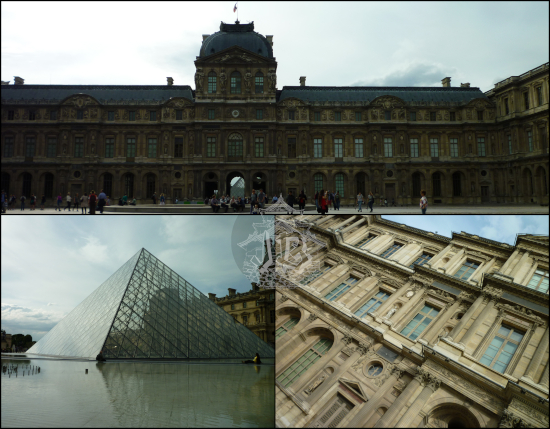
The Louvre palace from the outside

We passed by the Luxor Obelisk, an Egyptian monument which is over 3000 years old, located in the Place de la Concorde. I’ve always found that name very ironic considering that many people were guillotined there. But hey, the obelisk is cool and all.
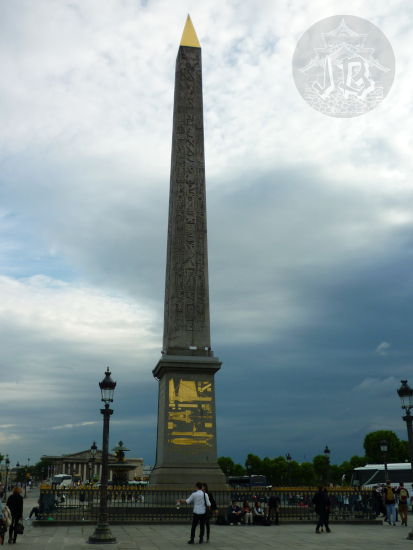
A black Egyptian obelisk with golden decoration

We continued walking up the Champs-Élysées until we got to the Arc de Triomphe de l’Étoile (the “Triumphal Arch of the Star”. Okay Paris. Okay.), which is one of the biggest triumphal arcs in the world. It was completed in 1840 and it honours the casualties in the Revolutionary and Napoleonic Wars.

Commemorative gateway or triumphal arch in white stone

From there we took the underground back to the area of the Sacré-Cœur, which we could see at the end of the streets.

Sacre Coeur peering at the end of a street

And to finish the day, we had some Japanese food because why wouldn’t we?

26th May 2014: Bad weather, queue & Yoshiki

On Sunday, we started off back in the Île de la Cité and we walked around Notre Dame on our way as my friend wanted a walk along the Seine.
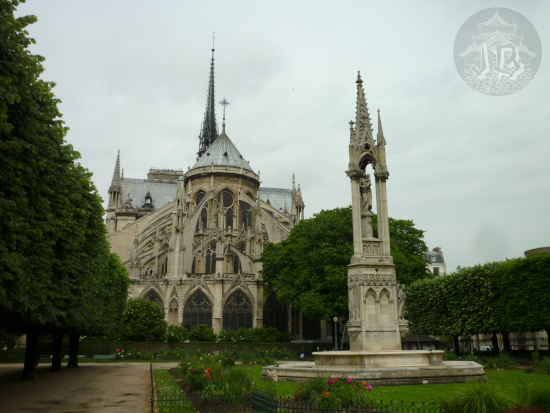
The back gardens of Notre Dame

We took the underground towards Les Invalides (Hôtel national des Invalides or The National Residence of the Invalids), a complex of buildings erected between the 17th and 18th centuries and that hosts the military museum and some notable graves, among them Napoleon’s.
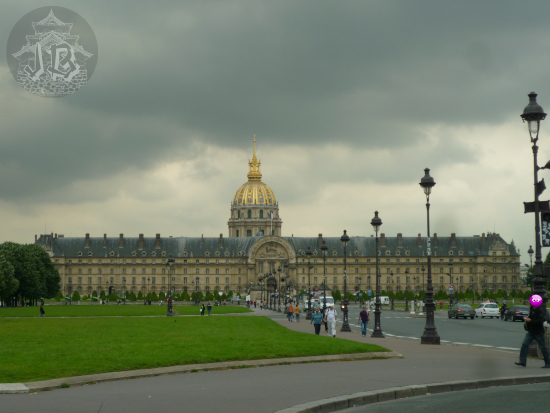
Les invalides, a neoclassical palace with a golden dome

Afterwards we took the underground to Champ de Mars, the long park where the Eiffel Tower stands. The Tower was built as an entrance to the 1889 World’s Fair exhibition and it was controversial at first (and rather ugly if you ask me, but hey to each their own). Eventually, it became so famous that it was not taken down as originally planned, and to-date it is one of the most visited landmarks of the world.

Eiffel tower in the clouds

Eiffel Tower from underneath, with a tennis ball hanging in from the second floor

As you can see in the pictures, the weather might not have beent he nicest, but we made our best. We walked all through the Chaps to the Trocadero on the other side. There were very few people on the street so I convinced my friend to take a ride in the carrousel over there, because I’m insane like that. Soon after we had left, a group of random people decided to emulate us.

Classical caroussel, looking over the ears of one of the horses

After this, we said goodbye. I headed off to Le Triannon for Yoshiki Classical, and my friend towards the airport as she had work on Monday. Yoshiki is one of the most important figures in Japan’s musical scene. He is the leader of the iconic band X Japan, and also trained in classical music. He wrecked his health when he was young, though, so he is not in the best shape. His recital Yoshiki Classical was meant to be a reimagination of some songs of his career, just him and his piano and some invited artist. I have to admit that it was one of the most beautiful things I’ve ever been to, and I don’t regret attending one bit. Although this was my first concert alone, I didn’t feel strange in any way.

A concert venue with some people waiting

I don’t know what I was expecting, but this surpassed any and everything I could have thought of. Yoshiki is a wonderful human, and he spoke in English during the whole event – he is living in America now, collaborating with people like Stan Lee and Marilyn Manson to do more great stuff. For me, seeing him in person and playing his piano was a heart-bursting experience.
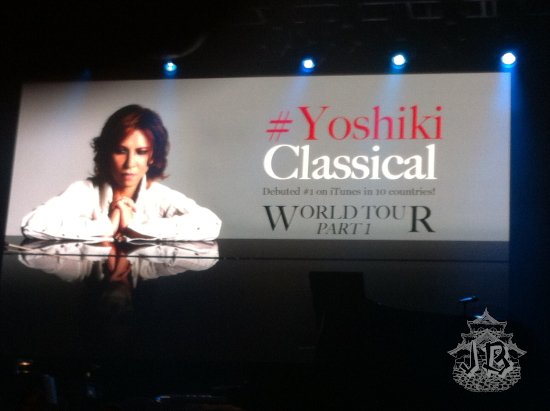
Yoshiki Classical Banner

Although Le Trianon is a seated venue, tickets were not numbered. I arrived at the queue round 17:00 for a 19:30 concert. It was not a good line – French fans seemed to have no sense of personal space, and the person behind the person behind me was invading my space, and I’m not exaggerating.

Conversely, the venue was quite ready for us, entry was well organised and smooth. Theatre staff, speaking in French and Japanese, made sure that ticket holders did not bother the local commerce nor their patrons. Judging by the faces of the sellers around, they were not used to people queuing for the theatre.

Gates opened around 18:45, and I managed a seat on 7th row, in what I thought it would be a good position to actually see Yoshiki’s face as he played. The stage was equipped with the Kawai piano, a synthesiser, and the seats for the strings, along with a standing microphone. I took in the relative positions of everything to chose my seat. The screen showed the Yoshiki Classical World Tour banner, and staff members sold insanely expensive glow sticks.

By 19:50 the audience had started to get nervous,but the members of the press were being shown in to their seats, which meant that the interviews were over. The concert finally started at 20.05, with the entrance of the supporting musicians – three violins, two violas, two cellos. The assistant gave them the tuning note and the video launched behind them. It started with a fragment of the Golden Globes museum interview, where Yoshiki explained the two sides of him, the destructiveness of heavy metal and the peace of classical music. This was illustrated by short clips of X Japan drumming and other activities, such as playing for the Emperor, or Yoshiki Symphonic, all to the music of Miracle.Finally, Yoshiki walked in, sat in front of the Kawai and played the intro of Forever Love.

He did quite a lot of talking between the songs, with a few words in French, but mostly English. He explained that we would have two parts (I used the intermission to go get goods and buy an overpriced bottle of water).Throughout the concert he introduced the strings by name, he remembered all of their names even with effort (and named them Yoshiki Sextet with great mischievousness), and Katie Fitzgerald, the vocalist of his Violet UK project. he himself said that he had too many open fronts and that he had been recording with X Japan forever, but also with Violet UK. He put the blame on himself for being a perfectionist and thus never finding anything finish-worthy. Katie rolled her eyes at him. They seemed to have a good chemistry going on. At the very beginning he told us that he was used to being in the back of concerts, playing drums and that being so close and seeing us made him nervous. He joked that as it was a classical concert he would not stage dive.

As he played the piano the screen behind him projected images, some of them abstract, some of them related to the song, such as roses for Rosa, stills of the Saint Seiya film for Hero, or raindrops for Endless Rain.

He spoke about the history of X Japan and his own – he started playing piano when he was four, the same year he met ToshI. He picked up drums at ten, in Chiba. He reminisced about how he hunted down Pata, Taiji and Hide, ”having to break their bands to get them to come to his band”. Then he spoke of Taiji’s and Hide’s passings, and not talking to ToshI for about ten years. At this point he broke down. It makes one wonder about the kind of pain this man harbours in his soul. You could feel the rage as he pounded into the piano at some points, and yes, I am sure he was crying during the song he dedicated to his father, Taiji and Hide. He said that he had learnt that big venues and stadiums did not really mean anything, but that the support of the fans was what kept him going.

He played an improvisation of Tchaikovsky’s Swan Lake, and a song he had heard on the radio the day before. He confessed that being on tour he lost track of days and places. He was aware of time and space enough to announce that the upcoming October concert in the Madison Square Garden may be the start of a new X Japan tour, but I do not think any of us believed him.

All in all, I knew that he is a great pianist, musician and artist, and after the concert I am completely sure that he is a good person, too. It’s not an act, a persona that he created for the stage. Nobody is that good at feigning pain. He picked up a bunch of presents from the crowd on the first couple of rows himself, be it flowers, plushies, flags, and was thankful for all of them.

Setlist:
1. Miracle (during the video)
2. Forever Love (X Japan)
3. Golden Globe Theme
4. Rosa (Violet UK)
5. Anniversary
[Intermission]
6. Amethyst (Strings only)
7. Swan Lake Improvisation (Tchaikovsky)
8. Hero
9. I.V. (X Japan), fragment
10. Hymne à l’amour (Édith Piaf cover)
11. Without You (X Japan)
12. Kurenai (X Japan), fragment
13. Art of Life (X Japan)
14. Endless Rain (X Japan)

Yoshiki talking to his audience

Yoshiki and Katie Fitzgerald during Hero

After the concert, I went back to the hotel. I would have loved to stay a bit longer, but it was night already and the area did not feel… Nice. In the following morning, Monday the 27th, I just headed for the airport and came back home. It was a very complete weekend!
7th May 2013: The inner works of the Geomineral Museum in Madrid (Spain)

Due to work reasons I ended up in the Museo Geominero, the Geomineral Museum, in Madrid. The Museo Geominero is a rather anachronical place – it displays a great mineral and fossil-replica collection in an early 20th-century building. The inner area is used for research and hides all the high tech. However, they work with really old and cool geological elements.

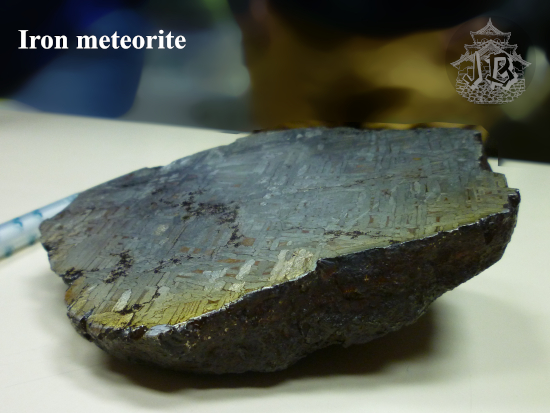
This was the firs time in my life I ever held a meteorite – just imagine, this thing floated around space, and I got to hold it. It was heavier than I would have ever imagined. You can see the zig-zags on the surface, those are magnetic markings because the main component of this space rock is iron.

There was a session going on about identifying fossils, and this is what I came up with:

Out of the bunch, I also got to play with the ammonite…

… counted the corals…

… and I petted the trilobite…

As you can see, I snuck quite a few pictures. It did not work so well during the museum walkthrough, so I guess I will just have to come back for the main exhibit some other time (≧▽≦).

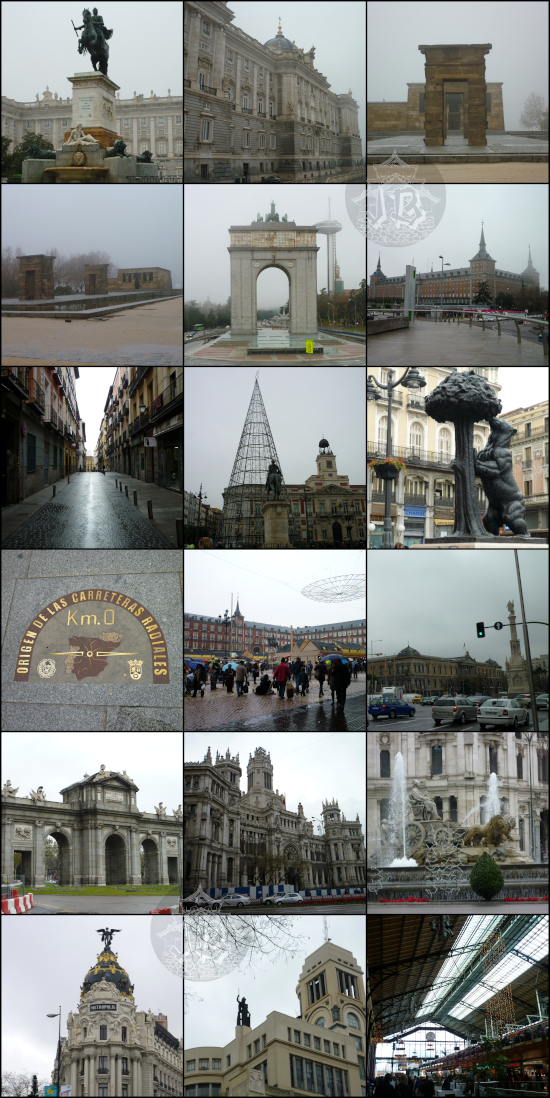
Flashback to 26th December 2009: Winterday in Madrid (Spain)

  • Palacio Real de Madrid (Royal Palace)
  • Templo de Debod (Egyptian Temple to Debod)
  • Arco de la Victoria (Victory Arc)
  • Palacio de la Moncloa (Palace of La Moncloa)
  • Puerta del Sol (Square Puerta del Sol)
  • Plaza Mayor de Madrid (Main Square)
  • Plaza de Colón (Columbus Square),
  • Puerta de Alcalá (Puerta de Alcalá Arc)
  • Edificio de Correos (Postal Building)
  • Fuente de la Cibeles (Cibeles Fountain)
  • Edificio Metrópolis (Metropolis Building)
  • Gran Vía de Madrid (Gran Vía Avenue)
  • Círculo de Bellas Artes (Fine Arts Club)
  • Estación de Príncipe Pío (Príncipe Pío Station)

Note: This is a flashback post, which means it is just a collage regarding a trip I took before I started the blog in 2012. Tags may be incomplete or slightly off.