D****e was leaving Paris about an hour earlier than myself, so I decided to tag along to her station and then backtrack to mine (hey, it was extra friend-time). I’m not good at going back to sleep after waking up, anyway. Thus, we checked out of the hotel together, and I rode with her, then changed platforms towards Paris Gare de Lyon to take my long-distance train. The ride across France was six hours, but it was very cheap, and not much longer than I would take flying from home to my destination.
The current iteration of the Paris Gare de Lyon station was erected following designs of Marius Toudoire around 1900, so it was ready for the World Fair. It features a clock tower and an inner ironwork structure combined with decorative details typical of the Belle Époque design. The station was bustling even early in the morning – I arrived before 7:00 for my 8:21 departure. My ticket said that I would have to leave through hall 3, but there was an announcement from hall 1, where I waited.
Since the previous day I had been tired and had not thought to buy food for the day, I had to pay the price of travel-hub lunch. I got myself some cookies, a Coke and a sandwich – chicken in traditional sauce. I also decided to start a Christmas ornament collection, and got myself a shiny Paris bauble. Access to the train opened ten to fifteen minutes before departure, and it was a bit chaotic. My seat was in the low 500s, and for some reason you could not go from one carriage to another (or at least from my carriage to another?) so I’m happy I got the right door on the first try. The train left on time, at 8:21 sharp, and I slept for the first couple of hours. Around 11:00 I was hungry, so I decided to pull out my sandwich… which ended up being “tandoori sauce”, not “traditional sauce”. Take that, caffeine-deprived brain. For a second, I considered not eating it, fearing it would upset my stomach. However, I was hungry enough that I did not really care, and it was not too spicy. I had another nap afterwards again, and before I knew it I had arrived at the Gare de Nice-Ville station in Nice, in the south-east of France, the area known as the Côte d’Azur (Azure Coast) or French Riviera.
The first hominids may have roamed the area as far as 400,000 years ago. However, the city was founded around the 350 BCE by settlers of Greek origin, naming it after Nike, goddess of victory. There was a nearby Gallic-then-Roman settlement, Cemenelum, which was eventually absorbed by the growing Nice. During many years throughout history, it could be considered that the region was part of Italy in one way or another. In 1860, the territory was given to France, though not all the Niçoises were happy about that. The Italy sympathisers were repressed without much success.
After the annexation to France and the modernisation of the railway network, Nice became popular amongst the English aristocracy, who enjoyed spending winter there. Holiday-makers included Queen Victoria, for whom a full hotel was built, and her son Edward VII. This would eventually lead to the city’s economy boom during the second half of the 20th century, after it was liberated from the WWII occupation.
In 2021, Unesco recognised the uniqueness of Nice declaring it World Heritage as Nice, Winter Resort Town of the Riviera, with emphasis on the winter part. The development of winter resorts was different from the summer ones, creating layer upon layer of new structures. The so-called Belle Époque architecture became popular, but all in all, the layout of the city is quite complex, due to both history (grand hotels near Roman ruins) and geography (beaches and cliffs).
I headed out to the hotel, which was very near the station, dropped off my stuff and went on exploring. The weather was great, so I could forego one of my layers, even. I was starting to understand the “mild winter” reputation. I first headed down the Avenue Jean Médecin, the main commercial artery of the town, until I reached the promenade.
On the way, I stopped at the basilica-church Basilique Notre-Dame de l’Assomption, a Neo Gothic building designed by Charles Lenormand and erected in the 1860s, after the city was incorporated to France, as gothic was (is?) considered a “very French style” (thanks, Viollet-Le-Duc) and more “French architecture” was desired in the city. The building was not open, so I continued down the avenue until I reached the large Place Masséna, the main square of the city. It is surrounded by red buildings of Italian architecture, and a fountain called Fontaine du Soleil, the fountain of the sun, representing the Greek god Apollo.
After crossing the Esplanade Georges Pompidou and leaving behind an ugly monument thing Neuf lignes obliques, I found myself at the famous Nice promenade and the Mediterranean Sea. In front of me, a line of private and public beaches made of rounded boulders. On my right, the Promenade des anglais (the Walkway of the English), and on my left the Quai des États-Unis (United States Quay). I turned left, but I could not prevent getting distracted by the beaches. Leaving behind the opera house Opéra de Nice, where nothing was on, I spent some time sitting by the ocean before I continued my way.
I diverted a little back into the old town to visit the cathedral Cathédrale Sainte-Réparate de Nice – Cathedral of Saint Reparata. Construction started in 1650 in the Baroque style, and it went on for centuries until it was declared complete in 1949. The building has one bell tower and ten lateral chapels. It enshrines the relics of Saint Reparata, which arrived in Nice in 1690.
After wandering Old Nice for a bit, I started the climb up the historic park Colline du Château, where the old Nice castle and cathedral stood. Today it offers panoramic views, ruins, playgrounds and… cemeteries for some reason. There is a “free” lift, but someone stood at the entrance, looking very much like they were charging a fee. I wanted to climb up the stairs on foot for the views anyway. Though it was before 16:00, the sky was already in sunset mode.
The ascent was not difficult, three or four flights of stairs before I reached the small building that tops the tower Tour Bellanda, the first viewpoint. The structure was originally a medieval defensive structure, but it was destroyed and rebuilt as a place to enjoy the views. I continued on, through the hill / park / historical site. There are several viewpoints towards both sides of the city, along with historical ruins, mosaic decorations, fountains, even the aforementioned cemeteries… All in all I had a lot of fun exploring.
It had become dark by the time I left the parks, and I somehow ended up re-entering the city down some historical stairs which landed me right into the Medieval quarter again. After going back to the beach for some more wave sounds, I undid my path towards the hotel, taking the exact same route.
There was a bookshop on the way, and I really wanted to stop and buy a book I knew was out that weekend, but honestly? D****e had brought so many presents for me that it would not have fit into the backpack… What I did buy was dinner and breakfast for the following day at the supermarket in front of the hotel – read: coffee and a sandwich. Oh, and a smoothie because it looked awesome.
I spent the last couple of hours of the evening in the hotel, watching bad creature films on YouTube before I went to bed.
Though October is usually my holiday month and I can go on long trips (such as Türkiye in 2024), this year I came across an unexpected project. That means extra money, but less time, and even though I had a blast in Loarre and Zaragoza, it was not really a holiday. I decided to take a day trip before the weather turned and work took over. I mulled over several ideas, and in the end I came down with two – basically an urban day trip or rural day trip, and in the end, I decided to go for the urban trip. A while back (longer than I thought), I visited Complutum, the archaeological remains of the Roman town which stood underneath what today is Alcalá de Henares. That time, one of the main buildings was closed off due to archaeological works, but it was now open. Furthermore, the city has recently opened a new museum. These factors pushed me to go there in the end. It helped that I needed to do some shopping.
The Romans first established provinces in Hispania around the 200 BCE, after the second Punic War. In the year 19 BCE, the first Roman Emperor, Augustus, formally added the Iberian Peninsula to the Empire. Despite some strife, Spain remained part of the Roman Empire until the latter collapsed in the 5th century CE. There’s a lot that Spaniards owe to the Romans, including a good road system, aqueducts and waterways, and lots of mosaics, a good number of them in the MARPA.
The city of Complutum was founded in the 1st century CE, and greatly expanded through the 3rd century. At the turn of the 2nd century, during the Christian persecution, two children were killed and are now considered martyrs. Unlike other sites, the city was never really abandoned, just gave way to newer civilisations and it was built over. During the 19th century, the archaeological sites were pillaged, and between 1970 and 1974 a lot of the remains were destroyed to build new dwellings. The archaeological site received protection from the 1985 Heritage Law, and further recognition as Cultural Asset (BIC) in 1992.
I did not feel like driving in the chaotic Alcalá de Henares traffic, especially now that they’re having construction along the main avenues, so I parked the car a bit away and walked – this is something I do when I go to the centre. The weather was nice so the 40 minutes did not feel long. I visited the three main spots: the larger archaeological site Ciudad Romana de Complutum, the new museum Antiquarium and, since I was not crazily far, the house Casa de Hippolytus.
I first headed off towards the Antiquarium, the “new” museum. I call it new because it has opened in 2025, though the building had been erected over a decade earlier at the very least. It is a large space which hosts some of the elements recovered in recent excavations – though due to the general pillage of the site in earlier centuries and all the losses due to modern construction, it is not as rich as it should be in its own right. There are two key elements in the museum – room F of the House of Griffins, and the mosaic of the Winning Chariot Racer.
The House of Griffins, Casa de Los Grifos, is considered the best example of Roman mural painting in Spain. It was a large domus of 17 rooms at least. It was built in the 1st century CE, but it burnt and collapsed in a fire at the beginning of the 3rd century. Outside of Pompeii, it’s probably one of the best preserved houses I’ve ever seen, even if it is in two places. The room moved to the Antiquarium names the house. Amongst other mythological representation, the entrance is guarded by two griffins, animals with the head of an eagle and the body of a lion, facing each other.
The other key exhibit is the mosaic El Auriga Victorioso, which was found in an outskirts villa where Romans bred horses. The museum has woven a whole story around the mosaic, to the point that you could actually believe that everything they tell you about the hypothetical character is based on facts instead of just speculation.
Outside the building there is a fountain Fuente del Juncal, part of the water distribution system of the city, channelling water from the nearby river Río Henares. It was heavily restored in the 19th century, so there is no way to know how it looked originally.
After the museum, I headed to the actual city to see the rest of the House of Griffins in situ, in the Ciudad Romana de Complutum Roman city. The vermilion walls which still stand were probably painted with cinnabar from Almadén. However, it was difficult to see from afar what parts were original and what had been restored. Other spaces that can be seen throughout the city are the foundations of a dwelling block, the forum and the therms. Two spaces require a lot of imagination – a piece of wall is supposed to be where the child martyrs Justus and Pastor were killed, and the restored auguraculum, where the oracles worked.
The last time I visited Complutum, the Antiquarium had not opened and the House of Griffins was closed due to excavation works there. I did visit the other house Casa de Hippolytus, which was completely accessible. However, since I was nearby, I decided to get there again. They have a very cool mosaic with Mediterranean fishery themes, including a moray eel, an octopus, a dolphin and a very-accurate lobster. Interestingly enough, Hippolytus was not the owner of the house, but the artist who signed this mosaic.
I headed back towards the shopping centre where I had left the car and went into a The Good Burger there, because I am very partial to their Cheese Lovers hamburger (and their soda refill policy). They had a menu option so I decided to go with the chips – I had the choice between chips with salt and chips with salt (and that’s not my typo). The burger in question is garnished with American cheese, goat cheese, Gorgonzola cheese, poached onion and honey-and-mustard sauce. Lots and lots of cheese, for real.
I did not do much afterwards. I bought a few items I needed and headed to the car to drive home.
The lady in Almadén had recommended a pretty hermit-church-castle place in the nearby village of Chillón, but when I reached there, it turned out to be closed and expecting a bike race, so if I stayed… well, I would have to stay till the race was over. I left as fast as I could, so I was not able to see the church Ermita Virgen del Castillo and the Bronze-Age paintings nearby. I just stopped for a quick picture of the mining park Parque Minero de Almadén.
I stopped for fuel, then went onto the road. It took a couple of hours until I reached the village of Alarcos. Nearby stands the archaeological site Parque Arqueológico de Alarcos, which displays three historical periods – there are remains of an Iberian town, a ruined castle, and a Reconquista battlefield. The Iberian town was built around the 6th century BCE, located all over the hill. There are remains of a neighbourhood, a sanctuary, and further away, a necropolis.
During the Middle Ages, there was a project to build a town and a castle. The town would have been protected by a wall, and the castle would have stood at the highest point. However, Alfonso VIII decided to fight a battle against the Almohad Caliphate there before the castle was finished. The battle of Alarcos happened in 1195, and the Christians lost miserably. The castle was then turned into an Almohad town until the battle of Las Navas de Tolosa recovered the whole area in 1212. However, nobody wanted to live in the town any more, so eventually its population would be moved to “The Royal Villa”, later the Royal Town – Ciudad Real, the current capital of the region.
There is also a small hermit church, but that was locked away behind a fence. The castle is extremely derelict, though some of the Moorish houses can be guessed on the blueprint. Any archaeological findings have been taken to the museum in Ciudad Real – which I still have to visit, but timing was not on my side today. Fortunately, that is doable on public transport – if I ever decide to trust Spanish long-distance trains again.
On my way out, the nice person at reception gave me a bag of goodies – a booklet about the site, some brochures, a magnet and a Medieval music CD. She recommended my trying to reach a hermit church on the other side of the motorway to find the interpretation centre about the prehistoric volcanos in the area, but that is for another, focused trip.
I just hit the road to get home. There was an accident on the way and the subsequent traffic jam added an hour to the drive. The last 40 minutes or so, I felt very tired, so even if I had wanted to have lunch somewhere, I also had the feeling that if I stopped, it would be harder to keep driving. I made it home around 15:30 and had a very late lunch.
I consider the trip was a success. I saw the Mine, which is something I have been wanting for years. Food in Almadén was horrible, and maybe future road trips should be broken with a night in-between, so lessons were learnt. More supermarkets, more overnight stops. But I only had a long weekend, so I made the most of it. And splurged on a mercury vial for my mineral collection.
I woke up early – way before the alarm clock went off, so I decided to hit the road. I first topped up the fuel tank at the cheap petrol station near my place. Afterwards, I drove off to the motorway and the morning rush hour. As I was caught in the traffic jam, there was a pretty rainbow in front of me – no pictures, though, for obvious reasons. Traffic dwindled a lot when I left the A2 behind and merged onto M50. From there, I took a couple of hours to reach my first stop, the village of Consuegra. On the mountaintop of the so-called Cerro Calderico, in the outskirts of this ten-thousand inhabitant, stand some the best examples of restored traditional windmills.
During the Middle Ages, the area in central Spain known as La Mancha proved a challenging place for watermills, the dominant technology at the time. The rain regimes cause irregular river flow, with a lot of the currents drying up in summer. As demand for flour grew, windmills were built near but outside towns, on high ground. They provided clean flour, cheap enough to be affordable, without being subjected to draught or flood seasons changing. The windmills lived its golden age from the second half of the 16th century until almost the 20th. Towards the end of the 1800s, most of the cereal crops were exchanged for vines in order to supply wine to France, leading to the decay and progressive abandonment of wind-milling. The Industrial Revolution and the appearance of fossil fuels and electricity finished off whatever little remained in the early 20th century.
However, besides their practical function, there was something else about the La Mancha windmills. They had gone viral centuries before the Internet was a thing. In the year 1605, Miguel de Cervantes – considered the greatest writer in the Spanish language – wrote his masterpiece El Ingenioso Hidalgo Don Quijote de la Mancha, worldwide known as “Don Quixote”. The novel is amongst the most translated literary works in the world, and tells the tragic story of a minor nobleman, the title character, who goes crazy from reading too many chivalric romances. He decides to leave his home and become an errant knight, having great adventures in his mind, which are more misadventures in real life. He is accompanied by a farmer-turned-squire, Sancho Panza.
During one of his delusions, Don Quixote fights giants with long arms – which the reader knows, from Sancho’s warnings, that are in reality windmills. Of course, the madman is “defeated” by the blades, which shatter his spear on impact. It is one of the most famous passages of the book, even if it is barely a page or two in the eighth chapter. Throughout the novel, which starts “in a village of La Mancha, the name of which I have no desire to call to mind”, several locations are explicitly mentioned, others are implied, and some have completely imaginary names. Experts have placed this fictional encounter with windmills either in Consuegra or Campo de Criptana – which was not on my route.
Thirteen windmills were built in the 19th century on the Cerro Calderico, and twelve have been restored and turned into tourist attractions – one even works. They stand in a row alongside the ridge and next to the local castle Castillo de la Muela (or Castillo de Consuegra). After all, both castles and windmills need the higher ground to be effective, in a way. The castle already existed in the 13th century, with roots in a 10th century previous fortress.
I parked at the foot of the hill and walked up to see the castle and the windmills. The castle was closed as it was a local holiday, and the fortress is managed by the town hall. I stayed around for an hour or so, walking from one end of the hill to the other. I had a snack as I snooped around, then I moved on.
My next stop was the National Park Parque Nacional de las Tablas de Daimiel, a weird place. I call it weird because despite its status as a protected area, it has been on the brink of collapse for the last century or so. The wetlands have been drying out for decades.
The area is the literal last of its kind in Spain, a kind of wetland generated when rivers break their banks in their middle course on flat terrain. In the middle of the de facto Spanish Inner Plateau desert, it is formed by the rivers Guadiana (fresh water) and its tributary, the Cigüela (brackish water), and fed by a number of underwater aquifers. These have been exploited for farming, which seems to be the cause for the dessication. So out of what it should be, there is only one medium-sized pond, Laguna de Navaseca (usually referred to the “permanent pond” Laguna Permanente), where a number of birds, fish and amphibians live either seasonally or all year round. The area was designated a national park in 1973. Later, it received other protections, especially regarding the bird population.
I parked in the allocated space and had a sandwich before I went in. The visitors’ centre was manned by a very disgruntled employee who explained the dessication to me as if I were personally responsible for it. I really felt like apologising. The truth is that the first place I visited was the pier, which has not seen water for at least a decade. I could do two of the three walking routes, but in the end I only did one and a half, as the second I tried was way hot and dry and I gave it up three-quarters in, as there was no water any more.
In the end, I stayed around the main pond Laguna de Navaseca, where wooden walkways have been built. I felt horribly guilty whenever the wood cracked under my feet and I scared the ducks away, but the local guides could be heard from across the whole pond. On the banks, there are bushes of common reed (Phragmites) and rushes (Juncus). The only tree in the area is the tamarix (Tamarix gallica), small and brime-resistant.
In the pond – and flying over it – I found a flock of greater flamingoes (Phoenicopterus roseus) – which are for some reason not listed anywhere that explains the park. I also saw herons, ducks, geese and I swear ibises – the latter are not mentioned either, but my bird identification book suggest a glossy ibis (Plegadis falcinellus). I was hoping that autumn had modulated the temperatures a bit, but it was extremely hot. It was also… stupidly dry for wetlands… That is why I gave up on the second route halfway.
I went back to the car and drove to a small parking lot at the entrance of the park which allows you to see the watermill. It was closed, and again dry, but it was an interesting structure.
I continued on the road towards the archaeological site Yacimiento Visitable de Calatrava la Vieja in Carrión de Calatrava, which has a very nice and shaded parking area, where I had my second sandwich as I was there 30 minutes before schedule – read: they had not opened yet.
The archaeological site is considered one of the most important of Moorish origin in Spain – a city and a castle from that period, erected on older remains, probably Iberian. Back during the Arab vs Christian wars in Spain, the fortress was right in the middle on the way between Toledo and Córdoba, along with other important commercial routes, so it became a key defence point. It is known that the castle already existed before the 8th century, on the Guadiana riverbank. When it fell to the Christians around 1150, it became the first line of defence, and it was entrusted first to the Knights Templar and then to the Cistercians. It became the birthplace of the first Spanish military order, the Order of Calatrava Órden de Calatrava.
The castle was built on a plateau, defended by the river itself and the walling structure, which included at least 44 flanking towers. There were four fortified corridors (corachas) that protected access to the water. The entrances to the inner fortress had several turns to make them easier to protect. Between the inner core and the walls stood the medina, the Islamic city, and the alcázar rose as a sort of triangular keep, accessed through a triumphal arch. The inner castle itself is the best-preserved area, having even rebuilt furnaces to make clay. During the Templar times, part of the alcázar was repurposed into a budding church which was never finished. On one of the inside walls there are carved drawings of vessels.
As I climbed the walls, clouds had started gathering and the wind had picked up. I decided to get going, trying to outdrive the storm. At first I thought I had been lucky, but about 20 minutes away from Almadén, the skies opened and there was a torrential downpour. I was lucky enough to find a parking spot where I hoped, down the corner from the hotel, and I have an umbrella in the car. A few minutes after parking, the storm stopped though, albeit the rain did nothing to cool down the evening. I checked in, and the hotel lady gave me a map with all the spots that have been inscribed as World Heritage Heritage of Mercury. Almadén and Idrija.
Mercury (chemical symbol Hg) is a native metallic element, the only one which is liquid under normal temperature and pressure conditions. In nature, it is usually found as cinnabar (mercury sulphide, HgS), a bright scarlet mineral. Its formation is linked to volcanic activity and alkaline hot springs (the area of Ciudad Real comprises the extinct volcanic field called Campo de Calatrava, which I drove through, but found no way to stop anywhere to explore). Liquid mercury, also called quicksilver, is extracted from cinnabar by heating it, as sulphur evaporates with heat.
Mercury is toxic to the nervous system, dissolves gold and silver, and has long been associated with “mystical” powers and sites – the first emperor of China was buried in a tomb with rivers of mercury, there is mercury under one of the Teotihuacan pyramids in Mexico, and in the end it carries the name of the Roman God of Messengers and Travellers. It has fascinated humans throughout history.
The name of the five-thousand-inhabitant town, Almadén, comes from the Arabic Al-maʻdin [المعدن], which means “The Mine”. The site was already exploited in times of the Romans – the extracted bright-red cinnabar was used to create vermilion paint for the walls of Pompeii and Complutum. When I was a child, my history book had some information on Almadén, and the accompanying photograph showed someone who had thrown a cannonball into a mercury pool, but the cannonball was floating on it. I have wanted to see the mine since then, even knowing that there was no way I would ever see that one pool any more, due to the legislations that have deemed mercury as “too toxic for anything”.
I went to have a look around town. It was dusk and everything was closed – not that many things would open the next day anyway. I did a small circular walking tour which included the main church Iglesia de Santa María de la Estrella, and down the main street the central square with the town hall Ayuntamiento de Almadén and the church Iglesia de San Juan. I continued on and found the the old mining school Antigua Escuela de Ingeniería de Minas. To the side of the street stands the former castle point Castillo de Retamar, where only a turret remains. Up a little, I reached the third church, Iglesia de San Sebastian and the ruins of the manor house Casa de la Superintendencia.
I undid my path and headed to the other side of town. In a secondary square there is a monument to miners Monumento al Minero, and across the street the bullfighting ring Plaza de Toros de Almadén. My final stop was the former hospital Real Hospital de Mineros de San Rafael. I had dinner at the hotel restaurant, which honestly was a little disappointing.
I headed back to the room to have a shower and some rest, and get ready for the following day – and try to digest dinner.
I am weird. Give me an exhibition of things I’ve seen (from the MAN) or I’m planning to eventually see (from the Roman Museum in Mérida), and – even if it is nearby – I won’t feel like coming. Add a thirty-minute historical recreation, limited-time only and I’ll be all in. The archaeological museum Museo Arqueológico y Paleontológico de la Comunidad de Madrid MARPA, in Alcalá de Henares, was running an exhibition on gladiators from Hispania called ¡Hispano! Gladiadores en el Imperio Romano (“Hispanian! Gladiators in the Roman Empire”. I have no clue what the exclamation mark is doing there). It’s not like I was not interested, it was just… not really drawn to it.
However, I did hear about the historical recreation just about it was going to end. And you know how I am with “now or never” feelings. The way it was organised made it a bit of a challenge though – tickets were free but handed over at 15:00 for three sessions: 16:00, 17:00 and 18:00, and I had no idea when people would queue or whatever. I arrived at the museum around 13:30, and asked at reception. They told me that people usually started queueing around 14:30, and thus I decided to head there around 14:15 to secure entry.
Meanwhile, I checked the exhibition out. The majority of the pieces were reproductions, but there were a few originals. The most important real artefacts came from the Mérida Roman Museum, which as far as I know is closed at the moment. There was a guided visit going on, and I reasoned that a bunch of those people would also want to see the recreation.
The collection included reliefs, mosaics, and some sculptures. There was also a copy of the Roman Law from the MAN. In glass cases, helmets and weapons – most of them real – were displayed. In the centre there was a round amphitheatre where the recreation would take place. It was a small exhibition.
Afterwards, I wandered the rest of the museum for a bit, and around 14:15 I went to queue, displeasing the security guard who said that lining started at 14:30. That was not what I had been told. I offered to move, but he muttered “never mind”. What is with security suddenly going weird when there is queueing involved? I’d never had any kind of problem with the MARPA staff before.
At 14:55, I got my free ticket and headed outside the museum for a quick bite. I had planned to try a typical pastry, but all the patisseries close from 14:00 to 16:00, which was inconvenient. I ended up having yoghurt ice-cream instead. I had never seen the main street Calle Mayor or square Plaza de Cervantes so empty, but I guess that was because of the heat. Afterwards, I walked towards Puerta de Madrid, an 18th-century monumental gate that took the place of the actual wall gate. Coincidentally, the structure shows up in the 1960 gladiator film Spartacus.
I went back to the museum and we were soon admitted into the “theatre” that doubled as arena. The recreation was carried out by the historical recreation group Antiqva Clio. There were three actors: the lanista, and two gladiators. There was a kid running around too, but he was sort of the mascot, and a lady in plain clothes helping out.
The recreation started introducing the concept of ludus (plural ludi): a gladiatorial school, where the gladiators were housed (kept) and trained. The owner or lanista selected the fighters – slaves, criminals or free men – and assigned them to a category, either heavy-weight or light-weight.
The lanista was the owner of the school. He invested in the gladiators and their training. Gladiators who were slaves or criminals could eventually buy their freedom if they won enough fights. Once the gladiator entered the ludus, they took the “Gladiatorial oath”, which was akin to “we accept to be hit, burnt, chained and killed by the sword”. Which… was not the expected one, right? To get it out of the way from the get-go, apparently the whole Ave Caesar! Morituri te salutant (Hail, Caesar, those who will die salute you), was popularised in the 19th century, and there is only evidence that it was said in real life as Avē Imperātor, moritūrī tē salūtant, once. It was in the year 52 CE on Lake Fucinus (not even a circus), where a group of criminal and prisoners sentenced to death were to fight on a naumachia (mock naval encounter) until there were no survivors.
Anyway, back to what I learnt. After swearing the oath, gladiators chose a fighting name, and got right into the fray. They trained together and became a sort of family, even taking care of each other and their relatives. Gladiators tended to specialise, as there were different classes with styles and weapons, and the ones who fought each others were different from those trained to hunt beasts. Fighters trained with weighed weapons so the fight would seem much smoother on the show. They were well-fed and even a little chubby so there could be wounds and blood without jeopardising their lives too much. As a matter of fact, when a gladiator died, his lanista had the right to monetary compensation for “loss of investment”.
The standard Roman circus games, ludi circenses, were sponsored by an editor, a sort of promoter who paid for everything. He hired the gladiator schools ludi to offer free entertainment to the people around him. The games started with Wild Beast Hunts (a fighter who was trained in this was called a venator or a bestiarii), then came executions, then the gladiatorial fights (munera) happened.
The gladiators who fought each other were paired: a light-weight versus a heavy-weight, and each fight took about ten minutes. There were different classes of gladiators, and we had an example of a murmillo (Leandrus) and a hoplomachus (Pintaius). The murmillo was a heavy weight-gladiator, equipped with a large shield and a sword. He was the defensive party. The hoplomachus was the light-weight and thus the aggressor. He carried a spear and a small shield. In general, one was “too armed to move” and the other one was “not armed enough” to somehow balance their differences. Both wore helmets with bad visibility in order to increase the drama.
There were two more figures in the games, the rudis, sort of a referee, and the lorarius, who made sure the fighters gave everything they could using a whip to motivate them. Though there was a risk that fighters might die during the fights, it was not the common thing. The winner received a laurel crown, a palm, a purple coat, a silver tray, and a bag of money. The loser could be pardoned or killed, but the whole thumbs-up, thumbs-down thing? That is not historically accurate either. If a winner gladiator was ordered to kill a loser who came from the same ludus, he made sure to do it as quickly as possible.
When a gladiator had won 10 fights, he had enough money buy his freedom and leave the life completely, though he could continue fighting and even assume another role in the ludus, such as a trainer or doctor of sorts. There is no historical information about how a fight was refereed, but here they did a first-to-reach-three-hits scheme. The lanista divided us in two groups to cheer for each gladiator, and the one on my side lost. Apparently Antiqva Clio‘s fights are not staged. The members of the recreation group actually train (with non lethal weapons of course) to learn how to fight, and whomever wins has won. No idea, but I felt sorry for the guys, who had to do it again in 30 minutes, and they were exhausted.
Afterwards, we could take pictures with the gladiators – and they let me hold the weapons, since “my mum was not around to grant or deny permission”. In the end, I just headed home. The walk to the car was a bit scorching though… The price you have to pay for an easy parking spot is a ten-minute walk that… gets hard towards the end of July.
But there was a limited-edition activity and I had got to do it. Good job me.
I woke up and for the first time in days I put on “person clothes” (for the city) instead of “scarecrow clothes” (for hiking & working in the field). Before setting off on the trip, I went to the sales to buy some jeans that would work for sitting on rock or walking through thistles and dry grass, and while they are not particularly nice, they are comfortable and resistant. Saragossa / Zaragoza was still waking up as I headed for breakfast to a bakery close to the hotel, Pannitelli Original Bakery, which I had chosen for two reasons. One, they opened at 7:30, which gave me plenty of time to walk to the university afterwards and two, they had waffles, I had seen them online. I wanted waffles, and a big coffee. I had both (and some orange juice, just because I could).
It turned out that not driving to the university Universidad de Zaragoza had been a great idea. Though it had been my first thought (dump the car there, then walk to my accommodation), I was lucky that in the end I was able to reserve my parking spot with the hotel. It happens that access to campus is restricted to working staff. Students can drive into the parking lot ten times in the school year. And on top of that, there was a farmers’ market for some reason.
Having 20 minutes to walk, I was the first one there, and I sat down in the rock garden of the Earth Sciences building to wait for everyone else for the last day of the course Técnicas de restauración en paleontología a través de la preparación de los huevos de dinosaurio de Loarre: Palaeontological Restoration Techniques through the preparation of Loarre dinosaur eggs. By 9:00, when class was to start, I was the only one besides the teachers who had managed to arrive. Everyone else had either got lost, left Loarre late, or was taking forever trying to park. So yay me being lucky for once (and for the 20 € which the hotel parking cost for the whole stay).
The first chunk of the morning was a tour through the Rock and Hard Material Preparations, 3D Printing and Scanning Service (Servicio de preparación de rocas y materiales duros, impresión y escaneado en 3D) in the university. They have two main lines of work. One is to make thin translucent sections out of specimens so they can be studied under the microscope, and the other is digitalising and making 3D models and copies of items so they can be lent or studied through a computer. The inner works of the department were explained by Raquel Moya Costa, who not only described in detail all her complex machinery, she also gave each of us a 3D printed T-Rex charm from the Dino Run Game!
We then moved onto the Petrology lab to look at thin sections on the transmitted-light microscopes – preparations of a sauropod eggshell, a crocodilian eggshell and an iguanodon eggshell. There were other preparations we could snoop around if we promised not to take pictures and publish them. We also got to play with the 3D copy of one of the first eggs recovered from Loarre. Much less heavy than the real thing, for sure.
Then a bit of chaos ensued as we got distracted by the shiny exhibits of the Palaeontology department, and a couple of post-docs offered to show us their lab and what they were working on. Having finished all the activities of the course, the coordinators had organised an extra visit to the Natural Science Museum Museo de Ciencias Naturales de la Universidad de Zaragoza (which might have actually been my fault as I asked how come that would not happen, considering that most of the region’s fossils are officially deposited there). A few people left first, but some of us got delayed looking at the lab specimens, and then we had to hurry to the museum…
Once we were at the site of the Museo de Ciencias Naturales, we were taken on an express visit of the palaeontology ward by Ester Díaz Berenguer, curator of the collections. The museum is located in one of the historical buildings of the Zaragoza campus. Designed by Ricardo Magdalena in 1886, it was erected with academicist criteria, in brick, with large windows and striking symmetry. It opened in 1893, and during the 20th century, it served as Faculty of Medicine. When the university moved to the newer campus, the building was refurbished as cultural spot and seat of the government body. The basement was turned into the exhibition site of the Science Museum, which has three main areas – palaeontology, natural science, and mineralogy.
The palaeontology ward of the museum comprises nine rooms. The first one is an introduction to the science and the concept of fossilisation, and the following ones run through the Earth’s history, from the Precambrian to the Quaternary. The Precambrian is the earliest “calculated” period in geological time, and spanned from 4567 to 539 million years ago (give or take). Though we cannot pinpoint when life actually originated, it was already there when this “supereon” gave way to the Cambrian. During the Ediacara Period, at the end of the last Eon of the Precambrian, the Proterozoic, the earliest complex multicellular organisms that we know about thrived in a state that has been called “The Garden of Ediacara”. The word “garden” tries to evoke the idea of the “Garden of Eden” as there was no active predation and life just… existed.
The next rooms focus on the “Cambrian Explosion”, a term used to refer to the point in geological time when living things took over the planet. At first, this brand-new life was comprised of ocean-dwelling invertebrates. In the room there are impressive trilobites from the Murero Palaeontological Site, which I had actually planned to drive through on my way back. But not only animals appeared, so did plants – organisms which produced a new toxic gas that would change the planet forever: oxygen. To the side of this area there is a curtained room, the “aquarium”.
Here you can see the cranium of Carolowilhelmina geognostica, a fish which lived around 392 million years ago, during the Devonian period. It was a placoderm, a group whose main characteristics were being covered in armoured plates, and having developed an actual jaw and true teeth. The specimen is not just the holotype, it is the only known fossil of the animal. The cranium alone measures almost 45 cm, and by its shape, palaeontologist speculate that the animal was probably a predator of invertebrates. A first fragment of the fossil was found in Southern Aragón in 1971 by palaeontologist Peter Carls. Carls kept returning to the site to search for the rest of it every summer, until in 1986 he unearthed the rest of the skull, which was finally extracted in 1993.
The following room is devoted to the Mesozoic, and it hosts another of the museum treasures, the skull of the holotype and only specimen of Maledictosuchus riclaensis, the “Cursed Crocodile from Ricla”. This crocodilian lived in saltwater around 163 million years ago, during the Middle Jurassic. It had flippers instead of legs, and probably ate fish. The fossil was found during the construction of the high-speed railway between Madrid and Barcelona in 1994. It earned the name of “cursed crocodile” because despite the fact that it was the oldest crocodilian found in Spain, exceptionally preserved on top of that, it took 20 years until someone could tackle its study and description. The “curse-breaking” researcher was Jara Parrilla Bel, one of the post-docs who shown us her lab work at the university.
Of course, the “stars” of any palaeontological exhibit are dinosaurs. The museum hosts several iconic pieces, amongst them replica of the feet of the first dinosaur ever described by researchers belonging to the local university Universidad de Zaragoza, Tastavinsaurus sanzi (a titanosaur), a whole specimen of the Mongolian Psittacosaurus (a small ceratopsian), and a good part of an Arenysaurus ardevoli, a hadrosaur which lived in the Pyrenees area around 66 million years ago, during the early Maastrichtian; the rest of the specimen is located in Arén, where it was located, and which is one of the museum’s satellite centres, just like Loarre’s museum-lab. In the same room there were trunks of fossilised wood that could be touched, and a skull of the extinct crocodile Allodaposuchus subjuniperus.
After a small room with an audiovisual representing the impact of the meteorite and the K-Pg mass extinction (which we skipped due to time constraints), there was an exhibit of the spread of mammals. The specimen of honour in this exhibit is the ancient sirenian Sobrarbesiren cardieli (holotype, and the topic of our guide’s thesis). This species lived during the Eocene, around 45 million years ago. Sirenians (manatees and dugongs) are a type of marine mammals whose closest relatives are elephants – and not other ocean-dwelling mammals. After life spread through land, a number of mammals went back to water, and it looks like this species is a snapshot on the readaptation process: it was already completely aquatic, but it still had four functional limbs. Its hind legs had started reducing and its tail was getting flat. It was a strict herbivore, eating sea grass, but less efficiently than current sirenians.
There was also an impressive aquatic turtle of the genus Chelonia, several remains of Gomphotherium angustidens, an elephantimorph, and smaller pieces including crabs, sea urchins, gastropods and even insects. Several of these specimens are holotypes, too.
The final area was almost contemporary considering when we had started. It hosted remains of cave bears (Ursus spelaeus, 40,000 years ago), the skull of an aurochs (Bos primigenius, a species that actually lived until the 1600s), evidence ancient hyena nests, micro-invertebrate bones, mammoth defences… These animals coexisted with human beings, whose skulls comprise the ending room before moving onto the “nature collections” which we did not visit because a) the course had after all to do with palaeontology and b) it was closing time – quite literally, museum security was turning off lights behind us since the museum shut down at 14:00.
We had a mini closure “ceremony” in the hall of the building – coordinators Miguel Moreno Azanza and Lope Ezquerro Ruiz thanked us for attending, we clapped and thanked them back. Then we all went off to have a drink, a snack and a chat. A bit after 16:00, when most students had already left and the professors had been joined by university staff, I took my leave.
Hopping from shadow to shadow to avoid the sun and the heat as much as I could, I headed downtown. On my way I made an exception regarding the walking in the shade when I found the only remaining gate of the original Medieval Wall, today called Puerta del Carmen. Calling it “original” is a bit of a stretch though. While it is in the same place as the first gate, it actually dates from the early 1790s, and it follows Neoclassical patterns.
I also stopped at Starbucks for a Vanilla Frappuccino – I’m on a bit of a matcha remorse trip due to the alleged shortage, so I’ve reverted to my old drink of choice. With a temperature of around 38 ºC, I reached the most important square in town, Plaza de Nuestra Señora del Pilar, where the namesake basilica is. I kid you not, what was running through my head was “I’ve got a 0.5 zoom on my phone now, I’ll be able to take a nice picture of the whole building with its towers…”. Only to find said towers covered in scaffolding. I was able to take the picture, but it could have been nicer. I entered the Cathedral-Basilica of Our Lady of the Pillar Catedral-Basílica de Nuestra Señora del Pilar, a Baroque / Neomudejar catholic temple which is considered the first-ever church dedicated to the Virgin Mary. I sat at the chapel for a little bit, but when I was ready to have a walk around the church, there was a call for mass, so I did not do it out of respect.
Instead, I strolled to the former exchange building Lonja de Zaragoza, which has been turned into a free exhibition centre. The building is Renaissance with a touch of Neomudejar, and it is considered the most important civil architecture construction erected in the whole area of Aragón during the 16th century.
I had read that there was an exhibition on Asian culture called Tesoros. Colecciones de arte asiático del Museo de Zaragoza – Treasures: Asian art collections from the Zaragoza Museum. At the moment, the Zaragoza Museum is closed and has loaned a few of its artifacts to be displayed elsewhere. This one exhibition displays items that were originally part of personal collections and were donated to the museum. The Colección Federico Torralba, comprises religious items and art pieces from China and items from Japan. The Colección Víctor Pasamar Gracia and Colección Miguel Ángel Gutierrez Pascual have woodblock prints – landscapes, noh [能], kabuki [歌舞伎], even modern ones. The. Finally, the Colección Kotoge displays lacquered tea bowls (chawan [茶碗]). There are also modern calligraphies, paintings, and the compulsory samurai armour. The regional government has undertaken buying artefacts to engross the Asian collections. Though they looked a bit out of place in the historical building, the items were fantastic – and you could even make your very own “woodblock print” at the end.
Though the exhibition was the reason I had wanted to go downtown, after I left the (nicely air-conditioned) Lonja, I still had some time to do stuff. I wandered back into the cathedral for a bit – between the 17:00 mass and the 18:00 mass, and left before the second one started.
I continued towards the Roman Walls Murallas Romanas de Zaragoza, which sadly have had to be fenced off because people have no respect (I vividly remember a mum letting her toddlers to climb all over them one time I visited). At the end of that square stands the marketplace Mercado Central de Zaragoza, a wrought iron architecture building designed in 1895 by Félix Navarro Pérez. Being a Friday evening, in the middle of summer, many of the stands were closed, so it was not crowded.
I continued towards the Fire and Fireforce Museum Museo del Fuego y de los Bomberos, where a nice gentleman wanted to give me a guided visit which I declined. Honestly, I just wanted to look at the old fire trucks (and actually, support any initiative by firefighters if it helps fund firefighting). It is a little quaint museum located in part of a former convent, the other half is an actual fire station. The exhibition covers documentation of historical Zaragoza fires, firefighting equipment, a collection of helmets, miniatures, and quite an impressive collection of vehicles used to fight fire. There were two immersive rooms, one which showed damage to a house and another about forest fires. I really enjoyed it, though I only had a quick visit – they closed in an hour, and I was the only guest along a family.
On my way back towards the hotel I walked by CaixaForum Zaragoza, where they were running the Patagonian dinosaurs Dinosaurios de la Patagonia. Seeing the Patagotitan on the balcony made me want to go in, but I had already seen it, and I knew I was just on a palaeontology high.
I headed back to the hotel – crossing a couple of quite unsavoury neighbourhoods – and bought some fast food dinner again. It was stupidly early, but after eating I could have a shower and relax on the bed while I studied the route for the following day. Furthermore, it was so hot I really needed that shower, and I knew I would not be going anywhere after taking it. Thus, I showered and plopped down to watch the Natural Science Museum’s YouTube Channel after I had learnt how to get out of the city.
I am not completely sure how the conversation came up. My sibling said something about cheese tastings. I mentioned something about knowing about a shop in Madrid which organised them. Next thing I knew, I had been tasked with planning an escapade to try. However, closing on dates is not something my family is fast at doing, so by the time my sibling confirmed, the June date we wanted was sold out and I had to book for July.
The final date was Saturday the 5th of July at 13:00. The evening before, there was an explosion and fire in a factory in an area alongside both the speedway and the railway lines, and that forced me to reevaluate transportation – the warehouse worked with lithium batteries, which burn for a very long time. In the end, I decided to try for an early train, with a plan B to drive to a station halfway and meet my sibling there. While you could see the smoke from the wagon, there was no weird smell or anything and the train ran smoothly for once. Maybe we were five minutes late to Madrid? Funny, when I was warned at the station that there were delays. I had planned an extra activity in case we were early.
There was also Pride to take into account, as it was the main Parade, and that causes a cascade of station closures, including Recoletos, the station we had to go to. That would only be an issue to consider when we had to go back though, since they started at 18:00. We could always get the underground and find our way to Atocha.
We started off at the Museum of the National Library Museo de la Biblioteca Nacional. I had seen the museum already, but I had read that there was a temporal exhibit. However, we were unable to find it – it’s been apparently “temporarily closed”. It worked to pass the time out of the heat though. We were done at 12:30 – a bit too early to directly go to the store, but too late to try to see anything else. We decided to walk towards the shop, and we missed it at first, but we soon backtracked and walked into… a literal fridge.
Formaje (an old-fashioned Spanish word for cheese) is a specialised / delicatessen cheese shop. Created in 2020, it aims to “create community around artisan cheese”. They work with farmers, craftspeople, and traditional cheesemakers to distribute environmentally-conscious cheeses from producers who respect the natural processes, the landscape and of course the product. The store is designed to be a warehouse too, so it is… cold. Good thing I was carrying a jacket.
We waited in the shop, trying not to obstruct the customers, and gawked at all the types of cheese in display, all of which could be bought, and tasted beforehand! We saw some regulars who had their thermal bags ready for their shopping and debated getting a cheese subscription, and people wandering in out of curiosity. Around 12:55 a lady came to check us in. I was the closest to her, so I was able to take a picture of the whole set up and find a seat closest to the speaker. I have way too many attention issues not to want to be close to someone who is going to do some explaining I care about.
The tasting Cata de Quesos Edición Primavera involved fresh sourdough bread, butter, seven types of cheese, sweet quince paste, red and white wine, and “ice cider”. I am not a fan of alcohol in general, but the ice cider was magnificent. I am not going to gush about how all the cheeses were delicious. Assume I loved them.
To begin with, there was real butter from the farm Airas Moniz in Chantada (Lugo, Spain). Made from the raw milk of Jersey cows grass-fed in the north of Spain, it was fresh, yellow, creamy and salted, and the bread was delicious. The first cheese was Olavidia (from Jaén, Spain), made from goat milk. It had a small layer of smoked wood halfway through. Even if I don’t care much about “the proper order you should eat things in”, I discovered that goat-milk cheese is supposed to be a “soft-tasting” cheese, I have always found it pretty strong. The cheeses were organised from softer to stronger, which apparently is how you should consume them.
The second cheese was a Camembert (protected designation of origin, AOP from its French acronym) from the region of Normandie, France; it was creamy, made from raw cow milk, with a slight moulded rind (with Penicillium camemberti) which protects the inner creaminess.
Then came a Manchego (protected designation of origin, DOP from the Spanish acronym), made with raw sheep milk. It originated in a farm called Finca Valdivieso (Alcázar de San Juan, Ciudad Real). In my opinion this one was the weakest cheese, as I am a fan of older Manchego and this was less than a year old, though still nice.
Number four was a cheese I had not heard about before, Tronchón (from cheesemaker Los Corrales, Almedíjar, Castellón). Tronchón is generally made from raw sheep milk, though sometimes it might be made with goat milk or a mix of both. The one we tried was made from goat milk. The rind is dark and unappealing on sight, but it was nice enough. Despite my ignorance, this cheese is old enough that it was mentioned in Cervantes’ Don Quijote.
Another discovery was the German Blossom Hornkäse. Hornkäse comes from the Bavarian region of Allgäu. The cows that provide the milk are fed with local grass and they don’t have their horns cut (Did you know that a cow’s horns are connected to her throat and they are part of the digestion process?). The cheese is made in wood recipients using only wooden tools. This version comes with a crust of dry flowers which makes it… just amazing.
Sierra Sur was… the icky one. It smelled like literal stable – and not a clean one. It is made with raw goat milk and you have to fight yourself a little bit to take a bite of the rind. It is a seasonal cheese, which I wouldn’t be able to say whether it has gone bad… It did look like it had gone bad… But it was nice enough, if you could ignore the smell. Not something I would buy on my own though.
The last cheese, Savel, came from Chantada – like the butter at the beginning. It is made from raw cow milk, from Jersey cows, injected with Penicillium roqueforti. This was extremely strong, but really good, especially with the bread, and the ice cider called Bizi-Goxo. Though this one brand comes from the north of Spain and is made from Errezile apples, ice cider originally comes from Canada. To produce this particular spirit, the apple is kept through the winter on straw mats, and it does not rot. The resulting drink is stronger and sweeter than a regular cider.
We spent some time chatting with the lady who had given the explanations, then went on our way. We walked to the archaeological museum Museo Arqueológico Nacional, where they were running two temporal exhibitions. One was a personal-turned-public collection of Egyptian Artifacts called El Egipto de Eduard Toda. Un viaje al coleccionismo del siglo XIX (Eduard Toda’s Egypt: A trip to collecting in the 19th century). Eduard Toda i Güell (1855 – 1941) was the Spanish Vice-Consul in Egypt for a couple of years, during which he amassed a rather impressive collection of artefacts, which he eventually donated to public institutions. The bulk of what he owned is now held in the archaeological museum as part of both the permanent collection and the archives. He had antiques, carbon copies of reliefs, photographies and a hefty number of fakes – apparently, knowing they were so.
The second temporal exhibition we wanted to see was Alas para la guerra. Aratis y la Celtiberia: Wings for war, Aratis (a town, now an archaeological site) and Celtiberia. This one focuses on the Celtiberian culture and how it warred, using soldier helmets as a storyline. These particular helmets have a convoluted history – it turns out that between the early 1980s and 2013, someone used metal detectors to find artefacts from the ancient town and sell them out. This “gang” found and illegally auctioned up to 6,000 artefacts, including twenty helmets which had been forged between the 5th and 2nd century BCE. The archaeological site of Aratis, now called Aranda del Moncayo, would have been probably the most important Celtiberian site after Numancia if these guys had not systematically destroyed it.
The Aratis helmets are the most complete items of their kind that have ever been found. They were not really used for war, but were part of funerary treasures. Truth be told, Germany sounded the alert at some point around 2008 about the legality of the auctions, but the Spanish government did not stop them. Seven of the helmets were returned to Spain in 2018 thanks to the European buyers who learnt that they had been illegally exported, and 11 more have been located. The seven helmets are deposited now in the Museum of Saragossa, but that one is currently closed due to construction work (scattering some of its collections to be shown elsewhere), so they have been lent to the Archaeological Museum.
The exhibition also holds other weapons, parts of armours, and Celtiberian artefacts such as coins and brooches. I had seen some of the messed up spears in the museum in Tiermes, which makes sense, considering it also held Celtiberian items.
Afterwards, I finally (finally!) managed to find the reproduction of the Altamira Caves Neocueva de Altamira open! It just had not worked any other time I had been in the museum for the last ten years, and I had seen it once when I was really young, and something similar in the museum on site a lifetime ago. It was smaller than the one I remember from both times… And it makes me sad that I will never be able to see the real thing, because there’s a waiting list you can’t even get into any more, and only 50 people per year see the actual cave…
My sibling was not ready to go home just yet, so I thought they might like a stop at Kawaii Café before we turned in. We could take the underground and in under a change and 30 minutes – since I had been there just a couple of days before, I remembered the underground station. I was not sure whether there would be a queue to enter or not, but we were lucky. We alighted at Tirso de Molina and went into the café without problem – it was half empty at the time, around 16:30. They really wanted to order something cute – which is not hard. In the end, they chose teddy-bear-shaped pancakes with chocolate spread Ositos rellenos de Nutella, with chocolate syrup, whipped cream and banana slices. This time I went for a matcha frappé.
Afterwards, we walked down to Atocha Station down one of the shopping streets. We made a few stops, and reached the station just before the Pride Parade blocked the streets. There, we settled to wait for a train. On the way back, the factory that had had the accident was still smoking, but the dark cloud seemed weaker. However, I never thought I would have to consider “lithium explosion” in my adventure planning, to be honest…
For a while it felt that this day trip was cursed or something. Whenever I decided to schedule it, something happened – a family emergency, a weather alert, work hiccups, car trouble, you name it. I finally got everything ready on Friday and hoped for the best on Saturday morning. The weather was all right, family was okay, the car had passed its check, and work was calm for a minute. Off I went!
The Tiermes Archaeological Site Yacimiento Arqueológico de Tiermes is located in the municipality of Montejo de Tiermes, in the area of Soria. The ancient city of Tiermes was first inhabited in the Bronze Age. Before the Roman conquest, it was a Celtiberian dwelling, and during Scipio’s campaign around 134 BCE to conquer the Iberian Peninsula, it became an ally to Numancia. After the Roman Empire’s victory, the town was assimilated. In the year 98 BCE, Tiermes became a municipuim with two forums, a theatre, an aqueduct and several houses built to maximise the utility of the rocks of the area. In more recent times, a Romanesque hermit church was built nearby.
The site is located around 1200 metres high, in a sandstone landscape with flats and erosion cliffs. Both Celtiberian and Romans built around and into the rock, to the point that there are several “rock houses” which have been excavated into the mountain, with literal furniture carved out of the stone.
While the Romans made sure to keep the legend of Numancia alive – as it made the victory more glorious – Tiermes was eventually forgotten after it was abandoned, probably when the area ran out of water. The ruins were first excavated in 1960 by Teógenes Ortego and Juan Zozaya. It was however the work of José Luis Argente Oliver, between 1975 and 1988, which really brought out the ruins into the spotlight. There were new findings from 2008 onwards.
The drive was just shy of two hours, and since I left on a Saturday around 8:00, the roads were rather empty. I drove past the reservoir Embalse de Alcorlo, but the parking spot to look at the structure was behind a curve and I missed it. I also passed by the Medieval village Molina de Aragón, which had a festival the following day. I had an idea…
It was not extremely hot, and the drive was easy, even if I did not take the speedway. There was a stretch of the road which was really badly paved, and almost as soon as I drove into Soria it became pristine. I reached the parking area a bit before 10:00 – my Sat-Nav was way more on spot predicting the times than Google Maps. Though some of the roads had a speed limit of 90 kph, there was no way you could do more than 40 kph on them.
There is an area to park next to the hermit church Ermita de Santa María de Tiermes, the newest construction of the site, dating from the 12th century, which has a small cemetery associated to it. The little building looks like a 3D puzzle with its bricks and arches. It has a covered outer area, which indicates that at some point it was ready to receive pilgrims. Unfortunately, the church was closed so I could not snoop inside.
Instead, I set off for the walking route, which starts at the Roman forum. When the Romans took over the city, they transformed it according to their customs, and two forums were built throughout the Julio-Claudian and the Flavian dynasties (27 BCE – 68 CE and 69 – 96 CE). Most of the forum was erected above the ground and now it is gone.
The same happened to the House with the Aqueduct Casa del Acueducto, though in this case you can walk into the different rooms – and there are reliefs on some rocks that comprise the basements and foundations of the structure. The original house would have had 35 rooms in different levels, with stairs to move around them. The plinth was made out of the red sandstone that comprises the area and the walls were built with wood.
As Tiermes was partially built into the mountain, it has two levels. The upper one, with the forum and the Aqueduct house, and the lower one, where you can see (and enter) houses carved in the rock. I was on the upper part, heading towards the vertical wall to descend onto the lower area. In order to do so, I had to go down the West Gate of the city Puerta del Oeste, which now is just a small gorge between the levels, with a steep slope.
Whilst I was walking towards the Gate, I heard bells, and when I got to the edge of the rocks, I saw that there was a herd of sheep walking underneath, along a shepherd and five huge mastiffs. There was no way I was going to walk near the herd and bother the dogs, so I stayed in the upper part. One of the mastiffs gave out a warning bark, and at first I thought it was directed at me. However, I realised that the dog was barking at a couple of griffon vultures which were circling for any food available, namely if they could snatch a lamb, I guess. And then, one of the vultures decided to circle me instead of the sheep.
When the herd was at a safe distance, I went down and crossed the Gate to walk alongside the rock wall, which has houses carved into it. Not only that, there is a whole underground aqueduct Acueducto y Túnel de Tiermes dug into the rock. And you can actually explore its whole length! I went in. It was completely dark except for a couple of ventilation holes, and at the end of it I found myself at the Aqueduct House. I decided to backtrack using the same way in order to continue the route and not miss anything by accident, or because the whole experience was wickedly cool. Take your pick.
From the entrance of the aqueduct, I walked alongside the rock wall and explored the houses built into it – Casa de las Escaleras (The House with Stairs), actual apartment blocks up to seven floors, Casa de las Hornacinas (The House with Shelves) and Sección Rupestre Sur (Southern Area), which was built half into, half onto the rock. Most of these date from or were repurposed during the Roman area, so it is difficult to point the original Celtiberian work.
A bit away from the rest of the town stands El Graderío, an area with sitting terraces carved onto the rock that could have been a meeting place or a theatre. Then, I found another of the gates Puerta del Sol, which again gives way to the upper area.
There was also the reconstruction of the Roman wall, with… a couple of pieces of the original defensive wall, and a lot of new ashlars that looked quite fake, so you could see what was original and what was not. As far as archaeological sites go, though most of what can be seen in the town is Roman, it was cool to see so much standing – especially the aqueduct – considering how little of Numancia exists on site, though the reason is probably the constructions into the rock.
I got back to the car and backtracked a little to the museum Museo Monográfico de Tiermes. The small hall exhibits pieces of pottery and artifacts recovered from the nearby necropolis Necrópolis de Carratiermes – brooches, weapons, and other burial paraphernalia which are indeed Celtiberian. The museum was free since it was a weekend.
On the drive back, my Sat-Nav made a weird noise. It speaks everything except… Well, route changes. It decided to propose a different route, that is what the sound meant. I think it’s a new update or something, because it had not done it before, and it has a couple of items since then. As I could not check it – it was not safe – I missed my turn for the easy secondary road and had to take an alternative route. I ended up in Jadraque.
While it is true that the castle Castillo de Jadraque is amongst the places I need to visit at some point, it was high noon. Too hot, even if you can drive nearby, for a castle which is closed for restoration. I’d rather wait till it is reworked. I did stop at a viewpoint for a couple of pictures.
Not long afterwards I found my way to the highway and it was easy to get home from there, though I do prefer the secondary road to all the lorries in the highway. I got home by lunchtime to wait out the heat and have a post-hike lunch.
It was my last day in Malta. My return plane was mid-afternoon, so I had to head towards the airport at noon the latest. For that morning, I had planned a leisure stroll along the beaches towards the east of Saint Julian’s | San Ġiljan and Sliema. I had breakfast, grabbed my backpack, and set out along Ballutta Bay, Exiles Bay and St Julian’s Bay.
There is a watch tower at the edge between both towns Saint Julian’s Tower | Torri ta’ San Ġiljan, built to protect the bay in 1658, though today it is a restaurant. After looking at the waves for a while, I walked along the coastline until I found the Roman Baths, which to my disappointment, are not Roman but Victorian artificial pools, from the time Malta was a British colony – they were upfront about this though, unlike the Birżebbuġa ones.
I can look at waves for hours, and that’s exactly what I did. I passed by Sliema Point Battery (now also a restaurant; I would have liked to try it to be honest, just because it looked cool) and eventually reached the Sliema Promenade. There, the scenic ferries leave to take tourists around the bay, and the actual ferries sail off to Valletta, which can be seen across the water from the Panoramic View Of Valletta point. There is a cute little building, the Sea water distilling monument, the remains of Malta’s oldest water distillation plant, used after its construction in 1881 to provide drinking water to the population. Fresh water was obtained by boiling sea water to separate the actual water from the salt.
I still had a little bit of time, but I was next to the correct bus stop, and it was almost time for it to pass. Thus, I decided to take it, get to the airport, grab a coffee, and visit the Observation deck.
As I stopped by the airport’s Costa Coffee I got talking to a couple who had just landed and were figuring their way out after a change of plans. When they heard I was going home, they immediately asked where my next adventure was. I found it both endearing and hilarious – do I look that travel-minded? I should have told them that I planned to go dig dinosaur eggs or something…
I drank my vanilla latte at the Observation deck, then I went through Security and checked the book shops for a copy of The Little Prince in Maltese for my parent. I found a quiet place to sit – and damn it was freezing, so I ended up wearing all my layers until I boarded the plane.
In the end, I carried my bathing suit for nothing, but I have to admit that despite the inconveniences on Saturday, I had a blast in Malta. While it had never been on my radar as a potential destination beforehand, I am really glad I chose it. I did not miss having a car, because the public transport was convenient enough, and the weather was superb. Gozo was not as spectacular as I expected, but I wouldn’t mind coming back to the country to explore the rest of the temples – especially the Ħal Saflieni Hypogeum – and the one main city I did not visit – Mdina. Next time around though, I don’t think I’ll book any tours and organise everything myself. Given some time, I think I can make a great itinerary for a second visit. Oh, and I will try to find a hotel in a non-party area or destination.
The group of drunk people was back again, at 5:00 once more. Joy. However, this time I could not get an early start because I had booked a Megalithic Tour with a company called Visit Malta, as at first it had felt more convenient than navigating the buses. They confirmed and sent me a ticket saying that pick up was at my hotel, and a Google Maps link that did not work. Thus, I assumed that they would pick me up at the hotel. I tried to contact them via email previously, but I had no reply, so I told myself not to be paranoid, and trust them.
Twenty minutes after the pick up time, I called them. They yelled at me that I was in the wrong place. I informed them that my ticket read “pick up at the hotel”. They told me there was nothing they could do for me. So I was upset for about 3 minutes – that was 50 € down the drain. However, it was only 9:30 in the morning, so I had time to take matters in my own hands and go see the temples on my own. And I could even squeeze an extra one! I felt… I don’t know… gleefully spiteful. I was going to see the temples out of revenge! I know it sounds strange, but it took me back to what happened in Cappadoccia, when there was nothing I could do to fix the issue. This time around, I had lost some money, but I would not miss on the experience.
Of course, this would have been much more efficient if I had organised the visits originally on my own, since the Ħaġar Qim and Mnajdra Archaeological Park | Il-Park Arkeoloġiku Ta’ Ħaġar Qim u L-Imnajdra is in Qrendi | Il-Qrendi, quite close to the Blue Grotto. Conversely, that also made it easy for me to get there, since I knew the bus route already. But I decided not to dwell on the inconvenience and just “save back” the lost 50 € back not buying whims or mementos.
The Megalithic Temples of Malta are a World Heritage site, and it still blows my mind that they are older than either Stonehenge or the Giza Pyramids. The Ħaġar Qim and Mnajdra Archaeological Park | Il-Park Arkeoloġiku Ta’ Ħaġar Qim u L-Imnajdra might be the most well-known complex, or at least it was the one with most tourists.
The temples Ħaġar Qim and Mnajdra are located very close to one another, and they share an entrance with a small museum, thus forming one archaeological park. Both were first officially described by officer J.G. Vance of the Royal Engineers (British Army) in the 1840s. Unlike Ħal Tarxien on Thursday evening, these two were packed with visitors – more than a few of them happily touching the stones out of curiosity or for support as they walked. I got there in bus 201 and reached the entrance just before a big tour bus entered. The guide lady tried to go past me, but my face must have told her that I was not in the mood to be messed up with, and my turn was respected. The museum mostly had information about the environment, and pieces of pottery that had been recovered from the sites – similar to what the Archaeological Museum in Valletta.
Ħaġar Qim was erected using the ever-present globigerina limestone, a soft sedimentary rock, golden in colour, formed around 23 – 14 million years ago. As this and other temples have weathered out, they have taken a more reddish or brown colour. To protect the remains from deterioration, many have been covered with protective tents.
The temple has several inner chambers within a retaining wall that can be crossed through a trilithon. The whole site has a keyhole shape, and it has been associated with fertility rituals. The main temple was built between 3600 and 3200 BCE, with remains of older ruins. As construction went on, the shape became distorted. It holds the largest stone in any of the Maltese temples, and an altar probably for animal sacrifices. It was hard to get into the magnificence of the temples with so many people swarming them after the Ħal Tarxien experience. However, the structure is quite impressive in itself.
Mnajdra | L-Imnajdra is made from coralline limestone, a harder kind of stone, so as a construction material, it can be used in smaller blocks. Mnajdra might be the most representative temple in the archipelago, as its altar is depicted in Malta’s 1, 2 and 5-cent coins – though it is not the one which kickstarted the Unesco protection. Mnajdra consists on three temples arranged in a clover-leaf disposition. The structures are joined but not connected. They were erected between 3600 and 2500 BCE – so they could be over 5,600 years old. Even with the sheer amount of people around, there was something special about the complex. The temple plays light tricks on the equinoxes and solstices, and the decoration of one of the stones could be interpreted as a lunar calendar (with a lot of imagination, if you ask me). Probably, out of all the temples I visited, this one was the one I found more impressive – even if the first one I saw will forever remain my emotional-favourite.
I was done before schedule, so I went back towards the bus stop. I returned to the airport and then took another bus (119) to Birżebbuġa. There I could see the Għar Dalam Cave and its museum. The Cave is home to some of the oldest evidence of human presence in Malta, around 7,400 years ago (the oldest comes from Mellieħa Cave, dated as 8,500 years old). Għar Dalam Cave is about 144 metres in length, and it also contains remains of animals that have been long extinct in the island, found in distinct layers of sediment at the bottom of the cave.
There is a base layer of clay, older than 167,000 years. Over that lies the “Hippopotamus layer”, showing remains of two extinct species of hippopotamus, deer, dwarf elephants… One of the hippos, Hippopotamus melitensis, was a “dwarf” hippo (only 900 kg) endemic to the island. The remains are very mineralised (almost fossils) and worn down. This is also called the “Breccia layer”. Breccia is a rock composed large angular fragments of minerals cemented by a fine-grained matrix, only in this case the fragments are ancient hippo bone.
Covering the “Hippopotamus Layer”, there is a band of pebbles, without any remains. Over that one lies the “Carnivora Layer”, with remains of several of the previous animals along with foxes, wolves, bears, and smaller creatures such as voles, shrews, bats, turtles… These range from around 167,3000 to 151,200 years ago, and are less mineralised and worn down, just like the following band: the “Deer Layer”. Here there are remains of three different species of deer, some bovines, equines, and small animals. The two upper layers, starting 7,200 years ago, hold remains of small wild animals, domestic animals – sheep, goats, pigs, cows and cats – pottery and other human artefacts, and human remains.
Għar Dalam was first investigated in 1865 by palaeontologist Arturo Issel. Subsequent researchers expanded the excavation and knowledge, identified an all-new species of dwarf hippopotamus, and systematised the museum adjacent to the Cave. Said museum, called the George Zammit Maempel Hall presents hundreds (thousands, maybe) of the remains dug up from the cave. However, the most important ones, amongst them the skull of a Neolithic child, were stolen in 1980. The Cave itself is creepy and damp, and the excavation shows the different layers for the spectator to see. One wonders what lies beneath the end of the visitable area… I would believe the cave be haunted much easily than the Grand Master’s Palace.
Across the valley from the Cave, you can see the remains of a ruined Roman villa Ta’ Kaċċatura, but it cannot be reached, and it’s hard to distinguish rocks from the actual ruins.
By now, I had seen all the temples included in the original tour, so I had a bit of a victory moment. And yet, I had more to do. I loaded up on sun lotion, then headed towards the nearby Borġ In-Nadur, barely ten minutes away on foot – plus some extra to cross the street so you are on something similar to a pavement to walk on. Borġ In-Nadur is another small megalithic structure, with a cemetery, and the remains of a Bronze Age village, with remains ranging from the years 3000 to 700 BCE. Entrance to the Megalithic site was included with the visit of Għar Dalam. The temple was first excavated in the 1920s by archaeologist Margaret Murray. It is the most dilapidated site I visited, but I was again alone – except for a couple of chickens from an adjacent farm. You are allowed to go into the niche or stone circle, and unlike the other temples, it is not covered (yet?).
Near the temple, at the limestone beach of St George’s Bay | Il-Bajja ta’ San Ġorġ, I found silos and cart ruts, also thought to date from the Bronze Age, and Roman Baths directly carved into the limestone. They are not really Roman baths, as in dating from Ancient Rome, these are artificial pools were excavated into the rock during Victorian times. And yet modern people think they’ve invented something…
Not far from there, I found the bathing beaches, the commercial harbour and the salt pans, a traditional way to produce salt letting sea water evaporate from shallow pools in order to harvest the salt crystals. They did not seem in use though as they were either full of litter or used as sunbathing spots.
I still had some time and energy, and decided to invest them on getting to Birgu. This Medieval city is located across the Grand Harbour from Valletta, and it was the first place where the Knights Hospitaller settled. It has a bunch of historical palaces and museums. I would not get there before closing times, but at least I could see the town layout and some buildings from the outside. These included the Gate of Provence, the Inquisitor Palace, the Birgu Waterfront and Maritime Museum, and finally Fort Saint Angelo, a key fortress during the Siege of Malta. Today, use of the fort has been granted to the modern version of the Knights. There was a sign reading “Jurassic World: Dominion” was filmed here, but I did not recognise the backdrop.
I found a convenient bus to head back to Saint Julian’s | San Ġiljan. I freshened up and headed for dinner. At first, I tried to get a table at a restaurant right at the entrance of the hotel. Since they decided to ignore me and give the table to someone else, I moved along. I found Salt & Pepper, a nice grill with an ocean view and an outdoor sitting area. There, I was able to try Stuffat tal-Fenek (fried rabbit in garlic), a typical Maltese recipe (considered the national dish, actually) – pan fried rabbit, simmered in wine, tomato paste, garlic, peas and olive oil, served with roasted potatoes. I wanted to try it, but at the same time I was a bit reluctant, as I am not a big fan of neither garlic nor wine. In the end, I have to say I enjoyed it more than I thought (as long as I kept my mind away from it being actually… rabbit).
Afterwards, I walked around Spinola Bay for some nice views before I turned in for a shower and some sleep… only to be woken up at 5:00. Again. But hey, this time it was a group of girls.
Around 5:00, I was woken up by a group of guys singing, and I thought they were outside, drunk and going back to their hotel. It turns out that Saint Julian’s | San Ġiljan is a party area. I had absolutely no idea – I would like to chalk that up to the improvisation again, but to be honest the concept of a “party town” is one that had not even crossed my mind till then. I did not sleep much afterwards, so a bit after 7:30, when breakfast opened, I headed there, then I took the bus towards the capital, Valletta.
My first stop was a compulsory one – the City Gate | Bieb il-Belt which I had to cross to walk into the city. The capital of Malta was declared a Unesco World Heritage in 1980 under the name City of Valletta because with 320 monuments in 55 hectares, it is one of the most concentrated historic areas in the world. The city was erected by the Knights Hospitaller around a watch tower that was demolished to create a large defensive fort. After said fort fell during the Great Siege of 1565, the Grand Master of the Knights Hospitaller Jean de Valette decided to build a grand fortified city with plans by Francesco Laparelli. Neither Valette nor Laparelli saw the city complete, which happened in the 1570s, when it became the capital. The Gate is the entrance to the fortification itself, separating Valletta from the city of Floriana. Protected by its the walls, Valletta thrived and though 17th the century it became filled with manors and palaces, some of which have now been repurposed as hotels or museums.
One of such buildings is the National Museum of Archaeology, which hosts artefacts from the Neolithic (around 5900 BCE) to the Phoenician period (circa the 6th century CE). On the ground floor they have all the items that have been removed from the Neolithic temples for protection, including some of the carvings from Ħal Tarxien Prehistoric Complex. A tiny clay figuring called The Sleeping Lady captured my attention. It was a lovely detailed little representation from the so called Temple Period of Maltese history (4000 – 2500 BCE), which was recovered from the Ħal Saflieni Hypogeum. There are also headless bodies and bodiless heads found at other temples.
I proceeded upstairs, where there is a small exhibit on “cart ruts”, a network of tracks in the rock. The analysis seems to show that they were made by carts with wooden wheels eroding the limestone. However, there are no… traces of whatever pulled on them – no tracks, no trails, nothing but the wheels. There is another room displaying Phoenician civilisation, and one showing some amphorae from a shipwreck off Xlendi Bay in the island of Gozo, at a depth of 110 m. The ship sank in 700 BC, it was discovered in 2007 and it was finally excavated between 2018 and 2021.
The final room I saw hosts a few skulls from the Ħal Saflieni Hypogeum. I might have to return to Malta just to finish exploring all the prehistoric sites – aside from that, there is sea, the food is delicious and when you open the tap, the water is warm. I felt right at home, really. Anyway, some of these skulls are described as “elongated” and for a while there was even a conspiracy theory about them being alien… They are not. The elongation was not artificially created, like in some Mesoamerican cultures. They belonged to a few individuals who had… long heads. Which is a bit anticlimactic, but only a few remains have been recovered from the calculated thousands, so there is very little that can be inferred from whomever was interred in the burial chamber.
There was actually a last-last area, a ball room from the Baroque palace, but that was under construction and I could barely have a bit of a look. Afterwards, I walked towards the St. John’s Co-Cathedral | Kon-Katidral ta’ San Ġwan. The Catholic co-cathedral shares responsibilities with the one in Mdina, and was built between 1573 and 1578 in a Mannerist style. The interior was redecorated in the 17th century in a very Baroque style and lots – and I mean lots – of gold and golden decoration. Downstairs, there is a crypt where some Grand Masters of the Knights Hospitaller are buried. On the main floor, the nave is surrounded by nine chapels, eight of which are dedicated to the different chapters of the Order and their patron Saint, and the last one is dedicated to and one to the Virgin Mary. .
Though you can get tickets online, there is no chance to buy same-day tickets but on site. I queued for a while, maybe 20 minutes or so, before I was scanned for… guns and explosives… then I was allowed in. There were small restoration works being carried out. Not a Baroque person in general, but I have to admit it was impressive. I declined climbing to the dome because the fun views are from across the harbour, not from inside the city itself.
The co-cathedral holds two pieces of art by Caravaggio – The Beheading of Saint John the Baptist and Saint Jerome Writing, both in the chiaroscuro style – with high contrasts of light and dark. Michelangelo Merisi da Caravaggio (1571 – 1610) was one of the maximum representatives of chiaroscuro, with usually violent and gruesome topics, usually disguised as hagiography.
After I exited the cathedral, I headed down a small alley opposite for something that is not a monument but… made me happy anyway. Malta has Costa Coffee – something which, unlike the plugs, I had thought of checking beforehand. I actually had a shop near my hotel. Had I known that, I might have skipped booking breakfast. What I did worked really well though, so no big deal. I managed to balance breakfast and dinner, which made my moving around more convenient, not needing to find a place for lunch. Of course, a medium vanilla latte from Costa does not count…
My next stop was the Grand Master’s Palace | Il-Palazz tal-Granmastru. It was the first building erected by the Knights Hospitaller around 1574, and it is considered the seed of both Valletta and the country of Malta itself. The building was first the residence of the eponymous Grand Master of the Knights of Malta until the 18th century, then the residence of British Governors, the Seat of the Parliament, and it currently houses the Office of the President of Malta. That explains why the security is tight enough you’re not even allowed a bottle of water in.
The building was designed by Gerolamo Cassar. The exterior is Mannerist, severe and simple, but the interior is richly decorated with paintings and frescoes. Some of the rooms have coffered ceilings and tapestries on the walls. There is a huge armoury, organised chronologically, and a throne room, which felt a bit out of place for a republic. The building has two courtyards – the so-called Prince Alfred’s Courtyard has a clock tower which is claimed to date from the 1530s. Oh, and apparently, it’s haunted? I did not feel anything out of the ordinary, not even a temperature drop. That would have been handy.
After the Palace, I walked down Valletta’s narrow streets and until I reached St Paul’s Pro-Cathedral | Il-Pro-Katridral ta’ San Pawl, the Anglican “temporary” cathedral, established in 1839 – and still in use. It is a Neoclassical building with a very characteristic steeple and an organ imported from England.
I then took a walk towards what is called Lower Valletta, at sea level. I walked around Elmo Bay and reached Fort Saint Elmo | Forti Sant’Iermu. The origin of the star-shaped fort was defence against the Ottoman Empire (which would eventually yield to Türkiye), and it is a large structure in limestone. It was key in the 1565 Great Siege of Malta and the Maltese victory. However, the interior is a War Museum, and I did not quite feel like that. Instead, I walked around and went down to the beach to enjoy the waves and the views of Fort Ricasoli | Forti Rikażli across the bay.
Later, I found the Lower Barrakka Gardens | Il-Barrakka t’Isfel, a green terraced with trees, monuments and fountains, along with a nice view. I was heading upwards again, towards Upper Valletta.
I thought I ought to get some food as I passed by the Valletta Food Market | Is-Suq Tal-Belt, but I did not find anything I fancied. I bought a soda in a small market in the basement, where I was charged 10 cents for the “reusable cap” (fair) and 10 extra cents for buying a chilled drink (LOL). The soda gave me calories and hydration enough to continue on, so I found the Upper Barrakka Gardens | Il-Barrakka ta’ Fuq. Aside from a nice mixture of architecture and nature, the gardens are linked to the Saluting Battery | Batterija tas-Salut, which stands under the terraced area of the gardens as part of the St. Peter & Paul Bastion. It was constructed in the 16th century for ceremonial gun salutes. Today it hosts cannon replicas that are fired at 12:00 and 16:00. I was there for the Evening Salute, with the firm plan to watch from above.
Then a nice gentleman in a nifty uniform said something akin to “for just 3 € be the closest to a firing cannon you can be in Europe” and there went all my restraint. I mean it was only 3 € and being the closest to a firing cannon you can be in Europe. Yes, I’m easily distracted. Yes, I paid the 3 €.
Entry included a brief explanation, including what a “smooth-bore breech loading 32-pounder gun” is: basically, a cannon designed in the 1880s with a smooth barrel, which can be loaded from the breech end of the barrel and… can fire shells weighing 55 pounds (24.95 kg). They were made modifying guns that could only shoot 32-pound shells though. The soldier-actor explained about cannons, how to load them, what the process was and the security protocols. Oh, and that the weapons were anything but accurate in real life. That was cooler than I thought it would be, so I was happy I had decided to get the ticket.
When the demonstration was over, I left the gardens. I walked past the Tower Port and The Lascaris War Rooms, another war museum, on my way to the Herbert Ganado Gardens and the Kalkara Steps. Doing this, I temporarily left Valletta and stepped into Floriana, then walked back into Valletta until I found The Valletta Waterfront, a group harbour warehouses from the 1700s which have been converted into restaurants, bars and souvenir shops. Since it was that silly time when the restaurants have closed after lunch time and are not yet open for dinner, it was almost empty, so it was nice to see all the buildings.
I had two options then – one was walking back towards the city centre to see two churches that I had missed, or head back to Saint Julian’s | San Ġiljan. Since I was quite closer to the bus station than to any of the churches (Shrine of Our Lady of Mount Carmel | Bażilika Santwarju tal-Madonna tal-Karmnu and The Collegiate Matrix Parish church of Saint Paul | Il-Knisja Kolleġġjata Arċipretali u Matriċi ta’ San Pawl), I decided to return.
Once in Saint Julian’s | San Ġiljan, I had the largest pizza I’ve ever had the pleasure or disgrace to be served. I mean, good thing that I ordered a plain Margherita (in all honesty, it was the house special with extra cheese) because I would not have been able to eat anything with toppings, even after having basically skipped lunch. I somehow made space for ice-cream afterwards…
My flight departed at 9:55 from Madrid-Barajas, which is actually a very bad time for a flight, as you have to drive to the airport through the daily rush-hour traffic jam. However, for a change, I was given a lift there instead of driving myself – my car failed a few days before and I was not feeling too trusting. The inbound plane was delayed, and we ended up landing at Malta International Airport around an hour late.
It turns out that Malta has done a smart thing – the airport is also a coach hub, and there was a bus which went directly where I wanted to go first 20 minutes afterwards – that was lucky because the bus only comes every hour. It did not take long to reach the Blue Grotto | Taħt il-Ħnejja in the village of Qrendi | Il-Qrendi.
I got off in an aptly-named bus stopped called Grotto, next to which stands Xutu Tower | Torri Xutu. The history of Malta cannot really be understood without mentioning the Order of Knights of the Hospital of Saint John of Jerusalem, the Knights Hospitaller, today also known as the Sovereign Order of Malta. This Catholic military order was founded during the Crusades in the 12th century and the knights were established in Malta between 1530 and 1798, acquiring the name. They fortified the island and created the city and defences of Valletta, so-named after Grand Master La Valette. The knights built hospitals – along with medicine schools – and turned Valletta into a centre of art and culture with a university, a school of navigation, and a school of mathematics. Through the centuries, the order transitioned from a warring and defensive army to an organisation centred in humanitarian, medial and social assistance.
Xutu Tower | Torri Xutu was one of the towers built during the operation to fortify the coastline of Malta, probably around 1650. It is a two-story tower with a square ground plan and vaulted ceilings inside, setting the example of the towers that would be built afterwards. As many buildings in the island, the tower was erected using limestone, and restored in 2014 using the same type of material. It also yields to impressive sights – even without climbing it – of the ocean and the islet of Filfla, uninhabited and turned a bird sanctuary.
I bought a ten-euro ticket to sail to the Blue Grotto | Taħt il-Ħnejja from the Blue Grotto Boat Service. This is just a way to amalgamate all the captains and boats who do trips to the caves, I think, and not a bad one. It is a quick trip that does not even take half an hour and charters you to snoop the different caves, created by the erosion of sea water and waves against the cliffs. Each has its name: Blue Window Cave, Circle Cave, Calscave, Honeymoon Cave, Cat’s Cave, Reflection Cave and the main archway which gives the name to the whole area, the Blue Grotto. The water is very clear and since the sun was out, there were extremely beautiful reflections. I stuck my hand in the ocean a few times when I was not taking pictures.
Afterwards, I decided to stop for food. I was not really hungry, but I wanted to tackle the walk to the viewpoint, which was 15 minutes. I thought it would be more efficient to have a late lunch first. There were a couple of restaurants and I chose Step in Malta. It had a terrace, was less than half full, and most importantly: offered calamari fritti. When I researched Maltese food, I read about this dish – fried squid with garlic and parsley mayonnaise, and I really wanted to try them. I think I broke the poor waiter’s brain when I told him I did not need the menu and ordered directly. They were delicious.
I then did the short walk to the Blue Grotto Viewpoint – and though I won’t be mentioning it much, just assume I just used a lot of sun lotion all the time. It did not take as long as I expected, even if the shortcut was closed down. It yield to pretty views, but not as impressive as expected.
I was about to go back towards the original spot to wait for the 201 bus again, when a Valletta-bound bus stopped by. I hopped onto that one to use the Wi-Fi and replan the rest of my evening. An idea had been to head towards Valletta indeed, but instead I decided to try my luck to reach my first Megalithic temple in Tarxien | Ħal Tarxien. The Blue Grotto is actually quite near another archaeological complex, but that one was covered by the tour I had booked on Saturday.
The trip to Tarxien turned out to be a great idea. When I arrived, I was surprised by the sheer amount of Christian images that were in the streets. That weekend the Catholics celebrated the Feast of the Annunciation. Malta is officially a Catholic country with over 80% of the population adhering to the religion, so while it was slightly surprising to see so much decoration, it is not shocking. I wanted to get to the Ħal Tarxien Prehistoric Complex | Il-kumpless Preistoriku ta’ Ħal Tarxien because it had a closing time.
The Megalithic Temples of Malta are considered amongst the oldest free-standing structures in the world. They were erected between 4100 and 2500 BCE (making them older than Stonehenge, whose rocks were placed between 2600 and 2400 BCE), though the remaining structures probably date from the 3600 – 2200 BCE. In 1980, the UNESCO created the Heritage protection for one of the temples, and in 1992, the Site expanded to six temples / structures in total.
The Ħal Tarxien Prehistoric Complex | Il-kumpless Preistoriku ta’ Ħal Tarxien has been dated between 3000 – 2500 BCE, and it is considered the greatest example of the Temple Period (4100 – 2500 BCE). It was first excavated by Maltese archaeologist Themistocles Zammit around 1913 following complaints of a local farmer that he kept hitting stone while ploughing. The main excavation and restoration took place between 1915 and 1920, and some of the most delicate structures were moved to the Malta Museum of Archaeology to protect them from weathering. The site is covered by a protective tent that makes it look a bit alien, and being alone made it even more magical.
The temple is built in limestone, showcasing three constructions which are independent but attached to one another. The rooms are round, and there is evidence that they had a roofing. There are several chambers, and in some of them there are spiral decorations and domestic animals carved into the rock. There is even a small hearth where fire could be lit. I spent about an hour there, nearing closing time, which meant I was almost alone. I was extremely happy to be there.
I could not visit the related Hypogeum of Ħal-Saflieni because tickets are released – and sold – months in advance, and this whole trip was planned in a couple of weeks. But I could explore around.
Due to the festivities, some of the bus stops were out of order, so I followed the bust route until I found one that was in use. At some point there I crossed my first “invisible frontier” between the village of Tarxien and Paola. Still in Tarxien, I stopped to look at the Catholic sculptures, and in Paola, I came across the Minor Basilica of Christ the King | Il-Bażilika ta’ Kristu Re. The church was erected at the beginning of the 20th century and, compared to the buildings around it, it feels huge – over 80 metres long, 40 metres wide and 60 metres high. It was full, which I found strange for a weekday at 18:00, but then I thought it might be part of the Feast of the Annunciation programme.
I took a bus again and after a few changes I reached my hotel in the town of Saint Julian’s | San Ġiljan. Though I was driven through a few towns, it felt like a huge stride of buildings one after the other, with no real break. It was weird, that the whole area is just one big urban sprawl. I found changing buses easier than I expected, even not knowing the layout of the area. I got to my stop, Ballutta and checked into my hotel.
Aaand at that point I realised that there was a consequence of “British colonisation” that had not even crossed my mind – Malta has Type G plugs. So on my supermarket run I had to add an adaptor (despite having a few at home) to my bottled water and sandwich shopping list. I dropped the groceries at the room and then I went off to explore the coastline. That way, I inadvertently crossed to Sliema. I walked along Ballutta Bay and Exiles Bay, two of the three lobes that make up the larger St Julian’s Bay. I was a bit surprised when all the beaches were made of rock and limestone, which made them great to walk on. I had a lovely walk – except at one point, when I slipped and realised that my totally-sensible-for-airport shoes were not the best choice for limestone beaches. Eventually, I went back to the hotel to eat my supermarket-bought dinner.
Rain and school holidays having thwarted my hiking plans yet again, I decided to make the most of half a non rainy morning when I was going to be around Guadalajara to check out a free exhibition and the museum of a local artist.
Francisco Sobrino (1932 – 2014) was a conceptual artist whose sculpture can be framed into the kinetic art and constructivism styles. The museum Museo Francisco Sobrino hosts some of his smaller works, mostly in colourful vinyls and experiments with materials, textures and light. Pretty colours and shapes, but I guess you need more knowledge of art than I have to appreciate the works and see… something different from pretty colours and shapes. But the museum is free and it is hosted in a historical building, the former slaughterhouse, built in traditional brick and stone. Though I’ve been around a few times, I’d never visited it before…
The exhibition on Ancient Egypt and King Tutankhamen’s tomb Tutankamón Secretos Revelados: La Exposición (Tutankhamen Secrets Revealed: The Exhibition) was endearing but lacking. It was located in another historical building, the traditional market Mercado de Abastos. It used to be a very successful local market, but the vendors lost most their clientele when it was closed for a few years to turn the place into a culture and bar hub. It was not successful at all, and now it’s a sad-looking place. The top floor hosted the exhibition, with a few posters with information and pictures, one of them being a very buff Anubis from the video-game franchise Assassin’s Creed. There were a few display cases with reproductions of Egyptian antiquated from private collections and books on Egypt. The largest part of the exhibition was a reproduction of several items found in Tutankhamen’s tomb: the wall paintings, a golden chair and the gold-plated sarcophagus. There were also a reproduction of the funerary mask, a brass tray and anything golden the curators seemed to have at hand, including a scarf. And the bust of Nefertiti for some reason.
I’m not going to say I was disappointed or that I expected more, it was a cute little exhibition that tried to do its best. Unfortunately, some of the information was inaccurate or outdated – they were showing a video from the 1980s, and archaeology has evolved a little since then.
However, I am still cackling at the low-resolution buff Anubis…
There have been a lot of witches dripping into mainstream pop culture these last couple of months, what with Disney + / Marvel’s Agatha all Along and (half of) the musical Wicked released as a film. So when I read that the National Museum of Archaeology was running a special guided visit to the exhibition “Between Chaos and Cosmos: Nature in Ancient Greece” Entre Caos y Cosmos. Naturaleza en la Antigua Grecia and part of the permanent exhibition called “Nature, Magic and Witchcraft” Naturaleza, magia y brujería I thought “hey, the Heritage people are catching up with the times!” That day there actually were two guided visits, and the second one was centred around the sculpture Il Pugilatore. One was at 12:00, and the other one at 17:00, so they could be combined – hey, they were free, I just had to find something to do in-between.
Thus, I booked both visits and headed out to Madrid. I got to the archaeological museum Museo Arqueológico Nacional with ample time due to my distrust of trains. As I have the museum card, I decided to just walk in and wait for the time safe from the cold and the rain – and since it had just opened, from the crowds too. Though the ticket said to wait at the meeting point, the museum staff directed me somewhere else, and that is where I sat to wait ten minutes before the starting time. Apparently, a bunch of people did not get the information so when the time came we were few… and promptly joined by about half of the group once we had started.
The first visit was “Nature, Magic and Witchcraft” Naturaleza, magia y brujería. It started at the exhibition Entre Caos y Cosmos. Naturaleza en la Antigua Grecia – “Between Chaos and Cosmos. Nature in Ancient Greece”. As we walked in, the staff scanned a ticket and gave it to us.
The guide made a small introduction to Greek mythology with an emphasis on pre-Olympian “Chaos”. He mostly spoke about hybrids, such as satyrs or harpies, psychopomps (creatures that take souls to the afterlife after death), like Echidna, Cerberus, and the sirens. He also seemed to like the deity Achelous a lot. Achelous [Ἀχελώϊος] was the personification of one of the Greek rivers, a son to the Titans Tethys and Oceanus, and father of the sirens. He was able to shape-shift and would often be represented with small horns as he could turn in to a bull.
Regarding witchcraft, there is a small room in the exhibit about it, and the guide pointed out the concept of sisterhood, and some of the small artefacts and glass carafes. He mentioned the figure of Medea as the greatest witch in Greek mythology. That surprised me, because I had never associated her primarily with magic – I knew her from the Jason and the Argonauts myth, in which she originally helped Jason find the Golden Fleece, but she eventually killed the children they had together when Jason dumped her. Glad to know there was more from her than just being a “crazy lady”.
Afterwards, we moved onto the permanent exhibition. Unfortunately, the tickets we had been issued would not work any more because… reasons. Apparently, they could only be scanned once, and they had already been scanned at the exhibition. However, the person guarding the gates would not let us through without having a ticket beep – despite being with a member of the museum. It was solved quite quickly, but it gave off the feeling of everything being very disorganised.
In the permanent exhibition we mostly saw Talayotic and Iberian talismans and jewellery, then we moved onto the Roman area, where he mentioned the laws regulating the Augurs (people predicting the future), and some small curse tablets that the Romans slipped into each other houses when they were vexed – curses. All in all, the visit did not feel very on topic, just a number of objects vaguely connected together by a weak narrative. And witchcraft was the weakest topic, so it seems that the heritage people have not really caught up with the times. Oh, well.
Before I left the archaeological museum, I dropped by the new “archaeological news” room (Sala de Novedades Arqueológicas). Currently, it holds the exhibit Rostros del Turuñuelo. Los relieves de Casas del Turuñuelo. Guareña, Badajoz – a name larger than the exhibit itself: “The Turuñuelo faces. The reliefs from Casas del Turuñuelo, Guareña, Badajoz”. The Turuñuelo, or Casas del Turuñuelo, archaeological site corresponds to the Tartessian culture – a mix of Palaeohispanic and Phoenician traits which flourished in the south and east of modern Spain (and a bit of Portugal) between the 11th and 5th centuries BCE.
The exhibit is a collection of five faces dating from the late period, found within the ruins of a two-storied building. It seems that the building and everything within were destroyed, set on fire, and buried intentionally. It is possible that the faces found belong to sculptures that can be recovered amongst all that material. The faces, discovered in April 2023, are the first and only human representations associated to the Tartessian culture.
After the visit, I went to have lunch. There is this place I have wanted to visit for a while and it has never panned out. I would have actually wanted to have breakfast there, but whatever – this was doable and convenient. Located near the French Institute, it is a crêperie called Prep’ La Crêpe – it would make sense to think they’re French, but in reality they belong to an English franchise. I ordered a basil crêpe classique (melted cheese, mozzarella, tomato, basil and Mediterranean sauce), a Kick-start smoothie (orange, carrot and ginger), and a Belgian (black) chocolate crêpe sucrée for dessert. All in all, it scratched an itch that I had had for a long time, and it was not bad. A bit on the pricey side, I’d say, but what is not expensive these days?
Afterwards, I still had a bit of time so I decided to go into the National Library Biblioteca Nacional de España, where they had transformed the book museum into something called “Hell and Marvels” El Infierno y las Maravillas, which runs through the history of printing and knowledge (marvels), then the history of book banning (hell). The exhibition continues with thoughts on how information is preserved, in books and other formats. Finally, the museum is hosting two special exhibits, one around the writer Gonzalo Torrente Ballester Gonzalo Torrente Ballester, la travesía de un creador, and a collection of historical documents belonging a noble family El archivo del Conde de Orgaz. Una ventana a la historia. The archive was really interesting, with a lot of privileges given to the family by successive kings of Spain. The former count was a member of the Friends of the Library, and the exhibition is a homage to him, aside from showing documents dating back from as far as 1220.
I then went back to the archaeological museum Museo Arqueológico Nacional for the second visit, with another long title Il Pugilatore y la escultura monumental en el Mediterráneo Occidental Antiguo: Cerdeña, Baleares y la Península Ibérica “The Boxer and monumental sculptures in the ancient Western Mediterranean Sea”. The sculpture Il Pugilatore, one of of the Nuragic giants found in the Mont’e Prama archaeological site in Sardinia, Italy. This ambassador giant, who travels the world to introduce people to his culture, is called Manneddu, and he is the statue in best conditions. He would have had a glove in his hand, and a dagger pointing forward, and his chest would have been painted red.
The guide explained that these sculptures – archers, warriors, wrestlers and boxers – were supposed to be armed, but no weapons from either the period or the culture have ever been found. The giants were found, purposely moved and destroyed, in a necropolis for young men. The sculpture also had “little brothers” with the same poses, made in bronze, which have been preserved. That is how the archaeologists know the different weapons and stances they had. The giants are considered the first monumental anthropomorphic sculptures in the coasts of the western Mediterranean Sea, and the only ones in Sardinia.
We also heard about the similarities between the Nuragic towers, which were used for water management and as meeting points, and Talayotic ones in the Balearic Islands. Then, the guide ended up talking about the bronze bull heads that represent Talayotic cultures, and insinuating that they might have been brought from somewhere else…
The visit ended there. I then wandered around the museum for a little longer, then checked the Christmas market – and a classical merry-go-round similar to what I rode the previous week. Since it was dark already, the lights were on, but it was raining on and off, so the weather was not nice enough to wander around for long. Thus, I headed to the train to get home.
Whenever a Marvel film comes out, my parent always comments on how they used to read the comics when they were young – probably they belonged to the first generation of comic readers in this country (and I have to confess over the years I salvaged quite a few “relics” from the attic at the old house). Thus, when the exhibition Marvel: Universe of Superheroes opened, I thought I would bring them along. I booked us tickets on the 28th of November at 10:00 for the event, which was happening in the convention centre IFEMA in Madrid.
By pure chance, my parents received an invitation to Feriarte, a collectionism fair – that is what we thought at that moment. They were not particularly into it, so I asked if I could have the invitation. When I checked it out, I realised that we could visit Feriarte on the same day as Marvel: Universe of Superheroes, since the dates overlapped, and it was also at IFEMA, just a couple of pavilions down. My parent agreed after some coaxing. Finally, I offered to take them to a “fun place” for lunch, and we had a plan.
Marvel has traditionally been one of the most important comic publishing houses in the US. Its key writer / creator was Stan Lee, who came up with some of the most iconic characters in the medium – Spiderman, Thor, Iron Man… It is true that the first superheroes to succeed on the big screen belonged to Marvel’s competition, DC – Christopher Reeve’s Superman in the 1970s and Michael Keaton’s Batman the following decade. However, Marvel kicked off a golden age of cinema superheroes. While DC festered in the darkest, more depressed Batman, Marvel released Iron Man, which took superhero films in a new direction – they turned from fun-for-fans to funny-for-all (of course, purists would never be satisfied, but what are you going to do?). Robert Downing Jr. had a lot to do with this boom, dominating the scene whether the film carried the name of his character – Iron Man – or not. For about a decade, Marvel dominated the blockbuster season, with explosions, one-liners and good-triumphs-over-evil plots. Eventually the bubble burst, as they always do, and things went downhill. However, companies are still willing to milk out any cash cow, and as long as Marvel makes money, it will be producing stuff.
Less known than the film boom is the fact that with the launching of Marvel Studios, the parent company also became a transmedia master. The idea of transmedia is not new, and refers to tying stories in different publishing methods (Hasbro was doing this with GI Joe back in the 80s already). However, Marvel has it down to an art. Samuel L. Jackson was cast as Nick Fury because a comic artist based the revamped character on him, so now Nick Fury statuettes look like Samuel L. Jackson. Since Disney acquired Marvel Studios, the so-called MCU (Marvel Cinematic Universe) is so interwoven with the Disney+ shows that neither can be followed on its own. Funnily enough, this has not washed over to the comics that much, save for the special Alligator Loki that I kept looking for in London earlier in 2024.
Well, one of the many facets of Marvel’s outreach octopus is organising exhibitions. I suspect that they are all the same under different names though. The one which took place in the IFEMA convention centre in Madrid was Marvel: Universe of Superheroes. The exhibition runs through the history of Marvel from its beginning, hailing the works of Stan Lee and running through the influence of the Comics Code Authority (CCA), which censored the content of the media – and made the evolution of American and European comics diverge forever. The pages from that time are mostly lost, so elements like the first issue of a Marvel comic ever, or original Spiderman and Fantastic Four dating back from the 60s are kind of amazing – and belong to private collectors who have lent (or rented out, one guesses) them to the organisers. Most of the exhibition, however, focuses on the MCU, with quite a few costumes and items from the films and Disney+ series. There were life-sized statues, too – or at least to scale for characters like The Thing or Hulk. There was an interactive game where an on-screen you would wear Iron Man’s suit and practice-shoot with it.
We hilariously ran into a preschool day trip, with the teacher completely made things up as she went and kept trying to keep a bunch of rowdy kids in line – without much success.
The first area ran through the history of American comics and Marvel itself, purely as a comic publisher. Then, it moved into the film area, starting with Black Panther, revindicating his status as the first black superhero. Then there was a room on Spiderman, one of the most beloved characters, even if he was almost not made because editors thought a spider-related superhero would not sell. This was probably the last room focusing heavily on comics. Hulk got a small room to share with She-Hulk. Afterwards, the MCU took over, with film memorabilia of Iron Man, Thor and Captain America. The following area was a bit of a mix, with Wandavision, X-Men, Daredevil, Luke Cage, Moon Knight, Ghost Rider… which ended in a very psychedelic room for Doctor Strange. The final room was “Marvel in Space”, with The Marvels (Captain Marvel, Monica Rambeau and Ms. Marvel) and Guardians of the Galaxy. Considering the huge hit that Agatha All Along was, I was surprised not to find any references to it, but then I realised that the exhibition predates the series.
I would have wanted a memento, but none of the items in the shop appealed to me. Besides, everything was too expensive, I thought. I had no idea. We left the exhibit and marched into the inner pavilion where Feriarte took place. Feriarte is way more than the collectionism event I had originally thought – it is an antiques and art fair, with items that range from archaeological artefacts to the most modern pieces. Our minds were blown. There were 64 art galleries and archaeology specialists from all over the world carrying prehistoric items, Egyptian mortuary artefacts (including a whole sarcophagus), Grecian sculptures and vases, Japanese samurai armours and weapons, paintings, contemporary art (Miró, Dalí, Chillida, Sorolla…), furniture, jewellery and watches, reproductions of Medieval manuscripts… And I thought that the Marvel shop was expensive! I could have afforded… a tiny Egyptian scarab smaller than the nail on my little finger. I was shocked when I saw the first three paintings by Miró (a surrealist painter from the beginning of the 20th century), but it turns out they sell like doughnuts among the collectors…
There was a “collectionism for beginners” area, with tips to “start collecting with pieces under 5,000 €”. When thinking about private collections, I’ve often gone with Indiana Jones’ line “it belongs in a museum”, but lately, with the attacks on art by climate activists, and the fact that most of Marvel’s memorabilia was recovered from private collectors… I’m not so sure. I might have started changing my mind. Then again, not really, because when the original fossil of Tyrannosaurus rex Stan was auctioned and I was sad it would end up in private hands and I would never seen it – good news, it was sold to a museum, though I’m not sure I’ll ever make it to the soon-to-open Natural History Museum Abu Dhabi. Needless to say, we left Feriarte empty-handed, and very amused that you go through security and X-ray when you go out, not when you go in. A couple of days after, I read that an organised gang had stolen jewels and watches worth 390,000 €…
We retrieved the car, and got lost trying to get to the shopping centre La Vaguada to have lunch at Runni In Market, the first of the Running Sushi franchise I visited (and got lost trying to get there too, so… maybe it’s just difficult). My parent loved the concept. However, I was peeved that the table before us kept getting all the lychee and mochi when the time came for dessert. Mean!
We left afterwards to head home, having caught a glimpse of the secret life of superheroes and what kind of décor rich people have in their houses. Parallel universes indeed…
I know you do not believe me when I say I don’t like guided visits, but they are the only way to do some stuff – such as stepping into the Stonehenge circle, or basically anything managed by the Madrid city hall. The Spanish Cultural Heritage Institute Instituto del Patrimonio Cultural de España IPCE is a governmental organisation whose functions are preservation and conservation of cultural items, research, communication, and safekeeping of the documents in its archive. It can only be visited on certain dates, by appointment, and with a guided visit. I managed to secure a free Thursday visit at noon, so I headed out to Madrid. Surprisingly, neither trains nor underground had issues, so I was over an hour early on site. The IPCE is located in its own building in the area known as “University City” (Ciudad Universitaria), close to the Fine Arts faculty – by design – and the President’s official residence – by chance.
The headquarters building was commissioned in 1965 to architects Fernando Higueras and Antonio Miró. The architects’ original project had to be severely modified, but it became a very different structure. Construction was stalled for years, and the building was not usable until 1985 – when new remodelling was tackled. The building is circular, nicknamed the “Crown of Thorns” (La Corona de Espinas) because at the top there are “spikes” of sorts. Top-view, the structure is divided in 30 sectors, with 56 semi-sectors and four empty ones for the main access staircase and gate. It has four floors and at least one basement. It was built in concrete and glass, with some cork floors, but lacking plaster or any kind of concealment for the structural items. The centre of the building is an open space with a glass dome, and serves as reception. Unlike the original project, this space is covered with a glass vault. The interior has a lot of plants, even three small “gardens” mainly with hanging plants. The building is considered an important cultural asset BIC (Bien de Interés Cultural), and these plants are protected along with the structure.
The visit consisted of an introduction to the building and the work which is carried out there. We saw the model of the original project – the only similarity is that it was also vaguely circular. We climbed the stairs to the upper floors to snoop at the rooftop and the “thorns”, and then rode the lifts down to the basements to see some X-rays of paintings and sculptures. Back on the main floor, we were shown into painting restoration workshop – they were working on Maerten de Vos’ Abundance, having repaired the work and erased some extra (puritan) clothing to make the goddess Ceres look less… naked. Finally, we were invited into the library, which is round and has three levels. It has natural light due to its own skylight, a decorative glass dome in the middle of the main open area.
The visit started at noon, and it lasted two hours. Heading out to the centre of Madrid would take around half an hour of walking and underground. Thus, it gave me the opportunity to book a late 15:00 lunch. Since I was lucky with my connections, I was in the Cuzco neighbourhood almost half an hour in advance.
It was the perfect opportunity to go get some groceries at the Chinese supermarket Ibero China Madrid in the street Calle General Margallo. While I needed some items, I was distracted as I walked the “geek” fizzy drink aisle. There is a company called Ocean Bomb which makes sodas – sparking water, yoghurt drinks and bubble milk tea with “creative packaging”. I was aware of them because a friend collects the Sailor Moon ones and we checked for them in London in 2023. Well, now I went and found myself some Saint Seiya sodas – Gemini Saga (grape yoghurt flavour) Aries Mu (apple yoghurt flavour) and Virgo Shaka (peach yoghurt flavour). They were out in 2023, but I had not heard about them, it is the first time I saw them. And of course, I bought them (I have no idea if they are official or not, but the publicity I found afterwards has the Toei stamp on it, so I’m hoping they are).
For lunch, I had a reservation at Comic Planet. Last time I was there, a member of the party was late, so in order to keep the table, we ordered appetizers. They were great, but afterwards there was no stomach-space for dessert. And dammit, I wanted some dessert – particularly, I wanted pancakes. I had been looking at coming back to Comic Planet for a while just to have them, but it never worked out. This was finally my moment. I had a lemonade, some nachos – which were delicious – and I finally got to eat my pancakes – which are green and called Hulkcakes, and come with whipped cream, brownie and shortcake crumbles , and around ¾ of a strawberry. I ended up extremely full, but happy.
Oh, and I was confused because it was early November but… already Christmas in Comic Planet!
I left the restaurant and headed towards the archaeological museum Museo Arqueológico Nacional, which is running a temporal exhibit regarding Nature in Ancient Greece “Between Chaos and Cosmos: Nature in Ancient Greece” Entre Caos y Cosmos. Naturaleza en la Antigua Grecia. It hosts over one hundred pieces of classical Grecian art. Most belong to the museum’s own collection, acquired from the 19th century collector Marquis of Salamanca, and some are national and international loans. Since a large percentage of items were original and not replicas, it was really cool. Then again, I have to admit I have a thing for Grecian vases, especially with mythological motifs.
The exhibition was not big, so later I used my National Museums card Tarjeta de Museos Estatales to go and take a walk around the permanent exhibition. There is a loaned exhibit from the Mont’e Prama archaeological site in Sardinia, Italy. Mont’e Prama was discovered in 1974, unearthing remains from the Nuragic culture (1800 – 700 BC). This Bronze Age civilisation created large sculptures called the Giants if Mont’e Parma (Giganti di Mont’e Prama), depicting wrestlers, archers, warriors and boxers. One of these colossi Il Pugilatore (The Boxer) has been brought to the MAN for display for a few months. Boxers were characterised for having a glove with metal reinforcements on their right hands. Il Pugilatore is the largest sculpture, two metres tall and 300 kilograms heavy – which has been travelling across the world to promote the archaeological site. There was… something imposing about the whole thing, and not even its size. Some kind of… presence there. It made me want to visit Sardinia, to be honest (and it is much, much affordable than Easter Island…), so I guess the promotion… worked?
I took a stroll through the permanent collection afterwards, especially the Iberian and Talayotic areas, because I am fascinated with them these days – and I shall make the most out of my pass for as long as I can. It was getting dark though, and the commute to the IPCE had taken long, so I headed back.
We left around 8:00 towards Pergamon Ancient City Pergamon Antik Kenti, another of Türkiye’s World Heritage sites – Pergamon and its Multi-Layered Cultural Landscape, still in the city of Izmir | İzmir (in Türkiye, “city” and “province” are interchangeable, apparently). The origin of the city dates back to the 8th century BCE – though there were legends about a mythological foundation by the son of Heracles. Pergamon flourished and became the capital of its own kingdom, until it eventually fell in Roman’s hands. The most important archaeological area is the acropolis – though the Great Altar, which is currently located in the Pergamon Museum of Berlin, in Germany. I had had a tired / silly moment the night before and packed the camera battery charger with the battery still in it, and I almost had a heart attack when the camera would not work. Fortunately, it made a lot of sense after I opened the battery receptacle.
We did not get to go to the Upper or Lower Acropolis, but we could see the theatre, one of the steepest theatres in the world – built in the 3rd century BCE with capacity for about 10,000 people. We stayed down at the foot of the acropolis, in the Sanctuary of Asclepius Asclepieion [Ἀσκληπιεῖον] – a healing temple dedicated to the demigod Asclepius, the demigod who learnt the art of medicine from the centaur Chiron and became the first doctor in “history”.
The Asclepieion worked with a holistic approach to patient care, giving thought to tranquillity, water, and activities such an art and theatre performances. The theatre is one of the best-preserved structures in the Asclepieion of Pergamon, though there are many others – such as 70 metre long cryptoporticus a tunnel that connected the baths, sacred pools – with a healthy population of frogs and tortoises – and fountains. I also found a lizard chilling out – or baking out, considering the temperature (remember, I had packed for… autumn, not for almost 30 ºC at noon every day…). Some famous ruins include
I wandered around for as long as I could, but again here was no time to explore everything – though this time I came pretty close. We left at around 12:30. This was the only visit we had on the day, as we were directly driven to the hotel in Çanakkale. On the way, we saw the Red Basilica Kızıl Avlu just before leaving Izmir, and glimpsed the island of Lesbos from the bus.
Iris Hotel was in the middle of a residential area – to the point that the bus barely passed through some of the streets. There was nothing interesting around to see in kilometres, so to… compensate, I guess, the hotel had a small mini zoo of deer and fowl.
Behind the hotel there was a private beach with a stunning sunset, but nothing around to explore or do. Çanakkale is located to the west of Türkiye, at the end of the Dardanelles Çanakkale Boğazı, the natural straight that joins the Aegean Sea with the Sea of Marmara, just south of Istanbul. The sea was warm, but I only got in up to my knees. At night, I watched a monster movie in Turkish. That… was an experience.
It is not paranoia if they are really after you. And I am paranoid enough not to set a foot onto a bus before I make sure my suitcase is on board with me. So, guess who had to wrangle their suitcase down the stairs, since the hotel staff did not do it? Yep, I did. At least down is easier than up. Anyway, we were our merry way by 9:00, and continued until noon, when we were ushered into a “typical fur-working centre” which was… I don’t know how describe it, to be honest. But neither typical nor traditional are words I would use.
First, we were taken into a room with a catwalk and given notepaper to write down the numbers of items we liked. For about an hour, four or five models showed off anything but typical leather items, a lot of them reversible. Then, we stepped into the shop. I touched some of the items – they were extremely thin and weightless, which was weird. The prices were extremely high, too, even taking into account “the 70% discount because we were special”. I am happy to report I was at no point approached by any salesperson – again, maybe I do not look targetable to Turkish people?
Lunch was okay, it had some nice dips and a soup, then another sad-meat main dish – albeit with your very own pita bread! Dessert was the only one I liked – a churros family treat called tulumba.
Afterwards, we continued onto our way to Ephesus, which belongs to the current settlement of Izmir | İzmir, and is an archaeological site considered World Heritage. Coincidently, it was more than warm. It was scorching. We were there for two hours and a half, from 14:30 to 17:00. Again, leaving way before closing time to reach the hotel around 17:30, and yet this was the archaeological site where we spent the longest!
Ephesus was a city in ancient Greece – which back then included several areas of what is now Türkiye. Ephesus was founded around the 10th century BCE, and it became home to one of the Wonders of the Ancient World, the Temple of Artemis, which was built around 550 BCE. It was controlled by the Romans between 129 BCE and 395 CE, and during this period, it became an important site in Christianity starting the year 50 CE or so – with the apostle Paul of Tarsus living there, and reportedly being home of “the seven churches of the Apocalypse”. The city suffered attacks from the Goths, and was damaged by earthquakes before being finally abandoned in the 15th century.
Though the temple of Artemis was off-site and it has been destroyed, many monuments from different periods still stand or have been restored. There are two theatres, a small odeon, and a larger one – with the large one being probably the greatest in the ancient world, seating 25,00 people. There were two agoras, one for commercial meetings and the other one for business. During the Roman times, the Gate of August was built to honour the Emperor.
Since the temple is long gone, the most important building remaining is the Library of Celsus, rebuilt from the pieces left. Tiberius Julius Celsus Polemaeanus was one of the Ancient Greek governors of Roman Asia, who paid for the library himself around the year 125 CE, and is actually buried underneath. The library once held up to 12,000 scrolls in 180 square metres.
The guide kept hurrying us up, saying that he had a surprise for us – which turned out to be an immersive show about the history of the city, and after that we had to leave. The film was okay, but I would have much preferred to have more time to wander and see the real thing. The only item that was real – I hope, though it was probably a copy – was the final statue of Artemis.
We left afterwards. We did not get to stop by the place where the temple used to stand. We did not see one of the most famous sites outside the city either – the so-called house of the Virgin Mary because, according to the guide, “it was a recycled myth”, it was probably the house of Artemis’ priestesses. Which in my view made it even more interesting, but oh well…
Ephesus Hitit Hotel had an outdoor swimming pool that I dipped into, but it was too cold to stay for a long time. I also tried to go out of the hotel to find something to see, but the street did not seem safe. To the point that our bus driver actually saw me going out and came to ask me if I was all right…
Upset as I was, it took a long time to fall asleep, and I nearly had a heart attack when the hotel’s automatic wake-up call made the landline ring at 4:20 – half an hour before my alarm clock was set. We left around 5:40, and it was cold at that time, though it would get really hot during the day. Around sunrise, we reached our first destination – a caravanserai (kervansaray in Turkish, کاروانسرای, kārvānsarāy], in original Persian). Between the 2nd century BCE and the 15th century CE, Europe and China were communicated through the Silk Road, a network of trade routes frequented by caravans. Caravanserai were roadside inns built alongside those trade routes. They were fortified inns which protected the traders from bandits and weather, providing food and water. In Turkish, they are also called han.
Öresin Han (also called Tepesi Delik Han, “the han with a hole on the roof”) is a restored caravanserai / han. It was built in 1188, according to a plate that was recovered during restoration. The works lasted between 2007 and 2010, saving the building from literal ruins (and the aforementioned hole on the roof). Nowadays, it is a shop and inn for tourists. It has thick walls and a vaulted interior to withstand the weather and possible attacks.
We continued on the road for hours until an early lunch at noon, then drove to the World Heritage Site Hierapolis-Pamukkale, a combination of historical site and geothermal activity. First and foremost, there is the travertine formation. Travertine is a sedimentary rock made out of calcium carbonate which precipitates from fresh water – basically, the material stalactites are made of. Sometimes, in thermal areas, they deposit in cascade form with lakes and waterfalls.
The Pamukkale travertine formation Pamukkale travertenlerinde is a terrace formation around 2,700 metres long, 600 metres wide and 160 metres high. The local thermal water oozes onto the surface at a temperature between 35 and 100 ºC and saturated with calcium carbonate. At the surface, carbon dioxide degasses and the calcium carbonate precipitates into a gel that will crystallise into travertine. Unfortunately, the waterfalls have been mostly drained now to feed pools at the hotels.
Even from the Classical era, the travertines have attracted visitors to the point that a thermal spa was founded around the 2nd century BCE, which eventually became the town of Hierapolis. In the year 133 BCE, Hierapolis was incorporated into the Roman Empire.
We had some time to wander around the place, but way too short to actually see even a quarter of what was on display, which was frustrating – but this would again happen at every archaeological site. Along one of the nice ladies from my group, I saw the Roman baths, then basilica, now museum, which contains the smaller items unearthed – sculptures, friezes, sarcophagi. We then climbed up to the Temple of Apollo Apolion and the Temple of Pluto Ploutonion – which are closed off as the cave underneath them emits asphyxiant carbon dioxide due to the geothermal processes.
There is also a swimming pool on site, and after hiking up to the theatre it might have even been inviting, if not for the fact that you could actually step onto an area of the travertines to experience them first-hand. I of course took the chance, and was surprised at how… non smelly it was, used to sulphur thermal waters in Japan.
I did not understand why we had to leave so early, because then we just ended up at another hotel with nothing around – thinking back, I have reached the conclusion that the guide was overworked, and he kept a schedule of going to sleep early and getting up early too, that is why we were at all the hotels at 18:00 at the latest; not an excuse, but an explanation. We were at Colossae Thermal & Spa Hotel around that time. The hotel did not have a lift, and most of our rooms were on the first floor. The hotel staff brought the luggage up, and we were reassured it would be taken down again the following morning. I… had a feeling it would not.
In accordance to the thermal and spring water reputation of the region, the hotel had a thermal centre. It comprised a swimming pool, a warm pool and a jacuzzi inside. Outside, there was an actual thermal water / mud pool – which was great for relaxing, but at 33 ºC, I could not stay for long (and I tried not to feel guilty as I knew the water is deviated from the travertines). By this time in the trip, too, I had inserted myself into a group of nice people, and made acquaintances with a nice couple, which was good because it’s always useful to have someone telling you that you’re about to get into the shower with your glasses on…
I had made a thing out of two coffees for breakfast, and today was no exception. The whole group was now in the hotel so we were ready to go see the sights. The bus had barely hit the road when our guide gave us a huge grin and decalred “I’m the first Turkish face you meet during this trip. Trust me. We’re going on the balloon is too expensive, so we’re not gonna do it here. We’re going to do it somewhere else”.
I was crushed at these words. Had he said this the previous day, I would have arranged to go onto the balloon on my own – today. Now, with a 5:00 departure time the following day, it was impossible. I don’t have words to write how I felt – devastated, cheated, furious. The option to ride a balloon in Cappadocia was in the documentation, and I had budgeted for it. And this guy had plain and simply… robbed me from it, because he did not want to wake up early after picking the other half of the group from the airport. Looking back, I should have tried to do it myself, hiring the flight on the hotel for today – and knowing that does not make it any better, because I could not do this one activity, which was important for me, not because of the weather or any actual problem. Just because the guide did not want to do his job. I did try to get him to reconsider, but he was like “no can do”.
Thus, I reached the conclusion that the travel agency, Oxin Travel and the guide himself sucked. Through the day (and the rest of the trip), I would build evidence on this – such as hearing explanations that did not make sense, or just contradicted what was written on the panels. I’m surprised it did not cross my mind to leave the trip at that time, because I was seething and heartbroken. In the past, I have tried to leave unsavoury experiences out of JBinnacle, but this would not be an honest trip report without all the emotions that coursed through me during that day – and to be honest, this was just the beginning of the problems. I wrote an email to the distributor that very same day, told the guide, and have complained formally to my travel agent. I have no hope for any solution, but at least I made it known that I was not happy with the services provided. And this trip was not cheap, at all.
I had to try to get over the disappointment in order to at least see what I could of the region. It was hard, I felt a cloud over my head ruining the mood. I almost did not care about anything else, but I knew I had to make do with what I had, or let my whole trip be ruined. Thus, I tried to get myself into the right mindframe to enjoy the World Heritage Site Göreme National Park and the Rock Sites of Cappadocia as much as I could.
Around 9:00, we reached Christian Keşlik Monastery Keşlik Manastırı outside the town of Ürgüp, which is a cave monastery. Human history in Cappadocia is tied to its geology. Tuff is easy to carve, and a lot of civilisations have made their dwellings into the earth instead of on it. First, it was the cavemen, and much, much later the Christians. The first buildings from the monastery date back from the 3rd century CE. Between the 1st and the end of the 4th centuries CE, Christianity spread through the Roman Empire, coming into conflict with the established religion, which deified the Emperor. As Christianity forbade idolatry, their refusal to adore the Emperor as a god made them a target of persecution, accused of treason. In some Roma cities, the Christians took to the catacombs. In Cappadocia, they dug cave monasteries.
Within the tuff structures, ancient Christians created all the items that one would find in a regular monastery – a church, two actually, St. Michael and St. Stephen, a refectory, a winery, dwellings, a baptistery created from a sacred spring… The monks could perform their rituals and protect themselves from any possible attack. It was a functioning Orthodox church well into the 20th century.
The most important cave-building in the rock is the Church of Saint Michael. Its ceilings are decorated with black backgrounds and colourful figures, although many were damaged by iconoclast movements. There were also tomb-like structures where the monks meditated. Underneath the church, there is a baptistery, and next to it the refectory, with a long table and seats carved out of rock. Outside, you can wander around the dwellings, halfway between caves and houses, which served as rooms for the monks.
Afterwards, we headed out to the Underground City of Mazi Mazı Yeraltı Şehri, known in the past as Mataza. There are between 150 and 200 known “underground cities” in Cappadocia. They were initially carved between the 8th and 7th century BCE by the tribes which dwelt in the area. Turf is easy to carve and there is no water in the soil, which made it easy for the tribes to dig “caves” under their houses. These caves became “rooms” which ended up connected to one another through tunnels. As time passed, the cities became more and more complex, with decoy tunnels and booby-traps that the locals could use to hide, safeguard their resources, and protect themselves from raids.
The cities were layered, and the levels were used for different activities – upper floors were for stables, underneath which stood the wineries and ovens… They had wells and ventilation systems that could not be tampered with by the enemies, and even a communication system to talk to people who were in other rooms. Mazi itself had eight stories, four different concealed entrances, and rounded rocks that could be used to close off the corridors. About 6,000 people could survive in its tunnels for up to a month. We did not have much time to explore as we had to move as a group, but it looked really cool.
We went back onto the bus to head to Guvercinlik Vadisi, Pigeon valley – so called because the geological formations were excavated into dovecotes, since pigeons were used for food and their droppings as fertiliser. As we had 20 minutes there, I could hike down into the valley for a bit and even step into one of the dovecotes. Since it has become a tourist spot, locals have decorated trees with Turkish amulets – evil eye charms – to create photo spots they can request a tip if you get your picture taken there.
Back on the bus, the guide “graciously” and “secretly” stopped at Üçhisar, a town which has turned a lot of its fairy chimneys into hotels and cafeterias. It is dominated by Üçhisar Kalesi, Üçhisar “castle”, the only natural castle in the world, built in a tuff hill.
Then we were taken for lunch, a rather nondescript buffet which ran out cacik (Turkish tzatziki) way too fast, and afterwards to a “jewellery atelier”. The rocks they showed us were pretty, but the jewellery was rather tacky – and their star product? A pendant made of the local semi-precious stone sultanite inside a balloon, so we were not amused. I was not the only one angry about the whole debacle.
During the bus ride the guide had pitched several optional activities, and I decided to take a so-called jeep safari, run by locals, which takes you in a kind of luxury jeep up and close with the geology of the area. I got that one because it was external and better than nothing, but I did not sign up for the “traditional Turkish night of alcohol and dancing” – I don’t drink alcohol and I was not in the mood for dancing.
The jeep safari drivers picked us up from the jewellery shop around 16:00, whilst the rest of the group went back to the hotel. I felt so cheated – six hours in Cappadocia to go back to the hotel at 16:00 is disgraceful. But then again, I was not in my best disposition. Good that I still had the chance to drive right into the heart of the valleys, at least.
It was a pity that the drivers spoke zero English or Spanish, because it made it impossible to determine where exactly he was taking us. However, we got close to the rock-houses, saw the valleys, the castle, and finally, finally, finally got close to a fairy chimney! We even caught a glimpse of one of the volcanoes responsible for the landscape. It was hard having to go back to the hotel at sunset, but I had a lot of fun – I shared the car with a couple, and the poor lady was terrified by the driver’s antics. I was honestly more worried about the times on the road than the bouncing through the trails.
However, back in Suhan Cappadocia Hotel & Spa before 18:00 made the sadness hit – and no internet in the rooms did not help for any kind of distraction. I tried to walk around the village to try to see something, but I did not find a way, and it was getting dark. I packed for the next day as we were leaving the area. After dinner, I wrote to the travel agents’ in Spain to complain, with zero hope for a solution as it was a Sunday, but I wanted it out of my system. I spent a really bad night, and it was stupidly short because I could not fall asleep…
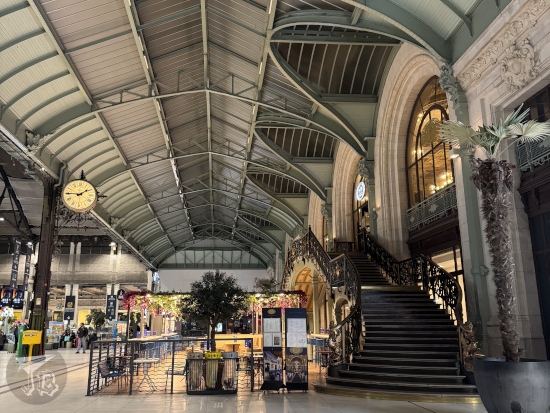
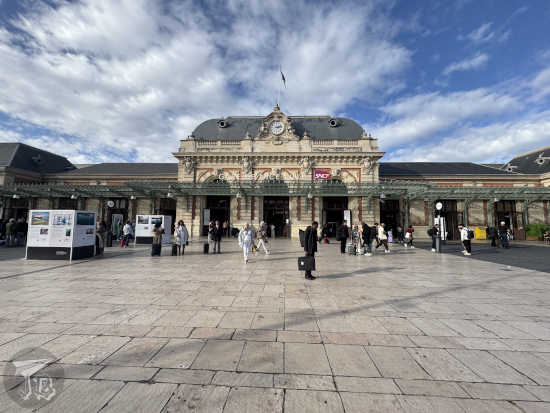
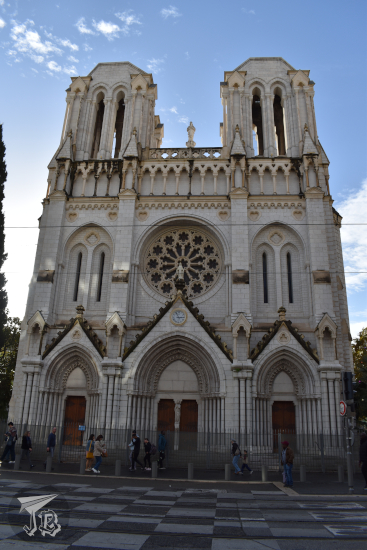
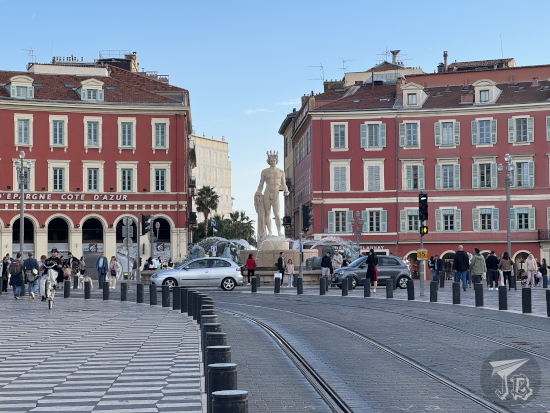
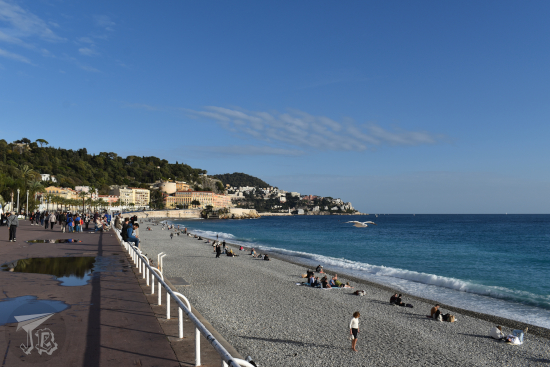
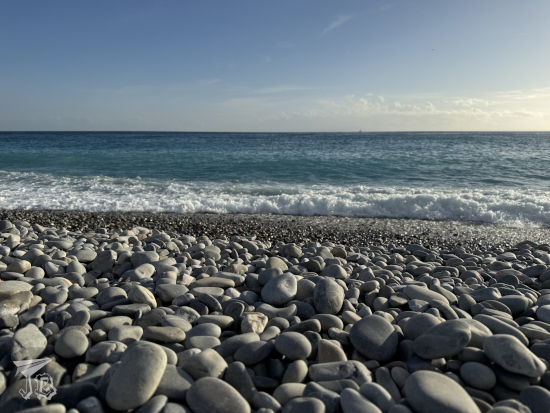
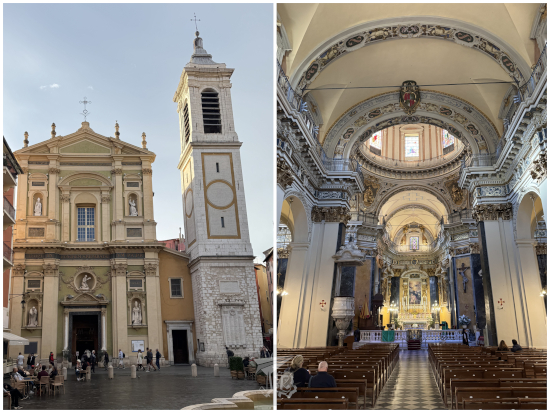
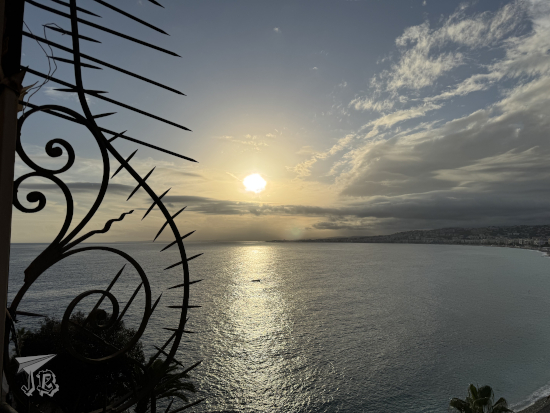
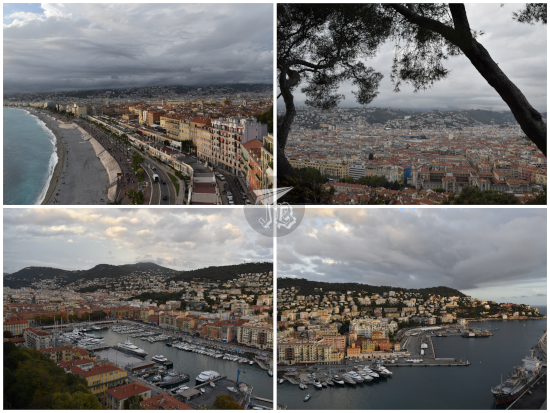
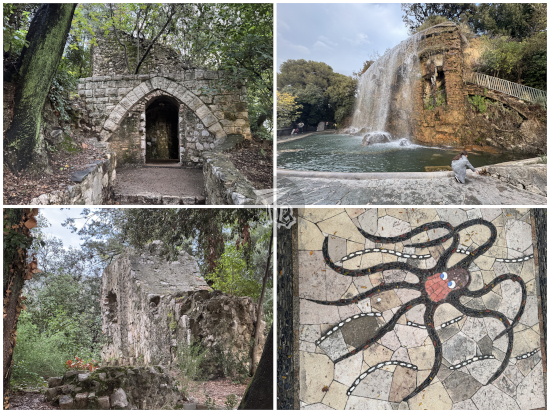
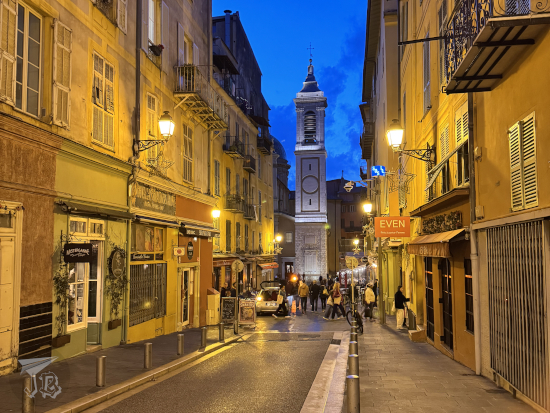
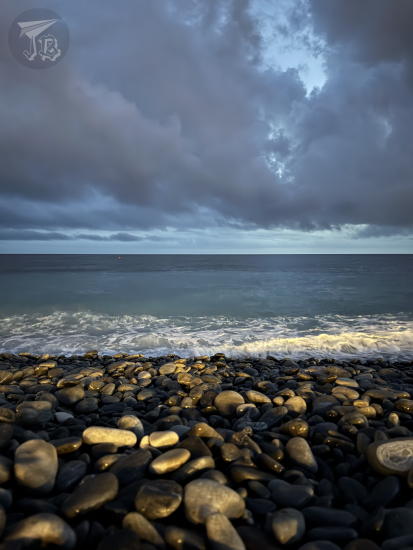
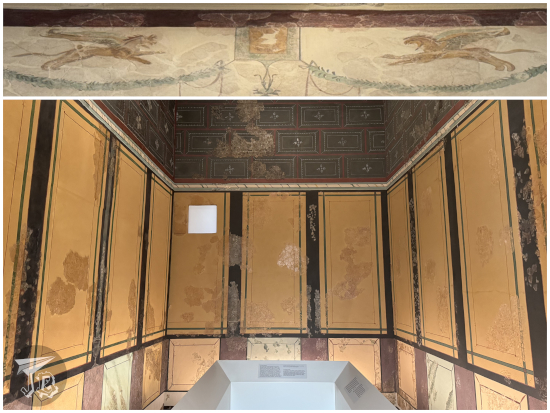


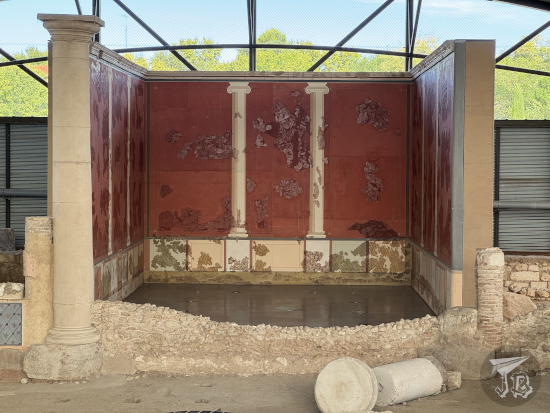
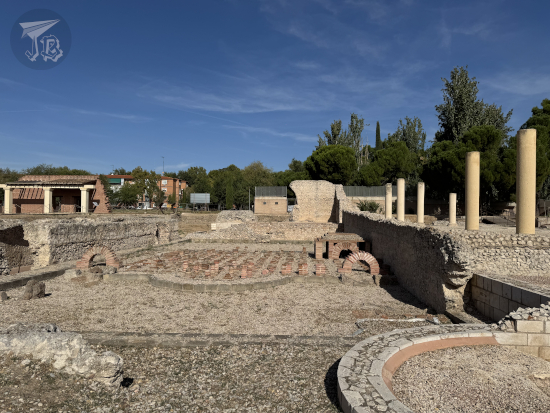

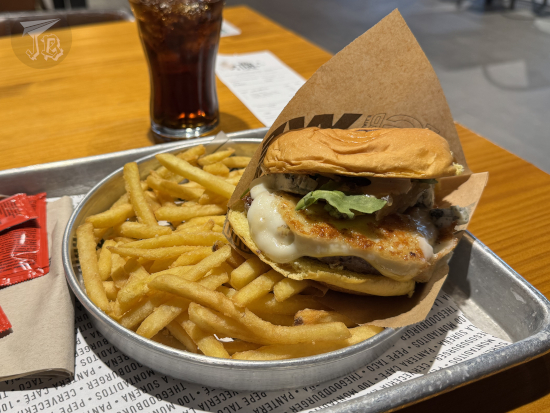
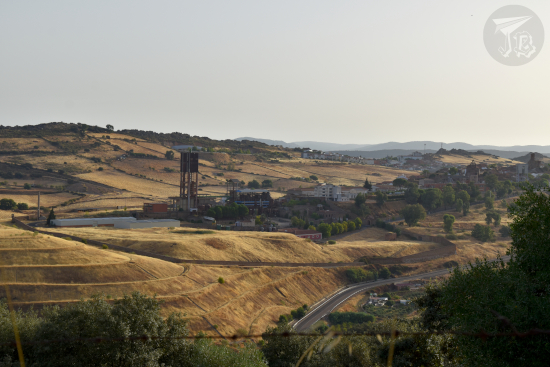
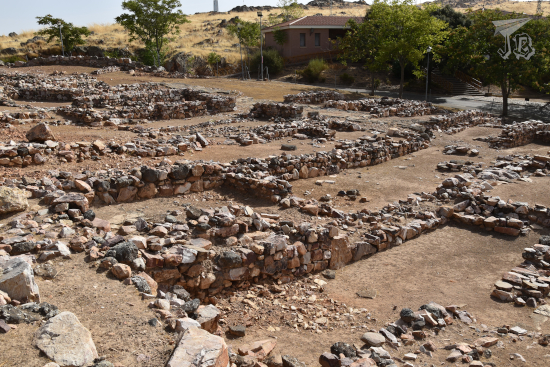


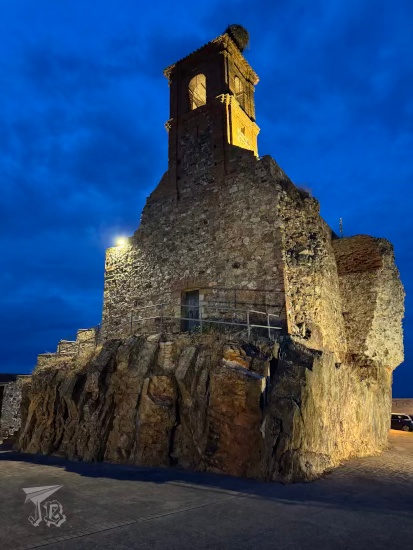

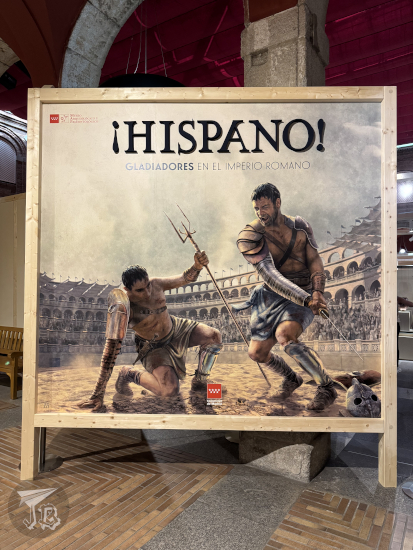
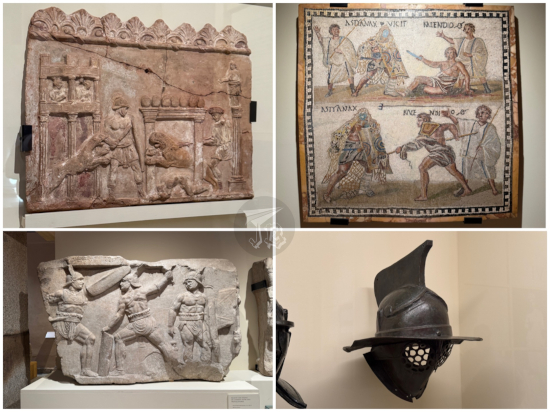

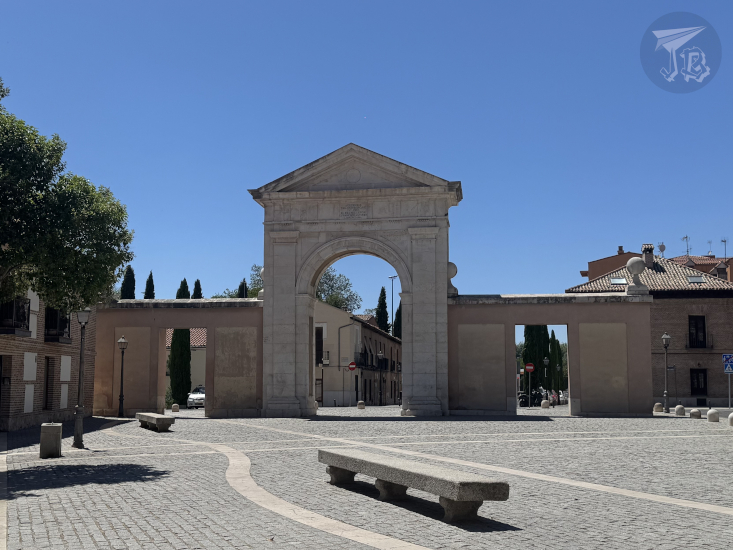


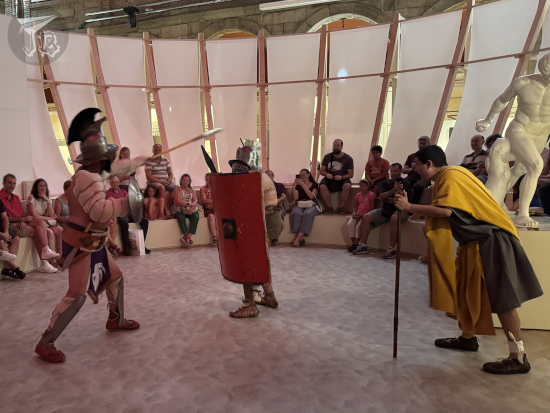
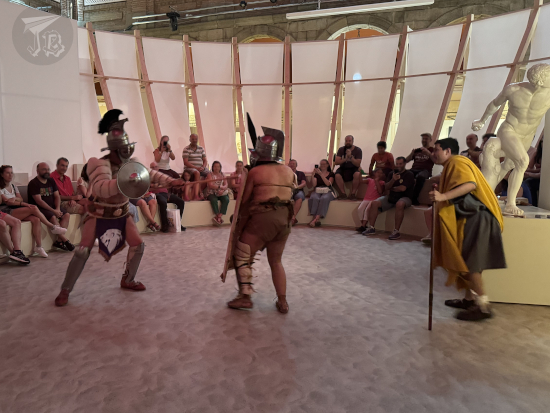

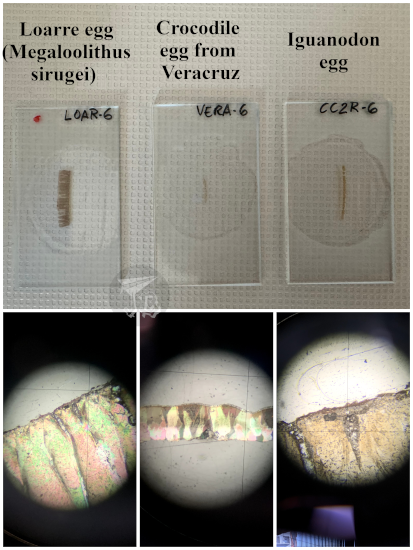
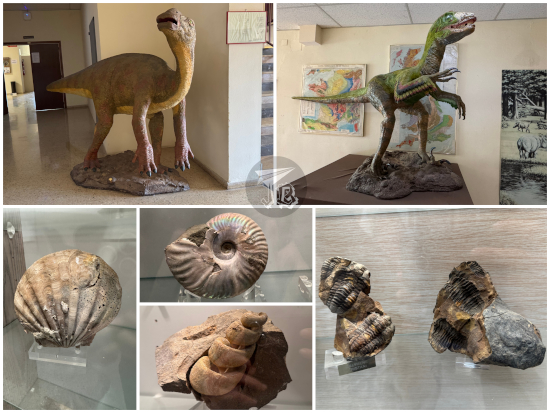
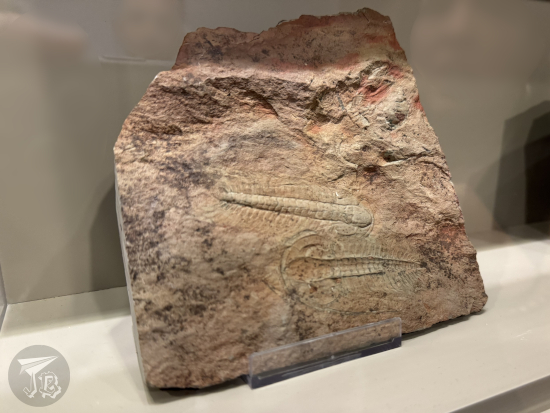
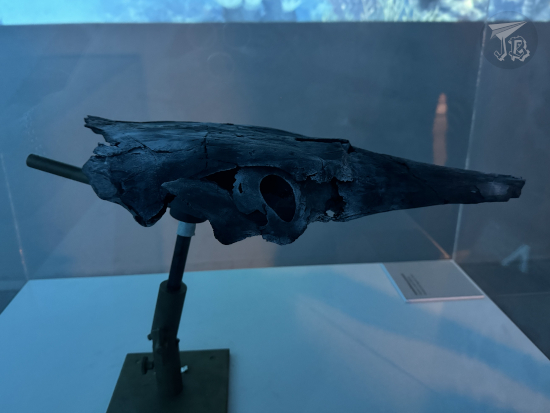
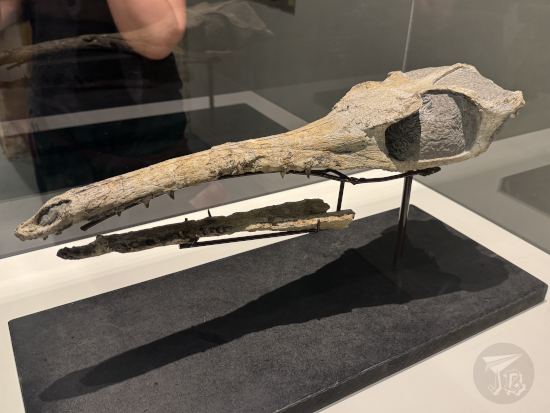

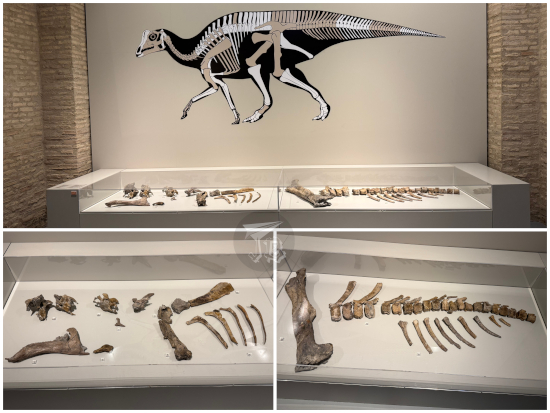


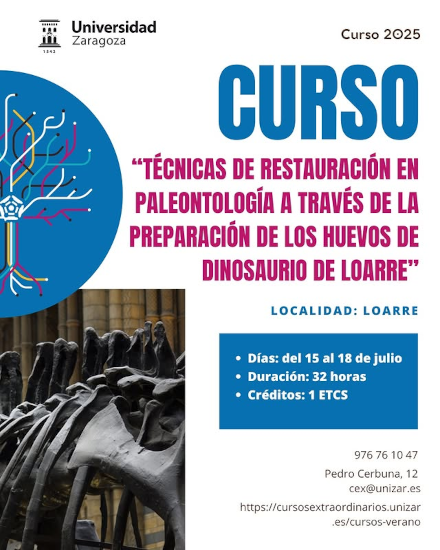


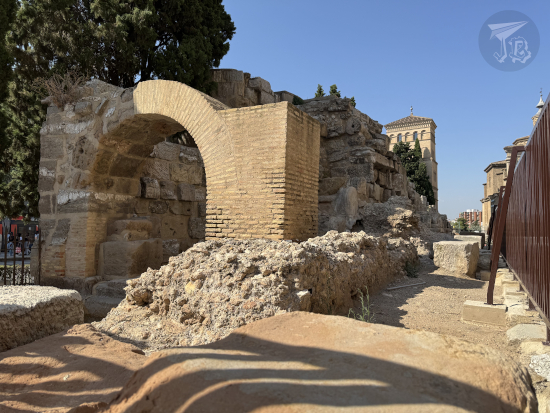

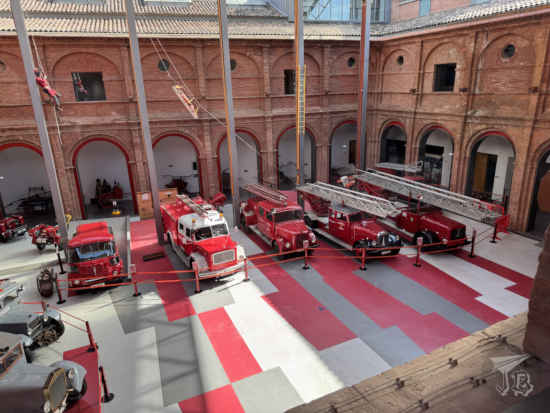


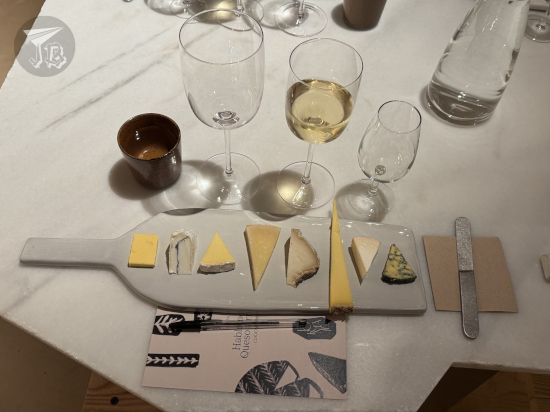

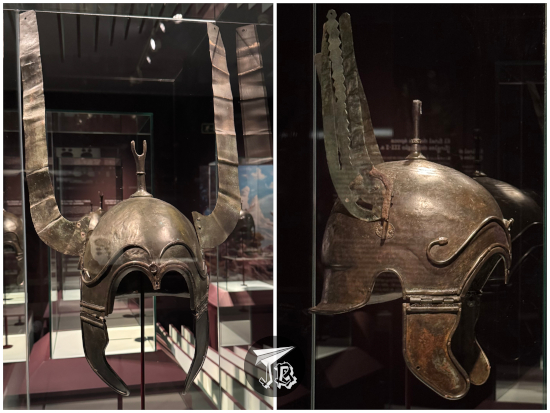

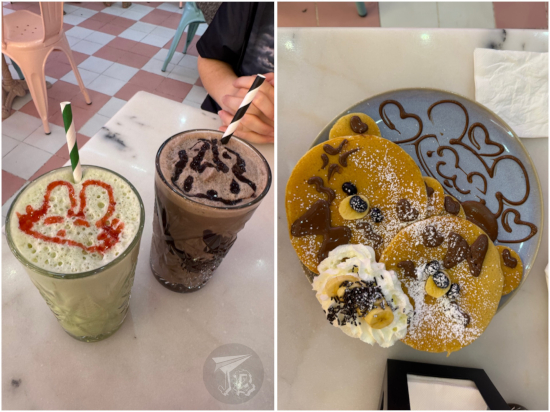

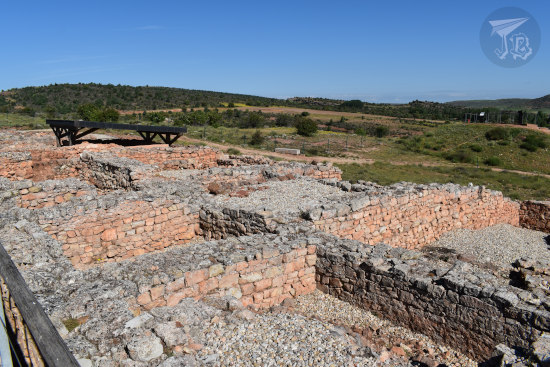

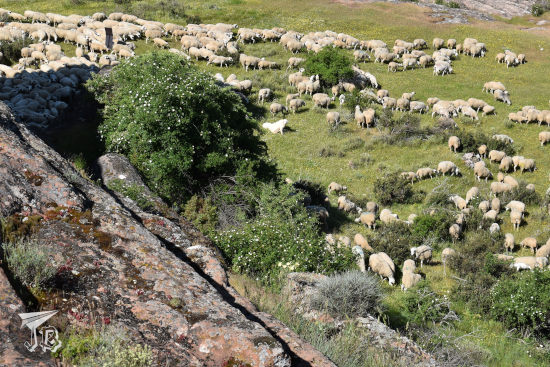
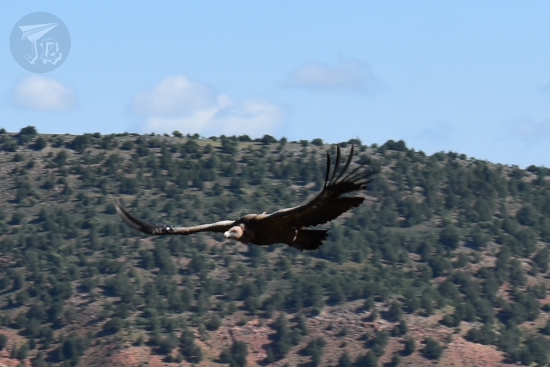
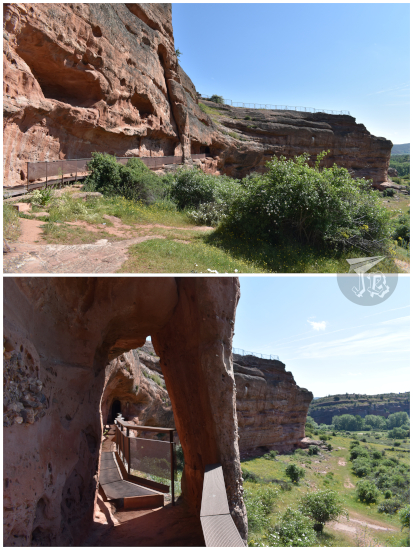

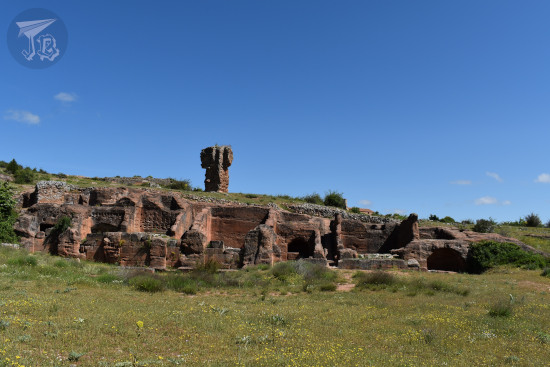
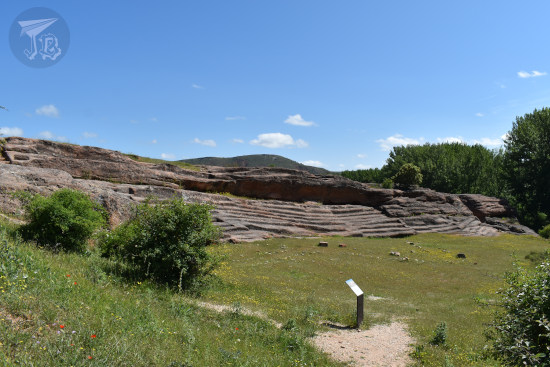

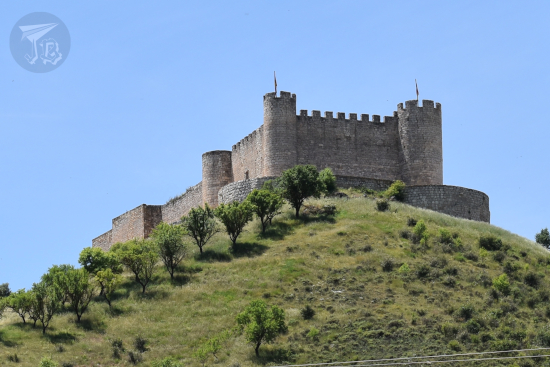

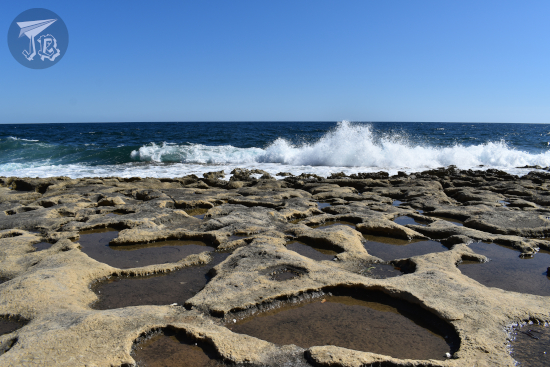

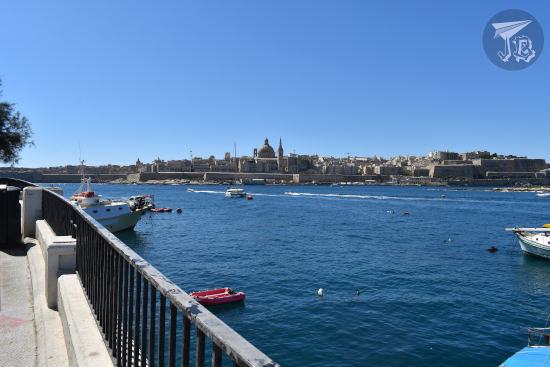
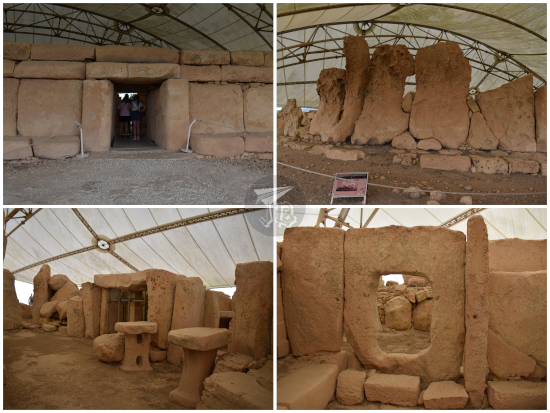
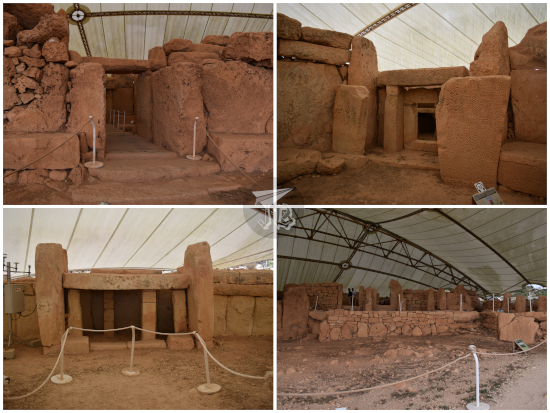
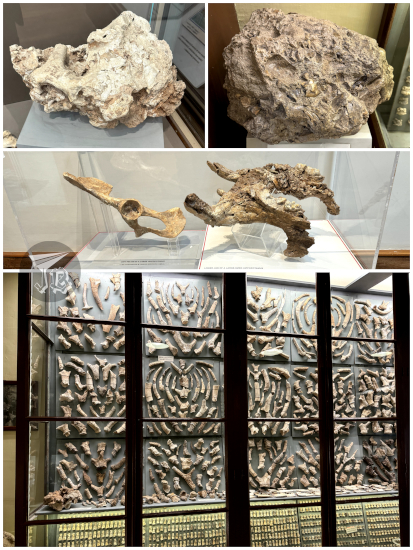
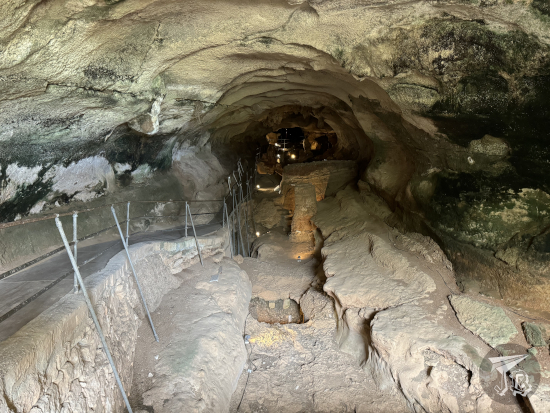
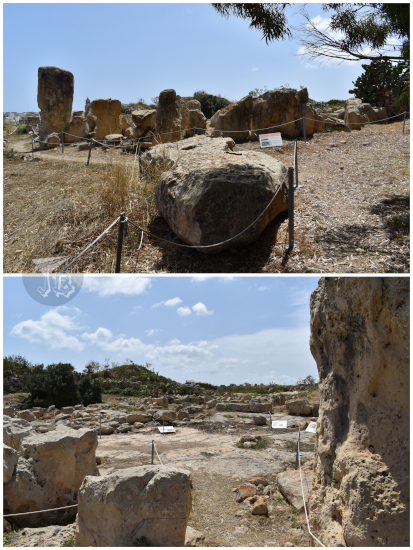
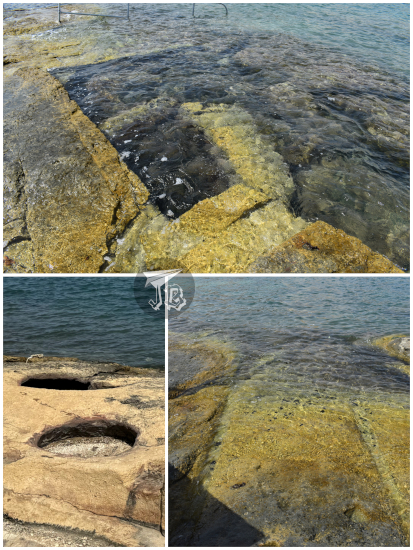
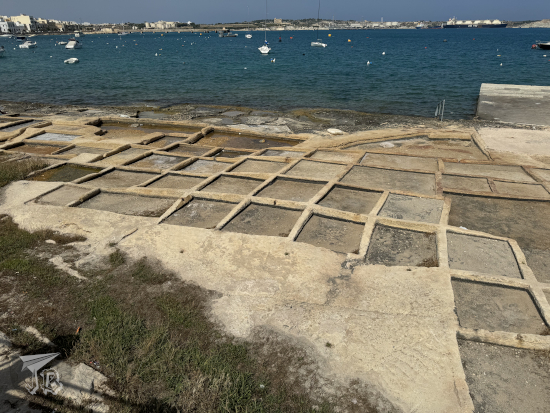
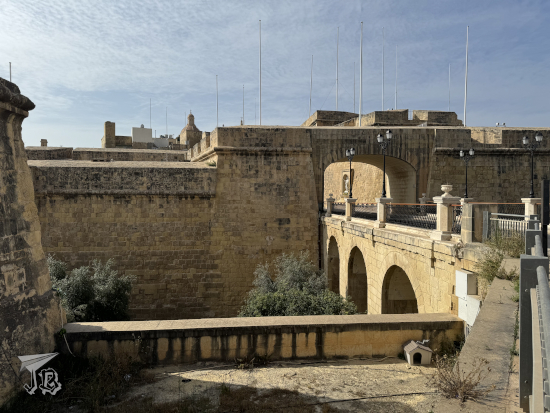

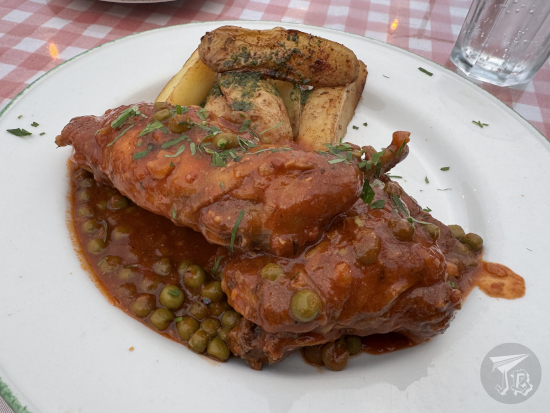

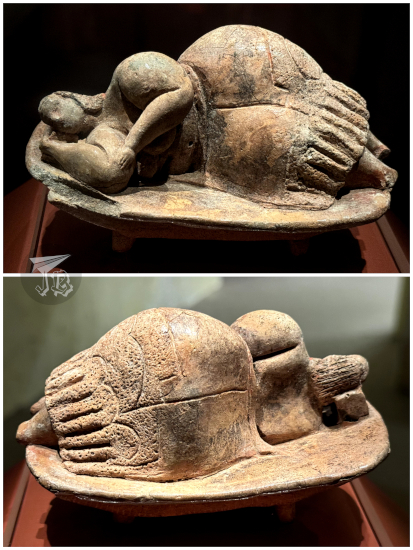


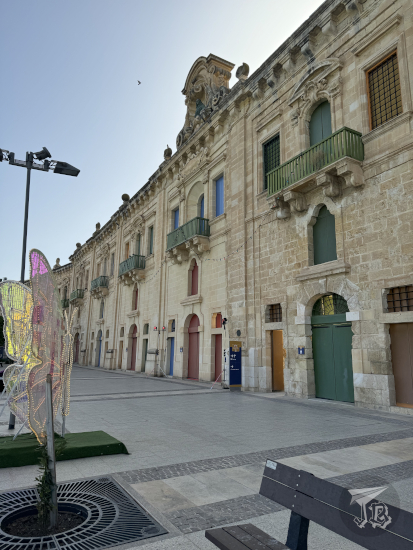
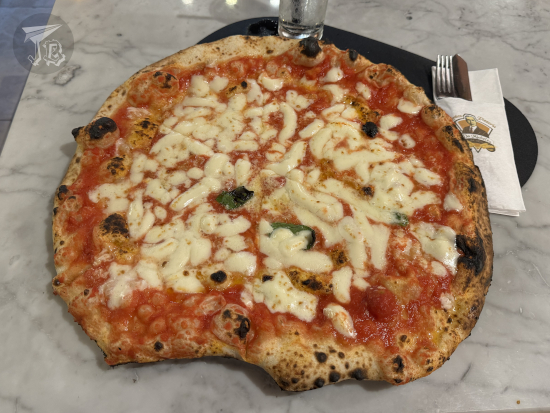
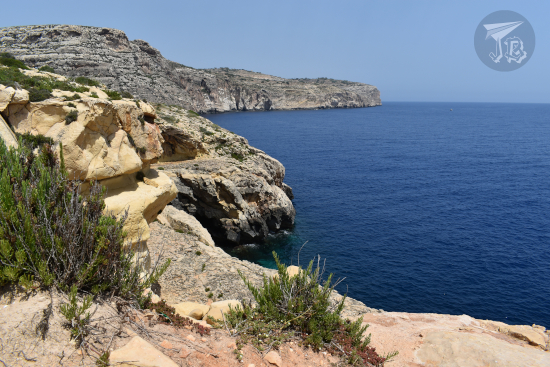


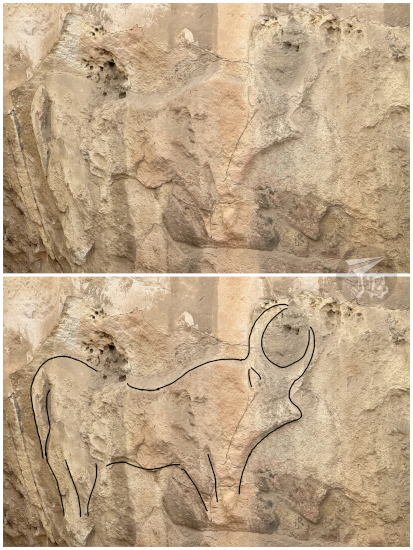
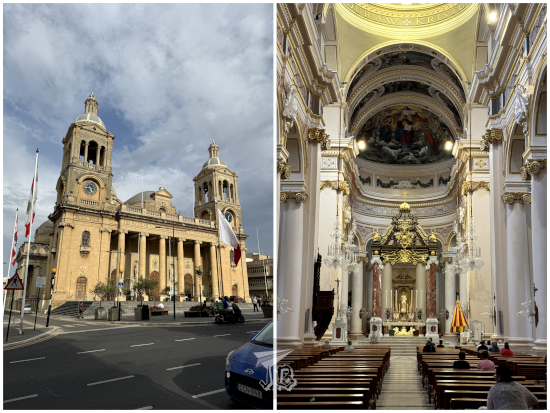
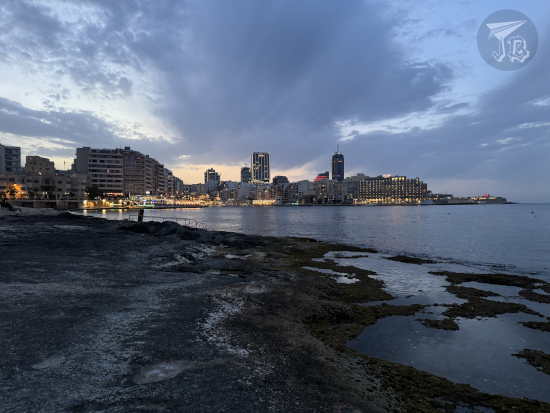

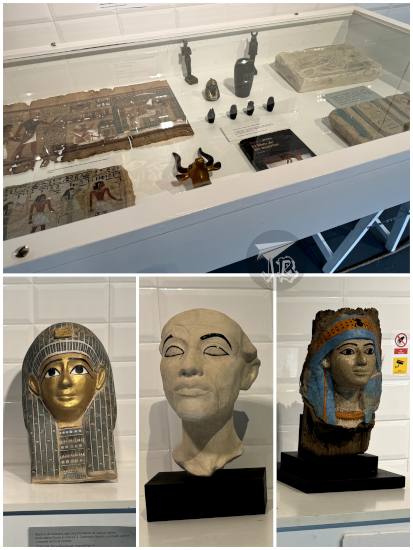
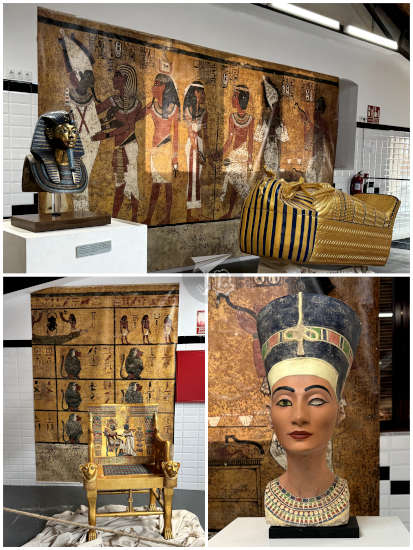

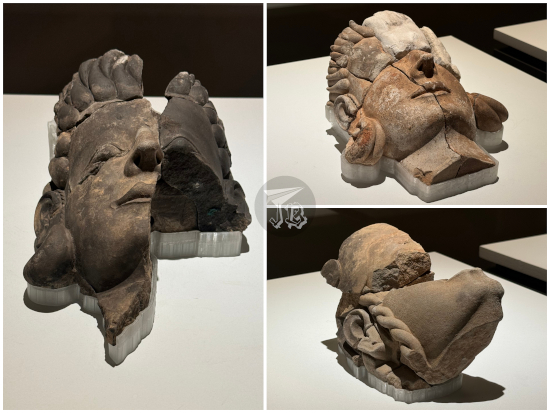

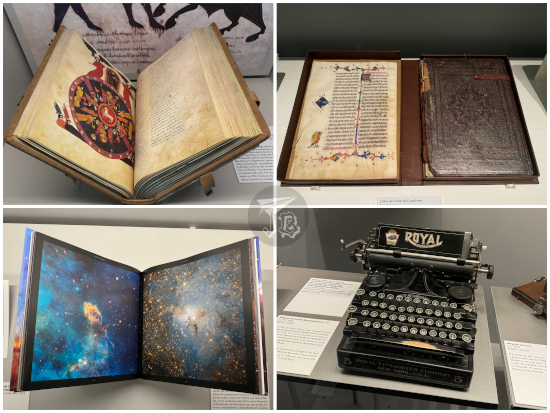

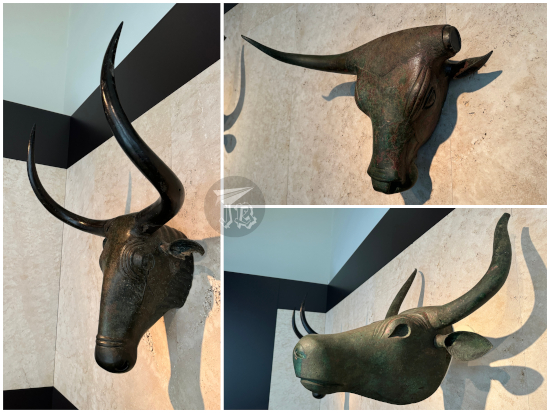
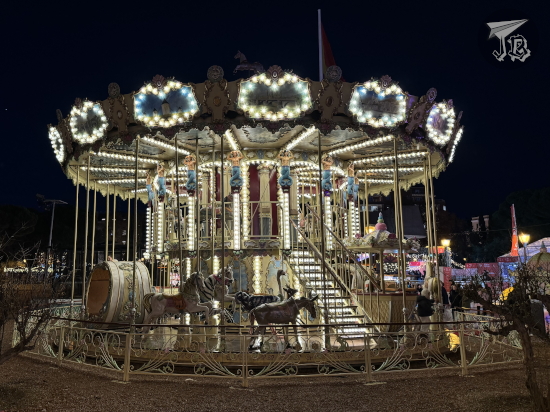


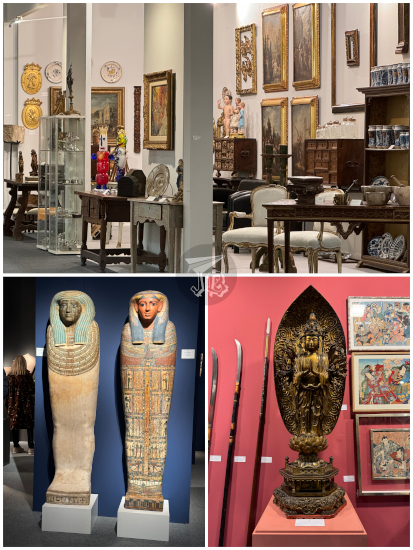
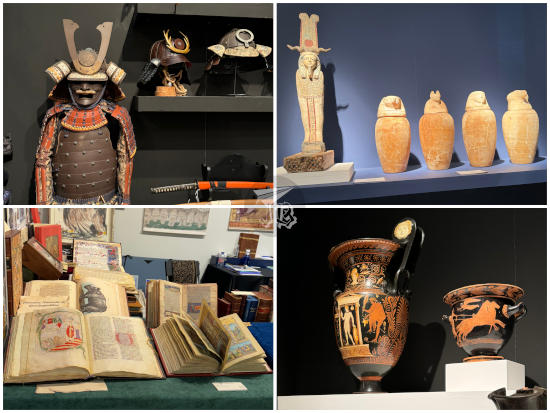


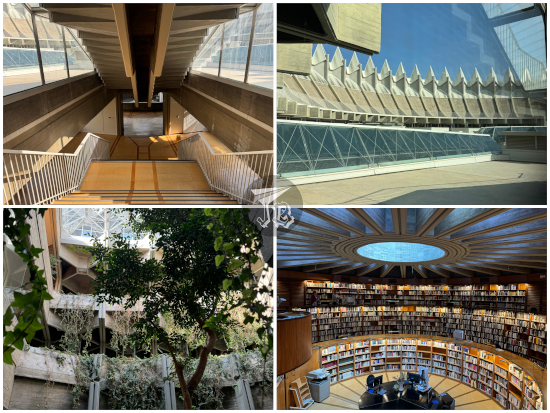

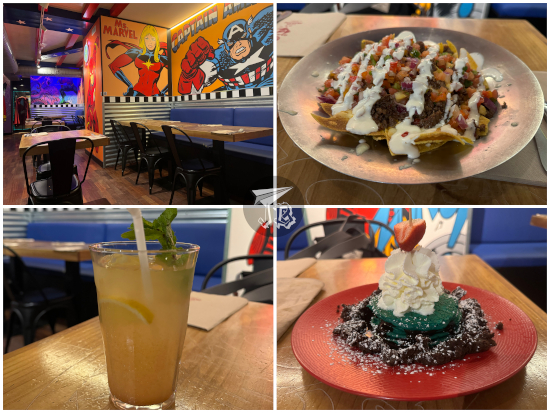
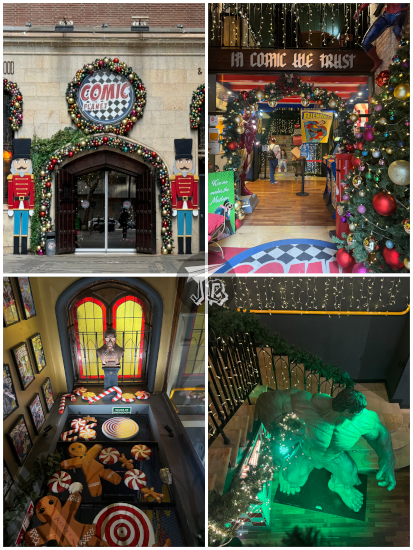


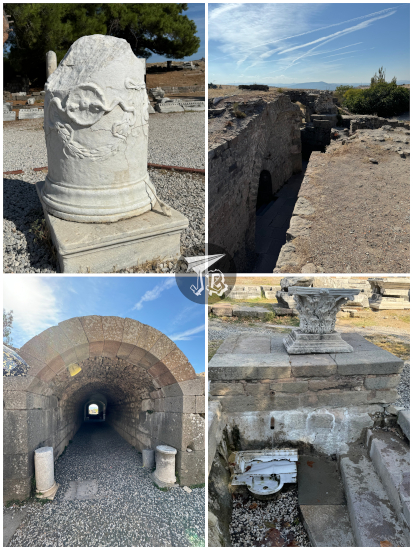
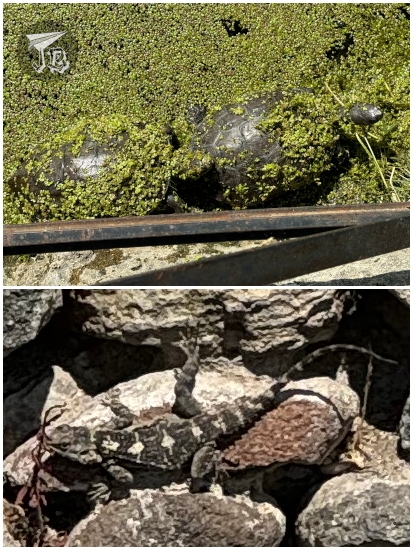
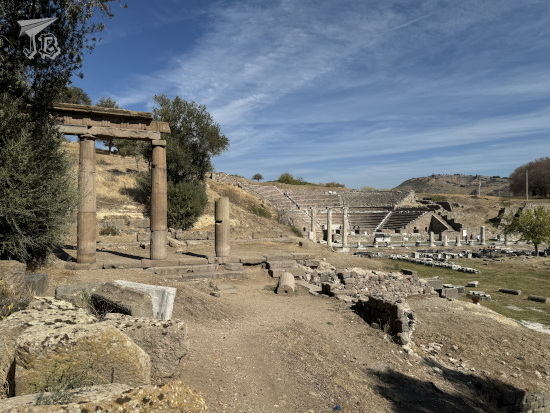

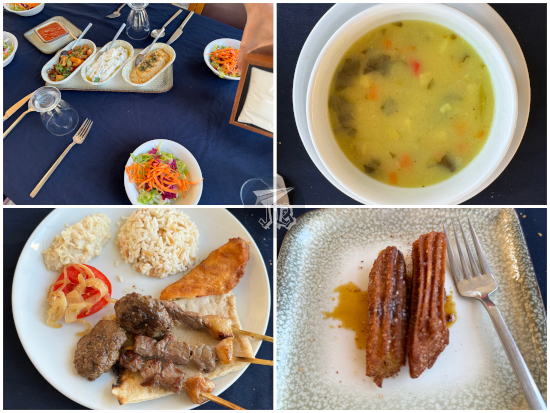


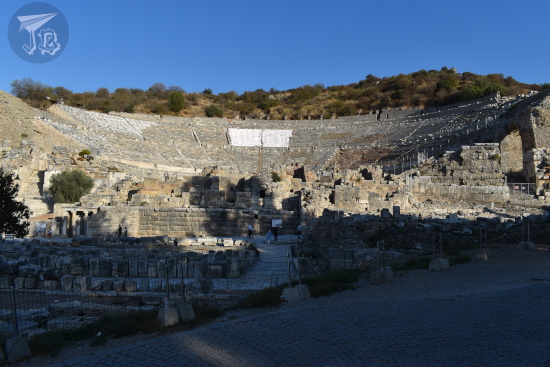
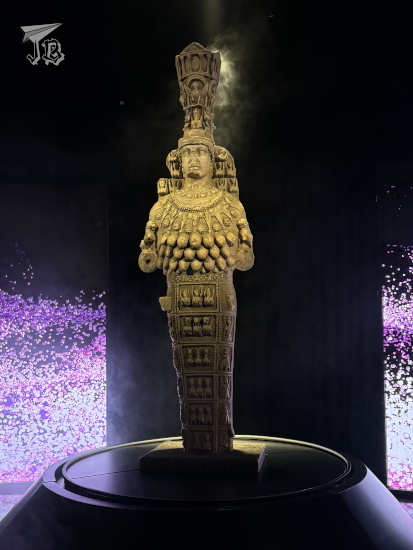
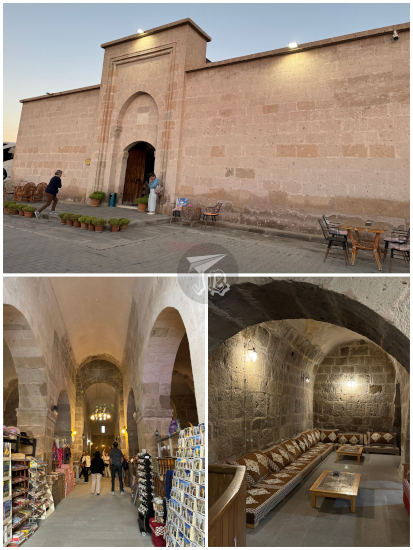

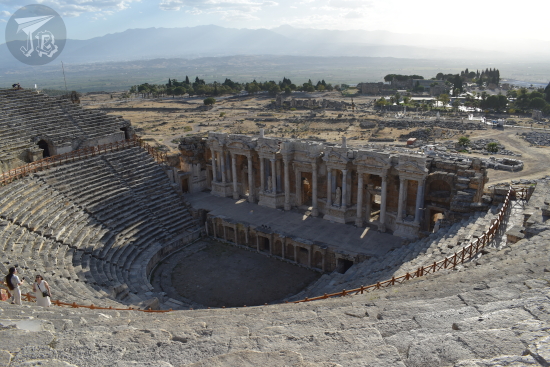
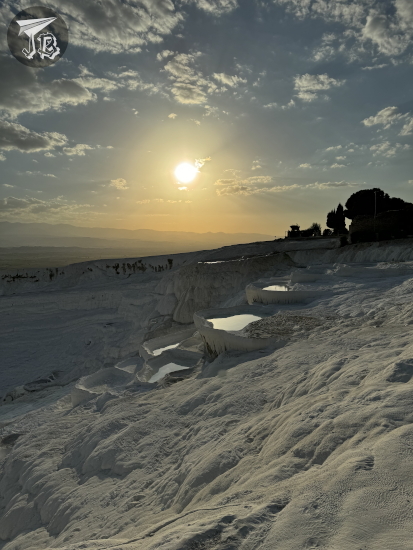


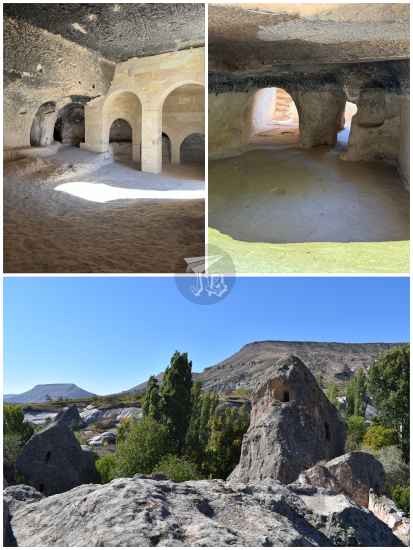
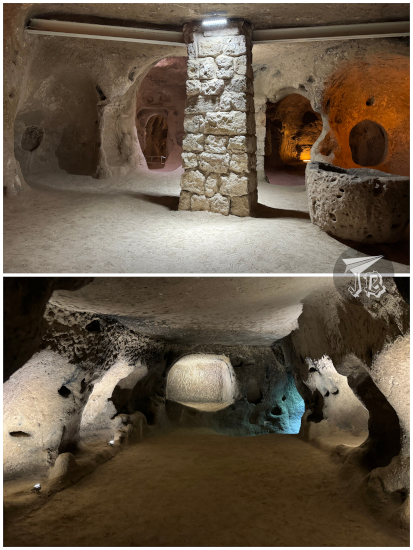
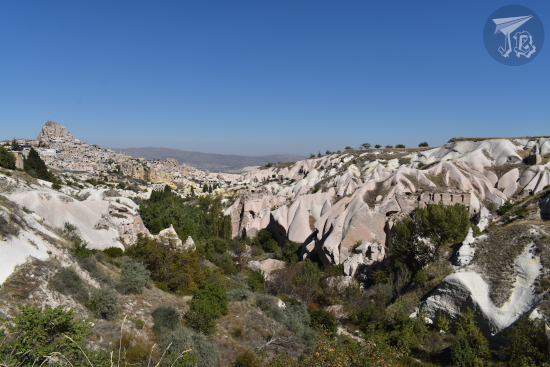
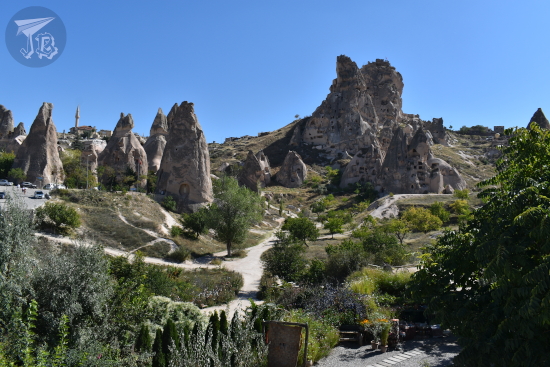
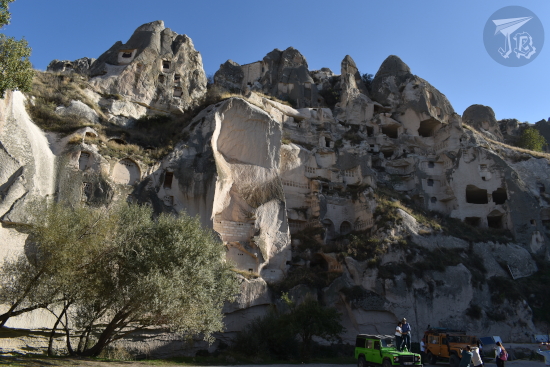


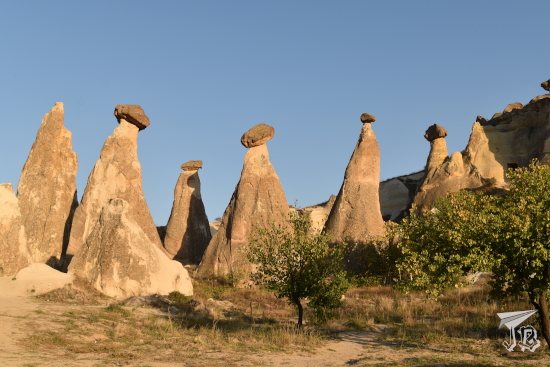
 JBinnacle – A Travel Logbook