2nd January 2016: Palacio de Cristal (Madrid, Spain)

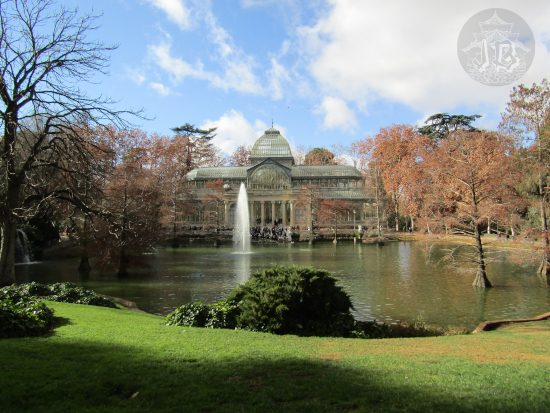
Right after landing back from Scotland there was a couple of things I needed to get going in Madrid. That afternoon I took up the chance and went to see the Palacio de Cristal, or Glass Palace, in the Parque del Buen Retiro (Park of the Good Rest, sort of). The building is a Victorian, iron-cast structure which is currently dedicated to exhibitions. It is a satellite building of the Reina Sofia Museum of Modern Art. It featured an exhibit by the Vietnamese artist Danh Vō – with a hanging Christ and fossilised bones?

And then we found out that there is indeed a parakeet invasion in the Retiro…

27th December 2014: A stroll in the cold (Guadalajara, Spain)

I had a couple of friends over for that silly blursday period between Christmas and New Year’s and we decided to get to Guadalajara for a walk or two. Not that there is much to see, but it has a small zoological park. The Zoológico Municipal de Guadalajara had a rocky start, with small cages and sad animals, but it seems to be trying to do better. The main activity that goes on in the zoo is the recovery of birds of prey, and there are some education programs too.

We had lunch in an all-you-can-eat Asian restaurant that I enjoy because it is one of the few places where I can get myself some sushi.

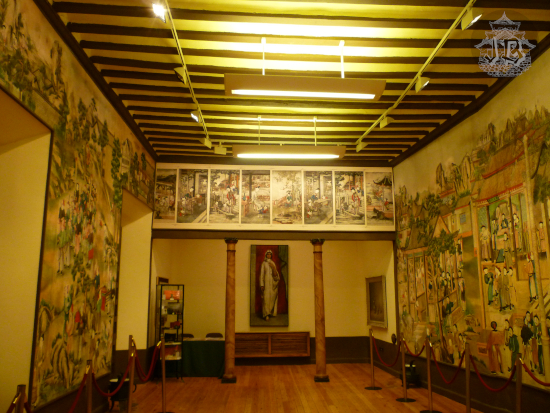
Afterwards, we visited the Palacio de la Cotilla, Cotilla Palace – whose name ‘palace’ is more than overrated. It is a 17th century is a downtown manor in Guadalajara, Spain, formerly owned by the Marquis of Villamejor. One of the rooms, named the “Chinese Room”, Salón Chino de la Cotilla, is decorated with hand-painted rice paper, brought from Beijing, and several Japanese Edo-period paintings which were probably purchased in France from Dutch sailors or merchants.

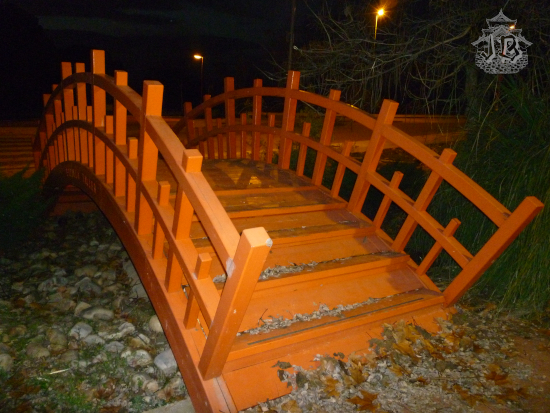
Finally we took a stroll towards a silly spot in the middle of nowhere that has a Japanes-like bridge over… nothing, really, but it is a cute bridge, in the Parque de las Esculturas, Sculpture Park.

After that we just headed back home because it was dark and cold and pizza could be ordered (≧▽≦).

10th – 12th October 2014: In Leon (Spain) with Family

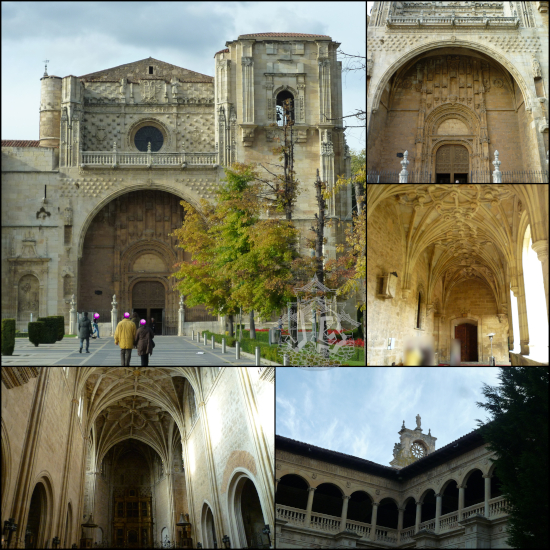
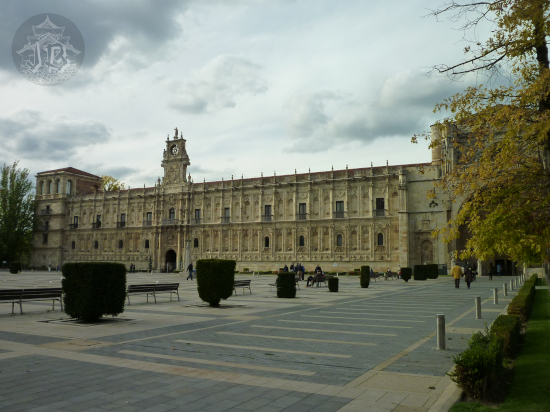
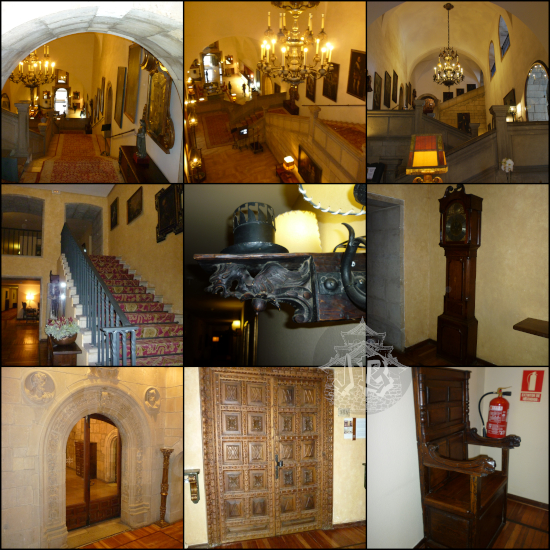
The year my father retired we went to have a nice weekend out, and we chose to drive to León, a historical city towards the north of Spain. I had to work on Friday afternoon, so we drove off in the early evening and reached Leon after dusk. We were staying at the Parador, called Hostal de San Marcos for a couple of nights. The building was luxurious, it was one of those one-in-a-lifetime experienced. The hotel is a former convent built in the 16th century, and it distils magic.

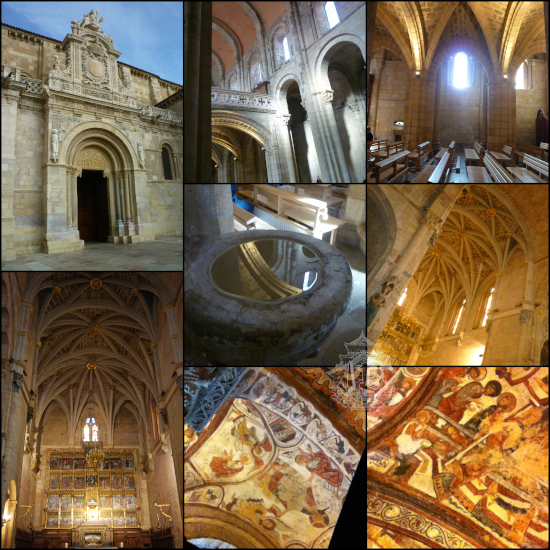
On Saturday morning we set off to visit the Basílica de San Isidoro de León, a Christian church dating from the 10th century. It is famous due to the 12th-century paintings that decorate the Pantheon of the Kings of León underneath the church.

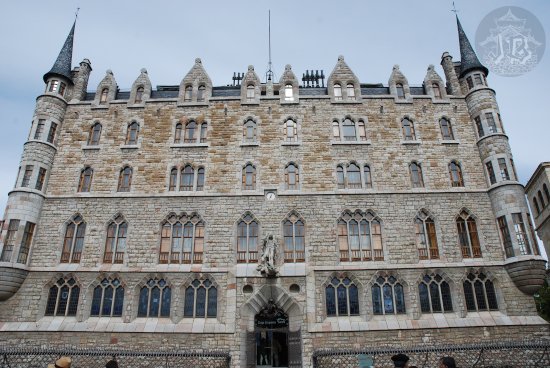
After this, we walked into the town centre and we came across the Casa Botines, a Modernist-style building erected by Gaudí, now a bank.

A bit further we saw the came across the local seminary, the Seminario de San Froilán.

We went on and found the local farmer’s market, the Mercado Tradicional de Productos Agrarios, which was in the Main Square of the city.

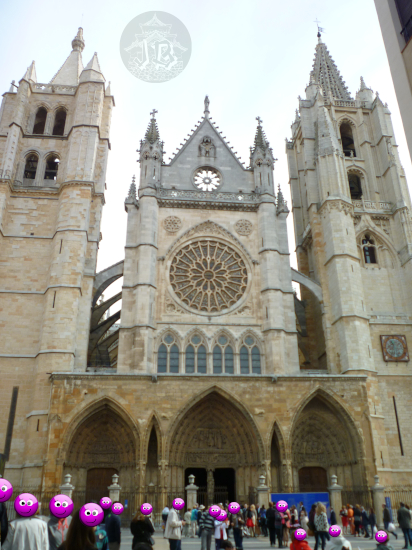
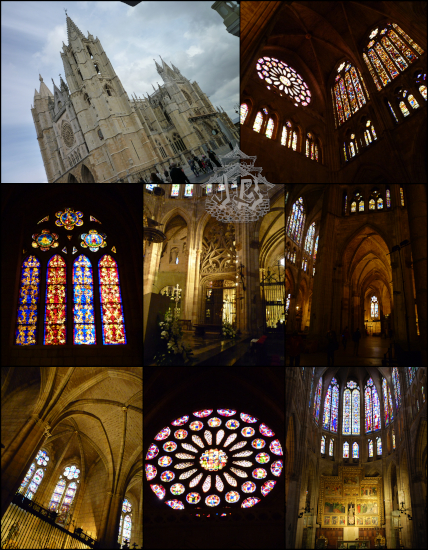
Finally, we circled back towards the cathedral, Santa María de León, a Gothic building built in three steps – the main building was built all throughout the 13th century, the north tower in the 14th century, and the south tower in the 15th century. The difference in the towers is easy to spot (≧▽≦). One of its key features are the stained-glass windows.

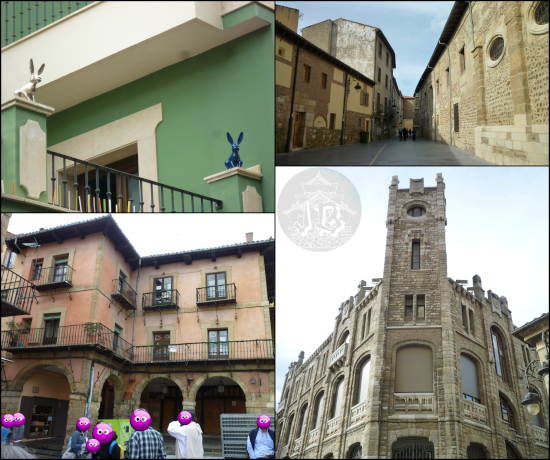
Upon leaving the cathedral, one of my favourites, by the way, we took an extra walk in the historical area, and found cool buildings and decorations.

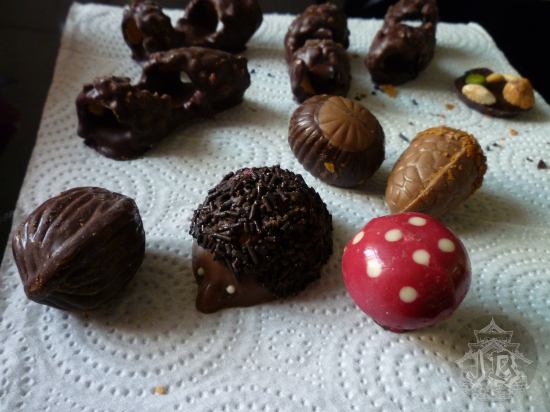
We had lunch, then returned to the Hostal de San Marcos. On our way back we found the cutest sweet shop that made adorable chocolate figurines.

We saw the Iglesia de San Marcos, the adjacent church, and then I explored the whole hotel a little.

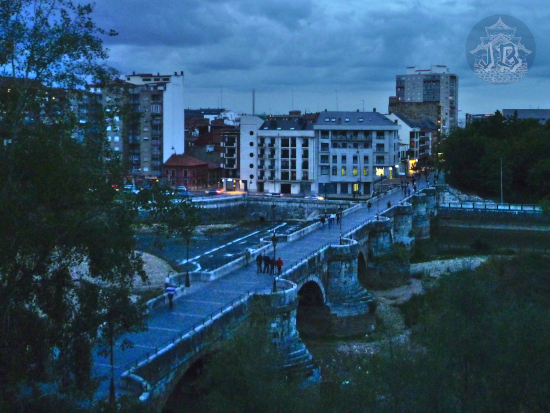
Also, I discovered that I could see the Puente de San Marcos, a stone bridge over the Bernesga River, from my room.

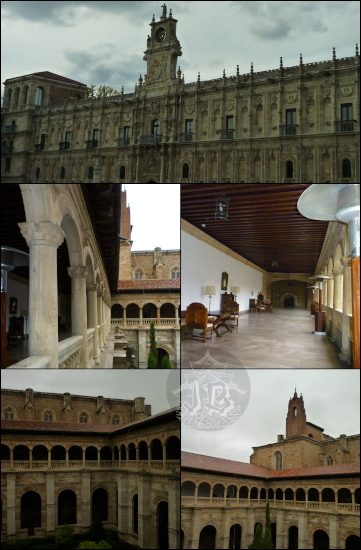
We drove off on Sunday morning, because the weather was nasty and the forecast was worse, so we wanted to be out of the area when the storm really hit. But before that I managed to get to the second floor of the cloister and explore some more.

1st June 2014: “La Mirada Interior” exhibition in Guadalajara (Spain)

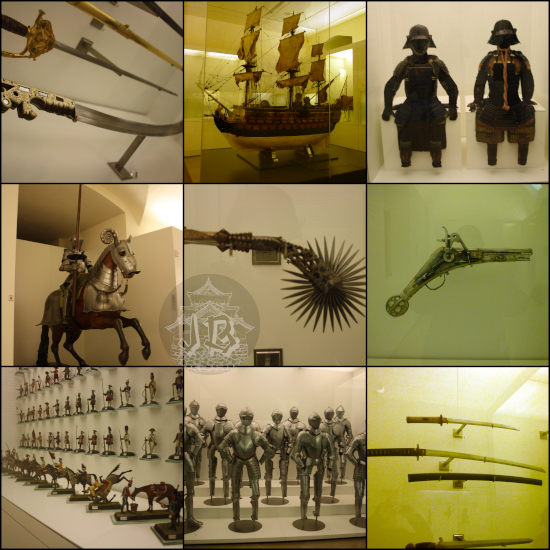
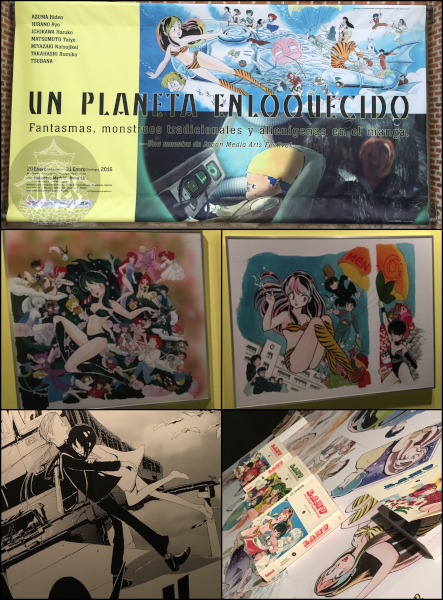
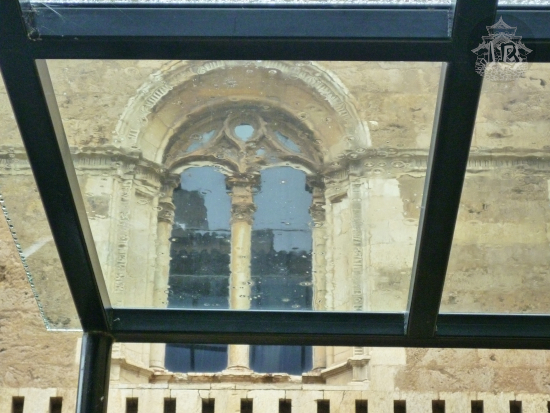
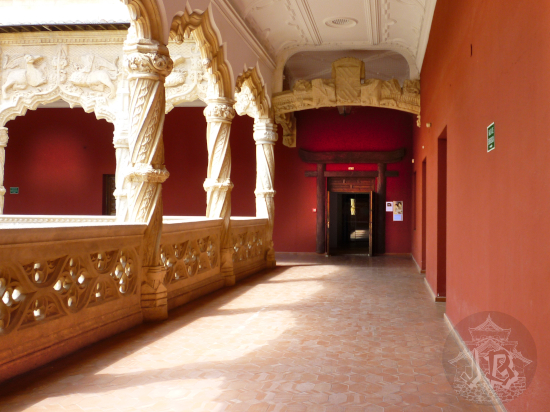
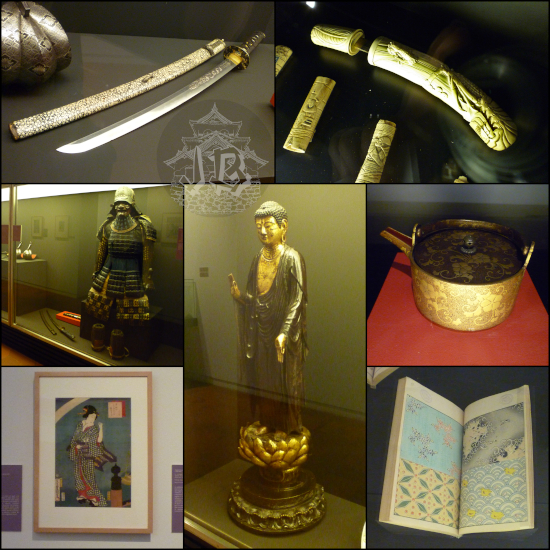
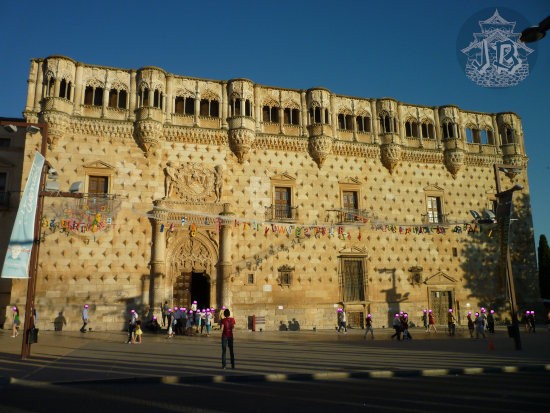
This Japanese-culture exhibition was held in the Palacio del Infantado in Guadalajara and I dropped by because seeing Japanese stuff in a Gothic palace was… well… weird. Here are some pictures:

30th December 2013 – 1st January 2014: New Year’s in Toledo (Spain)

30th December 2013: Arrival in Toledo

We took an early train to get to Madrid, and transferred to the high-speed line (AVE) to get to Toledo – the ride from Madrid was barely half an hour. Toledo is known as “the city of the three cultures” as during the Middle Ages, Christians, Muslims and Jews managed to live in peace there, and make it prosper. Today it is a tourist hub in the centre of Spain.

The first thing that we did was head off to the Alcázar (Muslim castle) – although it was originally built by Romans in the third century, its current look is owed to the restoration carried out in the 1540s. However, it had to be restored after the Spanish Civil War. The Siege of the Alcázar was one of the most symbolic victories on the Nationalist band. The Alcázar was under siege during the whole summer by Republicans trying to take it over, but in the end, Nationalist reinforcements arrived, chasing the Republicans away. Today, the Alcázar is an important cultural building (where the bullet holes can still be found) and hosts the Museum of the Army, Museo del Ejército.
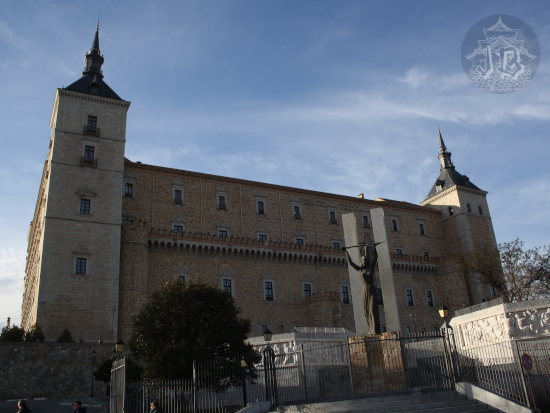
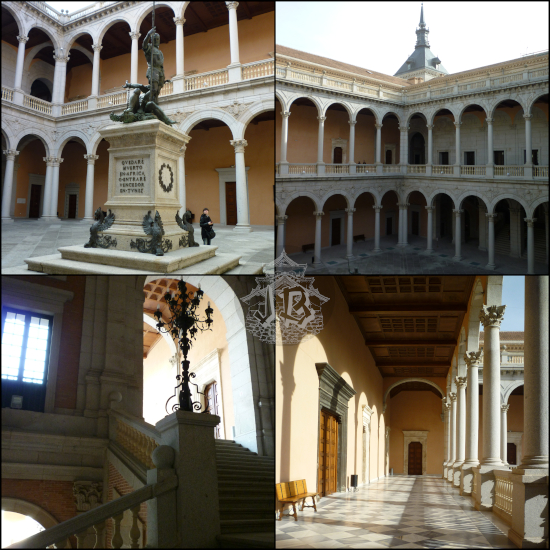
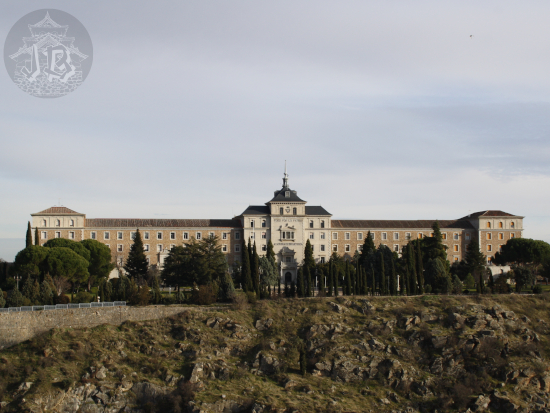
From the vantage point of the Alcázar, we could see the Academia de Infantería (Toledo Infantry Academy), built in the 20th century in imitation of the Renaissance and Herrerian style.
We also saw the Castillo de San Servando, the Castle of San Servando, a fortified Knights Templar enclave. Fine, it started off as a regular monastery, but it was later given to the Knights Templar in order to protect the city.
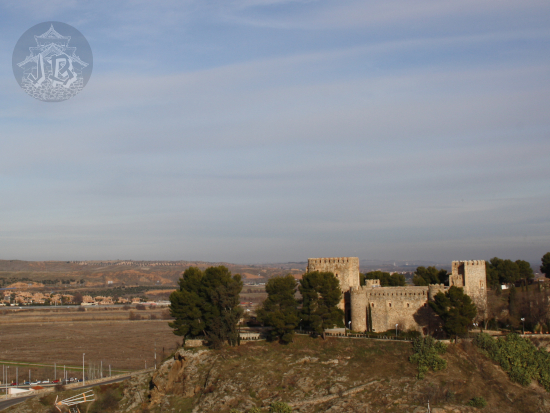
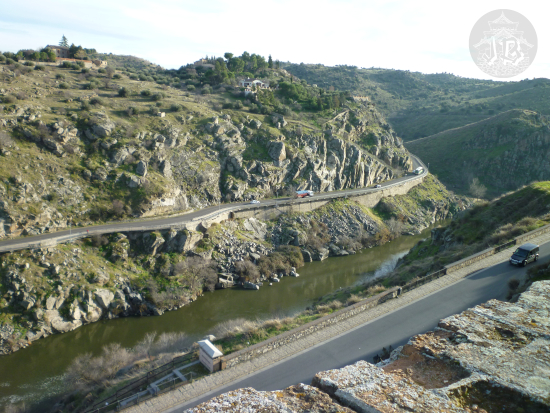
Both buildings are on the other side of the Río Tajo, the Tagus river, the longest river in Spain.
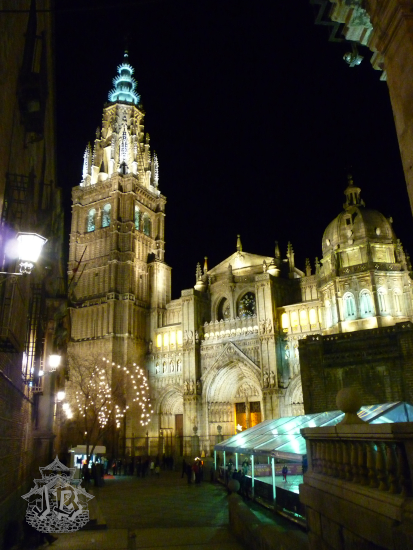
After having lunch and checking into the hotel, we visited the cathedral Catedral Primada Santa María de Toledo (Primate Cathedral of Saint Mary of Toledo). The cathedral, built in Gothic Style, was erected mainly throughout the 13th century, even if it was only finished in the 15th century. It sports two asymmetric towers, well, one tower and a small Mozarabic chapel in place of the other one.
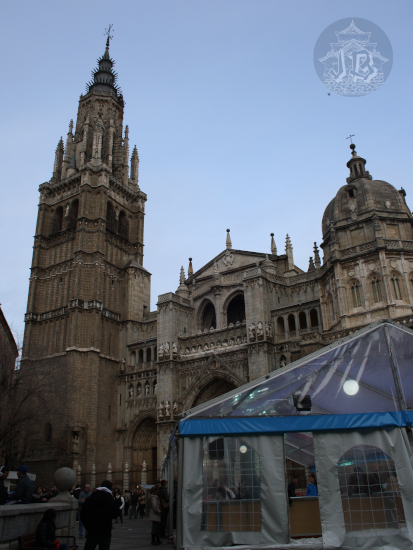
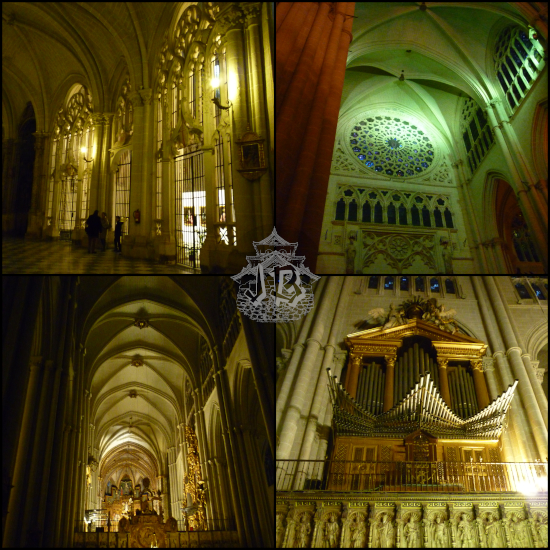
By the time we came out of the cathedral, night had fallen – truth is that we missed a little on the pretty windows due to it being darkish outside already. Nevertheless, this treated us to some nice night views. First of all, of course, the cathedral itself…
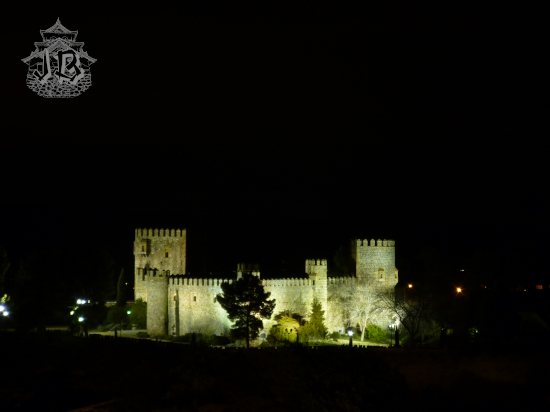
The Alcázar once again…

… and the Castle of San Servando.
We then walked through the Plaza de Zocodover, one of the city squares, where the old Muslim for cattle and horses was. The current layout was set in the 16th century after it burnt down in a fire.

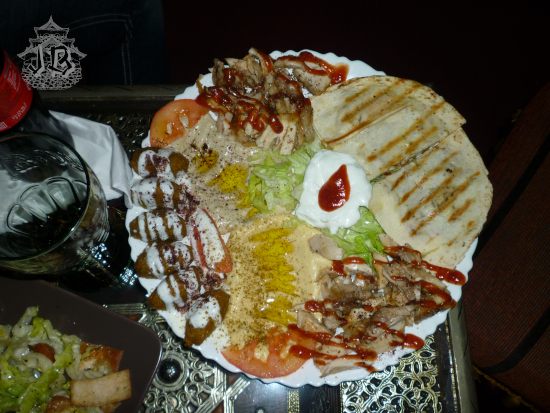
We walked around the old town for a while until we found a place to have dinner, a Middle-East restaurant called La Casa de Damasco, one of the few times I’ve had real food from this area. I have to say I really enjoyed it.

31st December 2013: Churches and Birds

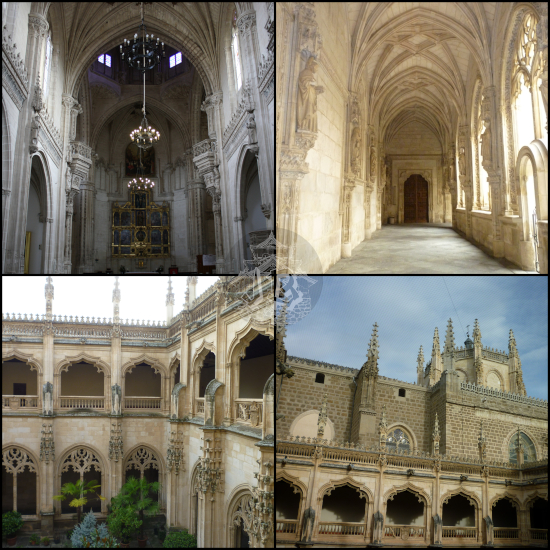
We started off the day at the Monasterio de San Juan de los Reyes (Monastery of Saint John of the Monarchs) is an Isabelline style Franciscan monastery. It was founded by the Catholic Monarchs to celebrate the birth of their son along with their victory in the Battle of Toro, in the late 15th century. It has a beautiful Gothic cloister.
Our next stop was one of those things that breaks my brain, a Christian Mosque, Mezquita del Cristo de la Luz. It was built in the year 999 as Bab-al-Mardum mosque, but it was turned into a Christian Church in 1085. I’m torn between rolling my eyes at Religions needing to assert dominance and being grateful the Mosque was preserved for us to visit.

Close to the Mosque stands one of the gates of the old walls, the Puerta del Sol, the Sun Gate, of the city walls.

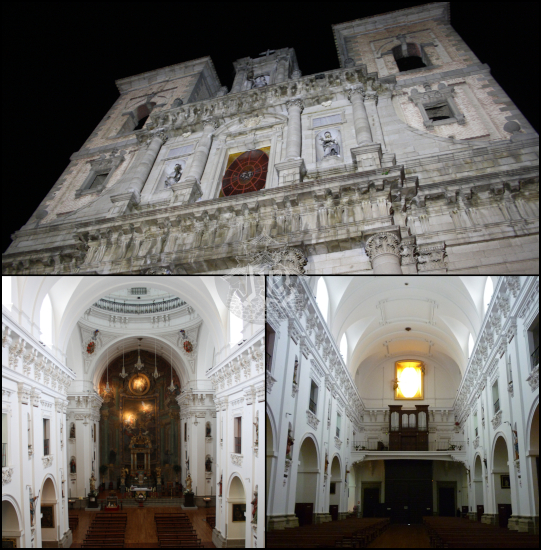
Our next stop the Iglesia Jesuita de San Ildefonso, a church dedicated to Saint Ildefonsus, the patron saint of the city. Construction started in the early 17th century and ended in the mid 18th century, in the Baroque style.
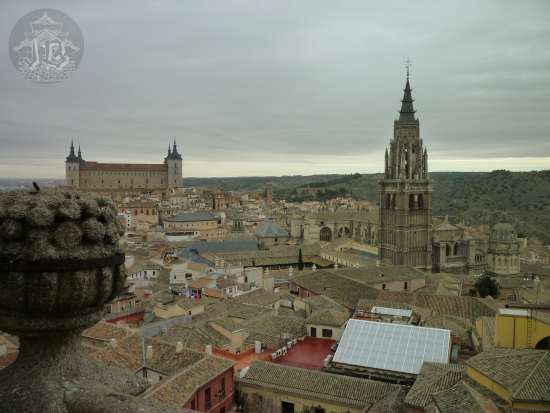
From the upper towers of the church, there was a great view of Toledo.
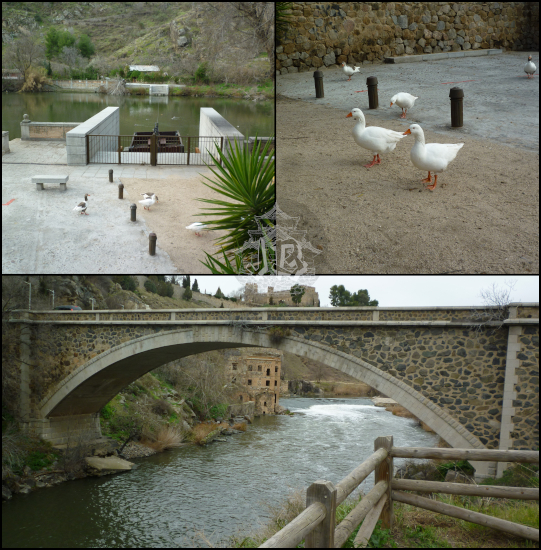
We decided to walk down towards the river, Río Tajo, where we met a flock of geese (which I’m happy to report had not lost their heads to any kind of stupid animal-hurting tradition).
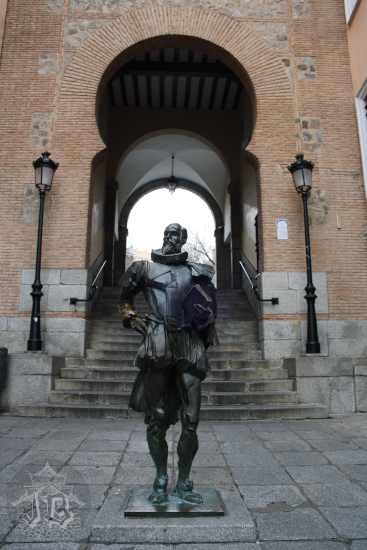
As we continued, we walked past a sculpture to Miguel de Cervantes, Estatua de Miguel de Cervantes, the author of the acclaimed “Don Quijote” book. The statue is placed beyond the Arco de la Sangre , the Blood Archway, that leads into the Zocodover Square.
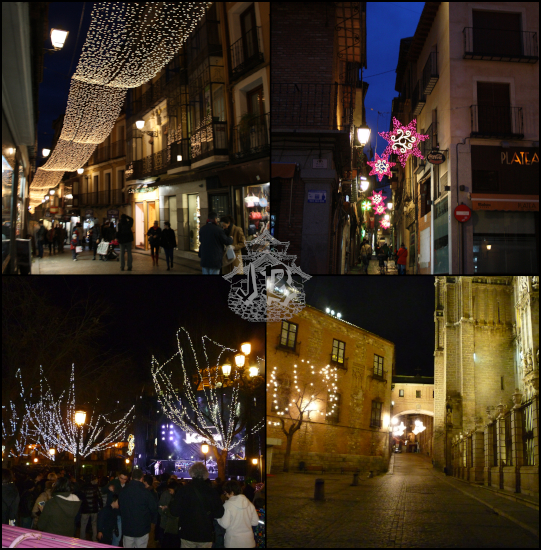
As darkness rose, we had dinner in a Chinese restaurant. While we did, the lights turned on, and the city got ready to welcome the New Year with fireworks.
1st January 2014: Views of Toledo

We slept in, and after an early lunch (Chinese, again, as we were feeling decadent), we booked a ride in the “tourist train” that took us to see some of the most amazing views of the Medieval Town from the vantage points on the other side of the Río Tajo.
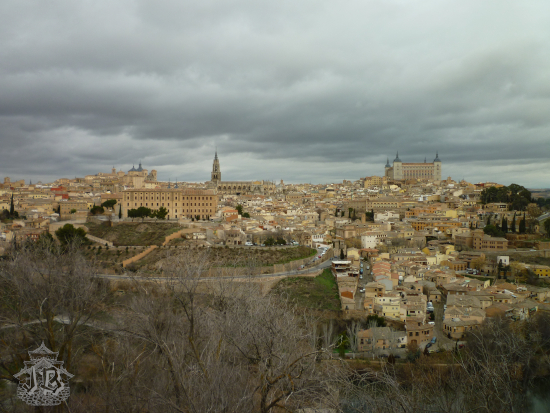
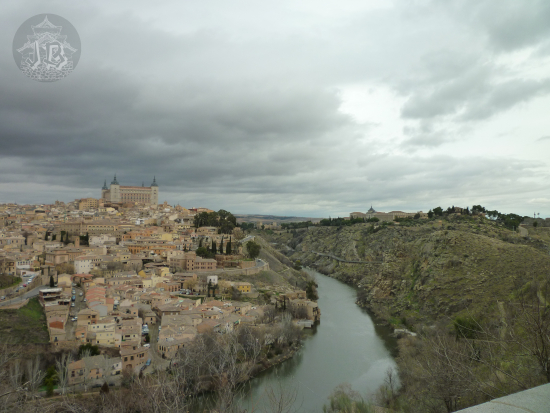
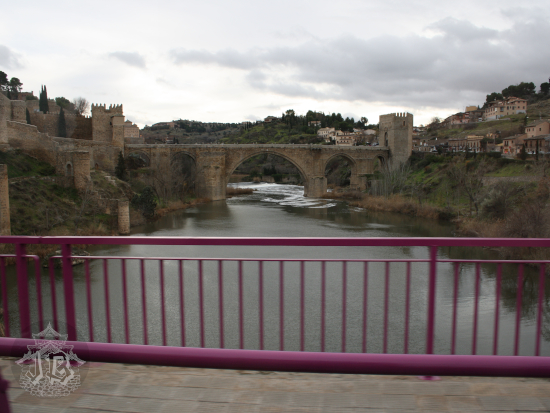
On the way back we saw the Puente de Alcántara, a Roman arch bridge built upon the foundation of the city after the Celtic settlement was taken over.
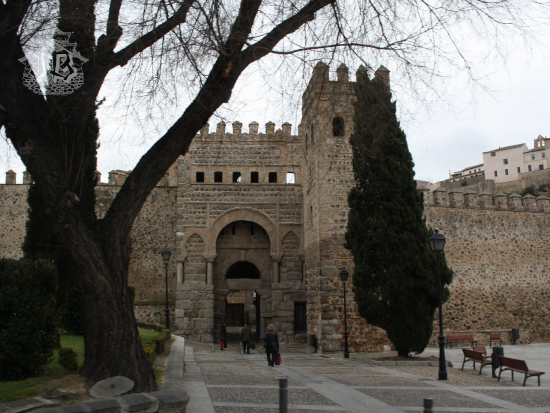
The ride ended up on the other side of the city than the one we had been favouring, so we just walked round the walls that fortify the city, the Murallas de Toledo, which are of Muslim origin over Roman foundations. King Alfonso VI is credited with finishing off the walls, and he named one of the gates after him: Puerta de Alfonso VI.
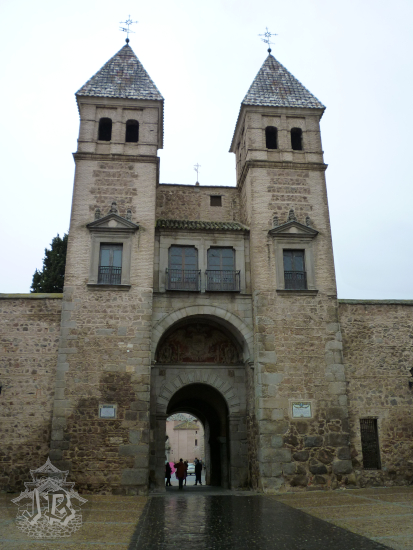
Another of the gates is the Puerta de Bisagra, the last of the monuments we visited before we headed back home the following morning.
One of the creepiest moments in this trip was realising that our key could open a room which was not ours – we got off on the wrong floor and we went down the corridor to the room door, and opened it. It was not our room. We were very quite put off by this, and it turns out that we had a master key. Finding this was a little freaky, and we tried to complain to the hotel. Furthermore, they wanted to charge us for keeping our luggage for a few hours.

Oh, and I caught a cold during our 31st at night escapade. Because of course I did.

26th December 2013: Japanese Exhibitions & Christmas Lights in Madrid (Spain)

Over the Christmas break, there were many activities related to the celebration of the establishment of diplomacy between Spain and Japan, so-called Año Dual España Japón. We decided to kick off the day going to a Japanese restaurant, my favourite in Madrid, the Nagoya (believe it or not, this is the daily menu).

There was a Calligraphy exhibit in the national library, Biblioteca Nacional. On the way, we also found that there was an exhibition about the Chinese terracotta warriors, but the queue was insane! We decided to try to get tickets online for another day.

We went to Caixa Forum to see a Japonism (19th-century European art influenced by Japanese concepts and aesthetics). Honestly, pictures were forbidden, but I snuck one because I really loved the painting.

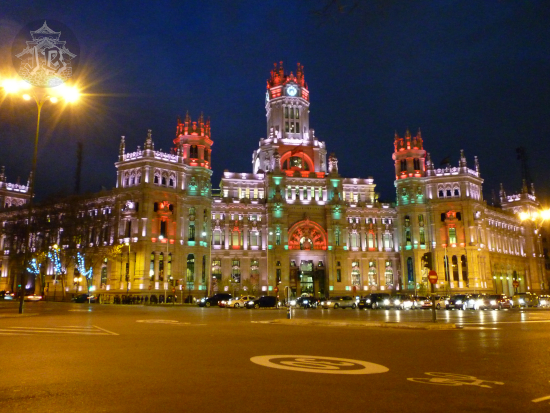
We also took a walk to see the Christmas lights. Here’s the Postal Service building, Edificio de Correos.

And a view of Gran Vía, one of the main arteries of Madrid, all lit up.

27th & 28th July 2013: Segovia (Spain)

27th July 2013: Echoes of a Roman Past

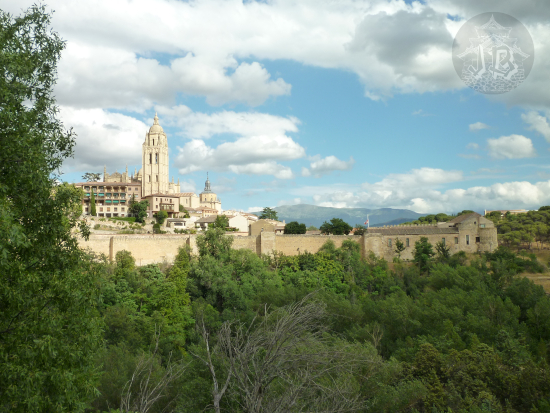
We took the train early on Saturday and arrived in Segovia in mid-morning. Segovia is a Spanish city of the Inner Plateau, located in the autonomous community of Castilla León. It has gained fame because of its many monuments and landmarks, the main being the Roma aqueduct in almost perfect condition, the cathedral and the castle (which may have served to inspire certain mouse-company for the Cinderella Castle). The city centre has been a world Heritage site from 1985 and the aqueduct received the title of International Historic Civil Engineering Landmark in 1999.

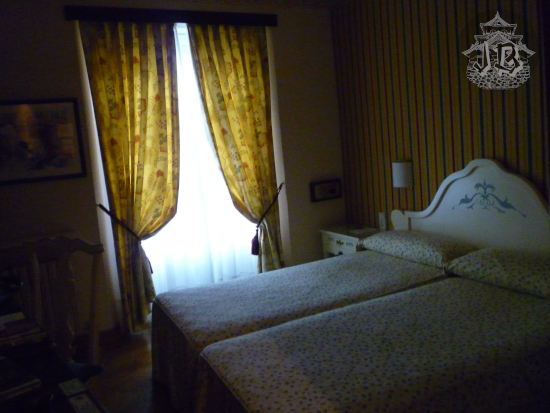
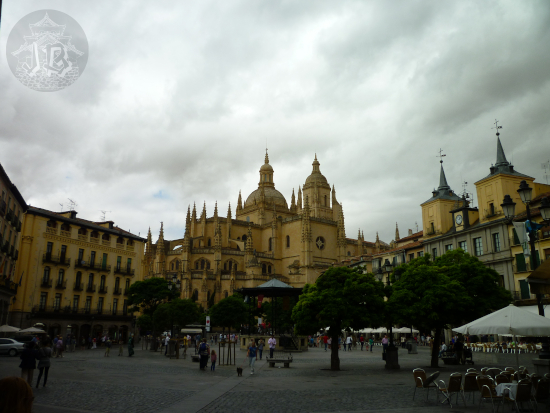
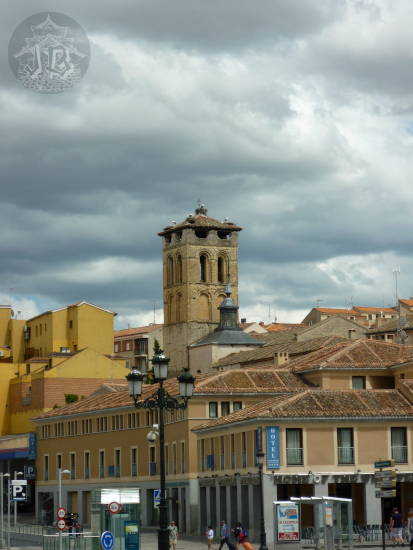
We checked into the hotel, which was dead in the centre of the Main Square and then we visited the Catedral de la Virgen María, the cathedral. The building was constructed between 1525 and 1577 in a late Gothic style that had already phased out in the rest of Europe. We saw the cloister, the chapels and the apse.

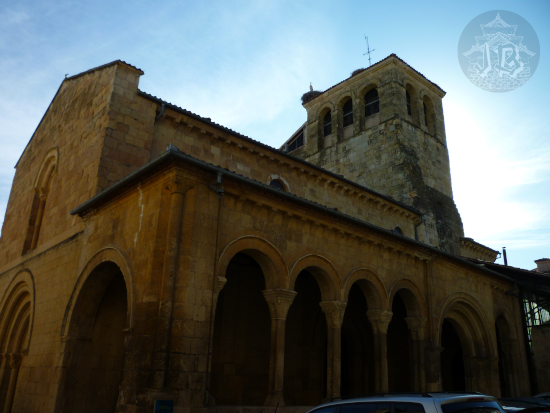
Then we moved onto the Iglesia de San Martín, St Martin’s church, built in the 12th century in the Romanesque style, with a Romanesque-Mudejar tower bell.

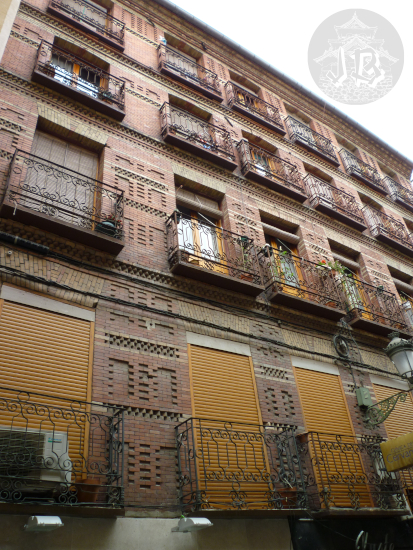
We then took a walk around the city centre, and we came across the Palacio de Cascales, a 15th century palace that belonged to the Alpuente Count.

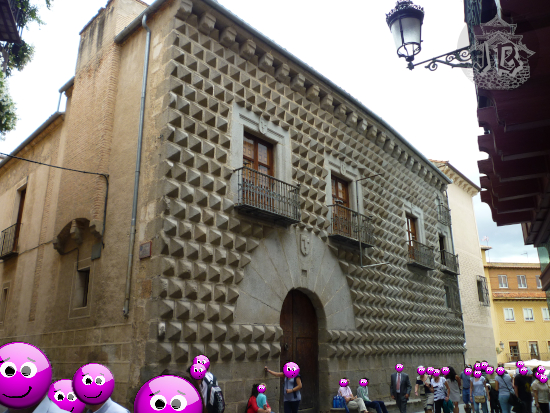
We passed by the Casa de los Picos, the “House of Peaks”, also built in the 15th century.

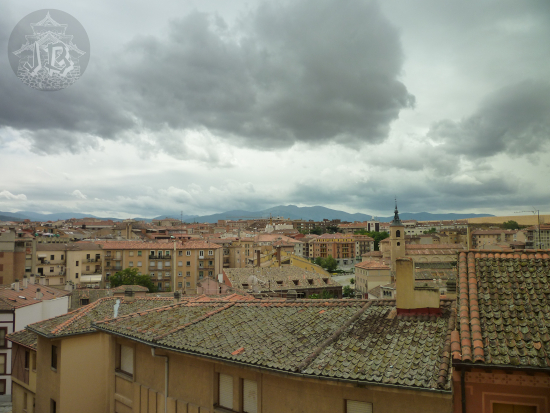
We somehow ended having these nice views of the rooftops of the city, too.

And passed by a very interesting house.

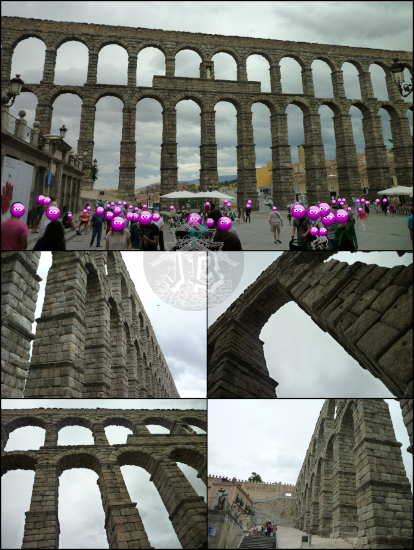
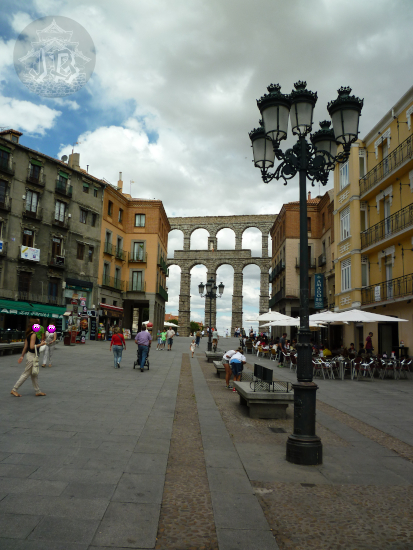
We finally got to the main event, the Aqueducto, the aqueduct. An aqueduct is a “water bridge”, a construction designed to carry water from one side of a valley or a ravine to the other. The Aqueducto was built by the Romans in the late first or early second century. It once transported water from the Frio River into the city, and it ran for a whooping 15 kilometres. It is one of the best preserved aqueducts in the world, as it was reconstructed several times through history, and it was working to get water to the city up to the 19th century.

We passed by the Casa de Ejercicios del Seminario one of the buildings of the Seminary.

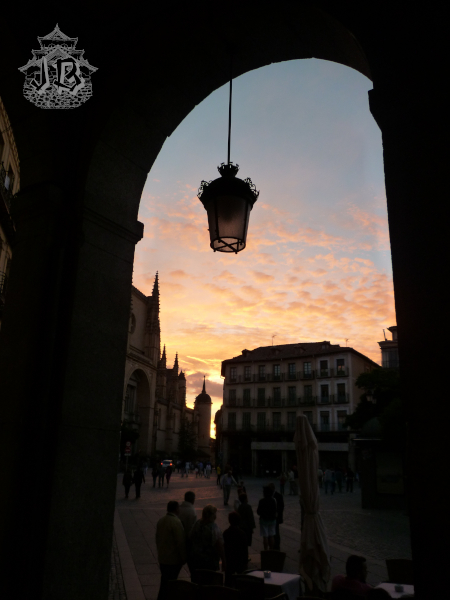
We reached the Main Square, the Plaza Mayor again.

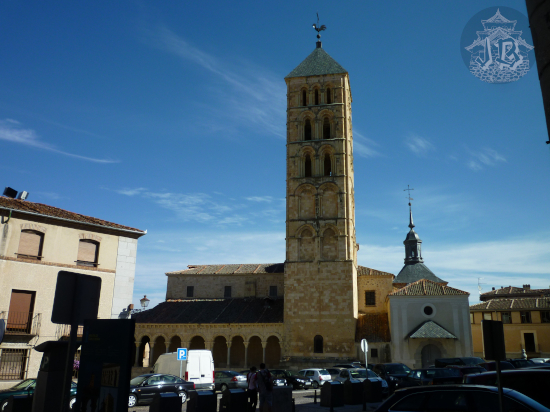
And saw the Romanesque Iglesia de San Andrés, St Andrew’s church, with a particularly nice bell tower.

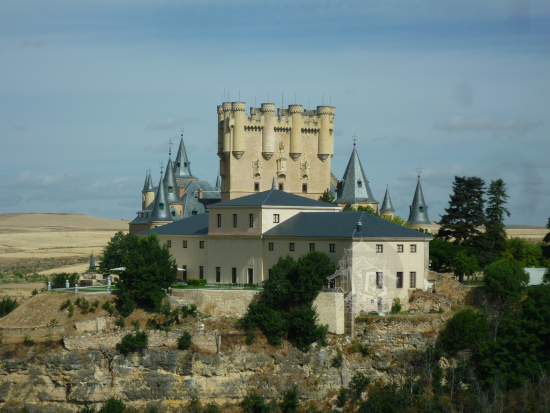
After this we decided to take a break and have the typical pork meat lunch. Then we moved on towards the Alcázar. An alcázar is a type of castle or fortress built during the Muslim rule in Spain and Portugal. The Alcázar of Segovia has been through several redesigns and renovations, but it is a pretty impressive building. The current form was reached during the reign of King Alfonso VIII, so it dates from the 13th century, but it was retweaked by several kings and queens after that. It was the royal residency until the Spanish court moved to Madrid in 1561.

On the way we could see some views and the Iglesia de la Vera Cruz, the True Cross Church.

The Alcázar is quite an impressive building, in Herrerian style, with impressive towers. Part of it is a history museum the other part is a military museum.

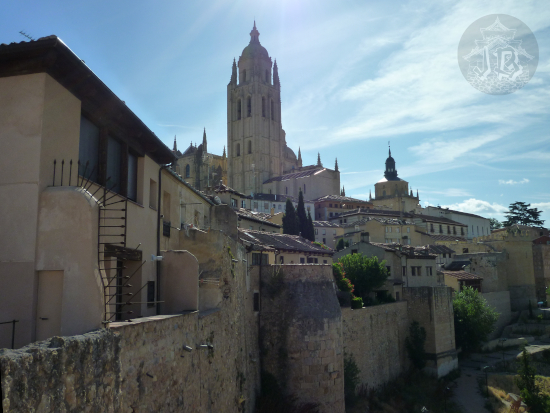
It also offers nice views of the cathedral from the other side.

We walked back to the city centre and along the aqueduct again.

This trip was in July, and scorching hot back home, so we had not considered much of a temperature change. Unfortunately, Segovia in the late afternoon became more than chilly and we had to walk into a random shop to buy a thin jacket, then headed off to the Plaza Mayor.

Funnily, when we were having dinner there, someone warned us that the shop assistant had left the alarm tag on my jacket! That was amusing. We called it a day heading off to the hotel, and being duly impressed by the illumination put in place for the cathedral.

28th July 2013: Churches while the city sleeps

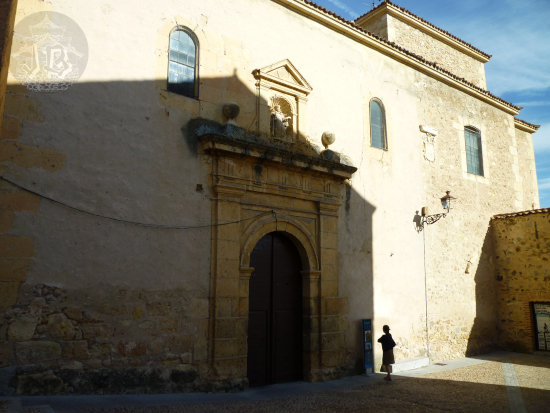
On Sunday morning, most everything was closed, so we took a strolling tor if the Medieval area, and saw a bunch of churches from the tenth and eleventh centuries:

Iglesia de la Trinidad (Trinity Church).

Convento de las Carmelitas Descalzas (Barefoot Carmelite Monastery).

Iglesia de San Nicolas (St. Nicholas’ Church)

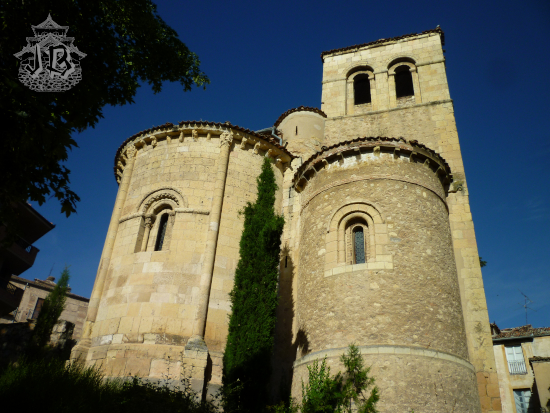
Iglesia de San Quirce (St. Quirce’s Church)

Iglesia de San Esteban (St. Stephen’s Church)

We also had yet a different view of the Cathedral.

And we could see the Alcázar in all its glory.

Then we returned to the city centre, where we caught a glimpse of the Iglesia de los Santos Justo y Pastor (St. Just and St. Pastor’s Church).

We had lunch and said one last good-bye to the Aqueduct before we headed back to the train station.

15th June 2013: Maratón de los cuentos de Guadalajara (Spain)

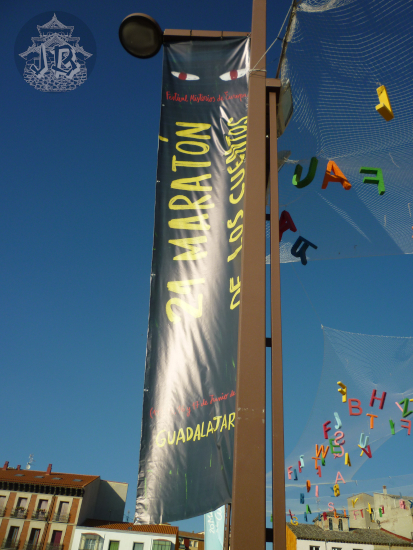
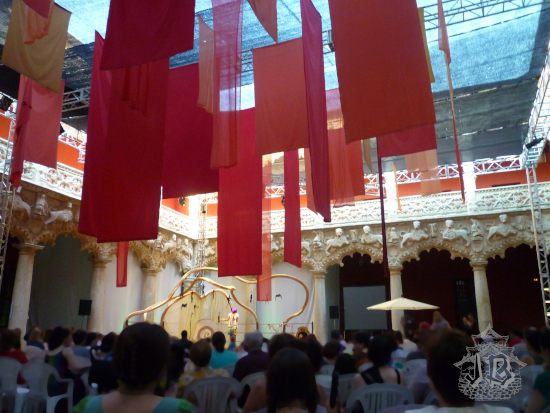
The Maratón de los cuentos de Guadalajara, Storytelling Marathon of Guadalajara, is an annual event that has been taking place in the town since 1992. During a weekend, Friday to Sunday, in June, stories are told non-stop. For a couple of days the town becomes alive with the idea of telling stories, is decorated and so on.

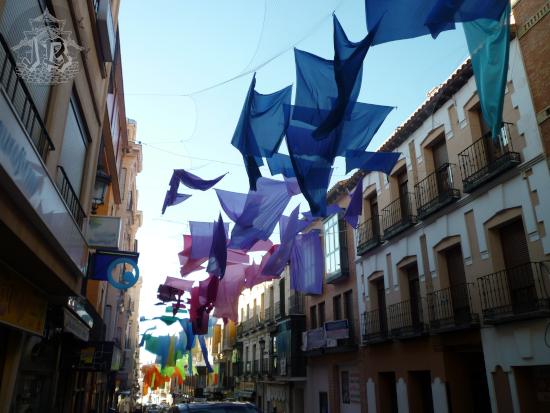
I decided to attend the marathon and listen to a few stories. I walked down Main Street, which had been adorned with flags and hanging letters.

The marathon was carried out in the Palacio del Infantado, a Gothic palace that belonged to the Infantado Dukes. The most important feature, the façade, was completed in 1483. Both the Palace, the gardens, and the patio were also decorated for the event.

After a walk around I sat down to listen to a few stories inside the Palace, before I headed back home.

29th May – 2nd June 2013: San Juan & Alicante (Spain)

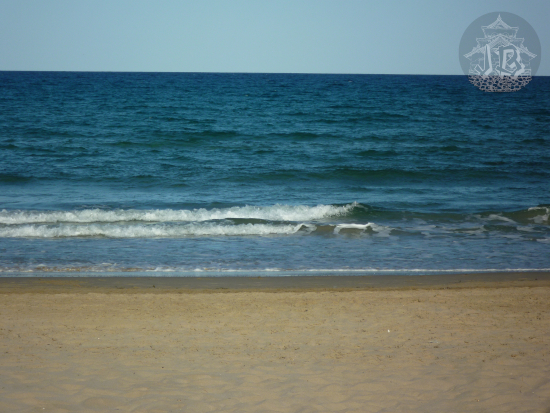
San Juan de Alicante is a small village in the east of Spain. It does not really have much by my parents use it as a base for my father’s diving trips. I sometimes tag along. We usually drive there and believe it or not, I found the Windows XP background.

We usually stay in something akin to a resort that is not stupidly expensive because it is not close to the beach. It has a big garden and a swimming pool and it is generally quiet, especially when it’s not school-holiday period.

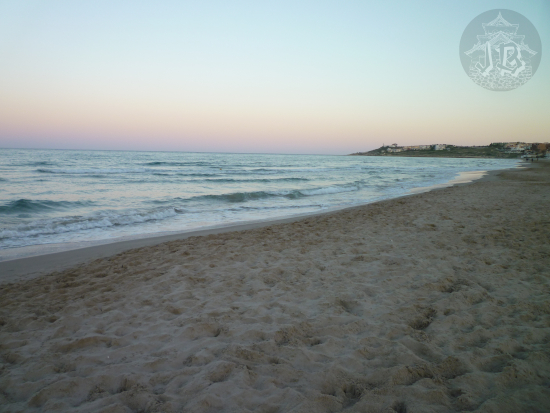
On the 30th we went to have dinner near Playa de San Juan, the town’s beach, and we were treated to a pretty sunset.

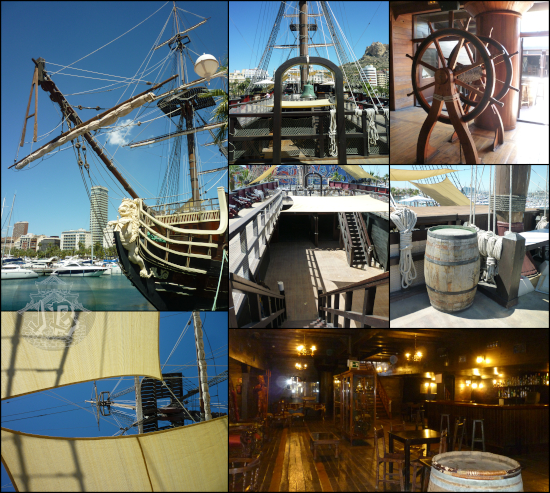
There is not much more to do there, so on the 31st we went to Alicante, to visit the Santísima Trinidad, Holy Trinity vessel, which was anchored at the harbour. The original Santísima Trinidad was a galleon built in Cuba in 1769. It had three decks, but a fourth was added during a later restoration after it was severely damaged in 1797. In 1803 it was put in action again with 140 cannon guns. On the 21st of October 1805, the ship took place in the Battle of Trafalgar against the English, and it was eventually made prisoner and sunk with all the wounded and defeated soldiers on board. The galleon moored in Alicante is a replica, which dubs as café and restaurant, of the three-dock Holy Trinity.

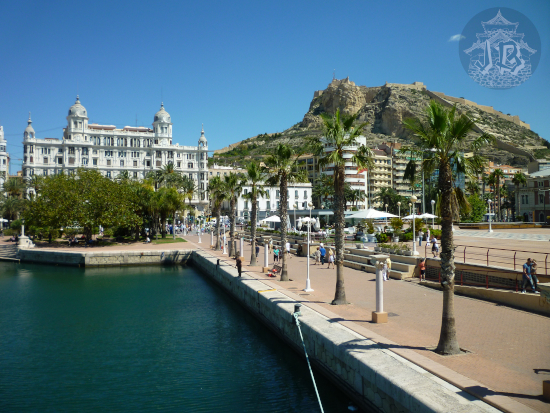
The ship also offers some nice views of the city of Alicante and the Castillo de Santa Bárbara (Santa Bárbara’s castle).

We walked around the Paseo Marítimo, Seaside Walk.

On the 1st we took a walk around San Juan (and I floated like a seal in the swimming pool).

Not an exciting trip but mostly a laid-back, relaxing weekend.

7th May 2013: The inner works of the Geomineral Museum in Madrid (Spain)

Due to work reasons I ended up in the Museo Geominero, the Geomineral Museum, in Madrid. The Museo Geominero is a rather anachronical place – it displays a great mineral and fossil-replica collection in an early 20th-century building. The inner area is used for research and hides all the high tech. However, they work with really old and cool geological elements.

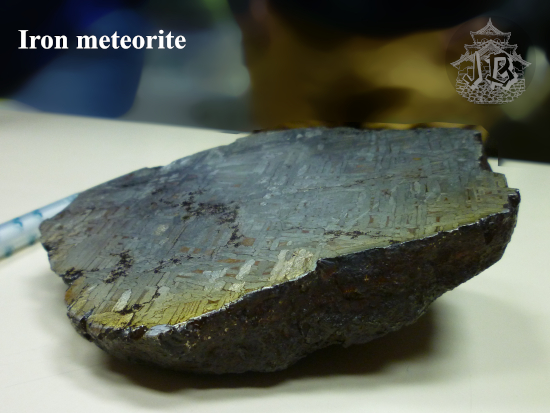
This was the firs time in my life I ever held a meteorite – just imagine, this thing floated around space, and I got to hold it. It was heavier than I would have ever imagined. You can see the zig-zags on the surface, those are magnetic markings because the main component of this space rock is iron.
There was a session going on about identifying fossils, and this is what I came up with:

Out of the bunch, I also got to play with the ammonite…

… counted the corals…

… and I petted the trilobite…

As you can see, I snuck quite a few pictures. It did not work so well during the museum walkthrough, so I guess I will just have to come back for the main exhibit some other time (≧▽≦).

14th April 2013: Brihuega (Spain)

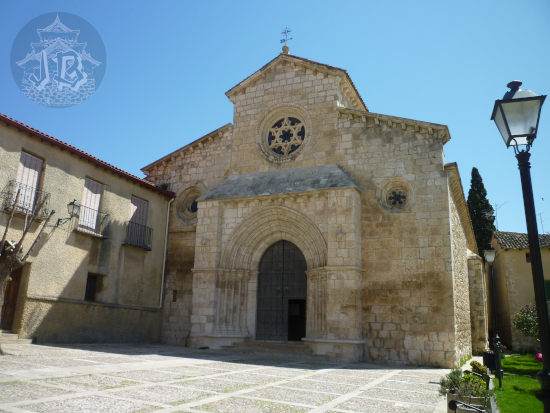
Brihuega is a little town in the centre of Spain. It is considered a historical site in 1973 due to its Medieval buildings. In this little getaway we got to visit the Iglesia de San Felipe, St. Philip’s Church, which dates back from the 13th Century.

We also saw the Parque del Molinillo, which roughly translates to “The small mill park”…

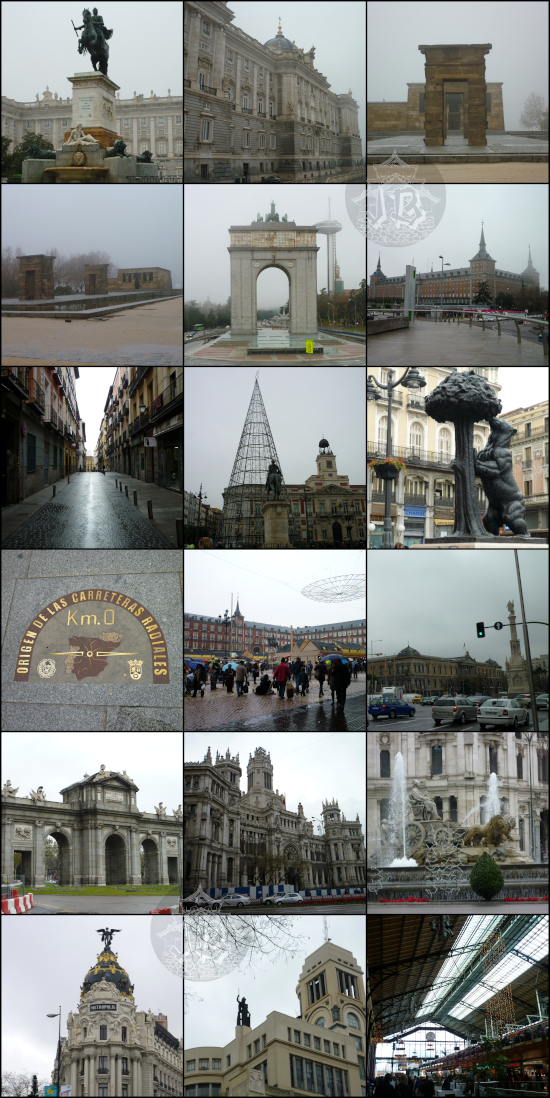
Flashback to 26th December 2009: Winterday in Madrid (Spain)

  • Palacio Real de Madrid (Royal Palace)
  • Templo de Debod (Egyptian Temple to Debod)
  • Arco de la Victoria (Victory Arc)
  • Palacio de la Moncloa (Palace of La Moncloa)
  • Puerta del Sol (Square Puerta del Sol)
  • Plaza Mayor de Madrid (Main Square)
  • Plaza de Colón (Columbus Square),
  • Puerta de Alcalá (Puerta de Alcalá Arc)
  • Edificio de Correos (Postal Building)
  • Fuente de la Cibeles (Cibeles Fountain)
  • Edificio Metrópolis (Metropolis Building)
  • Gran Vía de Madrid (Gran Vía Avenue)
  • Círculo de Bellas Artes (Fine Arts Club)
  • Estación de Príncipe Pío (Príncipe Pío Station)

Note: This is a flashback post, which means it is just a collage regarding a trip I took before I started the blog in 2012. Tags may be incomplete or slightly off.