23rd & 24th September 2017: San Sebastián Film Festival (Spain)

23rd September 2017: Let’s go!

Overnight, I headed off to San Sebastián as a Weekend Escapade to the Festival de Cine de San Sebastián International Film Festival that is held over there because they were projecting a Japanese film and the main actor and the director were coming over to present it. The film was “Sandome no Satsujin” [三度目の殺人], the director is Hirozaku Kore-eda and the actor in question was Fukuyama Masaharu, of whom I am a big fan.

I started off at 22:00 on Friday as I had to take a bus to go to Intercambiador de Avenida de América, which is one of the bus hubs in Madrid. My bus to San Sebastián left at 00:30, so in the end I had to wait for almost two hours until I could board. I was dozing for most of the trip so it did not feel too long. I arrived in San Sebastián bus station at around 6:50 in the morning and I had decided that I would go to the so-called Shell Beach, Playa de la Concha, to watch sunrise. I had been told that cafeterias would be open at that time, but not even the one in the bus station was ready.

A beach at night. The sea is calm and it reflects the city lights

My plan of watching a sea sunrise was trumped by the fact that the sea is towards the west, but I still could take a couple of nice pictures.

The sun rising, tinting the sky and the sea blue and orange

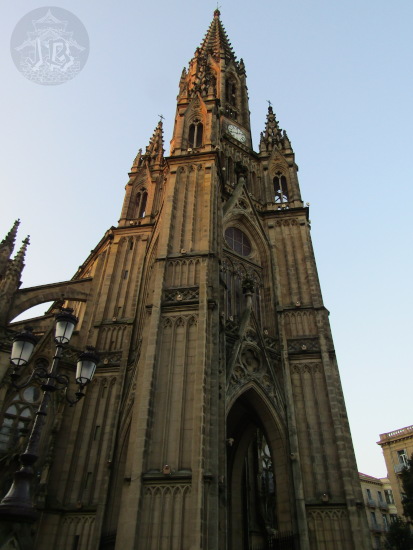
Among them were the beach itself, the “skyline” and the Catedral del Buen Pastor (Good Shepherd Cathedral).

A gothic or neogothic church clock tower, spiky with pointy arches

I wandered around, found the theatre where the film was going to be projected and as the sun started warming up, I started feeling less like a homeless dog.

The sun rising along a promenade

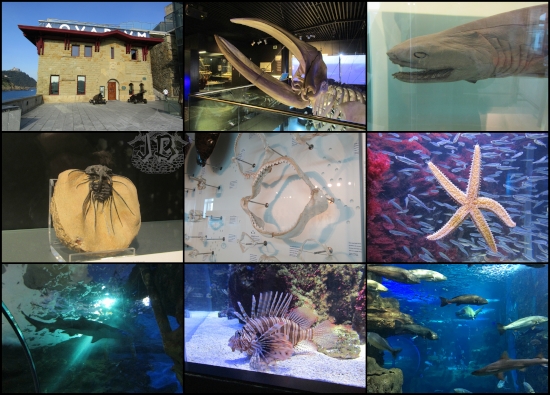
I found the local Starbucks at around 9:00 to get some rest, a coffee, and a cookie before I went to the Aquarium, which opened at 10:00. The Aquarium de San Sebastián is a bit more of a museum than anything else. The first part (second floor) is dedicated to the history of ocean commerce, with different types of ships, and rooms focused on the local harbour, companies, traditional boat racing and whaling. This includes an actual right whale skeleton and several sperm whale teeth and some baleens. The second part (first floor) is dedicated to general fishing and the local oceanography society, including machinery and live specimens.

Finally, after all this, you get to the actual aquarium (yay). There are several small tanks and then a big tank with a walk-through tunnels. The inhabitants are pretty standard, with lots of small fish and several magnifying-glass tanks to make the animals look bigger than they are. The third floor hosts the tropical fish including the piranha and the clown fish. All in all it is a nice place, however, it was under construction and some tanks were covered by dark plastic. After that I left the aquarium and I decided to go up Mount Urquil, which hosts a castle and quite nice views of the city and the ocean.

A small building entrance which yields to the aquarium. Collage showing different exhibits inside: a whale skeleton, a seven-grilled shark in alcohol, a trilobites fossil, a shark jaw, a starfish, a shark swimming above through an aquarium tunnel, a lionfish, sarks swimming in the aquarium

I walked by John Malkovich while heading there, but he did not look like he was in the mood (or the clothes) to be recognised, so I did not bug him. Then I started my climb up the mount towards the the local castle, Castillo de La Mota, along the batteries of cannons. The castle has a small history museum, and a look-out balcony, and the top has been transformed into a church, with a giant Christ overlooking. The truth is I was mostly improvising on my visits as the week was hell between work and the death of a family member.

Views from and of the ruins of the castle - the sea, the wall, and the old cannons

After that I had lunch and headed off to the theatre to check out the coming out of people. At this point I planned to wait for the actor and the director to come into the theatre, but for some reason I checked out the schedule, and the name of the actor had been taken out of the presentation! That made me sad for a little while, but I decided that I was okay with it, that it would not be a drama. I had taken my chance, and at least I had gotten some air after all the pain and drama throughout the week. I guess that helped relativise the sadness. I went to a park near the beach to get some sun and enjoy the last days of summer.

A 19th century building with large windows. A banner on the façade reads Festival de San Sebastián 65

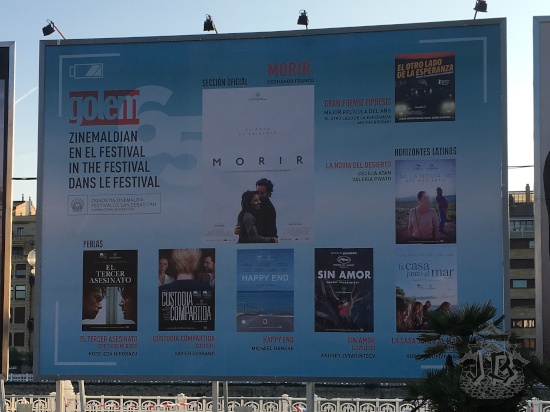
A banner for the cinema festival, showing posters for different films. The third murder is on the bottom left

Around 15:00 I returned to the theatre, Teatro Victoria Eugenia to start lining as I wanted a seat close enough to see the subtitles- and I found a place on sixth row which was pretty good. As this was a special people’s vote session, we got a ballot to give our opinions. Then I settled to wait, and eventually at 16:00 the presenter came in, and to my surprise, she announced Kore-eda and Fukuyama. That made me so happy I could have died right there and then, and the best was still to come. Kore-eda told us about the film. Apparently several people consider that he has changed genre, but he told us that he disagrees and that he still tried to make a human drama. However, he thought that we should judge. Then Fukuyama told us that he enjoyed San Sebastián and that they had been having pinchos and that he was happy to have returned. I was shaking so hard I could barely hold the phone as I recorded.

The stage inside the theatre

Director Kore-eda and actor Fukuyama Masaharu on stage

Promo of the film The Third Murder from the Festival Webpage

All this would have made me very happy already, but there is more. “Sandome no Satsujin”, or “The third murder” tells the story of a lawyer whose job is to defend a man accused of murder. As this would be the defendant’s third murder, if found guilty he will be handed the death penalty. The film is a complex story, completely unpredictable – or I was too enthralled to see the ending coming – but when everything fell into place I felt like gawking.

Furthermore, there was more to come – at the end of the film both Kore-eda and Fukuyama had stayed behind. as I was coming out I looked up and told them “otsukaresama deshita”, and both of them bowed and replied “arigatou”. Then we waited for them to come down from the second floor, from where they had taken the ovation. I dropped my vote and rushed through the red carpet. As other people talked to the director I made a beedive towards Fukuyama. It was then or never, and it turned out to be then.

Director Kore-eda and actor Fukuyama Masaharu waving for a picture on the street after the film

I was shaking inside but I managed to tell them that I had been a fan of his since Galileo times and I asked for his autograph. He told me thank you (at some point the interpreter tried to help, but I was busy dying and trying to get my meaning across). He signed my Galileo booklet and I asked him to take a picture with me, to which he also agreed. And thus I fulfilled my wildest dreams (and look horrible in the picture). After Fukuyama had continued on the red carpet I managed to sit down on a curb and I was on the phone with my friend C*****, who prevented me from going completely hysterical in fanby bliss.

After I told her everything, I was pretty dead so I headed off to he hotel (pension) that I had booked for the night, and pretty much giggled and crashed, and uncrashed and giggled some more. At 23:00 I was completely zonked out, not without realising that I had headed to get some rest without grabbing my freebies and some merchandising I wanted from the festival.

Fukuyama Masaharu's autograph on a DVD booklet

24th September 2017: And back

I left the hotel early, around 8:30 to head towards the cinema area and buy the short Festival guide (not the big one for 22€ but the little one for 1.5€) and get the free newspaper. I bought a coffee to go and headed back to the bus station, when my bus was at 10:00. I could not sleep and the Wi-Fi was not working, but I could watch Youtube videos on the seat screen. I managed to get home around 17:00 after a couple of buses, and I was pretty much dead. However, it was totally worth it. I think this is why I was hyper enough to decide to go to Vienna next month…

24th – 27th March 2016: Easter in Barcelona (Spain)

I think this has been the first time I’ve been to Barcelona without a concert. However, one of the first times I did take a long touristing tour, so this time round my friend and I took it rather chilly – in the literal sense. As we were there there was a drop in temperature and I had to run to get myself a long-sleeved T-shirt.

24th March: Gaudí afternoon

Through different means and from different origins, my friend and myself arrived in Barcelona at around the same time mid-afternoon. We met at the station and dropped our things off at the hotel, then we took the underground towards Monte del Carmelo, Carmel Hill, where Parc Güell, the Güell Park, stands. The park, which was supposed to be a urban area originally, was designed by Antonio Gaudí. It became a Unesco World Heritage Site in 1984.

Visiting some areas of the park is charged, but the whole park is accessible starting in the late evening. We decided to climb up first and then visit the paid-but-free area. Thus we got to the summit of Carmel Hill and saw the Turó de les tres creus, the Three-Cross hill, that offers a great view of the city, including the Tibidabo area with the Cathedral and the amusement park.

We went down and we walked into the architectural area. Although there is no artificial lighting in the area, as the sun went down we were treated to a bit of a magical area, also away from the tourist crowds.

We had dinner at Arenas de Barcelona, the old bullfighting ring now turned shopping and dining centre, then we went up to the roof for some night views.

25th March: Gaudí morning & Gaudí night

We woke up and had breakfast – coffee inception!!

Then we headed off to see the Casa Batlló, the Batlló house, one of Gaudí’s Modernist masterpieces. It is also called the “house of bones”, and it’s kind of wobbly and organic. The roof is designed to look like the back of a dragon. An interesting detail is that the building was not really erected on Gaudí’s orders – it was a renovation of a previously-existing building.

After the house, we went to the harbour area. We hung out for a while (with a stop to buy an extra T-shirt because it was cold), had lunch and eventually purchased tickets for the Museu Marítim, the Maritime Museum, located in the former Royal Shipyard.

The sun was setting when we came out, and we headed towards the Basílica de la Sagrada Família, the church of the Holy Family, also designed by Gaudí. Both of us had already seen it, so we were happy to see it from the outside. When they finish it, I would like to come back though.

26th March: No Gaudí!

We had a walk around the Gothic Neighbourhood of Barcelona, and we made a stop at the Iglesia de La Purísima Concepción, the church of the Conception to visit the cloister.

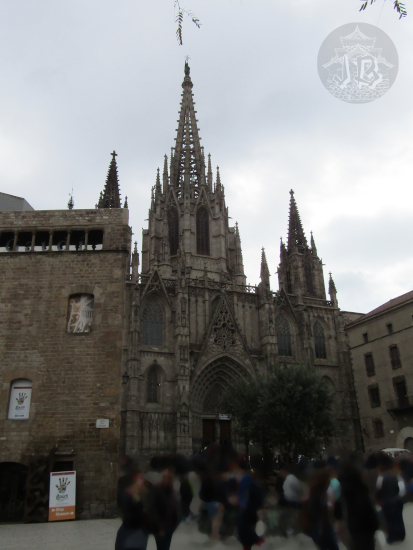
We saw the cathedral Cathedral of the Holy Cross and Saint Eulalia, Catedral de la Santa Creu i Santa Eulàlia.

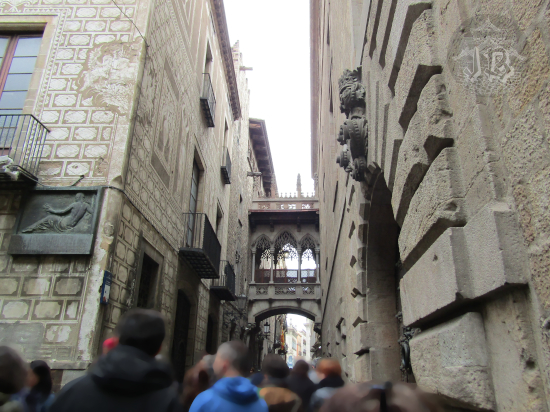
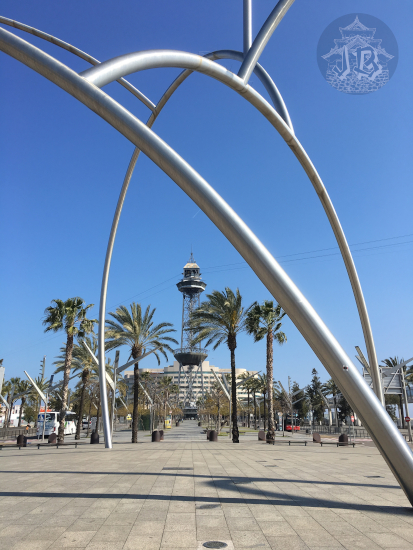
We also walked under the Bisbe Bridge, Pont del Bisbe, in the street of the same name.

We had lunch in a Japanese restaurant, then walked around the Port area for a while.

As we had visited the Maritime Museum the previous day, we had a free pass to the sailboat Santa Eulàlia.

We ended the day in the L’Aquàrium Barcelona, the local aquarium.

After that, we backtracked to our hotel. The following morning, on the 27th, we met up with another friend who had a free while for breakfast and then everybody went home.

27th December 2015 – 1st January 2016: Scotland (Great Britain)

A friend and I decided to organise a New Year’s Eve getaway to Scotland, and I used the opportunity to get some stuff and redtape out of the way, so you might notice some chunks of time missing. Furthermore relationship with Scotland is complex and bittersweet, so I’m not sure how this post is going to turn up

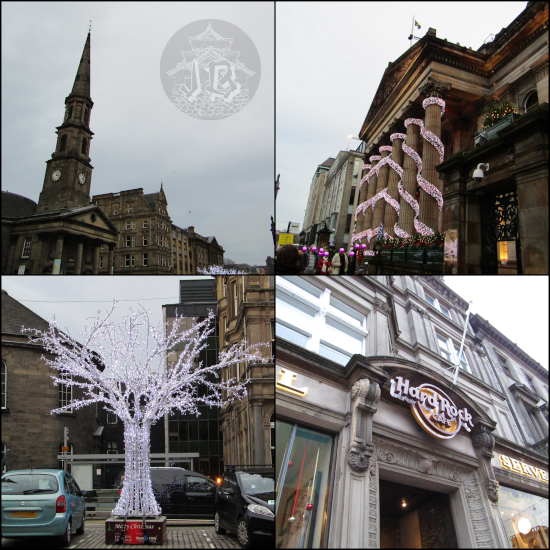
The first part of our trip was based in Edinburgh. We arrived rather late in the evening so we just got to Waverly Station and walked to the hotel to get some rest before we started off the adventure.

Edinburgh

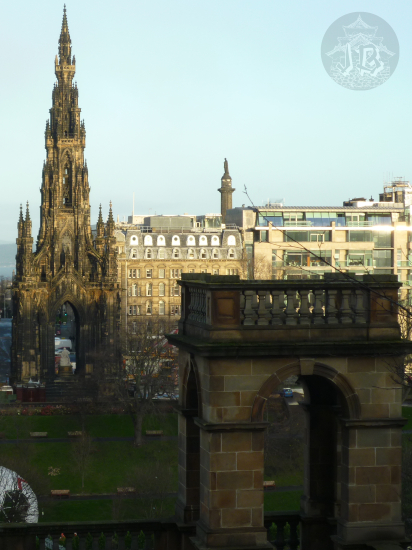
Edinburgh is the capital of Scotland, and it is a dark city, but not in a bad way. The dark, moss-covered rock seems designed to absorb any little beam of sunlight and warm the houses. In our first morning we had a walk around Princes Street Garden, where the Scott Monument, a memorial in honour of the writer Sir Walter Scott, stands. There was also a Christmas market standing.

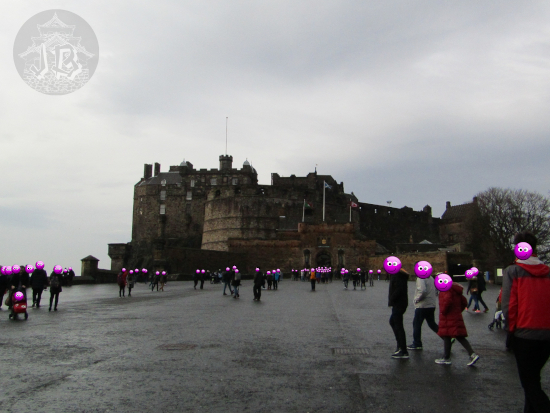
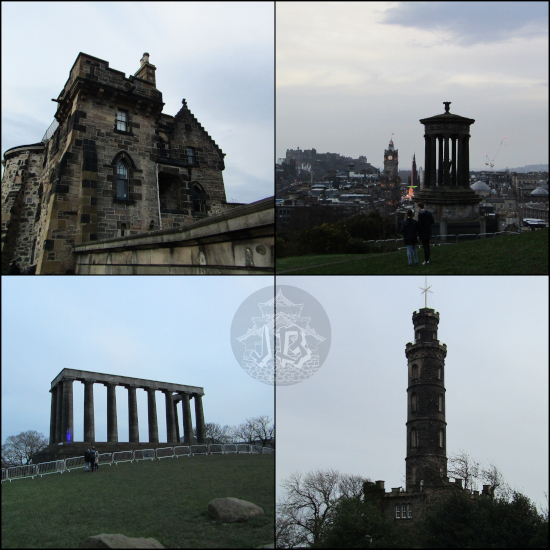
We climbed up Castlehill to visit Edinburgh’s castle, in the Old Town. The castle stands on an extinct volcano and some of the archaeological remains can be traced back to Prehistory! The first castle is thought to have been built around the year 1000 BC, which means the foundations are 3000 years old! The site of the castle includes, among other dependencies, The Royal Scots Dragoon Guards Regimental Museum, National War Museum, the Royal Palace, St. Margaret’s chapel, and a couple of distilleries. Due to its vantage point, also features a great view of all the Edinburgh area.

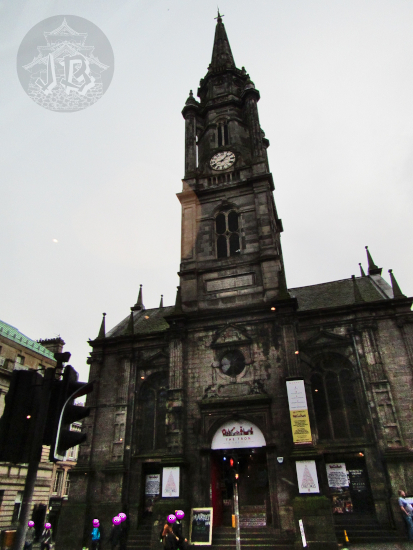
We walked back down Castlehill and made a stop at The Tron in the City, a former church turned artisan flea market.

My friend is a Hard Rock Café collector, so we went to the George Street area, which was decorated.

After lunch, we walked to Calton Hill, a hill / park area located near the centre and that hosts the Dugald Steward Monument, the National Monument and the Nelson Monument.

Then we met with a local friend to have dinner (bangers and mash!) to The Elephant House, the so-called birthplace of Harry Potter, where JK Rowling went to write the novels.

On our way back we saw some of the illuminated views, most prominently the Christmas market and the Balmoral hotel.

Glasgow

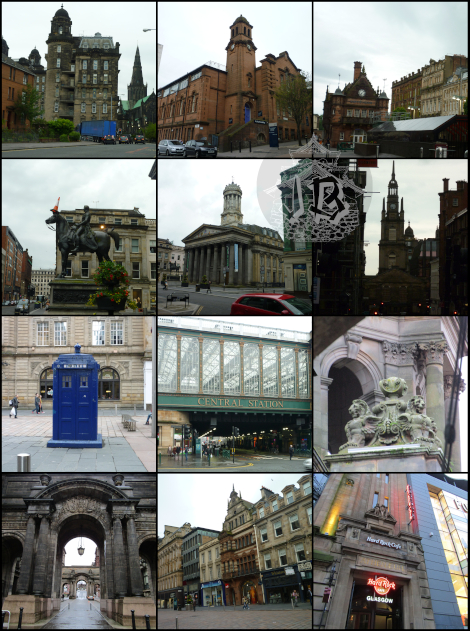
Aside from all the emotional baggage associated with Scotland, I can say that Glasgow is one of my favourite cities in the world. Most of what we did was walking around even if the weather was nasty at points. As we came out from Queen Street Station, our first visiting spot was George Square and the Glasgow City Chambers, and we had lunch in a Greek restaurant that I love over there.

But we quickly moved over towards Saint Mungo’s Cathedral, also known as the High Kirk of Glasgow. It is a 12th century building built in North Europe Gothic style.

Afterwards we walked up the Necropolis, a Victorian graveyard on a hill behind the cathedral. Today it is a great place for a stroll, aside from a place with way too much history for a humble blog post.

We strolled up and down Buchanan Street and the Central Glasgow area a few times – Queen Street, Central Station, the museum of modern art, the Japanese restaurants… We stopped at the HRC again, the Mandela Monument and dropped by St. Enoch’s shopping centre to see the light reindeer and warm up.

We walked to the Glasgow Cross area then, with the Tolbooth Steeple, the clocktower that marks the entrance to the Merchant City.

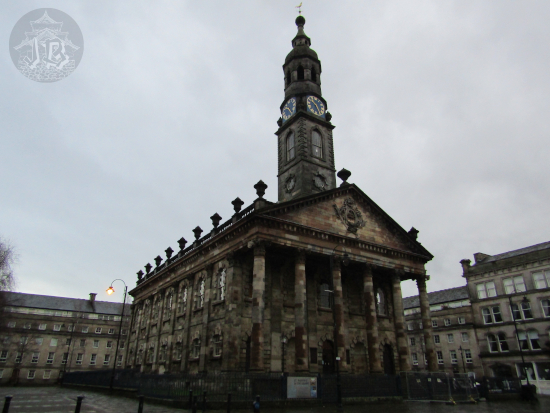
We came across quite an amount of interesting buildings in the Merchant City, among them St Andrew’s in the Square.

Another of the places we visited was Glasgow Green, which was half flooded due to the storm.

And when the weather became so bad that the sleet was making impossible to stay out on the streets, we visited the Riverside Museum, the Museum of Transport of Glasgow, where we had some delicious scones too.

We tried to see Dumbarton Castle, but it was closed down due to wind and the storm, so in the end we just took a ride there and walked around.

On the 31st we had dinner at a very nice Japanese – with awesome staff. Then we bought some provisions and headed to the B&B.

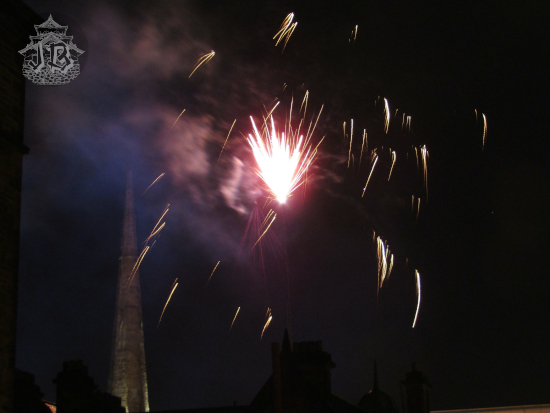
At night we were surprised by the fireworks so we ran out of the B&B room to find them.

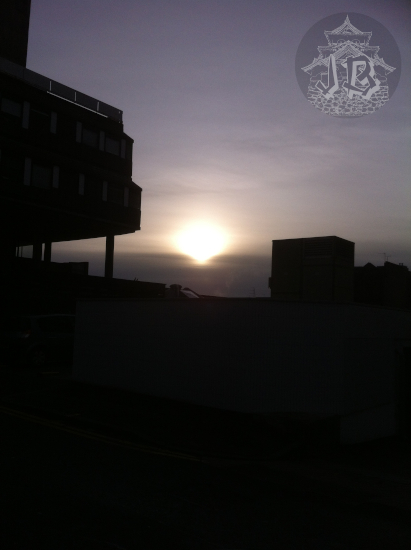
And on the first we were treated to a rather… unimpressive… first sunrise of the year.

When we flew back I had one of the most surreal experiences ever – we had bought a pack of scones for breakfasts and snacks, and somehow it became tangled in my phone wires. Well, turns out that wired-tangled scones look one hell of a lot like bombs on X Ray machines! The poor Scots security guard was first deadly pale, then so relieved that I was not carrying a bomb!

1st April 2015 (Spy Wednesday): Saint Malo & Nantes {France, Easter 2015}

We got up on to see sunrise (okay, not really sunrise but early morning) at the ocean before we headed off.

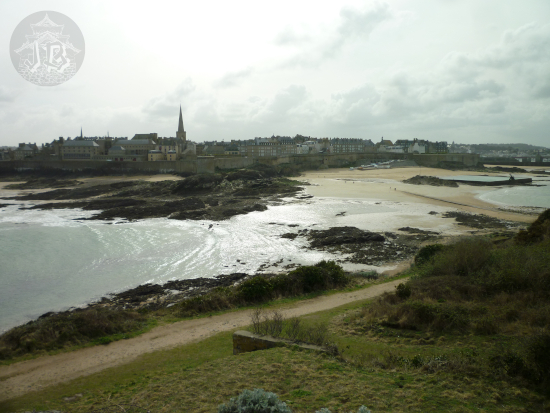
Our first stop was Saint-Malo, yet another fortified city by the sea. It can be traced to the 1st century, but the modern Saint-Malo is cemented on a 6th century monastery. In the 19th century, Saint-Malo was a nest of pirates, and it was destroyed during WWII, but rebuilt shortly afterwards.

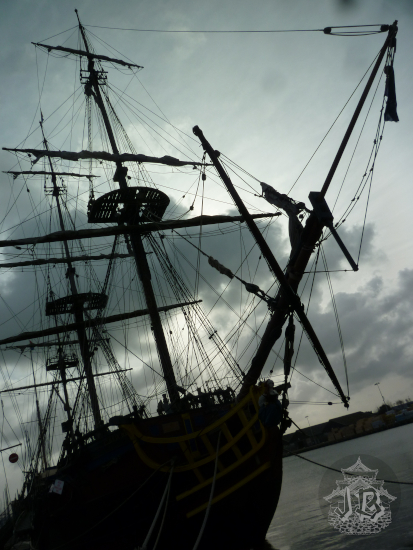
We left the car in the outskirts of town and we headed towards the actual walled city, coming across the Etoile du Roy ship first. The Etoile du Roy is a sixth rate frigate with three masts, built in imitation of a warship from the Nelson era. Today it can be rented for events.

We reached the walls and headed off to the beach where the Fort National stands.

We strolled around for about an hour or so, and I really liked the old city.

After a while, we walked back towards the city and saw the Cathédrale Saint-Vincent-de-Saragosse de Saint-Malo and the remains of the cloister. The building was originally Romanesque / Gothic, but it was damaged during WWII, and rebuilt in the late 20th century.

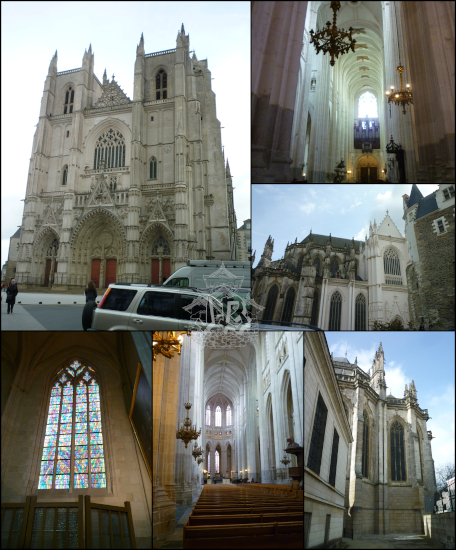
We had lunch in a Japanese restaurant because when we went into the tourist centre we found a visiting card, then we headed back towards the city of Nantes. The drive towards the city was all right but entering the centre was nightmarish, as we got caught in rush hour. We went to the cathedral, the Cathédrale Saint-Pierre-et-Saint-Paul de Nantes, a Gothic building that was started early in the 15th century but was not finished until almost the 20th!

Afterwards, we moved on towards the Château des ducs de Bretagne, a reconstruction of the castle of the Dukes of Brittany, a thirteenth-century fortress.

Finally we pumped some petrol, returned the car, paid for the extra kilometres we had driven, and took a plane back to Toulouse to just have a snack and get to bed.

31st March 2015 (Holy Tuesday): Driving through Medieval Towns and Salt Marshes {France, Easter 2015}

In the morning we set off towards the north of France through the provinces of Brittany and Normandy. There were not that many cars on the road so that was good, because the car was a scale up from what we wanted, and I had to get used to driving a bigger car than I am used to. And I’m bloody short so using a higher car was… a challenge. After a couple of hours we had to take a break because my leg was cramping.

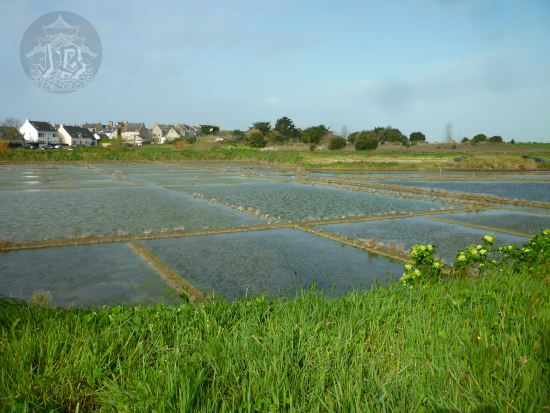
Eventually we got to Gérande, which is a Medieval fortified town dating from the Wars of Succession. We walked around for a while and had breakfast, and saw a lot of speciality shops, among them lots selling salt. Here’s the La porte Saint-Michel, the main gate.

But, why salt in the shops, you may ask? Because Gérande has been famous for its salt marshes since the 19th century. And of course we made a stop to visit the Salt Marshes of Gérande. Did I mention “of course”?

Our destination for the day was Le Mont-Saint-Michel, the mount of Saint Michael (Unesco World Heritage Site). It is a tidal island in the area of Normandy in France, at the mouth of the Coueson river. It features a medieval town and a Christian Abbey and a monastery. The main buildings tend to be Romanesque and Gothic, and the atmosphere is really cool – you might have noticed that I’m a bit of Gothic-style fan by now.

It was chilly and windy, and to be honest I found Mont-Saint-Michel to be slightly disappointing. The construction and exploitation of the tourism side, with building a parking lot and so on blew up the tidal system a couple of decades ago and the island is no longer such. They’re working now to try to restore everything back to how it was, but at the same time they are keeping a bridge, although that one should work for allowing the tides to move through. It was overcrowded, but we managed to have a good stroll.

After visiting Mont-Saint-Michel, we headed off to find our B&B at a small village about an hour away. I took a long, long, hot, hot shower and we ate some snacks for dinner.

10th – 12th October 2014: In Leon (Spain) with Family

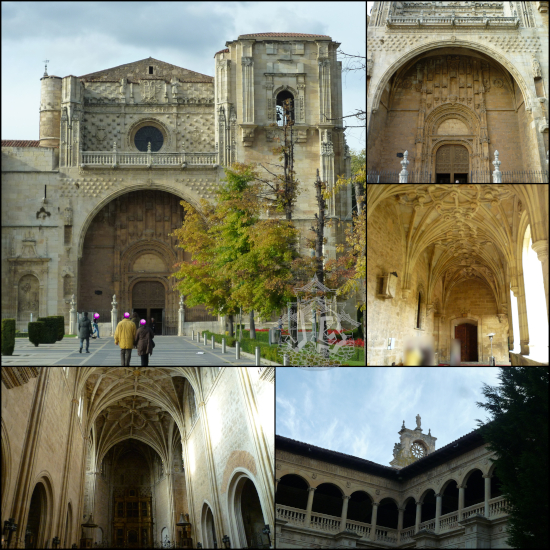
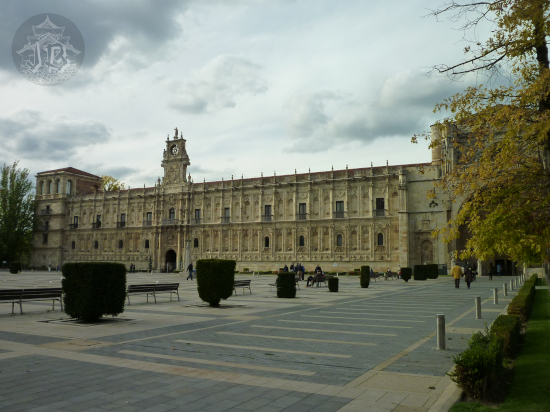
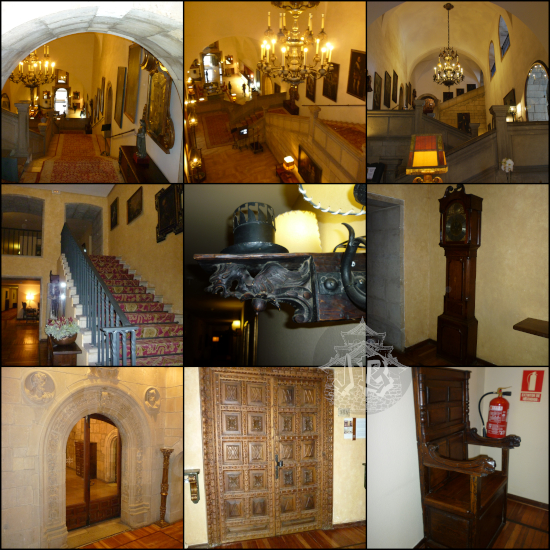
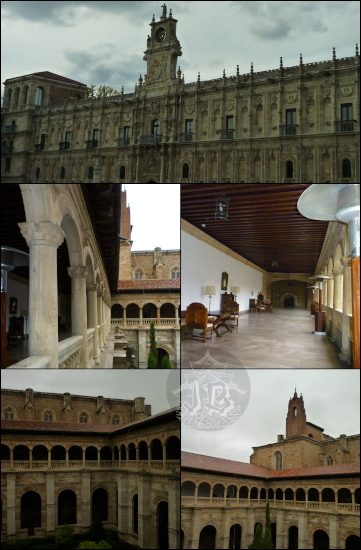
The year my father retired we went to have a nice weekend out, and we chose to drive to León, a historical city towards the north of Spain. I had to work on Friday afternoon, so we drove off in the early evening and reached Leon after dusk. We were staying at the Parador, called Hostal de San Marcos for a couple of nights. The building was luxurious, it was one of those one-in-a-lifetime experienced. The hotel is a former convent built in the 16th century, and it distils magic.

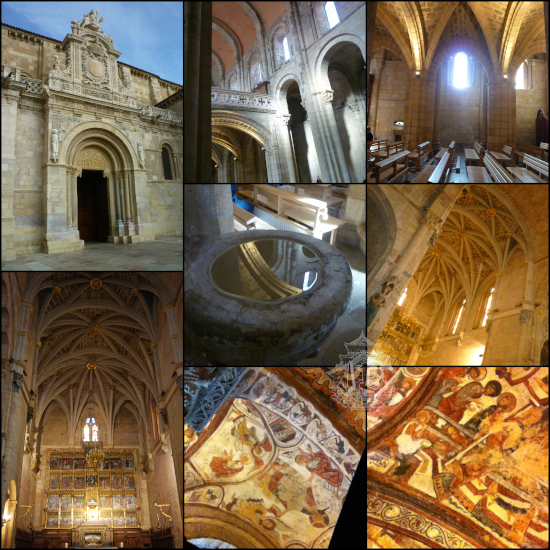
On Saturday morning we set off to visit the Basílica de San Isidoro de León, a Christian church dating from the 10th century. It is famous due to the 12th-century paintings that decorate the Pantheon of the Kings of León underneath the church.

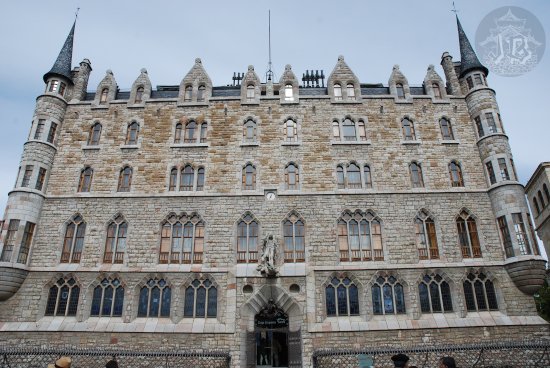
After this, we walked into the town centre and we came across the Casa Botines, a Modernist-style building erected by Gaudí, now a bank.

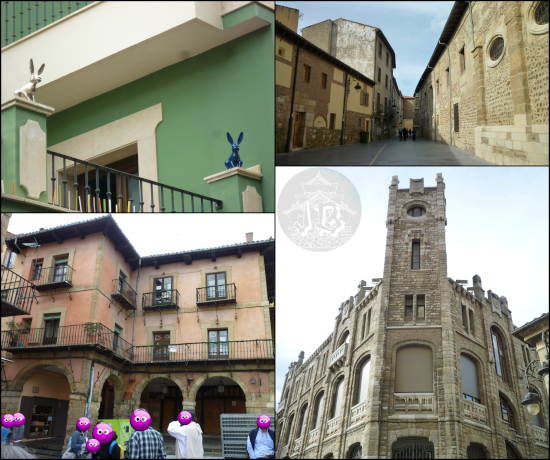
A bit further we saw the came across the local seminary, the Seminario de San Froilán.

We went on and found the local farmer’s market, the Mercado Tradicional de Productos Agrarios, which was in the Main Square of the city.

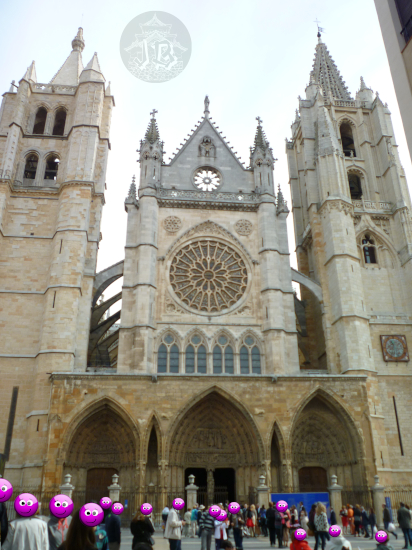
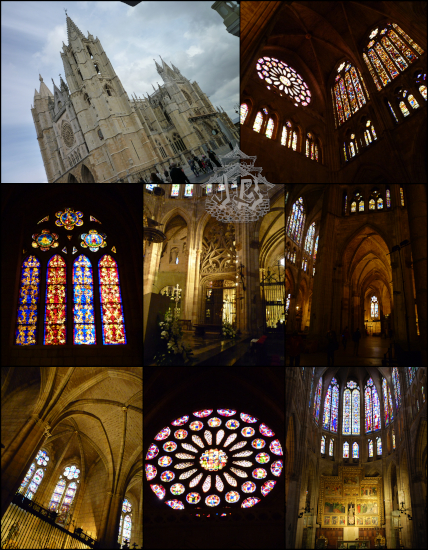
Finally, we circled back towards the cathedral, Santa María de León, a Gothic building built in three steps – the main building was built all throughout the 13th century, the north tower in the 14th century, and the south tower in the 15th century. The difference in the towers is easy to spot (≧▽≦). One of its key features are the stained-glass windows.

Upon leaving the cathedral, one of my favourites, by the way, we took an extra walk in the historical area, and found cool buildings and decorations.

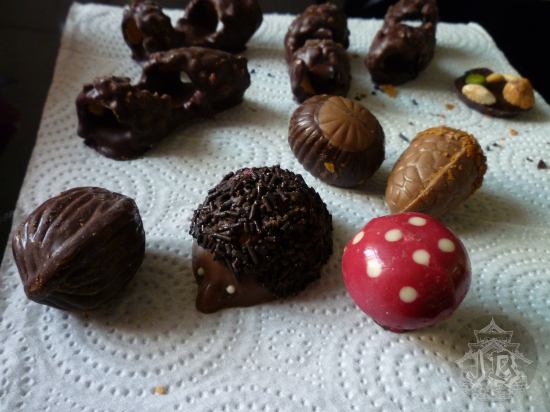
We had lunch, then returned to the Hostal de San Marcos. On our way back we found the cutest sweet shop that made adorable chocolate figurines.

We saw the Iglesia de San Marcos, the adjacent church, and then I explored the whole hotel a little.

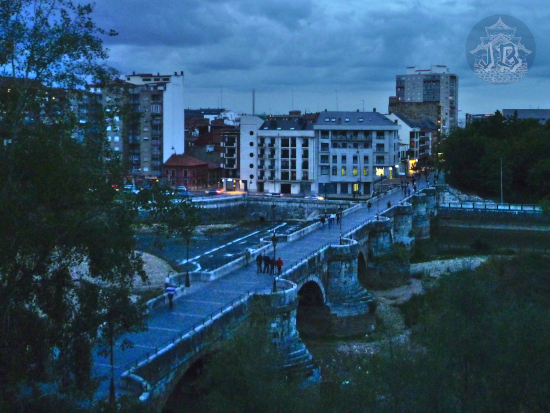
Also, I discovered that I could see the Puente de San Marcos, a stone bridge over the Bernesga River, from my room.

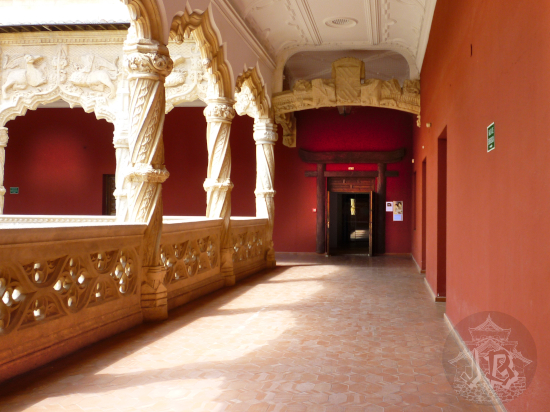
We drove off on Sunday morning, because the weather was nasty and the forecast was worse, so we wanted to be out of the area when the storm really hit. But before that I managed to get to the second floor of the cloister and explore some more.

1st June 2014: “La Mirada Interior” exhibition in Guadalajara (Spain)

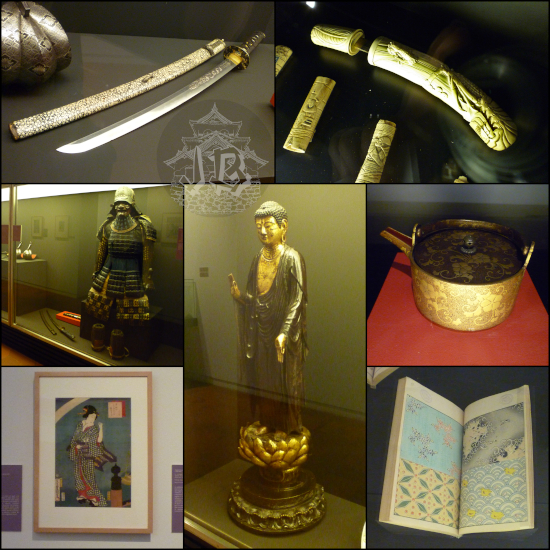
This Japanese-culture exhibition was held in the Palacio del Infantado in Guadalajara and I dropped by because seeing Japanese stuff in a Gothic palace was… well… weird. Here are some pictures:

24th – 26th May 2014: Paris (France) for Yoshiki Classical

24th May 2014: Evening in Montmartre

I was going to atted Yoshiki Classical concert in Paris on Sunday, so I made planes with a a friend to meet up with her over the weekedn so we could do some stuff together. We booked a hotel close to the venue, Le Triannon. I arrived in Paris in the evening of Friday the 24th and met my friend direcly at the hotel – the first thing we noticed was that the area was not the safest, but we could still get to the Basilique du Sacré-Cœur to see it lit.

Sacre Coeur, a basilica on top of a mountain, lit in gentle green light at night

And also to see a nice view of the Eiffel Tower all lit up.
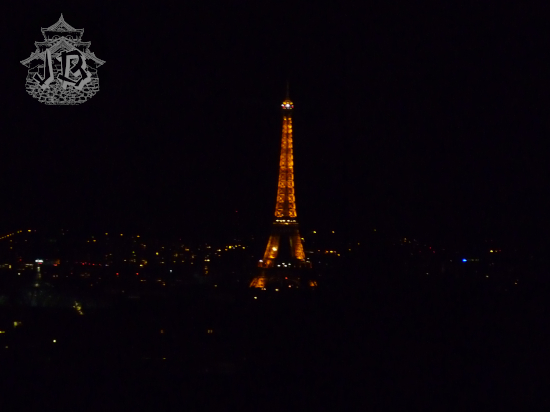
A shot of the Eiffel Tower from afar, lit reddish orange

25th May 2014: Under ground, above ground

On Saturday morning we went to Catacombes de Paris, the Catacombs of Paris. The ancient quarries and mines of Paris became the final resting place of more than six million people. In the late 18th century it was decided to eliminate a good portion of the quickly-overcrowding cemeteries and graveyads of Paris and for a 1786 the bones were carried to the catacombs at night. Today they are consisdered a museum and thus managed as such.

Creepy catacombs of Paris, with thousands of human skulls and other remains

After the catacombs we moved onto the Ille de la Cité, the “island of the city”, an island in the middle of the Seine, to visit Notre-Dame de Paris, our Lady of Paris, a magnificent Gothic cathedral built in between 1160 and 1260. In the 19th century an extensive renovation was carried out, and a few features were added, such as a the gargoyles and a replacement spire for the original one. We climbed the towers and were treated to a really cool Paris view before going inside.

Collage of Notre Dame; the main façade, the gargoyles, the inside of the main navev, and a view of Paris from the top

Leaving Notre Dame, we headed our the Île de la Cité and passed by Saint Germain l’Auzeroix, which mostly dates from the 15th Century and used to be the church for the Louvre inhabitants.

A restored gothic church with an octogonal tower

At the Louvre, by the way, there was a humongous queue, so as both of us had seen it before, we decided to skip going inside.
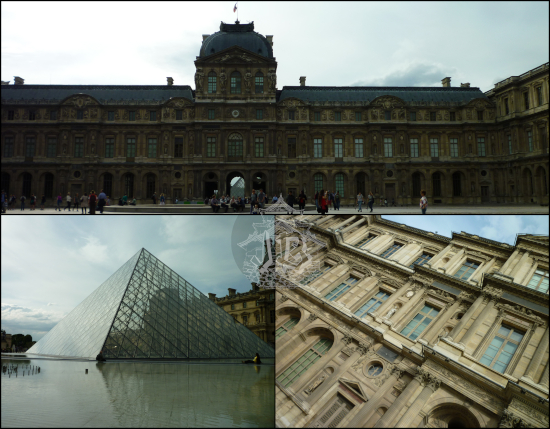
The Louvre palace from the outside

We passed by the Luxor Obelisk, an Egyptian monument which is over 3000 years old, located in the Place de la Concorde. I’ve always found that name very ironic considering that many people were guillotined there. But hey, the obelisk is cool and all.
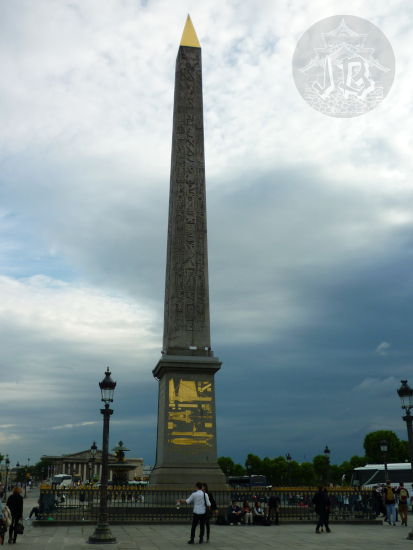
A black Egyptian obelisk with golden decoration

We continued walking up the Champs-Élysées until we got to the Arc de Triomphe de l’Étoile (the “Triumphal Arch of the Star”. Okay Paris. Okay.), which is one of the biggest triumphal arcs in the world. It was completed in 1840 and it honours the casualties in the Revolutionary and Napoleonic Wars.

Commemorative gateway or triumphal arch in white stone

From there we took the underground back to the area of the Sacré-Cœur, which we could see at the end of the streets.

Sacre Coeur peering at the end of a street

And to finish the day, we had some Japanese food because why wouldn’t we?

26th May 2014: Bad weather, queue & Yoshiki

On Sunday, we started off back in the Île de la Cité and we walked around Notre Dame on our way as my friend wanted a walk along the Seine.
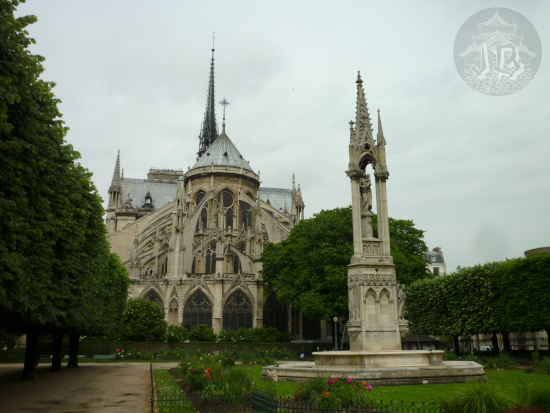
The back gardens of Notre Dame

We took the underground towards Les Invalides (Hôtel national des Invalides or The National Residence of the Invalids), a complex of buildings erected between the 17th and 18th centuries and that hosts the military museum and some notable graves, among them Napoleon’s.
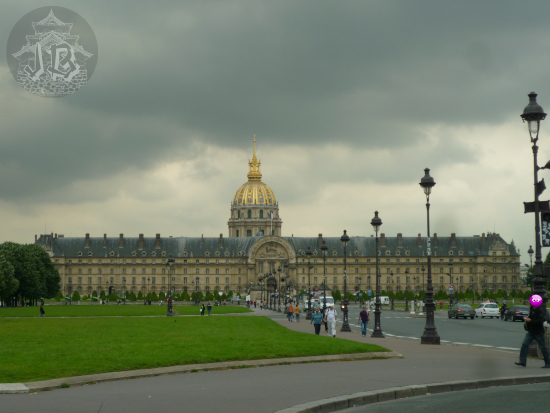
Les invalides, a neoclassical palace with a golden dome

Afterwards we took the underground to Champ de Mars, the long park where the Eiffel Tower stands. The Tower was built as an entrance to the 1889 World’s Fair exhibition and it was controversial at first (and rather ugly if you ask me, but hey to each their own). Eventually, it became so famous that it was not taken down as originally planned, and to-date it is one of the most visited landmarks of the world.

Eiffel tower in the clouds

Eiffel Tower from underneath, with a tennis ball hanging in from the second floor

As you can see in the pictures, the weather might not have beent he nicest, but we made our best. We walked all through the Chaps to the Trocadero on the other side. There were very few people on the street so I convinced my friend to take a ride in the carrousel over there, because I’m insane like that. Soon after we had left, a group of random people decided to emulate us.

Classical caroussel, looking over the ears of one of the horses

After this, we said goodbye. I headed off to Le Triannon for Yoshiki Classical, and my friend towards the airport as she had work on Monday. Yoshiki is one of the most important figures in Japan’s musical scene. He is the leader of the iconic band X Japan, and also trained in classical music. He wrecked his health when he was young, though, so he is not in the best shape. His recital Yoshiki Classical was meant to be a reimagination of some songs of his career, just him and his piano and some invited artist. I have to admit that it was one of the most beautiful things I’ve ever been to, and I don’t regret attending one bit. Although this was my first concert alone, I didn’t feel strange in any way.

A concert venue with some people waiting

I don’t know what I was expecting, but this surpassed any and everything I could have thought of. Yoshiki is a wonderful human, and he spoke in English during the whole event – he is living in America now, collaborating with people like Stan Lee and Marilyn Manson to do more great stuff. For me, seeing him in person and playing his piano was a heart-bursting experience.
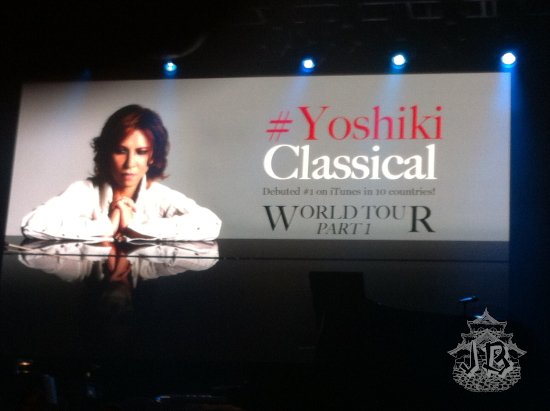
Yoshiki Classical Banner

Although Le Trianon is a seated venue, tickets were not numbered. I arrived at the queue round 17:00 for a 19:30 concert. It was not a good line – French fans seemed to have no sense of personal space, and the person behind the person behind me was invading my space, and I’m not exaggerating.

Conversely, the venue was quite ready for us, entry was well organised and smooth. Theatre staff, speaking in French and Japanese, made sure that ticket holders did not bother the local commerce nor their patrons. Judging by the faces of the sellers around, they were not used to people queuing for the theatre.

Gates opened around 18:45, and I managed a seat on 7th row, in what I thought it would be a good position to actually see Yoshiki’s face as he played. The stage was equipped with the Kawai piano, a synthesiser, and the seats for the strings, along with a standing microphone. I took in the relative positions of everything to chose my seat. The screen showed the Yoshiki Classical World Tour banner, and staff members sold insanely expensive glow sticks.

By 19:50 the audience had started to get nervous,but the members of the press were being shown in to their seats, which meant that the interviews were over. The concert finally started at 20.05, with the entrance of the supporting musicians – three violins, two violas, two cellos. The assistant gave them the tuning note and the video launched behind them. It started with a fragment of the Golden Globes museum interview, where Yoshiki explained the two sides of him, the destructiveness of heavy metal and the peace of classical music. This was illustrated by short clips of X Japan drumming and other activities, such as playing for the Emperor, or Yoshiki Symphonic, all to the music of Miracle.Finally, Yoshiki walked in, sat in front of the Kawai and played the intro of Forever Love.

He did quite a lot of talking between the songs, with a few words in French, but mostly English. He explained that we would have two parts (I used the intermission to go get goods and buy an overpriced bottle of water).Throughout the concert he introduced the strings by name, he remembered all of their names even with effort (and named them Yoshiki Sextet with great mischievousness), and Katie Fitzgerald, the vocalist of his Violet UK project. he himself said that he had too many open fronts and that he had been recording with X Japan forever, but also with Violet UK. He put the blame on himself for being a perfectionist and thus never finding anything finish-worthy. Katie rolled her eyes at him. They seemed to have a good chemistry going on. At the very beginning he told us that he was used to being in the back of concerts, playing drums and that being so close and seeing us made him nervous. He joked that as it was a classical concert he would not stage dive.

As he played the piano the screen behind him projected images, some of them abstract, some of them related to the song, such as roses for Rosa, stills of the Saint Seiya film for Hero, or raindrops for Endless Rain.

He spoke about the history of X Japan and his own – he started playing piano when he was four, the same year he met ToshI. He picked up drums at ten, in Chiba. He reminisced about how he hunted down Pata, Taiji and Hide, ”having to break their bands to get them to come to his band”. Then he spoke of Taiji’s and Hide’s passings, and not talking to ToshI for about ten years. At this point he broke down. It makes one wonder about the kind of pain this man harbours in his soul. You could feel the rage as he pounded into the piano at some points, and yes, I am sure he was crying during the song he dedicated to his father, Taiji and Hide. He said that he had learnt that big venues and stadiums did not really mean anything, but that the support of the fans was what kept him going.

He played an improvisation of Tchaikovsky’s Swan Lake, and a song he had heard on the radio the day before. He confessed that being on tour he lost track of days and places. He was aware of time and space enough to announce that the upcoming October concert in the Madison Square Garden may be the start of a new X Japan tour, but I do not think any of us believed him.

All in all, I knew that he is a great pianist, musician and artist, and after the concert I am completely sure that he is a good person, too. It’s not an act, a persona that he created for the stage. Nobody is that good at feigning pain. He picked up a bunch of presents from the crowd on the first couple of rows himself, be it flowers, plushies, flags, and was thankful for all of them.

Setlist:
1. Miracle (during the video)
2. Forever Love (X Japan)
3. Golden Globe Theme
4. Rosa (Violet UK)
5. Anniversary
[Intermission]
6. Amethyst (Strings only)
7. Swan Lake Improvisation (Tchaikovsky)
8. Hero
9. I.V. (X Japan), fragment
10. Hymne à l’amour (Édith Piaf cover)
11. Without You (X Japan)
12. Kurenai (X Japan), fragment
13. Art of Life (X Japan)
14. Endless Rain (X Japan)

Yoshiki talking to his audience

Yoshiki and Katie Fitzgerald during Hero

After the concert, I went back to the hotel. I would have loved to stay a bit longer, but it was night already and the area did not feel… Nice. In the following morning, Monday the 27th, I just headed for the airport and came back home. It was a very complete weekend!
30th December 2013 – 1st January 2014: New Year’s in Toledo (Spain)

30th December 2013: Arrival in Toledo

We took an early train to get to Madrid, and transferred to the high-speed line (AVE) to get to Toledo – the ride from Madrid was barely half an hour. Toledo is known as “the city of the three cultures” as during the Middle Ages, Christians, Muslims and Jews managed to live in peace there, and make it prosper. Today it is a tourist hub in the centre of Spain.

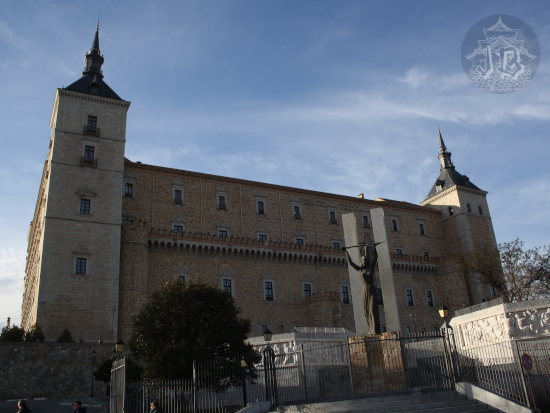
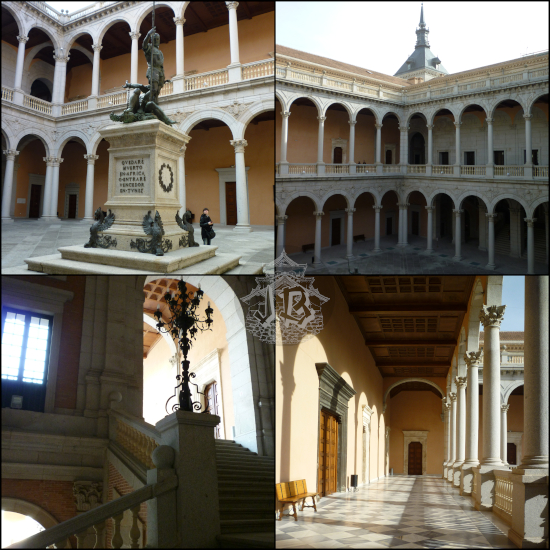
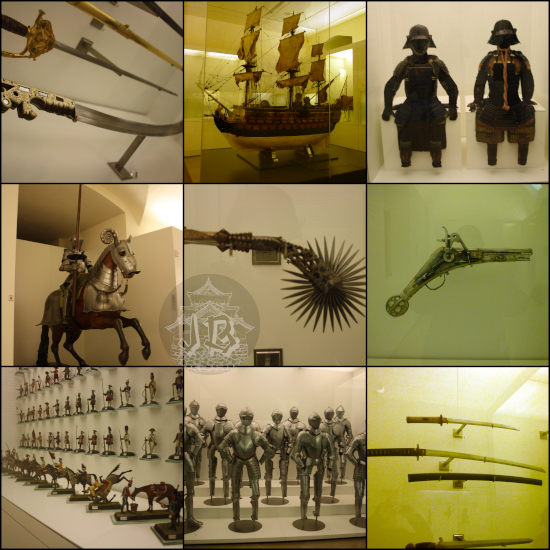
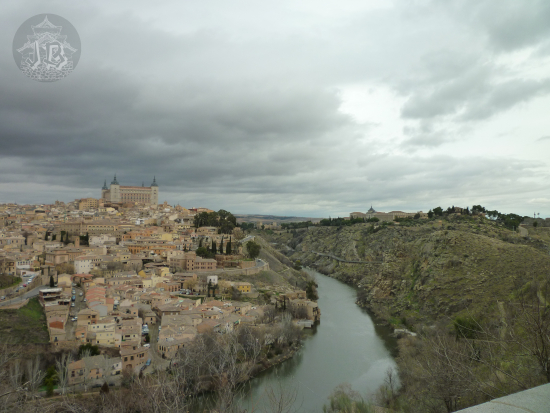
The first thing that we did was head off to the Alcázar (Muslim castle) – although it was originally built by Romans in the third century, its current look is owed to the restoration carried out in the 1540s. However, it had to be restored after the Spanish Civil War. The Siege of the Alcázar was one of the most symbolic victories on the Nationalist band. The Alcázar was under siege during the whole summer by Republicans trying to take it over, but in the end, Nationalist reinforcements arrived, chasing the Republicans away. Today, the Alcázar is an important cultural building (where the bullet holes can still be found) and hosts the Museum of the Army, Museo del Ejército.

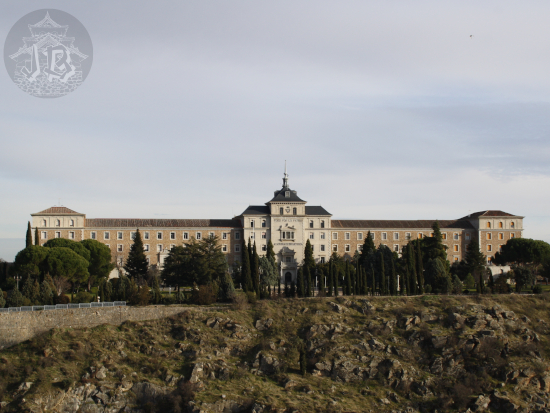
From the vantage point of the Alcázar, we could see the Academia de Infantería (Toledo Infantry Academy), built in the 20th century in imitation of the Renaissance and Herrerian style.

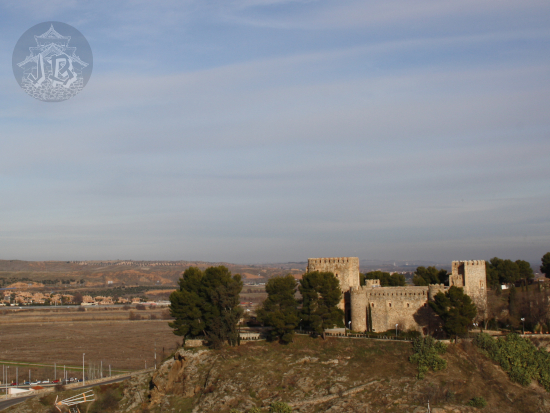
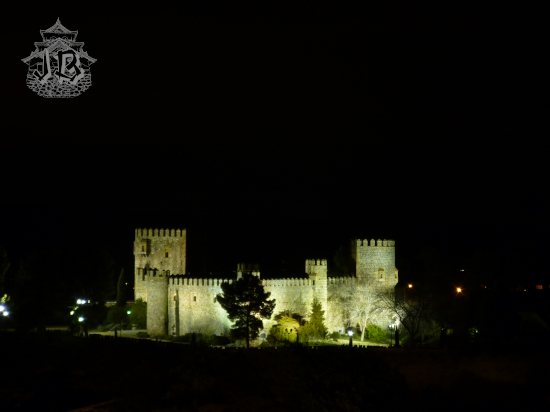
We also saw the Castillo de San Servando, the Castle of San Servando, a fortified Knights Templar enclave. Fine, it started off as a regular monastery, but it was later given to the Knights Templar in order to protect the city.

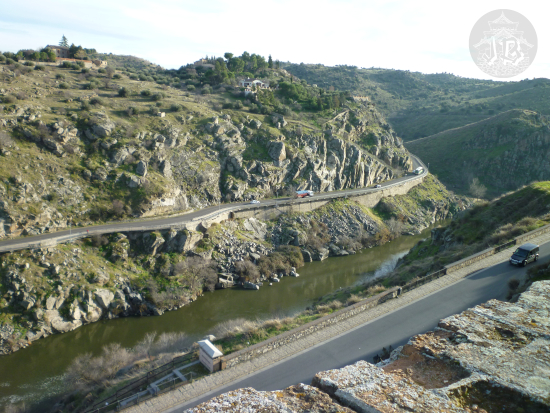
Both buildings are on the other side of the Río Tajo, the Tagus river, the longest river in Spain.

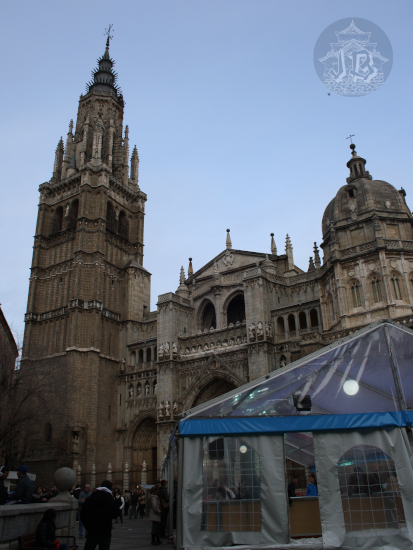
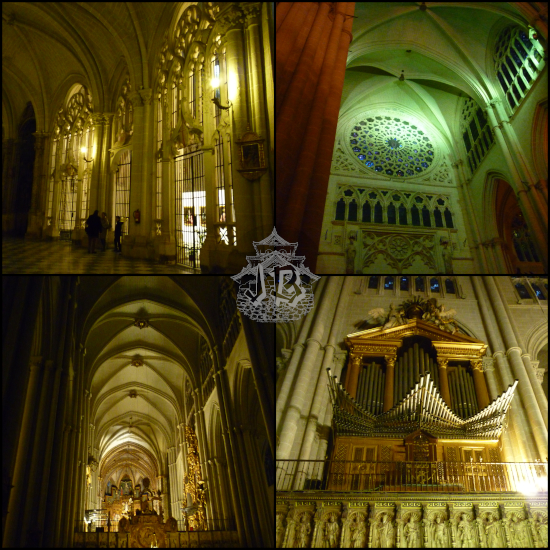
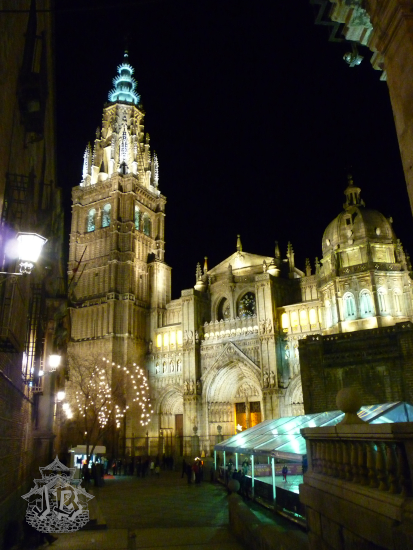
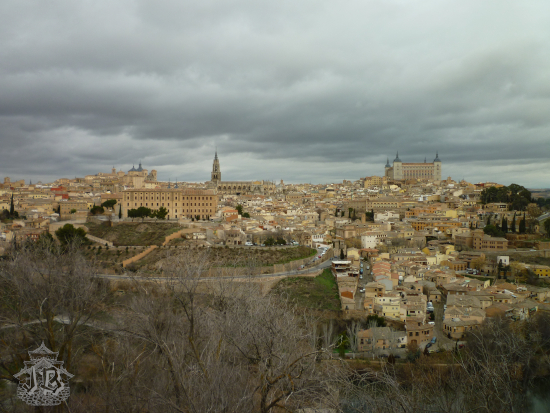
After having lunch and checking into the hotel, we visited the cathedral Catedral Primada Santa María de Toledo (Primate Cathedral of Saint Mary of Toledo). The cathedral, built in Gothic Style, was erected mainly throughout the 13th century, even if it was only finished in the 15th century. It sports two asymmetric towers, well, one tower and a small Mozarabic chapel in place of the other one.

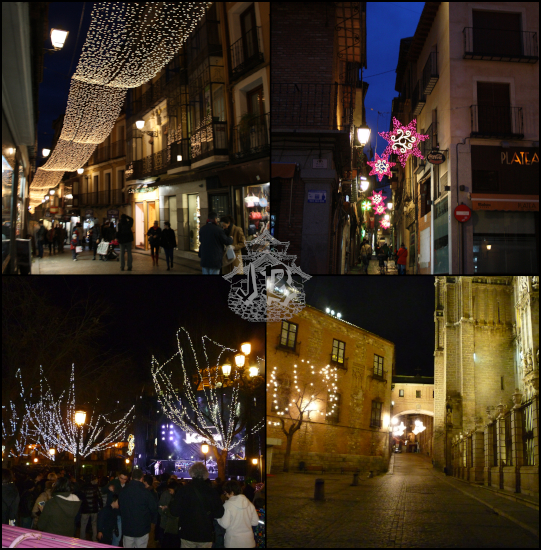
By the time we came out of the cathedral, night had fallen – truth is that we missed a little on the pretty windows due to it being darkish outside already. Nevertheless, this treated us to some nice night views. First of all, of course, the cathedral itself…

The Alcázar once again…

… and the Castle of San Servando.

We then walked through the Plaza de Zocodover, one of the city squares, where the old Muslim for cattle and horses was. The current layout was set in the 16th century after it burnt down in a fire.

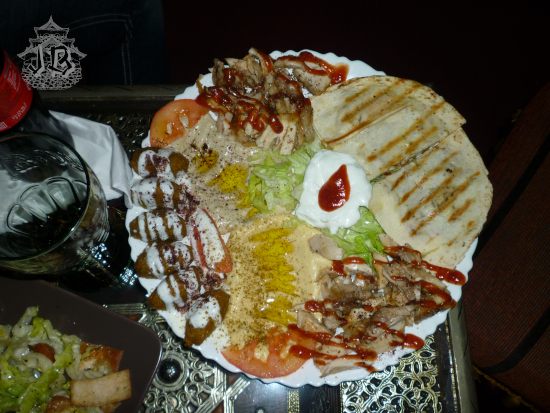
We walked around the old town for a while until we found a place to have dinner, a Middle-East restaurant called La Casa de Damasco, one of the few times I’ve had real food from this area. I have to say I really enjoyed it.

31st December 2013: Churches and Birds

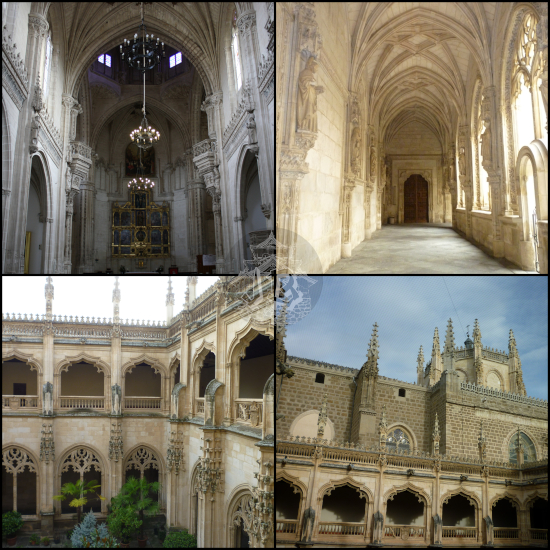
We started off the day at the Monasterio de San Juan de los Reyes (Monastery of Saint John of the Monarchs) is an Isabelline style Franciscan monastery. It was founded by the Catholic Monarchs to celebrate the birth of their son along with their victory in the Battle of Toro, in the late 15th century. It has a beautiful Gothic cloister.

Our next stop was one of those things that breaks my brain, a Christian Mosque, Mezquita del Cristo de la Luz. It was built in the year 999 as Bab-al-Mardum mosque, but it was turned into a Christian Church in 1085. I’m torn between rolling my eyes at Religions needing to assert dominance and being grateful the Mosque was preserved for us to visit.

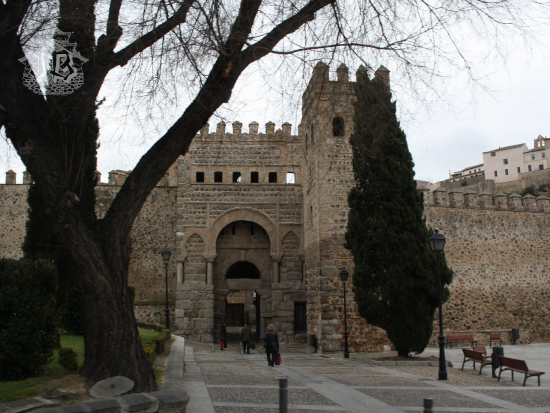
Close to the Mosque stands one of the gates of the old walls, the Puerta del Sol, the Sun Gate, of the city walls.

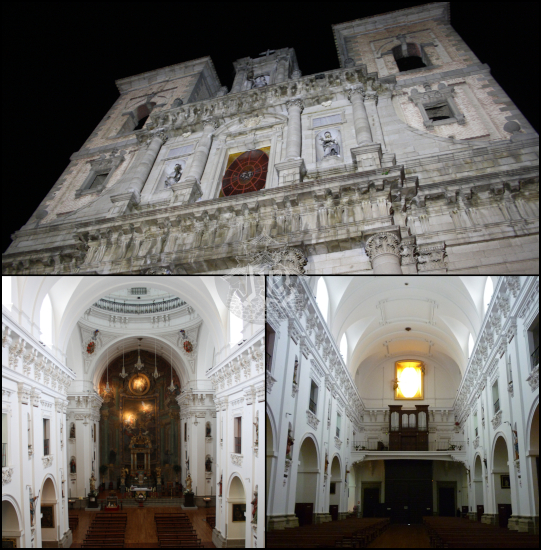
Our next stop the Iglesia Jesuita de San Ildefonso, a church dedicated to Saint Ildefonsus, the patron saint of the city. Construction started in the early 17th century and ended in the mid 18th century, in the Baroque style.

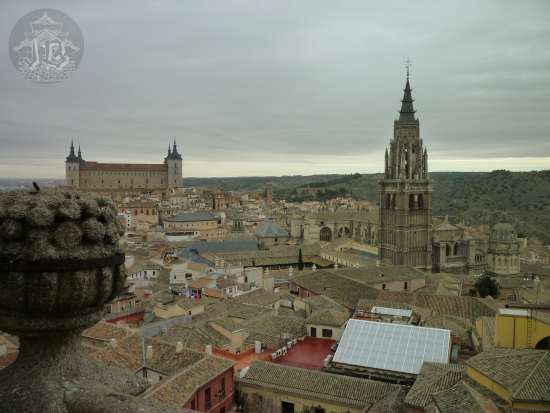
From the upper towers of the church, there was a great view of Toledo.

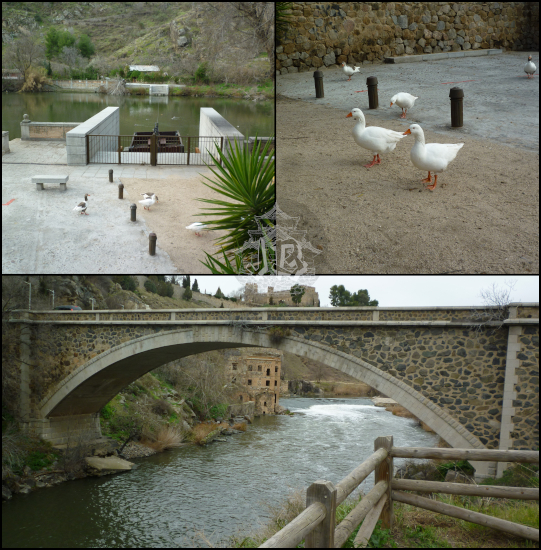
We decided to walk down towards the river, Río Tajo, where we met a flock of geese (which I’m happy to report had not lost their heads to any kind of stupid animal-hurting tradition).

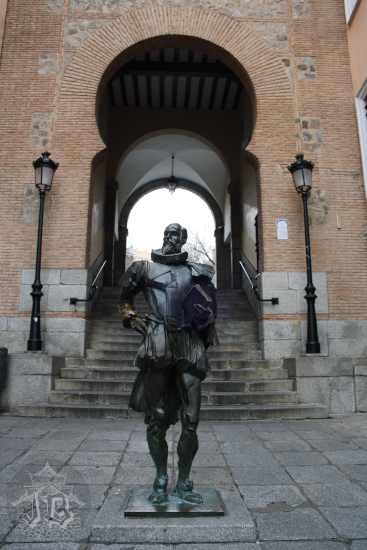
As we continued, we walked past a sculpture to Miguel de Cervantes, Estatua de Miguel de Cervantes, the author of the acclaimed “Don Quijote” book. The statue is placed beyond the Arco de la Sangre , the Blood Archway, that leads into the Zocodover Square.

As darkness rose, we had dinner in a Chinese restaurant. While we did, the lights turned on, and the city got ready to welcome the New Year with fireworks.

1st January 2014: Views of Toledo

We slept in, and after an early lunch (Chinese, again, as we were feeling decadent), we booked a ride in the “tourist train” that took us to see some of the most amazing views of the Medieval Town from the vantage points on the other side of the Río Tajo.

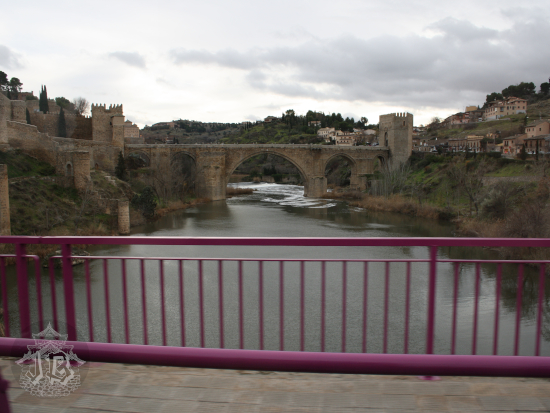
On the way back we saw the Puente de Alcántara, a Roman arch bridge built upon the foundation of the city after the Celtic settlement was taken over.

The ride ended up on the other side of the city than the one we had been favouring, so we just walked round the walls that fortify the city, the Murallas de Toledo, which are of Muslim origin over Roman foundations. King Alfonso VI is credited with finishing off the walls, and he named one of the gates after him: Puerta de Alfonso VI.

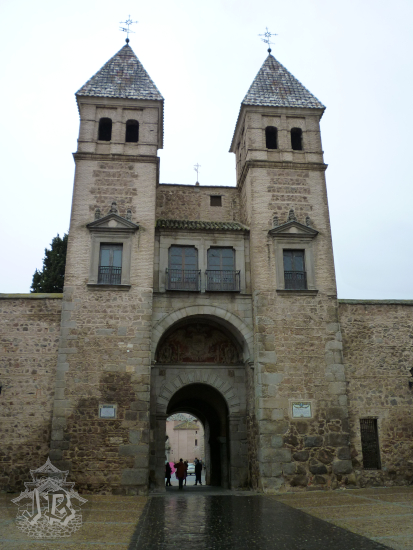
Another of the gates is the Puerta de Bisagra, the last of the monuments we visited before we headed back home the following morning.

One of the creepiest moments in this trip was realising that our key could open a room which was not ours – we got off on the wrong floor and we went down the corridor to the room door, and opened it. It was not our room. We were very quite put off by this, and it turns out that we had a master key. Finding this was a little freaky, and we tried to complain to the hotel. Furthermore, they wanted to charge us for keeping our luggage for a few hours.

Oh, and I caught a cold during our 31st at night escapade. Because of course I did.

22nd December 2013: Derelict Monastery in Tendilla (Spain)

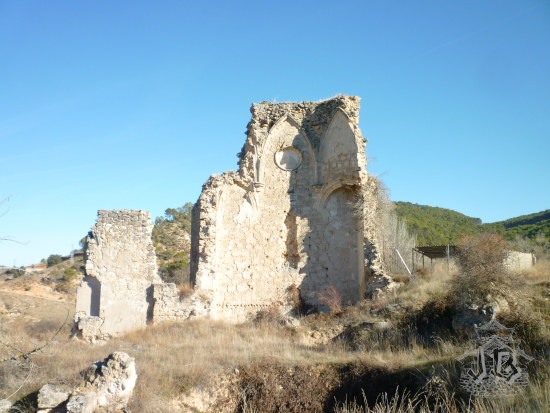
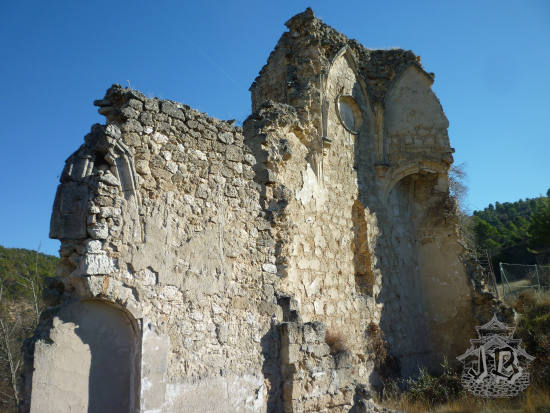
Here are the ruins of the church of a long-forsaken monastery dedicated to Saint Anne, the Monasterio de Santa Ana, a Hieronymite convent built in the 15th Century in Tendilla. Originally, it was built half-way between the Gothic and the Renaissance styles. The monastery was abandoned in the 19th century due to the The ecclesiastical confiscations of Mendizábal, a of laws and strategies that resulted in the expropriation and privatisation of religious and monastic properties. The building was later “sold” for stone, and the tombs it contained were sent to other churches.

I used to be terrified from it when I was a child, but I had an hour or two free in the village so I decided to climb up the mount to have a look.

27th & 28th July 2013: Segovia (Spain)

27th July 2013: Echoes of a Roman Past

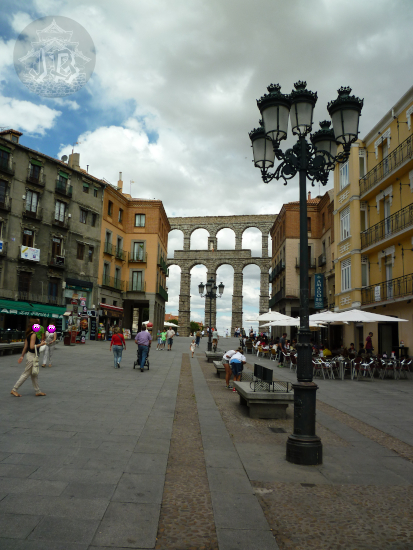
We took the train early on Saturday and arrived in Segovia in mid-morning. Segovia is a Spanish city of the Inner Plateau, located in the autonomous community of Castilla León. It has gained fame because of its many monuments and landmarks, the main being the Roma aqueduct in almost perfect condition, the cathedral and the castle (which may have served to inspire certain mouse-company for the Cinderella Castle). The city centre has been a world Heritage site from 1985 and the aqueduct received the title of International Historic Civil Engineering Landmark in 1999.

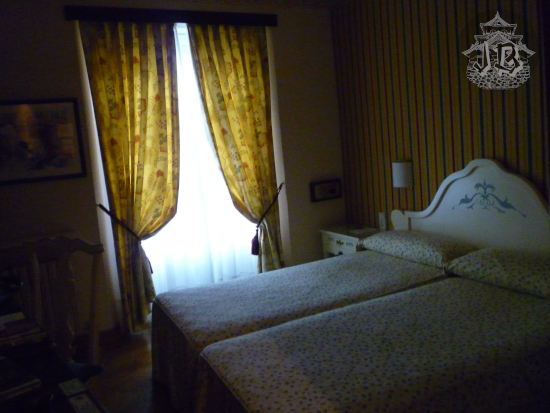
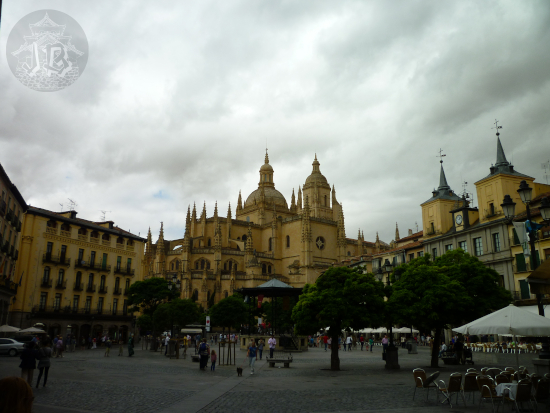
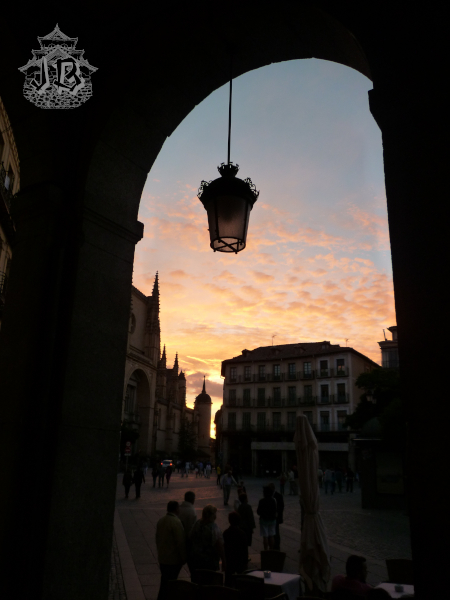
We checked into the hotel, which was dead in the centre of the Main Square and then we visited the Catedral de la Virgen María, the cathedral. The building was constructed between 1525 and 1577 in a late Gothic style that had already phased out in the rest of Europe. We saw the cloister, the chapels and the apse.

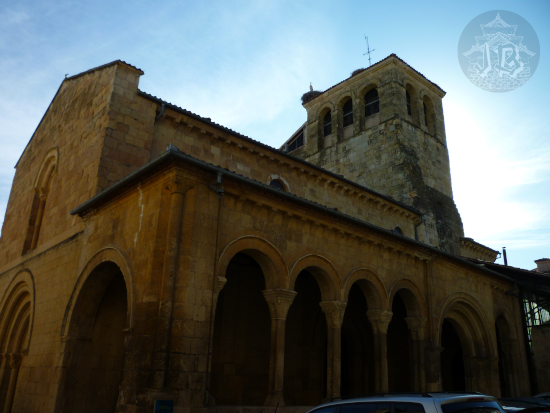
Then we moved onto the Iglesia de San Martín, St Martin’s church, built in the 12th century in the Romanesque style, with a Romanesque-Mudejar tower bell.

We then took a walk around the city centre, and we came across the Palacio de Cascales, a 15th century palace that belonged to the Alpuente Count.

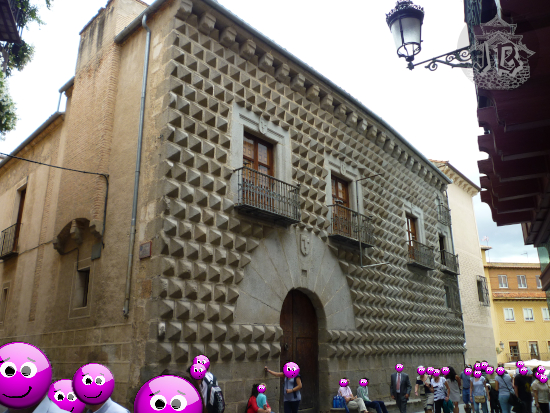
We passed by the Casa de los Picos, the “House of Peaks”, also built in the 15th century.

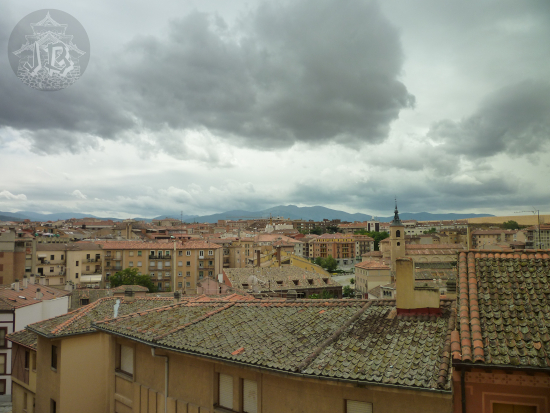
We somehow ended having these nice views of the rooftops of the city, too.

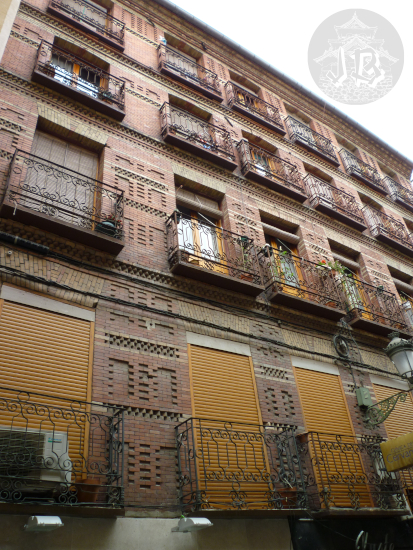
And passed by a very interesting house.

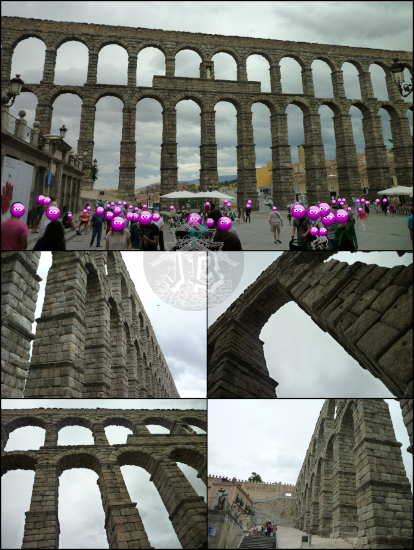
We finally got to the main event, the Aqueducto, the aqueduct. An aqueduct is a “water bridge”, a construction designed to carry water from one side of a valley or a ravine to the other. The Aqueducto was built by the Romans in the late first or early second century. It once transported water from the Frio River into the city, and it ran for a whooping 15 kilometres. It is one of the best preserved aqueducts in the world, as it was reconstructed several times through history, and it was working to get water to the city up to the 19th century.

We passed by the Casa de Ejercicios del Seminario one of the buildings of the Seminary.

We reached the Main Square, the Plaza Mayor again.

And saw the Romanesque Iglesia de San Andrés, St Andrew’s church, with a particularly nice bell tower.

After this we decided to take a break and have the typical pork meat lunch. Then we moved on towards the Alcázar. An alcázar is a type of castle or fortress built during the Muslim rule in Spain and Portugal. The Alcázar of Segovia has been through several redesigns and renovations, but it is a pretty impressive building. The current form was reached during the reign of King Alfonso VIII, so it dates from the 13th century, but it was retweaked by several kings and queens after that. It was the royal residency until the Spanish court moved to Madrid in 1561.

On the way we could see some views and the Iglesia de la Vera Cruz, the True Cross Church.

The Alcázar is quite an impressive building, in Herrerian style, with impressive towers. Part of it is a history museum the other part is a military museum.

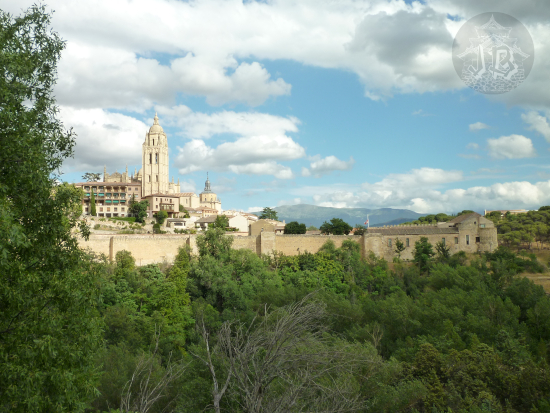
It also offers nice views of the cathedral from the other side.

We walked back to the city centre and along the aqueduct again.

This trip was in July, and scorching hot back home, so we had not considered much of a temperature change. Unfortunately, Segovia in the late afternoon became more than chilly and we had to walk into a random shop to buy a thin jacket, then headed off to the Plaza Mayor.

Funnily, when we were having dinner there, someone warned us that the shop assistant had left the alarm tag on my jacket! That was amusing. We called it a day heading off to the hotel, and being duly impressed by the illumination put in place for the cathedral.

28th July 2013: Churches while the city sleeps

On Sunday morning, most everything was closed, so we took a strolling tor if the Medieval area, and saw a bunch of churches from the tenth and eleventh centuries:

Iglesia de la Trinidad (Trinity Church).

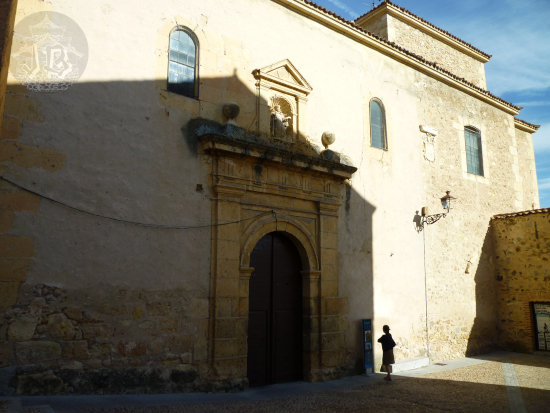
Convento de las Carmelitas Descalzas (Barefoot Carmelite Monastery).

Iglesia de San Nicolas (St. Nicholas’ Church)

Iglesia de San Quirce (St. Quirce’s Church)

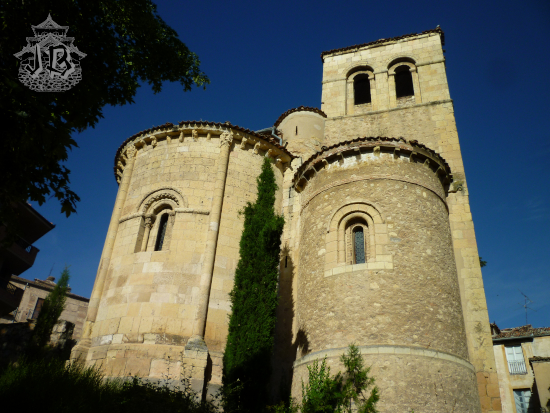
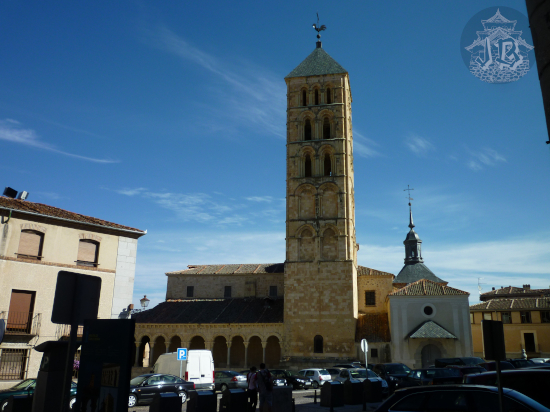
Iglesia de San Esteban (St. Stephen’s Church)

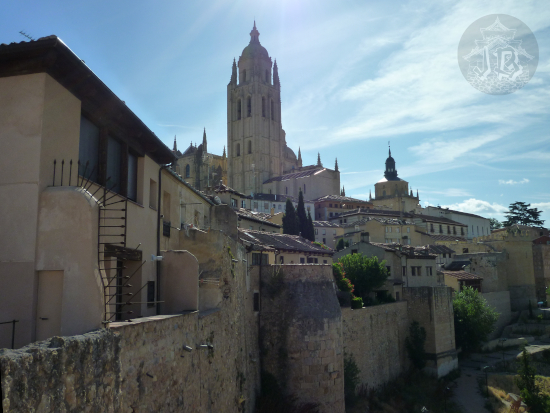
We also had yet a different view of the Cathedral.

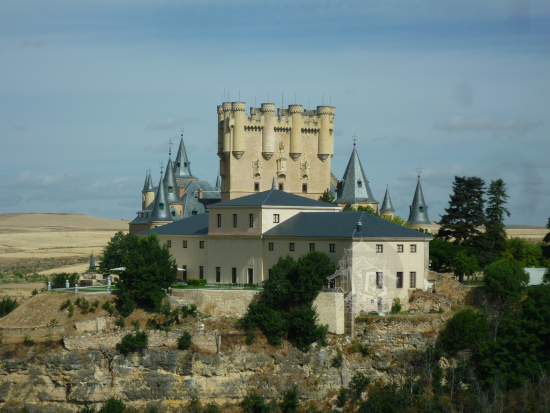
And we could see the Alcázar in all its glory.

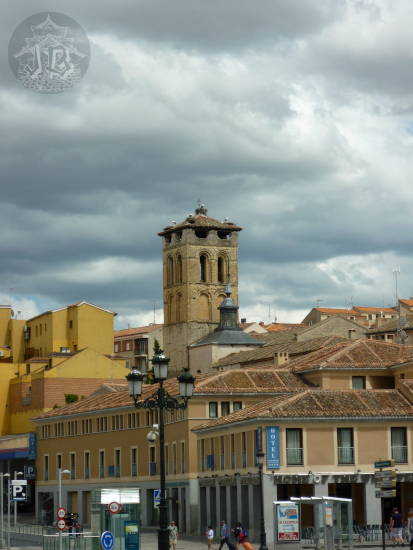
Then we returned to the city centre, where we caught a glimpse of the Iglesia de los Santos Justo y Pastor (St. Just and St. Pastor’s Church).

We had lunch and said one last good-bye to the Aqueduct before we headed back to the train station.

15th June 2013: Maratón de los cuentos de Guadalajara (Spain)

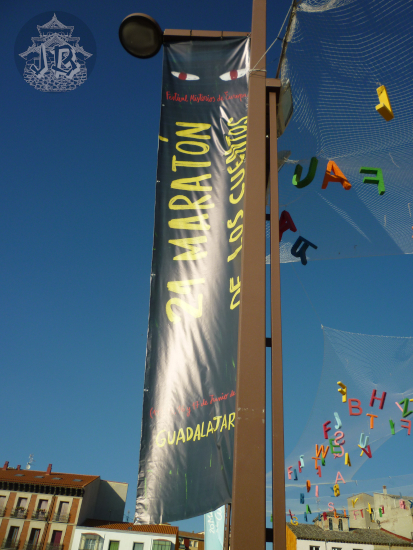
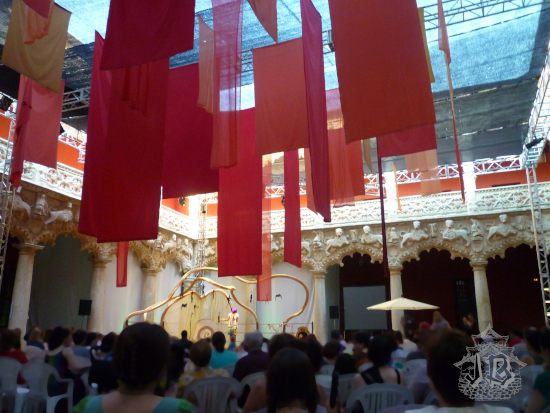
The Maratón de los cuentos de Guadalajara, Storytelling Marathon of Guadalajara, is an annual event that has been taking place in the town since 1992. During a weekend, Friday to Sunday, in June, stories are told non-stop. For a couple of days the town becomes alive with the idea of telling stories, is decorated and so on.

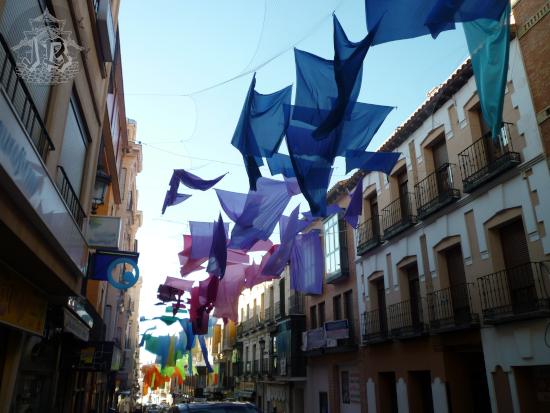
I decided to attend the marathon and listen to a few stories. I walked down Main Street, which had been adorned with flags and hanging letters.

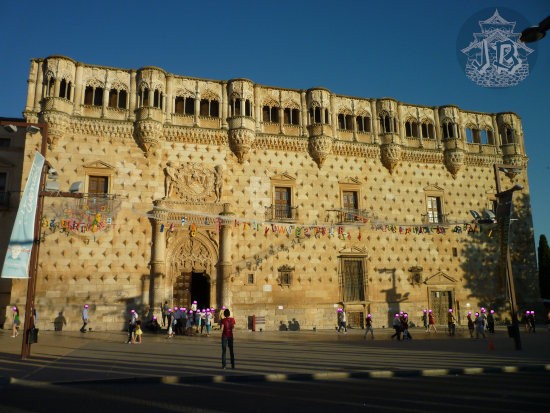
The marathon was carried out in the Palacio del Infantado, a Gothic palace that belonged to the Infantado Dukes. The most important feature, the façade, was completed in 1483. Both the Palace, the gardens, and the patio were also decorated for the event.

After a walk around I sat down to listen to a few stories inside the Palace, before I headed back home.

Flashback to 17th – 21st June 2010: First time in Barcelona (Spain), with the excuse of Gackt

  • Basílica de la Sagrada Família (Church of the Holy Family)
  • Catedral de la Santa Creu i Santa Eulàlia (Cathedral of The Holy Cross and St Eulalia)
  • Mercat St Josep (St. Joseph Market)
  • La casa de los paraguas or Casa Bruno Cuadros (House of Bruno Cuadros)
  • Museu de Cera Barcelona (Wax Museum)
  • Edificio de Aduanas (Customs Building)
  • Puerto de Barcelona (Barcelona Harbour)
  • Estatua de Colón (Colombus Statue)
  • Iglesia de Santa María del Mar (Church of St. Mary of the Seas)
  • Museo del Mamut (Mammoth Museum)
  • Arc de Triomf de Barcelona (Bartelona Triumphal Arc)
  • Parc Güel (Güel Park)
  • Montjuic
  • MNAC or Museu Nacional d’Art de Catalunya (Museum of Catalonian Art)
  • Poble Espanyol (Spanish Village)
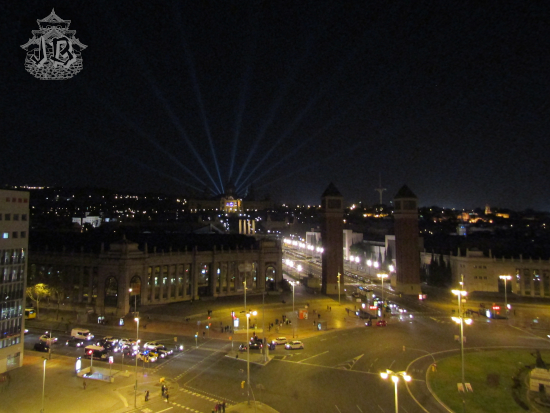
  • Plaça d’Espanya & Torres Venecianes (Square of Spain & Venecian Towers)
  • Barrio Gótico (Gothic Quarters)
  • Gackt’s Are you Fried Chickenz concert.

Note: This is a flashback post, which means it is just a collage regarding a trip I took before I started the blog in 2012. Tags may be incomplete or slightly off.