6th November 2021: Torrejón de Ardoz & Guadalajara (Spain)

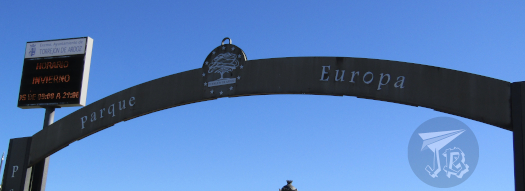
No matter how much some people demonise it, one true thing is that a great chunk of the Spanish general income is dependent on tourism. That’s why when the 2008 recession hit the country, many areas or municipalities tried to fabricate tourist attractions where there used to be none. Torrejón de Ardoz is one of these places – despite shouldering a huge debt, it gambled a couple of tourist lure. One is a huge winter lights (Christmas) display, which runs from November through January. The other is a huge park in a former slum, called Parque Europa, Europe Park.

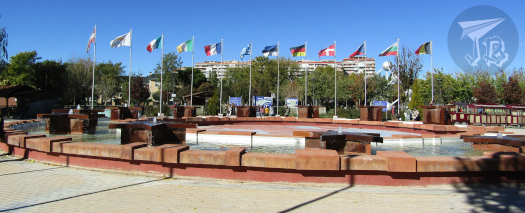
Parque Europa was described as “Pharaonic” upon its inauguration in 2010. It covers a whooping 23 hectares of trees, bushes, ponds, rides for kids and replicas of different European monuments and landmarks, both real and art depictions. I can’t be sure if in the end the park managed to break a profit, but the reviews online do sound like it did.

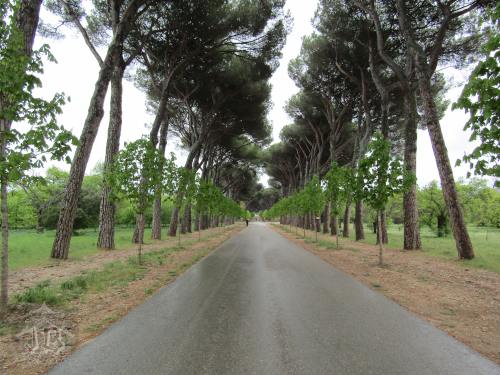
In winter, the park opens at 9.00 am, and I thought that if I managed to get there relatively early in the morning, I might find a free parking spot around the area. Online reviews do talk about limited parking space aimed to fill the pay-per-car parking lot close to the entrances, so I thought I’d try to leave the park in the streets of the industrial complex nearby. After a couple of Sat-Nav mishaps – human-caused aka I forgot the adapter for it to work in the car (≧▽≦) – I was on my way and I reached the neighbourhood a bit before 10.00 am. As I was driving towards my intended parking spot I caught a glimpse of the Eiffel Tower, so when I turned and found a random parking spot, I decided to just ditch the car. There were many double-parked cars ahead so I thought the rest of the street would be packed. At that time in the morning, I could have just parked in front of one of the access gates without problems, apparently. So I had to walk two whole extra minutes!! In the end though, that parking spot was even closer than the ones I planned to look for – so it was all good.

I wanted something to do in the morning outside the house so I did not have a plan per se (to be honest, I had long made the afternoon plans and I wanted something to do in the morning to make the most out of the disposable contacts). However, as the fountains were turned on at noon, I wanted to leave them for last. Fortunately, most of them are in the same area of the park – which is shaped like a ham of sorts. At that time most of the children rides were closed, and I was mostly alone except for people jogging or walking their dogs, and it was rather chilly. But I wanted to see the replicas, so that was all right.

These are the monument replicas that are hosted in the park, in the order I saw them, turning clockwise from the entrance I used:

  • Puerta de Alcalá (Gate to Alcalá), Madrid, Spain. Neoclassical gate to the former walls in Madrid. Today it is considered World Heritage as part of the “Paisaje de la Luz”.
  • Torre de Belém (Belém Tower), Lisbon, Portugal. Officially named Torre de São Vicente (Tower of Saint Vincent), a 16th-century port fortification for Portuguese explorers, with high symbolism and ceremony.
  • Tower Bridge, London, United Kingdom. Crossing the River Thames, it is one of the most iconic London landmarks.
  • Kinderdijkse molens, the Windmills of Kinderdijk, Netherlands. The original windmills were designed as part of water drainage to drain the excess water in the Alblasserwaard polder.
  • Brandenburger Tor (Brandenburg Gate), Berlin, Germany. It is one of the most characteristic landmarks in the country, a monument built in the place of a former wall gate in the 18th century.
  • Den lille Havfrue (The Little Mermaid), Copenhagen, Denmark. This small sculpture is displayed on a rock in the a promenade in Copenhagen, and depicts the mermaid in Hans Christian Andersen’s tale becoming human.
  • La tour Eiffel (The Eiffel Tower), Paris, France, built for the entrance to the 1889 World’s fair and one of the most visited monuments of the world.
  • Michelangelo’s David, Florence, Italy. One of the masterpieces of the Renaissance sculpture, standing 5.17 m of white marble. This replica I didn’t get to see because it had been either stolen or taken away for restoration.
  • Fontana di Trevi (Trevi Fountain), Rome, Italy. Dating back from 1762, the fountain is a “more dramatic” version of a previous one at the end of one of the Roman aqueducts. The fountain was turned on at noon and it had just a little water.
  • Manneken Pis (“Little Pissing Man”), Brussels, Belgium. It is a bronze fountain sculpture depicting a naked little boy peeing into the basin, dating back from the 17th century.
  • Atomium, Brussels, Belgium. This stainless steel building was constructed for the 1958 Brussels World’s Fair, and renovated between 2004 – 2006. It stands 102 metres high and some of the spheres are open to the public and hosts exhibitions.

There are also “adaptations” or monuments that you can “sort of” identify but have been more freely reproduced.

  • Greek Theatre, based on the Athens one, with the Winged Victory of Samothrace watching over in a bit of an artistic license move I guess, considering it was a ship figurehead. The actual one is in the Louvre Museum in Paris. The theatre is built into the slope of the central pond of the park so visitors can see the light and sound show in said pond when they are held.
  • Plaza de España (Square of Spain). The centre of the square is the famous “Puerta del Sol” in Madrid and the older Post office. Its back represents the Main Square of the city. Other houses represent different regional buildings throughout Spain that I was unable to recognise.
  • Viking Ship fountain. There is not much I can say about this. It was one of the fountains, and this one was turned before any of the others.

Inspired by paintings, there are two other monuments.

  • The Three Graces. While the park’s webpage claims that the sculpture is a copy of the one that Antonio Canova created, it looks like it was sculptured using Ruben’s painting as inspiration. This one was the first monument I saw.
  • Van Gogh’s bridge”, a wooden bridge inspired by Vincent van Gogh’s painting “The Langlois Bridge at Arles”. I missed it at first so I had to backtrack and I did not find a good angle to see it from the side.

An original piece is the fountain called Plaza de Europa, Europe Square, a circular square with stars forming little fountains. This was one of the fountains I had to wait till noon to see and to be honest, I was… underwhelmed, expecting way more by the pictures on the website. I’m not sure if it was just “winter fountain” or whether the sprouts were set on low because it was a bit windy.

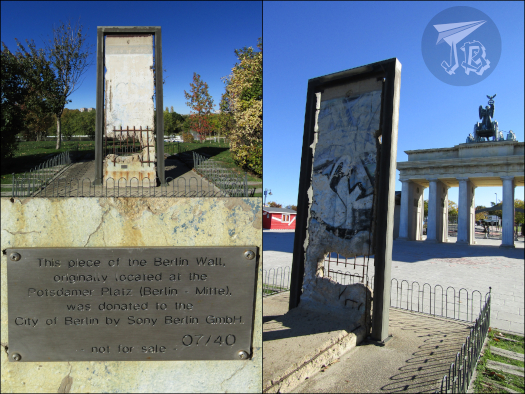
What was interestingly impressive was the original piece of the Berliner Mauer, the Berlin Wall. During the Cold War, after WWII, Berlin was partitioned into West Germany and East Germany with the erection of the wall in 1961 (in what was called the Berlin Crisis of 1961). It was all built within the eastern border as it was the USSR who decided to put it up. The Wall separated the city halves for decades, there were even deaths as people from the east tried to defect to the west. The wall officially but metaphorically fell in November 1989 as the political powers who had driven its building agonised. The piece that stands in Parque Europa originally stood in Postdamer Platz and was ceded to Torrejón by the city of Berlin and it stands behind the Brandenburg Gate.

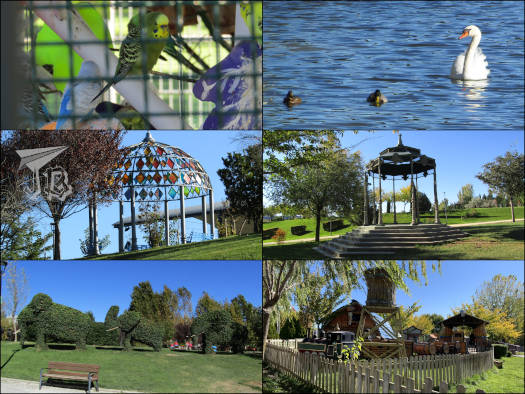
There are many other areas and activities for kids. A number of them were already opening up by the time I left, others seemed to be on hold due to pandemic concerns. The park has different things to draw attention too, such a giant bird cage (mostly full of parakeets), three life-sized elephants made out of bush, gardens, or an artificial waterfall – which did not get turned on. I saw a lot of birds too – magpies, swans, mallards and some very territorial Egyptian geese (I think that they were Egyptian geese. I’m absolutely sure they were territorial).

I left Torrejón at around 12:30, I think. I took care of some errands on the way, had lunch, and then I headed off to the second part of my self-imposed day off. A late-Halloween activity that ran throughout the month of November: Arquitectura y escultura funeraria in Guadalajara: a walking tour with a focus on the funerary architecture and sculpture in town. Well, at least with a stop at those places that are directly controlled by the town hall, missing those that are not. Yes, I voluntarily signed up for a guided visit! Unfortunately, information on Guadalajara is rather difficult to find, so I thought there might be interesting knowledge to be gathered (Narrator’s voice: there wasn’t).

The tour started at the local cemetery Cementerio Municipal Virgen De La Antigua, where we saw several tombs and pantheons dating from the 19th century and the early 20th century. These included:

  • Panteón de la Tropa, the “Troop mausoleum”, a communal grave for soldiers who died in the African campaigns, where supposedly some of the Civil Wars victims were buried. It actually is not the place, but legends are legends, I guess.
  • Panteón de los Marqueses de Villamejor – a neoclassical mausoleum where a noble family was interred.
  • Monumento funerario de la Familia Cuesta Sanz, a creepy obelisk-looking tomb.
  • Some smaller mausoleums (or big graves) Panteón de María Luisa García Gamboa, Panteón de la Familia Chavarri, Panteón de Josefa Corrido de Gaona, and Panteón de la familia de Ripollés Calvo. All these are stone tombs with a rounded roof that drains off rainwater.
  • Panteón de los Condes de Romanones, the place of eternal rest of another noble family, whose head was the son of the previous one.
  • Kittens

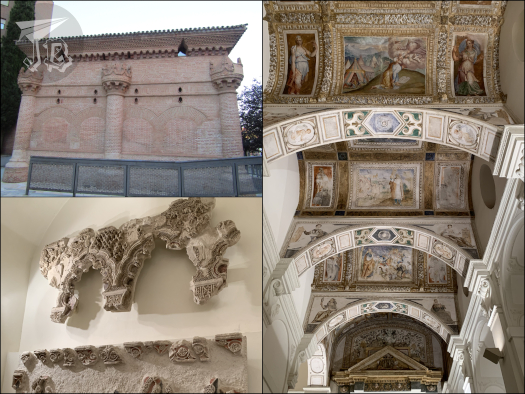
We then walked off towards the chapel Capilla de Luis de Lucena. Luis de Lucena was a doctor and a priest who was born in the 15th century. He died in Rome as he worked as a doctor for the Pope, but he expected to be buried in this chapel, adjacent to a now-disappeared church. The outer area is built in brick, and the inner ceilings have several frescoes, even if they are rather deteriorated as the town had no money to take care of the art during the 90s and the early 2000s. The chapel was never used as a burial place, and now it is a tiny museum that keeps rests of other disappeared churches in town, especially the funerary sculptures.

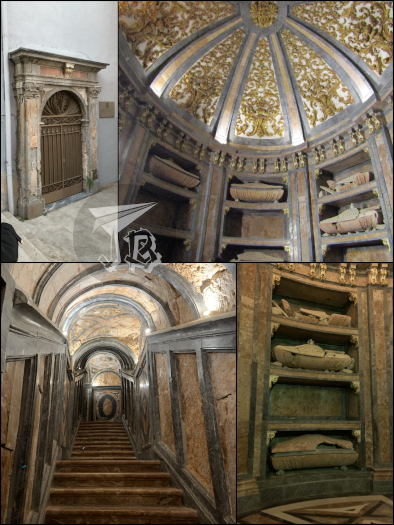
The final spot was the crypt of the church of St. Francis – Cripta de la Iglesia de San Francisco, built in dark marble and similar to the one in El Escorial. This is where the Mendoza duchy family members were buried, but the area was ransacked by the French during the Napoleonic wars and the remains were taken to Pastrana afterwards, so the crypt is currently empty. Which is good considering the way some of the tombs are shattered…

This concluded the tour so I was free to go. I saved up the entry fee on the chapel and the crypt as the tour was free. Most of the tour was just crawling from one point to the other and there was not that much new information to be learnt. Maybe there is jut not enough information to be found…

Driven distance: around 83 km.
Walking distance: 13.14 km

8th & 9th January 2021: Guadalajara & Filomena (Spain)

Since 2017, Spain (alongside Portugal and France) has taken up the custom of naming bad storms, and this season we are up to ‘F’, the 6th bad storm. In this case, the storm, named Filomena, entered Spain from the south west and collided with a polar air mass that happened to be coming from the north. The result – snow. Lot’s of it, with low temperatures and snow-heights not seen in a very long time. Some call it “the snowfall of a lifetime”.

As Covid-19 has made travelling impossible – or at least pretty unsafe / irresponsible (choose your pick), plans have been pushed back again, and plain cancelled. While truth be told I still hold tickets for the Saint Seiya event in Paris in late May, I have no hope I will be able to attend. Even if the Covid crisis fades away, there’s the extra issue of the economic blow 2020 caused.

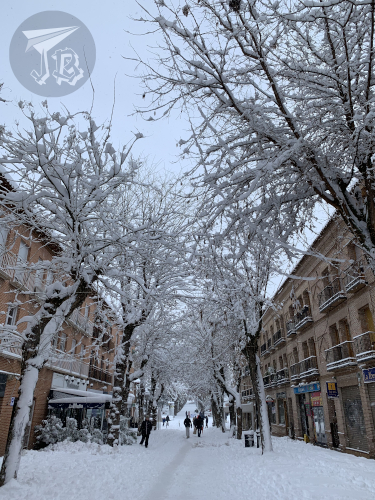
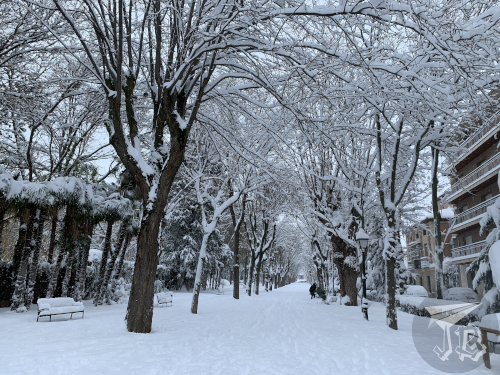
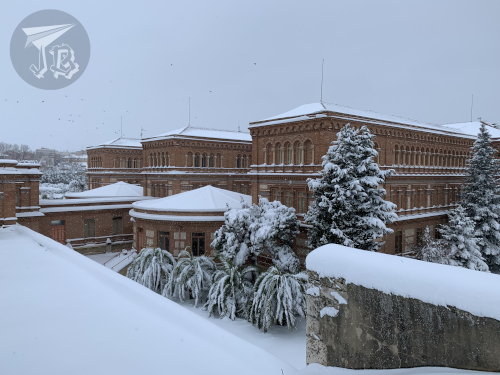
Anyway, back to Filomena – it brought something that is rarely seen in these parts. Snow. Lots of it. So before everything went to hell, I just decided to ignore the stay at home recommendation and took a couple of walks around Guadalajara for a rare sight – the monuments covered with snow. Furthermore, as the snow is expected to freeze into ice plates, I had to go out when the snow was still fresh.

I took two different walks. On the eight of January, Friday, as soon as I got out of wok I put on my snow boots (perks from the time living in Scotland) and winter coat, then threw my raincoat over it – it was a tricky movement, but I managed not to dislocate my shoulder doing so. By this time there was a coverage of a few centimetres, and I decided to head out to the outer area of town where I could sneakily take my mask off if my glasses fogged too much, which I had to do when I crossed the road, because there’s no actual crossing.

There was a surprising amount of people around! Fortunately I was able to keep my distance, especially at the times when I tried to breathe – even if I went out with the smaller glasses, at points I had to take them and the mask off to be able to breathe and see anything.

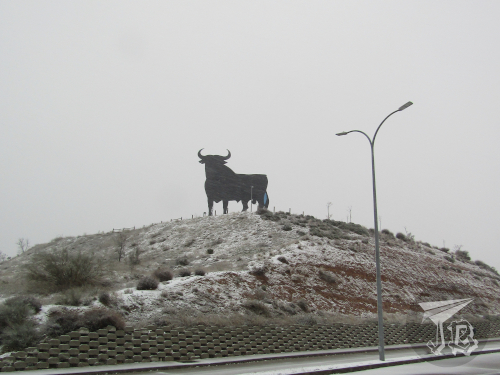
I walked up to the Toro de Osborne a winery-billboard-turned-item-of-cultural-and-visual-interest which as you can see is shaped as a bull – representing the species used in bred for bullfighting, because the Osborne winery is located in an area also famous for the livestock. It is made of metal and measures around 14 metres high, one of the 91 that remain around Spain. It stands in an area that was supposed to become urbanised but never did, so it has several unfinished alleys and corners. There has been a statue there since 1975, called El Abrazo, (The Hug), which has always reminded me of a decomposing DNA strand. It was erected by Francisco Sobrino, the most famous sculptor from the town.

I went back right before sundown, and the roads were already difficult. It continued snowing throughout the night, and when I woke up on Saturday morning, no cars could run, there were no buses, trains had been stopped and some trees had collapsed under the weight of the strongest snowfall in decades. But… temptation won. I only wanted to peek around the corner a little, but then I decided that as there was a good chance I would run into people, I could not cheat on mask policy – so I put my contacts on. That warranted for a longer walk as those are disposable, and… not cheap (≧▽≦).

First I walked down the Avenida del Ejército, one of the main arteries in town, which had already been somewhat cleaned of snow, which was good, because… well, there was a bit more of a cover than the day before

I reached the park built after the ancient Arab structure, Parque de la Huerta de San Antonio. To the left stands one of the towers of the old walls, Torreón de Alvar Fáñez.

I saw the snowed Palacio del Infantado. This palace was built in the late Renaissance style, designed by Juan Guas and commissioned by the Marquis of Santillana. Although the main construction happened between 1480 and 1497 but has been reformed in several occasions, even recently as it was turned from public library into monument and museum. Infantado is a name related to the concepts of infante or infanta, which are the Spanish terms that designate the children of monarchs who are not the direct heirs (so no the crown prince or princess). The most important feature is the main façade built with sand-coloured rocks and diamond protuberances as decoration. It was suspected to have suffered from aluminosis concrete a couple of years back, but after a small political struggle, it the palace was deemed healthy again. Magic, I guess.

Up the central street of the old town, I took a small detour to check the Iglesia de Santiago Apóstol to the left. The church, built in bricks, used to belong to a now-gone convent.

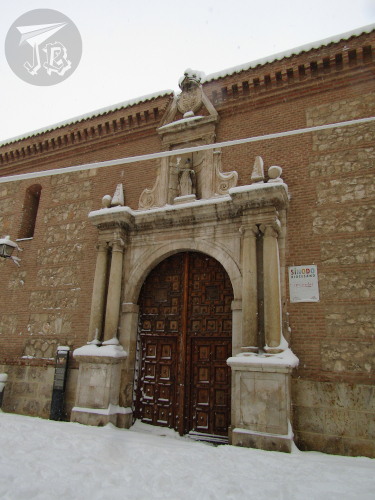
In front of the church stands the convent-turned-palace-turned-high-school Convento de la Piedad / Palacio de Antonio de Mendoza. The convent-palace represents the start of the Renaissance influence in Spain, especially the former grand entrance.

At the end of the street stands the main square and Ayuntamiento, the town hall, and main square, where the street turns into the main street, Calle Mayor. The town hall, built at the beginning of the 20th century, sports an interesting bell tower in iron.

The square Plaza del Jardinillo (square of the little garden) where the Baroque church Iglesia de San Nicolás el Real stands. You can’t really recognise him under all the snow, but there is a Neptune standing in the middle of the fountain in the square.

Main Street continues until the square Plaza de Santo Domingo. The square is half park-like, half built, and one of the trees that died in the park area was carved into a book-stash sculpture.

On the other side of the road stands another church, Iglesia de San Ginés, built in the 17th century with two towers and a Romanesque-looking entrance.

The police tape around the main town park, Parque de la Concordia, had been partially taken down and I interpreted (wrongly) by the sheer number of people inside that it was allowed to walk in. Only when I reached the other side I realised that the park was considered unsafe, and of course I did not risk any other trespassing. The park dates to mid-19th century, and hosts a gazebo-like structure built in brick and iron by Francisco Checa in 1915.

I went on to the Paseo de San Roque, only on the street area, as the more park-like one was taped off. This is one of the most diverse parks in town, and some say that it could / should have been considered a botanical garden.

I walked alongside, peeked into the park Parque de las Adoratrices, but it was packed, so I continued on. Although this park is rather recent, opened in 2009, the walls and fences were built a century earlier. The town festival used to be celebrated here, but it was moved away to the outskirts as the town grew.

At the end of the street stands the chapel Ermita de San Roque , which originally was outside the town when it was built in the 17th century, in the typical brick of the area.

I walked around the walled area of the Colegio de las Adoratrices, with some really cool views of the pantheon that stands there, Panteón de la Duquesa de Sevillano, the school building and the church Iglesia de Santa María Micaela. This whole area used to belong to the Duchess, who commissioned the architectural complex in the 19th century. The pantheon is a particular example of the eclectic architecture, with a purple dome. The church is a mixture of different styles, out of which maybe neo-Gothic would be the most prominent one.

The street I wanted to go along next was a) taped off and b) waaaay too steep for a safe climb-up, so I decided to turn towards another of the important squares in town, Plaza de Bejanque. You can guess the old fortress Fuerte de San Francisco behind it, but it was also full of people, so I walked fast.

One of the features of the square is the old gate from the walls, Puerta de Bejanque, one of the access gates through the 14th century wall. This used to be part of a house that was built around it, and it was unearthed, so to speak, in the 90s.

I went down towards the co-cathedral Concatedral de Santa María. Originally built in the 13th century, this catholic church has been redesigned and rebuilt in several styles. It is best characterised by the horse-shoe arches in the main façade.

And sneaked up towards the chapel Capilla de Luis de Lucena, a small and compact chapel built like a tiny fortress that used to be an oratory part of a larger church.

I walked past the old palatial house Palacio de la Cotilla, a palatial house from the 15th century.

The convent Convento de las Carmelitas de San José. This convent, where cloistered nuns still live (tradition says that couples that are going to marry should bring them eggs for sun on the day of the wedding) was built in 1625, and the inside is decorated in the Baroque style.

And finally reached the lookout over the park built within the old torrent, Parque del Barranco del Alamín.

I finally saw the former church Iglesia de los Remedios. Today it is used as the grand hall for the nearby university, but it was originally a Renaissance temple, with three characteristic arches guarding the entrance.

And turned back towards the Palacio del Infantado from the square Plaza de España.

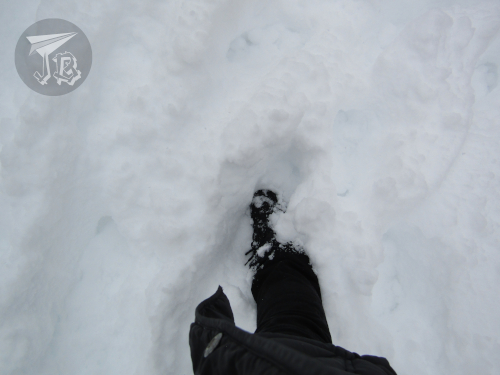
It had started snowing more heavily by then and my legs were getting tired. The sloshy snow on the roads had become frozen so it was slippery, and when I was walking on the actual snow, it was up to my mid-shins, so I was feeling the strain in my legs and my back. Thus, I decided to go back home and not to return in the afternoon again because the trees had lost more and more branches under the weight of the snow. The temperature going down also meant that the snow was going to freeze and it would be more slippery as it became ice…

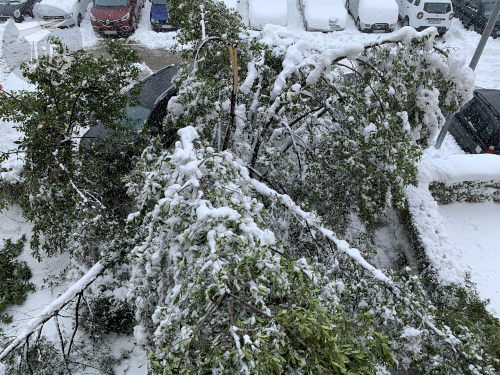
I mean, this is the tree that used to stand in front of my balcony… So better safe than sorry. But all in all, the snowfall of a lifetime in these latitudes!

12th September 2020: Sigüenza (Spain)

We took a drive to Sigüenza, in Spain. This medieval town? big village? had a big relevance through the Middle Ages, and the historical centre reflects that. The most prominent point is the castle on top of a hill. The Castillo de los Obispos is a fortress that can be traced to Roman times. However, the actual castle was a Moorish alcazaba. After the Christians took it over in the 12th century, it was remodelled and enlarged. Due to its vantage point, the castle was a key element in different wars and strife, including the Napoleonic invasion and the Civil War, thus resulting pretty damaged. In the late 20th century it was decided to restore it turn it into a Parador with around 50 rooms.

During our planning stage we called and tried to book a restaurant for lunch, and we were told they were not taking them, we had to call on the same day. Of course, when we got there, it was impossible to book – there was a course and the celebration of a communion (seriously, people, learn to say no so others can get organised). Unfortunately, you could not see the interior or even the yard if you had no reservations, so I can only share a picture from the parking lot, where we left the car.

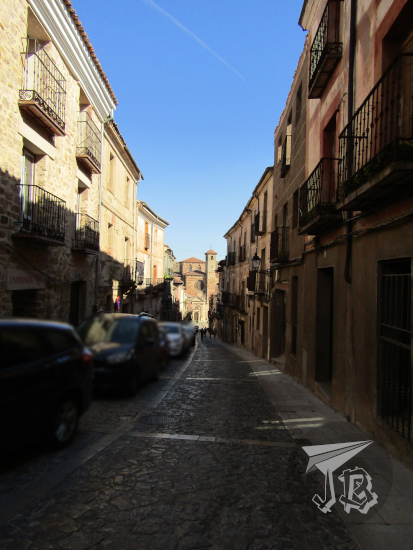
We walked down the main street Calle Mayor, a clobbered slope that ends (well, technically begins) at the town’s main square.

Main Square or Plaza Mayor is home to the Town Hall or Ayuntamiento de Sigüenza, an old palace with a typical Castillian inner yard or patio.

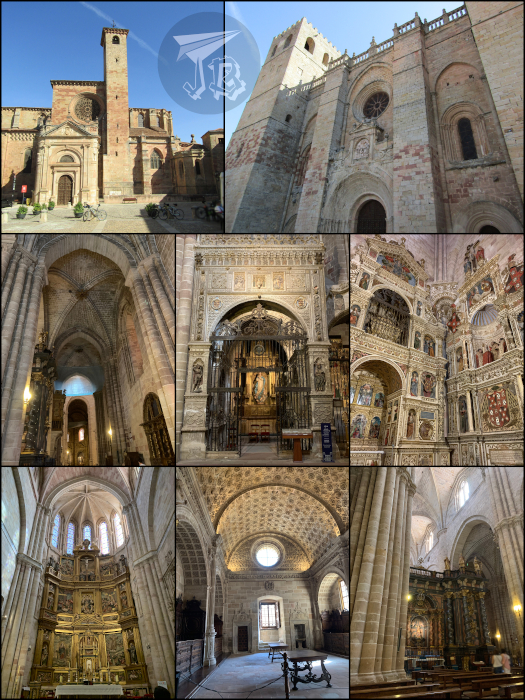
Opposite the town hall stands the cathedral Catedral de Santa María La Mayor de Sigüenza. The Gothic building was built upon a previous Romanesque one and it had some Neoclassical and Baroque additions. Thus, the façade sports Romanesque doors and rose window, and the main body is Gothic. The altar and the choir are awfully Baroque too, and some of the chapels sport Cisneros, Plateresque and Renaissance decorations. All in all, an interesting pout-pourri of architectural and decoration styles.

The most important piece of art of the cathedral, however, is a funerary piece to the right of the altar. It is the sepulchre of Martín Vázquez de Arce “El Doncel” (“The Young Man”). The chapel holds him, his parents and grandparents, but the sculpture on his sepulchre is the most impressive one. The Vázquez de Arce family were vassals of the Mendoza family, the most important family in the area during the Middle Ages. During the war to conquer Al-Andalus, the Vázquez de Arce males followed the Mendoza to the war in Granada, where Martín died in a trap set by the Arabs, which consisted on damming the River Genil to a creek, and then releasing the dam so the water took over the enemies crossing (which… kinda sounds like something out of the Lord of the Rings, doesn’t it? At least, it makes me think of Arwen and Treebeard). The sepulchre, commissioned by Martín’s brother, presents him taking a break during training and reading a book. He even has pupils, so if you could climb up, you’d see what he’s reading!

The cloister is also Gothic, as the previous Romanesque one was torn down. It holds a central garden and a number of side rooms where there is a collection of mythology-themed tapestries. In one of the chapels, there is also a painting by El Greco, a Greek painter rooted in Spain who was one of the key artists during the Spanish Renaissance.

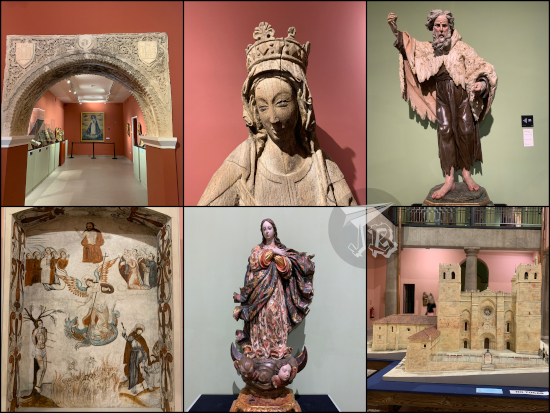
The cathedral ticket also allows a visit to the Diocesan Museum Museo Diocesano, which holds many pieces of religious art, along with a few models of the cathedral in its different construction stages. These days I’m trying to learn some hagiography, which means how to identify religious figures by how they’re presented. Getting there, three out of ten times or so, because half the time they cheat.

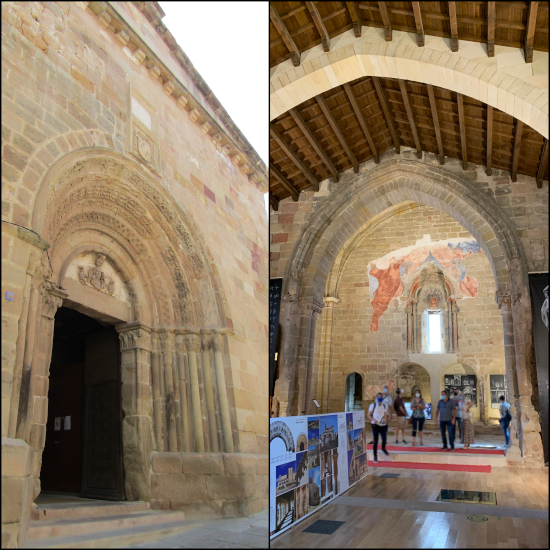
After the cathedral we climbed up towards the castle, and we stopped at the former church Iglesia de Santiago, now transformed into a mini-introduction centre for all the “hidden” or “unknown” Romanesque in the area. The church itself had some beautiful paintings, but it was destroyed during the Civil War.

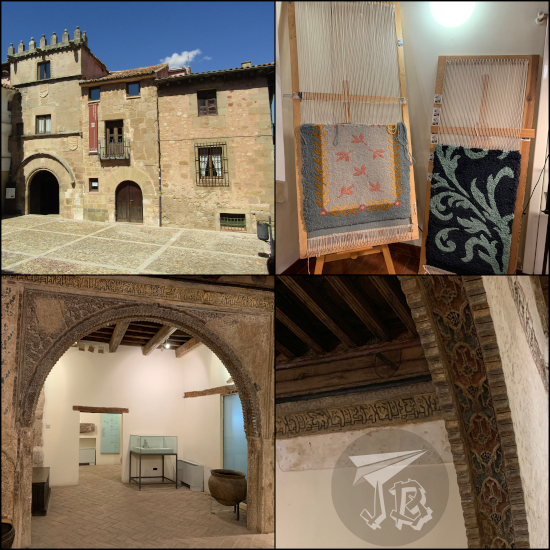
Continuing our way up, we turned a little to see the house where the Vázquez de Arce family used to live, now turned in a museum, Museo Casa del Doncel. There is a little paintings exhibition and a guitar museum, along with some ancient artefacts such as vases or looms. The most interesting part are the Moorish “Mozárabe” decoration. Here is a bit of historic trolling: when the Christian “conquerors” hired Arab craftsmen to do decoration, one of the things the Arabs did was decorate using Quran verses.

Then we saw the outside of the church Iglesia de San Vicente Mártir, Romanesque to boot.

Afterwards, we ended up at the square Plazuela de la Cárcel, where the old gaol jail stood.

Finally, we headed over to the restaurant where we had booked a lunch table, a traditional grill called La Taberna Seguntina where I chose to have a “summer menu” with salmorejo (a thick soup or purée made with tomato, oil, and bread and sprinkled with boiled egg and cured ham) and roasted cochinillo (suckling pig, roasted whole) with potatoes and herbs. For dessert I had a pudding!

And that was it, really – Medieval Sigüenza has nothing else to see. As the façade of the castle was being restored, we did not even take pictures of it as we drove away.

7th August 2020: Seafood {Spain, summer 2020}

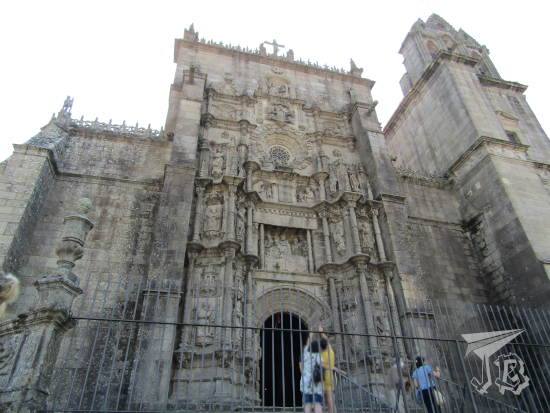
We headed out for a guided visit around Pontevedra (personally, not a fan, but the downsides of travelling in a group…). These are some of the monuments / places we visited:

Alameda de Pontevedra and Monumento a los Héroes de Puente Sampayo.

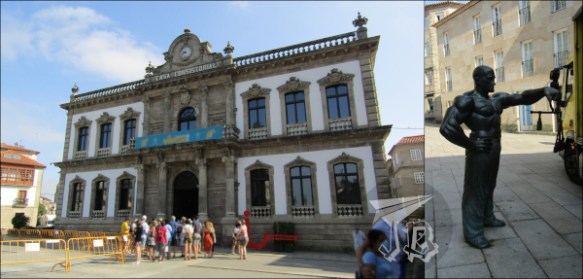
Casa Consistorial (Town Hall) and Fiel Constraste sculpture by Ramón Conde.

Casa de Campás (palace house where a local pirate used to live).

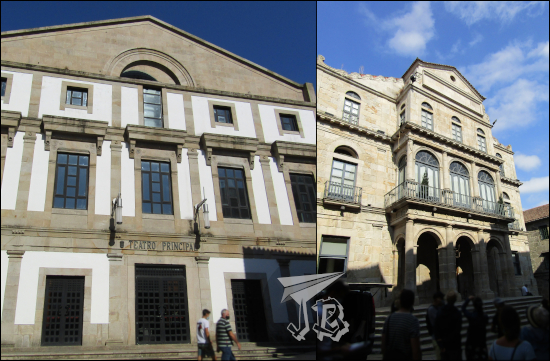
Theatre and Liceo.

Plaza del Hospital (square).

Monument to the Parrot Loro Ravachol

Santuario de la Virgen Peregrina, church and fountain.

Plaza de la Herrería (Blacksmiths’ square), along with the convent Convento San Francisco and Wall Gate; Jardines de Casto San Pedro (gardens), with another fountain, and the other squares around: Ourense, Estrella, Casto San Pedro.

Casa de las Caras (House of the Faces).

Plaza de la Leña (Firewood Square), a cruceiro (stone cross) and García Flórez Building.

Iglesia San Bartolomé (St. Bartholomew’s church).

Plaza Verduras (Greengrocers’ Square).

Statue to Valle Inclán, who was an important Spanish writer born in 1866.

Plaza de Teucro (Teucro Square) along with the powerful family shields (Montenegro Family) on the buildings.

Casa Valle Inclán, where the writer used to live, and cruceiro.

Basílica de Santa María la Mayor (basilica).

Ruinas del Monasterio de Santo Domingo (ruined monastery).

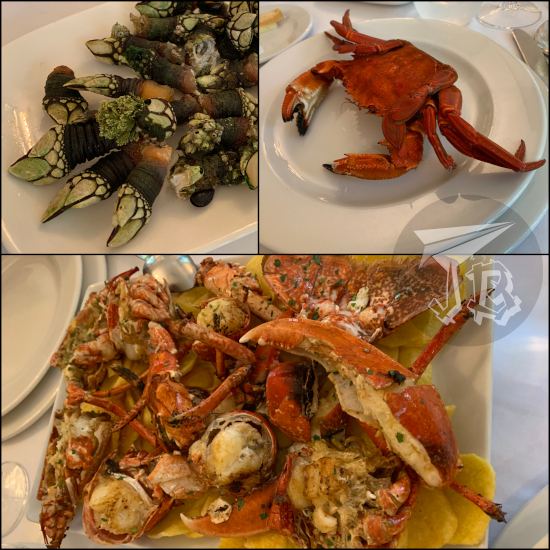
After the visit, we headed off to a restaurant called Casa Román for some seafood, which is typical of the area. We had Goose barnacles (Pollicipes pollicipes), which are supposed to be an amazing delicacy of the area – I had never tried them before, not the real thing. Then we ordered velvet crab (Necora puber) and a fried lobster (Homarus gammarus) on a potato bed.

Can you say food coma? Yeah. Me too, because we did nothing else that day except going out for a salad dinner, that turned out to be this:

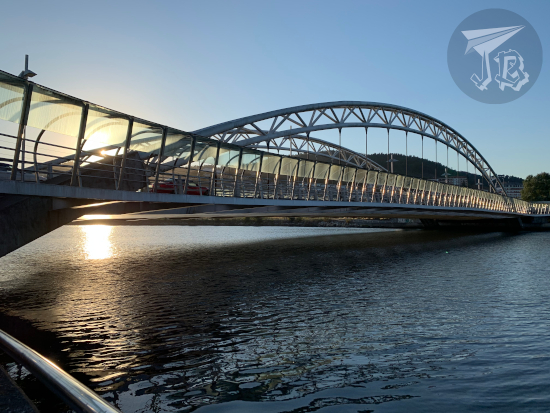
To be honest we did some walking around beforehand, and came across a couple of bridges over the river Lerez: the modern Puente de las Corrientes and the Medieval Puente del Burgo.

Then we went back to the Ruins of the convent Ruinas de Santo Domingo to see them at night.

Walking distance: 7.20 km

7th – 10th February 2020: Paris (France) for DIR EN GREY & BABYMETAL

I organised a weekend in Paris because two concerts conveniently aligned on Saturday and Sunday, and I had Friday free, as well as Monday morning. It was a great mental break that I needed badly. ETA: There were rumours about a flu from China, and some of the airport workers were wearing masks. We had no idea what was about to hit us…

7th February 2020: Through the Strikes

I had found quite a convenient flight that left at 9:00 on Friday for 35 €, which was a great deal. At first, I did not understand why it was so cheap. It turned out, the plane came from South America and it was on a Madrid stopover – so it was pretty much full already. It was a huge aircraft with on-board entertainment. That came in handy when the pilot informed us that we were going to have to wait something between one and two hours to be able to take off due to the air controllers’ strikes in France. But at least we were flying and I had films to watch.

We took off at about 10:00 and our big plane made the jump in just one hour, as opposed to the 2h10 minutes of estimated travel, which meant we were almost on time! Of course, this did not sit well with the strikers, who had us wait first for the parking spot, and then for the stairs to deplane. I finally managed to leave the airport and get onto the train so I reached downtown Paris around 13:00. I wanted to inspect the damage caused to the cathedral Cathédrale Notre-Dame de Paris by the 2019 fire. My first impression, looking at the main façade and towers, was optimistic, but as I walked round the building, I could see the real damage and reconstruction efforts. Furthermore, it still reeked of burnt wood, probably because they were still pulling out debris. My optimism did not linger long, I’m afraid.

Collage of Notre Dame showing the cranes and scaffoldings in the repairs

As it was sunny, I decided to walk to the Sainte-Chapelle (Holy Chapel) and see its windows in good weather. The Sainte-Chapelle is a small two-level chapel inside the Justice Palace Palais de Justice de Paris in the Île de la Cité, smack in the middle of Paris and not far from Notre Dame – actually, both of them belong to the same Unesco World Heritage Site, Paris, Banks of the Seine. The chapel has a lower early Gothic level, and an upper level with impressive stained-glass windows which I love. As the sun was shining outside, the views were stunning.

Collage. Sainte-Chapelle: outside showing the spire, inside with some colourful windows and pointed arches

Collage of the upper floor of the Sainte-Chapelle. It shows different angles of the long gothic windows, covered in colourful glass

The weather was great – especially considering February in Paris, which is always more to the north than I mentally place it. Unfortunately, the forecast for the following day was quite miserable, and thus I decided to just walk along from the Île de la Cité towards the Arc de Triomphe (some 5 km away). On my way, I walked by the Louvre, Les Tulleries, the Grand Palais, the Petit Palais, the Alexander III Bridge, and into the Avenue des Champs-Élysées – the Banks of the Seine that the Unesco declared World Heritage.
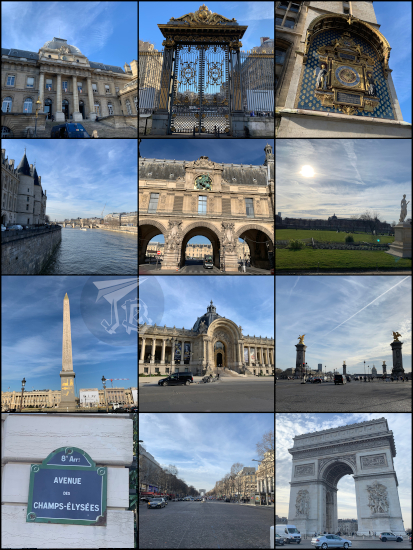
Collage with different landmarks of Paris - the river, neoclassic palaces, Luxor obelisk, Champs-Élysées.

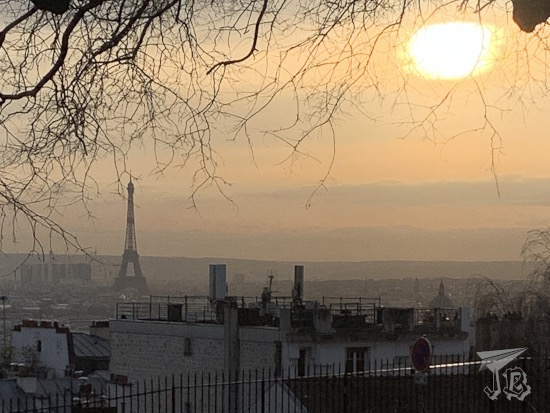
Finally I reached the Arc de Triomphe, which honours the fallen in the French Revolutionary and Napoleonic Wars. It was commissioned by Emperor Napoleon in 1806, and completed in 1836, and you can actually climb it, which I might do some day. From there, I took a train towards Montmartre, where I had booked my hotel. I dropped off my luggage and walked up Square Louise Michel, a sort of urban park which leads up to the church Basilique du Sacré-Cœur (222 steps). There was a pretty carousel Carrousel de Saint-Pierre, and from the square, I could watch the Eiffel Tower Tour Eiffel against the sunset from the lookout Vue de Paris.
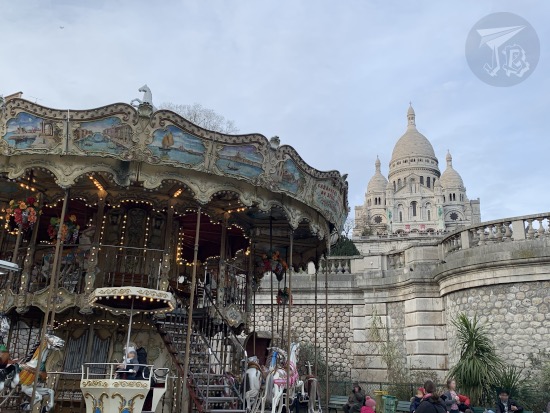
A view of the Sacre Coeur with a classical carousel in front of it

A profile of the Eiffel Tower in a blurry sunset in orange tones

I went back to the hotel for a while during twilight. On the way, I bought a snack in a nearby supermarket for dinner as I waited for the evening to get dark and the lights to come up. When it did, I took my last adventure for the day, and walked off to see the Moulin Rouge while I listened to KAMIJO’s song of the same name. It was a few minutes’ walk away from my hotel, and Moulin Rouge [ムーランルージュ] is one of my favourite songs of his. Since the man is obsessed with France, he has a few songs that fit my weekend. Truth be told, I did consider dinner and a show there, it is after all the most famous cabaret in the world. However, it was a bit expensive and I had read quite a few reviews about bad seats if you are alone. I did not want to waste money, and I did not know how tired I would be that evening in the end – and to be brutally honest,I really had not felt like packing fancy clothes for the evening.

The Moulin Rouge cabaret, all lit up in bright red for the night

8th February 2020: Louvre and DIR EN GREY

The weather forecast was accurate, and despite the lovely weather on Friday, Saturday dawned stormy and dark. I decided to go to the Louvre Museum Musée du Louvre, even if I had been there before. It is after all one of the greatest museums in the world.

The Louvre holds so many pieces (over 600,000) that it would be impossible to describe them all, but for me, its core is the Winged Victory of Samothrace, a Greek sculpture from the Hellenistic period, around the 2nd century BCE, and my favourite piece of art. The Louvre is a national art museum, which opened in the post-revolutionary France in 1793. It exhibits around 35,000 items – Egyptian antiquities, Sumer and Assyrian pieces, Greek, Etruscan and Roman items, Islamic art, neoclassical and Baroque sculptures, a collection of objets d’art (Decorative arts), paintings, prints, drawings… It is located in the former French Royal Palace of the same name.
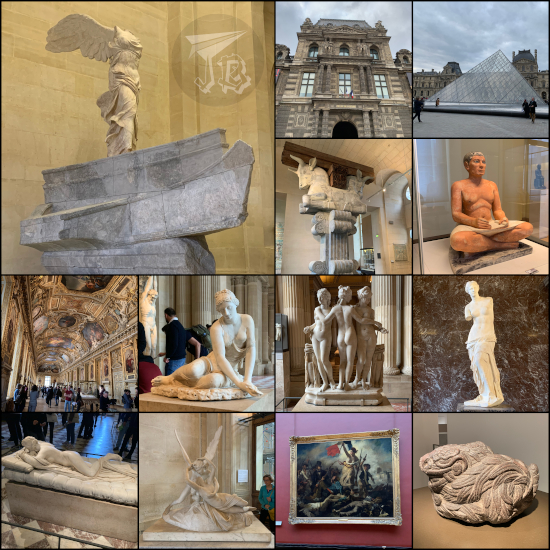
A collage with several Louvre pieces of art - Winged Victory, sitting scribe, the three graces, Diane washing her hair, Hermaphroditus sleeping, Psyche and Eros kissing, Liberty guiding the people, Venus de Milo

I wandered there for a few hours and I might have lost my way in the galleries a few times. In the end, I managed to (re)visit all the artefacts and artworks that I wanted. Because there are hundreds of thousands of items, but I must always see the Sitting Scribe, the Borghese Hermaphroditus, Canovas’ Eros and Psyche, and the remains of the Gates of Istar. I had a bit of a headache, so I eventually went back to the hotel to get some rest and prepare for the DIR EN GREY concert and VIP experience in the Élysée Montmartre live house. DIR EN GREY or “Diru” is a Japanese heavy metal band known for its dark themes and scenography that I thought I needed to check at least once (the final verdict was that I don’t need to repeat the experience, but it made for a nice mental break). The band has remained stable since its formation in 1997, and it is composed by Kyo [京] (lead vocals), Kaoru [薫] (rhythm guitar, backing vocals), Die (lead guitar, backing vocals), Shinya (drums) and Toshiya (bass, backing vocals).
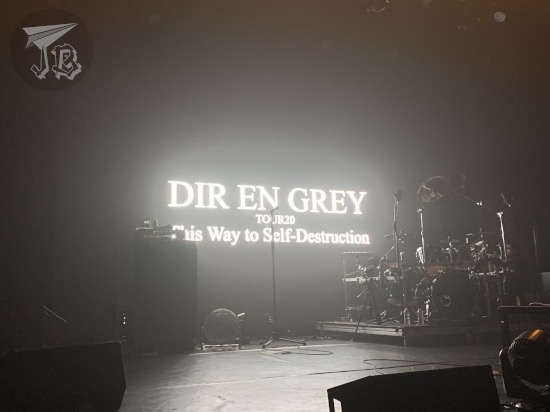
A dark stage with a drum set. Letters projected on the screen behind the stage read Dir en Grey Tour 20 This Way to Self-Destruction

Setlist:

    1. 絶縁体 [Zetsuentai]
    2. 人間を被る [Ningen wo Kaburu]
    3. Rubbish Heap
    4. Devote My Life
    5. 軽蔑と始まり [Keibetsu to Hajimari]
    6. Celebrate Empty Howls
    7. 赫 [Aka]
    8. Merciless Cult
    9. Downfall
    10. Values of Madness
    11. 谿壑の欲 [Keigaku no Yoku]
    12. Ranunculus
    13. The World of Mercy
First encore:
    14. Followers
    15. THE DEEPER VILENESS
    16. 詩踏み [Utafumi]
Second encore:
    17. Sustain the untruth

Listing of all the concerts in the Dir en Grey 2020 tour

The concert was the final of DIRU’s 2020 European Tour TOUR20: This way to Self-Destruction. When I walked by the venue on Friday evening, around 18:00, there was a small number of people queueing already. I did not care enough to queue all day, and I had a VIP ticket with early entry, so I just headed to the line about 15:00. When the queues were separated and organised, around 16:30, I was VIP number 42. The weather was miserable, and I could have totally skipped the downpour while waiting, but I was lucky enough to be against the live house and not in the middle of the boulevard, where the General Admittance queue was. Doors opened at 19:30 for GA, and the VIP experience was held beforehand. The VIP queue started getting in around 17:30. As present we got a VIP pass and an “exclusive VIP only merchandise item” which turned out to be a scarf – very appropriate with the weather. The experience itself was a group photo with the band. There were five cushioned chairs for the fans, and the band stood behind. They did not say a word, nor interacted with fans in any way, not even acknowledging a hello or a thank you.

Afterwards, I headed for the hall, and I found an almost-barrier spot in the left area, on the second row. The people in front of me let me grab the barrier between them so I had something to hold on while I waited. The special guest was a DJ, who was more focused on getting recorded by his buddy on the phone than mixing music. The main show started a little after 20:30.

DIR EN GREY’s music is quite powerful, with a heavy focus on strings and drums. They also have a huge flare for theatricality and they enjoy the shock factor as part of the aesthetics. The singer, Kyo, donned a Joker-like make-up appearance, with a fake-suicidal attitude on stage, using the microphone to mimic stabbing his chest, or the wires to hang himself. It became a bit disturbing because it was repeated more than once. The act also felt rather distanced, there was very little interaction with the fans. At some point, a pick flew in my direction and the person behind me actually felt me up to try and find it in the folds of the coat I had tied around my waist. That was probably even creepier than the act.

The guitars and bass were tremendously powerful, and the drumming was amazing. The crowd was extremely loud, and the singer, Kyo, later confessed that he had been pretty exhausted and burnt out from the tour, which maybe explained why the concert felt so distanced. The encores were the probably best part of the concert, the part that felt more real and relaxed. After the concert was over, I headed off to the hotel to catch some sleep. Since I remembered that the area had felt a bit rough when I was there in 2014, this time over I wanted close accommodation so I could get back quickly without needing to use the underground.

9th February 2020: Destroy the Bastille!

Sunday morning was around 2 ºC, and it was windy. I lingered in bed for a while to recover from the previous evening, and then I headed out – I should have brought the merchandise-scarf with me! I saw the Place de la Bastille, where the revolutionary prison used to stand. In the middle of the square stands the “July column” Colonne de Juillet, which commemorates the Revolution of 1830 (which is not the “famous” French Revolution, which happened between 1789 and 1799). A few minutes away, in the Square Henri-Galli, I came across the base of the tower Tour de la Liberté (Freedom Tower), which was unearthed while building the first metro line. There are only a few stones remaining from the foundations, but I’ll take my fun wherever I can – so I stopped and used my music player to find another KAMIJO song, Bastille, just because I could.

Monument to the French Revolution

A few brick stones forming a circle, considered the last remains of the Bastille

It was too cold to wander, but I had a great plan. I headed off to the science museum Galerie de Paléontologie et d’Anatomie comparée (Palaeontology and Comparative Anatomy Gallery), which was a short walk away. I had read about it and was curious. To be honest, I’m still trying to decide whether it was amazing, or the materials nightmares are made of.

The museum was founded in the 19th century, and it keeps the atmosphere – and the charm – of the old exhibitions. There are stands and wooden cases, and the smell of dust and old paper. The first floor holds a “Cavalcade of Skeletons” – the whole floor is occupied by preserved skeletons of mammals and birds. In the glass cases along the walls, there are taxidermy specimens, preserved animals and dissected specimens. In the far corner, there is “gallery of monsters” with natural oddities. It was enchanting, but at the same time deeply disturbing – especially the male human figure displaying muscles and blood vessels, with a vine leaf on his groin.

The second floor hosts the dinosaurs and other fossils, including a very cool toothed whale, giant crocodiles, a Bernissart iguanodon, a diplodocus, shark teeth… Most of the fossils are either casts or reconstructions – I swear I’ve seen that Irish elk at least three times before. Also, the T-Rex skull was adorably flawed, as it was imagined to be in the 19th century.

The third floor is… ammonite-land. There were cases upon cases of ammonites in different shapes, colours, rocks and materials.
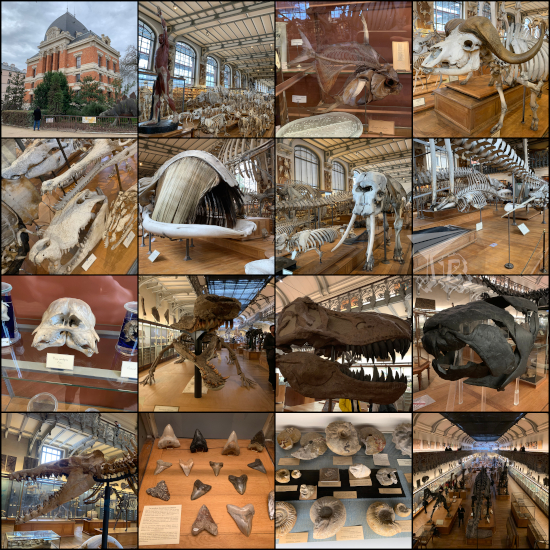
Shots of the museum. Skeletons of animals - fish, oxen, crocodiles, elephants, whale. Fossils: Dinosaurs, fish, toothed whale, shark teeth, snails

After I was done with the museum, I decided it was too cold to wander the neighbouring Botanical Garden. Instead, I headed off to yet another one, the Musée national des arts asiatiques Guimet – the National Museum of Eastern Arts or Museum Guimet, which holds pieces of art from Cambodia, India, China, Japan, Korea and so on. There was a gorgeous dancing Shiva sculpture, collections of religious artefacts, calligraphy, samurai armours, even modern art and clothes inspired by the Far East. It was a really cool museum I had recently found about and was happy to visit.

Different pieces in the museum: Dancing Shiva, sitting Buddha, Calligraphy in the shape of a dragon, elaborate kimono, samurai armour, Indian goddess

After leaving the museum, I walked towards Trocadero to take the underground. I made a small detour to have a look at the Eiffel Tower Tour Eiffel, and saw a bunch of peddlers playing shell games with tourists. Someone lost about 400 €, I really hope they were in on the game.
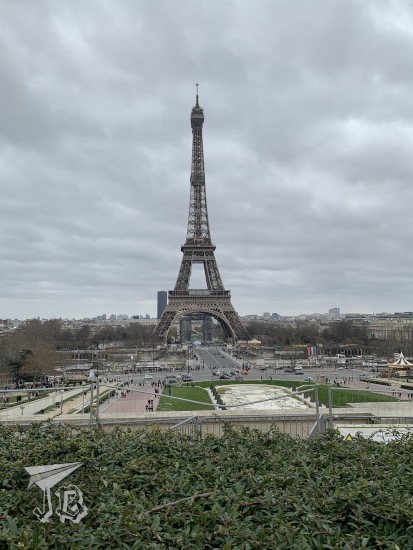
The Eiffel Tower in front of a cloudy sky

Since it was too cold to continue walking around to find something to eat, I decided to get take-out, and I headed back to the hotel to get ready for the BABYMETAL concert. I had never listened to them before, but they are a sensation, the basic ticket was not expensive, and two concerts in as many days seemed convenient. They actually played in the same venue as DIR EN GREY on Saturday, so I found out by sheer coincidence on the live house’s website. At that time, I thought “why the hell not?”. Afterwards, they added Madrid to their Europe tour, so if I had known that beforehand, I might have acted differently. BABYMETAL is one of those insanely-profitable Japanese marketing stunts involving cute girls that had never really been in my radar more than in passing.

Notice with the date of Babymetal's concert

BABYMETAL is a product of the “Japanese idol factory”. It was created artificially to fill a market gap. Three girls were chosen to form an act that would mix the idealised cute idea of girl idols with the heavy metal genre. When they debuted in 2010, the term “Kawaii Metal” was coined. One of the girls left in 2018, so there are two main members and and support dancer on rotation. The members are Nakamoto Suzuka, “Su-metal”, the main vocalist, and Kikuchi Moa aka “Moametal” on back-up vocals and screams. The supporting musicians are called the “Kami Band”.

BABYMETAL’s long-awaited European tour is officially called Metal Galaxy World Tour. The VIP tickets sold for around 170€, and did not even entail a M&G, so even if I had had the chance, I would have not even considered them. Despite that, they sold out, along with the show itself.

When I left the hotel at 9:00, the queue had started organising, and the tour buses were already there. I had no intention to queue or try for a barrier. I had decided to sit back and relax, so I reached the venue around 18:45 for the 19:30 concert. There were tons of people waiting to buy merchandise, but I was good. Thus, I just headed to the floor, and found a spot in the back. Since the venue has sort a bit of an arena and some upper stands, there was a wall I could lean against and it was not the end of the room.

The crowd was quite different from DIRU’s, ranging from good ol’ metalheads to families with little girls between five and ten years old with a bizarre range of in-between: people with fox masks, goth and loli dresses, explicit heavy-metal t-shirts (a bunch of those T-shirts were much less kid-friendly than the show… everything you could imagine. I… don’t think most parents knew what they were getting into, and a few of the kids ended up crying.

At 19:30 sharp, the support act started – a German band called SKYND. Their sound was really good, but their lyrics are based on true crime, which makes them a bit on the disturbing side (and very much not kid-friendly). The name of the songs are all serial killers or similar criminals.

Setlist:

    1. Richard Ramirez
    2. Elisa Lam
    3. Katherine Knight
    4. Jim Jones
    5. Tyler Hadley
    6. Gary Heidnik

At 20:30, the BABYMETAL show kicked off with the projection of the Future Metal video as an introduction of sorts. The musical act relied heavily on the Kami Band, and Su-metal carried the weight of the vocals. She spent the whole one-hour concert jumping and dancing while singing, and her voice did not break even once. If she is not lip-synching, she has the most impressive lungs ever. Both she and Moametal encouraged the crowd, making a lot of eye-contact. Su-metal addressed the audience a lot, even – I think – trying French. The concert was non-stop, and it ended up feeling a bit short, but much better than I had expected. The one annoying thing were the daddies putting their babes up on their shoulders in the middle of the floor, when the kids gave clear signs of not caring or were distressed. But it was fun. Not sure I would repeat unless I made it a thing with friends or something, but I enjoyed the act, and had a good time.

Setlist:

    1. DA DA DANCE
    2. Gimme Chocolate!!
    3. Shanti Shanti Shanti
    4. BxMxC
    5. Kagerou
    6. Oh! MAJINAI
    7. メギツネ [Megitsune]
    8. PA PA YA!!
    9. Distortion
    10. KARATE
    11. Headbangeeeeerrrrr!!!!!
    12. Road of Resistance

A group of girls dressed in black dancing in front of a logo that reads Babymetal

I was back at the hotel before 22:00. Thus, I got a good night’s sleep before I left, once again happy that I had taken nearby accommodation.

10th February 2020: No bells of Notre Dame

My plane boarded at 10:00 so I had to leave early for the airport. The weather was rainy again, so I took the underground to Gare du Nord, and then the train to Orly. As I was riding the train, I had a nice view of the Paris at dawn, but the bells of Notre Dame were not tolling, and my inner child was sad about that. Despite issues with the airport security staff, the stupidly-expensive food, and the general unpleasantness of early-morning public transportation, I made it to my plane without actual problems. As it was a big plane again, I settled down to watch Jurassic World during the flight, because I’m a nerd. Going straight into work from the airport was not fun, but it a small price to pay

I only had three days, but this trip was a very welcome getaway, and even if the weather did not help, I got to do a lot of stuff. I had to discard a few plans and improvise due to the weather. However, there is that film quote, “We’ll always have Paris”. After all, I’ll be coming back for the Saint Seiya Symphonic Adventure. ETA: Or so I thought, at the time of writing the article…

9th August 2019: Pretty lights, 2019 Edition {Japan, summer 2019}

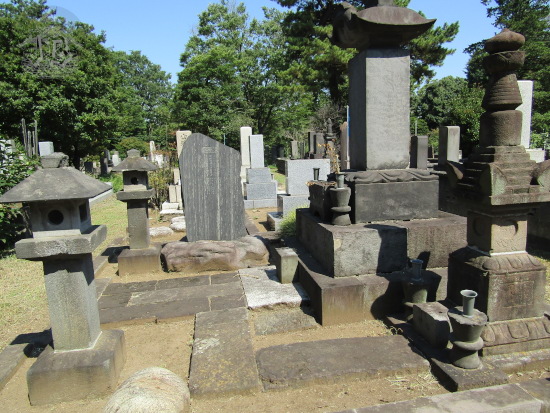
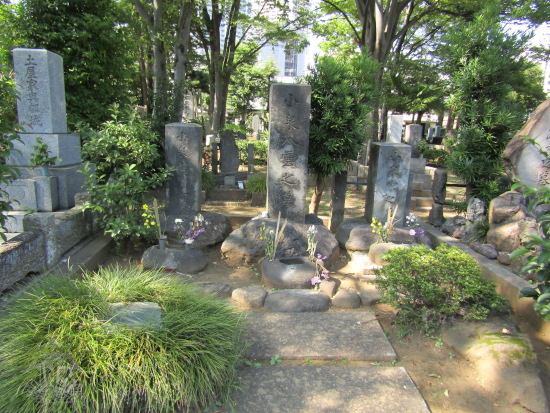
That morning I headed off to Ikebukuro [池袋], on my way to find one of the most important Tokyo [東京] graveyard – Zoshigaya Reien [雑司ケ谷霊園]. I wandered the graveyard for a while – it was damn hot.

However, there was one particular grave I was interested in, the restplace of Lafcadio Hearn / Koizumi Yakumo [小泉 八雲], the 19th Century collector of ghost and mythology stories.

I decided to walk out the opposite direction from which I had come in because I wanted to see a park. I did not find it, but pretty much walked into Otori Jinja [大鳥神社] (and discovered a new stamp rally I should attempt at some point).

I continued on my way towards the station and sort of accidentally walked past Honnōji [本納寺].

And then this little guy drew my attention and I entered Zoshigaya Mimizuku Park [豊島区立雑司が谷みみずく公園].

The park holds Takeyoshi Inari Jinja [武芳稲荷].

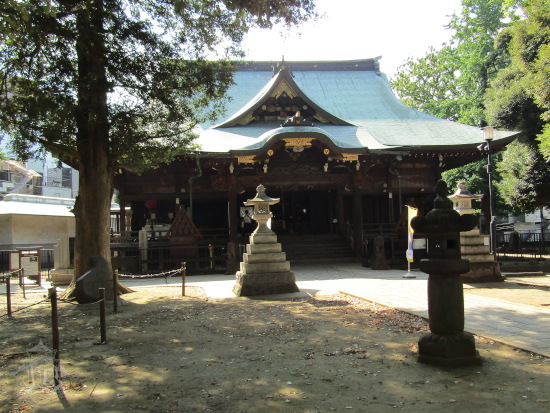
And Kishimojin [鬼子母神堂] (which I saw before / later in Gokusen 2005 and I right about died laughing).

Afterwards I headed to Roppongi [六本木] to meet with M***chan and D****e for Chinese at Tokyo Midtown [東京ミッドタウン], and later we walked through the Midtown Loves Summer light festival.

Walked distance: 18686 steps / 13.3 km.

8th August 2019: Tokyo Tower & Nakano Broadway {Japan, summer 2019}

When I was in Kawagoe I found the Saitama special Coke bottle, and I decided I would be on the look-out for them. Afterwards, I saw the three-bottle Kansai pack in Osaka. Thinking about where I could get some of the Tokyo ones (I have an Ueno one that I bought in Narita Airport at some point), I thought about Tokyo Tower as a place to find them. I was not successful, but I did say hi to Tokyo Tower [東京タワー] (Shiba Koen [芝公園]is still under construction though (ó_ò).)

Afterwards I had a shopping sweep in Nakano Broadway [中野ブロードウェイ] – where I bought my new obi and haori – and later I met D****e for dinner.

Walked distance: Unknown, as the connection phone / wristband malfunctioned. I estimate around 6 to 7 km. As you can see, I was feeling the tiredness indeed, so these few days were more relaxed. For now…

30th July 2019: Journey to the East (1): Sakaiminato → Okayama {Japan, summer 2019}

For the second part of my Sakaiminato adventure, I got breakfast on the go, and around 9:00, I set off to the Yumeminato Tower in the park of the same name. I had a plan of things to watch and walk around that unfortunately fell through due to, again, a perceived temperature of over 42 ºC and bright sun. But the Yumeminato Tower [夢みなとタワー] could not be skipped as it is part of my still ongoing All Japan Tower Stamp Rally. Aside from the customary observatory, the Tower featured an anthropology exhibition about the cultures of “countries historically related to Sakaiminato in matters of trading” such as Korea or China.

Yumeminato Tower and views from it. There is also a betobetosan (a… white ball with teeth).

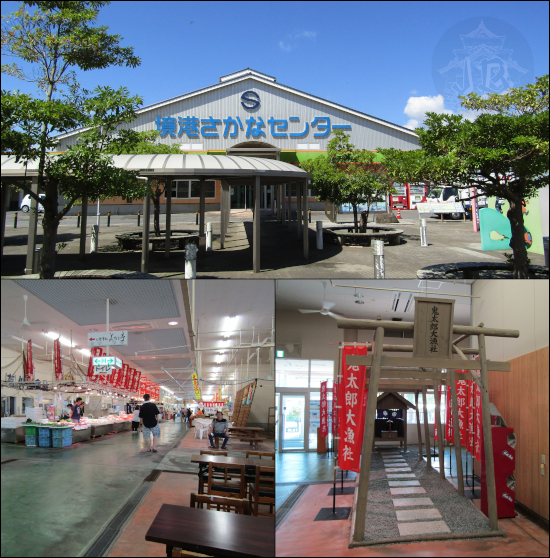
At the feet of the tower is the Sakaiminato Fish Center [境港さかなセンター], a fresh fish market – remember that Sakaiminato is “The City of Kitarō and Fish”. Here is where the homage to fish starts. Sakaiminato is both a trading and fishing key point in western Japan, so this spot is quite important for local business. They have even built a small shrine to give thanks to the ocean for providing the catch.

Sakaiminato fish market, outside and inside, including a small shrine.

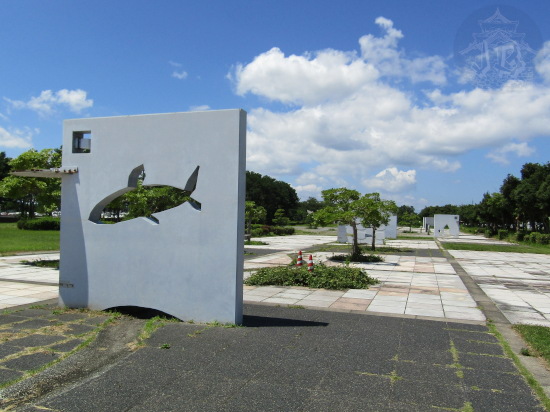
Both the tower and the market buildings are encased in Yumeminato Koen [夢みなと公園], a huge – and shadowless – park. It was quite hot, to be honest, and looking back I should have probably just taken the tourist shuttle, but the schedule was inconvenient.

Park with sculptures that depict silhouettes of fish.

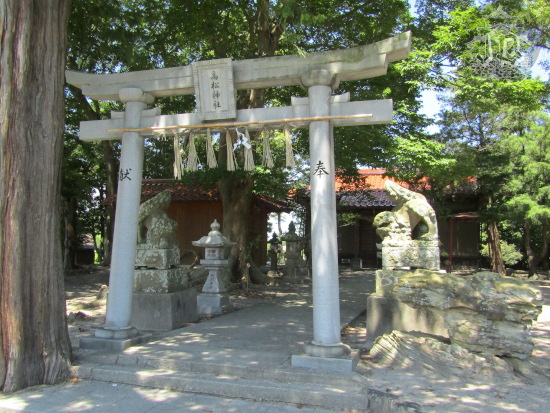
When I arrived at the Takematsucho station, my train had just left, so I snooped around Takematsu Jinja [高松神社], a small shrine next to it.

The torii of a small shrine, next to a sacred tree

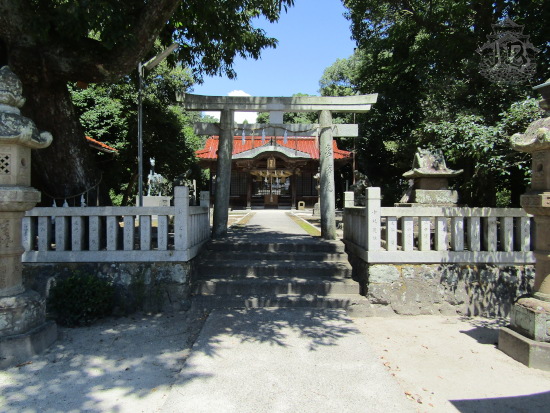
Having to wait forty minutes further, as there is only a train per hour, I decided to walk over to the following station, where I visited Amariko Jinja [餘子神社].

A shrine. The entrance torii frames the main building.

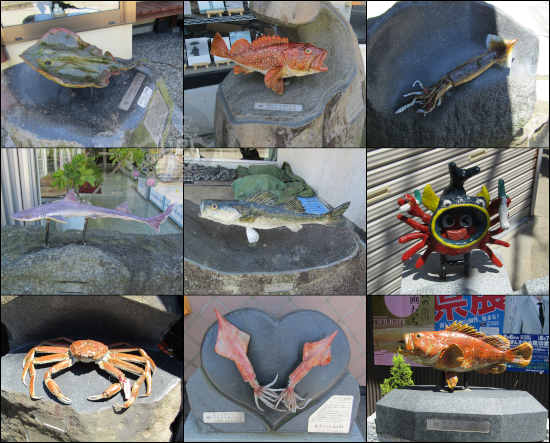
Then, I just sat down to wait and have a drink till the train came. Once back in the centre of Sakaiminato, I realised that even if it was a Tuesday, the Museum of Sea and Life was closed. That did not stop me from hanging around Osakana Road [おさかなロード], the Fish Road, which follows the same ideas as Mizuki Shigeru Road – it has little sculptures here and there. Only these are not yōkai, but fish.

Life-like fish, squids, crabs and sharks from Osakana Road, along a cartoonish mix of them all.

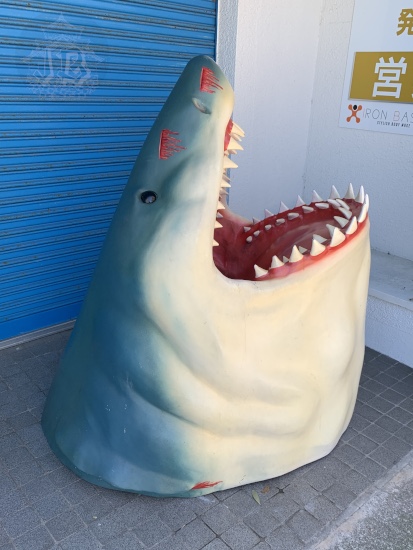
Oh, and I found a… photo-op / trash can shark on the way ʅ(・ω・。)ʃ?? I have no idea, but I could have fit inside. Unfortunately, I would not have been able to climb out.

Head of a white shark

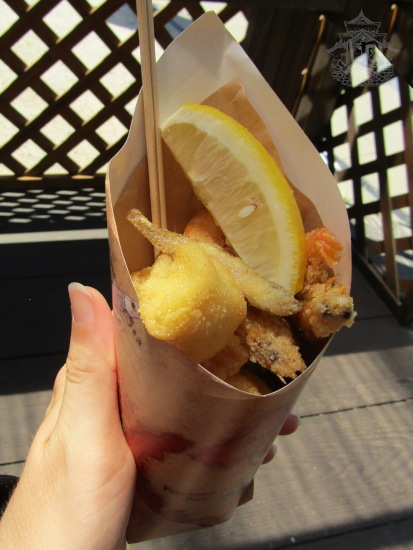
And speaking of fish, I had a great fish-fry snack in Mizuki Shigeru Road as I did an extra sweep to make sure I was not missing any yōkai. I chose this place because the owners seemed nice, and they were. They tried to make some conversation and they were very friendly.

Fish fry with a slice of lemon.

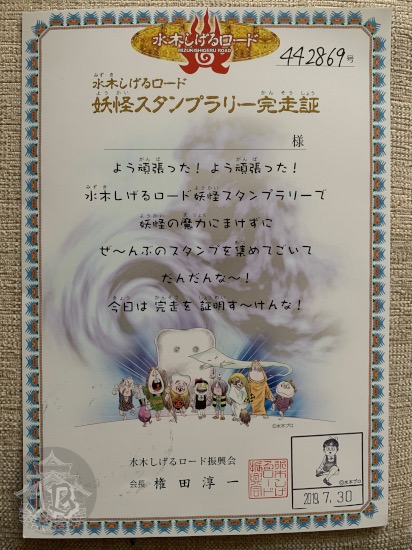
After that, I claimed my certificate at the Tourist Information Centre next to the station Sakaiminato-eki [境港駅]. Although I had done it the previous day, by the time I finished, the office was closed. Of course, nobody had any issue with that – they happily gave me my certificate, dated July 30th and not July 29th (≧▽≦).

Certificate of having finished the Yokai Stamp Rally, dated 30 July 2019.

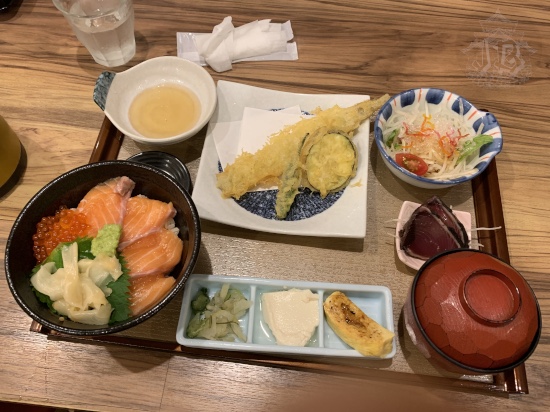
I finally said goodbye to Sakaiminato, and I took the train back to Yonago, and from there to Okayama, the capital of the Prefecture of the same name. This took around three hours, and I was in Okayama [岡山] around 18:00 or 19:00. I dropped my things off at the hotel and headed off for dinner. I ended up ordering a salmon set in a semi-traditional restaurant in a Takashiyama shopping centre, and although the staff was not the nicest, the food was delicious!

Japanese dinner with fried fish, salad, miso soup and a bowl of raw fish on rice.

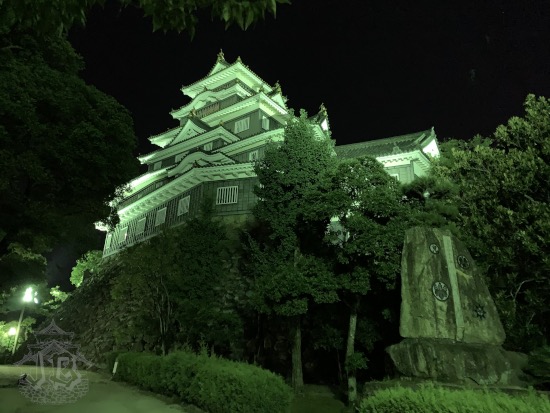
Right after dinner, I walked to the castle, Okayama-jo [岡山城], hoping it would be lit, and it was. They were also rehearsing some summer light show, with music and stuff.

Okayama Castle at night

Afterwards, I went back to the hotel – unfortunately I had a smoking room (yuck), so I had to spray everything with freshener so I could breathe. But I left the window open as I showered, and I slept rather well afterwards. I had started to feel the tiredness.

Walked distance: 22899 steps / 16.3 km. Most under the sun (soooo sunburnt!)

27th July 2019: Osaka by drizzle and twilight {Japan, summer 2019}

After the KAMIJO concert, I set off again, this time over to Osaka (where I was a train-challenged idiot and this time I can’t even blame it on the chaotic Osaka transport) and my first stop was Namba Yasaka Jinja [難波八阪神社], one of whose buildings is shaped as a lion-dog head. It was a very nice and fun shrine.

On the way to the station I walked through Namba Koen [浪速公園].

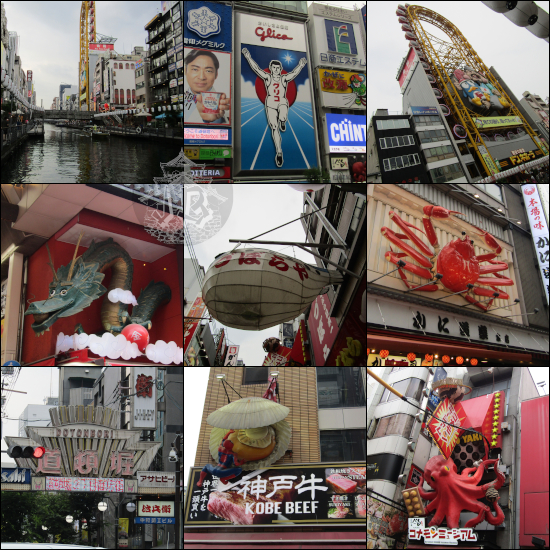
Then I rode to the hotel to drop off my things – and of course gotout the wrong station at Shin-Imamiya station (I also held a little prayer so I did not end up at a love hotel again – I had chosen wisely!). I had a bit of a rest and then I headed back towards Dōtonbori [道頓堀] and after once again checking the map before getting my butt there, I was able to find all the spots I wanted too – count me out of the Donki ferris wheel though.

The plan was waiting until sunset to see all the lights, but I miscalculated again and I did see the lights, but only against the twilight. Oh. But I made some time eating takoyaki [たこ焼き].

I got some rest on the way, so I was rested enough to have a stroll down Shinsekai [新世界] at night – including Tsūtenkaku [通天閣] and Billy Ken.

Afterwards, before going to sleep, I watched a NHK TV special on one of the bands I like – but have never seen live – LunaSea. I was in my hotel in Osaka, but I watched “with” my friend E**chan, as we both kept messaging each other about what we were listening to at the moment.

Walked distance: 19319 steps / 13.8 km.

25th July 2019: Sekigahara {Japan, summer 2019}

I was staying in Nagoya for another of the HYDE concerts, but I had a free morning, so I decided to take a train to Sekigahara [関ヶ原], which is a nearby little town, which is really only in the books because in October of 1600 a huge battle in the mountains over there decided the establishment of the Tokugawa shogunate, which shaped the history of Japan for centuries. It is known as the Battle of Sekigahara, Sekigahara no Tatakai [関ヶ原の戦い]. Basically there were a bunch of samurai clans warring with each other and Tokugawa managed to convince, bribe and slaughter every one in his way until he was the de facto ruler of Japan.

A vermillion gate with trees in the background

I found a map with a route to follow and thus my first stop was the Higashikubidzuka [東首塚] Mound, where a bunch of samurai were beheaded – this was off to a bloody start. Within the same area there were several monuments signalling different events and encampments – which was to mark how most of Sekigahara is laid out.

Collage of the park, showing a marker, some flags and a torii

Then I continued on to Jinbano Koen [陣場野公園], where I could see the Site of the Battle Camp of Tanaka Yoshimasa [田中吉政陣跡], the Site of Tokugawa Ieasu’s Final Encampment [徳川家康最後陣跡], Kibune Jinja [貴船神社], Mitama Jinja [御霊神社].

Collage of the park, showing a marker, some flags, fences with spikes, and a torii. There are trees and overgrown bushes in the background.

It was hot as could be, so I was not going to do the 17-km route, but I did go to the main area, the Site of Sekigahara Battleground – Sekigahara Kosenjō [関ケ原古戦場], along with the Site of the Battle Camp of Shima Sakon (Sasaoyama) – Shimasako-jin ato [島左近陣跡].

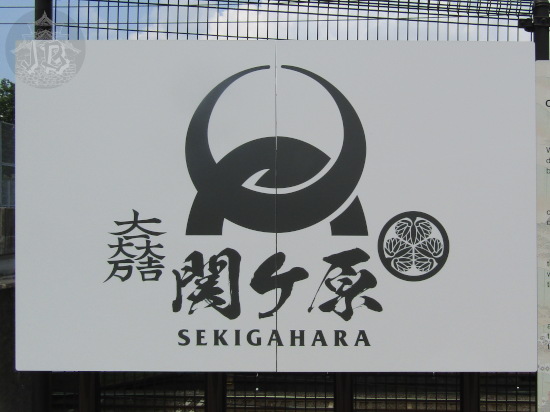
The logo of the city of Sekigahara. It can look like the moon coming up from behind a mountain, or a samurai helmet

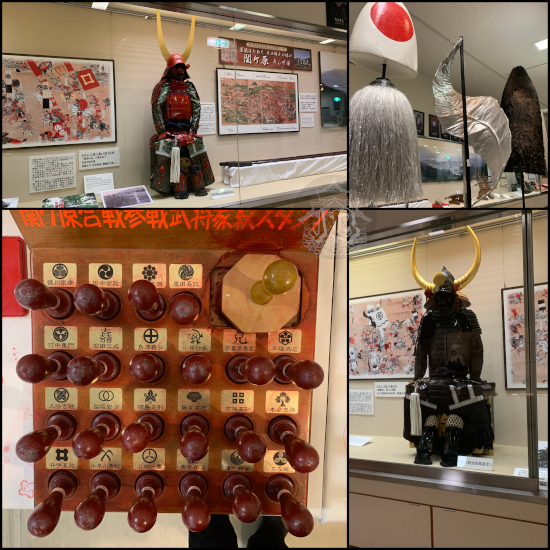
After that, I backtracked to the Sekigahara Town History and Folklore Museum Sekigahara-chō Rekishi Minzoku Shiryōkan [関ケ原町歴史民俗資料館], which I had missed at first because there was construction in the area. There I could see some weapons and armours and get the whole collection of samurai clan stamps and enjoy the air conditioning.

Samurai armours and pennants

I would have liked to go to the Site of Tokugawa Ieyasu’s First Encampment [徳川家康最初陣跡], but it was too far away to walk, so I had to take picture from the train.

A clear in the forest with some white flags

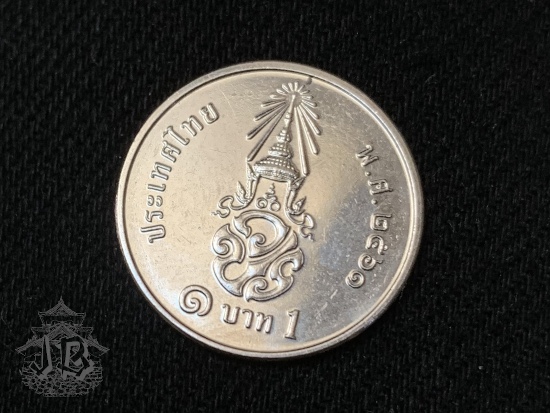
As an interesting anecdote, I found a Thai coin in the battle site, something I would have never expected.

A Thai coin

Once in Nagoya [名古屋], it was time for HYDE concert’s HYDE Live 2019 at the Zepp Nagoya again. As the previous day, it was a fun concert – I stayed at the end of the venue because my entry numbers were so high I had zero chance to find anything mid-venue, but it was all right, it’s not like I’m ever going to do first row in a HYDE concert in Japan. I have accepted that. I had fun anyway, and that is the most important thing.

My impressions were similar to the previous day. The concert made the 2018 tour feel like a rehearsal for this one, or maybe just a way not to “give up” summer touring on HYDE’s part since he has a pretty devout following.

Setlist:
    1. Who’s gonna save us
    2. After light
    3. Inside of me
    4. Underworld
    5. Fake Divine
    6. Two face
    7. Set in Stone
    8. Zipang (Japanese version)
    9. Out
    10. Mad Qualia
    11. Sick
    12. Don’t hold back
    13. Lion
    14. Another moment
    15. Midnight Celebration II
– break –
    16. Duality (Slipknot cover)
    17. Countdown
    18. Ahead
    19. Ordinary World (Duran Duran cover)

After the concert, Sr-san had skipped back to Tokyo, so I just headed off to my hotel to have a shower and relax. I had another concert coming the next day, making it three concerts in a row, so I needed to rest up a little.

Walked distance: 14683 steps / 10.5 km.

22nd July 2019: Tokyo Shinagawa → Higashimaya Kyoto {Japan, summer 2019}

My Shinawaga hotel was very close to Sengakuji [泉岳寺], the temple that honours the forty-seven ronin so I paid them a visit before I moved on.

The reason why I was in Shinagawa was being close to the station as I was heading off to Kyoto. I took a shinkansen around 9 am and was in Kyoto just before 11, maybe. From Kyoto station I walked to Nishi-Hongwan-ji [西本願寺], which was about 10 /15 minutes away. It had been on my list since I went to Higashi-Hongwan-ji last year, but I had to go get some rest afterwards because I had a migraine.

As I was heading back towards the station I came across a building that really grabbed my attention. A little research yielded to finding out that it is a temple: Dendou-In [伝道院], which apparently belongs to Nishi-Hongwan-ji and is a research building. It was designed by a famous architect called Itō Chūta in 1912 in a style called “Evangelical”, and built shortly after. It’s not open to the public though, but it sure as hell is interesting.

After that I took the underground to my hotel. It was raining like crazy when I got there, and to make things more difficult, my bloody credit card decided to stop working. This made me slightly late to my 13:00 appointment at Studio Esperanto Oiran Taiken [studio-esperanto 花魁體驗]. Things were a little different this time. First of all, because I was just in time for appointment, I was directly ushered to the make-up room. Fortunately I had quite a clear idea of what I wanted, so it sort of worked in the end. The make-up artist was nice but she was a bit intimidated, and the photographer was difficult to communicate with, which hampered the experience a little. In the end, however, I got really cool pictures out of the experience, so I am not going to complain.

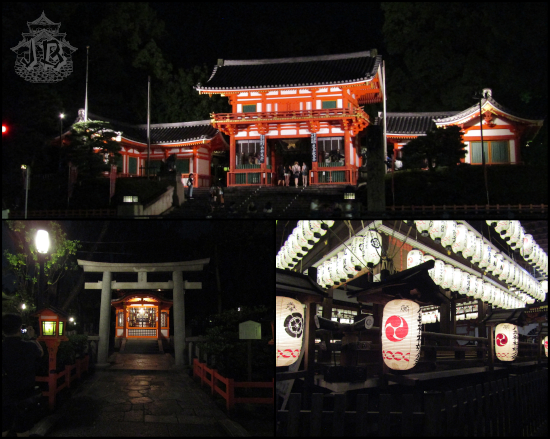
By the time I got out, there was a deluge outside. I was in the hotel, which was close to the photography studio, for a little, and after checking the maps that they had given me at reception, I realised that I was much closer to the Gion area than I – and Google Maps – had actually thought. There was one big park / shrine complex I could walk. At least part of it is called Maruyama Koen [円山公園] and it has a cool pond. I walked from the north entrance to the western exit, which belongs to Yasaka Jinja [八坂神社], the Yasaka Jinja Minami-romon [八坂神社 南楼門], the Tower Gate. I passed Gyokkō Inari Yashiro [玉光稲荷社] on the way.

I walked off to Gion, [祇園] which was almost empty due to the storm. Whenever I get to Gion in the evening, I always check whether there is a long queue at Gion Corner, which is a theatre that performs “traditional arts”:

  • Tea Ceremony [茶道]
  • Flower Arrangement / Ikebana [華道]
  • Koto [箏]
  • Gagaku [雅楽] Court Music and dance
  • Kyogen Theatre [狂言] (comic play)
  • Kyo-mai [京舞] (maiko dance)
  • Bunraku [文楽] Puppet Theatre

I was lucky this time, as the rain had scared most tourists away, so I could come in. It was a fun thing to do once, especially with “foreigner discount” it becoming half-price, but the audience kept talking and moving around the floor to take pictures and videos. Thai and Chinese people are loud (and a few of them rather disrespectful)! But all in all, I’m happy I got it out of my system, particularly the Kyo-mai dance.

After that, as it was not raining any more, I strolled down an almost-empty Gion.

Then I walked off towards an area that I had never been able to find before – Gion Shirakawa [祇園白川] and Tatsumi Bashi [祇園 巽橋]. Fortunately this time I had checked for the Tatsumi Bridge location fist, so it was not even that hard! I just had to know where to look for it! (≧▽≦).

I decided to take the way back through the park, so I could see all of Yasaka Jinja [八坂神社] lit up, which was very pretty.

As the hotel was also next to Heian Jingu [平安神宮], but as it was not lit up, I did not walk in.

Then I bought some conbini food and I went to the hotel to have dinner and a bath – the hotel had a hot spring public bath (and it was empty! Just for me!). I was lucky enough to get one of the traditional rooms, and the sand-puffs-like thingies were super-comfortable… until I had to stand up. It was so comfy I could barely stand up! And then I went off to sleep like at 10pm cause I was beat (∪。∪)。。。zzz.

Walked distance: 18517 steps / 13.2 km

23rd & 24th April 2019: El Escorial, Vizmalo & Lerma (Spain)

23 April 2019: El Escorial

The Royal Site of San Lorenzo de El Escorial aka Monasterio y Sitio de El Escorial is located a shy hour away from Madrid. It is most known for the Monastery that used to be an official residence of the King of Spain. The Monastery was built between 1563 and 1584. It is the masterpiece of the Spanish architect Juan de Herrera, after whom the Herrerian style, a sub-style in the Spanish Renaissance, was named. The building is a sober building made of a granite, and it is the burial place of most of the Spanish kings and queens. Some urban legends say that it was based off the descriptions of the Temple of Solomon.

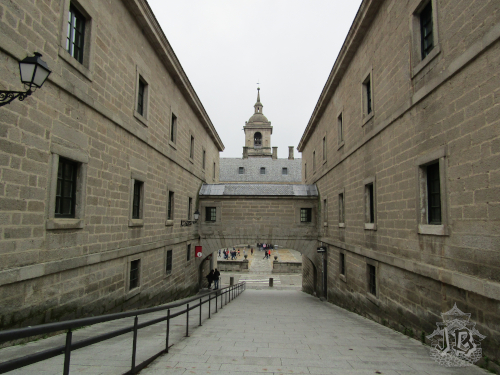
We drove in around 9:00, dropped off the luggage, and went out, as we had tickets for 10:00 – although the hotel did not want to let us in. Contrary to the nice weather that we had been enjoying, it was cold as hell. The whole town felt grey and sober, and the cloudiness helped the mood – we had breakfast at a nearby bar (the only one open) and headed off to the monastery. The building hosts many artworks, along with a chapel, the royal pantheon and the most amazing library ever. Pictures in the inner areas are forbidden, unfortunately. The Monastery is a Unesco World Heritage site.

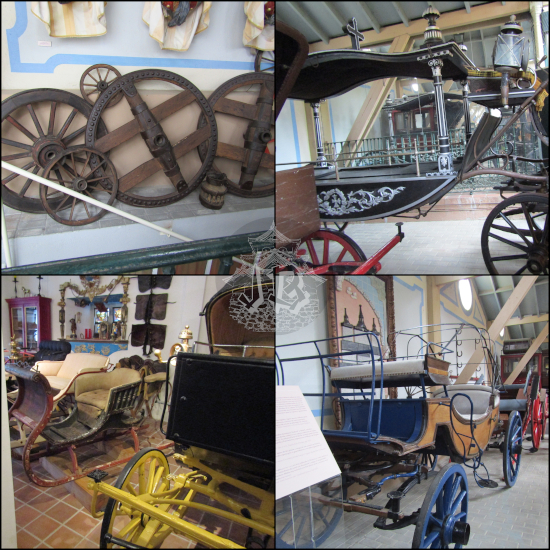
At lunchtime we walked out of the Monastery and headed off to the Royal Carriage House / Cocheras del Rey, a museum / restaurant. We had lunch, then visited the museum as the entry was free with lunch. It was raining like mad by then so we headed to the hotel to finalise the check in.

After an hour or so the rain had stopped so we decided to walk to the Prince’s House and Parks / Parque y jardines de la Casita del Príncipe. By the time we arrived it had started raining again – pictures were not allowed inside of the house either, but OMG was the inside Baroque, with flashy wallpapers.

On the way back, we could catch a glimpse of the monastery through the park. By now it was raining like crazy, so we spent the rest of the evening indoors.

24 April 2019: Vizmalo & Lerma

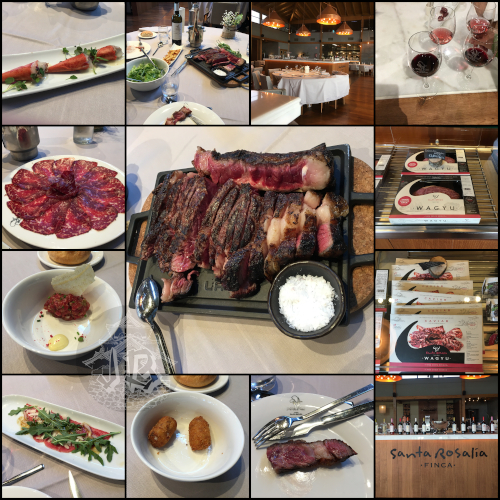
We left El Escorial early in the morning and we headed north for lunch. Yeah, well, let me explain. We had a reservation for lunch some two-and-a-half hours away, in Vizmalo (Burgos). This was a bit of a silly whim, but we were going to visit an estate / farm and have lunch there – the St. Rosalia Estate / Finca Santa Rosalía breeds wagyu for meat, and holy are they yummy. We had a booking to see the estate first.

While it was still cold, the weather was slowly improving, and in evening we had some sun. We saw the orchards, the grapevines, the cattle, the trees and so on. Then we moved into the wine cellars and saw the barrels, before we tried the wine and some of the meat-dishes that they prepare and sell. The selling point of Finca Santa Rosalía are the wagyu, cattle of Japanese origin. Wagyu meat is completely different from any other beef because it is soft and tender, and in general delicious.

Lunch was brilliant, based, of course on the wagyu meat. The T-bone was scrumptious and even if it was on the “a lot of money” side, it did not feel too expensive for a once-in-a-lifetime experience considering the amazing quality.

After lunch we drove off towards Lerma, a city which was revamped by the Duke of Lerma back in the 17th century. After finding our hotel and dropping our stuff off, we walked to the Duke’s Palace turned luxury hotel: Palacio Ducal & Parador de Lerma.

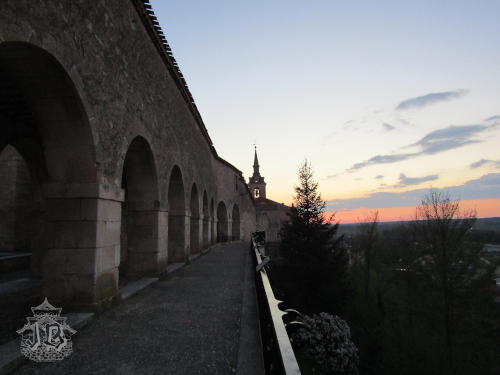
We walked around and came across the Mirador de los Arcos / Archway Viewpoint.

Then we saw Colegiata de San Pedro / St. Peter’s Collegiate church, where there was a religious exhibition being held (“Las Edades del Hombre”), with the topic of angels. Pictures were not allowed, or we would have shown you a few… interesting representation.
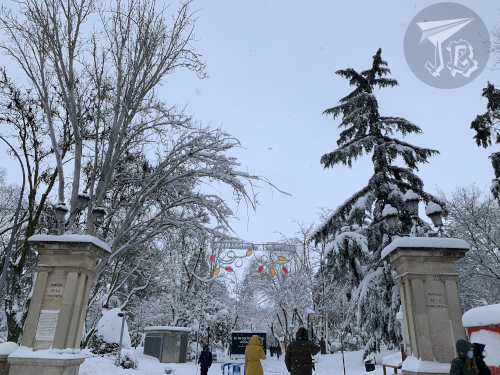
Sunset crawled upon us and it was nice view. We had dinner somewhere around the town centre, and called it a night before we drove home the following day.

31st August 2018: Tokyo Tower Reprise and off to Roppongi {Japan, summer 2018}

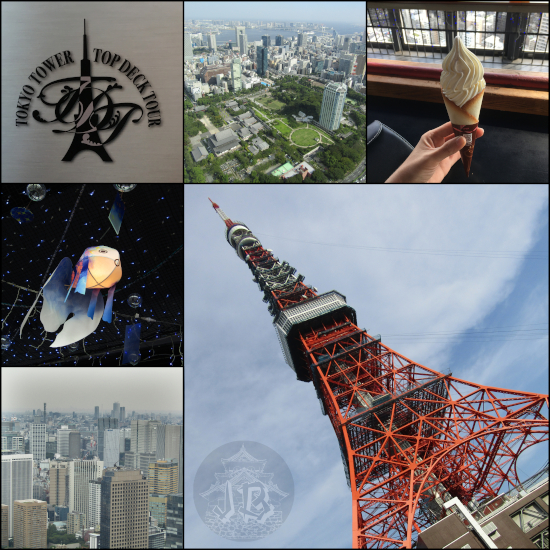
I went to Minato [港] because Tokyo Tower [東京タワー ] is there, and I love Tokyo Tower. My first stop, however, was Shiba Koen [芝公園], to visit a certain tree. However, the park was under construction! Who the hell closes a park for construction?! (O_O)!

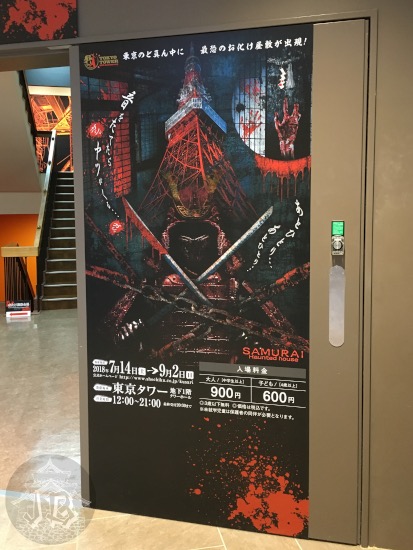
They have reopened the upper observatory in Tokyo Tower so of course I had to come back. It was imperative for my mental health. When I arrived I found out that they were running a “haunted house” on the basement and I decided to give it a go.

The story was of a cursed samurai who has killed 332 people and you’re supposed to be number 333. I had been wanting to try one of those for a while but in the end I did not enjoy it that much – the not seeing down the corridors was too stressful. Maybe with someone else it would have been more fun.

Afterwards I got my ticket for Tokyo Tower [東京タワー ] and the “VIP = Very impressive panorama” from the second observatory. I don’t understand why Tokyo Tower makes me so happy, but it does so more power to it. Oh oh oh and I had awesome(ly expensive) ice cream on the tower!

Afterwards I walked towards Roppongi [六本木], making a stop at the Don Quijote, a macro store that has nothing useful but lots of fun little stuff, with half a mind to buy a traditional red eyeliner or coloured contact lenses. But in the end I was strong and did not waste money (yet (≧∇≦) ).

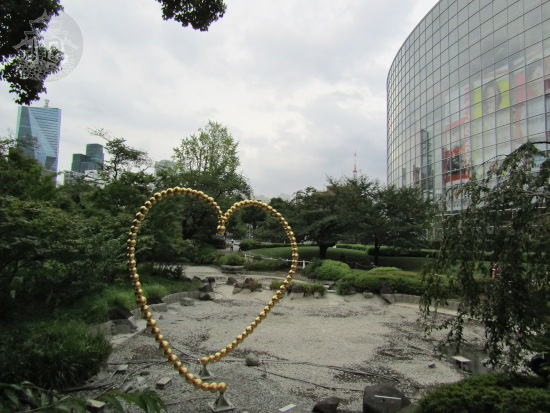
I continued to the gardens Mori Teien [毛利庭園], and I was a tiny bit disappointed that the pond had been emptied!

And I saw that the TV Asahi [テレビ朝日] building was open for visitors, so I went to snoop into that, because of course I did.

Later I met with D****e and M*****san for a shabu-shabu dinner which was out of this world.

30th August 2018: Loud Head {Japan, summer 2018}

I took the train to Shinjuku [新宿] and I walked from there to Shibuya [渋谷] to have a thought or two at life. In my walk I crossed Yoyogi Kōen [代々木公園] and visited Meiji Jingu [明治神宮].

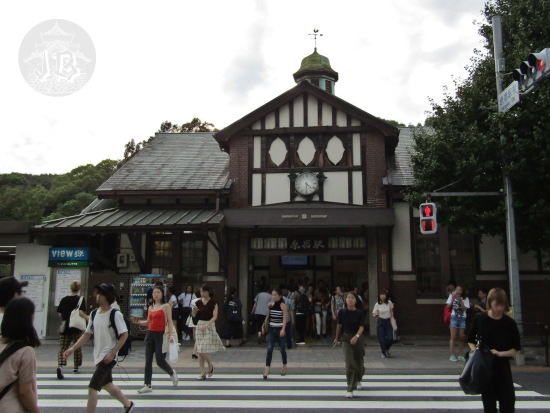
Then I strolled down Harajuku [原宿] – I had recently found out that the station is going to be torn down, so I had to say goodbye before heading over to the shops.

I finally made it to Shibuya [渋谷]. I had some Starbucks chocolate drink with around ten million kilocalories (≧∇≦). I went into Tower Records, Mandarake, and then Tsutaya.

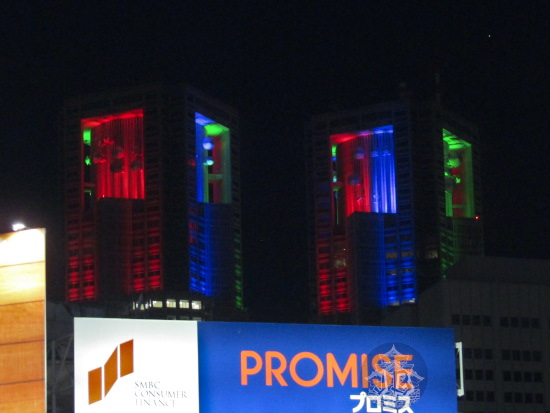
Ironically, I finally took a train back to Shinjuku [新宿] to meet D****e for dinner (guess what?! In the Shinjuku MyLord!), and we saw the lights on the Tōkyō Tochō [東京都庁] (Tokyo Metropolitan Government Building).

26th August 2018: To the East: Niigata → Aizu-Wakamatsu → Koriyama → Tokyo {Japan, summer 2018}

As there was not much to see in Niigata [新潟], we took a scenic train to the east – Niigata is famous for being ‘countryside’, and growing rice. We saw lots of rice fields.

Our destination was Aizu-Wakamatsu [会津若松], a ‘samurai town’ famous for Tsuruga castle and the story of the Byakkotai [白虎隊], a troop of young soldiers who fought during the Boshin war. Back then the ‘Aizu warrior spirit’ was a very important thing, and 19 youths committed ritual suicide when they thought the castle had fallen. This is called the Tragedy of the Byakkotai.

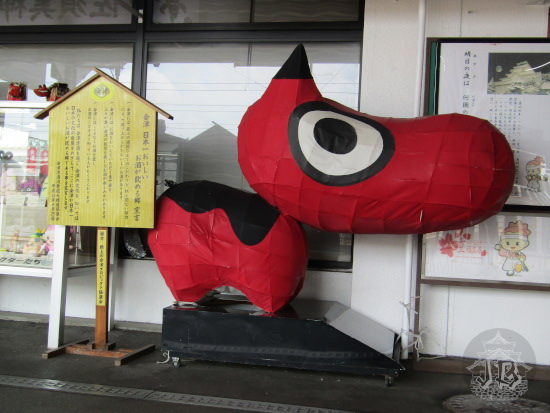
On the other hand, the town’s mascot is a cartoonish phantom red cow Akabeko [赤べこ]. Because why not?

We headed out to the castle first and foremost. Tsuruga-jo [鶴ヶ城] or Aizu-Wakamatsu-jo [会津若松城]. If you google it, you might think it’s pink. So did we. We were a bit on the amusedly disappointed side (≧∇≦).

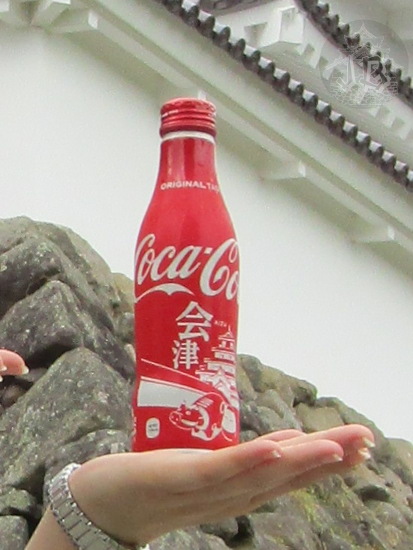
But we made-do with some awesome (and ice-cold) Aizu Coke-bottles.

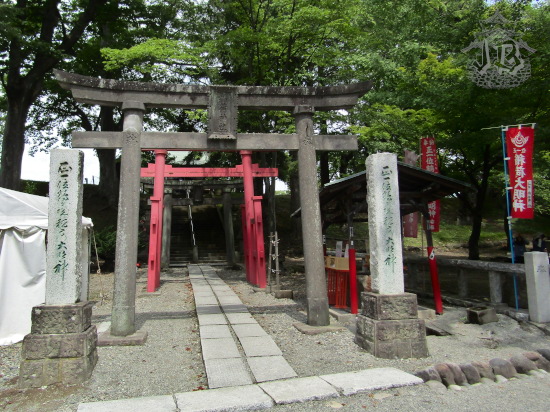
Within the castle grounds we found Tsuruga-jo Inari Jinja [鶴ヶ城稲荷神社].

And Kasama Inari Jinja [笠間稲荷神社].

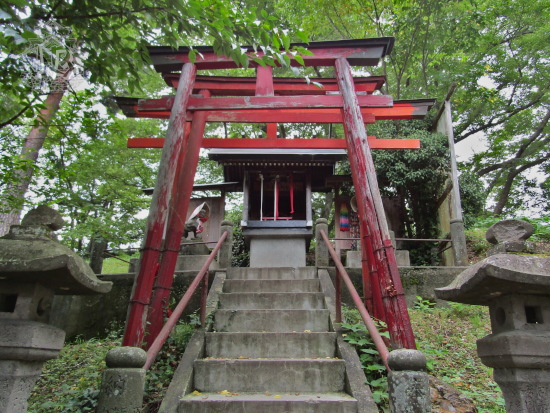
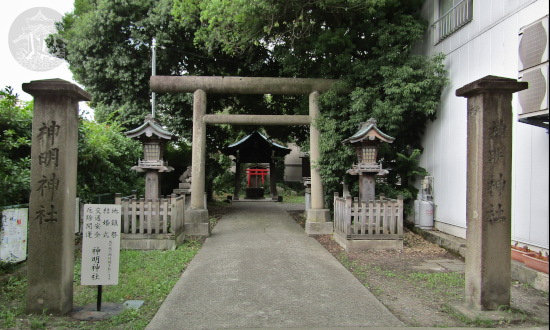
After the castle it was lunch time so we went to have lunch in the ‘old samurai town’ which to be honest does not feel too old. On the way we stopped by Shinmei Jinja [神明神社], which was rather on the empty side, but still nice.

We ate lunch in a place called Mitsuta-ya [満田屋] to eat miso dengaku [味噌田楽]. We had a course of skewers consisting on two konjac (one with salty and one with sweet miso), fried tofu, mochi (rice cake), sweet potato, shingorou (some kind of rice croquette) and smoked herring. All these were grilled just in front of us, which was on the one hand really cool to see, and on the other, bloody hot because hey, there was a fire burning in front of us. We were told that this was typical samurai food, because it could be prepared and eaten ‘on the go’. Who knows whether it is true, but it was fun and yummy.

Once we had eaten we had to make a run to the station so we could catch the train – as the following one was two hours later – and we made it with three whole minutes to spare despite google maps saying we were too far away. And thus we were off to Koriyama [郡山], which… we had not really heard of before this whole thing? (≧∇≦). There we took the Tourist Office by surprise when we asked what we could see even if it was already ‘late’. Map in hand, we headed off to see Asakakunitsuko Jinja [安積国造神社], which was a little on the creepy side.

Then we saw Nyoho-ji [如宝寺].

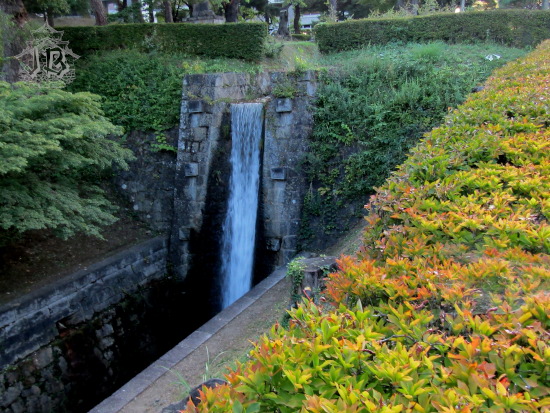
And continued to the park Hayama Koen [麓山公園], where we saw the Asaka Canal Hayama Waterfall Asaka Sosui Hayama no Hibaku [安積疏水麓山の飛瀑].

And the so-called Of the 21seikiki nenkouen Hayama no Mori [21世紀記念公園 麓山の杜], the 21st Century Memorial Park Hayama Forest.

Finally we headed back to the station area, where we checked out the Observatory in the Big-i [ビッグアイ] building.

And finally caught a shinkansen back to Tokyo, we had dinner on the go and crashed in bed when we got home.

21st August 2018: I see two castles… {Japan, summer 2018}

As I had made it to Nagoya a bit on the early side the previous day, I had some time to plan today carefully. The tentative plan was visiting Gifu and Inuyama, both castle towns. However, a third castle, Kiyosu, was also on the list, and it turned out that to get to Gifu, you go via Kiyosu. So there was a slight readjustment in Castle-visting schedule.

Thus I got myself on the train and 20 minutes later I stopped at Kiyosu [清洲]. I had seen the castle from the Shinkansen before, but I had never found the name until I was doing some pre-planning for this trip. Thus, it was a win/win situation. Everything seemed to be helping towards me seeing that castle this time.

Bonus points for Kiyosu: signs. Awesome, easy to follow signals reading “清洲城” in every crossing . Not in every second crossing. In every actual crossing so you can actually get to the place without even a map!

Anyway, the highlight of Kiyosu is the castle, Kiyosu-jō [清洲城]. It is not original by any means, but it is one of the prettiest ones I’ve seen. I like all the colourful stuff.

Then I snooped around Kiyosu Koen [清洲公園], the park where Oda Nobunaga Nōhime-zō [織田信長・濃姫像] stand, they are the bronze statues of Oda Nobunaga and his wife Nouhime.

Afterwards I returned to the station and continued onto Gifu [岐阜], where I took a while to figure out the bus system, but in the end I managed to get to the feet of the mountain where Gifu Castle is.

Before going into the park, I decided I would not go into the insect museum, and walked off to Shōhōji [正法寺], home of the Great Buddha Gifu Daibutsu [岐阜大仏].

I took the Gifu Safu Kinkazan Ropeway [ぎふ金華山ロープウェー] (Gifu Mt. Kinka Ropeway). As much as it seems that I am getting comfortable with the whole Ropeway thing, I’m not. For the record.

But there I went, up to Gifu-jō [岐阜城], the castle up the muontain.

Later I was wandering around the park for a while and of course I needed to go and see the Gifu Kōen Sanjūnotō [岐阜公園三重塔], the Three-Story Pagoda that stands on the slope of the park.

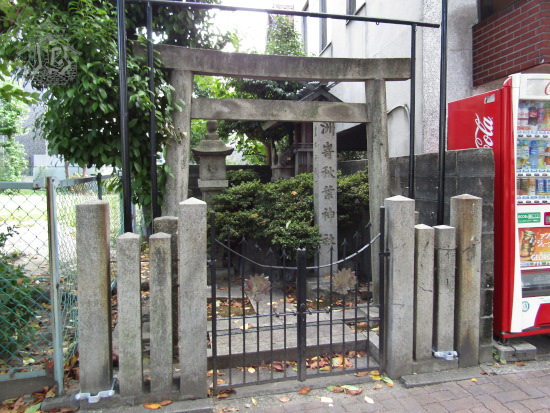
I was sort of tired, and it was very hot, so I took the bus back to the station, and the train back to Nagoya [名古屋]. When I got there I had rested a little, and I felt up to walking a bit in Nagoya – besides it just felt too early to go to the hotel. I walked by a cute little shrine, Yuzu Akiba Jinja [洲嵜秋葉神社].

I finally made it to Ōsu Kannon [大須観音],

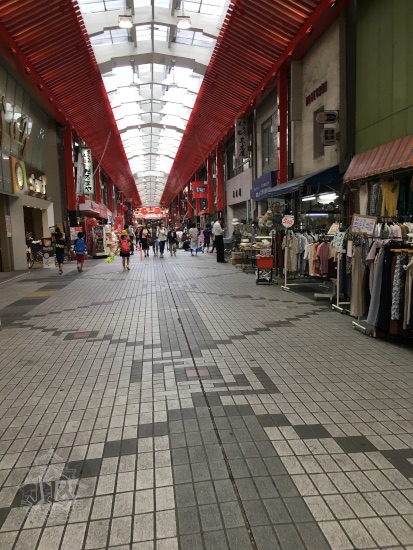
and the adjacent shopping streets,

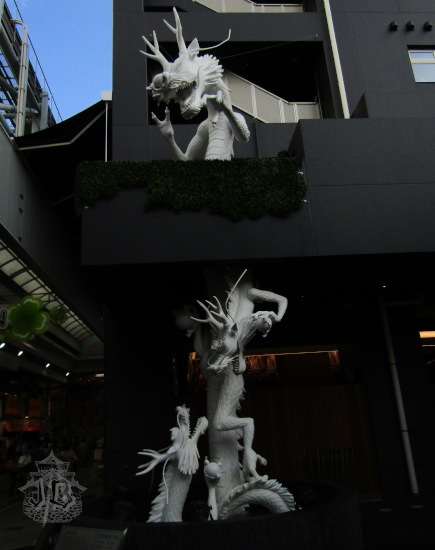
where I found Hakuryu [白龍], the white dragon.

I did some shopping in Mandarake and Book Off and I walked back to the hotel.

18th August 2018: Plan Switching. Kyoto → Osaka → Nara {Japan, summer 2018}

On this day I was supposed to hike up a mountain – mount Takao to be precise. But you know what? When I woke up that morning I just did not feel up to it, so I decided to change my plans. In the end when you’re on the JR Pass you can get from Kyoto to Osaka for free. For a change, I actually got to Osaka instead of Shin-Osaka which was convenient. Then I grabbed the underground to get to Osaka Aquarium Kaiyukan [海遊館], which is actually the largest aquarium in the world.

I had been there before, but the previous time I did not get to see the whale sharks as they were ‘quarantined’. How can anyone block a tank which is in the middle of the whole damn thing, I have no idea, but they did. This time I broke even and had a blast. Unfortunately the Aquarium was packed because this was a Saturday morning, and for some reason my back was hurting a lot. I had dropped my luggage off at a coin locker because I thought it would be better. However at some points I could not really walk straight. The weight of the camera bag was too much and I had to sit down. Found a nice place to watch the sharks from, though.

After the Aquarium I went to Kuchu Teien [空中庭園], observatory in the Umeda Sky Building [梅田スカイビル] to have a look at the skyline and to get the stamp for the Japan Towers rally. I got the greatest omg-gaijin face of the trip here (and truth be told, had I known that the stamp was actually held at the reception desk and not the actual observatory, I might have skipped this). In this case the building is an attraction itself. It consists on two towers joined by some passageways and a circular platform at the top, with see-through escalators.

Next the plan was going to Dotombori, stroll down there, and eat some takoyaki before heading off to Nara where I had my hotel for the night. When I got to the station and jumped on the Osaka Loop line, it turned out that I actually was in the train that continues on to Nara… and it was air conditioned and I had a seat…

I found it a sign and decided to just go with the flow and get to Nara [奈良] on that train. Upon arriving there I checked into the hotel and I decided to go to Nara koen [奈良公園], the main Nara park, and see if I could feed a sacred shika [鹿] deer or two. This was close to 5 pm by now so all the temples would be closing anyway. I did feed the deer some shika senbei [鹿煎餅] (deer crackers), and one of the does bit me. Not even the hand that was feeding her, she actually tried to snack on my tummy. Sheesh.

As I was coming back down I had a pretty sunset over Kōfuku-ji [興福寺].

9th & 10th June 2018: Wicked London (England, Great Britain)

This will be the last work-trip, at least for a while. I might change my mind later, but for now I’m done with them (although there’s an upcoming family trip rather soon…). Again, we flew in early Saturday morning, and we went to walk around the Tower of London and the Tower Bridge.

Then we went to the British Museum. I left them for a couple of hours there and I went to visit some of the lesser-seen galleries.

We had booked tickets for the musical “Wicked” in the Apollo Victoria Theatre at 14:30, so we headed over there. Wicked is a parallel story to “The Wizard of Oz”, focusing on the story of the Wicked Witch of the West, who becomes a social outcast due to her tendency to speak her mind and the strength of her magic. I had really wanted to watch this for a long time, so I used this chance and convinced the group to get there. I absolutely loved it ♥.

After the show, we dropped our things at the hotel. The group wanted to get some rest, so we stayed there for a while, then got out again. We took the underground towards London central and we were in Trafalgar Square for a while.

Then, we went to Chinatown for dinner.

Later, we walked around Piccadilly Circus, checking out some shops and so. We even stopped for cake.

On Sunday morning we went to Saint James’s Park, where we got to meet the local fauna, especially a very adventurous squirrel.

Then we dropped by Buckingham Palace. Although we did not watch the Guard Change, we did see one of the relief marches.

We walked from there to Westminster, saw the Houses of Parliament and the Big Ben, along the outside of Westminster Abby.

We visited the Monument to Emmeline Pankhurst and stayed for a while in the Victoria Tower Gardens.

As a final visit, we went to the Natural History Museum.

Finally, we headed off to the airport, and the icing of the cake was that we got caught in a controllers’ strike, so we had like a three-hour delay on our flight and it took forever to get home (;¬_¬). All in all, this was a very… strange trip, and without a doubt the highlight was going to see Wicked, which is something I had wanted to do for a long time, and gave me a couple of hours of enjoyment to myself.

1st (and 2nd) August 2017: Running out of time! {Japan, summer 2017}

This was my last day and I had to make the most of it! First I went to Shibakoen [芝公園] and Tokyo Tower [東京タワー], because that always keeps the sadness at bay. I went up the tower and I finally gave in and bought the stamp rally booklet. I should have done it before. The Tower was being visited by a primary school class. Ho boy.

Then I went to Iidabashi [飯田橋] using the Shibakoen subway station. The day before I had hired a private lesson to have a teacher explain Japanese conditionals to me. That was very productive. Finally I was off to Shinjuku [新宿] for yakitori and karaoke with B**** and D****e to say goodbye for now.

Finally, I half-packed because I apparently forgot half of my stuff atover there, and went to bed. At 2:02 in the morning there was the only noticeable quake of the trip, quite a big one. In the morning, I headed off to Narita Airport, checked-in my luggage, and once again, it was time to go back to reality.

30th July 2017: Tokyo → Yokosuka → Sarushima → Yokosuka → Yokohama → Tokyo {Japan, summer 2017}

We ended up in Yokosuka [横須賀] because D****e wanted to go to a music and book shop called Yajima Record Honten [ヤジマレコード本店], which was sadly closing the following day. The first thing that we did when we arrived, however, was lunch (because we had not gotten up early and we had spent a couple of hours on trains). Yokosuka is known for being an American army base, so it prides itself on being “Americanised”, and the typical dish seems to be hamburgers. This is the avocado burger I ordered.

After this we walked a block north and found Yajima. The key aspect of this shop was that it had a bunch of posters and signatures from old promos from a bunch of J-rockers. It was a bit of a magical place and it is very sad that it is closed now. I took the chance to buy an unopened, brand new copy of Hyde’s Shallow Sleep single, and we took pictures of a bunch of the promos that were still up, some of them twenty or thirty years old.

Afterwards we walked to the pier to catch a ferry to see Sarushima [猿島], which hosts a few old timer army bases and wartime ruins, aside from some very nice ocean views. It would have been nice if we had managed fewer people around, but alas, we all came by ferry so we all arrived at the same time. Sarushima is the only natural island in Tokyo Bay, and geologically it seems to be a continuation of Futtsu cape on the opposite side of the Bay. Although the name means “Monkey Island” there is no monkey there except in a legend that says that a white monkey guided Saint Nichiren through the fog in Tokyo Bay to the safety of the Island. Sarushima is a World Heritage National Historic Site.

Afterwards we went back to Yokosuka Pier and boarded the Mikasa [三笠] warship which was used as flagship in the Russo-Japanese war (and sank after the war because she blew up. Figures). It is now a naval museum where you can VR the battle. I got VR-obliterated. There is a reason why I did not pursue a military career.

Afterwards we diverted our way to go to Yokohama [横浜] and get nikuman for dinner in Chinatown. We sat on a park bench and ate nikuman and drank bubble tea. Afterwards we walked down by the harbour and through Yamashita Koen [山下公園] and looked at the sunset/night skyline. Finally we caught a train back home.