8th – 12th July 2021: Beach weekend (El Campello & Elche, Spain)

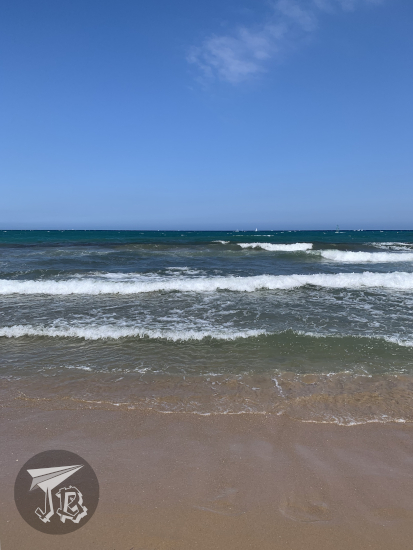
The sea is far, far away and due to a number of situations coming together, we rented an apartment near the ocean for a couple of days. Our usual summer destination was not a good option this year due to – as everything that is going less than great these days – to Covid, so we gave a try to the town of El Campello. The town likes boasting itself as a beach paradise-resort, while it’s barely a standard Mediterranean village eaten which boomed along other, bigger resorts such as Benidorm. The apartment was not anything marvellous, but it was extremely close to the ocean – just beyond the waterfront promenade, Paseo Marítimo.

8th July 2021: The arrival

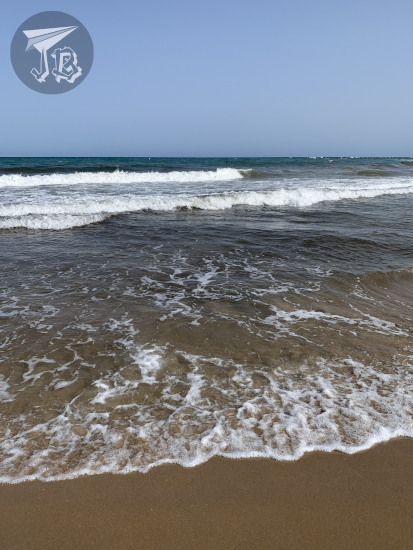
We arrived in El Campello at around 4pm, did a fast sweep of the apartment in order to feel safer Covid-wise and I decided to go for a walk at the beach, jeans and all. There were surprisingly fewer people than expected, and not as hot as I thought it would be – all in all we were pretty lucky, weather-wise.

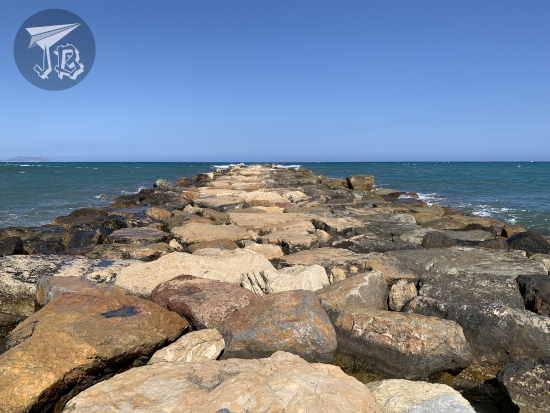
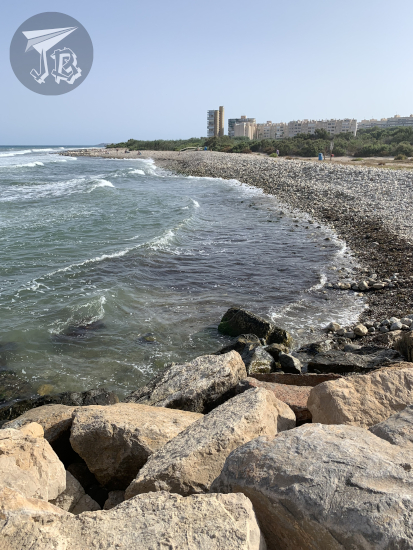
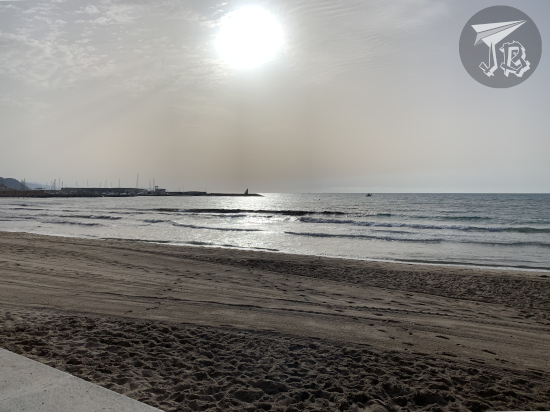
El Campello is built parallel to the coastline. The more traditional area has a small marina Puerto de El Campello to the north, and then a sand beach that extends towards the south divided into Platja de la Illeta and Platja del Carrer de la Mar. Though the beach has a couple of breakwaters, they are for protecting the beach against erosion and not to separate the different areas – the east of Spain has a reputation for building quite close to the beaches. Over the years, that caused the winds and waves to shift and the once amazing and long beaches started being washed away – now all those groins are necessary to keep the sand in place, and are liberally built along the Mediterranean coast.

I climbed on one, of course, more than once – and more than one too (≧▽≦).

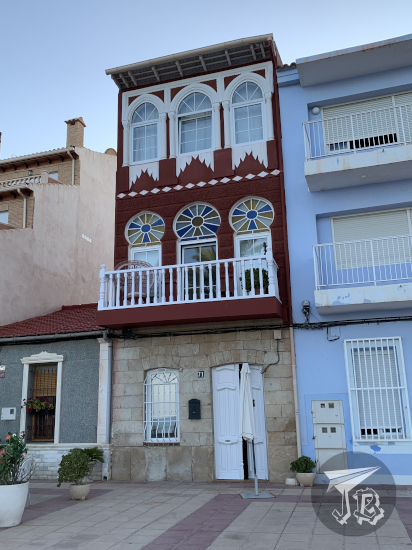
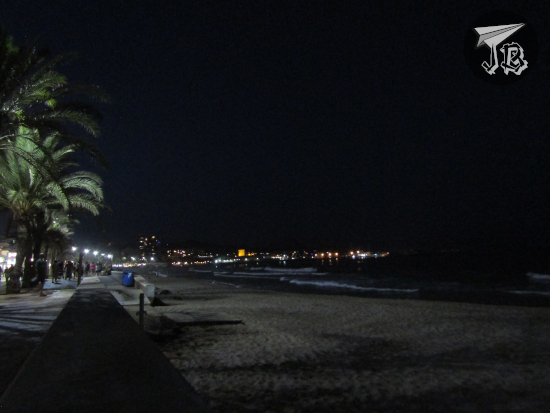
In the evening we walked along the waterfront promenade. While most of it is fronted by restaurants and souvenir shops, I did see this cute little house.

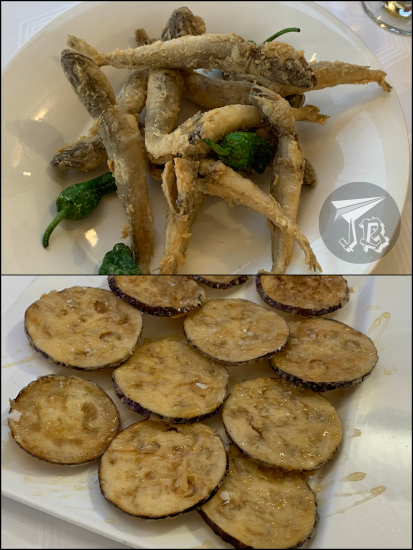
Eventually, we chose a place to have dinner – some fish and the area speciality: honey-soaked aubergine (berenjenas con miel), which is not actually made with honey, but a type of molasses – which actually makes this a vegan dish, as bees are not involved in making the “honey”, what do you know? The first time I tried this I was not too convinced, but if prepared well, this dish is absolutely delicious.

9th July 2021: The lady’s town

Elche is a nearby town a bit inland, and the third most populated in the area. It is famous due to the Iberian sculpture bust found nearby and because of its palm grove. The history of the town can be traced back to the current archaeological site Yacimiento Arqueológico de La Alcudia, whose stratigraphic sequence dates to the Bronze Age. There are ruins and artefacts, mostly from the Iberian and Roman ages, though there are findings until the Islamic era.

In 1897, a young farmer found the bust named La Dama de Elche, the Lady of Elche, which can be seen in Madrid’s archaeological museum Museo Arqueológico Nacional – it is the limestone bust of an Iberian woman, probably with funerary purposes, what was carved around the fourth century BCE. Since that time, a great deal of work has been carried out in the area of La Alcudia, and today is a full-fledged archaeological site with a Roman wall, several Iberian and Roman houses, a Roman temple and an Iberian one, a basilica, and hundreds of sculptorical and clay artefacts.

We visited the site in the morning, hoping to finish the stroll before it became too hot. There are still works carried out in the site, but you can visit and walk around the area – as long as you don’t step on the red ground. There are two museums on site, aside from the outer ruins. In one of them there is a reproduction of the lady, which yields to easier pictures than the glass protection in the National museum. There are also interpretations and reconstructions about what the Lady may have looked like when she had her colours. Unfortunately, reaching the site is hard, and probably not worth the detour unless you’re an expert in archaeology, but it turned out interesting to see.

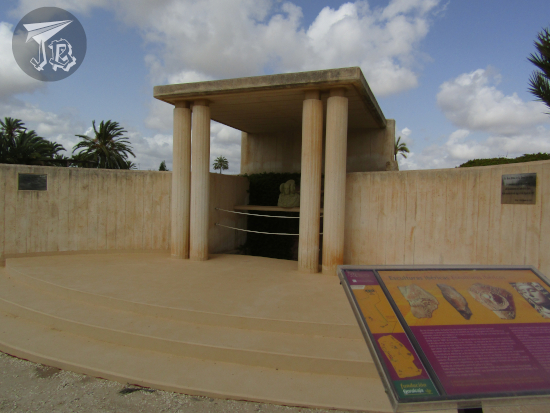
… Except for the “commemorative site” of where they found the Lady. That was hideous.

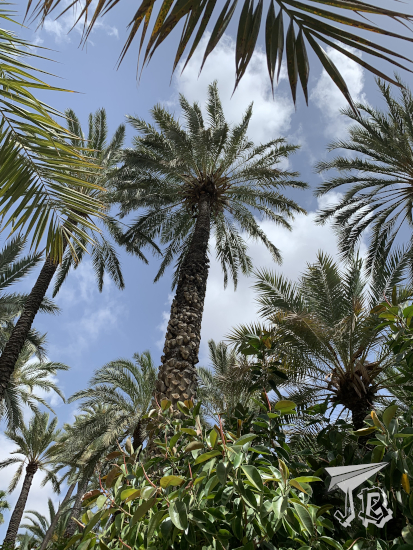
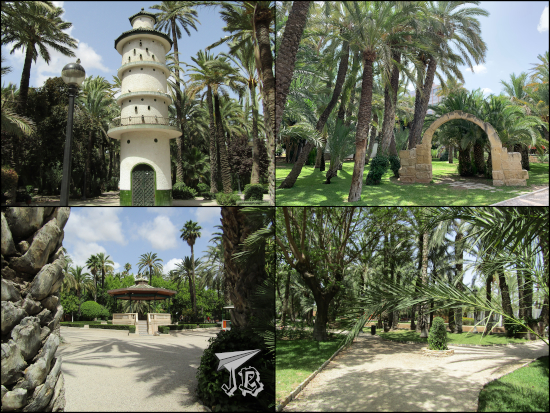
After La Alcudia, we drove off to the town centre to walk around Palmeral de Elche, the biggest palm grove in Europe, with around 200,000 – 300,000 trees, most of the date palm species, Phoenix dactylifera. The palm tree grove originates in the 10th century CE (planted by the Caliphate of Cordoba conquerors), and it has been a Unesco World Heritage Site since the year 2000. The most important palm grove is in the centre of the town (and we missed the dragon that stands on one of the trees 。゚(゚´Д`゚)゚。).

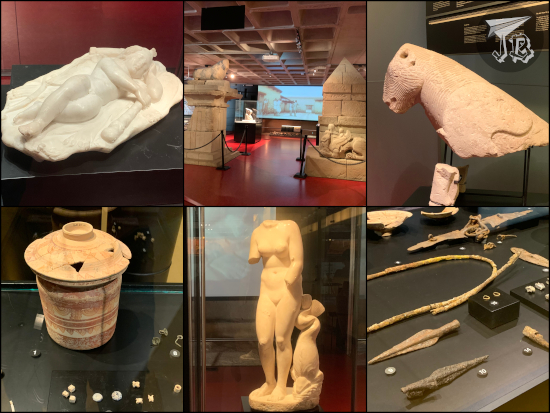
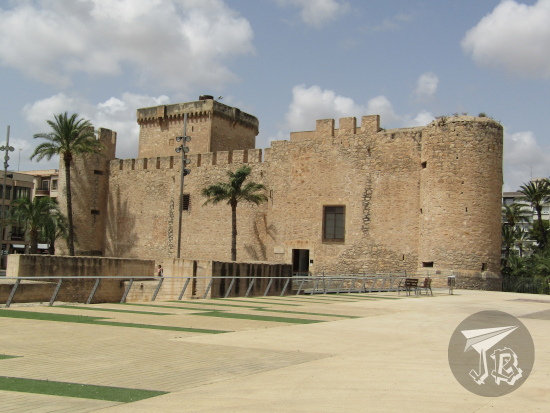
Close to the grove stands the local archaeological museum, Museo Arqueológico y de Historia de Elche, divided between the new building and the old Moorish castle or alcázar, Palacio de Altamira, which drinks from La Alcudia and other findings from the area.

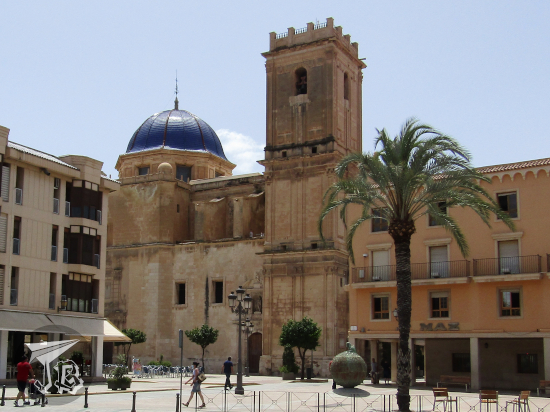
After the museum, we headed off to see the main church Basílica de Santa María, but we had just missed opening times. It stands on the place of the original mosque, and the current building – the third church that has been built – is Baroque. The bold blue dome is typical of the area, found all over the region on towers and churches.

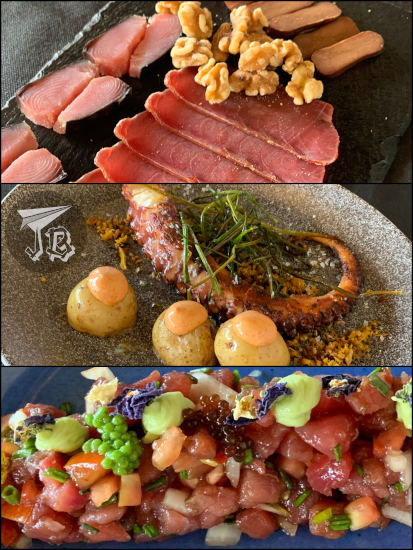
As we could not see the basilica, we just had lunch! After a bit of a banter with an over-friendly waiter we had some fish-based lunch to share – salt-preserved fish bits, grilled octopus and tuna tataki.

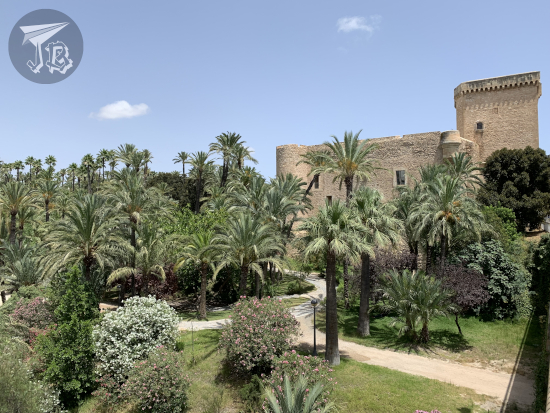
On the way back we got to see a different view from the palm grove and the castle and the palm grove – maybe it looked like this in the old Arab times?

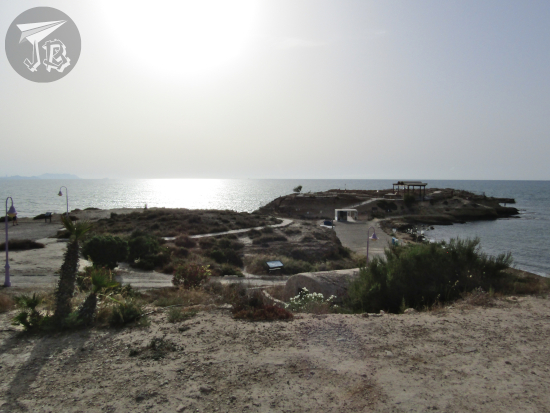
It was too hot to stick around and wait for the museums and church to open up again, so we drove back and after a while I headed back to the beach. This time I reached the end of the sand beach and got to the boulder one at the end of the waterfront promenade.

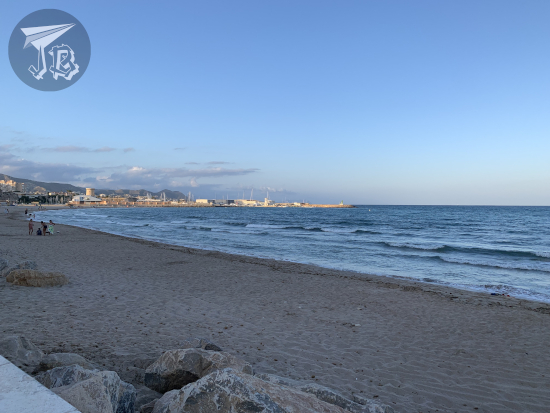
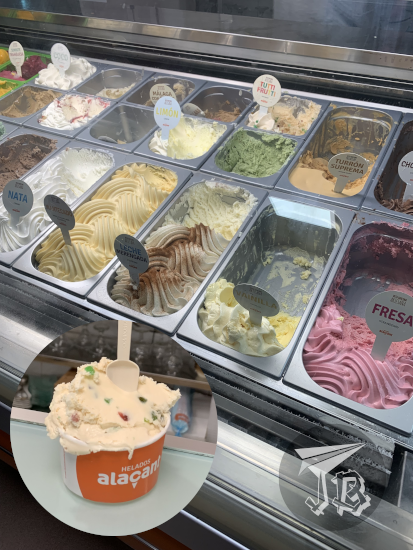
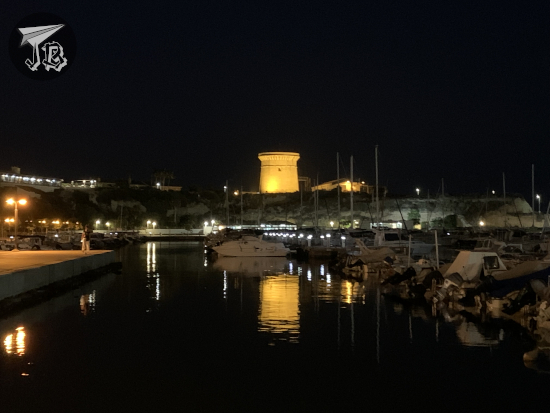
We had a quiet dinner at the apartment, then went out for ice-cream. We ended up walking to the marina, Port d’El Campello and caught sight of the Torre Vigía De La Illeta in the background.

10th July 2021: Not much to report

Just some pizza and a night-time walk along the waterfront promenade yielding tries to take artistic pictures without much success.

11th July 2021: The Tower

I woke up with a lovely reaction to the sun – not a sunburn, more like an allergy flare-up (here’s the plausible explanation for that), so we went out rather early for a walk, to then shield from the sun.

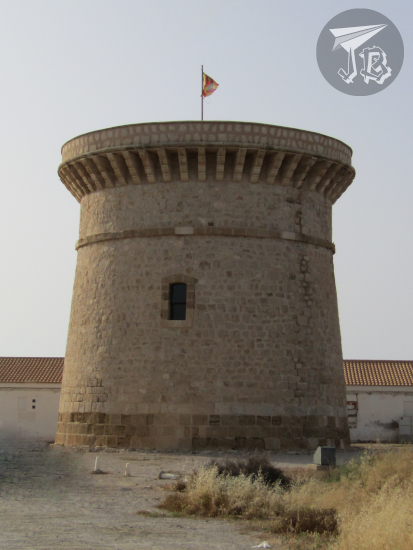
From the Roman times, a number of watchtowers were build along the Mediterranean coast to be on the lookout for pirates. The tower in El Campello, Torre Vigía de la Illeta was built between 1554 and 1557 (and restored in the 1990s), was part of a watch system commissioned by the Viceroy of Valencia at the time. The tower was manned by two infantry and two mounted soldiers – in case a pirate ship was spotted, the former would make smoke signals and the latter would ride to raise alarm in town.

The tower overlooks the marina, the town, and the archaeological site Yacimiento Arqueológico La Illeta dels Banyets, with ruins and artefacts dating from the Iberian and Roman times, but we did not walk to them as it was early in the morning and it was not even open.

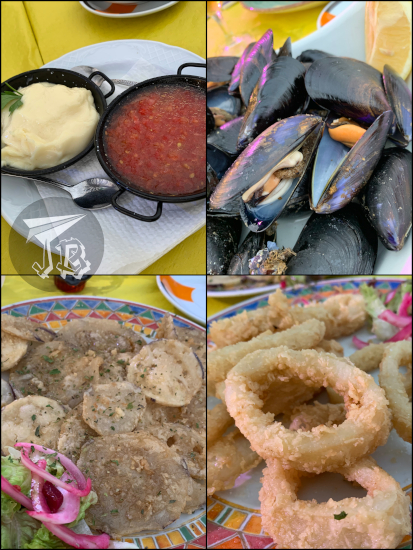
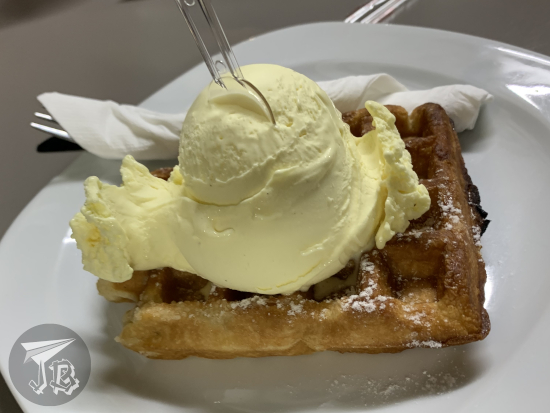
It was hot, so most of the day was spent under the air-con, to later have dinner out – some mussels, more aubergine with honey (not so good this time), and squid rings. But the highlight of the night was the final ice-cream waffle, which is a great, great idea.

And that was it, as we left early in the morning the following day, as soon as we could check out, as the trip is – as mentioned – long.

29th & 30th May 2021: The Walls (and churches) of Ávila (Spain)

There was a little-talked about consequence of the Industrial Revolution in Spain. While it is widely known that it drew a large number of people to the cities and towns, few stop to think of the subsequent steps that had to be adopted. More people in town required housing, and thus a number of projects denominated ensanches or “widenings” were projected and carried out. Even though such a thing makes sense, here lies the problem – in order to enlarge the urban area, many Spanish cities and towns tore down their Roman and Medieval walls, leaving either bare traces or nothing at all.

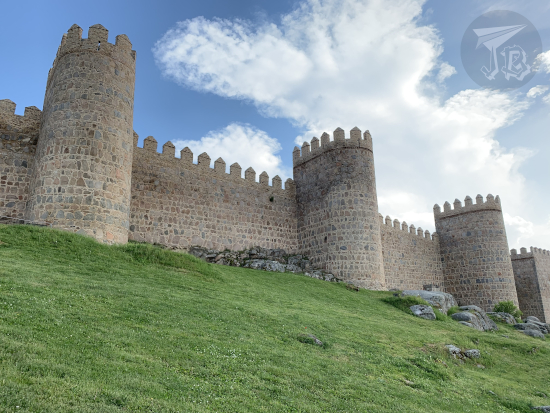
Legend has it that the town of Ávila lacked the money to demolish the wall. In retrospect, that was a good thing, because today, the walls that surround Ávila, Murallas de Ávila are among the most impressive Europe, some say that even better preserved than Carcassonne (France).

Ávila is a couple of hours away by car, so we drove off on Saturday morning at around 8 am and were there just before 10 am. We entered the city through one of the city wall gates, Puerta del Carmen.

Approach to the walls

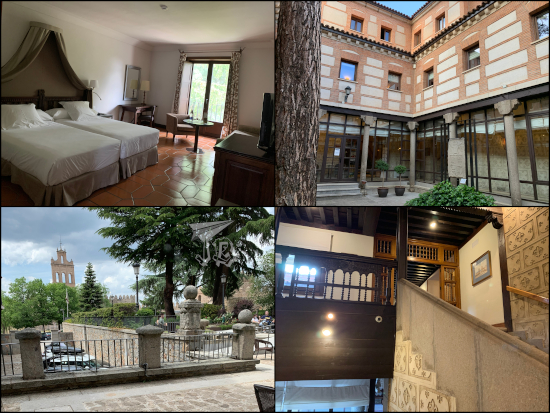
We parked (100% ditched the car) at the hotel and checked in – even if it was quite early, they told us that one of the rooms was already prepared and gave us the keys. Unfortunately, it was not, and since the blunder was a Covid-protcol blunder, they upgraded us as an apology. The hotel, Parador de Ávila, belongs to the Spanish network of Paradores, and it is located in a 16th century palace, Palacio de Piedras Albas. We booked late-check-out for the following day, which can be done “for free” booking lunch in the restaurant (which is obviously not free).

Parador

Our first stop was the tourist office, but not the one that is clearly signalled in the middle of the town – the one that is located outside the wall and you have to turn around and around to find. But we needed it to buy the 48-hour pass to the monuments. Then we stuck around to wait for the nearby church to open, which gave way to observing the wall for the first time.

The Muralla de Ávila has been a Unesco World Heritage site since 1985. The structure is clearly defensive and it was built towards the end of the 11th century, quite probably as extension or reinforcement of a previous one, either Roman or Arab – though the Roman theory is the most credible as some pieces used in the original wall seem to come from a now-lost Roman cemetery, and there are documents about a Roman camp with similar shape. The wall has been restored in several occasions, and after surviving the ensanche risk, it was declared national monument and cleared of attached houses. Today most of the wall belongs to the Spanish government, and it is managed by the town hall, though there are some private parts, such as the ones that are part of the cathedral. The walls close off all the historical centre. They have a perimeter of 2,515 metres, with around 2,500 merlons, almost 90 turrets, and nine gates. Our second gate was Puerta de San Vicente.

Puerta de San Vicente

The first monument we stopped by, as soon as it opened since we were already there, was the basilica church Basílica de San Vicente (officially Basílica de los Santos Hermanos Mártires, Vicente, Sabina y Cristeta, three Christian siblings who were martyred nearby). It is one of the most important Romanesque buildings in the whole country, built between the 12th and the 14th century. It is protected as part of the World Heritage Site declaration. One of its characteristics is the golden rock in which it is built – sandstone-looking granite.

Iglesia de San Vicente

The inside of the basilica is, in the typical way, a mix of more modern styles. The grave of the martyr siblings is Pre-gothic, and the large altarpiece is Baroque. In the crypt there are proto-Christian pieces and a Romanesque Virgin which we did not get to see and which is the patron of the town.

Iglesia de San Vicente

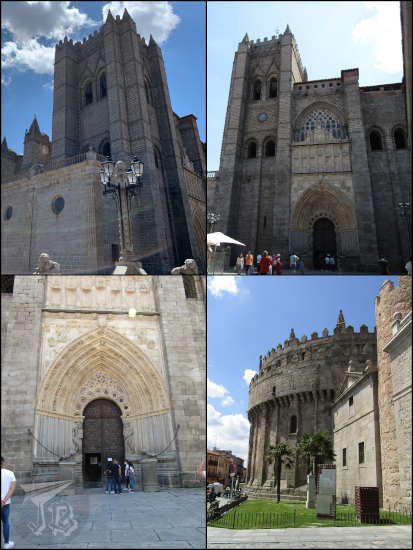
Afterwards we headed off to the cathedral Catedral de Cristo Salvador, which is considered the first gothic cathedral in Spain (something that other people say about Cuenca), with clear French influences. It was designed as a fortress church as its abse dubs as one of the turrets of the city wall.

Catedral de Cristo Salvador

In later years, a choir was added, along with a Baroque altarpiece. The walls are also sandstone-looking granite, but some elements inside are limestone and wood.

Catedral de Cristo Salvador

To the side of the cathedral stands the cloister, which holds the grave to the first modern president of Spain, Adolfo Suárez, and the entrance to the cathedral’s museum. It yields to views of the tower and… the storks that squat there.

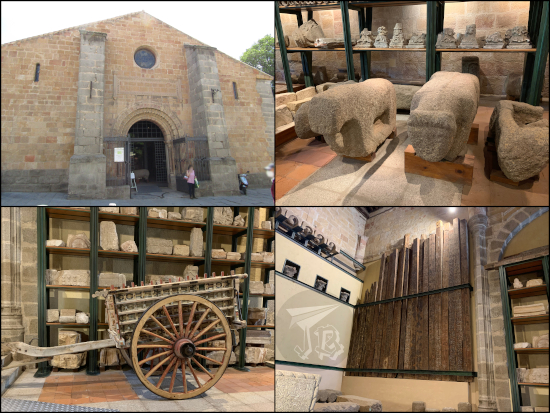
We headed off towards the Museum of Ávila. First we stopped at the former church Iglesia de Santo Tomé, which today is a warehouse for the museum, but can be visited anyway. When I was young, I studied the statues / sculptures called verracos, built around the 5th century BCE by the Vettones, a Celtic pre-Roman civilisation that faded upon the arrival of the Romans. The verracos are crude statues that represent four-legged animals – bulls, boars or pigs. At the time, I had only heard about a number of them, and was somehow under the impression that there were two or three around. I was quite wrong, apparently they pop up from the snow like daisies or something. In the church-turned-warehouse there were like twenty, one outside, there was one at the hotel garden… so no, apparently they are quite common. Other artefacts in the building include some carriages, Roman sculptures and mosaic, Muslim funerary artefacts and roof boards…

Iglesia de Santo Tomé

Then we moved onto the museum itself, Museo de Ávila, with a beautiful patio and a number of archaeological and ethnological items which represent the history and folklore of the town.

Museo de Ávila

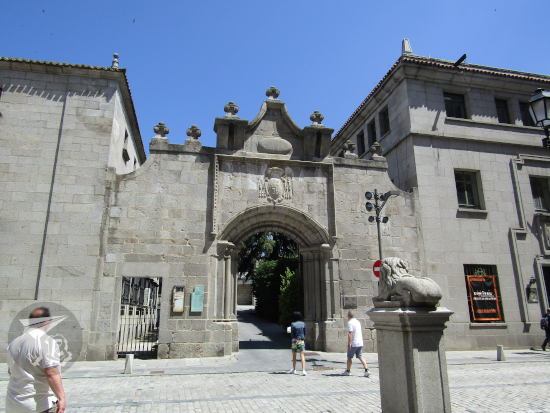
It was almost time for lunch, so we headed off towards the restaurant where we had booked. Before, we made a small stop at an old palace Palacio del Rey Niño, built in the 12th century, today turned into the Post office and the public library, with a patio closed off by the Walls themselves.

Palacio del Rey Niño

Then we walked by the modern marketplace.

mercado

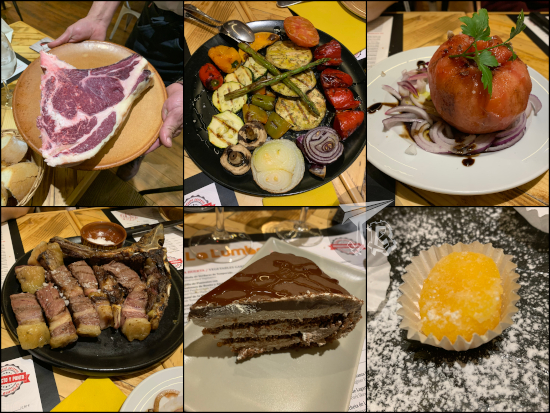
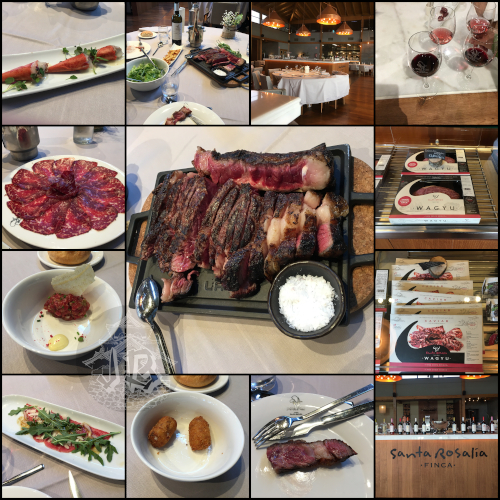
Which happened to be right in front of the restaurant, named La Lumbre. Aside from its walls, Ávila is famous for its cattle, a particular breed called Raza Avileña – Negra Ibérica, and of course the meat the animals produce, especially the matured and grilled meat from older oxen. After the animal has been sacrificed, the meat is matured in a traditional process called “dry maturation” for six weeks before it is grilled. We ordered the rib steak, chuletón to share, along with some grilled vegetables, a “tomato salad” that was a… one-tomato with dressing. And then there were desserts, aside from chocolate cake, we ordered yemas de Ávila – a typical confectionery made with egg yolks, lemon juice, cinnamon, and caster sugar. Lots of typical stuff, as you can see!

lunch

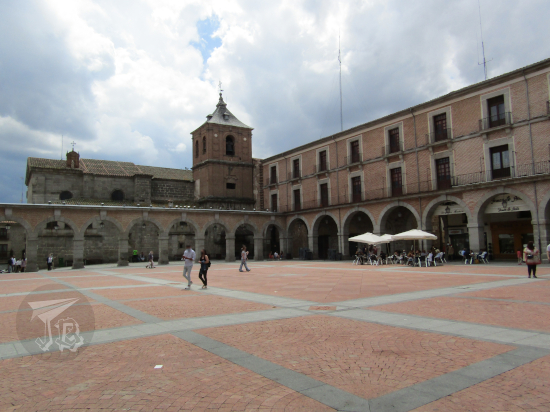
Our next stop was the main square, called “little market square”, Plaza del Mercado Chico, along with the town hall or Ayuntamiento. The square was rebuilt in the 19th century and is flanked by arcades. The town hall was built in 1862.

Plaza del Mercado Chico

Plaza del Mercado Chico: Ayuntamiento

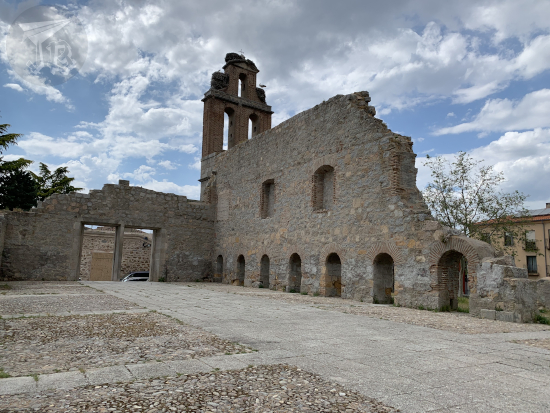
After a brief stop at the Parador for some rest, we headed off to find a convent / monastery on the other side of town. On the way we came across some ruins that I assume are the church Iglesia de San Jerónimo, as they sit in the square of the same name.

Ruinas de San Jerónimo

We reached the convent Convento de San José, a reconstruction of a previous monastery and church, the first founded by Santa Teresa de Jesús (Saint Teresa of Ávila), a Christian “doctor of the church” and mystic Carmelite nun, known for her ‘raptures’, her reforms, and her literature work. More on her later though. The convent and church were a little… underwhelming, even if is a World Heritage building.

Contento de San José

Then we walked back towards the historical centre, and walked past the church Iglesia de San Pedro, a 13th-century building with a great rose window, but which was closed (reforms).

Iglesia de San Pedro

On the other side of the square, Plaza del Mercado Grande (Big Market Square) stands another of the wall gates, Puerta del Alcázar, and a monument to Saint Teresa Monumento a Santa Teresa: La Palomilla.

Puerta del Alcázar

Next we separated and I went off to climb the walls Murallas de Ávila. Well, to walk on the parapet. Due to Covid, there is only one access, next to the Cathedral and its gate Puerta de la Catedral. The walkable area is around 1.4 km, including walking over some of the gates and up and down more than a few turrets. It allows for some amazing views of the town and its outskirts…

Views from the walls

… but also of the wall itself, both the original walls and the add-ons from later eras (and a magpie).

When I reached the end of the walk, I went down and crossed the bridge gate Puerta del Puente, named that way because it overlooks the bridge over the Adaja river. I could not take a picture of it because the traffic police was checking cars at the roundabout in front of the gate. Thus, I headed off to the pedestrian bridge to cross over towards the tiny hermit popularly known as “the four posts”, Los Cuatro Postes, which yield to an impressive view of the town and its walls.

Cuatro Postes

Views on the wall

Avila and View

I walked back to see the walls from the base. Then I crossed the gate we had driven through in the morning, Puerta del Carmen, and I headed back to the hotel for a drink.

At the feet of the walls

Puerta del Carmen

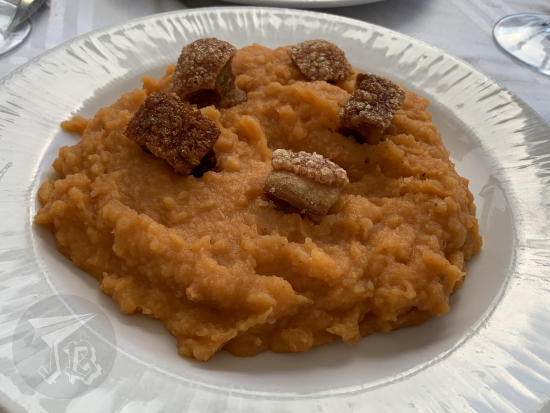
After a while we headed off for dinner and tried another of the typical dishes in Ávila, patatas revolconas – mashed potatoes with paprika and pork rashers, and waited for the sun to go down so the city lit up.

Patatas revolconas

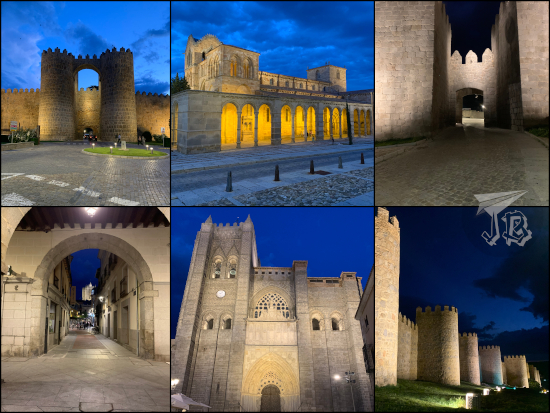
A walk around the town yielded to views of the Iglesia de San Vicente and Puerta de San Vicente, some of the inner streets leading to the town hall Ayuntamiento, the longer area of the Muralla and the Puerta del Carmen.

Night view

And then I had a very, very long shower and went to bed.

In the morning, breakfast was had – not a fan of the “we can’t have a buffet so we prepared this and this is what you get” plate, but whatever. I mentioned Santa Teresa before, let’s get into that a bit further. She was a 16th-century nun born near Ávila, canonized in the 17th century, and elevated to doctor of the church in the 20th century. She is conisdered one of the great mystics and religious women in the Roman Catholic church, author of a number of spiritual classics, and the reformer of the Carmelite nun order into the Discalced Carmelites. She founded convents all over Spain and was known for her mystics raptures which may have been messages from God or epileptic attacks. She is one of Ávila’s most important historical figures and wherever you go there are traces of her. In the place where her house stood now there is a convent, a church, a reliquary room and an interpretation museum, with really strange hours on Sundays. We could see the convent / church Convento de Santa Teresa de Jesús / Iglesia de la Santa and the reliquary room where no pictures were allowed Sala de Reliquias between services.

Iglesia de la Santa

On the way, however, I found some interesting ruins – the gate to the former hospital Hospital de Santa Escolástica, and we walked past a bunch of palaces.

Portada de Santa Eulalia

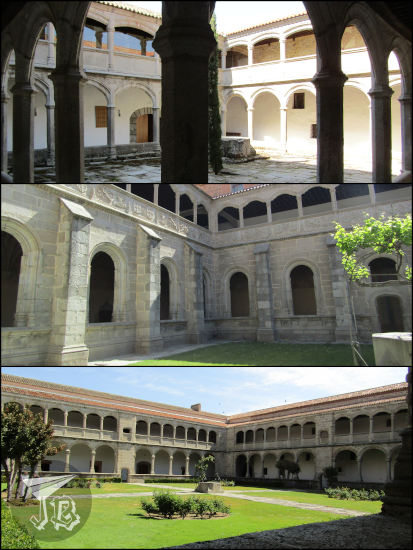
Then we moved onto a long walk to the 16th- century Gothic monastery Real Monasterio de Santo Tomás, which we could see due to lucky timing as there was a First Holy Communion Mass happening and the local little old ladies were not to keen on cultural visits of the church.

The monastery has a church, three cloisters and two adjacent museums. The church has an impressive Gothic altarpiece (by Pedro Berrugete, one of the key painters riding the wave between Gothic and Renaissance arts), and hosts the grave to the Catholic Monarch’s only male son.

Santo Tomás

The three cloisters: Claustro del Noviciado, Claustro del Silencio, and Claustro de los Reyes Católicos (Novitiate, Silence and Catholic Monarchs).

Santo Tomás Cloisters

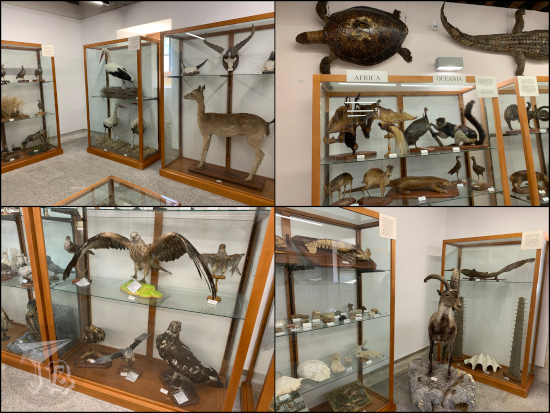
The Museum of Natural Sciences Museo de Ciencias Naturales, an occupational therapy project could… be better, and sets the expectation bar rather low for the next one.

Museo de Ciencias Naturales

However, the Museum of Eastern Arts Museo de Arte Oriental is pretty impressive. It contains pieces and artefacts that the Dominican missioners brought from China, Japan, Vietnam and the Philippines.

Museo de Arte Oriental

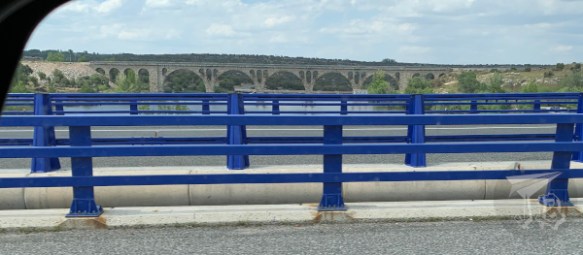
And in the end, that was it for the weekend. We walked back, decided to give the museum of Saint Teresa a miss, had a drink, had lunch and went back on our merry way – with a a view of the train tracks over the dam of the reservoir Embalse de Fuentes Claras.

Train tracks over Embalse de Fuentes Claras

Walked distance (Saturday): around 12.5 km
Walked distance (Sunday): around 6 km
Total distance driven (both days): around 340 km

23rd & 24th April 2021: Mental Reset Half-weekend: Cuenca (Spain)

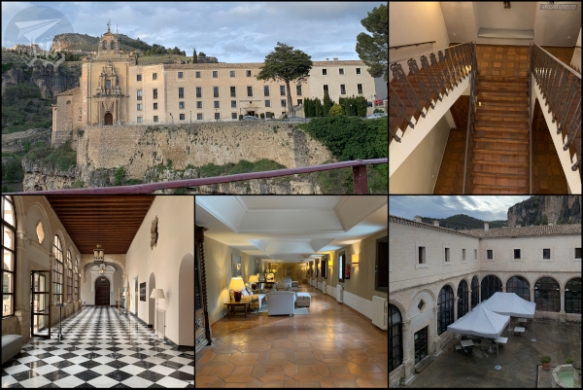
With everything going on, travelling is almost impossible, but the stars aligned for a tiinny bit longer than day trip – from Friday to early Sunday morning, with every precaution possible, of course. We ran away to Cuenca for a day and a fifth. As days are becoming a bit longer, when we arrived there were still a couple of hours of light left. We checked in and dropped off the car at the Parador de Cuenca. The Parador hotel chain might be more expensive than standard accommodation, but truth be told, it is upholding the strictest hygiene protocols, even though their hand disinfectants give me allergies. Truth be told, it was spectacular.

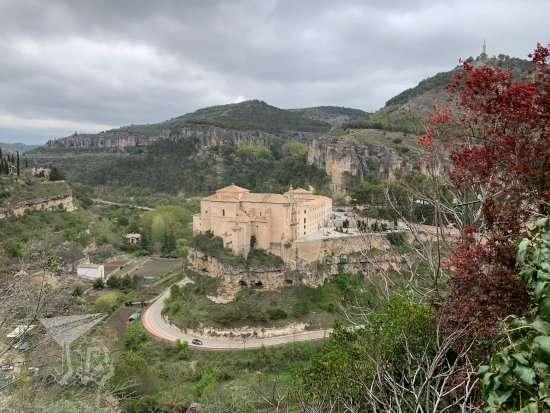
The Parador stands in a repurposed monastery, the old convent of Saint Paul, just at the edge of the historical centre of Cuenca. The hotel has a covered cloister and a newer building, and the adjoint church has been turned into an art centre.

Parador

Room

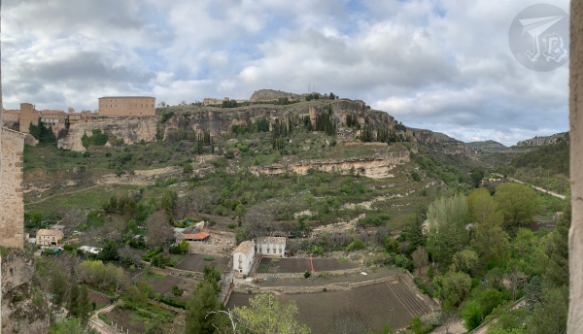
Gorge

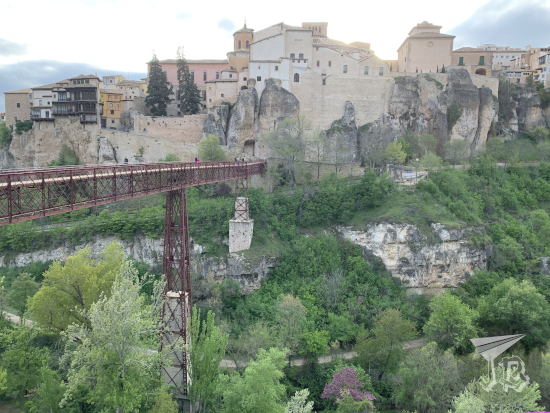
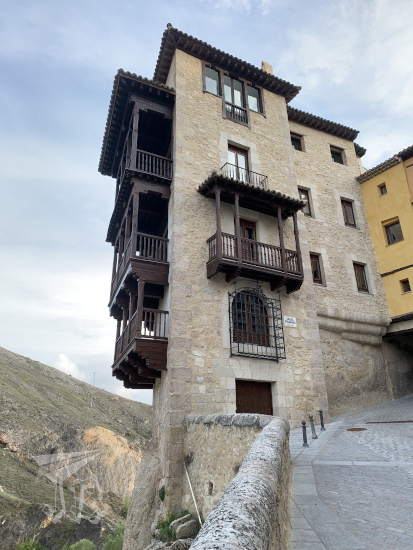
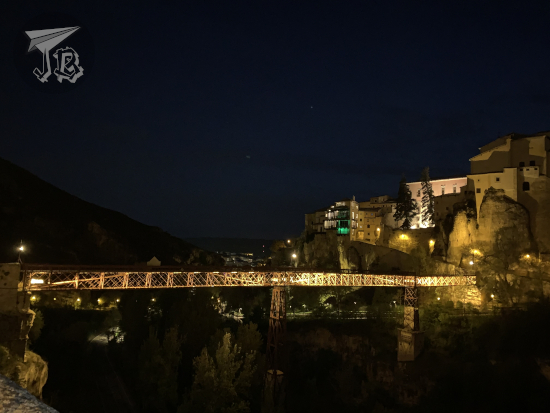
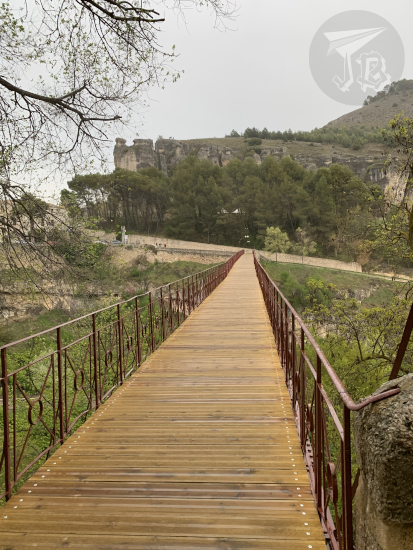
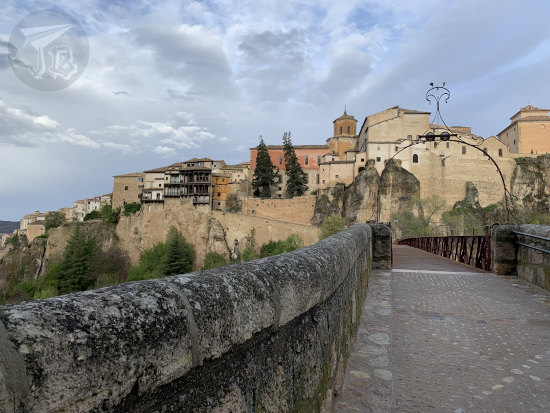
The core of the town stands between two rivers, River Júcar and River Huécar. As the area is rich in karst – calcite rocks, which dissolve in water – the rivers have dug parallel gorges around the historical dwellings. The walled city has been declared a Unesco World Heritage Site and one of the keymost point is the hanging houses, Casas Colgadas (now home to the Museum of Abstract Art). While the houses are now rather unique, they used to be the norm in the 15th century. In order to cross the Huécar gorge Hoz del Huécar, there is a(n also) hanging bridge. The bridge of Saint Paul, Puente de San Pablo, was built at the beginning of the 20th century in the typical cast-iron architecture of the time.

Puente de San Pablo

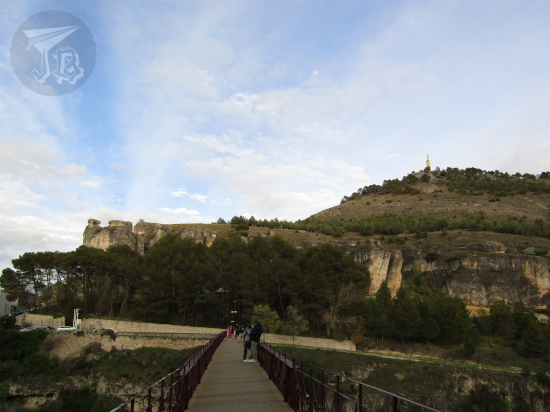
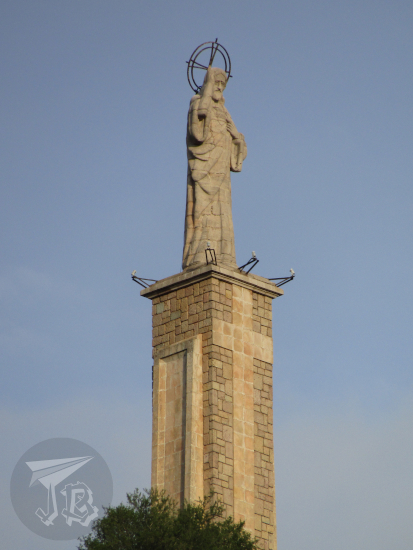
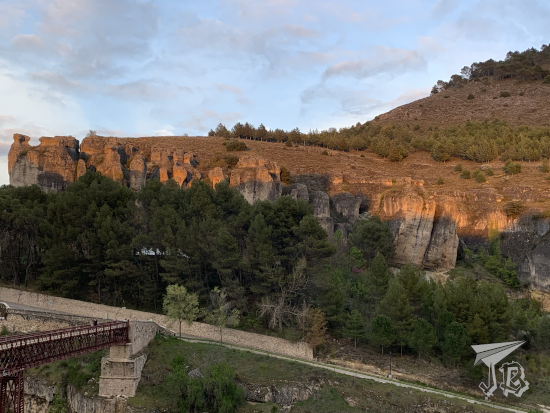
Looking back to the other side of the bridge, you see deceivingly high hill, Cerro del Socorro, carved out of karst. I say deceiving because when you actually look at it, you’re half-way up, and you can look down to the bottom of the gorge. At the top of the hill stands a religious pillar to the Catholic Sacred Heart, Monumento al Sagrado Corazón.

Cerro del Socorro

Monumento al Sagrado Corazón

Casas Colgadas

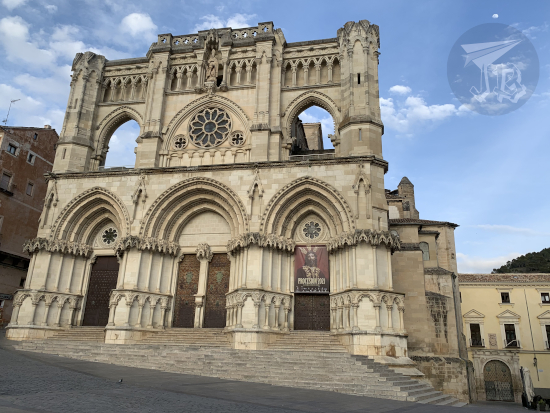
We went on walking towards Main Square and the Cathedral of Our Lady of Grace and Saint Julian – Catedral de Santa María y San Julián de Cuenca. The cathedral is one of the earliest Gothic buildings in Spain (although the main façade has been rebuilt in style). However, it is not the typical Spanish Gothic style, but it is more similar to the Norman buildings in the north of Europe. It was unfortunately not open for visiting though (it’s the third time I’ve been to Cuenca and I’ve never been able to walk in (≧▽≦) ).

Catedral de Cuenca

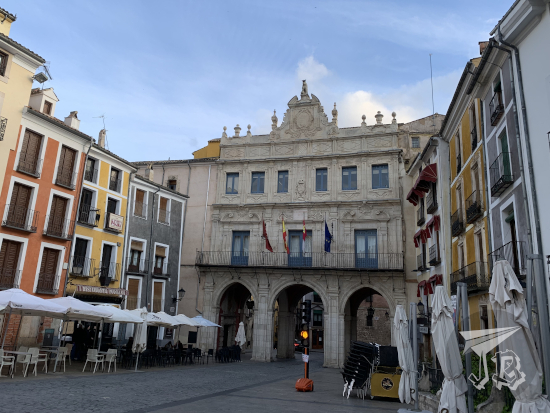
There also stands the Ayuntamiento de Cuenca or town hall, a three-arched Baroque building erected around 1760 after the designs of the architect Jaime Bort. The building closes off the square and is the gateway to a maze of chaotic traffic of one-way streets and directing traffic lights.

Ayuntamiento de Cuenca

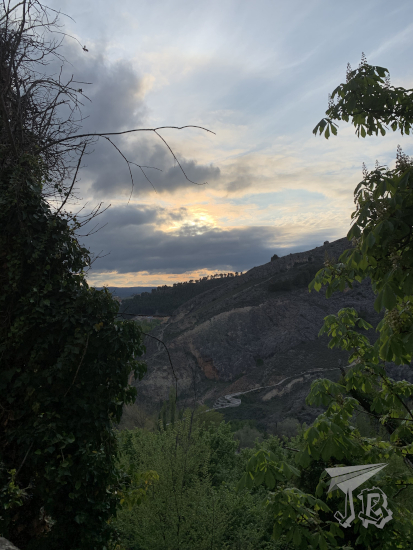
We turned towards the gorge, Hoz del Júcar on the other side of the town for a view of the sunset, but the clouds seemed to be hiding it.

Hoz del Jucar

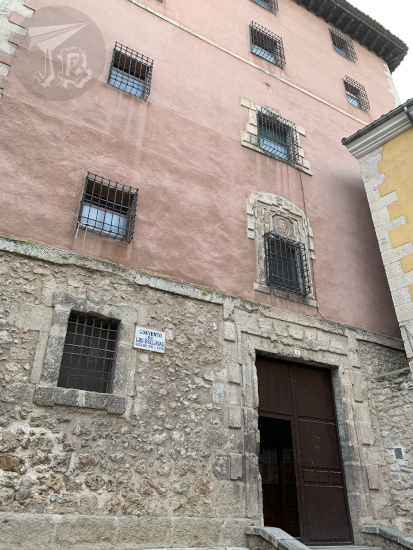
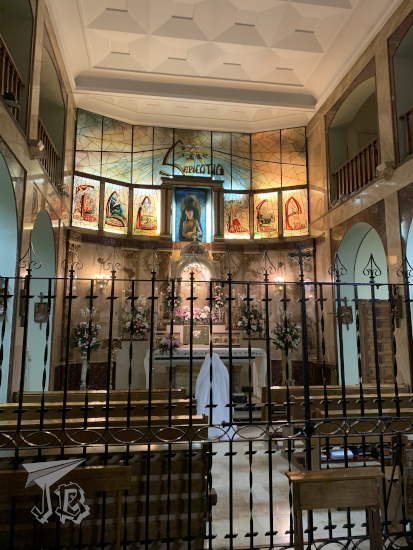
As we continued on, we stopped by a nun convent Convento de las Esclavas. This Catholic nun congregation leads a contemplative life and they are perpetually praying to the Eucharist – at least some of them, as apparently they bake and sell confectionery to sustain themselves. You can see a nun praying in the church, and to be honest for a second I did not realise she was there, it felt like there was a ghost all of a sudden. The building was erected between the 15th and 16th centuries.

Convento de las Esclavas

Convento de las Esclavas

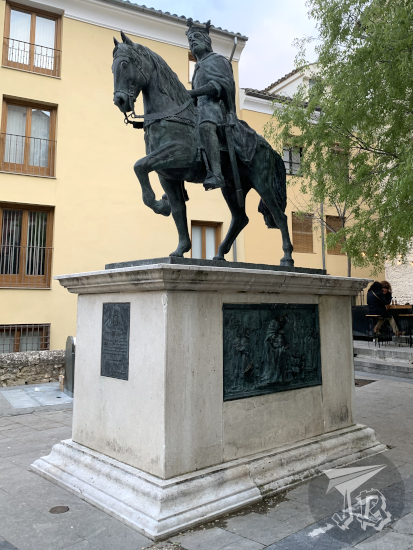
We found the monument to a medieval king Monumento a Alfonso VIII. During the Christian and Muslim wars, the king was the one to conquer Cuenca for the Christians, and assimilated it into the Castilla crown.

Monumento a Alfonso VIII

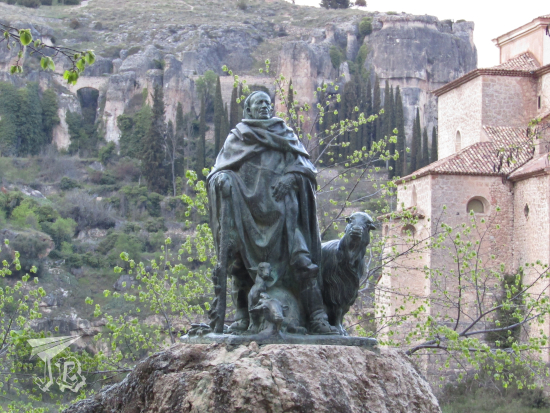
Another sculpture we found was, conversely, erected to honour the traditional shepherd from one of the old streets in town, a bronze statue named Monumento al pastor de las Huesas del Vasallo and located next to the bridge.

Monumento al Pastor

We also got treated to some nice views as the sun came out the second we turned out backs on it.

Sunset

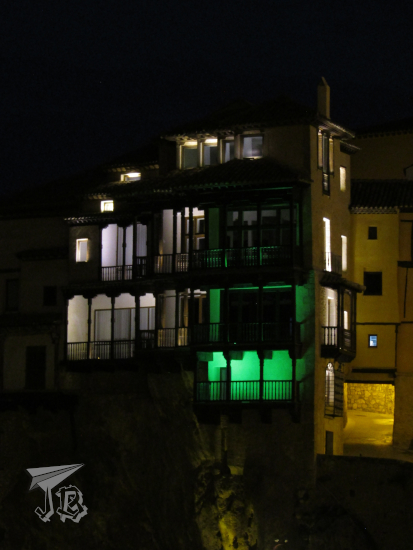
After dinner – a really good club sandwich in my case, I walked out to take some pictures of the bridge and the hanging houses after dark, expecting them to be lit up… Which they were. I mean, I was really not expecting the green colours.

Night

Casas Colgadas

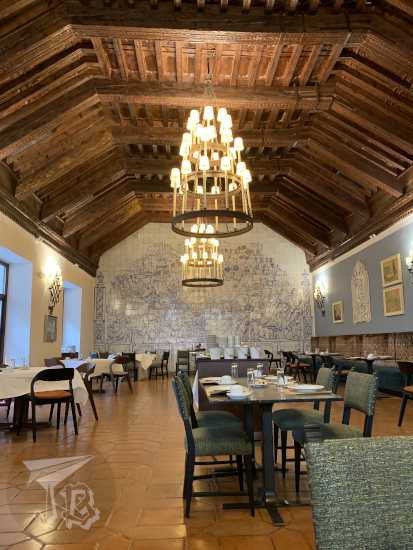
In the morning we had breakfast at the old dining room of the convent, the refrectorium, which still keeps its old allure.

Refrectorium

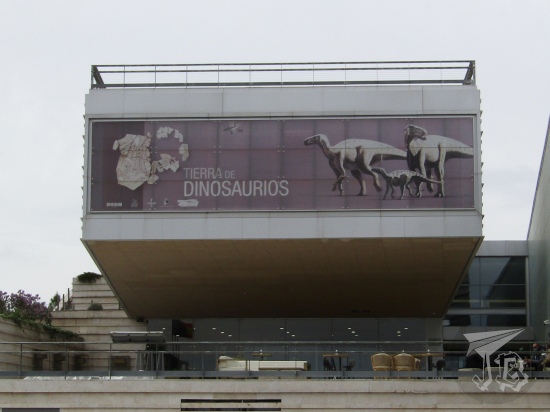
Later, we headed out to the local palaeontological museum Museo de Paleontología de Castilla-La Mancha. The museum was inaugurated in 2005, recycling, so to speak, a previous building that overlooks the city of Cuenca. The museum has an inner area with some reproductions and pieces from the different palaeontological sites around the area, and several models of the animals, organised in eras.

MUPA

MUPA

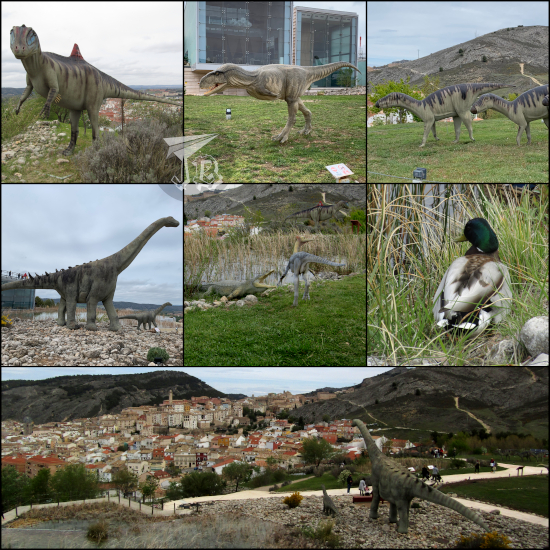
The outer part also holds replicas, and it gives a very Jurassic World feeling for a second, when you take the view with the dinosaurs. We had booked first thing in the morning, so we were leaving when the kid-crowd started to arrive, in order to see both the extinct and the extant dinosaurs (a.m., we found a mallard minding his own business at one of the ponds).

MUPA

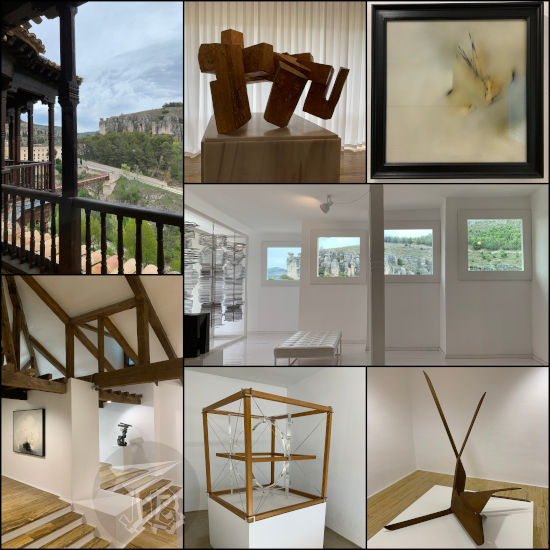
We drove back, and unfortunately the Sat-Nav got us lost. However, we dropped the car safely off a the hotel and decided to take the plunge and walk into the museum of Spanish abstract art Museo de arte abstracto Español, home to a number of… works… by Spanish artists from the 1950s and 60s in the Hanging Houses / Casas Colgadas. I… have to admit I am not the biggest fan of abstract art, so I was not terribly impressed – I mean I had been there before and it had not imprinted on me, like at all (≧▽≦).

Museo arte abstracto

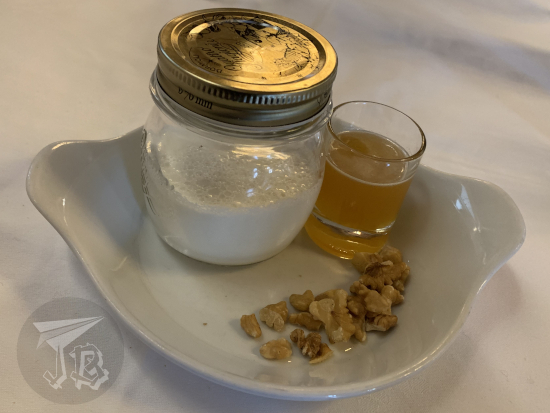
After the museum we headed back to the Parador for lunch and some rest – and I have to say that the curd I had tried the last time was nowhere to be found any more. Sad.

cuajada

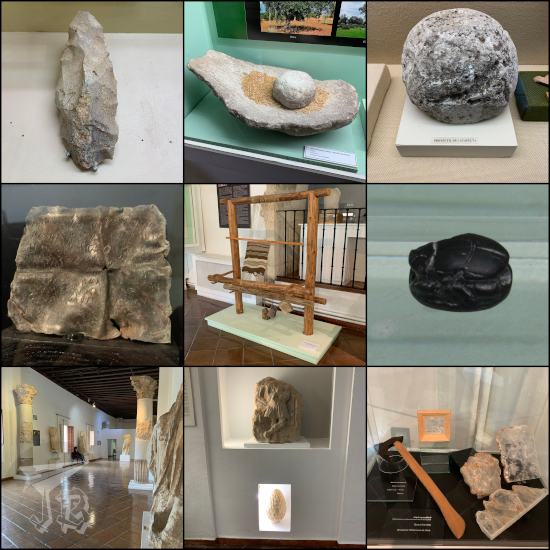
But not to be deterred, we soon moved to the city museum Museo de Cuenca, which highlights the Roman origins of the city. There are displays from Prehistory to the Middle Ages, but there is either a surprising lack of Muslim artefacts, or they were in the closed-off rooms.

Museo de Cuenca

After this, we wanted to check out one of the churches, and on the way we passed by a viewpoint towards the gorge Hoz del Huécar.

Hoz del Huécar

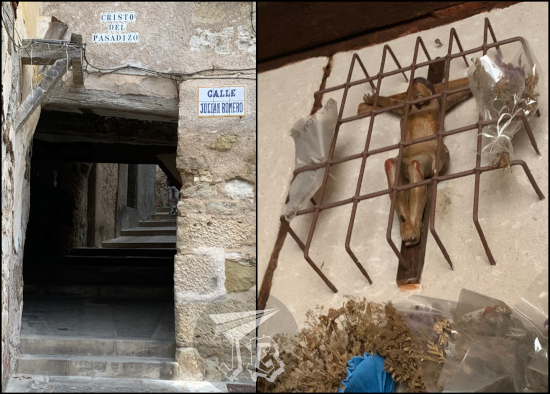
We also came across the “Christ in the Alleyway” or Cristo del Pasadizo, which is related to the legend of two lovers – he went to war, she stayed behind and moved on, and then everything ended in tears because how dare a woman in Christian Middle-Ages Spain try to be happy. Anyway, here’s the alleyway and the Christ figure.

Cristo del Pasadizo

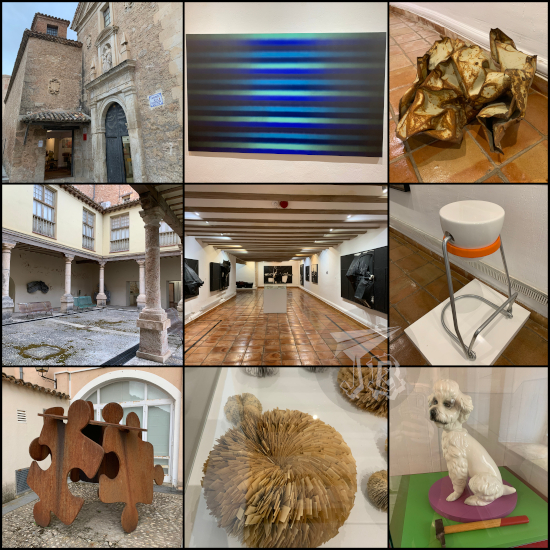
After that we ended up at another museum of contemporary art, Fundación Antonio Pérez, located in another former convent built in the 17th century. Honestly? It was slightly interesting but mostly claustrophobic. The majority of rooms do not have windows whatsoever and the fact that there is a one-way itinerary due to Covid, and how dry the air was, made it stressing to an almost ridiculous level.

Arte contemporáneo

It was early evening when we came out, and the second we put a foot outside it started pouring, so we headed back – it also made for a few spectacular pictures.

Rain

Rain

Some cool ones were also taken on Sunday morning just before we drove off early because there was stuff to be done throughout the day.

Casas Colgadas + Puente de San Pablo

4th September 2020: Alcalá de Henares (Spain)

After looking for a place to park the car for 12 minutes, I left the car and I went off on foot towards the centre with a relative who is living in Alcalá de Henares. The town centre has been a Unesco World Heritage Site since 1998.

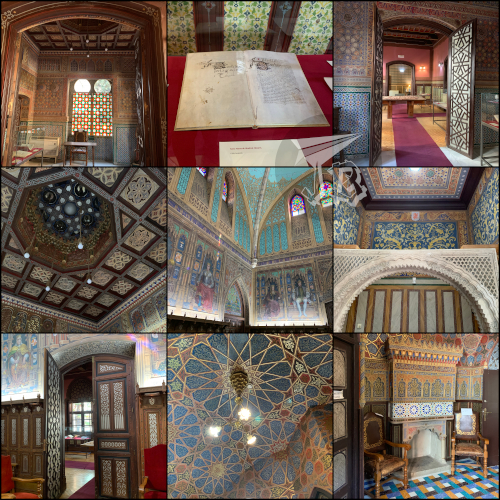
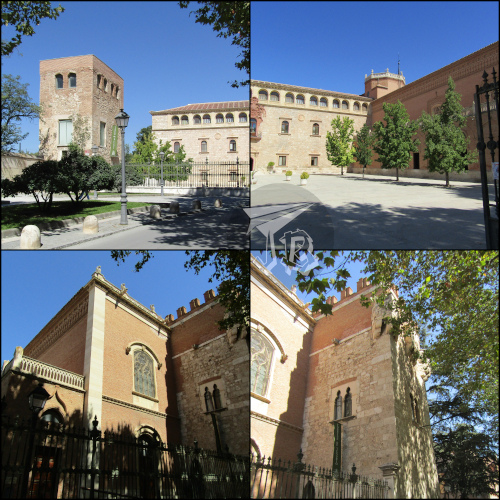
Our first stop, at 10:30 almost sharp was the Palacete Laredo, a small palace built in the Neo-Mudéjar style, a type of Moorish Revival architecture. It was designed and built between 1880 and 1884 by the Spanish artist Manuel José de Laredo y Ordoño. After a century in private hands, it passed to the town hall, which allows the university to use it as a museum, showing a collection of ancient documents.

The palace is built in brick, it has two floors and a minaret-like tower. The inside is decorated with coloured-glass window, tiles and paintings. The visible ceilings on the first floor are wooden artesonado (decorative beams joined together). There is also a garden, but it was closed.

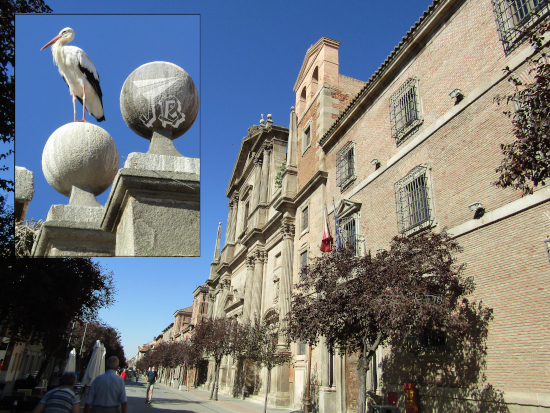
Afterwards, we headed off towards the centre. We walked by the church Parroquia de Santa María la Mayor and is inhabitant the stork on photo duty.

We had tickets to see the Corral de Comedias, a theatre built in the site of an ancient “theatrical courtyard”. These were open-air theatres that were common during the late middle ages and exploded in popularity in the 16th century. The Corral in Alcalá de Henares was built in 1601 by Francisco Sánchez, member of the Carpenters Guild. It suffered several changes – the ceiling was built in the 18th century, then it became a cinema, and eventually was “lost” in the 1970s. In the 1980s, it was rediscovered, restored, and finally opened as working theatre in 2003.

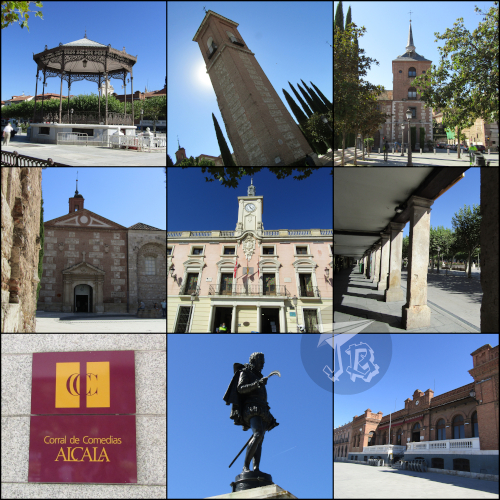
Alas, we were too late for the 12:00 visit to the university, so we wandered around the town’s main square Plaza de Cervantes – Alcalá de Henares was Cervantes’ birthplace. Miguel de Cervantes was a 16th century Spanish writer, most renown for his novel “The Ingenious Gentleman Don Quixote of La Mancha”, which many authors consider “the first modern novel” and “the best literary work ever written” (though… I disagree). The square features a bandstand, the statue of Cervantes, and is surrounded by several buildings of importance – the ruins of the church Iglesia de Santa María, the Town Hall and the Círculo de Contribuyentes, former casino, and the Corral de Comedias.

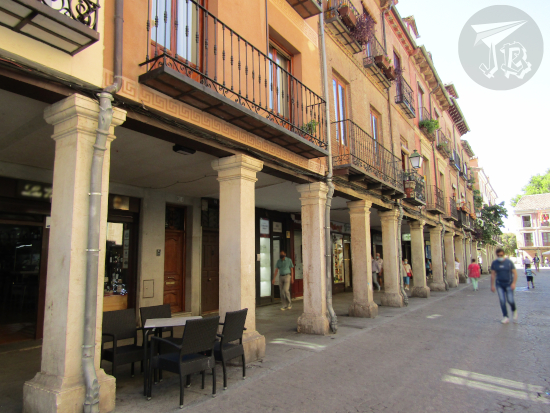
Then we walked down Main Street Calle Mayor, until we got down to the Obispado de Alcalá de Henares, the bishopric, with two towers from the former wall at their sides. That reminds me – we did not visit the cathedral or any religious buildings because they were all closed to tourism.

At 13:00 we took the guided visit to one of the university buildings, the Colegio Mayor de San Ildefonso. The university was established in 1499 by Cardinal Cisneros, an influential Spanish religious and statesman in the time of the Catholic Monarchs. A colegio mayor is basically a dignified “classic” dormitory. The façade was built between 1537 and 1559 in the Plateresque style, an architectural style that developed in Spain between the late Gothic and the early Renaissance. The architect was Rodrigo Gil de Hontañón.

Inside, we saw the cloisters and yards, the gate of honour (from where the successful students left the university), the classroom where the students defended their final thesis, and the chapel, with the tomb of the founding Cardinal (but not his body, which is in the cathedral).

We had a reservation to have lunch at the Parador de Alcalá de Henares, which is a rather modern building and not a historical one, but a stamp was needed (≧▽≦). Lunch was a looong affair because our waiter might not have been the… most efficient. We tried the combos with a little bit of everything to share (entrées and desserts), and some bull tail. Oh and coffee. Yay coffee. (Also, kudos to me for cutting that nut in half.)

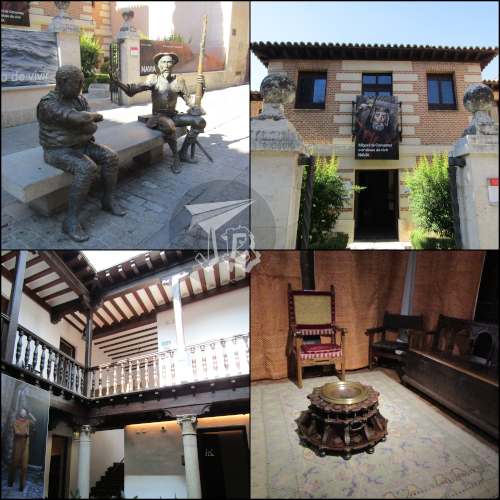
After lunch, we walked down the Calle Mayor again and we made a stop at what is supposed to be the house where Cervantes was born, or at least a reconstruction, with a bunch of ancient objects thrown in – the Museo Casa Natal de Cervantes. There was also a photography exhibition. To be honest, it had a great quality-price relation. It was free, and the quality was… lacking. Or maybe I’m old and I have seen most of the stuff they showed in action, and used a few.

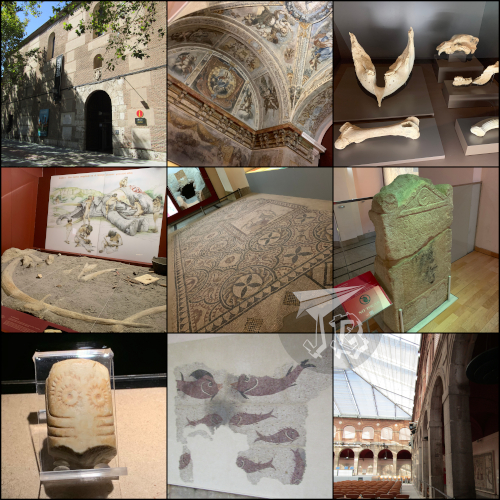
We continued on to the regional archaeological museum Museo Arqueológico Regional, located in the old Archiepiscopal palace. That was unexpectedly good, with the fossil record and the old Roman mosaics.

Pending for a future visit to Alcalá de Henares: Roman and Medieval areas, and the religious buildings, as the day finished up doing some necessary and work-related shopping before I drove back home.

Driven distance: Around an hour? I dumped the car as soon as I could and we walked the hell out of the town (≧▽≦)
Walked distance: 14.61 km

7th – 10th February 2020: Paris (France) for DIR EN GREY & BABYMETAL

I organised a weekend in Paris because two concerts conveniently aligned on Saturday and Sunday, and I had Friday free, as well as Monday morning. It was a great mental break that I needed badly. ETA: There were rumours about a flu from China, and some of the airport workers were wearing masks. We had no idea what was about to hit us…

7th February 2020: Through the Strikes

I had found quite a convenient flight that left at 9:00 on Friday for 35 €, which was a great deal. At first, I did not understand why it was so cheap. It turned out, the plane came from South America and it was on a Madrid stopover – so it was pretty much full already. It was a huge aircraft with on-board entertainment. That came in handy when the pilot informed us that we were going to have to wait something between one and two hours to be able to take off due to the air controllers’ strikes in France. But at least we were flying and I had films to watch.

We took off at about 10:00 and our big plane made the jump in just one hour, as opposed to the 2h10 minutes of estimated travel, which meant we were almost on time! Of course, this did not sit well with the strikers, who had us wait first for the parking spot, and then for the stairs to deplane. I finally managed to leave the airport and get onto the train so I reached downtown Paris around 13:00. I wanted to inspect the damage caused to the cathedral Cathédrale Notre-Dame de Paris by the 2019 fire. My first impression, looking at the main façade and towers, was optimistic, but as I walked round the building, I could see the real damage and reconstruction efforts. Furthermore, it still reeked of burnt wood, probably because they were still pulling out debris. My optimism did not linger long, I’m afraid.

Collage of Notre Dame showing the cranes and scaffoldings in the repairs

As it was sunny, I decided to walk to the Sainte-Chapelle (Holy Chapel) and see its windows in good weather. The Sainte-Chapelle is a small two-level chapel inside the Justice Palace Palais de Justice de Paris in the Île de la Cité, smack in the middle of Paris and not far from Notre Dame – actually, both of them belong to the same Unesco World Heritage Site, Paris, Banks of the Seine. The chapel has a lower early Gothic level, and an upper level with impressive stained-glass windows which I love. As the sun was shining outside, the views were stunning.

Collage. Sainte-Chapelle: outside showing the spire, inside with some colourful windows and pointed arches

Collage of the upper floor of the Sainte-Chapelle. It shows different angles of the long gothic windows, covered in colourful glass

The weather was great – especially considering February in Paris, which is always more to the north than I mentally place it. Unfortunately, the forecast for the following day was quite miserable, and thus I decided to just walk along from the Île de la Cité towards the Arc de Triomphe (some 5 km away). On my way, I walked by the Louvre, Les Tulleries, the Grand Palais, the Petit Palais, the Alexander III Bridge, and into the Avenue des Champs-Élysées – the Banks of the Seine that the Unesco declared World Heritage.
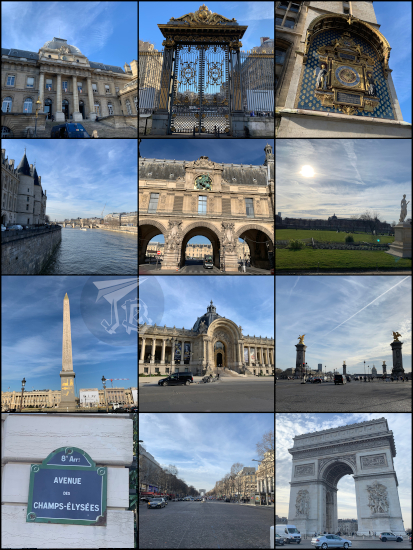
Collage with different landmarks of Paris - the river, neoclassic palaces, Luxor obelisk, Champs-Élysées.

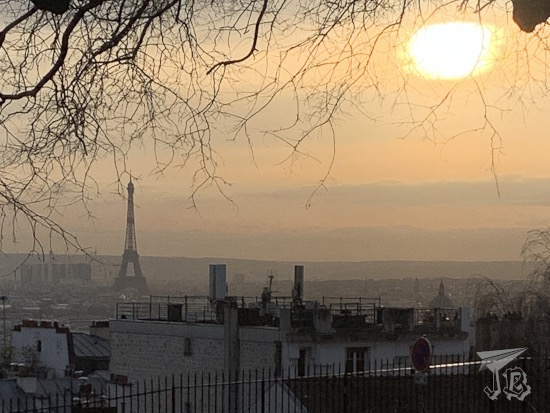
Finally I reached the Arc de Triomphe, which honours the fallen in the French Revolutionary and Napoleonic Wars. It was commissioned by Emperor Napoleon in 1806, and completed in 1836, and you can actually climb it, which I might do some day. From there, I took a train towards Montmartre, where I had booked my hotel. I dropped off my luggage and walked up Square Louise Michel, a sort of urban park which leads up to the church Basilique du Sacré-Cœur (222 steps). There was a pretty carousel Carrousel de Saint-Pierre, and from the square, I could watch the Eiffel Tower Tour Eiffel against the sunset from the lookout Vue de Paris.
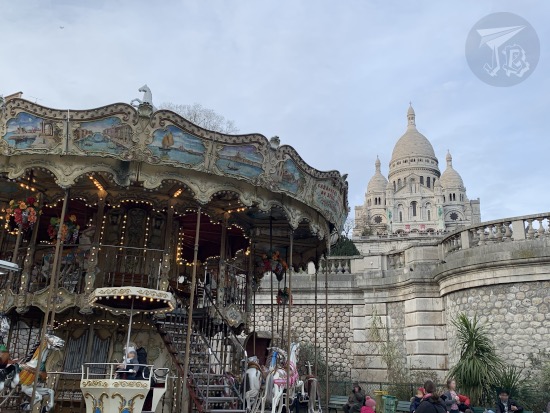
A view of the Sacre Coeur with a classical carousel in front of it

A profile of the Eiffel Tower in a blurry sunset in orange tones

I went back to the hotel for a while during twilight. On the way, I bought a snack in a nearby supermarket for dinner as I waited for the evening to get dark and the lights to come up. When it did, I took my last adventure for the day, and walked off to see the Moulin Rouge while I listened to KAMIJO’s song of the same name. It was a few minutes’ walk away from my hotel, and Moulin Rouge [ムーランルージュ] is one of my favourite songs of his. Since the man is obsessed with France, he has a few songs that fit my weekend. Truth be told, I did consider dinner and a show there, it is after all the most famous cabaret in the world. However, it was a bit expensive and I had read quite a few reviews about bad seats if you are alone. I did not want to waste money, and I did not know how tired I would be that evening in the end – and to be brutally honest,I really had not felt like packing fancy clothes for the evening.

The Moulin Rouge cabaret, all lit up in bright red for the night

8th February 2020: Louvre and DIR EN GREY

The weather forecast was accurate, and despite the lovely weather on Friday, Saturday dawned stormy and dark. I decided to go to the Louvre Museum Musée du Louvre, even if I had been there before. It is after all one of the greatest museums in the world.

The Louvre holds so many pieces (over 600,000) that it would be impossible to describe them all, but for me, its core is the Winged Victory of Samothrace, a Greek sculpture from the Hellenistic period, around the 2nd century BCE, and my favourite piece of art. The Louvre is a national art museum, which opened in the post-revolutionary France in 1793. It exhibits around 35,000 items – Egyptian antiquities, Sumer and Assyrian pieces, Greek, Etruscan and Roman items, Islamic art, neoclassical and Baroque sculptures, a collection of objets d’art (Decorative arts), paintings, prints, drawings… It is located in the former French Royal Palace of the same name.
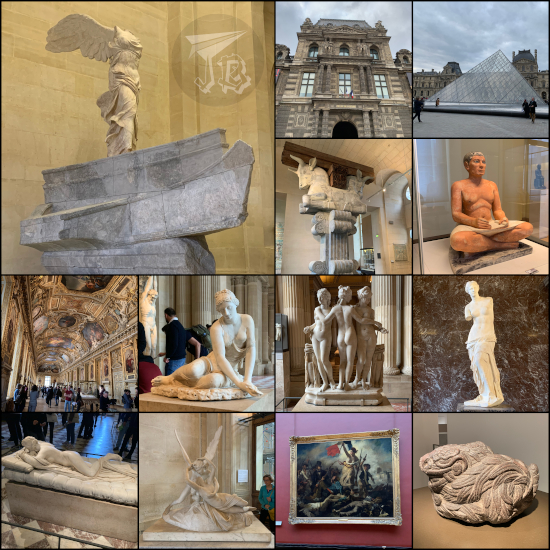
A collage with several Louvre pieces of art - Winged Victory, sitting scribe, the three graces, Diane washing her hair, Hermaphroditus sleeping, Psyche and Eros kissing, Liberty guiding the people, Venus de Milo

I wandered there for a few hours and I might have lost my way in the galleries a few times. In the end, I managed to (re)visit all the artefacts and artworks that I wanted. Because there are hundreds of thousands of items, but I must always see the Sitting Scribe, the Borghese Hermaphroditus, Canovas’ Eros and Psyche, and the remains of the Gates of Istar. I had a bit of a headache, so I eventually went back to the hotel to get some rest and prepare for the DIR EN GREY concert and VIP experience in the Élysée Montmartre live house. DIR EN GREY or “Diru” is a Japanese heavy metal band known for its dark themes and scenography that I thought I needed to check at least once (the final verdict was that I don’t need to repeat the experience, but it made for a nice mental break). The band has remained stable since its formation in 1997, and it is composed by Kyo [京] (lead vocals), Kaoru [薫] (rhythm guitar, backing vocals), Die (lead guitar, backing vocals), Shinya (drums) and Toshiya (bass, backing vocals).
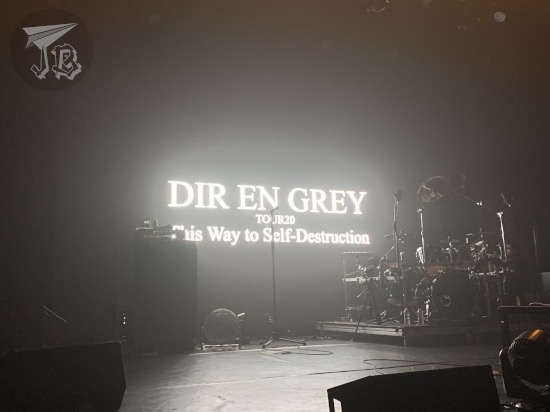
A dark stage with a drum set. Letters projected on the screen behind the stage read Dir en Grey Tour 20 This Way to Self-Destruction

Setlist:

    1. 絶縁体 [Zetsuentai]
    2. 人間を被る [Ningen wo Kaburu]
    3. Rubbish Heap
    4. Devote My Life
    5. 軽蔑と始まり [Keibetsu to Hajimari]
    6. Celebrate Empty Howls
    7. 赫 [Aka]
    8. Merciless Cult
    9. Downfall
    10. Values of Madness
    11. 谿壑の欲 [Keigaku no Yoku]
    12. Ranunculus
    13. The World of Mercy
First encore:
    14. Followers
    15. THE DEEPER VILENESS
    16. 詩踏み [Utafumi]
Second encore:
    17. Sustain the untruth

Listing of all the concerts in the Dir en Grey 2020 tour

The concert was the final of DIRU’s 2020 European Tour TOUR20: This way to Self-Destruction. When I walked by the venue on Friday evening, around 18:00, there was a small number of people queueing already. I did not care enough to queue all day, and I had a VIP ticket with early entry, so I just headed to the line about 15:00. When the queues were separated and organised, around 16:30, I was VIP number 42. The weather was miserable, and I could have totally skipped the downpour while waiting, but I was lucky enough to be against the live house and not in the middle of the boulevard, where the General Admittance queue was. Doors opened at 19:30 for GA, and the VIP experience was held beforehand. The VIP queue started getting in around 17:30. As present we got a VIP pass and an “exclusive VIP only merchandise item” which turned out to be a scarf – very appropriate with the weather. The experience itself was a group photo with the band. There were five cushioned chairs for the fans, and the band stood behind. They did not say a word, nor interacted with fans in any way, not even acknowledging a hello or a thank you.

Afterwards, I headed for the hall, and I found an almost-barrier spot in the left area, on the second row. The people in front of me let me grab the barrier between them so I had something to hold on while I waited. The special guest was a DJ, who was more focused on getting recorded by his buddy on the phone than mixing music. The main show started a little after 20:30.

DIR EN GREY’s music is quite powerful, with a heavy focus on strings and drums. They also have a huge flare for theatricality and they enjoy the shock factor as part of the aesthetics. The singer, Kyo, donned a Joker-like make-up appearance, with a fake-suicidal attitude on stage, using the microphone to mimic stabbing his chest, or the wires to hang himself. It became a bit disturbing because it was repeated more than once. The act also felt rather distanced, there was very little interaction with the fans. At some point, a pick flew in my direction and the person behind me actually felt me up to try and find it in the folds of the coat I had tied around my waist. That was probably even creepier than the act.

The guitars and bass were tremendously powerful, and the drumming was amazing. The crowd was extremely loud, and the singer, Kyo, later confessed that he had been pretty exhausted and burnt out from the tour, which maybe explained why the concert felt so distanced. The encores were the probably best part of the concert, the part that felt more real and relaxed. After the concert was over, I headed off to the hotel to catch some sleep. Since I remembered that the area had felt a bit rough when I was there in 2014, this time over I wanted close accommodation so I could get back quickly without needing to use the underground.

9th February 2020: Destroy the Bastille!

Sunday morning was around 2 ºC, and it was windy. I lingered in bed for a while to recover from the previous evening, and then I headed out – I should have brought the merchandise-scarf with me! I saw the Place de la Bastille, where the revolutionary prison used to stand. In the middle of the square stands the “July column” Colonne de Juillet, which commemorates the Revolution of 1830 (which is not the “famous” French Revolution, which happened between 1789 and 1799). A few minutes away, in the Square Henri-Galli, I came across the base of the tower Tour de la Liberté (Freedom Tower), which was unearthed while building the first metro line. There are only a few stones remaining from the foundations, but I’ll take my fun wherever I can – so I stopped and used my music player to find another KAMIJO song, Bastille, just because I could.

Monument to the French Revolution

A few brick stones forming a circle, considered the last remains of the Bastille

It was too cold to wander, but I had a great plan. I headed off to the science museum Galerie de Paléontologie et d’Anatomie comparée (Palaeontology and Comparative Anatomy Gallery), which was a short walk away. I had read about it and was curious. To be honest, I’m still trying to decide whether it was amazing, or the materials nightmares are made of.

The museum was founded in the 19th century, and it keeps the atmosphere – and the charm – of the old exhibitions. There are stands and wooden cases, and the smell of dust and old paper. The first floor holds a “Cavalcade of Skeletons” – the whole floor is occupied by preserved skeletons of mammals and birds. In the glass cases along the walls, there are taxidermy specimens, preserved animals and dissected specimens. In the far corner, there is “gallery of monsters” with natural oddities. It was enchanting, but at the same time deeply disturbing – especially the male human figure displaying muscles and blood vessels, with a vine leaf on his groin.

The second floor hosts the dinosaurs and other fossils, including a very cool toothed whale, giant crocodiles, a Bernissart iguanodon, a diplodocus, shark teeth… Most of the fossils are either casts or reconstructions – I swear I’ve seen that Irish elk at least three times before. Also, the T-Rex skull was adorably flawed, as it was imagined to be in the 19th century.

The third floor is… ammonite-land. There were cases upon cases of ammonites in different shapes, colours, rocks and materials.
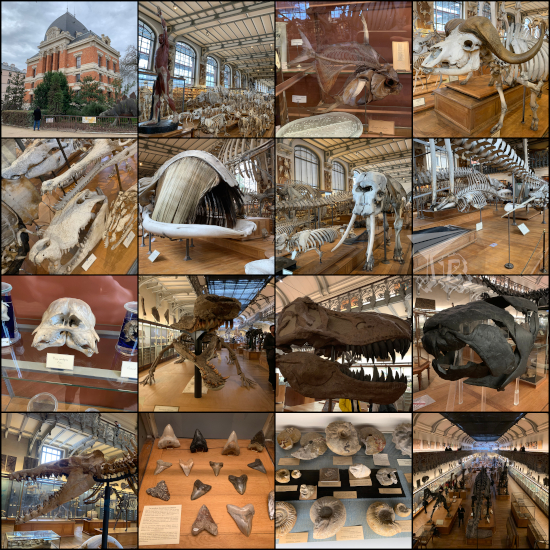
Shots of the museum. Skeletons of animals - fish, oxen, crocodiles, elephants, whale. Fossils: Dinosaurs, fish, toothed whale, shark teeth, snails

After I was done with the museum, I decided it was too cold to wander the neighbouring Botanical Garden. Instead, I headed off to yet another one, the Musée national des arts asiatiques Guimet – the National Museum of Eastern Arts or Museum Guimet, which holds pieces of art from Cambodia, India, China, Japan, Korea and so on. There was a gorgeous dancing Shiva sculpture, collections of religious artefacts, calligraphy, samurai armours, even modern art and clothes inspired by the Far East. It was a really cool museum I had recently found about and was happy to visit.

Different pieces in the museum: Dancing Shiva, sitting Buddha, Calligraphy in the shape of a dragon, elaborate kimono, samurai armour, Indian goddess

After leaving the museum, I walked towards Trocadero to take the underground. I made a small detour to have a look at the Eiffel Tower Tour Eiffel, and saw a bunch of peddlers playing shell games with tourists. Someone lost about 400 €, I really hope they were in on the game.
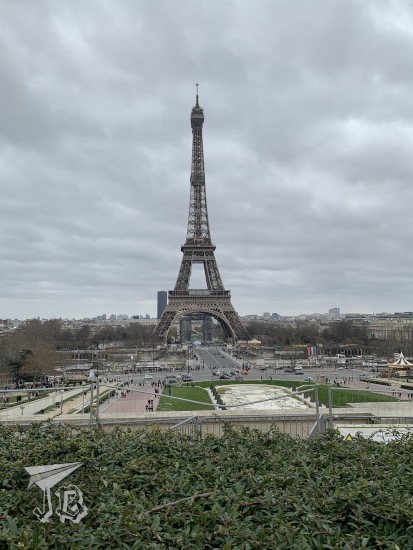
The Eiffel Tower in front of a cloudy sky

Since it was too cold to continue walking around to find something to eat, I decided to get take-out, and I headed back to the hotel to get ready for the BABYMETAL concert. I had never listened to them before, but they are a sensation, the basic ticket was not expensive, and two concerts in as many days seemed convenient. They actually played in the same venue as DIR EN GREY on Saturday, so I found out by sheer coincidence on the live house’s website. At that time, I thought “why the hell not?”. Afterwards, they added Madrid to their Europe tour, so if I had known that beforehand, I might have acted differently. BABYMETAL is one of those insanely-profitable Japanese marketing stunts involving cute girls that had never really been in my radar more than in passing.

Notice with the date of Babymetal's concert

BABYMETAL is a product of the “Japanese idol factory”. It was created artificially to fill a market gap. Three girls were chosen to form an act that would mix the idealised cute idea of girl idols with the heavy metal genre. When they debuted in 2010, the term “Kawaii Metal” was coined. One of the girls left in 2018, so there are two main members and and support dancer on rotation. The members are Nakamoto Suzuka, “Su-metal”, the main vocalist, and Kikuchi Moa aka “Moametal” on back-up vocals and screams. The supporting musicians are called the “Kami Band”.

BABYMETAL’s long-awaited European tour is officially called Metal Galaxy World Tour. The VIP tickets sold for around 170€, and did not even entail a M&G, so even if I had had the chance, I would have not even considered them. Despite that, they sold out, along with the show itself.

When I left the hotel at 9:00, the queue had started organising, and the tour buses were already there. I had no intention to queue or try for a barrier. I had decided to sit back and relax, so I reached the venue around 18:45 for the 19:30 concert. There were tons of people waiting to buy merchandise, but I was good. Thus, I just headed to the floor, and found a spot in the back. Since the venue has sort a bit of an arena and some upper stands, there was a wall I could lean against and it was not the end of the room.

The crowd was quite different from DIRU’s, ranging from good ol’ metalheads to families with little girls between five and ten years old with a bizarre range of in-between: people with fox masks, goth and loli dresses, explicit heavy-metal t-shirts (a bunch of those T-shirts were much less kid-friendly than the show… everything you could imagine. I… don’t think most parents knew what they were getting into, and a few of the kids ended up crying.

At 19:30 sharp, the support act started – a German band called SKYND. Their sound was really good, but their lyrics are based on true crime, which makes them a bit on the disturbing side (and very much not kid-friendly). The name of the songs are all serial killers or similar criminals.

Setlist:

    1. Richard Ramirez
    2. Elisa Lam
    3. Katherine Knight
    4. Jim Jones
    5. Tyler Hadley
    6. Gary Heidnik

At 20:30, the BABYMETAL show kicked off with the projection of the Future Metal video as an introduction of sorts. The musical act relied heavily on the Kami Band, and Su-metal carried the weight of the vocals. She spent the whole one-hour concert jumping and dancing while singing, and her voice did not break even once. If she is not lip-synching, she has the most impressive lungs ever. Both she and Moametal encouraged the crowd, making a lot of eye-contact. Su-metal addressed the audience a lot, even – I think – trying French. The concert was non-stop, and it ended up feeling a bit short, but much better than I had expected. The one annoying thing were the daddies putting their babes up on their shoulders in the middle of the floor, when the kids gave clear signs of not caring or were distressed. But it was fun. Not sure I would repeat unless I made it a thing with friends or something, but I enjoyed the act, and had a good time.

Setlist:

    1. DA DA DANCE
    2. Gimme Chocolate!!
    3. Shanti Shanti Shanti
    4. BxMxC
    5. Kagerou
    6. Oh! MAJINAI
    7. メギツネ [Megitsune]
    8. PA PA YA!!
    9. Distortion
    10. KARATE
    11. Headbangeeeeerrrrr!!!!!
    12. Road of Resistance

A group of girls dressed in black dancing in front of a logo that reads Babymetal

I was back at the hotel before 22:00. Thus, I got a good night’s sleep before I left, once again happy that I had taken nearby accommodation.

10th February 2020: No bells of Notre Dame

My plane boarded at 10:00 so I had to leave early for the airport. The weather was rainy again, so I took the underground to Gare du Nord, and then the train to Orly. As I was riding the train, I had a nice view of the Paris at dawn, but the bells of Notre Dame were not tolling, and my inner child was sad about that. Despite issues with the airport security staff, the stupidly-expensive food, and the general unpleasantness of early-morning public transportation, I made it to my plane without actual problems. As it was a big plane again, I settled down to watch Jurassic World during the flight, because I’m a nerd. Going straight into work from the airport was not fun, but it a small price to pay

I only had three days, but this trip was a very welcome getaway, and even if the weather did not help, I got to do a lot of stuff. I had to discard a few plans and improvise due to the weather. However, there is that film quote, “We’ll always have Paris”. After all, I’ll be coming back for the Saint Seiya Symphonic Adventure. ETA: Or so I thought, at the time of writing the article…

10th & 11th August 2019: Once in a lifetime – The Great Fuji-san Adventure {Japan, summer 2019}

Mount Fuji aka Fuji-san [富士山] is a special mountain in Japan, both geologically and culturally. Japanese and tourists enjoy Fuji-san in different ways – contemplating it, visiting it, climbing it, going around it… Well… Guess who got into their thick head that they wanted to climb it? raises hand Exactly! Yours truly. I was already toying with the idea back in 2018, but I chickened out. However, as I mentioned before, this one time I wanted to scratch as many things off the bucket list as possible, so… There I went – kinda pushed by a feeling that if I did not do it, by the time I were back in Japan it might be too late as my health is not.… complying lately. But I had not hiked up a mountain before in my life…

Mount Fuji is the most famous mountain in Japan. Its iconic image is everywhere – enamel pins, t-shirts, postcards, classical art… Located around 100 kilometres south-west of Tokyo, it is 3,776.24 metres high, which makes it the highest peak in the country. It was declared a UNESCO World Heritage Site in 2013.

Technically, Fuji-san is neither a mount nor a mountain, but a type of volcano known as a stratovolcano. Its current morphology was shaped by consecutive layers (“strata”) of lava hardening. It is mainly composed by a rock called basalt, and it is one of the few large basalt volcanos in the world. Basaltic lava is rather thick and slow-moving, so there are many lava tunnels and tree moulds created by the eruptions.

Fuji-san, as we know it today, was formed from a previous volcano (Komitake), and became active around 5,000 years ago. Around 2,300 years ago, there was a mud landslide (Gotemba mud flow [御殿場泥流, Gotemba deiryū]) that can still be identified. There have been several historical eruptions, twelve of them between the years 800 and 1083. There was a ten-day eruption of ashes and cinder in the year 864 (Jōgan 6 in the Japanese calendar, based on the different Emperor’s reign; 2019 is Reiwa 1, as current Emperor Naruhito just ascended the throne). In the year 1707 (Hōei 4 in the Japanese calendar), a few weeks after a big earthquake, the last known eruption took place. In the current Japanese Volcanic Alert Level, Mount Fuji is categorised as “Level 1: Potential for increased activity”, which is the lowest level.

Mount Fuji has frequently been depicted in Japanese art, most famously in Katsushika Hokusai’s [葛飾 北斎] Thirty-six Views of Mount Fuji [富嶽三十六景, Fugaku Sanjūrokkei] by, a series of ukiyo-e block prints (which are actually 46). Probably the best known among these is The Great Wave off Kanagawa, one copy of which is displayed at British Museum in London (actually, in 2017 they ran a whole exhibit around it and Hokusai).

Fuji-san is also an important element in the collective spirituality of Japan. In Shinto mythology, the goddess of Mount Fuji is Konohanasakuya-hime [木花咲耶姫]. She is enshrined in Fujinomiya town Fujisan Hongū Sengen Taisha [富士山本宮浅間大社]. Technically, this shrine has owned Mount Fuji since 1609, though there are no current records of ownership. The volcano stands at the boundary between the prefectures of Shizuoka and Yamanashi, and in order to manage the natural area, the Fuji-Hakone-Izu National Park [富士箱根伊豆国立公園, Fuji-Hakone-Izu Kokuritsu Kōen] was established.

Depending on the actual weather, Fuji-climbing season extends from late June or early July to early September. It is not allowed to climb Fuji “off-season” without a permit. However, people do not usually climb the whole mountain, but start quite closer to the summit. There are roads leading up Mount Fuji up to around 3,200 metres, to an area called the Fifth Stations However, no private cars are allowed on those roads.

From the Fifth-Stations there are four trails or paths to the summit, colour-coded to help people find their way, especially on the way down:

  • Yoshida Trail [吉田ルート] (yellow). It starts at the Fuji-Subaru Line 5th Station [富士スバルライン五合目] (Yamanashi Prefecture). This is the trail recommended to “beginners” and thus the most crowded.
  • Subashiri Trail [須走ルート] (red) Head. It starts at the Subashiri Trail 5th Station [須走口五合目] (Shizuoka Prefecture).
  • Gotemba Trail [御殿場ルート] (green). It starts at the Gotemba Trail New 5th Station [御殿場口新五合目] (Shizuoka Prefecture).
  • Fujinomiya Trail [富士宮ルート] (blue). It starts at the Fujinomiya Trail 5th Station [富士宮口五合目] (Shizuoka Prefecture).

When I told D****e that I was planning to try to organise the climb, she did not believe me at first. As she realised I was being serious, she decided that she was crazy enough to want to come with me as “she could not let me do such a thing alone” and actually took over most of the planning, since she had done it before. I would have just found an agency, but I think she was better.

So off we went. As she was working, we organised our hike on a Saturday-Sunday trip weekend trip – and we did not realise until afterwards that we would be climbing during Mountain Day – Yama no Hi [山の日]. We packed snacks, water, and everything we thought we might need – in my case, also gloves which I eventually lost, and a ridiculous amount of layers. D****e was chill, but I was a little worried about all the equipment the Official webpage for Mt. Fuji Climbing said that was needed, including oxygen and helmets. There were also warnings in place, such as your mobile phone battery dying super-fast, or the need for an evacuation plan in case altitude sickness got too much. I was also worried about weather (especially rain) and temperature changes – thus all the layers. She insisted we would be fine.

After a big lunch, we took the Shinjuku Expressway Bus around 16:00 on Saturday the 10th, and arrived at the Fuji Subaru Line Gogōme [富士スバルライン五合目] / Fuji Subaru Line 5th Station at 2,300 m around 17:30. We (she) had booked a mountain hut at the Seventh station so we “only” had to climb two stations, right? Right. Read: wrong.

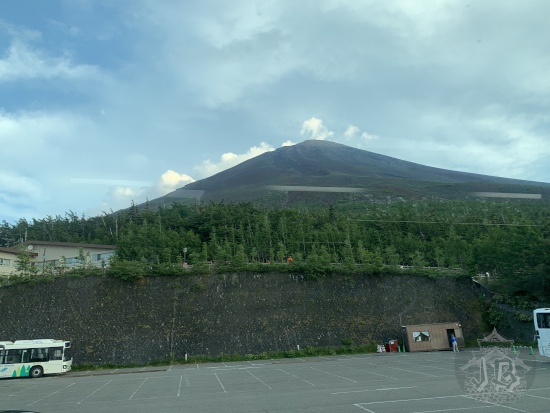
Approaching Mount Fuji: the mountain looms half-hidden by the clouds.

Right about the time of taking this picture it had sunk on me how much of a bad idea this had been (≧▽≦). I really wondered if it was too late to turn back and go home.

A date banner at Mount Fuji 5th Station, reading 2019 08 10

My first step was buying a staff – that we nicknamed the “Fuji-climbing stick”. The idea is that you use it to feel your way around and make sure that you step on solid ground, and especially when you hike down. However, (you’d never guess), you can get stamps burnt into the wooden stick as you hike up – usually for 300 ¥. Climbing Fuji can get expensive… D****e had chosen the Yoshida Trail [吉田ルート] for our ascending side (noborigawa [登り側]). And so… off we went.

From the Fifth Station, looking up at the summit.

From the Fifth Station, looking down at the car park and a sea of clouds underneath

We started off climbing at around 18:00. Between the Fifth (2,300 m) and the Sixth Stations (2,390 m), you walk along some dirt paths in the forest, and there isn’t really that much “ascension”. As there was also light, the first hour was easy enough. This area is crowded due to all the “visitors” going for a “walk” from one of the Fifth Stations to another. We actually saw someone using up their oxygen at this point. That was weird.

From the Sixth Station there was a first zig-zag upwards, with paths held up by some dams. This is one of the parts I found the hardest, as it is the same inclination all the time and I was not warmed up yet. Then, sunset came, and while it was pretty, it brought darkness upon us (yeah I’m being literary on this). Not that I had a problem with actual darkness, but other people’s torches and headlights kept blinding me, which made the most difficult parts hard to climb – because some people are idiots who point their lights forward and not downwards, where the ground is. Sheesh. There were parts that were just a gentle incline up, while others were stuck rocks or lava flows that you had to climb with your hand and feet.

At the Seventh Station (2,700 m), the path changed and we started. Though there were some slopes, there were also stuck rocks and lava flows that I had to climb with my hands and feet. Fortunately, I could make use of the short stops we made to stamp my staff. Workers of the Mountain Huts use hot irons to burn the stamp into the wood. I think I got all the ones I could on my way up (no stamps on the way down).

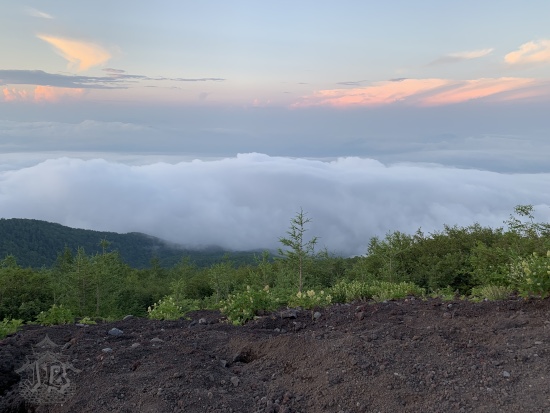
The sea of clouds at the foot of Mount Fuji

Distant lights in the night, down

Mountain huts [富士山の山小屋, Fujisan no yamagoya] are tiny establishments where you can get some food or spend the night for around 10,000 ¥. They often require reservations, usually in Japanese, that is why D****e took charge of that part. Some of them have a bin for rubbish – because you can’t dispose of trash on the slopes, you have to take back what you brought in. They have toilets too, and require a tip. Most of them follow an “honour system” with a small coin box, but some have a guardian to collect the money.

We continued upwards until we made it to our Mountain Hut, Shichigōme Torii sō [七合目 鳥居荘], the Seventh Station’s Torii-so at around 21:00. We had been told it was the one with the red torii, and it was a sight for sore eyes. It stands at 2,900 metres high, closer to the Eight Station than the Seventh – we had expected to find it sooner due to the name.

A torii gate lit up in the dark

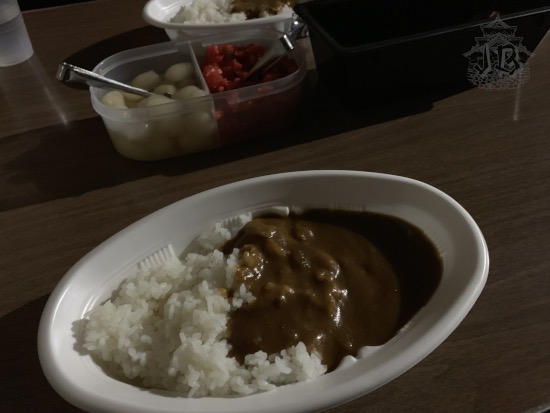
D****e had booked a bed and a meal. As we came into the hut, our staffs and backpacks were hung over the door, and we were given bags for our shoes and personal effects. We had a small riff-raff with the owners, because they claimed that we had arrived too late for food. However, D****e argued that the webpage said nothing about a time limit. Thus, we got some curry and rice as the dinner we had booked.

A dish of curry and rice.

Around 22:00, we used the toilet, and then we were shown to the common dormitory – the bed bunks are basically a line of futons put together so you share a blanket with the person next to you. The idiot I had to share with decided to lie on the blanket instead of under it, so she had me uncovered half the time until she left.

Thankfully, at around 23:00 there was a call for people who wanted to set off in time to see sunset from the summit, and she got going. Between getting uncovered, and lying down too soon after food, I started feeling queasy. I freaked out a little. I started turning in my head that I was going to get sick and not get to the summit and have to be evacuated. D****e helped me calm down and I managed to get a few hours of sleep.

But just a few. We were woken up by the noise around us around 4:15. I felt strangely not tired, and D****e indulged me. Thus, we got up and went outside to see sunrise. Sunrise from Mount Fuji!!! I mean… I can’t even. Unfortunately (and ironically) we left too early to get the stamp from our own hut! We continued our way and had breakfast at the next big rock where we could sit down.

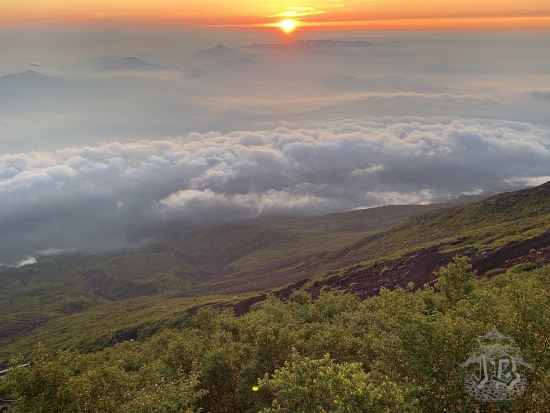
Sunrise from the slopes of Mount Fuji.

After coffee (yes, I’m addicted enough to carry coffee to Mount Fuji), we went on hiking. To be honest this second day was not as bad as I had imagined – as in I was rather convinced that I was not going to be able to make it, especially during the night freak-out. My painkillers kicked in and I only felt a small buzz in my ears as pressure changed.

It did not take too long to arrive at the New Eighth Station (3,100 m). Once again the trail became irregular, which on one hand was tiresome, but at the same time, it was not tedious, so it did not feel as hard. Gloves were useful for this part of the hike, as I could hold on to things. We continued up to the Original 8th Station (3,400 m).

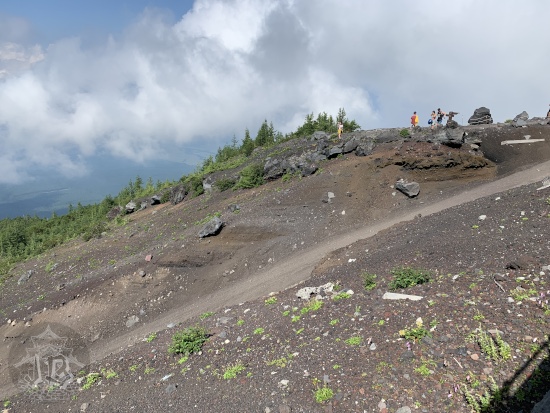
After the Original Eighth Station the trail became path-like again, with torii and stairs and fewer rocks you had to climb over, but a bunch of smaller ones that you had to step up on. Here I learnt to appreciate the actual usefulness of my staff. Vegetation disappeared gradually until the ground was barren.

I think I lost my gloves at the Ninth Station. We saw a group of people evacuating an injured / ill climber – we mentally awarded them like a million karma points, and after getting the injured person to help, they happily went back up again. One of them told us their group does it every year. I remember hugging some torii on the way, and a thousand thoughts twirling in my head.

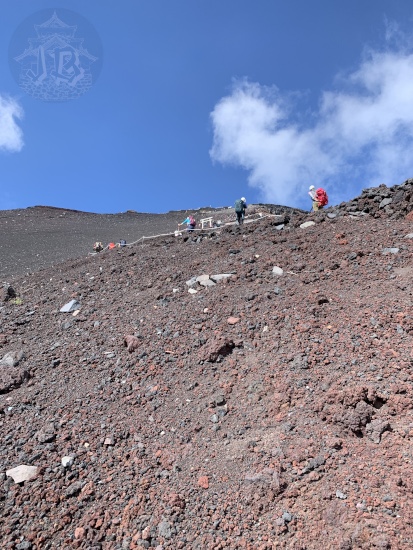
Area closer to the summit of Mount Fuji. There is no vegetation and the ground looks reddish and more like gravel than actual rock.

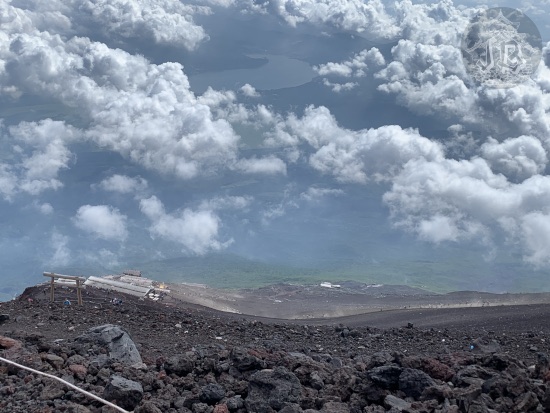
Looking down from the barren area, there are clouds and a river at the foothill

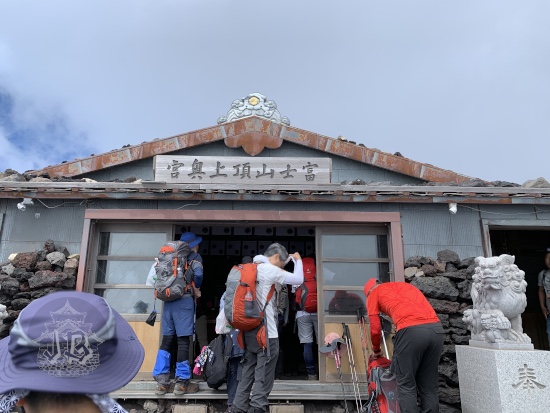
And then we made it. Around 11:00 we reached the rim of crater. I could not believe my own eyes when I stepped in front of the shrine Asama Taisha Okumiya Kusushi Jinja [淺間大社 奧宮 久須志神社] and Fuji-san Chōjō Yamaguchi-ya Honten [富士山頂上 山口屋 本店] aka Top of Mt. Fuji Yamaguchi Shop. I had made it. I had beaten my own limits, and reached the crater.

Entrance to the Temple on the Summit of Mount Fuji

Online certificate that you can download using a QR from the Top. It has the date as August 11 2019

Of course I needed to get all the stamps and the shuuin and the exclusive Coca-Cola bottle. We decided not to go around the crater to the highest point, just a handful of metres higher, because it would add some 90 minutes to our trek, and we preferred to just hang around where we were for that long. Because I was at the freaking crater of Mount Fuji! I was the Kami of the Mountain.

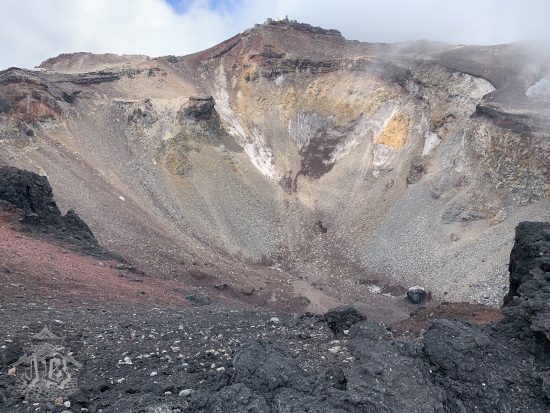
Brim of the crater of Mount Fuji

Crater of Mount Fuji

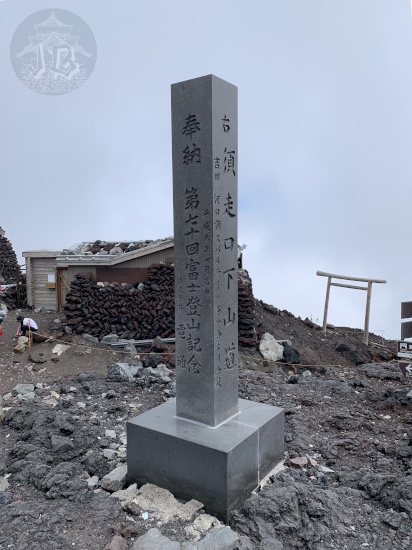
Stone marker at the summit

Cheers with two Mount Fuji exclusive Coca-Cola bottles

Walking around the crater would have been great, but we would be hard-pressed for time for our bus if we took too long. D****e asked me what I wanted to do, and I was happy staying around the crater taking pictures and enjoying the feeling. After an hour or so, we set on our way back down – the trail was a bulldozered zig-zag of gravel, boulders and volcanic sand, and it was even more exhausting than the way up.

It was tricky not to slide and fall. It took us about three hours until we were back to the forest area and the Sixth Station. We reached our Fifth Station around 15:30. I did not fall even once – thank you, Fuji-climbing boots from the Decathlon Children Section for not letting me down, literally!! I also acknowledge that we were super-lucky with the weather, we only had a few clouds just under the crater, and it was not too cold even for me – and no rain, which would have made the experience miserable.

The path down, bulldozered into a straight line.

We actually made it with some time to catch our bus, so we looked at the souvenir shops and Fujisankomitake Jinja [冨士山小御嶽神社].

A colourful and crowded shrine. A lot of the tourists in front of it are wearing shoes that were definitely not made for climbing.

My made-for-climbing shoes, and lower jeans, which were originally blue, looking orange due to the volcanic dust.

As we left, we could see Mount Fuji in all its glory, and I could not believe that I had actually been up there! The total experience had taken a bit over 27 hours, and it was exhausting but exhilarating.

View of Mount Fuji from the bus

However, the downfall had to come, and it came in the bus, about 20 minutes into the ride home – once I stopped moving, my body completely shut down in pain. My back cramped, headache hit, left knee got stuck, and the road trip was horrible. I did not want to have any dinner even if I knew I needed it, but a hot pot in the conbini managed to draw me and it was exactly what I needed!

Hot pot with vegetables, mushrooms and pork

Walked distance: 10th: 9988 steps / 7.14 km; 11th: 21107 steps / 15.1 km. However! The damn watch does not take into account that I CLIMBED A VOLCANO!! I mean, come on! Some of those steps had a 70 cm difference in height! I managed to do it, and I feel damn proud of myself for it, and I will forever proudly display my Fuji-climbing stick as proof of the feat. Also, just so you know 11th of August is Yama no Hi [山の日] (Mountain Day) so this was ironically well-timed, even if by pure chance!

The walking cane I used, covered in hot-iron stamps.

I know that hundreds of people climb Fuji-san every year, but for me those almost 3,776 metres represent something special. It was my very own challenge, something I never thought I would be able to do, and yet I managed. I was extremely proud of myself. I think it helped me become more adventurous, as I found out that I could really push my limits. There was a price to pay afterwards, yes. But I had made it and I don’t regret it (I did regret it a bit the following day going down the stairs though. But not much). I was the Kami of the Mountain.

22nd July 2019: Tokyo Shinagawa → Higashimaya Kyoto {Japan, summer 2019}

My Shinawaga hotel was very close to Sengakuji [泉岳寺], the temple that honours the forty-seven ronin so I paid them a visit before I moved on.

The reason why I was in Shinagawa was being close to the station as I was heading off to Kyoto. I took a shinkansen around 9 am and was in Kyoto just before 11, maybe. From Kyoto station I walked to Nishi-Hongwan-ji [西本願寺], which was about 10 /15 minutes away. It had been on my list since I went to Higashi-Hongwan-ji last year, but I had to go get some rest afterwards because I had a migraine.

As I was heading back towards the station I came across a building that really grabbed my attention. A little research yielded to finding out that it is a temple: Dendou-In [伝道院], which apparently belongs to Nishi-Hongwan-ji and is a research building. It was designed by a famous architect called Itō Chūta in 1912 in a style called “Evangelical”, and built shortly after. It’s not open to the public though, but it sure as hell is interesting.

After that I took the underground to my hotel. It was raining like crazy when I got there, and to make things more difficult, my bloody credit card decided to stop working. This made me slightly late to my 13:00 appointment at Studio Esperanto Oiran Taiken [studio-esperanto 花魁體驗]. Things were a little different this time. First of all, because I was just in time for appointment, I was directly ushered to the make-up room. Fortunately I had quite a clear idea of what I wanted, so it sort of worked in the end. The make-up artist was nice but she was a bit intimidated, and the photographer was difficult to communicate with, which hampered the experience a little. In the end, however, I got really cool pictures out of the experience, so I am not going to complain.

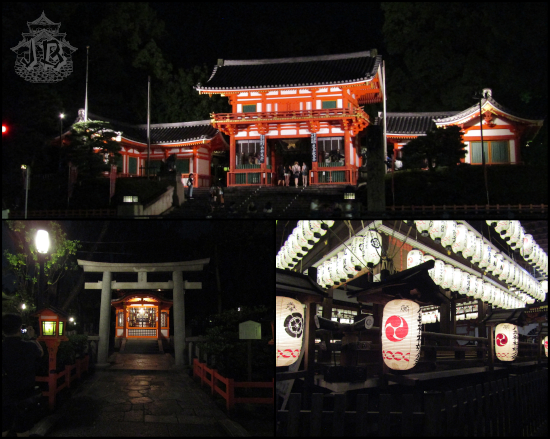
By the time I got out, there was a deluge outside. I was in the hotel, which was close to the photography studio, for a little, and after checking the maps that they had given me at reception, I realised that I was much closer to the Gion area than I – and Google Maps – had actually thought. There was one big park / shrine complex I could walk. At least part of it is called Maruyama Koen [円山公園] and it has a cool pond. I walked from the north entrance to the western exit, which belongs to Yasaka Jinja [八坂神社], the Yasaka Jinja Minami-romon [八坂神社 南楼門], the Tower Gate. I passed Gyokkō Inari Yashiro [玉光稲荷社] on the way.

I walked off to Gion, [祇園] which was almost empty due to the storm. Whenever I get to Gion in the evening, I always check whether there is a long queue at Gion Corner, which is a theatre that performs “traditional arts”:

  • Tea Ceremony [茶道]
  • Flower Arrangement / Ikebana [華道]
  • Koto [箏]
  • Gagaku [雅楽] Court Music and dance
  • Kyogen Theatre [狂言] (comic play)
  • Kyo-mai [京舞] (maiko dance)
  • Bunraku [文楽] Puppet Theatre

I was lucky this time, as the rain had scared most tourists away, so I could come in. It was a fun thing to do once, especially with “foreigner discount” it becoming half-price, but the audience kept talking and moving around the floor to take pictures and videos. Thai and Chinese people are loud (and a few of them rather disrespectful)! But all in all, I’m happy I got it out of my system, particularly the Kyo-mai dance.

After that, as it was not raining any more, I strolled down an almost-empty Gion.

Then I walked off towards an area that I had never been able to find before – Gion Shirakawa [祇園白川] and Tatsumi Bashi [祇園 巽橋]. Fortunately this time I had checked for the Tatsumi Bridge location fist, so it was not even that hard! I just had to know where to look for it! (≧▽≦).

I decided to take the way back through the park, so I could see all of Yasaka Jinja [八坂神社] lit up, which was very pretty.

As the hotel was also next to Heian Jingu [平安神宮], but as it was not lit up, I did not walk in.

Then I bought some conbini food and I went to the hotel to have dinner and a bath – the hotel had a hot spring public bath (and it was empty! Just for me!). I was lucky enough to get one of the traditional rooms, and the sand-puffs-like thingies were super-comfortable… until I had to stand up. It was so comfy I could barely stand up! And then I went off to sleep like at 10pm cause I was beat (∪。∪)。。。zzz.
Walked distance: 18517 steps / 13.2 km

15th – 17th June 2019: Cologne (Germany) for the Gazette

Getting from Madrid to Cologne [Köln] was stupidly difficult and expensive so in the end I took an early Saturday-morning flight to Frankfurt and then I booked train tickets (an ICE and a suburban train) to the hotel area in Cologne. My plane took off at dawn (literally) and landed at 9:40, so I thought about booking the train at 10:30.

Sunrise from the still-grounded plane

On a whim of distrustfulness, I decided to book the train for 11:00, which was lucky. While we did land on time, it tookan eternity to reach the terminal, and in the end I arrived in the station just past 10:30. Since I had a bit of time, I grabbed a coffee and a bagel for some ridiculous price, but that kept me going until the evening.

Bagel and coffee

The European plain from the train window

I reached Cologne and went on to the commuter to the venue area, where my hotel was, a short walk away from the station. After checking in, I dropped my things off in an amazing room, and had to do a double take – for a second I was not sure they had given me the right room, because it was way too nice for the price I was paying.

Huge bedroom at the hotel

After changing clothes, I grabbed my bottle of water and off I took a train towards the city centre to visit the Cologne Cathedral Kölner Dom –it took a bit to figure out how to validate the train tickets, but I think I did everything legally. The cathedral has been a World Heritage site since 1996. Its construction started in 1248, but was halted in 1473. The building remained unfinished until the 1840s, when work was picked up again, following the original Medieval plans, and the church was finally completed in 1880. While it was badly damaged in WWII, it withstood the bombings and ever since then, it has been in a constant state of small and not-so-small restorations and repairs.

Cologne Dome

From the Cathedral I walked towards Cologne Zoo or Kölner Zoo. Although it had been drizzling before, at that point it was sunny again, and the walk was nice.

A typical Cologne Street

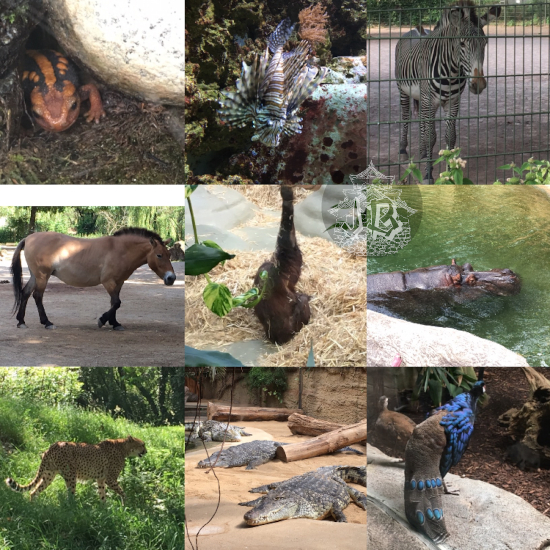
I decided to go to the zoo because it was the only thing that seemed to be open for long enough to mean value for money. The weather had warmed up and the bunnies were roasted coughs. I got to see some animals I had never seen before, such as Przewalski’s horses, snipes, or a grizzly bear. The zoo has a huge enclosure area, a petting zoo with domestic animals (and cheeky cows), an aquarium and a terrarium with both reptiles and creepy-crawlers shudders.

Some of the animals in the zoo

Then, I walked back to the hotel, stopping by the supermarket on my way – and here I discovered my undoing. The triple chocolate cookies which wrecked my trying to eat healthy stroll. I shall try to find them again in my next Germany trip though. However, I have to say that I had learnt from my being stupid for MIYAVI in London and not eating well through the weekend, so I bought snacks to have the following day.

Cookies

I was exhausted, so I think I was out at 22:00, which helped being awake at 7:00 the next morning. Thus, I just headed off for the venue E-Werk, and settled to queue for the concert. Japanese Visual kei (V系) rock band the GazettE [ガゼット (Gazetto)] was formed in 2002 and achieved its current configuration in 2003. It is formed by members: Ruki (ルキ) on lead vocals; Uruha (麗) on lead guitar; Aoi (葵) on an insane amount of support guitars (two on the same song, almost at the same time); Reita (れいた) on bass, keyboards / piano; and Kai (戒) on drums. Though they are signed with Sony Records, they claim to be completely self-produced.

In December 2018, the Gazette announced that they would continue their Japanese Tour abroad as Live Tour 19 THE NINTH: PHASE #04 -99.999-. It originally spanned North and South America, and Europe, and later in April some Asian dates were added. I originally planned to go to Munich (travelling was easier and cheaper), but I could not get VIP tickets, so switched to Cologne instead. General Admission was reasonably priced (45€) with crazy shipping costs (+4.50€, since they were all printed out and pretty). VIP Tickets (300 per concert), included early entry (one hour before GA and two hours before the show), a VIP present, and a handshake with the band for 170€ (+4.50€ in shipping costs), exclusively distributed through ME-shop, which was a pain and not easy at all.

The Gazette World Tour dates

The Cologne concert at E-Werk would be held at 20:00, which placed entry at 19:00 and VIP entry at 18:00. I reached the queue around 8:00. The venue is a repurposed industrial building with a capacity for 2,000 people in a lower-floor arena and a sort of balcony around it which also allows for visibility. There were already staff walking around, and the venue even had portable toilets outside for queuing fans. At that time, there were maybe 60-70 people waiting in three queues – VIP, GA, and something called “regulars” who went in last.

Everything ran smoothly, with the three lines in front of the doors, up until 16:00 when security arrived. They decided to rearrange the queues, and created chaos. Fortunately, since most of the fans were German, and they enjoy order, at least the VIP queue was reorganised neatly and quickly – respecting the arrival numbers. Around 16:30, the VIP tickets were checked and switched for bracelets, and the holders ushered to a secondary waiting area where we were not even allowed to sit down until doors opened around 18:15. Due to this, I had to stand for two hours straight without leaning on anything, my back was killing me. I decided that I either made it to the barrier, or I would head upstairs for a good view. When I came in, I received the VIP present – a banner with the band logo on it– and I was find a first-row spot to the left of the stage, in front of Aoi (guitar). The concert ran about 15 minutes late due to a technical problem with a wire / monitor. Good thing I found a barrier spot indeed.

The concert was very high energy. The music was so loud my ears were still ringing three days later. Most of the setlist was from The Ninth album, which makes sense. My personal favourite live song was The Suicide Circus .

Setlist:

  1. 99.999
  2. Falling
  3. Ninth Odd Smell
  4. Gush
  5. Agony
  6. The Suicide Circus
  7. 虚 蜩 [Utsu Semi]
  8. その声は脆く [Sono Koe wa Moroku]
  9. Babylon’s Taboo
  10. Dogma
  11. Incubus
  12. Ugly
  13. Abhor God
  14. Filth in the Beauty
  15. Inside Beast
  16. Cockroach
  17. Tomorrow Never Dies

I was very impressed by Reita’s stage persona / antics, how he stood on stage and moved. I almost caught a pick that he threw, but by that time my right arm was completely useless as the person behind me kept trying to push me away from the barrier to take my spot. My wrist brace is actually broken due to having to hang on from her shoving. But she was not successful

Aoi was muchbetter than I expected, and at some point he was playing two guitars for the same song, the acoustic and the electric, without any apparent effort – he hung both from his neck and played whichever one he needed. I could not see much of Kai, and Uruha was most of the time too far away. And unfortunately Ruki favoured going to the right, but he has a very powerful body language.

After the concert, the VIPs were pushed– literally – to an area in the back of the venue to wait for the meet and greet in a different room. I got handshake with both hands from all of them, if memory serves me correctly the order was Kai, Uruha, Ruki, Reita and finally Aoi. I told them that it had been very fun, that they had done a good job and none of them batted an eye at my Japanese. They were really nice though, in a high contrast from stage personas.

Afterwards, I just headed off back to the hotel, and directly into the shower, because I was sore all over. Good thing I still had snacks from my supermarket run. I think this was the first time I have actually though “I’m getting too old for this”.

On Monday morning, my paranoia had me early at the station, and that was good because apparently my suburban had been cancelled. Being early, I was lucky enough to be able to catch a completely different one – not sure if legally. I did not get caught if it wasn’t, but I made it to Cologne central station and caught my ICE without any further stress. As the station is located next to the Dome, I was able to say good-bye.

Cologne Dome from the train

As I had a window seat again, I also had quite a few nice views from the plane, and made it home without any issue.

An aerial view of a reservoir with turquoise water

23rd & 24th April 2019: El Escorial, Vizmalo & Lerma (Spain)

23 April 2019: El Escorial

The Royal Site of San Lorenzo de El Escorial aka Monasterio y Sitio de El Escorial is located a shy hour away from Madrid. It is most known for the Monastery that used to be an official residence of the King of Spain. The Monastery was built between 1563 and 1584. It is the masterpiece of the Spanish architect Juan de Herrera, after whom the Herrerian style, a sub-style in the Spanish Renaissance, was named. The building is a sober building made of a granite, and it is the burial place of most of the Spanish kings and queens. Some urban legends say that it was based off the descriptions of the Temple of Solomon.

We drove in around 9:00, dropped off the luggage, and went out, as we had tickets for 10:00 – although the hotel did not want to let us in. Contrary to the nice weather that we had been enjoying, it was cold as hell. The whole town felt grey and sober, and the cloudiness helped the mood – we had breakfast at a nearby bar (the only one open) and headed off to the monastery. The building hosts many artworks, along with a chapel, the royal pantheon and the most amazing library ever. Pictures in the inner areas are forbidden, unfortunately. The Monastery is a Unesco World Heritage site.

At lunchtime we walked out of the Monastery and headed off to the Royal Carriage House / Cocheras del Rey, a museum / restaurant. We had lunch, then visited the museum as the entry was free with lunch. It was raining like mad by then so we headed to the hotel to finalise the check in.

After an hour or so the rain had stopped so we decided to walk to the Prince’s House and Parks / Parque y jardines de la Casita del Príncipe. By the time we arrived it had started raining again – pictures were not allowed inside of the house either, but OMG was the inside Baroque, with flashy wallpapers.

On the way back, we could catch a glimpse of the monastery through the park. By now it was raining like crazy, so we spent the rest of the evening indoors.

24 April 2019: Vizmalo & Lerma

We left El Escorial early in the morning and we headed north for lunch. Yeah, well, let me explain. We had a reservation for lunch some two-and-a-half hours away, in Vizmalo (Burgos). This was a bit of a silly whim, but we were going to visit an estate / farm and have lunch there – the St. Rosalia Estate / Finca Santa Rosalía breeds wagyu for meat, and holy are they yummy. We had a booking to see the estate first.

While it was still cold, the weather was slowly improving, and in evening we had some sun. We saw the orchards, the grapevines, the cattle, the trees and so on. Then we moved into the wine cellars and saw the barrels, before we tried the wine and some of the meat-dishes that they prepare and sell. The selling point of Finca Santa Rosalía are the wagyu, cattle of Japanese origin. Wagyu meat is completely different from any other beef because it is soft and tender, and in general delicious.

Lunch was brilliant, based, of course on the wagyu meat. The T-bone was scrumptious and even if it was on the “a lot of money” side, it did not feel too expensive for a once-in-a-lifetime experience considering the amazing quality.

After lunch we drove off towards Lerma, a city which was revamped by the Duke of Lerma back in the 17th century. After finding our hotel and dropping our stuff off, we walked to the Duke’s Palace turned luxury hotel: Palacio Ducal & Parador de Lerma.

We walked around and came across the Mirador de los Arcos / Archway Viewpoint.

Then we saw Colegiata de San Pedro / St. Peter’s Collegiate church, where there was a religious exhibition being held (“Las Edades del Hombre”), with the topic of angels. Pictures were not allowed, or we would have shown you a few… interesting representation.

Sunset crawled upon us and it was nice view. We had dinner somewhere around the town centre, and called it a night before we drove home the following day.

19th August 2018: Uji, layovers and finally Ise {Japan, summer 2018}

Uji [宇治] is Kyoto’s li’l brother that nobody has ever heard about and which has a bit of a disproportionate ego. Today I set off to visit this small town, where I had not slept because it was crazy expensive. Armed with an online itinerary I got there and asked for a map at the tourist office – my surprise? One of the main attractions, the Genji Monogatari museum was closed. Because reasons I guess. Hindsight: I should have slept in Kyoto again and left luggage at Kyoto station as I would have to travel through it again.

My general impression of Uji is that it wants to climb the tourist ladder but at the same time, it does not want to carter to the actual tourists. Attractions were in general expensive and a tiny bit unwelcoming, while at the same time the people were nice in a bit of a condescending way. The demeanour of the tourist lady “what are you here to see?” was strange, and the fact that the Genji Monogatari museum, which is the reason why the town is even in the map, being closed, even more so.

My first stop in Uji was Byodo-in [平等院], a beautiful temple complex built around a small lake. Coming into the actual building to watch the paintings had an extra charge so I did not do that. Instead I snooped around the whole complex, museum, and sub-temples.

I continued my walking route skipping the tea house, because even if Uji is known for tea, it was too hot for hot tea. I got to the river, Ujigawa [宇治川], and crossed one of the bridges, the Kisen Kisenbashi [喜撰橋] to get to a small river island called Tachibanajima [橘島].

Another thing that is apparently typical in Uji is ukai [鵜飼] or cormorant fishing, which means fishermen use trained cormorants to fish. It was apparently too early in the morning for the cormorant to be out working.

I crossed then another of the rivers, the Asagiribashi [朝霧橋] to get back to main land, where I stopped by Uji Jinja [宇治神社].

Then Ujigami Jinja [宇治上神社], which is basically another building of Uji Jinja but it got separated because the Haiden is a historical monument.

I finished my walk around Uji at yet another bridge, Uji-bashi [宇治橋], famously mentioned in Genji Monogatari. Do you see a pattern here and why I’m so weirded out about closed museum?

After Uji the plan was getting to Ise mid-afternoon, but my Shinkansen was late, which lead to a two-hour layover in Nagoya [名古屋].

That meant that I arrived in Ise [伊勢] in the Mie Prefecture, around 6 pm. I had two options there – walk 45 minutes to the hotel, or wait 45 minutes for a train that would take ten minutes to get at the hotel station, and then walk for 15 minutes. I chose to walk.

Thus I came across Tsukiyominomiya [月夜見宮] just as the sun started to set. I started to notice here the ‘naked’ torii, which are typical of Ise – it means that they are not painted or made of stone, they are plain wood, usually sakaki, a sacred tree in Shinto.

And Suhara Taisha [須原大社] a bit later (though the two look… creepily similar, don’t they?)
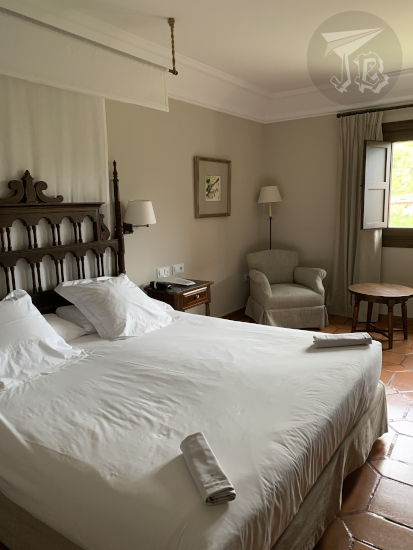
By the time I got to the hotel I was exhausted and hungry, and maybe a bit eeried out because I had had to cross a mostly deserted area over the river as it got dark. Sheesh, was I happy when I started seeing neon again. Bonus point, the hotel had an onsen, which was great for my back (and it was near a combini, so food was also had). The hotel was such a huge complex that they needed to hand out maps so you found your way between the different areas – onsen, reception, restaurant, room!

18th August 2018: Plan Switching. Kyoto → Osaka → Nara {Japan, summer 2018}

On this day I was supposed to hike up a mountain – mount Takao to be precise. But you know what? When I woke up that morning I just did not feel up to it, so I decided to change my plans. In the end when you’re on the JR Pass you can get from Kyoto to Osaka for free. For a change, I actually got to Osaka instead of Shin-Osaka which was convenient. Then I grabbed the underground to get to Osaka Aquarium Kaiyukan [海遊館], which is actually the largest aquarium in the world.

I had been there before, but the previous time I did not get to see the whale sharks as they were ‘quarantined’. How can anyone block a tank which is in the middle of the whole damn thing, I have no idea, but they did. This time I broke even and had a blast. Unfortunately the Aquarium was packed because this was a Saturday morning, and for some reason my back was hurting a lot. I had dropped my luggage off at a coin locker because I thought it would be better. However at some points I could not really walk straight. The weight of the camera bag was too much and I had to sit down. Found a nice place to watch the sharks from, though.

After the Aquarium I went to Kuchu Teien [空中庭園], observatory in the Umeda Sky Building [梅田スカイビル] to have a look at the skyline and to get the stamp for the Japan Towers rally. I got the greatest omg-gaijin face of the trip here (and truth be told, had I known that the stamp was actually held at the reception desk and not the actual observatory, I might have skipped this). In this case the building is an attraction itself. It consists on two towers joined by some passageways and a circular platform at the top, with see-through escalators.

Next the plan was going to Dotombori, stroll down there, and eat some takoyaki before heading off to Nara where I had my hotel for the night. When I got to the station and jumped on the Osaka Loop line, it turned out that I actually was in the train that continues on to Nara… and it was air conditioned and I had a seat…

I found it a sign and decided to just go with the flow and get to Nara [奈良] on that train. Upon arriving there I checked into the hotel and I decided to go to Nara koen [奈良公園], the main Nara park, and see if I could feed a sacred shika [鹿] deer or two. This was close to 5 pm by now so all the temples would be closing anyway. I did feed the deer some shika senbei [鹿煎餅] (deer crackers), and one of the does bit me. Not even the hand that was feeding her, she actually tried to snack on my tummy. Sheesh.

As I was coming back down I had a pretty sunset over Kōfuku-ji [興福寺].

16th August 2018: 五山送り火 (Gozan no Okuribi) {Japan, summer 2018}

Remember when I mentioned I overdid it on the 15th? I was feeling it today. My head was bugging me and it grew worse along the morning. The weather, showery, was not really helping, even when I took my meds.

Never the less, I left the hotel in the morning, got some breakfast and walked to Kyoto’s old castle, Nijō-jō [二条城], which was literally two blocks over. This was not planned, as when I booked the hotel I looked for something reasonably-priced reasonably-close to a JR or an underground station – I really, really hate Japan buses, trains for the win.

Anyway, the castle was close, so I decided to drop by as the first time I had been around it was being renovated.

After the castle I walked towards the JR station where I had come from the previous day to stop by Shinsen-en [神泉苑], the remains of a Heian Era garden, which holds a sub-temple to To-ji.

Also I snooped into Nijo Jinja [二条神社], just because there was an indication sending me there.

Then I headed off to Kyoto JR station as there is a tourist information centre. There I wanted to ask where to watch the upcoming Gozan no Okuribi [五山送り火], which is a festivity that closes the Obon festival in Kyoto. The Obon festival honours the deaths of the deceased, which come back to the world and are sent away by the five fires started in four mountains around Kyoto. I wanted to see as many fires as possible, and I had been doing some research online. I wanted to find a good place, which in the end turned out to the rooftop of a local Aeon supermarket, the Aeon Mall Gojo.

After getting the info, I went to Higashi Honganji [東本願寺], a temple close to the station.

I wanted to go find its twin, Nishi Honganji, but I was not feeling well and I really wanted to be fine for the evening’s fires – which were after all the reason why my trip was planned like this, so I could go to see the fires. My headache was growing worse, I think part of the reason was that I was stressing that the mall might not be a good place to watch the fires and whether I could go somewhere else. Thus I got something to eat, and headed back to the hotel for a shower, a nap, and some dinner before I left for the mall.

The nap proved to be a good idea. The fires would be lit at 8 pm, so I stayed in the hotel until a little after 5 pm, when I left so I could be at the mall at 6 pm. This gave me time to relocate to another of the viewing spots if my first choice did not work.

But it did. You know you’re on the right track when you find all the locals all ready a picnic, and the Aeon was just like that. There were hotel employees pointing to the areas where we would see the fires. Out of the five fires we would see three, and part of the other two.

There are five fires in the Gozan no Okuribi [五山送り火], and they are lit from right to left. The first one is shaped 大, it is called Migi Daimonji or just Daimonji [大文字]. It is lit at 8pm. The second one is Myojo [妙法], a Buddhist prayer. Next comes the ship that is supposed to take the souls back to the underworld, called Funagata [舟形]. The fourth is the Hidari Daimonji [左大文字], another 大, and the final one is the Toriigata [鳥居形], shaped like a torii.

Everything was good. I could relax and my headache did not come back, even if we had a mini deluge that had everybody going inside for a few minutes.

When it was done and we went all back outside, we had a great sunset.

Finally everything went dark and the fires started. We saw the Migi Daimonji lit first to our right.

Then the sparks of what could have been the Myojo or the Funagata, nobody was too clear on that. Later we saw the Hidari Daimonji lit, just in front of us.

Finally, we got to see the Toriigata after changing sides of the roof.

All in all, it was a great success!! I was really glad I got to go and see it, especially the first and last fire, because it gave everything a sense of beginning and ending, even if I was quite exhausted to make it back to the station and the hotel.

15th August 2018: Hikone is small and at noon it turns into a pumpkin? Hikone → Kyoto {Japan, summer 2018}

As I had learnt the way to the castle entrance the previous day, first thing in the morning I headed off to Hikone Castle. The walk to the castle is flanked by the Irohamatsu [いろは松], which is a row of special pine trees that were planted there as their roots grow downwards but not sideways.

Hikone castle, Hikone-jō [彦根城], is one of the twelve castles that retain the original keep and one of the five to be a national treasure. The ticket included the castle, the museum, and the Gardens. I was there when they opened so the affluence of people was not to big yet.

Being one of the important ones made two things happen – one, that you have to take your shoes off, and two, that the stairs are crazy. Good thing I was not carrying my backpack – I had left it at the hotel but they told me they could only keep it till noon for whatever reason, so it was a good thing that Hikone is not as big of a town as others. The interior structure of the castle is naked wood, and it feels quite severe.

After the castle I went to the Hikone-jō Hakubutsukan [彦根城博物館], the Castle Museum, as it started drizzling. Normally the castles have the museum inside, but this one was in a nearby tower next to the main gate.

My next destination were the Genkyuen [玄宮園], a traditional garden from where you can spot the castle.

Also within castle grounds was the Kaikoku kinen-kan [開国記念館] (officially translated as Hikone City Museum of History, but it is more as “Memorial Hall”) – unfortunately pics were not allowed except for this Lego Castle.

Finally I checked out Shigakengokoku Jinja [滋賀縣護國神社] under daylight.

I walked back to the hotel through the main street, where I saw many stone statue shops displaying their work - including the city mascot, Hikonyan [ひこにゃん].

Finally, after picking up my luggage from the hotel I stopped by the Ii Naomasa Ritsuzō [井伊直政立像], the Statue / Monument to Ii Naomasa, who was the original builder of the castle.

I jumped on the Hikone Rapid Express, which was packed, and headed off to my next destination, Kyoto [京都]. As I was earlier than expected, I got a jump-start on sightseeing. This would later proof to be not too much of a good idea – originally I only wanted to do one temple so I did not put my luggage into a coin locker. Looking back, I should have.

I went to To-ji [東寺], a Buddhist temple whose pagoda had drawn my attention every time I had been in Kyoto before.

Then, as it was quite close, I decided to check out the aquarium, Kyoto Suizokukan [京都水族館].

Finally, I went to Daishōgun Shōten Machi Ichi-jō Yōkai Street [大将軍商店街 一条妖怪ストリート], a shopping area with a lot of yokai and yokai-like mascots. Unfortunately, most everything was closed due to the Obon festivities, which in the end made for an unrewarded extra effort. Here I was trying to pace myself and not doing a good job out of it.

On my way to Yokai street and back I saw Jinja Kitano-Jinja Otabisho [北野神社 御旅所],

Jizo-in [地蔵院 ],

and finally Daishogun Hachi Jinja [大将軍八神社].

Finally I backtracked to the station and headed off to the hotel for some rest. I made a mental list of things that were incredibly close to the hotel and I could do the following day.

23rd & 24th June 2018: London Express (England, Great Britain)

I took some family members over to London for the weekend, and they asked me to organise something so they could see a lot of things. We took the red-eye flight so we were downtown London something around 8:30. Our first visit had tickets for 10:00, so first spot was a Costa Coffee for breakfast! (≧▽≦)

Afterwards we saw the Tower Bridge over the Thames.

Then, at the right time, we walked into the Tower of London, where we wandered around visiting all the areas, including the White Tower, the dungeons, the Crown Jewels vault and the raven nests.

Once we were done, we took the underground to the British Museum for a quick visit through the most important collections, along with a few of the less known but interesting things – in the end we saw the Babylonian, Grecian, Egyptian collections, and had a glimpse at a few of the Chinese artefacts and the Hoa Hakananai’a from Easter Island.

We had lunch in-between and then went to the hotel to drop our things off. After that, we took off again and, via underground, we reached Trafalgar Square. We walked towards Piccadilly and on the way we stopped at Legoland and M&Ms shop. Then had dinner in an Angus steakhouse in Leicester square, and to end the day, we had a look at the lit Piccadilly Circus.

We got back to the hotel, and honestly, I had not realised how close to the centre we actually were until I looked out of the window.

The next morning we woke up early and headed off to have breakfast on the go – actually the weather was super nice so we got ourselves some Nero coffee and sandwiches and ate them in front of Westminster’s Abby. As it was Sunday we could not visit the Abby, but we saw the scaffolded Big-Ben, and walked around the Houses of Parliament.

We went to visit the Monument to Emmeline Pankhurst because the youngest person in the group needed to be told about a period in history in which she would not have been as free as she is today.

After that, we crossed over the Thames, then moved on to the London Eye. Half of the group wanting to go up, the other half being not fans of heights, we divided and conquered – two of us went to the London Aquarium while the other three enjoyed their VIP ride in the London Eye. I know you are not surprised I picked the side with the sharks instead of going up.

This guy judged us, very hard:

After our riverbank separation, we regrouped and headed off towards the Natural History Museum where we first saw the Butterfly carp that was installed outside it – they were extremely pretty and beyond friendly, because we were landed on quite often.

When we had finished the walk, we stepped into the Natural History Museum itself to wander through the dinosaur area for a bit, and then around the animal collection.

We decided to head out to the restaurant to have a bite to eat, and as we were walking through the marine invertebrate area (the room with all the crabs and so on), there was a nice lady showing items. And that’s how I ended up holding a megalodon tooth and fanbying like there was no tomorrow. Don’t judge me. Or do so, I don’t care ☆⌒(ゝ。∂)

As they walked into the insect / general creepy-crawler gallery, I walked around the gallery that held “less impressive” fossils, including the ones discovered by Anne Manning. We had lunch in the NHM, then moved on.

A short underground ride later, we were at St James’s Park, where we took a bit of a walk towards Buckingham Palace. As the weather was nice, we got to see a lot of the local fauna, even the local swans.

We hung around for a while as we saw Buckingham Palace, then headed off back towards the airport. Although we had a couple-of-hours delay, we made it home without further complication.

9th & 10th June 2018: Wicked London (England, Great Britain)

This will be the last work-trip, at least for a while. I might change my mind later, but for now I’m done with them (although there’s an upcoming family trip rather soon…). Again, we flew in early Saturday morning, and we went to walk around the Tower of London and the Tower Bridge.

Then we went to the British Museum. I left them for a couple of hours there and I went to visit some of the lesser-seen galleries.

We had booked tickets for the musical “Wicked” in the Apollo Victoria Theatre at 14:30, so we headed over there. Wicked is a parallel story to “The Wizard of Oz”, focusing on the story of the Wicked Witch of the West, who becomes a social outcast due to her tendency to speak her mind and the strength of her magic. I had really wanted to watch this for a long time, so I used this chance and convinced the group to get there. I absolutely loved it ♥.

After the show, we dropped our things at the hotel. The group wanted to get some rest, so we stayed there for a while, then got out again. We took the underground towards London central and we were in Trafalgar Square for a while.

Then, we went to Chinatown for dinner.

Later, we walked around Piccadilly Circus, checking out some shops and so. We even stopped for cake.

On Sunday morning we went to Saint James’s Park, where we got to meet the local fauna, especially a very adventurous squirrel.

Then we dropped by Buckingham Palace. Although we did not watch the Guard Change, we did see one of the relief marches.

We walked from there to Westminster, saw the Houses of Parliament and the Big Ben, along the outside of Westminster Abby.

We visited the Monument to Emmeline Pankhurst and stayed for a while in the Victoria Tower Gardens.

As a final visit, we went to the Natural History Museum.

Finally, we headed off to the airport, and the icing of the cake was that we got caught in a controllers’ strike, so we had like a three-hour delay on our flight and it took forever to get home (;¬_¬). All in all, this was a very… strange trip, and without a doubt the highlight was going to see Wicked, which is something I had wanted to do for a long time, and gave me a couple of hours of enjoyment to myself.

27th March 2018: Turiasaurus riodevensis {Dinosaurs in Teruel, 2018}

In the morning we walked back to the Torre del Salvador because we had learnt that you could climb it up.

Inner structure of the tower + views of the city

Then we dropped by the Museo de Arte Sacro de Teruel (Christian Art Museum).

Former cloister with a glass roof

After having lunch we drove off to Riodeva to visit the Dinópolis mini-museum, called Titania. Riodeva is a tiny village in the middle of nowhere, but in the palaeontological site there scientists discovered the biggest European sauropod, the Turiasaurus riodevensis. It is believed that the Turiasaurus, which lived in the Jurassic period, could be almost 40 metres long and just under 50 tonnes.

The guide here was nice, but horribly misinformed, claiming unscientific facts – such as scientists believing that Megalodon still prowls the ocean, and I might have got into a small discussion with her. Don’t get me wrong, aside from being #TeamTRex, I love megs from the bottom of my heart, but there should be a limit on how many urban legends you can claim as true in an educational facility, and that limit is zero.

Turiasaurus fossil pieces + head reproduction; crocodile head; megalodon tooth

Finally we drove back to Teruel and the next day (28th) we were off home first thing in the morning as I had a medical appointment that had come up after the trip was booked.

26th March 2018: Dinosaur bones and Lover mummies {Dinosaurs in Teruel, 2018}

We got to Dinópolis so we could be there when they opened in hopes to ditch the families-with-kids crowds, but to our confusion, we were told that even if the park was open, the palaeontology museum would not be for another hour. Furthermore, the only option to see the museum was with a guided tour. We did not care much about the 3D cinema, but there was literally nothing else we could do until they opened the museum part. We spent the morning in the park. We had to watch the first film, and somehow ended up doing two rides (Viaje en el tiempo & Último Minuto) and a show (the T-rex one), but the big things we cared about were the museum and the so called “Tierra Magna”, where the 1:1 reproduction stand.

The museum has a direct view to the lab, and while it has very few original and unique exhibits, is really good and informative. The big problem was, in my opinion, that it was only guided-access and those stress me out. Why can’t I just roam to my heart’s content and have to listen to a poorly-trained guide? We somehow managed to ditch the tour when the second and third groups came in and a bunch of people mingled around.

A collage showing different fossils and replicas from Dinopolis

It was cold outside, so we only had a quick stroll around “Tierra Magna”. We had lunch and decided we were done. If I had to rate this, I’d say it is a decent palaeontology museum with a lot of kid-friendly stuff around it – the latter is completely skippable, too, but I guess it brings money.

Life-size reproductions of dinosaurs outside Dinópolis Teruel

In the afternoon we headed off to see the cathedral, Cathedral of Santa María de Mediavilla, but I did not manage to sneak a picture of the famous wooden ceilings.

Outside view of the Cathedral

Later, we had a reservation to see the Complex of the Lovers of Teruel, which included the Iglesia de San Pedro (Church of St. Peter), its cloister, and the gardens.

Nave in Saint Peter church

Cloister in Saint Peter Church

Finally we got to the Mausoleum, el Mausoleo de los Amantes. The story tells that she was a rich heiress and he was a poor man, so he left to gain riches. While he was away, she was given off to another man and married, and when he came back she could not be with him because she was loyal to her husband. He died of a broken heart after she refused him a kiss, and she died after kissing his dead body. The bodies of the lovers were buried together afterwards. The two mummified bodies were found in the church of St. Peter, and they were thought to be the lovers, so the tombs were sculpted – if you crouch, which by the way I didn’t, you can see the mummies through the marble. The tombs were designed so that the lovers’ hands are very close, but they don’t really touch, albeit their shadows superimpose, as if they did.

Mausoleum of the lovers - they lie next to each other, hands reaching for the other one, but only the shadows touch

After this, we walked around town for a while and found the third tower, the Torre del Salvador.

Salvador Tower

We finished the tourist day at the monumental Escalinata de Teruel (the Grand Staircase).

Monumental Staircase

As we walked back to the hotel, we saw a beautiful sunset.

Golden sunset

10th – 12th February 2018: Highlights of Glasgow and Edinburgh (Scotland, Great Britain)

This is another trip that I took with customers. We flew into Edinburgh and took a bus directly to Glasgow, where we arrived at around 9:00 on Saturady morning. We made a stop for breakfast, then we walked to Saint Mungo Cathedral.

Then, of course, I guided them up the Necropolis Hill. The weather was very nice for a chance – because I have the exclusivity of good weather in London, but not in Scotland, which yielded to a nice walk.

We had lunch in my favourite Greek restaurant, and then walked around Glasgow – some of the members of the party wanted to go clothes-shopping so I took the opportunity to get into a bookshop or two. We dropped our things off at the hotel and walked in and out some of the shopping centres in the Central Glasgow area. In the evening, I took them to try Wagamama, a ramen / British fusion food chain. I’m always in for ramen (≧▽≦).

On Sunday morning we took the train to Edinburgh. We visited the Old City and Edinburgh Castle, with some awesome sights (because again, the weather was really good – albeit cold as hell, because, have you seen that snow??) and fumbled around for a while.

We had lunch at the Deacon Brodies Tavern, a traditional a restaurant in Castlehill – mince pie here.

We also took a walk towards the New City – and there was shopping again. In the end we had an amazing cup of chocolate as early dinner before we went back. I was supersuprised they wanted dinner, but I had had enough with that chocolate and just some tea at night. The shop where we had chocolate was called Coro: The chocolate Café, and I have no doubt I would go back to that shop.

Just before we headed back to Glasgow, we came across an art installation in Prince Garden, which had lots of pretty coloured lights.

And when we woke up on Monday to go to the bus station and head off to the airport… it was snowing! Honest to god snow on the streets!

We reached Spain without further incident in the afternoon, and that was another weekend wrapped up.

14th – 16th October 2017: Vienna, Austria

14th October 2017: Arrival and the Inner ring: Butterflies and Dinosaurs

Between flight and transfer to the city on Saturday morning, I arrived in the city of Vienna at 1pm. As my hotel was between the station and the city centre, I took my chances for an early check in and I was lucky – it was. After dropping my luggage I headed off to walk around Vienna’s Inner Ring, the Ringstrasse, which is a big boulevard that runs around all the old city of Vienna (Unesco World Heritage Site). A bunch of things were on my way and it seemed easy enough to find one’s way around. My hotel was located in a building close to a park, and had three floors, on the 11th, 12th and 13th floors of a building, which gave me some views of the city.

On Saturday the plan was wandering around, but as I am who I am I ended up improvising. My first stop was the outer Vienna State Opera, the Wiener Staatsoper, where a young man dressed as Mozart tried to sell me tickets for a show.

Vienna opera house, a baroque building in light colours with huge windows and an arched entrance

I continued on my walk and I saw the Albertina, a modern art museum, but I was actually heading to the Imperial Palace greenhouse, which is the home of a café and the Schmetterlinghaus, or Imperial Butterfly House. This is an area of the greenhouse where a bunch of butterflies are free to fly around and feed on a bunch of flowers, plants and pieces of apple. I was lucky enough to catch a few good shoots and I was very happy to have decided to go in (albeit I have to say that I was really keen on going there since I had seen that it existed). I really had a blast and enjoyed this, so it was a must that I don’t regret having missed, especially since the 6.50€ for the ticket. I spent around forty minutes in there chasing butterflies.

Vienna Butterfly house: a former greenhouse, and a few close-ups of different butterflies on bushes.

Then I saw the Austrian National Library, the Österreichische Nationalbibliothek.

Severe-looking stone building with columns and windows.

After that I back I walked through the Hofburg Palace, Hofburg Wien, and the Michaelerplatz or Saint Michael Square.

Collage of the former Imperial palace. It is a stone building with columns and windows, and arches

After that I crossed the palace in the opposite direction and ended up at the Heldenplatz, which gave way to Naturhistorisches Museum, the Natural History Museum to see dinosaurs, because there were dinosaurs, which is the home of the Venus von Willendorf, a tiny statue of stone dated back 29,500 years. The museum also holds a collection of minerals, meteorites, preserved animals, dinosaurs, an animatronics dinosaur and a multitude of artefacts from Prehistory to the Middle Ages. I also saw the same dunkleosteus that they have in the Tokyo Kokuritsu Kagaku Hakubutsukan. Have I mentioned dinosaur animatronics?

Collage of the Natural Museum: the building, with a dome, a whale skeleton, an Albertosaurus skeleton, the head of a Dunkleosteous fish, a huge salt stone and the Venus von Willendorf, a small naked woman statuette in golden stone

Following the museum I continued down the Ring Boulevard and it did not take me long to stumble up the Pallas Athene Brunnen (Monument to Palas Athena) and the Austrian Parliament Building, Parlamentsgebäude. The latter was under reconstruction.

Vienna parliament house, under renovation. There is a Palas Athena in white marble with a gold helmet standing in front of it.

I continued my walk until I found the Vienna Town hall, called the Rathaus, where there was a kind of Videogame trade fair or something going on.

Vienna town hall - neogothic building with a lot of towers and spikes.

Then I went on walking towards the university and the church of Votivkirche, a neo-gothic building next to the university.

Gothic church under renovation

Afterwards I went down to the hotel because this is not summer vacations after all, just a weekend escapade and I seriously did not have that much energy. On my way I walked past the stables of the Spanische Hofreitschule (Spanish Riding School) stables and I saw some pretty horses.

Two white horses from the Vienna riding school

And even from the hotel (literally from bed), as my room had views, I could take some pictures of the sunset and the lit buildings. And then I went to sleep at a horribly early hour because I was beat and for some reason I managed over 8 hours of sleep.

Sunset over the skyline of vienna. The buildings are dark and the sky is orange

15th October 2017: Palaces, churches and the Cinema

Because my hotel was **** for a change (I have to say that when I think about the whole weekend the word “decadent” is what comes to mind), I had a kettle and instant coffee ready for me – this was my breakfast. After that I did the online for my flight the following day and of course running into technical difficulties, and I left the hotel at around 9:30, which was a bit later than I had intended.

I was coming up to the Belvedere Palace, and on my way there I took a diversion to see the Karlskirche or Karlskirche (St. Charles’ Church), which I could see from my hotel and illuminated at night. This is a baroque church that sometimes holds classical music concerts.

The church of St. Charles; a Baroque church. It has a dome, and two twisted columns in front.

After taking a wrong turn once or twice this I headed out to my original target, the Schloss Belvedere (Upper Belvedere Palace). This is a Baroque Palace (seriously, Vienna is full of Baroque) that has been turned into a painting gallery. The most famous author in this gallery is Klint, but if I have to be honest, I’m not too appreciative of him – must be my likings for the realists. In the end, I liked the palace itself better than the painting collection, specially the reception room and the staircase.

The Upper Belvedere Palace, a Neoclassical building in white stone.

As I had bought a three-combo ticket including Upper and Lower Belvedere and the Winter Palace, I walked down the Belvedere Gardens to the Unteres Belvedere (Lower Belvedere), which holds the “Medieval Treasure” and temporal exhibitions. The best thing was the gold and mirror room and the marble gallery.

A huge garden with a palace in the background. The garden is artificial in a way, with perfectly-trimmed grass, fountains, and bushes.

The Baroque entrance to the lower Belvedere palace, a stone gate with sculptures on top. It looks like it wants to stare you down. The palace peers through the three open doors in the background

Then I headed off to the centre of the city to see the Winterpalais des Prinzen Eugen (Winter Palace of Prince Eugene), which was not the best thing ever but hey it came within the three-museum combo.

A Neoclassical palace with flags hanging over the door

Then I headed off to Domkirche St. Stephan (St. Stephen’s Cathedral), which is the gothic Catholic cathedral. It is not Baroque but Gothic. The entrance was free, but it also had a paid area, including the catacombs. Unfortunately I was too late for the current tour and too early for the following one, so I decided not to stick around, else I would have got the combo for the catacombs, the tower and the treasure.

A gothic cathedral. Collage showing the outside, with the tower and the ornate windows, and the inside showing the pointed arches inthe nave, and the organ.

As it was, I saw the cathedral and then headed off down different streets and saw the outer area of Katholische Kirche St. Peter (Catholic Church of St. Peter).

Façade of a Neoclassical church

And then headed out to the Michaelerplatz to check the inside of the Michaelskirche (Catholic Church of St. Michael).

Neoclassical church, showing the white and pointy bell tower. The image is tilted so the tower fits in the frame

I checked the Spanische Hofreitschule (Spanish Riding School) for tour tickets, but I was late for that and it was all sold out, so I decided to go to the station and buy some food in the supermarket for both lunch and dinner. On the way I crossed the Stadtpark to see the floral clock and the Johann Strauss monument – Johann Strauß Denkmal.

Finally, I headed off to get some rest at the hotel, and have a shower. At 18:15 I walked down to the cinema at the corner of my hotel building, the Gartenbaukino, because in the end that was the reason I was there – to attend the Austrian premiere of the X JAPAN documentary We are X as Yoshiki was going to be around for a Q&A session afterwards.

There had been a small mix-up with the ticket numbering (all of them had been printed out with the same seating number!), which was solved efficiently. We watched the documentary We are X and then there was a Q&A with Yoshiki himself. There were emotional moments as the fans thanked him for everything he had done and for his music.

Entryway to the cinema. It reads We are X Live + Q&A mit Yoshiki 20.00

Yoshiki sitting in front of a burgundy curtain. He is wearing his sunglasses and a black suit, boots and a golden blouse

After the Q&A some of us stayed talking at the cinema gate and the manager, who had solved the ticket problem, came out to close – and he told us where Yoshiki would be leaving from. And that’s… the story of how I got to talk to Yoshiki, I got his autograph and took a picture with him and I will never, ever, ever forget the rush of that.

I have to say I did not sleep much that night. All the excitement caught up with me and I kept replaying the scene in my head over and over again. in the end I think it was around 2:30 that I could turn the lights off.

16th October 2017: Airport Monday morning

After checking out of the hotel I walked back to the train station and took the CAT towards the airport. I had taken an earlier train than I had already planned and boy was I glad to do so when following arrows at the airport took me as much as 20 minutes. Something I learnt in this trip is how friendly Austrian people are, and that they have a great sense of humour, as apparently one of their star souvenirs is “no kangaroos in Austria”. The return flight was not as good as the first, but it was on time and I could arrive to work smoothly for a crazy week.

30th July 2017: Tokyo → Yokosuka → Sarushima → Yokosuka → Yokohama → Tokyo {Japan, summer 2017}

We ended up in Yokosuka [横須賀] because D****e wanted to go to a music and book shop called Yajima Record Honten [ヤジマレコード本店], which was sadly closing the following day. The first thing that we did when we arrived, however, was lunch (because we had not gotten up early and we had spent a couple of hours on trains). Yokosuka is known for being an American army base, so it prides itself on being “Americanised”, and the typical dish seems to be hamburgers. This is the avocado burger I ordered.

After this we walked a block north and found Yajima. The key aspect of this shop was that it had a bunch of posters and signatures from old promos from a bunch of J-rockers. It was a bit of a magical place and it is very sad that it is closed now. I took the chance to buy an unopened, brand new copy of Hyde’s Shallow Sleep single, and we took pictures of a bunch of the promos that were still up, some of them twenty or thirty years old.

Afterwards we walked to the pier to catch a ferry to see Sarushima [猿島], which hosts a few old timer army bases and wartime ruins, aside from some very nice ocean views. It would have been nice if we had managed fewer people around, but alas, we all came by ferry so we all arrived at the same time. Sarushima is the only natural island in Tokyo Bay, and geologically it seems to be a continuation of Futtsu cape on the opposite side of the Bay. Although the name means “Monkey Island” there is no monkey there except in a legend that says that a white monkey guided Saint Nichiren through the fog in Tokyo Bay to the safety of the Island. Sarushima is a World Heritage National Historic Site.

Afterwards we went back to Yokosuka Pier and boarded the Mikasa [三笠] warship which was used as flagship in the Russo-Japanese war (and sank after the war because she blew up. Figures). It is now a naval museum where you can VR the battle. I got VR-obliterated. There is a reason why I did not pursue a military career.

Afterwards we diverted our way to go to Yokohama [横浜] and get nikuman for dinner in Chinatown. We sat on a park bench and ate nikuman and drank bubble tea. Afterwards we walked down by the harbour and through Yamashita Koen [山下公園] and looked at the sunset/night skyline. Finally we caught a train back home.