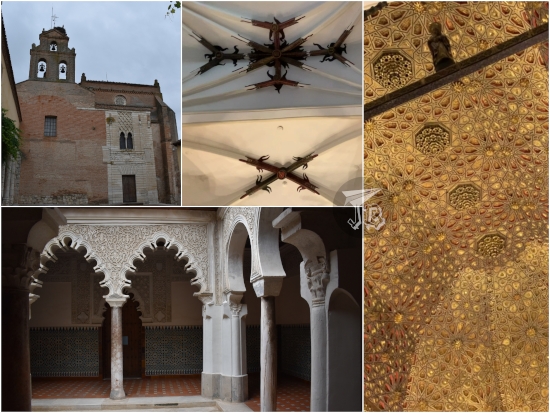
7th April 2023: Monasterio de Piedra (Nuévalos, Spain)

There are many things to consider when visiting the so-called Monasterio de Piedra, a tourist complex in Nuévalos, in the area of Aragón. One of the most important ones is the weather – as most of the complex is outside. The second is probably people. Just the online bookings are 2,000 tickets in a day – and some more go on sale throughout the day as visitors leave, or it is calculated that they do. A third factor is getting there, because it is literally in the middle of nowhere. This year, Easter break has peaked at an almost 100% occupancy rate since it seems that Covid is dwindling down, and the weather is superb – these facts have implied crazy traffic, too.

I had been mulling the trip for a while, checking weather and traffic warnings, and considering all the driving around that would be take place. I thought that the 7th would be a good date for a day trip – fewer cars out within the break period, and I was busy on the 8th, the other calm day. When I finally decided that the 170-km-each-way drive was going to be worth it and safe as the traffic authority had not updated its warning on the late-afternoon of the 6th of April, there were around 30 left for the 7th, and it was already sold out for the 8th. I got worried about traffic again, decided to leave the tickets for later, and by the time I definitely made up my mind, the day had been sold out!

I was disappointed, but I noticed that some tickets had become available for the 8th when previously there had been none. Thus, I kept checking throughout the evening, and finally around 23:00, I was able to purchase the 2000th ticket for the complex. Good thing that while I was wondering whether to go or not, I had prepared a backpack with whatever I might need, because if I wanted to beat the crowds, I had to leave by 7:30.

I did, and I made it to the complex around 9:10, after driving on almost-empty roads. I had planed to park in the outer lot, but as I reached the area, there were a number of workers directing cars and I ended up in the inner area. All the visitors who were already there – maybe I was the 30th car or so – stepped out of their vehicles commenting “oh, I thought there would not be so many people so early”. I thought the same… I had no idea of what “many people” meant in this place yet.

The Monasterio de Piedra complex has two distinct parts – the historical garden Parque-Jardín Histórico del Monasterio de Piedra and the monastery-turned-hotel. I decided to visit the park first, which would later be proven a good idea.

Río Piedra is mainly a pluvial-regime river (a fancy term to say that its flow depends on rain), also fed by various underground springs. The water has a high concentration of calcium carbonate, which for centuries has been key in creating the landscape that characterises the park, with a large number of waterfalls and caves – calcium carbonate dissolves and precipitates depending on how much water the river carries at any given time. Along the fertile soil from the river banks, the precipitates feed a very green landscape which in turns yields to a rich and varied fauna that lives there.

The park was established as a Romantic garden during the 19th century by Juan Federico Muntadas when he inherited the area. He also built the first Spanish fish farm there to breed river trouts. The garden is organised in two trails, a main one and an “extra” one – I decided to take the main trail, which runs around 5 km. The park prohibits food inside, but it does not really enforce it. I took a bottle of water, and an energy bar just in case, without the intention to eat it unless it was an emergency.

I walked in, got my print-at-home ticket scanned, and I was surprised that a few steps in, someone was holding an owl for people to take pictures with it. At 9:00. That was bizarre – I knew that the park used to hold birds of prey shows, but I thought it was a thing of the past. I got to my first intersection, and a park employee directed me towards the route. I was a bit disoriented for a minute or two, and I later realised that they were flushing the first visitors towards the big bottleneck area in order to try to control people, capacity, and waiting times. In this garden, the amount of people you run into can indeed make or break your experience – and I am happy to say that I made the right choices most of the time. The biggest problem I ran into were families with small children being loud, which was annoying but bearable.

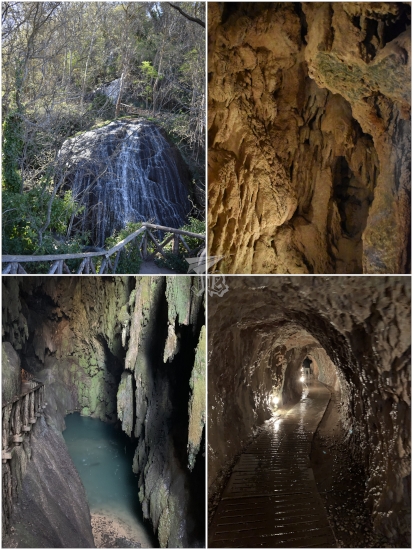
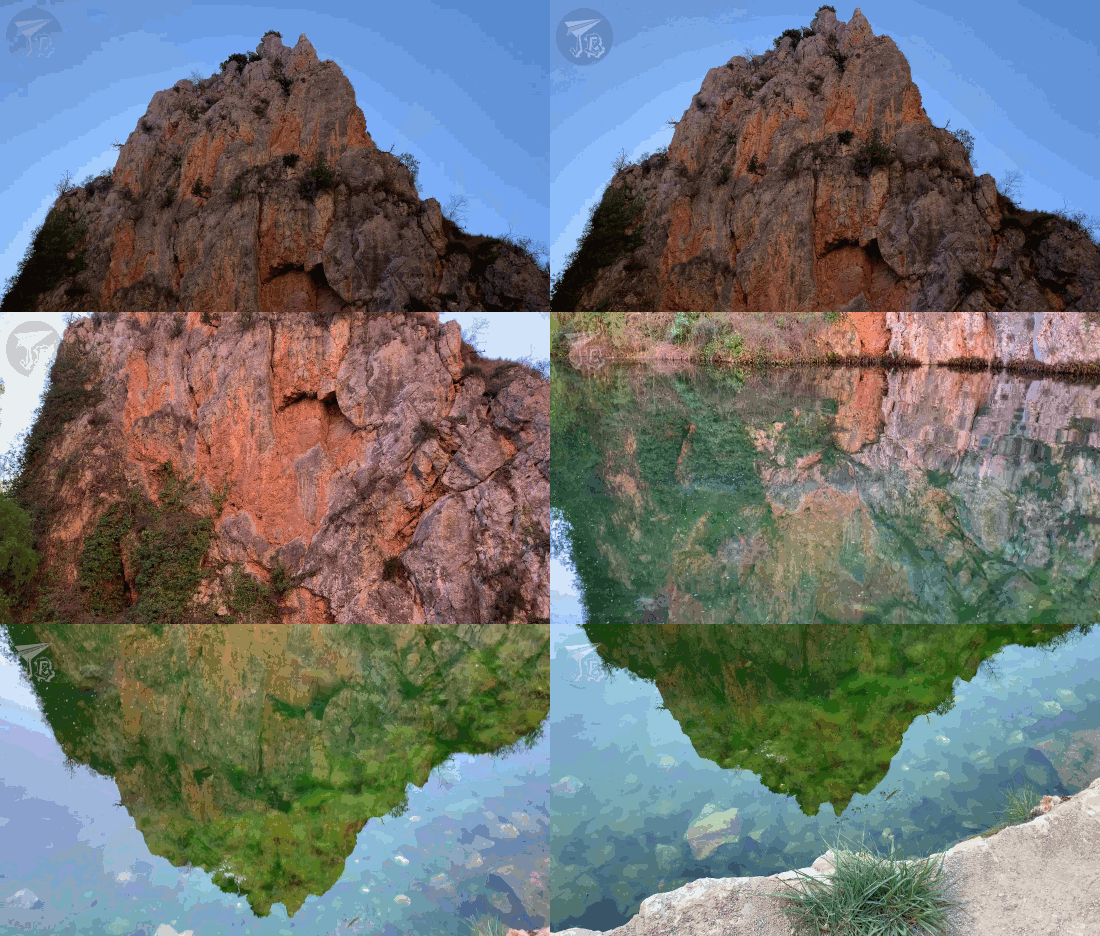
Because of the redirection, I started off at what would have been number 16 on the route – the most famous waterfall, called the “ponytail”, Cascada de la Cola de Caballo. From there, you walk into one of the karstic caves (Gruta Iris) and pass under another waterfall, which even creates a small underground lake. It was cool, but I was really not prepared for how splashy it was! I continued off, I saw the and walked around a backwater called “mirror lake” Lago del Espejo for obvious reasons – it reflects absolutely everything. Although the route is only 5 km, it goes through areas that feel and look completely different, and it feels much, much longer without being tiring.

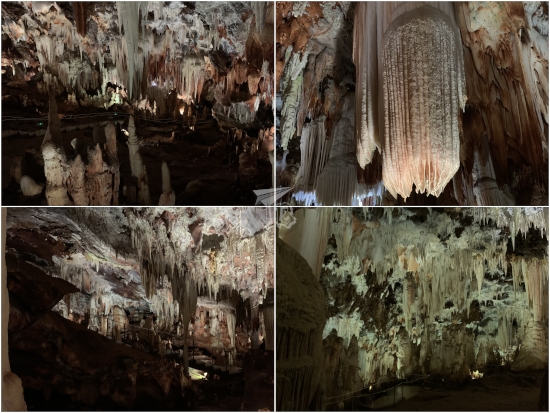
Monasterio de Piedra garden - waterfalls, karstic caves and the underground lake. Everything looks green with the vegetation and reddish with the karst deposits.

A 15-metre waterall, water splashing, flows into a river. The land around it is reddish-grey

A reddish hill perfectly reflects on a lake.

As I “finished” the route, I got to the intersection where the bottleneck is created and I saw all the people waiting – hundreds, probably. That was unexpected, because it had not felt that it was so crowded – it turned out, arriving early had been a great idea. The amount of people waiting was shocking, but understandable as most of the cave passages are only wide enough for one person – now I understood the reviews that claimed hours to see the waterfall and the cave.

I got a bit disoriented at this point – as I said, the route feels long since the landscape is so varied. However, instead of going for the exit, I decided to continue exploring a bit more – that is how I arrived at the lower numbers of the route again – number four, that was a bit more on the crowded side. I did the first part of the route, climbing up the hill slopes to see a dozen or so more waterfalls. Then had to backtrack again, until I finally saw everything that there was to see, even if in a strange order (on the map: sixteen to end, four to fifteen, then three to one. Not confusing at all, I know).

Monasterio de Piedra garden - fountain, and waterfalls and a cave. Everything looks green with the vegetation and reddish with the karst deposits.

Unfortunately, loud people scared most of the wildlife away, so aside from a few fish, there was nothing around in that respect. There were dogs around, but well-trained, so they did not cause a problem. The area is really nice, the waterfalls and caves are beautiful, but I can see how the number of people you visit it with might make it a good or bad experience. I am sure that I would have quit had I needed to wait hours to cross a cave and see one of the waterfalls.

When I left, there was a huge queue to get a picture with the owl. Furthermore, there were several huts with more birds of prey or other animals, and the pictures were sold at the exit. I’m not sure I approve of that, no matter how trained the animals are – there actually used to be exhibitions with the birds of prey, which is not happening these days. After I left the historical garden, I went into the former monastery. Today, most of the building has been turned into a hotel, but part of the historical site can be visited.

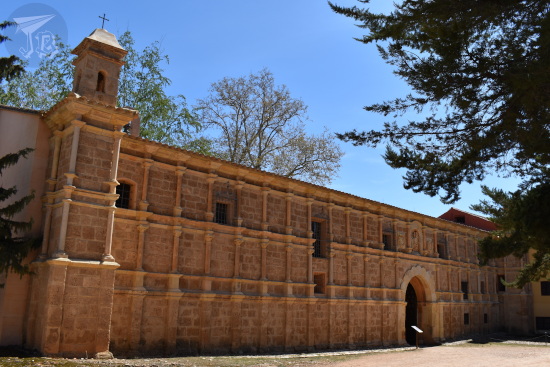
The monastery Monasterio de Piedra was established in the 12th century by Cistercian monks sponsored by king Alfonso II of Aragón. The building was erected in the years when Romanesque was turning into Gothic, so it mixes both styles along with some extra Baroque. Between the late 18th century and the early 20th century, the Spanish government carried out several programs to seize and sale property deemed “unproductive” – mostly belonging to religious orders and municipalities. These properties were auctioned to convert them into cash so the government could pay off its debt. The whole process is known as the Spanish confiscation (desamortizaciones).

In the 19th century, Monasterio de Piedra was confiscated. Everything it contained was auctioned in the 1840s and 1850s. In 1843, the buildings were also sold and acquired by the Muntadas family. It was soon afterwards that Juan Federico Muntadas became the owner. He turned the orchards into the now historical garden, and the convent itself into a hotel and… what today would be called a “wellness spa”. He also established the fish farm.

I would have really liked to stay at the hotel, but it’s a bit on the expensive side and there is really nothing else around, so you have to pay for meals on top of the stay. But it would have been cool to wander the monastery building at night. Not being a hotel guest, the ticket includes access to the cloister and the old church. Some rooms around the cloister have been dedicated to host exhibits about regional or historical products and items: carriages, wine, and even chocolate – the monastery was reportedly pioneer in the preparation of chocolate in Spain. The cloister itself has a few chapels, the early-Gothic chapter house with decorated columns and ambience music, and a small garden-like centre. You can also visit a monk’s cell, and there are mannequins spread through the different rooms – startling if you are not paying attention and suddenly see one.

I am not a wine person, so the museum on the topic did not impress me much despite having a bunch of traditional wine-making artefacts. The chocolate exhibit was just a succession of panels with pictures, and thus a bit underwhelming. Within the monastery, what I enjoyed the most was the architecture itself I guess. I loved the cloister and the chapter house most.

I also visited the adjacent ruined church. Like the cloister, it’s early Gothic. It has a Baroque chapel to the side which keeps the wall paintings. Although most of the ceiling is gone, the church still looks pretty – then again we all know that I like the architectural style anyway. It’s nice how the building is somehow ruined but at the same time it’s not, as it has been restored and preserved. However, underneath the altar, there is a small crypt, where a small window has been made to peer at someone’s bones – that was… huh… unnecessary. The nave is now open to the sky and covered with grass, all the figures have gone, and only one of the sides holds a few architectonic remains and capitals.

Inside the monastery - the cloister and the ruined gothic church

I left the inner area and I walked around the outside of the building – what has become the picnic area since you can’t eat inside the garden. Once I left that behind, the area was deserted. I reached the former main square, where the Baroque façade of the monastery still stands. I walked a bit further and found the walls that used to enclose the area, along with a small tower that is called the keep, but it looks more like a defensive tower.

The baroque main entrance to the monastery

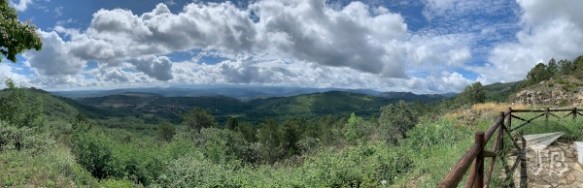
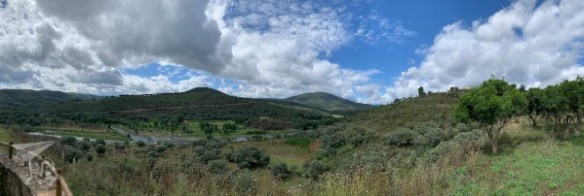
Finally, I checked out the gift shop, bought a book and some chocolate. I headed back a bit after 13:00, but instead of driving directly home, I made a stop at a couple of viewpoints over the reservoir Embalse La Tranquera. On the way out, I had crossed several tunnels and seen viewpoints, so since I had time and I was not hungry yet, I decided to snoop around. After a while, I just drove back – though I might just have made a stop for a late fast food lunch, because guilty pleasures happen sometimes. And by 15:00 I was hungry indeed.

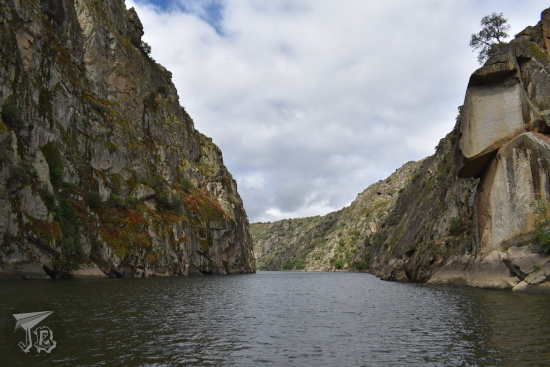
A reservoir with turquoise water, nestled in a reddish gorge

5th April 2023: The ghost station of Chamberí (Madrid, Spain)

Perusing the web for something – I can’t even remember what – I came across one of those things that I had discovered a long time ago, then forgotten because life is hectic and so (read: Covid happened). In Madrid, there an underground ghost station, one that has not changed since the 1960s. Well, sort of – it was closed, then restored, and finally turned into a museum. Anyway, somehow accidentally, I ended up securing a free ticket to visit it during Easter break, so there I went. I decided to round up the trip with a fancy lunch in a place I also wanted to visit.

The Madrid underground system Metro de Madrid was the third underground line to open in Europe, after Moscow and London. It ran a little short of 3.5 km, with eight stations, when King Alfonso XIII inaugurated it in October 1919. Subsequent ampliations and renovations of the line were carried out until it reached its current 24 km and 33 stations (plus twelve more lines). The city expanded, its population increased, and underground trains grew with both, going from four to six carriages in the 1960s. The stations were renovated to fit the new, longer trains. Most of them. The ampliations of the stations of Bilbao and Iglesia made it inefficient to do the same with the stop that lay in-between – Chamberí. Thus, this station was locked down – and bricked off – in 1966.

The city forgot about the station’s existence for decades, until in the early 2000s, it was turned into part of the Underground’s museum network Museos de Metro de Madrid or Andén 0. Today, Estación de Chamberí can be visited for free, but only under reservation. Pre-pandemic, I looked into it a few times, and never found a spot, then the whole thing slipped my mind, until I relearnt about it, and lucked out.

I took the train to Madrid and walked from Recoletos to the square where the station was built Plaza de Chamberí. The original entrance has long disappeared, so the underground area is accessed through an ugly metal kiosk and a spiral staircase. However, the original station looks completely different. It was designed by Antonio Palacios (1878 – 1945), a Spanish urbanist and architect with a very recognisable style, whose most important works still stand in Madrid (such as the Círculo de Bellas Artes and Palacio de Comunicaciones). My entry slot was 11:30, and I arrived with plenty of time – trains have been unreliable lately so I gave myself a wide margin. When most of the group had arrived, we went down the modern stairs that yields to the old hall. Characteristic white tiles are laid along the access tunnel that leads to the original ticketing stands and the exit control. The station used to have a skylight, now closed off. The original stairs and maps still stand, along the Metro logo – though everything has been adapted for wheelchair-users.

Ghost Station of Chamberí. Entrance corridor and old ticketing booths

The group comprised 25 people, with a surprising amount of non-Spanish speakers – at least seven, who of course did not care about the guide’s explanation, which was little more than the Wikipedia page (so I guess anyone can take the visit. Print out the wiki and read along). There were families with kids who tried to yell over anything the guide said. Furthermore, underground trains still run through the station, which make for cool pictures, but their six-minute frequency drowns all the given explanations. It was hard to actually get into the “ghost station” mood.

Estación de Chamberí does look really cool though. Unfortunately, glass panels separate the platform from the tracks – they are dirty and get in the way of pictures of the other side of the platform. However, it was interesting to see the old advertisement mosaics – they used to be painted on tiles, and built into the walls themselves, and surrounded by very cool darker slabs with metallic tint. The visit takes about 40 minutes, and on the way out, you get to go through the old ticket gates, which have a very ingenious way of opening – you step on the little platform in front of them, which triggers a latch, and you can push the gate open. Really fun.

Ghost Station of Chamberí. Collage showing details - the name of the station on the old logo, tiles, the platform, and a train coming through

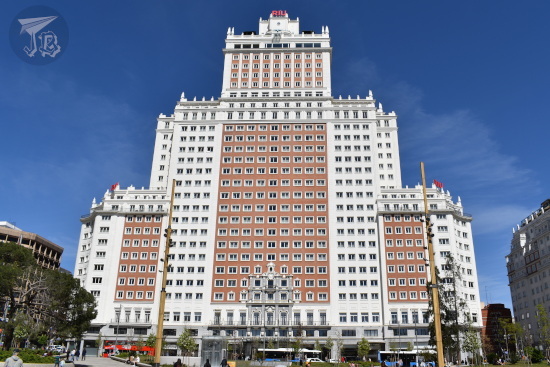
Truth be told, I had booked another free visit before lunch, but I realised I had messed up the location. I cancelled that one before entering the ghost station so the ticket would be available for someone else to use. And thus, I had a bit of time before my lunch reservation at 14:00. Since the weather was nice, I decided to walk to my next spot, and I spent the extra time – and some not-extra money – in one of the big bookshops in the centre of Madrid. At 13:50, I arrived at the back entrance of the hotel Hotel Riu Plaza España. This hotel opened in 2019 in a mid-20th century skyscraper (Edificio España) designed and engineered by brothers Julián and Jose María Otamendi. It is a 26-floor tower which was the highest building in the city at the time of its construction. Situated in the square called Plaza de España, it is close to the Royal Palace and Main Square.

Edificio España - tower like building in reddish and white brick, spanning 26 floors. It is the Riu hotel now.

The hotel has a large terrace on what would be the 27th floor, a rooftop bar and a restaurant or “gastro bar”, whatever the current buzz word means. Entry to the terrace is 10 € (5 € on a weekday), and food is not on the cheap side (everything around that area is stupidly expensive), but I found a deal at their Edén Gastro Bar: one-course lunch + drink + entry to the rooftop terrace for 30€ which allowed me to skip the queue.

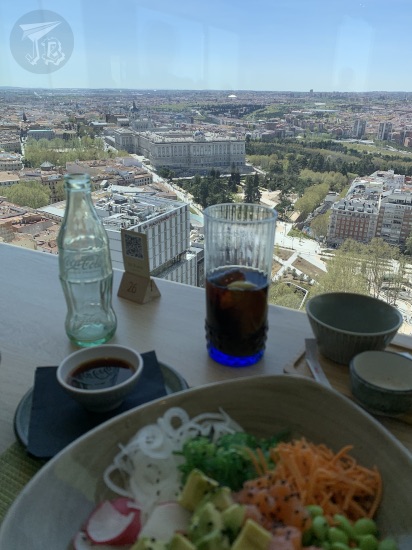
I did skip the “ticket-buying” line, but there is only one lift to go to the rooftop, so that queue I had to wait. I ended up reaching the restaurant around 14:10 or 14:15, and snagged a counter-with-a-view seat. I ordered a salmon poké and a drink, and got a few complimentary snacks and breadsticks to complete the meal.

Rooftop picture showing Madrid's Plaza de España and Royal Palace. Blurred in the foreground, lunch

Afterwards, I climbed the stairs to the terrace, officially called 360º Rooftop Bar, on the 27th floor. Music was blaring and there were tons of people drinking overpriced cocktails. The views were cool, sort of a once-in-a-lifetime thing that I don’t think I’d need again. The terrace has a small all-glass balcony that I did not wait the queue for, and a glass platform that would probably impress a bit more if the glass under your feet were clean(er). The terrace was completed by a tacky bull sculpture with metallic-gold testicles.

Madrid rooftop view - low houses with red brick roofs, and in the very background a few highrises

I walked around a couple of times, and then I headed back to the train station after calling it a day. I killed time reading one of the books I had just got, and time flew on the train. It was a nice little outing, but I did mess up with one of the locations, so it could have been more efficient. I guess not every little trip can work flawlessly…

4th April 2023: La Granja and Riofrío (Spain)

King Felipe V of Spain was born Philippe, Duke of Anjou, in France. He was appointed successor to the throne by his great-uncle Carlos II, who died childless. He was never very interested in being a monarch, or at least King of Spain, which he became in 1700. Around 1718, he fell in love with a hunting area and decided to buy it. Today, this area has become the municipality of Real Sitio de San Ildenfonso (Spain), the Royal Site of Saint Ildephonse. He ordered a palace be built “without disturbing what was already built”. The result was the palace known as Palacio de La Granja de San Ildefonso (The Farm at San Ildefonso), in honour of the hermit church and farm that were there when the King bought the hunting grounds.

Legend has it that the palace is extremely uneven because the King ordered that no parts of the church were demolished, so the walls were built around the old construction – however, it is such a massive building that seeing the irregularities from the inside is hard. The palace, built between 1721 and 1724, was commissioned to Spanish architect Teodoro Ardemans. Later, the garden façade was remodelled by Italians Filippo Juvarra and Giambattista Sacchetti. A fire destroyed part of the building in the 20th century and a lot of the paintings were lost. The gardens – the most famours feature of the site – were designed by Frenchman René Carlier in 1721 and finished by Étienne Boutelou when the former died in 1722.

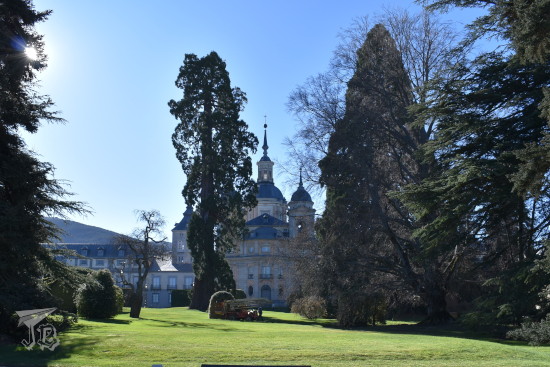
Today, the palace is managed by the Spanish Heritage Network Patrimonio Nacional – which means that photography is not permitted inside. It is technically one of the royal residences, so of course you have to go through security and X-rays and whatnot. We headed there on what was technically a working day before Easter break, so we were not sure how much traffic we would find, or how many visitors there would be. Thus, we had booked our tickets online for 11:00, anticipating a two-hour-and-a-half drive. In the end, we were in front of the palace around 10:15 and were able to enter at 10:30. Before that, we saw some impressive trees, including a sequoia, which I don’t think I had ever seen before.

Baroque Palace of La Granja peering behind a few large trees

The palace is Baroque, showing the likings of the time in which it was built. A monumental staircase gives access to the first ward, rebuilt after the fire into an area to display part of the royal tapestry collection – Museo de Tapices. The oldest tapestries date from the 16th century, before the Spanish tapestry school was founded. Tapestries are not my favourite form of art, but these were pretty impressive. A collection of nine pieces allegorise some of the virtues, mixing classical mythology with Christianity and historical figures.

The interior of the palace displays the private rooms of the monarchs, on the first floor, and the different ballrooms and social rooms on the ground floor. The private areas are decorated with paintings, and the public ones try to emulate the Palace of Versailles (France). They are furnished with marble and mirrors, and decorated with sculptures and statues.

La Granja: Dizzingly-decorated large hall in golden and white marble, with large open wooden doors

The ground floor opens to the well-known gardens Jardines de La Granja. These are considered the best “French gardens” in Spain. They cover almost twenty thousand square metres. Sprinkled throughout paths, hedges, parterres and trees, there are 21 fountains, most inspired by characters taken from classic mythology. The fountains are made out of lead, painted in bronze colour, and even if built 300 years ago, they still work and are indeed turned on during the summer season, fed from local reservoirs. They were not running during our visit – except for one dragon which leaked a bit. Spring seemed not to have arrived in the gardens yet, and it looked strangely like autumn.

La Granja: Italaian façade of the pakace from the top of the waterfall fountain, which was turned off. A number of bronze statues representing mythology characters line the waterfall

From the top of one of the fountains, called “the waterfall” Fuente de la Cascada Nueva, there is a good view of the Italian façade of the palace. Other fountains include “The Fame” Fuente de la Fama and “Diana’s bath” Fuente de los Baños de Diana. One of the most complex fountains is Fuente de las Ocho Calles (Fountain of the Eight Streets), a complex of eight fountains in a sort of “square” created by the intersection of eight garden paths. The fountains were built to only run when the King approached them, and today they are turned on in a rolling schedule, and very rarely all at the same time. This is to take care of the pipe system, still the original one, and because some of them need a lot of water to function.

La Granja, outside. Two large fountains crammed with bronze figures representing mythological beings. Both are turned off.

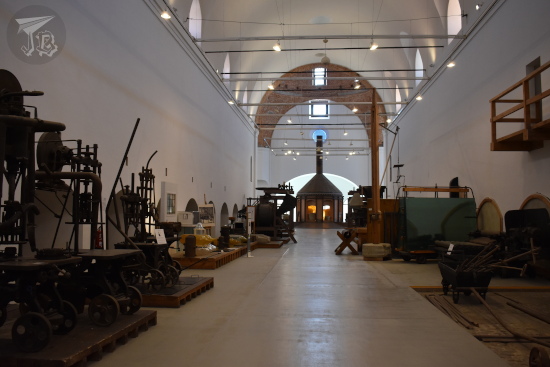
After we were done with the palace, we continued off to what I found the highlight of the day, the Royal Factory of Glass and Crystal of La Granja Real Fábrica de Cristales de La Granja. It was also established by Felipe V in 1727, and even today people use the old techniques to make glass items there! Even though it is called a “factory”, the process is completely artisan. The place also doubles as a museum to explain the how glass is (and was) made, exhibiting different traditional instruments. Of course, it has a shop. However, the coolest thing is that you can visit the furnace workshop to see how glass is blown, and the decoration workshop to see the engraving process. We hung around the furnace area and the experts can make a whole goblet in three minutes and a half, from incandescent blob to ready-to-engrave product.

Glass museum: diferent machines used to process glass in the 20th century, and a reproduction of the original glass furnace

Workers at the Glass factory: making and engraving a glass

After the factory, we headed towards the Parador de La Granja, a mix of a modern and historical building where we were to have lunch. We shared some cured beef cecina de León, and I tried the local speciality judiones de La Granja, a hearty bean-and-pork stew.

Collage of the inner patio of the Parador building + lunch: dried meat and a bean stew

When we finished lunch, we took the car to the secondary palace in the area, called Palacio Real de Riofrío, a hunting pavilion also managed by Patrimonio Nacional (though apparently, pictures are okay here, which is cool). The building is surrounded by 600 hectares of forest and hunting grounds. It was originally commissioned by Felipe V’s wife Isabel de Farnesio, who actually never got to live there since when she became “queen mother”, her son Carlos III had her move to Madrid.

We drove past the forest, where some storks were happily wandering around. The SatNav flipped on us because it could not find the correct gate, but we managed to make it on time to spend an hour or so there. Also, the entrance was weird – it is actually closed, and there is a guard inside. If we had not arrived just as another car was exiting, we would have thought it was closed and left.
Baroque palace of Riofrío. It's large and pink, with lots of archeways

The palace is also Baroque, and the areas which can be visited include some bedrooms, dining rooms, and the areas where the servants waited to be called. The palace has been organised as a Romantic museum Museo Alfonsino, that honours King Alfonso XII, who mourned his first wife there. It was actually decorated by his father, King Consort Francisco, Isabel II’s husband, and later “enriched” with paintings from other Royal Sites. The most interesting item was the billiard room, because it actually felt rather unexpected.

Another area of the palace has been transformed into a “hunting museum” Museo de la Caza, to honour the fact that these were the King’s hunting grounds. It mostly hosts taxidermy representations and a collection of pelts and skulls. To be honest, some exhibits were a bit unsettling.

Collage showing the inside of Riofrío: the hyper-decorated rooms, the staircase and taxidermy of local deer

As we left, the SatNav warned us of a 40-minute jam on the way back, so we forgave its previous flop. The warning allowed us to take a detour to avoid it – we had to pay the toll but it shaved off almost an hour.

26th March 2023: The long way home {Belgium, March 2023}

Instead of returning from Brussels the same way, I had decided to take an earlier plane back home, from Brussels Charleroi instead of Brussels Airport. That way D****e and I could hang out a little longer, too. We had free breakfast at the hotel that day since we had had a bit of an issue with her check in, and the manager had offered that as compensation. It was pouring rain, so we did not do anything before we headed off to the airport, which we did with plenty of time. Brussels Charleroi is serviced by a bus company, and when we got to the stop, a bus was leaving – that was okay, we were aiming for the following one.

We reached the airport around 11:40 and queued up to pass through security, who decided they needed to test my shoes for drugs. It took me forever to be able to pack again after taking the camera and liquids out, but we were inside without issue before 12:30. We sat down for a drink, and then went off to find D****e’s gate. She was inside at the right time, but her flight ended up delayed as she had to fly to France, whose people are striking at the moment.

I found my own gate, and sat down to wait. When it was boarding time, a mob formed, and as it dissipated, I approached – it turns out that my flight was not boarding! Instead of leaving around 15:00, we did not take off till 16:15. During this time there was no estimated take-off time, nor any information. Internet said over two hours, so I decided to venture it to the food court to grab a snack. When I finished, I went to the bathroom and when I came back, the ground crew were getting ready to board us. It went fast, and the return flight was uneventful. We never got any explanation for the delay.

When I landed, the usual exit was blocked, so I had to go all the way back to the next terminal and backtrack. In the end, I was commuting for around nine hours for a 120 minute flight. Talk about efficiency… The best thing though was that with all the excitement and tiredness I did not even notice that Europe had shifted into (out of?) daylight savings time, which usually breaks havoc with my system. All in all, it was a nice weekend, albeit a bit tiresome at points. It’s hard to find water-resistant walking & concert shoes.

25th March 2023: Brussels, Antwerp, and Starset {Belgium, March 2023}

As my companion D****e was caught in the French air controllers’ strike, she did not make it to our hotel until the wee hours of the morning. I let her sleep, and headed out to explore another area of Brussels. My first stop was again Mont des Arts, because it was on the way to Anneessenstoren, remains of the old city walls – which were being renovated, so I could not see a thing.

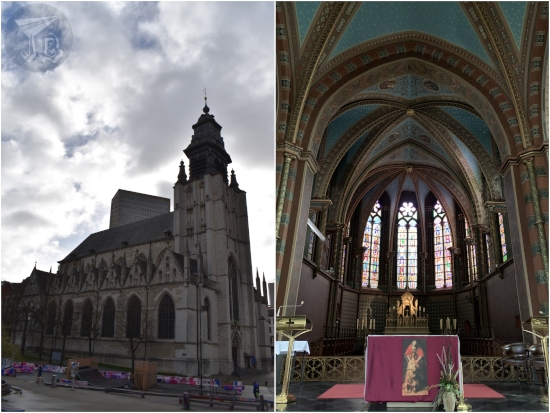
I had decided not to take the umbrella because the wind made it useless anyway, so I had to take cover a couple of times. I continued off to the Romanesque-evolved-into-Gothic Church of Our Lady of the Chapel Église Notre-Dame-de-la-Chapelle | Onze-Lieve-Vrouw-ter-Kapellekerk. It was closed, but I hung out around the area for a bit. There is a skate park, a Memorial to Pieter Bruegel the Elder (who is buried in the church) and an obelisk Obelisk Kapellekerk sculpture.

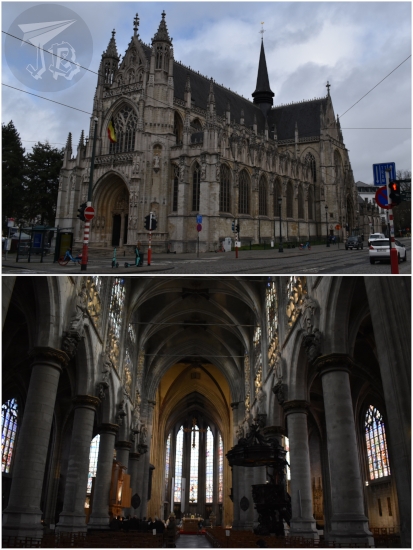
I decided to come back when the church was open, and continued walking towards another church in the area, the Church of Our Blessed Lady of the Sablon Église Notre-Dame du Sablon | Onze-Lieve-Vrouw ter Zavelkerk. It was built in the 15th century, in late Brabantine Gothic. It does not have towers, but a deep portal in the main façade. It is richly decorated inside and out, in light coloured stone from the nearby Gobertange quarry. In the beginning, the church was a parish for the noble and wealthy citizens of the city, but it slowly lost lustre over the centuries. In the late 19th century and beginning of the 20th century, it was “restored” according to the principle of unity of style. The whole building is laden with ogival windows, and the light inside is very beautiful. When I was there, the choir was rehearsing, and there was a “do not visit beyond this point” notice which I abided by.

Gothic church: exterior + nave, flanked with long windows

I went out again, and crossed the street to the garden Square du Petit Sablon | Kleine Zavelsquare , which features statues depicting some of the great humanists of the Belgian 16th centuries, and a fountain in the honour of two noblemen who were executed by the Spanish regime in the same century. The fences are decorated with sculptures that depict the different guilds of the city. It was designed by romantic architect Henri Beyaert in the Flemish no-renaissance style in the 19th century as a flower garden.

I saw the Palace of Justice of Brussels Palais de Justice de Bruxelles, a massive building built between 1866 and 1883 in an eclectic Greco-Roman-inspired style, designed by architect Joseph Poelaert. When it was erected, it was the largest building in the world, and it is currently… being renovated, as part of the ceiling collapsed in 2018.

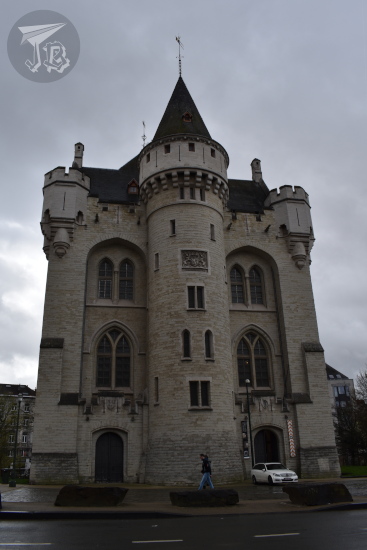
I had to take cover again as another shower hit, but it went away eventually. I walked further until I reached a former medieval city gate Porte de Hal | Hallepoort, which looks like a tiny French château – it was transformed into a a Neogothic castle in the 19th century, by Henri Beyaert. Today it is a museum, but I decided not to go in and head back towards the city centre.

Decorated medieval-like tower

I backtracked towards the Church of Our Lady of the Chapel Église Notre-Dame-de-la-Chapelle | Onze-Lieve-Vrouw-ter-Kapellekerk which had been closed in the morning, and it had fortunately opened. I walked in. The church has an early 13th century Romanesque base, and the building was erected or reconstructed later in Brabantine gothic in the late 13th century. The nave was reconstructed in the 16th century and is Flamboyant Gothic. It leads to a dark-wood painted altar which contrasts with the wide, light nave. All in all, I guess I can say I was a fan of the gothic style in Brussels.

A gothic church with a dark wood altar and altarpiece, with coloured windows behind

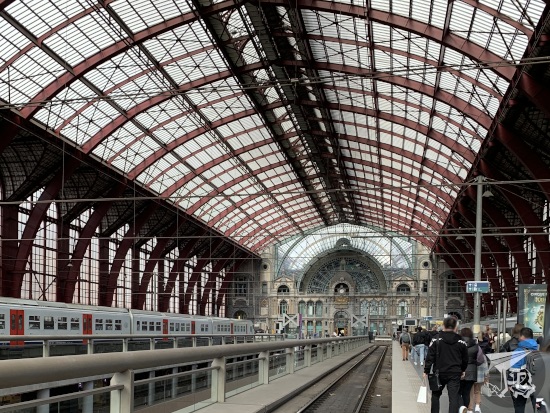
When I was in the church, I received a text from D****e, who had finally woken up. I walked back to meet her and we decided to take the train to Antwerp [Anvers | Antwerpen], where we had plans for the evening. We got off at the central station Antwerpen-Centraal railway station Gare d’Anvers-Central | Station Antwerpen-Centraal. Designed by architect Louis Delacenserie, it was built in eclectic style at the turn of the 20th century. It has two underground levels in modern tunnels, and the original station stands at level +1 (a total of four levels), with an extended train hall in iron and glass designed by the engineer Clément Van Bogaert. The station is sometimes called a “railroad cathedral” with domes, glass windows, an ornate clock, and marble floors.

Antwerp Centraal Station - a red iron tunnel-like structure with a decorated front with a clock at the end

The idea was to look for a place to have lunch near the main square, but the weather did not agree. We ate at a Wagamama chain restaurant instead, to wait out the storm, then headed to see the Bourse of Antwerp Handelsbeurs. It was the first building ever erected with the idea of being a commodity exchange place, but burnt down and was reconstructed in the 19th century by architect Joseph Schadde, who mixed Neogothic and iron architecture elements. The building was abandoned in 1997, but it was later recovered as a cultural and event centre. I absolutely loved it.

The Handelsbeurs inside - lots of gothic details supported by decorated iron beams

We had a look at the Cathedral of Our Lady Onze-Lieve-Vrouwekathedraal, but we were pressed for time and did not want to pay to have to rush through the building (a future visit, maybe), so we just peered inside. The cathedral is included in the Unesco World Heritage Site of “Belfries of Belgium and France”.

The cathedral of Antwerp

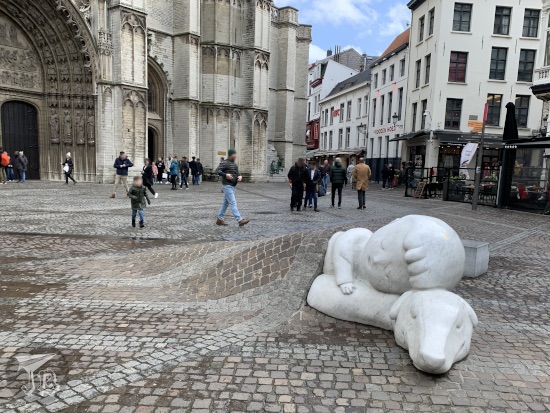
Outside the cathedral there’s a sculpture of a boy and his dog, from a sad novella about an orphan boy who wants to be a painter, and although written by an English author (Marie Louise de la Ramée) it sounds like the Belgian version of “The Little Match-Seller” tale. It’s called the Nello & Patrasche Statue Nello & Patrasche beeld and it was created by Batist Vermeulen.

A sculpture of a boy sleeping on his dog. The bricks on the road seem to tuck them.

Eyeing the weather, we decided to head out to our destination for the evening, the Trix concert hall – though this meant sacrificing seeing the main square, we were happy that we were under cover when it started hailing at around 16:15. On the way, we saw a mouse happily hopping the main streets, some sculptures, including the Monument to Rubens and the entrance to Chinatown. We had purchased VIP tickets to see the American band Starset, who toured with Japanese singer Hyde in 2018.

Starset is an American alternative rock band formed in 2013 by vocalist Dustin Bates. Aside from Bates (lead vocals, keyboards, soundboard, guitar), the core of the band is formed by Ron DeChant (bass, keyboards, backing vocals), Brock Richards (guitars, backing vocals) and Adam Gilbert (drums, percussion). Touring members currently are Siobhán Richards (violin, keyboards), Zuzana Engererova (cello) and Cory Juba (guitar, synth), and I guess they’ve got an honorary member in Ernie (Dustin’s French bulldog, who apparently attends pizza parties with VIPs when the band tours the US). One could say that Starset is a “concept band” revolving around sci-fi – the band’s fictional backstory refers to The Starset Society, who aims to alert the public about a “Message” they obtained from an outer-space signal. The fact that Bates holds a Master’s in electrical engineering and worked for the US Air Force and the International Space University might have something to do with the theme.

Starset released their fourth album, Horizons, in 2021. After Covid, cancellations and rescheduling, the Horizons Tour finally took place. Since we had a VIP ticket, we had early access and we had to be at the venue at 17:00. We got there a bit after 16:00 – and it was a good place with a hall, so we were under cover when it started hailing. In the end, we were not admitted till 17:20-ish, when a nice lady came and took our names to let us in. The first part of the experience was a short acoustic concert with some games and Q&A. For the games, you were given a raffle number, and if it was picked, you got to spin a wheel and maybe get a price – or a hug.

During the acoustic, we stood next to violinist Siobhán, who is not only beautiful, she is also super elegant. Dustin looked a bit like a hobo, to be honest, and he’s taller than I remembered him. We noticed that Ron’s arm was on a sling – apparently he had hurt himself and was unable to play during the tour, but he still tagged along. Afterwards, we had the chance to take a picture with the band, pick up the free goods that we had a right to – a CD and a signed poster. As we did, we moved into the actual concert hall, where we got the last available spot on the first row barrier.

Starset during the accoustic

The supporting artist was Smash into Pieces, a Swedish rock band composed by Chris Adam Hedman Sörbye (vocals), Benjmain Jennebo (guitar), The Apocalypse DJ (drums) and Per Bergquist (guitar). They were very good, and they fit really well with Starset, I thought. They started playing when the hall was full – it has a capacity of about 1100 people, and maybe they started around 19:30.

Setlist:

  1. Wake Up
  2. Glow in the Dark
  3. Big Bang
  4. Let Me Be Your Superhero
  5. Sleepwalking
  6. Running Away from Home
  7. Vanguard
  8. Boomerang

Smash into Pices front men.

This made the event run faster than expected. Starset were scheduled for 21:00 but came out at around 20:20, and the whole thing started with a bang – almost literally. A big curtain was pulled up and then let down when the band was on stage.

Setlist:

  1. Unveiling The Architecture (recording)
  2. Carnivore
  3. Manifest
  4. Echo
  5. Trials
  6. Icarus
  7. Unbecoming
  8. Monster
  9. It Has Begun
  10. Interlude. BMI ad (video recording)
  11. Satellite
  12. Ricochet
  13. Infected
  14. The Breach
  15. Die For You
  16. Devolution
  17. For Whom The Bell Tolls (Metallica Cover)
  18. Earthrise
  19. My Demons
  20. Boomerang

Dustin (vocals) and Brock (guitar; dressed as an astronaut) from Starset in the middle of the concert

My mind was blown because somewhat this setlist comprises all my favourite songs from the band: Carnivore, Monster, Ricochet and My Demons. The concert was full of little visuals and cool ambience tricks – I mean, Brock actually plays in astronaut suit. There was a lot of smoke and the lights were not good, but the concert itself was amazing. I was very grateful for the barrier, I would not have made it standing for the whole event – probably not even half of it. All in all, I had a lot of fun. I love that Dustin sings with his geek glasses, too.

After the concert, we managed to take the 23:09 train back to Brussels and even get a snack on the way – the one previous to the train I had wanted. That was lucky, because the last train was delayed over an hour and a half, and was a slow one.

24th March 2023: Brussels {Belgium, March 2023}

I woke up stupidly early to catch a short red-eye flight that was in the end delayed by the French air controller’s strike. Crossing security at the airport was a bit of an issue – I got stuck behind a class of teens going somewhere, and kudos to the teacher for not losing it when about 50% of the kids were sent back because they had not taken out their tablets / liquids / bottles of water and so on. Once inside, I had to head towards the Schengen area transit lounges, which were considerably fuller than beyond passport control in the early morning.

I landed in Brussels [Bruxelles (French) | Brussel (Dutch)], Belgium [Belgique | België] around 9:00. At the airport arrival lounge, I was welcomed by a rocket taken out from The Adventures of Tintin, and some fake flowering trees. I found the station – I had booked all my tickets online beforehand – and after a short train ride I reached the centre of Brussels. From the train I caught a glimpse of the famous atom-like building, the Atomium. I found my way to the hotel throughout a chaos of construction, and dropped off my luggage. Then, I set off to explore the city, which is called the comic capital of Europe: up to 50 comic character murals are painted on walls around the city, to the point that there is even a route dedicated to seeing them all – the Brussels’ Comic Book Route. I had not walked 200 m from the hotel when I saw my first mural, Le Scorpion.

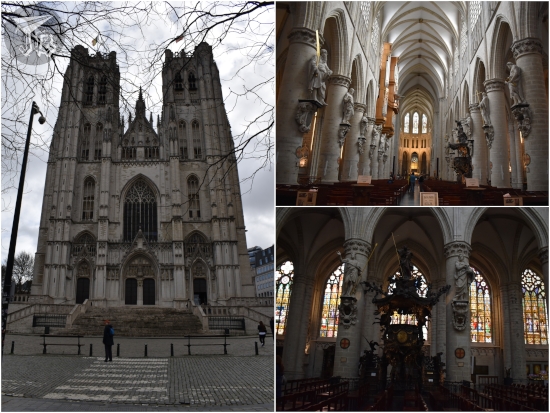
I headed towards the Cathedral of St. Michael and St. Gudula Cathédrale des Saints Michel et Gudule | Kathedraal van Sint-Michiel en Sint-Goedele. The current building was erected in the 13th century in Brabantine Gothic, which is a deviation from the French Gothic style that developed in the Low Countries (Belgium, the Netherlands, and Luxembourg). It features the use of sandstone or limestone in light colours (unfortunately, these materials are very susceptible to erosion), pointed arches, round columns with decorated “cabbage” capitals, and a very clear cruciform floor plan on churches. Unlike the Spanish cathedrals, there is no choir built in-between, so the perspective of the churches built in this style is fantastic.

The cathedral has two symmetrical front towers with tolling bells. It is accessed from the monumental staircase (built in the 18th century) on the western façade, by one of the gates under the bell towers. It does not feature a round or wheel window, but an ogival one. The nave is wide and lit from all the colourful side windows representing biblical scenes. The pulpit on the side is Baroque, carved in dark wood by the sculptor Hendrik Frans Verbrugge. A lot of the sculptures inside the cathedral are also Baroque, as the originals were destroyed by iconoclast movements (Beeldenstorm) in 1566 – this is a feature along most of the monuments I visited. Along with the Chapel Church and Our Lady of the Sablon, the cathedral is considered one of the three traditionally listed gothic churches in the city of Brussels. The organist was rehearsing, along with a cellist and a female singer, which was cool to hear as I explored. Underneath the cathedral, the archaeological site can be accessed to explore the Romanesque origins of the chapel of St. Michael.

The cathedral of Brussels

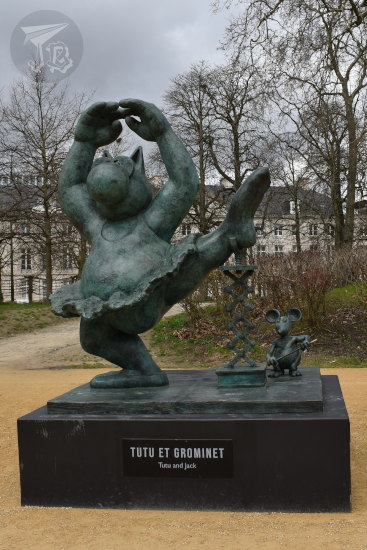
After the cathedral, my path took me through the park Parc de Bruxelles | Warandepark, featuring a pretty kiosk in metalwork and a bunch of trees striving to blossom. Along one of the axes of the park, 22 sculptures have been erected for a temporary exhibition “Le Chat déambule” Expo (9th March – 30th June 2023). They feature Le Chat, an anthropomorphic obese cat from a comic strip created by Belgian artist Philippe Geluck. Le Chat ran from 1983 to 2013, comically tackling everyday situations or presenting absurd conclusions.

An obese, anthropomorfic cat on a tutu raising a leg while a mouse uses a jack to keep the cat's leg up.

I continued walking for a bit of a long walk that led me past the Royal Palace of Brussels Palais royal de Bruxelles | Koninklijk Paleis van Brussel and the Monument to Leopold II. I went on until I reached something I felt that I could not have missed – the Museum of Natural Sciences of Belgium Muséum des sciences naturelles de Belgique | Museum voor Natuurwetenschappen van België, part of the Royal Belgian Institute of Natural Sciences. This was on my to-visit map long before this little trip came into plan. The museum’s Dinosaur Gallery is the largest room dedicated to dinosaurs in Europe. It holds a replica of Stan the T-rex (the original one was auctioned a while back and bought into private hands for 32 million USD), a piece of the Mont-Dieu meteorite, similar to the one which might have caused the extinction of dinosaurs, along with a bit of the boundary K-T (Cretaceous-Tertiary) or K-Pg (Cretaceous-Palaeogene) – this is a sedimentary layer of black rock with a lot of iridium that separates the “age of reptiles” and the “age of mammals” in the fossil registry.

There is also a room completely dedicated to mosasaur findings, and a lone Allosaurus fossil called Arkhane, which is considered the only discovered specimen of its species. Allosaurus was a Jurassic carnivore and this skeleton, clocking at almost 9 metres long, comes from Wyoming (US) and is 70% complete. However, this was tucked away in a completely different area of the museum. I also saw a Dunkleosteus head. This one was behind glass and I did not find the information to read if it was a cast, so maybe I found an original one?

Fossils at the Belgian Museum of Natural History: dinosaurs, mosasaurs, the Allosaurus Arkhane, and a massive fish head

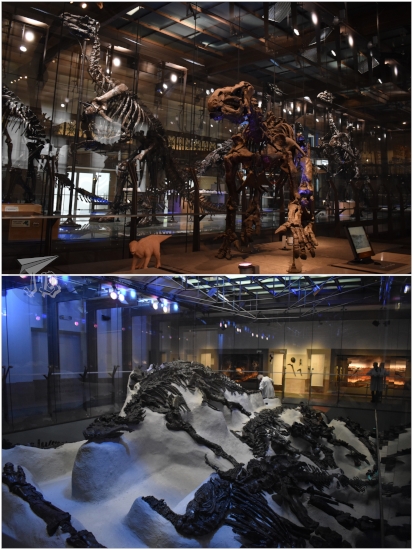
The most important feature of the Dinosaur Gallery though is the collection of iguanodon fossils – the Bernissart iguanodons. Iguanodon (meaning “iguana tooth”) was the second dinosaur to receive a name. This herbivore lived from the late Jurassic to the early Cretaceous, and it is thought to have been able to on either two or four legs. In 1878, as many as 38 iguanodon fossils were found in the Bernissart coal mine. Nine are displayed in “wrong” standing positions – what was believed at the time to be correct, called the “kangaroo standing” – and nineteen can be seen partly covered in plaster just as they were found in the mine. The standing skeletons are too fragile to be dismantled now – though early palaeopathologists did the best they could, the skeletons contain a lot of pyrite, which disintegrates in contact with air, so they are extremely brittle. Thus, they are exhibited in a protective chamber as historical testimony. These fossils were the most abundant and complete ever found of the species. They unseated the previous English hegemony on iguanodon knowledge at the time, and one of them became the Iguanodon bernissartensis holotype. Today, one of the skeletons stands outside the case, posed in the modern interpretation of how iguanodon would have moved.

Collage: The iguanodons. The upper picture shows a modern interpretation of the iguanodon on four legs standing in front of the older "kangroo posed" reconstructions. On the bottom, the iguanodons as they were found in the mine.

Other exhibits in the museum include a gallery of evolution (which I saw backwards as it was full of high school kids), a mineral collection, a gallery on humans and human evolution, and a biodiversity collection. They have the preserved body of the last captive Tasmanian tiger that lived, and a small ward about the history of the museum and urban flora and fauna.

Collage. The centre is the mascot of the museum. Around it, a tasmanian tiger, a mammoth skeleton, some rocks and taxidermed animals.

I had lunch halfway through the museum visit, and then set off to the centre of the town, undoing my previous way. By now I had got a hold of the construction detours, and I reached the city centre more easily. I walked past Mont des Arts | Kunstberg next to Central Station, with a very fun clock, and eventually reached the central square Grand-Place | Grote Markt. This central square, declared Unesco Heritage site in 1998, is surrounded by monumental buildings dating from the 15th to the 19th century, forming a particularly recognisable unit: the Town Hall Hôtel de Ville | Stadhuis, a Brabantine gothic building with a spire or tower; the Maison du Roi | Broodhuis in Neogothic style; and the so-called guildhalls and private houses, traditionally built buildings, either crammed together and cutely thin, or almost palatial – including the house where Victor Hugo, the writer, used to live in the city.

Grand Place. The buildings are light coloured or grey with a lot of gold decoration

I went down one of the side streets, debating a typical Belgian waffle, but I was not brave enough to try and eat one on my own. I saw the Adventures of Tintin mural (by Belgian cartoonist Hergé) painted on a wall (art by Oreopoulos and Vandegeerde). About five minutes away from the square, one of the corners hosts the fountain known as Manneken Pis, which depicts a naked little boy urinating into the basin. The current fountain features a replica of the boy, the original (sculpted by Jérôme Duquesnoy the Elder) is in the Brussels City Museum. The one on the fountain is often dressed up, and this time round, it was characterised as a construction worker – I can understand why. One of the many legends about the design tells of a young boy who put out an explosive charge fuse by peeing on it.

Collage. Tintin and Captain Haddock climb down some stairs. Manekken Pis fountain boy dressed in yellow reflective clothing.

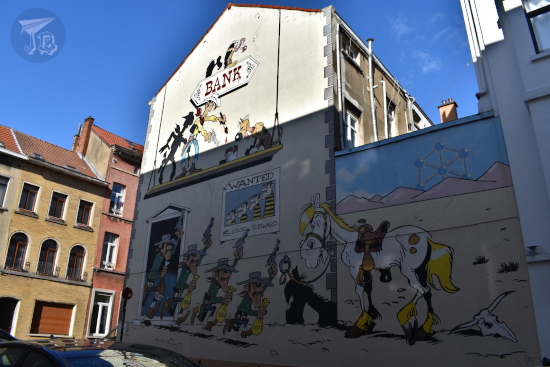
I walked on to find another comic mural I was extremely interested in – actually two, but the Astérix mural (by Goscinny and Uderzo) was covered by construction. After a quarter of an hour I found the Lucky Luke mural (by Belgian cartoonist Morris, painted by Oreopoulos and Vandegeerde). When I was a child, I absolutely loved the Lucky Luke animated series, and especially his white horse Jolly Jumper and dog Rantanplan, so this was a bit of a tribute visit, rather than tackling the whole comic route.

Lucky Luke mural. The Daltons have robbed a bank and Luke prepares to arrest them (again)

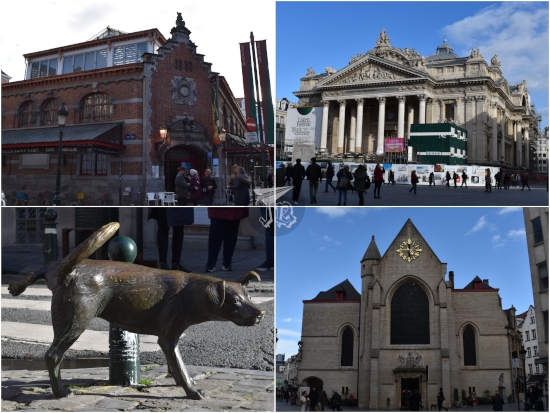
On my way back towards the city centre, I stopped by a number of points of interest – the Baroque church and convent Église Notre Dame aux Riches-Claires; a mural by artist Mr.Doodle called Mr. Doodle Artwork; the late 19th century market Halles Saint-Géry; the 12th century church Église Saint-Nicolas; a “parody” of the Manneken Pis depicting a dog doing the same Zinneke Pis; and the Brussels Stock Exchange Bourse de Bruxelles (under renovation).

Collage showing different buildings in Brussels, and a bronze medium-sized dog peeing on a bollard

As I was making my way back towards the Grand-Place, the weather, which had been behaving most of the day – there had been some rain while I was inside the museum – took a turn for the worse, and there was a bit of a shower. The problem was not the rain itself, but the wind that made it come sideways. I had packed my umbrella, though it was not too helpful. When rain subsided down, I continued walking, and I got to see a rainbow over the Grand-Place. Great timing!

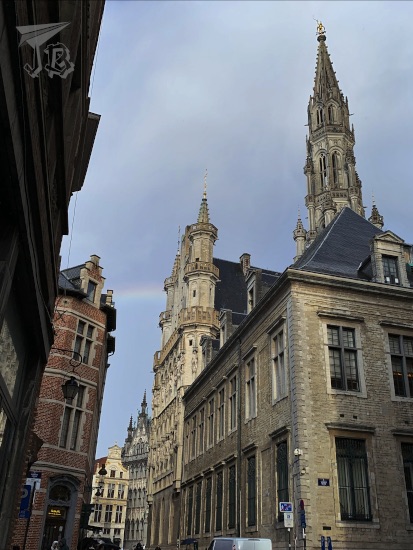
Rainbow peering through buildings at the end of the street in Brussels

It was only round 18:00 but I decided to go back to the hotel, check in, and get some food and rest. En route, I crossed through the classy shopping gallery Galeries Royales Saint Hubert. At first I had considered grabbing a bite here, but prices made me decide on a supermarket dinner, which was all right. I ate a sandwich and lots of berries.

After checking in, and warning the hotel staff that my companion would arrive late during the night, I got some rest, warmed the room, and when it was dark, I went out to see the illumination on the cathedral Cathédrale des Saints Michel et Gudule | Kathedraal van Sint-Michiel en Sint-Goedele, the square Grand-Place | Grote Markt, the fountain Manneken Pis and the shopping centre Galeries Royales Saint Hubert.

Cathedral and Grand Place at night, illuminated in warm light

I finally returned to the hotel and fumbled a bit with the shower until I found the nice massage mode.

24th – 26th March 2023: Brussels & Antwerp (Belgium) {Belgium, March 2023}

Situated in northwestern Europe, Belgium is part of both the Benelux and the Low Countries (an area historically a bit wider, including parts of France). It is a Constitutional Monarchy, a former colonial country and an early adopter of the Industrial Revolution. The official languages are Dutch, French and German – I mostly heard French – but people switch to English without any issue or problem. The country might be best-known for hosting many European Union institutions – Belgium was one of the founding members of the alliances that gave way to the current UE: the European Coal and Steel Community (1951) and the European Economic Community (1957). Today, Brussels is home to the European Commission, the Council of the European Union and the European Parliament, which was in session; that meant a lot of security and police. Something I noticed was that in general, Belgian people are extremely nice – albeit firm when they need to be. Not just… polite, but nice. It was almost uncanny, I kept expecting people to want something in return.

I took a long weekend out to fo some sightseeing in Brussels, meet my friend D****e, and attend a Starset concert in Antwerp. Even if there were a bunch of unexpected bleeps, most related to weather, most went fine, and I was able to see a bunch of cool things.

11th March 2023: Rocks from the land and fish from the sea (Madrid, Spain)

Back in 2018, when going to Madrid’s Geomineral Museum (Museo Geominero), I stumbled upon an event in the Mining Engineering University – something called Expominerales. At the time, I did not have time to explore it, and only later did I realise what I had missed – an international fair for the trade of minerals, rocks and fossils. I made a mental note to check the event out the following year, but something came up and I completely forgot about the whole thing. In 2020 the pandemic struck, and finally in 2023, almost five years to the day, I went back to this event held in Madrid.

Expominerales is held yearly at the working engineering school Escuela Técnica Superior de Ingenieros de Minas y Energía (ETSIME), which offers the bachelor’s degree in Mining Engineering, and the one in Energy Engineering (whatever this last one is). The first weekend of every month, the school organises a “mineral-world flea market”, and the second weekend of March, it hosts an international mineral, gem and fossil fair, with shopping stands and different workshops and activities. After a few cancellations due to Covid, it returned in 2022 and it’s back to its former glory in 2023 – Expominerales XLII, the 42th edition of the fair.

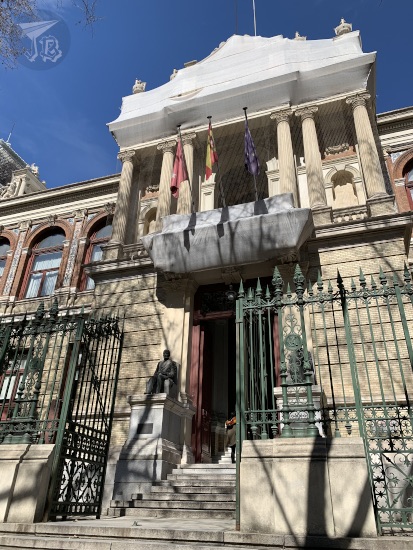
The ETSIME in Madrid. Pink-and-white building from the 19th century, accessible through stairs, with flags hanging over the door

Mining Engineering became a formal education path in Spain in 1777, originally in the town of Almadén, a mercury hub. The school was moved to Madrid in 1835 and a two-building campus was ordered. The historical building in the ETSIME (M1) was designed by architect Ricardo Velázquez Bosco, and decorated by ceramist Daniel Zuloaga between 1884 and 1893. The second building (M2) was damaged during the Civil War, and has suffered several modifications to accommodate classrooms and laboratories. The premises also include a reproduction of a mine, Mina Museo Marcelo Jorissen, however this one is closed for renovation – a lot of that seems to be going on around the university, since part of the decorations of the buildings are also covered.

The M1 historical building has a central cloister with an ironwork colonnade. The building is rectangular, and on the short sides there are two symmetrical wards. One holds the historical mining museum, the other one the historical library. The central cloister is the main area where Expominerales is held, on the ground and first floor. On Saturday, the exhibit opened at 10:00, and we were there a bit later in order to sign up for the first guided visit at 11:00 (3€) – we wanted to take it so we had access to several rooms that would otherwise be closed to us. The idea was being there before families with kids started arriving and the activities became overcrowded – it turned out in the end that most the activities were indeed organised for children, so it did not really make a difference. Furthermore, the visit we feared full only had 6 attendees.

We had one hour before the guided visit that we spent looking at the stands on the ground floor on the M1 building. The guide was a student who might have been partying the previous night, because he sounded a little out of it – forgetting info and words, even things related to his own degree.

First, we went to see the mineral collection, the origin of the historical museum in the M1 building, Museo Histórico-Minero Don Felipe de Borbón y Grecia. The mineral collection was started in 1831, and throughout the years it was increased with new minerals donated by different institutions. It was later expanded to cover palaeontology and historical artefacts related to mining and other earth sciences. Though a lot of the displays are scattered throughout he building, the original museum dates from the 19th century, and it has four sections: the mineral collection, the fossil collection, the cave bear collection and the mining archaeology section, totalling over 10,000 items.

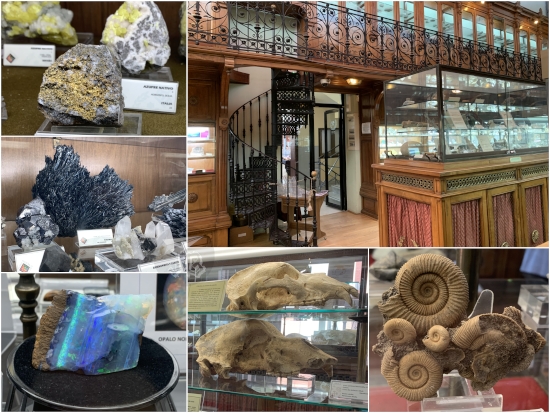
The historical mining museum at ETSIME Madrid. It is a large ward with cedar wood shelves from floor to ceiling, filled with rocks and fossils. The picture also shows some close-ups of rocks, two cave bear skulls, and a cluster of fossilised snail-like animals

Today, the museum is named after King Felipe VI, who visited the museum in the late 1980s after the university reached out to him to propose the name. The then prince came to visit then, and the name “the king’s stairs” was given to the set of side stairs he used – Escaleras del Rey.

We also visited the small hall where candidates read their theses, a little hall with spectacular ceramic tiles by Zuloaga, and finally the historical library, with obsolete but cool volumes. The library also dates back from the 19th century, with the walls covered in wooden shelves, with a small metal staircase to access the upper balcony. Unfortunately both this one and the one in the museum were cordoned off.

Library in ETSIME. It is a large room with cedar wood shelves from floor to ceiling, and a spiral staircase.

The visit ended at the lecture hall on building M2, one of the few remaining areas of the original design. It is a marble room with wooden benches and decorated windows that represent the original subjects taught to Mining Engineers. After we were left off, we sat down at the cafeteria for a drink.

Lecture hall in ETSIME (Madrid). It's a marble room, rather dark, with smoked windows representing different subjects of the Mining Engineering Degree

We recharged batteries, and then we had a look at the stands on the first floor of the M1 building, alongside the collection of apparatus that they had. Afterwards, we decided to separate in order to do shopping. Expominerales hosted over 30 stands, national and international.

Expominerales. A view of the ETSIME cloister from the second floor, showing different stands and lots of people peering curiously

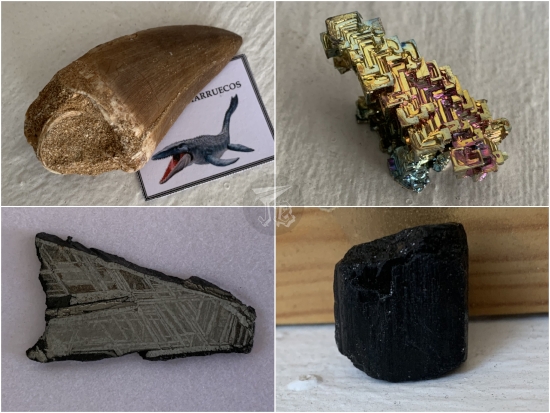
I, being the nerd that I am, got myself a tiny slice of iron meteorite (from Geoterra Minerals), a mosasaur fossilised tooth (from Carlos Hammann, who also had amazing megalodon teeth that I will never be able to afford), a decent-sized of recrystallised bismuth (from Rossell Minerals), and a small piece of black tourmaline (from The MineralShop) – all for 51€.

Collage: a fossilised tooth, a bit of mineral in metallic colours, a slice of meteorite with silver orthogonal markings, and a bit of shiny black rock

When we met again, it was a bit past 13:30. There were too many people by then – families had started arriving, so we decided to leave. We had booked at a nearby restaurant for lunch, and they did not mind accommodating us a little earlier. The restaurant, called DeAtún Ponzano specialises in tuna dishes – particularly Atlantic bluefin tuna (Thunnus thynnus), sustainably caught in the Straight of Gibraltar.

Before overfishing was even a thing, Phoenicians settled in the south-west of Spain somewhere between the 9th and 7th centuries BCE – the city of Cádiz, credited as being the longest-standing city in Europe, may have been the first port. The Phoenicians observed that the bluefin tuna migrated from the Atlantic to the Mediterranean every year around the same dates, and later they came back to the ocean. These guys came up with a very simple technique – that was later developed further by the Romans and perfected in the Islamic period: the almadraba.

An almadraba is a portable but complex net which is lowered for the migration period. The bigger fish are funnelled into a box-like construction, and the smaller ones swim right through it. Once the almadraba is full, a number of fishing boats lift it in a process called levantada (raising). Expert fishermen walk onto the nets, discard any small specimen that might have been trapped, and choose the tuna that will be sold, generally individuals heavier than 200 kg.

Since the fish are selected on a case by case basis, the amount of both the catch and by-catch is small in comparison to other fishing methods. Both the seasonality and craftsmanship of the whole process make it much more sustainable than others – of course, this also causes fewer pieces in the market, which in turn increases the price. Furthermore, all the fish are wild, hand-picked, and only bled out when they are loaded onto the ship. Thus, the quality is extremely high. Another factor that makes almadraba-caught tuna more expensive is the fact that walking onto the levantada is dangerous. Fishermen have been seriously hurt by struggling tuna, as some of the fish might weigh up to 500 kg.

Working almost exclusively high-quality tuna means that DeAtún is not a restaurant on the cheap side of things. I’ve actually traced down their tuna provider and the prices are rather cost-adjusted for almadraba-caught tuna. There’s another thing to consider, too, which is that the Spanish law forces restaurants to freeze fish that is going to be served either raw or quasi-raw, at least for 24 hours at a temperature under -20 ºC – this is done to destroy a fish parasite called Anisakis, which can cause stomach distress and serious allergic reactions. Apparently, the perfect temperature to keep the tuna properties is -60 ºC. So yay Anisakis-safe almadraba-caught tuna all year round (though it’s true that the freezing law makes it impossible to eat fresh tuna raw).

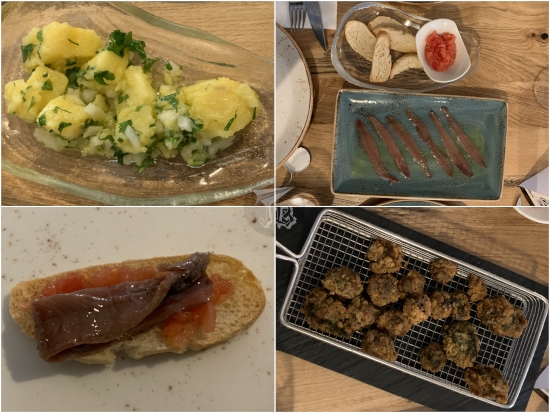
We got a welcome tapa of boiled potatoes with olive oil and herbs (“papas aliñás”), a favourite from southwestern of Spain, the same area where the almadraba tuna are caught. We shared some European anchovies (Engraulis encrasicolus) “anchoas del Cantábrico” with tomato and toasted bread. These anchovies are salted for at least six months, cleaned, and stored in olive oil. They have a strong flavour, and are not everyone’s cup of tea, but I adore them. We also shared a portion of “ortiguillas” (Mediterranean snakelocks sea anemone Anemonia sulcata, battered and fried), also typical of the south-west – I’ve never been much of a fan though.

Lunch at DeAtún. Collage with a potato salad, anchovies and battered seafood balls

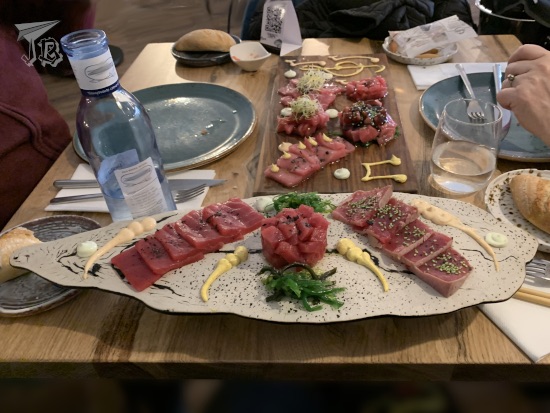
Finally, as my tuna preference is raw, I was wondering whether I wanted sashimi or tartar. In the end, I decided to try a combo (“trio DeAtún”): tuna sashimi (slices), tuna tartar (dice) and tuna tataki (heat-sealed slices), with a side taste of different sauce emulsions – wasabi, kimchi and curry. The tuna cuts used for these preparations (descargamento and tarantelo) would be the otoro or toro Japanese cuts, which are appropriate for raw preparations – technically the best ones, fatty or very fatty meat. I don’t love tataki, thus my original reticence to try this combo, but it was good. My favourite bit was the sashimi though, the tartar was missing a bit of spice.

I was offered chopsticks to eat the dish, and I accepted – easier to handle the fish. That apparently made the maître think that I had been the one choosing the restaurant, because in his words I “seemed to be an expert, chopsticks and all”. That was hilarious – I mean, why offer chopsticks if you don’t expect them to be accepted? For the record, although I booked the table, I did not choose the restaurant – it would have been a little on the “too fancy” side for me. The truth is, there were a bunch of very-elaborated dishes that we decided to give a miss, and we went for the raw tuna.

Lunch at DeAtún. A plate with three tuna cuts. The centre is round, and rose-like, and the sides are extended on a line. The fish is uncooked and it looks dark red. There's a similar dish in the background, with more cuts

Desserts were okay, but not the reason we had chosen this place. The point was eating tuna – raw tuna in my case – and the restaurant delivered. I was however amused by tables around us refusing the raw options even when the chef himself came out to greet them and recommend the dishes (someone over there must have been an acquittance, I don’t really know). Finally, we set back home to compare treasures and plot going back to Expominerales in its 2024 edition – at a time where we can snatch some discounted rocks.

25th February 2023: Feria de las Mercaderías de San Matías 2023 (Tendilla, Spain)

In 2022, some relatives who spend the weekends there talked me into visiting the Medieval fair in TendillaFeria de las Mercaderías de San Matías. It recovers the tradition of the cattle fair around St. Matthew’s day, and today it is one of the yearly highlights of the village. The historical roots of the municipality as an important villa in Medieval times can be traced to the Second Count of Tendilla, Don Íñigo López de Mendoza (1442 – 1515). He accompanied the Catholic Monarchs in their conquest of Andalusia and was later named “governor” (of sorts) of Granada once it was won for the Kingdom of Castile.

I once more arranged to attend the fair in 2023, and I drove off early in order to secure a decent parking spot as the core of the village gets closed off to traffic. Tendilla is laid out along a former main road, which used to work as a separating axis. Today, traffic has been diverted and circumvents the whole village, and the axis has been renamed as two streets: Calle del General Muñoz y Muñoz from the beginning of the village to the town hall square, Plaza de la Constitución, and Calle del Alférez Agudo to the end of the village and the “former fair square”, today the square Plaza de Vicente Mariño. Along this axis, rows of stands on both sides of the street, selling crafts, trinkets, traditional products and foods, and so on. Tendilla is known for its torreznos, processed pork lard snacks, so there are many of them on offer.

The typical food at the fair is migas, a dish made out of toasted breadcrumbs and several toppings. Traditionally, migas were made from stale bread by semi-nomadic shepherds back when it was common to move livestocks from one area of Spain to the other according to the season (transhumance). The town hall organises a collective cook-out of a simplified version for the attendants, just the fried breadcrumbs with paprika and garlic, topped with the famous torreznos. Though there are endless variations of the dish, the local tradition calls for breadcrumbs, paprika, garlic, and minced pork, topped with a fried egg, and sometimes some fruit.

We were going to prepare our own complete version of the migas, so the first goal was securing some minced chorizo, called picadillo from the butcher’s. We also bought some torreznos for later. Then, we started wandering the village – literally up and down from one square to the other – to see the stands and catch all the events. Although it was rather cold, it was sunny and not windy, quite pleasant once you were wearing enough layers – I had actually brought some extra ones that I did not end up needing.

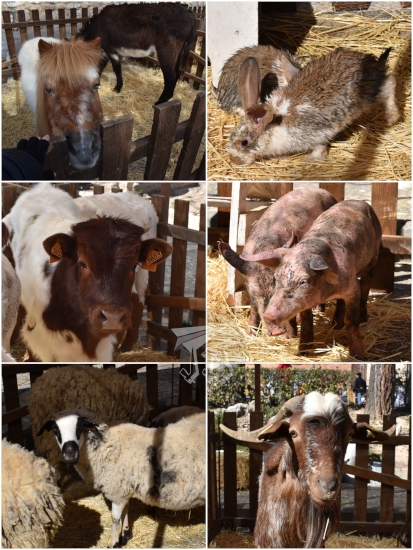
At 11:00 the “farm” opened at Plaza de Vicente Mariño – this is the closest activity related to the origin of the fair, a cattle trade event. There were horses, ponies, donkeys, cows, goats, sheep, piglets, and fowls… I might have remembered a little too late that hay causes an allergic reaction these days. Across the street from the farm stood a huge BBQ grill and some watering holes – I guess that to place the roasting pork just in front of the living piglets is part of the village’s twisted sense of humour. Desensitising kids, or what? One of the funniest things around this area is hearing people squealing at the animals, especially at the piglets – there are a lot of “urban people” in the fairs wanting to “experience country life”, who have never really seen a farm animal in their life and are thoroughly impressed – and end up saying hilarious things.

Farm animals - pony, rabbits, white-and-brown cow, small piglets, sheep, a cheeky goat

At 11:10, we caught the Opening Parade took place, described as musicians, jugglers and knights walking along the streets. It featured a dancer, a small group of musicians, and the members of the horse riding school Caballeros del Alarde.

Collage showing a female dancer followed by three Medieval musicians; two horse riders, one in full armour and the other one dressed as a nobleman from the Middle ages.

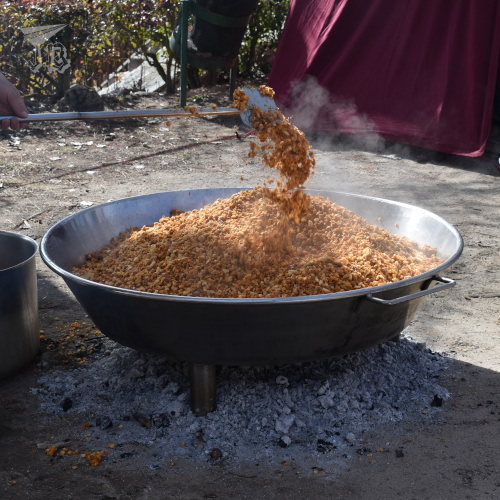
After the parade ended at Plaza de Vicente Mariño, we went to check on the communal migas, and say hi to the guys preparing them. They had prepared a bonfire and a huge pot to toast the breadcrumbs, and fought off the cold with beer and wine.

A huge pot with orange breadcrumbs being cooked

There was a second parade at 12:10, this time the official inauguration one. Aside from the musicians, dancers and horse riders, walkers included the authorities, ladies in Medieval clothing, and giants. They walked from the town hall square Plaza de la Constitución to the migas cook-out. With this, the festival officially kicked off.

Parade. Three musicians playing Medieval instruments. Three giant puppet-like giant costumes; men and women dressed as Medieval nobles. A moorish-like kight on a white horse.

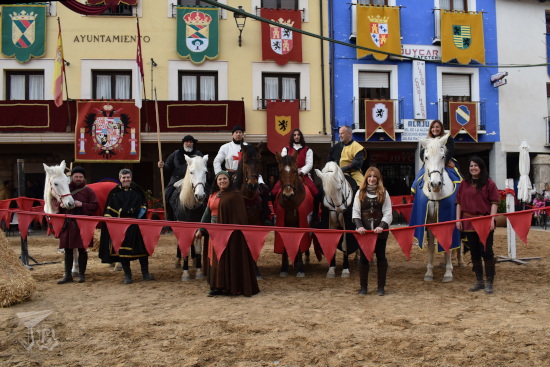
I followed the horse riders Caballeros del Alarde back to Plaza de la Constitución where they started practising for their later show. They are part of a horse riding school which carries out several activities, Medieval riding is one of them, along with horse training, archery, and shows in Medieval fairs and markets. For this event in particular, there were six riders – five men and one woman – with two bay and two white horses. One of the bay horses was not in the mood to cooperate though, and got easily spooked.

The show happened from 13:30 to 14:30. It was an exhibition of Medieval horse-riding – while horses galloped through, different different tests carried out – spearing a bale of hay, hitting a metal shield, catching a metal loop with the sword, then cutting off a carrot… There was also a bit of a staged scuffle, swashbuckler-style. The emcee made it sound like the whole show was an exhibit to train for an upcoming jousting contest (in the evening) and the riders would later compete for a pouch full of gold maravedis – Medieval Spanish coins. The show itself was pretty fun and impressive to be honest – the riders had to control the horse in a crowded and small area, full of bystanders and noise, and do the activities with a very high level of success.

Shots from the horse riding exhibit - one of the riders galloping, another spearing the bale of hay, two riders sword-fighting; The female rider, wearing bright blue, with a long spear.

After the horse show, we went home to prepare the traditional version of migas – we fried some minced chorizo, garlic and paprika, then worked the bread on the stove. Finally, we fried the eggs (sunny side up) and the food was ready! Not that we stayed down for long, soon after finishing our late lunch we went out again to find a good spot to watch the jousting at Plaza de la Constitución.

Preparing the migas - frying mincedmeat, then the garlic, then the paprika. Breadcrumbs just poured, still white, then cooked and looking bright orange. Finally, a dish with a sunny-side-up egg on top of the migas.

We walked around the square and realised that there was not really a good spot though because the square was too small and set in a way that anything the riders did, their right hand would be towards the inner area of the square. So whatever they did, the view would be obstructed by flags and décor. And the best viewpoint was actually taken by the sound equipment – which ended up malfunctioning anyway…

Before the tournament started, a sword was brought in as a present to the village. Because the sound was so horrible, I did not completely get the significance of it – it was supposed to have been donated by Queen Isabel of Castile to the village. The program said that there was going to be a forged sword at some point, so I thought it was that one.

A woman parading a Medieval sword, and a group of horsement behind her

This time there were only five riders, apparently one of them had been hurt at a previous exhibition and was not ready for the whole competition. The show itself was all right though – the emcee presented the best rider as a bit (or a lot) of a cheater, and he hyped a lot of “girl power” vibe around the female rider. The riders competed on tests in pairs, again spearing, loop catching and carrot-cutting. The “cheater” won in the end and the maravedis were distributed among attending children, as apparently the coins were not legal Medieval currency but plain old chocolate. They tried to do an archery exhibition too, but the square was too small.

Scenes from the jousting, showing horses and riders as they take the different tests with swords, spears and the to-be-cut carrot.

There were much fewer people for this exhibition since it was later in the evening (17:00) and because the evil-looking storm cloud just above our heads. Thus, this time, when the riders offered if someone wanted to take a picture on one of the horses, I got myself up a white Pure Spanish Breed warhorse, which was really cool. Then, the group asked if someone would take a picture of them, and I offered to do so.

All the horse-riding school performers, in character, both on horses and on foot, pose for the picture. They are all dressed in Medieval clothes and smiling.

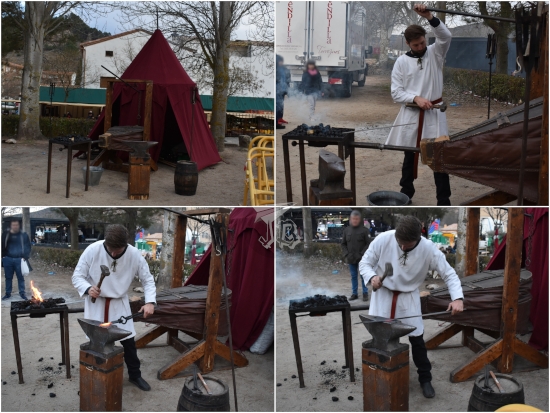
We went to see the campsite afterwards, with different things that could have existed in Medieval times. One of the most interesting things was the forge, with the blacksmith at the ready. I hung out around the smithy for a while and as night fell, the sword started to take shape. I realised later that this was the sword that was going to be forged for the village, and not the one I had seen before the jousting.

A blacksmith hammering down metal to forge a sword and a guard.

I don’t know whatever happened to it, because I eventually moved away to find the final parade, in which a group of villagers dressed up as Moors from Granada, either friends or foes of the Count. The parade was lit with torches, and ended at main square Plaza de la Constitución again. There were also jugglers, fire-dancers, and some more swashbuckling. They also made a queimada, a distilled spirit with “magical powers” flavoured with herbs, cinnamon, sugar, herbs and coffee beans. A spell is usually requires an extra spell as it is prepared. While I would have wanted to try it, I did not dare do so before driving…

Collage of the final parade. A group of people wearing flashy red and gold clothes carrying torches. A woman dancing with fire torches in her hands. A man and a woman fighting with swords on fire. Two men dressed in Medieval attire on war horses.

A bit after 21:00, after roughly 12 hours of “fairing”, I got back on the car to drive home with a basketful of food and good memories to drive home before the temperature went below zero again. Only when I was home I realised I had not even taken my scarf off, and that it still had straw on it from the farm – which quite probably did not help with the allergies.

12th & 13th February 2023. The Epic Apocalypse Tour in Madrid (Spain)

The year 2020 was going to be so amazing that I actually would have had to choose the things I wanted to do and sacrifice others. It didn’t turn out that great in the end, with lots of rescheduling and cancellations. I was eventually able to budget time and money for one of those rescheduled events – the joint concert by the metal bands Epica and Apocalyptica in their Epic Apocalypse Tour. For a while, however, there was a bit of uncertainty with dates, as they bounced between Sunday 12th and Monday 13th of February, so I needed to juggle work dates in order to make sure I’d be free on Monday. In the end, I was all clear, all the concert-related activities were set for Sunday evening, and I decided to make a two-day trip out of it – I needed to take a hotel for Sunday anyway.

I arrived in Madrid around 9:30 in the morning. I had some time before my first appointment so I walked into one of the large parks of the city Parque del Buen Retiro, which is part of the Unesco World Heritage Site Paisaje de la Luz (Light Landscape), officially called Paseo del Prado y el Buen Retiro, paisaje de las artes y las ciencias, declared in 2021.

Parque del Buen Retiro was built in the 17th century for one of Felipe IV’s palaces, and it was opened in the late 18th century as public park. The park was almost destroyed during the war against Napoleon’s troops in the early 19th century, so most of it has been rebuilt. Aside from the obvious flora, it features sculptures, fountains, buildings… It is home to a lot of birds, and unfortunately a large number of invasive and fearless monk parakeets (Myiopsitta monachus), whose culling has been controversial in recent years. I got to see common blackbirds (Turdus merula), a European green woodpecker (Picus viridis) and a European robin (Erithacus rubecula).

One of the most important features of the park is the sculpture Monumento al Ángel Caído, which represents an angel falling from grace. It was originally designed by Ricardo Bellber, who made it in plaster in 1877. It was later cast in bronze and the original plaster destroyed, and eventually the sculpture was made into a part of a fountain in 1885. Around the area, there is also an ancient water mill, and to my surprise, the almond trees (Prunus amygdalus) had started blossoming.

Retiro Park collage: a pathway with trees and bushes on both sides, ducks, and a robin.

Retiro Park collage: a water mill, blossoming almond trees, and the fallen angel fountain

At 10:15 I had a guided visit to the Real Observatorio de Madrid (ROM), commissioned around 1785 by Carlos III, as an centre to develop and study astronomy, geodesy, geophysics and cartography. The main building is the astronomical observatory, built by Juan de Villanueva in what then was the outskirts of the city. Today, ROM belongs to the National Geographical Institute (IGN), and it is home to the National Astronomical Observatory, the Central Geophysics Observatory, and the data gathering division of the National Volcanic Service, though no measurements are taken there. The main astronomy measurements are carried out in the Centro Astronómico de Yebes, in a town around 80 km north-west of Madrid. The observatory is also part of the Unesco World Heritage Site.

The visit comprises three stops. The first one is the main building, called Edificio Villanueva, which has three rooms – the main rotunda with a Foucault pendulum, the library, with the spot where gravity was first measured in Spain, and the “Time room”, where the sun used to be traced to determine the hour.

ROM collage. A small Neoclassical building, an inner room with a pendulum and telescopes, a telescope and a 19th century library.

The second stop is the Great Telescope, a replica of one that William Herschel built in the 18th century – Hershchel was one of the greatest telescope makers of the time, and is credited with discovering the planet Uranus, two of its moons, and two moons of Saturn. The telescope was destroyed during the war against the French, but later rebuilt thanks to the number of laminates that had been preserved – the original had a focal distance of 7.6 m and a 61-cm diameter mirror (which is displayed in the main building), and Herschel himself considered it the best he ever built.

Herschel grand telescope: a wooden scaffolding structure keeping a huge black tube pointing at the stas

The final stop, the little museum of “Earth and Universe Sciences” has a small collection of ancient instruments used for astronomy, navigation, and geophysics. There are also a couple of seismographs – one of them new, which is up and running – and material retrieved from the volcanic eruptions of El Hierro in 2011 and La Palma in 2021.
Collage. Ancient telescope, old tide measuring device, an old globe, and lava bombs

I had planned for a typical sandwich at an iconic bar afterwards, but I ran into a political demonstration. Thus, I scratched that idea and took the underground westwards. When I was in Egypt, one of the places I visited was Lake Nasser, created by the Aswan High dam. The lake swallowed a lot of villages and monuments, but a few of them, such as Abu Simbel and the Temple of Philae were saved by Unesco. Between 1960 and 1980, a total of 24 monuments were saved, and five out of these were presented as “grants-in-return” to five countries which had offered exceptional technical and financial assistance to the campaign – Germany, Italy, Netherlands, the United States and Spain, the latter being impressive as Spain was in the middle of the dictatorship, and pretty shunned by the international community at the time.

The monument was a small and ruined temple in the now-flooded town of Debod, to which it owns its name Templo de Debod (Temple of Debod). Dedicated to the god Amun, it was built around the location of the First Cataract of the Nile, some 15 km south of Aswan, about 2200 years ago, though the core of the building may have been older. The monument was actually affected by the original dam at the beginning of the 20th century, and it was covered in water for most of the year, which destroyed its colours and damaged the reliefs.

During the Unesco salvage mission, it was dismantled, and eventually granted and taken to Spain, and “freely” reconstructed – a lot of information had been lost, and there were missing blocks. National stone was used to fill in the gaps, and the gates (remains of the pylons) were built in the wrong order, according to some old pictures. The restorers built an air-conditioning system, a wooden roof, and the main hall was closed off with a glass door and window panes. Today, the temple is open to the public at weekends, but unprotected from the Spanish weather – rather different from the Egyptian one – and pollution, it is rapidly deteriorating.

I went inside the temple once when I was a child, and I had a clear memory of it that kept surfacing when I was in Egypt – so I wanted to go back. The entry is free, but capacity is reduced, so I had to queue for almost an hour to enter. I finally matched my memory to reality. The interior of the sanctuary has a small chapel and some carved stones had been taken to a makeshift second floor to display them as a little museum.

A collage of a small Egyptian temple - it has two floating gates that lead up to the main building, which is small with four columns. One picture shows a tiny and dark inside room with an altar.

After the temple, I got lunch on the go, then walked towards the hotel to check in and change clothes. Around 16:15, I set off to La Riviera for the concert. I had a Meet and Greet ticket and had to be there before 17:00. Personnel from the venue were extremely nice, and there was no chaos at all, even if things had been a little disorganised and some fans were lacking M&G confirmation emails. Everything was well-handed and everyone who had paid for an upgrade got through. There were about 30 people to meet and greet Epica and we were ten for Apocalyptica.

Apocalyptica is a Finnish four-man band – Eicca Toppinen, Perttu Kivilaakso, Paavo Lötjönen and Mikko Sirén – founded in 1993. They are “semi-officially” a symphonic metal band, but they’ve ventured into everything from Metallica covers (which was their origin) to pure classical works. They have a very specific style heavily using classical cellos and combining them with modern drums. They currently collaborate with American – self-identified as Cuban in the concert – singer Franky Perez for vocals.

Meeting the four of them was really fun. I got autographs and took the most epic picture I’ve ever taken with a band or artist before. As we were only ten, after it was over, I had time to buy some merchandising and still be the second person to settle on first row – despite having decided that I was going to sit back and relax.

Apocalyptica white and black poster, signed by the four members

General admission started at 18:00, and the crowd was surprisingly tame throughout the whole thing. The venue filled up and the supporting band, Wheel, came up at 18:30. Wheel is a Finnish progressive metal band that consists of James Lascelles (Vocals/Guitar), Santeri Saksala (Drums), Aki ‘Conan’ Virta (Bass) and Jussi Turunen (Lead Guitar).

Wheel Setlist

  1. Hyperion
  2. Blood drinker
  3. Movement
  4. Vultures
  5. Wheel

Wheel playing, each member at his insturment: bass, guitar, singer and drummer

The second band was Epica, which I remember having listening to back when the world was young. They are a Dutch symphonic metal band currently composed by Simone Simons (lead vocals), Mark Jansen (rhythm guitar, vocals), Coen Janssen (keyboards, synthesizer), Ariën van Weesenbeek (drums), Isaac Delahaye (lead guitar) and Rob van der Loo (bass). Simone can go insanely high with her voice, and she has an amazing presence on stage, and the whole band has an immense amount of energy – she also reminded me of a comic character. The keyboardist had a lot of personality too, and he was extremely fun.

Epica Setlist

  1. Abyss of Time – Countdown to Singularity (recording)
  2. The essence of silence
  3. Victims of contingency
  4. Unleashed
  5. The final lullaby
  6. The obsessive devotion
  7. The skeleton key
  8. Rivers
  9. Code of life
  10. Cry for the moon
  11. Beyond the Matrix
  12. Consign to oblivion

Collage of Epica playing, showing different members at their choice of insturment - singer, bassist, guitarist, and keyboardist with a portable keyboard

Finally Apocalyptica came on stage, and it was extremely fun. The things those guys do to their classical cellos would make some classical musicians cry, but the sound is super-powerful. We had Franky Perez for vocals, and a very fun moment regarding “listen to our classical music album at home, because we still feel like death metal”. They interacted a lot with the public, and it felt somehow very friendly / warm – yes, I’m talking about metal here. It was really that fantastically weird.

Apocalyptica Setlist

  1. Ashes of the Modern World
  2. Grace
  3. I’m not Jesus
  4. Not strong enough
  5. Rise
  6. En route to mayhem
  7. Shadowmaker
  8. I don’t care
  9. Nothing else matters
  10. Inquisition Symphony
  11. Seek & Destroy
  12. Farewell
  13. In the Hall of the Mountain King

Apocalyptica playing with Franky Perez. Perez is in the foreground, dressed in black. The thee cello-playing members are in the frame, playing. The drums peek behind them, but you can't spot the drummer

Apocalyptica playing at La Riviera. They have classical cellos. Two of the members stand on the sides, playing their cellos. Another one is walking swinging his as if it weighed nothing, The final one is slamming drums in the background.

We finished off just short of 23:00, I bought off some fast food for dinner, and headed back to the hotel to have a shower and get some sleep. I was woken up early in the morning due to the cleaning crew and the garbage mini-vans noises, but I did not leave bed until 9:00, then set off at 9:30. I bought some cold coffee on the way and walked into the former royal palace gardens, now public park Jardines del Campo del Moro.

Though I’d seen the gardens a few times before, this was the first time I actually walked into them. Despite the frost covering everything, I got a nice view of the palace and different fountains and buildings sprinkled throughout the green – Chalet de Corcho, is a small hut with coloured windows; and Chalecito de la Reina a wooden house that is currently closed. I was insanely amused by a little grass-cutting robot.

Jardines del Campo del Moro. Collage. It's winter and most trees are grey and bare. At the end of the walkway stands the Neoclassical Royal Palace. Two smaller buildings - one of them is white with brown beams, reminscing of German architecture; another one is a small kiosk with colourful windows - red, green...

I wandered around for an hour or so, then headed off via underground to the National library of Spain Biblioteca Nacional de España for the absolutely worst guided visit of my life. Like… it’s true that it’s free, but tickets run out within hours of coming out – on the 20th of the month, for the following month. I’d actually been trying to do this since Covid lockdowns ended… It turns out, we did not see any real books, we could not even peer into the reading area, the book and reading museum is closed and the only information we got was… that the guide did not like the Library. We did not get to see anything interesting or that we could not see on our own, and we did not get to learn anything, so this was a huge blunder. Live and learn – but it was one of the few things that was open on a Monday. The library is a huge Neoclassical building with a fantastic marble staircase inside. The doors and gates are protected by intrincate ironwork fences.
Biblioteca Nacional de España. A Neoclassical building in white and grey tones. The exterior has columns and statues of writers. The interior showcases a pair of twin staircases with the statue of one of the most important library directors between both.

I met with family for a quick lunch and then we went for a walk. We had thought about going to one of the terraces to see the cityscape, but it was closed because it was a Monday. We ended up at the Parque del Retiro park again to make some time and walk. We sat in the sun for a while, then went to see the Palacio de Velázquez there. Currently, it’s part of the modern art museum Museo de Arte Reina Sofía, and I did not really care much about the exhibits, but I like the building. Architect Ricardo Velázquez Bosco built it in brick (with ceramic tiles by Daniel Zuloaga) for the Mining Exhibit in 1883, inspired by London’s Crystal Palace, now gone. The interior is pristine white with hints of iron architecture, but the building’s official style is “neorenaissance historicism” whatever that means.

Palacio de Velazquez: A brick building with large windows and tile decoration. The inside is all white with bits of iron architecture.

Velázquez Bosco and Zuloaga also came together when they designed another building I really like, the glass-and-iron greenhouse Palacio de Cristal, which was built to home tropical flora and fauna from the Philippines in an exhibit in 1887. In front of the palace, there’s a small pond home to some cheeky ducks and geese.
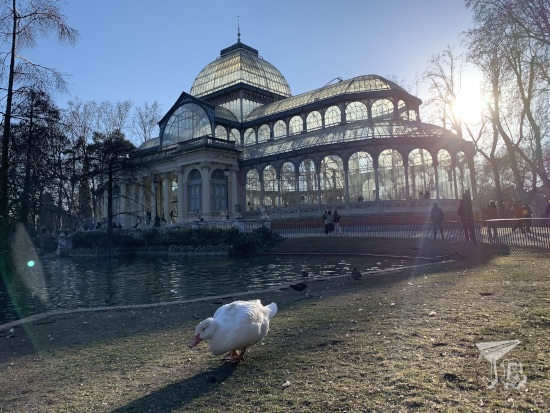
Palacio de cristal. A huge greenhouse with a dome, and two wings. A white duck wanders in the foreground. Between the greenhouse and the duck there's a small pond.

Then, we went to have a snack. Trying to find something on the map before the trip, I’d come across a place called La Mejor Tarta de Chocolate del Mundo, which translates to “The best chocolate cake in the world” and that had to be tried! It was really nice, even if the place was pretty small and felt a bit cramped.
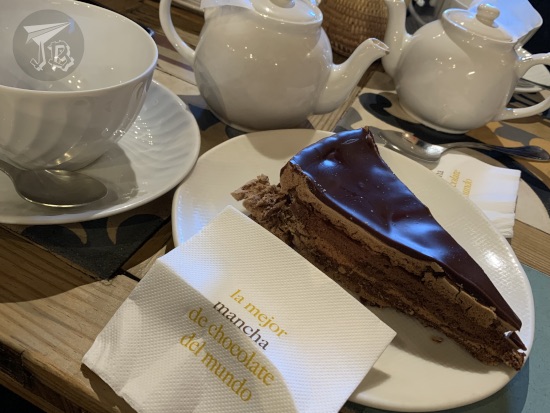
A slice of chocolate cake in front of mugs and teapots

We finally took a stroll down towards the sunset, and I took the train back without much of a hitch, then drove home

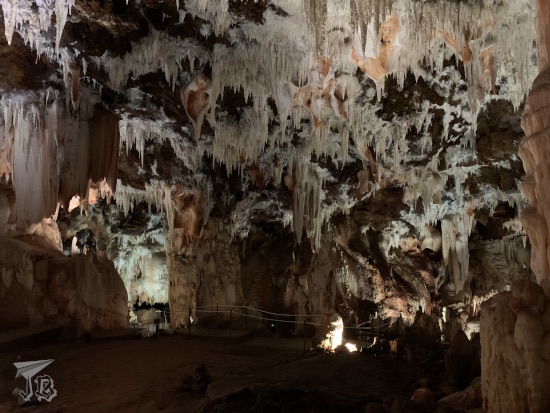
3rd & 4th February 2023: Final Fantasy Distant Worlds 35th Anniversary – Coral – in Barcelona (Spain)

3rd February 2023: Mummies, fish, and music

Though I would not have minded to become a gamer back in the day, my joint issues discouraged this. Thus, my relation with the Final Fantasy saga is tangential. However, my sibling is a big fan of one of the instalments, and last year I accompanied them to Final Fantasy VII Remake Orchestra World Tour in Barcelona in 2021. Having had more time to prepare for this one, we got VIP tickets, and I planned a two-day outing.

Our arrival in Barcelona happened right on schedule, and we walked from the station to Caixa Forum Barcelona to see the exhibit Momias de Egipto. Redescubriendo seis vidasEgyptian mummies; Rediscovering six lives, in collaboration with the British Museum. I am not sure whether the items are part of the actual collection over there or are in the archives, because I don’t really remember seeing any of the mummies. The Barcelona exhibits focus around six mummies and how they lives could have been before their deaths. Aside from the actual mummies and their sarcophagi or coffins, there are objects that they may have used in life, and images of what the bodies look like inside the wrappings.

It was at the very same time interesting and creepy, everything we can get to know through technology about these poor souls who passed away millennia ago. There was information about their age, illnesses, and objects they had been buried with – god statuettes, jewellery, funerary miniatures… One of the mummies in display was that of a small child with his face painted on the wrapping, that was more than a bit creepy, to be honest.

A collage showing a a mummy and a turquoise wrapping; a sarcophagus; four canope jars; three statuettes: Horus, an ibis, Thoth; close-up of a sarcophagus, with bright colours; a mummy and a plain wooden casket.

We took the underground towards the waterfront to visit L’Aquàrium de Barcelona, located in the harbour. With more than 11,000 animals and 450 species, it is the largest aquarium dedicated to the Mediterranean Sea. It was inaugurated in 1995 and it holds 35 aquariums, including an oceanarium with capacity for almost four million litres of water (36 metres diameter, five metres high) with two tunnels at the bottom. Species-wise, the aquarium does not have anything out of the ordinary, but the size of the tiger sand sharks is impressive. There are a few sharks, some tropical fish, axolotls, frogs… and a very fun sperm-whale room to keep the jellyfish in darkness.

A collage of the aquarium. Seahorse; swimming sharks; anaemone; baby dogfish shark; tiny crustacean similar to a prawn; sand tiger shark; octopus trying to eat the viewers; penguin showing off; fabulous tiny jellyfish

We grabbed an expensive-but-convenient bite to eat at the aquarium itself during some of the feeding events to make sure the cafeteria was empty. AFter we had finished viewing all the exhibits, we went on towards the hotel, which was well-placed between the auditorium and the shopping centre. Since check in had been so bad when we went to the previous Final Fantasy concert, this time we had booked different accommodation, and it was a total 180 – everyone in the hotel was super friendly, and we had zero issues. We procured some sandwiches for dinner, then got ready for the concert.

The Final Fantasy Distant Worlds 35th Anniversary – Coral – directed by Arnie Roth is a compilation of the background pieces from all the Final Fantasy games, from the first (1987) to the latest to date not counting the remakes (Final Fantasy XV, 2016). The concert was held at the CCIB – Centre de Convencions Internacional de Barcelona. We had no idea what time doors would open, but I calculated that an hour should be good for queuing for merch and then get to our seats.

By the time we got to the queue, the concert booklet had already been sold out. When we reached the front, my favourite plush toys were also gone. I decided to get the previous year’s CD in order to get it signed later at the meet & greet event that was included in the ticket we had bought. Looking back, maybe I should have asked for the autographs on the tote bag we got for the spending.

The concert had two halves and an encore, and was… strangely not very coral, for something called so. The choir was placed over to one side, and only did three or four songs – they actually did not show up for the whole first half. The set list was accompanied by projected images on the screen and it was super-impessive to see the first 8-bit games at first compared to what the technology of the latest Advent Children (movie from Final Fantasy VII) managed to create.

    First half

  1. Final Fantasy I~III: Medley 2002
  2. Final Fantasy III: Eternal Wind
  3. Final Fantasy IV: The Red Wings ~ Kingdom of Baron
  4. Final Fantasy IV: Main Theme of Final Fantasy IV
  5. Final Fantasy V: Home, Sweet Home ~ Music Box
  6. Final Fantasy V: A New World
  7. Final Fantasy VI: Phantom Forest ~ Phantom Train ~ The Veldt
  8. Final Fantasy VI: Kids Run Through the City
  9. Final Fantasy I~VI: Battle Medley 2022

    Second half

  10. Final Fantasy VIII: Liberi Fatali
  11. Final Fantasy XI: Ragnarok
  12. Final Fantasy XII: Flash of Steel
  13. Final Fantasy VII: Aerith’s Theme
  14. Final Fantasy XIV: Torn from the Heavens
  15. Final Fantasy XV: Apocalypsis Noctis
  16. Final Fantasy IX: Not Alone
  17. Final Fantasy X: 素敵だね [Suteki da ne] (Isn’t it wonderful?)
  18. Final Fantasy Main Theme with Choir ~ The Definitive Orchestral Arrangement ~

    Encore

  19. Final Fantasy X: Zanarkand
  20. Final Fantasy VII: One-Winged Angel

The concert was all right. I did not feel the general chill I had through the previous one. I really liked Liberi Fatali and One-Winged Angel, but I guess I don’t have enough of an emotional connection with most of the games. Aside from the conductor Arnie Roth, we had composer Yoko Shimomura present, and vocalist RIKKI, who is the original singer of 素敵だね in Japanese, and did the live version.

Collage. Three pictures show a classical orchestra with different things projected on the screen behind them - the logo of Distant worlds, several 8-bit screenshots of games, a very realistic depiction of a blond man with a very unrealistic sword. The last picture shows singer RIKKI, composer Yoko Shimomura and conductor Arnie Roth

The M&G was fun, and I got to tell Roth that when I grow up I want to have as much fun as he does at work. They signed autographs and took pictures with people – it was much less stiff than the usual, too. We headed off afterwards for a sandwich, a shower and a good night’s sleep. In general though, not much value for money considering how much more expensive the VIP tickets were, even though the seats were good. Also, the fact that most merchandising sold out showed poor planning.

Collage. The ticket reading the name of the concert, the autographs of the three main artists, and a plush of a Final Fantasy imaginary being, it looks like a white teddy bear with a huge pink nose, a red ball on top of it and cute wings

4th February 2023: Ramen with Friends

We had bed and breakfast at the hotel, and the latter was fantastic. The buffet had both a juice bar and a milk bar – both of which I sampled, of course. I overdid it with the fried egg, I fear, but they were just cooked and it looked just too appetizing not to fall for one. After breakfast, we packed up, vacated the room, and asked the hotel to keep our bags for a couple of hours. We went to the science museum Museu de Ciències Naturals NAT, where we spent a couple of hours. This is the only place where they refused to speak Spanish to us.

The museum is divided in several areas. The first one is “history of the Earth”, where you can see a few interactive exhibits, fossils and reproductions. The second one is the collection of living animals, most of the stuffed, some of them just skeletons. There was another one about fungi – with the edible ones exhibited in tins. Then there was one on plants, and finally rocks and minerals. Not a bad place to spend a couple of hours, but it is just one of those places that takes itself much more seriously than it should, to the point that it felt pretentious. Some items were exhibited over and over again, as if they just wanted to use up the room – I counted at least eight elbaite specimens in different locations, and there were a bunch of reproductions taking up important spaces, you would believe they were originals if not paying lots of attention to the writing, and the blue light made for horrid photographs.

Collage. Four pictures show prehistoric animals in blue light, stuffed animals, a tin of mushrooms along real specimens, a red algae and some shiny rocks.

We transited to Sants train station to drop off my sibling’s bag at the cloakroom there and went on to meet my Barcelona friends E**** and P***o who had offered to take us to eat really-real Japanese ramen. Since I had a feeling that the restaurant would be on the small-ish side, and my sibling’s luggage was a bit oversized since they had cosplayed for the concert, I decided on the Sants detour for convenience.

The restaurant is called KOBUTA ramen i més (Kobuta Ramen and More) and I was amused when all of us made the same choice – tonkotsu miso ramen with an extra of half an egg, and water; then we shared some gyoza (dumplings) and karaage (fried chicken). The restaurant is not cheap, but the food makes up for that, it is very authentic Japanese food.

Collage. A dish of breaded fried chicken, some dumplings, and a bowl of ramen, with the ingredients floating - algae, half an egg, noodles, pork meat and spring onion

Though P***o had to leave early, the rest of us headed off towards the bullfighting-ring-turned shopping centre Arenas de Barcelona. There, we climbed up the terrace for views, then sat down for drinks and a long chat. We also popped into the local comic store, since it was convenient, and eventually we headed off to the station.

Collage. Shopping centre las Arenas, a round building that used to be a bullfighting ring, there are two pictures, one by daylight and another one at night, lit up. There's a picture of the views- two clock towers leading to a palace; finally three glasses together showing brightly coloured drinks - yellow, orange and dark pink

The train ride home was surreal. People playing music on their phones, yelling, talking loudly and making the footrests squeak – apparently there had been some kind of sporting event for kids and a lot of families were coming back home. All in all, not a bad couple of days, lots of laughs, I got to see dear friends and eat nice food, and listen to cool music – in the CCIB, not on the train.

4th January 2023: It’s a trap! (Tendilla, Spain)

It was not really a trap, but a hike. A very unexpected hike, as my family decided that hiking was the best thing to do to get rid of camel-riding soreness. Tendilla is a small village in Spain, dating back from Medieval times. It holds a yearly traditional fair, there are some ruins and historical buildings… It also has a pine forest that was planted in order to control the soil that used to landslide onto the village, and back in the day, a sort of ‘emergency gorge’ was built, in order to channel water in case of a flash flood.

With the years, the pine forest grew. In the 1980s, it was really well-kept, but politics change, and the forest stopped being cleaned and taken care for. These days, the artificial gorge is overgrown with plants and only some dams are seen. Recently, people from the village have tried to create a few hiking routes throughout it, using the fountains and streams that spring as landmarks, called the “Fountain Route” Ruta de las Fuentes. These fountains are old watering holes that were refurbished and some of them re-decorated recently.

The ground was covered with fallen leaves, the sky was bright blue, and the moss was growing – moss takes a long time to grow, so it’s protected. For a while, it was endangered in the area, but now it seems to be doing much better. Unfortunately, both leaves and moss were humid and frosty (literally) – and my shoes were definitely not waterproof.

Collage - a mossy fountain on a leaf-covered ground; a pine forest in dull winter colours; an excavated gorge from the container dam, the gorge is overgrown with green-grey plants

I was very happy when we walked out of the forest and into the trail where the sun was shine. We hiked up to see the brand-new weather vane Veleta, from where we could see the whole village and actually watch sunset, as these days the sun sets early. Then we walked back to the village, not before catching some fallow deer hoof prints, and getting hung on hunting for gypsum crystals, something I used to love when I was a child.

Collage - a pine tree foreest, in golden colours as the setting sun is hitting them, the sky is cleawr blue; a weather pointing southeast

Collage - a fallow's deer hoof print next to a fifty-cent coin for reference- the coin is about half the size of the hoof print; a few gypsum crystals on reddish sandstone

Sunset picture. The sun is sinking behind a low mountain. The mountain gives way to a valley where the village is peeking. On the foreground, there is a capricious-looking grey rock. The sun is a big gold ball flaring on everything

Afterwards, we just sat down to chat and eat leftover Christmas food until it was time to go back home. Not the most exciting thing, one might think, but I had a lot of fun.

20th November 2022: Naturaleza Encendida – Origen (Real Jardín Botánico, Madrid, Spain)

It seems that the Madrid exhibits in the month of December are not being the most successful ones – this time, the weather did not help. After ten day’s worth of rain, it cleared out, but then, on Tuesday, the skies opened yet again. It was raining like there was no tomorrow by the time my train got to Madrid. Boo.

Just after sunset, my sibling and I went to the botanical garden Real Jardín Botánico to see the light show Naturaleza Encendida: Origen (Lit-up Nature: Origins). There had been some issues about the promoter cancelling the activity due to rain with little advance notice, so they decided not to close it. They instead resorted to close parts of the exhibit at random, and herding all the visitors in the same corridors, despite the puddles forming on the uneven ground. After two weeks of rain, something should have been done about it. Moreover, a few of the exhibits were turned off – not sure if just off or high wired. I wish I had some good boots, because I ended up pretty soaked, despite the raincoat and the umbrella. At least I did not ended up in a random puddle.

In 2021, the topic was sea life, and in 2022 the topic is… mushrooms. So there were spores, moulds and… mushrooms. Big mushrooms with lights, or made with small lights, or… just blown with hot air. Lots of mushrooms. The music was a bit creepy though, even if the mushrooms lit up and down with the beat. There is also an exhibit about moulds, with huge screens showing pictures of spores and microorganisms under the microscope.

Most people were antsy and cranky in the rain, and everybody wanted you to move out of the way – in different directions at the same time. A really good thing about it was the cup of hot chocolate that we had booked with the ticket. It was really nice to get in the middle of the cold and rain because it was warm and sweet. We drank it on our way out to the train, and just as we stepped out of the botanical garden… it just stopped raining.

Light display collage: on the upper left, giant red spores; on the lower left a wavy line of lights. On the right, a giant bunch mushrooms illuminated in green from inside the umbrella

Collage of lights display. A mushroom made of little yellow and white lights; a bunch of name mushrooms in red; a hanging mould-like string of lights between two dark trees

All in all, I was not too impressed. I really think that the organisers should have figured out something about the cancellations and the pathways, since they obviously could not do anything about the weather. My favourite display were the “Baymax mushrooms”, even if most of them had lost their illumination, which was actually kind of the point…

A blow-up mushroom made from plastic, looking like it's floating. The  lights inside make it glow green and pink. In the background there is a building gate in red, and a pond between the two.

6th December 2022: Tim Burton’s Labyrinth (Madrid, Spain)

Despite having decided that immersive exhibits were not for me and the fact that I’m not a Tim Burton fan, here I found myself in Madrid to see this one: Tim Burton’s Labyrinth El Laberinto de Tim Burton. Truth be told, I was only there because my sibling asked me to accompany them. I did not find premium tickets for any of the dates either of us was available, but the 6th of December is a national holiday in Spain, and I calculated that if we were there at opening times it might not be too busy, and we would not come across too many kids.

Tim Burton is an American film-maker born in 1958. His first “hit” may have been Stalk of the Celery Monster, which he wrote, directed and animated when he was a student in the California Institute of Arts, in 1979. It presumably earned him a good grade, but more importantly, an animator’s apprenticeship at Disney Animation Studios. With time, he developed a shrill eerie style, with lots of colours and creepy designs that have increased as years have passed, sometimes defined as “gothic fantasy” – I would refer to it as strident and macabre at times, to be honest. His greatest or most famous works include Beetlejuice, Charlie and the Chocolate Factory, Edward Scissorhands, The Nightmare before Christmas, and the first two Batman films.

The exhibition is hosted in a weird place in Madrid, Espacio Ibercaja Delicias, which might look less… abandoned… when it hasn’t been raining for days, I guess. The space consists on a big tent – where we were not going, it might be designed for circuses or so, some kind of bar / cafeteria, and the monster-like building that hosts the exhibit. It is called a labyrinth because out of the thirty-ish wards, you have to go around choosing doors to see different rooms of the exhibit, insomuch that you would need four rounds to see the complete thing. In the end, you choose 15 rooms to see, out of which some are common, and you reach them from whichever previous place you were in. Others are “less common” and you can reach them through several doors, but not all. You enter the labyrinth through a toothy monster’s mouth, then there’s a big button that “decides” on the first room for you.

Collage: exterior of the Labyrinth, which looks like a one-eyed tentacle monster, and the inner entrance monster whose mouth is the curtain you have to cross to enter the different rooms.

In the rooms there are sculptures that represent the characters, some of them with the original clothes that were designed for them (if the film is a live-action), the plain clothes, and on the walls sketches and animations, some original, some “inspired”, and some made specifically for the exhibit. Some rooms are small and rather empty, others are decorated like the movie sets. There are tricks with lights, and some mirrors, but nothing “immersive” about it, and way too many people around considering the size of some rooms.

The idea of a labyrinth is interesting, but I don’t think the price warrants just seeing half of the exhibit, especially considering the big “misses” of not seeing all the The Nightmare before Christmas. We took about 40 – 45 minutes to go through the 15 rooms.

What I am aware we saw included:

  • Beetlejuice
  • Edward Scissorhands
  • Batman and Batman returns
  • Mars attacks!
  • Charlie and the Chocolate Factory
  • Alice in Wonderland or Alice Through the Looking Glass
  • Corpse Bride
  • Frankenweenie
  • Jack from The Nightmare before Christmas

Collage of Tim Burton's characters: Batman's Pengun, Edward Scissorhands, Emily from Corpse Bride

Collage of Tim Burton's characters: Alien from Mars Attack; the clothing from the Chocolatier (I think) in Charlie and the Chocolate factory, surrounded by twirling candy canes; Beetlejuice

Collage of Tim Burton's characters: Jack from The Nightmare before Christmas; The Mad Hatter from Alice in Wonderland, with some giant mushrooms behind; the boy and the dog of Frankenweenie

I think this is an exhibit for die-hard fans that are willing to pay for the premium ticket and see the whole thing twice. What it’s not, and that’s for sure, is for kids.

On both ways, we had some train trouble – delays and technical problems, but nothing too dramatic, and I was home before sunset – but after buying a stack of Christmas candy canes! And my sibling enjoyed, which was the goal anyway.
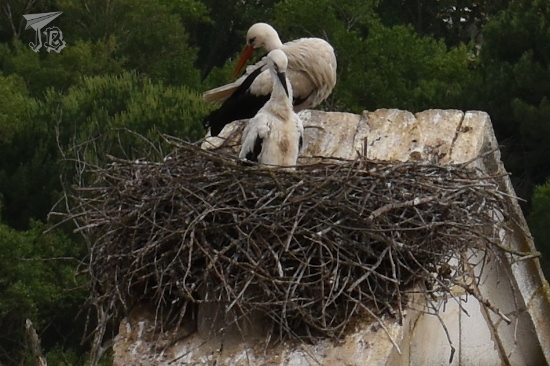
2nd December 2022: “Tutankhamun Immersive Exhibition” in Madrid (Spain)

In 1922, an archaeologist named Howard Carter discovered the tomb of Pharaoh Tutankhamun in the Valley of the Kings, Egypt. Tutankhamun belonged to the Eighteenth Dynasty. He reigned over Egypt around 1330 BCE, and restored the Ancient Egyptian religion. When he died, he was buried in a smaller-than-expected tomb, probably because his death was sudden and unexpected – for a while, it was hypothesised that he had been murdered, but it seems that he died from a combination of an infection and several previous pathologies (nothing to do with the fact that his parents were brother and sister, I’m sure).

The tomb was robbed and restored twice within a few years of Tutankhamun’s death, but it was eventually buried by alluvium brought by flash floods, and the debris from other tombs being built nearby. Thus, when Carter found it in 1922, it was mostly untouched and unspoilt. The death of Carter’s sponsor George Helbert, five months after visiting the tomb, sparked the rumour about a Curse of the Pharaohs, which has inspired countless works of fiction.

In 2022, Spain is living through a fad of “immersive exhibitions”, heavily based on technology, virtual reality and computer games. I was curious about what it would be about, exactly, so I decided to celebrate the end of work season by hitting the exhibit. I was early as the day before there had been a bit of public transport trouble and you usually have more chances of getting in if you’re early rather than late. Thus, I reached Centro Cultural Matadero in Madrid about half an hour earlier than my ticket read, and I was let in without any issue.

The “immersive exhibit” Tutankamón: La Exposición Inmersiva was devised by MAD, Madrid Artes Digitales, which specialises in digital creation and immersive experiences such a this. The exhibit has been designed in cooperation with the History Channel.

The first bit was a number of panels, explaining the “Egyptmania” that swept the world after the discovery of the mummy, the process of mummification, or life in ancient Egypt. The second held a replica of the inner and outer sarcophagus, along with the mummy, then replicas a few artefacts that had been found in the tomb, including the famous golden mask the pharaoh was buried with.

Three part collage: The upper picture shows the mummy of Tutankhamun suspended from the floor, imitating an open sarcophagus with the lid open on top of that. Bottom left: reproduction of the mortuary mask, in gold and blue, it has the typical Egyptian hair and beard. Lower right: reproductions of small objects found in the grave: estelae and human-like small sculptures.

Afterwards, you go into a huge ward with a projection on all four walls plus the floor, which is very spectacular but does not tell you much about the real history of either Tutankhamun or the tomb, it was just a cool video of flashy images with a narration in first person, showing the interior of the tomb, yes, but mostly vaguely-related imaginary, including some of the Egyptian gods. What it did have, and that was neat, was an original newsreel about the opening of the tomb, including Howard’s voice.

Collage of a 3D projection. Left, from top to bottom, views of Tutankhamun's grave: the outer area, in sandstone with sculptures, and two views of the inner painting an decoration, showing figures and hyeroglyphs. On the right, a projection of lotus flowers blooming and turning into gold, representing the soul of the pharaoh.

A large ward with a projection of a starry sky on the walls. At the front, a view of Tutankhamun's mortuary mask, eyes glowing.

A projection of Tutankhamun's mortuary mask, eyes glowing. Around it, golden writing symbols, maybe hyeroglyphs.

The following area had an augmented reality game, which I won (didn’t get anything though), a photo booth that I skipped and some “I bet you didn’t know” facts – about one third of them were common knowledge, and another third was information from previous panels though.

Finally, there was a room with virtual reality glasses and headphones, but my headphones wouldn’t work – I later realised they were not plugged into anything. This represented – I think – the trip to the Egyptian underworld, as I “started” at Tutankhamun’s tomb, then there were volcanoes, and I ended up in front of Anubis, who weighed a heart against a plume – the Judgement of the Dead.

The VR experience there was the last spot in the exhibition – because I skipped the photo booth – before one went into the shop. In the end, I was there for about an hour and a half, but it almost took me two hours to arrive and an hour and half to come back.

Though I don’t regret the mental break, I have decided that immersive experiences are not for me.

12th & 13th November 2022: Santiago de Compostela (Spain)

Here’s a little secret – people don’t like flying on the 13th, even less when it’s a Tuesday. Thus, I came across a bunch of awesome offers for the 13th of December, which unfortunately I could not take up due to work uncertainties. What I could muster was a mini getaway on the weekend of the 12th/13th of November, to the northern Spanish town of Santiago de Compostela. There were a few reasons for this choice – one, cheap flights; two, I’ve recently started considering a route through the so-called Camino de Santiago (St. James’ Way); and three, pandemic shuffled ‘Holy Years’ round so there was a special gate to the cathedral open that I wanted to see. I flew out around noon on Saturday and came back on Sunday night. It was a perfect plan for a decompressing getaway.

Santiago de Compostela is known as one of the most important pilgrimage cities in the world. According to the Christian tradition, the tomb of Apostle James was found in the area in Middle Ages (different sources vary throughout the 9th and 11th century), and the pilgrimage to visit the remains became one of the most important in the Christian faith, alongside Rome and Jerusalem, to the point that the pavement proudly states that “Europe was built on the pilgrimage to Santiago”. While I’m not religious, I have a thing for religious architecture, and as mentioned above I’ve been thinking about the Camino for a while, and visiting the goal felt a good way to start organising how I wanted to look at things.

However, let’s say it wasn’t the most perfect getaway ever. Though the flight was on time, and pretty short, there was turbulence – not something too out of the ordinary, but here’s something you might not know about me. Back in the mid-nineties, I sort of crash-landed in the Santiago airport, so let’s say I was not so invested in a bumpy flight.

As the flight had been very cheap (about 30€), I had decided to splurge a little in the hotel – and I found a not-so-bad offer of half-board at the Parador de Santiago – Hostal Reyes Católicos, downright at the centre of the city. It is located in the old pilgrim hospital, and it is a magnificent building, aside from a five-star hotel. I arrived around 14:00, and the room was not ready – fair enough. I wanted to get there early in order to drop off my luggage, and make sure I could arrange my dinner reservations for a convenient time. One of the reasons I decided to book half-board in the Parador was to guarantee myself a meal late in the evening, as I had booked a walking tour at 20:00, and the main restaurant served dinner till 22:45.

Wide shot of the Parador. It shows a severe building with an ornate gate. The sky is bright blue.

Unfortunately, the check-in staff “had booked me” at 20:30, and they asked if that was okay. I replied it wasn’t, and explained the reason stated above – the staff then said that they could accommodate me at 22:00 at the secondary restaurant, but not at the main one. I answered that then I’d have dinner at 22:00 at the secondary restaurant then, but the staff asked me to check the menu. I stated that it did not matter. I needed my dinner to be at 22:00, and if the main restaurant wasn’t available, it would have to be at the secondary one. The staff asked me to check the menus, and I explained again that I had a tour from 20:00 to 21:30 – I needed dinner at 22:00. I thought that was resolved, and as it was too early to get a room, I picked up my camera, left my backpack in the locker room, and went on my merry way to explore the outdoor “monumental route” within the historical city Ruta Monumental de Intramuros. The old city of Santiago is part of the Unesco Heritage Site Routes of Santiago de Compostela: Camino Francés and Routes of Northern Spain Caminos de Santiago de Compostela: Camino francés y Caminos del Norte de España.

As I had tickets for different activities in the cathedral booked for the previous morning, and the Sunday forecast was rain, I decided to do most of the walking on my first afternoon. I started off in front of the cathedral façade in the square Praza do Obradoiro (the Artisans Square), which hosts the town hall in the former Neoclassical palace Pazo de Raxoi, the Parador itself, and the main – but closed, will get into that later – entrance to the cathedral Santa Apostólica y Metropolitana Iglesia Catedral de Santiago de Compostela, with its Baroque façade called Fachada del Obradoiro.

Baroque façade: two towers and twin set of stairs, fenced away.

I walked around the cathedral, and stopped at all the other squares: Praza da Acibecharía (the Black Amber Workers Square), Praza da Quintana de Vivos (Villa of the Living Square) and Praza das Praterías (the Silversmiths Square).

A collage of views of the cathedral of Santiago.

I walked down Rua do Villar, which is the closest to a main street the historical town has. I strolled around the historical centre – there are many interesting buildings and churches, alongside the market. At some point I entered a bakery, but I kinda ran away when I heard the prices they were charging.

Santiago Route.  An archade, a fountain, an ornate corner with a coat of arms carved into it.

After an hour and a half or so, I found the convent-turned-museum Igrexa e Convento de San Domingos de Bonaval that has become the ethnological museum of the Galician people Museo do Pobo Galego. The museum itself was not too spectacular, but the building itself was fantastic. One of the most amazing things was the triple-helix staircase that joins the different floors on one side, and the remains of the gothic church (where I got to climb the pulpit). To the side there’s the pantheon for illustrious Galicians, including one of the few female historical figures in Spain – poet Rosalía de Castro.

Monastery and museum. The pieces include a humanoid stone idol, some Christian figures in polychromated wood, and two pipes

View of the triple staircase, from above, from below and through the door from one of the sides.

A view of a gothic chapel, showing an empty altar.

This was around 16:30, and even if I was not even a bit hungry, my legs shook a little. Thus, I decided that I needed to find a supermarket to buy a snack – I only had coffee before I left for the airport at 9:00. Before getting to the supermarket though, I walked around the former orchard and graveyard of the convent, now a picnic-friendly park Parque de San Domingos de Bonaval, full of ruins and fountains.

The previous church, from outside, on the right. There's a winter tree in front, and some old niches on the left wall.

I grabbed my snack and went back to the monumental route until I was back at the Praza do Obradoiro. I walked around to see the sunset, and caught a glimpse of the light playing on the façade of the church Igrexa de San Frutuoso, and some nice views from the adjacent park (which turned out to have been another graveyard) Xardín do Cemiterio de San Frutuoso.

Santiago sunset. Upper picture shows the church of Saint Fructuoso, and the lower one a view of the nearby park with the sun setting in the background

It was around 18:00 at that time, so I could finally check in – which I did, only to find out that the staff I had talked to had decided not to book my dinner in the end, which lead to me needing to explain about my tour again to a new staff who told me they couldn’t book me at 22:00 on the secondary restaurant! It had to be at 21:45, but they could notify the restaurant that I would arrive a bit later. I was really not impressed by the whole thing, even less when I apparently needed a bellboy to guide me to my room and carry my backpack– and of course get tipped.

I had my snack and then went on to explore the building. As I did, the sun completely set, so the different lights were cool. The Hostal Reyes Católicos used to be the pilgrims’ hospital. It is a huge rectangle with four interior cloisters named after the four Christian Evangelists, the inner areas having been refurbished into the rooms.

The four gothic cloisters of the Parador. Two have some greenery on them, the other two are just grey and built.

A few minutes before 20:00, I left for my tour. Although I’m not a big fan of tours and group activities, I had had my curiosity piqued by a “theatrical visit” of the historical centre of the town called Meigas Fóra. In the area of Galicia, a meiga is a type of traditional witch, good or bad, depending on what side the person speaking about them is – in this case, the guide being a supposed-meiga, of course they were all neat and nice. The tour was supposed to tell about the different legends and interesting supernatural trivia of the town, but just ended up being a bit watered-down walk around those graveyards-turned-parks I had walked before. The coolest thing was finding the pilgrim’s shadow Sombra del Peregrino, a fun game of light-and-shadows in one of the squares around the cathedral.

A view of the cathedral of Santiago at night, illuminated, on top. On the bottom, a column casts a shadow onto the wall behind it - it seems to be that of a man with a walking cane and a travel hat.

Hilariously though, as we were walking, someone approached me to ask in wonder if on top of taking the tour alone, I was in Santiago all by myself, in total awe of someone travelling on their own. She said that she would never be able to do so – while she took selfies of herself because the people she was “touring” with could not be any less interested…

After the tour I went to have dinner – guess what? At 22:00 h! Let’s say that it was not the greatest experience. The restaurant staff had their hands full with a table of around 20 drunk “pilgrims” who had come all the way from South America and were rightfully celebrating – albeit loudly and a bit obnoxiously (all that pilgrim wine, no doubt) – that they had reached the end of the Way. The rest of the patrons were, including myself, four one-person tables, which made me wonder if they just don’t book one-person tables in the main restaurant after the first shift. The floor staff – basically one working waiter, and one wandering waiter – was overwhelmed by the table, and it took me over an hour to finish my dinner – which was some local octopus (pulpo a feira), a roasted great scallop (Pecten maximus, not only a delicious shellfish, also the symbol of the town and the related pilgrimage, called vieira in Spanish) and a piece of the typical almond pie (tarta de Santiago).

Dinner: pulpo, a scallop and a piece of cake.

Then I went to my room for a nice hot shower and to get some sleep. I was surprised then to find no extra blanket in the wardrobe, though there was an extra pillow. This was around midnight already so I decided not to hit reception for the extra blanket and just cranked up the air-con on and off to stay warm. I slept on and off, too, but it was not too much of a long night.

The next morning I had breakfast and set out for my day at the cathedral, Santa Apostólica y Metropolitana Iglesia Catedral de Santiago de Compostela. Santiago was built around the 7th century legend that the apostle James the Great, Santiago el Mayor, was buried in the area of Galicia, after having reached Spain to convert it into Christianity. In the 9th century, a tomb was discovered among some abandoned Roman ruins, and the local bishop had “the certainty” that it was the Apostle’s tomb. The bishop informed the King, who was the reported first pilgrim, and later ordered that a church should be built to commemorate the finding.

As the number of pilgrims grew, the church became too small, so subsequent temples were erected. The current interior was built between the 11th and the 13th century in a very pure Romanesque style, but the exterior was covered in the 18th century, in a very adorned Baroque style, which is also the style of the altar.

The most important piece of the cathedral is the Portico of Glory Pórtico de la Gloria, the Romanesque entrance to the 12th-century cathedral, with 200 sculptures carved in stone in the three-archway portal. The entrance now is locked away, you have to pay to see it, and photographs are not allowed.

For starters, I climbed up to the roof of the cathedral and the bell tower – not really the bell tower but the “rattle tower”, as the bells chime on the eastern tower, and the rattle is played on the darker, western tower. The roof was restored as recently as 2021, and from there there are some nice views of the town.

The towers of the cathedral from the room, and some aereal shots - one shows the Parador cloisters from above.

Between visits, I went inside the cathedral, where the pilgrims’ mass was about to start. I might have stayed out of curiosity had I been in town for a longer period. Then I visited the portico – since pictures were not allowed, I’ve rescued some 1995 ones from when I were in town as a teen.

Three shots of the  very baroque altar in Santiago - it is heavily decorated and painted gold. On the bottom right, a silver urn, also very ornated, supposedly where the remains of St. James are.

A collage showing several sculpures of the Portico of Glory - Romanesque statues richly coloured and decorated, they look placid

After wandering the cathedral for a bit longer, I made the most out of the last hour of sunshine to head to the park Parque da Alameda to find the spot Miradoiro da Catedral next to a huge centennial eucalyptus tree (Eucalyptus globulus labill) Eucalipto centenario, a 120-year-old specimen, considered one of the oldest eucalyptus trees that was planted in Europe after captain Cook “discovered” Australia and the species was introduced by Fray Rosendo Salvado.

A panoramic view of Santiago, showing the cathedral.

My next stop was the museum of pilgrimages and Santiago Museo de las Peregrinaciones y de Santiago, which was free due to the Covid recovery plan. It features a collection of items related to Saint James Way, and other important pilgrimages of the world, including the Japanese Kumano Kodo [熊野古道], and the Muslim Mecca Pilgrimage Ḥajj [حَجّ]. The upper floors are dedicated to the hagiography of Santiago / James through the Way and in the city.

Museum of Pilgrimages. A collage that shows a wooden statue of Santiago on a white horse, sword raised; other depictions of Santiago as pilgrim; some paper scallops decorated by kids; and a Japanese sacred gate.

Later, even though I should have gone to eat a bite, I headed to the monastery and museum Mosteiro de San Martiño Pinario, religious complex built between the 16th and 17th centuries, though the inner areas and chapels date from the 18th century. Today it’s a cultural centre, and alongside the church, it features a museum with block prints, fossils, an ancient pharmacy… The church has the most baroque Baroque altarpiece I’ve ever seen, and two choirs – one behind the altar, and the other one up on the second floor.

Exterior of the monastery, including the double downward staircase, and a picture of the interior, showing a very Baroque altar painted in gold.

Finally, I stepped into the museum of the cathedral Museo de la Catedral de Santiago de Compostela, which features the entrance to the cloister, library, and the upper galleries, aside from artistic and religious treasures such as the original stone choir, wooden carvings, and tapestries. I was also able to access the upper galleries and look at the rain in the Praza do Obradoiro, and later the crypt.

A collage showing the cloister of the cathedral of Santiago while it rains outside, and the former Romanesque choir, carved in stone.

Romanesque arches and columns built in stone, and a cast ceiling.

After one last visit to the cathedral and its shop, I got myself a last souvenir – a silver and black amber bracelet I had seen upon arrival, and took a taxi back to the airport in order to fly back. All in all, I was not too impressed by the city nor its inhabitant, and I was pretty disappointed in the Parador. I think it has put me off the idea of doing the Camino as much as I thought I wanted to, but not every trip is perfect, I guess, and I hope my memories warm up with time.

A silver and black amber bracelet. The silver is very fine, and the gem is bright black.

Walking distance: around 11.68 km (18659 steps) on Saturday and 10.58 km (16931 steps) on Sunday, not counting airport transits

15th October 2022: The castle in Olite and the cathedral in Tarazona {Aragón & Navarra Oct. 2022}

Today, Olite is not much of an impressive town – but it has a dream castle Palacio Nuevo de Olite. The original fortress is reported to be a first-century Roman building where the Old Palace stands now. The first mention that we have of the old castle dates from the 13th century. In 1388, as Carlos III of Navarra (whose grave we had seen the previous day in Pamplona) starts the process of clearing the area surrounding it, buying houses and so. The official ampliation of the palace started in 1399, and the actual construction of the new castle in 1402. First, the keep was erected, then the surrounding towers, without much planning, giving was a capricious space with staircases, yards, and even a hanging garden. Construction ended in 1420.

When Navarra was annexed to Castille, the decline of the castle started. Later, during one of the several Spain-France wars, soldiers’ distraction caused the first fire in 1794. later, in 1813, the castle was intentionally burnt down in 1813 to avoid that the French made a stronghold out of it. The wood-decorated room were completely destroyed and only the stone walls remained, although barely. The castle was used as makeshift quarry from then on, until in 1902 the modern regional government bought it. In 1925, after considering three proposals, it was decided too restore the castle using Jose Yárnoz Larrosa, who became the main architect. He chose a restoration style known for aiming to make things “as they should have been” – so rather idealistic. And one has to admit that the castle does look pretty cool, even though apparently it does not preserve the original structure too much. Throughout this time, a mulberry tree might have thriven for about 500 years.

The point of this is that the castle is cool. Pretty much fake, but cool.

After having breakfast, I set off for a few pictures. It was not too early in the morning, even, but at least the square was empty and clean, unlike the evening before. I stopped to examine the entrance of the church Iglesia de Santa María la Real. The church dates back from the 13th century, and is famous because of the decoration of its main façade and the sculpture around the portal, though personally, I was more taken by the atrium just in front of the church. While it does obstruct the view of the façade, the architectural ensemble ends up looking super cool – except for the little porch built in the 2015 restoration that… well… might be necessary but does not allow for the best view.

Church Santa María la Real: Gothic façade with an arched atrium in front of it. The portal is decorated with religious figures

I went around the complex formed by the two Medieval castles Palacio Viejo and Palacio Nuevo de Olite, the walls and the old egg-shaped building that used to work as a snow-powered fridge of sorts.

Collage with different sights of the new Olite palace. The walls, archs and merlons are shown, brown-gold colour. Some of the pinnacles have grey slate pinnacles.

We went in. The restoration of the palace is “in style” so you cannot tell what is new from what it is not. The inner area includes access to the towers, the keeps, the so-called King’s gallery, the hanging garden, and the centennial mulberry tree. I climbed about half of the towers and the keep itself, and I have to say it was pretty fun.

Palace of Olite - Gothic archways, one bare, one full of vegetation, and views from the towers, showing the merlons, pinnacles, and the rest of the towers

Palace of Olite - looking from the interior, the structures show vegetation and the pinnacles. The last part of the collage shows the mulberry tree

Unfortunately, when we left the castle, we were not allowed into the church Iglesia de Santa María la Real as there was going to be a wedding – despite being no notice outside but the normal opening times, within which we were. Sometimes I feel tempted to take pictures even when I know it’s not completely okay, in order not to miss opportunities later. Before we left town, we found a nice viewpoint to try to catch site of the whole castle.

Palace of Olite from afar. It looks like a fairytale castle with pinnacles, walls, merlons and flags.

Afterwards, we drove southwards towards Tarazona, back in the region of Aragón. It is not a big town, with but an interesting point to get to know – the cathedral Seo de Nuestra Señora de la Huerta de Tarazona. Built throughout the evolution of Gothic art, between the 13th and the 15th century, it was later enriched in the 16th century with Renaissance decoration and interior, and sprinkled with Mudejar details. The cathedral is in the middle of restoration, and the organ is fenced off. The cloister shows lots of panels on the works being done, too.

Tarazona cathedral - outside. The façade looks weirdly grey, and the belltower is on the right, darker. A close-up of the dome shows its Mudejar influences

Interior of the Cathedal of Tarazona, showing Gothic columns and the Baroque altarpiece. The cloister is modified Gothic with arcs and spikes. A close-up of the Mudejar-style bell tower.

We had lunch after visiting the cathedral, but we did not feel like staying around until the archaeological gardens. Thus, we just took the car back home, even though we might have been better off checking out some more places in town. Lesson learnt then, more planning is required in this kind of escapades…

14th October 2022: Pamplona, the city of the bulls, and Olite {Aragón & Navarra Oct. 2022}

In order to avoid crossing Zaragoza, we tried to go around it. Unfortunately, trying to save up 30 minutes, we ended up wasting an hour at the entrance of the highway, and we reached the city of Pamplona or Iruña. Today, it is the capital of the region of Navarra, which is roughly the size and shape of the old Kingdom of Navarra, which existed roughly between 1162 and 1512, when it was conquered by the Catholic King Fernando.

There had been a slight misunderstanding on who was going to plan the day – I was convinced my father had not wanted me to do it, but when we arrived he turned to me and I was supposed to know. In summer, I had drafted a small itinerary, but as he was supposed to have taken charge, I had not gone further. It turns out, I should have. Fortunately, I still had the map on my phone and the opening schedules on my travel notebook. Unfortunately, I had not really delved into all that the city has to offer and we missed a few interesting thing

Thus, I tried to take charge, but not too much because it’s hard to balance that with my parents. Even if we have travelled together before, I tend to let them do the planning and only insist on some stuff I want to do or see, and that’s how they end up at dinosaur parks (≧▽≦).

We left the car in a parking lot underneath the congress centre and walked towards St. Nicholas Church Iglesia de San Nicolás de Bari Eliza. The first building dates from the 1100s, and it was built along the now-disappeared walls, as a defensive construction at the same time as a religious one. It was demolished and rebuilt location makes the building awkward, and to add insult to injury, we arrived almost at the same time as mass started, so we just took a quick look.

Iglesia de San Nicolás de Bari Eliza - exterior with pointed arcs, and inside, showin the altar

We walked to the next church dedicated to St. Lawrence Iglesia de San Lorenzo, actually associated to the Unesco World Heritage Site Routes of Santiago de Compostela: Camino Francés and Routes of Northern Spain Caminos de Santiago de Compostela: Camino francés y Caminos del Norte de España. The current building is Neoclassic, and the façade was rebuilt at the beginning of the 20th century when the original was damaged during war. On the right of the main nave, a side chapel holds the famous sculpture of St. Fermin, the patron saint of the town. The chapel was built between 1696 and 1717, when the sculpture was placed there. Every 7th of July, the sculpture is taken out in the religious procession. From the 6th of July and for a week, Pamplona celebrates its local festivals, famous around the world for the encierros, or running of the bulls. While there are similar runnings all throughout Spain, the encierro in Pamplona was popularised by Ernest Hemingway, the American novelist, in his work “The Sun also Rises” (1926).

Church of Saint Lawrece - Neoclassical façade and interior, with the sculpture to Saint Fermin, the patron saint, in a red cape and a mithra, surrounded by red and precious metals.

We continued onto main street Calle Mayor, which ends at the main square Casa Consistorial de Pamplona, which opens to the main square Plaza Consistorial. The building was erected between 1951 and 1953, though the project kept the 18th century façade, halfway between late Baroque and Neoclassic.

Pamplona town hall / council hall, with flags hanging from the balcony.

We continued onto the cathedral dedicated to the Virgin Mary Catedral de Santa María la Real de Pamplona. The building is Gothic (French Gothic, actually), with a Neoclassical façade designed by Ventura Rodríguez (who also worked on the Basílica del Pilar in Zaragoza). One of the most interesting things in the cathedral are the paintings on the walls and columns themselves, just non-religious decorative motifs. In front of the altar lie the tombs of King Carlos III of the Kingdom of Navarra, and his wife Leonor of Trastámara (or Castille).

Cathedral of Pamplona, including a close-up of the bright polychromy in red and blue, and the altar, from far away and a close-up. The most distinctive feature are the pointed arched and the very clean masonery.

In the inner area, there is a beautiful cloister, and you can climb into the false ceiling, see the kitchen of the former convent. And, let’s not forget – they have a stamp, because it is one of the “official” starting points of St. James Way, Camino de Santiago, and also part of the Unesco World Herirage Site related to it.

Collage: Cloister in Pamplona cathedral. The gothic ars are pointed and ornate, standing on bright green grass. One of the corners shows a fountain, the other the iner walkways

We stopped for lunch, then we walked by one of the “iconic” points of the bull-running, the corner at one of the streets of the route – Esquina de la Estafeta, and continued on until we reached the bullfighting ring Plaza de Toros de Pamplona, but since we are not big into the culture, we did not enter.

We did stop by the sculpture to the bulls and runners Monumento al Encierro, a huge bronze composition with a number of real-life pieces: nine bulls (six fighting bulls and three guiding bulls) and ten runners.

This bronze sculpture represents several life-sized bulls and runners. The runners are in front of the bulls, and one of them has been trampled.

Finally, we went to have a stroll alongside the walls of the former citadel Ciudadela de Pamplona. Although now it is a park, and only the foundations are left, the Citadel was one of the most important defensive constructions in the Spanish Renaissance, in the shape of a five-pointed star.

Several angles of the Ciudadela of Pamplona park. Not much is seen except for the building foundations, though they stand two or three metres high.

After that, we took the car and drove towards the town of Olite also known as Erriberri , where we were going to sleep. The town was home to the Monarchs of Navarra, and today there are two distinctive buildings – the old palace Palacio Viejo de Olite, where the Parador de Olite stands, and the new palace Palacio Nuevo de Olite. Originally the most extravagant Gothic castle in Europe, it burnt down during the war against the Napoleonic troupes, and was rebuilt in 1937 using the philosophy of bigger, cooler more teeth. We checked in at the Parador and I collected my stamp. From our room, we could see the main structure of the old palace, as we had a very long balcony.

Old palace of Olite. There is a tower on the right and an old Medieval house to the left. The building is made of irregular masonery and the windows are perfectly rectangular.

We went for a walk, and were surprised at how many people there were in the area. We sneaked into the church Iglesia de Santa María la Real, but did not take any pictures as (once again!) mass started. We planned to come back the following morning as it was barely a 30 seconds away from the door of the Parador.
On the left, a modern red-brick house stands on older arcs. The façade sports a protection made of intricate white ironwork.
On the left, a Romanesque church, blocked by construction and a tractor.

We walked around for a little and were not too impressive by the Medieval city centre, but we did find the typical balconies and the Romanesque church of St. Joseph Iglesia de San José.

We were beat, to be honest, it had been a stressful day after a short night’s sleep, so we turned in early after dinner. I did not even think to wander round to see if I could get any cool pictures of the area, because the area was packed and I was exhausted.

13th October 2022: Serrat in Zaragoza {Aragón & Navarra Oct. 2022}

Joan Manuel Serrat was born in Barcelona in 1943. He is a singer, songwriter, composer, actor, writer, poet and musician, whose long career started in 1965. Since then, he has sung first in Catalan, then in Spanish, and finally in both languages. In 1968, he was involved in a Eurovision controversy as there was a strife about singing in Catalan or Spanish, and in the end he was replaced by another artist – who ended up winning.

Throughout Franco’s Dictatorship, Serrat lived an unstable balance between the media veto caused by the Eurovision scandal, the censorship of some of his lyrics, and his growing popularity both in Spain and Latin America. During the 70s, he became a vocal protestor against the Dictatorship, with his songs, actions and words, which ended up with another veto and an exile to Mexico. In a way, he became the symbol of the discontent of the twenty- and thirty-somethings that had grown in the Spanish post–Civil War, who were then wading into adulthood. Serrat’s song Mediterráneo (Mediterranean Sea) has been repeatedly called the best song in the history of Spanish pop music. The album stayed as number 1 in Spain for weeks despite the censorship – since then, he has collected innumerable accolades and homages.
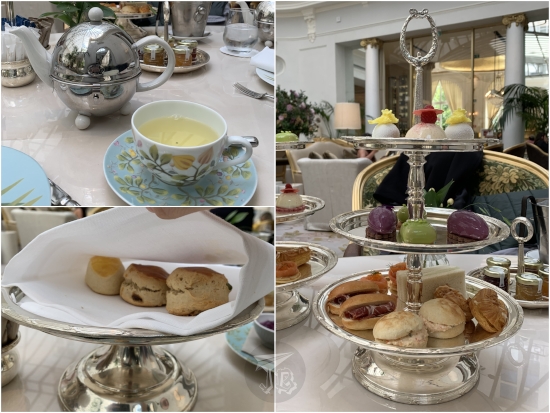
My parents… I don’t think I can call them fans, but they have listened to Joan Manuel Serrat for a long time – as a matter of fact, my father used to translate songs into Spanish for my mother back when they were young, as he spoke Catalan and she did not. But they are not concert people, so I was slightly surprised when back in April my mother commented in passing that, had tickets not been sold out, she would have liked to attend the Madrid concerts of Serrat’s goodbye tour El Vicio de Cantar. Serrat 1965 – 2022 (Singing is a vice. Serrat 1965 – 2022). I put the Internet machinery to work, and I found tickets for Zaragoza on the 13th of October. At that time, my parents asked if I would be interested, and I said yes, as he is indeed one of the most important singer–songwriter of the 20th century in Spain.

Ticket: Serrat, el vicio de cantar

The problems started when I could not get the day off, so that meant driving there as I left work. I could have got away with leaving half an hour earlier to get to the train as they drove off earlier, but they refused, so we ended up getting to Zaragoza around 17:00. Checking into the hotel took 40 minutes due to the slow check-in process, and luckily we were on the third floor. Funnily enough, it seemed that everyone in the hotel was there for the concert, so a lot of older people not used to travelling nor hotels.

The concert was due to start at 21:30 in the local sports centre Pabellón Príncipe Felipe, and there was a delay of about 15 minutes. To be honest, I did not expect it to be such a powerful experience – I mean, we’re talking about a 79-year-old man here, I did not think he would still have such a powerful voice nor presence on stage. There were a lot of songs I did not know, but the ones I had heard before still retained the vitality of records as old as the 80s! The set list was a remix of his most iconic songs in Spanish, with a couple of them in Catalan language:

  1. Dale que dale – “Go on and on”.
  2. Mi niñez – “My childhood”.
  3. El carrusel del Furo – “Furo’s carrousel”.
  4. Romance de Curro el Palmo – “The romance of Curro el Palmo”.
  5. Señora – “Lady”.
  6. Lucía
  7. No hago otra cosa que pensar en ti – “I keep thinking about you and nothing else”.
  8. Algo personal – “Something personal”.
  9. Nanas de la cebolla – “Onion lullaby”, with lyrics from a famous Spanish poet who wrote the poem in prison, when his wife wrote to him that there were only bread and onions at home, and she had to breastfeed their baby.
  10. Para la libertad – “For freedom”.
  11. Cançó de bressol / Canción de cuna – “Lullaby”.
  12. Hoy por ti, mañana por mí – “Today it’s you, tomorrow it’s me”.
  13. Tu nombre me sabe a yerba – “Your name tastes like herbs” – grass, actually, but it sounds horrid in English.
  14. Los recuerdos – “Memories”.
  15. Es caprichoso el azar – “Fate is whimsical”.
  16. Hoy puede ser un gran día – “Today can be a great day” – I keep telling myself this.
  17. Pare – “Father”.
  18. Mediterráneo – “Mediterranean Sea”, I can totally understand how this is considered one of the best songs ever in Spanish.
  19. Aquellas pequeñas cosas – “It’s the little things”, started the encore
  20. Cantares – “Songs or Poems”, with lyrics by Antonio Machado, one of the greatest Spanish poets in the Spanish 20th century.
  21. Paraules d’amor – “Words of Love”.
  22. Penélope – though I knew this song, the lyrics were different from the ones I was used to.
  23. Fiesta – “Festival”, a bit of a high-inducing song to finish the concert way past midnight!

Serat concert: Stage with signature decoration, and two shots of the concert

It was hilarious to see all these sixty- and seventy- year-olds get out from the pavilion and walk to the hotel, all pumped up and way beyond their bedtime. By the time we arrived at the hotel, there was a queue at the lifts! All these exhausted boomers, hyped up and at the same time with no more energy left. That is when we were so happy to be on the third floor and not something like the seventh or eight (≧▽≦). The bed was comfortable but I did not sleep much.