21st & 22nd July 2018: Swan Lake in Madrid (Spain)

21st July: The housefront

This Saturday/Sunday getaway was a birthday present, and I have to admit that I was super excited about it – the main part of the present was a hotel night in Madrid and tickets to watch the (British) Royal Ballet in the Spanish Royal theatre, the Teatro Real. And I mean stall tickets, I was over the moon.

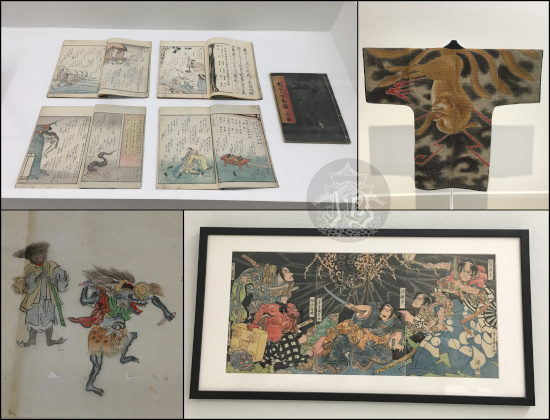
The day started at the Museo de la Real Academia de Bellas Artes de San Fernando, where there was an exhibition about yokai, the Yumoto Koichi Collection (Miyoshi, Hiroshima). It was called Yokai: Iconografía de lo Fantástico (Iconography of the fantastical), and it was rather interesting. It holds a collection of different items related to mythological creatures of Japan, yokai [妖怪] – there are scrolls, woodprints, games, pottery, even clothes and accessories. This was an interesting exhibition, and having seen it would later save me a trip to Miyoshi, allowing me to discover Takehara instead.

Rolls of paper, kimojo jacket and blookwood painting, showing different scenes and beings from Japanese mythology

After the exhibition, we went to the Green Tea Sushi Bar & Cocktail Room, which turned out to have the most overpriced mediocre sushi ever. The place was ridiculously expensive but fortunately we had booked with a special 50% discount, which made it bearable. However, fair is fair, and the tataki was delicious, and the chocolate coulant turned out to be amazing.

Lunch. Sushi boat, sald, tuna tataki, edamame, and an ice cream scoop

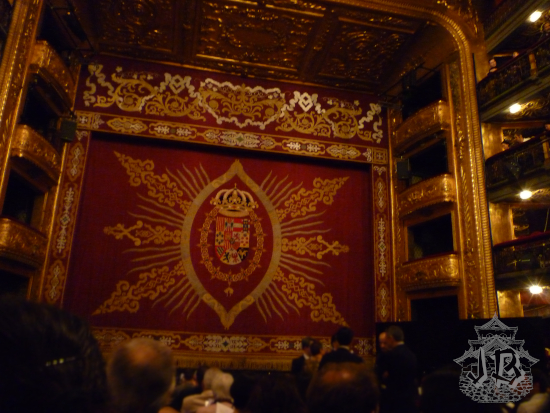
The hotel was in the right smack of Madrid, a short walk away from the “royal theatre” Teatro Real and we had tickets for 17:00 – to watch Swan Lake performed by British The Royal Ballet. Before sitting down we took a small exploration walk through the different rooms, including the ball room. I really loved the whole building and in particular the blue room and the ball room.

Royal theatre snippets - the main hall, the stage, the stands. Most curtains are a rich burgundy colour.

Swan Lake happens to be my favourite ballet – I love Tchaikovsky in general, though the stars have always aligned against me watching Sleeping Beauty. In Swan Lake, the evil sorcerer Rothbart turns maidens into a swan during the day, and they turn back to women at night as long as they are near the enchanted lake. The ballet officially opens with Prince Siegfried celebrating his birthday. He receives a crossbow as present, and he is later told by his mother that he needs to choose a bride the next night. As he becomes upset his friend suggest going hunting. In the forest, Siegfried becomes separated from the group and meets Odette, one of the swans. She explains of her predicament, and they eventually fall in love, and Siegfried invites her to the ball in which he needs to choose his bride. The next night, however, Rothbart sends Odette’s magical doppelgänger, to whom Siegfried swears love. Witnessing this in swan-form breaks Odette’s heart. As he realises his mistake, Siegfried makes it back to the lake.

The ending of the ballet changes. Sometimes it is a happy one when the spell is broken. The original ending has both Siegfried and Odette dying together to break the spell. Another alternative is that only Odette dies, but Siegfried manages to kill Rothbart and break the spell – this was the one that the Royal ballet played, and it managed to make me a puddle of happy goo. As Siegfried raises Odette’s inert body over his head, I shuddered all over. It was magnificent.

Snapshot of the credits, Showing Akane Takada as Odette and Odile, William Bracewell as Prince Siegfried, and Thomas Whitehead as Rothbart

The cast after the play taking their bows.

After the performance was over, we had dinner in the Plaza Mayor and then walked towards Puerta del Sol, then back went to the hotel to catch some sleep.

Square Plaza del Sol lit by night

22nd July: The backhouse

On Sunday we went back to the Teatro Real because we had booked one of the visits they offer, the technical one. During this visit you walk through the inner areas of the theatre, and even more interestingly, the upper area.

We saw the main hall, and afterwards we went first onto the backstage, then the backstage, and finally onto the stage where the Swan Lake props still stood, so that was really cool. The visit finished climbing up to the upper area of the theatre to see the views and the theatrical rigging system.

Empty royal theatre, showing the stalls from the stage, the backstage, and the view of the cathedral and the royal palace from the upper windows.

Finally, we had a bite to eat and we headed home for the weekend, and I have to say, I was happy as a skunk.

30th June 2018: Spanish breakfast, Japanese entertainment (Madrid, Spain)

30th June 2018: Spanish breakfast, Japanese entertainment (Madrid, Spain)

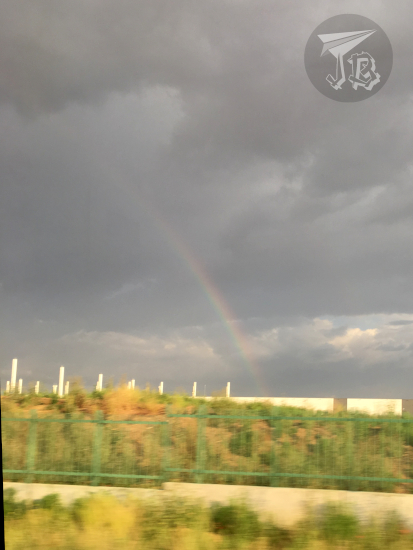
My friend C***** came over to Madrid for one of those crazy crazy things that we do – a crazy Saturday. She took a bus overnight and I went to meet her up for breakfast. The day started with a good omen, because I caught a rainbow around 7:30.

To celebrate that we had met up for the first time in a long while, we went to the most famous chocolaterie in Madrid, Chocolatería San Ginés for chocolate and churros. As her bus arrived in the early morning, I think we were there around 8:30 as I took the first train available.

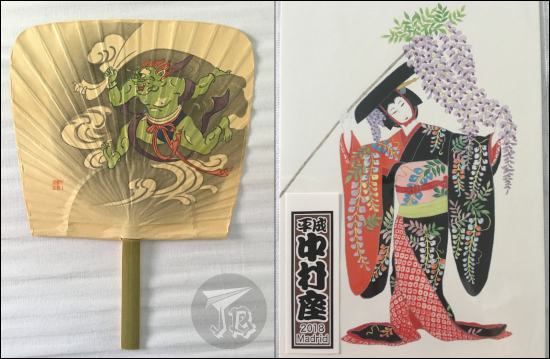
After breakfast, we head over to the area of the theatre, Teatros del Canal, for the main event at noon – a piece of Kabuki [歌舞伎], a piece of classical Japanese dance. In this case we were going to see an adaptation of Fuji Musume and Renjishi. First, we checked out the little market of Japanese craftsmanship and decided that we wanted everything, because of course we did.

Then we walked into the theatre. The company Heisei Nakamuraza was bringing two key pieces in the history of kabuki. The first was Fuji Musume [藤娘] “The Wisteria Lady”. It is a representation of unrequited love, dancing under the wisteria tree that represents femininity, and the pine that represents masculinity. During the dance there are several kimono dances and it is visually stunning. The second piece, Renjishi [検索結果], “The Two Lions”, is a very spectacular dance, in many ways mirrored between two dancers. The first part represents a parent lion-dog and its cub, then there is a small comical interlude and finally the lion dogs come out again in celebration. No pictures allowed of the performance, but have some of the theatre:

The show was over much too quickly, sadly. We went out of the theatre and raided the matsuri / market.

Then we walked a few minutes to the Japanese restaurant Hayama, where we had some sushi, gyoza, takoyaki, curry and ramen to share.

As C***** had an early-evening train to get back (I did mention that this was a crazy escapade specially for her), I tagged along to the station and I saw her off. Awesome way to spend a Saturday, though I wish we could have hung out for longer!

24th March 2018: The day I saw Hatsune Miku (Madrid, Spain)

“Vocaloid Opera – The End” is an opera for an in the digital world. It was written by Keiichiro Shibuya and performed by Hatsune Miku. Hatsune Miku [初音ミク] is a vocaloid idol. In case you’ve never heard of vocaloids, the idea is a bit complicated. A voicaloid is a singing voice synthesizer software product, basically a computer-generated singing voice. The software was released in 2004 and it exploded with popularity in Japan. Hatsune Miku was given a humanoid shape when it was released in 2017 – and it was definitely a she. So, in a way, Hatsune Miku is a voice synthesiser with a cartoon-female-human form.

Yeah, weird. I have always thought so too. But it was dirt-cheap (8 quid), and there was a session at 18:00 on Saturday that I could attend without a late train back. So I dyed my hair purple (because no, I’m not showing up to a blue-haired character’s show in blue hair), got out my thick faux-fur-neck coat and off I went.

The show was being held at Naves Matadero is a former slaughterhouse turned arts centre. It has turned the buildings into theatres, showrooms and so on. As I walked around the area, looking for my theatre I saw a hell of a lot of families with kids under ten, there to see “the doll” or “the cartoons”. I’m not kidding, during the first ten to fifteen minutes of the show, about twenty families left (≧▽≦).

Entrance to the venue, showing the sign of Naves Matadero Nave 11 and Vocaloid Opera the end

“Vocaloid Opera – The End”, composed by Keiichiro Shibuya [渋谷慶一郎], explores the concept of an artificial being obsessing about death. The whole show is digital, just like Miku, as she wanders the world wondering about “the end”. She seems trapped in a surreal nightmare, with several scenarios that don’t make that much sense. Miku is followed in her trip by a plush rabbit (Alice much?), she talks on the phone and there is a multiple-eye monster around.

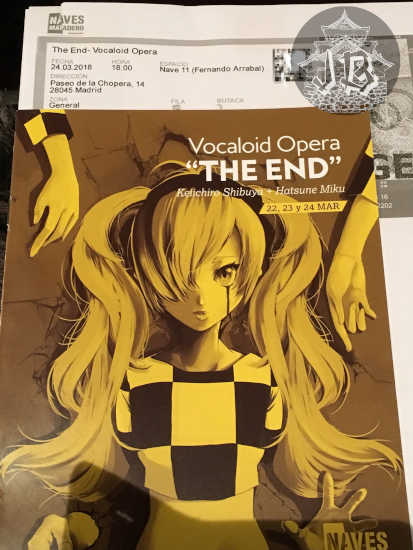
Booklet and ticket. Both read Vocalod Opera the end, with the dates. The booklet shows an image of Hatsune Miku, crying blood, the whole booklet is tinted yellow

The music has an electronic flavour, and at times repetitive. It’s loud and you feel it more than hear it. There warnings about bright and strobe lights all around and I understood why – the whole thing relied heavily on CGI and lighting. The chosen topic, along the images were claustrophobic, and I think that was on purpose – there are different “dying” options: drowning, gas masks, withering off.

The climatic “aria” peaks with Miku asking the spectator “Am I dead? Or just asleep? You decide. It makes little difference to me.” In the end, she is a human creation so, like humans, she will “die” sometime too (aaaaand I have opinions about this because I believe that some human creations transcend their authors). And a final downside: knickers. Seriously, what’s with Japanese people and knickers?! She’s a CGI doll – true, wearing CGI clothes designed by the former artistic director of Louis Vuitton, Marc Jacobs, but a CGI doll!

That was all that I did, but here are some pictures I managed to snatch a few pictures, including of the actual 3D rendering of Miku.

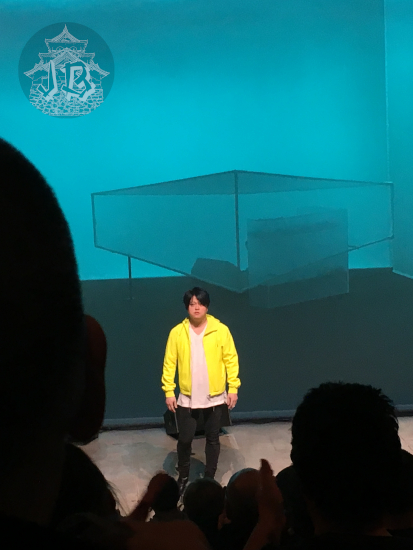
Picture of the composer, dressed in yellow

Life-sized sculpture of Hatsune Miku, wearing a chequered dress that shows her waist, and heels. Her hair is flying as she turns.

11th March 2018: An old-fashioned museum and a strike in Madrid (Spain)

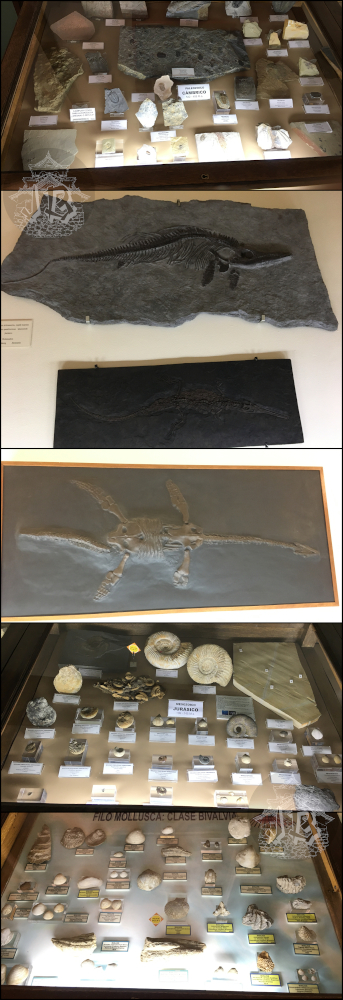
I was looking at a work-related trip and wanted to use up Sunday morning to visit “a couple” of museums, then meet some relatives for lunch. Unfortunately, I was caught in the middle of a public transportation strike, so in the end I had to walk for a long while instead of doing what I wanted! Anyway, what I managed to do was getting to the Museo Geominero Nacional, the “Geomineral Museum” in Madrid. It is located in the headquarters of the Geological and Mining Institute of Spain, in a classical-looking building finished in 1925. It was designed by Franciso Javier de Luue. It is a classical-looking museum with wooden cases and an impressive stained glass ceiling, comprised by a central room and three surrounding balconies.

The access is through a marble staircase and the first corridor is already packed with display cases, even before you get to the main area. These cases show small and not-so-small fossils and replicas, displaying the first taste of the evolution of life on earth.

Once in the main room, most of the floor is taken up by the standing cases holding minerals, fossils and meteorites.

In the centre of the room lie the remains of a mastodon, located in the area of Ciudad Real in the 20th century, one of the crown jewels of the museum.

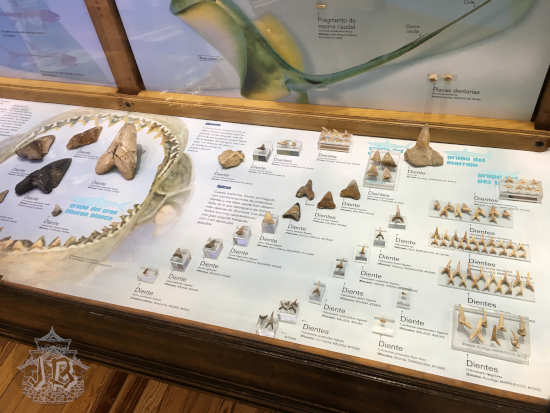
Of course I have been able to locate the collection of megalodon and shark teeth that are on display on the balcony.

Other displays on the upper floors include Spanish mountain goats, cave bears, and a human-evolution collection. Unfortunately, those did not photograph well due to the sun reflection.

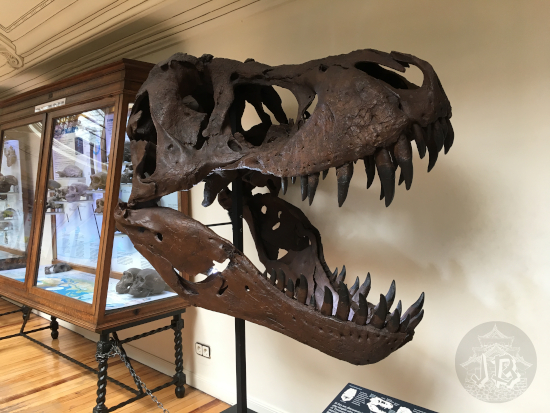
And finally, my favourite piece of the collection is the Tyrannosaurus rex skull replica that presides the museum for the second floor.

When I came out, public transport was not running any more, so I had to walk through the Madrid backstreets until I got to the area where we had arranged to meet, and we went to a restaurant called El Escarpín, where I had an awesome pan of… wait for it… gratin meatballs with molten cheese on a bed of potatoes (Albóndigas gratinadas con queso de tetilla sobre cama de patatas). Amazing! Either that, or I was really ravenous after my hour and a half walking. Serves me right for not keeping up with the news! I learnt my lesson!

28th January 2018: Amusement Park in Madrid (Spain)

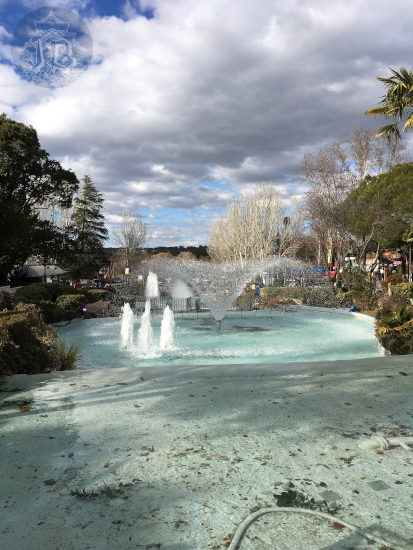
I had a friend over for the weekend and she wanted to “do something” so I got thinking. She is adcenturous, so I thought that the Madrid amusement park could be a good idea. The Parque de Atracciones de Madrid was established in 1969. I’ve never been much of a rides person, for two reasons. One, it is one of those things that you take up when you’re young, and when I was young my parents were rather opposed to funfairs and rides and so on (with good reason, to be honest, but that’s another story). Two, I tend to be worried that random rides are going to trigger my headaches, especially when I have to take my glasses off.

For this trip, I decided to wear my contacts, so I actually got to go on a few of the rides. I was mostly happy staying back and letting my friend do the roller coasters though.

I was all good with the ride called “The Jungle”, which turned out not only to have animals, but… different cultural approaches.

I enjoyed the “Zeppelin”, and the sights…

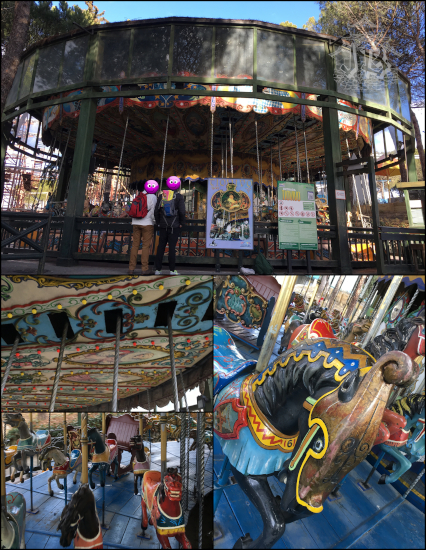
And, of course, I rode the carousel “Tiovivo”. Several times to be honest.

It was low season, so the price was much cheaper than normally. Unfortunately, it also meant that a few of the rides were closed. Then again, I wouldn’t have wanted to go onto anything with water in January…

16th September 2016: Some Madrid (Spain) Museums

I woke up one morning, a silly weekday that I did not have to work for some reason and I decided to wander off and take a day trip to Madrid to see some museums, just because I could.

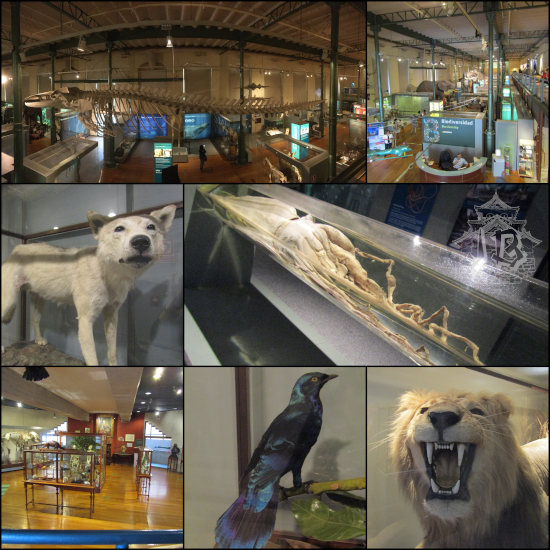
My first stop was the Museo Nacional de Ciencias Naturales, the museum of natural science. The museum is divided into several buildings. The first building holds the “Biodiversity” collection. This includes preserved specimens – in better or worse shape, mostly stuffed, and some skeletons.

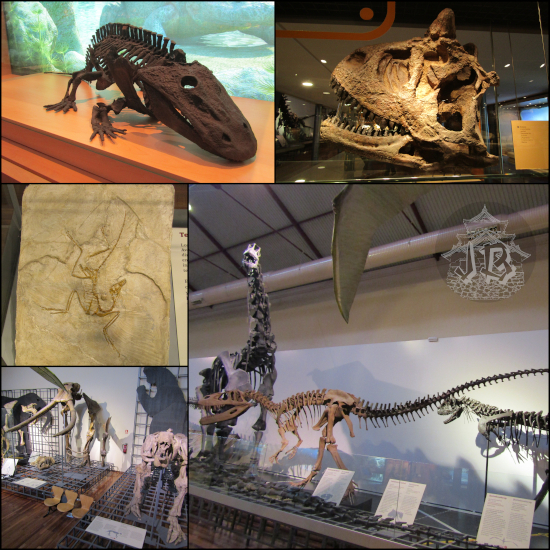
Then I walked over to the palaeontology and mineral museum, where at the moment most of the collection is composed of replica, sometimes it feels that you see the same diplodocus or arsinoitherium (two-horned rhino) skull everywhere. Of course, however, I hunted down every megalodon tooth on site and sight.

After this, I walked around the mineral collection and walked down Castellana Avenue until Colón Square, where I had lunch somewhere before I walked around to see the Museo Arqueológico Nacional – National Archaeological Museum. There were a few things that interested me there.

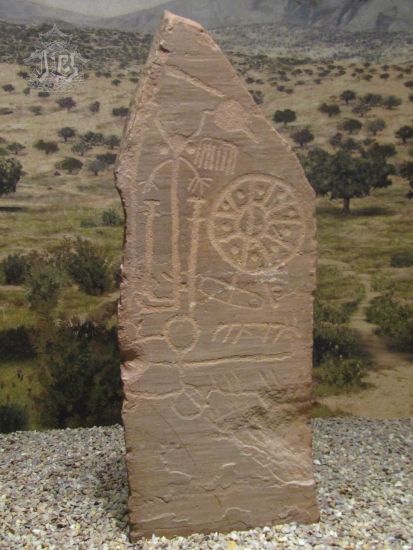
My first goal was to study the Iberian stelæ . Nobody really knows what they are or what their meaning is, but it is thought that they were funerary monuments, maybe of fallen warriors.

An interesting thing to see in this museum is the sculpture of La Dama de Elche, the Lady of Elche, the limestone bust of an Iberian lady dated back to the 4th century BC. It is supposed to be a woman who belonged to the aristocracy that was later revered as a goddess, or maybe a reinterpretation of the Goddess Tanit of Cathage. The back part has an opening, which suggests that it could have been a funerary urn. It was originally polychromated, but it has lost its colours. I really like her expression, and probably due to the Hellenistic influence. I have a thing for Greek sculpture, after all.

A second “lady”, the Dama de Baza (Lady of Baza), stands next to the first. This one still keeps some of its colours. This one is full-body, also carved out of limestone, and it traces back to the fourth century too. This lady seems to have been designed in pure Iberian style, without Hellenistic influences.

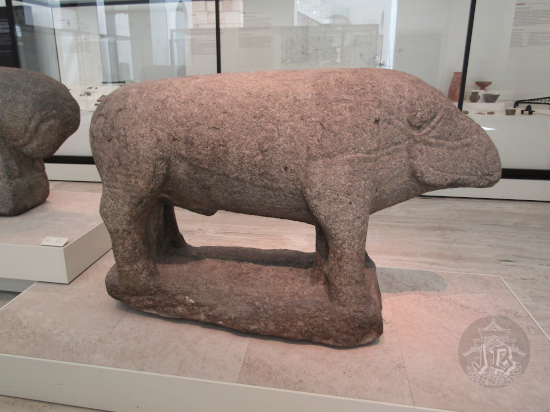
The last key pieces of Iberian sculpture in this museum are the verracos – sort-of headless boars, pigs or bulls (depending on the interpretation), but it is commonly accepted that they are symbols of protection of cattle routes. Most of them are… visibly male.

Once I had seen what I really wanted to see I wandered over the rest of the museum, stumbling upon the currency exhibition, which was strangely interesting.

I walked past the Medieval rooms and then I found the Egyptian area, which is humble, but has some interesting things like the X-rays of a mummified falcon. Finally, I checked out the classical Greek area before calling it a day and making it back home.

22nd May 2016: Kabuki at the CBA (Madrid, Spain)

I made a short escapade to the theatre Teatro Fernando de Rojas in the Círculo de Bellas Artes, in Madrid. It was my first time watching kabuki [歌舞伎], a type of Japanese theatre. The play was called Tsumoru koi yuki no seki no to [積戀雪関扉], something akin to “The Snowbound Barrier” and translated into Spanish as “En los límites de Osaka, bajo la nieve del amor” (In the Outskirts of Osaka, under the love snow). It is a dance-drama kabuki written in the 9th century, and deals with the spirit of a black cherry tree turning into a courtesan to extract revenge. Before the play, there was a small conference to explain some details about kabuki and that was really interesting.

Afterwards I just had to run for the trains so… no much time to hang around.

14th May 2016: Ikebana & Taiko in Madrid (Spain)

I went to the Royal Botanical Garden Real Jardín Botánico in Madrid because they were holding an exhibit of Ikebana and Japanese culture “X Gran Exposición de Ikebana y Semana Cultural Japonesa”. There were several activities, and I wanted to watch the ikebana and listen to the taiko players.

I was very amused when it turned out you could actually attend an ikebana class. Ikebana [生け花] is the Japanese art of aranging flowers, and it is one of the three classical Japanese arts of refinement (the other two are calligraphy and tea ceremony, I’m doomed).

To my surprise, the ikebana scene in Spain is heavily dominated by elderly ladies who take the whole thing Very Seriously ™, so in the end the workshop was more like two of them giving instructions to each attendee and one of them just taking the flowers from you and rearranging them if you failed to heed the instructions within a couple of seconds. It was interesting though, and behold my creation:

They almost made me late for the taiko – Japanese drums – demonstration, which turned out to also be a workshop, my first time playing the drums. I’m not that good at that one, either, but let me tell you better than the flowers…

Afterwards, I wandered about the rest of the exhibition before I headed off… and this sounds really fast, but it was a good half day!

2nd April 2016: Círculo de Bellas Artes & Tsugaru-shamisen music (Madrid, Spain)

Círculo de Bellas Artes (CBA) is a Spanish cultural and artistic association founded in 1880, and they had partnered with The Japan Foundation to hold a concert by Kenichi Yoshida [吉田 健一], a famous Tsugaru-shamisen [津軽三味線] player / artist.

I got to Madrid in the late afternoon, with enough time to get to one of the most hidden Starbucks in the city, which was rather crowded as it was Saturday. Fortunately I found myself a table to spend the extra time (public transport transport paranoia, maybe. But it’s not paranoia if they’re really after you and you have been stuck in Spain commuter trains for hours already). And well, a Starbucks a year and all that… And I mean, I was planning to skip dinner so a Vanilla Frappuccino would keep me going.

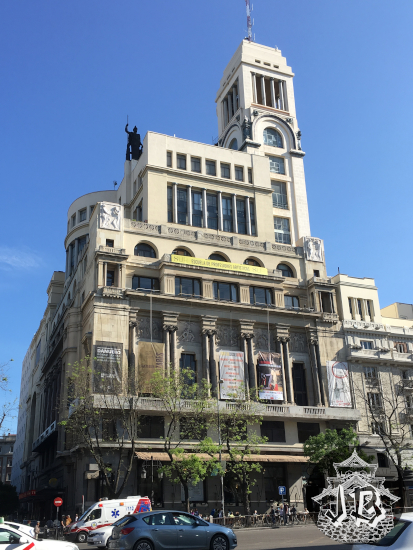
The concert was to be held at the Círculo de Bellas Artes building, located in downright in the middle of Madrid. It was designed by the Spanish architect Antonio Palacios and erected in the early 1920s. From the outside, I had always thought it looked pretty weird.

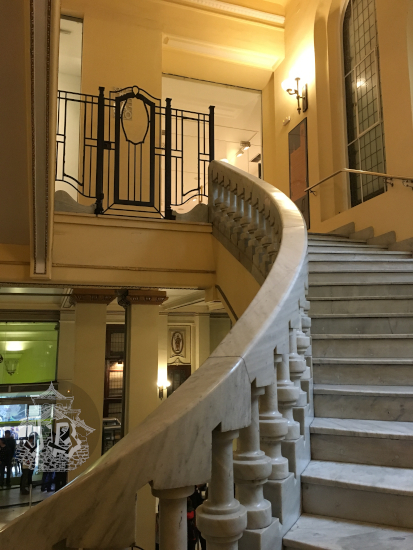
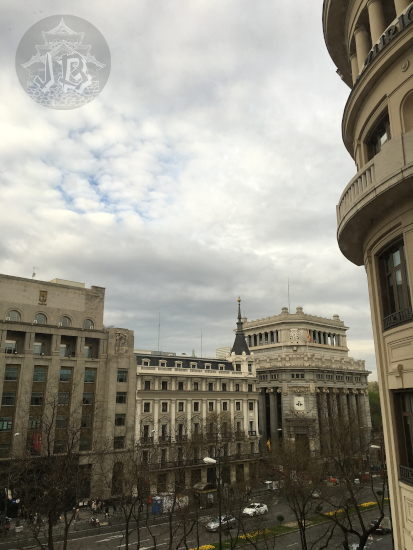
Inside, however, it was a different feeling. I had never imagined the inside of the building was going to be this neat! The CBA Headquarters has a neat staircase, an impressive ballroom, and a reportedly-cool observatory at the top. Unfortunately, getting to the observatory required lining and I was not willing to do so either before or after the concert. However, I did get some views from the second-floor windows!

The concert was in the inner theatre Teatro Fernando de Rojas, a fully-functioning theatre on that second floor, with about 400 chairs, and I had got a fairly good seat so I was happy and could sneak up a couple of pictures.

The concert in itself was amazing. Kenichi Yoshida, the younger brother in the Yoshida Brothers band, comes regularly to Spain to teach shamisen – a classical Japanese string instrument – in Barcelona. Oftentimes he makes the most out of his time and organises recitals and other activities. The concert was a mixture of old and new melodies, played along some drumming. The concert lasted for about an hour, and it felt very short. As Yoshida is a frequent visitor, he can speak a tiny bit of Spanish, too, and he tried that. It was a lovely touch.

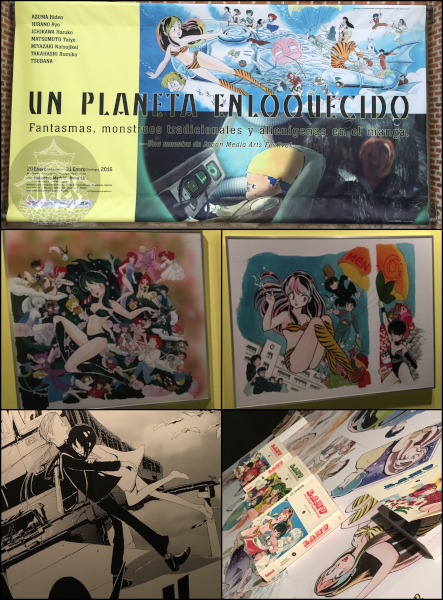
16th January 2016: Un Planeta Enloquecido: Fantasmas, Monstruos, y Alienígenas en el Manga (Exhibition in Madrid, Spain)

Naves Matadero in Madrid was holding a free exhibition on Japanese “monsters, ghosts and aliens” in manga and Japanese pop culture, and since I was around I decided to drop by. Here are some pictures.

I did not stay over but took a bus right back home because it was too cold for anything else.

2nd January 2016: Palacio de Cristal (Madrid, Spain)

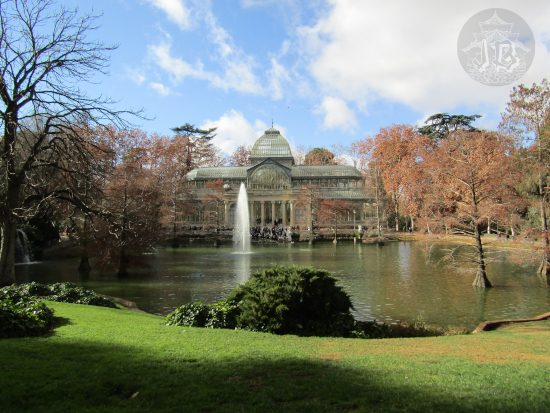
Right after landing back from Scotland there was a couple of things I needed to get going in Madrid. That afternoon I took up the chance and went to see the Palacio de Cristal, or Glass Palace, in the Parque del Buen Retiro (Park of the Good Rest, sort of). The building is a Victorian, iron-cast structure which is currently dedicated to exhibitions. It is a satellite building of the Reina Sofia Museum of Modern Art. It featured an exhibit by the Vietnamese artist Danh Vō – with a hanging Christ and fossilised bones?

And then we found out that there is indeed a parakeet invasion in the Retiro…

1st February 2015: Space Pirate Captain Harlock. Madrid (Spain)

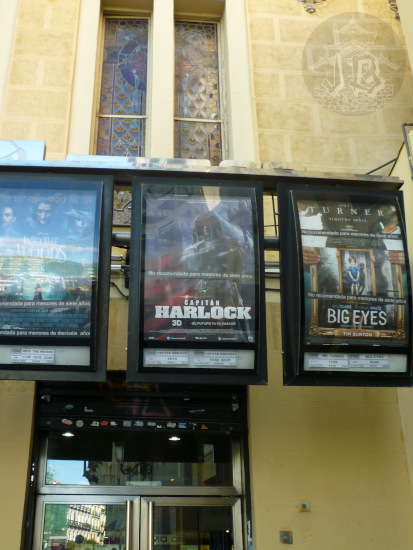
You can say that this was a bit of a spur-of-the-moment improvisation – I literally woke up and decided that I wanted to go and see the Space Pirate Captain Harlock. I found a cinema in Madrid that showed the film and I hopped on a train to get there. I arrived in time for an early lunch before I headed off for the film, as the only version in Japanese was at half past three.

This was one of the first times I ate and went to the cinema alone in Madrid, and it was a strange experience. My relatives always say that a person eating alone is sad, and as I’ve been hearing that for a long time, and sometimes it resonates, specially when I’m in Spain. I originally wanted to eat sushi, but in the end I decided against it and went to UDON instead, where I ended getting the membership card. I decided to try the Chicken Yaki Udon – much better than the ramen, in my opinion, as they were real udon noodles, unlike the ramen which uses tallarini – and a koroke (croquette), and I had cheesecake mochi for dessert.

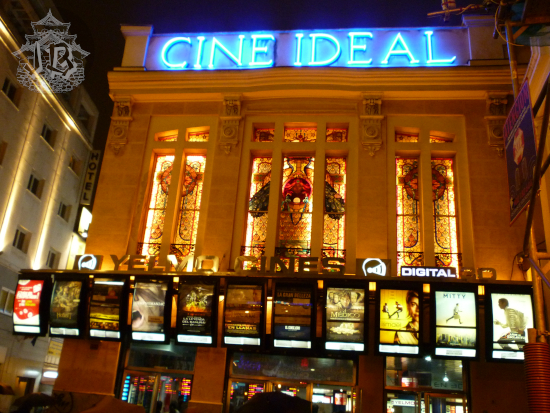
After lunch I headed off to the Yelmo Cines Ideal to watch the film. I had no seat number and I did not need one as we were literally… five people in the cinema. It was a small cinema theatre, and when I arrived there were three or four people, I figured that more would come, but when the previews started we were just five, and five we stayed. When the film finally started, I was really impressed by the quality of the CGI – I already knew that the voice-over was going to be great, what with Oguri Shun and Miura Haruma.

The plot of the film reminded me a little of Space Battleship Yamato, but that might just be me being biased. Even if I vaguely remember watching the anime from the times I was a child, the film felt at the same time nostalgic and new, so I could really enjoy it. Although it is a bit on the predictable side, it wraps up really well.

After the film, I backtracked and it turns out I was home before anyone even noticed I was gone. I should get away more often (≧▽≦).

15th July 2014: Robots and Drums (Madrid, Spain)

A bit over ten years ago, when I was in universe one of my neighbours was paying for a proto-on-demand TV subscription, and it turned out that my TV caught it for some reason. At that time I got to watch a bunch of anime – in Spanish, badly-translated and rather… altered. Among the series I watched was Gainax’s “Neon Genesis Evangelion”, or Shinseiki Evangerion [新世紀エヴァンゲリオン]. Evangelion is a rather confusing series in itself, but the creative translation and censorship made it almost impossible to understand. Evangelion tries to be a giant robot anime with a religious / philosophical background, where humans piloting huge robots (“EVA”) battle monsters called “angels” which apparently seek to destroy humanity. Or something.

The point of this anime-history paragraph is to explain how I ended up at the Museo ABC de Dibujo e Ilustración, the drawing and illustration museum in Madrid. They were running an exhibition about Evangelion and the Japanese katana Evangelion y las katanas japonesas. It was something interesting to see, and the first time I’ve ever seen actual Japanese katana information. The exhibition has three focuses – actual katana, recreations and figures of elements of the series, such as the robots, pilots or weapons, and weapons inspired by the anime.

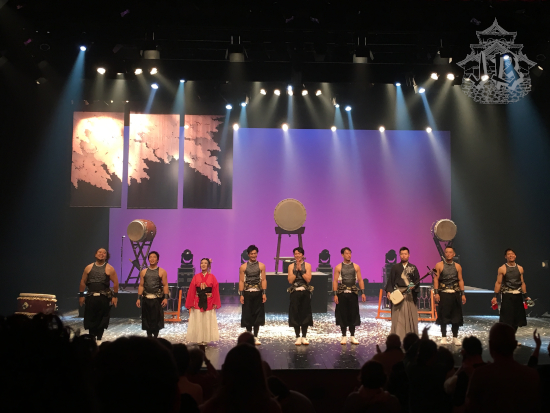
After the exhibition I took the underground towards the thratre Teatro Circo Price to watch a taiko exhibition: “Taiko Performing Arts Ensemble: Dandan” by Kodo. Taiko are the traditional Japanese drums and there is a whole drumming style for them. It was really, really fun. Due to a fluke of destiny, I had very good seats, so I could enjoy to the fullest – far away from the reverberation and echoes, close enough so I could even sneak in a good picture or two!

The performance was amazing. I think this was the first time I’ve ever seen something so grandeur. Even when I saw a taiko school in Japan, it was just drumming, while Kodo added a lot of acrobatics to the mix. It was really great!

Unfortunately, I could not even check the merchandise after the performance as I had to run for my train, or risk getting stranded overnight in Madrid.

27th December 2013: The Terracotta Army in Madrid (Spain)

This was a bit of an unplanned event. I had been in Madrid the previous day with a friend and we had seen that the exhibition was going on. Unfortunately, there was a huge queue to go in, so we could not stay. Instead we got tickets on the internet and chose a standard “lunchtime” hour so we were almost alone watching the exhibit. That was awesome. The exhibition was held in the Fernán Gómez Centro Cultural de la Villa underneath Plaza de Colón (Colombus Square) in Madrid.

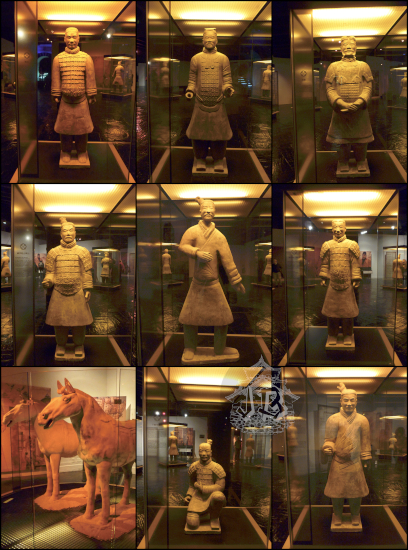
The Terracotta Army is called the Eighth Wonder of the Ancient World. It was discovered in 1974 close to the city of Xi’an (Shaanxi Province). It is comprised by hundreds of larger-than-life soldier statues built out of terracotta. They are part of the Mausoleum of the First Qin Emperor, the first emperor of China. There are over 8,000 soldiers, 130 chariots with 520 horses, aside from 150 cavalry horses. There are different types of soldiers and they have different ranks. Their function would have been to protect the Emperor from the spirits in the afterlife. Forty thousand bronze weapons have been found among the soldiers. For reference, they were buried with the Emperor around the year 210 BCE!

The Exhibition “Terracotta Army – Guerreros De Xi’an” displays about 150 replicas of the best-preserved soldiers, weapons and chariots, along with different decorative elements and a reproduction of the Pit 1, where the bulk of the warriors were found. It was a very interesting exhibition that made me actually want to travel to China to see the actual Mausoleum for real!

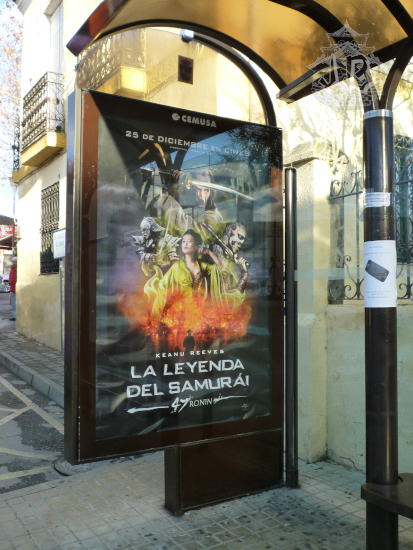
Afterwards we had tickets for the cinema, because “47 Ronin” was running, and the Cines Ideal show non-dubbed films, and basically… there was Akanishi Jin in it. The films has its… merits… somewhere… I mean I loved it but it was pretty bad – I’m not precisely known for liking deep, intellectual films anyway (≧▽≦).

26th December 2013: Japanese Exhibitions & Christmas Lights in Madrid (Spain)

Over the Christmas break, there were many activities related to the celebration of the establishment of diplomacy between Spain and Japan, so-called Año Dual España Japón. We decided to kick off the day going to a Japanese restaurant, my favourite in Madrid, the Nagoya (believe it or not, this is the daily menu).

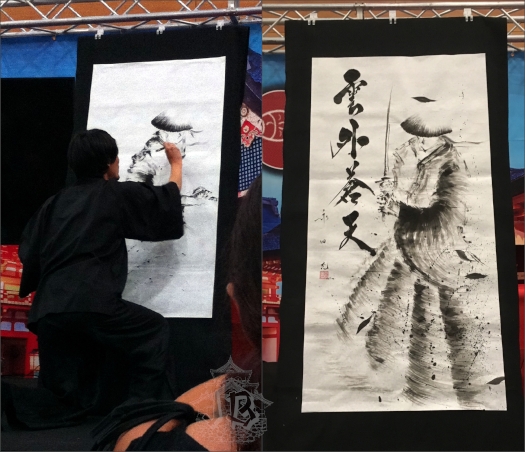
There was a Calligraphy exhibit in the national library, Biblioteca Nacional. On the way, we also found that there was an exhibition about the Chinese terracotta warriors, but the queue was insane! We decided to try to get tickets online for another day.

We went to Caixa Forum to see a Japonism (19th-century European art influenced by Japanese concepts and aesthetics). Honestly, pictures were forbidden, but I snuck one because I really loved the painting.

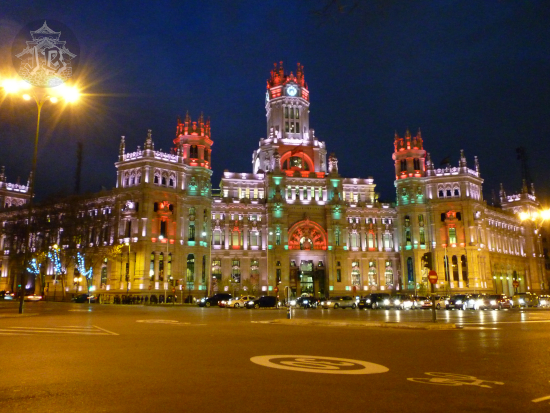
We also took a walk to see the Christmas lights. Here’s the Postal Service building, Edificio de Correos.

And a view of Gran Vía, one of the main arteries of Madrid, all lit up.

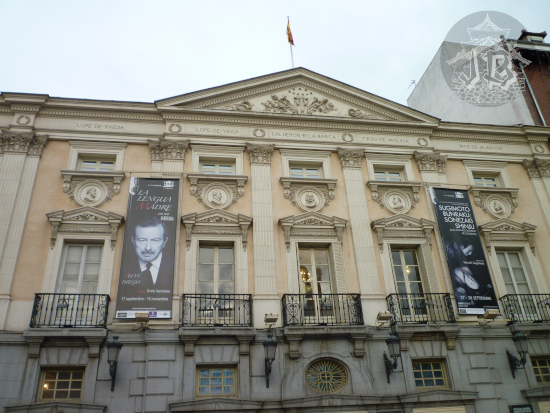
27th September 2013: Bunraku at Teatro Español (Madrid, Spain)

Oh, Gods, this was an odyssey. Seriously, can’t we just figure out print-at-home tickets? When the announcement for the event came up, I got tickets. I actually called my parents to ask them if they wanted to tag along, and they said yes, so I bought three tickets. There were only two performances, and the tickets were selling out fast.

Let me start at the beginning – the announcement involved the Sugimoto Bunraku 2013 European Tour. Bunraku [文楽] is a type of Japanese theatre that uses puppets to perform about serious topics, mostly classic dramas (as far as I know). The puppets are dressed in amazing costumes and manoeuvred by artists dressed in black as if to become invisible. Sugimoto’s company is collaborating with The Japan Foundation to show this art to the world, in this case holding a European tour with the play.

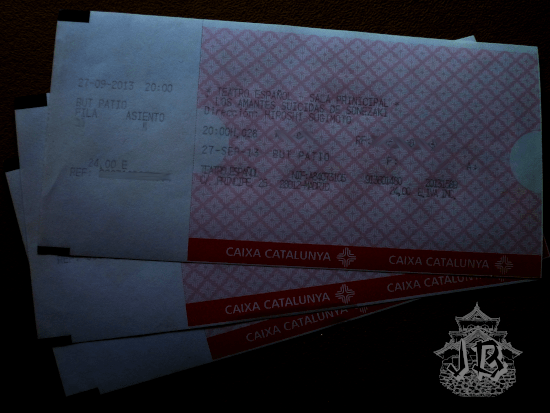
Anyway, back to track: I bought the tickets, and the next step was actually getting them. I had to go to a cashpoint to get them printed (because, again, print at home? It seems to be for lesser beings), which was not easy as I was living in a small town at that point. On top of that, I got the wrong bank cashpoint at first (≧▽≦). Sometimes excitement gets the best of me, but in my defence a) I did not even know the actual bank existed and b) the mistaken bank had a similar name. And on top of that… in the end my parents decided not to come at all! In the end I gave the tickets to my cousin and her kid, who were curious about the whole thing.

We met up in Madrid, in front of the theatre Teatro Español, where the event took place, and it was interesting to see how the whole thing was sold out. The work that was performed is called Sonezaki Shinjū, which translates to The Suicidal Lovers of Sonezaki, or the Love Suicides of Sonezaki, written by Chikamatsu Monzaemon in the early 1700s. It tells the love story of a poor merchant and a courtesan. When the merchant is set to marry off another woman, tragedy ensues until the two of them decide to die together in the forests of Sonezaki Shrine. I’ve actually got myself the book (well, my cousin insisted on getting it for me as thanks for the tickets) to read, as there were no subtitles on the play, just a summary brochure.

Even though I’m no fan of the whole romantic drama thing, I have to admit that the music and the puppets made the whole thing eerily captivating. Aside from the puppeteers, the key figure in the play were the musicians and the narrator, which explained (in Japanese) and narrated the play. The way the puppets are dressed, the shamisen and koto music, and the way you see the puppeteers and yet not see them is super cool. Unfortunately, no pictures allowed that I can show you.

Afterwards, we met up with my cousin’s husband (I did try to get a ticket for him, but it was too late already) and we… had McDonald’s, because that’s what we do when he hang out.

7th May 2013: The inner works of the Geomineral Museum in Madrid (Spain)

Due to work reasons I ended up in the Museo Geominero, the Geomineral Museum, in Madrid. The Museo Geominero is a rather anachronical place – it displays a great mineral and fossil-replica collection in an early 20th-century building. The inner area is used for research and hides all the high tech. However, they work with really old and cool geological elements.

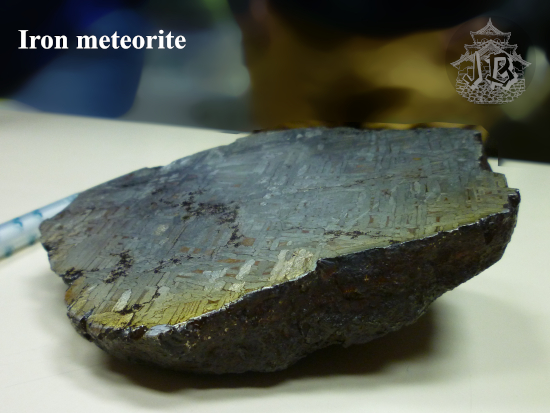
This was the firs time in my life I ever held a meteorite – just imagine, this thing floated around space, and I got to hold it. It was heavier than I would have ever imagined. You can see the zig-zags on the surface, those are magnetic markings because the main component of this space rock is iron.

There was a session going on about identifying fossils, and this is what I came up with:

Out of the bunch, I also got to play with the ammonite…

… counted the corals…

… and I petted the trilobite…

As you can see, I snuck quite a few pictures. It did not work so well during the museum walkthrough, so I guess I will just have to come back for the main exhibit some other time (≧▽≦).

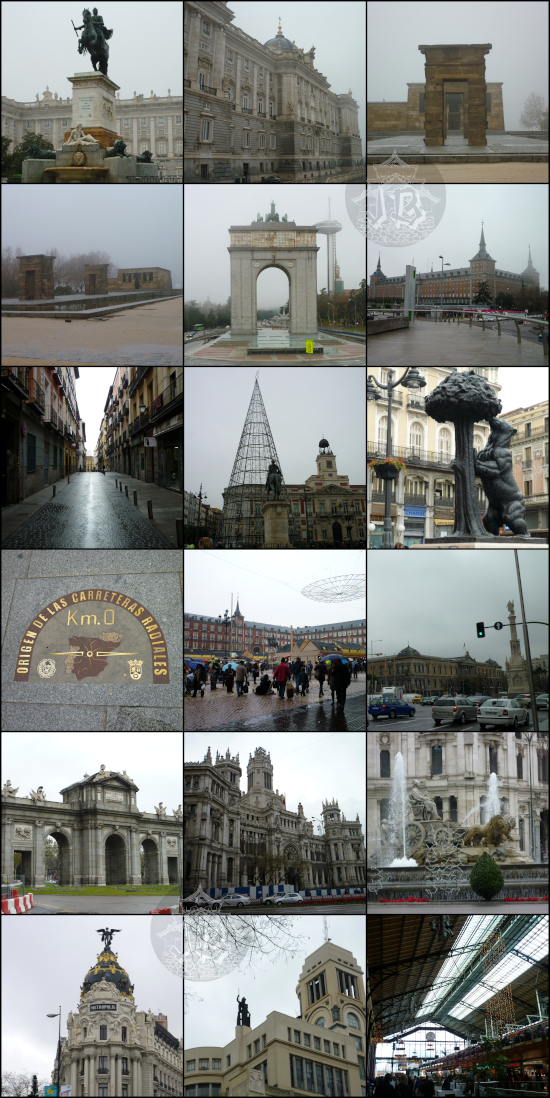
Flashback to 26th December 2009: Winterday in Madrid (Spain)

  • Palacio Real de Madrid (Royal Palace)
  • Templo de Debod (Egyptian Temple to Debod)
  • Arco de la Victoria (Victory Arc)
  • Palacio de la Moncloa (Palace of La Moncloa)
  • Puerta del Sol (Square Puerta del Sol)
  • Plaza Mayor de Madrid (Main Square)
  • Plaza de Colón (Columbus Square),
  • Puerta de Alcalá (Puerta de Alcalá Arc)
  • Edificio de Correos (Postal Building)
  • Fuente de la Cibeles (Cibeles Fountain)
  • Edificio Metrópolis (Metropolis Building)
  • Gran Vía de Madrid (Gran Vía Avenue)
  • Círculo de Bellas Artes (Fine Arts Club)
  • Estación de Príncipe Pío (Príncipe Pío Station)

Note: This is a flashback post, which means it is just a collage regarding a trip I took before I started the blog in 2012. Tags may be incomplete or slightly off.