12th & 13th February 2023. The Epic Apocalypse Tour in Madrid (Spain)

The year 2020 was going to be so amazing that I actually would have had to choose the things I wanted to do and sacrifice others. It didn’t turn out that great in the end, with lots of rescheduling and cancellations. I was eventually able to budget time and money for one of those rescheduled events – the joint concert by the metal bands Epica and Apocalyptica in their Epic Apocalypse Tour. For a while, however, there was a bit of uncertainty with dates, as they bounced between Sunday 12th and Monday 13th of February, so I needed to juggle work dates in order to make sure I’d be free on Monday. In the end, I was all clear, all the concert-related activities were set for Sunday evening, and I decided to make a two-day trip out of it – I needed to take a hotel for Sunday anyway.

I arrived in Madrid around 9:30 in the morning. I had some time before my first appointment so I walked into one of the large parks of the city Parque del Buen Retiro, which is part of the Unesco World Heritage Site Paisaje de la Luz (Light Landscape), officially called Paseo del Prado y el Buen Retiro, paisaje de las artes y las ciencias, declared in 2021.

Parque del Buen Retiro was built in the 17th century for one of Felipe IV’s palaces, and it was opened in the late 18th century as public park. The park was almost destroyed during the war against Napoleon’s troops in the early 19th century, so most of it has been rebuilt. Aside from the obvious flora, it features sculptures, fountains, buildings… It is home to a lot of birds, and unfortunately a large number of invasive and fearless monk parakeets (Myiopsitta monachus), whose culling has been controversial in recent years. I got to see common blackbirds (Turdus merula), a European green woodpecker (Picus viridis) and a European robin (Erithacus rubecula).

One of the most important features of the park is the sculpture Monumento al Ángel Caído, which represents an angel falling from grace. It was originally designed by Ricardo Bellber, who made it in plaster in 1877. It was later cast in bronze and the original plaster destroyed, and eventually the sculpture was made into a part of a fountain in 1885. Around the area, there is also an ancient water mill, and to my surprise, the almond trees (Prunus amygdalus) had started blossoming.

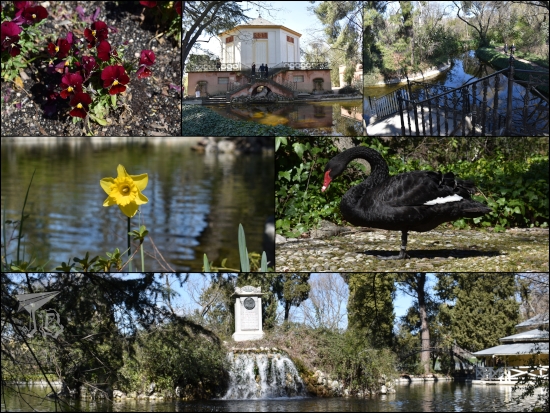
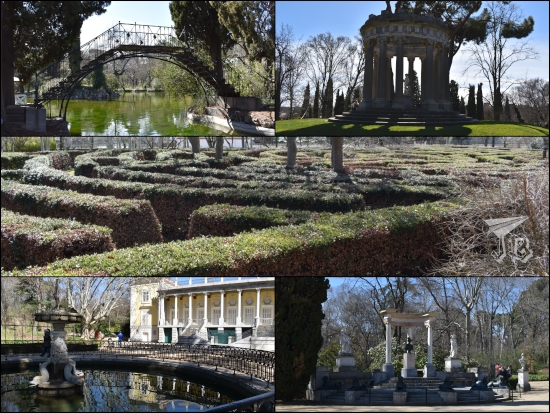
Retiro Park collage: a pathway with trees and bushes on both sides, ducks, and a robin.

Retiro Park collage: a water mill, blossoming almond trees, and the fallen angel fountain

At 10:15 I had a guided visit to the Real Observatorio de Madrid (ROM), commissioned around 1785 by Carlos III, as an centre to develop and study astronomy, geodesy, geophysics and cartography. The main building is the astronomical observatory, built by Juan de Villanueva in what then was the outskirts of the city. Today, ROM belongs to the National Geographical Institute (IGN), and it is home to the National Astronomical Observatory, the Central Geophysics Observatory, and the data gathering division of the National Volcanic Service, though no measurements are taken there. The main astronomy measurements are carried out in the Centro Astronómico de Yebes, in a town around 80 km north-west of Madrid. The observatory is also part of the Unesco World Heritage Site.

The visit comprises three stops. The first one is the main building, called Edificio Villanueva, which has three rooms – the main rotunda with a Foucault pendulum, the library, with the spot where gravity was first measured in Spain, and the “Time room”, where the sun used to be traced to determine the hour.

ROM collage. A small Neoclassical building, an inner room with a pendulum and telescopes, a telescope and a 19th century library.

The second stop is the Great Telescope, a replica of one that William Herschel built in the 18th century – Hershchel was one of the greatest telescope makers of the time, and is credited with discovering the planet Uranus, two of its moons, and two moons of Saturn. The telescope was destroyed during the war against the French, but later rebuilt thanks to the number of laminates that had been preserved – the original had a focal distance of 7.6 m and a 61-cm diameter mirror (which is displayed in the main building), and Herschel himself considered it the best he ever built.

Herschel grand telescope: a wooden scaffolding structure keeping a huge black tube pointing at the stas

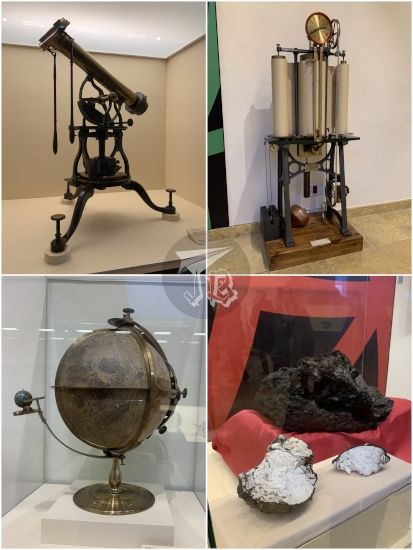
The final stop, the little museum of “Earth and Universe Sciences” has a small collection of ancient instruments used for astronomy, navigation, and geophysics. There are also a couple of seismographs – one of them new, which is up and running – and material retrieved from the volcanic eruptions of El Hierro in 2011 and La Palma in 2021.

Collage. Ancient telescope, old tide measuring device, an old globe, and lava bombs

I had planned for a typical sandwich at an iconic bar afterwards, but I ran into a political demonstration. Thus, I scratched that idea and took the underground westwards. When I was in Egypt, one of the places I visited was Lake Nasser, created by the Aswan High dam. The lake swallowed a lot of villages and monuments, but a few of them, such as Abu Simbel and the Temple of Philae were saved by Unesco. Between 1960 and 1980, a total of 24 monuments were saved, and five out of these were presented as “grants-in-return” to five countries which had offered exceptional technical and financial assistance to the campaign – Germany, Italy, Netherlands, the United States and Spain, the latter being impressive as Spain was in the middle of the dictatorship, and pretty shunned by the international community at the time.

The monument was a small and ruined temple in the now-flooded town of Debod, to which it owns its name Templo de Debod (Temple of Debod). Dedicated to the god Amun, it was built around the location of the First Cataract of the Nile, some 15 km south of Aswan, about 2200 years ago, though the core of the building may have been older. The monument was actually affected by the original dam at the beginning of the 20th century, and it was covered in water for most of the year, which destroyed its colours and damaged the reliefs.

During the Unesco salvage mission, it was dismantled, and eventually granted and taken to Spain, and “freely” reconstructed – a lot of information had been lost, and there were missing blocks. National stone was used to fill in the gaps, and the gates (remains of the pylons) were built in the wrong order, according to some old pictures. The restorers built an air-conditioning system, a wooden roof, and the main hall was closed off with a glass door and window panes. Today, the temple is open to the public at weekends, but unprotected from the Spanish weather – rather different from the Egyptian one – and pollution, it is rapidly deteriorating.

I went inside the temple once when I was a child, and I had a clear memory of it that kept surfacing when I was in Egypt – so I wanted to go back. The entry is free, but capacity is reduced, so I had to queue for almost an hour to enter. I finally matched my memory to reality. The interior of the sanctuary has a small chapel and some carved stones had been taken to a makeshift second floor to display them as a little museum.

A collage of a small Egyptian temple - it has two floating gates that lead up to the main building, which is small with four columns. One picture shows a tiny and dark inside room with an altar.

After the temple, I got lunch on the go, then walked towards the hotel to check in and change clothes. Around 16:15, I set off to La Riviera for the concert. I had a Meet and Greet ticket and had to be there before 17:00. Personnel from the venue were extremely nice, and there was no chaos at all, even if things had been a little disorganised and some fans were lacking M&G confirmation emails. Everything was well-handed and everyone who had paid for an upgrade got through. There were about 30 people to meet and greet Epica and we were ten for Apocalyptica.

Apocalyptica is a Finnish four-man band – Eicca Toppinen, Perttu Kivilaakso, Paavo Lötjönen and Mikko Sirén – founded in 1993. They are “semi-officially” a symphonic metal band, but they’ve ventured into everything from Metallica covers (which was their origin) to pure classical works. They have a very specific style heavily using classical cellos and combining them with modern drums. They currently collaborate with American – self-identified as Cuban in the concert – singer Franky Perez for vocals.

Meeting the four of them was really fun. I got autographs and took the most epic picture I’ve ever taken with a band or artist before. As we were only ten, after it was over, I had time to buy some merchandising and still be the second person to settle on first row – despite having decided that I was going to sit back and relax.

Apocalyptica white and black poster, signed by the four members

General admission started at 18:00, and the crowd was surprisingly tame throughout the whole thing. The venue filled up and the supporting band, Wheel, came up at 18:30. Wheel is a Finnish progressive metal band that consists of James Lascelles (Vocals/Guitar), Santeri Saksala (Drums), Aki ‘Conan’ Virta (Bass) and Jussi Turunen (Lead Guitar).

Wheel Setlist

  1. Hyperion
  2. Blood drinker
  3. Movement
  4. Vultures
  5. Wheel

Wheel playing, each member at his insturment: bass, guitar, singer and drummer

The second band was Epica, which I remember having listening to back when the world was young. They are a Dutch symphonic metal band currently composed by Simone Simons (lead vocals), Mark Jansen (rhythm guitar, vocals), Coen Janssen (keyboards, synthesizer), Ariën van Weesenbeek (drums), Isaac Delahaye (lead guitar) and Rob van der Loo (bass). Simone can go insanely high with her voice, and she has an amazing presence on stage, and the whole band has an immense amount of energy – she also reminded me of a comic character. The keyboardist had a lot of personality too, and he was extremely fun.

Epica Setlist

  1. Abyss of Time – Countdown to Singularity (recording)
  2. The essence of silence
  3. Victims of contingency
  4. Unleashed
  5. The final lullaby
  6. The obsessive devotion
  7. The skeleton key
  8. Rivers
  9. Code of life
  10. Cry for the moon
  11. Beyond the Matrix
  12. Consign to oblivion

Collage of Epica playing, showing different members at their choice of insturment - singer, bassist, guitarist, and keyboardist with a portable keyboard

Finally Apocalyptica came on stage, and it was extremely fun. The things those guys do to their classical cellos would make some classical musicians cry, but the sound is super-powerful. We had Franky Perez for vocals, and a very fun moment regarding “listen to our classical music album at home, because we still feel like death metal”. They interacted a lot with the public, and it felt somehow very friendly / warm – yes, I’m talking about metal here. It was really that fantastically weird.

Apocalyptica Setlist

  1. Ashes of the Modern World
  2. Grace
  3. I’m not Jesus
  4. Not strong enough
  5. Rise
  6. En route to mayhem
  7. Shadowmaker
  8. I don’t care
  9. Nothing else matters
  10. Inquisition Symphony
  11. Seek & Destroy
  12. Farewell
  13. In the Hall of the Mountain King

Apocalyptica playing with Franky Perez. Perez is in the foreground, dressed in black. The thee cello-playing members are in the frame, playing. The drums peek behind them, but you can't spot the drummer

Apocalyptica playing at La Riviera. They have classical cellos. Two of the members stand on the sides, playing their cellos. Another one is walking swinging his as if it weighed nothing, The final one is slamming drums in the background.

We finished off just short of 23:00, I bought off some fast food for dinner, and headed back to the hotel to have a shower and get some sleep. I was woken up early in the morning due to the cleaning crew and the garbage mini-vans noises, but I did not leave bed until 9:00, then set off at 9:30. I bought some cold coffee on the way and walked into the former royal palace gardens, now public park Jardines del Campo del Moro.

Though I’d seen the gardens a few times before, this was the first time I actually walked into them. Despite the frost covering everything, I got a nice view of the palace and different fountains and buildings sprinkled throughout the green – Chalet de Corcho, is a small hut with coloured windows; and Chalecito de la Reina a wooden house that is currently closed. I was insanely amused by a little grass-cutting robot.

Jardines del Campo del Moro. Collage. It's winter and most trees are grey and bare. At the end of the walkway stands the Neoclassical Royal Palace. Two smaller buildings - one of them is white with brown beams, reminscing of German architecture; another one is a small kiosk with colourful windows - red, green...

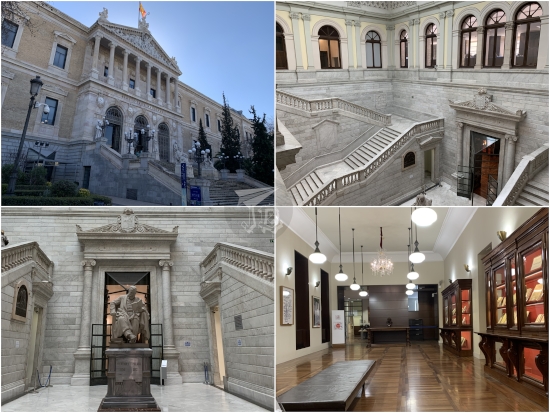
I wandered around for an hour or so, then headed off via underground to the National library of Spain Biblioteca Nacional de España for the absolutely worst guided visit of my life. Like… it’s true that it’s free, but tickets run out within hours of coming out – on the 20th of the month, for the following month. I’d actually been trying to do this since Covid lockdowns ended… It turns out, we did not see any real books, we could not even peer into the reading area, the book and reading museum is closed and the only information we got was… that the guide did not like the Library. We did not get to see anything interesting or that we could not see on our own, and we did not get to learn anything, so this was a huge blunder. Live and learn – but it was one of the few things that was open on a Monday. The library is a huge Neoclassical building with a fantastic marble staircase inside. The doors and gates are protected by intrincate ironwork fences.

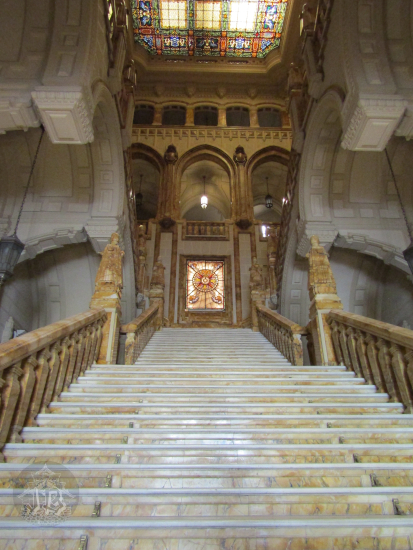
Biblioteca Nacional de España. A Neoclassical building in white and grey tones. The exterior has columns and statues of writers. The interior showcases a pair of twin staircases with the statue of one of the most important library directors between both.

I met with family for a quick lunch and then we went for a walk. We had thought about going to one of the terraces to see the cityscape, but it was closed because it was a Monday. We ended up at the Parque del Retiro park again to make some time and walk. We sat in the sun for a while, then went to see the Palacio de Velázquez there. Currently, it’s part of the modern art museum Museo de Arte Reina Sofía, and I did not really care much about the exhibits, but I like the building. Architect Ricardo Velázquez Bosco built it in brick (with ceramic tiles by Daniel Zuloaga) for the Mining Exhibit in 1883, inspired by London’s Crystal Palace, now gone. The interior is pristine white with hints of iron architecture, but the building’s official style is “neorenaissance historicism” whatever that means.

Palacio de Velazquez: A brick building with large windows and tile decoration. The inside is all white with bits of iron architecture.

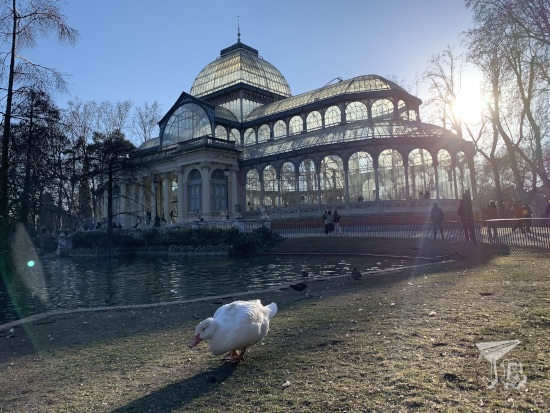
Velázquez Bosco and Zuloaga also came together when they designed another building I really like, the glass-and-iron greenhouse Palacio de Cristal, which was built to home tropical flora and fauna from the Philippines in an exhibit in 1887. In front of the palace, there’s a small pond home to some cheeky ducks and geese.

Palacio de cristal. A huge greenhouse with a dome, and two wings. A white duck wanders in the foreground. Between the greenhouse and the duck there's a small pond.

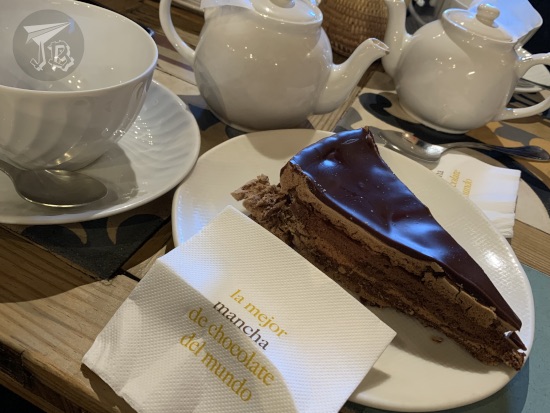
Then, we went to have a snack. Trying to find something on the map before the trip, I’d come across a place called La Mejor Tarta de Chocolate del Mundo, which translates to “The best chocolate cake in the world” and that had to be tried! It was really nice, even if the place was pretty small and felt a bit cramped.

A slice of chocolate cake in front of mugs and teapots

We finally took a stroll down towards the sunset, and I took the train back without much of a hitch, then drove home

20th December 2022: Naturaleza Encendida – Origen (Real Jardín Botánico, Madrid, Spain)

It seems that the Madrid exhibits in the month of December are not being the most successful ones – this time, the weather did not help. After ten day’s worth of rain, it cleared out, but then, on Tuesday, the skies opened yet again. It was raining like there was no tomorrow by the time my train got to Madrid. Boo.

Just after sunset, my sibling and I went to the botanical garden Real Jardín Botánico to see the light show Naturaleza Encendida: Origen (Lit-up Nature: Origins). There had been some issues about the promoter cancelling the activity due to rain with little advance notice, so they decided not to close it. They instead resorted to close parts of the exhibit at random, and herding all the visitors in the same corridors, despite the puddles forming on the uneven ground. After two weeks of rain, something should have been done about it. Moreover, a few of the exhibits were turned off – not sure if just off or high wired. I wish I had some good boots, because I ended up pretty soaked, despite the raincoat and the umbrella. At least I did not ended up in a random puddle.

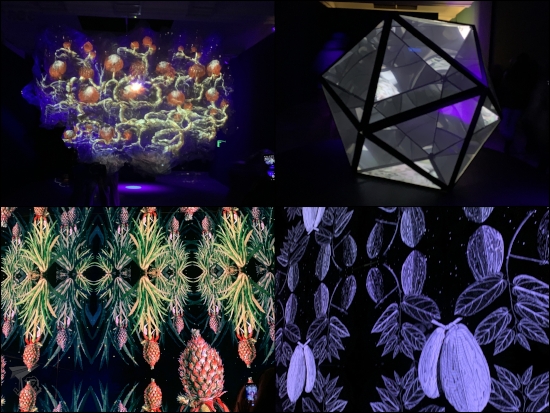
In 2021, the topic was sea life, and in 2022 the topic is… mushrooms. So there were spores, moulds and… mushrooms. Big mushrooms with lights, or made with small lights, or… just blown with hot air. Lots of mushrooms. The music was a bit creepy though, even if the mushrooms lit up and down with the beat. There is also an exhibit about moulds, with huge screens showing pictures of spores and microorganisms under the microscope.

Most people were antsy and cranky in the rain, and everybody wanted you to move out of the way – in different directions at the same time. A really good thing about it was the cup of hot chocolate that we had booked with the ticket. It was really nice to get in the middle of the cold and rain because it was warm and sweet. We drank it on our way out to the train, and just as we stepped out of the botanical garden… it just stopped raining.

Light display collage: on the upper left, giant red spores; on the lower left a wavy line of lights. On the right, a giant bunch mushrooms illuminated in green from inside the umbrella

Collage of lights display. A mushroom made of little yellow and white lights; a bunch of name mushrooms in red; a hanging mould-like string of lights between two dark trees

All in all, I was not too impressed. I really think that the organisers should have figured out something about the cancellations and the pathways, since they obviously could not do anything about the weather. My favourite display were the “Baymax mushrooms”, even if most of them had lost their illumination, which was actually kind of the point…

A blow-up mushroom made from plastic, looking like it's floating. The  lights inside make it glow green and pink. In the background there is a building gate in red, and a pond between the two.

6th December 2022: Tim Burton’s Labyrinth (Madrid, Spain)

Despite having decided that immersive exhibits were not for me and the fact that I’m not a Tim Burton fan, here I found myself in Madrid to see this one: Tim Burton’s Labyrinth El Laberinto de Tim Burton. Truth be told, I was only there because my sibling asked me to accompany them. I did not find premium tickets for any of the dates either of us was available, but the 6th of December is a national holiday in Spain, and I calculated that if we were there at opening times it might not be too busy, and we would not come across too many kids.

Tim Burton is an American film-maker born in 1958. His first “hit” may have been Stalk of the Celery Monster, which he wrote, directed and animated when he was a student in the California Institute of Arts, in 1979. It presumably earned him a good grade, but more importantly, an animator’s apprenticeship at Disney Animation Studios. With time, he developed a shrill eerie style, with lots of colours and creepy designs that have increased as years have passed, sometimes defined as “gothic fantasy” – I would refer to it as strident and macabre at times, to be honest. His greatest or most famous works include Beetlejuice, Charlie and the Chocolate Factory, Edward Scissorhands, The Nightmare before Christmas, and the first two Batman films.

The exhibition is hosted in a weird place in Madrid, Espacio Ibercaja Delicias, which might look less… abandoned… when it hasn’t been raining for days, I guess. The space consists on a big tent – where we were not going, it might be designed for circuses or so, some kind of bar / cafeteria, and the monster-like building that hosts the exhibit. It is called a labyrinth because out of the thirty-ish wards, you have to go around choosing doors to see different rooms of the exhibit, insomuch that you would need four rounds to see the complete thing. In the end, you choose 15 rooms to see, out of which some are common, and you reach them from whichever previous place you were in. Others are “less common” and you can reach them through several doors, but not all. You enter the labyrinth through a toothy monster’s mouth, then there’s a big button that “decides” on the first room for you.

Collage: exterior of the Labyrinth, which looks like a one-eyed tentacle monster, and the inner entrance monster whose mouth is the curtain you have to cross to enter the different rooms.

In the rooms there are sculptures that represent the characters, some of them with the original clothes that were designed for them (if the film is a live-action), the plain clothes, and on the walls sketches and animations, some original, some “inspired”, and some made specifically for the exhibit. Some rooms are small and rather empty, others are decorated like the movie sets. There are tricks with lights, and some mirrors, but nothing “immersive” about it, and way too many people around considering the size of some rooms.

The idea of a labyrinth is interesting, but I don’t think the price warrants just seeing half of the exhibit, especially considering the big “misses” of not seeing all the The Nightmare before Christmas. We took about 40 – 45 minutes to go through the 15 rooms.

What I am aware we saw included:

  • Beetlejuice
  • Edward Scissorhands
  • Batman and Batman returns
  • Mars attacks!
  • Charlie and the Chocolate Factory
  • Alice in Wonderland or Alice Through the Looking Glass
  • Corpse Bride
  • Frankenweenie
  • Jack from The Nightmare before Christmas

Collage of Tim Burton's characters: Batman's Pengun, Edward Scissorhands, Emily from Corpse Bride

Collage of Tim Burton's characters: Alien from Mars Attack; the clothing from the Chocolatier (I think) in Charlie and the Chocolate factory, surrounded by twirling candy canes; Beetlejuice

Collage of Tim Burton's characters: Jack from The Nightmare before Christmas; The Mad Hatter from Alice in Wonderland, with some giant mushrooms behind; the boy and the dog of Frankenweenie

I think this is an exhibit for die-hard fans that are willing to pay for the premium ticket and see the whole thing twice. What it’s not, and that’s for sure, is for kids.

On both ways, we had some train trouble – delays and technical problems, but nothing too dramatic, and I was home before sunset – but after buying a stack of Christmas candy canes! And my sibling enjoyed, which was the goal anyway.

2nd December 2022: “Tutankhamun Immersive Exhibition” in Madrid (Spain)

In 1922, an archaeologist named Howard Carter discovered the tomb of Pharaoh Tutankhamun in the Valley of the Kings, Egypt. Tutankhamun belonged to the Eighteenth Dynasty. He reigned over Egypt around 1330 BCE, and restored the Ancient Egyptian religion. When he died, he was buried in a smaller-than-expected tomb, probably because his death was sudden and unexpected – for a while, it was hypothesised that he had been murdered, but it seems that he died from a combination of an infection and several previous pathologies (nothing to do with the fact that his parents were brother and sister, I’m sure).

The tomb was robbed and restored twice within a few years of Tutankhamun’s death, but it was eventually buried by alluvium brought by flash floods, and the debris from other tombs being built nearby. Thus, when Carter found it in 1922, it was mostly untouched and unspoilt. The death of Carter’s sponsor George Helbert, five months after visiting the tomb, sparked the rumour about a Curse of the Pharaohs, which has inspired countless works of fiction.

In 2022, Spain is living through a fad of “immersive exhibitions”, heavily based on technology, virtual reality and computer games. I was curious about what it would be about, exactly, so I decided to celebrate the end of work season by hitting the exhibit. I was early as the day before there had been a bit of public transport trouble and you usually have more chances of getting in if you’re early rather than late. Thus, I reached Centro Cultural Matadero in Madrid about half an hour earlier than my ticket read, and I was let in without any issue.

The “immersive exhibit” Tutankamón: La Exposición Inmersiva was devised by MAD, Madrid Artes Digitales, which specialises in digital creation and immersive experiences such a this. The exhibit has been designed in cooperation with the History Channel.

The first bit was a number of panels, explaining the “Egyptmania” that swept the world after the discovery of the mummy, the process of mummification, or life in ancient Egypt. The second held a replica of the inner and outer sarcophagus, along with the mummy, then replicas a few artefacts that had been found in the tomb, including the famous golden mask the pharaoh was buried with.

Three part collage: The upper picture shows the mummy of Tutankhamun suspended from the floor, imitating an open sarcophagus with the lid open on top of that. Bottom left: reproduction of the mortuary mask, in gold and blue, it has the typical Egyptian hair and beard. Lower right: reproductions of small objects found in the grave: estelae and human-like small sculptures.

Afterwards, you go into a huge ward with a projection on all four walls plus the floor, which is very spectacular but does not tell you much about the real history of either Tutankhamun or the tomb, it was just a cool video of flashy images with a narration in first person, showing the interior of the tomb, yes, but mostly vaguely-related imaginary, including some of the Egyptian gods. What it did have, and that was neat, was an original newsreel about the opening of the tomb, including Howard’s voice.

Collage of a 3D projection. Left, from top to bottom, views of Tutankhamun's grave: the outer area, in sandstone with sculptures, and two views of the inner painting an decoration, showing figures and hyeroglyphs. On the right, a projection of lotus flowers blooming and turning into gold, representing the soul of the pharaoh.

A large ward with a projection of a starry sky on the walls. At the front, a view of Tutankhamun's mortuary mask, eyes glowing.

A projection of Tutankhamun's mortuary mask, eyes glowing. Around it, golden writing symbols, maybe hyeroglyphs.

The following area had an augmented reality game, which I won (didn’t get anything though), a photo booth that I skipped and some “I bet you didn’t know” facts – about one third of them were common knowledge, and another third was information from previous panels though.

Finally, there was a room with virtual reality glasses and headphones, but my headphones wouldn’t work – I later realised they were not plugged into anything. This represented – I think – the trip to the Egyptian underworld, as I “started” at Tutankhamun’s tomb, then there were volcanoes, and I ended up in front of Anubis, who weighed a heart against a plume – the Judgement of the Dead.

The VR experience there was the last spot in the exhibition – because I skipped the photo booth – before one went into the shop. In the end, I was there for about an hour and a half, but it almost took me two hours to arrive and an hour and half to come back.

Though I don’t regret the mental break, I have decided that immersive experiences are not for me.

13th March 2022: The outskirts of Madrid (Spain)

I’m usually rather enthusiastic when I visit new places, but if there is a place that I’ve found kind of over-hyped, that has been the park Parque del Capricho, in Madrid. “Capricho”, which means whim or folly – in its architectural meaning of an often extravagant picturesque building erected to suit a fanciful taste, or building erected for decoration, typical of the French and English decorative gardens from the 18th century. The park is located in Madrid, and the only romantic garden that remains in Madrid. It was promoted by the 12th Duchess of Osuna between 1787 and 1839, and became a recreational area for the nobility of the time. Some of the most important gardeners and landscapers of the time worked on its design. It was declared Historical Garden in 1934 and restored in 1999.

So it is a garden, with some plants, some flowers, and a bunch of weird-looking decorative items, that takes itself a bit too seriously. It won’t accept pets and you can’t bring any food inside (it has some cage-looking “lockers” were you can leave your stuff). There is a strict capacity control which does nothing for it not to feel ridiculously crowded on a regular nice-weather Sunday. Maybe it improves in spring / summer, and with fewer people, but I had some stuff to do in the area and that is why I made time to visit today.

It had been raining all week, so I had mostly scrapped my plans. It was a great sunny day though so in the end I decided to get there. Parking the car was ridiculously easy – though the parking spot was maxed out, I found a very easy one in the avenue next to the park – good, it was close as I would not put my sandwich in the crappy-looking lockers and preferred taking it back to the car. Then I walked in, and explored for a couple of hours – and don’t tell anyone, but I ate a piece of candy, just to be rebellious (≧▽≦) (and to make sure I did not sugar crash without any food around, but that does not really make for a good story).

While I of course did not expect everything to be blooming and colourful and green… I hoped that it would have at least maintained through winter. No such luck. A bunch of areas were fenced off, the footpaths were swamped with puddles, and the water in the ponds was not as clean as it should have been. Exploring the 14 hectares took me about an hour and a half, considering that I did go into all the little paths, but all the buildings were closed and / or under constructions. There is a Civil War bunker in the park too, but that is only open through pre-booked guided visit and I did not know I was going to do this 30 minutes before I jumped on the car. The few flowers that had already bloomed included the garden pansies (Viola × wittrockiana, which are after all winter flowers), and the yellow and white daffodils (narcissus, maybe the subspecies jonquil Narcissus jonquilla). There were a couple of black swans (Cygnus atratus) at the main pond, and mallards (Anas platyrhynchos) on every second water body, including fountains.

Pond in the park. There are some flowers and buildings around it, and a black swan sunbathing.

Collage of different park decoration: a bush labyrinth, a fountain, and some decoration reminding of Greek temples.

Afterwards, I took a small detour to see if any of the Japanese cherry trees in the park opposite the street Parque Juan Carlos I had started blossoming. The answer was not at all. But the point was heading to the restored castle Castillo de la Alameda. The castle dates back to the 15th century, though there are older remains underneath, and it is thought that its presence is the one that got all the aristocrats to flock to the area, as it switched from defensive castle to palace.

The remains of the castle feature an irregular moat with lobe-like structures in the corners, and the restored keep, which stands up to the first floor, though it must have been much higher. An interesting characteristic of the castle is that it was built using a kind of mortar made from flint. I have to say it was a nice surprise, free to visit.

A clover-shaped castle ruins, all white. There is not much of the castle left, but the moat is almost intact, though empty

To the side of the castle there is a casemate – a fortified machine gun emplacement from the Spanish Civil War, called Nido de Ametralladoras (Machine gun nest), a semi buried cement block for snipers of sorts to defend the position.

Concrete block that was used as a machine-gun base

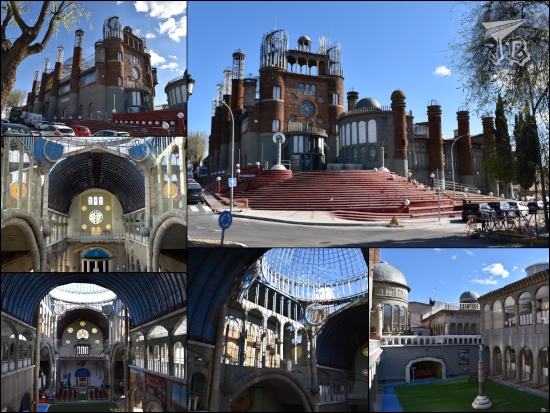
Then I moved onto Mejorada del Campo a little town near Madrid that only has one tourist attraction – a… handmade cathedral. Of sorts – Catedral de Justo Gallego .

Justo Gallego was born in 1925. Deeply Catholic, he became a young monk-in-training but had to leave the monastery when he contracted tuberculosis. He made a vow to erect a cathedral to the Virgin Mary in her “Lady of the Pillar” avocation, and he sort of did. Throughout the next 60 years he worked on building the cathedral, using recycled material, and on his own. His work came to fame when a soft-drink company made him the star of an advertising campaign, which made him and his work famous.

The cathedral has 12 towers, a crypt, two cloisters, a baptistery, and the main nave is 20×50 metres, with a 35 metres high dome. Most of it was done by hand, using discarded items such as tubes and bicycle wheels. It is garish and childish in its decoration, but I found it to have some strange allure. The cathedral has drawn the attention of international artists and institutions, and apparently Gallego built it without any blueprints or knowledge of construction. Upon his death, an architectural studio started working on “legalising” the cathedral (from an urbanistic point of view; it is not an official Christian building) and is it is now under management from an NGO. It was just a bizarre thing to see, but interesting since I was in the area (sort of. Construction made the route stupidly long), glad I’ve visited it at least once. I did catch a European white stork (Ciconia ciconia ciconia) coming home to one of the towers.

Cathedral made out of recycled items: pipes, plastic bottles, irons... there is a dome and a nave, in bizarre colours.

A stork approaches one of the towers of the cathedral

I drove off afterwards, and I have to say the weather that day was amazing – just in-between two piss-poor ones, so yay spring escapade.

Walking distance: 11.18 km (16916 steps)

30th November 2021: Naturaleza Encendida – Explorium. Royal Botanical Garden in Madrid (Spain)

After being in semi-lock down last year, my sibling, who loves Christmas lights, asked me to accompany them to the Real Jardín Botánico, the botanical garden in Madrid. The Botanical garden was founded in 1755, adjacent to the planned museum of Natural Science, which would later become the art gallery Prado Museum. Today, it is a research centre. The garden is divided into four terraces, a main building (Edificio Villanueva), and a back terrace, and it serves as museum of live plants of sorts.

For the last few years (at least three that I’m aware), the botanical garden has spiced up its winter downtime with light shows and displays. This year, the display is called “Lit Nature: Explorium”: Naturaleza Encendida: Explorium by the company Let’s go. The topic is ocean explorers and exploration, spread throughout the three main terraces and an extra exhibit in the building.

In order to have flexibility, I got us Premium tickets in case we needed to cancel last minute, which had the extra advantage that spared us from any queues, as we had full-access between 18:00 and 19:00. We also got to see the extra exhibit without paying extra. I drove up to a mid-way train station that allowed me better schedule flexibility – and my sibling lives close-by so it gave us the option to have dinner afterwards. I took the first train and we met at the botanical garden station at 17:30. We wandered around for a little while we waited until twilight faded, and we got in, avoiding all the lines – I did a bit of astronomy maths when planning this, regarding latest sunset and shortest twilight.

The exhibit is organised so you are free to wander around each terrace, but you can only cross from the lower to the upper terraces upwards, you cannot backtrack, in order to control capacity and people in each area. It only felt a bit crowded at a couple of points, mostly around the checkpoints, as it was very difficult to hear the staff.

The whole display has thousands of little blue LEDs to get you on the ‘ocean’ scenery. The first terrace sets the mood – there are Christmas-tree looking build-ups and different types of colour-changing sculptures: turtles, pufferfish, and sea horses. The second focuses on laser and smoke, and reflection displays, and some serious-looking grouper. On the third, where the building stands, there is a little pond from where a few gigantic tentacles rise, and jellyfish hanging from the trees. The exhibit in the building itself is similar to the projections done by Team Lab.

Collage. A garden lit up at night, with different shapes: pufferfish, seahorses, a turtle... The trees and bushes are decorated with thousands of tiny blue leds

Collage. Light flashes in a dark garden, along with a colour gouper fish

Collage. Huge tentacles coming out of a pond, illuminated in red and blue; and blue jellyfish lamps hanging from trees

Collage. Light effects repeating the same patterns: a pineapple, a thisle, a khaki

We wandered around for a couple of hours, and believe me or not… the lights went out at some point! This was like climbing up (rope-way-ing up, to be honest) aaall the way up to see Nagasaki’s lights from Inasayama and getting caught in the clouds, but fortunately shorter (≧▽≦).

We left the botanical garden and took a train back. There were a few places to grab a bite around the station, so we ended up at a cosy Italian place and shared some stuff – too much to then grab some dessert though. When we left it was so cold that my car gave me the first heart attack of the winter by bleeping and showing me an orange alarm in the dashboard that means “the roads might be frosty” but scares me to death whenever I see it for the first time in the winter season. I drove off home, had a shower, went straight into work at 23:00 because how was I going to manage a free Tuesday evening without consequences?

Final waking distance: 8.50 km (though I really think that the wristband confuses my stress-driving with activity.

8th September 2021: Impromptu Madrid Run! (Spain)

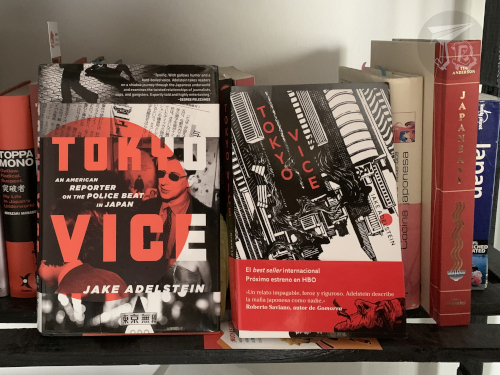
This was oh my god so unplanned that I kept improvising throughout the whole day! It all started because a Spanish publisher decided to translate a non-fiction book I’ve loved for ages – Tokyo Vice by Jake Adelstein. The publisher flew the author in for interviews, and I guess I was disappointed that no signing event was organised. I asked the author once and the publisher another time, then shrugged it off when I got no answer. There were some interviews scheduled for him, and a book fair coming up. I guessed it was just not meant to be, but I did feel disappointed.

And then, on the 7th, Mr Adelstein shot me a message that he would sign my book if I could go to Madrid and meet him at one of his breaks. As you can imagine I just… said yes (I could not meet him that very same evening because of travel times, but I could make it on the 8th. And there I went).

It was the first time taking the train since the whole pandemic thing (hell, I had not even been on a train since Paris 2020), and a weekday so I chose the times carefully to hopefully get close to as few people as possible – it worked, as both rides nobody sat next to me.

I arrived in Madrid and transferred easily, then got out at a new station in the area of Gran Vía. The Tokyo Vice book came out that day, so I wanted to go to a big book store that would hopefully have it already. My first stop, FNAC, failed miserably, so I went to La Casa del Libro, where they told me I would find the book in a completely different section where I actually did. But at least I had it in my hands, even if I had apparently not used my credit card for so long, I got the right PIN for the wrong card (≧▽≦).

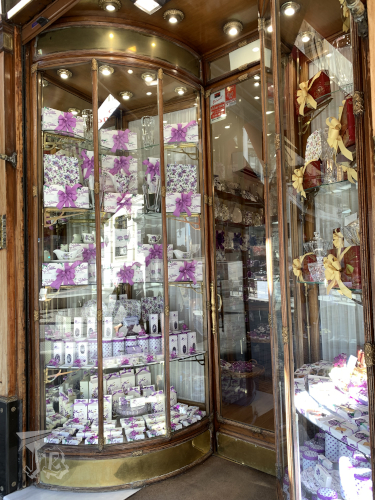
After I had the book in Spanish – I’ve owned a first edition copy in English since 2010 – I had thought that I should get a small detail for the author as he was making time for me. As he had to continue on his travelling, I decided to do something small and “consumable”, so I came up with buying some typical Madrid candy – violet sweets from La Violeta. I’d never been inside the shop, but it’s an adorable little place dating back to 1915.

It was still early for my appointment at 14:00, so I decided to head towards a square that hosts an Egyptian temple of all things. On the way I made a stop at a Starbucks for a Vanilla Frappucino, I figured out that the amount of calories would get me going and I would not have to eat until I was back – looking back it was a weird thing, but it made sense in my head at the time. I strolled around the park next to the palace Palacio Real.

The way to the temple was completely blocked off due to construction, so I decided to backtrack. I walked up the great avenue in the middle of the city Gran Vía. As I walked around, minding my business and listening to music, I kept remembering a comic by Sarah Sanders, in which she makes fun of how people won’t leave you alone when you’re wearing headphones and, well, minding your own business.

I reached the square with the fountain to the goddess Cybele Fuente de la Cibeles and the related Palace Palacio de Comunicaciones (by Antonio Palacios). The fountain dates back to the 18th century, when king Carlos III revamped a lot of Madrid trying to make it more beautiful and similar to other European capitals.

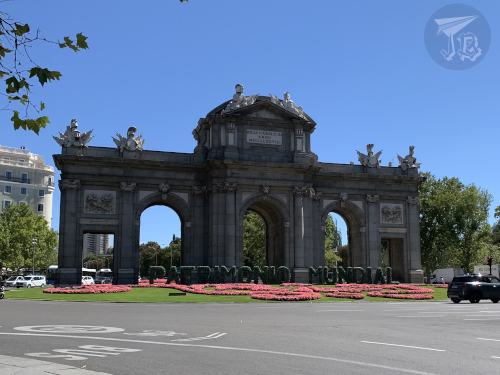
Carlos III is also responsible for the design of the modern version of one of the former wall gates, called the gate to Alcalá, the nearby town, Puerta de Alcalá. This area was declared Unesco World Heritage Site in summer 2021 as Paisaje de la Luz, so Madrid was in a celebratory mood.

I headed into the park Parque del Retiro, which is also included in the Heritage declaration. The park was initially built in the first half of the 17th century, as part of the royal recreational areas. Carlos III opened it up as public park a hundred years later. Aside from the obvious green areas, the park features fountains, palaces and sculptures. I walked past some of them. First I came across the fountain “of the turtles” Fuente de los Galápagos.

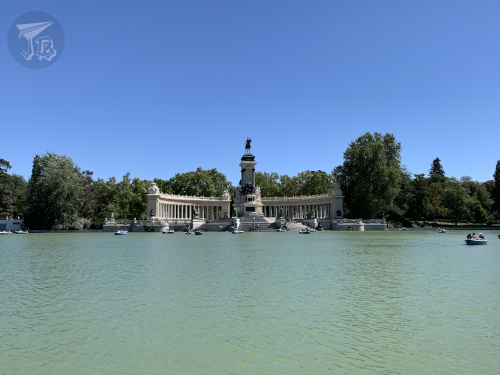
There is also a large pond, aptly called the big pond Estanque Grande del Retiro populated by carps, to whose side stands the monument to Alfonso XII – Monumento a Alfonso XII.

Nearby the pond stands the fountain called the artichoke fountain, Fuente de la alcachofa.

I walked to the fountain that depicts the fall of Lucifer from Heaven, Fuente del Ángel Caído. The fountain itself was built in order to exhibit the sculpture by Ricardo Bellve, who originally created it in plaster. The figure would then be cast in iron for the World Exhibit of 1878 in Paris, and eventually placed in the Retiro.

I strolled back towards one of my favourite points in the park, but that’s because I like iron-and-glass architecture – a little building called Palacio de Cristal, which has a small pond around.

Finally I headed over the little café where I had arranged to meet with Mr Adelstein. He arrived shortly after. He signed my book, but truth be told, I had also brought my first-edition copy, which happens to be full of post-its from the first time I read it. He was happy to sign that one too, and to my eternal mortification… he went over all the notes. I almost died right then and there. We chatted for a little, I gave him the violet candy and he had some umeboshi sweets for me too. I babbled that I was very happy that he had made some time for me, and he told me “but you were so polite on twitter and the publisher said no signatures!” and I kind of died again.

In the end, our meeting was only 15 minutes, but I have not felt so happy in a very long time – that he specifically took time felt amazing. We took pictures and even had a safe mask-hug. Afterwards I headed towards the nearest train station so I could be on my way before the afternoon rush came through, so that was it for the day.

Walking distance: 12.39 km

1st July 2021: Manatees are Zen (Faunia, Madrid, Spain)

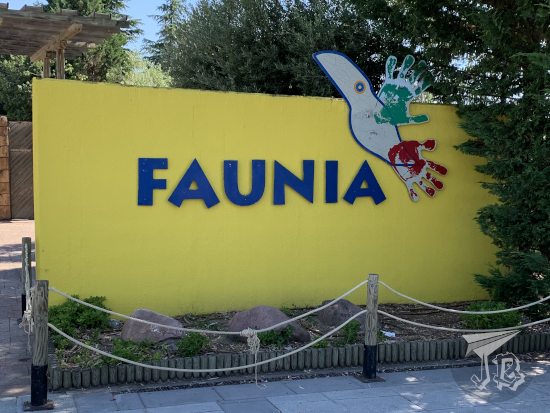
Madrid has two zoos, the traditional one which can be traced back to 1770, and a second one which opened in 2001. They actually belong to the same business group anyway so probably the whole point is just to charge more – and to expand the installations. They operate as independent entities. On the first of July, due to a number of circumstances coming together, I visited Faunia, the newer installation. The standard price for a ticket is around 28€ – but there are plenty of different discounts. I paid 18.90€ for a random Thursday discount that they’ve got.

Though it promotes itself as a “Nature Theme park”, Faunia is little more than a modern standard zoo. Of course, it is much better than the old zoos, and the animals are well-kept, an organisation in ecosystems or areas is not that much of a novelty any more. There are different areas: farm / petting zoo, night, lake, jungle, temperate forest, African forest, Australia…

Komodo dragon (Varanus komodoensis), the largest lizard in the world, endemic to some Indonesian islands. They are venomous.
Tufted capuchin (Sapajus apella), an omnivorous primate from South America.
Red panda (Ailurus fulgens), an animal that is so different from everything else that it has its own family name all by itself. It is native to the Himalayas and the south west of China.
American flamingoes (Phoenicopterus ruber), long-legged wading birds famous for their pink colour that tend to live in flocks.
Ring-tailed lemurs (Lemur catta), a group-forming species endemic to Madagascar. They are attitude-laden and fear-lacking little fellas who love to sunbathe.

Fennec fox (Vulpes zerda): a small fox with large ears which lives in the Sahara and the Sinai Peninsula.
Southern tamandua or lesser anteater (Tamandua tetradactyla), a species of anteater from the forests of South America and the Caribbean, which feeds on ants, termites and bees.
Kangaroo Rat (genus Dipodomys), tiny nocturnal rodents from North America that can jump over two metres
Butterflies – don’t expect me to be able to ID them, but my money is on Antiochus Longwing, a south American small butterfly
Nile crocodile (Crocodylus niloticus), a found in marshes, rivers and lakes in throughout sub-Saharan Africa. They are opportunistic and aggressive predators which ambush their prey in or near the water. And they can gallop. Look that up.

Arapaima (Sudis gigas), a giant fish native to the Amazon. They eat smaller fish, crustaceans, fruits, seeds, insects and any small land animal that they can catch on shore. Furthermore, this is an air-breather. It is a top predator that can become invasive if placed somewhere else.
Redtail catfish (Phractocephalus hemioliopterus), another carnivorous fish from the Amazon. Never trust a catfish, they can literally eat you by accident (or on purpose).
Caiman (family Alligatoridae), reptile predators originating in South America. They are large and aggressive, but they tend to hut fish. Did you know that
Penguins (family Spheniscidae) are a group of aquatic flightless birds. Most live in the Southern Hemisphere, and they feed on krill, fish, squid and so on that they catch underwater. Contrary to the myth, not all penguins live in the cold, a lot of them live in temperate climates.
Coral reef, with clownfish (family Pomacentridae) and sea anemones (order Actiniaria) living in symbiosis.

Meerkat (Suricata suricatta) aka Timon from the Lion King.
Red-necked wallaby (Macropus rufogriseus), similar to but smaller than a kangaroo, and also friendlier. They, of course, originate from Australia. The Faunia webpage says that you can go into the pen and walk among them, but I didn’t try.
Yellow-banded poison dart frog (Dendrobates leucomelas). It is an amphibian which lives in the humid areas in the north of South American. They secrete toxins from their skin. Do not pet, much less lick.
Blue viper of the white-lipped island pit viper (Trimeresurus insularis). Beautiful, venomous, aggressive and feisty, this snake is originary from Indonesian islands.
Gaboon viper (Bitis gabonica), it is really there. It is another venomous snake, and it has the longest fangs among snakes. And yes, it is really there.

White-cheeked turaco (Menelikornis leucotis), originary from forest in the highland regions of Eastern Africa.
Grey crowned crane (Balearica regulorum), a large bird from Sub-Saharan Africa.
Roseate spoonbill (Platalea ajaja), a wading bird from South America, with a very characteristic beak, hence the name
Macaws (genus Ara), endemic to Central and South America. They are “seed predators” which means they destroy the seeds to eat them
Scarlet ibises (Eudocimus ruber), another colourful bird whose original habitat is the coastal areas of South America. They use their long beaks to prove for food in mud or under plants – they eat a lot of small crustaceans, which gives them their particular colour

I guess it is worth a visit, but that’s just about it, if you consider it from a shallow point of view – because when you start getting deep into things, everything gets ridiculously expensive. Because the thing that does differentiate Faunia from other zoos is the fact that it offers “hands-on experiences.” Some of these are about 5 or 6€ and include a short talk inside one of the pens – such as “meeting” the pelicans or the penguins.

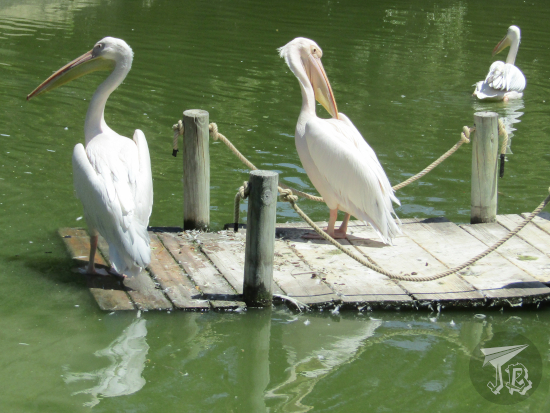
For example, the Pelican interaction consists in walking into the pen and seeing the birds from afar sitting on a bench while one caretaker explains basic biology facts and the other tries to get a pelican to eat trouts for a bit of a close-up “feeling”. Pelicans are large water birds spread all through the world but Antarctica. Their most important characteristic is the large throat pouch under their long beak, that they use to “fish” – they fill their pouch with a billful of water and keep whatever they can digest. Faunia has pink-backed pelicans (Pelecanus rufescens) great white pelicans (Pelecanus onocrotalus)

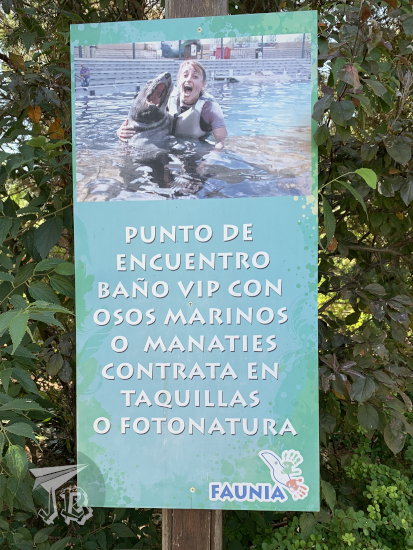
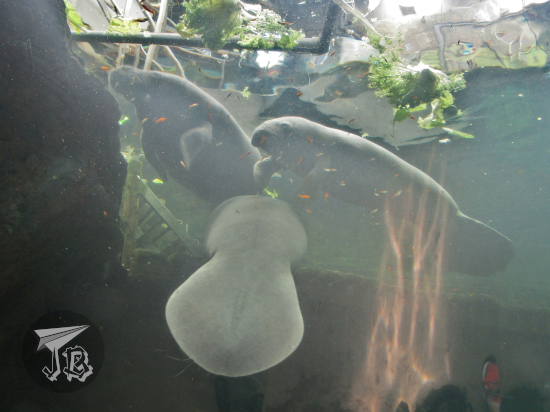
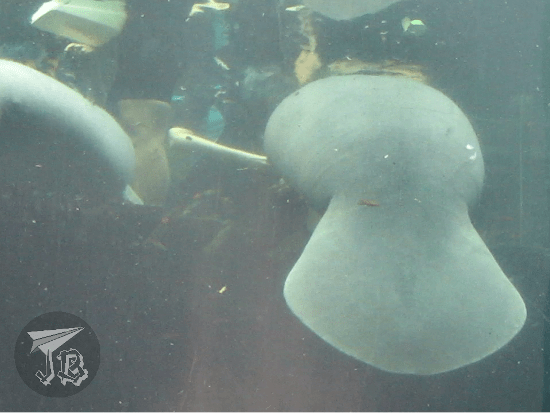
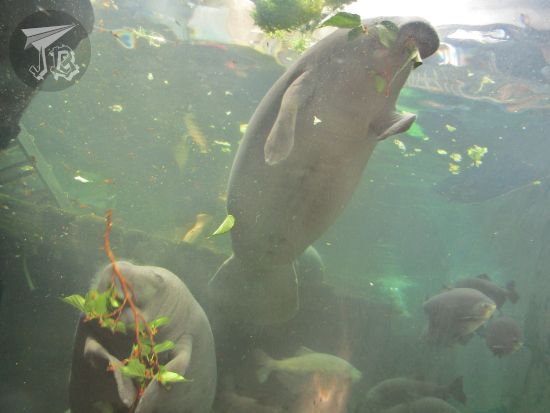
There are however other more expensive interactions, on the range of 40 to 50€, and one of them is the one I did – the interaction with the Manatees. Faunia has three West Indian manatees of the Antillean subspecies (Trichechus manatus manatus). Manatees are aquatic mammals – they breathe air and they spend all of their lives in the water, either salt or freshwater in South America. They don’t have natural predators, so they lack predator-avoidance responses, which makes them very tame and friendly. Unfortunately, they are critically endangered in the wild, mostly due to human-related deaths: hunting, habitat destruction and collision with ships. As they are herbivorous, they eat fresh and saltwater algae and plants, they are sometimes called “sea cows”, and eat plants and algae – males are called bulls, females cows and babies calves. They are sturdy and they can weigh between 400 and 550 kg, measuring up to 3 m in length. They have a long spine with pectoral flippers that have five fingers, but no rear flippers. Their body ends in a paddle-shaped tail. The neck is not visible and the head is stocky. They don’t have ears, their eyes are small and their snout is short, with nostrils that can be closed when they are underwater. They have a prehensile lip that they use to gather food and for social communication and interaction.

And they are adorable.

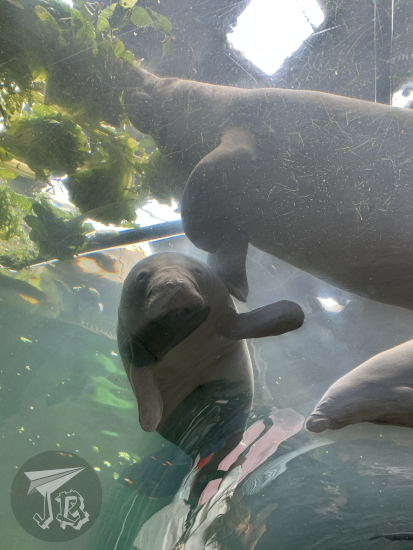
The manatees in Faunia are named Bruno, Fiona and Pelusa (“Dustbunny”), with the latter being the two-year-old daughter of the other two, born in the park. They live in the tank located in “The Jungle” area (La Jungla), sharing their space with catfish, arapaima and pirapitinga (the good-rep fish in the piranha family). For the interaction, you are asked to bring your bathing suit, towel and pool flip-flops. I arrived at the meeting point early and waited eagerly for the staff to come pick me up. Then I was guided into the inner area of the Jungle building, up a metal staircase and I changed into the neoprene suit.

As we waited for the other people to be collected, I saw the manatees swimming around, already anticipating the food. They had mulberry leaves, endives, and banana pieces for treats, and lettuce of different kinds as their main meals. The interaction itself is a kind of training for the animals. The trainers go in with an acoustic signal, and the animals recognise their own names, and each goes to the trainer assigned to them – you also get assigned a trainer so you don’t mess up.

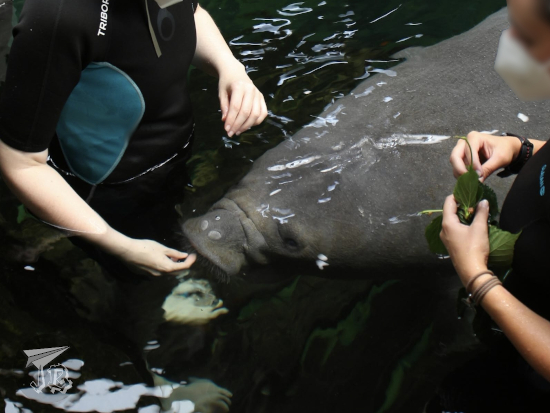
There are two parts of the interaction. First, you get to feed “your” manatee whatever you are given. Normally, there are two people per manatee, but as this was in the middle of the week, even if in summer, we were lucky enough to only be three visitors – which meant your own personal manatee. Mine was Pelusa, the baby, and she was way more interested in the mulberry than the endives. During this part you keep your FFP mask on.

For the second part you “go down” with a snorkelling mask and even if you’re still on the platform you get to feed “whomever comes to you”, seeing the interaction from within the water. To finish up, you give your manatee a small branch for them to eat and play with, and they are released, you change back into your clothes and leave. My interaction took about one hour, and I was lucky enough that I had an “infiltrate” who took pictures from the “underwater tunnel” that crosses the tank. I also bought myself one of the official pictures that the resident photographer takes, because I really, really wanted a good picture.

All in all, it was awesome, and it even felt that the manatees came to wave bye-bye as I left through the tunnel.

As a zoo, as I mentioned, Faunia is a very standard one, with very few things that would make it special if not for the interactions. It could do with some more shades, because just after lunchtime it became really hot. Most food kiosk were closed due to COVID measures, and there were several vending machines. There were a lot of kids doing “urban camp” activities, and I got ran over twice – one of them pretty painfully to be honest.

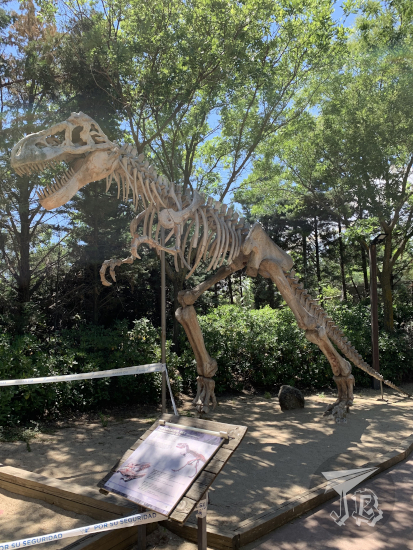
Aside from the animals, there is a roller-coaster, also down due to COVID and a “dinosaur canyon” with dummies and animatronics that have really seen better days.

T-rex skeleton reconstruction

Furthermore, queuing to go in because the VIP entrance is blocked for… no really VIPs as there were none, and waiting forever at the entrance kiosk to get the Experience passes and then for the photos, were a drag. As a conclusion, going once in your lifetime, getting to do an interaction or two might be a good idea, but this is not somewhere I’m dying to come back to – though I am open to explore other parks from the same owner, such as the traditional zoo or the aquarium.

I mean, some of animals, such as this goose, had a very clear opinion about the park, too.

Goose attacking one of the Faunia signs

Walked distance: 12954 steps / 8.06 km

Pricing: Ticket: 18.90€ + Manatee experience 38.90€ + Pelican experience 5€ + Professional picture 11.90€ + digital upgrade (three-month access) 1€ = 75.70€. Way too much to plan another expedition any time soon.
Saved: We parked outside so we saved up the 5.50 € for the parking lot, and we took our own food.

19th June 2021: Dino World Expo in Madrid (Spain)

Upon finding that the exhibit Dino World Expo was opening in Madrid on the 18th, I decided to book myself a ticket for the first pass on Saturday morning, 10 AM. I guessed that it would not be too full since it was the first weekend, early, and before school was out for the summer and all the reviews popped up so everyone found about it and brought their kids.

The exhibit was held in Madrid’s fair grounds, IFEMA Espacio 5.1, a short drive away, and aside a small mishap with setting the Sat-Nav. When I arrived, about 15 minutes later there were about ten families with little kids. I walked around for a little and came back when the doors opened. There were several types of tickets, the basic one was 13.50€. The exhibit included an extra “Virtual Reality experience for 3€” (it was 4€ if you bought it during the exhibit itself), so I decided to get the “premium entry ticket” which for 23.50€ included entry, a printed picture (10€ otherwise), the VR experience, a lanyard and a poster – both of which have been distributed around kids who might have want them.

When my ticket was scanned, the system roared and I was given my “VIP lanyard”, and told that I just had to show it around. Then again, let me tell you that I almost called this post “normalise people doing stuff alone” but that would go into the ranting territory and I did not want to do that – it is enough to say that from the beginning to the end of this exhibit, every staff member gaped at me for being in a dinosaur exhibition alone / without kids.

Upon entrance I got my picture taken, then had to wait a little with a couple of families before me until the first room cleared. We got an explanation about the audio-guide app and the exhibit rules. The exhibition itself was composed mostly of animatronics that moved and roared – when they had remembered to turn them on, some of them were still asleep. Aside from the life-sized animatronics, there was a CGI film and at the end of it, the VR experience which… was okay I guess. I learnt that I am not a VR person, as I got more than a bit queasy from the “flying” with the pterodactyl, swimming with a few anachronic species, and then following the T-Rex hunting.

From the shop I got my picture and the promised poster, although I had to show my ticket, not only the pass, in order to do so. All in all it was a cute little experience, but not really worth a detour if you are not in the area – one day I’ll learn that “for all the family” means “kid-oriented”, but that day was not today. On the way back the Sat-Nav got me confused and I took the wrong exit (“stay left on exit 9A” is not the same as “take exit 9A and then 9B to the left” in my books), but I was home by noon, and of course I took a lot of pictures.

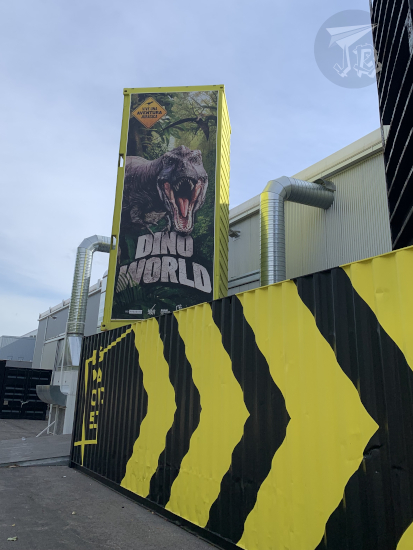
Approach

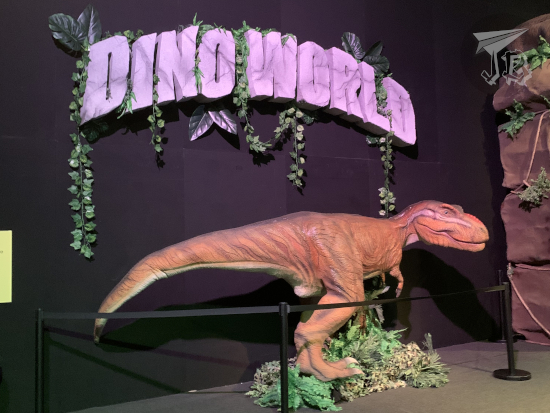
Entrance

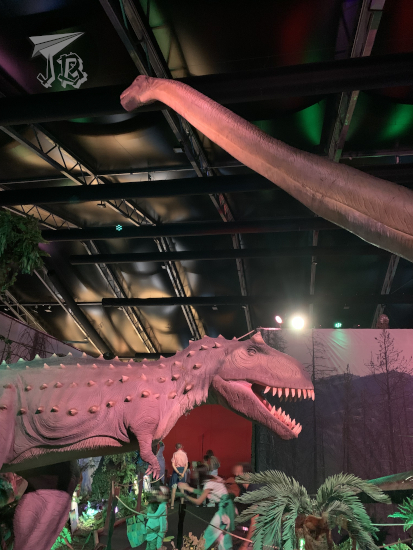
dinosaur animatronics: diplodocus

dinosaur animatronics: carnotasaurus and brontosaurus

dinosaur animatronics: pteranodoon

dinosaur animatronics: iguanodoon and Eustreptospondylus

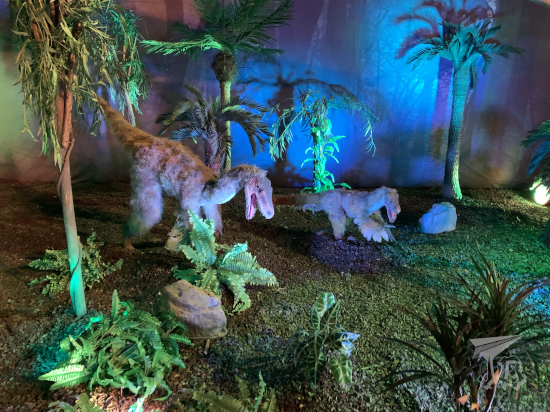
dinosaur animatronics: feathered dinos

dinosaur animatronics: T-rex and triceratops

30th July 2020: Vampires in Madrid (Spain)

The world is pretty much topsy-turvy these days, isn’t it? I’ve been literally staring at the computer screen for about an hour, wondering how to start, how to explain. I’ve erased the opening paragraph about four times too (≧▽≦). Thus, I will just spare you the introduction, explanations, justifications, and so. It took me a while to decide in favour of my little trip to Madrid.

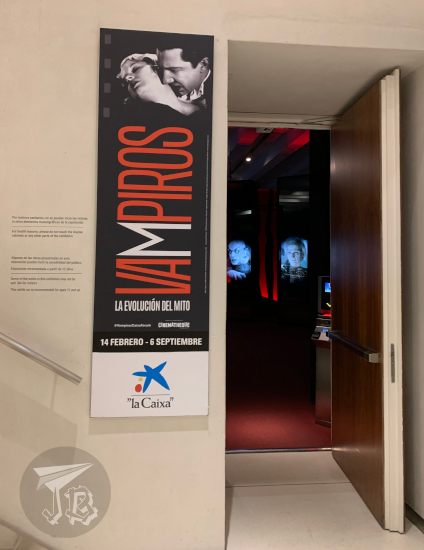
Vampires, the Evolution of the Myth, or Vampiros, la Evolución del Mito (#VampirosCaixaForum) was scheduled before the whole COVID-19 debacle. Once things started opening up in Spain, the exhibition was rescheduled to run in Madrid for a couple of months through summer. And for a while I pondered whether it was… I’m not sure how to put it… worth the risk? For months we had been told to avoid public transport, which is my main mean of moving around, so in the end I decided what the fuck, if I was doing this, I was going to drive into the centre of Madrid – for the very first time in my life. For the record I don’t particularly enjoy driving, I much prefer being driven, and my sense of directions when driving is… not the best, so I borrowed a GPS, picked up my sister, and drove off.

After only getting the wrong exit once, we left the car in an underground parking lot and walked ten short minutes and we were in front of the Caixa Forum Madrid. Caixa Forum is a cultural space owned by a savings bank in search of tax deductions that organises shows and exhibitions. We had a compound ticket for 12:00, which included both exhibitions in the building, and a theme lunch. And so we went.

Vampiros: La Evolución del Mito, “Vampires, the Evolution of the Myth” is an exhibition originally organised by La Cinémathèque française, which is a French French non-profit film organisation that holds one of the collection of cinema-related objects and documents in the world. As they are specialised in films, the vampire exhibition focuses on the figure of the preternatural being throughout cinema.

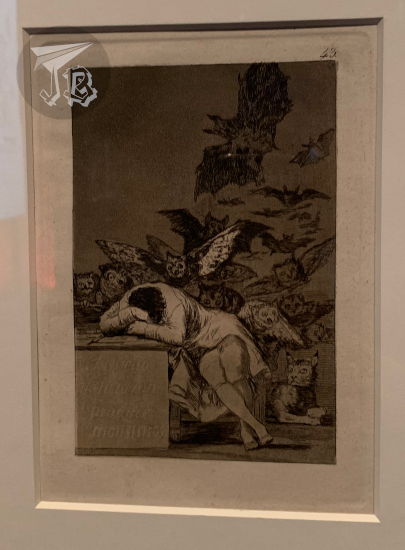
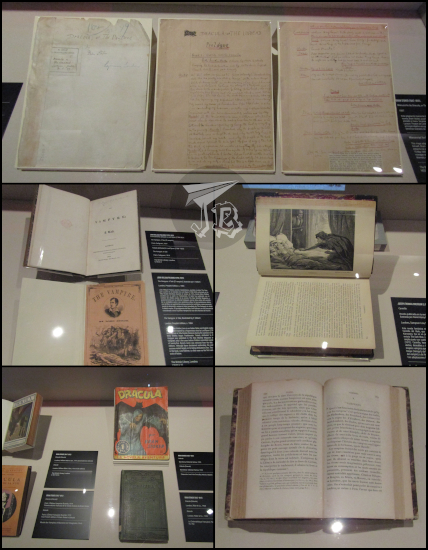
The first room is focused on the book Dracula, and the Romantic interpretation of the myth – Romantic as the literary period, not the lovey-dovey stuff. Highlights include a facsimile of the first scene of the manuscript of Bram Stoker’s version of Dracula for theatre, aside from early editions of the novel and other vampire books such as John William Polidori’s The Vampyre and Joseph Sheridan Le Fanu’s Carmilla. There were also some surprising items – some of Francisco de Goya’s wood-prints. Goya was one of the most influential painters in Spain, also grounded in the Romantic movement. Good stuff.

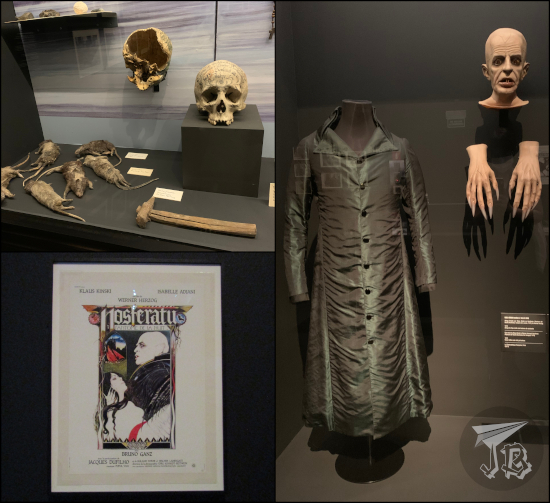
The second room was dedicated to Nosferatu, one of the key films in the vampire genre, with some promotional material and film props – this was the ward with best and most important number of items.

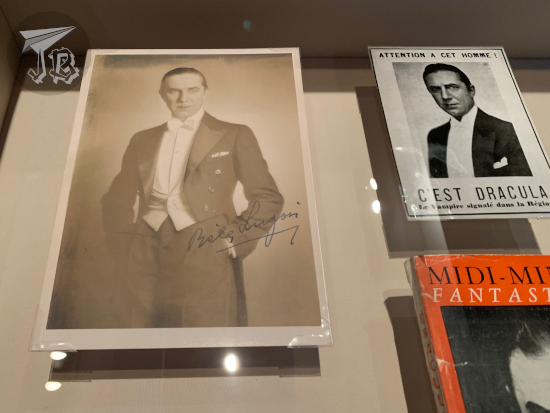
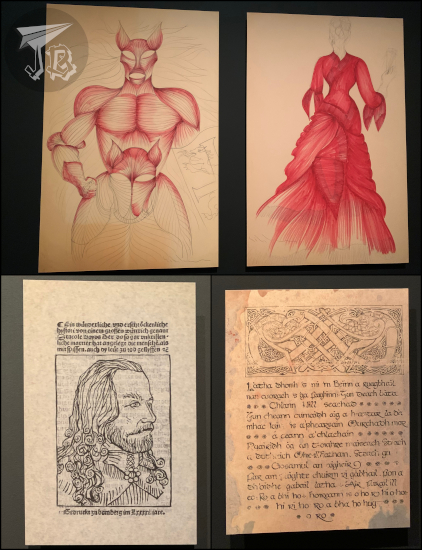
The following room was dedicated to the romantic, erotic and sexual vampires. It had two main focuses – one was the Dracula portrayed by Bela Lugosi as the epitome of the elegant, seductive vampire, first in Broadway, then in the 1931 film by Universal Studios. The centrepiece of the room featured two pieces of the wardrobe in Coppola’s Bram Stoker’s Dracula worn by Gary Oldman and Winona Ryder, along with several designs for the wardrobe (which could not be photographed, but you can peek at in some of the pics). Finally, we got to see the suit worn Tom Cruise as Lestat and Kirsten Dunst as Claudia in the 1994 film Interview with the Vampire. I missed some more Christopher Lee, as there were barely some photographies of his performance in Dracula (1958) and its sequels.

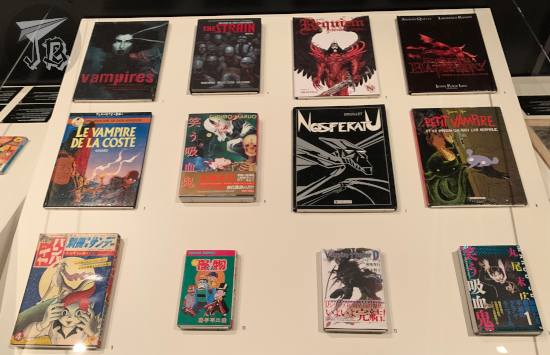
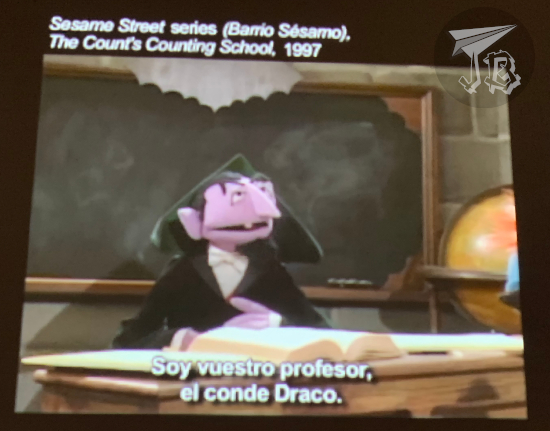
On one side there was a small area dedicated to the vampire as a political metaphor. The final area was dedicated to the pop vampire, including magazines, comics and graphic novels, some Japanese manga, and so on – even Count Dracula from Sesame Street! Then again, he was on a screen. I would have killed to see the real puppet.

All in all I got the impression that the exhibit lacked ‘the real thing’ and abused the film montages. I was expecting a few more props and less bits of films which… after all I’ve seen most (≧▽≦). The truth is that the myth of the vampire starts much earlier than the “Medieval” vampire featured in the Romantic fantasies, and can be traced to early succubi or the Lamia myths in Ancient Greece if you think about Western Culture alone. The Romantic and Victorian writers just made the myth cool as it was once more popular due to a sort of “vampire hysteria” that crossed the Balkans the previous century – that’s probably the main reason why Bram Stoker chose the figure of a Transylvanian warlord to create his character. But in the end it was a good way to break the activity fast.

Then we moved on to the next exhibition, Cámara y ciudad. La vida urbana en la fotografía y el cine, “Camera and the city: urban life in photography and the cinema” which… was okay, I guess. I guess I’m not a photography / video kind of person (≧▽≦).

After perusing the shop for a while, we moved to the cafeteria, where a “theme menu” had been designed. Let me detail that for you:

  • El frenesí vampírico / Vampire frenzy: virgin – I think – Bloody Mary
  • Estacas de la muerte / Death stakes: aubergine tempura with sweet and sour sauce
  • Reencarnación / Reincarnation: Goat cheese, sweet beet and raspberries salad
  • Inmortalidad / Immortality: Macerated sea bass with lime, orange, coriander, salt and pepper, with a side of mango and tortilla chips
  • Embalsamamiento / Embalmment: Duck magret with a red wine sauce and mushrooms
  • Drácula / Dracula: Crème anglaise, jelly and raspberry mousse.

Let me tell you, this was amazing – and fortunately the portions were small so the final amount was more than adequate.

It was a little later than 15:15 when we left the CaixaForum centre and headed off the Museo Nacional Thyssen-Bornemisza, the Thyssen-Bornemisza National Museum, a museum built from a noble family’s art collection which also hosts temporary exhibitions. The permanent exhibition is chronologically organised, and here are some of the pieces by famous artists: Rubens, Rembrandt, Van Gogh, Degas, El Greco, Tiziano… and hm… many very modern painters I… can’t understand.

Finally we decided to call it a day before people started coming out of work and leaving town so that we did not get into a traffic jam, and I am very proud of myself for taking the drive – which was my wee white whale for a while. I’ll see myself out now (≧▽≦)

Distance: Approx. 120 km driving; 6.08 km walking

Also, as an afterthought, I ordered the Vampire exhibition book online. I did not at first because I did not feel like carrying it around as it is thick. But they home-delivered and I actually saved 2.5 bucks?

PS: New logo! What do you think?

26th January 2020: Royal Palace and Norwegian salmon (Madrid, Spain)

A friend was over visiting for the weekend and we headed off to Madrid. It had been raining and the weather the previous evening had been rather miserable. Actually, when we left home it was rather foggy and dark, but upon stepping out the Avenida de América bus station, it had become sunny and not cold at all.

My friend wanted to see the Palacio Real de Madrid, the Royal Palace – we had been playing Madrid Cluedo the day before and she had mentioned that she had never been there. At first, we only wanted to see building. As it was Chinese New Year, the blunt of tourists was somewhere else watching the Parade, and we had a short queue to go inside, so she decided to wait as it was not expensive, either.

You can’t take pictures in most of the palace, but the yard looked really nice and you could see the cathedral from there. We also heard all the bells tolling at noon, which was fun. When you go into the palace you see several rooms, including the throne room and the old sleeping quarters. One of my favourite rooms is the one with the Stradivarius violins and other instruments.

While there aren’t that many pictures taken inside, here is a shot of the cathedral, Catedral de la Almudena .

After visiting the Palacio Real, we went to have lunch. She wanted ham, and I wanted a poke bowl I had seen announced in El Corte Inglés cafeteria, so it was a win-win situation. I had a “Poke bowl de salmón noruego”, Norwegian salmon poke bowl that was amazing – a sushi rice base with avocado, spring onion, purple onion, wakame, a soft-boiled egg and Norgweian salmon marinated with soy sauce, rice vinegar and kimchi.

She declared that she was happy after this, so we called it a day.

26th May 2019: “Komeko Sin Gluten” event in Madrid (Spain)

After almost literally everybody and their dogs ditched me for a cooking workshop in Madrid, literally the day before I decided to bite the bullet and go by myself, so I bought my ticket on Saturday night, barely 12 hours before the event, a promotion of a Japanese-Spanish shop and its products based on rice flour. The shop is called “Komeko Sin Gluten”, which translates as “Gluten-Free Rice Flour”.

Evenbrite ticket for the event: Taller de Cocina de Komeko: crepe, helado y tarta 10 euro

The event happened in a venue-for-hire in Madrid, and consisted in three distinct parts: a small market in which I would have spent a lot if I had not got a few samples with my ticket, a cooking workshop and a taiko concert. I arrived early due to Sunday having awful public-transport connections, and I arrived in Madrid an hour before the event even opened, and then we got a delay with the start of the workshop because someone was missing. During that time I got to sit around among aaaall the Japanese people around, including the head drummer of the taiko group, , whom I admired a lot since I watched him in HA·YA·TO: Drum Masters.

The small market was comprised, of course, of gluten-free products, especially Japanese ones, most of them can be found online, yay. I decided not to buy things upfront as the workshop included a sample of products, and I wanted to buy what I did not get. In the end, I did not have to buy anything because I got next to everything!

Pictures of the rice flour items - flour, noodles, snacks...

Anyway, the cooking workshop:

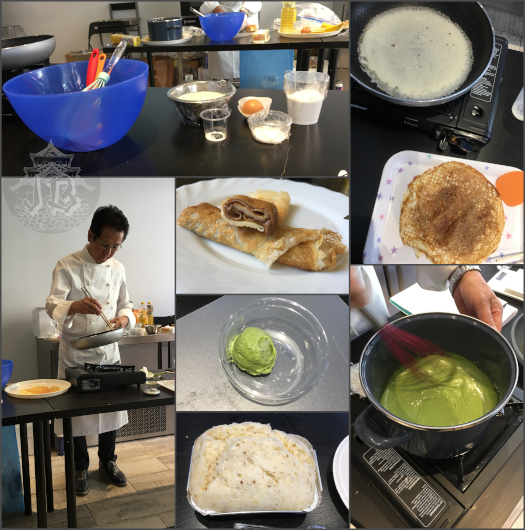
  1. Komeko crêpes: We made the crêpes on portable pans. There was a mini drama as the cook refused to start until we had chopsticks to flip the crêpes, and I was amused at first until I realised how convenient they actually were. While he was worried that I ahd any problems with the chopsticks, I’m happy to report that I was not the clumsiest in the class! After they were cool, we filled one up with ‘pastry cream’, banana and whipped cream for presentation – but we got to take the rest home and I tried them with chocolate. Serious improvement!
  2. Steamed banana sponge cake: this was really interesting to make, and also really easy – it involved mixing all the ingredients in a plastic bag, and then cutting a corner off the bag to pour that into little trays so we could steam it. That was… neat, and a team effort.
  3. Japanese green tea (matcha) ice-cream: Double team effort! (≧▽≦). As the paste needed time to freeze, we actually observed the chef prepare the ingredients and ate the one that had been prepared in the previous workshop.

Collage. Chef preparing crepes, and a picture of the materials, the matcha ice cream and my own creppes and banana spongecake

We had a snack with our crêpes and the matcha ice-cream. Then we got the haul of goodies: ramen and spaghetti noodles, komeko, komeko with glutinous rice, and komeko with cocoa, well worth the price (10€) I had paid for the whole workshop… Talk about promotion ☆⌒(ゝ。∂).

Different flours and noodles I got as present

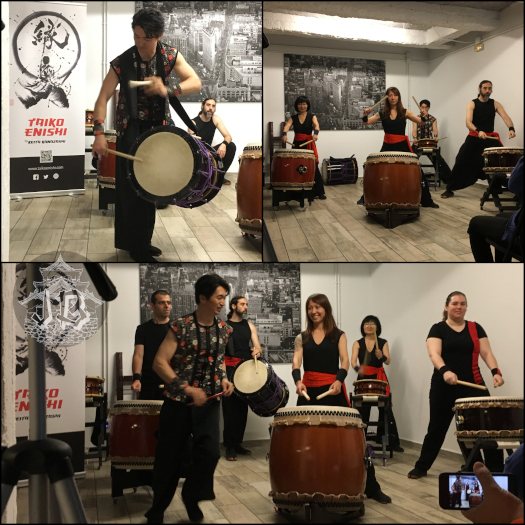
Afterwards, I headed downstairs for the taiko concert. Enishi Taiko is a Spanish group, and Keita Kanazashi usually collaborates with them rather often. The concert was, of course, more humble than the one with HA·YA·TO, but it was still a lot of fun.

Taiko group playing and having a lot of fun

Afterwards, I got Kanazashi to sign the HA·YA·TO DVD and the picture I had with him from that time, which was really cool. Furthermore, the main drummer in Enishi Taiko remembered me from the X Gran Exposición de Ikebana y Semana Cultural Japonesa session, and another session I took at their headquarters.

I had thought that I would be eating in Madrid but as I had snacked on the komeko products I was not hungry at all, so I decided to head home. On the way towards the station I found this really cool fountain.

Urban waterfall. The fountain looks like a massive bench, with a thin layer of water dripping from the top

18th & 19th May 2019: Madrid (Spain) for Jupiter (and fesFE[M]!)

The weekend started extremely early on Saturday, when I took the first bus out to Madrid, and I think I was there around 7:30 to meet my friend C*****. She had been having a rough time and she had asked me to “keep her head off things”. Up until a couple of days before, we did not even know whether she would be able to come to the concert, so I had a whole plan up my sleeve. Unfortunately, a couple of steps backfired slightly. The main event – which we had been planned since the previous December – was Jupiter’s concert for the ZEUS Europe Tour on Sunday the 19th, but we made a whole weekend out of it. I was not actively following Jupiter at the time of the announcement, but C***** and I decided to attend because Madrid is easy and convenient, well-communicated and an opportunity to spend a weekend decompressing somewhere. As the time drew near and we could access more material, the excitement built up – I also managed to find the album they were promoting and it sounded really well, actually.

Her bus arrived earlier on Saturday than mine, and when we met, we decided to have breakfast at the coach station, to catch up and to give shops and so on the time to open up. When it was a reasonable time, we took the underground to drop our luggage at the hotel – the lovely EXE Moncloa. I had selected it because it was near the concert venue, and I hoped that we could hang out the terrace and the swimming pool, which unfortunately did not open until June. After getting rid of the luggage, we rode the underground towards the neighbourhood of Chueca, where I had looked up a bunch of Goth apparel shop which were right up her alley and… did not open at 10:00 as the internet said, but at 12:00.

Fortunately, other shops were already open and we were able to pass the time amicably. We were actually close to the Telefonica building, so I suggested we headed up there for the TeamLab exhibit, which I had already seen, and I thought she might like the digital art.

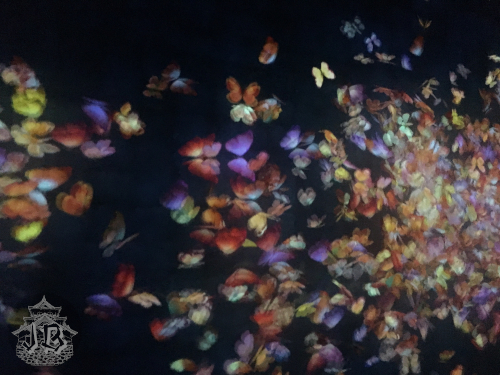
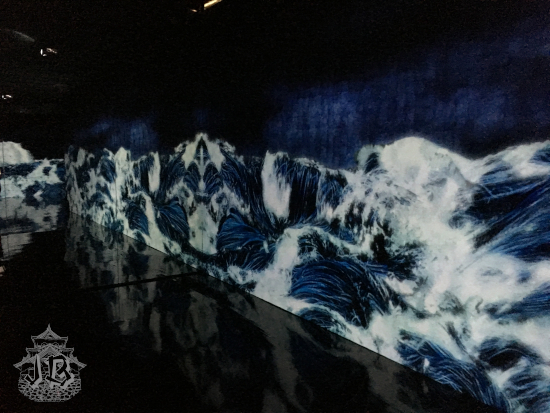
Teamlab logo and digital art: Waves, butterflies in red and green, and a dripping circle as if it were painted with a brush. All of them are light or bright colours on black.

Afterwards, we moved onto Callao Gourmet Experience for a snack. I wanted to introduce C***** to the Niji Mochi shop, and we also shared a chocolate ice-cream shake.

Mochi and coffee with whipped cream

Afterwards, we were shopping for a little longer before we moved on to have lunch. I had a surprise for her. While I care little to nothing about Korean food, she is a fan of everything Korean. Thus, we hit one of the best Korean restaurants in Madrid, called Seoul. I gave her free reign to order for both of us and we shared, though being honest, the only thing I enjoyed was the green tea at the end.

Lunch: fried dumplings, roasted meat, rice with vegetables, and green tea.

After lunch, we went on and found an underground station. We rode towards the Museo Arqueológico Nacional, National Archaeological Museum, although we had not realised that it was museum day so instead of a quiet exhibition I was used to, we had to deal with a ton of families! On the bright side, it was free, though. The museum, which shares a building with the national library Biblioteca Nacional, was founded in 1867, at a time when creating national museums had become popular among European governments. It was the start of the development of archaeology in Spain. I remembered it from the time I was a kid, dark and with wooden floors, but it was recently renovated with wide spaces and modern interiors.

Exhibits at the archaeological museum: bones from a mastodon, boar statue, lady statue, Neanderthal skull, Roman mosaic of an octopus, Horus statue, Iberian stelae, primitive animal that looks like a boar or a bull carved out of stone, Grecian vase

C***** was tired from spending all night in the bus, so we left the museum and headed back to the hotel to finish our check in process and then catch a break. On the way, we stopped and bought a few snacks for the following day because you always have to be ready for a post-concert low.

We had to look for a place to have dinner, and I found a few interesting places. There were not one, but three Japanese restaurants in the area where we were staying. One of them required queueing and sounded quite self-important, so we were left with two options. We decided to try one in the evening and the next for lunch the following day. Thus, I booked a table at the nearby Naniwa. We had some decent sushi, chicken, and takoyaki… then ordered takoyaki seconds because we had a discount (and I was hungry because I barely picked on lunch).

Dinner: sushi, fried chicken, octopus balls, chicken skewers

The next morning, we headed to the venue Sala Copérnico door around 9:00 and upon seeing nobody queueing yet, we went to have breakfast at a nearby café. Then, we walked around the Moncloa park area, mostly chatting, until we went back to the venue – no queue. And later went back to the venue – no queue. And afterwards, we went back to the venue again, just to find there were still no people in the queue.

Coffee and bread breakfast

In the end we ran into the supporting bands went to have lunch to the second Japanese restaurant in the block, Morikaen. It was around 13:30 as we were heading there, and I said something along the lines of “I feel sorry that they’ll arrive and there’s nobody here to greet them”, and as we turned the corner we almost literally ran into the whole crew coming out of the bus. Talk about timing. They looked tired so we just walked by, but we were rather sure that we had been noticed. On our way to the restaurant, we walked past a family all clad in “Sunday church clothes”, and their small girl wearing aaaall white just stared at us – in rock-goth black clothing – with pure envy in her eyes. Here’s to you, little one. You’ll get there too.

Lunch was all right – tuna tataki, tonkatsu, takoyaki. A bit more expensive than the previous day’s dinner, but we also ordered higher-class ingredients and more complicated dishes.
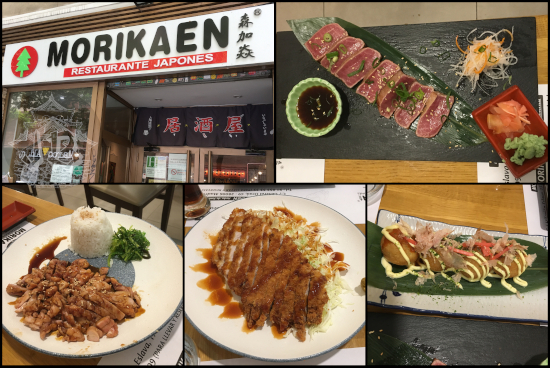
Lunch. Tuna tataki, rice and chicken, breaded pork, octopus dumplings

Jupiter is a Japanese band who define themselves as “melodic metal band”. It could be said that it is a visual kei symphonic power metal, which means they combine a very particular image (or a bunch of images, the most iconic being Hizaki’s Baroque-inspired dresses) with a subgenre of metal that combines hard drumming, metal guitars, and elements of classical music. On the 22th November 2018, Jupiter announced their new album, a Japanese Tour, and a European Tour, ZEUS Europe Tour. Bassist Rucy left between the announcement and the album release due to creative differences, and I really thought they would cancel the tours, but luckily everything went ahead. The remaining members – guitars Hizaki and Teru, current vocal Kuze, and drummer Daisuke were joined by support bassist Shoyo.

Schedule for the tour

There were two promoters involved for this concert. The local promoter, which in Spain was Madness Live, sold general admission tickets – they have a clean and neat webpage and buying from them is easy; I got ours on the 12th of December. The other, Editions Hikari, was in charge of coordination of the European tour, general information, and ticket upgrades. I think they are one of the worst organisers I have ever come across.

Hikari announced those upgrades in January. There would be VIP experiences, on sale on the 14th of February. Besides that there would be two kinds of upgrades, there was no real information about them until a few days before the sale. The best tickets were called “Venus Premium” (40€ face value + 5€ reservation costs) included autographs + handshake + backstage access before or after the show or soundcheck access (if possible) + photo with 1 member taken by a professional photographer (sent by e-mail later after the tour) + priority access to the merchandise, and there were five per show. The “Venus” upgrade (25€ VIP + 3€ reservation costs) comprised autographs + handshake + priority to the merchandise, there were 20 available per show. Getting the tickets was chaotic, but in the end, C***** managed to buy the two Venus Premium tickets we wanted – luckily. A lot of people did not even find out about the option to upgrade. In the end, the backstage pass / soundcheck was not available for any concert in the tour, and the priority access to the merchandise was impossible in Madrid due to the two independent promoters. Either of the VIP upgrades granted the option to buy an “Instax” (Polarid) photograph with the whole band at extra cost.

Hikari’s Facebook instructions were that Venus and Venus Premium ticket holders had to go to the merch booth – to which they supposedly had priority access – at the beginning of the concert. However, as the access to the actual venue was controlled by the local promoter ticket, there was no way they would access the merch booth with any kind of priority unless the managed to somehow skip the queue. Any kind of communication with Hikari was impossible as “they could not check emails, Facebook messaging, nor reply to comments.” However, they still made posts, and that is how we found that the CDs which Jupiter brought to sell at the merchandise booth were confiscated by customs’ officers before the first concert!

On the 10th of May, we received an email form the local promoter, Madness Live, informing us that the door timing had been changed and they were nice enough to send us the following schedule: Doors at 19:00, VII ARC (German support band) at 19:15; fesFE[M] (Japanese support group) at 20:20; Jupiter at 21:30. There was no information on the upgrades, because they had no clue about those, as Hikari was in charge. The day of the concert thus arrived and we had no actual about that, except for rumours and comments of what had happened in previous concerts. That was why, even if there was no queue, we had decided to stick around Sala Copérnico instead of heading into the city centre.

Eventually, after lunch, I decided that I was too tired to keep going up and down the streets, so around 16:00 we settled at the venue doors until they opened so we could get into the chaos that was the concert. At 16:30, other people arrived, so we got talking – that was how we found out that many people had never even heard about the upgrades. Doors opened around 19:00 – without any kind of priority access to the merchandise, nor separating VIPs and GA. C***** and I decided to divide and conquer – she went to secure a spot on the first row, while myself checked in at the merch booth to get the Instax tickets with the whole band.

That is when I saw the lousy, half sheet of paper taped there saying “Venus and Venus Premium ticket holders, gather at the merchandise booth at 20:00”. That placed the “Venus experience” in the middle of the support act, which meant either having very good friends who saved you the first row spot, or sacrificing it. We decided to give the place up and find somewhere more convenient so we could move about. Without holding spots for the VIPs, this was totally unacceptable in my opinion, especially since there had been no early entry, or priority merchandise. A bunch of people who did not want to buy anything missed out on what they had paid for.

The first support band was VII ARC. They were okay, a bit of stereotypical German heavy metal. I can see how they might appeal to the general metalhead crowd, but it feels that they were chosen because “they dress up sometimes”, and Hikari thought they would fit. It is formed by Kay (vocals), Fū (lead guitar), Bena (guitar, screaming), Grazel (Bass) and Z’ev (drums), and they could probably fit a bit on the “visual” style, but they did not bring any distinctive gear.

VII Arc playing in Madrid

At 20:00, as fesFE[M] prepared to take the stage, the Venus Premium and Venus ticket holders gathered around the merch booth and we were ushered past a barrier, towards the bar. There, we had to wait for about 10 minutes while the second support act started. A Japanese staff lady with little to no English came to “check” the Premium tickets and “sort of explain” to us the whole thing. First the Venus Premium would be shown backstage one by one for the one-on-one photograph – there were four of us, we never knew if the fifth was never sold, they did not come, or they missed the whole experience. Afterwards, we would come out again and joined the regular Venus for the autographs and handshake, then the Polaroid would be taken for the ones who had bought it. We were ushered past a curtain and the backstage door towards the mess room where the remains of the lunch buffet were.

As I entered, I caught sight of Shoyo, the support bassist, who was sitting down on a low mattress in a room to the left, looking bored. I greeted him in Japanese, and he greeted back. C***** turned to see whom I was talking to and her eyes were wide. I asked Shoyo if he felt lonely, he said a little. Another attendee who also spoke Japanese asked for a picture (beating me to it, actually) but he said he was not allowed.

The conversation died out when it was time to go into the private band area for my picture with one of the members. As I walked in, there was Kuze to my left, Daisuke to my right and Teru and Hizaki in front of me, Teru dead centre and Hizaki a little to the right. I was asked whom I wanted my picture with and chose Teru, as I had long ago decided that I would if I could. He smiled and posed with me, then he shook my hand. I have got to learn to look into Japanese musician’s eyes when I talk to them.

We said good-bye to Shoyo on the way out, and almost left, but it was now time for autographs, handshakes and Instax. I pulled out the CDs I had brought for C***** and myself, and I got to shake hands with all four of them and receive the band’s autographs. Since the CDs the band brought had been seized, we might have very well been the only ones in the whole country that produced some official material for signing. Then, we took the Instax and the staff would ask with a thumbs up sign “okay?” to check the picture was good, before we left.

CDs signed by Jupiter members

All in all, the band was very friendly and amazing, but the timing and organisation was horrid. We lost out first row – despite having “priority access”, and we missed half of the fesFE[M] concert. As Copérnico has two levels though, we found a nice spot at the stairs that connect both, and I could lean against the handrail to watch the rest of the act.

fesFE[M] is a relatively new visual kei band where all the members take up “doll” personas. Their career in 2017 and released their first mini-album in May 2019, just in time to come over to Europe for Jupiter’s tour. For each album / season, the band dons a doll theme, and they were currently on the “horror genre” dolls. The members and their doll types are: Lion [リオン], vocal, Distress Coppelia doll (from the namesake ballet, dressed as a bloody bride); Aito [アイト], guitar, Apathetic Prince doll; Zeno P [ゼノP], guitar, Bloodthirsty Child Killer doll; Toru [徹], bass, Emotional Princess doll; Rensa [蓮沙], drums, Psycho Butler doll; and Jun, keyboards, Scalded Dollmaster doll (dressed as a nun because… reasons?).

The first time I heard a song by fesFE[M], I was not extremely impressed – the PV was a bit too creepy. However, they are really good in person, even with the bad sound quality and reverberation in the venue – and the fact that we missed about half of their act. They were really engaging. The whole visual part was amazing, and the coordination was great! Their music was much more powerful live. The band played some songs from their mini-album enseMble autoMata: Doll in blueberry jam [Doll in ブルーベリィジャム], Arachne ni haitoku wo [アラクネに背徳を], Psychological stolen heart, and Freiya [フレイヤ].

Fesfem live in Madrid

The Jupiter concert was as expected, very energetic and fun – it actually went beyond expectations. Our spot was really good in he end, a bit raised, without getting pushed, and we actually watched the concert next to fesFe[M]’s bass Toru. Sometimes he smiled and waved at us, and we waved back without fail.

Kuze, Jupiter’s vocalist held his ground better than I thought he would be able to. I was kind of impressed when I listened to the Jupiter single Theory of Evolution and later to the album Zeus: Legends never die. While we were expecting the guitar and metal power, Kuze’s voice range in the recording was rather wild, and I did not think that he would be able to keep it up live, especially on a final concert after touring both Japan and Europe. He proved me wring, and he held all his notes and his vocal range, just like the recording. He had practised his English a lot and learnt the MCs, but he switched to Japanese quite often, and he spoke too fast for me to get! He did a great job even with songs that had been released in the previous vocalist’s time.

Daisuke was pretty much hidden by his own drums from where we were, but we did see him bounce a couple of times. Hizaki was on the other side of the stage from us, and he looked divine in his Baroque dress. I don’t understand how he can even move in those clothes, much less play guitar or crouch, which he did so a few times in order to interact to first-row fans. A couple of times I did fear for his safety as someone grabbed either him or the guitar. Most of the songs that were played were his. It’s fun to imagine what he would be thinking when writing “die, die, die, go fuck yourself”, when he presents as such a beautiful and innocent lady, but it surely was fun to yell.

And finally, Teru had a blast. He kept twirling around as he played, his stud-leather coat swirling around him. He played with a huge smile on his face all the time and he gave off the vibes that he was having a lot of fun. He also interacted with fans a lot.

Jupiter Live in Madrid

Setlist:

  1. Arcadia
  2. Last Moment
  3. Angel’s wings
  4. Drastic Night
  5. Bring me out
  6. Show Must Go On
  7. No cry no more
  8. The spirit within me
  9. Tears Of The Sun
  10. Memories of you
  11. B.L.A.S.T
  12. Blessing of the Future
  13. Zeus: I. Legends Never Die / II. Conversations with God
  14. Symmetry Breaking [Encore 1]
  15. Theory of Evolution [Encore 2]

While the concerts were a lot of fun, the whole event was stressful due to the abysmal organisation. I actually feel a bit ripped off, because they did not deliver a lot of what they had sold in the upgrades. At least C***** and I are lucky enough that we managed to get our pictures, autographs, and saw the concert from a relatively good place. All in all, Jupiter are amazing, they were super nice, and so were the guys from fesFE[M]. The concert was great, and we don’t regret going for a second.

After the event, waved at Toru for what we thought was the last time. When lights went on, we also saw Rensa, who stopped for us when we told him he had done a good job. C***** and I decided to pool our money together to buy the CDs fesFe[M] had brought – and not got seized. Apparently, it is typical that the entry-level bands hang around merchandise booths after concerts, and we were lucky enough that they agreed to sign the CDs and take a photo with us. Lion was extremely surprised and nice – or acted so. He complimented me on my poor attempt of Japanese and complied with what we requested.

CD signed by Fesfem members

Finally, C***** and I headed back to the hotel, and we went home the next day – fortunately we left from the same bus station so we could maximise our time together.

Hikari took a few days to send out the VIP pictures, but they eventually arrived on the 1st of June. Getting them was also hard, and amateurish – they wanted to put them in a Google Drive link and post that on Facebook. At least we got them to send them via email, citing European Data protection laws at them… I really, really hope to avoid this promoter in the future, but if I do, I’ll be on the lookout in order not to miss anything.
4th May 2019: Museo Naval & TeamLab in Madrid (Spain)

There were a couple of exhibitions in Madrid that I wanted to see, and my mother decided to tag along. We took a train and walked to the Museo Naval, the Navy museum, which was being renovated – so the permanent connection was not being shown. In the end, that turned out to be awesomely lucky because it allowed us to see the marble staircase and stained glass of the classical building, which is very rarely shown.

The exhibition that I wanted to see was related to the trips to Asia, mostly China, Japan and Philippines, and it was interesting for 3€. one of these days I would like to come back to see the whole museum when the renovations are over. It’s on the bucket list, I swear. One of these… I’m not sure, months, because I’d been saying I want to go to the Museo Naval for years.

After seeing the “Asia in the Naval Museum” exhibit and the ceiling, we walked towards the Telefónica Building. There, there was an Exhibition by TeamLab, the museum of virtual art from Tokyo! I really want to see it.

There were three exhibits:

  • Flutter of Butterflies, Born from Hands (2019), a magical wall where you can rest your hands for butterflies to come up.

  • Black Waves: Lost, Immersed and Reborn (2016), an amazing scenery of breaking waves.

  • Enso – Cold Light (2017), a self-tracing enso (perfect circle traced with one stroke in calligraphy).

I was very happy to see this, and then we walked around the “Evolution of phones” exhibition- however, I apparently have not taken pictures of that one. I think it was too nostalgic, because god did it make me feel old (≧▽≦).

Before we returned home, we had lunch at a De María restaurant – an Argentinean meat-grill where we got a glass of rose champagne to go. Another place I want to return! However, this time I did not take pictures because the atmosphere did not feel adequate to do so.

17th April 2019: La Almudena & Mercado de San Miguel (Madrid, Spain)

A Japanese friend had a layover in Madrid, so I took the day trip to see her and stay with her until she moved on to her final destination. We dropped off her luggage at the coin lockers in Atocha station and I asked her what she wanted to see.

Our first destination was quite accidental. We were heading towards La Almudena cathedral when we stumbled into the Changing of the Guards in front of the Royal Palace of Madrid, the Palacio Real de Madrid.

The Catedral de la Almudena, Madrid’s cathedral, is right next to the Palace, and we were there a few minutes later. We walked around the upper area. It was a nice, sunny day so the coloured windows made neat reflections on the walls and floors.

Afterwards we found our way to the cathedral crypt.

Then we moved on towards Mercado de San Miguel, St. Michael’s market, a bit of high-end foodcourt. I’m still traumatised due to the 6€ we paid for four lousy croquettes, but that’s life and she really wanted to go there.

It was very hot, so we took shelter in some of the shops and then we headed off to have some ice-cream in the Callao Gourmet Experience and enjoy the view. Afterwards I dropped her off at her train so she could go on her merry way and I went back home.

16th February 2019: A day at Japan Weekend (Madrid, Spain)

Having nothing better to do, my sibling and I headed over to IFEMA to spend a few hours in the Japan Weekend convention of “Japanese culture and other stuff”. It took place in Madrid over the weekend, and I had read that there were a couple of Japanese musical numbers that looked interesting.

Aside from the two mini-concerts, there was nothing fixed on our schedule. I saw the stand of a teashop called Punto de Té (Tea Point). It looked like a really nice place – judging by the prices. They offered small Japanese matcha “workshops”, and I signed us up for one of them. Matcha [抹茶] is my favourite type of tea, after all – especially freshly made. It comes from the plant Camellia sinensis, which is kept in the shade for the last four ways before harvest so it produces extra theanine and caffeine. The leaves are trimmed, dried and finely ground into a powder.

The workshop was not really a tea ceremony, more like a mock-up, but we were able to whisk our bowl (chawan [茶碗]) of matcha using a real chasen [茶筅], a sort of bamboo brush that is used to dissolve the tea powder in the boiling water until it makes foam – the best part. I am not an expert, but the tea was really good, and my sibling enjoyed the experience. We decided that we would come back to buy some stuff when we were about to leave as we did not want to be carrying around stuff all day. Fortunately for the shop, when we came back the had sold almost everything!

Collage showing how matcha dissolves into water, from powder to whisked to foamy green liquid.

Afterwards, we watched a kendo exhibit for a while. It was not a competition or anything, but those people were living the fights. That was cool. I don’t know one thing about kendo, but they did look like they were having fun, while at the same time taking everything very seriously.

A group of kendo practitioners, showing two of them engaged in a fight.

One of the mini-concerts I wanted to watch was that of Kuni-Ken. Older brother Kuniaki and younger brother Kenji play “shamisen rock”, mixing classical sounds with modern tunes. Their instrument of choice is the shamisen [三味線], a three-string guitar or lute played with a pick. It is not the first time I’ve seen shamisen applied to rock or other modern rhythms – Kennichi Yoshida does something similar.

The concert started a bit late and to our astonishment, people wanted to watch sitting down! My sibling and I were on the first row, and we got yelled and poked at until we crouched down. I am getting too old for these events, really. Kuni-Ken came on stage with masks from their Zero to One promotional video. They played a few cover songs, and some original ones. The last song was a cover of City Hunter’s theme Get Wild.

The concert lasted around 30 minutes, and afterwards we headed off to the meet and greet area. Kuni-Ken had a problem as they could not open the suitcase they had brought their merchandise in, and in the end they had to rip it open. We bought some CDs and they were kind enough to sign them – even doodle. They also gave us a sticker and took a photograph with us.

Kuni-Ken waving from stage

Kuni-Ken signed CD

Later, we stopped at Japanese drummer-turned-rapper AKKOGORILLA’s concert, a young woman who tries to defy a stereotypes of how “good girls” – and especially Japanese girls – are supposed to behave. She chose her name during her drumming times because she learnt that gorillas communicate using rhythm. Her songs invoke themes of feminism, LGBT+ and gender ideas.

She has a very particular style and moves as if she had batteries or something. She bounced and jumped on and off stage and never seemed to catch a break. She totally blind-sided the organisation by going into the crowd and pulling people up to dance with her. She was not close to us, but I got some cool pictures.

AKKOGORILLA calls her own style #GRRRLISM. She’s bouncy and vibrant on stage and she invites the listener to bounce along her catchy tunes. She sings a lot in English. The concert was again only 30 minutes though. Her songs included Yoyu and GRRRLISM, in which she clearly expresses “my body, my choice” – because she apparently commits the deadly sin of not shaving, and people seem to have opinions about that.

After the concert, I hoped to get a signed CD – I liked her more than I thought. Unfortunately, she had not brought any music, so we got her Zine signed instead. I also got a photograph.

Akkogorilla singing on stage

Akkogorilla autograph

Before leaving, we went to check the tea shop, but they had sold out everything we wanted. They offered to restock for the next day, but I was coming down with a migraine – the yellow lights at IFEMA are horrible. I also think I’m getting too old and cranky to hang out with the younger crowd though. In the end, I don’t care much about the shops – having credit cards, I don’t need a physical stand at a convention to buy stuff, and I avoid bootleg merchandise… Going to this kind of places for short live music displays… is starting not to cut it.

2nd January 2019: Jurassic and 19th Century Madrid (Spain)

I was in the middle of winter holidays and a couple of family members asked me if I had plans – I said I was getting tickets for a dinosaur exhibit in Madrid, and they jumped in. We made arrangements to head over there on the 2nd of January and spend the day in Madrid. I don’t think they really realised what it meant to be around me and the “terrible lizards” (≧▽≦). But off we went.

General entry ticket for 2nd January 2019

The Jurassic World: Exhibition was held in Madrid. The whole thing is organised in-verse, as if you actually visited the island.

Jurassic World the Exhibition logo and title

After you walk in, there is first a small introduction on the “boat” as you travel towards Isla Nublar. There you are given the instructions (mainly, keep your hands to yourself), the boat makes dock and you are let into the Park. Keeping in touch with the spirit of the films (not the book though *giggles*) there’s a Brachiosaurus there to greet you, just like the first animal you see in Isla Nublar (and later the last).

Pretencious gate with two columns on the side, reading Jurassic World. A brontosaurus head peers down at you

You also catch a glimpse of a Parasaurolophus.

The head of an herbivore dinosaur (parasaurolophus) peering through the bushes

Then you get to the “stables” where you get to see a Triceratops mama with her baby.

Mom and baby Triceratops behind a fence that reads Gentle giants petting zoo

Afterwards, there is a small room that represents the laboratory where the dinosaurs are made – I could have made it out with a critter but there were only baby Iguanodon.

Fake amber pieces and DNA extactor along with an incubator with eggs and baby dinosaurs

Next, you walk into a tiny museum with some fossil reproductions and actual scientific information…

Reproduction of carnivore dinosaurs skull and bones, along with the drawing of a huge T-rex fooot print drawn on the ground to compare it to a human one

… right before everything goes to hell and back when you’re shown a hologram of Owen Grady talking to his velociraptor Blue and you get a… guy in a velociraptor costume prancing around (≧▽≦).

Person disguised as a verlociraptor

The next room shows the Tyrannosaurus rex cage (by the way #TeamTRex here, in case you did not know) behind her cage, menacing and staring.

T-rex animatronic, showing the huge head behind a fence

The final room is another garden in which you get to see a Stegosaurus being stalked by the made-up Indominus rex.

Stegosaurus

Head of the Indominus rex, looking like it's stalking prey

And at the end of the exhibition, after the shop even, you find the velociraptors, which have apparently escaped and are ready to attack!

Jurassic world velociraptors on a wrecked crate

All in all, being the dinosaur geek I am, I had a blast. I’m not sure that my poor family members that had wanted to tag along with me knew what they were bargaining for (≧▽≦).

However, they were still willing to put up with my for a little longer, and together we drove off to the centre of Madrid, and somehow ended up at the Museo Cerralbo. They asked if there was something I wanted to see, and the Cerralbo Museum was running a couple of Japan-related specials I was curious about. The museum stands in the Palace of the same name, and it holds the collection of the late Marquis Cerralbo.

The museum is… crammed and chaotic, but interesting in its own way. It holds thousands of pieces, from worthless-looking mementos to priceless paintings by masters such as El Greco. Art experts say that the Cerralbo collection was the most valuable of its time.

Collage of cerralbo museum. A room with two samurai armous. A centrepiece made with swords. A long table, set, with chairs along and an ellaborate lamp hanging from the ceiling. The hall of the museum, with a staircase with an ellaborate balaustrade and a glass lamp hanging from the ceiling.

The museum was holding a designated route focused on the Japanese pieces it has, including samurai armours.

Collage of Asian and Japanese pieces of the museum: hars, a samurai armour, and an hexagonal carey box

Furthermore, there was an origami exhibition on the lower floor.

Origami pieces: a phoenix, a snake, an orca, corals, and a life-sized hippo

After the museum we sat down for lunch at a fusion Asian-Japanese restaurant, because the family members “wanted to try” – although they were rather scared of the food. Eventually they managed to enjoy it too, and even have seconds – however I needed to make a run to get my tablet serviced.

Lunch. Sushi, chicken skewers, rice dish and noodles dish

Once it was up and running, and family had come to find me, we walked towards the shopping centre in Principe Pío for dessert – yoghurt ice cream with berries and smarties. A great way to end the day!

An old station from iron architecture epoch repurposed into shopping centre

Frozen yoghurt with berries sauce and smarties

3rd November 2018: Samurai Spirit in Madrid (Spain)

I booked tickets to see the show Kamui x Mika Kobayashi: Utakatana Sekai – Samurai Spirit in Madrid. In a last-minute change, my parents decided to tag along, so we just drove there in time for the show. It took place in the theatre Teatro Fernando de Rojas, one of the halls in the Círculo de Bellas Artes building.

Publicity poster with the show's date

Samurai Artist Kamui [剱伎衆かむゐ, Kengishuu Kamui] is a “samurai sword artist troupe” . They perform stories through “samurai communication” using music, sound and light to work on the atmosphere, along with of course, Japanese sword – katana – performances. The founder and leader of the troupe is Tetsuro Shimaguchi [島口哲朗], who played a part in Quentin Tarantino’s Kill Bill vol.1, a film for which he also served as choreographer for the swordfighting.

Mika Kobayashi [小林未郁] is a singer, pianist, and songwriter from Hiroshima. She is known for her vocals on anime, such as Attack on Titan or Gundam UC, and video games like Final Fantasy XI. She established her own style and record label in 2016 and has been doing her own thing since then.

The collaboration Kamui x Mika Kobayashi: Utakatana Sekai – Samurai Spirit seems to be designed for touring overseas as there is no trace of that name in Japanese. Utakatana Sekai would roughly translate as “the world of singing swords”. It features Kobayashi as singer and pianist providing the background voice for the show.

Through artistic sword-fighting and music, the performance conveys a story about the old samurai ways giving way to a new world. Short self-contained scenes tell the story of a samurai warrior who gives way to the new generation – played by a lady. A bit subversive from the Japanese traditional way, I guess.

The show has three parts. The first act comprises fights and individual actors showing off their individual skills. Younger or less experienced fighters, who get “swordsman #4” roles end up being killed two or three times. I liked a short story about a blind samurai better than the romantic ones. Unfortunately, I was a bit to the side – I only bought the tickets with a week or so when I found out – and my angle was awkward at times. I could see the gaps between the swords when they did not clash for real.

During the interlude / break, they brought two volunteers from the public to learn some moves and get the mood lightened up. This showed off Shimaguchi’s language and teaching skills, along with a flair for the dramatic, and it was really funny.

Different scenes from the show

The last part was more spectacular, full of stunts and coordinated exhibition acts. That was the part I enjoyed the most. All in all, the whole ninety-minute show was very fun. Mika Kobayashi’s melodic voice and piano tunes fit really well with the whole theme, and everybody seemed to have fun, and at the same time take their jobs very seriously. However, I’d need a better seat next time, in order to keep the suspension of disbelief and not see all the stunts as… stunts.

Artists’ publicity banner

Afterwards, many artists came out to take pictures with the audience. We got to take pictures with Mika Kobayashi too, and I bought a signed CD of hers.

Mika Kobayashi's signed CD

28th October 2018: HA·YA·TO: Drum Masters (Madrid, Spain)

Out of all the taiko [太鼓] shows I have attended, this was without a doubt the one I enjoyed the most. HA·YA·TO is a wadaiko [和太鼓] (Literally ‘Japanese drum’) group formed by the three Kanazashi brothers: Keita, Ryota and Yuta (Keita Kanazashi spends a lot of time in Spain, we’ve seen lots of ‘taiko workshops’ organised with him as a special trainer). This time they’re touring Spain with their show Drum Masters, accompanied by a number of renown musicians: Koji Hada, Takayuki Hashiguchi, Makoto Sekine and Syunchiro Kamija, aside from two special guests: Chieko Kojima (dancer and first female wadaiko master in Japan) and Masato Shibata (shamisen world champion).

Hayato Premium Ticket I found by chance

I was lucky enough to get a premium seat as I attended a matinee show in the theatre Teatros del Canal in Madrid. The show represents the four seasons of the year, and each part has its own rhythm and characteristics, along with energy and colour. At one point there were seven drummers and sixteen drums being played on stage at the same time.

Hayato Drum Masters Poster

The show was divided into the four seasons. During the first part, spring and summer, energy was abundant. Spring brought all the musicians to the stage, so while the great weight of the show rested on the drums, we also got shamisen (Japanese guitar) and Japanese flute. Kojima showed us her dancing skills in front of a black background with a flurry of cherry blossoms.

Then came summer, with a torii background and the matsuri (festival) atmosphere. The big central drum was put into action. This was when Keita Kanazashi showed off his Spanish and used the audience as another instrument, making them clap and stomp their feet in a sort of call and response routine which was really fun.

The most impressive number had the seven drummers on a row, and sixteen drums in total, all in a line. Thus, each drummer had three taiko, one in front, and one on each side, all lined up. However, they were actually sharing the side taiko with the drummer next to them, so at any given time that they banged they could collide with the musician next to them. It was amazing to witness the crazy-you-dont-get-to-see-the-batons-fast speed slamming the drum.

The second part started with autumn, that had the four supporting drummers playing ‘tennis’ with the small crash cymbals, first one on stage, then two, then three, then four, then with the audience, and then with each other all around the theatre. Then we had a demonstration of Chieko Kojima’s art on stage, first dancing, and then with the taiko – it was impressive to see how such a small lady can bang the drum in a ethereal red kimono. First she did it with the free sleeves, then she danced with a sash that she used to tie them back so she could play more forcefully.

Winter was a bit slower on the uptake – though with impressive technique – but it grew into an amazing mix of sounds and visual arts, again with dancing, taiko, crash cymbals, flutes and shamisen. In the end, Chieko Kojima danced with her parasol making it ‘snow’ (at a point her sleeve got caught in her hair décor and she needed a tiny stop). It was beautiful.

Hayato Drum Masters ensemble greeting at the stage

Theatre window with the Hayato Drum Masters poster

Finally, Keita Kanazashi introduced the musicians and informed us that they would be outside to take pictures after the show. I was lucky I could do so with everybody! All the artists were nice and friendly and it was a great experience. I also bought a DVD.

29th & 30th September 2018: The Pikotaro Affair at Japan Weekend Madrid (Spain)

The “Japanese culture convention” Japan Weekend was held in IFEMA, Madrid, over the weekend. The big problem with conventions tend to be the organisers. At some point they bestow upon themselves an importance they lack, and decide to either micromanage everything, or act as if they were the reason why people visit. It’s amusing looking back, but annoying when you have to deal with them –such as the mini riff-raff at the Salón del Manga de Alicante and INORAN’s autograph. Japan Weekend in Madrid is not an exception to this trend. The event spanned over the whole weekend. I attended both days, and on Saturday I brought my sibling over. The acts and activities we attended were:

Mitsuru Nagata’s sumi-e show

Mitsuru Nagata is a Japanese-born, Barcelona-living artist who creates pieces of art and calligraphy using traditional Japanese ink techniques of sumi-e [水墨画], “Ink wash painting”. He did a performance and demonstration on both Saturday and Sunday at 11:00. I really like his style, and own a couple of his works..

Ink wash painting of a samurai in attacking pose

Wa–suta: The World Standard Concerts

Wa–suta: The World Standard [わーすた: The World Standard] is girl band formed by five cute bouncy girls who aim to “spread kawaii culture around the world”. Kawaii [可愛い] stands for “cute” or “adorable” in Japanese, but aside from the adjective, the word is also used to define the Japanese “cuteness culture”, very prominent in certain circles – think Hello Kitty or basically anything else Sanryo puts out.

I am not sure that is the aim, but unfortunately kawaii acts tend to attract a not-so-kawaii spectators. Artists are supposed to carter to their fantasies, and be always perfect in appearance and behaviour – singing well is secondary. At the concert, Wa–suta put up a very good effort on being approachable and trying Spanish. They were also very cute, full of energy, and even in synch when they moved – which not all bands can do nor even bother to try. They did a cover of Evangelion’s song Zankoku na Tenshi no Tēze, which I would have preferred that they skipped, but in general they were all right – if girl bands are your thing.

Five girls in short white dresses and cat ears on stage

ITSUKA (Charisma.com) Concerts

ITSUKA (Charisma.com) is a lady-rapper and techno artist with a really powerful presence whom I really liked. Charisma.com was a two-woman “electro-rap” / hip-hop band which went into hiatus early in 2018. ITSUKA continued her career solo, and was invited to the Japan Weekend. She used a computer, a mixing table and her own voice to deliver two very impressive performances. She can rap crazy fast, too, and she has a very strong attitude.

Woman rapping behind a mixing table

Pikotaro Concerts and Meet & Greets

The reason why I wanted to attend this event was the presence of a Japanese comedian Kazuhito Kosaka characterised as his persona Pikotaro [ピコ太郎], a “singer” known for his histrionic personality and a flashy leopard-print clothing. He became famous around the world with Pen-Pineapple-Apple-Pen (PPAP), a silly song which parodies English teaching in Japan. I have heard so much about bad English teaching in the country from my friend B**** that I am actually… not so sure about how much parody and how much “fiction imitating reality” there is.
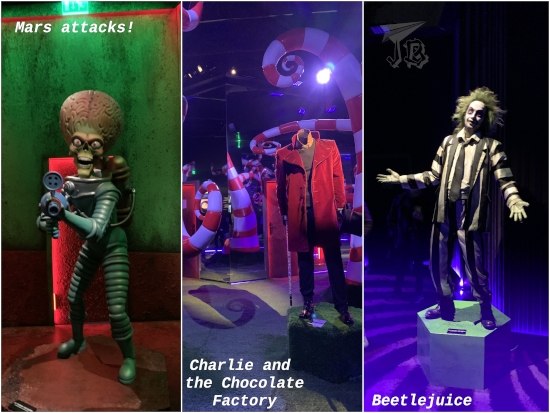
When I met with my friends E**** and K***** in Barcelona after the Kamijo concert at the beginning of the month, we talked about events and such. They basically dared me to “go to Japan Weekend and troll Pikotaro”. I already had tickets for Saturday, but after that, I decided to actually get myself the Meet & Greet “extra” – for both days.

The concerts were amusing to say the least, and not precisely due to the musical quality. The whole act was hilarious, done with the YouTube videos projected on the screen and the guy jumping and bouncing up and down the stage. At some point there was a blackout, so he started again, taking everything in stride.

There were paper masks handed out, that could (should? must?) be used during the M&G for autographs. There were four or five songs – among them Neo Sunglasses (which I personally found hysterical, as he sings “dark, dark, dark”, all the time until he takes off the sunglasses and grins “bright!”), and Can you see? I’m sushi. He of course sang Pen-pineapple-apple-pen to open and close the act. For the closing song he had prepared a line in Spanish and a “Japan Weekend” version that had people screaming.

There was a Q&A after the Saturday concert. They prepared a table and for him, all star-like, and in the end he just grabbed the chair to sit in front of the table, completely throwing the organisers off. He gave hugs and signed stuff, and he did really look like he was having a lot of fun.
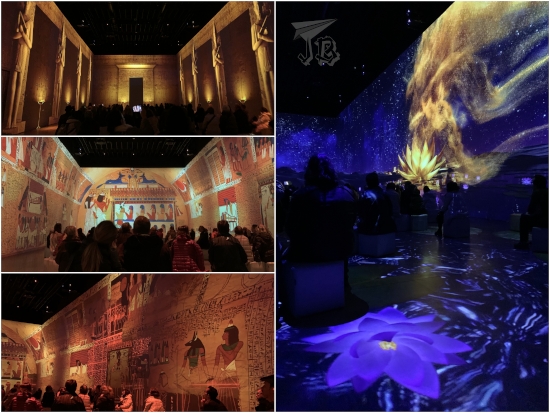
The M&G tickets were 5 € each and I bought them for both days – they included a handshake, an autograph and a picture. Again, it was very fun. On Saturday, I put some sushi badges and pins on my neck scarf so I could quote “can you see? I’m sushi!” at him. He found it hysterical, and signed the cardboard mask for me before we took a photograph.

When I arrived home, I printed that so I could take it on Sunday. I signed one copy for him, and at the M&G, I asked him to dedicate the other one to me. Even if the Japan Weekend staff kept barking around the chaos they had turned the queue into that he would only sign the provided material, he signed whatever you asked of him, with the interpreter’s blessings (who by the way remembers me from other endeavours, so she basically left me to my own devices). Convention staff micromanaging everything again…

Japanese man in a Leopard print suit singing

Pikotaro autograph

Going to the Pikotaro M&Gs meant I missed Wa-suta and ITSUKA’s signatures, but oh, boy, was it worth it for the laughter.