19th July 2021: The Lavender fields of Brihuega (Spain)

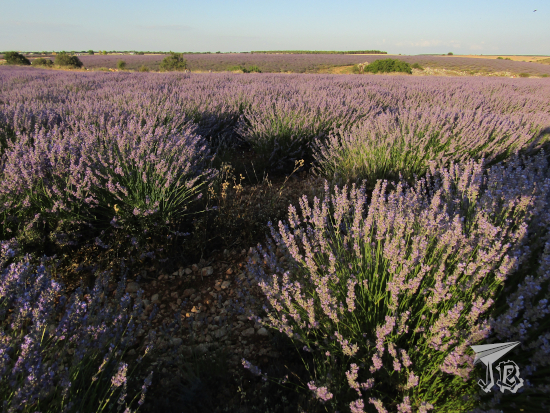
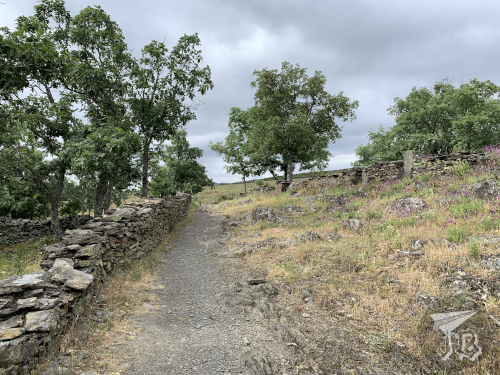
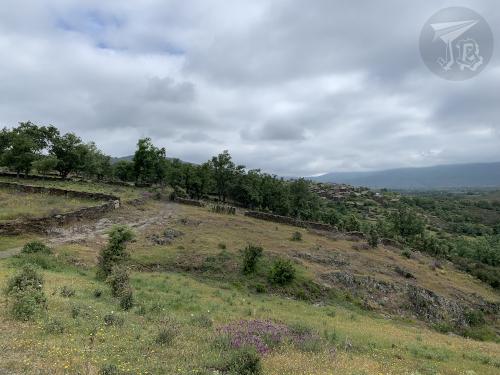
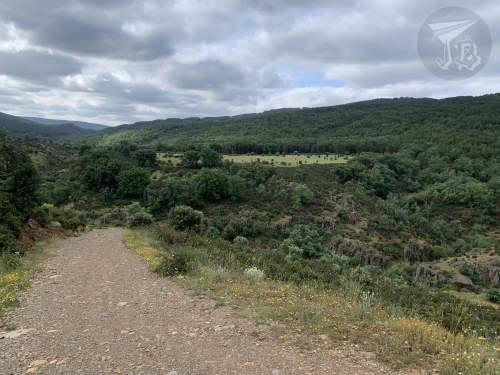
Brihuega is located towards the centre of Spain, in an area known as La Alcarria. The dates back to pre-Roman times, and although it claims to have a long and rich history, and it has been related to a few battles due to its strategic location. It received the denomination of historical site in 1973 due to the Medieval buildings that remain, among them the church of St. Philip. Today, that belligerent history is past, and Brihuega prides itself in being the the garden of La Alcarria, el Jardín de la Alcarria. The village and its related neighbourhoods are home to thousands of lavender flowers – the so called Campos de lavanda.

There are over one thousand hectares of lavender fields in the village. Lavender (genus Latifolia) does not need a high-quality soil to grow, so it adapts perfectly to the area. The flowers are widely used in cosmetics (distilled into an essential oil) , and also dried up for scent. Furthermore, the fields feed the bees in the area, also famous for its honey.

Lavender flowers in June – July and it’s harvested at the beginning of August, so it was a good moment to drop by and see the fields. The town hall advises not to visit the fields at the weekend, ad I thought it might be a nice place to see the sunset – how many people may there be around the fields on a random Monday evening?

Way more than I expected. Nevertheless, when I reached the parking lot I made the lucky decision to walk to the smaller fields and not the ones most visitors seemed to be heading for. They may have yielded to less impressive pictures, but it felt a bit safer – and far enough from other visitors so I could take off the my face mask and – literally – smell the flowers, while I tried hard not to disturb the bees at work.

I left just as the sun was about to set because I did not want to be caught in a jam as all the cars came out of the parking lot, and did enjoy catching a glimpse of the sun going down as I drove back. No pictures of that, obviously.

19th June 2021: Dino World Expo in Madrid (Spain)

Upon finding that the exhibit Dino World Expo was opening in Madrid on the 18th, I decided to book myself a ticket for the first pass on Saturday morning, 10 AM. I guessed that it would not be too full since it was the first weekend, early, and before school was out for the summer and all the reviews popped up so everyone found about it and brought their kids.

The exhibit was held in Madrid’s fair grounds, IFEMA Espacio 5.1, a short drive away, and aside a small mishap with setting the Sat-Nav. When I arrived, about 15 minutes later there were about ten families with little kids. I walked around for a little and came back when the doors opened. There were several types of tickets, the basic one was 13.50€. The exhibit included an extra “Virtual Reality experience for 3€” (it was 4€ if you bought it during the exhibit itself), so I decided to get the “premium entry ticket” which for 23.50€ included entry, a printed picture (10€ otherwise), the VR experience, a lanyard and a poster – both of which have been distributed around kids who might have want them.

When my ticket was scanned, the system roared and I was given my “VIP lanyard”, and told that I just had to show it around. Then again, let me tell you that I almost called this post “normalise people doing stuff alone” but that would go into the ranting territory and I did not want to do that – it is enough to say that from the beginning to the end of this exhibit, every staff member gaped at me for being in a dinosaur exhibition alone / without kids.

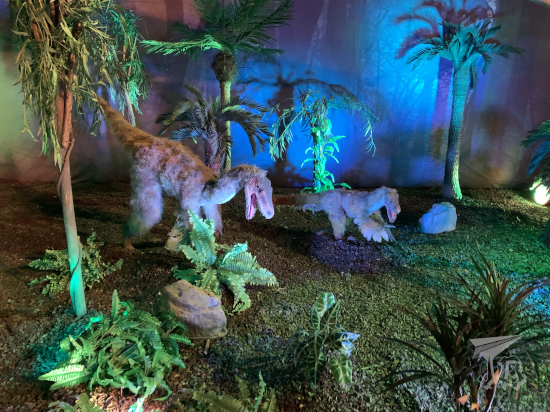
Upon entrance I got my picture taken, then had to wait a little with a couple of families before me until the first room cleared. We got an explanation about the audio-guide app and the exhibit rules. The exhibition itself was composed mostly of animatronics that moved and roared – when they had remembered to turn them on, some of them were still asleep. Aside from the life-sized animatronics, there was a CGI film and at the end of it, the VR experience which… was okay I guess. I learnt that I am not a VR person, as I got more than a bit queasy from the “flying” with the pterodactyl, swimming with a few anachronic species, and then following the T-Rex hunting.

From the shop I got my picture and the promised poster, although I had to show my ticket, not only the pass, in order to do so. All in all it was a cute little experience, but not really worth a detour if you are not in the area – one day I’ll learn that “for all the family” means “kid-oriented”, but that day was not today. On the way back the Sat-Nav got me confused and I took the wrong exit (“stay left on exit 9A” is not the same as “take exit 9A and then 9B to the left” in my books), but I was home by noon, and of course I took a lot of pictures.

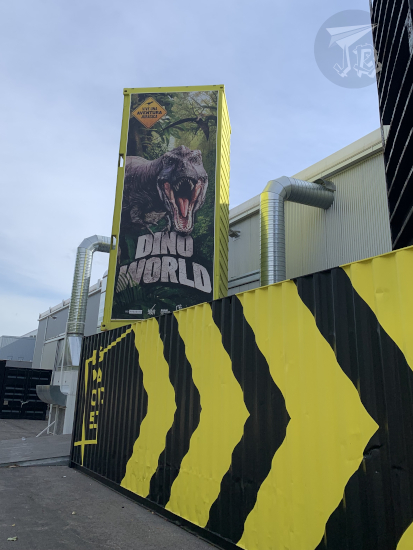
Approach

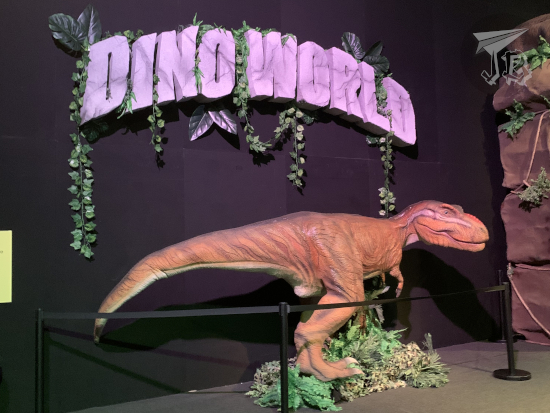
Entrance

dinosaur animatronics: diplodocus

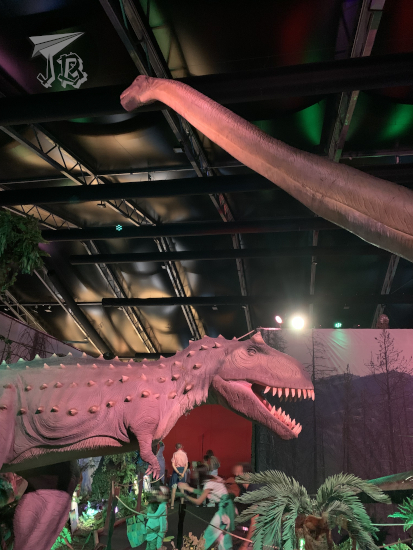
dinosaur animatronics: carnotasaurus and brontosaurus

dinosaur animatronics: pteranodoon

dinosaur animatronics: iguanodoon and Eustreptospondylus

dinosaur animatronics: feathered dinos

dinosaur animatronics: T-rex and triceratops

3rd June 2021: Hike to the Aljibe Waterfalls (Spain)

The Ayllón Mountain Range or Sierra de Ayllón is the of the chains that conforms the Spanish Central System Sistema Central, on its easternmost edge.

The Central System was formed during the early Cenozoic Era (the current geological era) in a process called the Alpine orogeny – when the African tectonic plate crashed against the Eurasian plate, a geological event that gave way to the main European and Asian mountain ranges, from Spain in the west to Java in the east.

It rests on a granite base that became first folded, then fractured during the formation of the system. As the rocks eroded, the sediments deposited and formed new sedimentary socks. Other processes that influenced the formation and shape of the ranges have been the action of glaciers and rivers and the subsequent weathering of the exposed rock.

The most common rocks in the Ayllón Range are granite, as expected, gneiss, and slates, some of the latest mixed with clays. For centuries, the villages of the area have been known as “black villages” (pueblos negros) as slate has been extracted to build them. One of such villages is Campillo de Ranas, which translates to something akin to “Little Field of Frogs”, and one of the neighbourhoods adjoined to them is Roblelacasa (literally Oak-the-House).

Roblelacasa happens to be the start of a hiking route to one of the highlights of the range – the Pozas del Aljibe (Aljibe Pools), with Aljibe being a word of Arab origin that means “cistern” or “well”, so not that original a name, I guess. I had been wanting to see these pools – also called a waterfall – for a while, so I decided to drive off and hike the route to see the Aljibe, which is considered one of the most beautiful in the centre of Spain. The hike is about 3.3 km each way – but guess what? I ended up taking a detour or two (≧▽≦). The pools are formed by the Soto Creek, Arroyo del Soto, a tributary to the river Jarama which in turn flows into the river Tagus.
Off I went. The drive took about an hour and twenty minutes. I left home around 8.20 and arrived in Roblelacasa around 9:40. The drive went well, most of the road was a nice national road, and as it was a local holiday traffic was scarce. Some people were in a great hurry though, ignoring speed limits. This was my first time driving on my own with the Sat-Nav, and it went all right. However, as I drove towards the range, there was a dark cloud I did not like one bit.

Just after reaching the “village”, I found a parking spot right behind the panels, as the expected parking lot was closed off. I had packed some frozen water, biscuits, the camera and my cap – but I had forgotten the umbrella, and it was a bit grey. I decided to leave taking pictures of the village for later, and I started walking just behind a couple who had arrived virtually at the same time, but I passed them as they stopped to take pictures.

Information

Roblelacasa

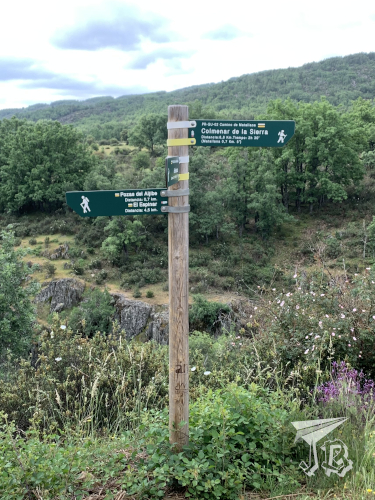
The route is officially named “PR-GU 09: Sendero de los pozos del Aljibe” and it is part of the natural park Parque Natural de la Sierra Norte de Guadalajara. Upon leaving Roblelacasa, the first couple of hundred metres crossed fractured and weathered rock before crossing a symbolic gate that marks official the beginning of the trail with a white and yellow double-line. Then, I walked onto a gravel path flanked by the remains of old fences. To the left opens a valley, and looking back I could see the village, in black.

Start of the route

Old slate fences

Valley

Valley and village

The route widens into a dirt track that is obviously travelled by car sometimes, as the range peaks stand in front of you. There are no trees but a lot of bushes and aromatic herbs, and as you walk the scent is very pleasant. Then there is a small forest and a second barrier, which marks the turn where you are going to start climbing a new hill – slowly, the terrain rises to your left while it lowers on your right, giving way to the creek’s valley. Just before reaching this I passed a family who had started walking before me.

Mountain Range in front

Mountain Range around

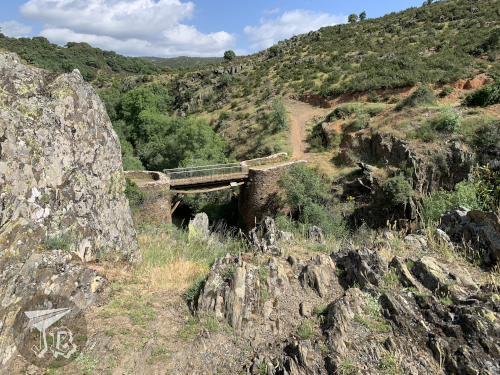
Eventually, you reach a fork in the trail, with the choices of going left towards the waterfall or right down the valley to see a former dam-turned-bridge. I went to the waterfalls, figuring out that I could always go down to the dam on my way back. The track became narrower and rocks started popping up again.

Fork on the way

Valley

Creek in the valley

Geological formations

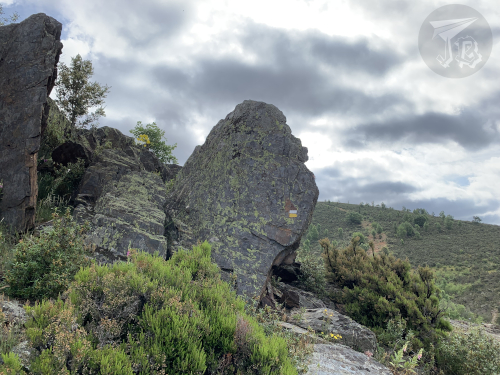
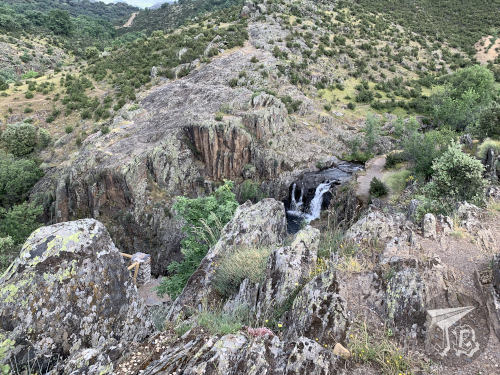
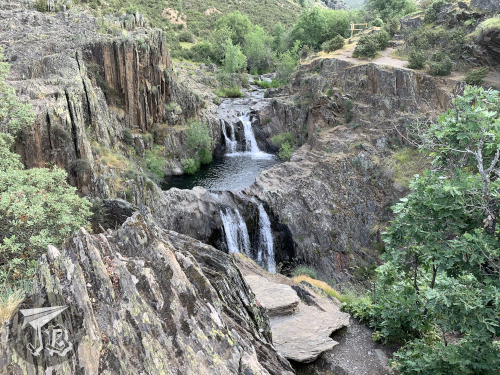
I wandered off the trail (you can see the markings on the upper picture) a couple of times because the views were neat, but a few minutes later I crossed a little bridge to get access to the waterfalls viewpoint on the left-hand-side bank… which was closed. Believe it or not, the actual waterfall area had quite a few “do not walk, falling risk” signs that… okay, I have to be honest… I pretended not to see. I hiked up to the viewpoint and sneaked a little to the side to see both waterfalls. As it has been storming, there was a good amount of water flowing, so the view was pretty cool.

Wooden Bridge

First waterfall

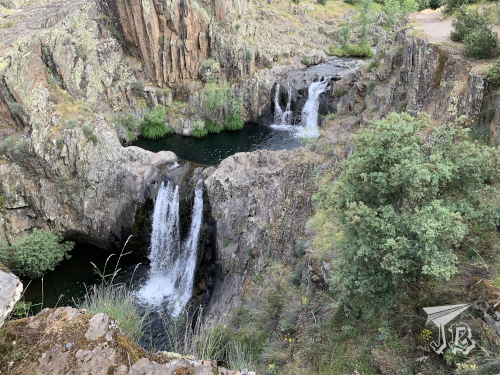
The upper waterfall is about three metres high, and the easier one to see, without needing to ignore any warning sings. When I walked up to the viewpoint I got an amazing view of both the upper and lower waterfalls, the latter being about 7 metres high. It is easy to see how they are called either waterfalls or pools.

Both waterfalls from the left bank

Both waterfalls from the right bank

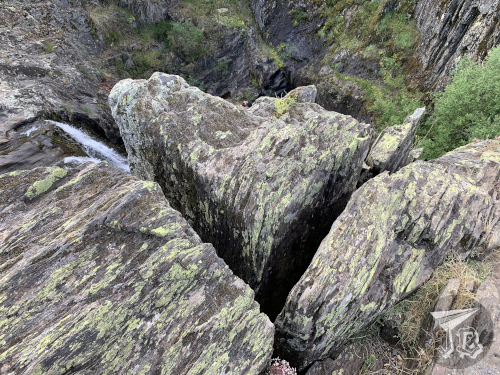
Remember that I said that I passed a family on my way up? This is kind of important because it means that I was basically alone in the waterfall area for about ten minutes, enough to take a good bunch of pictures from both banks of the creek without having to edit people out. I was however very cautious about cracks and faults. I think most of the rocks in the area are quartzes but my geology skills are a bit rusty.

Cracks on the rock

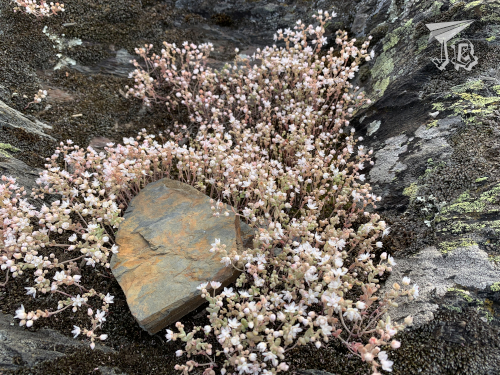
As I decided to turn around, the family arrived, and so did the couple I had first passed and another group that must have started behind me. That was okay because I was done, and on my way back I could stop for a lot of pictures that I had not taken before. Here you can see the difference between the quartz /gneiss (surrounding the flowers) and the slate (in the middle).

Flowers growing from the rock

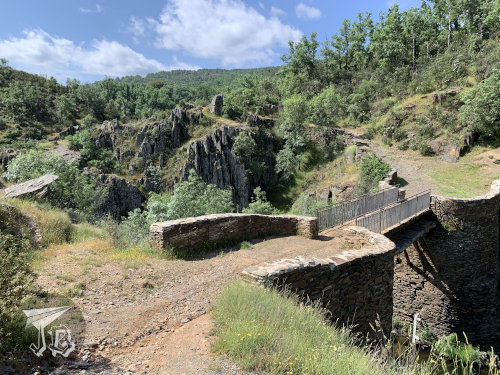
Also, at some point before I started my return hike, it cleared up. All of a sudden it was hot so first I shed off my sweatshirt and when I reached the crossroads again I really needed a drink and some shade – but I had packed water and the cap, so everything was fine, and I could divert to see the old dam, Presa de Matallana over the creek Soto – from both sides. This must have been around 11 am.

Valley on the way back

Presa de Matallana from the left bank

Presa de Matallana from the right bank

I turned back towards Roblelacasa and I noticed that the wide track was a bit more “upwards” than I had noticed the “downwards”. I had a bit of a tired moment as I adjusted to hiking up in the heat – why is it that normal hills tire me more than uneven paths? But it was over in five minutes and I was back in the village a bit before twelve. On the way now I stopped to take pictures of the flowers and bushes around, and of the valley that Roblelacasa overlooks – and ran into four or five more groups / couples who must have started walking around 11, so it was a good call to get there early.

The track back

Roblelacasa from the outskirts

Flowers on the way

This is how the village looks in the light of day, just before I took the car and drove back around noon. I decided that I would go back to the area some other time to explore other villages around, mainly Tamajón, which is reported to have an interesting geological area, and some other black villages.

The village

Oh, and a the pictureless anecdote of the trip, for obvious reasons. There were a lot, and I mean a lot of “caution wildlife” traffic signals, and on the drive there I thought that I had very rarely encountered any wildlife crossing the road. I had also not come across any wild (or domestic) on the trail, aside from some little lizards and a few pet dogs with their owners. Well, good thing I was driving a good 10 kph under the speed limit, because on the drive back I had to yield to a wild boar! Live and learn (to drive slowly in wildlife areas)!

Driven distance: around 130 km (2h 30min)
Hiked distance: 6.7 km / 11,106 steps (2h 20min)
9th June 2019: Gold fields and bull billboard (Guadalajara, Spain)

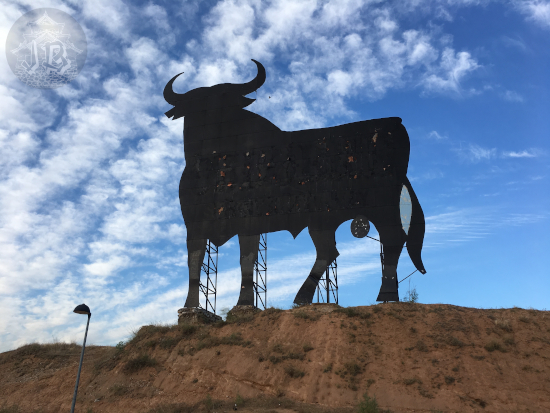
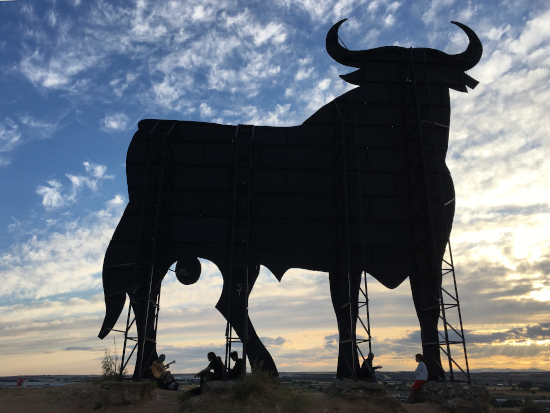
A friend was over and she was curious about the huge black bull billboard that stands next to the entrance to Guadalajara, so we headed there. We had a big Chinese late lunch, and afterwards we decided to walk to the bull.

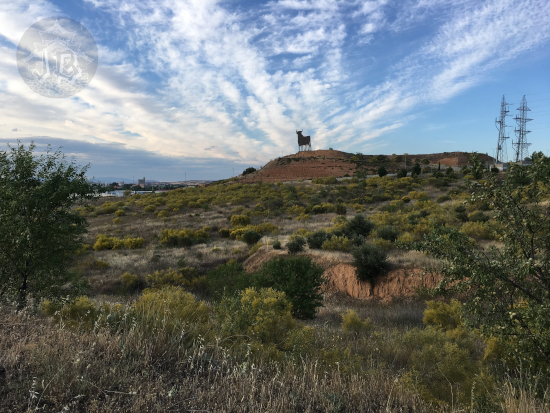
The so-called Toro de Osborne (Osborne bull, and… hm… you can tell… he’s a male, right?) was conceived as a publicity billboard for the Osborne winery. The bulls were originally designed in 1956 as by-road advertisement for one of the winery’s drinks. The first set of bulls was installed in 1958, and the current ones date back to 1962, made with metal, and around 14 metres high. In 1988 the lettering was removed. Although in compliance to the 1994, laws the bulls should have been removed, but a motion was filed to keep them as ‘cultural items’ as people had grown fond of them. In 1997 a law was passed ordaining that the bulls were to remain due to “cultural and visual interest”. There used to be about 500 bulls throughout all of Spain, but today only 91 remain, although there are others around the world. For example, there is one in Japan, because… Japan, I guess. The area with most of them is the one where the winery headquarters stand.

The Guadalajara bull stands next to the N-320 exit number 53. you can reach it by car or on foot. We took a walk around the area and we got to see the wheat and barley fields that give the area its typical brown / gold colours in summer. These are called the Calstillian fields, Campos de Castilla.

When we finally got to the bull, we were expecting nobody around, but there were a bunch of people, mostly drinking and smoking weed. Apparently it had also been vandalised and used for target practice, because people are civilised and all that. If you squint, you can actually see the word “Osborne” on the billboard.

26th May 2019: “Komeko Sin Gluten” event in Madrid (Spain)

After almost literally everybody and their dogs ditched me for a cooking workshop in Madrid, literally the day before I decided to bite the bullet and go by myself, so I bought my ticket on Saturday night, barely 12 hours before the event, a promotion of a Japanese-Spanish shop and its products based on rice flour. The shop is called “Komeko Sin Gluten”, which translates as “Gluten-Free Rice Flour”.

Evenbrite ticket for the event: Taller de Cocina de Komeko: crepe, helado y tarta 10 euro

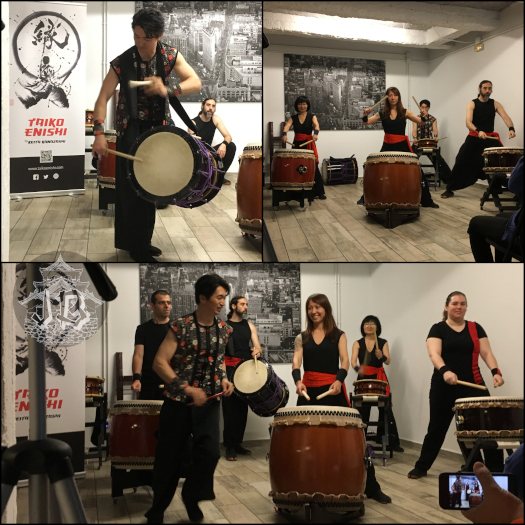
The event happened in a venue-for-hire in Madrid, and consisted in three distinct parts: a small market in which I would have spent a lot if I had not got a few samples with my ticket, a cooking workshop and a taiko concert. I arrived early due to Sunday having awful public-transport connections, and I arrived in Madrid an hour before the event even opened, and then we got a delay with the start of the workshop because someone was missing. During that time I got to sit around among aaaall the Japanese people around, including the head drummer of the taiko group, , whom I admired a lot since I watched him in HA·YA·TO: Drum Masters.

The small market was comprised, of course, of gluten-free products, especially Japanese ones, most of them can be found online, yay. I decided not to buy things upfront as the workshop included a sample of products, and I wanted to buy what I did not get. In the end, I did not have to buy anything because I got next to everything!

Pictures of the rice flour items - flour, noodles, snacks...

Anyway, the cooking workshop:

  1. Komeko crêpes: We made the crêpes on portable pans. There was a mini drama as the cook refused to start until we had chopsticks to flip the crêpes, and I was amused at first until I realised how convenient they actually were. While he was worried that I ahd any problems with the chopsticks, I’m happy to report that I was not the clumsiest in the class! After they were cool, we filled one up with ‘pastry cream’, banana and whipped cream for presentation – but we got to take the rest home and I tried them with chocolate. Serious improvement!
  2. Steamed banana sponge cake: this was really interesting to make, and also really easy – it involved mixing all the ingredients in a plastic bag, and then cutting a corner off the bag to pour that into little trays so we could steam it. That was… neat, and a team effort.
  3. Japanese green tea (matcha) ice-cream: Double team effort! (≧▽≦). As the paste needed time to freeze, we actually observed the chef prepare the ingredients and ate the one that had been prepared in the previous workshop.

Collage. Chef preparing crepes, and a picture of the materials, the matcha ice cream and my own creppes and banana spongecake

We had a snack with our crêpes and the matcha ice-cream. Then we got the haul of goodies: ramen and spaghetti noodles, komeko, komeko with glutinous rice, and komeko with cocoa, well worth the price (10€) I had paid for the whole workshop… Talk about promotion ☆⌒(ゝ。∂).

Different flours and noodles I got as present

Afterwards, I headed downstairs for the taiko concert. Enishi Taiko is a Spanish group, and Keita Kanazashi usually collaborates with them rather often. The concert was, of course, more humble than the one with HA·YA·TO, but it was still a lot of fun.

Taiko group playing and having a lot of fun

Afterwards, I got Kanazashi to sign the HA·YA·TO DVD and the picture I had with him from that time, which was really cool. Furthermore, the main drummer in Enishi Taiko remembered me from the X Gran Exposición de Ikebana y Semana Cultural Japonesa session, and another session I took at their headquarters.

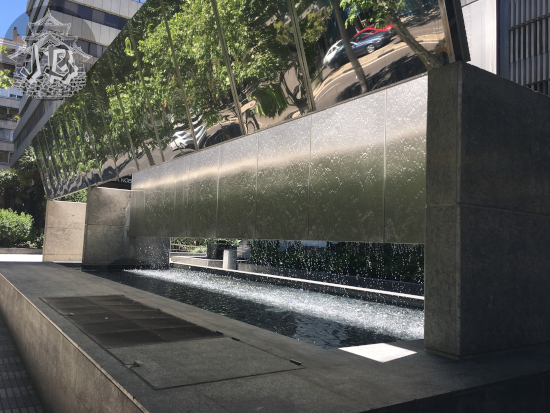
I had thought that I would be eating in Madrid but as I had snacked on the komeko products I was not hungry at all, so I decided to head home. On the way towards the station I found this really cool fountain.

Urban waterfall. The fountain looks like a massive bench, with a thin layer of water dripping from the top

3rd November 2018: Samurai Spirit in Madrid (Spain)

I booked tickets to see the show Kamui x Mika Kobayashi: Utakatana Sekai – Samurai Spirit in Madrid. In a last-minute change, my parents decided to tag along, so we just drove there in time for the show. It took place in the theatre Teatro Fernando de Rojas, one of the halls in the Círculo de Bellas Artes building.

Publicity poster with the show's date

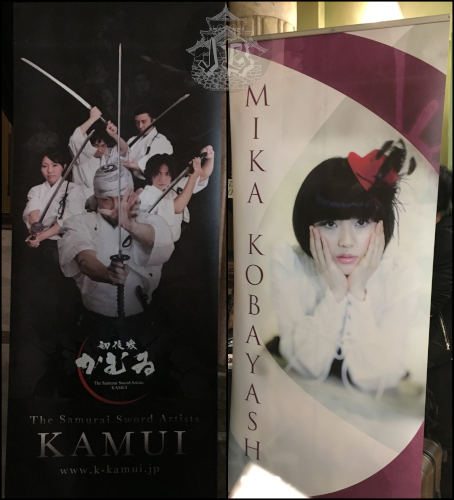
Samurai Artist Kamui [剱伎衆かむゐ, Kengishuu Kamui] is a “samurai sword artist troupe” . They perform stories through “samurai communication” using music, sound and light to work on the atmosphere, along with of course, Japanese sword – katana – performances. The founder and leader of the troupe is Tetsuro Shimaguchi [島口哲朗], who played a part in Quentin Tarantino’s Kill Bill vol.1, a film for which he also served as choreographer for the swordfighting.

Mika Kobayashi [小林未郁] is a singer, pianist, and songwriter from Hiroshima. She is known for her vocals on anime, such as Attack on Titan or Gundam UC, and video games like Final Fantasy XI. She established her own style and record label in 2016 and has been doing her own thing since then.

The collaboration Kamui x Mika Kobayashi: Utakatana Sekai – Samurai Spirit seems to be designed for touring overseas as there is no trace of that name in Japanese. Utakatana Sekai would roughly translate as “the world of singing swords”. It features Kobayashi as singer and pianist providing the background voice for the show.

Through artistic sword-fighting and music, the performance conveys a story about the old samurai ways giving way to a new world. Short self-contained scenes tell the story of a samurai warrior who gives way to the new generation – played by a lady. A bit subversive from the Japanese traditional way, I guess.

The show has three parts. The first act comprises fights and individual actors showing off their individual skills. Younger or less experienced fighters, who get “swordsman #4” roles end up being killed two or three times. I liked a short story about a blind samurai better than the romantic ones. Unfortunately, I was a bit to the side – I only bought the tickets with a week or so when I found out – and my angle was awkward at times. I could see the gaps between the swords when they did not clash for real.

During the interlude / break, they brought two volunteers from the public to learn some moves and get the mood lightened up. This showed off Shimaguchi’s language and teaching skills, along with a flair for the dramatic, and it was really funny.

Different scenes from the show

The last part was more spectacular, full of stunts and coordinated exhibition acts. That was the part I enjoyed the most. All in all, the whole ninety-minute show was very fun. Mika Kobayashi’s melodic voice and piano tunes fit really well with the whole theme, and everybody seemed to have fun, and at the same time take their jobs very seriously. However, I’d need a better seat next time, in order to keep the suspension of disbelief and not see all the stunts as… stunts.

Artists’ publicity banner

Afterwards, many artists came out to take pictures with the audience. We got to take pictures with Mika Kobayashi too, and I bought a signed CD of hers.

Mika Kobayashi's signed CD

28th October 2018: HA·YA·TO: Drum Masters (Madrid, Spain)

Out of all the taiko [太鼓] shows I have attended, this was without a doubt the one I enjoyed the most. HA·YA·TO is a wadaiko [和太鼓] (Literally ‘Japanese drum’) group formed by the three Kanazashi brothers: Keita, Ryota and Yuta (Keita Kanazashi spends a lot of time in Spain, we’ve seen lots of ‘taiko workshops’ organised with him as a special trainer). This time they’re touring Spain with their show Drum Masters, accompanied by a number of renown musicians: Koji Hada, Takayuki Hashiguchi, Makoto Sekine and Syunchiro Kamija, aside from two special guests: Chieko Kojima (dancer and first female wadaiko master in Japan) and Masato Shibata (shamisen world champion).

Hayato Premium Ticket I found by chance

I was lucky enough to get a premium seat as I attended a matinee show in the theatre Teatros del Canal in Madrid. The show represents the four seasons of the year, and each part has its own rhythm and characteristics, along with energy and colour. At one point there were seven drummers and sixteen drums being played on stage at the same time.

Hayato Drum Masters Poster

The show was divided into the four seasons. During the first part, spring and summer, energy was abundant. Spring brought all the musicians to the stage, so while the great weight of the show rested on the drums, we also got shamisen (Japanese guitar) and Japanese flute. Kojima showed us her dancing skills in front of a black background with a flurry of cherry blossoms.

Then came summer, with a torii background and the matsuri (festival) atmosphere. The big central drum was put into action. This was when Keita Kanazashi showed off his Spanish and used the audience as another instrument, making them clap and stomp their feet in a sort of call and response routine which was really fun.

The most impressive number had the seven drummers on a row, and sixteen drums in total, all in a line. Thus, each drummer had three taiko, one in front, and one on each side, all lined up. However, they were actually sharing the side taiko with the drummer next to them, so at any given time that they banged they could collide with the musician next to them. It was amazing to witness the crazy-you-dont-get-to-see-the-batons-fast speed slamming the drum.

The second part started with autumn, that had the four supporting drummers playing ‘tennis’ with the small crash cymbals, first one on stage, then two, then three, then four, then with the audience, and then with each other all around the theatre. Then we had a demonstration of Chieko Kojima’s art on stage, first dancing, and then with the taiko – it was impressive to see how such a small lady can bang the drum in a ethereal red kimono. First she did it with the free sleeves, then she danced with a sash that she used to tie them back so she could play more forcefully.

Winter was a bit slower on the uptake – though with impressive technique – but it grew into an amazing mix of sounds and visual arts, again with dancing, taiko, crash cymbals, flutes and shamisen. In the end, Chieko Kojima danced with her parasol making it ‘snow’ (at a point her sleeve got caught in her hair décor and she needed a tiny stop). It was beautiful.

Hayato Drum Masters ensemble greeting at the stage

Theatre window with the Hayato Drum Masters poster

Finally, Keita Kanazashi introduced the musicians and informed us that they would be outside to take pictures after the show. I was lucky I could do so with everybody! All the artists were nice and friendly and it was a great experience. I also bought a DVD.

24th March 2018: The day I saw Hatsune Miku (Madrid, Spain)

“Vocaloid Opera – The End” is an opera for an in the digital world. It was written by Keiichiro Shibuya and performed by Hatsune Miku. Hatsune Miku [初音ミク] is a vocaloid idol. In case you’ve never heard of vocaloids, the idea is a bit complicated. A voicaloid is a singing voice synthesizer software product, basically a computer-generated singing voice. The software was released in 2004 and it exploded with popularity in Japan. Hatsune Miku was given a humanoid shape when it was released in 2017 – and it was definitely a she. So, in a way, Hatsune Miku is a voice synthesiser with a cartoon-female-human form.

Yeah, weird. I have always thought so too. But it was dirt-cheap (8 quid), and there was a session at 18:00 on Saturday that I could attend without a late train back. So I dyed my hair purple (because no, I’m not showing up to a blue-haired character’s show in blue hair), got out my thick faux-fur-neck coat and off I went.

The show was being held at Naves Matadero is a former slaughterhouse turned arts centre. It has turned the buildings into theatres, showrooms and so on. As I walked around the area, looking for my theatre I saw a hell of a lot of families with kids under ten, there to see “the doll” or “the cartoons”. I’m not kidding, during the first ten to fifteen minutes of the show, about twenty families left (≧▽≦).

Entrance to the venue, showing the sign of Naves Matadero Nave 11 and Vocaloid Opera the end

“Vocaloid Opera – The End”, composed by Keiichiro Shibuya [渋谷慶一郎], explores the concept of an artificial being obsessing about death. The whole show is digital, just like Miku, as she wanders the world wondering about “the end”. She seems trapped in a surreal nightmare, with several scenarios that don’t make that much sense. Miku is followed in her trip by a plush rabbit (Alice much?), she talks on the phone and there is a multiple-eye monster around.

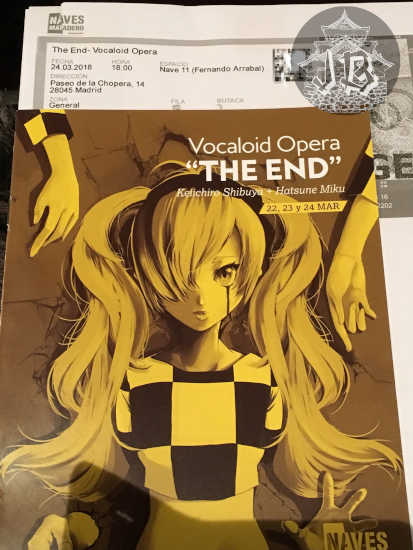
Booklet and ticket. Both read Vocalod Opera the end, with the dates. The booklet shows an image of Hatsune Miku, crying blood, the whole booklet is tinted yellow

The music has an electronic flavour, and at times repetitive. It’s loud and you feel it more than hear it. There warnings about bright and strobe lights all around and I understood why – the whole thing relied heavily on CGI and lighting. The chosen topic, along the images were claustrophobic, and I think that was on purpose – there are different “dying” options: drowning, gas masks, withering off.

The climatic “aria” peaks with Miku asking the spectator “Am I dead? Or just asleep? You decide. It makes little difference to me.” In the end, she is a human creation so, like humans, she will “die” sometime too (aaaaand I have opinions about this because I believe that some human creations transcend their authors). And a final downside: knickers. Seriously, what’s with Japanese people and knickers?! She’s a CGI doll – true, wearing CGI clothes designed by the former artistic director of Louis Vuitton, Marc Jacobs, but a CGI doll!

That was all that I did, but here are some pictures I managed to snatch a few pictures, including of the actual 3D rendering of Miku.

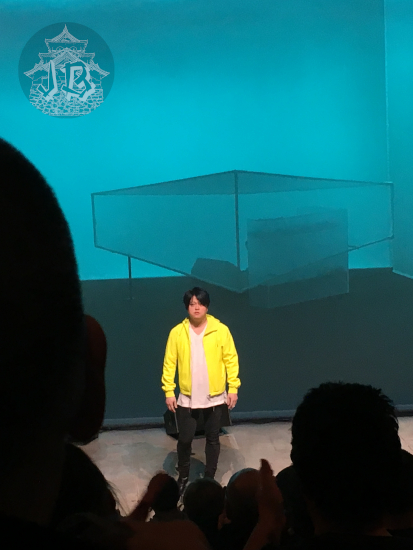
Picture of the composer, dressed in yellow

Life-sized sculpture of Hatsune Miku, wearing a chequered dress that shows her waist, and heels. Her hair is flying as she turns.

21st January 2018: Zoology at the Zoo (Guadalajara, Spain)

This was just a stroll down the Zoológico Municipal de Guadalajara, the local town zoo. I just thought I could look up some of the animals I came across and see if I learn any interesting facts. It was not as easy as I thought!

Eurasian otter (Lutra lutra): it is a semiaquatic mamal that is fortunately not threatened. It lives near rivers and coasts in Europe and Asia. It mainly eats fish. They are pretty smart and playful, but they are also very territorial, so they usually live alone. They have webbed claws for swimming and catching fish. Mother otters teach the kits to fish by a game of “catch and release” the fish.

Peafowl (Pavo cristatus ): technically “peacock” is the male (colourful) and “peahen” is the female (brown). The male has long tail feathers that he displays when he wants to impress a female or another male. In India, it was used as ‘guardian animal’ as it screams when tigers approach and it can eat young cobra snakes. Now, that’s pretty cool, and here I thought he was just a pretty tail!

Fallow deer (Dama dama): Fallow deer are native to Europe, and have been introduced to many other places. The bucks (males) are very aggressive and competitive during mating season, and they use their horns to fight. The does (females) do not have horns.

Iberian red deer (Cervus elaphus): The imagery of the red deer has been so powerful in the human psyche that some it can be found in paintings dating 40,000 years back. Normally the males and the young create big family groups. Males create smaller groups that cooperate.

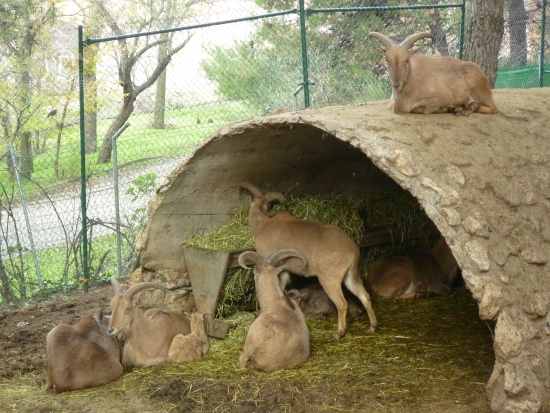
Barbary sheep (Ammotragus lervia). Also called arrui, it is an African mountain goat which lives in arid mountains and canyons and graze grass, bushes and lichens. They were artificially introduced in Southern Europe and became a bit of an invasive species. However, the truth is that they look super chill and zen.

European mouflon (Ovis orientalis musimon): It was originally a mountain creature but it moved to the forest when humans started bothering them. They thrive in rocky areas, though. They tend to live in herds with a lead female.

Wild boar (Sus scrofa): This is the omnivore animal by its own right. It can and will eat anything – from fruit to berries to even baby deer (O_O)!. Many old Indo-European cultures considered the boar a symbol of warrior virtues. In Greek mythology, the hero Herakles had to capture a boar as one of his Labours. In the east, it is considered a symbol of determination and even recklessness.

Iberian wolf (Canis lupus signatus): Unfortunately, the Iberian wolf is a vulnerable species and culling is still legal in Spain (•̀ω•́ ). The Iberian wolf is brown-grey and had a characteristic white area around its mouth. They also have black vertical lines along the front legs, and other dark marks on the leg and the tail. They are predators and prefer hunting big animals, especially deer. Wolves are social creatures, they live and hunt in groups.

Something really cool about wolves in general is that when they run, they place their hind legs on the footprint created by the front paw. Talk about coordination. Wolves have a very bad reputation in Spain, but there have not been confirmed attacks on cattle, much less on people, in recent years. Pictograms of the Iberian wolf have been found in archaeological artefacts from the tribes that lived in Spain before the Romans.

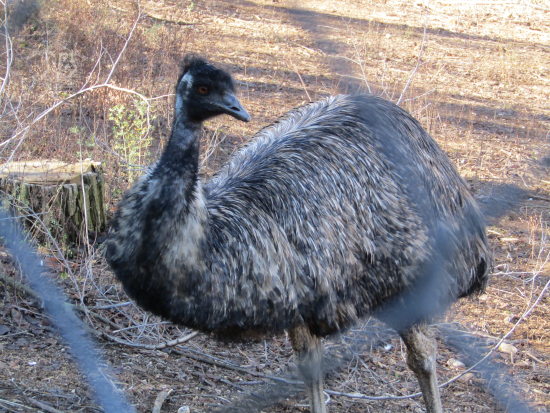
Emu (Dromaius novaehollandiae): Yay for another non-threatened animal. Emu originated in Australia, and are the second-biggest bird in existence after the ostrich. They are flightless, and they eat plants, grasses, insect and arthropods, depending the seasonal availability. Because females can lay several clutches of egg in one season after mating with different males, the male takes care of the incubation, and the chick-rearing. According the mythology of some aboriginal tribes of what now is called New South Wales, the sun had been created by throwing an emu egg into the sky.

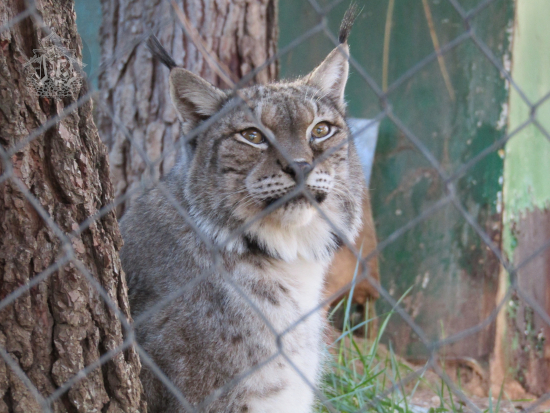
Eurasian lynx (Lynx lynx): Native of Europe and Asia, it is widely distributed, which lowers its conservation concerns. The Eurasian lynx is mainly a nocturnal predator, and tends to live solitarily as an adult, although hunting areas may overlap for several individuals. They can hunt small animals, but they are known to prefer bigger prey, such as roe deer and common deer. Conversely, they may be hunted by wolves.

Red fox (Vulpes vulpes): The red fox is one of the animals with the widest habitat range in the whole world. It can be found almost everywhere in the northern Hemisphere, including many cities in Europe. It is an invasive species in Australia, where it was introduced in the 19th century. In European mythology it’s considered symbol of deceit. In Asian mythology it has two-faces, some of them are messengers of the gods, some are tricksters and dangerous. Arab folklore considers the fox cowardly and weak. Native American mythology considers it a crafty creature that steals the coyote’s food – in all cultures however, it seems to be intellingent and able to trick other animals or people. Interesting.

Griffon vulture (Gyps fulvus): A scavenger bird of prey, it feeds mostly off the carcasses of dead animals. It tends to live in flocks or colonies and makes nests on rocky walls. Even if they have a bad rep, they are very cool animals.

White stork (Ciconia ciconia): Credited with bringing babies from Paris, storks used to be long-distance migrants, which lived in North Africa in winter and returned to Europe in summer to breed. For the last twenty years or so, the storks have stayed, at least in Spain. They are also famous for making nests on belfries and other man-made structures, and because they are considered a good omen they have rarely been chased away – until the weight of the nest has made belltowers collapse!

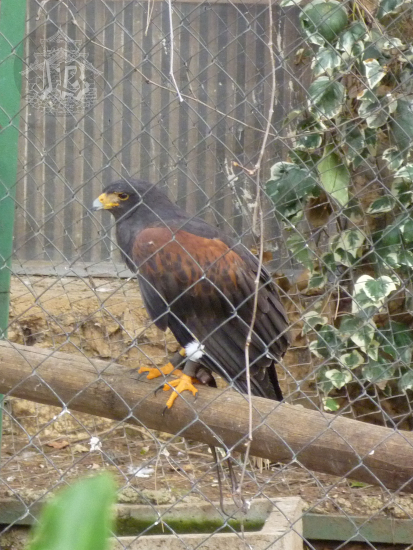
Common kestrel (Falco tinnunculus), I think. Feel free to correct me if I’m wrong. The best thing about the small zoo is the work they carry out recovering injured birds of prey. The birds are nursed back to health and if everything works out they are released into the wild. I really hope this little guy can leave soon! ⋛⋋( ‘◇’)⋌⋚

8th December 2017: Ferrari in Guadalajara (Spain)

There was a tiny (five) Ferrari sport cars exhibition in Guadalajara, Spain, so I thought I would drop by, just to be able to appreciate what they call “Ferrari red”. I loved the cars, but I don’t think that I would ever be able to get in and out of them. You could not sit down at the wheel though, so I can’t say if I would be able to drive them (≧▽≦).

Ferrari was established in 1939 by Enrico Ferrari out of the racing car division of Alfa Romeo. In 1947, the first Ferrari-branded car was completed – there had been a racing car in 1940, but WWII stopped most competitions at the time. After the war, the racing team, called Scuderia Ferrari, was rebuilt, and went on to become the most successful Formula One Team.

Ferrari produced its first road car in 1949. the original road cars were two-seaters and usually customised. Throughout the 50s and 60s, customers used to personalise their cars, which would eventually become one of the brand’s selling points. Since 2011 clients have been able to work directly with designers so the cars are completely personalised.

The exhibition was organised by the car-maintenance watchdog, and the cars shown were recent models, such as the Ferrari F430 Scuderia (2007), the Ferrari 458 Speciale (2014), or the Ferrari 355 berlinetta (1994).

11th March 2017: “TAO: The Samurai of the Drum” show in Guadalajara (Spain)

More than a trip, this one is focused on an event I attended. There was a Drum Tao performance in Guadalajara, to which I was invited. The fun part the person who had invited me used to work at the theatre. As he still had “contacts”, I was allowed to peek a little into the backstage, so I could take a few special pictures.

There is not much of a description that you can write of a percussion performance, to be honest. TAO focuses on drumming, the Japanese taiko style, with bigger and smaller drums, but they also play traditional flutes, koto and samishen (traditional harp and three-string guitar). The show also displays a few acrobatics. It was pretty fun. In the end you could take pictures and get autographs from some of the staff members.

Aaand I own up that I did a little bit of trolling by speaking Japanese to random staff in the merchandise area…

Collage: the big drum, the back curtain reading Tao, and a CD with the booklet autographied

22nd May 2016: Kabuki at the CBA (Madrid, Spain)

I made a short escapade to the theatre Teatro Fernando de Rojas in the Círculo de Bellas Artes, in Madrid. It was my first time watching kabuki [歌舞伎], a type of Japanese theatre. The play was called Tsumoru koi yuki no seki no to [積戀雪関扉], something akin to “The Snowbound Barrier” and translated into Spanish as “En los límites de Osaka, bajo la nieve del amor” (In the Outskirts of Osaka, under the love snow). It is a dance-drama kabuki written in the 9th century, and deals with the spirit of a black cherry tree turning into a courtesan to extract revenge. Before the play, there was a small conference to explain some details about kabuki and that was really interesting.

Afterwards I just had to run for the trains so… no much time to hang around.

14th May 2016: Ikebana & Taiko in Madrid (Spain)

I went to the Royal Botanical Garden Real Jardín Botánico in Madrid because they were holding an exhibit of Ikebana and Japanese culture “X Gran Exposición de Ikebana y Semana Cultural Japonesa”. There were several activities, and I wanted to watch the ikebana and listen to the taiko players.

I was very amused when it turned out you could actually attend an ikebana class. Ikebana [生け花] is the Japanese art of aranging flowers, and it is one of the three classical Japanese arts of refinement (the other two are calligraphy and tea ceremony, I’m doomed).

To my surprise, the ikebana scene in Spain is heavily dominated by elderly ladies who take the whole thing Very Seriously ™, so in the end the workshop was more like two of them giving instructions to each attendee and one of them just taking the flowers from you and rearranging them if you failed to heed the instructions within a couple of seconds. It was interesting though, and behold my creation:

They almost made me late for the taiko – Japanese drums – demonstration, which turned out to also be a workshop, my first time playing the drums. I’m not that good at that one, either, but let me tell you better than the flowers…

Afterwards, I wandered about the rest of the exhibition before I headed off… and this sounds really fast, but it was a good half day!

2nd April 2016: Círculo de Bellas Artes & Tsugaru-shamisen music (Madrid, Spain)

Círculo de Bellas Artes (CBA) is a Spanish cultural and artistic association founded in 1880, and they had partnered with The Japan Foundation to hold a concert by Kenichi Yoshida [吉田 健一], a famous Tsugaru-shamisen [津軽三味線] player / artist.

I got to Madrid in the late afternoon, with enough time to get to one of the most hidden Starbucks in the city, which was rather crowded as it was Saturday. Fortunately I found myself a table to spend the extra time (public transport transport paranoia, maybe. But it’s not paranoia if they’re really after you and you have been stuck in Spain commuter trains for hours already). And well, a Starbucks a year and all that… And I mean, I was planning to skip dinner so a Vanilla Frappuccino would keep me going.

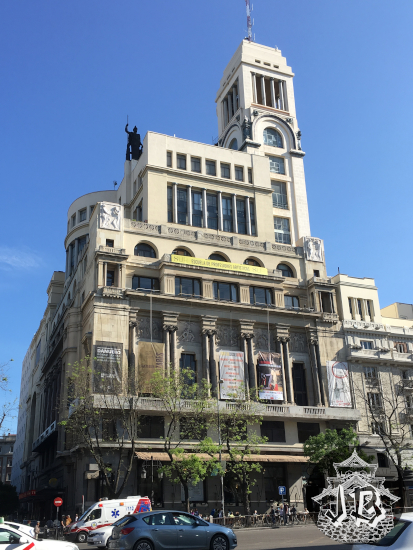
The concert was to be held at the Círculo de Bellas Artes building, located in downright in the middle of Madrid. It was designed by the Spanish architect Antonio Palacios and erected in the early 1920s. From the outside, I had always thought it looked pretty weird.

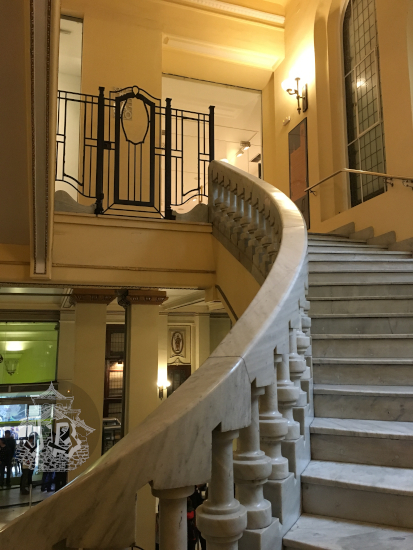
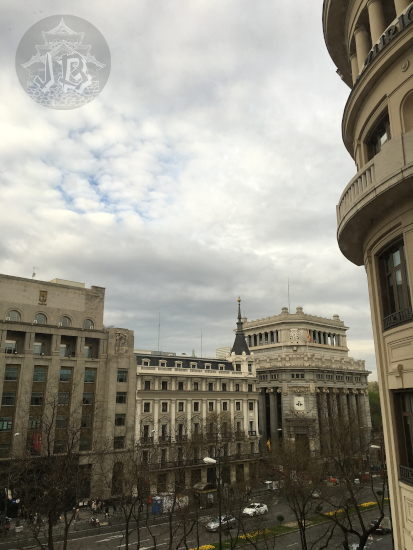
Inside, however, it was a different feeling. I had never imagined the inside of the building was going to be this neat! The CBA Headquarters has a neat staircase, an impressive ballroom, and a reportedly-cool observatory at the top. Unfortunately, getting to the observatory required lining and I was not willing to do so either before or after the concert. However, I did get some views from the second-floor windows!

The concert was in the inner theatre Teatro Fernando de Rojas, a fully-functioning theatre on that second floor, with about 400 chairs, and I had got a fairly good seat so I was happy and could sneak up a couple of pictures.

The concert in itself was amazing. Kenichi Yoshida, the younger brother in the Yoshida Brothers band, comes regularly to Spain to teach shamisen – a classical Japanese string instrument – in Barcelona. Oftentimes he makes the most out of his time and organises recitals and other activities. The concert was a mixture of old and new melodies, played along some drumming. The concert lasted for about an hour, and it felt very short. As Yoshida is a frequent visitor, he can speak a tiny bit of Spanish, too, and he tried that. It was a lovely touch.

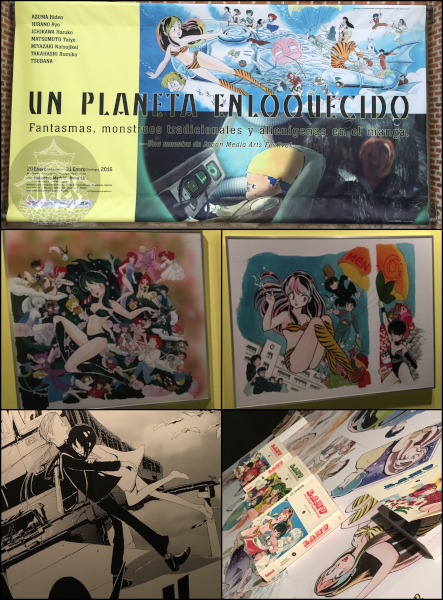
16th January 2016: Un Planeta Enloquecido: Fantasmas, Monstruos, y Alienígenas en el Manga (Exhibition in Madrid, Spain)

Naves Matadero in Madrid was holding a free exhibition on Japanese “monsters, ghosts and aliens” in manga and Japanese pop culture, and since I was around I decided to drop by. Here are some pictures.

I did not stay over but took a bus right back home because it was too cold for anything else.

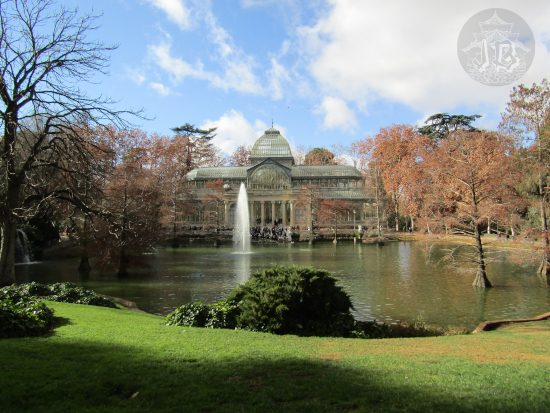
2nd January 2016: Palacio de Cristal (Madrid, Spain)

Right after landing back from Scotland there was a couple of things I needed to get going in Madrid. That afternoon I took up the chance and went to see the Palacio de Cristal, or Glass Palace, in the Parque del Buen Retiro (Park of the Good Rest, sort of). The building is a Victorian, iron-cast structure which is currently dedicated to exhibitions. It is a satellite building of the Reina Sofia Museum of Modern Art. It featured an exhibit by the Vietnamese artist Danh Vō – with a hanging Christ and fossilised bones?

And then we found out that there is indeed a parakeet invasion in the Retiro…

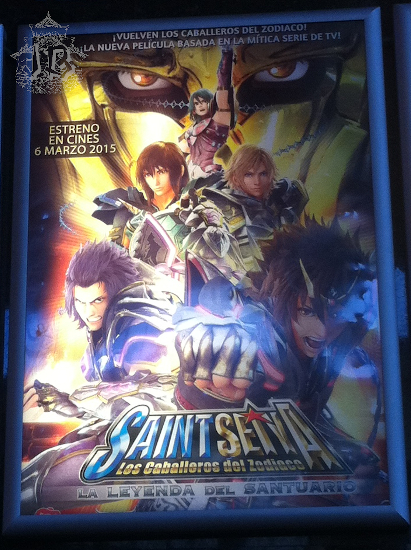
8th March 2015: Saint Seiya Legend of Sanctuary in Guadalajara (Spain)

When I was young I used to love the anime Saint Seiya. Then, as I grew older, I read the manga, then I sort of drifted away from it, until somehow new fandoms and old fandoms collided – and it as announced that YOSHIKI was writing the theme song for the film Saint Seiya Legend of Sanctuary. That grabbed my attention, and eventually Selecta Visión announced that they would release them in cinemas in Spain.

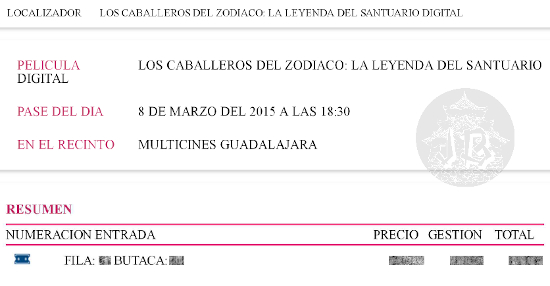
When it was announced that it would be showing in the shopping centre cinemas in Guadalajara for a couple of sessions only, I decided to buy my ticket online. It was strange for me for several reasons – the main of them was that I rarely go to the cinema to watch something dubbed. Also, the online shopping was weird -instead of getting a ticket, you got a number and then you had to input that number on a machine to get your actual traditional ticket printed.

I drove to the shopping centre, which was rather dead as it was a Sunday at half past six, the shops were closed and the restaurants not open yet. The audience of the cinema was comprised by a class of special needs kids and a lot – and I mean a lot of super-excited fathers with their young sons, who had no idea what the whole fuss was about. I enjoyed the film – I had resisted watching it bootleg although it had leaked on the Internet. It was a different, lighter take on the Battle of Sanctuary. I did, however, miss the Virgo Shaka vs Phoenix Ikki battle – because after all they’re my favourite characters. When the film ended, I stayed behind for the whole credits and YOSHIKI’s song “Hero”, beautifully sang by Katie Fitzgerald. I was literally the only person left in the cinema through it, and I had to apologise to the cleaning crew, who told me no problem. And hey, I got to see the mid-credit scene on my own!

Saint Seiya Legend of Sanctuary

After the film, I walked to the car and drove home to watch it again in its original version, because I am that kind of geek, and I was not too impressed with the dubs – but hey, that’s me, I’ve always preferred the originals.

1st February 2015: Space Pirate Captain Harlock. Madrid (Spain)

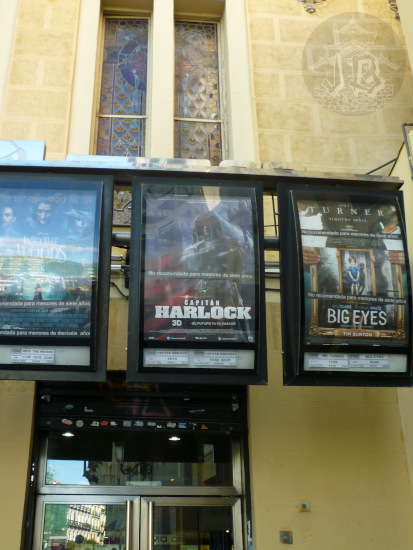
You can say that this was a bit of a spur-of-the-moment improvisation – I literally woke up and decided that I wanted to go and see the Space Pirate Captain Harlock. I found a cinema in Madrid that showed the film and I hopped on a train to get there. I arrived in time for an early lunch before I headed off for the film, as the only version in Japanese was at half past three.

This was one of the first times I ate and went to the cinema alone in Madrid, and it was a strange experience. My relatives always say that a person eating alone is sad, and as I’ve been hearing that for a long time, and sometimes it resonates, specially when I’m in Spain. I originally wanted to eat sushi, but in the end I decided against it and went to UDON instead, where I ended getting the membership card. I decided to try the Chicken Yaki Udon – much better than the ramen, in my opinion, as they were real udon noodles, unlike the ramen which uses tallarini – and a koroke (croquette), and I had cheesecake mochi for dessert.

After lunch I headed off to the Yelmo Cines Ideal to watch the film. I had no seat number and I did not need one as we were literally… five people in the cinema. It was a small cinema theatre, and when I arrived there were three or four people, I figured that more would come, but when the previews started we were just five, and five we stayed. When the film finally started, I was really impressed by the quality of the CGI – I already knew that the voice-over was going to be great, what with Oguri Shun and Miura Haruma.

The plot of the film reminded me a little of Space Battleship Yamato, but that might just be me being biased. Even if I vaguely remember watching the anime from the times I was a child, the film felt at the same time nostalgic and new, so I could really enjoy it. Although it is a bit on the predictable side, it wraps up really well.

After the film, I backtracked and it turns out I was home before anyone even noticed I was gone. I should get away more often (≧▽≦).

15th July 2014: Robots and Drums (Madrid, Spain)

A bit over ten years ago, when I was in universe one of my neighbours was paying for a proto-on-demand TV subscription, and it turned out that my TV caught it for some reason. At that time I got to watch a bunch of anime – in Spanish, badly-translated and rather… altered. Among the series I watched was Gainax’s “Neon Genesis Evangelion”, or Shinseiki Evangerion [新世紀エヴァンゲリオン]. Evangelion is a rather confusing series in itself, but the creative translation and censorship made it almost impossible to understand. Evangelion tries to be a giant robot anime with a religious / philosophical background, where humans piloting huge robots (“EVA”) battle monsters called “angels” which apparently seek to destroy humanity. Or something.

The point of this anime-history paragraph is to explain how I ended up at the Museo ABC de Dibujo e Ilustración, the drawing and illustration museum in Madrid. They were running an exhibition about Evangelion and the Japanese katana Evangelion y las katanas japonesas. It was something interesting to see, and the first time I’ve ever seen actual Japanese katana information. The exhibition has three focuses – actual katana, recreations and figures of elements of the series, such as the robots, pilots or weapons, and weapons inspired by the anime.

After the exhibition I took the underground towards the thratre Teatro Circo Price to watch a taiko exhibition: “Taiko Performing Arts Ensemble: Dandan” by Kodo. Taiko are the traditional Japanese drums and there is a whole drumming style for them. It was really, really fun. Due to a fluke of destiny, I had very good seats, so I could enjoy to the fullest – far away from the reverberation and echoes, close enough so I could even sneak in a good picture or two!

The performance was amazing. I think this was the first time I’ve ever seen something so grandeur. Even when I saw a taiko school in Japan, it was just drumming, while Kodo added a lot of acrobatics to the mix. It was really great!

Unfortunately, I could not even check the merchandise after the performance as I had to run for my train, or risk getting stranded overnight in Madrid.