15th August 2014: And then there was shiny {Japan, summer 2014}

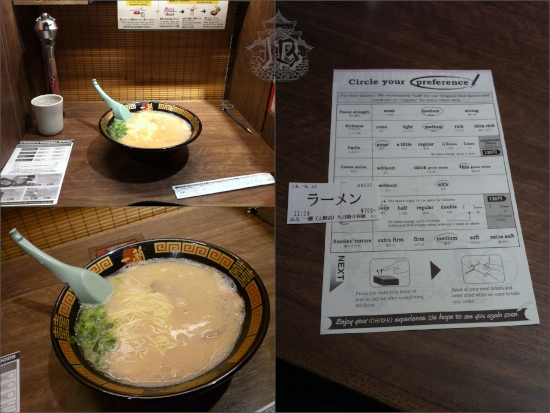
I like Ueno Kōen [上野公園], the main park in Ueno [上野] just because I do, and off I went again, maybe for the fourth or sixth time. In Ueno station we had awesome ramen at a franchise called Ichiran where you buy a basic ramen card from a machine, and are then given a card (English version was available) to mark off what you’d like on it and how. It was delicious (The bits that are missing on the picture are pork slices and spiciness level). There are different styles of ramen, and this one is Hakata ramen from the Fukuoka Prefecture.

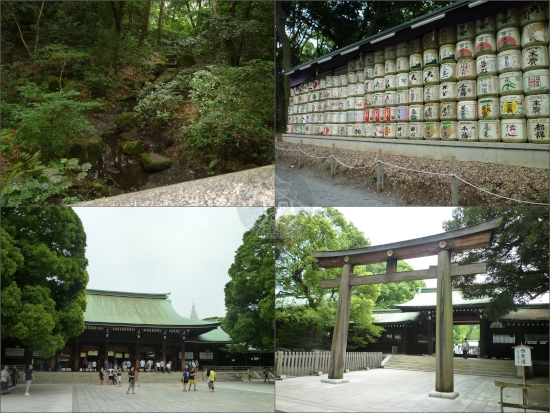
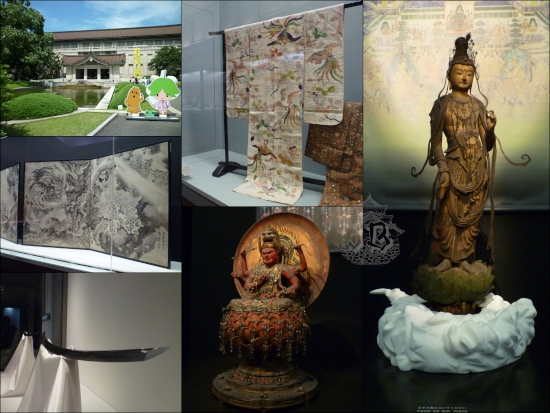
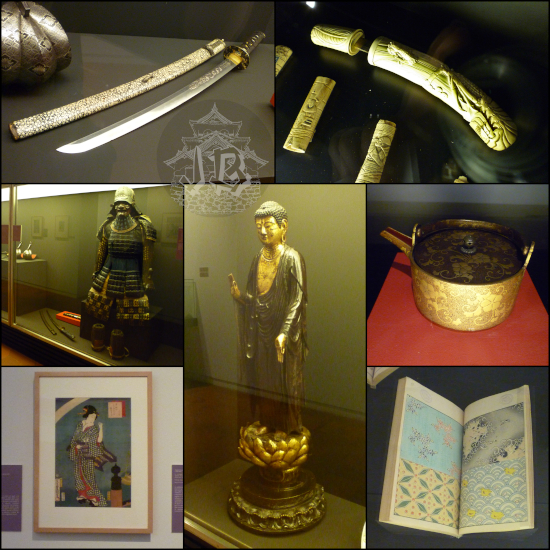
After that we took a stroll down Ueno and ended up at the Tōkyō Kokuritsu Hakubutsukan [東京国立博物館], Tokyo National Museum, which holds many important pieces of historic art:

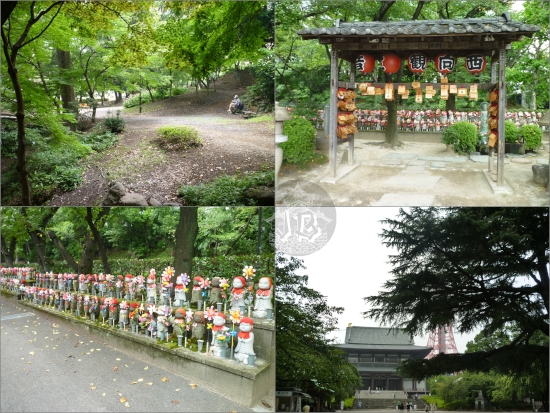
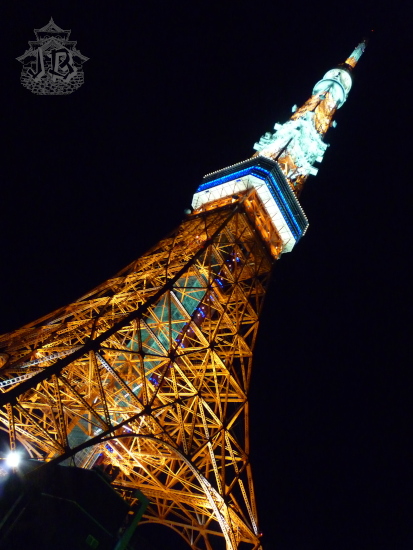
Leaving Ueno, I headed towards the Minato [港] ward as there were a few things I wanted to do. One of them was visiting a special corner of Shiba Koen [芝公園], and then I wanted to go to Tokyo Tower [東京タワー].

Within Tokyo Tower I visited Tokyo Tower Suizokukan [東京タワー水族館], the little aquarium at the bottom. It did not host sharks, sadly, but quite a few interesting species, among them catfish, one of them seemed very intent on trying to eat me.

There was also this fun sclupture thingy of scaled Tokyo Tower and Godzilla.

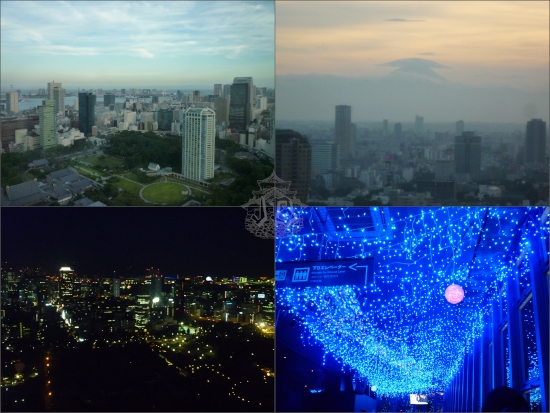
I climbed up the main observatory (well, did not climb, took the elevator) to watch the sunset, grab a bite to eat and take lots of pictures. You should appreciate Mount Fuji Fuji-san [富士山] with its summer cap in one of them. Once the sun is down, Tokyo Tower is lit, inside, and out.

I love Tokyo Tower, and going up to the observatory always makes my Tokyo trips feel more complete! I got myself an omamori and a model I have to build, if I eventually find it in the luggage chaos!

14th August 2014: When trains took forever {Japan, summer 2014}

It started with the train stopping for a few minutes that in the end turned out to be over an hour. Then there was an unexpected train change, and my Internet going crazy which got me lost. In the end my sightseeing morning was crushed to 10 minutes of walking around Shibuya [渋谷] and a Book Off visit.

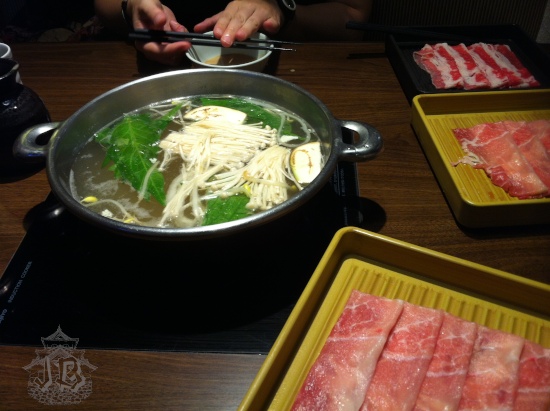
Lunch was good as we met in the Book Off and headed for a great shabu-shabu. That was very yummy and I probably ate too much of it. But come on! There was wakame to spare and then some!! XD

Afterwards we headed off towards Shinjuku [新宿] to browse Kinokuniya Book Store to buy JLPT study material and, in my case, GACKT’s novelised version of MoonSaga, because I am weird like that. It was raining like crazy, too, so not much stuff to do outdoors, and shrines would already be closed by that time, so I was feeling rather unaccomplished.

We ended up heading off to the Tokyo Metropolitan Government Building, Tōkyō Tochō [東京都庁], to watch sunset – which did not work as it was cloudy – and the pretty lights – which were fewer than usual because some of the buildings were not as full since it was Obon and many people had head home for the holidays.

Day was finished with CocoCurry. CocoCurry is always good, although I was so intent on reading kana correctly that I ended up messing up the order XD

13th August 2014: Samurai vs. Kaiju {Japan, summer 2014}

We started the day in Asakusa [浅草], which would be one of my favourite places in Tokyo if it was not so crowded all the time. This time not only I wanted to visit the main Sensōji [浅草寺].

The Sensoji temple in Asakusa, whose most prominent feature is the huge red paper lanterns

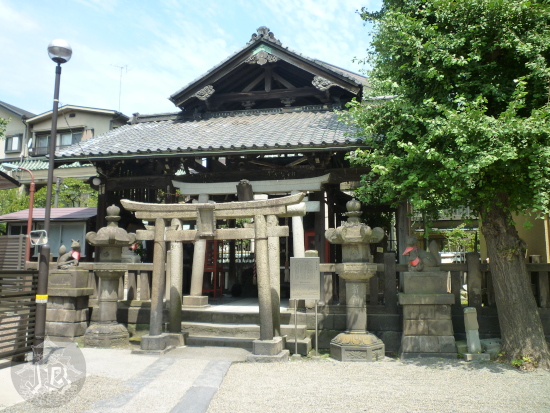
I also wanted to check out the smaller protective Shinto Shrines on the side, like Asakusa Jinja [浅草神社].

Small shrine with two stone torii, two stone lanterns and two fox statues flanking them

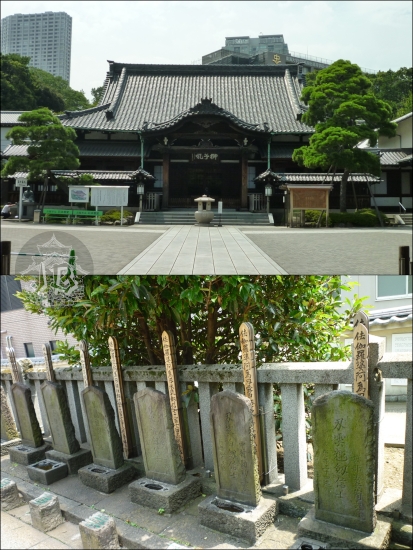
The second temple of the day was Sengakuji [泉岳寺], close to Shinagawa [品川]. The name does not really ring a bell by itself, but Senkakuji is also known as the Temple of the Forty-Seven Rōnin, as here is where all of them are buried. The Buddhist temple itself is nothing special. It has the graveyard where the samurai are buried, and a small museum attached where you can see a replica of the drum used in the attack, along with pieces of armour and one copy of the declarative letter that they wrote. Another part of the museum holds wooden statues for all of them.

A Buddhist temple, and a row of gravestones with the names of some of the 47 Ronin

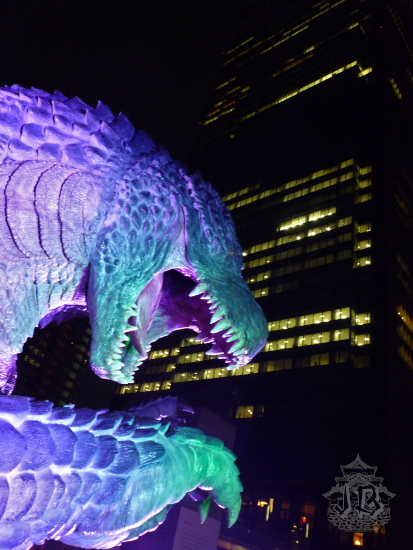
After having lunch in Shinagawa (in a… Mexican… kind of place called “El Caliente”) we headed off to Roppongi [六本木] to see Godzilla. Not the movie, but the sculpture that has been planted in Tokyo Midtown [東京ミッドタウン]. As a matter of fact, it was a very Godzilla [ゴジラ] summer in Tokyo. The Godzilla visit was done in two parts, one before sunset and one after it had gotten dark.

Godzilla coming from the ground, roaring

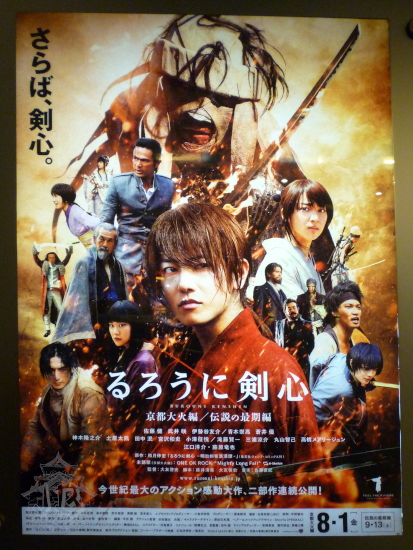
The two visits to Godzilla were separated by horrible horrible American food (I shall never willingly set a foot on a “Wendy’s” again) and going to the cinema to watch “Rurouni Kenshin – Kyoto Inferno”, the second instalment of a movie trilogy based on the manga of the same name.

Poster of the movie. It shows a man dressed in red traditional clothes, with an X-shaped scar on his cheek. Behind him, minor characters and the antagonist, covered in bandages.

Oh, and before we got back to Godzilla, we saw a gazillion and a half of Doraemon [ドラえもん] underneath Roppongi Hills [六本木ヒルズ], and pictures were taken with them.

A lot of people-sized Doaemon in different poses. Doraemon is a cartoonish ear-less blue and white cat

And here Godzilla tries to eat stuff (there are many good restaurants underneath Tokyo Midtown anyway):

A close-up of the Godzilla statue at night, lit purple and blue, and looming on a skyscraper

12th August 2014: Yokohama & friends {Japan, summer 2014}

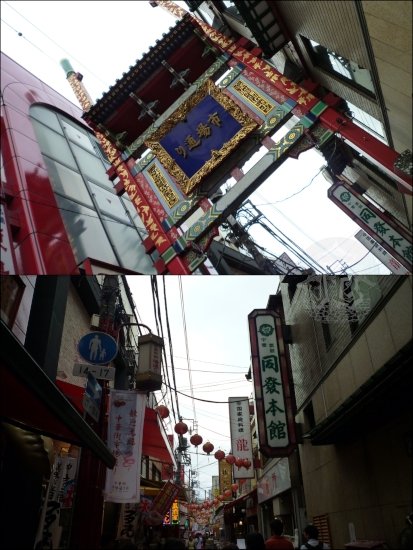
We headed off to Yokohama [横浜] to visit Chinatown.

Our goal was an early lunch and then a division of forces – either temples or Panda shops. I was on Team Temple, as nobody will be surprised to hear – Kwan Tai [関帝廟] and Kanteibyō / Kuan Ti Miao [関帝廟 / 中華会館].

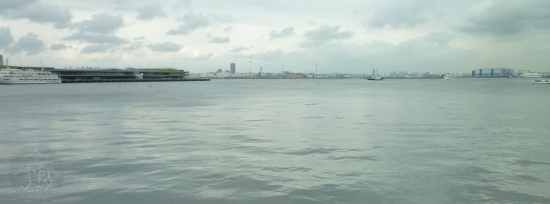
Then we walked around the seaside park, Yamashita Koen [山下公園] and looked at the bay.

After a visit to (yet another) Book Off stop, we headed back to Tokyo [東京], where we had arranged to meet a few Japanese friends in Shibuya [渋谷].

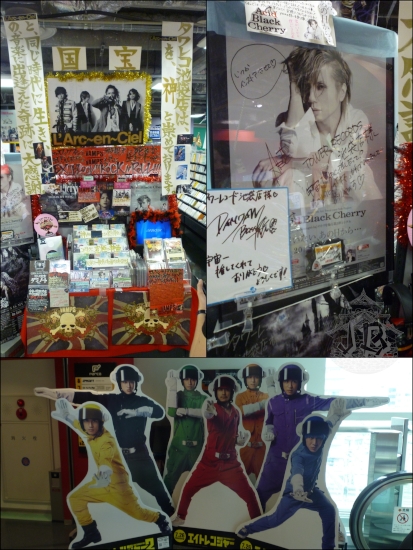
The first plan of the afternoon was meeting at Hachiko’s sculpture in Shibuya, because that is what you do when you meet in Shibuya. Then we headed to Bic Camera to check out the special promo that they had running on the 4K audiovisual set. The promo featured the trailer of the L’Arc~en~Ciel’s concert at the National Stadium earlier in 2014, which will be released in October.

One of our friends had to work that afternoon, but as this was the only day we could see the three of them before they went home for Obon, we decided to surprise her and drop by the cafe she works at to keep her company. This was the day when I discover that Japanese people actually flop on the floor when they are surprised, for real.

The Mr. Happy cafe is located in Shibuya and is something akin a non-profit which is affiliated to a children’s character. We had amazing milk shakes and mini smiling sponge cakes (lemon and caramel) and took pictures of them, of course. As we were leaving, our friend presented us with a mini box of berry sponge cakes per person! They were very kawaii and delicious, too.

For dinner we went for yakiniku again, although this time it was something quite more posh / expensive. We ate a lot, but I felt that there was too much smoke to be completely comfortable there.

11th August 2014: Microwaved bread is a thing {Japan, summer 2014}

The day started started late due to jet-lag and and on and off night and once again we set off to try and of a tea ceremony in Ginza [銀座]. However, for the second time it did not work out, due to the hotel we had selected had stopped doing it for the summer. Not fun.

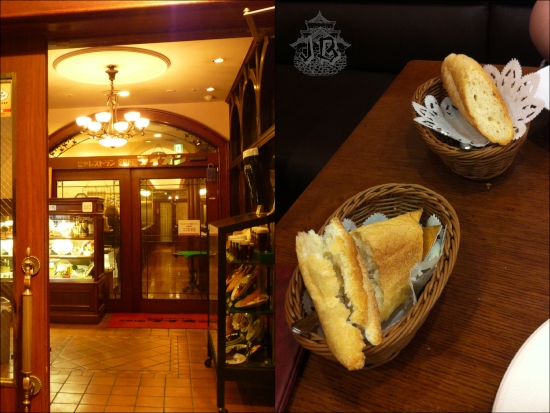
We headed out for a late lunch and ended up at a place that tried to be a weird version of a British pub, called “The Ginza Lion” which had some nice set dishes that came with a choice of bread or rice. We both chose bread and we received a baguette piece with butter. Amusingly enough, the bread had been… microwaved. Not toasted but microwaved. I am guilty if having microwaved bread before when I was trying to defrost it. Jokes ensued, and I was there to write a blog post on why microwaved bread is a thing. It is, of course. Will mark trend, I am sure.

Afterwards we headed off to Harajuku [原宿] to cavort idol shops, which are always fun. However, there was an unusual crowd due to the release of Kanjani8 stuff, and some of the shops were too crowded to browse in peace.

From Harajuku we walked down to Shibuya [渋谷] for a couple of hours of karaoke (NEWS version of Weeeek is easier once you have gotten used to the GreeeN one, too). Then we went to The One Hundred Yen Yakiniku to eat barbecued meat and veggies and called it a day.

10th August 2014: Typhoon & Odaiba {Japan, summer 2014}

One of the things I noticed when landing was the solid thousand-metre column of clouds. The reason for it was Japan’s almost-trademark hot humidity, but aside from that, there was a typhoon in the making. Now, a typhoon is basically he same thing as a hurricane, only that it happens in the Pacific Ocean. Temperature difference between seawater and the air above it create upwards convection currents that rotate around an axis due to the Coriolis force. This causes rain, strong winds and the famous “spiral structure” that we see on weather reports.

Well, on Sunday we were scheduled to have a typhoon passing by Tokyo/Saitama. Our plans for the day were picking up a friend in Odaiba after performing the tea ceremony. However, when we were close to the place where tea ceremony was to be held, it was raining quite strongly, so we decided to go directly to Odaiba [お台場]. The reason for choosing that meeting point was seeing the hanabi (fireworks) in Tokyo Bay, but those were cancelled in the end due to the weather.

Far from being deterred, we decided it make the most of it, rain or no rain. The first stop was at Tower Records, where I got myself a magazine, just because I could. Then we headed off for a kushikatsu restaurant.

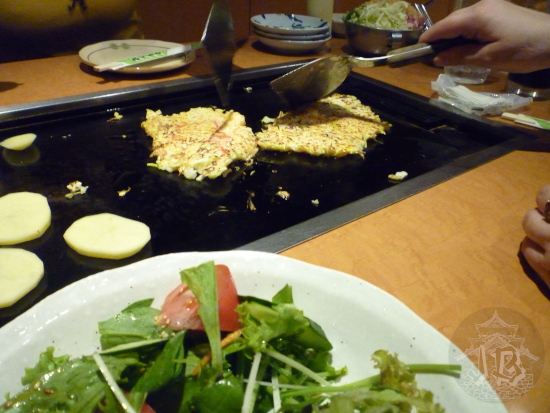
Kushikatsu is a typical Kansai food, anything you can imagine covered in mayonnaise, breaded, skewered and deep-fried. This restaurant allowed you to choose your uncooked skewers and fry them at the table. It was an all-you-can-eat for 80 minutes. In Japan it is very typical to have a time-constricted meal deal, during which you can order or eat as much as you want. However, when it ends you get kicked out a bit unceremoniously.

As rain seemed to have stopped somehow and the girls humoured my wanting to go to the Fuji TV shop to search for a Galileo phone strap that I had regretted not buying the previous year. On our way we walked into a “Hero” (drama by Kimura Takuya which is getting a new season) mini event. It had a mini museum with items from the series and shootings, and a small background for you to take pictures in.

After that we headed out to Shibuya [渋谷] and cavorted Tsutaya and once againお台場 (another branch, though).

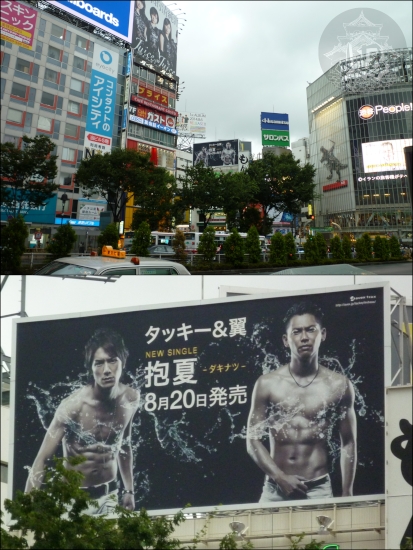
(Zoom on the Tackey & Tsubasa billboard up there because… unexpected for JE)

8th & 9th August 2014: Never trust the French {Japan, summer 2014}

I have discovered that it is easier to get up before 4 in the morning rather than between 5 and 8, don’t ask me why, but I suspect vampire genes. Boarding the connecting flight to Paris was a bit of a hassle as baggage drop took forever I (on the fast, already checked in queue, sheesh.) but the flight itself was good.

Transfer in Charles de Gaulle was however a true nightmare, which involved elevators, buses, mobs of people and staff calling out who could go on each bus according to the gate. Still made it to the gate with 10 minutes to spare… until they delayed the flight. The first notice talked about 3 hours, in the end we left with barely over an hour. Apparently there was something wrong with the entertainment system that could only be partially fixed, so we ended up with 15 films streamed over and over again.

I managed to doze through most of the trip, might have even slept some, because I had to watch Captain America II twice for it to make sense. Same with The Hobbit 2.

There were three or four turbulence alerts but it was not terribly bad, and we made up for the delay and arrived almost on time. It was Saturday, 6 am, which made it about 11 pm my regular timezone. I thought it would be dead, but surprisingly I was not, and after retrieving my luggage and making it thorough customs, I plunged into the maze that is the Tokyo chikatetsu service after being greeted by Tokyo Banana. The first thing that I heard when arriving in the platform was the music box version of SMAP’s “Sekai no hitotsu dake no hana“.

I’d be staying with a friend in Satte (Saitama), so that meant two hours and a few train changes along the way but it turned out fine. Now, getting the suitcase down from her third floor would be fun.

We decided to heard off for sushi and first Jmusic mission of the trip – which turned out to be Nakano Broadway and Shinjuku Book Offs. Sushi was, as always, delightful and I was quite oh-shinied by a few things in Nakano, also as always. Then there was a little DVD watching. That was an early night as jet lag and exhaustion eventually caught up.

15th July 2014: Robots and Drums (Madrid, Spain)

A bit over ten years ago, when I was in universe one of my neighbours was paying for a proto-on-demand TV subscription, and it turned out that my TV caught it for some reason. At that time I got to watch a bunch of anime – in Spanish, badly-translated and rather… altered. Among the series I watched was Gainax’s “Neon Genesis Evangelion”, or Shinseiki Evangerion [新世紀エヴァンゲリオン]. Evangelion is a rather confusing series in itself, but the creative translation and censorship made it almost impossible to understand. Evangelion tries to be a giant robot anime with a religious / philosophical background, where humans piloting huge robots (“EVA”) battle monsters called “angels” which apparently seek to destroy humanity. Or something.

The point of this anime-history paragraph is to explain how I ended up at the Museo ABC de Dibujo e Ilustración, the drawing and illustration museum in Madrid. They were running an exhibition about Evangelion and the Japanese katana Evangelion y las katanas japonesas. It was something interesting to see, and the first time I’ve ever seen actual Japanese katana information. The exhibition has three focuses – actual katana, recreations and figures of elements of the series, such as the robots, pilots or weapons, and weapons inspired by the anime.

After the exhibition I took the underground towards the thratre Teatro Circo Price to watch a taiko exhibition: “Taiko Performing Arts Ensemble: Dandan” by Kodo. Taiko are the traditional Japanese drums and there is a whole drumming style for them. It was really, really fun. Due to a fluke of destiny, I had very good seats, so I could enjoy to the fullest – far away from the reverberation and echoes, close enough so I could even sneak in a good picture or two!

The performance was amazing. I think this was the first time I’ve ever seen something so grandeur. Even when I saw a taiko school in Japan, it was just drumming, while Kodo added a lot of acrobatics to the mix. It was really great!

Unfortunately, I could not even check the merchandise after the performance as I had to run for my train, or risk getting stranded overnight in Madrid.

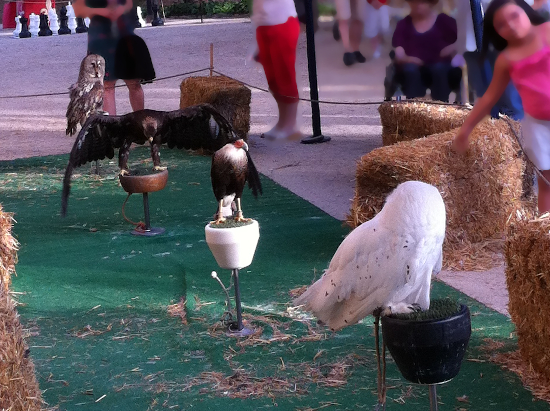
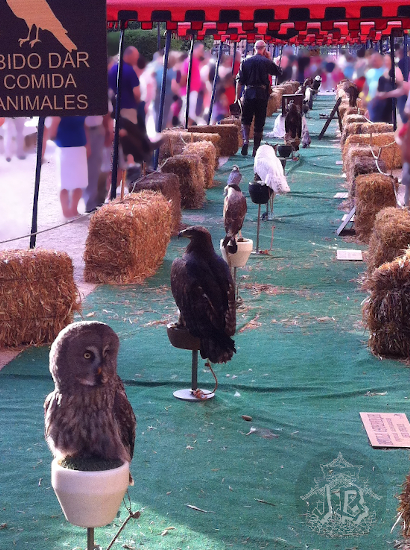
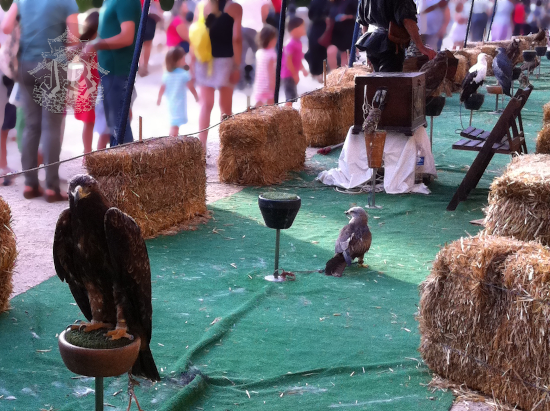
14th June 2014: Falconry & Birds of Prey Exhibition in Guadalajara (Spain)

Falconry is one of those things that I’m torn about – on the one hand I’m not really keen on animal labour and shows, but being close to those animals is an amazing experience. The town of Guadalajara was celebrating the 900th anniversary of the passing of the Medieval Hero Minaya’s passing, and falconry was common technique at the time.

Rodrigo Díaz de Vivar was a Castilian knight and warlord who lived in the 11th-century Spain. He was called El Cid Campeador which roughly means the Master of the Battlefield. He was a glorified mercenary, and has made history books as one of the most important history heroes. He was exiled when he confronted the King about killing his predecessor. One of his generals, Álvar Fáñez Minaya, is credited with liberating the town of Guadalajara from the Moors. Just as El Cid represents courage and strength, Minaya represents loyalty.

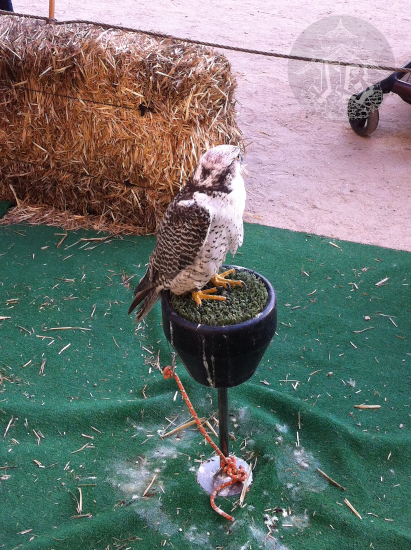
Guadalajara really likes the figure of Minaya – he is in the local coat of arms and flag, there’s a school and a Moorish tower named after him. And as he was supposed to have been an excellent falconer, the exhibition was organised. I never caught the name of the owners of the animals, but there were some very impressive birds over there – Steppe eagle, Eurasian eagle-owl, Iberian imperial eagle, Turkish vulture, a hawk / falcon and… and that’s the end of my ornithology knowledge. All in all the animals were beautiful, although people not respecting their space made me a little bit sad.

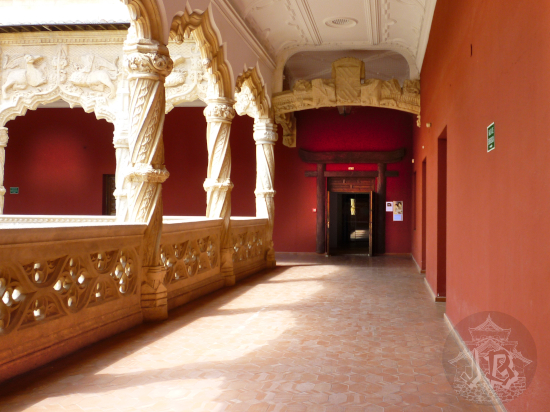
1st June 2014: “La Mirada Interior” exhibition in Guadalajara (Spain)

This Japanese-culture exhibition was held in the Palacio del Infantado in Guadalajara and I dropped by because seeing Japanese stuff in a Gothic palace was… well… weird. Here are some pictures:

24th – 26th May 2014: Paris (France) for Yoshiki Classical

24th May 2014: Evening in Montmartre

I was going to atted Yoshiki Classical concert in Paris on Sunday, so I made planes with a a friend to meet up with her over the weekedn so we could do some stuff together. We booked a hotel close to the venue, Le Triannon. I arrived in Paris in the evening of Friday the 24th and met my friend direcly at the hotel – the first thing we noticed was that the area was not the safest, but we could still get to the Basilique du Sacré-Cœur to see it lit.

Sacre Coeur, a basilica on top of a mountain, lit in gentle green light at night

And also to see a nice view of the Eiffel Tower all lit up.
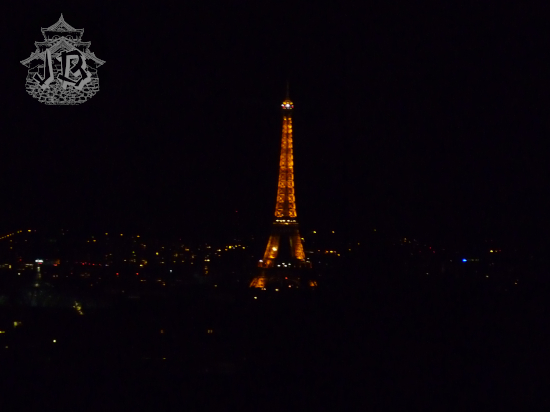
A shot of the Eiffel Tower from afar, lit reddish orange

25th May 2014: Under ground, above ground

On Saturday morning we went to Catacombes de Paris, the Catacombs of Paris. The ancient quarries and mines of Paris became the final resting place of more than six million people. In the late 18th century it was decided to eliminate a good portion of the quickly-overcrowding cemeteries and graveyads of Paris and for a 1786 the bones were carried to the catacombs at night. Today they are consisdered a museum and thus managed as such.

Creepy catacombs of Paris, with thousands of human skulls and other remains

After the catacombs we moved onto the Ille de la Cité, the “island of the city”, an island in the middle of the Seine, to visit Notre-Dame de Paris, our Lady of Paris, a magnificent Gothic cathedral built in between 1160 and 1260. In the 19th century an extensive renovation was carried out, and a few features were added, such as a the gargoyles and a replacement spire for the original one. We climbed the towers and were treated to a really cool Paris view before going inside.

Collage of Notre Dame; the main façade, the gargoyles, the inside of the main navev, and a view of Paris from the top

Leaving Notre Dame, we headed our the Île de la Cité and passed by Saint Germain l’Auzeroix, which mostly dates from the 15th Century and used to be the church for the Louvre inhabitants.

A restored gothic church with an octogonal tower

At the Louvre, by the way, there was a humongous queue, so as both of us had seen it before, we decided to skip going inside.
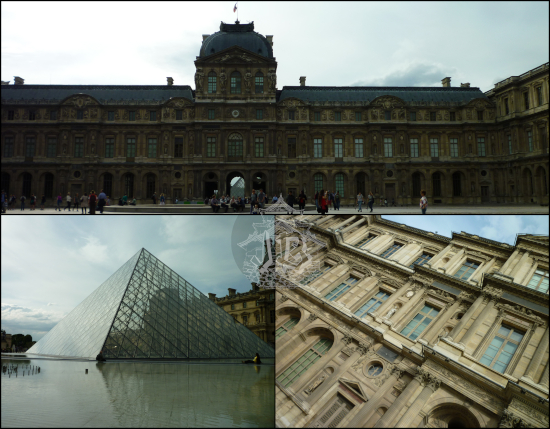
The Louvre palace from the outside

We passed by the Luxor Obelisk, an Egyptian monument which is over 3000 years old, located in the Place de la Concorde. I’ve always found that name very ironic considering that many people were guillotined there. But hey, the obelisk is cool and all.
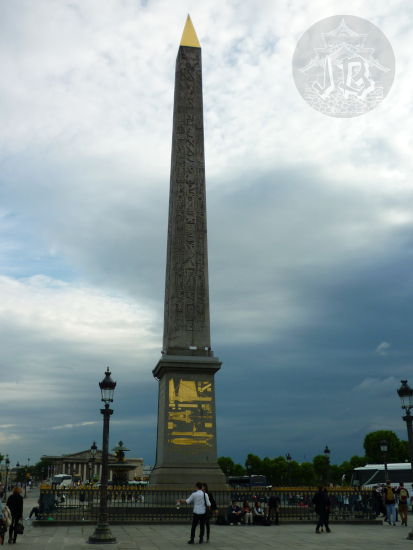
A black Egyptian obelisk with golden decoration

We continued walking up the Champs-Élysées until we got to the Arc de Triomphe de l’Étoile (the “Triumphal Arch of the Star”. Okay Paris. Okay.), which is one of the biggest triumphal arcs in the world. It was completed in 1840 and it honours the casualties in the Revolutionary and Napoleonic Wars.

Commemorative gateway or triumphal arch in white stone

From there we took the underground back to the area of the Sacré-Cœur, which we could see at the end of the streets.

Sacre Coeur peering at the end of a street

And to finish the day, we had some Japanese food because why wouldn’t we?

26th May 2014: Bad weather, queue & Yoshiki

On Sunday, we started off back in the Île de la Cité and we walked around Notre Dame on our way as my friend wanted a walk along the Seine.
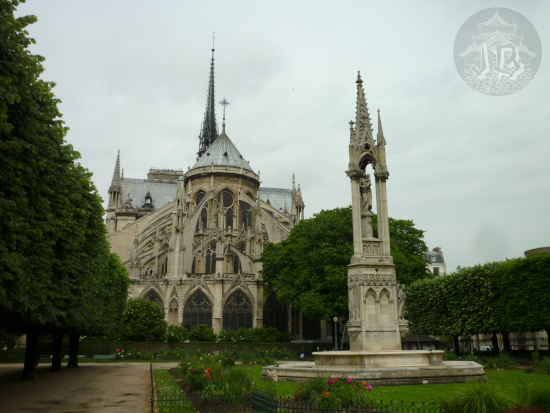
The back gardens of Notre Dame

We took the underground towards Les Invalides (Hôtel national des Invalides or The National Residence of the Invalids), a complex of buildings erected between the 17th and 18th centuries and that hosts the military museum and some notable graves, among them Napoleon’s.
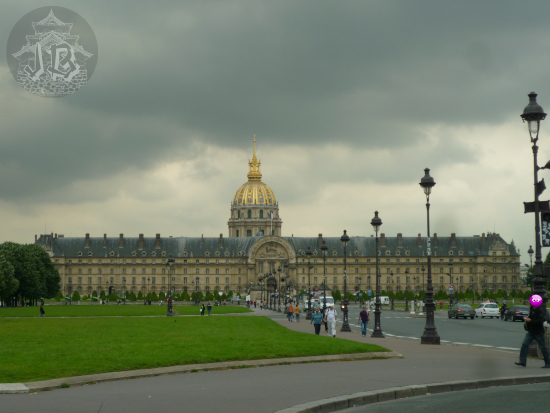
Les invalides, a neoclassical palace with a golden dome

Afterwards we took the underground to Champ de Mars, the long park where the Eiffel Tower stands. The Tower was built as an entrance to the 1889 World’s Fair exhibition and it was controversial at first (and rather ugly if you ask me, but hey to each their own). Eventually, it became so famous that it was not taken down as originally planned, and to-date it is one of the most visited landmarks of the world.

Eiffel tower in the clouds

Eiffel Tower from underneath, with a tennis ball hanging in from the second floor

As you can see in the pictures, the weather might not have beent he nicest, but we made our best. We walked all through the Chaps to the Trocadero on the other side. There were very few people on the street so I convinced my friend to take a ride in the carrousel over there, because I’m insane like that. Soon after we had left, a group of random people decided to emulate us.

Classical caroussel, looking over the ears of one of the horses

After this, we said goodbye. I headed off to Le Triannon for Yoshiki Classical, and my friend towards the airport as she had work on Monday. Yoshiki is one of the most important figures in Japan’s musical scene. He is the leader of the iconic band X Japan, and also trained in classical music. He wrecked his health when he was young, though, so he is not in the best shape. His recital Yoshiki Classical was meant to be a reimagination of some songs of his career, just him and his piano and some invited artist. I have to admit that it was one of the most beautiful things I’ve ever been to, and I don’t regret attending one bit. Although this was my first concert alone, I didn’t feel strange in any way.

A concert venue with some people waiting

I don’t know what I was expecting, but this surpassed any and everything I could have thought of. Yoshiki is a wonderful human, and he spoke in English during the whole event – he is living in America now, collaborating with people like Stan Lee and Marilyn Manson to do more great stuff. For me, seeing him in person and playing his piano was a heart-bursting experience.
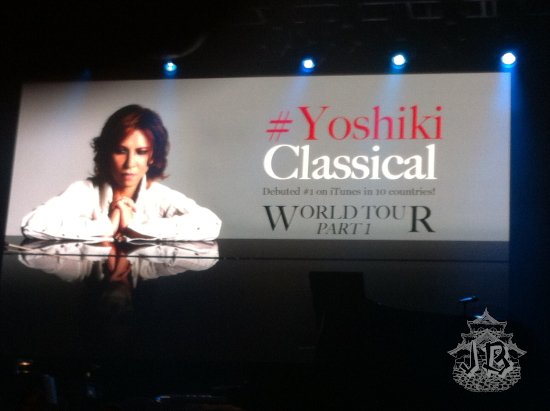
Yoshiki Classical Banner

Although Le Trianon is a seated venue, tickets were not numbered. I arrived at the queue round 17:00 for a 19:30 concert. It was not a good line – French fans seemed to have no sense of personal space, and the person behind the person behind me was invading my space, and I’m not exaggerating.

Conversely, the venue was quite ready for us, entry was well organised and smooth. Theatre staff, speaking in French and Japanese, made sure that ticket holders did not bother the local commerce nor their patrons. Judging by the faces of the sellers around, they were not used to people queuing for the theatre.

Gates opened around 18:45, and I managed a seat on 7th row, in what I thought it would be a good position to actually see Yoshiki’s face as he played. The stage was equipped with the Kawai piano, a synthesiser, and the seats for the strings, along with a standing microphone. I took in the relative positions of everything to chose my seat. The screen showed the Yoshiki Classical World Tour banner, and staff members sold insanely expensive glow sticks.

By 19:50 the audience had started to get nervous,but the members of the press were being shown in to their seats, which meant that the interviews were over. The concert finally started at 20.05, with the entrance of the supporting musicians – three violins, two violas, two cellos. The assistant gave them the tuning note and the video launched behind them. It started with a fragment of the Golden Globes museum interview, where Yoshiki explained the two sides of him, the destructiveness of heavy metal and the peace of classical music. This was illustrated by short clips of X Japan drumming and other activities, such as playing for the Emperor, or Yoshiki Symphonic, all to the music of Miracle.Finally, Yoshiki walked in, sat in front of the Kawai and played the intro of Forever Love.

He did quite a lot of talking between the songs, with a few words in French, but mostly English. He explained that we would have two parts (I used the intermission to go get goods and buy an overpriced bottle of water).Throughout the concert he introduced the strings by name, he remembered all of their names even with effort (and named them Yoshiki Sextet with great mischievousness), and Katie Fitzgerald, the vocalist of his Violet UK project. he himself said that he had too many open fronts and that he had been recording with X Japan forever, but also with Violet UK. He put the blame on himself for being a perfectionist and thus never finding anything finish-worthy. Katie rolled her eyes at him. They seemed to have a good chemistry going on. At the very beginning he told us that he was used to being in the back of concerts, playing drums and that being so close and seeing us made him nervous. He joked that as it was a classical concert he would not stage dive.

As he played the piano the screen behind him projected images, some of them abstract, some of them related to the song, such as roses for Rosa, stills of the Saint Seiya film for Hero, or raindrops for Endless Rain.

He spoke about the history of X Japan and his own – he started playing piano when he was four, the same year he met ToshI. He picked up drums at ten, in Chiba. He reminisced about how he hunted down Pata, Taiji and Hide, ”having to break their bands to get them to come to his band”. Then he spoke of Taiji’s and Hide’s passings, and not talking to ToshI for about ten years. At this point he broke down. It makes one wonder about the kind of pain this man harbours in his soul. You could feel the rage as he pounded into the piano at some points, and yes, I am sure he was crying during the song he dedicated to his father, Taiji and Hide. He said that he had learnt that big venues and stadiums did not really mean anything, but that the support of the fans was what kept him going.

He played an improvisation of Tchaikovsky’s Swan Lake, and a song he had heard on the radio the day before. He confessed that being on tour he lost track of days and places. He was aware of time and space enough to announce that the upcoming October concert in the Madison Square Garden may be the start of a new X Japan tour, but I do not think any of us believed him.

All in all, I knew that he is a great pianist, musician and artist, and after the concert I am completely sure that he is a good person, too. It’s not an act, a persona that he created for the stage. Nobody is that good at feigning pain. He picked up a bunch of presents from the crowd on the first couple of rows himself, be it flowers, plushies, flags, and was thankful for all of them.

Setlist:
1. Miracle (during the video)
2. Forever Love (X Japan)
3. Golden Globe Theme
4. Rosa (Violet UK)
5. Anniversary
[Intermission]
6. Amethyst (Strings only)
7. Swan Lake Improvisation (Tchaikovsky)
8. Hero
9. I.V. (X Japan), fragment
10. Hymne à l’amour (Édith Piaf cover)
11. Without You (X Japan)
12. Kurenai (X Japan), fragment
13. Art of Life (X Japan)
14. Endless Rain (X Japan)

Yoshiki talking to his audience

Yoshiki and Katie Fitzgerald during Hero

After the concert, I went back to the hotel. I would have loved to stay a bit longer, but it was night already and the area did not feel… Nice. In the following morning, Monday the 27th, I just headed for the airport and came back home. It was a very complete weekend!
28th & 29th March 2014: London (England, Great Britain) for VAMPS

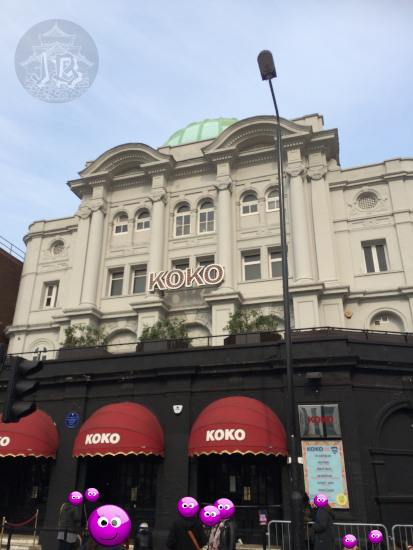
A friend convinced me to attend this VAMPS concert in London by paying for the VIP upgrade in advance. I took a red-eye flight on Saturday morning to Gatwick and went directly to Camden, where the venue, Koko live house, stood.

The venue, a neoclassical building with a marking reading Koko

Aside from the run to the hotel, I spent most of the day in the queue, which was rewarded when I got an autograph from HYDE himself on the Sex Blood Rock ‘n’ Roll album.

Hyde's autograph on the Sex Blood Rock n' Roll CD

It was probably due to the high of the autograph, but this is one of the best concerts that I’ve ever attended, with lots of amazing songs, and I had a great time. I did not freeze during the Meet and Greet, and I shook hands with both members, mumbled something along the lines of “thanks for the autograph” to Hyde and “thanks for the pick” to K.A.Z, referring to the one I got in Barcelona. Then I bounced off the evening with most of the songs:
  1. Devil side
  2. Redrum
  3. The past
  4. Secret in my heart
  5. Replay
  6. Dolly
  7. Sweet Dreams
  8. Life on Mars?
  9. Hunting II
  10. World’s end
  11. Angel trip
  12. Trouble
  13. Midnight celebration
  14. Revolution II
  15. Memories
  16. Love addict
  17. Sex Blood Rock N’ Roll

The venue at night

The next morning my friend went off to the airport first thing in the morning. I was not travelling back till the evening, so I took the chance to… Well, first things first, I took the chance to get myself to a Costa Coffee and get a vanilla latte.

A Costa coffee dispossable glass

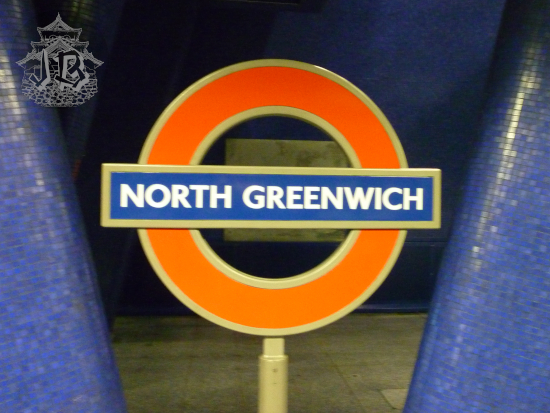
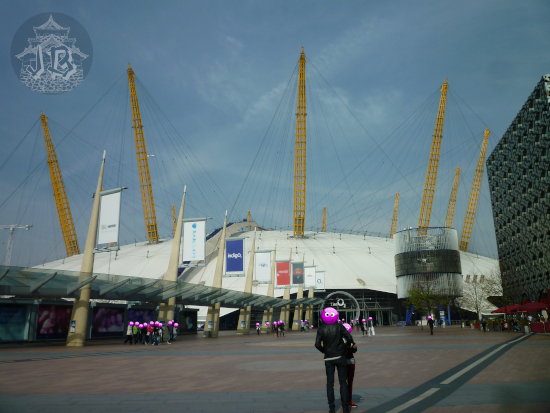
Then I took the underground towards the end of the world, or more precisely the end of the Jubilee line – to North Greenwich. I took the O2 Arena exit, to say hi the IndigO2, where I had been once back in 2012 to attend the L’Arc~en~Ciel World Tour, the first and only time I’ve ever seen them.

North Greenwich undergrond station

The O2, a huge tent with crane-looking structures that reminds one of a giant hedgehog

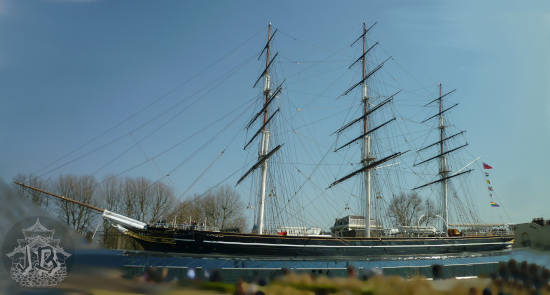
I left the O2 Arena behind, and walked about 20 minutes towards the Cutty Sark, a tea clipper built in Dumbarton in 1869. It took eight trips to China to trade for tea and other items. Its history involved mutinee, murder, trampling of cargo and travels to Asia and Australia. In the 1880s it was considered one of the fastest ships if not the fastest sailing the ocean.

A landed sailboat

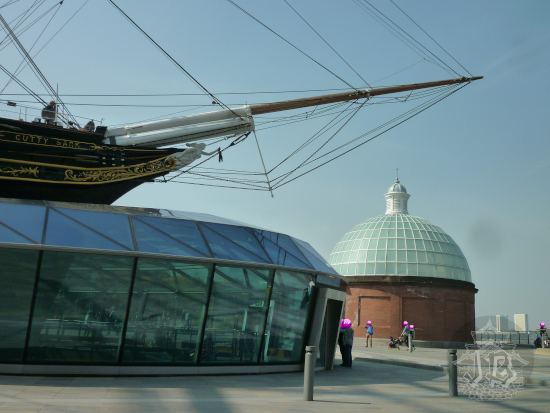
The Cutty Sark’s figurehead is the witch Nannie Dee, created by Robert Burns – in the poem a man falls in… love or lust… with a witch during a coven meeting that he’s spying, and the witch chases him away, getting away with the tail of his horse, that you can see in her hand.

Close up of the ship. It is perched on a glass structure that gives away tot he museum

The steam engines made sail-ships obsolete, but the Cutty Sark was active until the 1950s, when it was rammed by another ship on the Thames. In 1954 it was moved to a custom-dock in Greenwich to become a museum.

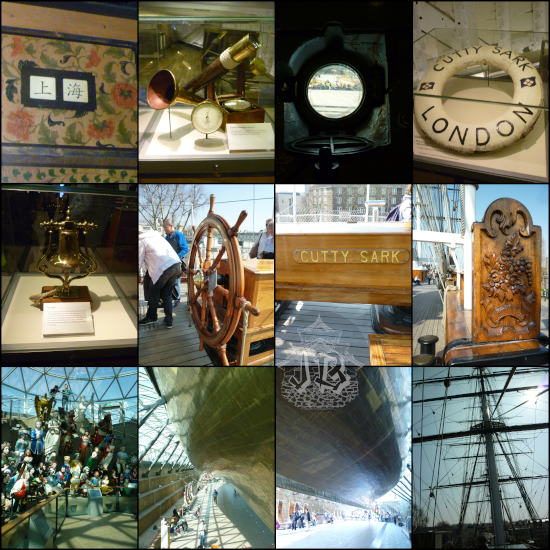
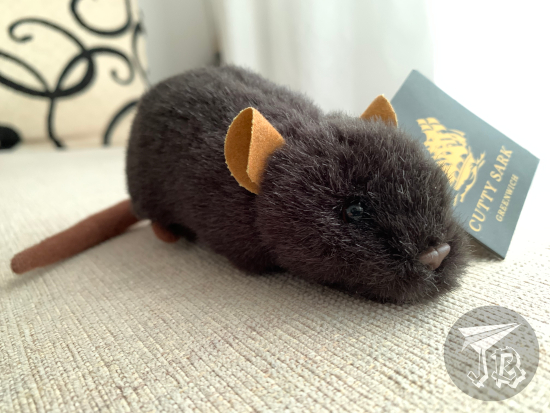
I wanted to see the exhibition inside, which turned out out be about Chinese tea and the history of the ship, which was not unexpected. I bought a pet-rat souvenir plush because I found it adorable. In 2007 it was ravaged by a fire, and extensive rebuilding works were undertaken, which included building a new support of glass and steel that would also become the new visitor centre when the museum reopened in 2012 (when I was there in 2012 it was not yet open. I guess this was an itch I had to scratch).

Different objects in the Cutty Sark museum - tea boxes, sailing instruments, the steering wheel, marionettes, one of the original floaters

A small black rat plush with the Cutty Sark tag

Oh, and by the way… here’s the binnacle!

An actual binnacle compass

I walked back towards the underground and by the Thames riverbank.

Thames and riverbank

There stands the Old Royal Naval College, a Unesco World Heritage site build between 1696 and 1712 – it was originally conceived as a hospital and it became the Royal Naval College in 1873.

Naval college. A symmetric Neoclassical building, with columns and a green lawn

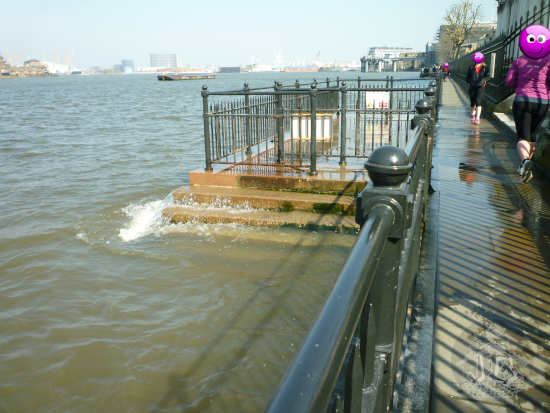
Continuing on the riverbank, you can see the floodgates in the background.

Small waves at the walk near the river

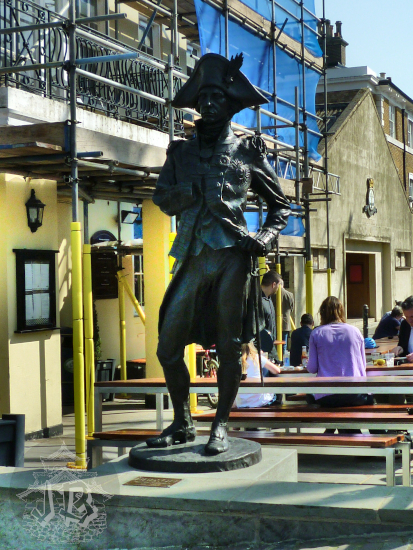
I paid my respect to Admiral Lord Nelson Statue and went on.

A sculpture of Nelson, with his right hand

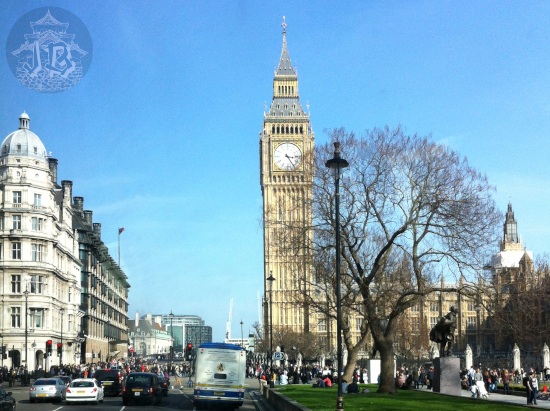
I had to take a bus at Victoria Coach Station to go to the airport, and I got a very nice tour of the city, with the Big Ben and Houses of Parliament

The Big Ben or Elizabeth Tower

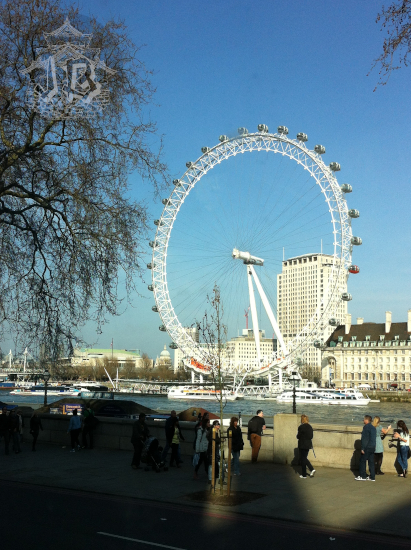
… the London Eye

The London Eye, a giant ferris wheel

… and the Tower of London.

The Medieval Fortress Tower of London

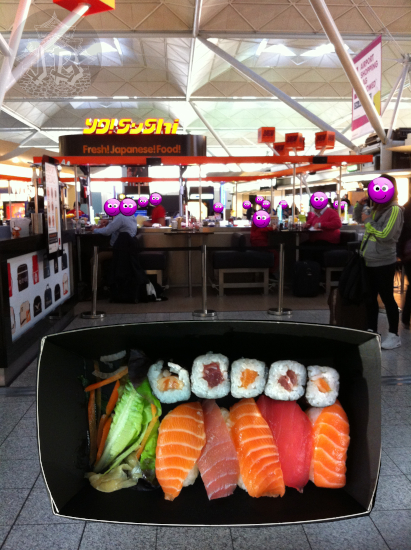
Once at the airport, I had some Yo!Sushi dinner – not the best, but hey I take sushi wherever I can find it because yay sushi.

Sushi dinner

30th December 2013 – 1st January 2014: New Year’s in Toledo (Spain)

30th December 2013: Arrival in Toledo

We took an early train to get to Madrid, and transferred to the high-speed line (AVE) to get to Toledo – the ride from Madrid was barely half an hour. Toledo is known as “the city of the three cultures” as during the Middle Ages, Christians, Muslims and Jews managed to live in peace there, and make it prosper. Today it is a tourist hub in the centre of Spain.

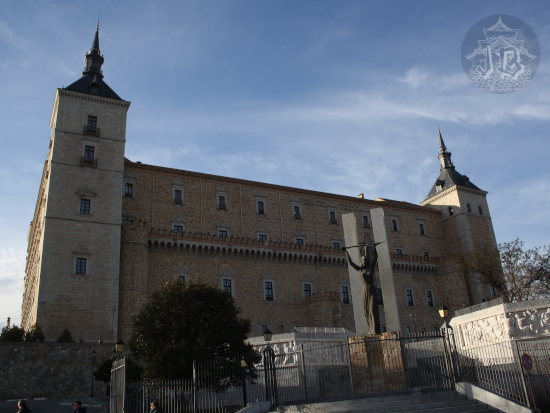
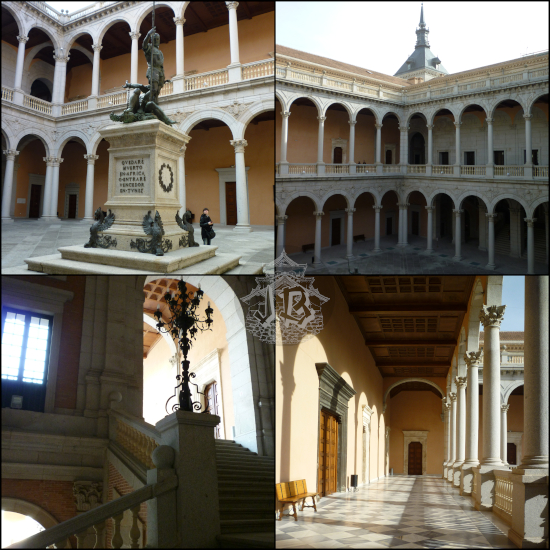
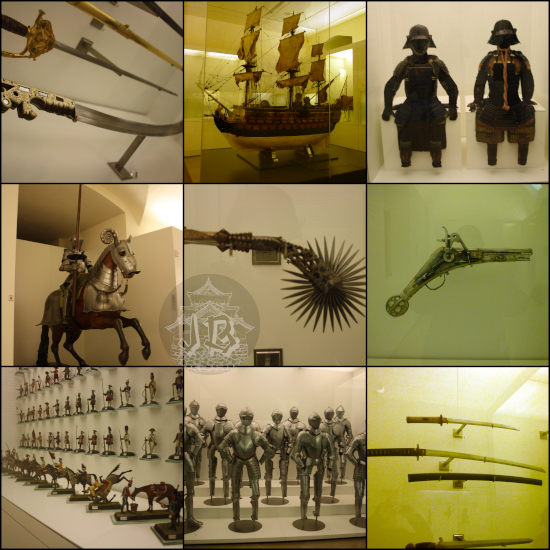
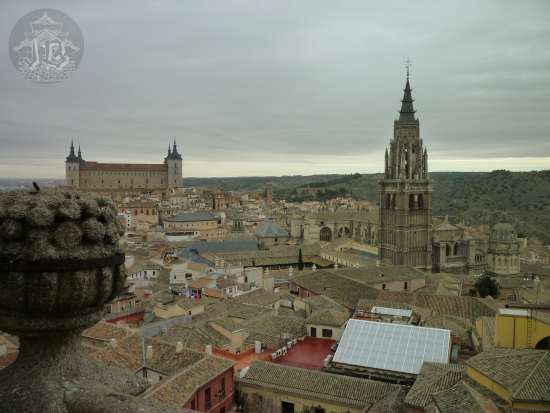
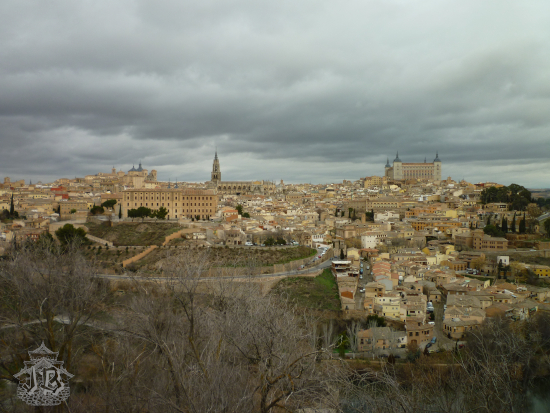
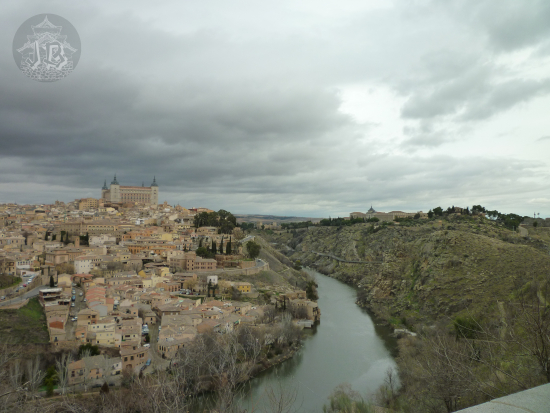
The first thing that we did was head off to the Alcázar (Muslim castle) – although it was originally built by Romans in the third century, its current look is owed to the restoration carried out in the 1540s. However, it had to be restored after the Spanish Civil War. The Siege of the Alcázar was one of the most symbolic victories on the Nationalist band. The Alcázar was under siege during the whole summer by Republicans trying to take it over, but in the end, Nationalist reinforcements arrived, chasing the Republicans away. Today, the Alcázar is an important cultural building (where the bullet holes can still be found) and hosts the Museum of the Army, Museo del Ejército.

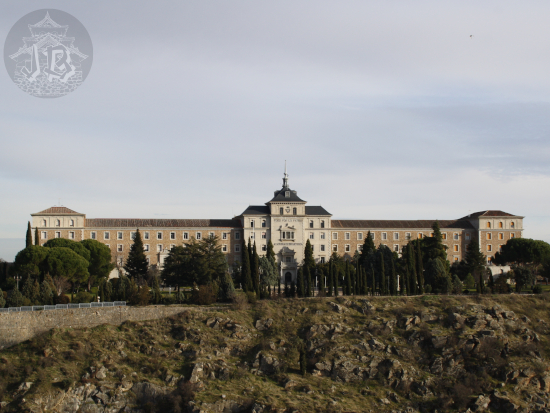
From the vantage point of the Alcázar, we could see the Academia de Infantería (Toledo Infantry Academy), built in the 20th century in imitation of the Renaissance and Herrerian style.

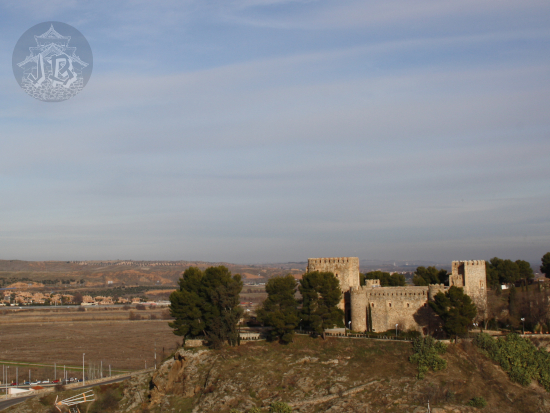
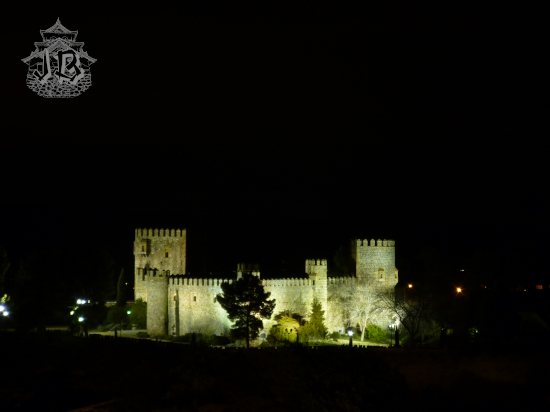
We also saw the Castillo de San Servando, the Castle of San Servando, a fortified Knights Templar enclave. Fine, it started off as a regular monastery, but it was later given to the Knights Templar in order to protect the city.

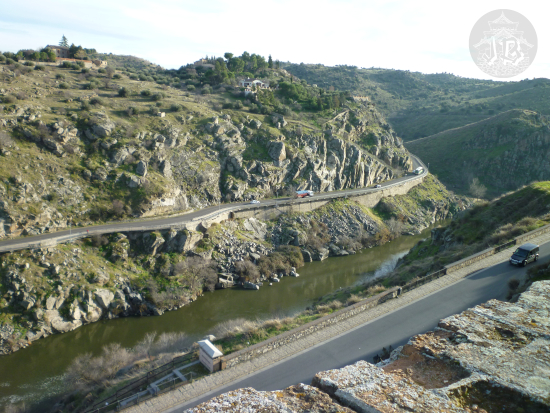
Both buildings are on the other side of the Río Tajo, the Tagus river, the longest river in Spain.

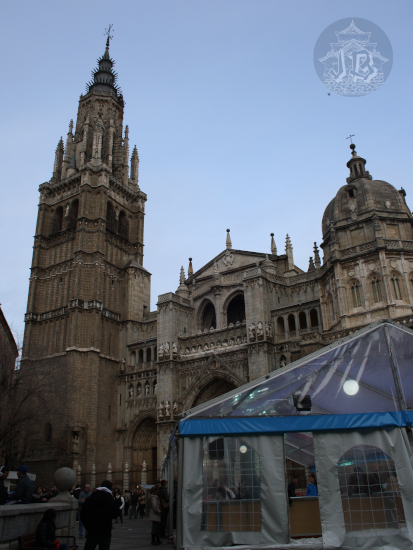
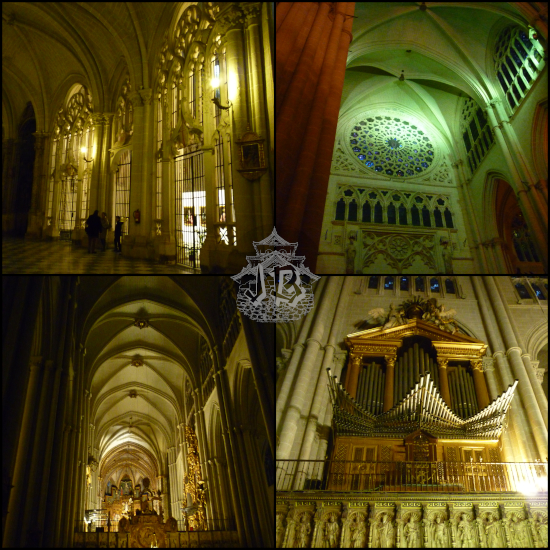
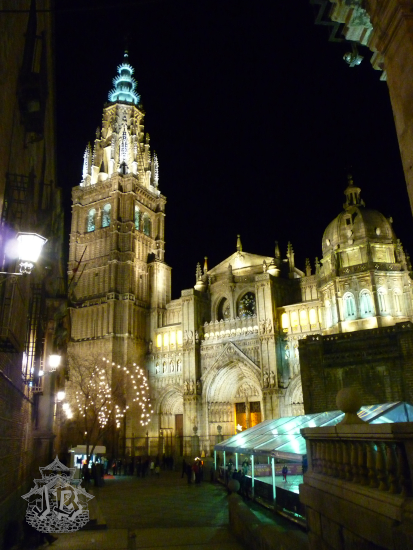
After having lunch and checking into the hotel, we visited the cathedral Catedral Primada Santa María de Toledo (Primate Cathedral of Saint Mary of Toledo). The cathedral, built in Gothic Style, was erected mainly throughout the 13th century, even if it was only finished in the 15th century. It sports two asymmetric towers, well, one tower and a small Mozarabic chapel in place of the other one.

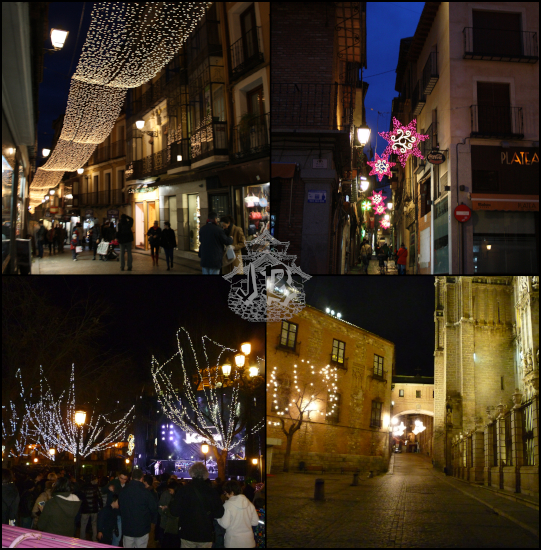
By the time we came out of the cathedral, night had fallen – truth is that we missed a little on the pretty windows due to it being darkish outside already. Nevertheless, this treated us to some nice night views. First of all, of course, the cathedral itself…

The Alcázar once again…

… and the Castle of San Servando.

We then walked through the Plaza de Zocodover, one of the city squares, where the old Muslim for cattle and horses was. The current layout was set in the 16th century after it burnt down in a fire.

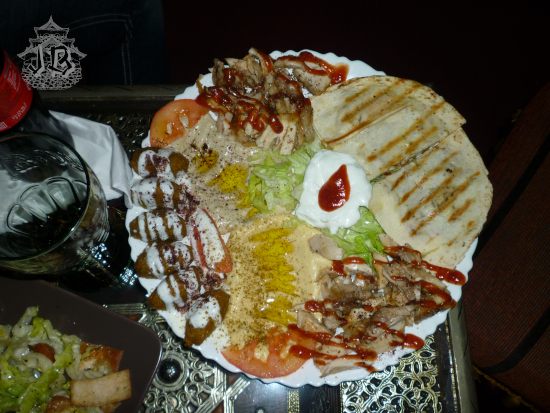
We walked around the old town for a while until we found a place to have dinner, a Middle-East restaurant called La Casa de Damasco, one of the few times I’ve had real food from this area. I have to say I really enjoyed it.

31st December 2013: Churches and Birds

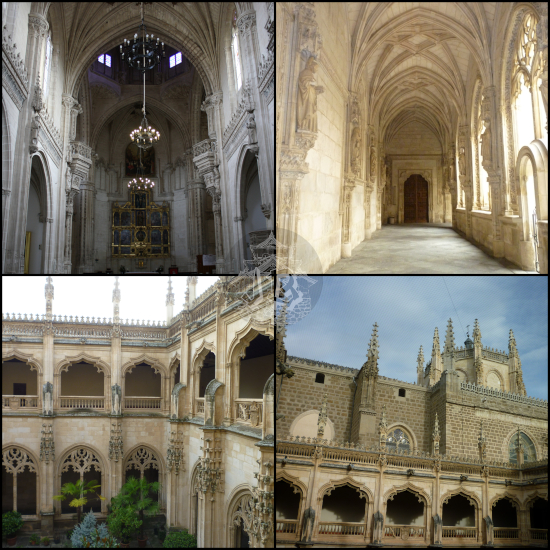
We started off the day at the Monasterio de San Juan de los Reyes (Monastery of Saint John of the Monarchs) is an Isabelline style Franciscan monastery. It was founded by the Catholic Monarchs to celebrate the birth of their son along with their victory in the Battle of Toro, in the late 15th century. It has a beautiful Gothic cloister.

Our next stop was one of those things that breaks my brain, a Christian Mosque, Mezquita del Cristo de la Luz. It was built in the year 999 as Bab-al-Mardum mosque, but it was turned into a Christian Church in 1085. I’m torn between rolling my eyes at Religions needing to assert dominance and being grateful the Mosque was preserved for us to visit.

Close to the Mosque stands one of the gates of the old walls, the Puerta del Sol, the Sun Gate, of the city walls.

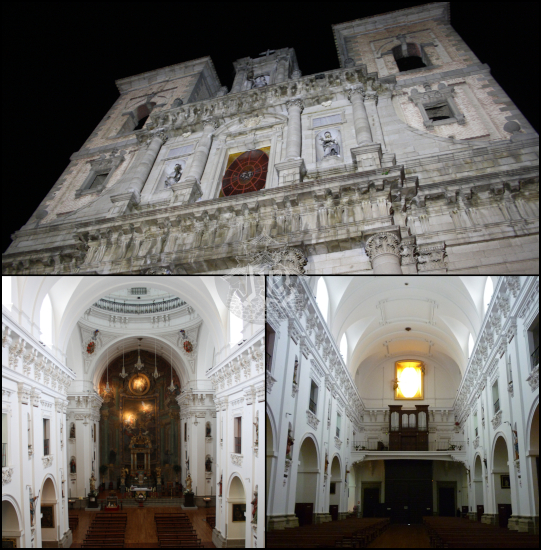
Our next stop the Iglesia Jesuita de San Ildefonso, a church dedicated to Saint Ildefonsus, the patron saint of the city. Construction started in the early 17th century and ended in the mid 18th century, in the Baroque style.

From the upper towers of the church, there was a great view of Toledo.

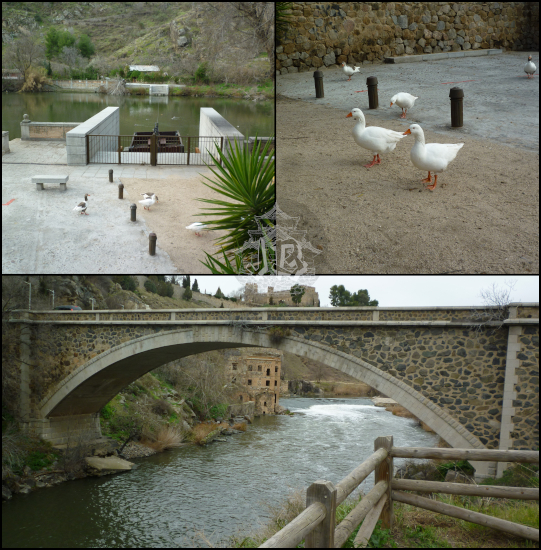
We decided to walk down towards the river, Río Tajo, where we met a flock of geese (which I’m happy to report had not lost their heads to any kind of stupid animal-hurting tradition).

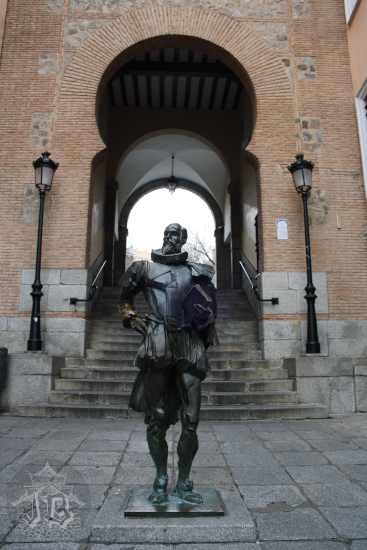
As we continued, we walked past a sculpture to Miguel de Cervantes, Estatua de Miguel de Cervantes, the author of the acclaimed “Don Quijote” book. The statue is placed beyond the Arco de la Sangre , the Blood Archway, that leads into the Zocodover Square.

As darkness rose, we had dinner in a Chinese restaurant. While we did, the lights turned on, and the city got ready to welcome the New Year with fireworks.

1st January 2014: Views of Toledo

We slept in, and after an early lunch (Chinese, again, as we were feeling decadent), we booked a ride in the “tourist train” that took us to see some of the most amazing views of the Medieval Town from the vantage points on the other side of the Río Tajo.

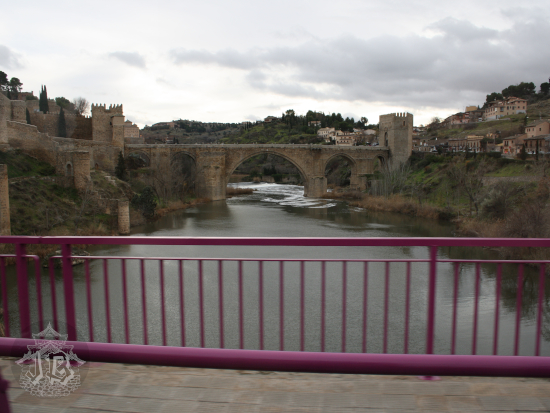
On the way back we saw the Puente de Alcántara, a Roman arch bridge built upon the foundation of the city after the Celtic settlement was taken over.

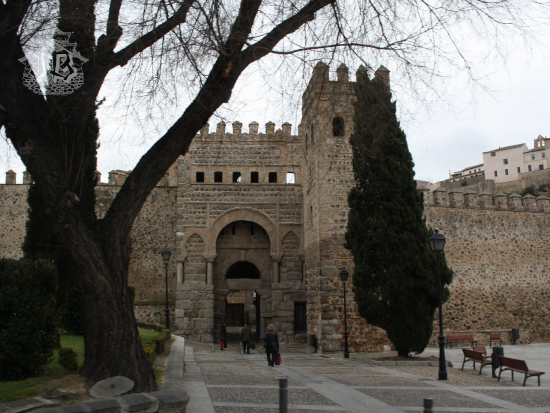
The ride ended up on the other side of the city than the one we had been favouring, so we just walked round the walls that fortify the city, the Murallas de Toledo, which are of Muslim origin over Roman foundations. King Alfonso VI is credited with finishing off the walls, and he named one of the gates after him: Puerta de Alfonso VI.

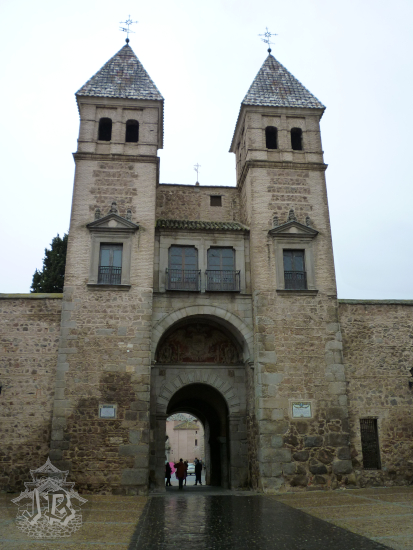
Another of the gates is the Puerta de Bisagra, the last of the monuments we visited before we headed back home the following morning.

One of the creepiest moments in this trip was realising that our key could open a room which was not ours – we got off on the wrong floor and we went down the corridor to the room door, and opened it. It was not our room. We were very quite put off by this, and it turns out that we had a master key. Finding this was a little freaky, and we tried to complain to the hotel. Furthermore, they wanted to charge us for keeping our luggage for a few hours.

Oh, and I caught a cold during our 31st at night escapade. Because of course I did.

27th December 2013: The Terracotta Army in Madrid (Spain)

This was a bit of an unplanned event. I had been in Madrid the previous day with a friend and we had seen that the exhibition was going on. Unfortunately, there was a huge queue to go in, so we could not stay. Instead we got tickets on the internet and chose a standard “lunchtime” hour so we were almost alone watching the exhibit. That was awesome. The exhibition was held in the Fernán Gómez Centro Cultural de la Villa underneath Plaza de Colón (Colombus Square) in Madrid.

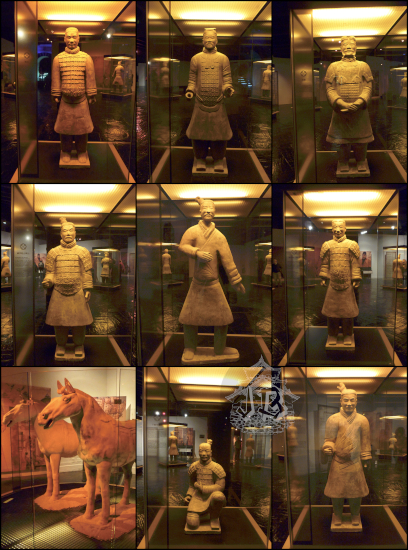
The Terracotta Army is called the Eighth Wonder of the Ancient World. It was discovered in 1974 close to the city of Xi’an (Shaanxi Province). It is comprised by hundreds of larger-than-life soldier statues built out of terracotta. They are part of the Mausoleum of the First Qin Emperor, the first emperor of China. There are over 8,000 soldiers, 130 chariots with 520 horses, aside from 150 cavalry horses. There are different types of soldiers and they have different ranks. Their function would have been to protect the Emperor from the spirits in the afterlife. Forty thousand bronze weapons have been found among the soldiers. For reference, they were buried with the Emperor around the year 210 BCE!
The Exhibition “Terracotta Army – Guerreros De Xi’an” displays about 150 replicas of the best-preserved soldiers, weapons and chariots, along with different decorative elements and a reproduction of the Pit 1, where the bulk of the warriors were found. It was a very interesting exhibition that made me actually want to travel to China to see the actual Mausoleum for real!

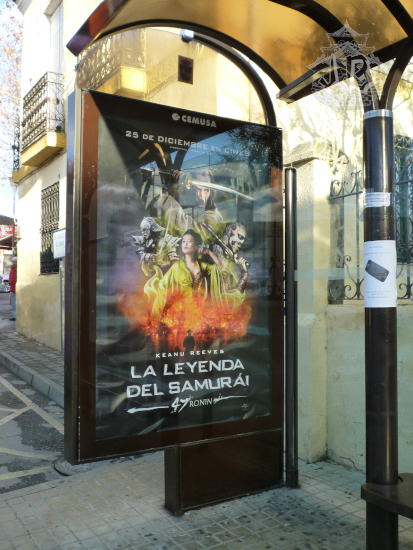
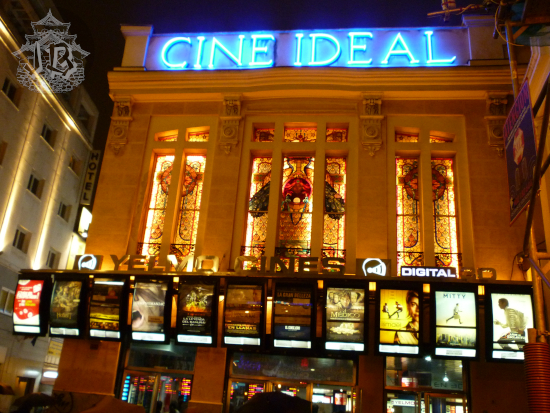
Afterwards we had tickets for the cinema, because “47 Ronin” was running, and the Cines Ideal show non-dubbed films, and basically… there was Akanishi Jin in it. The films has its… merits… somewhere… I mean I loved it but it was pretty bad – I’m not precisely known for liking deep, intellectual films anyway (≧▽≦).

26th December 2013: Japanese Exhibitions & Christmas Lights in Madrid (Spain)

Over the Christmas break, there were many activities related to the celebration of the establishment of diplomacy between Spain and Japan, so-called Año Dual España Japón. We decided to kick off the day going to a Japanese restaurant, my favourite in Madrid, the Nagoya (believe it or not, this is the daily menu).

There was a Calligraphy exhibit in the national library, Biblioteca Nacional. On the way, we also found that there was an exhibition about the Chinese terracotta warriors, but the queue was insane! We decided to try to get tickets online for another day.

We went to Caixa Forum to see a Japonism (19th-century European art influenced by Japanese concepts and aesthetics). Honestly, pictures were forbidden, but I snuck one because I really loved the painting.

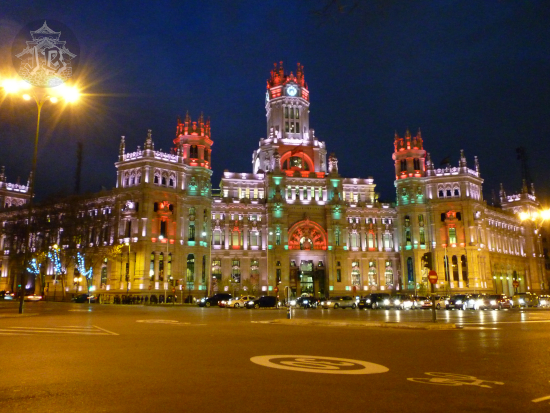
We also took a walk to see the Christmas lights. Here’s the Postal Service building, Edificio de Correos.

And a view of Gran Vía, one of the main arteries of Madrid, all lit up.

22nd December 2013: Derelict Monastery in Tendilla (Spain)

Here are the ruins of the church of a long-forsaken monastery dedicated to Saint Anne, the Monasterio de Santa Ana, a Hieronymite convent built in the 15th Century in Tendilla. Originally, it was built half-way between the Gothic and the Renaissance styles. The monastery was abandoned in the 19th century due to the The ecclesiastical confiscations of Mendizábal, a of laws and strategies that resulted in the expropriation and privatisation of religious and monastic properties. The building was later “sold” for stone, and the tombs it contained were sent to other churches.

I used to be terrified from it when I was a child, but I had an hour or two free in the village so I decided to climb up the mount to have a look.

28th & 29th September 2013: Barcelona (Spain), VAMPS, and friends

I had just started a new job so getting to Barcelona for the Saturday concert had to be undertaken on that same day. I missed all VAMPS members and supporting musicians coming in and signing autographs but I got a good place as someone had been “saving” my spot at the queue. I have some awesome friends ^^

This was unfortunately a rather empty concert, even if a fun one. Hyde tried his best at Spanish, which was not too good to be honest, but kudos for trying. The setlist had a couple of my favourite songs, so that was a plus. I also managed to catch one of KAZ’s picks, and got one of the bunch that bassist Ju-ken’s left on stage!

Collage showing the band, the stage, and the picks I got from them

I slept over at a friend’s house, and “sleep” means we stayed up talking until the wee hours of the morning, but then I was meeting up yet another friend for breakfast. We went to the Parc de la Ciutadella [Park of the Citadel], which features a… mammoth and a really nice fountain / pond.

Collage of the park, showing the pond, a wooden elephant, some palm trees, and the lookout point over the lake

Afterwards we went to the area of the harbour, Puerto de Barcelona (harbour), to have something to drink.

Harbour, showing the different quays and the cablecar

Finally, we all got together to have lunch in a Japanese restaurant before I headed back off to the station to head back home and work on Monday.

Japanese food lunch to share, including sushi, salad, dumplings, breaded meat and sweets

27th September 2013: Bunraku at Teatro Español (Madrid, Spain)

Oh, Gods, this was an odyssey. Seriously, can’t we just figure out print-at-home tickets? When the announcement for the event came up, I got tickets. I actually called my parents to ask them if they wanted to tag along, and they said yes, so I bought three tickets. There were only two performances, and the tickets were selling out fast.

Let me start at the beginning – the announcement involved the Sugimoto Bunraku 2013 European Tour. Bunraku [文楽] is a type of Japanese theatre that uses puppets to perform about serious topics, mostly classic dramas (as far as I know). The puppets are dressed in amazing costumes and manoeuvred by artists dressed in black as if to become invisible. Sugimoto’s company is collaborating with The Japan Foundation to show this art to the world, in this case holding a European tour with the play.

Anyway, back to track: I bought the tickets, and the next step was actually getting them. I had to go to a cashpoint to get them printed (because, again, print at home? It seems to be for lesser beings), which was not easy as I was living in a small town at that point. On top of that, I got the wrong bank cashpoint at first (≧▽≦). Sometimes excitement gets the best of me, but in my defence a) I did not even know the actual bank existed and b) the mistaken bank had a similar name. And on top of that… in the end my parents decided not to come at all! In the end I gave the tickets to my cousin and her kid, who were curious about the whole thing.

We met up in Madrid, in front of the theatre Teatro Español, where the event took place, and it was interesting to see how the whole thing was sold out. The work that was performed is called Sonezaki Shinjū, which translates to The Suicidal Lovers of Sonezaki, or the Love Suicides of Sonezaki, written by Chikamatsu Monzaemon in the early 1700s. It tells the love story of a poor merchant and a courtesan. When the merchant is set to marry off another woman, tragedy ensues until the two of them decide to die together in the forests of Sonezaki Shrine. I’ve actually got myself the book (well, my cousin insisted on getting it for me as thanks for the tickets) to read, as there were no subtitles on the play, just a summary brochure.

Even though I’m no fan of the whole romantic drama thing, I have to admit that the music and the puppets made the whole thing eerily captivating. Aside from the puppeteers, the key figure in the play were the musicians and the narrator, which explained (in Japanese) and narrated the play. The way the puppets are dressed, the shamisen and koto music, and the way you see the puppeteers and yet not see them is super cool. Unfortunately, no pictures allowed that I can show you.

Afterwards, we met up with my cousin’s husband (I did try to get a ticket for him, but it was too late already) and we… had McDonald’s, because that’s what we do when he hang out.

27th & 28th July 2013: Segovia (Spain)

27th July 2013: Echoes of a Roman Past

We took the train early on Saturday and arrived in Segovia in mid-morning. Segovia is a Spanish city of the Inner Plateau, located in the autonomous community of Castilla León. It has gained fame because of its many monuments and landmarks, the main being the Roma aqueduct in almost perfect condition, the cathedral and the castle (which may have served to inspire certain mouse-company for the Cinderella Castle). The city centre has been a world Heritage site from 1985 and the aqueduct received the title of International Historic Civil Engineering Landmark in 1999.

We checked into the hotel, which was dead in the centre of the Main Square and then we visited the Catedral de la Virgen María, the cathedral. The building was constructed between 1525 and 1577 in a late Gothic style that had already phased out in the rest of Europe. We saw the cloister, the chapels and the apse.

Then we moved onto the Iglesia de San Martín, St Martin’s church, built in the 12th century in the Romanesque style, with a Romanesque-Mudejar tower bell.

We then took a walk around the city centre, and we came across the Palacio de Cascales, a 15th century palace that belonged to the Alpuente Count.

We passed by the Casa de los Picos, the “House of Peaks”, also built in the 15th century.

We somehow ended having these nice views of the rooftops of the city, too.

And passed by a very interesting house.

We finally got to the main event, the Aqueducto, the aqueduct. An aqueduct is a “water bridge”, a construction designed to carry water from one side of a valley or a ravine to the other. The Aqueducto was built by the Romans in the late first or early second century. It once transported water from the Frio River into the city, and it ran for a whooping 15 kilometres. It is one of the best preserved aqueducts in the world, as it was reconstructed several times through history, and it was working to get water to the city up to the 19th century.

We passed by the Casa de Ejercicios del Seminario one of the buildings of the Seminary.

We reached the Main Square, the Plaza Mayor again.

And saw the Romanesque Iglesia de San Andrés, St Andrew’s church, with a particularly nice bell tower.

After this we decided to take a break and have the typical pork meat lunch. Then we moved on towards the Alcázar. An alcázar is a type of castle or fortress built during the Muslim rule in Spain and Portugal. The Alcázar of Segovia has been through several redesigns and renovations, but it is a pretty impressive building. The current form was reached during the reign of King Alfonso VIII, so it dates from the 13th century, but it was retweaked by several kings and queens after that. It was the royal residency until the Spanish court moved to Madrid in 1561.

On the way we could see some views and the Iglesia de la Vera Cruz, the True Cross Church.

The Alcázar is quite an impressive building, in Herrerian style, with impressive towers. Part of it is a history museum the other part is a military museum.

It also offers nice views of the cathedral from the other side.

We walked back to the city centre and along the aqueduct again.

This trip was in July, and scorching hot back home, so we had not considered much of a temperature change. Unfortunately, Segovia in the late afternoon became more than chilly and we had to walk into a random shop to buy a thin jacket, then headed off to the Plaza Mayor.

Funnily, when we were having dinner there, someone warned us that the shop assistant had left the alarm tag on my jacket! That was amusing. We called it a day heading off to the hotel, and being duly impressed by the illumination put in place for the cathedral.

28th July 2013: Churches while the city sleeps

On Sunday morning, most everything was closed, so we took a strolling tor if the Medieval area, and saw a bunch of churches from the tenth and eleventh centuries:

Iglesia de la Trinidad (Trinity Church).

Convento de las Carmelitas Descalzas (Barefoot Carmelite Monastery).

Iglesia de San Nicolas (St. Nicholas’ Church)

Iglesia de San Quirce (St. Quirce’s Church)

Iglesia de San Esteban (St. Stephen’s Church)

We also had yet a different view of the Cathedral.

And we could see the Alcázar in all its glory.

Then we returned to the city centre, where we caught a glimpse of the Iglesia de los Santos Justo y Pastor (St. Just and St. Pastor’s Church).

We had lunch and said one last good-bye to the Aqueduct before we headed back to the train station.