26th November 2024: Another Concavenator visit (Alcalá de Henares, Spain)

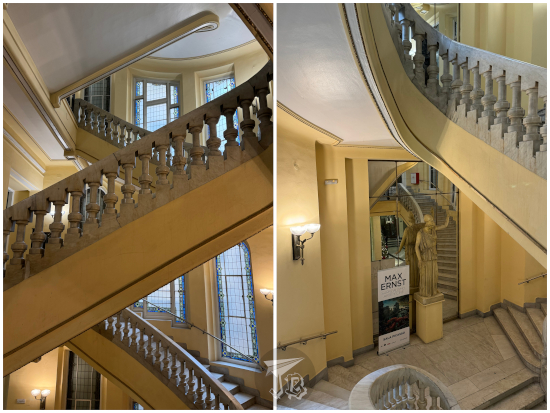
I had to run some errands in Alcalá de Henares in the afternoon, so I decided I would get there in the morning, and walk to the Archaeology and Palaeontology museum Museo Arqueológico y Paleontológico de la Comunidad de Madrid, MARPA. The exhibition “Dragon HuntersCazadores de Dragones was still running and since it was a random weekday morning, I thought it would be empty.

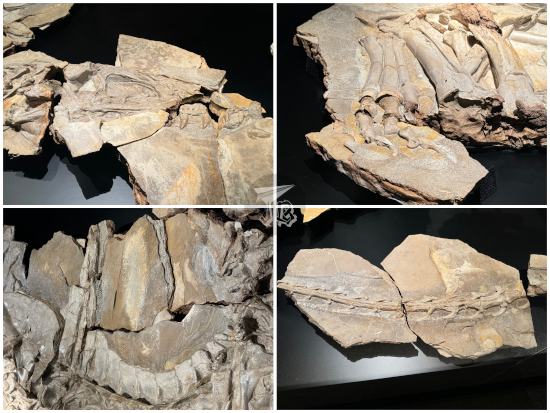
I was right, it was deserted enough that the security guard looked at me weirdly. Yes, I’ve been there before. Twice. I hope to be back at least once more before the exhibit closes in January 2025. The security guard should not be remembering me, I did nothing weird. Taking a few hundred photographs of a fossil is completely normal.

Why am I so obsessed about the Concavenator? Well, one does not always have such a unique fossil so handy, and for free. Furthermore, the usual home of the Concavenator does not allow pictures. And lastly, I’m a nerd. The species Concavenator corcovatus was described in 2010 by Francisco Ortega, Fernando Escaso, and José Luis Sanz from a single skeleton found at Las Hoyas site in 2003. The specimen was officially catalogued as MCCM-LH 6666. The animal was a medium-sized carcharodontosaurid. Carcharodontosauria, which included the likes of Giganotosaurus, Mapusaurus or Carcharodontosaurus, were a group of large theropods from the Cretaceous period. The skeleton was almost complete, with the tail and neck contorted in rigor mortis. The fossil shows two things that make it special – a hump or sail created by the spines of the back vertebrae, and the fact that some pigments were found on the fossil. Not unique but rare enough findings include impressions of skin and scales, and smaller bones in the belly area, rests of undigested dinner. On the arm bones there are insertions for ligaments similar to those that modern birds have at the insertion of feathers.

Concavenator corcovatus

The Concavenator lived around 125 million years ago, in an area of wetlands. Its teeth, general shape (it walked on its two hindlegs and had small-ish arms), along with the remains of animals that it had eaten, tell us it was a carnivore, and its placement in the carcharodontosaurid family, that it was a predator. However, no large predator is known for rejecting a good scavenging feed. The spikes or hump on its back, above the hips, can be clearly seen on the fossil, but nobody has any idea of what it was for – speculations have been made for communication means, fat deposits and thermoregulation. When alive, the animal would have been around 5 metres long, two metres tall, and 450 kilograms heavy.

Concavenator corcovatus details

All that to end up being dug up and named… Pepito, which is the diminutive of the diminutive of the Spanish version of Joseph. The equivalent of Joseph would be José, nicknamed Pepe, and changing the last “e” into “ito” – the suffix for small – would yield to something like Joey. So this magnificent predator was either named after a mini-mini-Joseph, or a small meat sandwich, which is also referred to as a pepito. Seriously, what happened to the illustrious tradition of Boaty McBoatface? This would have been a glorious Toothy McToothface (“Spanishised” as Dientito Caradientez or something).

Anyway, after the visit I dropped by the museum shop to buy myself some Concavenator-related merchandise. When was there the first time, I bought the exhibition catalogue, but since then they had received some silly cute items – I bought a pin, a badge, and a magnet, just because I could. Maybe as the exhibit draws closer to the end there will be discounts on other things…

I left the museum and decided that since it was way past 14:00, I should grab a bite to eat. As I had parked my car next to a shopping centre, I headed there with the idea of some Asian food. However, there is a burger joint that usually has a long queue and that some friends had told me was really good – as good as fast food can be, I guess. It is called TGB – The Good Burger. It is supposed to serve “NYC style gourmet hamburgers”. The place was empty, so I decided to give it a try.

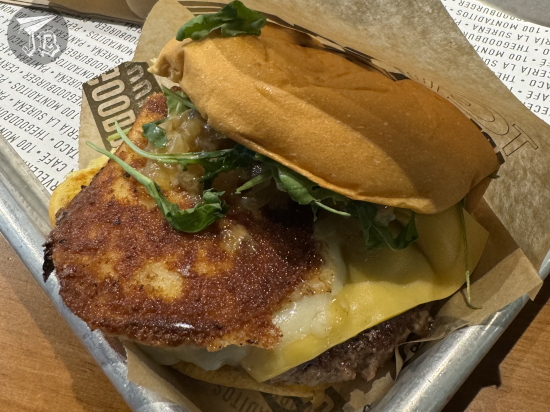
I ordered a “Cheese Lovers” burger, which consisted of a beef patty, American cheese, goat cheese, Gorgonzola, sautéed onions, arugula and honey mustard sauce. It was… very cheesy. It was nice, but nothing I feel I must try again, especially when there are cheaper options in the shopping centre. And sushi. But at least, I satisfied my curiosity before I went off towards all my dull, grown-up errands which I shall not bore you with…

The Cheese Lovers burger

22nd November 2024: “Wicked” (film) on opening day (Madrid, Spain)

There was a time when you could mute words on social media to avoid spoilers. Since the algorithms have taken over and you can’t curate what you see any more, I decided that the best way to avoid Wicked spoilers was trying to see it as early as possible, preferably on opening day. Ideally, on the first screening on opening day, an English version.

For a change, “ideally” worked. At least, I found a screening at 15:45 on the day the film came out. It was a cinema with Spanish subtitles but I can live with that. I have seen the musical twice in the Apollo Victoria Theatre in London and I’ve loved it both times. Not only I’m a firm believer in the message of Defying Gravity, I also give regular thought to Dancing Through Life. Sometimes I also listen to No One Mourns the Wicked and get all philosophical…

Anyway, I headed off to Madrid with next-to-no information and no expectations, hoping to enjoy the film. I had been slightly surprised that so many tickets were already booked when I bought my own, but I gave it no more than a couple of seconds’ worth of attention, I just thought I was running late since I made the decision the previous weekend before heading out to see Ha·Ya·To . Since the film was rather early in the afternoon, I had to get to Madrid with time for a bite. One of my options was Yatai Market but in the end I decided to grab brunch at Toby’s Brunch Club, where they run an all-day brunch (here I went, cheating the system again, just like I did at the James Joyce – twice in one week, too). I tried to book online but the system only took reservations for two or more. Since the Internet said that it was usually quite busy, just thought I still had Yatai as a backup plan…

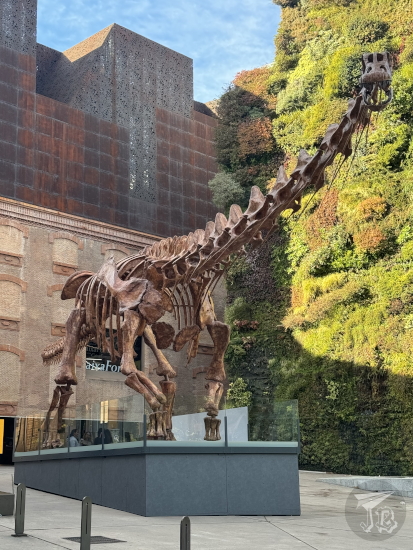
I arrived at Atocha Station and walked towards the brunch place. As I did, I had to walk past Caixa Forum, which is still running the exhibit on Patagonian dinosaurs, and the Patagotitan smiled at me. I, of course, smiled back.

Patagotitan mayorum

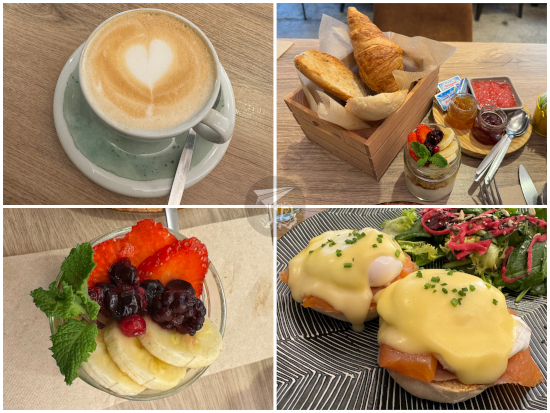
The very-busy brunch place was empty – weekday “crowds” I guess. I was the only customer there for the duration. Usually, not being able to book for myself on my own discourages me from a place, but I’ve been wanting a “typical” brunch for a while now. The brunch consisted of a cold drink, coffee or tea and two courses (22€). For my cold drink, I ordered orange juice, and for the hot one a coffee latte. The first course was a basket of breads with butter, jams and tomato paste, and a yoghurt with fresh fruit. As my second course, I ordered eggs Benedict with smoked salmon. Because I really wanted eggs Benedict and I can’t cook them to save my life. Everything was delicious, especially the yoghurt. The eggs were perfect. I think this would kill me before noon though, so glad I used it as lunch.

Toby's breakfast club brunch

After my brunch / lunch I still had some time so I dropped by the art gallery Museo del Prado. I used my museum card Tarjeta de Museos Estatales and the lady at the ticket booth told me she had never seen a card like that before. She took it to the back shop, and when she came back, it turned out that the card had stuck to another card, which explained why she was confused. I finally managed to get in, and spent about an hour there. There was a small exhibit called El Taller de Rubens (Rubens’ workshop) which analysed the master’s works and that of his apprentices which was very interesting.

Afterwards, I walked towards Yelmo Cines Ideal (passing by and waving at the Patagotitan again) to watch Wicked. When I got there, the cinema was still closed, but as soon as I turned away to snoop into a shop across the street, the doors opened. I found my seat and I found myself seated between two groups of high school and university students, who were complaining that their life was very hard, and that they had barely had the time to eat lunch before getting to the cinema. And a few of them were threatening to cry. And they were telling each other not to sing along. I had not realised there was such a big following of Wicked from the younger crowd…

After a few minutes of hearing them babble excitedly, I realised that all of them had listened to the songs on the Internet, or something, but they had never had the chance to seen the musical themselves – it’s debuting in Spain in autumn 2025. It made me realise how lucky I am to be able to jump onto a red-eye flight at a random weekend and go to London, and be there for the 14:30 performance at the Apollo Victoria Theatre.

Wicked film poster

In general, I enjoyed the film. More than I believed I would, because I went with zero expectations and I had managed to avoid any kind of spoiler and previous knowledge, except that Jeff Goldblum was the Wizard. The main cast includes Cynthia Erivo as Elphaba, Ariana Grande as Glinda, Jonathan Bailey as Fiyero, Michelle Yeoh as Madame Morrible, Marissa Bode as Nessa (kudos for an actual disabled actor playing a disabled character!), Ethan Slater as Boq, Jeff Goldblum as The Wonderful Wizard of Oz; and Peter Dinklage as Dr. Dillamond (voice).

I do not believe what I am going to say – but I thought Goldblum was the weakest character. I mean, he keeps playing himself, and Jeff Goldblum is not the Wizard (I had the same feeling when I watched Jurassic World: Dominion; he played himself, not Ian Malcolm). On the contrary, Michelle Yeoh was fantastic, her sole presence in a take stole the whole screen. I enjoyed seeing the animal characters a lot, as it is the bit of the musical that always feels a bit off. The logistics of landscaping Oz was a bit awkward at points, but I guess that’s theatrics and not… geography.

I found the music decent. As for me the most important thing was for the story to be faithful to the musical – which is more up my alley than the novel – I was rather satisfied. The best song, in my opinion was What is this feeling?, the camerawork was stunning. It was also great to see the cameo of the actors who portrayed Glinda and Elphaba on Broadway for the first time, Kristin Chenoweth and Idina Menzel – known worldwide today for Frozen’s anthem Let it go. The library scene and choreography for Dancing through life was also impressive.

What I saw of the subtitles was not a good sign though, because the message of No One Mourns the Wicked loses most of its meaning if you translate it as “she’s finally dead”. However, I am rather good at ignoring subtitles anyway. I am not sold on Glinda being all pink either. Too many Legally Blonde vibes there, I prefer ice-blue.

The film ended at the end of the first act of the musical, with the “main event” of sorts – Defying Gravity. Very showy, okay music-wise. It was more visually impacting than musically, and my mind was dubbing it with Kristin Chenoweth’s version anyway. At this point, half the theatre was sobbing, which I found slightly amusing.

All in all, I enjoyed the day and the film. I am looking forward to the second part, and having affordable Wicked merchandise I don’t have to save for special occasions. After leaving the cinema, I walked back, and since it was cold, I got there in record time – and then I had to wait 40 minutes for the train because of course I did.

18 & 19th November 2024: Apocalyptica Played Metallica in Madrid (Spain), so there I went

Planning for this short getaway started on the 23rd of February, when I bought my ticket for the Apocalyptica Plays Metallica Vol. 2 Tour 2024 stop in La Riviera in Madrid (50.50 €). Almost immediately, I headed off to Apocalyptica’s website to buy the VIP Tour 2024 Upgrade (58,90 €). The upgrade consisted on early access, photograph / meet & greet / autograph session (the important part), VIP lanyard, fabric patch, pin and tote bag. Honestly, all that for barely 100 € was a sweet deal. Back in Antwerp for Starset, someone I was queueing with complained that VIP tickets were too expensive for “a broke uni student”, but for me, meeting with the artist, albeit briefly is usually worth it – early entry is a plus, too, because for some concerts I either find a barrier spot or I just have to go to the back. The bundle was dispatched on the 9th of June (according to the email. Do Finnish post offices open on Sunday?) and it arrived on the 18th.

I originally booked a cheap hotel about half an hour’s walk from the venue. Later, I decided that I preferred the more expensive one less than 10 minutes away, so I changed my booking a week before the concert. I did not book there originally because it required prepayment, and my card was playing up..

On Friday the 4th of November I received an email with instructions for the Meet & Greet, which was to start at 18:30, and I should be there at 18:15. All right, I could do that. It was only a matter of waiting.

On Monday, 17th of November, I took a morning train to head out to Madrid with some leeway for time because I needed to do some small item shopping. I had to dodge some guys trying to get people to sign up for an NGO, but at 11:40 I made it to my first stop of the day – the light museum Museo de la Luz. I had been putting this visit off to go with someone who had expressed interest. However, I also waited for another exhibit and I missed my chance as it turned out to be only temporal. Thus, I decided to head to the Light Museum on my own – it was also one of the few exhibitions open on a Monday morning.

The Light Museum is a modest exhibition with interactive artworks that are mainly made out of lamps, lasers and lights. When you come in, you are given covers for your shoes and a key for a locker – all for free. Then you wait until an attendant takes you in and shows you how to interact with the first artwork “The birdcage” (La Pajarera), a box made out of light and metal that you make change colours with the movement of your arms. Once you know how to “play” with the art, you are left on your own to wander for an hour. At first I thought it would be tight, but the place was small – a bit too small for the price, I thought. I was there for around 40 minutes in total.

There were few people and I was able to check out most of the artwork uninterrupted. The next exhibit is made out of a number of old music festival lights – those that gave a lot of heat from the 90s, which are supposed to be a reference to climate change. Then there is a giant kaleidoscope you can walk in – this one became my favourite. Other rooms or works include a wall of lights that follow you as you move or dance, something with lasers (that I think was broken), some light illusions, a room full of hanging lights, a cube of mirrors and light… At the end there is a wall reading “light museum” in differently coloured lights. When I left, the lady at reception gave me a badge for booking with the official website.

Light Museum Madrid

Light Museum Madrid

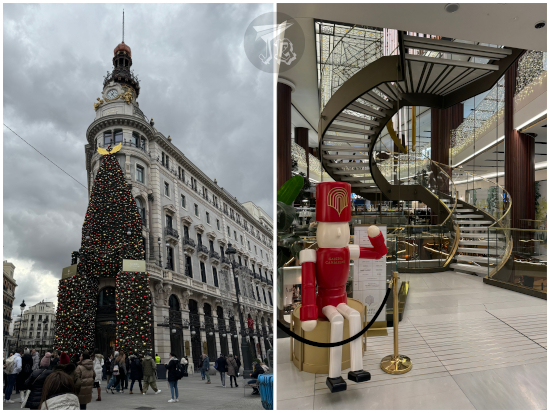
I walked out and headed towards the restaurant where I wanted to cheat the system. I crossed the square Puerta del Sol, where they were setting up the Christmas tree – it was about 45% Christmas. On my way, I walked by the underground stop Metro Banco de España which has a tiny door for Little Mouse Pérez – Ratoncito Pérez, the Spanish equivalent to the tooth fairy. I never remember to check it out when I am around, but I made the connection this time.

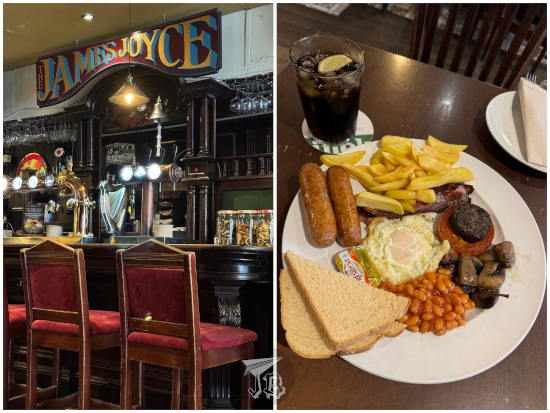
I finally made it to the James Joyce Pub – which is technically a sports bar. I was not there for the TVs though. I had a while back found the place looking up places which served English breakfasts in Madrid. The James Joyce prides itself in being an Irish pub and offers Irish All-Day Breakfast (12.00 €) – two pork sausages, two rashers of bacon, baked beans, fried egg, sautéed mushrooms, grilled tomato, blood pudding, chips, two half-toasts and butter. No, I would not survive that for breakfast, so I ordered it for lunch (and dinner), thus tricking the system indeed. Unfortunately, it was really good and authentic, so now I’ve got to come back for the sausages and the shepherd’s pie, so at least twice.

James Joyce Irish breakfast

After lunch, I headed out towards the park known as Madrid Río. The park runs along the banks of the river Manzanares. It covers 121 hectares, and it was designed after to cover the space emptied when the belt road M-30 was rebuilt as an underground tunnel. The original project was created by a team of architectural studios and landscapers, with strong ecological consideration – aiming to help the area recover from the degradation and pollution caused by years of road traffic. The project was carried out between 2006 and 2012. In 2015, a second project was carried out to “renaturalise” the river, opening the dams to allow the water to flow freely, which in turn caused the recovery of many plant and animal species (to the detriment of… the local rowing team).

There are also bridges that connect both banks of the river. One of them is the one I crossed – just because I could. It is the pedestrian bridge Puente Monumental de Arganzuela, designed by Dominique Perrault. It is a bridge in two parts – one crosses the river, the other overlooks the park and connects to the urban area, and a total length of 278 metres. It is a tube made out of steel and wood that I’ve been wanting to check out for a while.

Arganzuela bridge

Another important bridge is the completely different Puente de Toledo, a baroque bridge built by Pedro de Ribera. It was erected in granite between 1717 and 1732 as the previous ones had been taken down by torrential floods. This one was made to stay, with nine solid arches opened to allow for the river floods. It was… ready for Christmas.

Madrid Río and bridges

It was weirdly warm for a November afternoon, so when I went to my hotel I opened the window while I had a shower. Around 17:00 I headed out to the venue, where there was a small group of people waiting already. La Riviera is a 1,500 people venue, with really good acoustics – and very dedicated staff. The place was originally a cinema, which was turned into a disco, and then into a music venue and nightclub. It is the same place I saw Epica and Apocalyptica in 2023, and I was surprised how many people came for the M&G considering that last year we were… six. We were around 30 this time around.

At first we were chatting in front of the main door, but soon a queue started forming. A little later, the nice security guy (who last year told me “I looked the part of an Apocalyptica fan”) took us to a secondary door, and the queue was properly organised. Surprisingly, bags were not checked – while last year they even took markers from people.

Apocalyptica is a Finnish symphonic metal band. It was formed in 1993 as a tribute to Metallica with a classical touch – playing with cellos. Their debut album Apocalyptica plays Metallica by Four Cellos was released in 1993. They slowly moved from covering other bands in a neoclassical style to their very own repertoire. Today, the members are Eicca Toppinen, Paavo Lötjönen and Perttu Kivilaakso, three classically-trained musicians with a deep love for metal. In 2024, they have gone full circle with the album and tour Apocalyptica Plays Metallica Vol. 2, performing with drummer Mikko Kaakkuriniemi.

Apocalyptica Tour 24/25

We were ushered into a queue for signatures, and afterwards we would go at the end of the line to wait for photographs. I had brought a print-out of the picture from the previous year, and I told them that whenever they came to Madrid, I would come see them. I got a smile for that. It was an awesome photograph, after all. After everyone had their stuff signed we had the photographs. I asked for “a big metal hug” and got trolled instead. Fun times though!

After the photograph, I found a spot at the barrier. Last time I got on the right, this time I went left. Just a little. I did not want to go dead centre in case anyone decided to moshpit, but I might next time as there was no issue – everyone was too entranced for anything like that, I’d say.

The opening act was the Finnish band Arctis, a baby band who has just debuted with their first CD. They were pretty fun, maybe… a bit… too happy bouncy for metal? I’ve read their act described as metal-pop. It might be. I liked them okay, and they were nice.

Setlist:
 1. I’ll Give You Hell
 2. Remedy
 3. Tell Me Why
 4. WWM
 5. Bimbo (Lambretta Cover)
 6. Fire
 7. Frozen Swan
 8. When The Lights Go Out
 9. Theater of Tragedy

Arctis at La Riviera 2024

Arctis at La Riviera 2024

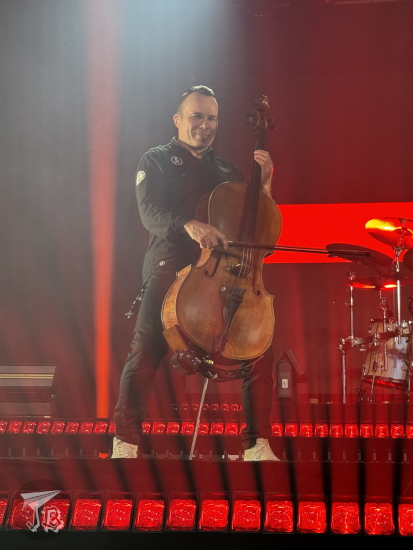
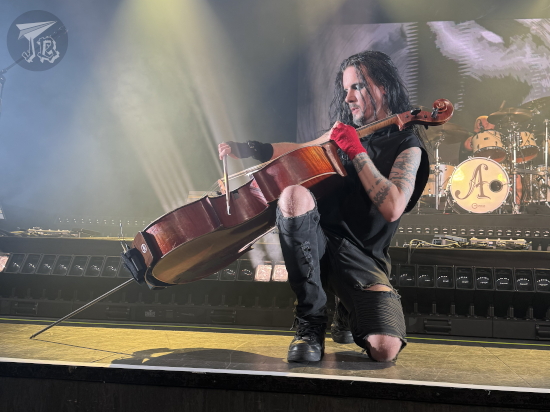
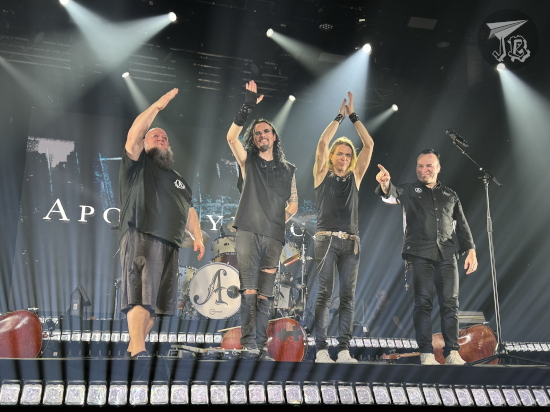
Apocalyptica came on stage at 21:00 sharp, and the live was glorious. All the songs were Metallica covers, from the new album, the first one, or the remastered version of Plays Metallica released in 2016. Despite that, one would not even have to be a Metallica fan to enjoy the concert, because the three men that compose Apocalyptica have an amazing magnetism. Perttu reminds me of the Duracell Bunny, he just did not stop for a second throughout the whole concert, which lasted a good two hours. Paavo seemed to be in his own little world, as he usually does. Eicca is the one doing most of the talking, and he is hilarious when he delivers his puns with a total deadpan voice and face.

Setlist:
 1. Ride the Lightning
 2. Enter Sandman
 3. Creeping Death
 4. For Whom the Bell Tolls
 5. Battery
 6. The Call of Ktulu
 7. St. Anger
 8. The Four Horsemen
 9. Blackened
 10. Master of Puppets
 11. Nothing Else Matters
 12. Seek & Destroy
 13. One

The audience was mostly moved by Nothing Else Matters, I’d say, judging by how they chorused it. Perttu was all in for that. Personally, I found Seek & Destroy and One, particularly, to be extremely powerful. Also, knowing that they dug up the original bass track from deceased Metallica member Cliff Burton for The Call of Ktulu was half-amazing and half-chilling. All in all, it was a fantastic concert, no matter how one looked at it.

Apocalyptica La Riviera 2024

Eicca Toppinen . Apocalyptica La Riviera 2024

Paavo Lötjönen. Apocalyptica La Riviera 2024

Perttu Kivilaakso. Apocalyptica La Riviera 2024

Apocalyptica La Riviera 2024

Afterwards, Arctis was hanging out by the merch. I got their CD, they signed it, we took a photo. It was fun!

I left the venue and I brought an ice-cream and a sports drink for “dinner” of sorts, because I was thirsty. I had both in the hotel room before my shower – the second of the day – and collapsing onto the king-sized bed. I had to wait for the phone to finish charging before I slept though, so I watched a movie before I zonked out.

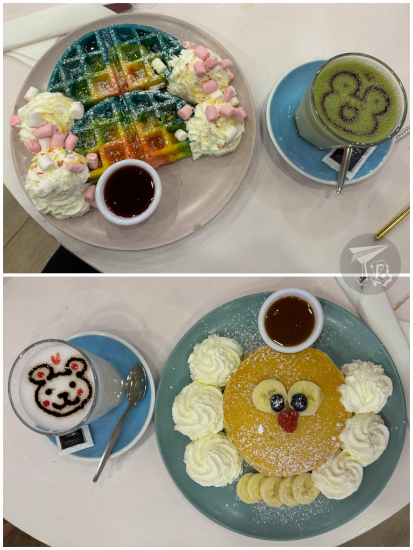
I woke up on Tuesday, 18th of November and drank my coffee before I set out. It was freezing out there, with frost on the grass, in spite of the warm afternoon the day before. On my way, I found the ancient walls of the city, remains from the old Moorish fortress alcázar, which stand to the side of the Royal Palace and the Almudena cathedral. I walked towards the centre of Madrid – The Sol Christmas tree was about 60% ready – to meet up with my relative for breakfast at a new place called Kawaii Cafe. Inspired by the Japanese kawaii [可愛い]. Kawaii means pretty, childlike, cute, and the Kawaii Cafe has taken the idea to heart, maybe not not in a complete accurate manner though. Everything is pink, full of fluffy and glitter. The food is not only tasty, also pretty. However, the wait staff is dressed as “maids” [マイド], which I tend to associate more to the… hm… more risqué side of hospitality. When food is brought out, you are offered to chant a spell for it to be even tastier.

I found the place existed by chance, and I was instantly smitten by the rainbow waffles, because they were adorable, and very, very rainbow-like. Thus, I ordered them, along a matcha latte. My relative tried the pancakes with a cocoa. She was ecstatic at the quirkiness of the place.

Kawaii Cafe Madrid order

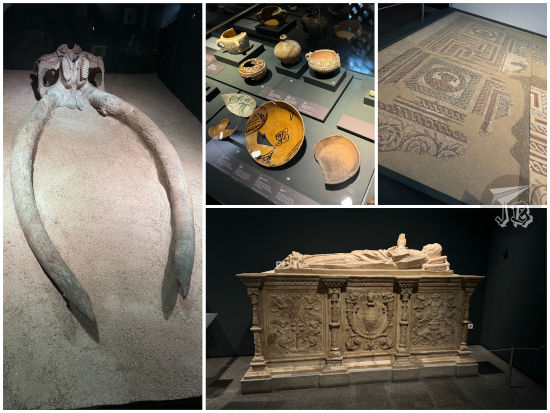
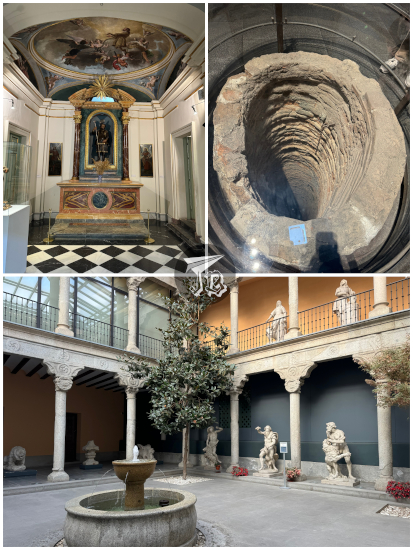
We stayed for well over an hour, and then headed out to one of the local museums Museo de San Isidro – Museum of Saint Isidore the Labourer. Isidore is the patron saint of Madrid. He is credited with several miracles – multiplying wheat and food, having his oxen plough on their own, and rescuing a child from a well making the waters inside rise. According to tradition, the museum is housed where he used to work, and legend has it that the old well is the one he pulled the child from.

Today the museum hosts some palaeontological and archaeological exhibits, from a mastodon and ancient rhinos to Medieval artefacts, running through the Roman occupation and the Muslim period. The place is a complement to the Museo de Historia de Madrid, or maybe its competition, though I think both belong to the same institution – and both are free. As the building is a historical place, it offers the chance to enjoy its small but beautiful Renaissance courtyard, with sculptures of mythological heroes, and of course St. Isidore and his wife. There is also a tiny Baroque chapel.

San Isidro Museum

San Isidro Museum: chapel, well, and courtyard

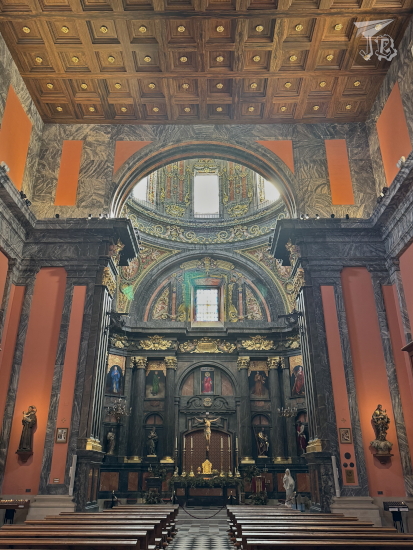
Right next to the museum stands the Baroque church of Saint Andrew the Apostle Iglesia de San Andrés Apóstol , which was getting ready for Christmas. The church is one of the oldest in town, though it was rebuilt after its destruction during the Civil War, and it has been recently restored. It hosts a number of religious sculptures and a painted vault above the altar.

Saint Andrew church Madrid

We took the underground at the station Tirso de Molina, which can still be accessed through the historical entrance hall, which is similar to the one that was closed off in Pacífico. It was beautiful, though of course busier than the museum one. Over the entrance to the platform there is a tile mosaic with the old shield of Madrid, dating back from the original station. It was installed in 1921, and it is the oldest artistic item in the underground network.

Access Hall at undeground station Tirso de Molina

From there we commuted to Nuevos Ministerios, where they had just kick-started the Christmas market. It seemed to be the “brands” market, with Lego, Disney, and so on. There was also a food truck by a famous chef selling basically chicken sandwiches at outrageous prices. I had been vaguely curious but not going to break the bank for a chicken sandwich, especially after such a breakfast!

I took a train from there back home, with no incidents whatsoever (because by now I’m desensitised to trains being late…)

7th November 2024: The Spanish Cultural Heritage Institute (Madrid, Spain)

I know you do not believe me when I say I don’t like guided visits, but they are the only way to do some stuff – such as stepping into the Stonehenge circle, or basically anything managed by the Madrid city hall. The Spanish Cultural Heritage Institute Instituto del Patrimonio Cultural de España IPCE is a governmental organisation whose functions are preservation and conservation of cultural items, research, communication, and safekeeping of the documents in its archive. It can only be visited on certain dates, by appointment, and with a guided visit. I managed to secure a free Thursday visit at noon, so I headed out to Madrid. Surprisingly, neither trains nor underground had issues, so I was over an hour early on site. The IPCE is located in its own building in the area known as “University City” (Ciudad Universitaria), close to the Fine Arts faculty – by design – and the President’s official residence – by chance.

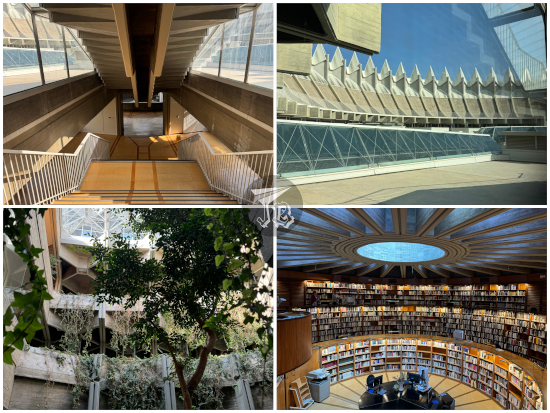
The headquarters building was commissioned in 1965 to architects Fernando Higueras and Antonio Miró. The architects’ original project had to be severely modified, but it became a very different structure. Construction was stalled for years, and the building was not usable until 1985 – when new remodelling was tackled. The building is circular, nicknamed the “Crown of Thorns” (La Corona de Espinas) because at the top there are “spikes” of sorts. Top-view, the structure is divided in 30 sectors, with 56 semi-sectors and four empty ones for the main access staircase and gate. It has four floors and at least one basement. It was built in concrete and glass, with some cork floors, but lacking plaster or any kind of concealment for the structural items. The centre of the building is an open space with a glass dome, and serves as reception. Unlike the original project, this space is covered with a glass vault. The interior has a lot of plants, even three small “gardens” mainly with hanging plants. The building is considered an important cultural asset BIC (Bien de Interés Cultural), and these plants are protected along with the structure.

Spanish Cultural Heritage Institute building

The visit consisted of an introduction to the building and the work which is carried out there. We saw the model of the original project – the only similarity is that it was also vaguely circular. We climbed the stairs to the upper floors to snoop at the rooftop and the “thorns”, and then rode the lifts down to the basements to see some X-rays of paintings and sculptures. Back on the main floor, we were shown into painting restoration workshop – they were working on Maerten de Vos’ Abundance, having repaired the work and erased some extra (puritan) clothing to make the goddess Ceres look less… naked. Finally, we were invited into the library, which is round and has three levels. It has natural light due to its own skylight, a decorative glass dome in the middle of the main open area.

Spanish Cultural Heritage Institute inside

The visit started at noon, and it lasted two hours. Heading out to the centre of Madrid would take around half an hour of walking and underground. Thus, it gave me the opportunity to book a late 15:00 lunch. Since I was lucky with my connections, I was in the Cuzco neighbourhood almost half an hour in advance.

It was the perfect opportunity to go get some groceries at the Chinese supermarket Ibero China Madrid in the street Calle General Margallo. While I needed some items, I was distracted as I walked the “geek” fizzy drink aisle. There is a company called Ocean Bomb which makes sodas – sparking water, yoghurt drinks and bubble milk tea with “creative packaging”. I was aware of them because a friend collects the Sailor Moon ones and we checked for them in London in 2023. Well, now I went and found myself some Saint Seiya sodas – Gemini Saga (grape yoghurt flavour) Aries Mu (apple yoghurt flavour) and Virgo Shaka (peach yoghurt flavour). They were out in 2023, but I had not heard about them, it is the first time I saw them. And of course, I bought them (I have no idea if they are official or not, but the publicity I found afterwards has the Toei stamp on it, so I’m hoping they are).

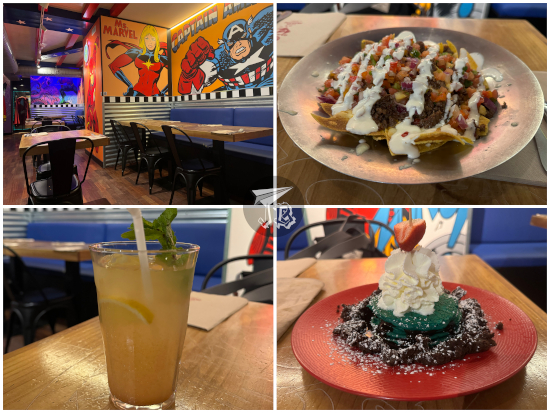
For lunch, I had a reservation at Comic Planet. Last time I was there, a member of the party was late, so in order to keep the table, we ordered appetizers. They were great, but afterwards there was no stomach-space for dessert. And dammit, I wanted some dessert – particularly, I wanted pancakes. I had been looking at coming back to Comic Planet for a while just to have them, but it never worked out. This was finally my moment. I had a lemonade, some nachos – which were delicious – and I finally got to eat my pancakes – which are green and called Hulkcakes, and come with whipped cream, brownie and shortcake crumbles , and around ¾ of a strawberry. I ended up extremely full, but happy.

Comic Planet lunch

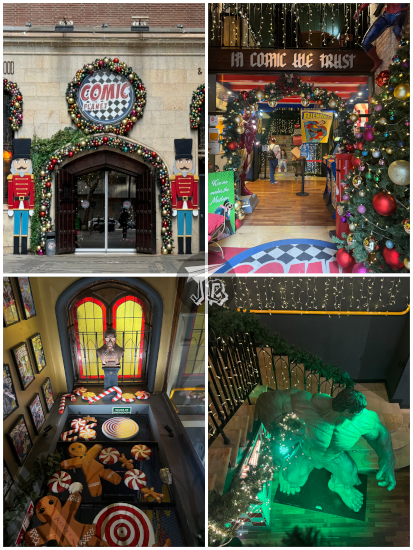
Oh, and I was confused because it was early November but… already Christmas in Comic Planet!

Comic Planet Christmas decoration

I left the restaurant and headed towards the archaeological museum Museo Arqueológico Nacional, which is running a temporal exhibit regarding Nature in Ancient Greece “Between Chaos and Cosmos: Nature in Ancient Greece” Entre Caos y Cosmos. Naturaleza en la Antigua Grecia. It hosts over one hundred pieces of classical Grecian art. Most belong to the museum’s own collection, acquired from the 19th century collector Marquis of Salamanca, and some are national and international loans. Since a large percentage of items were original and not replicas, it was really cool. Then again, I have to admit I have a thing for Grecian vases, especially with mythological motifs.

Entre Caos y Cosmos. Naturaleza en la Antigua Grecia

The exhibition was not big, so later I used my National Museums card Tarjeta de Museos Estatales to go and take a walk around the permanent exhibition. There is a loaned exhibit from the Mont’e Prama archaeological site in Sardinia, Italy. Mont’e Prama was discovered in 1974, unearthing remains from the Nuragic culture (1800 – 700 BC). This Bronze Age civilisation created large sculptures called the Giants if Mont’e Parma (Giganti di Mont’e Prama), depicting wrestlers, archers, warriors and boxers. One of these colossi Il Pugilatore (The Boxer) has been brought to the MAN for display for a few months. Boxers were characterised for having a glove with metal reinforcements on their right hands. Il Pugilatore is the largest sculpture, two metres tall and 300 kilograms heavy – which has been travelling across the world to promote the archaeological site. There was… something imposing about the whole thing, and not even its size. Some kind of… presence there. It made me want to visit Sardinia, to be honest (and it is much, much affordable than Easter Island…), so I guess the promotion… worked?

Il Pugilatore

I took a stroll through the permanent collection afterwards, especially the Iberian and Talayotic areas, because I am fascinated with them these days – and I shall make the most out of my pass for as long as I can. It was getting dark though, and the commute to the IPCE had taken long, so I headed back.

Museo Arqueológico Nacional

23rd October 2024: Brussels & Charleroi Terminal 1 {Belgium October 2024}

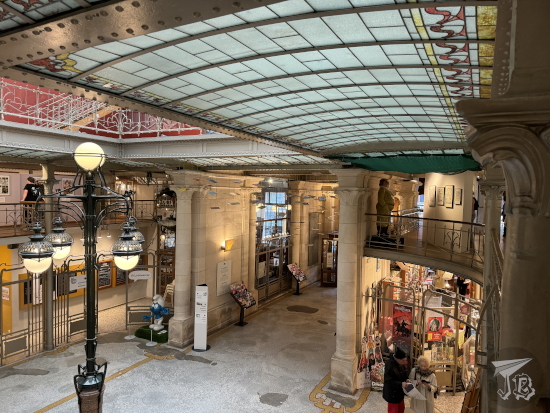
Whilst part of me wanted to stay in Antwerp [Anvers | Antwerpen] and visit the chocolate museum Chocolate Factory, it opened too late for me to be comfortable with the later flight schedule. Beside, I had my Art Nouveau Pass. Thus, I headed off back to Brussels [Bruxelles | Brussel], to visit the Musical Instruments Museum Musée des instruments de musique | Muziekinstrumentenmuseum. The museum is located in the former Old England department store, built by Paul Saintenoy in 1899 in the Art Nouveau style, mostly out of glass and girded steel. The building itself was pretty interesting and I found the idea of an “audioguide” with the sounds of each instrument endearing. I spent longer than I thought I would there.

Musical Instrument Museum building

Musical Instrument Museum Brussels

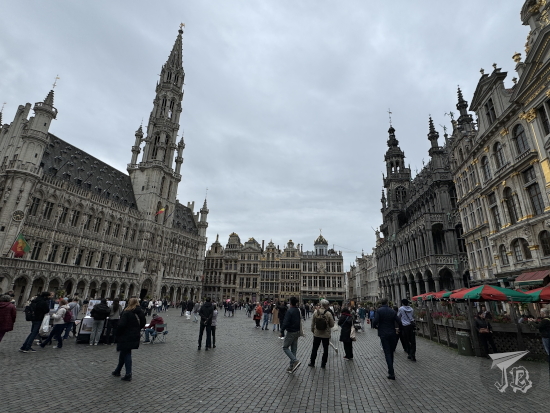
I then headed off towards the central square Grand-Place | Grote Markt to find the third of the typical Belgian foods I wanted to try – moules frites. This dish comes in two servings: one of Belgian fries and another one of boiled mussels. I chose a restaurant called Brasserie Le Cerf that I had checked online the previous night. Since it was still early, I was alone in the place. The mussels can be prepared with a number of add-ons and sauces, but ordered mine plain. I thought it was adequate for the first time. The mussels came boiled with a little celery and leek, and I really liked them. I passed on the Belgian beer, because I’m not a drinker of alcohol. As an appetiser, the restaurant provided bread and butter and everything was lovely.

Moules frites

I wandered a little around the area and I found the shopping area Galeries Royales Saint Hubert, where I saw some lovely chocolate in a cute little Art Nouveau shop – but way out of my budget. I also saw a giant smurf, and considered a second comic exhibition in Horta Gallery. However, I was weary of the fact that my bus had to go around Brussels at the after work rush, so I decided to give myself a wide berth of time to get to the airport Brussels Charleroi. After all, I had been there before and there were plenty of shops and things to do. Unfortunately, that was Terminal 2. This time around my flight left from Terminal 1, which lacks even decent seating space. Whoops. At least there was a toilet and a fountain to get some water.

Around the Grand Place

The flight was on time, but once again I had been assigned an emergency exit seat. I approached the flight attendant to explain that I have reduced mobility on my right arm, and she found someone to exchange seats with me – the biggest guy on the plane, it seemed. He probably enjoyed the extra room and empty seat next to him, and I did not have to stress. Not that I actually expected anything to go wrong, but just in case…

Since I had no checked luggage, once we landed I was out of the terminal quite quickly. I had to wait for the bus to the parking lot for a while, but I was on my merry way and home without issues and with having had great experiences, talked to great people, and met fun artists. And I’ve got a new guitar pick for my very modest collection of (now three) picks!

21st October 2024: Bruges & Antwerp {Belgium October 2024}

It was raining in Bruges [Bruges | Brugge] when I woke up, but it was supposed to stop by the time the monuments started opening. I asked reception to take care of my bag and I left around 9:30. I thought I would retrace my steps from the previous day, but when I got to the Church of Our Lady, it was not open yet, thus I took a small detour and explored its surroundings. I walked around the area taking in the scenery, and crossed Boniface Bridge Bonifaciusbrug, one of the iconic bridges overlooking traditional wooden and brick houses which face the canal. In front of the church stands the hospital-turned-museum Apotheek Sint-Janshospitaal. It was closed because it was a Monday, but the building was pretty.

Bonifacebridge

The Church of Our Lady Onze-Lieve-Vrouwekerk opened at 10:00 and I wanted to at least see the free area. The church is famous for having a statue by Michelangelo, but that was in the museum area, which I did not visit. The church also displayed original frescos and a small Via Crucis.

Church of our Lady Bruges

I then walked towards the city centre and Saint Salvator’s Cathedral Sint-Salvatorskathedraal. The cathedral is made mainly out of brick, along with tuff and limestone. The oldest bricks date from the 14th century, made outside the city and brought via the waterways. It was not originally built as a cathedral, but took over the role when the actual one one was destroyed in the 18th century. Instead of rebuilding it, the city made Saint Salvator the next cathedral in the 19th century. Unfortunately, shortly afterwards, there was a fire and the roof collapsed. English architect Robert Chantrell was in charge of the restoration, and he chose to build the neo-Romanesque tower that looks something like a Lego set. Later, a peak was added to the tower which makes it even more… Lego-like.

Saint Salvator Cathedral Bruges

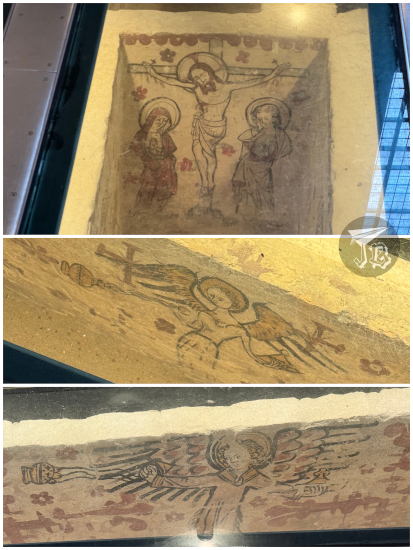
The cathedral has an organ originally built in the 18th century, and has been expanded thrice since then. The altar is surrounded by Flemish tapestries. Underneath the nave, there is a crypt where you can see the oldest bricks and a number of 14th century tombs, decorated with paintings in the fresco technique. They feature angels, Jesus, the Virgin Mary and Saint John. There is a small building adjacent to the cathedral with a closed off cloister which holds the treasure, full of works of art.

Saint Salvator Cathedral 14th century tombs

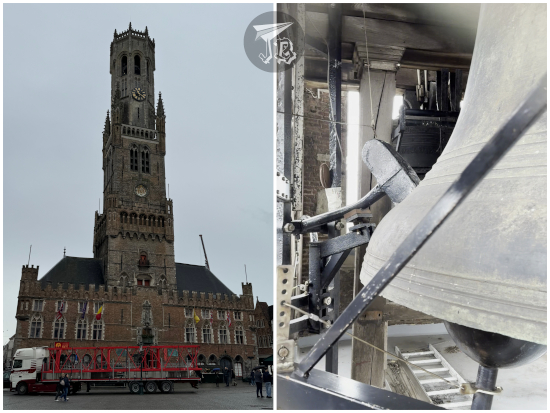
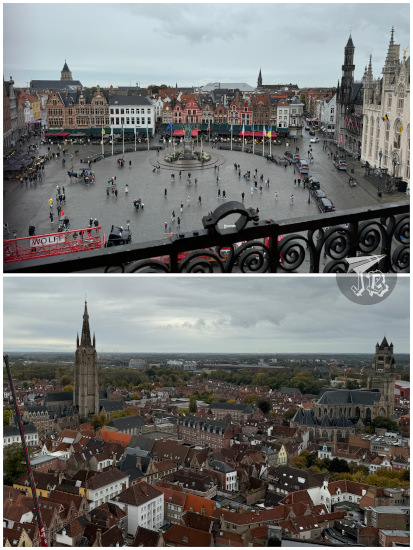
Afterwards, I headed off back towards Market Square Grote Markt. It was raining on and off, so I decided that maybe I could check out the Belfry of Bruges Belfort van Brugge – it turns out that the museum is… climbing the belfry. The belfry was originally built in 1240, though it burnt down and it was rebuilt forty years later. It has an octagonal end cap which was added in the late 1480s. After a few built and destroyed wooden spires, a stone neo-Gothic parapet was added in 1822. The tower is 83 meters high (366 steps, yes, I counted, I got 364) and contains a carillon with 23 bells (27 tons, no, I did not weigh them), and a total of 47 bells. Believe it or not, I was up there when the carillon stroke noon. That was awfully cool. There were also great views of the city.
Bruges Belfry

Bruges from the Belfry

There was a clearing in the clouds and very low chance of rain for the next hour or so, and thus I decided to find one of the official providers of boat tours on the canals. These are sanctioned by the town hall and all of them have the same price and the same route, so any one would do. The one I found first was De Meulemeester Boat Tours Rondvaarten De Meulemeester. The tour departed and arrived from Dock no. 5 (Wollestraat 34). We sailed to Jan van Eyckplein (Jan van Eyck Square) and the edge of the Lake of Love Minnewater. On the way we did not only see the most important monuments facing the water, we also came across Bruges’ famous swans. In the 15th century, keeping swans was a symbol of status, and they were added to the city as part of its image as a flourishing trade point. Today they’re still maintained by the city, which has actually taken them off from the canals for quarantines before. There were quite a few tours going on at the same time, and the boat captains seemed to know each other – or at least have enough familiarity for some banter.

The canals of Bruges

After the boat ride, I found the Gothic Bruges city hall Stadhuis van Brugge, one of the oldest city halls in the historical region. It was built in a late Gothic style between 1376 and 1421, but it has been modified and renewed a few times – and since at this time I had decided that Bruges was a city to come back on a non-Monday, I decided to leave it for the next time, hoping that Antwerp would have better weather – a bit less cold at least.

Next to the town hall stands the Basilica of the Holy Blood Basiliek van het Heilig Bloed, which is supposed to hold a Relic of the Blood of Jesus Christ. I only visited the Romanesque chapel underneath, because I had just seen two huge groups of people go in.

It was then around 13:45, and I had decided to take the 14:25 train to Antwerp to try and make it to the last entry to Chocolate Nation. At the station, however, I decided to get a Belgian waffle with dark chocolate and strawberries. The waffle shop was out of strawberries, so I got a berry mix instead. That killed all my appetite, to be honest, but it was delightful. I even got a little Belgian flag on it – and good thing that I did not order whipped cream, because it was so filling that I was not able to eat anything else throughout the whole day. I regret nothing.

Belgian waffle

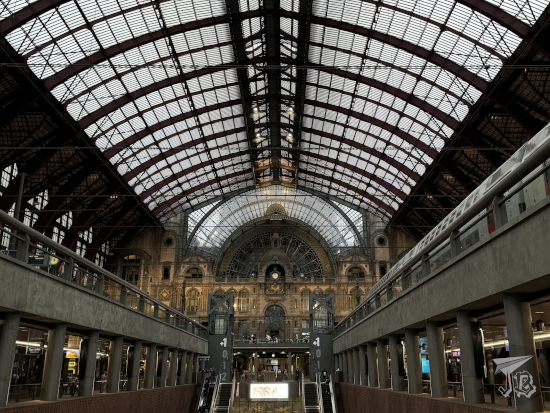
The train was on time and off I went to Antwerp [Anvers | Antwerpen]. I reached the stunning Antwerpen-Centraal railway station Gare d’Anvers-Central | Station Antwerpen-Centraal. The weather was not much nicer than in Bruges though, and it was still raining. I dropped my luggage off at the hotel, and went back to the station to take some pictures – I like hotels near travel hubs. Afterwards, I headed off to Chinatown / Van Wesenbekestraat, but the only interesting thing there was the pagoda gate.

Antwerp Central station

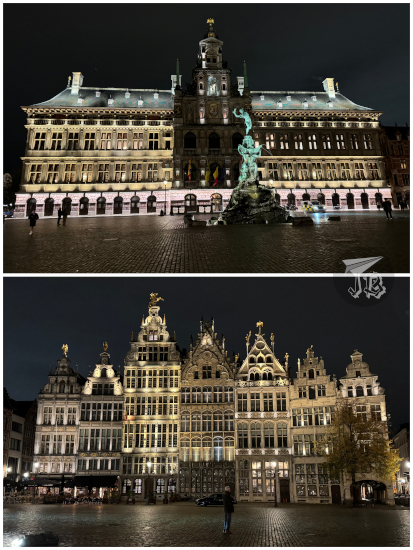
I headed towards the historical centre and stopped by the Cathedral Cathedral of Our Lady Onze-Lieve-Vrouwekathedraal, which belongs to the Unesco World Heritage Site Belfries of Belgium and France. It is credited to architects Jan Appelmans and his son Pieter Appelmans. Both of them are honoured in a metal monument within the wall of the cathedral, which was erected in the Gothic style. The cathedral was never completed to its original concept, and only one of the two projected towers was ever finished. The church was damaged in several scuffles with time – as recently as WWI – and it was completely restored between 1965 and 1993. It had already closed, but I was counting on that.

Antwerp cathedral by day

I continued off to Main Square Grote Markt, which was almost empty due to the weather. There stands the Antwerp City Hall Stadhuis Antwerpen, a few guild houses, and Brabo Fountain Brabofontein, which represents a legend – a giant who cut off the hands of boatmen received the same fate by hero Silvius Brabo.

Antwerp Grote Markt by day

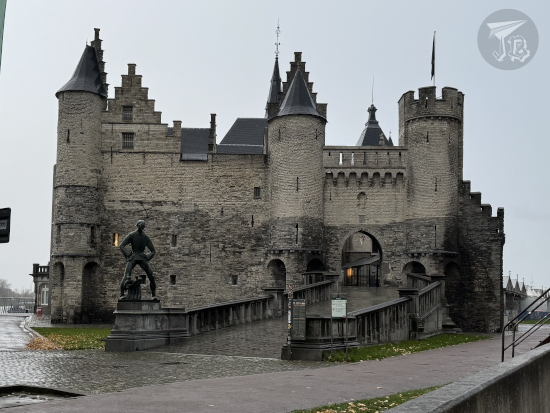
Then, I continued off towards the edge of river Scheldt, on whose banks Het Steen, a Medieval fortress dating back to the early 13th century. It is what one could call the Antwerp Castle from Wagner’s’ operas, and it was built as a way to control the river. It is currently used as a visitor centre.

Het Steen

It was getting dark already and none of the monuments were lit, so I decided to get back, as it was raining rather hard. The second I saw reached the station though, the illumination was turned on. I decided to go to the hotel and wait the rain out, as it was supposed to clear out in about an hour. It did, so I retraced all my steps back towards the Cathedral of Our Lady Onze-Lieve-Vrouwekathedraal and the Main Square Grote Markt. I even reachedHet Steen, but it was not lit.

Antwerp cathedral by night

Antwerp Grote Markt by night

Though it was cold, it had fortunately stopped raining for the time being, and I could take my walk leisurely. I turned in for the day afterwards.

20th October 2024: Heroes Comic Con & Art Nouveau in Brussels and the Medieval Centre of Bruges {Belgium October 2024}

Just before going to bed to grab a couple of hours’ sleep on the 19th, I did a last check that I had everything ready, and I realised that my parking reservation at the airport had not been processed. It is a good thing that being an Aena member, the price had not gone up outrageously from when I had done it the first time a few months back. I have no idea why it did not work the first time, but I am glad I caught it before I left, because non-reserved parking is three times as much.

I did sleep for a few hours and the alarm clock went off around 3:00 for my 6:20 flight. The drive was uneventful, I found an awesome parking spot, and I had the bus just for myself after a minute of waiting. Security was fast, and it was weird to be in the Schengen side of the terminal for a Ryanair flight. I got on the plane and got some sleep. We landed in Brussels [Bruxelles (French) | Brussel (Dutch)], Belgium [Belgique | België] early, but deplaning took a while. Once outside, I followed the signs for the train and there was one there already. I settled until I got to Brussels Central station, where I bought a coffee, a drink, and a sandwich. I then walked towards the underground station – the coffee was gone even before I was there.

I knew I was in the correct underground line when I started seeing cosplayers and kiddos with superhero merchandise along with their resigned parents. My backpack was not heavy, but I was glad to have a seat both on the train and the underground. I reached the area of Brussels Expo a few minutes before the convention Heroes Comic Con opened for general admission. There was a queue, but instead of getting in line, I walked up to the nearby Atomium.

The Atomium was built as the centrepiece of the Brussels Expo’58. It is credited to architects André Polak and Jean Polak from a project by civil engineer André Waterkeyn. It was designed as a homage to scientific advance, especially nuclear physics, and thus resembles an atom or a molecule. It is 102 metres high, and it comprises nine spheres with a diameter of 18 metres each, joined by tubes and escalators. The Atomium was not designed to survive the Expo it was built for, though. In the mid 2000s, it had to be renovated, and a lot of the original aluminium was replaced by stainless steel.

Brussels Atomium

I contemplated going up the building. However, when I looked at the time, I realised that if I went in, I would be able to get into the first of Misha Collin’s photo shoots. When I decided to buy the tickets, I only bought one picture in the afternoon, because I was not sure what time I would make it to the convention, considering the plane, the train and the underground. But I was there on time so I used my phone to buy an extra ticket for the photo shoot in which Collins would be wearing the outfit from Supernatural’s character Castiel. This also gave me the chance to get the photograph signed during the time between photo shoots. Furthermore, I was still within budget – because I had decided to indulge myself with the money I had originally set aside for a balloon ride in Cappadocia.

I walked into Brussels Expo. The exhibit was huge, but I had a map downloaded on the phone. I was a bit confused when doing my original research, because it turns out that there were actually three conventions going on at the same time – Heroes Comic Con, Made In Asia and Gameforce. However, once there, it was easy to get around. Heroes Comic Con is “a big feast dedicated to pop culture”, so basically a one-size-fits-all big merchandise fair with graphic artists, cosplayers, the whole nine yards, nothing too different from Paris Fan Festival. Heroes Comic Con’s biggest selling point, however, was having invited a number of popular actors – along Misha Collins (real name Dmitri Tippens Krushnic, for the record), other guests were Bob Morley, Eliza Taylor, Ian Somerhalder and Paul Wesley. Some of them… rang a bell. I might even have seen a few of them somewhere – I must have, because I did watch the newer Star Trek. However, I find it great that they had a large following and there were queues for them.

I followed my map towards the photo booths, where they checked my ticket and gave me a bright-coloured chip – they give you a chip per ticket, as you can have two people in one photograph. I was on my own, so no problems there. I actually got two photographs out of the first shoot – so I’ve got three though I paid for two, yay me. I had brought a customised jacket with a pair of angel wings, and the goal was to have them in the photographs, so I would be facing Misha but looking over my shoulder. The first photograph did work out too well, so Misha called me back for a re-shoot. He was very friendly, and much more approachable than my usual Japanese artists. Either that or I was less strung up. The pictures were printed on-site, so I took mine to the autographs area to wait. I had bought an official book beforehand – the lightest thing I had found, to be honest – in case I could not get a photograph signed, but since I this had worked out so well, I had our recent picture – and in the character outfit – to be signed.

Since I had been towards the end of the photograph queue, I did not have to wait long for Misha to come. A staff took my name on a post-it note and attached it to the photograph. When it was your turn, you paid for the autograph (I decided not to get a selfie, because I still had another photograph bought), and I told him about the pure chance I was there. He was “glad I could make it”. As I said, nice and approachable.

By the time I was out of the autograph area it was around 11:40. I decided to wander around. I gravitated towards Made in Asia, and was very strong reminding myself I wanted to keep my luggage light and not pay for any extra. Thus, I managed not to buy anything despite finding a bunch of Saint Seiya merchandise – which I now regret, but that’s FOMO speaking. I had a chuckle or two out of young people complaining about the official good stuff being “too expensive” when I found the shops cheaper than the stands I see in the Spanish counterparts.

Brussels Hero Comic Con

I returned to the photo booth for the second photograph, and I thanked Misha for the chance – I look silly in the picture, but that’s okay. It was great. There was a Q&A with Collins an hour or so later, but I decided to forego that and leave the convention. If I stayed, I would have no time to do anything in Brussels that day. I also wanted to keep on the move because else my body would remember how little slept it had gotten, and I would crash. Thus, I bought an online Art Nouveau pass, and I left the convention.

Brussels’ Art Nouveau Pass is 20 € and it covers entry to three museums, historical places, or exhibitions in a long list, all of them related to – obviously – Art Nouveau. The pass can be value for money even if you only visit two of the “big ones”. Since the pass is valid for nine months, I might be able to use it for a third time in the near future. The original idea was to buy one from the beginning and hit the Comic Museum, the Horta Museum and the Solvay House – things I had not had the time to visit the previous time because in the end I spent a lot of time walking to different spots (read: the Natural History Museum). However, the Solvay House was under renovation, and the Horta Museum was a bit out of the way, so I ended up being flexible

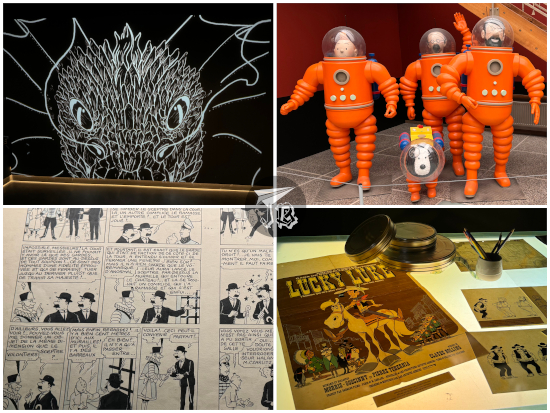
I rode back to Central Station and walked out towards the Cathedral of St. Michael and St. Gudula Cathédrale des Saints Michel et Gudule | Kathedraal van Sint-Michiel en Sint-Goedele, which was beautiful in the flurry of autumn leaves. It was cold, so I hastened towards the Comics Art Museum Musée de la Bande Dessinée | Stripmuseum (Belgian Comic Strip Center). The museum is located in the former textile store Magasins Waucquez, an early 1900s commercial building designed by architect Victor Horta. Horta is considered one of the founders Art Nouveau, with his use of curved forms and use of steel, skylights and open floor plans with abundant decoration.

Brussels cathedral

After the department store closed in the 1970s, the building was listed as a historical site, and it was bought by the Belgian Government to be used in the promotion of comic strips. The museum itself was founded in 1984 as a non-profit, and it opened in 1989. It runs a new permanent exhibition on the history of comics in Belgium and Europe (free from the American Comics Code Authority and censorship – I mention this because I had tickets for a Marvel exhibition the following month, and the CCA had a lot of impact in the development of American comics). The person at reception told me to watch out for a very first-print Tintin which had been recently added to the exhibit. There are items and print issues related to most of the great Belgian comic artists – there were a lot of things I had never even heard about. I found a big lack of Morris’ Lucky Luke though.

Comics Art Museum Brussels

Comics Art Museum Brussels

Something I had decided to do in this trip was trying the typical foods, so once out of the museum I headed towards the central square Grand-Place | Grote Markt and Manneken Pis, which was not wearing any costume this time around, even if Brussels is still under a lot of construction (when I saw it in 2023, it was wearing a reflective jacket). I remembered that there were a lot of places that sold local street food – I don’t tend to be much of a foodie, especially with street food or fish. I figured out that Belgium could be a safe place to experiment without risking an upset stomach.

Brussels Grand Place

Manekken Pis

Thus I got some frites, Belgian fries, at a chain called La Friterie. I had seen a few of the establishments with queues outside, so when this one was almost empty, I jumped at the chance. Belgian fries are sourced from local potatoes and cooked in two goes, traditionally in beef fat. I got them with just salt, and they were really good. And warm. That was a great point.

Belgian Frites

It was around 17:00 by this time, and things had started to close down. I headed off towards the station to take a train to Bruges [Bruges | Brugge], in the north west area of West Flanders. The historic city centre is a Unesco World Heritage Site – Historic Centre of Brugge – and it is criss-crossed with canals. The area has been inhabited since Prehistory, but its importance peaked during the Middle Ages, between the 12th and 15th centuries. It became a commercial hub due to its strategic location between Flanders and France, though it later opened to other countries, like the Portuguese. The first stock exchange in the world probably opened there in 1309.

The Medieval architecture and brick Gothic constructions are exceptionally well preserved, including the pattern of streets intertwined with waterways. I was curious about northern Europe canals, which was one of the reasons why I chose the city. The other one was that it is a city to walk and see from the outside, which was great for a Monday morning. Unless it’s raining and about 7 ºC colder than cool – I had prepared for 13 – 17 ºC and drizzle, and got 9 – 13 ºC and rain. Whoops.
I bought some snacks at the station and went down to the platform. The train was late. I knew it was late, and I knew when it was expected, because the board told me. It was refreshing, considering the uncertainty around Madrid’s trains this last couple of years. I had booked a hotel close to the railway station, and I got there around 19:00. It was quite a basic place, with a toilet, and a shower closed off, and a washbasin column in the middle to separate the wet area from the bed area. Functional, and all right. The heating worked and they spoke English, so all good.

I did not rest for long. I ate the snacks, grabbed my umbrella and an extra layer of clothing, and headed out. It was dark outside already, and I hoped to get to see the city centre lit up for the night. My first stop was the Church of Our Lady Onze-Lieve-Vrouwekerk. Mostly built between the 13th and the 15th centuries, it is one of the highest Gothic brick structures in the world.

Our Lady, Bruges

Then I headed towards Saint Salvator’s Cathedral Sint-Salvatorskathedraal, a curious mixture of neo-Romanesque and neo-Gothic, with a bell tower that looks more like a defence tower than anything religious. This tower, however, was the result of a 19th-century modification of the original tower. Of course, both churches were closed at this time, but they would open the next morning.

Bruges cathedral

I continued towards the Market Square Grote Markt, featuring the Gothic Provincial Court Provinciaal Hof, the Historium, and the Belfry of Bruges Belfort van Brugge. The Medieval bell tower is doubly World Heritage – it belongs to the Historical Centre Unesco site, but it is also key in the Unesco Belfries of Belgium and France serial property. And while it is not part of the Manual bell ringing intangible Cultural Heritage, Bruges takes a lot of pride in its carillon and its bell ringing. At the centre of the square stands the statue of Pieter de Coninck and Jan Breydel Pieter de Coninck en Jan Breydel, who participated in the Flemish resistance against the French King in 1302.

Bruges Grotemarkt

I also wanted to explore a large park I had seen on my way. It turned out to be two of them, Poertorenpark and Minnewaterpark – which later I found means “Lake of Love Park” – before it was too late in the evening. There I found the Gunpowder Tower Poertoren – built between 1398 and 1401 by Jan Van Oudenaarde, and used as gunpowder store for almost five centuries. Beyond it, the Lake of Love itself Minnewater, the Lovers’ Bridge Minnewaterbrug, “very romantic” stone bridge. I noticed the part about it being stone. It also yielded to a beautiful night view.

Bruges Love Lake park at night

I did not want to stay out too late. Thus, I crossed the Barge bridge Bargebrug to get back to the busy street area. Bargebrug is a modern construction, barely 20 years old, in bold red curves. On the other side there was a “reception area” in the same style, apparently a sort of bus station, and then there was the main road. Afterwards, I just headed back to the hotel and turned in for the day. I watched some TV, but to be honest, I had woken up before 3:00 am, so I zonked out rather quickly.

Bruges Love Lake park at night

10th October 2024: The Trojan Horse & Bursa {Türkiye, October 2024}

We had to leave by 5:30 to go see the Trojan Horse. The reason why I had chosen this particular circuit was because it included “Troy”. The only thing I got to see of Troy was the Truva Heykeli Trojan Statue, – the horse which was used by Warner’s Bros to film the movie Troy in 2004. Not a damn ruin, not a damn rock, let alone be near the archaeological site. Damn it, did I choose the circuit badly or what? I do wonder what people thought of us taking structures of the stupid thing at 6:40 in the morning. As we drove north, we saw the Galipoli Peninsula, place of a huge battle between the Ottoman Empire and New Zealand and Australia regiments belonging as part of the British troups.

Çanakkale Trojan horse

We continued towards the city of Bursa, the first capital of the Ottoman Empire, and another of the World Heritage Sites – Bursa and Cumalıkızık: the Birth of the Ottoman Empire. It started off as a settlement around 5,200 BCE, which evolved into a Greek city. Under the Byzantine reign, it was a city known for its garrisons and its silk manufacturing centre. It is considered the origin of the Ottoman Empire, and throughout the period, it flourished through its local silk production. Following the foundation of modern Türkiye, it became an industrial city.
Our first stop was the Grand Mosque of Bursa Bursa Ulu Cami. Its first stone was set in 1399 an important building in the early Ottoman architecture as it found its own style. It is a rectangular building with a fountain from the 19th century at the centre – originally this area was open but it is now closed with glass, forming a skylight. It has two minarets. The interior is mostly white, but at the same time, quite decorated with calligraphy, medallions and vegetal themes.

Interior of the Great Mosque Bursa

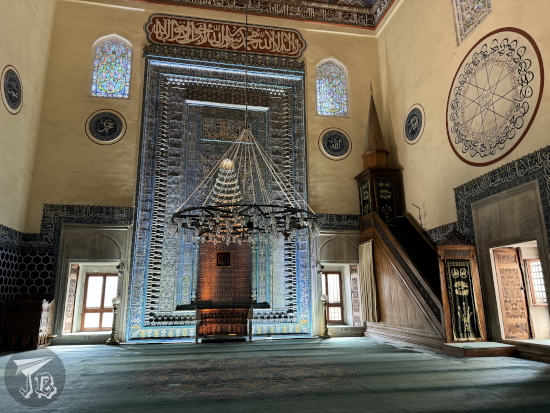
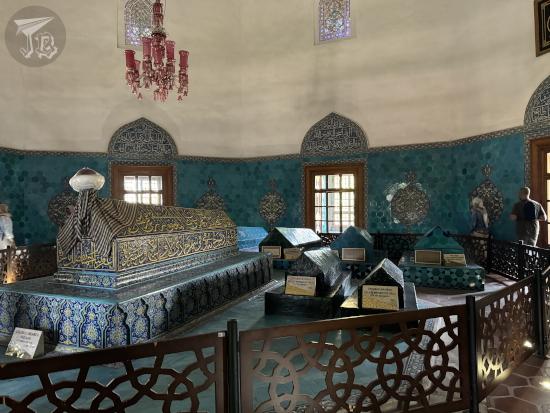
Then we drove to the Green Mosque Yeşil Camii complex. It was commissioned in 1412 by Sultan Mehmed I Çelebi, who is buried in the adjacent Green Tomb Yeşil Türbe – along with his children and their caretakers. Both the mosque and the mausoleum have beautiful decoration in blue-green tiles with gold inserts, which create the motifs and calligraphic inscriptions.

Mihrab of the Green Mosque Bursa

Bursa Green Tomb

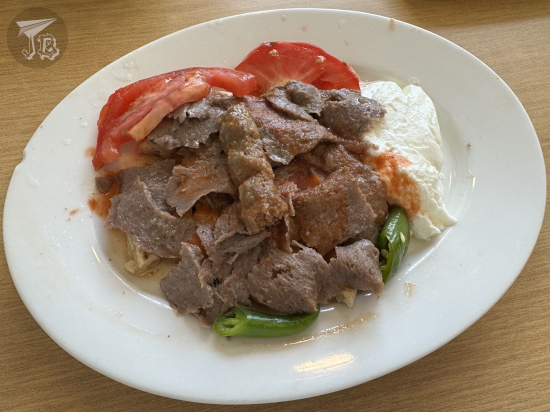
Next to the mosque stands a building which calls itself a Silk House, but is just a huge souvenir shop, nothing even close to the actual Silk Bazaar. Afterwards, we went for lunch, lentil soup and a traditional Bursa kebap İskender kebap, making this another sort-of actual Turkish meal. It uses meat cooked on a vertical rotisserie (döner kebap) on pita bread, with tomato sauce, yoghurt and sheep’s milk butter – which was poured at the table. Dessert was a honey pastry.

İskender kebap

Then we continued off back to Istanbul | İstanbul. We got there around 16:00 and I was considering maybe heading out to a church-turned-mosque to see some of the most important museums but… at that point it felt more like a self-imposed obligation that something I really wanted to do because I would enjoy it? It was more of a feeling of “you should do it because you are not going to come back to this country”. But the truth was that I really did not want to do it. I was disappointed in the whole trip experience, and in a way, I did not… I don’t know… care anymore? No balloon over Cappadocia, not enough time for Pamukkale travertines, no Troy. Whatever.
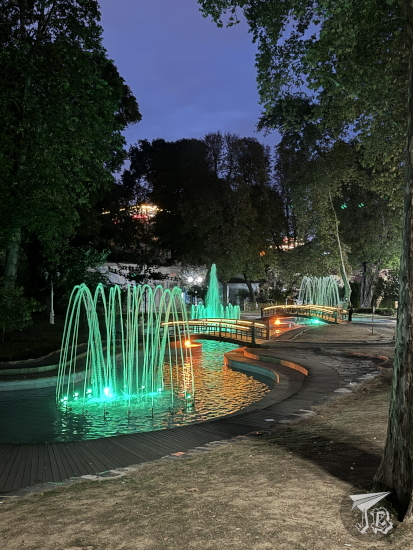
The nice group from the trip invited me to hang out with them for a walk. Together, we walked to the Grand Bazaar Kapalı Çarşı. Then we continued towards Sultanahmet Square Sultanahmet Meydanı, from where we crossed Gülhane Park Gülhane Parkı until we reached the coastline İBB Sarayburnu Parkı, the point in which the Golden Horn and Bosphorous Strait come together. On our way back, we stopped around Sultanahmet Square Sultanahmet Meydanı to take some pictures.

Gülhane Park at night

Bosphorous at night

Sultanahmed square at night

Finally, I headed back to my hotel – Hotel Bi·setun, the same as the first two nights – to order dinner, have a shower and get ready for the return trip.

8th October 2024: Ephesus {Türkiye, October 2024}

It is not paranoia if they are really after you. And I am paranoid enough not to set a foot onto a bus before I make sure my suitcase is on board with me. So, guess who had to wrangle their suitcase down the stairs, since the hotel staff did not do it? Yep, I did. At least down is easier than up. Anyway, we were our merry way by 9:00, and continued until noon, when we were ushered into a “typical fur-working centre” which was… I don’t know how describe it, to be honest. But neither typical nor traditional are words I would use.

First, we were taken into a room with a catwalk and given notepaper to write down the numbers of items we liked. For about an hour, four or five models showed off anything but typical leather items, a lot of them reversible. Then, we stepped into the shop. I touched some of the items – they were extremely thin and weightless, which was weird. The prices were extremely high, too, even taking into account “the 70% discount because we were special”. I am happy to report I was at no point approached by any salesperson – again, maybe I do not look targetable to Turkish people?

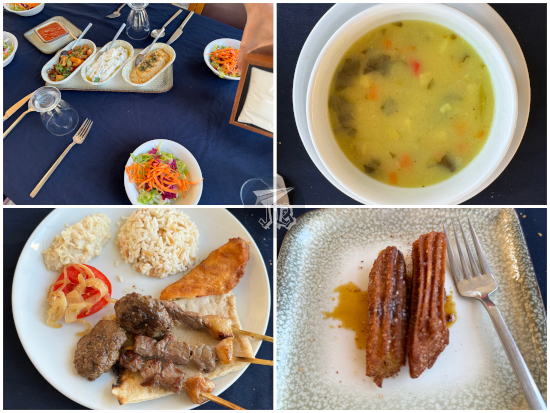
Lunch was okay, it had some nice dips and a soup, then another sad-meat main dish – albeit with your very own pita bread! Dessert was the only one I liked – a churros family treat called tulumba.

Lunch at Ephesus

Afterwards, we continued onto our way to Ephesus, which belongs to the current settlement of Izmir | İzmir, and is an archaeological site considered World Heritage. Coincidently, it was more than warm. It was scorching. We were there for two hours and a half, from 14:30 to 17:00. Again, leaving way before closing time to reach the hotel around 17:30, and yet this was the archaeological site where we spent the longest!

Ephesus was a city in ancient Greece – which back then included several areas of what is now Türkiye. Ephesus was founded around the 10th century BCE, and it became home to one of the Wonders of the Ancient World, the Temple of Artemis, which was built around 550 BCE. It was controlled by the Romans between 129 BCE and 395 CE, and during this period, it became an important site in Christianity starting the year 50 CE or so – with the apostle Paul of Tarsus living there, and reportedly being home of “the seven churches of the Apocalypse”. The city suffered attacks from the Goths, and was damaged by earthquakes before being finally abandoned in the 15th century.

Some of the ruins in Ephesus, including Trajan's fountain and the entrance to the therms

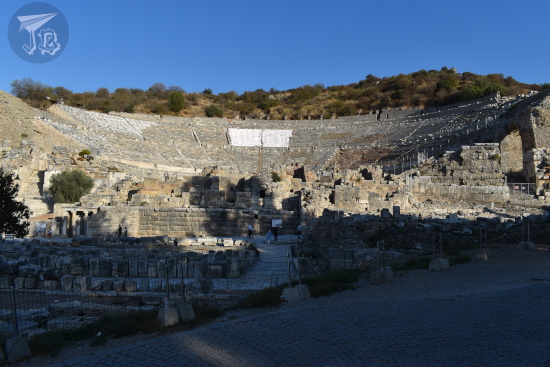
Though the temple of Artemis was off-site and it has been destroyed, many monuments from different periods still stand or have been restored. There are two theatres, a small odeon, and a larger one – with the large one being probably the greatest in the ancient world, seating 25,00 people. There were two agoras, one for commercial meetings and the other one for business. During the Roman times, the Gate of August was built to honour the Emperor.

Since the temple is long gone, the most important building remaining is the Library of Celsus, rebuilt from the pieces left. Tiberius Julius Celsus Polemaeanus was one of the Ancient Greek governors of Roman Asia, who paid for the library himself around the year 125 CE, and is actually buried underneath. The library once held up to 12,000 scrolls in 180 square metres.

Celsus library Ephesus

Ephesus theatre

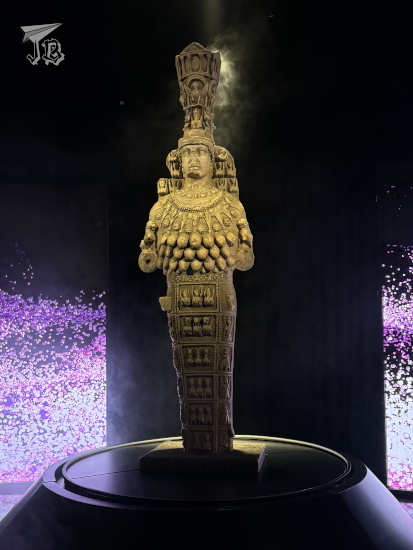
The guide kept hurrying us up, saying that he had a surprise for us – which turned out to be an immersive show about the history of the city, and after that we had to leave. The film was okay, but I would have much preferred to have more time to wander and see the real thing. The only item that was real – I hope, though it was probably a copy – was the final statue of Artemis.

Statue of Artemis Ephesus

We left afterwards. We did not get to stop by the place where the temple used to stand. We did not see one of the most famous sites outside the city either – the so-called house of the Virgin Mary because, according to the guide, “it was a recycled myth”, it was probably the house of Artemis’ priestesses. Which in my view made it even more interesting, but oh well…

Ephesus Hitit Hotel had an outdoor swimming pool that I dipped into, but it was too cold to stay for a long time. I also tried to go out of the hotel to find something to see, but the street did not seem safe. To the point that our bus driver actually saw me going out and came to ask me if I was all right…

3rd October 2024: Istanbul, day 1 – Classical Istanbul (plus) {Türkiye, October 2024}

I spent the day in Istanbul | İstanbul, probably the most important city in Türkiye, and certainly the largest, but not the capital. It was founded as Byzantium in the 7th century BCE, straddling the Bosphorus Strait, which is considered the boundary between Europe and Asia. In 330 CE, Roman Emperor Constantine renamed the city into Constantinople after himself, and made it the capital of his domains. The so-called Fall of Constantinople in 1453 started the Ottoman Caliphate – sometimes called the Ottoman Empire. The empire survived until it joined World War I and was subsequently defeated – Istanbul was the capital during most of that time, until the Turkish Independence War, when Mustafa Kemal Atatürk made Ankara the capital.

Istanbul is probably the only city in the world which stands between two continents, separated by the Bosphorus strait and the Golden Horn – an estuary flowing into the strait. To the west of the Bosphorus is Europe, and to the east Asia. The European area south of the Golden Horn is called the historic peninsula.

Istanbul has claimed its rightful place in history as a key step of the Silk Road and the spread of Christianity during Roman times. The historic peninsula is a Unesco Heritage Site, the Historic Areas of Istanbul, which the day trip I had hired, called “Classical Istanbul” Estambul Clásica (50 €) was supposed to cover.

I woke up around 7:00 and went down for breakfast. Coffee was… unexpectedly dull, considering the fame of Turkish coffee – and I had two cups to kickstart my brain. The scrambled eggs were particularly good, but the bread so-so. At 8:20, ten minutes before pick-up time, I was ready and waiting at reception. At 9:10 I wrote to the person who had picked me up from the airport, who had told me to text her with any question, and at 9:15 they showed up – there was apparently “a lot of traffic”, and we were stuck in it for a while. I spent the time checking out the ruins of Constantinople’s ancient walls Bizans Surları, which are also part of the Unesco Heritage Site.

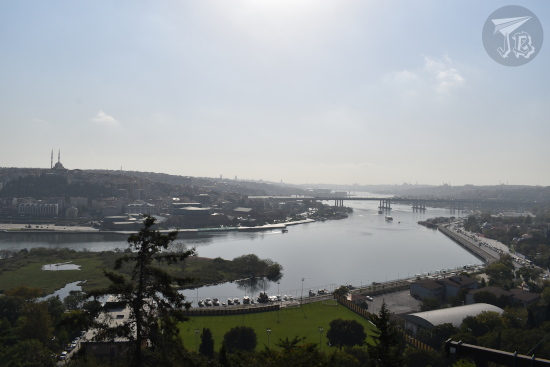
The group comprised around 30 people, and the bus headed towards an area called Pierre Loti Tepesi, Pierre Loti Hill, and reached there around 10:00. This is a viewpoint above the Golden Horn Altın Boynuz, with a viewing terrace, a café and the Eyüp Cemetery Eyüp Mezarlığı. We were told we’d visit the cemetery later, and were given twenty minutes to take in the views. Afterwards, we hiked (considering the speed, “marched”) down the hill through the cemetery, and saw several tombstones from the Ottoman period, but there was no visit whatsoever.

Istambul from Pierre Loti hill

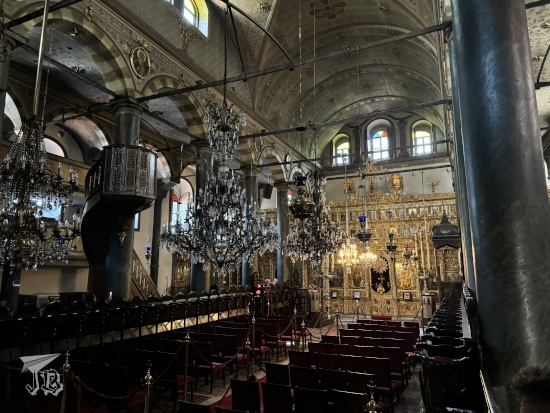
We hopped back onto the bus to drive towards the quarter called Fener, which we were told was “movie neighbourhood”. We were going to visit the Venerable Patriarchal Church of Saint George, the Orthodox cathedral of Istanbul Aziz George Katedrali, which closed down as we arrived for “an unknown length of time” because the Patriarch was coming out. Instead of letting us amble through the neighbourhood before the church, the guide insisted on us waiting for about 20 minutes before we all came into the church, and he gave a couple of explanations, and gave us free time to check out the church and the neighbourhood.

The church of St George was one of the few places with “real” security. We got through a lot of places with metal detectors and such with guards who would not even care, but the ones that did were ridiculously strict in contrast. The truth is that with the rise of Turkish nationalism, a lot of the church’s flock were deported, so the church and Patriarch are mostly symbolic and a pilgrimage point, and it has even been attacked by terrorists at times. The church itself used to be the centre of the quarter, which was historically the Greek quarter, even after the Ottoman Turks had taken over former Constantinople. Though the church existed previously, it became the seat of the Ecumenical Patriarchate of Constantinople since the early 1600s. It has been damaged and rebuilt several times, the latest as recently as 1991. It has three naves and aisles, with a rich iconostasis (decorated screen that separates the altar from the nave) in golden wood.

Church of St George Istanbul

After the cathedral, I wandered the quarter of Fener on my own for as long as was given us as free time. I found a colourful set of stairs Renkli Merdivenler, which led to nowhere but area pretty. The whole area was a hill, and I climbed up to try to catch a view of a very interesting building – the private school Phanar Roman Orthodox Lyceum Özel Fener Rum Lisesi. The building was designed in an eclectic style by Greek architect Konstantinos Dimadis, and built around 1882, though the school itself dates back from 1597. I also saw a film crew on a break in one of the streets.

Roman Orthodox Lyceum

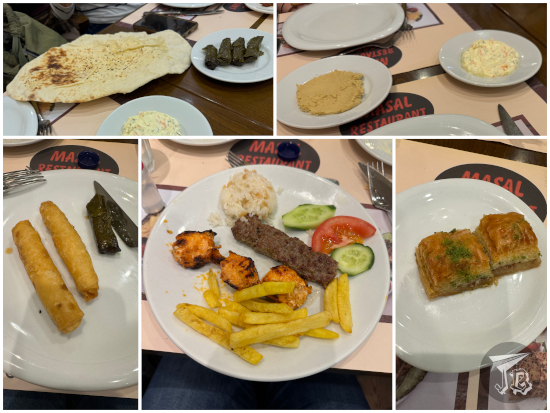
Once we were called back to the bus, we headed out for lunch. The entrées looked good, actually Turkish, including hummus, rolled paçanga böreği, dolma (stuffed vine leaves), cacik (Turkish tzatziki). The main was rather unremarkable, and something that I could have easily had in either Jordan or Egypt – a sad-looking plate with eight fries, two slices of cucumber, one slice of tomato, a mouthful of rice, and some chicken and lamb. Dessert were the ubiquitous Turkish delights, which are extremely sweet and I’m not a big fan of. Looking back, however, this was one of the most Turkish meals I ended up having, besides kebaps. During lunch, I made acquaintances with some nice ladies who promised to make sure I was not left behind – which has been a bit of a worry of mine when I’m in a guided tour since my last day in Egypt.

Turkish meal

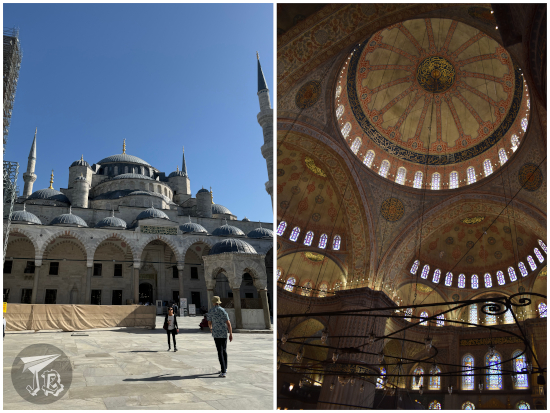
Around 14:00 we walked towards the area known as Sultanahmet Square Sultanahmet Meydanı, the neuralgic centre of historic Istanbul. There, the first stop of the afternoon was Sultanahmet Camii, the Sultan Ahmed Mosque colloquially known as the Blue Mosque. It was built between 1609 and 1617, during the Ottoman era. Designed by architect Sedefkar Mehmed Agha, it was the last great mosque built in the Classical Ottoman style, and combines Byzantine details and Islamic architecture. It has a central dome (43 metres high) with four semi domes and six minarets. The interior is decorated with tiles and mostly blue decoration, hence the name – though honestly I mostly felt it was… golden. The mosque has windows which originally had coloured glass, and are now modern, and it has chandeliers hung from the ceiling, with some of the lamps being ostrich eggs, a typical feature in Turkish mosques. One of the minarets was being restored.

Blue mosque

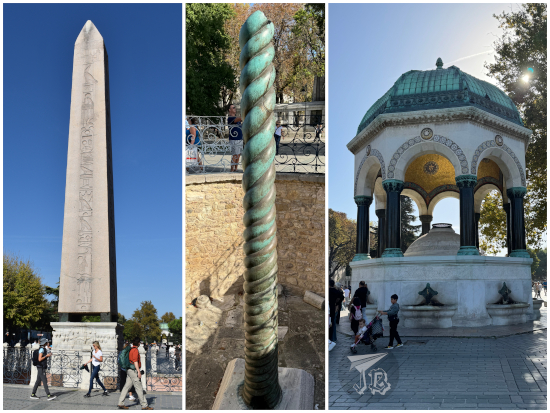
The mosque stands next to the square, which is long and narrow – it is actually built on the former Hippodrome of Constantinople Hipodrom, the centre of the city during the Byzantine period. Upon the founding of Constantinople, both Constantine and his successor Theodosius the Great brought works of art into the area. Today, there stands the Serpent Column Yılanlı Sütun, an ancient bronze column representing a hydra, whose heads are now missing (part of one is now in the nearby Archaeology Museum). Another monument of the square is the Egyptian Obelisk of Theodosius Dikilitaş, originally erected for Pharaoh Thutmose III (1479 – 1425 BCE, 18th century) in Karnak. It stands on a Roman pedestal from the time it was transported to Constantinople around the year 390 CE. The final construction in the square is the German Fountain Alman Çeşmesi (The Kaiser Wilhelm Fountain), a neo-Byzantine fountain that was constructed to commemorate the visit of German Emperor Wilhem II to Istanbul. It has eight sides, with marble columns and an inside covered with golden mosaics.

Monuments at Istanbul hyppodrome

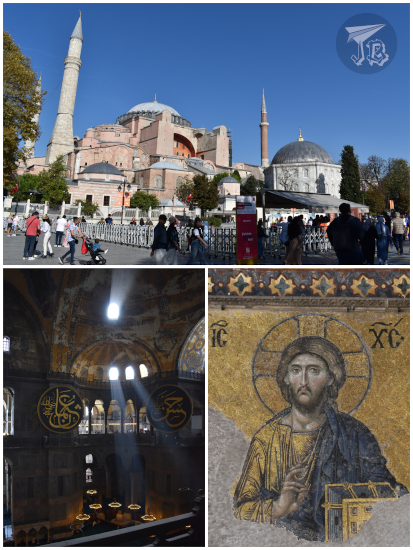
The official day trip ended there – though they were supposed to take us to the Grand Bazaar. However, the extended tour (25 € extra) included visiting the Orthodox church-turned-mosque-turned-museum-turned-mosque Ayasofya-i Kebir Cami-i Şerifi Hagia Sophia Grand Mosque. The current structure was commissioned by the Byzantine Emperor Justinian I to be the Christian cathedral of Constantinople as the Church of God’s Holy Wisdom, designed by Greek geometers Isidore of Miletus and Anthemius of Tralles. At the time it was built, it was the largest interior open space in the world.

It has a central dome with rises 55.6 metres from the ground and a diameter of around 31 metres. After the fall of Constantinople in 1453 it was converted into a mosque. In 1935, the new Turkish Republic turned it into a museum, but in 2020 the controversial decision to turn it back into mosque was made. With the first transformation into a mosque, minarets were erected and the Byzantine mosaics on the ceilings were covered or destroyed. They were recovered for the museum period, and now they are hidden away. While originally the mosque was going to be “open for all”, now the ground floor, covered with a carpet, is only for praying Muslims, and tourists have to pay to access the second floor and see the Christian mosaics. From the second floor, you can see the mosaics, and are close to the domes, which allows you to see the questionable state of conservation. The dome is fantastic, and there are mosaics of the archangels there. On the way out, there is another mosaic depicting the Virgin Mary with the child, and Constantine and Justinian giving them presents – Istanbul itself and Hagia Sophia. The walls however, are in dire need of restorations.

Hagia Sophia Istanbul

The day trip ended after an introduction to the building, and I wandered around for a while, seeing everything I was allowed to before I stepped out. At that point it was 16:50. I had the option of walking, as recommended, to the Grand Bazaar, but I decided that I had better things to do. I rushed towards the palace-turned-museum Topkapı Palace Topkapı Sarayı. Construction of the complex was ordered just after the fall of Constantinople by Sultan Mehmed the Conqueror overlooking the Golden Horn. Closed-off by walls, it has several buildings and palaces, some of which hold exhibitions. The palace closes at 18:30, and the ticket booths at 17:00. I was able to buy a ticket at 16:57 because I am very motivated, and I even saw most of the key areas of the palace in those 90 minutes. Though the recommended visit time is four to five hours, at least I felt accomplished – I wished I had prepared better for it, but I thought that I was standing next to the palace, and even if it was expensive I could return the next day if I felt I wanted to see more.

The first courtyard is free for everyone to see, and that is where the ticket booths are. I hurried towards the second courtyard, where I was able to see the Ottoman Empire Imperial Council, the Treasury, the Arms collection, the Gate of Felicity, the Chamber of the Sacred Relics, the Harem, the Baghdad kiosk, the Grand Kiosk, and even the panoramic view of Marmara Sea, among other smaller buildings – and of course, the feral cats. I did miss the porcelain and miniature collection, but I felt rather accomplished for the 90 minutes I had.

Topkapi palace Istanbul

Topkapi palace

I left the palace among the last visitors, as they closed the gates behind us. I had two options now – head back to the hotel and try to see the Grand Bazaar, or explore around for a while. To be fair, the area looked rather full and with a bunch of tourists looking more like a target than myself. That happened a lot during this trip, fortunately. I was not considered “targetable”.

Most visitable monuments had closed or were about to at this point. However, I knew that the Basilica Cistern would reopen an hour later, so I decided to wander around and try to get to the promenade along Kennedy street Kennedy Caddesi, which allowed me for nice views of Bosphorus Strait İstanbul Boğazı, the Golden Horn Altın Boynuz and Galata Bridge Galata Köprüsü.

Golden Horn at night

I went back towards the city centre through Gülhane Park Gülhane Parkı. At this point it was dark, so the fountains were on, and they looked very fun, all lit up.

I reached the queue to enter the Basilica Cistern Yerebatan Sarnıcı (Subterranean Palace). The ancient cistern has a normal opening schedule, and an evening schedule, which is a bit more expensive, with live music. But it worked for me. The cistern was built in the 6th century with the goal of providing water to the Great Palace of Constantinople, which stood where the Blue Mosque is now. It is an underground chamber with 336 columns that are up to 9 metres high, and it can hold up to 80,000 cubic metres of water. The columns seem to be recycled from ruined buildings, and at least one of them is carved with an upside-down Medusa face on the base. Today there is very little water, and there are modern art installations, and there are cool changing lights that give it a very interesting look and feel.

Basilica Cistern Istanbul

By the time I left, I kind of regretted having signed up for the second day trip, because I had been rather more efficient on my own, but again, I had not done much planning for the city. I went back to the hotel and I ordered food using the online room service. This time I decided on a kebap chicken wrap and a Turkish yoghurt, which was delicious. I had a shower and went off to bed.

Kebap and yoghurt

14th September 2024: The long way back {Escapade to Cádiz, September 2024}

I woke up before dawn and took a train out of Cádiz to El Puerto de Santa María to spend a few hours with a friend. We had breakfastand caught up, and I headed back to Cádiz around noon for food and my train back.

I returned to the area where the market Mercado Central de Abastos de Cádiz stands, and found a place for lunch Cervecería Boquerón Barbudo for puntillitas fritas, which is a dish of battered and fried squid, and one last tortillita de camarones before heading back home.

Tortillita de camarones and puntillitas

I had some time to kill before the train, and I thought about walking back towards the beach, but there was a strong wind coming from the west – nothing unusual, this wind even has a name, Poniente. Instead, I headed towards the harbour. I wanted to reach a specific quay to take pictures, but it was too hot and I was carrying the backpack. I ended up turning towards the city at the last pedestrian crossing in sight. I climbed up the stairs to the station and went out the other side. There, I found a lookout above the harbour and the bridge Puente de la Constitución de 1812, a cable-stayed bridge which joins Cádiz and Puerto Real which was built between 2007 and 2017. It measures just above 3 km, with 37 pillars, and there is actually a removable part in order to let ships of unlimited size to go through. As what I actually wanted was to get a sight out of said bridge, it worked well.

Constitution bridge Cádiz

I walked towards Puerta de Tierra once more, to look at the temporary monument to the Phoenician gods – still garish. I walked alongside the wall until I reached the sea front promenade Paseo Marítimo, from where I could see the castle Castillo de San Sebastián and the bridges that lead to it. There was also a (tiny) swarm of damselflies which seemed to pose for pictures.

Puerta de Tierra (Semana Fenicia)

San Esteban Castle

Damselfly

I finally headed off towards the station to take a string of trains in the opposite direction I had done on Wednesday. First, I took the medium-distance train towards Seville, where I had an hour or so. I bought a sandwich and a soda to go (at exuberant prices, of course), and an ice-cream (at McDonald’s, with a regular price) while I waited. Then, the AVE took me to Madrid, which I reached a few minutes early, even. I hurried towards the commuter train system, hoping to catch a good connection, but – surprise, surprise – it did not let me in.

I had to go queue for help, and an employee let me through, assuring me that the system would let me out. Not trusting that, upon arrival I asked a security guard what I should do, and he said that the gate would be open if my pass did not work. To no one’s astonishment by now, the pass did not work, and the gate was closed. And of course, there was no Renfe employee to man the exits at nearly 23:00. I called for assistance on the inter-phone, and after a minute of ringing without an answer, I gave up and scurried after someone as they went out. Because, really, it was absolutely ridiculous.

All in all, it was a good trip. Cádiz was still an open chapter in my life, and I had always been worried that I would be overwhelmed by sadness if / when I returned to the area. Fortunately, that was not the case, and I was able to enjoy the escapade, along with getting my paperwork. However, the stupid commuter train thing was frustrating. Because Renfe, if the combined ticket works, why doesn’t it work? And if it doesn’t work, why are we told it works? Confusing, isn’t it? I had the same feeling.

13th September 2024: Cádiz, Jerez, Puerto Real & back to Cádiz {Escapade to Cádiz, September 2024}

After making sure there were no ants in my breakfast – I had stored it in the mini-fridge, and they were all in the trash can with the decoy – I left for an early walk around Cádiz as the sun rose. I went to Puerta de Tierra (the Land Gate), the remains of the walls that closed off the city in the past, which today separates the old and new areas. The original redoubt was erected in the 16th century, embellished in 1756 with a portal, and a tower was added in 1850. In the early 20th century, arches were opened into the wall to allow traffic to come through. There was a temporary installation to commemorate the “Phoenician Week” activities, but it was so garish that I was not even sure whether it was real or a parody of sorts.

Puerta de Tierra Cádiz

Afterwards, I walked to the train station to take the train to the nearby city of Jerez de la Frontera, where my first stop was the fortress-palace Conjunto Monumental del Alcázar. The first remains known of the alcázar date back from the 11th century, though most of what still stands was erected in the Almohad period (12th – 13th centuries). The fortress was repeatedly taken and lost in the war between Moors and Christians until the Catholic Monarchs finally conquered all of Spain. The building was owned by the crown, but it fell into disarray, and in the 18th century a Baroque palace was built.

Alcazar de Jerez de la Frontera - exterior

Today, this palace is the only intact construction, and the one I left for last. I moved towards the garden first, which lead to the Arab baths, the octagonal tower, the cistern, the Royal Pavilion, and the walls, with some of the machinery from the Medieval times. The gardens were patrolled by peafowl. On the other side of the complex stand the mosque, an area with a reproduction of ancient oil presses, and the original gates in the walls.

Alcazar de Jerez de la Frontera - cistern and mosque, and peacock

The Baroque palace Palacio de Villavicencio holds a wooden staircase, several rooms with rich decoration including hanging lamps and wall paintings, and a salvaged pharmacy from the 19th century.

Alcazar de Jerez: Palacio de Villavicencio

After the alcázar, which took longer than I thought to explore, I headed out to the Royal Andalusian School of Equestrian Art Real Escuela Andaluza del Arte Ecuestre to watch the show Cómo bailan los caballos andaluces (The way Andalusian horses dance), an eight-part show which has been performed since 1973. The exhibition showcases the different types of exercises that the horses are trained for – whether it is with a rider, or a handler on their feet, alone, or coordinating with other horses on the arena. It was a really impressive performance, and the horses were gorgeous.

Setlist of the show:
  1. Cómo se anda en el campo
  2. Al son de la garrocha
  3. Paso a dos
  4. Trabajos en la mano
  5. Fantasía
  6. Saltos de escuela
  7. Riendas largas
  8. Carrusel

Royal Equestrian Art School, Jerez

After the show, I hung around for as long as I was allowed to, snooping the horse riding museum and the small palace in the grounds until they closed down and I had to leave. I bought a sandwich and a bottle of water from a supermarket in the way, and went on to the cathedral Catedral de Nuestro Señor San Salvador. The current building was not originally conceived as a cathedral. It was founded in 1778, built between the 17th and 18th centuries, and consecrated as cathedral as recently as 1978. It has a gothic structure, with a Baroque façade and a Neoclassic altarpiece. Behind the altar there is small treasury / museum and a spiral staircase to a secret chapel which is barely the painting of a saint – but the staircase was pretty, it reminded me of the one in the church in Tendilla. I also walked up the tower so I could see the city from above.

Cathedral Jerez de la Frontera

By the time I was on my way back, it was too late to snoop into the farmers’ market Mercado Central Abastos, so I headed directly towards the train station to fight the ticket machine, then headed to Puerto Real. This is a town between Jerez and Cádiz where I used to live. After checking out some places out of nostalgia, I went towards the seaside. It was an eerie feeling, because it had changed very little from what I remembered from almost two decades ago, when I left, and still it was slightly different. I visited the beach Playa de la Cachucha and walked along the promenade Paseo Marítimo until I saw my old university building.

The Andalusian Centre for Marine Studies Centro Superior de Estudios Marinos, CASEM, is a helix-shaped building, originally conceived by Manuel López Vázquez. The building has three “arms” in 120-degree angles, and a glass dome at the centre. It is located in the middle of the natural reserve. However, going there would have made me extremely sad. Thus, I decided to walk back towards the station and take a train back to Cádiz.

Puerto Real: Playa de la Cacucha

Since I had visited the land gates, I also wanted to see the Sea Gate Puerta del Mar, the remains of the entrance to the harbour. Today it is more of a monument than an actual gate, but it is still there.

Cádiz Puerta del Mar

I was able to get there with enough time to head out to the archaeological site Yacimiento Arqueológico Gadir, one of the most important of its kind, since Phoenician settlement remains are far and few. The site, underneath a theatre, has two layers – the original one might date back from the 9th century BCE, with the remains of eight houses, complete with kitchen and oven, and streets. The settlement was destroyed in a fire, which also left two victims, a man and a cat, both of whose remains are exhibited there. The second layer is more recent – a fish processing factory with pools to preserve the product in brine from the Roman domination.

Yacimiento arqueológico de Gadir

Finally, I decided to end the day with a nice dinner. I went to the nearby market Mercado Central de Abastos de Cádiz, which has some eateries that work with local product. However, I did not locate the place I wanted to hit, and ended up distracted by El Viajero del Merkao, a place which advertised bluefin tuna, and offered it in tartar. I combined the tuna tartar with a typical tortillita de camarones, a fried batter made with water, chickpea flour, wheat flour and tiny shrimp, and a not so typical Taco de Cadi, Cadi, a tortillita with guacamole and salsa.

Tortillita de camarones & tuna tartar

I went back to the hotel to have a shower, then I turned in for the night (in a non-ant-infested room now).

12th September 2024: Cádiz {Escapade to Cádiz, September 2024}

My paperwork-related appointment was at 9:30 in Cádiz itself, and I got up around 7:30. I left the hotel, but unfortunately the café where I had expected to have breakfast was closed. Thus, I instead headed out towards the promenade Paseo del Vendaval to see the ocean again. I turned to my right, in the opposite direction from the previous night, and I walked towards the central beach in town – Playa de la Caleta, a mostly-rocky area with tidal ponds and a long bridge called Puente del Hierro which leads to an old castle Castillo de San Esteban. I chased a few birds on the way for photographs. They were not at all cooperative.

I reached the former bathhouse Balneario de Nuestra Señora de la Palma y del Real, built in 1926 from an original design by Enrique García Cañas with one main access and two corridors that form a semicircle towards the ocean, and end in domes. It was build directly onto the beach, in reinforced concrete, with a style gravitating among Art noveau, eastern historicism and local decoration with azulejo tiles. It was abandoned in the 1970s, but restored for administrative use in the 1990s.

I ventured away from the ocean into the narrow streets of Cádiz downtown until I got to the town’s theatre Gran Teatro Falla, in the Neomudejar style. It was built between 1884 and 1905, on and off due to lack of funds, after a design by Adolfo Morales de los Ríos and Adolfo del Castillo Escribano. The theatre is one of the key spots during Carnival festivities. The Cádiz Carnival is one of oldest and most famous in Spain, known for its groups of people who parade the town in costume to sing simple songs that make fun of every- and anything, normally current affairs – coros, cuartetos, comparsas and chirigotas. The great Carnival contest is celebrated in the theatre, and prizes are awarded in each of the categories. The carnival brings in about 400,000 visitors each year. I tried to get to visit the theatre, but I did not manage to do so.

Paseo del Vendaval & Gran Teatro Falla Cádiz

Around 09:15 I decided to try my luck with the paperwork issue, even if it was early for my appointment, and I was successful. Since it was an important document, I ran back to the hotel to drop it there, and then headed off to the square Plaza de La Mina, where the local museum Museo de Cádiz stands.

It is said that Cádiz is the oldest Western city, founded around the 9th century BCE. Mythologically, it is associated with Hercules’ Columns and the city of Tarsis. The oldest archaeological remains date back to the 7th century BCE. The now-peninsula was originally a small archipelago where the Phoenicians settled down as it was a strategic point for commerce and mining of copper and tin, naming the settlement Gadir. It was later conquered by Carthaginians, whose march to Rome led by Hannibal started there. When Carthage lost the war, the city was taken over by Romans and became Gades in the 2nd century BCE.

As the Roman Empire declined, the city was invaded by the Visigoths, then the Byzantine Empire, and again by the Visigoths. In the year 710 CE, it was the first stronghold to fall to the Moorish conquest of Spain. After the Christians took it over again, it became a key point in commerce with the American territories.

In 1755, Cádiz was damaged by a three-wave tsunami caused by the so-called “Lisbon Earthquake”, 8.5 degrees in the Richter scale. In 1812, during the Napoleonic Wars, the Spanish patriots wrote the first Spanish Constitution, and throughout the 19th century, it was key in the numerous wars and battles through the return of Alfonso VII, the Republic and the Restoration of the Monarchy periods. However, during the 20th century, the city decayed suffering from lack of infrastructures, and rampant unemployment. Thus, it is happy to focus on tourism and the money it brings.

The Museo de Cádiz tries to follow this trail of history, but only the archaeological floor was open. The most important artefacts date from the Phoenician, Roman and Moorish periods. Of particular interest are two Phoenician sarcophagi which were found in completely different areas, but are presented as a couple of sorts, and a complete dowry. From Roman times, they exhibit a few dozen amphorae, sculptures and columns. Finally, the remains from the Moorish domination are quite colourful in comparison with everything else. The second floor of the museum was closed, so I was done earlier than expected.

Cádiz Museum

Thus, I decided to push my luck a little and try to get to the archaeological site called Cueva del Pájaro Azul for the 10:30 visit in English. The place is a former flamenco tavern built within the repurposed dry docks of the Phoenician Gadir. Most of the structure has been covered in brick and barely the original shape can be traced back, enough to calculate that the dry docks served war ships. While building new stairs, they did find part of the original Phoenician harbour though, the most important remain that survives. The tavern itself might be considered of minimal historical importance as it was a considerable cultural hub in the 1960s.

Archaeological site Cueva del Pájaro Azul

To keep in the mood, I decided to visit the archaeological site Yacimiento Arqueológico de Gadir, making a stop for a coffee first. Unfortunately, the site was closed that day. Thus, I decided to check out the Roman Theatre Teatro Romano de Cádiz – it might feel a little back and forth, but distances in central Cádiz are small and I wanted to prioritise Phoenician remains (I said I lived in the area, but all these archaeological remains are newly discovered). The theatre is the second largest one in what was Hispania, and dates from the 1st century BCE. It could host up to 10,000 people, and the stage, stands and the vomitorium (corridor underneath the seats) can be visited. There is an extra room with miniatures of the different stages of the history of the theatre.

Roman Theatre Cádiz

I left behind something called “The Elf’s Alley” Callejón del Duende, the narrowest street in town, now closed off. Very near both the alley and the theatre, I found the old cathedral Catedral Vieja de Cádiz officially Parroquia de Santa Cruz. This was the original cathedral of the town, commissioned by king Alfonso X around 1262. The original building was destroyed during the scuffles between the Spanish and the English at the end of the 16th century, and a new one was erected a few years later in a mixture of the Renaissance and the Baroque styles.

Former cathedral of Cádiz

Next to the old cathedral stands the museum of the cathedral Casa de la Contaduría. The museum comprises a number of rooms disseminated in a conglomerate of buildings dating back from the 16th century – including the tower of the old cathedral and a Mudejar courtyard. The museum holds – obviously – religious items: paintings, sculptures, mass paraphernalia, codexes…

Cathedral Museum Cádiz

Afterwards, I crossed the city centre all over again, and reached the park Parque Genovés, a sort of botanical garden and the largest park in the old town. It has a small lake with a waterfall and a man-made cave with a lookout of the town and the ocean.

Park Parque Genovés in Cádiz

Then, I had booked lunch in the café of the Parador de Cádiz – Hotel Atlántico, a cute not-so-little place called La Tacita del Atlántico. I had set my heart on a grilled urchin dish – erizo de mar relleno y gratinado con huevos de arenque ahumado which I combined with a salmorejo (a creamy soup with a base of tomato and bread, garnished with ham and hard boiled eggs), though the dish had a local twist salmorejo cordobés, huevo y mojama. The urchins were delicious, but the salmorejo was lacking. I liked the idea of exchanging the ham for salt-cured tuna (mojama), but overall I found the food overpriced and the service mediocre. On my way out, I stopped by reception to get my stamp for the Red de Paradores rally.

Lunch at La Tacita del Atlántico

I stayed at Parque Genovés for a bit after lunch, then headed out towards the “new” cathedral Catedral de la Santa Cruz. The cathedral was built between 1722 and 1838, in a mixture of styles – Baroque, Rococo and Neoclassicism. It was erected in an assortment of materials, from noble marble to the humble local piedra ostionera, a sedimentary rock with a high concentration of seashells (biocalcarenite). The interior has three naves, and a Latin cross floor plan, over whose crossing there is a has dome, covered by golden tiles on the outside. The main altar is neoclassical.

Underneath the cathedral stands the crypt, and one of the towers can be ascended, leading to a great view of the town. The tower has very few stairs, most of the way is done on a ramp. Unfortunately, though, the cathedral is in rather poor state, and a net is cast under the ceiling to prevent debris from falling. I also climbed the tower since it was included in my combo ticket.

Cathedral of the Holy Cross in Cádiz

View of Cádiz from the cathedral tower

Behind the cathedral, I found myself back at the promenade Paseo del Vendaval, and I walked towards the beach Playa de la Caleta. In historical times, it was the natural port for Phoenician, Carthaginian and Roman shops, now it is a small-ish beach in the heart of the city. It is located between two of the castles of the old city, and its most characteristic structure is the bath house I saw in the morning.
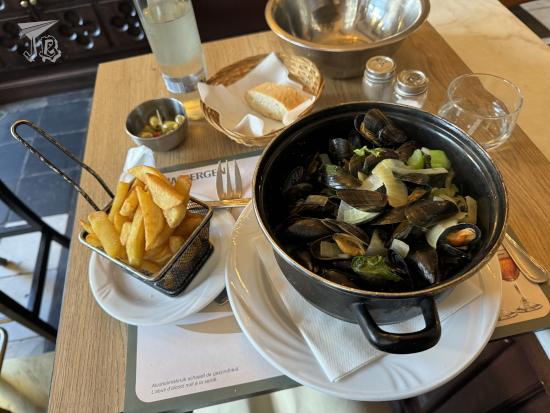
The beach has a sand area where most people sunbathe, but there is a long bridge separated in two sections – one directly built upon rock, Puente de Hierro and the other with arches to let the water flow through, Puente Canal. At the end of the half-kilometre of bridges, stand the ruins of the castle Castillo de San Sebastián, which today includes a working lighthouse, and an archaeological site. The first structure in the ancient island dates back from 1457, and the castle itself was built in 1706. Though it was warm and sunny, I walked the bridges and around the castle walls.

La Caleta Beach Cádiz & San Sebastián Castle

Upon my “return to mainland”, I passed by the bath house again and I reached a second castle, Castillo de Santa Catalina. The outpost, in the shape of a five-point star, was built towards the end of the 16th century to defend the city form sea warfare. In later years, a church and a sacristy were added, and from the 18th century onwards it was used as a prison. Today, it mostly hosts cultural or cinema-related events.

Santa Catalina Castle, Cádiz

I continued on my walk around the city, left behind a knee cramp, the Parador de Cádiz and Parque Genovés until I reached the bulwark Baluarte de la Candelaria and the park Jardines Clara Campoamor. From there, I went on towards a second bulwark and the remains of the city walls Baluarte y Murallas de San Carlos. The bulwark was built towards the end of the 18th century to protect the harbour. Not far from there stands the square Plaza de España with the monument to the 1812 Constitution Monumento a la Constitución de 1812, the political response to the Napoleonic invasion. A bit further away stands the fountain Fuente de la Plaza de las Tortugas, with lots of cute turtles as decoration.

San Carlos Bulwark and Walls Cádiz

Monument to the 1812 Constitution Cádiz

Turtle fountain in Cádiz

At this time I decided to get an early dinner around 18:30, so I bought some fast food to take to the hotel. That is when the ant invasion started. It was something I was not expecting – one or two bugs is workable, but this was a whole nest out for my fries. It was not nice. I decoyed them into bathroom and decided to have the room cleaned the next morning.

I set off again about 20:15 to look for a place to watch the sunset at the beach Playa de la Caleta, which did not disappoint, and I sat there until the sun disappeared beyond the water line. Luckily, I made it today, as it would be ridiculously windy the following day.

Sunset at La Caleta, Cádiz

I then found the street Calle the la Virgen de la Palma, at whose end stands the small church Parroquia de Nuestra Señora de la Palma. It was built in the 18th century and it hosts a sculpture of the Virgin Mary credited with stopping the waters during the 1755 tsunami. In the street, there is a signal marking the highest water point, but there were so many restaurants and people that it was impossible to find it!

Sculpture of the Virgin Mary

I went back to the hotel afterwards to have some sleep – I was beat. I did manage to make a stop at a supermarket to buy coffee and pastries for breakfast the following morning though. Because one late latte per trip is enough.

21st July 2024: From the Sea to the Butterfly (Madrid, Spain)

When planning for the day, the one thing I did not count on was the heat wave. I did take into account problems with trains, but apparently a half-hour delay is a non-issue by now and not worth mentioning. I reached Madrid around 12:30, and I had a reservation at 13:00 for a themed restaurant which had caught my eye when I saw it online. It was honestly a big disappointment, though I refused to let it ruin my day.

The restaurant is called Bestial, and it is ocean-themed. The pictures were awesome, it looked super cool, and I was pretty excited to go there. However, the experience was mediocre at best – I guess solo travellers are not their target audience, and it showed. As I was mainly ignored, I could watch how the restaurant worked. The waiters got the tables mixed up a few times, and they allowed others to take pictures with cocktails that were not theirs – that was weird, and I am pretty sure that against health code. I ordered a lemonade – the best thing – a tuna tartar and a crab bao without coriander, after checking that the coriander could be taken out. The tuna was tasteless, and the bao did have taste… coriander. All in all, I was not impressed by the food, even less by the service. Between the two dishes there were about 35 minutes waiting, and after an hour I just gave up and asked for the check, which was brought in a little book… and dropped halfway, then picked up from the floor… I just paid – the meal was not cheap – and left without dessert. A pity, really, but I really did not care any more.

Restaurante Bestial by Rosi La Loca

It was ridiculously early for my 16:00 visit, but I wanted to try my luck. I had chosen that day because CaixaForum Madrid was running two exhibitions that I wanted to see – Patagonian dinosaurs (which had just opened) and The Science of Pixar (which would end soon). The exhibition centre was booked out, so I could not sneak in before my time slot, but I managed to get my most burning question answered – how on earth were they going to fit a Patagotitan inside CaixaForum? Answer: they did not. They placed it outside, which was a fun surprise!

Patagotitan skeleton in front of CaixaForum Madrid

Since I had about an hour and a half, I decided to trot over to the painting museum Museo del Prado, part of the national network of museums, which I can access with my one-year card. I thought I might be luckier and the queue to enter without a reservation would work better. Indeed, I did not have to wait indeed, and I could have a look at a few of the masterpieces the collection holds (though not take photographs) – Francisco de Goya, Joaquín Sorolla, Diego Velázquez, Esteban Murillo, Fra Angelico, Hieronymus Bosch… Of course, not all the masters, because El Prado is enormous. It is also air-conditioned, and surprisingly, not as full as I half-expected. There was a queue when I came out, so I guess it worked out well!

I walked back to CaixaForum Madrid to see the two exhibitions I had booked. It was a bit before 16:00, but this time I did not ask, and just walked into the first exhibition – “Patagonian Dinosaurs”: Dinosaurios de la Patagonia, which had very little new information, and even fewer actual fossils, but a lot of dinosaur reconstructions. Those were cool. Aside from the Patagotitan mayorum placed outside, there were full skeleton replicas of Herrerasaurus ischigualastensis, Eoabelisaurus mefi, Leonerasaurus taquetrensis, Eoraptor lunensis, Condorraptor currumili, Brachytrachelopan mesai, Amargasaurus cazaui, Tyrannotitan chubutensis, Neuquensaurus australis, Carnotaurus sastrei, Gasparinisaura cincosaltensis and Manidens condorensis. There was also a Giganotosaurus carolinii skull. As for the real thing, a femur, a shoulder plate and a forelimb of Patagotitan, some teeth and vertebrae and a few invertebrates and leaves. It was really cool, and not extremely crowded for a dinosaur exhibit in summer. It was only the third day of the exhibit, so maybe it was not that well publicised yet? Out of the new species I discovered, Amargasaurus was my favourite – with the neck spikes it looked exactly like I would have imagined a dragon.

Patagonian Dinosaurs

Patagotitan front and back legs, along with a huge shoulderblade

The other exhibition that ran at the time was “The Science of Pixar”: La Ciencia de Pixar. It felt like a nerdy companion to Mundo Pixar, focusing on the maths and the process to create a Pixar film. Unfortunately, it was bustling with kids who – understandably – just wanted to smash buttons and make things light up. The exhibition had a lot of cool machines which simulate the different steps of creating a computer-animated film – rigging, modelling, lighting, rendering… The most interesting was an analysis called “What colour is this pixel?” taking into account movement, lights, shadows… It must be amazing to be able to visit the exhibit alone and be able to play with all the computers. I did find one where you get to simulate crowds using shoals of fish (from Finding Nemo) and I played with that for a while. There were also a few life-sized models from several films, miniatures and 3D mini-sculptures.

La Ciencia de Pixar

I left the venue after browsing the shop, and I walked down towards the theatre. It was still early, and I wanted to hit a couple of shops. Actually, I wanted to go to what is commonly known as the Primark flagship shop. The building Edificio Gran Vía 32 was originally erected in the 1920s to host the first department store in Madrid, Almacenes Madrid-París. It was designed by architect Teodoro de Anasagasti and used the most modern technology and materials at the time – reinforced concrete in the avant-garde style. The whole interior is built around an octagonal lightwell with a central staircase, and today the lowest four floors have been turned into the Primark shop, which has fitted screens and lightings while keeping the previous structures and railings. The modernisation project was undertaken by architectural studio RCCyP and it took three years until the shop opened in 2015.

Interior of Edificio Gran Vía 32

I continued off towards the theatre Teatro Real. I had a bit of time and some unspent calorie budget, so I decided to splurge at Starbucks with a whipped-cream Frappe for my pre-show snack. For the same price I had awesome third floor for Carmina Burana, I had a fifth-floor-in-the-back paradise ticket now. However, it was a lone seat with a great view, so I am not going to complain. I was going to watch the opera Madama Butterfly by Italian composer Giacomo Puccini – and sometimes I think that the better the singers are, the worse time I have with this show.

Madama Butterfly Promo

The main character is Cio-cio, a name that when pronounced in Italian sounds similar to 蝶々, [Choucho], butterfly in Japanese. When she is 15 years old, in 1904, Cio-cio marries an American navy man, Pinkerton, who intends to leave her and find a ‘decent’ American wife. Cio-cio is repudiated by her whole family when she converts to Christianity for her marriage. Three years later, she is alone, almost bankrupt, the mother of Pinkerton’s child, and a marriage broker is trying to sell her off to another prospective husband. Pinkerton returns to Japan with his American wife, who agrees to raise the child, but he cannot face Cio-cio because he is a coward. She (spoiler alert) prepares their son to go with him, then commits seppuku.

And even a bigger spoiler alert, I hate Pinkerton. Viscerally. My parents tried to start me into opera way too young to understand plots, I feel, and I did not want to do anything to do with it for a long time. However, at one point I wanted to see Madama Butterfly due to it taking place in Japan – being older helps, and I slowly learnt to appreciate the musical genre. Basically, by hating on Pinkerton.

Apparently, Teatro Real is known for its alternative settings and takes on classical operas. In this case, they let go of the old Japanese cottage in order to use… a modern-ish undisclosed Asian country. There was an overpass with Chinese signage, a billboard with McDonald’s and Bailey’s spoofs in Japanese (that did not make any sense), and the traditional cottage was exchanged for a greenhouse of sorts. There is a scene in the traditional opera in which the characters fill the house with flowers. In this case, they coloured the glass panes with hand paint. It was a great show.

Cast:

  • Cio-Cio-san: Ailyn Pérez
  • Suzuki: Nino Surguladze
  • F.B. Pinkerton: Charles Castronovo
  • Sharpless: Lucas Meachem
  • Goro: Moisés Marín

Artistic team:

  • Musical conductor: Nicola Luisotti
  • Stage direction: Damiano Michieletto
  • Set design: Paolo Fantin

Madama Butterfly Teatro Real

The show finished around 22:20. I walked up Arenal Street towards Sol. While I missed my first train because some people love to take up space while walking slowly, I made it for a good connection at Atocha, and I was actually home before midnight.

30th June 2024: Engines, illusions, history and tea (Madrid, Spain)

Since finding about my tea time outings, my sibling had been wanting to tag along to one. I was asked to organise something for the weekend that involved either Chinese hotpot or afternoon tea in Madrid. The hotpot place was booked out both days, but I found an afternoon tea opening on Sunday the 30th. I am too lazy to move out just for tea, so I organised a bit of a day out.

After an uneventful train ride, our first stop was at noon: Nave de Motores de Pacífico, the former energy centre that fed electricity to the original underground lines. Today, it is not in use and it has become part of the network of museums Museos Metro de Madrid. The warehouse was built by Antonio Palacios between 1922 and 1923 to home the diesel engines, transformers and fuel that single-handedly powered the underground system before the Spanish Civil War. The system was actually in place until 1972.

Warehouse containing the old underground engines

The building was erected in red brick, with white tiles inside, decorated with Palacio’s typical metallic green. The floors are ceramic tiles, and the engines are three monstrous vessel-powering pieces of engineering. These diesel engines created electricity, which then entered the transformers, and was sent to the power lines to feed the trains. At night, the excess was sold to the local street-light network.

Since we were going for afternoon tea to El Jardín de Orfila, where I have been before, I knew lunch was out of the question. However, we needed a snack. I planned that at Yatai Market, an… Asian food court of sorts. A number of stands come together to offer different cuisines and snacks, even full-sized meals. We tried a Chinese bao each and a couple of dim sums. I ordered a hoisin duck bao which was extremely yummy. I will definitely come back to try other stuff.

HotBao Yatai Market Cortezo

Afterwards, we headed off to the so-called Museum of Illusions. This museum is a compendium of optical illusion and installations designed to fool the brain into believing things that are either wrong or just not there: a distorted room so you look big in one corner but small in the other (Ames room), a vortex where you seem unable to walk straight, a rotated room, a room full of mirrors – there were a lot of illusions with mirrors actually – stereograms with hidden images, turntables, holograms…

We had a reservation for 14:00, and I was surprised at how chaotic entry was. I mean, they’ve been running the thing for a while now, someone should have figured out how to do crowd management, but no. Then, there were kids running and screeching all around, but it calmed down after a while. I had really hoped that the museum would be calm and half-empty at lunch time, but it was not so, not by a long shot. It was interesting though, and pretty fun.

Museum of Illusions Madrid

However, the experience was shorter than I had calculated, so I had to improvise an extra stop. Thus, we entered the local history museum Museo de Historia de Madrid, which tells the city’s history since Madrid became the capital of Spain. There are paintings, models, typical costumes, plans, maps, and Playmobil sets depicting of the uprising against the French in 1808. The museum is hosted in a former palace-like building which was actually built as a hospice. To the side stands the original Baroque chapel. It also has a lovely garden with a monumental fountain, which was relocated from its original place for conservation.

Museo de Madrid exhibits

Museo de Madrid - chapel and fountain

We spent some time there and then headed off to the building that now holds the office of the Copyright Owners’ association, a manor known as Palacio de Longoria. It was designed by José Grases Riera and built between 1902 and 1904. It is one of the few actual Art Nouveau buildings in Madrid, possibly the most important one. The façades were made in artificial stone, with sculptures and shapes resembling vegetation. I’ve wanted to visit it for a long time, but it is only open when there is an exhibition, and the stars had never aligned – until this time. There was an exhibition about urban music, and I was not going to let go of the chance to see the monumental staircase and the skylight.

Longoria Palace

We finally set off for afternoon tea at El Jardín de Orfila. Out of the several places I’ve tried afternoon tea in Madrid, this has been my favourite to date. The outside garden is lovely, but mostly, their scones are the best around.

We ordered green tea, and the snacks were finger sandwiches – smoked salmon and cheese cream, classic cucumber and cheese, pastrami – pastries – carrot cake, macarons, lemon curd – and the scones. This time round, I decided to eat the scones after the sandwiches in order not to be full when it was their time. The afternoon was pleasant, but we shared the terrace with another table, and later a loud lady who wanted a smoke. That broke the magic a little, but the tea was fantastic and the scones were great.

El Jardínde Orfila: tea serving for two

Afterwards, we just headed for the train station to get back to our places. Of course we missed the correct one since they run whenever they like. What else is new? But the fun part was being able to pull a fun day out from my sleeve, and it was not stupidly expensive either, so good fun, all in all!

22nd June 2024: Roman ruins in the Cuenca region (Spain)

This was actually the second try for this road trip. We (read: my parents) chickened out the first time because there was a slight storm chance. Since they were organising the day, I did not complain either time. I just stayed home when it was cancelled, and happily tagged along when it was carried out.

My parent’s curiosity was piqued upon learning that a bunch of archaeological sites were free until the end of 2024. I might have been responsible for that information, but to be honest I thought nothing of it at first. They randomly asked if I knew Recópolis, and I mentioned having visited it as it was free for the year. Thus, on the 22nd of June – a few weeks later, and on the second try – with a forecast temperature at noon of 31 °C and sunny, we set off around 7:30 towards the Roman villa Villa Romana de Noheda. The villa belongs to the hamlet Villar de Domingo García, and it was discovered in agricultural land by sheer chance, as it often happens. The complex was a farm and noble residence in use between the 1st century BCE and the 4th century CE, but it had been abandoned by the 6th. While most of the villa is gone, and not even half-excavated, the floor of the main house has been dug-up. It is covered by what is said to be the largest figurative Roman mosaic in the world, and it can only be visited with a guided tour.

The mosaic would have been in the room used to receive guests, the atrium. Right in front of the main door, the mosaic tells the story of Pelops and Hippodamia. In this mythological tale, the oracle told King Oenomaus that he would be killed by his son-in-law. Thus, whenever a suitor came to ask for his daughter Hippodamia’s hand in marriage, he would challenge them to a chariot race. If they lost, they would die – this happened 18 times until Pelops came along and Hippodamia fell in love with him. For his race, Pelops received a chariot drawn by winged horses from the god Poseidon. He then offered Oenomaus’ charioteer, Myrtilus, half of the kingdom, and a night with the princess, in exchange for his help to win the challenge. Myrtilus sabotaged Oenomaus’ chariot, and the king was killed during the race. When Myrtilus tried to collect, Pelops threw him off a cliff, and before dying, Myrtilus cursed the couple’s lineage. Several of their descendants were protagonists in myths of disgrace, madness and war – such as Agamemnon, Menelaus and Orestes.

Noheda mosaic

In the middle of the room there would have been a fountain or a pool, and the mosaic surrounding it has water fauna motifs. To the sides, there are representations of male and female actors of charades. On the final side there’s a double mosaic, meaning there was a refurbishing project and a new layer of tiles was laid over a previous one, both showing different geometrical designs. There is also a parade of gods and goddesses, and the representation of the myth of Paris. Paris was chosen to judge who among the goddesses Hera, Aphrodite or Athena was the most beautiful by giving her the Apple of Discord. Each goddess promised him a reward, and he chose Aphrodite, who offered him the most beautiful mortal woman: Helen of Sparta, King Menelaus’s wife. Paris and Helen ran away, Menelaus tried to recover his wife, and the whole episode lead to the Trojan War – Menelaus was one of Pelops and Hippodamia’s descendants, so one could say that Myrtilus’ curse was at work, and the mosaic was in continuity.

Noheda Mosaic

The villa really has nothing to see besides the mosaic, so we moved on. The trip to the next spot should have been around 20 minutes, but I do not know whether we got lost, or the Sat-Nav really, really overestimated the quality of the roads. Almost an hour later, we finally made it to Ercávica, a former Roman city in the tiny municipality of Cañaveruelas that overlooks the reservoir Pantano de Buendía. It clicked then that I had been thinking about getting there before but eventually dropped it in favour of other plans.

Before the tour through the ruins, we were shown a cave where a hermit-abbot, Donato ‘The African’, lived and died, and some graves excavated in the rock. The abbot lived in the 6th century, and after he died, his followers wanted to be buried around him. He actually managed to build a monastery, but everything is gone – and excavations cannot be carried out as it is in private property.
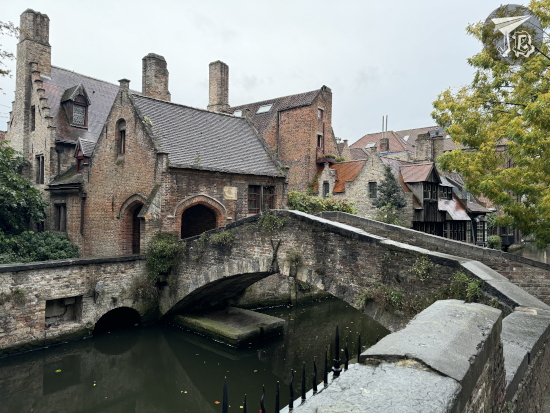
Ercavica cemetery

The Roman city of Ercávica was built around the year 179 BCE, as a new settlement after the Romans defeated the Celtiberian tribes in the area. The new dwellers were granted citizenship of the Empire, which made the city grow as neighbouring towns were abandoned and people moved there. The city reached its greatest splendour during the 1st and 2nd centuries CE, but it declined after the 3rd until it was abandoned in the 5th century CE.

There is not much left of the city but its foundations, a few centimetres of wall above ground, and some of the underground structures, such as cisterns and a small sauna – where a number of bats had made its home. The guided visit took about two hours, from noon to 14:00. It was hot and sunny, and besides the layout of the town, there was not much to appreciate – or did I get too picky after Pompeii? There were some remains of painting left, which was cool until the guide said they were printed reproductions glued on top the real ones. Bummer.

Snapshots of Ercávica ruins

There is what they call a volumetric reconstruction of one of the houses, to give you an idea of how big it would have been, and a lot of walking around up and down the hill. There are also some good views of the reservoir. Nice seeing the whole thing at least once, but I would not put it on my to-repeat-when-possible list. I could have done without the sunburn though.

Buendía Reservoir from Ercavica forum

However, my parent had planned the road trip this way because it could be combined with lunch in a famous restaurant, Casa Goyo in the village of Alcocer. It is not a particularly good place, but it has made a name for itself by serving enormous portions. The most famous dish is the sanjacobo – a type of schnitzel cordon bleu with two fillets of pork wrapped around slices of cheese and Spanish ham, then breaded and fried. It is actually better than it sounds. Casa Goyo’s sanjacobo is 2.5 kg of meat. Quite a lot. I tried to tell my parent that combining it with a salad was too much, but they did not want to listen – which in the end it meant that I came back home with about half of the sanjacobo to consume at a later time. Unfortunately, that meant cutting the time to explore Alcocer short – to none. It was probably too hot anyway.

Sanjacobo at Casa Goyo

All in all, three experiences unlocked that I don’t think I ever need to repeat again. The best one was the mosaic, but I do not think Ercávica was worth the heat nor the roads. Nevertheless, I am glad that I could see both Roman ruins at least once. I however stand behind the idea that the cloudy day would have been better…

16th June 2024: Southwark, the National Gallery and Kamijo at The Garage {London, England, June 2024}

According to the weather forecast, there was a chance of rain in London in the morning. When I got up and drew the curtains open, it was actually pouring, so I decided to wait the rain out. When I left the hotel around 9:00 to head to the queue, there was still a bit of drizzle which cleared as I was walking. However, when I reached the venue, I was surprised to find a notice on the door “We reserve the right to refuse entry. Anyone queueing before 16:00 will be refused entry.” Ho-kay, that sign had not been there the evening before – or I would have planned accordingly. I shrugged it off and resolved to make the most out of the morning and early afternoon, and be back at 16:00 sharp. I mean, what else could I do, mope at the hotel?

I took the Underground to the London Bridge stop, in Southwark. The first thing I came across was Borough Market, which had never even been in my radar before – I tend to stay on the other bank of the Thames. The market is an Art Decó building designed by Henry Rose in 1851. As a business, it had been in operation for centuries at the time though, and the building would get many refurbishments in the following years. Borough Market claims to be place for sustainable products with a short supply chain. There were wholesalers, coffee brewers, tapas bars and for some reason a bunch of guys yelling that everyone should try their mushroom risotto. The area was packed, and it was almost impossible to get a good picture.

Borough Market

Next to the market, stands Southwark Cathedral, officially Cathedral and Collegiate Church of St Saviour and St Mary Overie. London has four cathedrals: St. Paul and Southwark are Anglican, and Westminster and St. George are Catholic. Southwark Cathedral has stood in place for at least a thousand years. However, there is a legend that places its foundation in the early 600s, and there is archaeological evidence of a Roman road dating even further in time. The current structure is gothic, erected after the previous building was damaged in an area-wide fire in 1212, then transformed with the passing centuries. In the 19th century it was “remedievalised”, and in the 20th it became damaged by the Blitz and requited restoration. Today, it prides itself in being LGTB-friendly and having a resident cat, Hodge. It is also common that a fox, nicknamed Richard, visits the garden. Not sure either keeps the cathedral mouse- or rat-free, or they are too full with treats from the congregation.

Southwark cathedral - outside and nave

Southwark Cathedral details

After the cathedral, I headed to the actual reason I was in Southwark, The Old Operating Theatre Museum and Herb Garret. The museum is located in the attic of a former church – in other to access it, you have to climb up a spiral staircase with 52 steps, up the bell tower. The church was attached to a medieval hospital, in whose attic (or garret) the apothecaries dried medicinal herbs and stored medicines. In 1822, this garret became an operating theatre, with a huge skylight built in order to let light in – we are talking about a time when surgery was performed without anaesthetics, painkillers or antibiotics. The hospital was abandoned some 40 years later, and the theatre was lost to time, until it was rediscovered in 1952 – it is considered the oldest surviving operating theatre in Europe.

The museum has a small collection of pathology specimens, a bigger one of nightmarish medical tools, and a reconstruction of an apothecary shop, with a counter and a lot of herbs, and informative panels. Funnily enough, it also runs through the history of medicine, and the great London epidemics using… rubber duckies. Not collecting rubber duckies is becoming more and more difficult… Anyway, these particular rubber duckies have been painted and modelled over, and next to them there is a list of symptoms. From those, you need to diagnose the duckie with “silent killers of the past” – measles, tuberculosis, cholera…

The duckies were a good comic relief of sorts from the pathology collection and specimens, the pre-science artefacts, and the history underlying at the theatre itself. The theatre had several rows of stands where people watched / learnt from the operation while the patients were awake – allowing the procedures to be public was the only way poor people had access to medical treatment and the good surgeons. Honestly, the idea of surgery is scary enough, but just thinking about amputation without anaesthetics makes me shiver. Especially when you see what was used for it – basically a handsaw – with spectators.

The Old Operating Theatre and apothecary

It was still early afternoon, so I hopped onto the Underground towards Charing Cross and Trafalgar Square. I had not seen The National Gallery London since I was a child, and I remembered next to nothing of it, so I wanted to revisit it. The National Gallery, in the City of Westminster borough, dates back from 1824, when the government bought 38 paintings from a private collector – and it has been continuously expanding since then. The current building was designed by William Wilkings in 1832, and opened in 1838. the collection comprises over 2,000 paintings by 750 artists, among them Giotto, Leonardo da Vinci, Dürer, Michelangelo, Raphael, Tintoretto, Veronesse, El Greco, Caravaggio, Velázquez, van Dyck, Rembrandt, Vermeer, Canaletto, Goya, Constable, Delacroix, Degas, Monet, van Gogh…

Here’s the fun thing, I always thought I liked the impressionists, but it turns out that seeing Monet’s Water Lilies myself was rather underwhelming. Conversely, I found myself enjoying British landscapers a lot, especially Constable. I spent a few hours in here, looking for the masterpieces, but a lot of them were on loan to other sites.

National Gallery London

At one point I was taking a photograph and a gentleman thought he was on my way. When I reassured him he was not bothering me, he said something akin to “That’s because you’re a professional”. I wonder, a professional what? I was not carrying a camera or anything, just the phone…

I did a run throughout the whole gallery, and I was considering staying at the café for a bite, but… I was rather close to Leicester Square… so I thought I could walk there and check if I could have lunch at Coco Curry or somewhere in Chinatown. The line at Coco was rather short – surprisingly, since the Chinatown Coco is always pretty full. Thus, I decided to wait it out and have lunch there – after all, it is the “iconic” one, and the previous time I had only visited the Bond Street shop. I’m not sure when Coco became the feeling of a taste of Japan, but it is one of my favourite food places.

Coco Curry Leicester Square

I had a bit of extra time. Not much for exploring, too long to just stay at the restaurant. I wandered Chinatown a little, and then got to Leicester Square. I’ve been to the Lego store, and the M&Ms place, but there is also a tea boutique, the TWG Tea Shop which I had never stepped into. I did it this time, and I was really tempted by a few of the green teas in pretty tins. I however talked myself out of buying any, since it would be silly to take them to the concert, and if a water bottle is a hazard, I cannot imagine what would be thought of a metal box.

Instead, I headed back to Trafalgar Square and stepped into the church Saint Martin-in-the-Fields. This ancient church was rebuilt in the 1720s by James Gibbs – though it was originally “in the fields”, in the outskirts, by this time it was already part of the city. It is a simple rectangular nave with Corinthian columns and a vaulted ceiling. The church holds choir concerts every Sunday afternoon, and I sat there listening to the music for a bit. I then I headed off to Charing Cross to take the underground towards the venue and the surprise of my life.

The church of St Martin in the Fields

I arrived at The Garage for Kamijo’s Europa Tour 2024 “The Anthem” at 16:00 sharp thinking the queue would be assembling, but no. Apparently there was some “secret parallel queue” going on somewhere – there were between 40 and 50 people there already, so I only got the 18th place due to my type of ticket. I was a bit disappointed, but oh well, what can you do? Nothing any more, so I did not dwell on it. The promoter had actually sent a schedule in advance, saying that doors would be at 19:00 for the VVIPs and showtime at 20:30. Of course, it would not be followed, but it was good having an approximate timetable.

Queuing was okay, not extremely long since we actually went in around 18:30. There was a lady organising the line and giving out the numbers, and the venue staff were willing to go along that, so even if there was a “secondary queue”, there were no issues that I know of. The venue was a bit weird. There were a couple of stairs and a small hall before the actual concert hall. In that tiny hall, all painted black and stuck between the two fire doors, and under horrible lighting, stood Kamijo and his dazzling smile, ready for the meet and greets and pictures for the VVIPs and handshakes for the VIPs.

Kamijo The Anthem poster

I walked in, he gave me a warm smile, and said ‘bonjour’. I smiled back. I don’t know whether I’m getting old, or that sitting on the floor with Yoshiki was a game changer for my brain. And despite the fact that I’ve been neglecting my Japanese, I was able to convey my message. He was adorable. I said something like “There is no ‘I’ve missed you’ in Japanese, but it’s really been a long time.” A staff took our picture, he said thank you again, I said thank you back, then walked into the venue. I received my signed poster – a grey A4 signed in black. Apparently, gold or silver markers were out of the budget…

The barrier was almost completely full, but I was able to squeeze on the left, amongst the people I had queued with, closer to the centre of the stage than I had even hoped. Truth is that Kamijo tends to go to the right more often than to the left than the right, but since he holds his microphone with the left hand, you don’t see his face, so I was happy with my place. However, the hour and a half until concert started felt pretty long, since I was quite squeezed in. Maybe I should have sat, I don’t know. The concert started around 20:00, and it was no pictures of videos allowed.

The supporting musicians were Hiro on guitar – Hiro was also the guitar in La’cryma Christi, one of the most important V-kei bands in the 90s. Also on guitar came Yohio, a Swedish artist who managed to break into the Japanese scene a few years back – he actually got a lot of hate at the beginning, so good that he received some love. On bass came Ikuo (Bykk Zeichen 88, Rayflower), and on drums Ushi (Vorchaos). I’m not sure who the sound tech was, but he or she deserves to be yelled at – for about the first third of the concert Kamijo’s microphone was powerless, to the point that his voices was inaudible at times. There were a few songs I did not know (or was unable to identify due to the noise), amongst them the song that gives the tour its name: The Anthem.

Sound was so bad that at times I could not hear what Kamijo was saying, much less understand it. However, he sang two of my favourite songs, Moulin Rouge and Eye of Providence, and I was lucky enough that he repeated my favourite line twice. Despite my being amused by his idealisation of Napoleon, there is a line in Sang I (it took me stupidly long to realise that sang is French for ‘blood’) that resonates a lot with me: ‘Just like flying with the wind: no pain, only gain’. He started the song and interrupted himself halfway to make the musicians greet the audience in English. He either forgot he was going to do an emcee, or since he said it was his favourite song, he wanted to sing it twice.

He had fun, and unlike other times I’ve seen him, he indulged in a lot of “fan service” with the musicians, which sent the crowd screaming. Aside from the sound issue, there was one other hiccup during the concert. At one point Kamijo tripped over a wire, stumbled and ended up almost sitting down on the drums, but he did not fall, which was good.

Setlist:
  1. 闇夜のライオン (Yamiyo no lion)
  2. Conspiracy
emcee, with Kamijo saying he was glad to be back in London, and inviting the audience to go to Paris with him.
  3. Moulin Rouge
  4. The Anthem
  5. Louis 〜艶血のラヴィアンローズ〜 (Louis ~Enketsu no la vie en rose)
  6. 運命 (Unmei)
  7. Eye of Providence
  8. Habsburg
  9. mademoiselle
  10. CRIMSON FAMILY
  11. Castrato
  12. Beautiful Rock’n Roll
  13. 薔薇は美しく散る (Bara wa Utsukushiku Chiru; song by Lareine, Kamijo’s first band)
  14. Sang I & emcee, where the musicians said what the tour had meant for them
  15. Sang II
  16. Nosferatu
emcee
  17. Avec toi〜君と共に〜
  18. NOBLESS OBLIGE part 1
  19. Throne
  20. NOBLESS OBLIGE part 2
  21. Vampire Rock Star

During the emcees Kamijo said that he was glad to be back to Europe / the UK, and that he was especially happy to be in London. He talked about how great the tour had been, and how amazing an audience we were – though he tells that to everyone anyway. All in all, I had a lot of fun, enjoyed myself, clapped during mademoiselle and even jumped (once, I’m not that crazy) during Vampire Rockstar. Whenever his musicians or himself sing / yell the chorus, the words ‘vampire rockstar’ come out as ‘vampire lobster’. This time, he made the audience yell them all, so considering this was London, it sounded correctly for once.

Snippets pre and post Kamijo's The Anthem concert

After the concert, which lasted a bit over two hours, I bought a sandwich at the open-late supermarket next to The Garage, and headed to the hotel for a shower and sleep. I kind of… forgot to go to bed though. God, I love concert highs, as short as they are. It is always hard to come back to reality, but there was still half a day before that.

28th May 2024: Architecture and a niche restaurant (Madrid, Spain)

I was talking to an acquaintance whose child likes superheroes – so does the acquaintance, actually – about Comic Planet. After exchanging experiences, they mentioned that their spouse also enjoyed another thematic restaurant, and I decided that it could be a fun thing to do – and since they don’t take reservations for one, I roped my sibling into tagging along. And of course, since we were braving the horribly-working trains, I felt we should fill the day out. We could not leave early in the morning as I would have liked because I had this stupid bureaucracy appointment I had to get out of the way first.

We arrived in Madrid around 12:30, and our first stop was the Casa de Correos, an iconic building in the middle of the square Puerta del Sol. I did not even know you could just visit that building, nor that they ran exhibitions. It was a cool opportunity to check it out. Furthermore, the exhibition was actually something that I was quite keen on – the architect Antonio Palacios, commemorating the 150th anniversary of his birth. The exhibition, called “the Metro architect” Antonio Palacios, el arquitecto de Metro, is part of the network of museums managed by the underground company Metro. It consists mostly of photographs, a few of them by photographer Luis Lladó, an original model of Palacio’s project to renovate Puerta del Sol, and a modern model of a now-lost station, including lifts. It was a bit underwhelming, but still worth it – and free, so it was good either way.

Exhibition Antonio Palacios El Arquitecto de Metro

Afterwards, we headed out to the restaurant for our 13:30 reservation. The place is called Los Secretos de Lola (Lola’s Secrets ). It used to be just another bistro-grill in a street full of them, but some time after the pandemic, it reinvented itself. The restaurant has slowly turned into a Mecca of childhood mementos – Disney princesses, teddy bears, Harry Potter, Funko Pops… and crazy fun references like a Möet&Chandon spray to clean the tables. A lot of the food comes in a special piece of dishware – most of it Disney, but I can’t tell whether it’s actually licenced or a bunch of knock-offs. It was hilarious anyway. Though I am not much of a Disney person (my sibling is), my favourite film of theirs would be Mulan, and I just about lost it laughing when I checked the menu beforehand – I saw that they served gyoza in a Mushu-like dish, and decided we needed to order that. I was open to negotiation about anything else, really, but not the gyoza. The pasta in the Lady and the Tramp dish was also hysterical, but I could do without.

We reached the restaurant on point, and the owner directed us inside. We got a really cute Stitch table, but my sibling was not comfortable on high chairs, so we were accommodated at a Harry Potter one. We shared the non-negotiable teriyaki prawn-and-vegetable gyoza with wakame and bean sprouts, served on a Mushu-plate: Gyozas de gambas y vegetables al teriyaki, a plate of cheese Tabla de quesos variados (Blue cheese, Havarti, Mimolette, Emmental, Basilio, butter and breadsticks, on a Ratatouille’s Remy plate, which I had also found adorable) and a bluefin tuna tartar Tartar De Atún Rojo (on a little boat – I asked for no mango, and it was honoured; this was probably the weakest dish though). Finally, I tricked my sibling into a dessert called “Snowhite magic apple” Manzana Encantada Blanca Nieves: red chocolate capsule with white Kinder and a heart of caramel sauce, which came in an adorable “present box”.

Decoration: Los Secretos de Lola

Food Los Secretos de Lola

The food was good, and I really like themed restaurants, I guess, even if they are not “my” theme. We did not stay for the two hours, I think we were on our way after an hour and a half – and when we asked for the check, it came in a Frozen music box. Then, we left towards Palacio de Cibeles, the old “communication palace” of Madrid, designed by Antonio Palacios and Joaquín Otamendi, and erected between 1907 and 1919. It is considered one of the first and most important Modernist buildings in Spain, constructed in biocalcarenite, with three stained-glass skylights, catwalks on the third floor, and a magnificent lookout on the rooftop. Part of the building is being used by the town hall, the other by the public entity CentroCentro, which runs cultural activities in the open spaces – mostly conferences and exhibitions.

Palacio de Cibeles

We arrived a bit before 16:00. Since we had a ticket for one of the exhibitions at 17:30, we checked whether we could find a ticket for the rooftop. We found available slots at 16:30, which was great. Before the viewpoint access, we had time to wander around. Most of the free exhibitions were of modern art, and not that interesting, and I was more focused on the building itself. There is one dedicated to the World Heritage site Paisaje de la Luz, explaining why the area deserves its UNESCO place.

We found the staircase to one of the towers and we used it to move it through the different floors. It is a spiral staircase around the lift, with Palacios’ typical green tiles similar to the ones he used at Maudes hospital and Chamberí station. The catwalks were paved with glass tiles, and it was quite impressive above all. I loved the building, but after all, Palacios is one of my favourite architects, so it was to be expected.

Inside Palacio de Cibeles

Then, we went up to the rooftop, where we could have a view of all of Madrid around us, most interestingly one of the main arteries of the city – Gran Vía. The weather was great, maybe a bit too bright. The turns were 30 minutes, but we were done in about half the time, after taking two walks around the middle tower.

Lookout on the rooftop of Palacio Cibeles

We went down and sat for a little before we headed down to the basement to see “Notre-Dame of Paris: The Augmented Exhibition” Notre-Dame de Paris: l’Exposition Augmentée. It was only 3€, so I was not expecting much, but it actually blew my mind.

The experience was created by the company Histovery, which specialises in “virtual exhibitions” through an interactive tablet called “HistoPad”. The Public Entity in Charge of the Conservation and Restoration of Notre-Dame de Paris cooperates with the event, and the beauty company l’Oreal is a sponsor. The exhibition (which is simultaneously running in several parts of the world) follows the history of the Parisian cathedral Notre-Dame de Paris – it starts with the 2019 fire, which is a bit heart-wrenching, and then it covers a few key moments in the history of the cathedral, using a mixture of written information, videographs and a “treasure hunt” where you have to find pieces of a puzzle hidden within the virtual information. This is done using the tablet to scan 21 “time portals” that take you to a particular point in history.

Around 1160. The Dream of a Builder. At that time, Bishop Maurice de Sully came up with the idea to build a new, better, cathedral in Paris. The previous one was a smaller, Romanesque building, but the goal was a larger, architecturally impressive building. In this room (the second, actually, but the first chronologically), you find out about the “treasure hunt” – you need to find a number of hidden “light spots” to build a “stained glass window”.

Around 1180. The Gothic choir. This makes a small overview of the kinds of workers that helped in the construction, the kinds of stones, building materials – quarries, forests. I was extremely disappointed at this point when I came across a dog in the virtual quarry, but the program did not let you pet it.

1241. The Holy Relics: Louis IX, the future Saint Louis, bought the Crown of Thrones in Jerusalem and brought it to Paris. There was a great procession into Notre-Dame, where the relics were to be kept. Here there’s a spectacular recreation of the gates with the original polychrome sculptures and decoration.

1645. The Royal Promise: Widowed Queen of France explained to her son, future Louis XIV, that he was to renovate the choir of the cathedral and build a new altar, dedicated to the virgin Mary. This was the original splendour of Notre-Dame, before the French revolution broke out – the church was one of the targets of the revolutionaries, and a lot of the art was damaged and / or destroyed.

1804. The Imperial Coronation. After the French Revolution, Napoleon crowned himself “Emperor”, but a very “equal and revolutionary” Emperor. He held a ceremony for himself in Notre-Dame, with the presence of the Pope and everyone who was anyone in the totally equal new society.

1857. The Spire. Enter Viollet-Le-Duc, a major architect and restorer in France’s 19th century, whose theories influenced countless others. He revalorised gothic style in the country, managing to turn it into a “national style”. The man had the goal to restore and create buildings in “the gothic style that would have been if the Medieval workers had had the technology he had access to”. Historians have not been kind to him, accusing him of “inventing” stuff instead of “restoring” but kudos to him, he managed to make a lot of buildings survive to our time. In Notre-Dame, he is responsible for putting back a lot of the sculptures that were destroyed during the French Revolution. He also built the spire that famously collapsed in the 2019 fire.

2019-2021 (first and last rooms). A description of the restoration works that have been happening in and outside the cathedral since the fire, with special attention to the Paris firefighters who worked the incident. There is a very interesting part about safely removing debris and the original scaffolding, and the fact that there was a lot of lead in the cathedral that the workers had to be safe around. They also homage the “vertical workers” who had to remove collapsed pieces from the ground… hanging from ropes.

Notre-Dame the Augmented Exhibition

We completed the stained-glass window and signed up to get a diploma. The fun part is that most of the exhibition was not really… even physical. There were a few posters, a reproduction of one of the chimaeras, some small models… Nevertheless, it was extremely interesting – possibly the best “virtual exhibition” I’ve seen to date. The length of the experience is said to be 60-90 minutes… we stayed from 17:30 to 19:45, much longer than I had anticipated! Thus, we had to forfeit the last plan of the day to go back to the train system – which of course was experimenting delays. It took forever to get home. Because what else is new?

Time-traveller diploma after completing the treasure hunt in Notre-Dame the Augmented Exhibition

22nd March 2024: Trail of the 1808 Uprising, Comic Planet and Genesis (Madrid, Spain)

Among the activities organised by the Pasea Madrid program (Walk Madrid), there was one about painter Francisco de Goya. Goya was probably the most important painter towards the end of the 18th century. He was born in 1746 and died in 1828, having lived through four Bourbon Kings, the Peninsular War, the postwar and the Bourbon restoration.

Goya started his career in Madrid drawing bucolic cartons to be woven into tapestries. He eventually became popular painting portraits for the aristocracy first, the royal family later, until he was appointed court painter. Sometime along his career he contracted an illness that left him deaf, and his character soured. He started experimenting with other media besides canvas and mural paintings, and started creating prints, which are darker and fantastical. During the Peninsular War against Napoleon’s forces, he created paintings about the uprising, and prints showing the most awful part of human condition during armed conflict – the horrors of war. He did not become any more cheerful after the conflict, depicting famine and illness. His last set of art pieces are called the black paintings, black-and-ocre coloured nightmarish pieces which contrast with the life of his initial bucolic scenes and one of his most famous painted – the naked lady La maja desnuda.

In 1807, Napoleon tricked the Spanish king into abdicating and allowing his troops to march towards Portugal. Instead, the French just… stayed in Spain. Madrid was occupied on the 23rd of March 1808. On the 2nd of May, there was an uprising in town, carried out by plain citizens and a very small percentage of the Spanish soldiers. The rebellion was squashed and the rebels shot to death – where “rebel” meant “everyone caught with a weapon”, and weapons had been stones, knives and even plant pots. While the uprising was unsuccessful, it sparkled the Peninsular War, known in Spanish as the War of Independence. Goya, originally open to the French ideas of Illustration, painted two canvasses about the events. The first was “The charge of the Mamelukes” El dos de mayo de 1808 o La carga de los Mamelucos depicting one of the French units charging Madrid’s people; the second was “The third of May Shootings” El tres de mayo de 1808 o Los fusilamientos del tres de mayo, showing the executions in central Madrid.

After I arrived in Madrid, I started off the day with a Starbucks’ Iced Strawberry Matcha Tea Latte, a new flavour introduced this month. I had plans for a nicer breakfast, but my train was delayed so I had to get something to go, so it was this and a cookie. I really liked the drink, I hope it stays. I grabbed both and went towards the meeting point.

Starbucks' Iced Strawberry Matcha Tea Latte

The visit I attended was called “Goya and La Florida” (La Florida being a small hermit church the painter did murals for), but it was more of an exaltation of the May 1808 uprising. We met the guide next to the Royal Palace, where she summarised Goya’s life. Then, we moved on to a placard next to the palace that memorialises the uprising, and she described the event. We continued on towards the area of Príncipe Pío, saw yet another memorial to the uprising Monumento al Pueblo del dos de Mayo de 1808 and the archaeological remains of one of the forts.

Monument to the second of May

We went up the park Príncipe Pío – next to the Temple of Debod – and the guide explained the military shootings, and read a document. We continued towards the graveyard where the rebels were buried Cementerio de La Florida, next to which stands a monument to Goya Monumento a Goya: four stones, each one with a letter to form the word “Goya.”

Monument to Goya

We finally reached the hermit church Ermita de San Antonio de la Florida, where Goya painted the ceiling frescoes. Over time, they became so degraded that an identical second hermit was built to be used religiously, and the original one kept as a museum and the painter’s pantheon. The ceiling has a dome in which the artist painted St. Anthony’s miracle – as his father had been accused of murder, he resurrected the victim, who could identify the real criminal. The murals are done in al fresco technique, painted on fresh plaster, directly on the walls.

Hermit church of St Anthony

After I left the hermit church, I headed off towards Príncipe Pío station, where I met my relative. There’s this restaurant that I’d been wanting to try for a while, but I needed two other people to tag along in order to get the table I wanted – yes, I wanted a specific table in the restaurant, more on that later. We had a reservation for a late lunch at 15:00, since my guided visit finished at 13:00. We took the underground and alighted at the area of Cuzco, with still some time left.

While checking out how to get to the restaurant, I had came across an Asian supermarket nearby – and that led me to discover Calle General Margallo, a little cluster of Asian supermarkets and stores. We went into Ibero China Madrid and I was happy to buy a bunch of things at a very decent price, mostly Japanese (curry and miso), but I also bought some Filipino Sky Flakes Crackers that I used to get from an acquaintance and had not found for years. Afterwards, we headed to the restaurant.

Comic Planet is an American-food eatery set around the superhero theme – murals on the walls, actual-size figures from DC and Marvel films, and even some prop reproductions. The dishes are “inspired by” superheroes and villains, with a lot of colourful additions.

When making the reservation, I was luckily able to book the table I wanted – and lacking any John Constantine decoration, who is my favourite “almost mainstream” comic character, the table I aimed for was the Aquaman one; I liked Aquaman before Jason Momoa made him officially cool. To be honest, even if I really wanted to check the restaurant out, I was a bit limited on what I could order – way too much coriander. I wanted a burger and a dessert – and a coke chilled with vanilla ice-cream (Coke & Vainilla Ice 1923). Unfortunately, our third party member was almost forty minutes late, so in order to keep the table we needed to exchange desserts for a starter. When the three of us were there, we ordered our mains.

Our starter (for two) was the “Infinity Gauntlet”: cheese sticks wrapped in dough (tequeños) with five sauces – tartar, spicy, mango, BBQ and comic special “cocktail”. The name of the dish refers a weapon created by Thanos, villain in the Marvel comics Avengers, made famous by the films.

My main was a Cat Burger (a reference to Batman’s Catwoman) – a “snobbish” beef patty with caramelised onion, duck foie gras and melted Brie cheese, with regular chips. My relatives ordered a Super Comic Burger (Grilled beef with egg, Oldenburger cheese, fried plantain, guanciale and “kryptonite” – whatever that is. The bread was… blue, and the chips red) and a Hellboy brioche (smoked and spiced pork, natural tomato, Edam cheese, egg, red onion pickled in lime, coriander, mustard and sugar), a reference to Dark Horse Comics’ Hellboy, one of the few creator-owned characters out there.

Comic Planet Madrid Food

One of the greatest things of the restaurant is that you get to hang around and take pictures with and of everything. The restaurant has two floors, and you are free to explore them. Aside from the murals and real-life figures, there are busts of bad guys, and even a homage to one of the most prolific comic-creators in history, Stan Lee. They also have a store with a bunch of merch (surprisingly… no actual… comics).

Comic Planet Madrid decoration

Afterwards, because the weather was nice and the forecast was rain all the following week, we walked down to the Comunidad Evangélica de Habla Alemana – Friedenskirche (German-Speaking Evangelical Community – Church of Peace), who were running a video mapping show in their church, Genesis.

The show follows the first three days described in the Christian Bible’s Book of Genesis, as God creates the earth. On the first day, God separated light from darkness; on the second day, God created Heaven (the sky in some versions), and on the third, he created the lands, seas and vegetation (nature in some translations). The church is a Neoromanesque building with mosaics which helps the otherworldly aura of the experience.

The show, designed by the company Enoarium has five parts: First Day: Light; Second Day: Sky; Third Day, first part: Water and Land; Third Day, second part: Nature; Meditation. When we went in, there were already lights on, a pretty universe-like lighting. There were pouffes to sit / lean on the floors and chairs. I chose a pouffe, thinking that it would be hard to stand up later, but oh well. I had about an hour to get round to it. It was a really good idea, because watching the ceiling was much more comfortable than having to look up.

It was a bit difficult to notice when the one day became the next, because the lights flowed really nicely and one theme faded into another. First, the whole church went dark, and there was a bit of light in the centre of the ceiling that became wider and wider. The white light started mixing with blue, which first was the sky and eventually turned into the sea. Gold / brown bits after a while represented the land, then more blue / purple as more sea, and when it turned green we had reached the creation of vegetation, which exploded in tons of colourful flowers. Eventually, everything dissolved into candles and lamps. The music was nice, too, mostly coral in Latin, I think.

Genesis Madrid stills

Genesis Madrid stills

Afterwards, we separated and I headed off to the train which – what else is new – was stupidly delayed, so I was stuck at the station for almost 40 minutes until my train came. The only good thing was that another in the same general direction came three minutes before, so most people got onto that, and mine was pretty empty.

9th March 2024: Minerals, fossils & trains (Madrid, Spain)

I might not be the most people-person ever, but if there is something that makes conventions extra fun, it is seeing attendees unapologetically geek out about what they love – in the case of Expominerales, that would be… rocks. Of course, this is an over-simplification. Expominerales is held yearly in the mine and energy engineering school Escuela Técnica Superior de Ingenieros de Minas y Energía (ETSIME) in Madrid. The year 2024 marks the 43rd edition of the event, which is considered one of the most important fairs in Spain in the topic of Earth Sciences – minerals, fossils, gems, and meteorites are widely available to the public. Aside from the small historical museum Museo Histórico-Minero Don Felipe de Borbón y Grecia, there were dozens of exhibitors with all kinds of items for sale, ranging from a few euro to several thousands. These year there were a few lectures, too, and coincidentally, the two of them I was most interested in happened on Saturday, one after the other.

I arrived at the ETSIME around 11:00, and I walked around the stands a couple of times. I have to say that I wanted everything, but I set a budget and I was able to stay around it, after shopping and lunch. At noon, I settled to listen to the lectures – one about the rehabilitation of an ancient gypsum mine in a hamlet called Hornillos de Cerrato, in the area of León. The other one versed about the uses of an already-rehabilitated one in the south of Spain, home to a huge geode. Both of them were pretty interesting, though the conference room was freezing. Someone had forgotten to turn on the heater there, it seemed…

Expominerales 2024 at ETSIME

After the two conferences, I had a last round to buy a last thing, so in the end I bought an iron-meteorite pendant, a fossilised shark tooth pendant, a plesiosaur tooth, and a soil sample of the K–T boundary. A plesiosaur was a marine reptile with flippers, a short tail and a long neck. The K–T boundary (now named the Cretaceous–Palaeogene (K–Pg) boundary) is the theoretical layer of iridium-rich black sand that was formed by the meteorite that caused the extinction of non-avian dinosaurs – and basically most life at the time, in one of the great world-wide extinctions in the history of Earth.

Shopping from Expominerales

At 14:30, I had a reservation for lunch at a Japanese franchise called Ramen Shifu. While I had originally been looking forward to trying the ramen (and I got my hopes pumped up when I read that they were Hakata ramen style), the noodles were rather disappointing. Fortunately, the okonomiyaki – Japanese pizza of sorts, made with a base of cabbage and topped with sauce and bonito flakes, was all right. On top of everything, paying was stupidly difficult because they did not have change.

Shifu Ramen ponzano - okonomiyaki and ramen

When I came out of the restaurant though, it was raining like crazy. I pulled out my umbrella and hopped towards the closest underground station, as my next destination was inside the metro system – one of the Underground’s museum network Museos de Metro de Madrid the collection of classic trains Estación de Chamartín: Exposición trenes históricos, inside the Chamartín stop. The exhibition displays four historical trains, restored from among the first ones that ran under the city, and some memorabilia. It was a bit underwhelming – more like false advertisement. I hoped I would be able to snoop inside the trains, since that was the photograph that opened the webpage, but unfortunately they were cordoned off. There was however a map with the works by Antonio Palacios in Madrid, which will become handy eventually.

Classical Train Exhibition Madrid

Afterwards, I just headed off towards the train station and got back home.