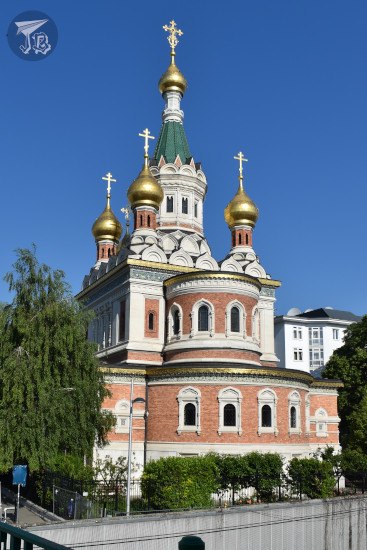
It was the morning of Hyde’s concert in Vienna, aptly called Hyde Orchestra Tour 2026 JEKYLL in Wien. D****e wanted to go and wait for the singer at the entrance of the Wiener Konzerthaus, so I headed off on my own to wander around. I got my coffee at a bakery, and started exploring the area. Our hotel was very near the Orthodox cathedral Kathedrale Z. Hl. Nikolaus in Wien. The building was erected in the Neorussian style, using blueprints by Grigory Kotov and consecrated in 1899. I think it was open, but I was still halfway through my coffee and I didn’t want to try and enter with my drink in hand – much less have to toss it. Besides, it was close to the Russian consulate and there were a few armed soldiers around, which made me a bit nervous.
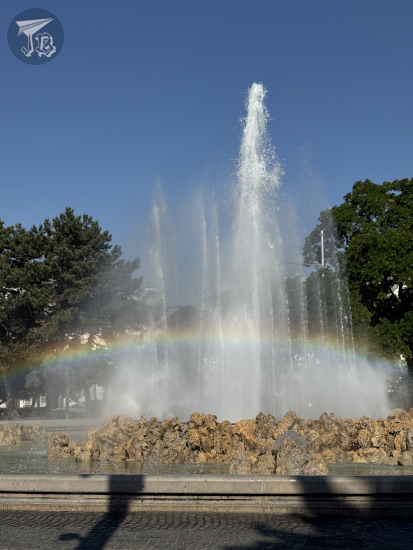
I walked farther downtown and came across a little square, home of the Hochstrahlbrunnen. This fountain was built in 1873, to commemorate the opening of the new high-pressure water supply system. It tries to symbolise the Alpine water coming into the city by sprouting water upwards – and due to some fluke, the morning had created a rainbow.
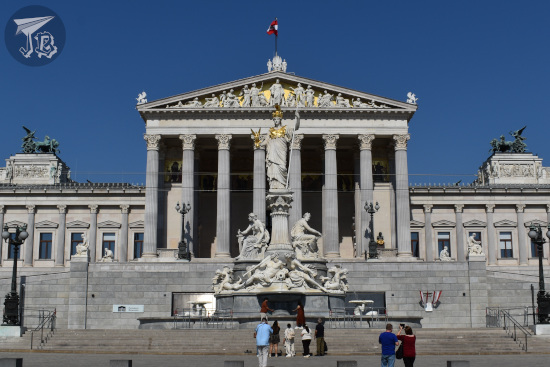
I was pretty sure that the Vienna Museum would be closed since it was a Monday, but I checked anyway as I was literally around the corner – it was. Thus, after waving at St. Charles’s Church Karlskirche, I went on towards the city park Buggarten, where the Riding School horses are sometimes taken to literally prance on grass. No luck – or maybe it was already too late in the morning as it was pushing 9:00. I continued along until I reached the Austrian Parliament building Parlament Österreich with the impressive monumental fountain Pallas-Athene-Brunnen depicting the Greek Goddess Athena, patroness of wisdom and war, holding a spear on her left hand, and Nike, goddess of Victory, on the right. The parliament is erected in a Historicism style, evoking a Parthenon building. Both the façade and the statue are decorated in gold.
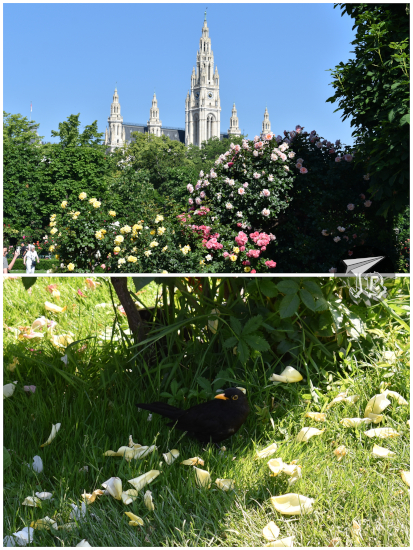
As the previous times I have visited Vienna (… this sounds like I am in Vienna a lot), there was something going on in the square / park in front of the town hall Rathaus, which made photographs difficult. However, on the other side of the street, the Schönbrunn rose garden was open to visitors, albeit a bit withered in the heatwave – it was barely 9:30 and there were no shadows whatsoever, which for me is… weird. I mean what better place to plant trees than an actual garden?
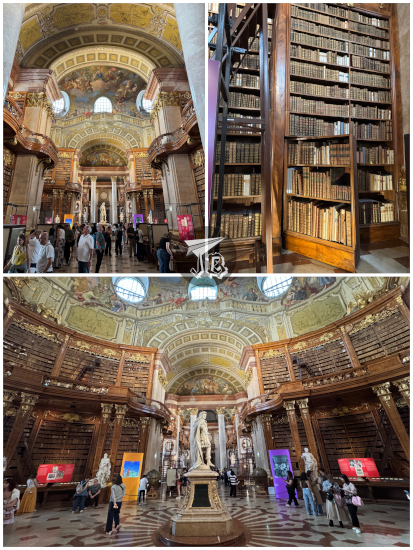
My first ticket of the day was for the Papyrus Museum Papyrusmuseum, which was supposed to open at 10:00. It is part of the Austrian National Library Österreichische Nationalbibliothek, and located inside the Schönbrunn itself, but accessed from a completely different area. There was an automatic glass door that opened if you got close, but there was a “do not enter” notice on it. Beyond the door, automatic access turnstiles, and what looked like a ticket counter with a lady behind it. In the hall with me, a few other people wandering around, as if waiting. At 10:15 I decided to risk someone yelling at me in German for ignoring the sign and went past the door, placed my e-ticket on the machine and went in when it bleeped green. Nobody uttered a word, so I followed the directions for papyri. A nice gentleman looked at my ticket at the entrance of the small museum and waved me in, so I started exploring.
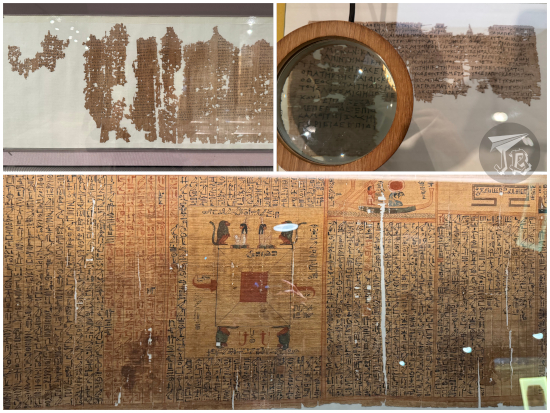
The collection comprises originals and copies mainly from Greece, Egypt, and the Arab world, including pieces that date from the 460s BCE. Some are pieces from epic stories and religious texts, but most are way more mundane – trade contracts, such as credit agreements and leases. Highlights include a piece of the tragedy of Orestes written by Euripides himself, which even records the musical notes for the performers’ chorus. One of the most important pieces cannot be seen as it is too delicate to show, it is an ancient map of the world. But the main event is displayed in a small darkened room – a copy of the Egyptian Book of the Dead in all its hieroglyphical glory.
The Book of the Dead (actually, “Spells of Coming Forth by Day” [rw nw prt m hrw]) is a collection of funerary texts dating back from the New Kingdom. It comprises the magic spells that would assist a dead person’s journey into the underworld and the afterlife. They were compiled during a period of over a thousand years. A number of these spells would also be carved or painted on the walls of the tombs or the sarcophagus.
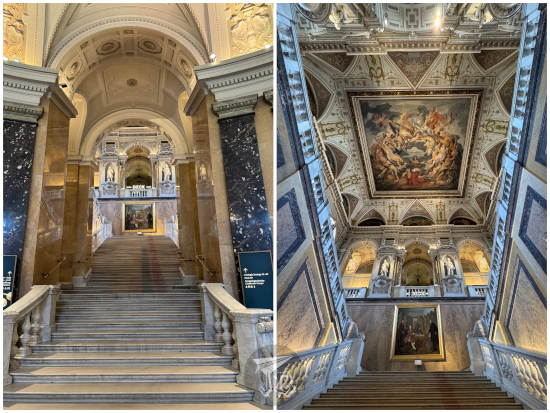
And what else was visitable on a Monday morning that appealed to yours truly? It is true that the fine arts gallery was open but let’s be honest. It is right opposite the Natural History Museum. We all know where I am going to end up – any natural history museum, in this case the Naturhistorisches Museum Wien. And to my surprise, the staircase was empty for a few seconds and I managed a photograph!
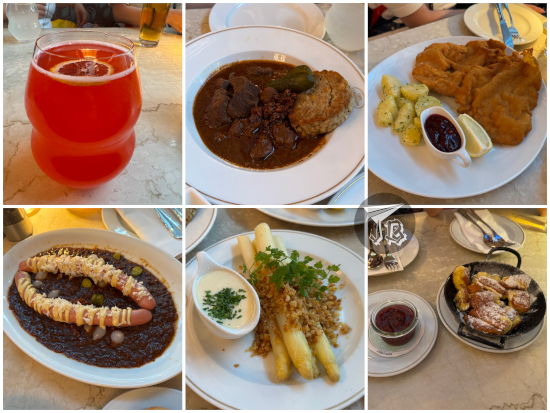
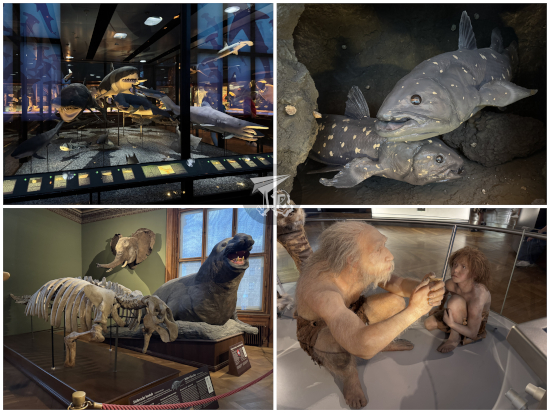
Not being in any kind of hurry, I was able to explore the wards I had not visited before, which included biodiversity. While taxidermy is not an art that draws my attention, I’ve really learnt to appreciate the small glass models of marine animals from the 19th century – read: I adore them. I walked around the second level first, which deals with extant fauna. After I was done, I decided to have lunch in the Kuppelhalle Café for lunch, where I tried an amazing drink with apple juice and sparkling water and something advertised as meat loaf which was… some kind of stew but was very nice.
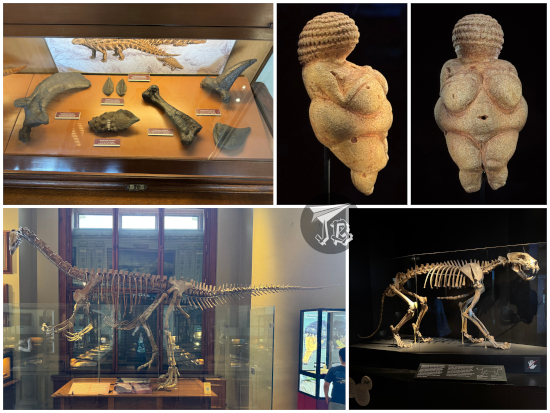
Afterwards, I continued down to level 1, where I strolled around minerals, fossils, mammoths and the origin of man. That included the dinosaur hall and the pièce de résistance of the museum – the Venus of Willendorf, a 30,000-year-old figurine of a carved in limestone. The figurine is about 11 cm tall and depicts a naked faceless woman with large breasts. It is speculated that she is either a fertility charm or the self-portrait of a real woman (who would not have been able to see her own face as mirrors did not exist). It was found in north-east Austria in 1908, in an archaeological dig near the town of Willendorf, hence the name.
I finished my visit in the temporal exhibition “Good collecting, bad collecting”, which reflects on the origin of some of the pieces that museums have – whether there is a specimen or a lot, and the difference between conservation, display and research. A chilling corner told about how during Nazi occupation, some Jewish individuals were coerced to sell their collections, especially fossils, to the museum for pennies. Recently, under the Reparation Act, the museum has been trying to locate the rightful heirs to those exhibits – some of them have been found, others have not replied, and even some have donated the items back to the museum.
I headed out and stopped at Starbucks for a drink, then by a bakery to buy sandwiches that I could take to D****e at the venue, and for us to have dinner after the concert. I ended up distributing a few of those amongst her friends waiting there – I got paid back in yen, too, hilariously. I stayed about an hour, but turned out that as they waited Hyde had used another entrance, so the group had been unsuccessful seeing him. Once we had confirmation that all the musicians were in, we decided to head back to the hotel for a while to get dressed up. Or down. My nice clothes were too hot for the weather… In the end I managed a combo that would sort of work – and not have me die of heat stroke.
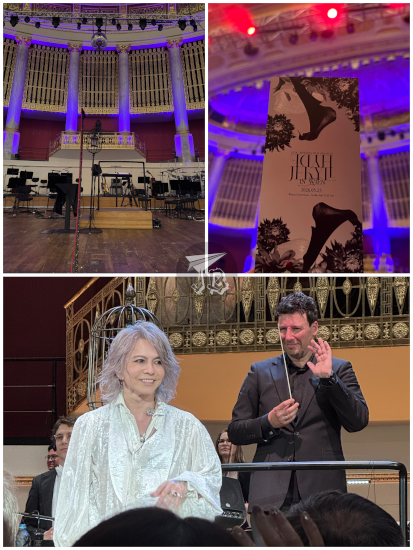
Wiener Konzerthaus is an early 20th century concert hall. It is not one of the grand classical halls, but was conceived for festivals, more accessible to the general public than the Musikverein. It currently has four halls, the largest one being the one where Hyde’s concert was to be held – the Great Hall Großer Saal, which seats 1,840 people. A few more, probably, with the extra hand-placed rows, but it was not sold-out. There had been a bit of a turmoil among the Japanese fans about the dress code, and whether formal attire was required, to the point that the organisation had to issue a mini-statement on “no dress code”.
The doors of the building opened an hour before the Hyde Orchestra Tour 2026 JEKYLL in Wien concert, but once inside, we got stuck in the reception area, waiting until access to the actual seating opened. This is a tactic to have people wait around the bars and spend some money, I know, but I still find it weird. Unlike Great Britain that checks at the entrance doors, tickets would be checked inside. Once the process finally started, I headed to a worker using a wheelchair, because nobody else seemed to want to go to her. Thus, we were amongst the first ones in. Once we went upstairs, the actual Großer Saal was still closed, so we had to wait again.
There was a pamphlet on sale, which was barely a folded brochure with the setlist on. The price was 5 € and in theory only one per person. The system could be tricked by going to a different person to buy the pamphlet each time… But to be honest, it was almost daylight robbery, and I’m not sure who would want to hoard them.
When we finally could access the venue, seating in the first few rows was a chaos. There were two rows of chairs for guests of the Austrian organisers and some of the people who had come from Japan, and then the first row of the actual venue, which was already labelled second. Or something. It was very confusing. After a lot of shuffling and reseating, we were all ready and the concert started at 19:35. My seat was great for views (no photography allowed though, unless you were an Embassy aggregate) on the first public row, which actually I think was the real fourth row. Unfortunately, it was not that great for acoustics – I was right in the middle of the trombone’s sound flow, so at times that was everything I could hear (I am told this was not a problem in the recording or other rows behind).
My general impression of the Hyde Orchestra Tour 2026 JEKYLL in Wien was not entirely positive. The assemble of musicians is credited as “Vienna Super Orchestra” Kulturverein Orchester Wien, conducted by Lorenz C. Aichner. If the role of the conductor is “study and understand the pieces really well”, I did not feel like he did his homework – he kept pushing the instruments to go louder when he should have been tempering them to make sure the main vocalist’s voice carried over. He was also very bouncy during the wrong songs. It gave me the impression that he felt it was his show, which it wasn’t.
While the names of most of the musicians were not disclosed, we knew that Hyde brought multifaceted musician hico (Hiroki Horiko [堀向彦輝]) as “coordinator” and pianist – he actually was the one giving the calibrating note to the first violin. Also from Japan came Hiroshi Kido [城戸紘志] on drums, Masato Ishinari [石成正人] on guitar, Junichi Sunayama [砂山淳一] on bass, Yuho Yoshioka [吉岡悠歩] and Chihiro Takahashi [たかはしちひろ] on backup vocals and Hidefumi Usami [宇佐美秀文] as “manipulator”, which I think it means in charge of the synthesiser.
The setlist was:
1. Die happily (from the Jekyll album)
2. SSS (from the Jekyll album)
3. Maisie (from the Jekyll album)
4. So dreamy (from the Jekyll album)
5. Honey. This is actually a L’Arc~en~Ciel song, but one of the few that Hyde holds all rights for. Hence, it’s used and overused. Although it is a ballad and fits the overall tone of the concert, I did not particularly care for the Bossa nova version of it.
6. Nostalgic (from the Jekyll album)
7. Glamorous Sky. I’ve never been much of a fan of this, but I really enjoyed it in Paris, so I’ve started to warm up to it.
8. Tattoo (from the Jekyll album). I’d say this was my favourite song from the new album.
9. Final Piece (from the Jekyll album). I really liked this.
Local gourmet segment. Apparently, a staple of the Jekyll Tour is eating something famous from the place where Hyde is performing at. In this case it was, of course, Sacher-torte – actually a small Sacher Würfel cube that he gulped down in one go. He also slipped in a trademark “are you fucking ready, Vienna?” Though at one point he did introduce himself in German, most of the communication was in English. He also improvised a little tune to the lyrics of “please listen to one more song before going to the loo in the intermission.”
10. Defeat
Intermission.
11. Fading out (from the Jekyll album)
12. Smiling (from the Jekyll album)
13. The Abyss (from the Jekyll album)
14. Evergreen. I remember when this song came out, in the album Roentgen. I did not like it much, and would skip it in the car all the time. I loved the live version. Take that, 2003 me?
15. Forbidden Colours (Ryuichi Sakamoto / David Sylvian cover). This was a song I’ve heard him sing before, and I enjoyed it.
16. Zipang. This is one of Hyde’s collaborations with Yoshiki, and Yoshiki might break my heart again and again, but one thing that you have to give him is that he is a great musician, and he writes and arranges to make his vocalists shine. And boy, did Hyde manage to shine with this. It was absolutely spectacular. And then…
17. Red Swan, another collaboration with Yoshiki. And I remembered Yoshiki in London talking about that song, and how the red symbolises blood and how the bloodied swan is a metaphor for trying to survive. I’ve seen the song performed before, but either sung by another performer, or a recording. But this time it was live, by the man it had been written for. And I lost it, dissolving into a very discreet meltdown that fortunately nobody around me noticed. Just don’t tell, it’s a secret.
18. 夢幻 “Mugen”, a collaboration with My First Story that was the theme music for a popular anime.
19. Last Song
Hyde sang the first part dressed in black, donning a wide-brim hat, and the second part in white. He used a microphone stand embedded with red Swarovski crystals. All in all, we got the whole Jekyll album, which had been composed for this, sprinkled with a couple of power ballads and an arrangement or two. What I didn’t get were my two favourite slow songs – Shallow Sleep and The Cape of Storms, which helped me a lot during some hard times in my life. I think that is why even when I disagree with how the musicians act or speak at points, I keep going back to them. There is gratitude in me, for the pick-up times.
We left the venue and headed to the back door – the one that the singer had used to walk in. This is something common amongst Hyde (and Hyde-adjacent) fans, called demachi (出待ち, literally waiting at the exit). Normally, you only see Hyde going away and waving from a car. Of course, you also cheer and say goodbye to every musician that comes out – from a respectful distance, of course. Obviously, nobody had explained this to either the director or the strings, because they went out for a smoke and were utterly surprised. A couple of the ladies from the Austrian Tourism organisation who were around too took it in stride and whenever they came in and out made a small curtsey and waved back. Others took videos and photos. Most jumped out of their skin.
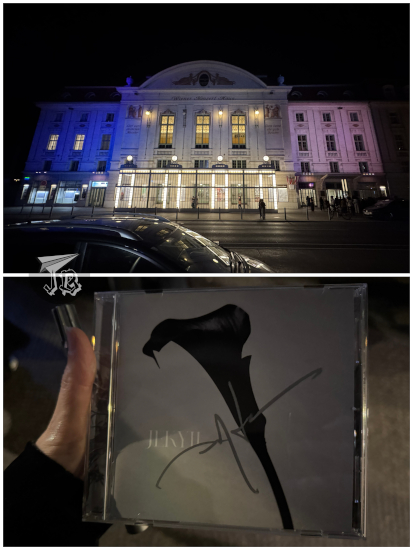
As I said, normally you wait and wave, maybe catch a glimpse of someone. This time around, Hyde stopped to sign stuff, and that is how I now own an autographed copy of Jekyll… That was… unexpected.
We had sandwiches waiting at the hotel, but since there were a bunch of D****e’s friends around, we ended up heading out to a nearby McDonald’s – which was the only thing open at the time. I tried a “hot honey wrap” (it was a time-limited offer and I was curious. And I know I can survive Austrian spicy) which was surprisingly… interesting. And afterwards, we headed back to the hotel and I crashed after a long shower.