25th May 2026: Hyde, Jeckyll, and everything in between {Vienna & day trips, May 2026}

It was the morning of Hyde’s concert in Vienna, aptly called Hyde Orchestra Tour 2026 JEKYLL in Wien. D****e wanted to go and wait for the singer at the entrance of the Wiener Konzerthaus, so I headed off on my own to wander around. I got my coffee at a bakery, and started exploring the area. Our hotel was very near the Orthodox cathedral Kathedrale Z. Hl. Nikolaus in Wien. The building was erected in the Neorussian style, using blueprints by Grigory Kotov and consecrated in 1899. I think it was open, but I was still halfway through my coffee and I didn’t want to try and enter with my drink in hand – much less have to toss it. Besides, it was close to the Russian consulate and there were a few armed soldiers around, which made me a bit nervous.
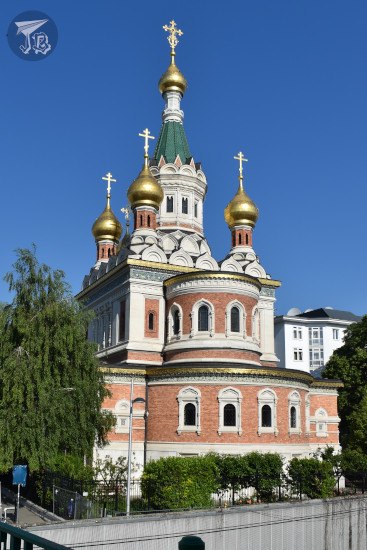
Russian cathedral with bulbous towers

I walked farther downtown and came across a little square, home of the Hochstrahlbrunnen. This fountain was built in 1873, to commemorate the opening of the new high-pressure water supply system. It tries to symbolise the Alpine water coming into the city by sprouting water upwards – and due to some fluke, the morning had created a rainbow.
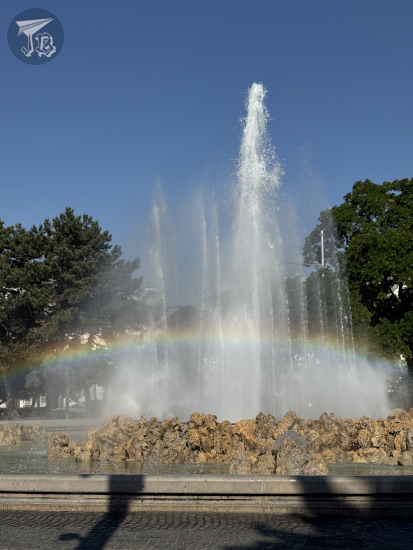
Fountain with a rainbow running across

I was pretty sure that the Vienna Museum would be closed since it was a Monday, but I checked anyway as I was literally around the corner – it was. Thus, after waving at St. Charles’s Church Karlskirche, I went on towards the city park Buggarten, where the Riding School horses are sometimes taken to literally prance on grass. No luck – or maybe it was already too late in the morning as it was pushing 9:00. I continued along until I reached the Austrian Parliament building Parlament Österreich with the impressive monumental fountain Pallas-Athene-Brunnen depicting the Greek Goddess Athena, patroness of wisdom and war, holding a spear on her left hand, and Nike, goddess of Victory, on the right. The parliament is erected in a Historicism style, evoking a Parthenon building. Both the façade and the statue are decorated in gold.
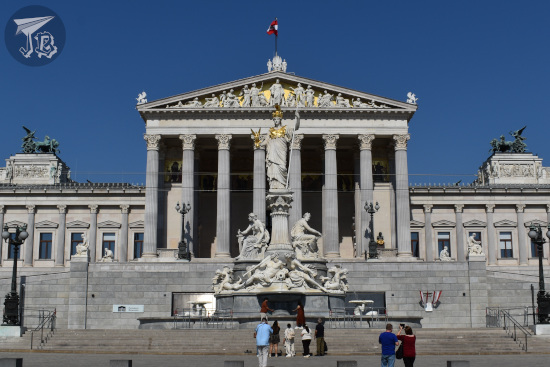
Neoclassical building with the statue of a Greek goddess standing in front

As the previous times I have visited Vienna (… this sounds like I am in Vienna a lot), there was something going on in the square / park in front of the town hall Rathaus, which made photographs difficult. However, on the other side of the street, the Schönbrunn rose garden was open to visitors, albeit a bit withered in the heatwave – it was barely 9:30 and there were no shadows whatsoever, which for me is… weird. I mean what better place to plant trees than an actual garden?
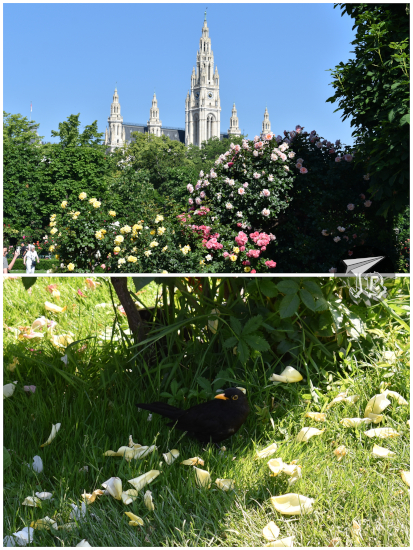
Rose garden with a neo gothic building in the background and a blackbird jumping on the grass

My first ticket of the day was for the Papyrus Museum Papyrusmuseum, which was supposed to open at 10:00. It is part of the Austrian National Library Österreichische Nationalbibliothek, and located inside the Schönbrunn itself, but accessed from a completely different area. There was an automatic glass door that opened if you got close, but there was a “do not enter” notice on it. Beyond the door, automatic access turnstiles, and what looked like a ticket counter with a lady behind it. In the hall with me, a few other people wandering around, as if waiting. At 10:15 I decided to risk someone yelling at me in German for ignoring the sign and went past the door, placed my e-ticket on the machine and went in when it bleeped green. Nobody uttered a word, so I followed the directions for papyri. A nice gentleman looked at my ticket at the entrance of the small museum and waved me in, so I started exploring.

The collection comprises originals and copies mainly from Greece, Egypt, and the Arab world, including pieces that date from the 460s BCE. Some are pieces from epic stories and religious texts, but most are way more mundane – trade contracts, such as credit agreements and leases. Highlights include a piece of the tragedy of Orestes written by Euripides himself, which even records the musical notes for the performers’ chorus. One of the most important pieces cannot be seen as it is too delicate to show, it is an ancient map of the world. But the main event is displayed in a small darkened room – a copy of the Egyptian Book of the Dead in all its hieroglyphical glory.

The Book of the Dead (actually, “Spells of Coming Forth by Day” [rw nw prt m hrw]) is a collection of funerary texts dating back from the New Kingdom. It comprises the magic spells that would assist a dead person’s journey into the underworld and the afterlife. They were compiled during a period of over a thousand years. A number of these spells would also be carved or painted on the walls of the tombs or the sarcophagus.
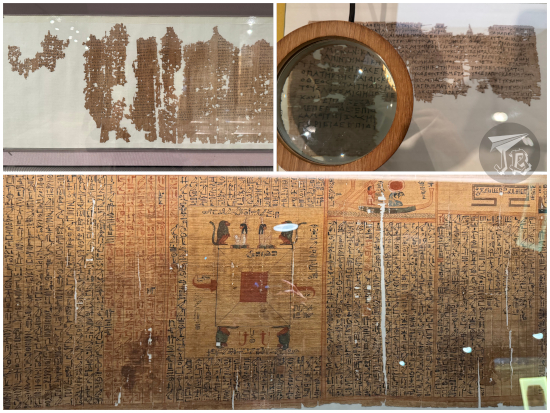
Samples of papyrus from ancient history

And what else was visitable on a Monday morning that appealed to yours truly? It is true that the fine arts gallery was open but let’s be honest. It is right opposite the Natural History Museum. We all know where I am going to end up – any natural history museum, in this case the Naturhistorisches Museum Wien. And to my surprise, the staircase was empty for a few seconds and I managed a photograph!
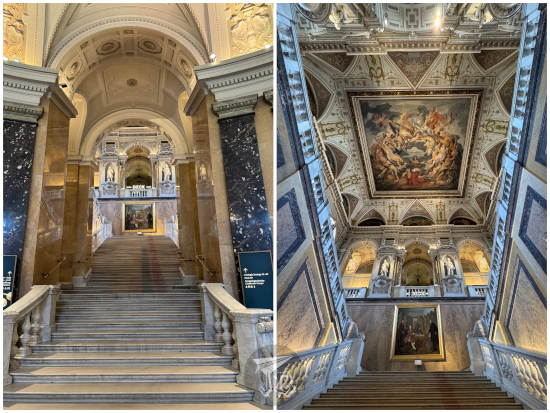
Baroque staircase with a decorated ceiling

Not being in any kind of hurry, I was able to explore the wards I had not visited before, which included biodiversity. While taxidermy is not an art that draws my attention, I’ve really learnt to appreciate the small glass models of marine animals from the 19th century – read: I adore them. I walked around the second level first, which deals with extant fauna. After I was done, I decided to have lunch in the Kuppelhalle Café for lunch, where I tried an amazing drink with apple juice and sparkling water and something advertised as meat loaf which was… some kind of stew but was very nice.

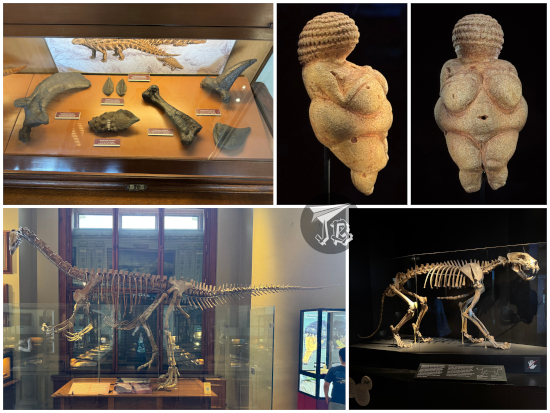
Afterwards, I continued down to level 1, where I strolled around minerals, fossils, mammoths and the origin of man. That included the dinosaur hall and the pièce de résistance of the museum – the Venus of Willendorf, a 30,000-year-old figurine of a carved in limestone. The figurine is about 11 cm tall and depicts a naked faceless woman with large breasts. It is speculated that she is either a fertility charm or the self-portrait of a real woman (who would not have been able to see her own face as mirrors did not exist). It was found in north-east Austria in 1908, in an archaeological dig near the town of Willendorf, hence the name.

I finished my visit in the temporal exhibition “Good collecting, bad collecting”, which reflects on the origin of some of the pieces that museums have – whether there is a specimen or a lot, and the difference between conservation, display and research. A chilling corner told about how during Nazi occupation, some Jewish individuals were coerced to sell their collections, especially fossils, to the museum for pennies. Recently, under the Reparation Act, the museum has been trying to locate the rightful heirs to those exhibits – some of them have been found, others have not replied, and even some have donated the items back to the museum.
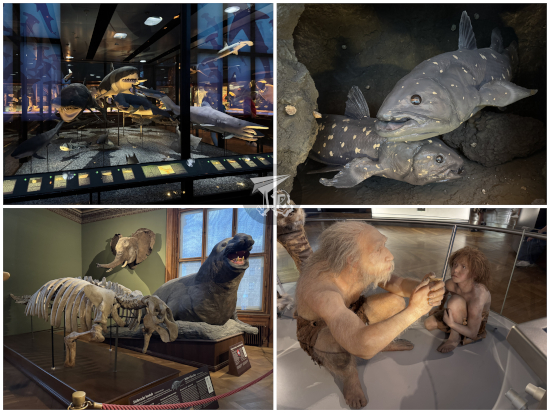
Natural History Museum artefacts: taxidermies of sharks and an elephant seal and dioramas of primitive fish and Neanderthal men

Natural History Museum artefacts: some fossil bones, a reconstructed dinosaur skeleton, skeleton of a mountain lion, statuette of a small fat woman

I headed out and stopped at Starbucks for a drink, then by a bakery to buy sandwiches that I could take to D****e at the venue, and for us to have dinner after the concert. I ended up distributing a few of those amongst her friends waiting there – I got paid back in yen, too, hilariously. I stayed about an hour, but turned out that as they waited Hyde had used another entrance, so the group had been unsuccessful seeing him. Once we had confirmation that all the musicians were in, we decided to head back to the hotel for a while to get dressed up. Or down. My nice clothes were too hot for the weather… In the end I managed a combo that would sort of work – and not have me die of heat stroke.

Wiener Konzerthaus is an early 20th century concert hall. It is not one of the grand classical halls, but was conceived for festivals, more accessible to the general public than the Musikverein. It currently has four halls, the largest one being the one where Hyde’s concert was to be held – the Great Hall Großer Saal, which seats 1,840 people. A few more, probably, with the extra hand-placed rows, but it was not sold-out. There had been a bit of a turmoil among the Japanese fans about the dress code, and whether formal attire was required, to the point that the organisation had to issue a mini-statement on “no dress code”.

The doors of the building opened an hour before the Hyde Orchestra Tour 2026 JEKYLL in Wien concert, but once inside, we got stuck in the reception area, waiting until access to the actual seating opened. This is a tactic to have people wait around the bars and spend some money, I know, but I still find it weird. Unlike Great Britain that checks at the entrance doors, tickets would be checked inside. Once the process finally started, I headed to a worker using a wheelchair, because nobody else seemed to want to go to her. Thus, we were amongst the first ones in. Once we went upstairs, the actual Großer Saal was still closed, so we had to wait again.

There was a pamphlet on sale, which was barely a folded brochure with the setlist on. The price was 5 € and in theory only one per person. The system could be tricked by going to a different person to buy the pamphlet each time… But to be honest, it was almost daylight robbery, and I’m not sure who would want to hoard them.

When we finally could access the venue, seating in the first few rows was a chaos. There were two rows of chairs for guests of the Austrian organisers and some of the people who had come from Japan, and then the first row of the actual venue, which was already labelled second. Or something. It was very confusing. After a lot of shuffling and reseating, we were all ready and the concert started at 19:35. My seat was great for views (no photography allowed though, unless you were an Embassy aggregate) on the first public row, which actually I think was the real fourth row. Unfortunately, it was not that great for acoustics – I was right in the middle of the trombone’s sound flow, so at times that was everything I could hear (I am told this was not a problem in the recording or other rows behind).

My general impression of the Hyde Orchestra Tour 2026 JEKYLL in Wien was not entirely positive. The assemble of musicians is credited as “Vienna Super Orchestra” Kulturverein Orchester Wien, conducted by Lorenz C. Aichner. If the role of the conductor is “study and understand the pieces really well”, I did not feel like he did his homework – he kept pushing the instruments to go louder when he should have been tempering them to make sure the main vocalist’s voice carried over. He was also very bouncy during the wrong songs. It gave me the impression that he felt it was his show, which it wasn’t.

While the names of most of the musicians were not disclosed, we knew that Hyde brought multifaceted musician hico (Hiroki Horiko [堀向彦輝]) as “coordinator” and pianist – he actually was the one giving the calibrating note to the first violin. Also from Japan came Hiroshi Kido [城戸紘志] on drums, Masato Ishinari [石成正人] on guitar, Junichi Sunayama [砂山淳一] on bass, Yuho Yoshioka [吉岡悠歩] and Chihiro Takahashi [たかはしちひろ] on backup vocals and Hidefumi Usami [宇佐美秀文] as “manipulator”, which I think it means in charge of the synthesiser.

The setlist was:
  1. Die happily (from the Jekyll album)
  2. SSS (from the Jekyll album)
  3. Maisie (from the Jekyll album)
  4. So dreamy (from the Jekyll album)
  5. Honey. This is actually a L’Arc~en~Ciel song, but one of the few that Hyde holds all rights for. Hence, it’s used and overused. Although it is a ballad and fits the overall tone of the concert, I did not particularly care for the Bossa nova version of it.
  6. Nostalgic (from the Jekyll album)
  7. Glamorous Sky. I’ve never been much of a fan of this, but I really enjoyed it in Paris, so I’ve started to warm up to it.
  8. Tattoo (from the Jekyll album). I’d say this was my favourite song from the new album.
  9. Final Piece (from the Jekyll album). I really liked this.

Local gourmet segment. Apparently, a staple of the Jekyll Tour is eating something famous from the place where Hyde is performing at. In this case it was, of course, Sacher-torte – actually a small Sacher Würfel cube that he gulped down in one go. He also slipped in a trademark “are you fucking ready, Vienna?” Though at one point he did introduce himself in German, most of the communication was in English. He also improvised a little tune to the lyrics of “please listen to one more song before going to the loo in the intermission.”

  10. Defeat
Intermission.
  11. Fading out (from the Jekyll album)
  12. Smiling (from the Jekyll album)
  13. The Abyss (from the Jekyll album)
  14. Evergreen. I remember when this song came out, in the album Roentgen. I did not like it much, and would skip it in the car all the time. I loved the live version. Take that, 2003 me?
  15. Forbidden Colours (Ryuichi Sakamoto / David Sylvian cover). This was a song I’ve heard him sing before, and I enjoyed it.
  16. Zipang. This is one of Hyde’s collaborations with Yoshiki, and Yoshiki might break my heart again and again, but one thing that you have to give him is that he is a great musician, and he writes and arranges to make his vocalists shine. And boy, did Hyde manage to shine with this. It was absolutely spectacular. And then…
  17. Red Swan, another collaboration with Yoshiki. And I remembered Yoshiki in London talking about that song, and how the red symbolises blood and how the bloodied swan is a metaphor for trying to survive. I’ve seen the song performed before, but either sung by another performer, or a recording. But this time it was live, by the man it had been written for. And I lost it, dissolving into a very discreet meltdown that fortunately nobody around me noticed. Just don’t tell, it’s a secret.
  18. 夢幻 “Mugen”, a collaboration with My First Story that was the theme music for a popular anime.
  19. Last Song

Hyde sang the first part dressed in black, donning a wide-brim hat, and the second part in white. He used a microphone stand embedded with red Swarovski crystals. All in all, we got the whole Jekyll album, which had been composed for this, sprinkled with a couple of power ballads and an arrangement or two. What I didn’t get were my two favourite slow songs – Shallow Sleep and The Cape of Storms, which helped me a lot during some hard times in my life. I think that is why even when I disagree with how the musicians act or speak at points, I keep going back to them. There is gratitude in me, for the pick-up times.
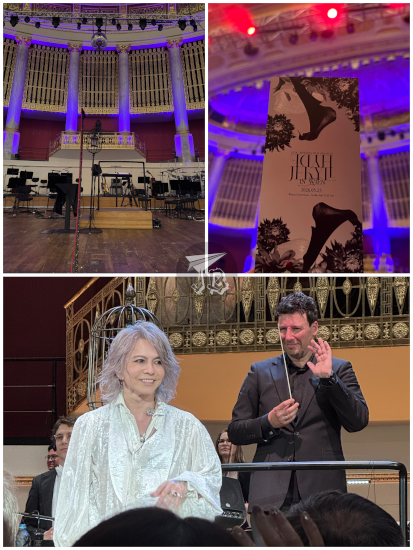
Hyde concert in Vienna 2026, with the singer smiling at the audience

We left the venue and headed to the back door – the one that the singer had used to walk in. This is something common amongst Hyde (and Hyde-adjacent) fans, called demachi (出待ち, literally waiting at the exit). Normally, you only see Hyde going away and waving from a car. Of course, you also cheer and say goodbye to every musician that comes out – from a respectful distance, of course. Obviously, nobody had explained this to either the director or the strings, because they went out for a smoke and were utterly surprised. A couple of the ladies from the Austrian Tourism organisation who were around too took it in stride and whenever they came in and out made a small curtsey and waved back. Others took videos and photos. Most jumped out of their skin.

As I said, normally you wait and wave, maybe catch a glimpse of someone. This time around, Hyde stopped to sign stuff, and that is how I now own an autographed copy of Jekyll… That was… unexpected.
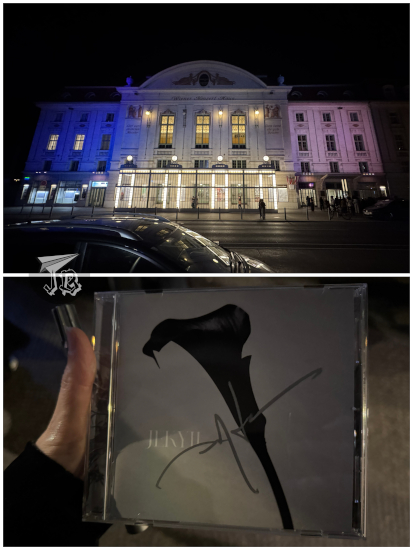
Vienna concert house façade and a CD autographed by the artist

We had sandwiches waiting at the hotel, but since there were a bunch of D****e’s friends around, we ended up heading out to a nearby McDonald’s – which was the only thing open at the time. I tried a “hot honey wrap” (it was a time-limited offer and I was curious. And I know I can survive Austrian spicy) which was surprisingly… interesting. And afterwards, we headed back to the hotel and I crashed after a long shower.
11th December 2025: Underground and University London {United Kingdom, December 2025}

It was not too much of a chilly London morning. I popped into the underground to go leave my luggage at Liverpool Street station – where there is (you guessed it) a Costa Coffee. Then, I headed towards Baker Street Station, where I had booked guided visit with the Hidden London project, by the London Transport Museum. I arrived with some time, so first I explored the Wonderpass – which is a regular underground pedestrian tunnel which allows to cross the road, and has been “decorated” with facts and details about the history of the area, and turned into a small museum.

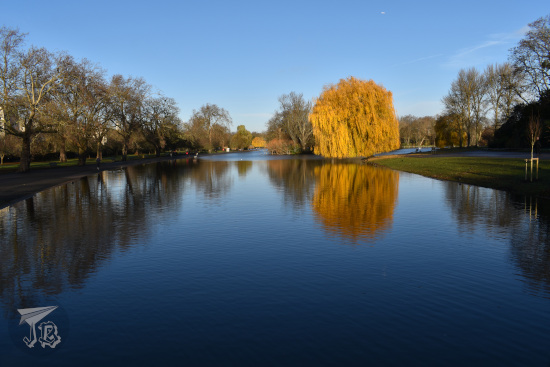
A few minutes were enough there, so I spent the rest of my time at The Regent’s Park, one of the Royal Parks in London. Between 1536 and 1541, Henry VIII, now head of the Anglican church, ordered the dissolution of the monasteries. Land that used to belong to Catholic orders went to the crown, and although much was sold to fund the King’s military campaigns, the area that comprises Regent’s Park today was retained as hunting grounds. In the 1810s, it was transformed into a pleasure garden with the blessing of the Prince Regent – who would go on to reign as George IV. Today, it is home to the London Zoo, a rose garden, a lake, several fountains, and even a whole university campus.

Regent's Park waterfront in the autumn. Trees on the left are bare, trees on the right are golden.

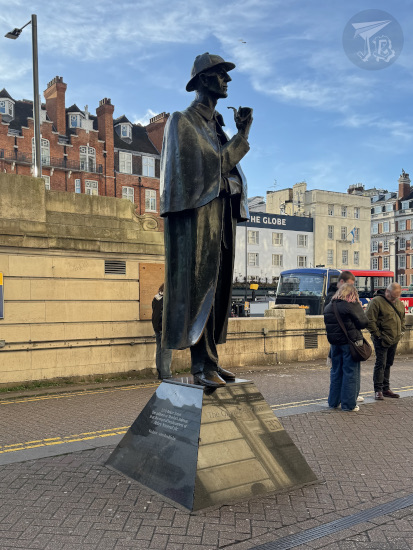
After a while, I headed towards Baker Street Station to await the beginning of my tour. The meeting point was the Sherlock Holmes Statue, which is, ironically, placed in Marylebone Road. The perpendicular road is indeed Baker Street, where the fictional address of the literary detective is – 221B, which today is a museum dedicated to Sir Arthur Conan Doyle’s books, recreating scenes from the stories. The statue was created by John Doubleday and installed in 1999. Arthur Conan Doyle (1859 – 1930) wrote four novels and over 50 short stories featuring the detective. Today the character – possibly the most famous fictional detective ever – is remembered for his uncanny logical deductions, while other personality traits – misogyny or drug addiction – tend to be tip-toed around.

Statue of Sherlock Holmes in front of Baker Street station.

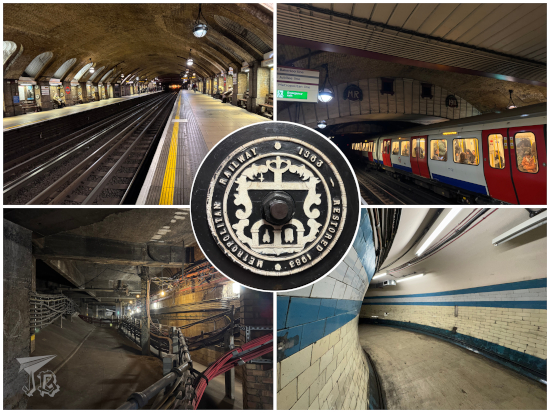
Around 10:20, the people from the London Transport Museum came to check us in. This is one of those kinds of visits for which you need to bring a piece of ID, probably for insurance reasons. I had been wanting to try one of Hidden London tours for a while, despite them being expensive, and in the end I had chosen Baker Street: The World’s First Underground, as it promised to take you “behind the scenes” of the oldest underground station in the world.

Back in 1863, the Metropolitan Railway company had revolutionised transport by deciding to lay their tracks underground. At that time, London was one of the most populated cities in the world, and crossing it took an hour and a half. The project cut down time to 20 minutes. Unfortunately, we are talking about actual steam trains continouslymoving through tunnels, and the coal smoke was not… the healthiest to breathe, one could say.

The tour takes around 90 minutes, but it is set as more grandiose than it actually is. Most of the “hidden spots” are just service corridors full of trash cans and current working equipment. We had two guides and a security guard, and the information was interesting indeed, but there were few places to explore that felt really “hidden” and just like a conference in a couple of closed-off places.

Baker Street Station hidden tour - platforms, and abandoned tunnels.

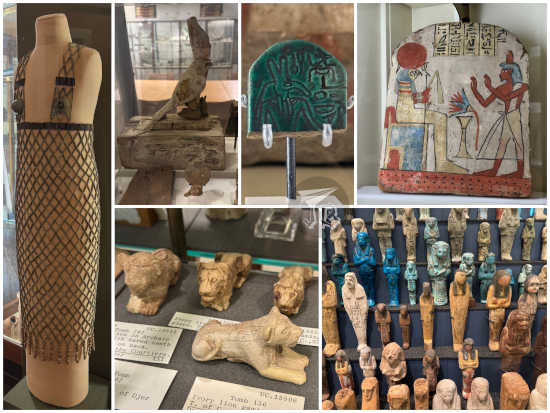
I did revisit a couple of the publicly-accessible areas after the tour was over to try and get a decent photograph, and then headed off towards Euston to visit a couple of museums belonging to the University College London (UCL), both of which I’ve wanted to see for a while now. However, the last few times I’ve been in town either one or the other was closed – or their opening times did not fit the plans. Today was the day. I first went to the Petrie Museum of Egyptian and Sudanese Archaeology. Though it is a tiny museum, it holds one of the largest archaeological collections in the world, with around 80,000 items.

The core of the collection was donated by writer Amelia Edwards (1831 – 1892), the “godmother of Egyptology”. Edwards toured Egypt in 1873 and 1874, and later, in 1882, she co-founded the Egypt Exploration Fund (now the Egypt Exploration Society), which aimed to support and promote Egyptian cultural heritage. Upon her death, all her Egyptian artefacts, and a hefty sum of money, were donated to the University.

I reached the museum and asked if I could snoop around. I was told no, but I was welcome to visit. Okay, I guess. No harm done. While I love old museums, this one feels way too crammed (and not even in the fascinating way the Sir John Soane’s Museum does). The space is small, so most objects are lounged together in large cases, some with their original labels from the Victorian times, even. It is run by volunteers and possibly all that they custody is in display, which explains why everything is so full.

Exhibits at Petri Museum - Egyptian archaeological artefacts: a dress, animal and human statuettes, painted tiles.

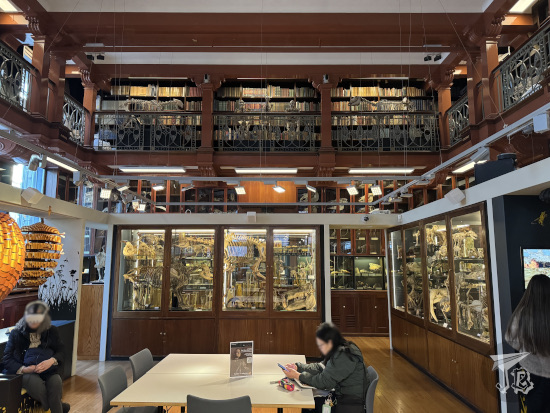
Afterwards, I headed to the Grant Museum of Zoology and Comparative Anatomy, also part of the UCL. Established in 1828 by Robert Edmond Grant, it is one of the oldest natural history collections in the country, originally designed as a teaching collection. It comprises 100,000 specimens in total. There are incredible things on display here. Something that drew my attention was that there were a couple of tutoring sessions going on at the museum… about how to draw creatures and specimens. I did not eavesdrop, but what I overheard was fascinating…

A general view of the Grant Museum of zoology. There are skeletons looking down from the second floor...

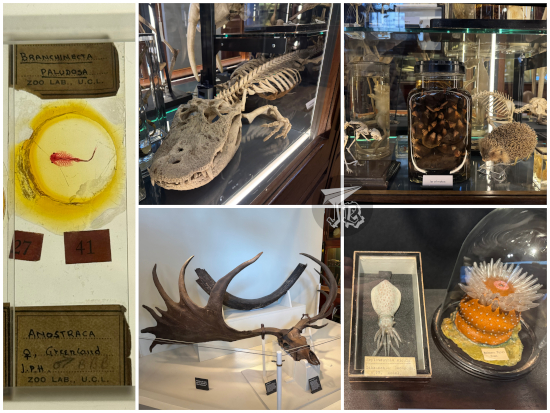
One of the highlights is the so-called Micrarium – almost 2,323 old microscope slides (a tiny fraction of the complete collection, which goes up to 20,000), designed in 2013. There is also a collection of invertebrate glass models that blew my mind away, fossils, skeletons and a wall full of disassembled mouse bones. The museum most infamous exhibit is a jar of moles (Talpa europaea), which hosts 18 of these tiny mammals, male and female, preserved in formaldehyde. When I asked why it was so popular, the volunteer explained that the jar was never catalogued and that it predates any worker of the museum – so no one knows where it came from, and what was it going to be used for. It might have been assembled for a zoology class, or maybe a researcher collected the critters. In any case, there is no record of it, the jar just… exists.

Grant museum of Zoology exhibits: a cocrodile skull, an old microscope slide, giant deer antlers, glass models of anemone and squid, and the (in)famous jar of moles.

Had I not received the email concerning security queue issues in London Stansted, I would have at that point headed for the Monument to the Great Fire of London. However, I have trust issues, so I decided to head to the airport instead. I took the underground to Liverpool Street, and was at the airport around four hours in advance instead of my usual two.

Stansted was packed. There was nowhere to sit, and I’m not talking about actual seats. It was almost impossible to find even a spot on the floor to plop down. I fortunately found a corner where I could stay for about an hour before things started clearing out. I felt a bit miffed because while security had taken a bit longer than usual, it was not the chaos I had feared, so I felt I had wasted my afternoon in London. However, better safe than sorry.

When finally my gate was called, I tried to get to sit down somewhere, but Ryanair made the decision to have the check point just at the end of the stairs, and I found myself stuck in the queue. Most of the waiting was done after check in, and the land crew person opened a cordoned thing to push us through so I ended up – somehow – in front of most of the Priority Queue. That meant I entered the aircraft much earlier than I normally would have. I made the trip back encased between two very tall people who… had trouble squeezing into the seats.

Once I landed, I beat most of my plane to passport control. It was cold when I stepped out and once in the car, the parking lot barrier didn’t want to let me through, and it took several tries to get out. Fortunately, going back and forth repeatedly solved the issue, and I did not have to go find a warden to get it done.

All in all, the trip was a success. I really wish I had stayed a day longer, I would have squeezed many other things in. However, now that my early-morning plane is back, and I have an ETA, I might feel compelled to fly to the UK a couple further times before London introduces a tourist tax. Maybe in summer if the Crystal Palace Trust has finished their renovations of the dinosaurs, or summer for the Jurassic Coast… Or, you know, the minute both the Natural History Museum’s Jurassic Oceans: Monsters of the Deep and the British Museum’s Bayeux Tapestry exhibitions are open.

31st December 2022: So high! {Egypt, Winter 2022-2023}

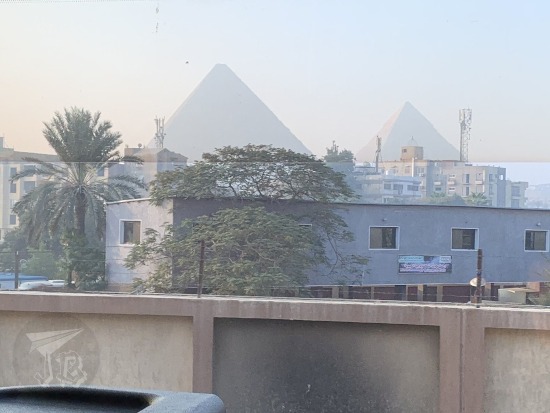
The breakfast buffet at the Cairo hotel was definitely better-stocked than the one on the motorboat, but we did not have time to linger. I was more than a bit giddy because today was the great day. The traffic was horrible, but as we were stuck there, we caught our first sight at the pyramids! The haze and smoke over Cairo [القاهرة] are thick in the morning, so instead of heading directly to Giza, we turned our back from it and drove off towards Saqqara [سقارة]. Both Saqqara and Giza are part of the Unesco World Heritage site Memphis and its Necropolis – the Pyramid Fields from Giza to Dahshur.
Two pyramids in the background through the window of a moving bus. The quality is not that great as the glass is somewhat tinted and the weather is hazy
Memphis was the capital of Ancient Egypt during the Old Kingdom, for eight dynasties. It flourished during the Sixth Dynasty (24th – 22nd centuries BCE), but started a decline at the beginning of the Eighteenth Dynasty (16th – 13th centuries BCE), first in favour of Alexandria, then of Thebes (Luxor). If Memphis was the city of the living, Saqqara was its city of the dead, the cemetery.

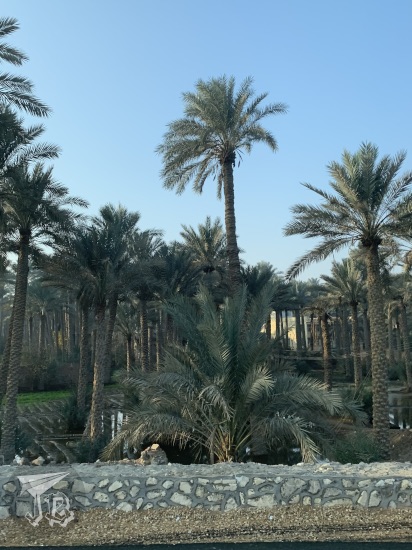
The Necropolis of Saqqara [أهرامات سقارة] starts off right at the end of the area where the fertile land from the Nile ends, so you cross from a date palm forest to a scorching dry desert. The burials there predate the Old Kingdom, and the oldest tombs belong to the Second Dynasty, and here the first pyramid was built. The timeline for burials was Abydos (which we did not get to see) → Saqqara → Giza (both of which we would see that day) → Valley of the Kings.

A garden or forest of palm trees from the bus. There's a low stone fence in the foreground.

Our first stop was the Necropolis of Teti. Teti was the first king of the Sixth Dynasty (24th century BCE) in the Old Kingdom, back in the time when the Egyptians had started working on elaborate burial sites. Thus, he had a pyramid complex for himself, his queens and officials.

Teti’s vizier (and probably son-in-law) Kagemni was buried in the necropolis. The type of funerary monument built for him was a mastaba. A mastaba [مصطبة] is type of burial, maybe a precursor of the pyramids – it is a rectangular structure with inward sloping walls built using mud bricks. They remained common among non-royals for over a thousand years after Kings were buried in pyramids.

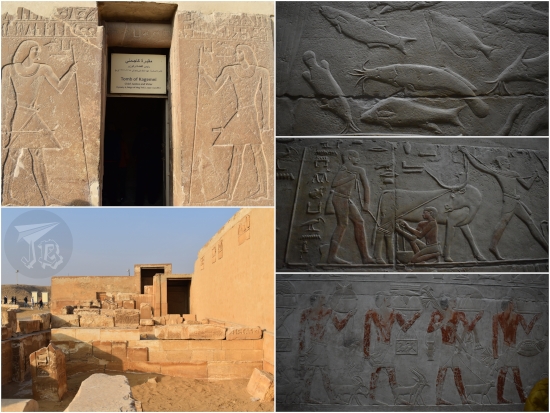
Thus, we went into the Mastaba of Kagemni, vizier to King Teti of the Old Kingdom. The inner walls of the mastaba are decorated with coloured carvings of every day’s life, and mourning scenes for the deceased. There are lots of fishing scenes, featuring hippopotamuses, crocodiles, catfish… and cattle rearing work.

Mastaba of Kagenmi. Collage showing the narrow entrance, flanked by two carved warriors. A view of the walls of a reddish building. Carving on walls, some of them coloured, showing fish, a cow being milked, and Ancient Egyptian people carrying offerings

After the vizier’s tomb, we went into our first pyramid, the Pyramid of Teti [هرم تتي] himself. The pyramid today looks just like a hill from the outside – under all the rubble there is a big pyramid, along with three smaller ones, and a funerary temple. The pyramid was opened in 1882, and despite the poor condition of the above-ground area, the corridors and chambers inside very are well-preserved. This pyramid is one of the first ones with carved funerary texts – a number of rituals and spells called the Pyramid Texts. The entrance to the structure is downwards. A ramp leads into a narrow and low corridor which ends in a vestibule that in turns opens into three small chambers to the left, and the mortuary chamber to the right. The King’s sarcophagus remains at the pyramid, with carvings inside – the first carved sarcophagus ever found.

A rubble-like pyramid and shots of the inside. A very narrow and low passgeway, a sarcophagus in a pentagon-shaped room, and the decoration inside the sarcophagus.

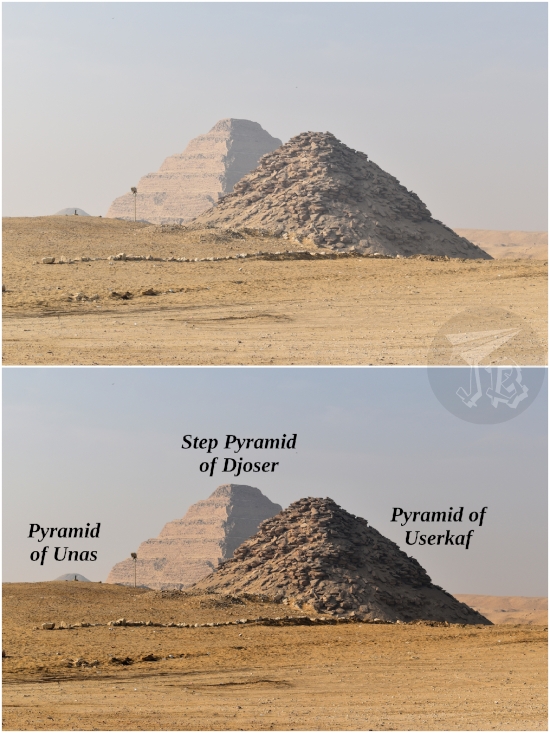
I am not sure I can describe the high that I felt when I went inside the pyramid. It was like breathing history. Unfortunately, we had to move on too quickly. Fortunately, there were more things to discover! We got out of the bus to see the line of three pyramids – Pyramid of Unas, the Step Pyramid of Djoser, and the Pyramid of Userkaf.

A view of three pyramids. The one in the foreground right is little more than rubble. The one in the middle is not smooth, but it has five steps. The one in the background left is mostly hidden and only a flat tip can be seen.

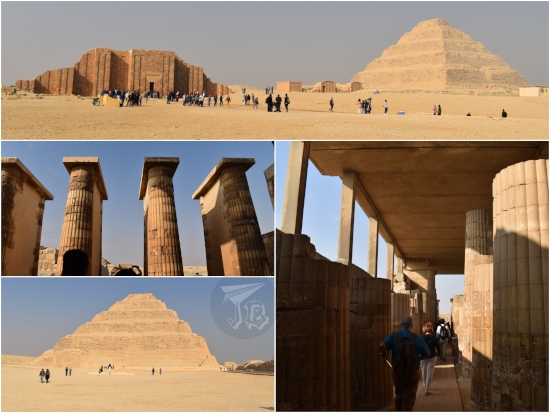
Djoser was either first or second king of the Third Dynasty of the Old Kingdom, sometime around the early 27th century BCE. His architect Imhotep is credited with the design of what possibly was the first ever pyramid. Djoser Mortuary Complex comprises the enclosure wall with a colonnaded entrance, a number of Heb Sed chapels, where dedicated priests honoured the different gods of Ancient Egypt. The roofed chapel area opens into a large patio, which used to be surrounded by a mud brick wall – today only the entrance stands, having been recently restored. In the middle of the open court, stands the Step Pyramid of Djoser [الهرم المدرج للملك زوسر].

Complex of Djoser, collage. The first picture shows the reconstructed wall, made of mudbrick, and the pyramid. Two other pictures show the inner columns of the hall, and the final picture shoes the pyramid again, it has five steps and it is not symmetrical.

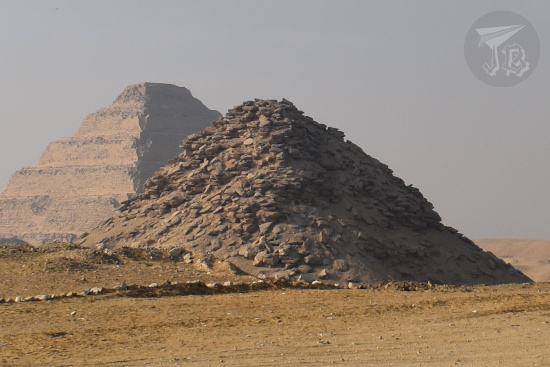
The Pyramid of Userkaf [هرم أوسركاف] was built for the founding pharaoh of the Fifth Dynasty (25th century BCE, Old Kingdom). The pyramid and all the surrounding funerary structures were pillaged in antiquity, and time has taken its toll – the structure is a core of rubble that looks like a huge anthill.

The pyramid of Userkaf, mostly collapsed, with a ruined stone path leading to it

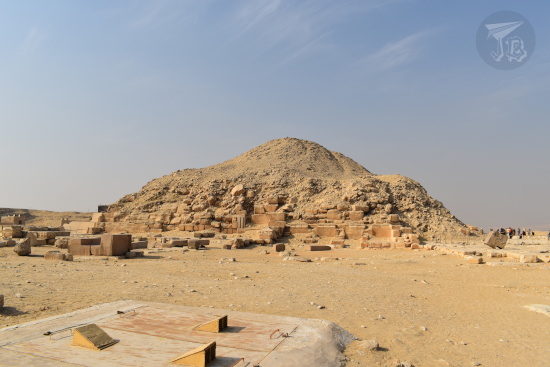
The Pyramid of Unas [هرم أوناس] is even more decayed. Unas was the last king of the Fifth Dynasty (24th century, Old Kingdom), and his is the smallest pyramid of the Old Kingdom, but the first ever in which funerary texts were inscribed. Some of the outer casing is still visible, and there are also some remains of the mortuary temple in front of the pyramid, but most of the complex it is unstable rubble. Nevertheless, I’m a bit sad we did not get to go in and see the texts.

Pyramid of Ulnas. The upper part is mostly sand and debris, and the bottom shows blocks of stones collapsed

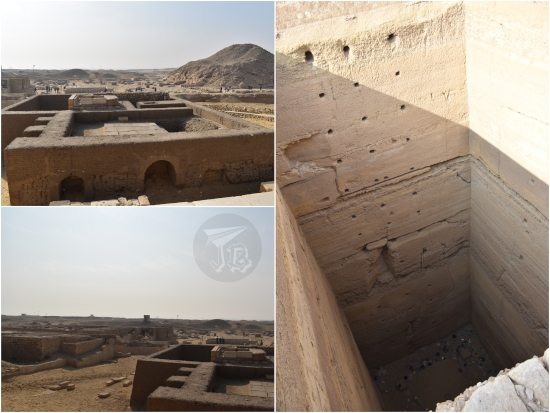
We overlooked the New Kingdom Tombs and the Persian Shafts, tombs of the high officials in Persian Egypt between the 6th and 5th centuries BCE. The tombs are connected together underground, but again, we only saw them from the outside.

Several funerary structures made out og mudbrick, and a deep square pit

We went back to the coach and were shown to a carpet / tapestry “school” which was a bit unsettling as it felt like a cover for children’s work. Then we drove off back towards Cairo and Giza [الجيزة], where we ran into a ten-lane traffic jam. However, we eventually made it to The Pyramids of Giza Archaeological Site [مجمع أهرامات الجيزة].

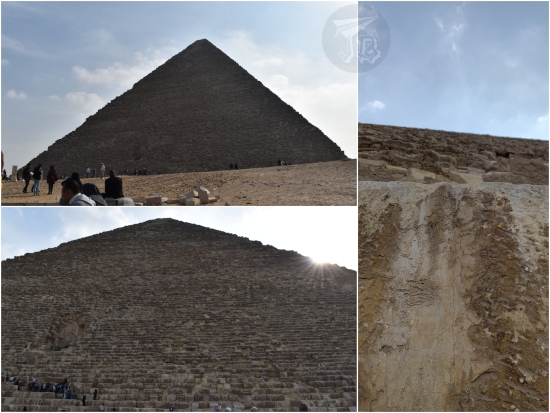
The tour guide had been trying to talk us out of stepping into any Giza pyramid claiming that “all of them are the same”, and we had already been inside one in Saqqara. This time, however, we did not buy into his “recommendation”. Part of the group wanted to go in, and of course I was among them – I might have been a bit worried about claustrophobia, but I did not want to miss the experience. All of us chose to enter the Great Pyramid of Giza [الهرم الأكبر], attributed to the pharaoh Khufu, aka Cheops, the second pharaoh of the Fourth Dynasty (26th century BCE, Old Kingdom). The pyramid stands 137 m high, nine lower than when it was built, due to 46 centuries’ worth of wind erosion. At the time of construction, it was the highest man-made structure, and it remained so for almost 4,000 years, until in 1647, it had eroded to 139 m, slightly lower than the Strasbourg Cathedral in France (142 m, built in 1439). Ancient Egyptians used 2.3 million large blocks that total to 6 million tonnes in weight.

The Great Pyramid of Giza from afar and from its very foot, a wall upwards.

We were lucky enough to start queuing for entry during “lunch break” so we did all our little climb without sharing the space with anyone climbing down in the opposite direction. First, we went up the outside of the pyramid towards the entrance, then we went inside. There was a narrow, tear-shaped corridor, then you start the actual climb through a 1 m x 1.3 m passageway that ascends 40 m to the Great Gallery, which is also narrow, an extra 47 m upwards and 8.5 m high. And finally, we reached the King’s Chamber with the sarcophagus, dead in the middle of the pyramid. For a few minutes, we had the chamber for our little group, which was even better. When we were ready to leave we went our way down and did not cross many people either. The emotions I felt being there, inside the Great Pyramid, were amazing. I know it is not reasonable, but the feeling was exhilarating. It was being inside history, 46 centuries of it. It was just awesome, in the literal sense of the word.

Inside the Great pyramid: a very long narrow and low passage that feels claustrophobic, two shots of the Great Gallery, A-shaped; a picture of the mortuary chamber, with the naked pharaoh's sarcophagus inside.

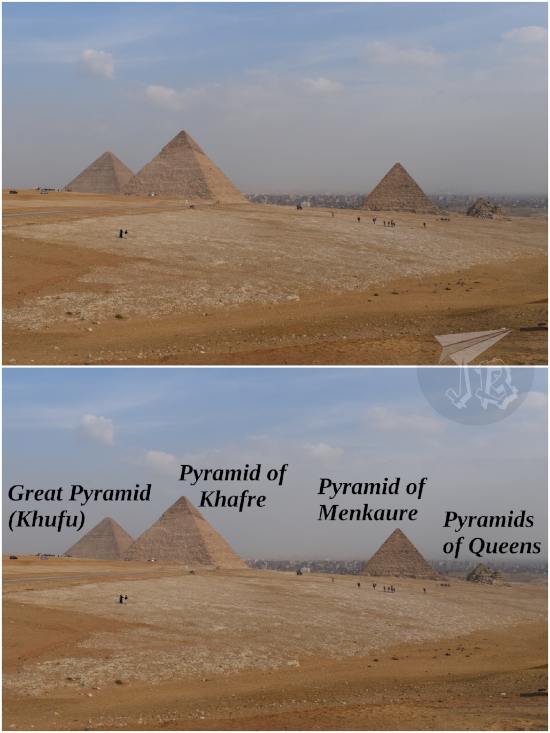
Afterwards, we went back to the coach, which drove us around the complex so we had a view of the pyramids from one of the Panoramic View of the Pyramids points. There, we got to hang out for about 20 minutes as part of the group took a dromedary trip. From the view point we could see the Great Pyramid, the Pyramid of Khafre [هرم خفرع], the Pyramid of Menkaure [هرم منقرع], and the Pyramids of the Queens [أهرامات الملكات]. The Pyramid of Khafre (aka Chefren, Khufu’s son; Fourth Dynasty, 26th century BCE) measures 136 m, and it still has part of the original limestone casing at the tip. The Pyramid of Menkaure (aka Mycerinus; possibly Khafre’s son; Fourth Dynasty, 26th century BCE) is the smallest one, “merely” 62 m high, and rather unfinished because the pharaoh died prematurely. In the background, stood the modern city of Cairo.

The three main pyramids of Giza stand in the middle of the desert. Three small in comparison pyramids stand on the right. There are tiny modern buildings in the background. The image is repeated, with the names of the pyramids written on the second one: Khufu on the left, Khafre in the middle, and Menkaure on the right, next to the small Pyramids of the Queens

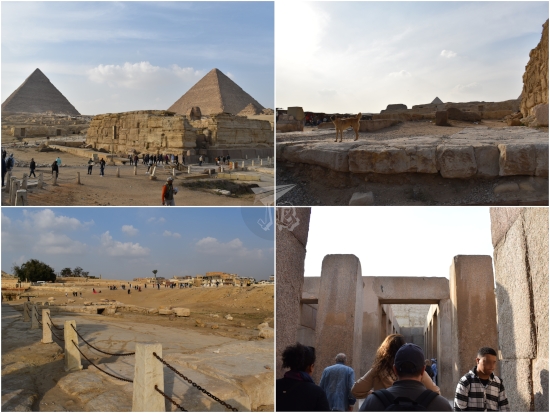
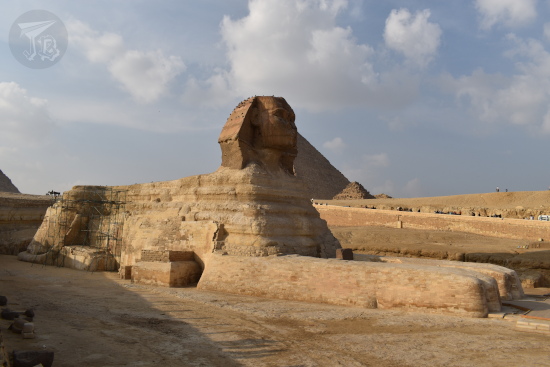
And just like that, it was over, except it was not, because we still had a little while to see the Great Sphinx of Giza [أبو الهول], which is a reclining lion with a human head, made out of limestone. It measures 73 m long and is 20 m high. It is part of the mortuary temple of Khafre, so it is probably his face the Sphinx bears, dating from the 26th century BCE. The Sphinx is currently missing its nose and beard. To access the Sphinx, first we went by the dried up Nile dock and we crossed the Valley Temple of Khafre [معبد الوادي لخفرع]. The temple was built out of megalithic rocks of red granite. The Sphinx was… pretty in a weird way, he had a very pleasant head, despite all the pidgeons.

A view of the sphinx with two pyramids in the background. The dried Nile dock, and a megalyth-temple.

The sphinx, looking right.  There are lots of pidgeons on his head.

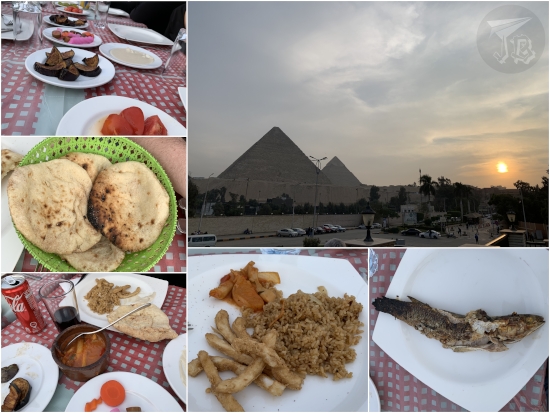
Then, we were driven back into the Cairo chaos to a restaurant for lunch. By this time it was around 15:00, and the menu was fixed. I was highly amused by the fact that the tour guide had tried to up-sell this place as a high-scale seafood restaurant. We were served rice with squid in different ways – breaded and in tomato sauce – three prawns, and fish. The best thing, honestly, was the Egyptian flatbread Aish Baladi [عش بالدي], and the view – after all the name of the restaurant was “Chestro Restaurant Pyramid View” for a reason.

A view of two pyramids with the sun setting to their right. The picture is surrounded by smaller pictures of Egyptian food - pickled vegetables, Egyptian bread, calamari with tomato sauce, rice with calamari, a roasted seabass

After our very late lunch, we headed off to the last visit of the day – yet another shop. Finally something I was interested in, a place where they had papyruses. Papyruses are made out of the papyrus plant (Nile grass, Cyperus papyrus), a type of flowering sedge. Here, someone explained the process of making the papyrus paper. I found something I liked, a reproduction of Tutankhamun’s jewellery box with a guarding Anubis (currently at the Egyptian Museum in Cairo).

A painting on a papyrus. It shows Anubis in jackal form sitting on a box. The lower part shows a man holding a papyrus plant, next to it different utensils to make the papyrus paper. On the left, the real box showing the jackal on top.

It was around 19:00 when we got back to the hotel, where the tour guide informed us that (the now free) dinner gala would be held from 20:00 to 00:00. We had a bit of a laugh about being so not ready – since nobody had brought any kind of formal clothes as most of us had not booked the dinner – and we arranged to meet at 21:15, since we had finished lunch late. I had a shower, then went downstairs. We met at the agreed time, and spent some time taking pictures, and in the end… we were almost late for dinner! By the time we sat down it was 21:30… and the buffet only ran till 21:45…

Food was not so great, and even less worth 190 €. The singer was terrible, the exotic dancer… was more like a stripper, and I ended up defending all our grapes to the death against overzealous waiters who wanted to clear the table asap. To be fair, it was a nice detail that the tour company got us twelve grapes each to celebrate the New Year’s. Despite the time and quality hiccups, we had a lot of fun. We counted-down to the New Year with the Egyptian time, and one hour later connected to the Spanish TV in order to listen to the bell tolls for midnight and eat our grapes. After saying good night, I had another shower and went to bed, though I could not sleep till the other hotel party finished at 2:30.

Shots of the New Year's Eve party at the hotel: two Christmas trees, a napkin folded like a tuxedo, some food, table decoration and a screen reading Happy 2023

It didn’t matter too much though, as the buzz and the high from the pyramid experience kept me content until there was enough silence to zonk out.

30th December 2022: Philae and the Aswan – Cairo jump {Egypt, Winter 2022-2023}

Belonging to the city of Aswan [أسوان], the Philae Temple [فيلة] complex is currently part of the Unesco World Heritage Site Nubian Monuments from Abu Simbel to Philae. When the first Aswan Dam was built in 1902, the monument became semi-submerged, and it would have completely disappeared after the completion of the High Dam. Between 1972 and 1980, through the International Campaign to Save the Monuments of Nubia, it was dismantled and reconstructed over at Agilika Island, 20 m higher.

The main feature in Philae is the Temple of Isis. Isis was the major goddess from the Old Kingdom to the Roman period. Isis was the spouse of Osiris, and is considered a mother and protector goddess, divine mother to the pharaoh, and mourner of her husband. In the Osiris myth, after he was killed and dismembered by Seth, Isis looked up and down Egypt to gather all the pieces. After she did, she breathed upon him to resurrect him, they conceived Horus (there are more or less gory versions of this), and Osiris went back to the Underworld, where he became lord of the Afterlife. Isis was the longest-revered goddess of the Ancient Egyptian religion – her cult survived in Philae until 550 CE, when Christians took over, defacing the gods and carving the Coptic cross all around.

I left for breakfast having vacated the room, suitcase ready at the open door, and hoped for the best. I settled my drink tab, which rounded up to 235 EGP; however, with the same smirk I had been given the previous day, I reminded the person at reception that they owed me ten pounds. The debt was honoured and I left with a giggle – yes, it was not that much money and I could have let it slip, but nope. Not this time. After that, our luggage was loaded onto the bus (luckily) and we drove off to a tourist dock to board the boat to Agilika island, which we reached after a few minutes. We landed and climbed up towards the archaeological site.

The Temple of Isis holds the general structure of an Ancient Egyptian Temple, with a pylon, a court, a hall and finally the inner sanctuary of Isis. An obelisk stands before the pylon, in the outer court that has been preserved.

Collage. View of the outer wall of Philae, with the colonnade and the pylon; entrance to the sanctuary, richly engraved with deities and hyerogyphs; a cat sitting in front of the columns.

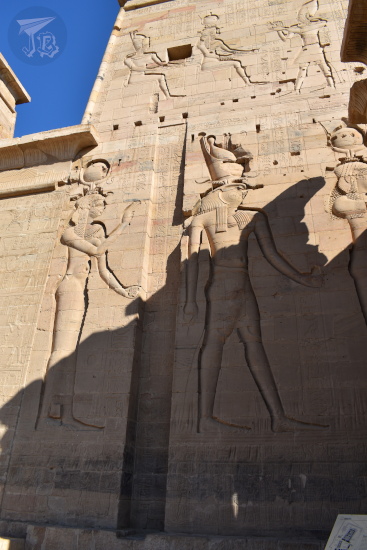
When looking carefully at the pylon, it shows the different water marks from the time the temple was submerged – at two different levels, depending on whether it was flood season or dry season. During the rescue, a cofferdam was built around the original constructions to dry the area out. Then, between 1977 and 1980, the whole complex was dismantled into 40,000 blocks, moved and rebuilt. The old position can still be spotted 500 m away, marked by the remains of the metal anchors for the cranes.

Close up of the pylon showing carvings of Hathor and Horus. Two water lines can be appreciated above and below them

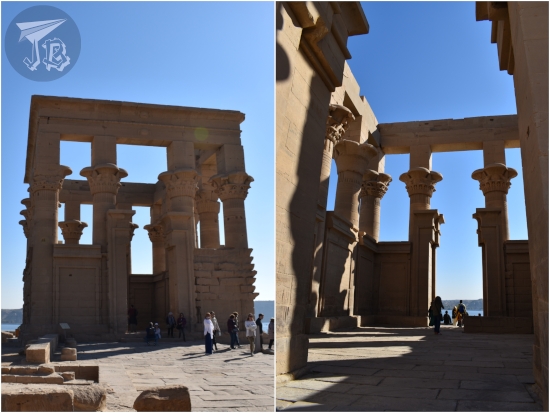
Another structure in the island is the unfinished Kiosk of Trajan. I even managed to be alone in there for a heartbeat.

A cube-like structure built from columns, with the river behind them.

The final building is the Temple of Hathor, Horus’ wife.

Collage. A ruined building with derelict walls and a few standing columns - from land and from the river.

Next in the plan was shopping (joy -.-“) and we went to an essence shop. The lady claimed that Egyptian essences were the base of many brand-famous perfumes. I have no idea, but I was irked by the rigid sex separation of scents, and I developed a rash from one of the testers… While some people in the group shopped, someone else found the adjacent papyrus shop, and a small number of us went to snoop there.

After being spared a second shop – this one for spices – we were shuttled to the airport to take our charter to Cairo. It was a surreal experience through which I was patted down twice. The airport segregated by sex because you got the pat down even if you cleared the metal detector, which was weird. Also, it turned out that we had an extra suitcase in the bus! Creepy!

Our tour guide did not fly with us. When we landed in Cairo [أسوان], we were taken to the hotel by another representative, who assigned rooms and called our names in the bus, before we even arrived, but did not hand the cards until we were there and had handed in our passports for check-in. It was of course too late to try and go to the Pyramids light show – seriously, everything would have been so much easier with a “sorry, no time”, especially considering the crazy Cairo traffic. At this point we were already planning to try it on our own – I had found out that the hotel had a mini travel’s agent that we could use.

A traffic jam heading to the Cairo airport traffic control. The green neon on top reads Welcome to Cairo

We met up for planning – and paying for the Night Cairo Walk, which was to take place the following day – and I sat down to catch up on everything that had happened in the days when I had been internet-less (have I mentioned that it was not such a bad experience?).

The whole trip was a New Year’s special and came with an optional 190 € dinner that I had not booked because… no. I had packed some cereal and chocolate bars just in case, and it turned out that only one couple out of our eighteen-people group had reserved it. There had been a tiny riff-raff when I asked my travel agent about dinner that day, and she received an email about the “Gala Dinner” being compulsory (demanding the extra money), and I asked her to reply that nope, I would not be attending.

Well, that night we were told that the local agency was treating us to the dinner – my theory? The restaurant they had agreed for the Night Walk would not take us for New Year’s Eve, the walk would be impossible due to people celebrating. Thus, they found themselves in a tough spot – so they used the spare from the overpriced optional trips to pay for it. Then, the night walk was bumped to the first of January. Looking back, I believe that they had completely overlooked the NYE factor.

Also, the hotel not only had free Wi-Fi, it also had complimentary water in the rooms, and free mineral water during dinner. And a bed that did not vibrate. It was a good night’s sleep. But before that I took a shower so long and so hotm, that I almost glowed in the dark afterwards.

29th December 2022: Abu Simbel and Nubia {Egypt, Winter 2022-2023}

Modern eras have brought lots of different needs and technologies, and both become one when we think about harnessing nature. The Aswan dam is one of such examples. There are actually two of them. The Old Aswan Dam was built in the wake of the 20th century (1899 – 1902), and the newer, Aswan High Dam was completed in 1970, creating Lake Nasser. The rationale was securing fresh water for Egypt and stopping the dependence on the Nile floodings; however there have been associated problems – not only environmental such as the habitat of the Nile crocodile and the loss of fertility in the delta; thousands of people were displaced from the to-be-flooded area, and houses and whole villages were swallowed by water. A lot of these villages had their own cultural heritage, which was to disappear forever. Thus started Unesco’s International Campaign to Save the Monuments of Nubia between 1960 and 1980. This effort relocated as many as 24 monuments (one of them, the Temple of Debod, ended up in Madrid, Spain) to safer grounds. The temples of Abu Simbel are probably the star of the rescue efforts.

The Abu Simbel [أبو سمبل] Complex is part of the Unesco World Heritage Site Nubian Monuments from Abu Simbel to Philae. It comprises two buildings – the Great Temple of Ramesses II and the Small Temple of Hathor and Nefertari. Both of them were carved out and into a sandstone cliff on the West Bank of the Nile during the reign of Ramesses II or Ramesses the Great (14th-13th Century BCE, Nineteenth Dynasty of the New Kingdom), considered one of the most powerful Pharaohs in the New Kingdom, who reigned for many years. It was lost to time, and only rediscovered in 1813 and excavated in 1817. The Complex was relocated to higher ground between 1964 and 1968 to prevent its sinking in Lake Nasser. In order to do so, the mountain and the temples were cut into huge blocks and built 65 m higher and 200 m back from the river. The relocation managed to keep the relative position to the sun, but shifted it by one day – the temple was designed so the first ray of sun hit Ramesses’ face in the sanctuary on the 21st of October and February, and now that happens on the 22nd.

At some point one has to wonder what was more impressive – building the complex, or relocating it so you can’t really tell. The mountain itself is hollow in order to reduce the stress on the temple after the move, but wow. Just, wow.

As far as I understand, buses are not supposed to stay longer than a couple of hours in the complex. Our disembark time was 2:30, and even if I went to bed ridiculously early, I did not get much sleep because my cabin was above the motorboat rotors, and my cabin vibrated like hell. Before we left, we had a choice of coffee or tea, and we were given a “picnic” consisting on some sweet bread with… buffet leftovers, a piece of fruit and a small juice – that was traded often.

The trip each way was 3.5 hours, so we wanted more than the 30 minutes the tour guide wanted to give us, and we were there between 6:30 (though we did not enter the site until a bit later) and 9:00. Fine, I own up – I was late coming back and only made it to the bus at 9:08. The tour guide was so not amused by that.

Arriving at the Abu Simbel site, you approach from behind the mountain, and as you surround it, you’re greeted by Lake Nasser [بحيرة ناصر], the reservoir created by the dam. The sun was climbing up slowly when we arrived, still with sunrise colour.

Sunrise over a lake. There is a lonely palm tree on the left

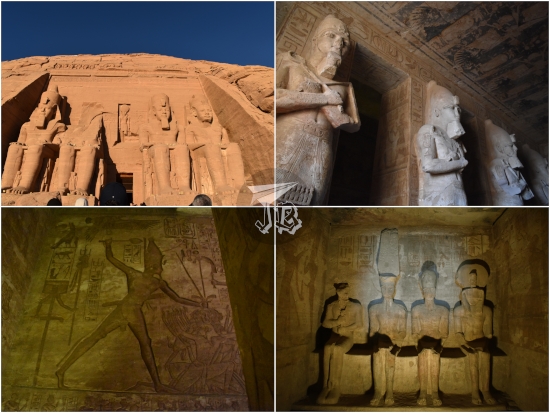
You keep turning and you are greeted by the four colossi that flank the entrance to the Great Temple of Ramesses II. The colossi represent deified Ramesses II, to whom the temple was dedicated along the gods Amun, Ra (in his Ra-Horakhty advocation) and Ptah (creator of the world and patron of craftsmen). The inside features a hypostyle hall with columns carved in the shape of Ramesses colossi, a colonnade hall and the inner sanctuary, where the venerated gods were revered.

Panorama of both Abu Simbel temples: Ramesses II to the left, Nefertari and Hathor to the right. The sky is blue, the monuments are orange-gold, and a lot of people gather at the entrances.

Collage of the Great Temple of Ramesses II: façade with four sitting colossi; inner hall, with colossi against the columns; an carving of Ramesses in a war position; inner sanctuary with the gods and Ramesses sitting, the light hitting their faces.

To the right stands the Temple of Hathor and Nefertari. Here, Queen Nefertari is represented as big as Ramesses and shown with the horns of the goddess Hathor, both signs of her importance (consorts were usually represented knee-high of their kings). The inner area has a hall with rectangular columns carved and painted, and the sanctuary features Hathor as a cow emerging from the mountain rock.

Small Temple of Abu Simbel colllage: Entryway with the colossi; inner hall with the face of Hathor carved into the columns; carving of Nefertari with the goddess' crown; inner sanctuary with the image of a woman with a cow head coming out from the wall, the light hitting her face

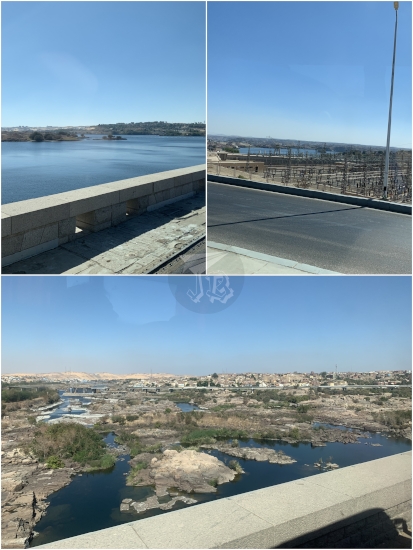
Despite really, really not wanting to leave, I made my way back and ran into two other people from the group. We had to leave through the tourist bazaar and were just slightly late. On the way back, slightly more awake than when we had left, we did not get to see any mirages, but we crossed the old Aswan Low Dam [خزان أسوان]. We had a view of the power plant on one side, and on the other side the First Cataract of the Nile, a series of rapids that have been slowed down by the building of the dam. In ancient times, it was believed that the Nile sprouted here and flowed both north and south. The main part of the cataract is now under the dam, and the remaining rapids have been turned into a nature reserve. There are Ancient Egypt remains and engravings in some ruins on the islands.

Views from the low Aswan Dam: southern side calm waters and power plant; northern side rapids

We were back on board the motorboat at 12:35 for lunch, and met again around 16:15 for a felucca sail on the Nile [نهر النيل] around the Aswan [أسوان] area. Before leaving, I decided to exchange 20 € into Egyptian pounds in order to have some change for the couple of meals we had outside, just in case I needed pounds to buy drinks. For convenience I chose the reception of the motorboat. They short-changed me, twice. First, they used a 23 EGP / 1 € exchange rate, while the official rate is 25 EGP / 1 €. Then, the guy at reception calculated 460 EGP and gave me 450, smirking “I owe you 10 pounds.” Stay tuned for the conclusion of the story.

The felucca sailing had been rescheduled from the following day so it could be tied to the trip through the Nature reserve and the Nubian village (and possibly to accomodate the charter flight times). A felucca [فلوكة ] is a traditional sailing boat, usually with one sail. Feluccas are still used for transportation through and across the Nile, and from ours, we caught some interesting views.

A sailboat docked with a precariously narrow plank to board it

A view of a sailboat on the Nile from another sailboat. The knots and ropes of the boarded felucca are visible in the foreground.

We got to see the Tombs of the Nobles | Qubbet el-Hawa [قبة الهوا] (Dome of the Wind), which I wish we could have visited. The tombs date back from the Old and Middle Kingdom with dignitaries and governors from the Fourth Dynasty to the Roman period buried here. The site is still being excavated, and also part of the Unesco World Heritage Site Nubian Monuments from Abu Simbel to Philae, even if it is neither Nubian nor between them.

A ruined structure perched on a bare mountain or dune. On the left there is a building, and on the right some open façades in stone.

We also sailed by the Mausoleum of Aga Khan [قبر اغاخان] and the family house beneath it. Sultan Muhammad Shah, Aga Khan III, was a religious leader among the Nizari Isma’ilism, a branch of Islam, and he was buried in Aswan after his death in 1957.

A building perched on the top of a mountain. It has a dome and several towers. A similar building stands at its feet, painted white, in the middle of a garden

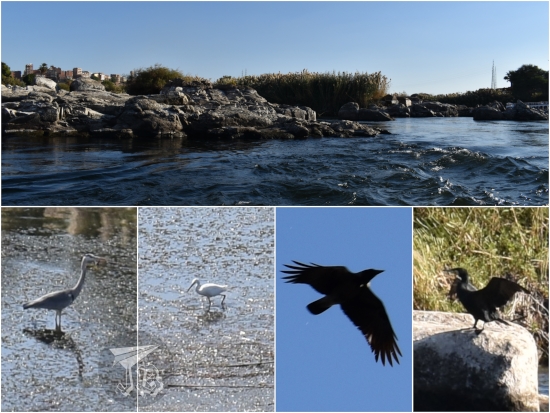
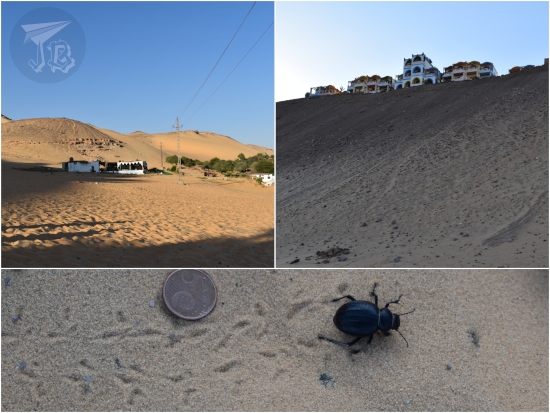
Apparently I missed some dancing as I was taking pictures of the site. Then, the people from the felucca sold us some trinkets, and finally we transferred to a different kind of engine boat, from where we sailed off towards Salouga and Ghazal Nature Reserve [محمية سالوجا وغزال الطبيعية] (the rapids formed by the First Cataract), around Seheyl Island [جزيرة سهيل], and a great sand dune. The Aswan area is famous among birdwatchers for its diversity. We got to see some glossy ibises (Plegadis falcinellus), little egrets (Egretta garzetta), reed cormorant (Microcarbo africanus), maybe an osprey or two (Pandion haliaetus), some corvids and stilts… Up the dune we made port at, we also caught sight of a couple of Egyptian beetles (Scarabaeus sacer).

Collage: a rocky island surrounded by rapidly-running water, and several birds wadding and mid-flight

Collage. Two views of a huge sand dune: the buildings look tiny against it. A picture of a scarab walking on sand and leaving its print. It is a bit biger than a 5cent coin

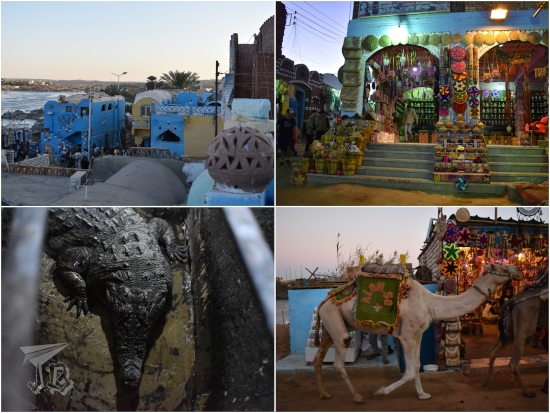
The Nubian village, Gharb Seheyl [غرب سهيل], which is little more than a big bazaar. We were invited to the house of a man who claimed to have been a dancer for the Spanish Teatro Real. We hung out there for an hour or so, and eventually were let off to walk around the village, a succession of shops selling the same trinkets as everywhere else, plus women trying to sell “Nubian dolls”. The house we were at kept live Nile crocodiles (Crocodylus niloticus), and at a lot of places we saw some mounted ones, I guess for tourist’s entertainment, but that did not feel quite right.

Collage of the Nubian village: a view from a rooftop, showing the houses painted in sand and blue colours; a shop with colourful trinkets, flowers, and statuetes; a Nile crocodile staring up; a dromedary passing by a souvenir shop.

After sunset, we sailed off back to the motorboat, without stopping anywhere, even if the whole city was lit. The boats were also shiny with neons and bright colours.

Collage: boats at night, docking and navigating the Nile. Two views of Aswan: lit ruins of the tombs of the Nobles, a mosque and a hotel

At the motorboat, we just had dinner and I went to bed early to catch some sleep. When I arrived at the cabin, I discovered that the staff had taken one of my beds away. I guess they got tired of making both of them as I used both bed covers? I was amused, just like I had been by all the figures they made out of towels (I got swans, a crocodile, and a monkey) though I wish the cleaning had been a bit more… thorough.

27th December 2022: Early start and late delays {Egypt, Winter 2022-2023}

Not that 5:00 is a nice hour for anything, but it’s definitely a nicer hour to get up than to take a plane. Leaving was scheduled for 6:00 (with sail-off at 14:00), and I would not have minded had it been earlier to be honest. However, given that most of my group had arrived at midnight, there might have been a riot…

Breakfast was not too well stocked, but there was coffee and eggs for energy through the morning as we were going to be out from 6:00 to 14:00 – a full eight hours. We started late because the tour guide was late… not a good sign. The group had 18 people plus him, and he really did not sound either enthusiastic nor particularly knowledgeable to be blunt. We had a coach booked for us and we set off to visit the main elements in the city of Luxor [الأقصر] and its surroundings, the Unesco World Heritage Site Ancient Thebes with its Necropolis. We started towards the West Bank of the Nile, the bank of the dead, where the ruins of the Necropolis are.

Our first stop was Medinet Habu [مدينة هابو] a Pharaonic complex, whose most important building is the Mortuary Temple of Ramesses III. It was the last monument built in the area, during the pharaoh’s reign (12th century BCE, Twentieth Dynasty of the New Kingdom). The basic structure of an Ancient Egyptian or Pharaonic temple is the pylon – court – hall. The pylon is a massive wall separated in two parts in which a narrow passage acts as gate. The court is a colonnade, and the hall is the area where the sacred spots can be found, covered and darker.

In the case of the Mortuary Temple of Ramesses III, the complex is surrounded by a mud brick wall with an extra pylon. The temple is decorated with carvings that depict the pharaoh as a great warrior smiting all his enemies. The structure used to be connected to the Nile to the point that there was a so-called Nilometre. In Ancient Egypt, taxation was determined by how high the Nile floods were – or were not.

Collage of the Mortuary temple of Ramesses III: The pylon, the columns, a bare gate and one decorated with rows of hieroglyphs

After the temple, we continued off to the Valley of the Kings | Wādī al-Mulūk [وادي الملوك]. Between the 16th and 11th centuries BCE, after the pyramids had been proven easy to find and pillage, the pharaohs from the Eighteenth to the Twentieth dynasties were laid to rest here. The tombs are excavated into the rock and here was where Howard Carter found Tutankhamun’s grave in 1922. The ticket grants admission to three “standard” tombs, and the most emblematic ones require a separate fee. Our guide pressed us not to buy a ticket for Tutankhamun, and did not even mention other tickets – at this point I decided that I had to read beforehand about what we were going to do the following days in order to be prepared for his attitude.

A scorching valley opening to both sides with grey-white hills going up. Everything looks sandy and dusty,

The first grave we visited was the Tomb of Ramesses IV (KV2) (12th century BCE, Twentieth Dynasty of the New Kingdom). It consists of a long and richly-decorated corridor that ends in a mortuary chamber where the sarcophagus still stands. It has been open to visits from antiquity.

Tomb: a long corridor with painted and carved hieroglyphs. In the background stands a bare sarcophagus in pink granite

The second tomb was the Tomb of Ramesses IX (KV6) (12th century BCE, Twentieth Dynasty of the New Kingdom), which was unfinished at the time of his death. The entrance corridor is wide, with the walls covered with glass. In this case, the burial chamber was unreachable.

Tomb collage: a long corridor decorated with hieroglyphs and a close up of a painted boat taking the deceased to the underworld. The corridor ends in stairs that go down towards the mortuary chamber

Our final grave was the Tomb of Ramesses III (KV11), whose temple we had seen before. The interesting thing about this tomb was that it ran into another one as it was being built, so the corridor actually has corners before reaching the empty burial chamber.

Tomb collage. Details of the different engravings and hieroglyphs. The burial chamber has thick columns and it has a downwards slope. The columns are decorated with further hieroglyphs and images of the gods

After the Valley of the Kings, we headed back to the Eastern Bank and made a stop at the Colossi of Memnon [تمثالا ممنون]. Each of the four statues was carved from one huge block of rock, and they signal the entrance to the funerary temple of Amenhotep III (14th century BCE, Eighteenth Dynasty of the New Kingdom). The temple is currently being excavated, and it would have been the largest in the West Bank.

The four colossi. There are two in the foreground, sitting down. They don't have faces. Two others can be guessed in the background, though one is just a block of rock

Afterwards, we got stuck for a stupid amount of time at an “artisan stonework” shop – a tourist trap to buy souvenirs. Boy, was I miffed, especially when this took out time from temples in Luxor. The first stop in the Eastern bank the was Karnak Temples Complex [الكرنك]. Karnak is a succession of temples, pylons and chapels that started around 2000 BCE, during the reign of Senusret I (20th century BCE, Twelfth Dynasty of the Middle Kingdom) and continued for 2000 further years, with more Pharaohs adding their own structures. The most impressive area in Karnak is the Hypostyle Hall, open to the sky now with a number of columns ending on an open papyrus capital. Other features are the obelisks of Hatshepsut, one standing, the other fallen.

The complex was dedicated to the Theban triad: the god Amun, the goddess Mut (the “mother” goddess with the head of a vulture) and their son Khonsu (god of the moon). Amun was the creator of the universe, and later his cult was merged with that of Ra, the god of sun and light, thus the appearance of the god Amun-Ra, to whom the main temple was dedicated. The huge complex expands right and left, but unfortunately we had little time to explore due to time constraints.

Karnak complex: the entrance pylon, the columns in the hall, decorated with scenes from Ancient Egypt's daily life, and an Obelisk

We moved on to Luxor Temple and the Avenue of Sphinxes, also called Rams Road [طريق الكباش]. The Avenue joined Karnak and Luxor, and was flanked by ram-faced sphinxes all along its three kilometres – though the four best preserved ones were taken to Cairo to create a monument in one of the squares. The avenue has actually been walkable since 2021, and you can go from one temple to the other on foot.

A long line of sphinxes with human faces and lion paws

Luxor Temple [معبد الأقصر ] was dedicated to the rejuvenation of the monarchy, and many pharaohs were crowned there. It was founded around 1400 BCE, and throughout the centuries has come to host a mosque. In front of it, stands an obelisk, whose twin is in Paris. Behind the obelisk stands the pylon, the court, the colonnade, and a final court before the sanctuary chamber.

Luxor temple: The pylon with an obelisk in front, two sitting colossi and two parallel rows of columns from the hall

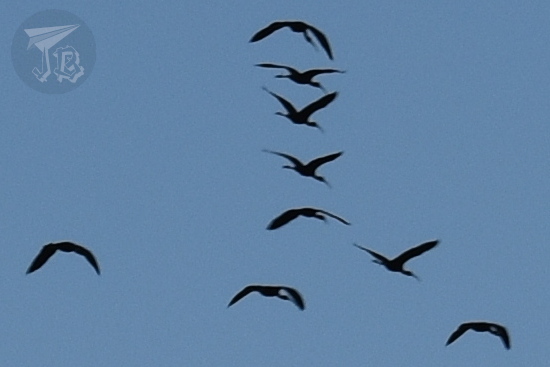
We were back on the boat just a few minutes after 14:00 for lunch, and then I found my way to the sun deck to see the sail off… which did not happen till 16:00! All that running through the temples for… nothing. I was not pleased, but I refused to get angry. Instead, I read up on what was to come, did some bird watching – I caught a flock of ibises – and watched the sunset.

A flock of birds flying against a bright blue sky. The curved-down beak suggests that they're ibises

Sunset over the nile. The sky is orange, the suni s almost white, and there is a trail of light on the water

In the late evening we reached the floodgate at Esna, which we should have crossed around dinnertime. We got stuck waiting for our turn behind a large LNG ship and a lot of other motorboats. In the middle of nowhere, I was able to see the stars very clearly, and that was pretty.