12th – 14th October 2023: Yoshiki Classical World Tour “REQUIEM”, London (England, Great Britain)

This was my third and last trip to London in these five crazy weeks, and it was again to see Yoshiki. Someone once told me that I love Yoshiki because he appeals to both my wild and posh sides – it is partially true, I guess. It has a lot to do with how many of his lyrics resonate with me, more deeply than I am comfortable admitting sometimes.

I don’t think I would have travelled twice so close in time for any other artist. And believe me, organising this trip was a logistics nightmare. In other circumstances I would have flown out the same day of the event, which was Friday the 13th, but I don’t think that airports in the UK have completely recovered from the Covid chaos, and there are still a bunch of issues – just the previous week to my arrival, a good number of flights were cancelled in Gatwick. Second, the 12th is a holiday where I live, and since it was a Thursday, it kickstarted a long weekend. And last but not least, the 12th is also my parent’s birthday, and they were excited for a big celebratory lunch.

Taking all this into account, I tried to coordinate everything the best I could without breaking the bank. I found the last plane leaving on Thursday the 12th, at 21:50. That gave me time to have lunch at my parents’, then drive off past 19:00 – there should not be too much traffic. I booked the parking lot – the shuttle runs every 15 minutes in the evenings. In the worst case scenario, if my flight was cancelled or too delayed, there was space to manoeuvre on Friday morning. The plane was scheduled to arrive in London Gatwick close to midnight, but I was quite sure it would be delayed, and in order to avoid late-night trains and stress, I reserved a hotel next to the airport terminal – I did not have to worry about dinner as my parents make food to feed a small army. For the following night, I found a “boutique hotel” next to the venue. I booked my return flight on Saturday the 14th in order to avoid the end-of-weekend traffic that would concentrate on Sunday.

Great plan. In the end, something happened and the celebration had to be postponed, so I spent the evening watching the clock, and checking and rechecking both the weather forecast and my luggage – finding something to wear that was nice and still weather-appropriate was difficult. I changed my mind regarding footwear about six times.

Around 19:00 on the 12th, I finally drove to the airport. Considering that the forecast was rain both at home and at London, I took boots in the end, but more comfy shoes for driving. I reached the parking lot and airport a bit earlier than expected, and I found a nice covered spot for the car – which I had to check that it was not reserved a few times. As I entered the international terminal, I was disoriented for a second – since I usually take planes before 7:00, I had not seen the shops open for a long time! It turns out there is a Duty Free just after passport control which I had not even realised before, and that threw me off track for a heartbeat or two.

I had some dinner at one of the fast food stands, and as expected, the plane was delayed. Then it needed an engineer. Then it taxied forever. And after almost two hours of delay, the two-hour-and-a-bit flight to Gatwick was cut short – we landed not even ten minutes late, so we flew the route in a little over an hour. I never knew you could step on it so bad on a plane! I went through passport control and found my hotel – just outside the North Terminal, and much closer than I had calculated. Gatwick was also crazy busy even if it was nearly midnight.

I checked in, and I was surprised that even though it was the same chain I had stayed at next to the O2 Academy Islington, the procedure was completely different. But it went without a hitch, and I was in bed within thirty minutes. I even caught some sleep. For some reason they gave me a room with a sofa-bed aside the regular one.

Leaving in the morning was a bit more complicated. After a much-needed caffeine boost at Costa Coffee, I took the inner airport shuttle from the North to the South Terminal, where the train station is. From there, I found my connection to central London. The good thing is that Gatwick trains belong to a regular line, so they do not require a special ticket, you can use the Oyster card, which I did. The shuttle and train went through awful weather, but when I reached London, rain and wind had calmed down a little. I wanted to leave my things at the hotel because of the bad weather and not to go into any museums with the backpack – just in case. The nice person doing my check in was very stressed that I might want my room – it was before 10:00 for a 15:00 hour check-in. I really just wanted them to hold my luggage. After that was successful, my next step was finding a bank that would exchange a handful of old pounds for new ones. In the end, train, underground, hotel and bank took a bit longer than I had expected and I was running a bit behind my self-imposed schedule.

My first stop was Sir John Soane’s Museum. Sir John Soane was a neoclassical architect – he worked in the remodelling of the Palace of Westminster, but his most prominent legacy is his house-museum. He bought a couple of attached houses in the centre of London, and combined them both as an architecture experiment and to host his collection of antiquities, copies, paintings, and pieces of architectural interest. There was a special Act of Parliament to establish the museum while Soane was still alive, stating that after his death the houses should be kept as they were, to avoid his son selling the collection, as some of pieces were / are worth a fortune. For reference, one of the most important artefacts hosted there is the sarcophagus of Egyptian Pharaoh Seti I (Second Dynasty). Adventurer Giovanni Battista Belzoni tried to sell the piece to the British Museum after taking it from the Valley of the Kings in Thebes. The Museum was not willing to pay what today would equate to almost £200,000, but Soane bought it in 1817 to exhibit it in the basement “sepulchral chamber”, where it still stands today.

Entry to the museum is free, but you are requested to purchase the guide for £3, which I did. The first area you visit is the lovely library, and then you step into the real treasure – the area comprised by “the dome”, “the colonnade” and “the corridors”, where literally hundreds of sculptures, friezes, amphorae, decorative pieces… pile up on one another to the point that everything is overwhelming and fantastically chaotic. Wherever you look, there is something else to notice – whether it is Apollo, a copy of the Farnese Hercules, a pegasus… Then you go down to the basement, and both the “catacombs” and the “sepulchral chamber” are equally cluttered – a pair of Chinese guardian lion-dogs, Aphrodite bathing, a Poseidon head, and of course Seti I’s alabaster sarcophagus, encased in glass, which sucks for pictures but protects it in the super-tight space.

Artefacts at Sir Soane Museum

Sarcophagus of Seti I in Sir Soane Museum

Other spaces include the kitchen – which feels strangely empty in comparison– the drawing rooms on the first floor, and the picture room on the ground floor – with some of Canaletto’s Venetian landscapes, and drawings of ancient monuments. All in all, whenever you blinked, you missed a detail. It was almost stressful, but an amazing place to visit.

Afterwards, I met up with fellow Yoshiki fans A****d and A**i, at the British Museum. They were going there first thing, and we had arranged to get together around noon, but I ran a bit late and only reached them around 12:20. Through that time, they went through the must-dos. We met at the Ancient Middle East and saw a few exhibits about the history of money, one on clocks, Roman Britain, the library… They asked me if there was anything I recommended, and we went past the Moai so I could show them one of my favourite sculptures ever – the Bodhisattva Guanyin [觀音 in Chinese], associated with compassion, in the Chinese Art Gallery. Guanyin sits with one leg up in a very relaxed and informal position compared to other Buddhist imagery, and I just adore this wooden representation.

Artefacts in the British Museum

Around 14:00, we went out for lunch. We tried an okonomiyaki place near the British Museum, but it was unfortunately full, and both my friends had had CoCo Curry the previous night. We walked into Chinatown and we found a self-proclaimed izakaya Japanese restaurant called Oita (Soho). I ordered sushi bento for £16.95, which at first felt a bit expensive, but I had forgotten British-sized servings. It was actually very proportionate size-wise, and came with complimentary miso soup. The bento (“boxed lunch”) itself comprised a small salad, seven pieces of assorted raw fish on sushi rice (tuna, salmon, butterfish, mackerel, squid, prawn and octopus – these last two were no raw, actually), four assorted nigiri (tuna, salmon, butterfish, mackerel), three salmon sashimi, two tuna sashimi, three avocado hosomaki, and some garnishing including cucumber, radish and alfalfa, along with pickled ginger and wasabi. It was really good.

Oita Soho sushi bento

The three of us separated after lunch to go to our hotels and get ready. On my way, I bought a sandwich and a bottle of water from a supermarket to have for the night, and decided to take a shower before changing into concert gear. When I reached my hotel, they showed me around, and told me my luggage was in the room – which it was not. I had to come down again to get it, which embarrassed the staff a lot. The room was posh to the max – I even had a bed with a canopy! Apparently, boutique hotels are “small hotels with a personality” that try to “tailor the experience to the customer”. For me, a hotel is just a place to sleep in, so I’m just happy with them being safe and clean. I can do without the personality, the steeper price, and the surprise extra service charge.

I reserved the hotel through Booking, and they got in touch that they wanted payment outside the page. I dislike this, but it is not unheard from. I needed to demand my payment receipt, too, because the page did not generate any. Later, they tried to charge me through Booking again (though in their “defence” this might have been a Booking issue, as it has been hacked). In the end, the image I got from them was that of an overpriced wannabe high-end hotel, but there were too many blunders to consider coming back if I can help it.

At least, the hotel fulfilled the one reason I had chosen it – it was a short walk from the Royal Albert Hall. Considering how badly I felt after the Miyavi concert a couple of weeks before, I was a bit apprehensive this was going to be too much. It was, but not in the worse sense of the word. The recital was emotionally hard on me, as I tend to connect a bit too much with Yoshiki’s music, but fortunately I did not take ill this time around.

I was deeply moved when I attended the first Yoshiki Classical concert in Paris in 2014, but this time my mind was absolutely blown. Back in May, in a moment of fanby weakness, I decided to buy RAH membership (£55) in order to get access to the presale. Despite that, I only managed a sixth-row seat to the side – Arena F – Row 6, Seat 27 (£60). These were sent by post and arrived in physical form in late July. I decided on this delivery method because even if the tickets did not arrive on time, or got lost, I still had the option of “will call” with my ID and the card used for purchase (of course, my bank decided to cancel my cards meanwhile and get me new ones, so I’ve been running around with both working and not-working cards in my wallet for the last couple of months).

Having a RAH account also meant that I was notified about a “Yoshiki meet and greet VIP package” within minutes of its release, which included an exclusive opportunity to meet Yoshiki after the concert in the 1871 Bar, a photo opportunity with Yoshiki, and a piece of merchandise for signing (£150) – I booked it as soon as the email came through, and I think I was the 10th person to buy the upgrade. These tickets were supposed to arrive by post, too, but the venue changed them to e-tickets the week before the show – when I was already antsy about them arriving – “will call” was still an option, but I was restless.

Around 18:15 I left the hotel to walk to the venue to meet A****d and A**i. The Royal Albert Hall is one of the most famous concert venues in the United Kingdom. It was world’s first domed amphitheatre, designed by two civil engineers, Francis Fowke and Henry Y.D. Scott, and inaugurated by Queen Victoria in 1871. The outer structure is built in Fareham Red brick with a mosaic frieze that represents the arts and sciences, and the roof is a glass and wrought-iron dome. It has several halls and a corridor surrounding the amphitheatre, with several bars and other hospitality offerings.

The three of us walked around and found the merch stand, which was a bit underwhelming – two short-sleeve T-shirt models, and a tote bag. I kind of regret not getting the tote now, but I felt I had already spent too much money. A****d was sitting next to me, and A**i just a couple of rows behind. However, upon being shown to the amphitheatre when doors opened around 18:45 for the 19:30 concert, my brain shortcut. Rows 1 to 5 were inexistent. My row 6 ticket was a first row ticket. I was first row for a Yoshiki concert!

Fine, to the side and with some camera equipment in between, but I was first row for a Yoshiki concert. In particular, for Yoshiki’s Yoshiki Classical 10th Anniversary World Tour with Orchestra 2023 “REQUIEM” on the 13th of October 2023.
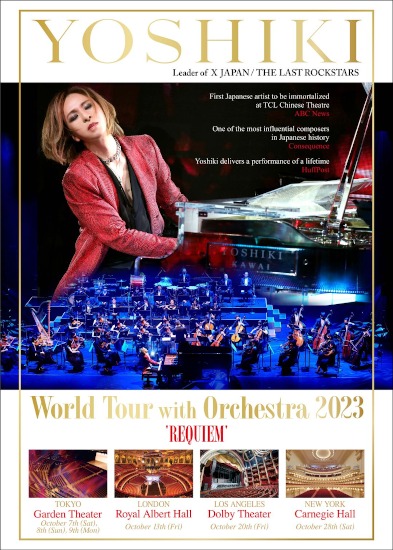
Yoshiki Requiem Poster 2023

Most seats had a small booklet, and since mine did not, I decided to “steal” it from a still-empty seat – I’m selfish, sue me. Once my brain settled down enough to take everything in, there were two things I noticed – one, that the grand piano in the centre of the stage was not Yoshiki’s trademark glass piano, and two, that his drum set was there. This was not a huge surprise as he had hinted it during the Q&A in September that he wanted to do something with it. We passed the time looking at people come in, being impressed at how fancy some people dressed, meeting other friends, and taking photographs in front of the stage.

Inside the Royal Albert Hall

The concert / recital was intense. Most of the music played had been composed by Yoshiki himself either for his different collaborations or for X Japan. Vocals were entrusted to pop singer Beverly [ビバリー] and soprano Ai Ichihara [市原 愛]. Special guests St.Vincent and Ellie Goulding sang their own songs. The Royal Philharmonic Concert Orchestra was conducted by Ward Stare. Ballet dancers from Jlee Productions performed on stage during Forever Love and Swan Lake..

Setlist:

Part 1
   1. Amethyst (orchestra alone)
   2. Tears
   3. Angel
   4. Miracle with Ai Ichihara
   5. Forever Love
   6. Kiss the Sky with Beverly
   7. Anniversary
Part 2:
   8. Drum improvisation while the orchestra played Serenade for Strings (by Pyotr Ilyich Tchaikovsky) and Symphony No. 3 (by Henryk Gorecki) and Ai Ichihara on vocals
   9. Say anything
   10. Swan Lake (by Pyotr Ilyich Tchaikovsky)
   11. New York by and with St.Vincent
   12. Love me like you do by and with Ellie Goulding
   13. Red Swan with Beverly
   14. Requiem
   15. Without you
   16. OPUS 13 in A-minor (by Felix Mendelssohn)
   17. Art of Life (second and third movements)
   18. Endless Rain

Although the auditorium opened later than it was supposed to, the concert started almost punctual, a bit past 19:30 – which for Yoshiki is a miracle of ontimeness. He had probably done all his interviews the month before. Director Ward Stare came on stage and the orchestra played Amethyst as warm-up – this is the song that was usually heard at the start X Japan’s concerts, before members came in. Yoshiki walked on stage to play piano from the second song on, Tears. The tour title Requiem comes from the song Yoshiki wrote to honour his mother after she passed – he was understandably devastated, and it made sense to start the show with Tears.

Yoshiki playing piano at Royal Albert Hall

Throughout the concert, he alternated piano-playing and talking – most of the talks we had heard before, but a few were new to me. He told us that when he felt that he had managed a great achievement his mother used to bring him back to earth with questions like “have you eaten?” or “did you sleep?”. He explained that she really praised him when he composed Anniversary for former Emperor Akihito. We also had some promotion of the Under the Sky film, and Yoshiki’s champagne line, along with a recap of him being honoured in LA’s Chinese Theatre. There was also some “thank you to my sponsors” talk, and he might have said “amazing” around a thousand and three times.

The first part went more or less as expected – except for the ballet dancers. I did not think we would get them, but I am not going to complain. I did miss Hero, because I really enjoy listening to that one live, but something had to be taken out to accommodate the songs by the special guests. Some people say that he talks too much, but I think that he’s just trying to catch a breather – both physical and emotional. At one point he spoke about an “X Japan song that we would never really hear”, which was heartbreaking. There is a difference between knowing that there won’t ever be any X Japan ever again, and having it confirmed. Both in September and now, we’ve heard him openly say things that usually went only implied, which I think means that we are in a new stage of his artistic career / life.

Yoshiki Royal Albert Hall with orchestra and ballet dancers

For the second act, he pushed himself even harder with a drum solo to start off. He always smashes the drums as if he were trying to get a confession out of them – it is like he has so much anger inside him and the drums are his only way to release it. In a way, it probably is – he always says that he turned to drumming to deal with his father’s suicide, and that is how he expresses himself. But then he goes back to the piano, and it feels that the keys are crying with him.

The acts with St.Vincent and Ellie Goulding, in my opinion, were more promotional than anything else. Both are well-known and established in their own niches – and Yoshiki likes female singing voices because they can hit high notes better, I think – though I miss Katie Fitzgerald and Ashley Knight, to be honest. St.Vincent was okay, Ellie Goulding left me wondering… what she was doing there. Apparently the pinnacle of her career until now has been composing Love me like you do for the film Fifty shades of grey… And I hate to be that person, but both of them could have chosen way better outfits.

The titular song, Requiem, was extremely poignant. It was the piece Yoshiki wrote to deal with his feelings for his dead mother, in his own words, the means he found to stop crying for her loss. Just like he took to drumming after his father’s death, he took to composing after his mother passed. Later, he explained again how the song Red Swan symbolises standing up through the pain and the blood. The original version of this song is sung by vocalist Hyde, and since he was bringing in people from all around the globe, I would have been extremely happy if he had flown him in for it, and I was hopeful for about one tenth of a heartbeat. Unfortunately, you cannot have everything.

Throughout the recital there were sad moments and happy moments, to thank fans, and to remember those who are gone, moments with ballet dancers and with the torch on the phone on, moments to sing and to laugh, and to feel your heart shrink. In the end, Endless Rain with all the audience was extremely special – it never feels that it is going to be, I keep thinking “this time it’s not going to affect me this much”, but it gets me every time.

Yoshiki talking at the Royal Albert Hall

In the end, the show lasted for about three hours, plus a twenty-minute intermission. He thanked the conductor, the orchestra and dancers and the guests, and received lots of flower bouquets. Next to me, A****d managed to give him a Union Jack with a small EU flag sewn into it, which he proudly wore around his shoulders. It’s fun how he is such a huge super star and then he becomes all shy and embarrassed. Or he just… crashes.
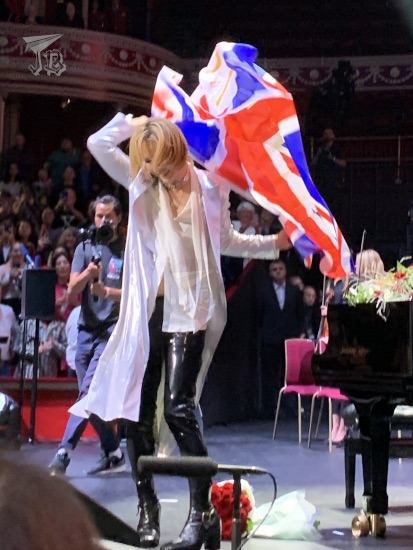
Yoshiki with the Union Jack flag, Royal Albert Hall

After the concert was over, we said goodbye to A**i and, A****d and I made our way to the 1871 Bar, where the Post Show Meet & Greet Experience was to take place. We went to one of the doors, but of course then we needed to go to the other one. Eventually we got in, and rather quickly – I was the 20th person in the queue, and got to wait inside the bar. It was upholstered in blue, turquoise and green tones, with the most garish decoration I’ve seen in my life, including mirrors, golden wallpaper, bright plastic deer heads (better than real ones but still gaudy), lava lamps… There were about… four or five sofas, and the whole floor was carpeted in reddish and green / grey tones.

I was a bit nervous – waiting to meet an artist is actually the worst moment of queueing, I feel. To be honest, the first time I saw Yoshiki in person in 2017, my brain went 404 on me and I was not able to utter a word, though in Vienna I did a bit better and got a selfie. I was shaking so badly it came out horrible and moved.

As we were waiting, a staff member came to tell us that we could talk to Yoshiki a little, and that they would take our pictures with him and email the link to us. He explained that Yoshiki had just played a three-hour show and that he was bound to be tired – and how amazing he was. We smirked that we knew that already – most of us were not local, after all. Meanwhile, lights were set up, and signed posters brought out.
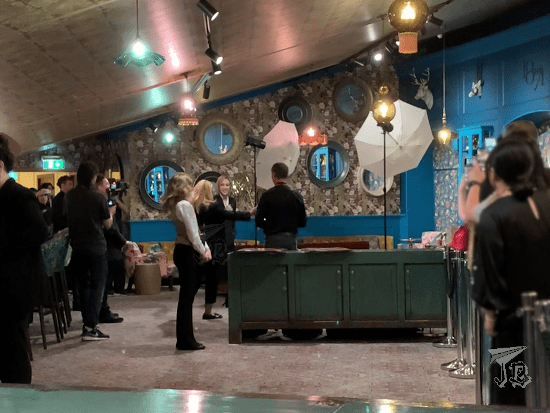
Yoshiki arriving for the M&G in the 1871 Bar at the Royal Albert Hall

Once he came in, we clapped and then everything went very fast and very slow at the same time. Everyone got to talk to him a little indeed, ask for an autograph or give him a present. Some people conjure amazing gifts for artists, but I never bring anything for them, because I feel it’s imposing and they don’t need any junk I could get them. However, I was clutching my bad selfie print-out, running through my head what to say. It was finally my turn, and then something I could have never prepared for happened – he declared that he was tired and just sat down on the floor. Not one of sofas. Yoshiki, superstar, just plopped down on the garish carpet of the bar at the Royal Albert Hall.

I have no idea how or why but my brain kicked into gear at that point. Before the staff could react in any way, I asked Yoshiki if it was all right to sit down on the carpet with him – I really did not know if he wanted to have his picture taken on the floor. I’m not sure if the staff and the aides knew what to do, but when he said it was all right, I approached and sat – A****d had stayed behind and was able to document the whole thing, apparently I sat in the proper traditional Japanese way for the conversation.

I thanked him for his music, and told him how his lyrics helped me feel better after a bad situation. Then I asked him to sign the “horrible selfie” – I actually said this – from Vienna. He thanked me for coming back, and I said “no, thank you for coming back”. The whole thing was absolutely surreal. There we were, sitting on the carpet of the Royal Albert Hall, surrounded by dumbfounded staff and… sofas. Photographer Andy Paradise took our picture, and what I saw when I looked at the camera was the photographer crouching, the video-camera person kneeling, someone else also crouching down, and a fourth person coming in with a chair (despite… sofas). I said thank you again, and dragged myself away – the guy whose turn it was behind me also sat down on the floor.

A****d and I got our signed posters, while I clutched to my now autographed bad Vienna selfie, and left the venue. Some people asked questions on the way out, and we explained how it went. When we came out, it was cold, so damn cold. My hotel was a block over, so I asked reception to order a taxi for A****d, and we parted ways, hoping to see each other soon.

I went up to my room to take my third shower of the day, and have my snack. I was so overwhelmed, it was hard to sleep. It was also stupidly cold because unbeknownst to me, I had not closed the window well, and there was an open crack. I burrowed under the bed covers, a towel and a bathrobe, and got some rest.

The next morning, I made myself a hot instant coffee to start off the day, but it did not do much to get my blood pressure up. I vacated the room around 9:00 after asking the hotel to keep my luggage – but considering what had happened the previous day, I made sure I had all the important things with me. I had a nice plan for the day, but I decided to discard it last minute because underground disruptions had escalated – it was not worth it to get stressed due to commuting issues having alternative things to do. Seeing the first red phone cabin will have to wait for another time.

It was still extremely cold when I stepped out. First, I went to see the Albert Memorial in Kensington Gardens, and I crossed to Hyde Park. I also found the Monument to Livingstone. I went around the Royal Albert Hall, and a bit before 10:00, I joined the queue to enter the Victoria and Albert Museum. Whenever I am in Kensington, I always get distracted by the Natural History Museum, so I had forfeited the V&A for a while now. Today was the day to finally explore it.

The Albert Memorial

Royal Albert Hall from the outside

Founded in 1852, the V&A is one of the largest museums in the world – it’s actually the largest museum of applied arts, decorative arts and design. It covers 51,000 square metres, with 145 galleries and almost three million individual items in its permanent collection. It is a chaotic museum, and yet, it makes sense. The museum is organised by “themes” such as Buddhism, England Middle Ages, metalwork, porcelain, glass, Baroque sculpture… I tried to see things in some kind of logical order, but it was pretty much impossible. Apparently they tried to rearrange it a while back and they just… gave up, as it would diffuse expert knowledge. I found this very interesting, but since this was my plan B, I did not really have time to plan the visit very thoroughly.

Before diving into the galleries, I headed over to the museum café for a gigantic tea-infused scone with jam and proper clotted cream, and a mug of coffee, and sat down at the Gamble Room. When it opened in 1868, it was the first museum café in the world. It is decorated with tiles imitating the Italian Renaissance majolica tiles, columns, golden ceilings, and weirdly modern lamps. After breakfast, I felt a bit more grounded, though I felt a bit off all day.
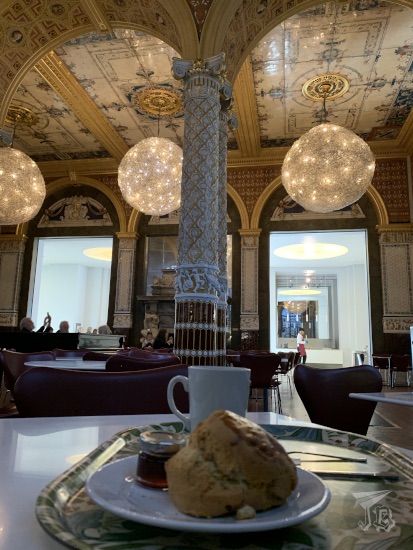
Scone and coffee at the Gambler Room in the V&A museum

I roamed around the museum for a few hours, and I know that I missed some important areas. I found it difficult to keep track of where I was and where I wanted to go, but I got a bit of a taste of all. I was very impressed by the Cast Courts, where copies of some of the most iconic pieces of architecture and sculpture are kept. These were made in the 19th century, and represent “the truest spirit of the Victorian museum.”

Artefacts at the Victoria and Albert Museum

On the ground floor, I wandered the Korea, Japan, China and Buddhism galleries, and I came across another depiction of Bodhisattva Guanyin, in the same pose but a completely different artistic style. I saw the largest Middle East and Islamic Art collection in Europe, and the adjacent galleries –South Asia (especially India) and South East Asia had a lot of interesting artefacts, too. The sculpture galleries are tantalising.

Other areas I visited included Medieval and Renaissance, Britain though history, ironwork, metalware, gold, silver, ceramics, glassware, jewellery, stained glass, architecture, and I could have gone on and on. But alas, I had a plane to catch.

Artefacts at the Victoria and Albert Museum

Victoria & Albert Museum

Around 13:00, I left the museum, collected my luggage, and made my way to South Kensington Station amidst the Tube closures of the lines that would take me directly to Victoria. A while back, I had to take a similar alternative route from Earl’s Court due to the wires overheating when I was going to the Apollo Victoria Theatre to watch Wicked. The South Kensington station runs the same Tube lines, so I was able to reach Victoria railroad station at the desired time – even with a line change and more than double stops. I was off towards Gatwick airport on the expected train.

Once there, I went through security without a hitch. I had a snack in the most expensive and unfriendly Wagamama in history – give me Stansted’s Itsu anytime. I wanted something warm because my body gets weird after emotional highs, and I was freezing. I even wondered if I was taking ill again, but no. I was just cold. I did not let either the restaurant nor the chill spoil my mood though, and I might even have had a nap on the plane. By the time I got off, I had warmed up. I cleared passport control, found my shuttle to the parking lot and – aside from the inevitable idiot on the road – there was not even that much traffic, which is good. You know the routine – shower, snack, bed.

I was not ill in the end, just stupidly exhausted. Going back to normal was quite difficult, especially as I still had Sunday free. I did not ever dare look at my phone to see if the photographs were real. A few days later, on the 18th, we received the email with the meet & greet professional photos. I look ridiculously happy, sitting on the carpet ,with a sofa behind me, with who is probably my favourite artist. I feel a bit guilty that I burdened him with my problems – I really hope he forgot quickly. Nevertheless, I am mostly glad that I was able to take these three crazy trips to London without incident. I feel extremely lucky that all three of them worked out, if not flawlessly, without any huge mishap. There is actually another Yoshiki event announced for December, but as much as I would love to go, it is just not in the budget, and I am a bit sad about that. But then I think “I sat with Yoshiki on the carpet of the Royal Albert Hall” and smile.
7th October 2023: The historical centre of Valencia (Spain)

I had the chance to spend a few hours – seven, to be exact – in Valencia | València (first name in Spanish, second one in local dialect) due to unforeseen circumstances. I’ve been there before, but it was to visit the Oceanogràfic, and I had not entered the historical area.

Valencia is the third-largest city in Spain. It is known for its love of pyrotechnia – Las Fallas – and its famous paella rice dish. The city dates back to the Roman period, in the 2nd century BCE. During the Middle Ages, it was one of the most disputed areas between the Christian and the Moor troops, changing hands a few times. The city flourished in the Late Medieval Period under Christian ruling. It played an important role during the Napoleonic war, and during the 20th century it became a great importer of wine and citrus, especially oranges. During the Civil War, it was the Republican capital, so it was heavily bombarded. With the advent of democracy, the city invested in development and tourism.

I arrived at the station Joaquín Sorolla around 11:30, which is not far from the centre. It was pretty hot, even if it was October, so I was ready for a few weekend-tourists. One detail that I had not planned on, nor thought about, was that it was a long weekend over there, Monday the 9th was a holiday, and there were way more than “a few” weekend-tourists. Also, I walked into a lot of preparations forfor institutional acts, which got in the way of photographs – the city hall square was cordoned off and it was really hard to get a good view. On one side of the closed-off area stands the town hall Ayuntamiento de Valencia | Ajuntament de València, on the other, the old central postal office Palacio de las Comunicaciones de Valencia | Palau de les Comunicacions de València. The town hall is actually a mash-up of two different buildings, one from the late 19th century, and another – the façade – from the 1930s, with Renaissance and Baroque inspirations.

Valencia town hall

I continued off towards the main market – Mercado Central | Mercat Central. This is an impressive Modernist building designed by architects Alejandro Soler March and Francisco Guardia Vial. Construction started in 1914 and finished in 1928 – the building was erected in iron, glass and ceramic tiles, the central dome is 30 metres high. This is one of those places I wish I were a VIP and could see closed, because it was fantastic. Unfortunately, though it is the largest market of fresh produce in Europe, it was extremely full, and it was hard to even stand to the side and take a photograph or two.

Central Market Valencia

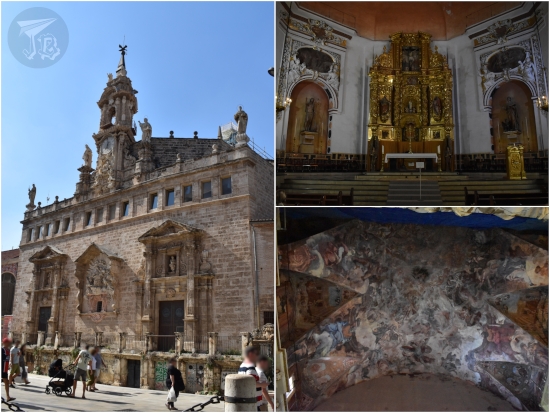
Next to the market stands the church Royal Parish of the St Johns Real Parroquia de los Santos Juanes | Església dels Sants Joans also known as St John of the Market. When checking if the city tourist card was a good choice for me – it was not – I bought a combined ticket that included this church and two other buildings for 12 € (considering that each on its own was at least 7 €, it was a sweet deal.

Church of the Saint Johns Valencia

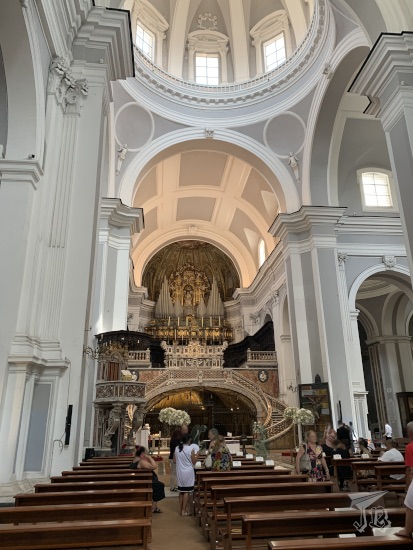
Most of the original Gothic building has been destroyed, and its appearance today is mostly Baroque. It seems that the church is prone to fire accidents, and burnt down totally or partially at least three times. It is undergoing inner restoration at the moment, which takes away from the fresco decoration of the vaulted nave. The frescoes were carried out by Antonio Palomino in the 16th century, and the Baroque altarpiece was brought from another church in the north of Spain. An add-on to the church is the Capilla de la Comunión, the chapel of the Holy Communion was added in the 18th century. The church reminded me of the Italian Baroque I saw in Naples.

In front of the church, on the other side of the square, stands what I consider the most important building in the city – the Silk Exchange, or Lonja de la Seda | Llotja de la Seda, also called Lonja de los Mercaderes | Llotja de Mercaders. In Spanish, a lonja is a type of public building where merchants would negotiate and auction their produce, traditionally fish. In this case, instead, it was used for trading in silk during the Middle Ages. Silk was important for Valencia, and the city is considered part of the Silk Route. The Arabs introduced it in the 14th century, planting mulberry trees to produce it, and the trade became so important that it required its own building.

Lonja de la Seda Valencia

The Exchange was originally designed by Francesc Baldomar in the late 15th century, though he died before completing it. His disciples Joan Ivarra and Pere Compte finished the building according to Baldomar’s original plans and drawings. The building has four distinct areas: the Tower, the orange garden (Patio de los Naranjos), the Contract or Trading Hall (Sala de Contratación) – which were the original ones – and the Sea Consulate Hall (Sala del Consulado del Mar ). There is also a small basement.

The building is considered the masterpiece of the civil Valencian Gothic, a style that flourished in the east of Spain towards the end of the Gothic period. It is characterised by a heavy reliance of traditional Roman architecture and a little Mudejar influence. Wide open halls are typical, with decoration and sculpture influenced by Flaming Gothic. The Exchange is decorated with tiny gargoyles sprinkled all around the outside of the building towards the garden.

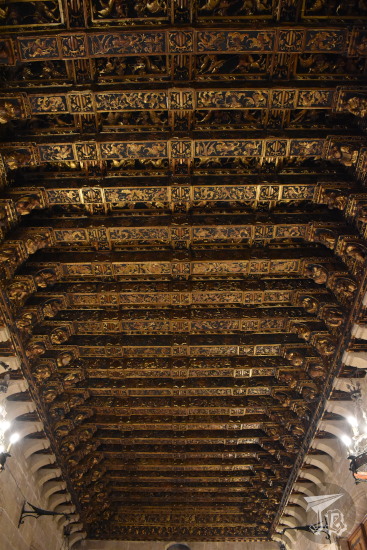
The Trading Hall has three naves which rest on eight helical columns and 16 pilasters that hold the vaults, eleven metres above ground. Further ribbing extends from the the columns, creating a net that spreads all over the ceiling. The combination of columns and ribbing tries to represent heaven – the palm tree trunks and the celestial sphere. Another ceiling that deserves admiration is the painted wooden one in the first hall of the Sea Consulate.

Lonja de la Seda Valencia

Wooden roof of the Consulado de Mar in Valencia

I loved the Exchange, but it is not as if I have ever scorned anything Gothic. However, I could not stay forever, so I pushed myself to leave. I went around the building once and then, after a short stop at a cute little round square, Plaza Redonda, I found my way to the large square Plaza de La Reina, where the cathedral stands.

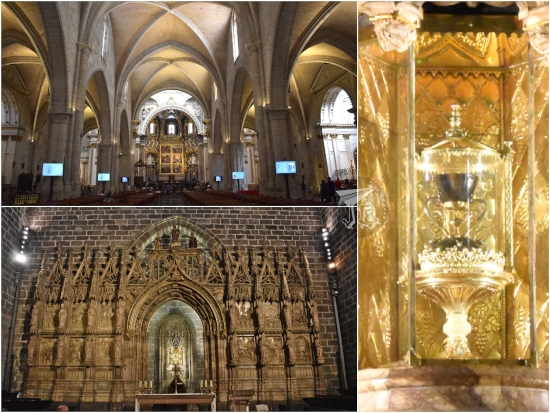
The Iglesia catedral-basílica Metropolitana de la Asunción de Nuestra Señora de Valencia | La Seu is also built in Valencian Gothic on Romanesque foundations. It was erected over a Roman Temple, and part of the Roman remains can be visited in the “archaeological area” of the museum, underneath the current church. The main building that stands today was erected between the 13th and 15th centuries, thus the prevalence of Gothic, but there are earlier and later styles – as recent as Neoclassical.

Valencia Cathedral

In a side chapel, in the middle of an alabaster Gothic altarpiece (1777), the cathedral holds and exhibits its most important treasure – the Holy Chalice (Santo Cáliz), sometimes called Holy Grail. According to the Christian tradition, the Holy Chalice is the vessel used by Jesus Christ during the last supper. If we follow the Spanish legend, when the Virgin Mary died, Jesus’ disciples gathered everything that belonged to him, and Saint Peter took it to Rome. During the persecution of Christians in the Roman Empire, the Chalice was entrusted to Saint Lawrence, who brought it to one of the former Spanish realms. It was eventually presented to the monarch in 1399. In 1437, King Alfonso V of Aragón donated it to the Cathedral of Valencia.

According to other legends, there was this King called Arthur, and something about a knights and a round table. In the Arthurian legend, there was a mystical object called the “Grail.” which was originally a Celtic cauldron with magic powers. However, the concept became mixed up with the Chalice when the story was “Christianised” – the chieftain on whom Arthur is based on, and his legend, originates in the 5th century BCE, so there is no way that Arthur looked for the Chalice anyway.

The Valencia Chalice itself is a stemless cup made of carnelian (dark red agate) – and that is the relic itself. It was most likely produced in Syria, Palestine or Egypt, and it has been dated between the 2nd century BCE and the 1st century CE. There is an Arab Kufic inscription on its base. I am not sure it fits what Indiana Jones would have called “the cup of a carpenter”. The cup is mounted on a gold stem embellished with gold, pearls and emeralds, with a foot and two handles, which were added in Medieval times. Now, the cathedral claims that it cannot be proven that it is not the Holy Chalice, and the translation of the Kufic script is supposed to be “Allah Josua”, translated as “Jesus God”.

Valencia Cathedral and Holy Chalice Chapel

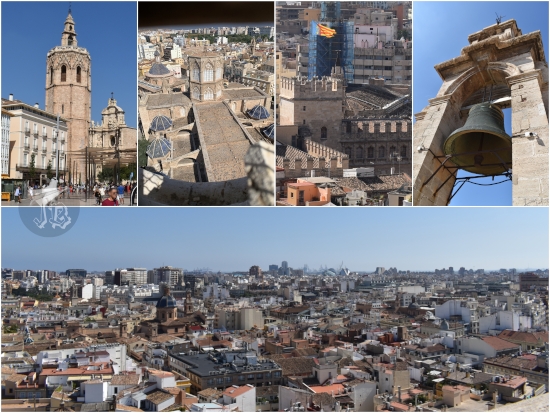
The cathedral also has a museum and the previously-mentioned archaeological areas, with a Roman road and human remains. The museum has sculptures and paintings from the cathedral itself and religious artefacts. The bell tower is famous in its own right. Erected between 1381 and 1429, it is called Miguelete | Micalet – “Little Michael”, which is actually the name of the bell at the top. . The tower has eight sides on the outside, and is circular in the inside, with 207 steps up to the terrace. The bell-gable was added in the 18th century, but the tower itself is Valencian Gothic just like the cathedral. The views are not as impressive as expected as the whole thing is netted off and it is hard to see anything unobstructed.

Views from Miguelete

The cathedral is connected to the Episcopal palace on the other side of the street by a sort-of bridge called Arco sobre la calle de la Barchilla | Arc del Carrer de la Barcella that I saw when I went round the cathedral. I also saw the Tribunal de Aguas de Valencia | Tribunal de les Aigües de València and Palacio de la Generalidad Valenciana | Palau de la Generalitat Valenciana on my way to the church of Saint Nicholas and Saint Peter Martyr (part of my combined ticket).

San Nicolás de Bari y San Pedro Mártir | Sant Nicolau de Bari I Sant Pere Martir stands at the end of an alleyway that comes from one of the main arteries of the city. It quite humbly calls itself “The Valencian Sistine Chapel”. It is a single-nave church, built in the 15th century on top of a Mosque which was in turn built on top of a Visigoth palaeo-Christian temple. During the Baroque period, the whole vault was decorated with frescoes, to the point that. And when I mean “whole” I mean… whole. There was no space for an extra soul, saint, angel or whatever. It was so full I could not process the painting as individual items, just as a whole.

Frescoed Vault of Saint Nicholas church in Valencia

Afterwards, I went into the small streets that led into the Arab Quarter, marked by the archway Portal de Valldigna. I also spotted an Islamic tower Torre islámica | Torre islàmica in side a private parking lot, and the remains of the Arab walls Muralla Árabe de Valencia | Muralla àrab de València.

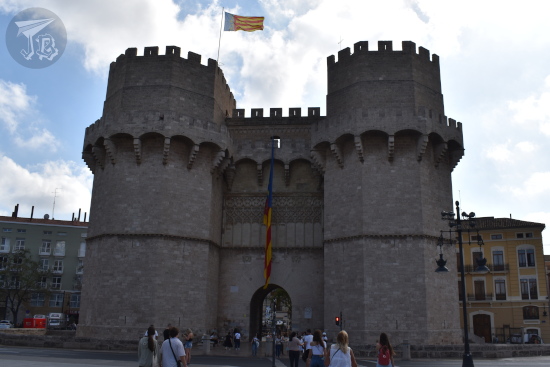
I finally reached one of the gates of the Medieval city walls – Torres de Serranos | Portal dels Serrans. The gate was flanked by two polygonal defensive towers built in the Gothic style and finished in 1398. They survived the destruction of the wall ordered in the 19th century as they were used as prison. Today, they can be climbed and hold a small museum, but I had already gone up the bell tower, so I decided I was good with heights for the day.

Serranos Towers Valencia

I headed back to the historical centre and reached the area of the cathedral. I decided to buy a stupidly expensive typical drink of the area, horchata de chufa | orxata de xufa, made from sweetened tiger nuts, usually with a severe quality control. I remembered trying it as a kid and that I did not like it much, but I decided to try it anyway – I had riskier culinary adventures in Egypt after all. It was not bad, but decided that I am still not a fan – and it was chilly, which helped against the heat.

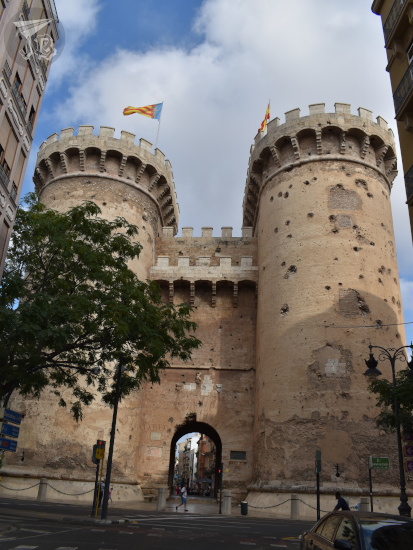
There is another surviving gate structure of the Medieval wall, the Torres de Quart | Portal de Quart. They were a bit out of my way, so I left them for the time when I started retreating back towards the station. Unlike the Serrano ones, the Quart towers are cylindrical, but they share the Valencian Gothic style. They were built between 1441 and 1460 have been damaged in the different wars that the city has survived, and holes from shelling are clearly visible on the stone.

Quart Towers Valencia

Taking a small detour from my way to the station, my next stop was the silk museum – Museo y Colegio del Arte Mayor de la Seda | Museu I Collegi d’Art Major de la Seda. I only went here because it was the “extra” museum my triple ticket had it, and I had the time to do. I was not impressed though, as more than on silk it focused on the local re-enactment of the Medieval battles in Valencia and the costumes.

Just next block over however, I found the park Jardines del Hospital | Jardins de l’Antic Hospital, where the 15th-century hospital used to be until it was demolished in 1974. The park was reorganised between 2009 and 2012, and an “archaeological garden” has been prepared next to the skate park, with free-standing columns, and a shelf with chapitels and the remains of sculptures that have been found in the area.

Archaeological Garden Valencia

Unexpectedly, I walked by the monument to Spanish Medieval warlord El Cid Monumento a Rodrigo Díaz de Vivar | Monument a Rodrigo Díaz de Vivar, a copy of the original sculpture of Anna Hyatt Huntington, which is in the Spanish Society of America in New York.Rodrigo Díaz de Vivar, El Cid, became Lord of Valencia. He besieged the Moorish city between 1092 and 1094, until the city surrendered. Having proclaimed himself Prince-Lord, he died in 1099 – the legend says that after he died, he was placed on his horse and just catching sight of him made his enemies run away.

Monument to El Cid in Valencia

My final stop was the gastronomic experience Mercado de la Imprenta | Mercat de la Imprenta. Aside from horchata, Valencia is known for its ice-cream, and I was hoping to find one. There were none, unfortunately, so I just walked the last bit towards the train station – and had a sundae there, because why not?

All in all, I think I spent as much time on trains / at stations as roaming and visiting monuments, but I reckon I did a good job out of getting a feeling off the old town of Valencia. Lots of pretty Gothic buildings to see, which was enjoyable. It probably warrants a whole weekend to see the dozen or so small public museums. It was bit too hot, especially for October, but it did not feel as humid as I imagined it might be.

1st October 2023: The City and North Greenwich {Miyavi in London 2023}

As I was going to drive myself to the airport, I had a parking reservation at 5:00 for my 7:00 flight – you have to love those wee hours of the morning wake-up calls. I reached the airport around 4:55, just as the shuttle was leaving. I didn’t worry too much because there were people at the bus stop though. I found a nice parking spot under cover, but did not see the number on top, so I tried to memorise where I had parked. The shuttle arrived again around 5:25. Security was not a problem, but then I was sent to the automatic passport control, which did not work, and I had to go through manual control. The plane took off and landed on time, and despite the strike warning, the Stansted Express was only delayed 10 or 15 minutes, so I reached London a little after 9:30 – much earlier than I had expected.

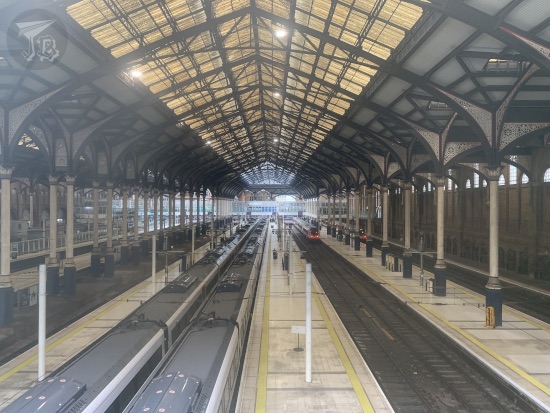
Since I had time – for once – I decided to hang around London Liverpool station, where the Stansted Express terminates. Though I’ve always liked this building, which is actually listed for its historical importance, it is “just” a train station – I somehow have never had the time to explore as I seem to always be in transit. Construction was decided in the early 19th century, and development of the project displaced around 10,000 residents. The station was designed by engineer Edward Wilson, in a Gothic-inspired style in brick and bath stone. He added a trainshed in wrought iron and glass which was restored and expanded in 1894. The Victorian station survived the Blitz, a subsequent renovation in 1975, and it’ll hopefully will make it through the refurbishing proposed in 2022. I went around the station once, and then moved on – they had not cleaned the windows though.

Liverpool street station trainshed ironwork

Well, I went to have a vanilla latte at Costa Coffee, because I love that blasted beverage. I then decided to kill some time around the City of London. I went to Aldgate Square, home to the Church of Saint Botol, a school, and a very fun fountain with lights.

I found The Gherkin and Saint Helen’s Church, which I wanted to visit, but unfortunately they were about to start a service, so in the end I did not go in – I find interrupting religious acts disrespectful, and this was one of those “we welcome you at the door” community services… It would have made it awkward. I realised I had not wandered around The City for a long time (since… 2011), so I checked out some interesting buildings, such as Saint Michael’s Church or The Counting House or the Shanghai Commercial Bank.

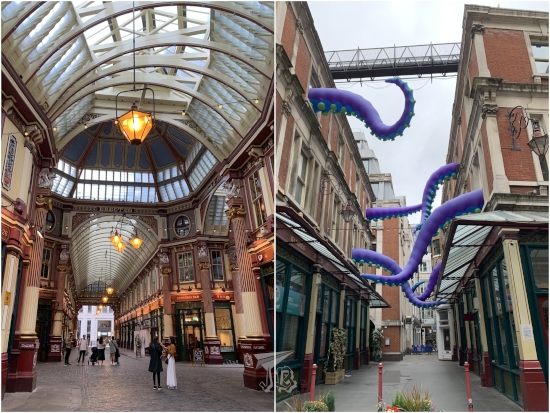
There was a modern-art exhibit going on in the area, but the only work that drew my attention ended up not being even a piece of art. I walked by Leadenhall Market, which was sporting… purple tentacles. It turns out that since 2021 the area has “dressed up” for Hallowe’en! I was not expecting that… Though I have to admit, it’s a fun idea.

Leadenhall market and the purple tentacles

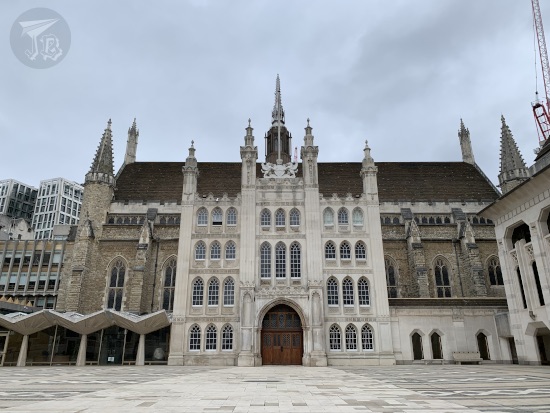
I went towards Bank station, which hosts Mansion House, where the Mayor of London lives, the Royal Bank of Scotland and the Equestrian statue of the Duke of Wellington. I finally reached London’s Guildhall, the old town hall still used for ceremonies and so. It was built between 1410 and 1440, though only part of it remains today. It was damaged in the Great Fire of London, and the façade that can be seen today was added in 1788 in the neo-Gothic style. I did not expect anything to be open, but the Guildhall Art Gallery was. I had less than an hour to my timed ticket somewhere else, so I decided not to go in.

The main façade of the old Guildhall building

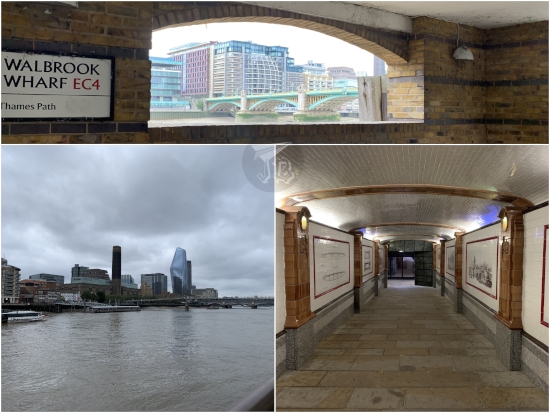
Instead, I walked towards River Thames, passing by Saint Stephen Walbrook church, 1 Queen Victoria building and No 1 Poultry. I reached Walbrook Wharf and the Thames Path / Riverside Walk, including Fruiterers Passage and Millennium Bridge.

Thames Walk in London

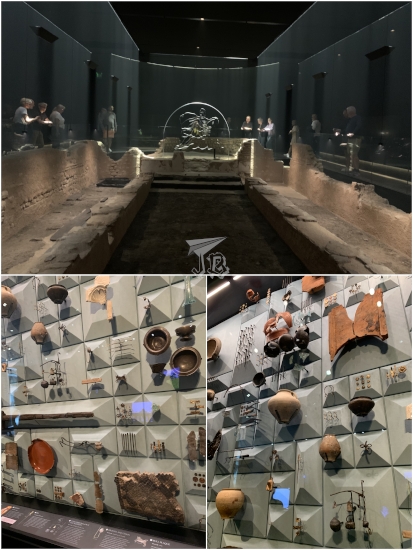
At noon, I had a ticket to London Mithraeum Bloomberg Space. The Roman ruins of a Mithraic temple were found in London. The cult of Mithras flourished throughout the Roman Empire between the 1st and 4th centuries CE. It “recycled” the the Persian god of the sun and justice into the patron of loyalty to the emperor. Mithras is usually representing slaying a bull (tauroctony), though archaeologists are not really sure why. The London temple was discovered in 1952 in a construction area, transported off-site, then brought back to its original position in 2010. Today, it lies in an underground ward in the European HQ of the Bloomerg company. When I connected to the Wi-Fi to read up on the items on display, I received an email that my car had not been detected at the parking lot – and for a second I worried that I had parked in the wrong place, but I knew I had not.

The visit consists on a glass case display with several objects from the Roman era, including sandals, jewels, glassware, even a cabinet. Then there is an audiovisual show that does not make much sense since everybody is walking around wondering what is going on. Finally, you are admitted into the temple, which yields to an “immersive experience”, with a projection of lights and shadows and a few chants in Latin. When the lights go out, you finally get to see the temple. The remains are barely a few foundational stones and a little of the altar. Apparently the actual Mithras sculpture was also dug up, but it is in the Museum of London, closed until 2026. To be honest, it was a bit underwhelming, but after all, I’ve recently done an Italy trip, so I might be hard to impress in that sense at the moment.

London Mithraeum temple and artefacts

I headed to the hotel, but I decided to make a stop at Leicester Square to find two of the Scenes in the Park I had missed last time. I might have also dropped by The LEGO Store Leicester Square because I discovered that there is a Lego Stamp Rally. Of course, I needed to get myself a Lego passport to try and get some stamps. I thought about buying a mug from the M&M’s store, but I decided that I did not want to be carrying it around, and I would get it on my last day if I had the time.

Batman and Laurel & Hardy from LEicester Square Scenes in The park, and a Lego passport

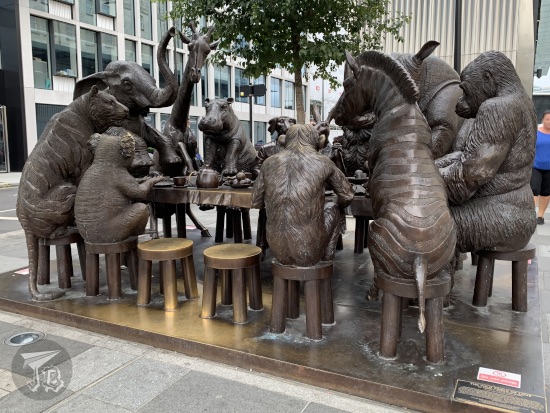
I took the underground to Paddington Station and I stumbled onto the bronze sculpture Wild Table of Love by public art creators Gillie and Marc. Their characters, Rabbitwoman and Dogman, have invited several endangered animals to their table – giraffe, elephant, tiger, koala, chimpanzee, zebra, gorilla, rhino and lion – and there are two free spaces for onlookers to sit and become part of the banquet.

The Wild Table of Love sculpture

I went to my hotel and took a short break before I set off to catch the Jubilee line towards the Greenwich Peninsula in south-east London. I had been there to attend a L’Arc~en~Ciel concert in the O2 Arena a lifetime ago, and I was surprised how much the area had developed. This time over, I was not going to an event but to the building itself, the Millennium Dome, one of the largest structures of its kind in the world. The exterior of the Dome is a huge tent-like construction that pays tribute to the concept of “time” in its design – 365 metres in diameter (for the year’s days), 52 metres high at its highest point (the weeks) and twelve support towers (the months). It was originally built as an exhibition centre to host a number of shows and activities throughout the year 2000. Eventually, the inner structure was built. Today it has the arena and a smaller concert venue for events and concerts, there is a shopping centre and it offers dozens of activities…

One of the experiences that can be carried out is Up at the O2, which takes you on the marquee to the top of the dome and then back again. You are not allowed any bag or rucksack of any kind, and you can only “carry your phone in a jacket zipped jacket pocket”. I cheated and took my wallet in the other pocket. They have shoes to let, vests and jackets if you are not dressed appropriately. You have to sign a waiver and provide an emergency contact

As instructed, I was there fifteen minutes before my scheduled time, 17:30. I was offered a spot at the 17:15 climb and I shrugged into it. I was okay with that. First, you watch a “preparation” video that is more of a self-promo. Then, you are given a climbing harness and a tether, and told to never ever ever get your phone out during the climb – probably to avoid having to pick any little device up from the tent structure, or risking getting sued if they decline to do so. The harness is easier to put on than I thought, and it holds your upper legs and your torso. The first few metres are ascended on a plain outside staircase and the rest on a PVC catwalk that has a railing for you to get tethered to. The guide pranced up and down providing mostly funny commentary, but you could only hear him if you were close.

The steepest point at the catwalk has a thirty-degree inclination, but it did not feel extremely demanding. From the upper platform there are some cool views, especially of Greenwich and Canary Wharf, along with the Thames. The views were cool, and something very different from what you get from places in the city like the Sky Garden. I think I was expecting a bit of a further thrill / exertion though, so even if it was fun, I did not get as much from the experience as I thought.

Up the O2 experience

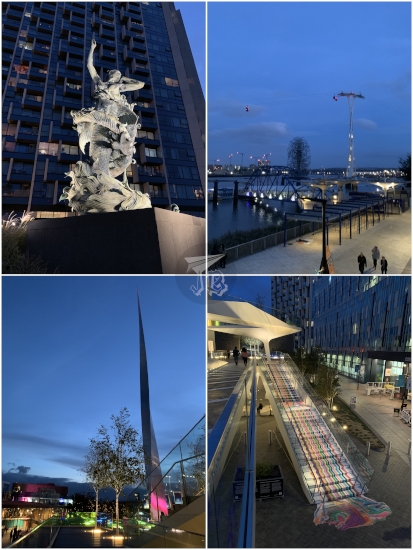
Some staff members take pictures of you that you can buy at the end. You ascend on the front area of the O2 and descend on the rear, so you need to walk all around the inner area to exit – and boy was it crowded with concertgoers (Muse) and dinners. After I walked out, I turned to the side of the O2 Arena where an area called The Tide has been developed. This is a public walkway, sort of an elevated platform with endemic plants sprinkled with public art installation, including The Mermaid by Damien Hirst, or the psychedelic stairs named Poured Staircase by Ian Davenport.

The Tide Greenwhich, showing the Mermaid, the Thames, the Spire and the Melting Staircase

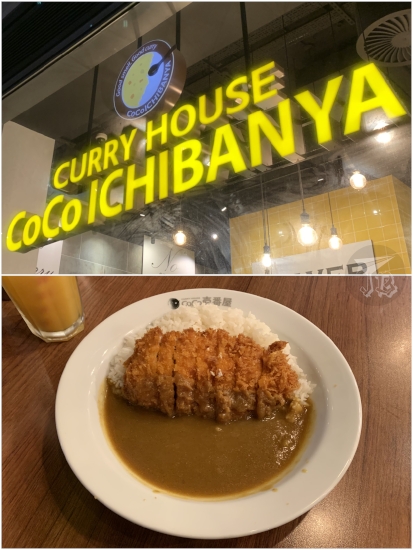
I went back to the underground. I wanted to go to back to Chinatown to try the British version of Curry House CoCo Ichibanya, one of my favourite Japanese chains. Whenever I’ve walked by it around food time, there was a big line. However, when checking online if you can book a table, I discovered that there was another location in Bond Street, which I thought might be less busy. I am not sure it was, or I was lucky with timing, but I did find a spot in that shop within minutes. I was happy to enjoy a hand made chicken katsu curry (手仕込チキンカツカレー), the equivalent to my usual choice in Japan, and be on my way.

London Curry House CoCoICHIBANYA chicken katsu curry

While the hotel bathroom was tiny, it was more than enough for a shower and a change of clothes. Also, despite being so close to the station that one could feel the trains pass by, I slept pretty well until around 7:00.

21st September 2023: Puy du Fou España (Toledo, Spain)

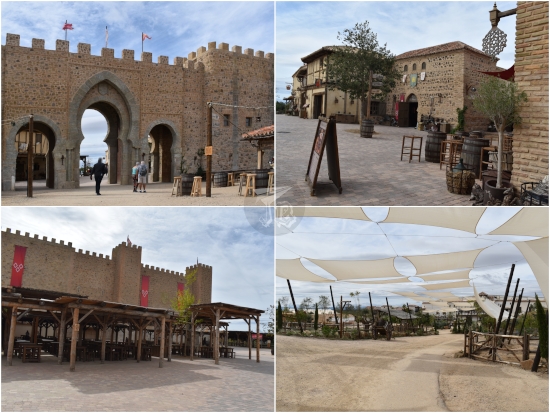
Puy du Fou is a project which started in France in 1977, when Philippe de Villiers decided to create a show in the ruins of a Renaissance castle in Les Epesses, a village about an hour away from Nantes. Initially, the show, named Cinéscénie was not too successful, but it increased in popularity as spectacular elements with horse riding and sword fighting acrobatics were added. A theme park was built around the show in 1989, and the venture went on to become one of the most popular parks in France, after Disneyland and Parc Astérix. Between 2019 and 2021, the French project was exported to Spain and turned into Puy du Fou España, located in the central city of Toledo, one of Spain’s most historical towns. Toledo is close enough to Madrid that the park can be visited on a day trip from there, and the land around it were probably on the cheap side.

Regardless of the logistics, Puy du Fou España markets itself as a historical theme park. It does not have rides, and instead, it focuses on shows, restaurants and shops. There is a day-ticket and a night-show ticket and we combined both on the same day. We reached the parking lot about twenty or thirty minutes after the park opened and had to walk for about ten minutes until we reached the entrance. We had booked a “fast pass” called Pase Emoción, which guaranteed access to all the shows at specific times, and the walk-throughs without having to queue. We had also reserved lunch, though by the time we bought tickets, the lunch-show was already sold out – we knew we risked this, but the weather had been unpredictable, and we did not want to be caught in a bad storm so we waited until the previous week to decide. While we did have some drizzle during our visit, it mostly found us indoors, so aside from the hassle of putting the camera out and having to pull it out again (and again, and again), it was not a real problem.

Summary of bookings (times three; four tickets per person):

  • Experience 1 day: Park + Night show: Parque + El Sueño de Toledo Ubicación Plata – Entrada 1 día Adulto, 68.00 € (non-weekend, non-high-season price) separated into:
    • Park ticket: Parque 1 día Adulto, 27.20 €.
    • Night show: Espectáculo Nocturno “El Sueño de Toledo” (best seating available), 40.80 €.
  • Fast pass: Pase Emoción, 20.00 €.
  • Lunch: Menú Hospedería de Santiago – Adulto (first course, second course, dessert and drink, saving a couple of bucks from the on-site price): 22.05 €. We decided to book lunch because we thought it would be harder to find a spot, and that for dinner we could grab a sandwich or something. In the end, we had a snack and a drink in the evening, which came up to around 11 € / person, bringing the total spent in the park to 121.05 € (no souvenirs, no extras).

We visited the park on a September Thursday, so we were not expecting many people. The first surprise was the number of buses in the parking lot – yes, there were quite a few people, though not “crowds” as no doubt they have during summer season. We were directed to the private-car parking lot, on the other side of the area and closer to the entrance, but we were “late” enough so that eight double-lines of cars had already been filled. We walked the kinda-long road to the park and picked up our fast passes, which were already prepared on a lanyard, and we were given times for four shows, along with the two others to do “whenever”, which turned out to be walk-throughs.

Thus, according to the bookings and the pass, we had the following schedule and in theory no queues:

  • 12:45, show: A pluma y espada.
  • 14:00, lunch at Hospedería de Santiago.
  • 15:45, show:El Último Cantar.
  • 16:30, show: Cetrería de Reyes.
  • 17:30, show: El misterio de Sorbaces.

Puy du Fou España Historical Village Puebla Real

The park is organised to look like a Medieval village – castle included – with both Christian and Moor flavours (using the word “Moor” to refer to the different Muslim groups that populated Al-Andalus in the Middle Ages). the different shows are scattered throughout the park and there are small clusters of shops, restaurants or activities. The distances are long and though there is some protection, it would not protect from rain nor sun / heat. There were “watering points” but no fountains at them? I think that’s where people selling water bottles stand in summer. I probably should have done more research on the whole thing, but I was just tagging along someone who really was curious about it and I was happy to let them take over the organisation. Instead of wandering around a little, they decided to go inside the theatre that hosted the first show almost at the time doors opened to let people without the fast pass in. Thus, we waited for about half an hour until the show started.

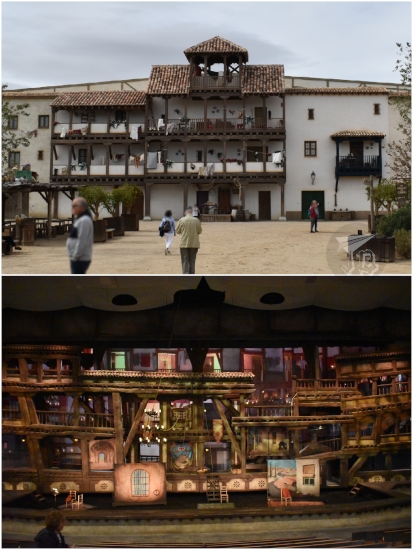
A pluma y espada, “With quill and sword” is an adaptation of one of the French shows, about Musketeers. That makes more sense than the Spanish version – which follows 16th-century playwright Lope de Vega as he tries to foil a conspiracy to kill the king. The stage changes from an open theatre to a prison, to a ship, to the roofs of Toledo as scenes follow one another. After the happy ending, there is a pretty ballet / flamenco dance on the water, along horse riding, which was really cool.

Theatre exterior and stage

We went out and our designated guide got lost, getting us into the complete opposite direction from where he wanted to go. We finally turned around and found our way, though it started raining. We decided to try our luck in the restaurant to see if we could grab lunch early, and we were lucky enough to do so. Actually, we had to be in the restaurant 10 minutes before the reservation, but we had to queue because a bunch of groups before us had issues ordering and understanding how the restaurant worked – never mind that it was easy: flat rate with a choice each from three first courses, three second courses, three desserts, and one drink. Finally, we reached the front of the line and found our table, got our lunch, and sat down.

The food was okay, though value-for-money was a little on the low side (captive audience and all. Though you can take your own food into the park, it might just not a good idea to carry a heavy backpack considering distance and queueing). I had a goat-cheese salad with honey-mustard sauce, a vegetable parmentier – which had pepper instead of the announced mushrooms and upset my stomach for a while – and rice pudding.

In general, the park feels too big, probably with the idea of filling it up as the park generates revenue (though I’m sure that when it’s crowded during summer season it does not feel as empty). My impression that I had was that as long as you were lucky and everything ran smoothly, it would be okay, but anything going wrong could ruin your experience. Just a couple of weeks earlier, the park had to be evacuated due to torrential rains, and people complained about being denied refunds. We would have a little inconvenience later.

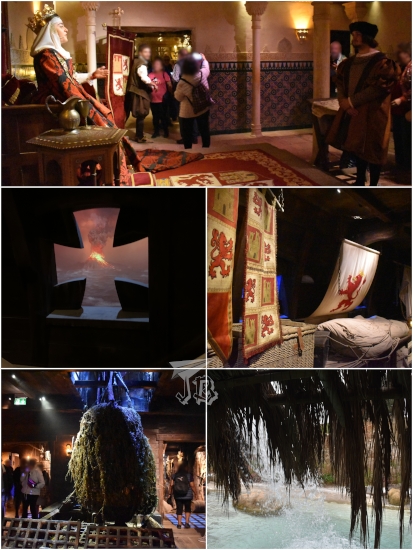
After lunch it had almost cleared, and we headed off to Allende la Mar Océana, “Beyond the Ocean Seas”, which is a walk-through. You “enter” a medieval palace to see Queen Isabel I of Castile (Isabella the Catholic) meeting with Christopher Columbus, as the latter convinces her to fund his expedition to the Indies. Then you get to see different stages of Columbus’ trip with a fictionalised voice diary, with the most important stages: setting sail, navigating near Tenerife, where one of the volcanos had erupted, losing hope in the Sargassum Seas, and finally reaching America – complete with Amerigo Vespucci crying “land ahoy” and walking out to a paradise beach with white sand and palm trees. Some of the areas have live actors interpreting scenes. Not too impressive, and too many people decided to get in the way of my pictures, However, the queen smiled at me.

Puy du Fou España Allende La Mar Océana

We had time to check out the other walk-through De tal palo…. The Spanish expression de tal palo, tal astilla means “like parent like child” or “the apple does not fall far from the tree”, literally “from this stick, that splinter”. The idea is to stop to listen to different generations of the same family which have partaken in key episodes in the history of Spain: the resistance in Numancia against the Romans, Medieval clashes between Christians and Moors, and so on. It was probably the weakest show, but truth be told my companions were not really in the mood for it, and we ended up seeing only two complete tales, and two halves. The rain stopped around this time, too.

Afterwards, we backtracked to El Último Cantar “The last Song” or “The last Romance” which tells an extremely sanitised story of one of the warlords of Medieval Spain. Rodrigo Díaz de Vivar, El Cid, was a 10th-century mercenary whose life was later composed into a book-long romance. He’s sort of the classical hero of Spain, with an extremely idealised view – imagine, this is the first compulsory book to read in school when you’re around 10. The show was even more romanticised. It was held inside, in a circular stage, and the stands turned to face the different scenes. It had work with horses, and even sort of a just. The problem was that this show finished past 16:15, and we had to be at the exact opposite side of the park before 16:30 (16:25, as they closed the doors). My companions told me to make a run for it, because they knew it was the show I’d be more keen on. I literally ran halfway through the park and made it just before doors closed – the person managing entrance was extremely rude, too.

Puy du Fou España El último cantar stage

This show was Cetrería de Reyes, “Kings’ falconry”. I did not follow the plot much, to be honest, I was focused on the birds. It is supposed to be an encounter between a Muslim king and a Christian knight during the Middle ages, and they decide to… measure each other up by showing off their birds of prey. There are barn owls, sparrowhawks, caracaras, falcons, eagles and griffin vultures trained to attack on command, fly to specific places, and “hunt” mid-air. More exotic species include a secretary bird (Sagittarius serpentarius) and a marabou stork (Leptoptilos crumenifer) which were cool just for being there. At the end of the show, they let out a lot of the flying birds that flock all over the show. It was really cool.

Puy du Fou España falcorny show

I got to see the whole show since I sprinted. The other two people were lead in later, as most of the fast pass holders did not make it. They were admitted in small groups around one third into the show. It felt like really bad organisation, to sell something that is almost impossible for most of the pass holders. Furthermore, at the end, we were ushered out through different gates, and could not meet up amidst the crowd. We reunited at the final show.

El misterio de Sorbaces, “Mystery in Sorbaces”, tells a fictionalised tale of how the king Recaredo I, the first Visigothic King in Hispania who converted into Roman Christianity in 587. His brother marries a Roman girl in a Christian ceremony, and the festivities include a lot of horse riding acrobatics. Then the goths come to destroy the village, but they are stopped by the “miracle” of a chalice turning a pond into fire. Recaredo converts and the whole stage is turned into a monastery. Besides the horse riding, the background moving and changing, and the fire special effects are the more impressive thing of this show.

Puy du Fou España El Misterio de Sorbaces initial and final stages

We just hung around the park a bit longer for a while after that. The shops were pretty expensive, and though the eagle plushies were adorable, they cost too much money. So were the handwritten scrolls, even though they were fantastic. We grabbed supper in one of the fast food restaurants – a toast and a drink, a bit on the unremarkable side. Finally, we set off towards the outdoor theatre for the night show El Sueño de Toledo, “Toledo Dream”. It was getting cold so people were waiting in the corridors of the theatre, then the staff kicked us out to line, and they created a bit of chaos – despite assigned seating. They wanted guests to be there with an hour’s time, and in the end we had to wait around 50 minutes until the show started, in front of a backdrop of the city of Toledo. We had paid extra for “silver” tickets, and I was very surprised how they were spaces that I found much better, but were not considered “silver”.

As the sun sets, the story starts with an old water bearer coming in – he represents the memory of Toledo as a metaphor of the history of Spain. He comes and talks to a young lady at the gate of the walled town, and together they reminisce about the key episodes of Spanish and Toledo’s history. The first stage is the Moors leaving town to battle the Christians in Al-Andalus (though Toledo probably existed before as a Roman encampment, it was the Umayyad civilisation who made it great). The Christians attack the town and conquer it, then lose it again. When they once more enter the town, one of the churches has kept a candle burning in front of a walled-off crucifix (famous Toledo legend). The show is presented with lots of light, acrobatics, horse riding, and dancing, even on the shallow water that forms the stage. The sultan’s glass palace comes out of the water, and the cathedral is created with water spurts and light effects.

Time passes. The Catholic monarchs receive Columbus back from America and his ship also emerges from the water. The revolt of the Comuneros comes and goes. Toledo loses its importance and becomes a town of farmers. Then the Napoleonic armies ride in on white horses – the men walk into war and are killed, and the women take over from them. Peace comes, prosperity: the 20th century, the train, the Roaring Twenties – and then the Civil War in the 1930s. The singing girl cries out that her brothers killed each other in battle. In a final dance of hope and healing women dressed with the traditional attire of the different autonomous communities come and dance with her (a bit… dismissive… considering recent events and tensions). Then instead of ending in a happy note, everything goes downhill as the water bearer claims that he is a dream and he’s fading away and the children won’t hear of him and the stories he has to tell, as the whole cast comes to wave goodbye – and it’s about 200 of them, not counting horses, sheep, goats, oxen…

Puy du Fou España night show El Sueño de Toledo

When it was over, we walked back to the parking lot and drove off. It was a bit chaotic and we ended up going in the opposite direction we wanted to – because there was nowhere to turn around until we reached the motorway. We drove to the hotel and crashed in the rooms. If we had been just one floor or two higher, I would have had awesome views of Toledo, but most of it was hidden behind trees.

All in all, the experience was okay – for one time. The price was steep, not even counting petrol and accommodation. I have read online that people go back four or five times, I don’t get the need to do so, even if I know that we missed most of the street shows. We were pretty lucky with the weather, because the park is not prepared for either heat nor heavy rain – and Castille is known for its scorching summers and its temperamental thunderstorms.

The next morning, we had breakfast – hotel was good, but the breakfast there was quite expensive, so I had brought some canned coffee and pastries. We drove back without much traffic, making this a 24-hour-ish adventure. Maybe it would have been cool to try the spa at the hotel, but driving back later would have meant running into the heavy traffic around Madrid at the start of the weekend, and we preferred not to do so.

16th September 2023: Archaeological Site of “Los Casares” (Spain)

I took an almost two-hour drive to the municipality of Riba de Saelices, which involved having to fill up the tank in the middle of nowhere – ouch. It was early in the morning, and once I got off the motorway I saw a bunch of roe deer grazing dawn away. A couple of them got spooked by the noise of the engine and jumped towards the road, and another was uncomfortably close to the asphalt, but I was careful not to run any of them over – of course!

I went past the village and took a turn at an unpaved road, and reached the parking spot of the site, 3.5 km later, around 9:10, which was great for my free 9:30 visit. . My main interest in the archaeological site Conjunto Arqueológico de Los Casares was the cave Cueva de los Casares, which can only be visited by appointment and in small groups. Post Covid recovery plans have made some archaeological sites free until the end of the year, and I wanted to visit before the end of good weather. The cave holds important carvings from the Upper or Median Palaeolithic period. However, the site also comprises the remains of a Muslim village, a defensive tower, and an ancient oven, with the latest findings dating from the 14th century.

I found the parking spot – a clearing at the foothill of the area. The whole place was empty except for a kettle of griffon vultures (Gyps fulvus) circling up above. It was a bit creepy, I’ll be honest, and I joked with myself that maybe the webpage for the archaeological site was just the way the vultures ordered food. From the parking lot I saw a small clearing with tables, and up the hill, a small tower, which I thought was the tower from an old Muslim castle. Since I had some time I decided to climb up and I found the entrance to the cave, with a notice that visits started there. By then it was already 9:30 so I thought maybe my ticket was wrong and the winter timetable had already started so the visit was at 10:00. A bit before 9:40 I saw two cars approaching – yay.

Vultures flying

Archaeological site Los Casares: cave, ruins, and tower

Finally, the guide arrived and she told me that the visitors in the other car had lost their way, so she had had to guide them down the track. We started late as the group also took a while to come up. We stayed at the entrance of the cave for a little as the guide explained about the civilisation that inhabited the area in the Palaeolithic, and a bit about the cave bears that used it as a lair before them.

The cave Cueva de los Casares was inhabited by Neanderthals some 60,000 to 40,000 years ago. The stonework and industry have been classified as the European Mousterian; among objects found inside the cave there are flint points, arrow tips, scrapers, and even pottery. Animal remains, both from predatory events and human consumption have also been recovered. The most important archaeological items found in the cave are the carvings on the walls. Though there are carvings from later periods, some experts think that the cave holds the oldest anthropomorphic carvings in the Iberian peninsula – not carved by Homo sapiens (modern humans) but the previous Homo neandertalensis.

Entrance to the cave Cueva de los Casares

Only the first third of the cave can be visited, and we got to see horses, cattle and the human-like figures. Once you know what you’re looking for, it gets easier to identify the shapes. One characteristic about the human depictions of the period is that humans are represented to have weird heads, though nobody really knows why – possibly animal attributes to represent their qualities. The humanoids are represented alone and in groups, and sometimes they are one above another. There are families, activities – such as diving – and copulation (apparently this is important because the carving in question might be the first ever recorded). It is an interesting experience, though no pictures are allowed inside, there are some on the official page – you don’t get to see half of them anyway. I’m disappointed we were not shown any mammoth carvings either, those are restricted to the expert-only area, but at least I saw something, and it was original.

After the cave, I climbed up the gully to the hilltop and the Berber tower – called Torre atalaya (“Watchtower tower”) – which hangs above the entrance to the cave to look at it. On the way up I also had a good view of the Muslim settlement underneath, Poblado Hispano-musulman. I also looked down the gorge and the valley called Valle de los Milagros, which I may or may not hike in the near future in search for fossils. However, I really did not feel like staying at that point, so I just drove back.

Watchtower Los Casares

Muslim village of Los Casares

Valley Valle de los Milagros from above

22nd July 2023: Half a morning in Naples {Southern Italy, July 2023}

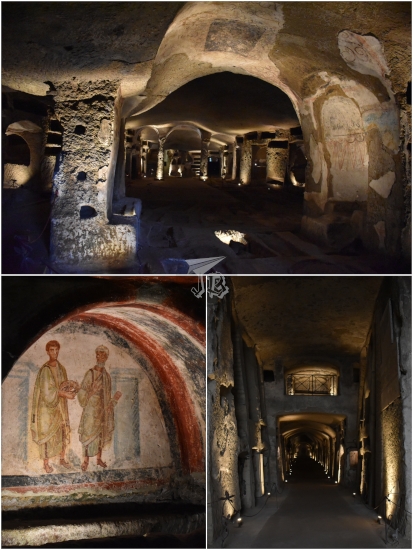
For my last half-day in Naples, I had free entrance to the catacombs Catacombe di San Gaudioso, one of the monuments in the Catacombe di Napoli (Catacombs of Naples) network. These are in a really bad part of town that the cooperative is trying to revive – and they say they’re being successful. San Gaudioso – Saint Gaudiosus of Napoli – was a North African Christian bishop who fled persecution into Naples. His relics were buried in the Catacombs of San Gennaro and then transferred to his own around the 6th century. The Catacombs of San Gaudioso were “popular” at first, but they became abandoned, until eventually they were rediscovered and entrusted to the Dominicans in the 17th century. The Dominicans took over and developed a rather morbid interment tradition for the nobles and clergy. The body was drained, then buried. A wall would be built in front of the tomb, and the deceased person’s skull placed on it, with the frontal bones facing forwards. The body was fresco-painted as a skeleton underneath, with symbols and writings around it. Today you can see those frescoes, but the front part of the skull has been smashed away. There is also the actual tomb of Saint Gaudiosus and other 17th century paintings left. If you ask me, the guide went a bit into… excessive graphic detail about the body preparation.

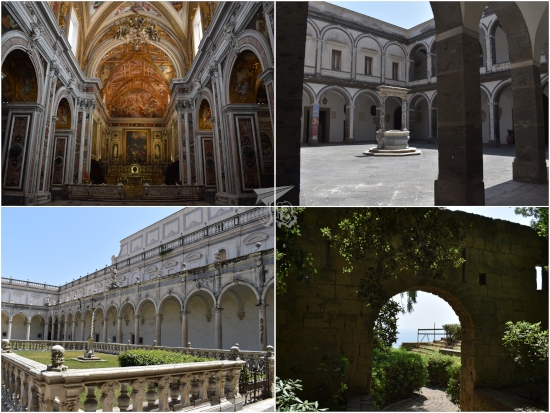
Catacombs of San Gaudioso

The catacombs were restored and open to the public in 2017. They are accessible though Basilica di Santa Maria della Sanità (Basilica of Saint Mary of Healthcare), the Baroque church that was built by the Dominicans once they were entrusted the catacombs – with the money they had from the noble family’s interments. The church connected directly with the catacombs through a hole under the back area of the altar. There was a wedding, so we could not snoop around much. In the sacristy, there is a presepe which, aside from the standard Nativity scene, has scenes from everyday life, legends of Napoli and mythology touches.

Baroque church Santa Maria de la Sanita

I walked back towards the Historic Centre of Naples Centro storico di Napoli thinking that maybe I could get an early lunch, but the nice places were not open yet, and the smell was a bit on the overwhelming side. I went into Via San Gregorio Armeno – the Christmas alley – again. It was Saturday morning so the “good” shops had brought out what they offered and I finally got to see what makes the area famous.

Neapolitan nativiy figures

I finally decided to go towards the station, grab a bite to eat there, and head off to the airport. I had seen a huge bookshop near the food court, and I found something to entertain myself. I tried another piece of typical Italian food – a focaccia stuffed with cheese and greens. And then I realised that I had not had any real Italian ice cream! That was easily solved though…

focaccia and ice cream

The flight back was uneventful except I got emergency exit seat again, so I had to negotiate an exchange seat. The flight attendant this time was not as efficient as the one I had last time this happened. He had me wait until boarding was complete to find me another seat, which almost ended up with him having a riot in his hands. And here I had tried to board a bit earlier than usual to help the crew out… I will go back to boarding late-ish from now on.

Balance: Pompeii and Herculaneum are fantastic. Some people need to learn some respect and be civil – “no smoking” includes marijuana, don’t prance around with your shirt off in what is basically a ghost town, and for the love of that is holy, don’t poke the buildings. At least I did not run into anyone writing their name anywhere. Naples is not the best city, but it’s not as dangerous as I had worried about beforehand. However, maybe I should have done my planning a bit more carefully. Then again, not being too efficient allowed for downtime and resting, which I might have needed. I recently read that you should relax when you go on holiday?

21st July 2023: Naples, from the hills to the port {Southern Italy, July 2023}

Due to poor planning on my side – that happens sometimes – Friday was a weird day. Part of me keeps thinking that I should have taken a train or a boat somewhere, but I actually managed to do most of the key sights in Naples. Acting on a recommendation, I had booked a 10:00 visit to the Catacombs of San Gennaro Catacombe di San Gennaro, part of the Catacombe di Napoli (Catacombs of Naples) network.

I bought a multiple-trip public transit ticket and I set off around 8:00. The underground-bus commute was to take 45 minutes, but the underground alone took that long. Thus, I decided to do the second leg of the trip on foot, up the hill Collina di Capodimonte. The bus trip was to take 20 minutes, and the walk 22 – I took less than 20 and I did not even see any bus going where I wanted to be… then again I was stupidly early in the end…

The cult to San Gennaro (Saint Januarius) is deeply felt in Naples – the miracle of his blood turning liquid three times a year is just one of the signs. They buried, exhumed, and reburied the man up to seven times if I understand correctly, and he is not even in the catacombs any more, but in the cathedral. The catacombs are excavated into the volcanic tuff that conforms the hill, and they date back to the 2nd century CE. They were located outside the city walls, as were all the graveyards at the time. The original tomb was expanded to accommodate palaeo-Christian burials. The first patron of Naples, Saint Agrippinus, was buried here and a basilica was constructed in his honour. After his burial in the 4th century CE, the catacombs became… popular. Eventually, San Gennaro was buried there in the 5th century and the place became a pilgrimage site until his body was moved to Benevento.

The catacombs have two levels, and can only be visited in a guided tour. They were restored in 2006, and are currently managed, by a cooperative which tries to promote Naples heritage and improve the city, providing working opportunities for young people. They tackled the restoration of the catacombs in 2006. Our guide asked if anyone had visited any catacombs before, I said that I had visited the Catacombs of Paris, but she did not make any… further comment about anything. There are no bodies in the Catacombs of San Gennaro, which is almost weird considering how morbid Neapolitans are.

Catacombs of San Gennaro

What you can find in the catacombs is a powerful example of underground architecture. Everything is directly carved into the rock, except for a few bricks here and there (and some scaffolding). There are three types of tombs: fossa (ground burial, vaguely body-shaped), loculo (stacked tombs built against the walls) and arcosolium (a carved tomb carved into the wall and a protective arch surrounding it). Some of the walls and tombs still have frescoes, a few of them with recycled symbolism from the pagan times, such as the god of wine Bacus’ vines being reinterpreted as a Christian theme of Jesus as the ‘true vine’, God as the husbandman, and the disciples as the branches.

The visit ended at the basilica San Gennaro Extra Moenia or St Januarius Beyond the Wall – due to it being outside the city’s protective walls, even if these walls are long gone. As the reception area had a small cafeteria, I headed there for a late breakfast (second breakfast? super early lunch?). It was around 11:00 and I ordered a mini-pizza and got myself a cold coke. I felt much more alive after that.

Neapolitan mini pizza

I went uphill for Museo e Real Bosco di Capodimonte, one of the former royal palaces Reggia di Capodimonte, and the forest that surround it. The palace was built in the Italian Baroque and Neoclassical styles between 1738 and 1840. A cohort of architects worked on it, the most credited being Giovanni Antonio Medrano. Although today the palace is technically a museum, the ‘good’ paintings have been moved for restoration, so I decided not to go in. But I might have got sunburnt on the walk.

Royal Palace of Capodimonti

I went back down Capodimonte Hill towards Central Naples, and I made a stop at Galleria Principe di Napoli, a commercial gallery dating back from the 19th century. It was originally built in brick, with a cover of iron and glass. Today it is almost unused as most of the shops have closed or moved, and there have been recent mini-collapses which worry local authorities.

Commercial gallery in Naples

I walked into the underground system – which does not have air-con and was crowded. I stopped at Stazione Toledo, one of the stations belonging to the project Stazioni dell’Arte (Art Stations), a city project to beautify Naples’ transport hubs. Óscar Tusquets designed Stazione Toledo, and it has earned the reputation of being the most beautiful underground station in Europe.

Escalator in Toledo underground station Naples

Afterwards I went back to the platform to wait for a train to head to the harbour – the frequency is 15 minutes, but at least I was sitting down. I should have eaten something , but it was too hot – I bought a bottle of water and an ice cream (which was not even actual Italian ice cream) and continued off. I saw the outward of Castel Nuovo, a medieval castle dating back from 1279, commissioned by Charles I of Anjou. Had it had an open ticket office, I would have come in, but you could only book online and I really did not want to go around entering my bank data in the middle of Napoli.

Outside of Castle Nuovo, Naples

Thus I walked past the theatre Teatro di San Carlo and headed off towards the square Piazza del Plebiscito. On one side stands the church Basilica Reale Pontificia San Francesco da Paola, which was getting prepared for a wedding. On the other side, the other Naples Royal Palace Palazzo Reale di Napoli. The palace was one of the Bourbon residences during the time of the Kingdom of Naples and the Kingdom of Two Sicilies. Like the Capodimonte one, it is built in a mixture of Italian Baroque and Neoclassical styles, and it is attributed to Domenico Fontana. I snooped around the free areas of the palace.

Basilica of San Francisco de Padua, Naples

Royal Palace, Naples

There is another shopping gallery next to the palace, the Galleria Umberto I, a little more alive than the Prince of Naples if only because there were tourists groups using it as a meeting point. I crossed it on my way to the underground stop. I took the train again and alighted at the square Piazza Dante, with the monument to the famous poet Monumento a Dante Alighieri and the school Convitto Nazionale Vittorio Emanuele II, whose tower is called the Equation of Time Orologio Equazione Del Tempo, with a double clock to reflect both solar hours (apparent solar time vs mean solar time) simultaneously.

Dante Square, Naples

I headed out to the chapel-museum Museo Cappella Sansevero, which is reported to always have long lines. I wanted to check if there were advanced tickets. Upon arrival around 15:15, I managed to get a slot for 15:30, and I was admitted a bit after 15:20. Pictures are not allowed and the guards patrol like eagles, so I could not even a sneak one. The chapel is home to a number of incredible Baroque and Rococo sculptures. The most important one is the masterpiece known as the Veiled Christ Cristo velato by Neapolitan sculptor Giuseppe Sanmartino (1720 – 1793). The sculpture was commissioned by Raimondo di Sangro and completed in 1753. It is so impressive that a legend says that an alchemist transformed the veil from a real one into marble.

Other incredible sculptures are Release from Deception and the veiled Modesty. When you go out, you are forced to cross a small cabinet which holds something called Le Macchine AnatomicheAnatomical Machines” (Giuseppe Salerno) which are real-life skeletons with a reproduction of the vascular and circulatory system.

My final stop for the the day was Complesso Monumentale di Santa Chiara, a monumental complex comprising a church Chiesa di Gesù Redentore e San Ludovico d’Angiò, a cloister Chiostro maiolicato, a museum Museo Di Santa Chiara and a Roman archaeological excavation Scavi archeologici Santa Chiara.

This religious complex started off as a Clarisse monastery built between 1313 and 1340. The cloister is square, and the arcades are covered in frescoes. The cloister itself is considered unique, as in 1742, Domenico Antonio Vaccaro built two avenues of octagonal columns. These pillars, along with the benches that join them, are decorated in the Rococo style, covered with majolica tiles in floral and everyday-life themes. A bit too fancy for a Poor Clares convent… though I really liked the columns and the cloister.

20230721 Santa Chiara Cloister Naples

The library contains codexes. The Roman ruins are from a Roman bath, but with Pompeii and Herculaneum so recent in my mind, they were not that impressive, I guess. The museum holds pieces from the baths, religious artefacts from the church before it was burnt, and other religious paraphernalia.

Altar. Santa Chiara, Naples

The church was originally erected in the Angevin Gothic style, with some original Romanesque left, and it was redecorated in Baroque style in the 17th century. After being damaged during the WWII bombings, it was restored “in style” – meaning, how it was supposed to have been before the Baroque decorations.

After the church, I went back to the hotel and I decided to try one of the McDonald’s item that is typically Italian – not found anywhere else, a Tasty Basket: McNuggets (found everywhere), chicken wings (found in more places), and panzerotti con pomodoro (typical Italian, a panzerotto is a small calzone with the same dough and seasoned tomato as pizza). It was either strangely good or I was hungry.

panzerotti con pomodoro

20th July 2023: Herculaneum and the Naples National Archaeological Museum {Southern Italy, July 2023}

Knowing my way to the station of Napoli Porta Nolana, this time I only had to buy the ticket and wait for the 8:14 Circumvesuviana Line 4 to Poggiomarino, which was supposed to reach Ercolano Scavi in the town of Herculaneum [Ercolano] by 8:33. It took longer than that because there were a lot of stops. Then again, my strategy of the first station in order to travel sitting down was successful once more.

Unlike the modern city of Pompeii, the modern Ercolano was built before the ancient town was discovered. It was originally called Resina, but the name was changed in 1969. Despite the legend saying that the Greek hero Heracles (Hercules in Latin) founded the original Herculaneum, the early history of this city is parallel to that of Pompeii. It was first an Oscan settlement, then Etruscan, then Greek, and it eventually became a Roman municipium in the first century BCE. It was a small vacationing town for people from the north, apparently.

Much like Pompeii, the ancient city of Herculaneum – what today is the Parco Archeologico di Ercolano or Herculaneum Archaeological Park – was buried by the 79 CE eruption of Mount Vesuvius, and it belongs to the Archaeological Areas of Pompei, Herculaneum and Torre Annunziata Unesco World Heritage Site. However, the different location of the town changed how it fared during the eruption.

The 79 eruption lasted two days (thought to be 24th and 25th October 79 CE). The citizens of Pompeii and Herculaneum who fled and survived were the ones who escaped during the first 12 hours – during these, heavy pumice and ash came down on Pompeii, destroying buildings. At this time, Pliny the Elder was commander of the Roman fleet at a nearby town, and he sent galleys to help the evacuation of the coast. We know this because his nephew, Pliny the Younger – a teenager at the time who would grow into a lawyer and magistrate – left in writing what he had seen in two letters. Those letters are now lost, but Medieval copies of them survived.

At the time of the eruption, Herculaneum stood right by the shore. Most of the bodies found were at the coastline, probably trying to escape by sea or reach Pliny’s ships. A boat was actually found carbonised in the vicinity. As wind blew pyroclastic flows towards Pompeii, burying it in volcanic ash and pumice, only a few centimetres of ash fell onto Herculaneum. These, however, rightfully freaked people out, and caused most of the population to flee during the first day.

As Herculaneum lies closer to the volcano, when the cloud of volcanic material (called a “volcanic surge”, composed by gas, ashes and pumice) collapsed in the middle of the night, it hit the town at over 400 ºC. Everyone who had stayed behind was instantly killed by the heat, leaving behind the skeletons of around 330 people. There were no casts made of them – unlike the thousand unfortunate Pompeiians.

Pliny the Elder died in the early morning of the second day. During the second day, the second pyroclastic cloud collapsed on top of Pompeii, but at this time, not a soul remained alive in Herculaneum. Subsequent volcanic clouds and pyroclastic surges (not lava) buried the towns until excavations started in the 18th century – barring some grave robbers, apparently.

About one fourth of Herculaneum has been unburied, even if it was the first city to be discovered. There is a bit of a paradox here – although it is in better condition and it suffered less structural damage, it is worse preserved. It still holds a lot of mosaics in situ, despite many frescoes taken to the Archaeological Museum. Unfortunately, its current condition has deteriorated terribly.

Herculaneum is less famous than Pompeii. A much smaller area can be visited, and the unexcavated part is underneath the modern cities of Ercolano and Portici. There are many buildings closed and a lot of scaffolding is needed due to a period or abandonment at the end of the 1990s. One of the telltales that it expects fewer tourists is that the webpage is only in Italian.

I reached the station Ercolano Scavi around 8:45, and ten minutes later I was at the entrance of Parco Archeologico di Ercolano. The park was already open and there was a line to buy tickets, and people struggling with their phone passes. I had printed mine out, so it was stupidly easy to wave it, get it scanned, and go through. Most people who went in before me decided to stay at the museums because that is the first thing you reach, but I reasoned that the earliest I went into the archaeological area, the less time I’d be under the sun when it became scorching. Again, this helped to be alone in a couple of houses.

Herculaneum general view

Restoration is a race against time in Herculaneum and as you walk you can see the scaffoldings and workers going on their daily lives – archaeologists, restorers, gardeners. Here, the effect of the volcanic activity are seen extremely clearly, on the floors and the walls – bulging mosaics and cracked frescoes and tiles. There is no doubt, however, that the damage was less. There are columns that still stand, covered in their original paint, and the bathhouses could just be used today with some refurbishing – and of course running water.

Another phenomenon that happened in Herculaneum was that a lot of wood became instantly charcoal when the pyroclastic surge collapsed onto the town. That means that some of the beams that are still in the buildings are the original ones, which is unbelievable. There are even surviving stairs and furniture. I wandered the streets for a few hours, going into anything that was open and in general feeling in awe at the mosaics and the frescoes. I was also astonished as how people felt comfortable poking the slabs and the paint – as there were fewer caretakers than in Pompeii.

Some highlights included:

Terme Maschili or Male Baths, where you can see the wavy mosaic on the floors.
Herculaneum mosaic - Merfolk

– The mosaics in Casa di Nettuno e Anfitrite or House of Neptune and Amphitrite.
Mosaic covering a foutnain in Herculaneum

Casa del Rilievo di Telefo or House of the Relief of Telephus, one of the best preserved structures with a lot of paintings, even on the columns.
Herculaneum: House of the Relief of Telephus

Terrazza, statua e altare di Marco Nonio Balbo or Terrace, statue and altar of Marcus Nonius Balbus.
Terrace, statue and altar of Marcus Nonius Balbus

It was noon when I decided to retreat towards the museums, which hold only small trinkets and some jewellery. Just as I was thinking that the Herculaneum inhabitants could rest in peace instead of being on display, I reached the Boat Pavilion Padiglione della Barca, which holds a carbonised boat where some of the residents tried to escape. There are panels which explain that they are planning to make copies of the three hundred something skeletons they found at the coastline and place them in the same spot they were found. So much for resting in peace.

I went back towards the station and took a train back to Napoli, where I transferred to the underground and headed off to the National Archaeological Museum – Museo Archeologico Nazionale di Napoli (MANN). I had read online that the ticket was valid for two days, so the plan was to grab a leisure lunch there, wander around for a while in the air-conditioned areas of the museum, then come back the following day. Unfortunately, the ticket read that it was only valid for one admission that day. I had to reconsider my plan then. It was barely 13:30, so I decided to go right into it. Also… there was no air-con.

The roots of the MANN are the so-called Collezione Farnese, or Farnese Collection, one of the first collections of the Greco-Roman Antiquity. The original collector was Pope Paul III when he was still Cardinal Alessandro Farnese (1568 – 1549). In the 18th century, the marbles were inherited by Elizabeth Farnese. Her son Charles would become King of Naples, Sicily and Spain, and was the great sponsor of the excavations in Herculaneum and Pompeii. The mosaics and frescoes taken from these two cities are the second core conforming the museum.

The Farnese Marbles are fantastic. It’s been a while since a work of art took my breath away, but some of these did. The collection preserved a lot of Roman copies of Greek original sculptures, and although a lot of them were restored during the Renaissance, I enjoyed the gallery a lot. Some favourites were the Resting Hercules, Atlas, Apollo playing the lire, and of course the Farnese Bull.

Farnese Marbles: Farnese Hercules, Farnese Bull, Farnese Apollo, and Eros with a fish

The Hercules sculpture shows the hero leaning on his club after having finished the last of his tasks – the apples of the Hesperides garden, which he holds behind his back. Atlas kneels, holding the world. The Farnese Bull is the biggest surviving sculptural group from antiquity – the twin brothers who founded Thebes, Zethus and Amphion, tie their stepmother Dirce to the horns of a wild bull as revenge for how she tormented their mother. The original is attributed to Appollonius of Tralles. Apollo playing the lire is sculpted in two marbles, one darker for the tunic and a white one for skin and the lire – and one of the few sculptures I can share on social media as he is totally clothed…

After the Farnese marbles, I explored the rest of the classical sculptures. Then I moved onto the second floor to the collection of mosaics from Pompeii and Herculaneum. When I was little I saw a mosaic of fish in my history book, and I had always wanted to see it. I finally did, along with one that implies “beware of the dog”. I did not get to see the Alexander the Great mosaic because it was being restored (though I did see the in-situ reproduction in the Casa del Fauno / House of the Faun). There was even a whole fountain with columns that were almost completely covered in mosaics.

Mosaics from Pompeii and Herculaneum

At the end of this area stands the “Secret Cabinet”, which holds the images and sculptures from Pompeii and Herculaneum that were over the centuries considered “too pornographic to be seen” – including penis amulets and a sculpture of “Pan making love to a goat”.

I continued on to the second floor, to “Archaeological Naples”. In this area there also were sculptures, a lot of bronzes too – including a beautiful Athena and a Drunk Faun. The central hall of this floor held an exhibit about Alexander the Great and his influence in the Mediterranean. It hosted the Farnese Atlas and the Artemis of Ephesus. Afterwards, I went to the Protohistory and Prehistory area – which did not hold many attention-grabbing artefacts, especially consider how spectacular everything else was.

Sculptures in the Napoli Archaeological Museum

By this time, I needed a break. It was a bit later than 15:00 so the café was practicable. I got myself a lemon sorbet and… fried pasta pasta frittata, a typical street food bite. Which is basically a croquette made out of pasta. It was surprisingly good, actually.

Pasta fritatta

I went back upstairs – I was tired by now, and if I had had the chance to do the museum in two days, I would have left now. But I did not, so I continued towards the exhibitions of “everyday life” and frescoes of Pompeii and Herculaneum. These include dishware, glassware, decoration, mirrors, jewellery… and of course the frescoes, including the Portrait of Terentius Neo and his Wife, that were taken down from the walls of the houses during the 18th century in order to preserve them. They feel weird as they hang on the blank walls – framed, far away from the place they used to be. I know it can’t be, but it would be cool to see them all on site. While I could really imagine how some of the houses would have looked 2,000 years ago when I was in Pompeii, I could not imagine the perfectly-framed frescoes on the walls. It was a bit unsettling.

Pompeii and Herculaneum frescoes

I bought the extra ticket to see the Magna Graecia Collection. At first I was not convinced because after a while all the Greek pottery starts looking the same to me. You get to wear shoe coverings in order to walk in there, at first I thought it was not to upset the marble floors, but then I walked onto the mosaics and wow. Just wow. I mean… after a bit you don’t even realise that you’re supposed to be looking at pottery and just keep staring at the floors…

Magna Graecia Mosaic

I ended the visit with the Egyptian collection, where – on top of it being the only area of the museum with air conditioning – I saw one of the crocodile mummies that I might have seen at Kom Ombo.Finally, after basically snooping round the whole museum including the gardens, I headed back to the station area to buy some food and go get some rest in the hotel.


For the sake of completion, here is a relation of all the spots I visited in Parco Archeologico di Ercolano or Archaeological Park of Herculaneum:
Boathouse and shoreline
Access bridge
Casa dello Scheletro or House of the Skeleton
Casa dei Galba or House of Galba
Terme Maschili or Male Baths
Casa dei Due Atri or House of the two atriums
Sede degli Augustali or Hall of the Augustales
Casa dei Salone Nero or House of the black salon
Bottega del Plumbarius or Shop of a plumbarius (metal worker, welder or blacksmith)
Casa del Bel Cortile or House of the Beautiful Courtyard
Casa di Nettuno e Anfitrite or House of Neptune and Amphitrite
Terme Femminili or Female Baths
Casa Sannitica or Samnite House
Casa del Tramezzo di Legno or House of the Wooden Screen
Casa del Papiro Dipinto or House with the painted papyrus roll
Casa dell’Alcova or House of the Alcove
Casa dell’Erma di Bronzo or House of the Bronze Herm
Casa dell’Ara Laterizia or House of the Brick Altar
Casa dell’Atrio a Mosaico or House of Mosaic atrium
Casa dell’Albergo or House of the Inn
Casa del Telaio or House of the Tailor
Casa del Mobilio Carbonizato or House of the Wooden Furniture
Casa dell’Apollo Citaredo or House of Apollo the Lyre-player
Casa del Bicentenario or House of the Bicentenary
Pistrinum di Sextus Patulcius Felix or Bakery of Sextus Patulcius Felix
Taberna di Priapo or Bar of Priapus
Casa della Stoffa or House of the Cloth
Casa dei Cervi or House of the Deer
Palaestra
Casa del Rilievo di Telefo or House of the Relief of Telephus
Terrazza, statua e altare di Marco Nonio Balbo or Terrace, statue and altar of Marcus Nonius Balbus
Terme Suburbane or Suburban baths
Area Sacra or Holy Area
Sacello di Venere or Shrine of Venus
Grande Taberna or Large bar
Casa del Gran Portale or House of Large Portal
Thermopolium (food shop)
Casa di Aristide or House of Aristides
Antiquarium (museum)
Padiglione della Barca or Boat Pavillion

19th July 2023: Pompeii {Southern Italy, July 2023}

Pompeii [Pompei] is a town belonging to the greater Napoli Metropolitan Area. There is not much there “except” for the ruins of the ancient city that names the area. Pompeii Scavi (ruins of Pompei) or Parco Archeologico di Pompei (Archaeological Park of Pompeii) is the name given to the ruins nowadays, which belongs to the Unesco Heritage Site Archaeological Areas of Pompei, Herculaneum and Torre Annunziata.

The ancient city of Pompeii dates (dated?) back to an Oscan settlement in the 8th century BCE. The Etruscans arrived around 524 BCE, and the Greeks in 450 BCE. From the year 340 BCE, Pompeii was controlled by the Romans, first tacitly, then as a confederate, with its own administration and language. After it tried to rebel, it was forcefully conquered and made a colony in the first century BCE. The different civilisations expanded the city according to their own tastes.

The preservation of Pompeii makes it possible to appreciate the different styles in decoration, in mosaics, but chiefly on the frescoes in the houses. The first decoration style was called “incrustation” and it made the wall look like it was composed of actual marble bricks when it was in reality flat. The second style was the “architectural” one – areas of the wall were painted to look in relief, with or without decoration, such as a brick with a still life decoration on top, an open door, a window or a garden. The third style was the “ornamental” – there was a central element and all around it, linear separations and smaller motifs occupying whole walls and even rooms. The fourth and final style was called “Intricate” because it just fills the walls with ‘main’ motifs – the more the merrier, with as many colours and decoration as possible.

In the year 62 CE, there was an earthquake that heavily damaged the city. The citizens were not too worried, because quakes were common in the area. Reconstruction started. By the year 79 CE, the city had thousands of inhabitants. In October, Il Vesuvio, the volcano known as Mount Vesuvius, erupted. The eruption happened in the early afternoon, which caused most of the population to flee during the first hours. The ones that stayed behind were killed instantly when a cloud of volcanic gas with a temperature higher than 300 ºC collapsed onto the city. By the end of the eruption, Pompeii had been buried by 20 m of volcanic ash, whose weight caused most roofs to collapse.

Romans never came back to Pompeii, though after the eruption some valuables were salvaged, some excavations were made and building materials were taken. Subsequent eruptions covered the city completely, until the first walls were excavated in 1693. When Herculaneum was discovered in 1738 while building the Royal palace for the King of Naples (later Spain’s Charles III), the king was greatly interested and he sponsored excavations, which continue even today. The archaeological importance of Pompeii resides on the fact that this was not a fancy town, but an everyday one, which can teach us a lot about how Romans really lived.

Nowadays, about two thirds of the city have been uncovered and most areas that are not being actively worked on can be visited. Scientists and experts say that the primary goal at the moment is conservation rather than uncovering the rest of the site. Pompeii was not destroyed by lava, it was only covered in pumice and ash – lava would have disintegrated the whole city. As it became buried, time stopped. Unfortunately, as soon as anything is unearthed, the clock starts again. Furthermore, there are problems with conservation, bad restoration techniques, vandalism, theft and overtourism.

Another thing that makes Pompeii special was that “remains” of the victims were found – skeletons encased in a “hollow” where the body decomposed. Giuseppe Fiorelli came up with the idea of making casts out of those moulds in 1863 – though many of these casts were destroyed or damaged during WWII bombings. Some of them, or their copies are displayed through the site. I personally find it a bit morbid, but they are useful for archaeologists, apparently. It is calculated that around a thousand people perished in the eruption, but 90% of the population survived.

I woke up early to take the train to Pompeii – the modern town next to the ruins has taken the name of the ancient city. While most people take the train at Napoli Garibaldi (the easiest train station to reach on public transport), I was coming on foot. The terminus, Napoli Porta Nolana, was just three minutes further and the ticket price was the same, so I went there to hopefully be able to sit. I was successful and I rode the Circumvesuviana Line 1 8:09 train to Sorrento, which reached the station Pompei Scavi-Villa dei Misteri a bit after 8:30. After a couple of minutes, I was in line to get into Pompeii Scavi. As I had an entry ticket booked (and printed), once gates were open at 9:00 I was inside the archaeological park in a couple of minutes (my first picture is timestamped at 9:04).

I spent in Pompeii from 9:00 to 15:30, most of it walking, though I made a stop around noon for a snack, and I also had multiple breaks to apply sun lotion. The strada (streets) have little shade, and the few trees are planted on recreated orchards and gardens, and you can not sit under them. Also, there is a system of rotation on houses – not all of them are open, and none are open all the time. A few are the “house of the day”, which in my case (Wednesday) was the Terme del Foro (Forum Baths). There are also a lot of fountains throughout the site, and the water is drinkable.

A typical Roman house – where most people lived – were called insulae. They were “apartment blocks” with up to seven floors. The ground floor usually had a shop, and the owners lived right above, with windows and balconies. The higher the floor, the worse the apartment was – smaller and with fewer to no windows.

Rich people, in contrast, lived in a type of house called domus (villa for extremely wealthy individuals). A domus was a single-storey house built around an wide area, the atrium which had an opening in the celling with a small pool underneath to gather rainwater. This was the most important place of the house and it hosted a place to worship the ancestors or the household gods. Most of the rooms in the house led to the central atrium – the bedrooms (cubicula), dining room (triclinium), the study (tablinum) and the kitchen (culina). At the rear of the house there was an orchard or garden (hortus) and at the front, the shops (tabernae ). The domus was accessed through the fauces, a small decorated corridor. Bigger houses had a second building with a sort of patio (peristylum) similar to a cloister, with columns, plants, and a pond in the middle (piscina). At the very end there was a resting area (exedra).

The walls were decorated with frescoes, and the floors with mosaics. In Pompeii, both are damaged in most houses due to the earthquakes and the weight of volcanic ash and pumice, but they are still the best examples we have of Roman domestic frescoes. A lot of them have been removed and are in the Naples Archaeological Museum – only the most recently-unearthed ones are still at their original place. It is an interesting debate though – should they have been removed? If they had not, they might have got destroyed by decay and insufficient protection. But now they hang in the museum, devoid of all context, and it is weird.

A problem with Pompeii is the sheer amount of people that visit it – another paradox: maybe fewer visitors should be allowed, but it is visitor revenue is what keeps the place working and pays for conservation, research and further excavations. The best was the first 30 to 40 minutes, when I even had the Santuario di Apollo and the Casa dei Mosaici Geometrici all for myself.

All in all, the city is awe-inspiring. It’s not only that it has a huge architectural and archaeological value. It also shows the will of humanity to learn and discover, and at the same time, how small we are in comparison to nature – some of the originally-flat mosaics are now wavy due to the volcanic earthquakes, and the mosaics are cracked.

The streets are wide and the pavements are raised. There are raised crossings that would have slowed down the chariots and allowed people to cross without getting wet when it rained, or hm… when people… dumped… stuff there. Today, aside from tourists, there are lizards – absolutely indifferent to tourists – and cats – absolutely adored by tourists.

Some highlights of the visit included:

Casa di Romolo e Remo or House of Romulus & Remus; Santuario di Apollo or Temple of Apollo; Basilica (building where politics were discussed); Foro or Forum. Some sights even have Il Vesuvio looming about.
Collage showing some buildings of Pompeii

Casa del Menandro or House of Menander, with an almost completed atrium and peristylum, with great frescoes in situ.
Pompeii Casa del Menandro - hall and garden

Casa dell’Orso Ferito or House of the Wounded Bear, with incredible mosaics (closed, unfortunately)
Pompeii House of the Wounded Bear

Casa del Fauno or House of the Faun, one of the most famous houses, and original home to a mosaic depicting Alexander the Great in battle.
Pompeii House of the Faun

Casa delle Nozze d’Argento or House of the Silver Wedding, with fantastic frescoes, and tiny details, extremely detailed.
Pompeii House of the Silver Wedding

Casa dei Dioscuri or House of Castor & Pollux, in which the columns still keep some of the painting.
Pompeii House of Caxtor and Pollux

I visited around 75 buildings, and entered as many as I could. Towards 15:00, I again had a few buildings for myself, or with fewer people, and I wish I had had the energy to continue on. Unfortunately, the inner restaurant was super-full whenever I checked – which I did repeatedly between 12:00 and 15:00. However, by 14:00 I knew that I was overdoing it, so I started my retreat. I still had to see the Antiquarium or Pompeii Museum.

After I left the site, I stopped for a very late lunch (or a very early dinner) at a restaurant just outside the ruins. One of the waiters did not want to give me a table – or actually acknowledge me at all, I think this is the first time that I have actually felt the whole “solo travellers not welcome” echo, However, another one sat me, and I ordered the famous pizza Margherita, which is the big pizza in the Naples area. Not the Napoletana one, go figure.

A whole pizza Margherita

I took the train back, and I was in Naples with time to do something else. I had eaten and I was feeling better, but I thought that I had overdone it, and was worried about crashing the following day if I was not careful. Thus, I took a trip to another supermarket and went back to the hotel for a shower.


For the sake of completion, here is a relation of all the spots I visited in Parco Archeologico di Pompei or Archaeological Park of Pompeii:
Casa di Romolo e Remo or House of Romulus & Remus
Santuario di Venere or Temple of Venus
Casa di Trittolemo or House of Tryptolemus
Basilica (building where politics were discussed)
Santuario di Apollo or Temple of Apollo
Comitium ed Edifici Municipali or Hall of the Elections and Municipal buildings
Foro or Forum
Casa dei Mosaici Geometrici or House of the Geometric Mosaics
Palestra Degli Iuvenes or Gymnasium of the Iuvenes
Casa dei Cinghiale or House of Vesbinus
Terme Repubblicane or Republican Baths
Foro Triangolare or Triangular Forum
Santuario di Atena ed Eracle or Temple of Athena and Heracles (Greek Doric Temple)
Teatro Grande or Large Theatre
Quadriportico dei teatri / Caserma dei Gladiator or Quadriporticus of the theatre / Gladiator Barracks
Ingesso al Teatro Piccolo od Odeon or Entrance to Little Theatre or Odeon
Domus Cornelia or House of Cornelius Rufus
Tempio di Asclepio or Temple of Aesculapius
Casa degli Epidii or Casa de Marco Epidio Rufo or House of Epidio Rufo
Casa del Citarista or House of the Citharist
Casa de Casca Longus or House of Casca Longus
Fullonica di Stephanus or Fullery of Stephanus
Casa del Larario di Achille or House of the Lararium of Achilles
Casa del Criptoportico or House of Cryptoporticus
Casa di Paquius Proculus or House of Cuspius Pansa
Casa di Fabius Amandio or House of Fabius Amandus
Casa del Sacerdos Amandus or House of the Priest Amandus
Casa dei Casti Amanti or House of the Chaste Lovers
Casa e Thermopolium di Vetutius Placidus or House and Thermopolium of Vetutius Placidus
Casa di Giulio Polibio or House of Julius Polybius
Casa del Frutteto or House of the Orchard
Casa di Trebio Valente or House of Trebius Valens
Taberna di Sotericus or Tavern of Sotericus
Casa di Octavius Quartio or House of Octavius Quartio
Casa della Venere in conchiglia or House of Venus in the Shell
Anfiteatro or Amphitheatre
Palestra grande (Exhibition: “Arte e Sensualità nelle case di Pompei” Art / Sensuality in the Houses of Pompeii)
Pradeia di Guiulia Felice or Farms of Julia Felix
Casa del Triclinio all’aperto or House of Summer Triclinium
Casa del Larario Fiorito or House of the Floral Lararium
Osteria del Gladiatore or Inn of the Gladiators
Porta Nocera (gate)
Necropoli di Porta Nocera or Necropolis of Nocera Gate
Casa del Menandro or House of Menander
Casa dell’Efebo or House of the Ephebus
Casa del Criptoportico or House of Cryptoporticus (again)
Casa dei Ceii or House of Fabia and Tyrannus
Casa di Sirico or House of Siricus
Casa di Marte e Venere or House of Mars and Venus
Casa dell’Orso Ferito or House of the Wounded Bear
Casa dei Cornelii or House of the Cornelii
Terme Stabiane or Stabian Baths
Lupanare or Brothel
Arco di Nerone or Arch of Nero
Portico Della Concordia Augusta (Edificio di Eumachia) or Portico of Concordia Augusta (Building of Eumachia)
Tempio del Genio di Augusto or Temple of the Genius of Augustus
Arco di Caligola or Arch of Caligula
Terme del Foro or Forum Baths (this was the “house of the day”).
Casa del Fauno or House of the Faun
Casa della Caccia Antica or House of the Ancient Hunt
Casa di Arianna or House of Arianna
Casa della Fontana Grande or House of the Large Fountain
Casa della Fontana Piccola or House of the Small Fountain
Casa dei Vettii or House of the Vettii
Casa delle Nozze d’Argento or House of the Silver Wedding
Thermopolium (food shop)
Casa di Paquius Proculus or House of Cuspius Pansa.
Porta Ercolano (gate)
Necropoli di Porta Ercolano or Necropolis of the Ercolano Gate
Casa del Poeta Tragico or House of the Tragic Poet
Casa dell’Ancora or House of the Anchor
Casa di C.N. Caetroni Eutychi or House of C.N. Caetroni Eutychi
Torre di Mercurio XI or Tower of Mercury XI
Casa dei Dioscuri or House of Castor & Pollux
Tempio di Giove or Temple of Jupiter
Macellum (food market)
Antiquarium (museum)

18th July 2023: Naples from below and above {Southern Italy, July 2023}

Naples [Napoli] was waking up when I walked out into the heat. It was a bit after 8:00 because I was… not really planning, just expecting to get lost. My hotel was right next to the Porta Capuana and Castel Capuano, remains of the Medieval times and ancient walls. There is where I took my first wrong turn – the nice receptionist at the hotel had tried to explain to me how to get there, and I tried to follow his instructions – which meant I did not follow my original route and I got disoriented. Fortunately, phone GPS came to my aid and I eventually made my way to the Historic Centre of Naples Centro storico di Napoli. While on principle I understand the protection of a Unesco Heritage Site, it did not feel like one, mostly due to the smell – a mixture of human urine, cooked flour and raw fish – and the crazy traffic. I don’t think “pedestrian” means the same thing in Italian as in any language I speak.

I was around the area I wanted to be about 9:30 for my 10:00 visit, and I took the time to wander up and down Via del Tribunali. Off to one side stands the metal sculpture Busto de Pulcinella – a character of the early theatre school called Commedia dell’arte, where different characters wear masks to be identified as an archetype. Pulcinella is an opportunistic anti-hero from the lowest social strata recognised by the black mask. Italians like rubbing body parts of different statues for luck, that’s why his nose is polished off.

Napoli Storico - the centre of Naples

I had a booked guided tour at 10:00 for a place called Napoli Sotterranea – Underground Naples. It is just one of the companies that give tours through the hundred of kilometres of tunnels that cross the Historic Centre. The city of Naples was built on and out of tuff, a volcanic rock made out of compacted ash, with a yellowish colour in this area. Tuff is easy to dig and excavate, and the Greeks used it to build an aqueduct to serve the city – that later the Romans expanded – 40 metres under the ground. When I arrived at the gate, there was a crowd – and even if I had a “skip the line” reservation, my English tour did not start till 10:20. The whole thing was a bit chaotic, and I later realised that as convenient as online pre-booking is, it is not covered by the Naples Tourist Card, so a lot of people had no option but to call at the attractions to get their discounted tickets – I decided not to get the card because I had booked or planned to book most things in advance so it was not value for money for me.

Napoli Sotterranea starts off going down over 150 steps into the excavated tuff to visit the aqueduct. There are a number of galleries where the water used to run, and at some points you can even glimpse the original paint to help prevent the water filtering into the rock. Then the guide explains that during the WWII bombings, the tunnels were used as air raid shelters and you are shown the “showers” and “latrines”, followed by a morbid recall of the stench and the conditions, and some art exhibits and objects from the time. It was at this point I started thinking that the Neapolitans had a thing for the macabre.

Fortunately, we moved over soon, to a tiny garden that is not watered nor lit by sun, and yet it thrives in the tunnels due to humidity and artificial lamps. Then we went further into the earth – you have to walk along a very narrow tunnel, sometimes only practicable sideways. They used to give you a candle for it, but now they tell you to use your phone torch. It was a bit claustrophobic, but at least you did not need to crouch like in the pyramids. At the end of the tunnels there are several underwater ponds and fountains.

Napoli Sotterranea: tunnels and underground water reservoir

As you come out from the tunnels, there is a small “museum of war” with some uniforms and so on, and then they take you to see “the Roman Theatre”. Here’s the thing – the theatre is kind of there. Throughout the centuries, it has been incorporated into the rest of the architecture of the city, so only bits and pieces are visible, mostly those that remain underground, like the actors’ tunnels, and a hall which holds a collection of Neapolitan nativity scenes or presepe.

After the guide set us loose, I walked towards the Montesanto funicolare cable car station. Naples’ rope way is a tourist attraction in its on right, some people say. I’m not a fan, but I really did not want to climb up Vomero Hill Collina del Vomero in the sun and heat. The ride did not take longer than a few minutes, and after a short stroll I reached one of the city’s castles – Castel Sant’Elmo.

This fortress and former prison dates from the late 13th century. It was built in volcanic tuff, and the structure was mostly developed throughout the 14th century, though it was severely damaged in an earthquake in 1456. Construction continued, and then in 1587 lightning struck the ammunition depot and the explosion destroyed several parts of the castle, including the church. Throughout Naples’ convoluted history, Castel Sant’Elmo has been a stronghold for war, and a prison. Today, it’s a monument, a museum, and a viewpoint of the port and Mount Vesuvius Il Vesuvio in the distance.

Naples Castel San Telmo

Next to the the castle stands the monastery-museum Certosa e Museo di San Martino. It originally was a Carthusian monastery inaugurated in 1368 and dedicated to St. Martin of Tours. The monks were expelled by French soldiers in 1799, and they were never allowed back. In 1866, it was taken over by the state. The monastery has a Baroque church – Naples is after all the birthplace of the style, but in a different way from the Spanish one, so I don’t dislike it as much. The monastery also has two cloisters – one of which with a cemetery in the middle. There are also hanging gardens and orchards and the different rooms of the building host religious artefacts, items from the Bourbon times, and one of the best presepe in the world.

Naples Monastery of San Martino, showing the church, the cloisters, and the entrance to the hanging gardens

Then I went back downhill, again using the funiculare. My next spot was Naples Cathedral, dedicated to the Assumption of Mary, known as Cattedrale di Santa Maria Assunta, Cattedrale di San Gennaro in honour of Saint Januarius, the patron saint of Naples. However, the most common name it receives is simple Duomo di Napoli. The current building was built in the Angevin Gothic style (gotico angioino) back in the 13th century, over palaeo-Christian buildings. The interior is strongly Baroque, though there are still some 14th century frescoes.

Collage. Duomo the Napoli: façade and main nave

For reference, Italian churches claim that walking into them showing shoulders or knees is disrespectful – so they encourage visitors to show “decorum and modesty” because “it demonstrates respect in the house of god”. I think their obsession with joints is exaggerated (especially considering the heat), and there was a certain event that highlighted the hypocrisy of it all. I visited the palaeo-Christian baptistery, one of the parts of the cathedral that you need to pay in order to access – and all tickets in Italy have been increased 1 € as part of the recovery plan of the area of Emilia Romagna, affected by heavy floods in May 2023.

The Baptistery of San Giovanni Battistero di San Giovanni in Fonte is a basic round pool on the ground, but the mosaic above it is super-detailed. It dates back from probably the late 4th century. The centre has the Chi-Rho symbol, and it is surrounded by scenes from the Bible, animals and plants, and allegories. Well, while I was admiring the art, the guy from the ticket booth came over, pulled his zipper down and urinated into the remains of the original wall. Talk about Catholics and respect in the house of God…

Next I went to the side chapel Reale cappella del Tesoro di San Gennaro (Royal Chapel of the Treasure of St. Januarius) and the Museo del Tesoro di San Gennaro (Museum of the Treasure of St. Januarius). San Gennaro / Saint Januarius is the patron saint of Naples. He was a Catholic martyr in the 3rd century, who died during the persecution of Christians by Emperor Diocletian. After his beheading, his blood was saved and it is said that the blood liquefies three times a year. The chapel holds a reliquary, and the museum some religious artefacts, including the “treasure” – reliquaries, jewels and other religious paraphernalia in noble metals and gems.

Collage: Baptistery of San Giovanni and Royal Chapel of the Treasure of St. Januarius

After the cathedral, I found Via San Gregorio Armeno, an alley that is famous because it concentrates the sells of handmade figurines for the nativity scenes presepe. However, as I walked I could only find cheaply-made expensively-sold figures of politicians, footballers and so on. I have to say that I know or understand nothing about football, but apparently Naples’ city team has won the national championship, and that’s a big thing? Everything was full of football references, posters, banners… and the alleyway was not an exception. It felt a bit… disappointing as I had heard so much about it, and I saw very few things that were “classical” there – I would come back another day and found the real thing though.

I made a visit to a local supermarket to find something to drink, dinner, breakfast and snacking the following day – because I had packed some, but I had forgotten that I had. Italian people don’t believe in either sandwiches or refrigerated coffee, which was a bit of a bummer. They have a lot of stands to grab something on the go, and they are keen on cafés, but I really did not feel comfortable sitting around in the city.

I went back to the hotel with my “groceries” because I did not want to be walking around after sunset, and I spent the rest of the evening watching British Museum’s documentaries about Pompeii and Ercolano to get ready for the following day. One of the things that drew my attention was how the documentaries kept emphasising the “importance” of the archaeological sites, and that it was important to respect them. I did not understand why, as I felt that is quite obvious. I would later discover… yes, people need to understand their importance.

17th – 22nd July 2023: Southern Italy

Back in May, I booked myself a small trip to the south of Italy. A long time ago, I was in the ancient city of Pompeii (and climbed Mount Vesuvius), and for a few years now, I’ve wanted to come back. I had not really looked seriously into it because affordable flights felt either too short (two nights) or too long (five nights). In the end, I made the calculation that maybe one day for Pompeii, one for Ercolano (Herculaneum) and two and a half for Napoli (Naples) might work out – arriving Monday evening and leaving Saturday late afternoon. I found an reasonably-priced hotel close to the station for the five nights, and then life happened as it usually does. This meant that I ended up without a definite plan – just a few basic bookings – and I seriously miscalculated how rough around the edges Naples really is. Despite it being an area with a “bad rep”, I wanted a hotel near the station to facilitate getting to both Pompeii and Ercolano by train, and because I did not want to connect to a second means of transport when I arrived in town at night.

My flight was due on the 17th of July at 18:30, but it was delayed. Right as I was boarding around 18:45, I got an email stating that my credit card had been denied at the hotel, so unless I provided another one within two hours, the booking would be cancelled. I would be in the air, so I needed to do it on the plane itself. Truth be told, my credit card is due to expire in August, so I don’t know if the error was on the hotel or my bank’s part. Fortunately, upon landing there were no further messages, and as I waited to disembark I tried to access my banking app – to no avail. That made me a tad bit stressed – even if I had cash, I wouldn’t want to get stuck abroad without a working credit card again. My bank has this thing for making all my cards stop working at the same time.

I had booked a ticket for the airport bus, that took merely 15 minutes to get to town. The line, however, was stupidly long. As we waited, taxis and gypsy cabs offered rides, but I did not trust those. The first bus left, and the second one arrived shortly after. It filled up, and there were two groups in front of me. The driver claimed that he only had space for one, so I gleefully claimed “one!” and went ahead. People on board called me lucky, people off board probably hated me.

As we drove off into the road, the first thing I saw was a rat, and that should have been a hint. We stopped off at Plaza Garibaldi in Naples around 22:20, and I did not take 10 minutes to get to the hotel – but boy, they felt long. The city smelt like urine and fishmonger ice, and there were lots of people hanging out who looked up to no good. I finally reached the hotel, the debit card worked, and I had bought a sandwich at the airport so I could have a snack. The air-con worked, and I managed to get the shower working. Things were looking up.

I’ve seen Naples described as charming and chaotic. In principle, I agree with the chaotic part. It has nice things, but it did not feel like a nice “welcoming” city – I would not really call it dangerous, but maybe dodgy or sketchy, and always on the lookout for a naïve tourist to scam or pickpocket. I was not really scared, but uncomfortable more than a few times, which made the whole trip a bit tiring. I decided not to wear headphones to pay more attention to my surroundings. In general, the plan was to start off early in the mornings and be back at the hotel with dinner and drinks in the late afternoon, which turned out to be a good idea. The hotel was small and noisy, but clean, with nice staff, and it became a little refuge, because this is not a town I wanted to go out to take pictures at night of.

Side note – on top of everything, I got caught in the middle of a heat wave – so just assume that from the beginning to the end, it was hot, and I was dripping sweat, unless I was underground. I mean, not even the Archaeological Museum has air conditioning in all the wards… but it does in the basement, which holds… the Egyptian collection. Go figure.

The city of Naples – Napoli in Italian – dates back to a settlement-port established in the 8th century BCE. It was refounded by Greek settlers in 470 BCE and it has been continuously inhabited since then, despite the constant threat of looming volcano Il Vesuvio – Mount Vesuvius – and its temperamental eruptions. There are records of about 50 eruptions, the most famous being the one that buried down Pompeii in 79 CE, though the volcano has been quiet since 1944.

Originally part of Magna Graecia (a network of Greek colonies in in Italy), Naples quickly became one of its most important cities. It became an ally of the Roman Republic against Carthage and it eventually became a Roman colony and part of the empire. Emperor Nero performed in its theatre in 64 CE, it is said that an earthquake hit as he did – he explained that it was the gods clapping at his act – it was in reality a precursor of the year 79 eruption.

After the fall of Roman Empire, the city was captured by the Ostrogoths, and later by the Byzantine Empire. In the year 661, the Byzantine Emperor granted Naples the right to be self-governed by a local Duke, which yielded to the Duchy of Naples and its eventual independence. In the year 1137, the Duchy was annexed to the Kingdom of Sicily, of which it became capital in 1266. In 1282, the Kingdom of Naples was created, though at that time there was a dependency of the Kingdom or Aragón and the city eventually became a part of the Spanish Empire. In the 17th century, Naples was the second-largest city in Europe, and it became the epicentre of the Baroque style.

In 1714, the Spanish “lost” Naples, and for a while it was ruled by Austria. After the French Revolution and the Napoleonic wars, Naples and Sicily combined to become the Kingdom of the Two Sicilies. After 1861, Naples became part of the Kingdom of Italy as part of the Italian unification. This marked the beginning of the decline of the city. Naples was the most bombed city in Italy during WWII, and the first to rise against German occupation. In recent years, it has had issues with waste management, Camorra organised crime, corruption, poverty and high unemployment.

In 1995, the Historic Centre of Naples was declared Unesco World Heritage Site, due to the great number of historical monuments of standing importance – archaeological sites, churches, palaces, castles… Naples has turned to tourism as a source of income, both legit and not so much. Different attractions are managed by cooperatives that employ local people at the same time they open historical sites for visits – which is of course good, but the downside is a lot of guided visits and places you can’t see on your own.

I arrived late on Monday, and I had decided not to book Pompeii for my first day, just in case there were delays. I decided to dedicate Tuesday 18th to Naples (which lead to discover that the Archaeological Museum closed on Tuesdays), Wednesday 19th to Pompeii, Thursday 20th for a half-day trip to Ercolano, and the rest of the time to Naples itself. If I had done a bit more research and timed things better, I could have fit another half-day trip. However, on the bright side, this meant I did not become too tired.

24th June 2023: Abierto por Restauración. La Puerta de Alcalá (Madrid, Spain)

There is a Spanish adage that calls King Carlos III (1716 – 1788) “the best mayor Madrid ever had”. The truth is that when Fernando VI died, his brother, King of Naples and Sicily ascended the Spanish throne. He started a number of reforms in the Spanish capital that today conform the so-called “Way of the Light” – Unesco Heritage Site Paisaje de la Luz since 2021.

Madrid had at the time a surrounding wall for administrative reasons, in order to control trade. The different gates were named according to the main city they lead to. Carlos III decided to remodel one of the gates, the one that lead north-west – first to Alcalá de Henares and then to the rest of Europe. To carry out the task he called for a contest, which was “coincidentally” won by the Court’s architect Francesco Sabatini. It took ten years (from 1769 to 1779) to be completed, in typical Neoclassical style.

Today, this gate is still known as Puerta de Alcalá, and it stands in the central district of Salamanca in Madrid. The wall, however, long gone so the structure remains as a triumph arch more than a gate, in the middle of a roundabout in the Square Plaza de la Independencia.

The gate measures almost 24 metres high, 43 metres wide and 12 metres deep. It was built in solid stone with five arches, and decorated with sculptures depicting the cardinal virtues (Prudence, Justice, Fortitude and Temperance) and allegories of war victories.

Puerta de Alcalá under the protective cover

Restoration studies started in 2022, and the works began in 2023. In March 2023, it was announced that the gate would be “open for restoration” Abierto por Restauración, and that about 6,500 tickets would be offered for guided visits to the monument throughout summer. I had a free morning when the tickets went live and I managed to secure one, despite them being “sold out” in minutes. The Abierto for Restauración project, financed by the Madrid Town Hall, aims to raise awareness of the heritage that Madrid holds.

Though I had originally planned for a day out, I was not feeling too well . Nevertheless, I really did not want to give up the chance and I decided to just head over, attend the visit. and just take the train back home, making it a half-day out.

The gate is covered with a huge billboard showing a hyper-realistic photograph, which also hides part of the scaffolding and protective messes that cover the structure. The restoration aims to repair the mistakes of previous attempts at conservation, counteract the effects of pollution and weather, and secure the sculptures at the top of the gate.

We were supposed to meet at 10:45 at the gate of the park on one side of the square, for the 11:00 visit. The guide arrived at 11:00 sharp and started “taking attendance” – since the gate is technically a “construction site” you are insured, and you have to wear a security helmet and all. Then she took us to the base of the gate and told us the history of the construction. The previous group started coming down at 11:00 and we climbed at 11:15. By noon, we were down.

We climbed the inner scaffolding to the top of the gate, where we got to see the work first-hand. Not that there was much to see, because the works cover most everything. There are giant staples that have been taken off the sculptures in order to repair the damage and secure their placement.

Scaffolding supporting the Puerta de Alcalá

The upper platform allowed for snooping along the sculptures there and the views around the gate, along with a bit of the work being done – huge metal supports for the sculptures, filling up cracks, insulation…

Sculptures at the top of Puerta de Alcalá

Views from the top of Puerta de Alcalá

Though the experience was short, and I did not see as much as I hoped, I was lucky to grab a ticket – 6,500 of them, with 13,000 in the waiting list – but it looks like the reforms won’t be over for a while, so it might still be open next summer. It might be an interesting experience to try again and compare the progress.

10th June 2023: La Alberca & Plasencia {WNW Spain, with a splash of Portugal, June 2023}

We left off the castle to have breakfast at the village of La Alberca, a municipality known for two things. The first one is the timber framing of its houses. The buildings have a stony ground floor and a lime-white second floor with the post-and-beam style in dark wood.

La Alberca

The second one is the tradition of the whole village raising a piglet together. The swine is freed mid-June (we missed it by a couple of days) and everybody in the village keeps track of it – feeding and sheltering the animal – until it is auctioned for charity when the time for slaughter draws near, in January. There is a sculpture as homage to the animal in the middle of the church square, yielding to what I’d say is the most iconic sight. However, the amount of butcher and delicatessen shops makes the whole thing a little… weird.

Monument La Alberca pig

We drove through the natural area of Sierra de Francia, and stopped over at the viewpoint Mirador del Madroñal. From there we could see the abundant vegetation – oaks, chestnuts, and vine-fields. A bit further, we reached a second viewpoint Mirador Las Juntas.

Viewpoint Mirador del Madroño

Viewpoint Mirador de las Juntas

Our road was closed, so we had to take a detour, but we eventually reached Plasencia with a lot of big plans. Unfortunately, when we arrived at the Parador de Plasencia, built in the former convent Convento de Santo Domingo, we learnt that the town was in the middle of the local festival. Such thing meant outdoor bars and music – almost rave-like, and most monuments being closed. It had never even crossed our minds that we might run into such a thing, and it was a bit of a bummer that not even the cathedral Catedral de Plasencia was open.

Former convent turned Parador in Plasencia

Cathedral in Plasencia

We walked around for a while, and eventually we found the walls and their mini-museum Centro de Interpretación de la Ciudad Medieval de Plasencia. They reminded me of the wall in Ávila, but in a much-smaller scale.

Buildings in Plasencia

Wall in Plasencia

Plasencia

Plasencia is also a bird-protection area and nestling zone of the lesser kestrel (Falco naumanni), so that is what I guess we got to see (but it could totally have been an eagle…). We had lunch and dinner at the Parador as it was the least busy place, and they took forever both times. We did not feel like going out to check out the town in the evening considering how busy everything was even in the afternoon. Probably it was the first full-blown post-COVID festival, but it was a tad disappointing for me.

Krestel

9th June 2023: Arribes del Duero & Ciudad Rodrigo {WNW Spain, with a splash of Portugal, June 2023}

We set off from Zamora in order to drive up towards the Portuguese town of Miranda do Douro, though we were not due to reach the town itself. We were heading to the International Biological Station, which organises environmentally-friendly cruises up River Douro.

The drive was to take around one hour, and we stopped at the reservoir Embalse de Ricobayo, which has a dam and a hydroelectric central. We stumbled upon a nice little outlook above the reservoir to see both the dam and the meandering river. It was not long before we noticed the vultures – a kettle of Eurasian griffon vultures (Gyps fulvus), and even some solitary birds that showed off (or were trying to find breakfast, who knows?).

Meander and Dam of Ricobayo

We reached the International Biological Station Estación Biológica Internacional | Estação Biológica Internacional (EBI) in time to swap our 12:00 tickets for 11:00 tickets, and the little boat took off. The cruise runs up the area of River Douro Río Duero called Arribes del Duero, a gorge nor dissimilar to the Galician gorge of River Sil. It was an hour-long course where we got to see some more birds of prey, a few nests, lychens and local flora, but none of the wild otters that are supposed to swim on the river. The guide collected some water to observe under the microscope and show us copepods and water fleas. At the end of the boat ride, we saw the “emotional therapy otters” (Lutra lutra) that the EBI keeps at the entrance. Oh, and had a sip of Porto wine. I was not too keen on the whole thing though, despite the pretty landscapes.

Arribes del Duero

Otter playing in the water

We “boycotted” Miranda do Douro as the ascent road from the river to the town looked horrible and full of curves. Thus, we headed off to Ciudad Rodrigo, in the Spanish region of Salamanca. We had booked at the local Parador Parador de Ciudad Rodrigo, Castillo de Enrique II de Trastámara. It is a really cool building – a castle from the 14th century, commissioned by the King . The main feature of the building is the keep, which you cannot climb (technically you can, but you have to know that you need to ask beforehand), but you can walk around the walls to have a look at the skyline. In front of the Parador stands a pre-Roman sculpture of a verraco – a granite animal, maybe a pig or a boar, dating back from the Vettones (3rd century BCE – 1st century CE).

Parador of Ciudad Rodrigo

There was a mishap with our reservation, so instead of getting a three-person room, we got the doggy-friendly room. I’ve been long-supporting of pet-friendly travel, but this made me rethink my stance. The room did have a pull-out sofa bed, but the layout made it awkward to share it among three people. Furthermore, it smelt and there were a bunch of flies and fruit-flies at the windows. That was a bit of a bummer.

We went to walk around town and found the tourist office in the mansion called Palacio de los Águilas, a 16th century Renaissance building erected by the family in charge of the castle upkeep. It has two patios with arches, and an exhibition area about the role that the town had in the war against Napoleon’s armies in the 19th century.

Palacio de los Aguila

We wandered around the town for a little, but then it started pouring. Thus, we hurried towards the cathedral Catedral de Santa María de Ciudad Rodrigo. The original building dates back from the early 12th century, and it was in construction and reconstruction until the 18th century. The main building was finished in the 14th century, but the tower collapsed after the Lisbon Earthquake in 1755. One of the most important features of the cathedral is the Romanesque portico Pórtico del Perdón, similar to the one in the cathedral in Santiago de Compostela. The gothic cloister is really nice, and it holds frescoes from the Romanesque period.

Cathedral of Ciudad Rodrigo

Cloister in the Cathedral at Ciudad Rodrigo

By the time we finished, the storm was over. I climbed up the remains of the town’s defensive walls Adarve Juan Martín Zermeño.

Ciudad Rodrigo: wall

We ditched the chamberpot museum (yes, it is really a thing) and to end the day we walked around the town for a little to find the traditional buildings – the manors Casa de la Marquesa de Cartago and Palacio de los Miranda, the square Plaza del Buen Alcalde, the old army HQ Antiguo Cuartel de Artillería,–the churches Iglesia de Cerralbo and Capilla de la Venerable Orden Tercera, and the main square Plaza Mayor.

Ciudad Rodrigo typical buildings

8th June 2023: Tordesillas & Zamora {WNW Spain, with a splash of Portugal, June 2023}

Tordesillas used to be one of the Spanish Crown’s strongholds throughout the Middle Ages, starting around 1340 when Alfonso XI ordered the construction of a palace. In 1494, the Spanish and Portuguese monarchs signed a Treaty which divided the lands “discovered” by Columbus among them – of course, this Treaty was largely ignored by any other European powers which wanted to explore America, and never acknowledged by any indigenous people. In 1519, the town was part of the rebellion against Carlos I, naming his mother – and daughter of the Catholic Monarchs – Juana as queen, despite the rumours that she was insane. After the defeat of the revolts – and beheading of the instigators – the town lost importance.

We left early in the morning to try and ditch the traffic, but we were not successful – driving around Madrid, we ran into a couple of jams traffic caused only in part by the intermittent storms, which made the beginning of the road trip stressful. Thankfully, we parked at the outskirts of Tordesillas and the sun was shining again, as we had to cross the village on foot. Our first stopover was the Main Square Plaza Mayor. In the Castilian Main Square fashion, it is actually square in shape, with the main buildings supported by columns, where cafés and shops stand today. The current plaza dates back from the 16th century, and has been painted in a questionable bright mustard colour.

Main Square in Tordesillas

In the end, most of the history in Tordesillas is linked to Alfonso XI’s palace, known today as the Convent of Saint Clare Convento de Santa Clara, which stands a few minutes’ walk from the square. It was home, and later prison, to royal women, both loved and unwanted ones. It became a convent of the Order of Saint Clare in 1363, and the nuns living there were tasked with praying for the health and salvation of the Royal Family. Today, it is managed by the Spanish National Heritage Foundation Patrimonio Nacional. It can only be visited under supervision – seriously, aside from the guide, you get a security guard following you around – and photography is forbidden in all the interior areas.

The castle-convent was built throughout the 13th to 18th centuries. The oldest part of the building is a chapel dating from the 11th century, and the bulk of the construction was carried out in the 14th century. The monarchs employed Mudejar builders, a fact that yielded to multifoil arches, ceramic decorations, and Quran verses (officially “decorative nonsense”) in some of the chapels and the façade of the building.

Inside the palace there is a Baroque cloister and the gothic church, with a wooden ceiling painted gold and the emblem dragons of Carlos I’s shield. Truth be told, the church had been pretty much hyped up on me, so I found it a bit underwhelming.

Santa Clara convenent in Tordesillas

The party separated for a bit so I could explore on my own for a while. I got to the stone bridge over the River Douro Río Duero, just called “the bridge” el Puente, right at whose ends stands a monument to the fighting bull Toro de Tordesillas. The associated bullfighting festivity was one of the oldest in Spain until it was vetoed by the regional government – the fighting bull was set loose in the meadow, chased by horsemen and lanced to death. Today, the festivity is controversial and it’s trying to find its place in the midst of new sensitivities.
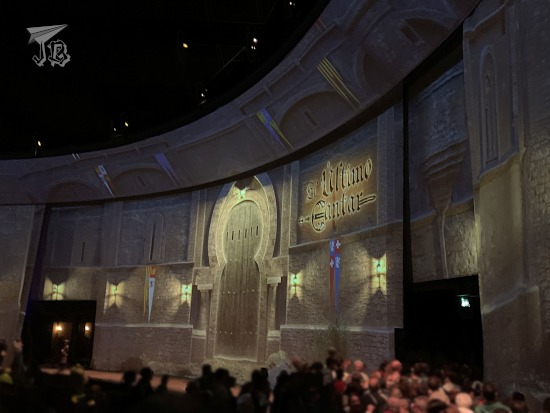
Tordesillas

I climbed up the medieval wall Muralla de Tordesillas to the park where the monument to Queen Juana Monumento a la Reina Juana I de Castilla stands, in front of the museum dedicated to the Treaty Casas del Tratado, and the church Iglesia de San Antolín.

Monuments in Tordesillas

We walked back to the car to drive off to the next spot in the route, and Tordesillas became the first spot where we spotted birds of prey during this trip, maybe a golden eagle Aquila chresaetos. Or, you know. Anything else.

Eagle

We drove off towards the municipality of Zamora, a Medieval town and villa by the Douro, known for its Romanesque churches. We reached the Parador de Zamora in the middle of a horrible downpour that was over as quickly as it had started. The Parador hotel is a former noble family’s Renaissance palace, with a military style and a middle patio with a glass-window gallery

Parador in Zamora

We had a late lunch and walked to the manor Palacio de los Momos, near the Main Square Plaza Mayor, home to a church Iglesia de San Juan de Puerta Nueva which has a sculpture representing two figures of the local Holy Week celebrations Monumento al Merlú. Other buildings include the old and new town halls Ayuntamiento Viejo and Nueva Casa Consistorial, and blocks of colonnaded buildings.

Buildings in Zamora

The first Romanesque building we came across was the church Iglesia de Santa María Magdalena, which contrary to many other places has got rid of the Baroque add-ons, and stands severe and naked in its stony glory. It is considered one of the most important and pure Romanesque constructions in Europe, sparsely decorated save for the tomb to the side.

Church of Saint Mary

From a side stop I overlooked the river Río Duero and the medieval bridge Puente de Piedra.

Zamora Medieval Bridge

We continued off to the cathedral Catedral del Salvador de Zamora. It is considered the first cathedral in the “Douro Romanesque” style. After the original cathedral was destroyed during the Muslim conquest of Spain, the reconstruction began around 1151. It must have been finished towards the beginning of the 13th century. The building has two particularities – the thick tower, and the umbrella dome, in a style that travelled from Byzantium to the Islamic architecture and reached Spain with the Nasrid artists. The inside holds a cloister and two small museum – one of religious art and the other of archaeology.
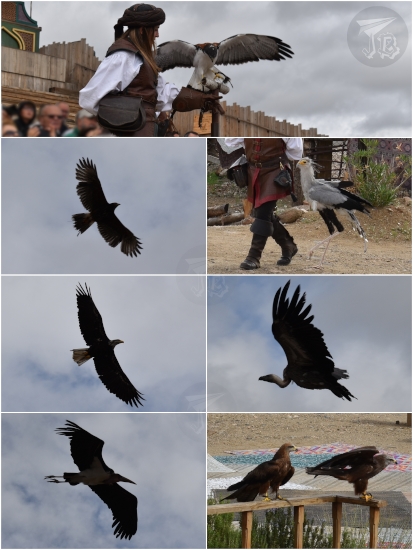
Zamora Cathedral

Afterwards, we visited the ruined castle Castillo de Zamora – a purely-defensive Romanesque fortress built around the 11th century. The castle has a moat, and you can wander up the walls and defensive towers. The interior is ruined, but the ancient structure can be guessed by the arches and different walls that would have separated the fortress’ halls.

Castle in Zamora

Finally, we explored a few more religious Romanesque buildings: Iglesia de San Pedro y San Ildefonso, Convento de Clarisas El Tránsito and Iglesia de San Cipriano. From the viewpoint next to this last church, we got to see a stork nest with a baby chick in it.

Zamora churches

Stork nest

We had dinner at a restaurant called El Horno, a traditional places that offers tablas – wooden trays full of treats to share. We shared a serving of tabla de fiambres – Iberian sausages (ham, loin, chorizo…) and cheese on a bed of crisps.
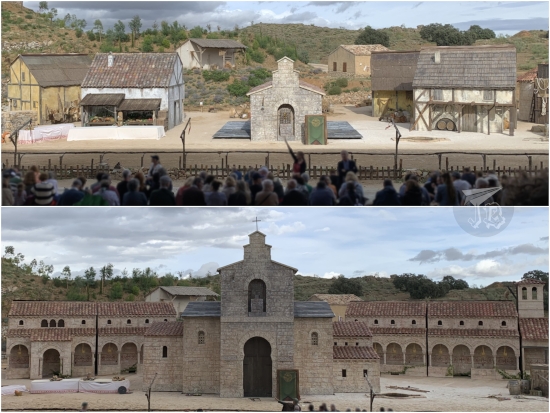
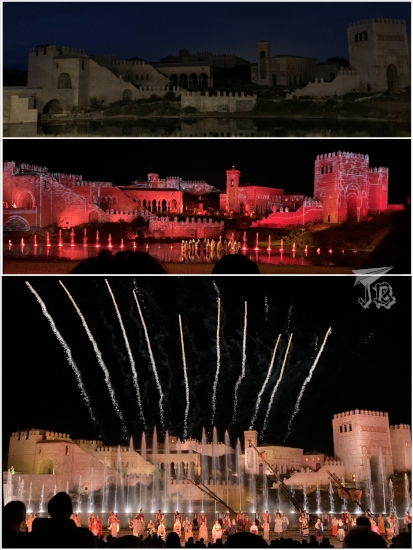
Zamora at night

22nd and 23rd April 2023: A date with a dinosaur (London, England, Great Britain)

Since I cannot keep my mouth shut, I offered to organise a trip to London with some people from work. Despite prices skyrocketing everywhere and my ridiculously hectic schedule, I managed to secure a weekend when flying would not be stupidly expensive, and an activity I would really be looking forward to – the Natural History Museum was running couple of things I was very interested in. One was an exhibition on a gigantic dinosaur: Titanosaur: Life as the biggest dinosaur. Well, twist my arm – NHM is much closer than the actual Titanosaur home in Argentina. Furthermore, there was a collaboration with Jurassic Park (‘an adventure 63,000,030 years in the making’ is the motto), and coming back to the museum would give me the chance to purchase the rock I wanted the last time I was over and did not get because I was heading out to Stonehenge on the same day.

In the end, only one person took up the offer, and I figured out that well, London is pretty much always a good idea for a weekend – so I figured I’d arrange myself a date with a dinosaur. Unfortunately, it turned that London Marathon was held that weekend. Hotel prices were bloated for the night and we ended up at Earl’s Court because I wanted to stay close to South Kensington and the other person wanted the cheapest place possible. We left on a red-eye flight to London Stansted which took a long time to land – we spent about an hour circling the airport, and eventually the head cabin attendant said that there was bad visibility at the airport, and that the pilot required all electronic devices to be turned off so he could use the autolanding system. I did not like that one bit – after I visited Santiago de Compostela in 2022, I felt that I had got over the bad-visitiblity near-miss when I was a teen. Apparently not, the feeling of uneasiness is still there. We landed over an hour late, but we were on our way on the first Stansted Express a few minutes after getting on it. After reaching Liverpool Street Station at around 9:30, I asked my companion to take us to Guildhall as part of the incentive of the trip was introducing them to international travel. It was not a good idea. Their phone trolled us and tried to take us to Guildhall… in Stratford upon Avon. The Costa at the station was closed, but at least I had got myself a sandwich and a latte before we started walking.
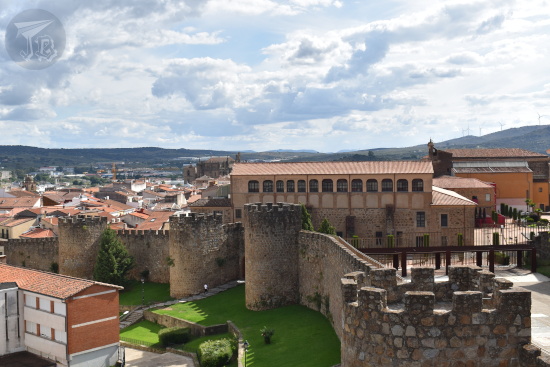
After backtracking, we were in known territory around 10:15. As it turns out, my companion was only interested in “walking the city” and shot down any activities I had proposed – thus, some things I just imposed in order not to feel that I had wasted the whole day away. By 11:00, I had confirmed that our travelling styles were not compatible. After some time at the docks next to the Tower of London, I wanted to enter the Anglican church All Hallows by the Tower. All Hallows is the oldest church in the City of London – founded in 675 CE, it predates the nearby Tower of London. The parish used to take care of a lot of the prisoners executed there. The building withstood the Great Fire of London (1666), but it was severely damaged through The Blitz – the German WWII bombing campaign against the UK throughout 1940 and 1941. The church was rebuilt and reconsecrated in 1975. Its windows are decorated with symbols from the different London guilds and some families.

Collage of a church. The outer building is brick and it has a tower crowned with a greenish metal spire. The inside has huge windows decorated with guild symbols. The small crypt inside is covered in white stone.

Underneath, there are a few chapels and a small Crypt. Most of the crypt is a museum which chiefly holds artefacts from the Roman period – including remains of an old road. There are other historical items from the Saxon and Medieval times, and the 20th century Crow’s Nest of the vessel Quest, in which Sir Ernest Shackleton sailed for Antarctica for the third time, and where he died.

When we were done, we went to Saint Dunstan in the East Church Garden. I was hoping to use this as a relaxing point for a few minutes, but there was work being done on the parterres. We continued towards the River Thames for some views of Tower Bridge, the museum HMS Belfast and The Shard skyscraper.

We walked by the Monument to the Fire of London on our way to the Sky Garden. The Great Fire burnt inside the Roman city wall for four days after breaking out a bakery after midnight on the 2nd of September, 1666. Though the number of victims is (theoretically) small, the fire destroyed over 13,000 houses (15% of the city’s housing), almost a hundred parish churches, governmental buildings, St Paul’s cathedral, and even some of the city gates.

Afterwards, we walked over to Leadenhall Market, a covered shopping street which can be traced back to a 1321 food market, and marks the centre of Roman Londinium (ruins from the Forum and Basilica are buried underneath). It was given to the city in the 15th century, and in the 19th century, the City Architect Sir Horace Jones designed an iron-and-glass arcade. Today, it holds restaurants, wine bars, varied shops and even beauty parlours.

A covered shopping gallery or street, in dark red and beige tones.

Around the market stands a mixture of modern buildings and traditional buildings, mostly small churches. Among the former:

  • The Lloyd’s Building (25 Gresham Street), sometimes called the “Inside-Out building”. It was finished in 1986 and it is consider a great example of Bowellism – an architectural style that maximises inside space by building ducts, lifts, and other structural necessities on the outside. It was designed by Richard Rogers & Partners, and it still maintains the original entrance of the building that stood in its place in 1928 – the East India House.
  • The Leadenhall Building (122 Leadenhall Street), designed by the Rogers Stirk Harbour + Partners. It opened in 2014.
  • The Willis Towers Watson (WTW), designed by Norman Foster, it was finished in 2008.
  • The Scalpel (52-54 Lime Street), which yields to cool reflections along with the WTW, and has a strange sculpture at the entrance – it made me think of several ship wheels fused together. The building was designed by Kohn Pedersen Fox and only completed in 2018.
  • And of course The Gherkin (30 St Mary Axe). It was designed by Foster + Partners and it is the first ecological building ever built in London. It opened in 2004.

The historical buildings we encountered (having survived both the Great Fire of London and the Blitz) include:

  • Saint Andrew Undershaft Church. It dates back from 1147, although it has been rebuilt several times. The current building was erected in 1532.
  • Saint Helen’s Bishopsgate Church, where Shakespeare himself used to worship in the 1590s. The building can be traced back to the mid 12th century, and it was restored during the Victorian period and later during the 20th century.

Skyscrapers reflected on the glass that covers yet another huge skyscraper

A small church built in Stone in the background with a huge modern high-rise building behind it

Afterwards, we headed towards Embankment on the Tube. There, I was happy to find a Costa Coffee and get my vanilla latte fix. In the area, we saw the Victoria Embankment Gardens and I wanted to visit Cleopatra’s Needle – half of a pair of obelisks (the other one is in New York), originally made and carved in Heliopolis, what is Cairo today. It has inscriptions from the 18th and 19th Egyptian dynasties (around 1450 BCE). It was presented to the United Kingdom by Sultan Muhammad Ali in 1819, and later transported to London in 1877. Two sphinxes and other decorations were added when the Needle was erected, and the plinth under one of the sphinxes was damaged during London Bombings – it was never restored as a tribute to memory.

An Egyptian obelisk standing against a cloudy background

We walked over to the Westminster area to see the Palace of Westminster and Elizabeth Tower. There was an environmental protest there, which made it packed, but at the same time diverted traffic, allowing for new views from the middle of the street. On the way, I encountered an adorable pit bull mix I got permission to pet – coffee and dog pets made everything better.

A view of the palace of Westminster, with the Elizabeth tower on the left

We continued off to Saint James’s Park, home to squirrels, geese, swans, pigeons, mallard ducks, robins… all of them extremely used to people and tourists, and rather unconcerned by dogs being walked. We ditched the marathon fencing and reached Buckingham Palace, but by then my companion was beat. Thus, we had to go to the hotel so they could get some rest. The hotel was better than expected for a London 2*. It was nice and warm, although the bathroom was tiny – it was difficult to stand inside and close the door.

Buckingham Palace and some of the animals at Saint James' parks

A couple of hours later, we were off into the evening to see Piccadilly Circus, the entrance to Chinatown, and Leicester Square. Companion was beaten, so they were not sure they would be up for anything the following day – we arranged to touch base at 9:00 for them to evaluate. Once in my room, I had a shower and booked a free time slot for the British Museum the following day, just to avoid the queues. I thought, even if we did not make it, at least we had assured entry if we did, and I could always cancel and release the ticket.

Central London at night - Picadilly Circus' Eros and entrance to Chinatown

The next morning, I left on my own around 8:00 to look for a nearby Costa Coffee for a large vanilla latte breakfast, and I came across Brompton Cemetery. This had not been on my radar, but since I had time, I decided to explore it a little. Brompton Cemetery, formerly West of London and Westminster Cemetery, opened in 1840, and it has belonged to the British Crown since 1852. It is on of the oldest garden cemeteries in Britain and comprises around 35,000 monuments. I wandered for about half an hour before I had to head back.

Brompton cemetery, a 19th century graveyard and garden

We managed to get to to the Natural History Museum on time for my date with a dinosaur just after opening. I had my Titanosaur ticket at 10:15, and left off my companion to wander on their own after agreeing to check with each other around noon. The exhibition Titanosaur: Life as the Biggest Dinosaur brings a cast of Patagotitan mayorum to Europe for the first time, along with a few real fossil bones, of a front leg, some teeth, and an egg.

Patagotitan mayorum is one of the largest known animals to have ever lived. It was a sauropod dinosaur – a tetrapod with extremely long neck and tail. It lived in forest regions during the Late Cretaceous (102 to 95 million years ago) grazing on ferns and tree leaves. The species was discovered in Argentina in 2010, and it’s calculated that it could have been up to 31 metres long and weigh over 50 tonnes. It is widely considered the most complete of the South American dinosaurs. The cast that the Natural History museum brought is considered the holotype, and it was reconstructed from the partial skeletons of six specimens.

Titanosaur skeleton. People walking around don't even reach its knees.

The best thing about the exhibit was being able to actually touch the cast, so I kinda hugged my date, I guess. As far as I know, there are only three casts of titanosaur – the one in Argentina (Museo Paleontológico Egidio Feruglio in Trelew), one in the US (Field Museum, Chicago), named Máximo, and this one.

After I had pranced around the exhibition to my heart’s content, and as it filled up with kids, I moved on to reason number two of this visit having to happen asap in 2023. To celebrate 30 (thirty!) years of the 1993 release of Jurassic Park, the Natural History Museum was running a limited-time-only collaboration pop-up shop – the Jurassic Park 30th Anniversary #NHMxJURASSIC store in which I did not even spend that much! I bought a replica badge and a commemorative coin, both limited, numbered editions. The shop had both Jurassic Park and Jurassic World merchandise, especially toys and T-shirts, and a few props, including a life-size sculpture of Blue the velociraptor.

Jurassic Park pop-up shop, with Blue the velociraptor just hanging out

I then headed to the official museum shop to get myself the rock I had wanted – a piece of aura silicon carbide, a shiny mostly-artificial mineral. I also bought a souvenir guide, just because. They did not have anything from the Titanosaur exhibit there, so I backtracked to the exhibition shop to buy a pin.

Whenever I got to the Natural History Museum, I end up in the dinosaur gallery (well, there was that one time I walked through the whole thing throughout a winter day). This time, however, I decided to wander the upper area of the historical building. I was drawn to the Treasures in the Cadogan gallery. I had not been there since it opened in 2013, and my mind was blown. The collection includes a first edition of Darwin’s On the Origin of Species, and some of the pigeon specimens that he used to develop the theory of evolution. I also got to see the first-ever-found iguanodon teeth (not the replicas), the first fossil ever found of the Archaeopteryx (the link between dinosaurs and birds), and a skeleton and egg of the great auk, the first confirmed victim of anthropogenic extinction (due to human activity). I was very impressed, these were all treasures indeed – no overselling.

Treasures at the Natural History Museum - ancient bird fossil, extinct penguin-like bird, a book, dinosaur teeth. Whale skeleton.

After wandering the second floor for a bit, I ran into my companion and at noon we left towards the British Museum, where I had booked entry for 12:40. I left them to their own devices again and headed off to the Japanese galleries, which had been closed the last couple of times I was in the museum. I was… a bit on the disappointed side, I remembered them being way more impressive from my early 2000s visits.

Japanese Galleries at the British Museum: Samurai Armour, lion dogs pair, articulated metal animals, a standing Buddha.

I visited the Moai, the Elgin Marbles, the Babylonian bulls and the Rosetta Stone, and I headed off to the shop to get myself a treat – retail therapy is a thing. Eventually, we left the museum and managed to get to Liverpool Street to take the Stansted Express to the airport. Security was smooth, not as crammed as other times, and then, as tradition calls, I got myself some sushi at Itsu.

When we boarded the plane, I had been assigned an emergency exit seat. In order to sit there, you need to be able to take responsibility about opening the exit if something happens. I flagged a flight attendant to inform them that I would be physically unable to do so. I had a new seat in 4.5 seconds, and it turned out to be a window seat. We took off a few minutes late, and landed with a delay of almost a quarter of an hour. Nevertheless, after passport control and all, I managed to reached the parking lot payment machines with a few seconds to spare the overstaying fee – all good!

Balance – The marathon barely interfered with the weekend. I had a date with a dinosaur and hugged them. That was awesome. I got limited edition Jurassic Park and Jurassic World merchandise. I found some Kettle Sea Salt and Balsamic Vinegar of Modena crisps at one of the supermarkets. I got two new books, commemorative coins and a shiny rock. I also discovered new places to explore in the future, and had Costa – twice. Unfortunately, we ran out of time for extra visits on Sunday – so I could not fit in either the HMS Belfast or the Jack the Ripper Museum. Furthermore, the Grant Museum of Zoology is closed for renovation, and the Petrie Museum of Egyptian Archaeology does not open on Sundays, so in the end I was not really able to scratch much off my list. Whoops!

Souvenirs from London: books, crisps, commemorative coins and Jurassic Park merch

7th April 2023: Monasterio de Piedra (Nuévalos, Spain)

There are many things to consider when visiting the so-called Monasterio de Piedra, a tourist complex in Nuévalos, in the area of Aragón. One of the most important ones is the weather – as most of the complex is outside. The second is probably people. Just the online bookings are 2,000 tickets in a day – and some more go on sale throughout the day as visitors leave, or it is calculated that they do. A third factor is getting there, because it is literally in the middle of nowhere. This year, Easter break has peaked at an almost 100% occupancy rate since it seems that Covid is dwindling down, and the weather is superb – these facts have implied crazy traffic, too.

I had been mulling the trip for a while, checking weather and traffic warnings, and considering all the driving around that would be take place. I thought that the 7th would be a good date for a day trip – fewer cars out within the break period, and I was busy on the 8th, the other calm day. When I finally decided that the 170-km-each-way drive was going to be worth it and safe as the traffic authority had not updated its warning on the late-afternoon of the 6th of April, there were around 30 left for the 7th, and it was already sold out for the 8th. I got worried about traffic again, decided to leave the tickets for later, and by the time I definitely made up my mind, the day had been sold out!

I was disappointed, but I noticed that some tickets had become available for the 8th when previously there had been none. Thus, I kept checking throughout the evening, and finally around 23:00, I was able to purchase the 2000th ticket for the complex. Good thing that while I was wondering whether to go or not, I had prepared a backpack with whatever I might need, because if I wanted to beat the crowds, I had to leave by 7:30.

I did, and I made it to the complex around 9:10, after driving on almost-empty roads. I had planed to park in the outer lot, but as I reached the area, there were a number of workers directing cars and I ended up in the inner area. All the visitors who were already there – maybe I was the 30th car or so – stepped out of their vehicles commenting “oh, I thought there would not be so many people so early”. I thought the same… I had no idea of what “many people” meant in this place yet.

The Monasterio de Piedra complex has two distinct parts – the historical garden Parque-Jardín Histórico del Monasterio de Piedra and the monastery-turned-hotel. I decided to visit the park first, which would later be proven a good idea.

Río Piedra is mainly a pluvial-regime river (a fancy term to say that its flow depends on rain), also fed by various underground springs. The water has a high concentration of calcium carbonate, which for centuries has been key in creating the landscape that characterises the park, with a large number of waterfalls and caves – calcium carbonate dissolves and precipitates depending on how much water the river carries at any given time. Along the fertile soil from the river banks, the precipitates feed a very green landscape which in turns yields to a rich and varied fauna that lives there.

The park was established as a Romantic garden during the 19th century by Juan Federico Muntadas when he inherited the area. He also built the first Spanish fish farm there to breed river trouts. The garden is organised in two trails, a main one and an “extra” one – I decided to take the main trail, which runs around 5 km. The park prohibits food inside, but it does not really enforce it. I took a bottle of water, and an energy bar just in case, without the intention to eat it unless it was an emergency.

I walked in, got my print-at-home ticket scanned, and I was surprised that a few steps in, someone was holding an owl for people to take pictures with it. At 9:00. That was bizarre – I knew that the park used to hold birds of prey shows, but I thought it was a thing of the past. I got to my first intersection, and a park employee directed me towards the route. I was a bit disoriented for a minute or two, and I later realised that they were flushing the first visitors towards the big bottleneck area in order to try to control people, capacity, and waiting times. In this garden, the amount of people you run into can indeed make or break your experience – and I am happy to say that I made the right choices most of the time. The biggest problem I ran into were families with small children being loud, which was annoying but bearable.

Because of the redirection, I started off at what would have been number 16 on the route – the most famous waterfall, called the “ponytail”, Cascada de la Cola de Caballo. From there, you walk into one of the karstic caves (Gruta Iris) and pass under another waterfall, which even creates a small underground lake. It was cool, but I was really not prepared for how splashy it was! I continued off, I saw the and walked around a backwater called “mirror lake” Lago del Espejo for obvious reasons – it reflects absolutely everything. Although the route is only 5 km, it goes through areas that feel and look completely different, and it feels much, much longer without being tiring.

Monasterio de Piedra garden - waterfalls, karstic caves and the underground lake. Everything looks green with the vegetation and reddish with the karst deposits.

A 15-metre waterall, water splashing, flows into a river. The land around it is reddish-grey

A reddish hill perfectly reflects on a lake.

As I “finished” the route, I got to the intersection where the bottleneck is created and I saw all the people waiting – hundreds, probably. That was unexpected, because it had not felt that it was so crowded – it turned out, arriving early had been a great idea. The amount of people waiting was shocking, but understandable as most of the cave passages are only wide enough for one person – now I understood the reviews that claimed hours to see the waterfall and the cave.

I got a bit disoriented at this point – as I said, the route feels long since the landscape is so varied. However, instead of going for the exit, I decided to continue exploring a bit more – that is how I arrived at the lower numbers of the route again – number four, that was a bit more on the crowded side. I did the first part of the route, climbing up the hill slopes to see a dozen or so more waterfalls. Then had to backtrack again, until I finally saw everything that there was to see, even if in a strange order (on the map: sixteen to end, four to fifteen, then three to one. Not confusing at all, I know).

Monasterio de Piedra garden - fountain, and waterfalls and a cave. Everything looks green with the vegetation and reddish with the karst deposits.

Unfortunately, loud people scared most of the wildlife away, so aside from a few fish, there was nothing around in that respect. There were dogs around, but well-trained, so they did not cause a problem. The area is really nice, the waterfalls and caves are beautiful, but I can see how the number of people you visit it with might make it a good or bad experience. I am sure that I would have quit had I needed to wait hours to cross a cave and see one of the waterfalls.

When I left, there was a huge queue to get a picture with the owl. Furthermore, there were several huts with more birds of prey or other animals, and the pictures were sold at the exit. I’m not sure I approve of that, no matter how trained the animals are – there actually used to be exhibitions with the birds of prey, which is not happening these days. After I left the historical garden, I went into the former monastery. Today, most of the building has been turned into a hotel, but part of the historical site can be visited.

The monastery Monasterio de Piedra was established in the 12th century by Cistercian monks sponsored by king Alfonso II of Aragón. The building was erected in the years when Romanesque was turning into Gothic, so it mixes both styles along with some extra Baroque. Between the late 18th century and the early 20th century, the Spanish government carried out several programs to seize and sale property deemed “unproductive” – mostly belonging to religious orders and municipalities. These properties were auctioned to convert them into cash so the government could pay off its debt. The whole process is known as the Spanish confiscation (desamortizaciones).

In the 19th century, Monasterio de Piedra was confiscated. Everything it contained was auctioned in the 1840s and 1850s. In 1843, the buildings were also sold and acquired by the Muntadas family. It was soon afterwards that Juan Federico Muntadas became the owner. He turned the orchards into the now historical garden, and the convent itself into a hotel and… what today would be called a “wellness spa”. He also established the fish farm.

I would have really liked to stay at the hotel, but it’s a bit on the expensive side and there is really nothing else around, so you have to pay for meals on top of the stay. But it would have been cool to wander the monastery building at night. Not being a hotel guest, the ticket includes access to the cloister and the old church. Some rooms around the cloister have been dedicated to host exhibits about regional or historical products and items: carriages, wine, and even chocolate – the monastery was reportedly pioneer in the preparation of chocolate in Spain. The cloister itself has a few chapels, the early-Gothic chapter house with decorated columns and ambience music, and a small garden-like centre. You can also visit a monk’s cell, and there are mannequins spread through the different rooms – startling if you are not paying attention and suddenly see one.

I am not a wine person, so the museum on the topic did not impress me much despite having a bunch of traditional wine-making artefacts. The chocolate exhibit was just a succession of panels with pictures, and thus a bit underwhelming. Within the monastery, what I enjoyed the most was the architecture itself I guess. I loved the cloister and the chapter house most.

I also visited the adjacent ruined church. Like the cloister, it’s early Gothic. It has a Baroque chapel to the side which keeps the wall paintings. Although most of the ceiling is gone, the church still looks pretty – then again we all know that I like the architectural style anyway. It’s nice how the building is somehow ruined but at the same time it’s not, as it has been restored and preserved. However, underneath the altar, there is a small crypt, where a small window has been made to peer at someone’s bones – that was… huh… unnecessary. The nave is now open to the sky and covered with grass, all the figures have gone, and only one of the sides holds a few architectonic remains and capitals.

Inside the monastery - the cloister and the ruined gothic church

I left the inner area and I walked around the outside of the building – what has become the picnic area since you can’t eat inside the garden. Once I left that behind, the area was deserted. I reached the former main square, where the Baroque façade of the monastery still stands. I walked a bit further and found the walls that used to enclose the area, along with a small tower that is called the keep, but it looks more like a defensive tower.

The baroque main entrance to the monastery

Finally, I checked out the gift shop, bought a book and some chocolate. I headed back a bit after 13:00, but instead of driving directly home, I made a stop at a couple of viewpoints over the reservoir Embalse La Tranquera. On the way out, I had crossed several tunnels and seen viewpoints, so since I had time and I was not hungry yet, I decided to snoop around. After a while, I just drove back – though I might just have made a stop for a late fast food lunch, because guilty pleasures happen sometimes. And by 15:00 I was hungry indeed.

A reservoir with turquoise water, nestled in a reddish gorge

5th April 2023: The ghost station of Chamberí (Madrid, Spain)

Perusing the web for something – I can’t even remember what – I came across one of those things that I had discovered a long time ago, then forgotten because life is hectic and so (read: Covid happened). In Madrid, there an underground ghost station, one that has not changed since the 1960s. Well, sort of – it was closed, then restored, and finally turned into a museum. Anyway, somehow accidentally, I ended up securing a free ticket to visit it during Easter break, so there I went. I decided to round up the trip with a fancy lunch in a place I also wanted to visit.

The Madrid underground system Metro de Madrid was the third underground line to open in Europe, after Moscow and London. It ran a little short of 3.5 km, with eight stations, when King Alfonso XIII inaugurated it in October 1919. Subsequent ampliations and renovations of the line were carried out until it reached its current 24 km and 33 stations (plus twelve more lines). The city expanded, its population increased, and underground trains grew with both, going from four to six carriages in the 1960s. The stations were renovated to fit the new, longer trains. Most of them. The ampliations of the stations of Bilbao and Iglesia made it inefficient to do the same with the stop that lay in-between – Chamberí. Thus, this station was locked down – and bricked off – in 1966.

The city forgot about the station’s existence for decades, until in the early 2000s, it was turned into part of the Underground’s museum network Museos de Metro de Madrid or Andén 0. Today, Estación de Chamberí can be visited for free, but only under reservation. Pre-pandemic, I looked into it a few times, and never found a spot, then the whole thing slipped my mind, until I relearnt about it, and lucked out.

I took the train to Madrid and walked from Recoletos to the square where the station was built Plaza de Chamberí. The original entrance has long disappeared, so the underground area is accessed through an ugly metal kiosk and a spiral staircase. However, the original station looks completely different. It was designed by Antonio Palacios (1878 – 1945), a Spanish urbanist and architect with a very recognisable style, whose most important works still stand in Madrid (such as the Círculo de Bellas Artes and Palacio de Comunicaciones). My entry slot was 11:30, and I arrived with plenty of time – trains have been unreliable lately so I gave myself a wide margin. When most of the group had arrived, we went down the modern stairs that yields to the old hall. Characteristic white tiles are laid along the access tunnel that leads to the original ticketing stands and the exit control. The station used to have a skylight, now closed off. The original stairs and maps still stand, along the Metro logo – though everything has been adapted for wheelchair-users.

Ghost Station of Chamberí. Entrance corridor and old ticketing booths

The group comprised 25 people, with a surprising amount of non-Spanish speakers – at least seven, who of course did not care about the guide’s explanation, which was little more than the Wikipedia page (so I guess anyone can take the visit. Print out the wiki and read along). There were families with kids who tried to yell over anything the guide said. Furthermore, underground trains still run through the station, which make for cool pictures, but their six-minute frequency drowns all the given explanations. It was hard to actually get into the “ghost station” mood.

Estación de Chamberí does look really cool though. Unfortunately, glass panels separate the platform from the tracks – they are dirty and get in the way of pictures of the other side of the platform. However, it was interesting to see the old advertisement mosaics – they used to be painted on tiles, and built into the walls themselves, and surrounded by very cool darker slabs with metallic tint. The visit takes about 40 minutes, and on the way out, you get to go through the old ticket gates, which have a very ingenious way of opening – you step on the little platform in front of them, which triggers a latch, and you can push the gate open. Really fun.

Ghost Station of Chamberí. Collage showing details - the name of the station on the old logo, tiles, the platform, and a train coming through

Truth be told, I had booked another free visit before lunch, but I realised I had messed up the location. I cancelled that one before entering the ghost station so the ticket would be available for someone else to use. And thus, I had a bit of time before my lunch reservation at 14:00. Since the weather was nice, I decided to walk to my next spot, and I spent the extra time – and some not-extra money – in one of the big bookshops in the centre of Madrid. At 13:50, I arrived at the back entrance of the hotel Hotel Riu Plaza España. This hotel opened in 2019 in a mid-20th century skyscraper (Edificio España) designed and engineered by brothers Julián and Jose María Otamendi. It is a 26-floor tower which was the highest building in the city at the time of its construction. Situated in the square called Plaza de España, it is close to the Royal Palace and Main Square.

Edificio España - tower like building in reddish and white brick, spanning 26 floors. It is the Riu hotel now.

The hotel has a large terrace on what would be the 27th floor, a rooftop bar and a restaurant or “gastro bar”, whatever the current buzz word means. Entry to the terrace is 10 € (5 € on a weekday), and food is not on the cheap side (everything around that area is stupidly expensive), but I found a deal at their Edén Gastro Bar: one-course lunch + drink + entry to the rooftop terrace for 30€ which allowed me to skip the queue.

I did skip the “ticket-buying” line, but there is only one lift to go to the rooftop, so that queue I had to wait. I ended up reaching the restaurant around 14:10 or 14:15, and snagged a counter-with-a-view seat. I ordered a salmon poké and a drink, and got a few complimentary snacks and breadsticks to complete the meal.

Rooftop picture showing Madrid's Plaza de España and Royal Palace. Blurred in the foreground, lunch

Afterwards, I climbed the stairs to the terrace, officially called 360º Rooftop Bar, on the 27th floor. Music was blaring and there were tons of people drinking overpriced cocktails. The views were cool, sort of a once-in-a-lifetime thing that I don’t think I’d need again. The terrace has a small all-glass balcony that I did not wait the queue for, and a glass platform that would probably impress a bit more if the glass under your feet were clean(er). The terrace was completed by a tacky bull sculpture with metallic-gold testicles.

Madrid rooftop view - low houses with red brick roofs, and in the very background a few highrises

I walked around a couple of times, and then I headed back to the train station after calling it a day. I killed time reading one of the books I had just got, and time flew on the train. It was a nice little outing, but I did mess up with one of the locations, so it could have been more efficient. I guess not every little trip can work flawlessly…

4th April 2023: La Granja and Riofrío (Spain)

King Felipe V of Spain was born Philippe, Duke of Anjou, in France. He was appointed successor to the throne by his great-uncle Carlos II, who died childless. He was never very interested in being a monarch, or at least King of Spain, which he became in 1700. Around 1718, he fell in love with a hunting area and decided to buy it. Today, this area has become the municipality of Real Sitio de San Ildenfonso (Spain), the Royal Site of Saint Ildephonse. He ordered a palace be built “without disturbing what was already built”. The result was the palace known as Palacio de La Granja de San Ildefonso (The Farm at San Ildefonso), in honour of the hermit church and farm that were there when the King bought the hunting grounds.

Legend has it that the palace is extremely uneven because the King ordered that no parts of the church were demolished, so the walls were built around the old construction – however, it is such a massive building that seeing the irregularities from the inside is hard. The palace, built between 1721 and 1724, was commissioned to Spanish architect Teodoro Ardemans. Later, the garden façade was remodelled by Italians Filippo Juvarra and Giambattista Sacchetti. A fire destroyed part of the building in the 20th century and a lot of the paintings were lost. The gardens – the most famours feature of the site – were designed by Frenchman René Carlier in 1721 and finished by Étienne Boutelou when the former died in 1722.

Today, the palace is managed by the Spanish Heritage Network Patrimonio Nacional – which means that photography is not permitted inside. It is technically one of the royal residences, so of course you have to go through security and X-rays and whatnot. We headed there on what was technically a working day before Easter break, so we were not sure how much traffic we would find, or how many visitors there would be. Thus, we had booked our tickets online for 11:00, anticipating a two-hour-and-a-half drive. In the end, we were in front of the palace around 10:15 and were able to enter at 10:30. Before that, we saw some impressive trees, including a sequoia, which I don’t think I had ever seen before.

Baroque Palace of La Granja peering behind a few large trees

The palace is Baroque, showing the likings of the time in which it was built. A monumental staircase gives access to the first ward, rebuilt after the fire into an area to display part of the royal tapestry collection – Museo de Tapices. The oldest tapestries date from the 16th century, before the Spanish tapestry school was founded. Tapestries are not my favourite form of art, but these were pretty impressive. A collection of nine pieces allegorise some of the virtues, mixing classical mythology with Christianity and historical figures.

The interior of the palace displays the private rooms of the monarchs, on the first floor, and the different ballrooms and social rooms on the ground floor. The private areas are decorated with paintings, and the public ones try to emulate the Palace of Versailles (France). They are furnished with marble and mirrors, and decorated with sculptures and statues.

La Granja: Dizzingly-decorated large hall in golden and white marble, with large open wooden doors

The ground floor opens to the well-known gardens Jardines de La Granja. These are considered the best “French gardens” in Spain. They cover almost twenty thousand square metres. Sprinkled throughout paths, hedges, parterres and trees, there are 21 fountains, most inspired by characters taken from classic mythology. The fountains are made out of lead, painted in bronze colour, and even if built 300 years ago, they still work and are indeed turned on during the summer season, fed from local reservoirs. They were not running during our visit – except for one dragon which leaked a bit. Spring seemed not to have arrived in the gardens yet, and it looked strangely like autumn.

La Granja: Italaian façade of the pakace from the top of the waterfall fountain, which was turned off. A number of bronze statues representing mythology characters line the waterfall

From the top of one of the fountains, called “the waterfall” Fuente de la Cascada Nueva, there is a good view of the Italian façade of the palace. Other fountains include “The Fame” Fuente de la Fama and “Diana’s bath” Fuente de los Baños de Diana. One of the most complex fountains is Fuente de las Ocho Calles (Fountain of the Eight Streets), a complex of eight fountains in a sort of “square” created by the intersection of eight garden paths. The fountains were built to only run when the King approached them, and today they are turned on in a rolling schedule, and very rarely all at the same time. This is to take care of the pipe system, still the original one, and because some of them need a lot of water to function.

La Granja, outside. Two large fountains crammed with bronze figures representing mythological beings. Both are turned off.

After we were done with the palace, we continued off to what I found the highlight of the day, the Royal Factory of Glass and Crystal of La Granja Real Fábrica de Cristales de La Granja. It was also established by Felipe V in 1727, and even today people use the old techniques to make glass items there! Even though it is called a “factory”, the process is completely artisan. The place also doubles as a museum to explain the how glass is (and was) made, exhibiting different traditional instruments. Of course, it has a shop. However, the coolest thing is that you can visit the furnace workshop to see how glass is blown, and the decoration workshop to see the engraving process. We hung around the furnace area and the experts can make a whole goblet in three minutes and a half, from incandescent blob to ready-to-engrave product.

Glass museum: diferent machines used to process glass in the 20th century, and a reproduction of the original glass furnace

Workers at the Glass factory: making and engraving a glass

After the factory, we headed towards the Parador de La Granja, a mix of a modern and historical building where we were to have lunch. We shared some cured beef cecina de León, and I tried the local speciality judiones de La Granja, a hearty bean-and-pork stew.

Collage of the inner patio of the Parador building + lunch: dried meat and a bean stew

When we finished lunch, we took the car to the secondary palace in the area, called Palacio Real de Riofrío, a hunting pavilion also managed by Patrimonio Nacional (though apparently, pictures are okay here, which is cool). The building is surrounded by 600 hectares of forest and hunting grounds. It was originally commissioned by Felipe V’s wife Isabel de Farnesio, who actually never got to live there since when she became “queen mother”, her son Carlos III had her move to Madrid.

We drove past the forest, where some storks were happily wandering around. The SatNav flipped on us because it could not find the correct gate, but we managed to make it on time to spend an hour or so there. Also, the entrance was weird – it is actually closed, and there is a guard inside. If we had not arrived just as another car was exiting, we would have thought it was closed and left.
Baroque palace of Riofrío. It's large and pink, with lots of archeways

The palace is also Baroque, and the areas which can be visited include some bedrooms, dining rooms, and the areas where the servants waited to be called. The palace has been organised as a Romantic museum Museo Alfonsino, that honours King Alfonso XII, who mourned his first wife there. It was actually decorated by his father, King Consort Francisco, Isabel II’s husband, and later “enriched” with paintings from other Royal Sites. The most interesting item was the billiard room, because it actually felt rather unexpected.

Another area of the palace has been transformed into a “hunting museum” Museo de la Caza, to honour the fact that these were the King’s hunting grounds. It mostly hosts taxidermy representations and a collection of pelts and skulls. To be honest, some exhibits were a bit unsettling.

Collage showing the inside of Riofrío: the hyper-decorated rooms, the staircase and taxidermy of local deer

As we left, the SatNav warned us of a 40-minute jam on the way back, so we forgave its previous flop. The warning allowed us to take a detour to avoid it – we had to pay the toll but it shaved off almost an hour.

25th March 2023: Brussels, Antwerp, and Starset {Belgium, March 2023}

As my companion D****e was caught in the French air controllers’ strike, she did not make it to our hotel until the wee hours of the morning. I let her sleep, and headed out to explore another area of Brussels. My first stop was again Mont des Arts, because it was on the way to Anneessenstoren, remains of the old city walls – which were being renovated, so I could not see a thing.

I had decided not to take the umbrella because the wind made it useless anyway, so I had to take cover a couple of times. I continued off to the Romanesque-evolved-into-Gothic Church of Our Lady of the Chapel Église Notre-Dame-de-la-Chapelle | Onze-Lieve-Vrouw-ter-Kapellekerk. It was closed, but I hung out around the area for a bit. There is a skate park, a Memorial to Pieter Bruegel the Elder (who is buried in the church) and an obelisk Obelisk Kapellekerk sculpture.

I decided to come back when the church was open, and continued walking towards another church in the area, the Church of Our Blessed Lady of the Sablon Église Notre-Dame du Sablon | Onze-Lieve-Vrouw ter Zavelkerk. It was built in the 15th century, in late Brabantine Gothic. It does not have towers, but a deep portal in the main façade. It is richly decorated inside and out, in light coloured stone from the nearby Gobertange quarry. In the beginning, the church was a parish for the noble and wealthy citizens of the city, but it slowly lost lustre over the centuries. In the late 19th century and beginning of the 20th century, it was “restored” according to the principle of unity of style. The whole building is laden with ogival windows, and the light inside is very beautiful. When I was there, the choir was rehearsing, and there was a “do not visit beyond this point” notice which I abided by.

Gothic church: exterior + nave, flanked with long windows

I went out again, and crossed the street to the garden Square du Petit Sablon | Kleine Zavelsquare , which features statues depicting some of the great humanists of the Belgian 16th centuries, and a fountain in the honour of two noblemen who were executed by the Spanish regime in the same century. The fences are decorated with sculptures that depict the different guilds of the city. It was designed by romantic architect Henri Beyaert in the Flemish no-renaissance style in the 19th century as a flower garden.

I saw the Palace of Justice of Brussels Palais de Justice de Bruxelles, a massive building built between 1866 and 1883 in an eclectic Greco-Roman-inspired style, designed by architect Joseph Poelaert. When it was erected, it was the largest building in the world, and it is currently… being renovated, as part of the ceiling collapsed in 2018.

I had to take cover again as another shower hit, but it went away eventually. I walked further until I reached a former medieval city gate Porte de Hal | Hallepoort, which looks like a tiny French château – it was transformed into a a Neogothic castle in the 19th century, by Henri Beyaert. Today it is a museum, but I decided not to go in and head back towards the city centre.

Decorated medieval-like tower

I backtracked towards the Church of Our Lady of the Chapel Église Notre-Dame-de-la-Chapelle | Onze-Lieve-Vrouw-ter-Kapellekerk which had been closed in the morning, and it had fortunately opened. I walked in. The church has an early 13th century Romanesque base, and the building was erected or reconstructed later in Brabantine gothic in the late 13th century. The nave was reconstructed in the 16th century and is Flamboyant Gothic. It leads to a dark-wood painted altar which contrasts with the wide, light nave. All in all, I guess I can say I was a fan of the gothic style in Brussels.

A gothic church with a dark wood altar and altarpiece, with coloured windows behind

When I was in the church, I received a text from D****e, who had finally woken up. I walked back to meet her and we decided to take the train to Antwerp [Anvers | Antwerpen], where we had plans for the evening. We got off at the central station Antwerpen-Centraal railway station Gare d’Anvers-Central | Station Antwerpen-Centraal. Designed by architect Louis Delacenserie, it was built in eclectic style at the turn of the 20th century. It has two underground levels in modern tunnels, and the original station stands at level +1 (a total of four levels), with an extended train hall in iron and glass designed by the engineer Clément Van Bogaert. The station is sometimes called a “railroad cathedral” with domes, glass windows, an ornate clock, and marble floors.

Antwerp Centraal Station - a red iron tunnel-like structure with a decorated front with a clock at the end

The idea was to look for a place to have lunch near the main square, but the weather did not agree. We ate at a Wagamama chain restaurant instead, to wait out the storm, then headed to see the Bourse of Antwerp Handelsbeurs. It was the first building ever erected with the idea of being a commodity exchange place, but burnt down and was reconstructed in the 19th century by architect Joseph Schadde, who mixed Neogothic and iron architecture elements. The building was abandoned in 1997, but it was later recovered as a cultural and event centre. I absolutely loved it.

The Handelsbeurs inside - lots of gothic details supported by decorated iron beams

We had a look at the Cathedral of Our Lady Onze-Lieve-Vrouwekathedraal, but we were pressed for time and did not want to pay to have to rush through the building (a future visit, maybe), so we just peered inside. The cathedral is included in the Unesco World Heritage Site of “Belfries of Belgium and France”.

The cathedral of Antwerp

Outside the cathedral there’s a sculpture of a boy and his dog, from a sad novella about an orphan boy who wants to be a painter, and although written by an English author (Marie Louise de la Ramée) it sounds like the Belgian version of “The Little Match-Seller” tale. It’s called the Nello & Patrasche Statue Nello & Patrasche beeld and it was created by Batist Vermeulen.

A sculpture of a boy sleeping on his dog. The bricks on the road seem to tuck them.

Eyeing the weather, we decided to head out to our destination for the evening, the Trix concert hall – though this meant sacrificing seeing the main square, we were happy that we were under cover when it started hailing at around 16:15. On the way, we saw a mouse happily hopping the main streets, some sculptures, including the Monument to Rubens and the entrance to Chinatown. We had purchased VIP tickets to see the American band Starset, who toured with Japanese singer Hyde in 2018.

Starset is an American alternative rock band formed in 2013 by vocalist Dustin Bates. Aside from Bates (lead vocals, keyboards, soundboard, guitar), the core of the band is formed by Ron DeChant (bass, keyboards, backing vocals), Brock Richards (guitars, backing vocals) and Adam Gilbert (drums, percussion). Touring members currently are Siobhán Richards (violin, keyboards), Zuzana Engererova (cello) and Cory Juba (guitar, synth), and I guess they’ve got an honorary member in Ernie (Dustin’s French bulldog, who apparently attends pizza parties with VIPs when the band tours the US). One could say that Starset is a “concept band” revolving around sci-fi – the band’s fictional backstory refers to The Starset Society, who aims to alert the public about a “Message” they obtained from an outer-space signal. The fact that Bates holds a Master’s in electrical engineering and worked for the US Air Force and the International Space University might have something to do with the theme.

Starset released their fourth album, Horizons, in 2021. After Covid, cancellations and rescheduling, the Horizons Tour finally took place. Since we had a VIP ticket, we had early access and we had to be at the venue at 17:00. We got there a bit after 16:00 – and it was a good place with a hall, so we were under cover when it started hailing. In the end, we were not admitted till 17:20-ish, when a nice lady came and took our names to let us in. The first part of the experience was a short acoustic concert with some games and Q&A. For the games, you were given a raffle number, and if it was picked, you got to spin a wheel and maybe get a price – or a hug.

During the acoustic, we stood next to violinist Siobhán, who is not only beautiful, she is also super elegant. Dustin looked a bit like a hobo, to be honest, and he’s taller than I remembered him. We noticed that Ron’s arm was on a sling – apparently he had hurt himself and was unable to play during the tour, but he still tagged along. Afterwards, we had the chance to take a picture with the band, pick up the free goods that we had a right to – a CD and a signed poster. As we did, we moved into the actual concert hall, where we got the last available spot on the first row barrier.

Starset during the accoustic

The supporting artist was Smash into Pieces, a Swedish rock band composed by Chris Adam Hedman Sörbye (vocals), Benjmain Jennebo (guitar), The Apocalypse DJ (drums) and Per Bergquist (guitar). They were very good, and they fit really well with Starset, I thought. They started playing when the hall was full – it has a capacity of about 1100 people, and maybe they started around 19:30.

Setlist:

  1. Wake Up
  2. Glow in the Dark
  3. Big Bang
  4. Let Me Be Your Superhero
  5. Sleepwalking
  6. Running Away from Home
  7. Vanguard
  8. Boomerang

Smash into Pices front men.

This made the event run faster than expected. Starset were scheduled for 21:00 but came out at around 20:20, and the whole thing started with a bang – almost literally. A big curtain was pulled up and then let down when the band was on stage.

Setlist:

  1. Unveiling The Architecture (recording)
  2. Carnivore
  3. Manifest
  4. Echo
  5. Trials
  6. Icarus
  7. Unbecoming
  8. Monster
  9. It Has Begun
  10. Interlude. BMI ad (video recording)
  11. Satellite
  12. Ricochet
  13. Infected
  14. The Breach
  15. Die For You
  16. Devolution
  17. For Whom The Bell Tolls (Metallica Cover)
  18. Earthrise
  19. My Demons
  20. Boomerang

Dustin (vocals) and Brock (guitar; dressed as an astronaut) from Starset in the middle of the concert

My mind was blown because somewhat this setlist comprises all my favourite songs from the band: Carnivore, Monster, Ricochet and My Demons. The concert was full of little visuals and cool ambience tricks – I mean, Brock actually plays in astronaut suit. There was a lot of smoke and the lights were not good, but the concert itself was amazing. I was very grateful for the barrier, I would not have made it standing for the whole event – probably not even half of it. All in all, I had a lot of fun. I love that Dustin sings with his geek glasses, too.

After the concert, we managed to take the 23:09 train back to Brussels and even get a snack on the way – the one previous to the train I had wanted. That was lucky, because the last train was delayed over an hour and a half, and was a slow one.