19th July 2025: Highway → Murero → Highway → Home {Dinosaur Eggs Loarre & Zaragoza, July 2025}

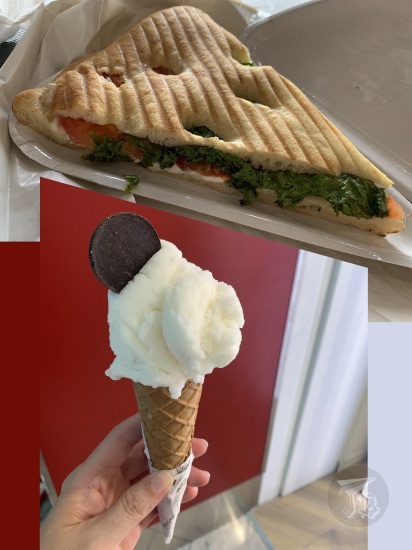
While Zaragoza (Saragossa) is not a super-busy city, the noise from the large avenue the hotel was in woke me up early enough to be amongst the first customers at Pannitelli Original Bakery. I had a toast, orange juice, and a coffee, then set off to the not-so-easy task of retrieving my car, driving back to the hotel, getting my deposit returned, and going on my merry way. It took a while, but once that was taken care of I could drive off. Getting out of Zaragoza was easier than getting in had been, and there were few cars on the road. One of them was the traffic police, so every driver seemed on their best behaviour…

Once in the speedway, the first stop of the day was a petrol station, as there was no way I made it home with one quarter of a tank. Unfortunately, there were no low-cost fuelling points on my way, so I had to use a big-name one. Thirty euro don’t take you as far with branded fuel…

To be fair, I could have driven home the previous day, but I thought that after such a week, an extra night of sleep could only be beneficial. Staying also allowed me to see the Asian treasure exhibits in the Lonja and make a stop on the way. My first idea had been going downtown to see the Natural History Museum, but it closes at the weekend. That was why I asked about the visit during the course, and it turned out it was doable. Thus, in the end, I decided to make a stop in a small palaeontological site that I would not travel to otherwise. Furthermore, the site popped up during the course twice – the signage had been handled by Paleoymas and the Natural Science Museum had quite a few specimens from there.

View of a valley with a sign that reads 'Plaeontological site' in Spanish

The Yacimiento Paleontológico de Murero palaeontological site holds remains from the Cambrian Period, extremely important because there are around eight million years’ worth of fossils (511 to 503 million years ago) preserved in the strata. Palaeontologists have found about eighty species of trilobites, along with echinoderms which had not yet developed five-way symmetry, brachiopods, worms… It is mainly composed of shales which allow for soft-bodied organisms to be fossilised along the hard bits like shells or exoskeletons. The site is famous because it allowed researchers to identify sexual dimorphism in trilobites – they were able to describe two distinct types of animals within a same species, which are interpreted as male and female. What they don’t know is which animal is which sex.

I left Zaragoza using the A23, then turned to a national, smaller road (N234) that crossed over to the A2. The site and the municipality it technically belongs to, Murero, lie halfway through this road. As mentioned before, not somewhere I would purposely travel to, but since I was literally in the area, it was a convenient stop. The regional road was all right, but the local one was narrow and the curves were very sharp and steep. I was thankful that all of the cars I saw passed while I was hiking or taking photos of the site, and none while I was driving. I decided to only stop at the area which had a small parking lot so it was safe for me and any potential driver.

To be honest, I expected to see more in the palaeontological site. The signage has either weathered out or been vandalised and nothing is readable. It is a short walk up and down a hill where you can’t really see anything except for a box at the top where people leave what they find, but there was not a chance to see anything in situ. I guess the palaeontologists and the amateurs have taken out everything that is worth anything already – or left it well buried so it can’t be pillaged. I wouldn’t even consider it a nice hike because broken pieces of slates made the path extremely slippery (I forgot my hiking boots in the car…).

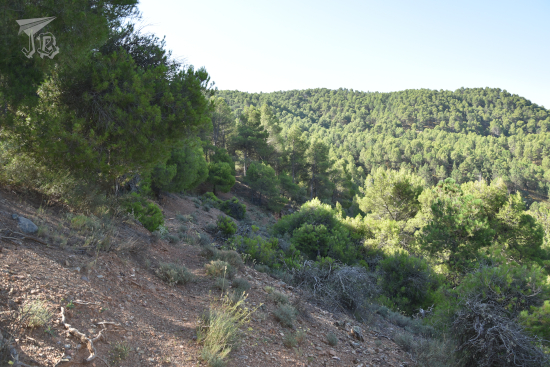
Walking upward to the site, among the pines. On the lft there is a rock with the number 6 painted on it with yellow paint.

Side of the mountain with pine trees

And oh, the temptation to steal a trilobite from the display box was strong! I resisted it though, and headed back to the car after an hour or so. I undid the path towards the N234 road and continued onto the A2. I made a stop in-between for some caffeine and a snack, but I was home for Spanish lunchtime. I have to admit I had pondered stopping somewhere along the way, maybe Daroca, Belchite or Calatayud, but considering that I still had to drive back, I decided to leave it for another time.

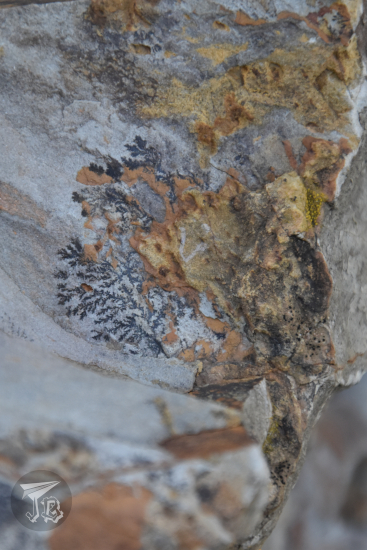
Cool crystal dendrite, which is not a fossil but still neat

Fossil equinoderms on a stone

Fossil trilobite, deformed by pressure and the pass of time

On my first solo road trip, I was surprised by the sheer amount of people who like driving at the same speed all the time. A bunch of drivers in the regional road, with limits of 90 kph, did 70 kph even when they drove through 50 kph towns. The same happened in the speedway – some people drove at 110 kph, both at the 120 kph or the 100 kph stretches. There were also those who liked aligning their cars with the markings that separate the lanes, effectively occupying both. The lorries were more manageable on the way back than towards Loarre, as it was a Saturday morning, and because the speedway feels more “downwards”.

Once home, it hit me how tired I was, so I guess it was a good thing that I had not made another stop. Checking Murero out was a good idea as it broke the trip in half and was a small hike that helped me keep alert, but more would have been overdoing it.

As a recap of my experience with the course Técnicas de restauración en paleontología a través de la preparación de los huevos de dinosaurio de Loarre: Palaeontological Restoration Techniques through the preparation of Loarre dinosaur eggs, I can say that all in all, it was amazing. The professors were extremely knowledgeable, they made learning effortless and entertaining, and the group was fun and easy-going. The course was way more hands-on than I had expected, literally covering everything from geological analysis to the fate of a dug-up piece, either in display or in storage within the museum, including working with the fossils themselves. It was not cheap, mostly due accommodation choices, but booking in advance probably made it better – and honestly, decent hotels were a must. As Loarre is a small village, food options were limited. Though there was a bakery / shop, we were out doing stuff while it was open. However, I made do with crisps or nuts for dinner, as I had a good breakfast. Probably lunch in Ayerbe was the weakest, and most awkward since it involved getting to know each other (and ten bucks for a frozen pizza was daytime robbery).

The whole trip involved driving around almost 700 km. It did show me that I (and my coffee-maker of a car) can manage the long drives better than I had expected, even during a “peak” time such as a holiday-period opening date. I am more comfortable on the road than in towns, though, even when caught in a jam. Was it the smartest idea to head to Loarre directly after work? Probably not, but if I had to do it all over again, I probably would – it was the only actually available option. And knowing that not all the course openings were filled, I would not have stressed as much over the University’s lack of efficient sign-up.

The only downside I can find is the lack of mental reset – I was constantly learning new facts, and I did not get much me-time. It was extremely fun, but not really a holiday where I could plan and do stuff at my own pace. Would I do it again? Well, the University of Teruel runs a similar summer course using Dinópolis resources, and sign ups open in February…

Stay tuned.

14th June 2025: The road to Loarre {Dinosaur Eggs Loarre & Zaragoza, July 2025}

The closer the day came, the more nervous I got. First, there was the drive. It would be a long drive on my own, during the pre-holiday rush, and I had to go around Zaragoza (Saragossa), which has a notorious knot of connections. I had studied the route up and down with both Google Maps and my Sat-Nav. However, I could not control traffic nor other drivers. And secondly, that weekend there had been torrential rain alerts in the area. The last thing I needed was a flash flood.

I pumped fuel before I went to work in the morning as I had a cheap petrol station on the way. When I finished at 15:00, wrapped up, said my goodbyes, and headed off. I had a swing of water and set on the road, with the goal of taking a break in an hour or so. I had over 360 km to drive through, most on the A2 speedway, then a national road, and a final local road. The first 20 km or so were the worst, with lots of traffic and lorries because I was right in the middle of a logistics hubs. For the next 100 km or so, as I went north, I had the pleasure of getting caught in a few “lorry overtaking lorry” instances (sometimes even “lorry overtaking lorry overtaking lorry” ones, when there were three lanes), with the slowest lorry going at 110 kph and the overtaking one at 111 kph on a 120 kph speed limit.

I was surprisingly not tired, but I forced myself to make a stop around 17:30 to have a caffeinated drink and one of the sandwiches I had prepared, then continued on. I found some construction work which created a traffic jam that got us to a near stop for about 20 minutes around 18:00, maybe. I managed the Zaragoza exchange and drove successfully onto the following speedway (A-23) – from there, it was about another hour. When I reached Huesca, the exchange was easier, just a turn left into the national network (A-132). The last 34 km were on the local road (A-1206 – the lower the number, the “better” the road is), and took a bit longer than expected due to getting stuck behind a tractor and a harvester for the last stint. I finally reached Loarre around 19:20. I found a convenient (and legal) parking spot in one of the outer streets, and walked to my accommodation.

The hotel Hospedería de Loarre is located right in the Main Square of the village, roughly a three-minute walk away from the street where I had parked, and four minutes from the main road. When I checked in, the worker made some conversation and asked me why I was in town. Upon explaining that I had come for the course Técnicas de restauración en paleontología a través de la preparación de los huevos de dinosaurio de Loarre: Palaeontological Restoration Techniques through the preparation of Loarre dinosaur eggs, I was told that I was “the one from close-by”. Considering that I had driven for over 360 km, that shocked me. The worker explained that the previous people who had checked in before me, who were also there for the course, came from Chile and Mexico! I was the one from close-by indeed, and one of the three people from the course staying at the Hospedería. The network Red de Hospederías de Aragón comprises a group of hotels in historical buildings within areas with high tourism potential. The Loarre one is located in a palatial house, the former town hall, which was rehabilitated recently.

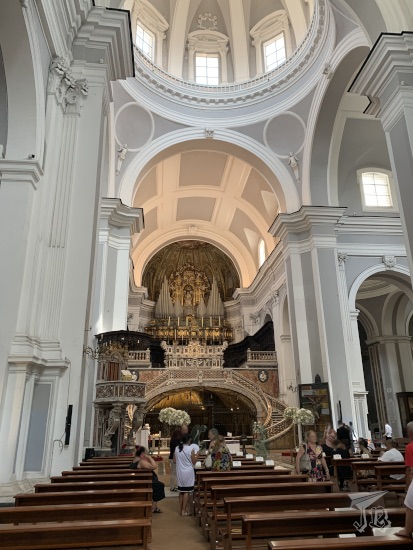
After check-in, I went for a walk for an hour or so. I saw the church Iglesia de San Esteban and the cross that marks the end of the village Cruz de Término. I also found the laboratory or “museum-lab”, Laboratorio Paleontológico de Loarre, which is a tiny building painted in bright colours and silhouettes of sauropods (though it shall soon move to a bigger one).

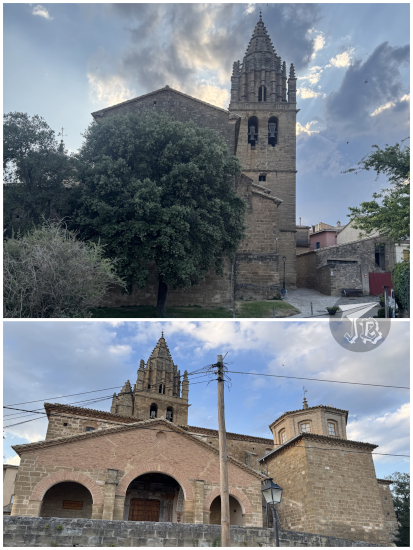
Romanesque church

Building with dinosaurs painted on it, the museum-lab in Loarre

The castle Castillo de Loarre was not too far away (walking route was about an hour). I had visited it before, so I did not need to see it again, but I would have liked a picture of the walls that I was unable to get due to a lack of perspective. Unfortunately, as I considered the hike, a storm cloud rolled by. There was ominous thunder, and a few raindrops fell. If I continued on my walk, I was sure I would get drenched. If I decided to go back, the second I got out of the shower and into the pyjamas, it would stop raining. The area had been on alert due to rain and flash floods all weekend too…

Loarre castle from the valley

A huge thunderclap helped me decide to head back.

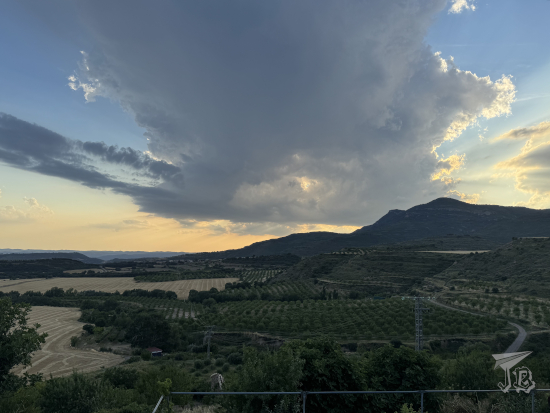
Storm rolling in over the cultivated fields near Loarre

When I pulled up my toiletries, the sun lotion had not been well-closed, so I had to wash all the stuff. At least my chapstick wouldn’t get sunburnt? Then, I headed into the shower, and when I came out, it had indeed stopped raining. However, the cloud was still there, and I did not trust it… Oh, well. There would be other chances, I thought.

Palaeontological Restoration Techniques through the preparation of Loarre dinosaur eggs

31st March 2025: More Modernisme and the way back {FFVII Barcelona 2025}

For our final day in Barcelona, I had planned some more architectural visits. I had adjusted my planning considering the underground issues the previous day, but it turned out, it had been a Sunday-only thing. We had breakfast and on check-out, the manager asked how the stay had been. To his merit, when we told him about the issue with the air-conditioning, he apologised and offered us free breakfast in compensation. After we declined – timed entry visit – he advised us to write a complaint letter for a discount next time. I didn’t think it was necessary.

Since the station we had to change at was open, there was no issue with the underground, so we were half an hour early. I had booked a locker for the luggage in the centre of town, as the hotel is very convenient for attending a concert at CCIB, but quite far from… everything else, really. The locker system was convenient: you book online and get a code which opens both the place and your assigned locker. I found it more trustworthy than leaving the bags in a random shop which “looks after luggage”. However, about a month later, there was a complete outage in Spain, which made me second-guess the convenience of these things, as I heard about a lady who could not go home because her luggage was inside one of those lockers. We’ll see whether I dare use them again.

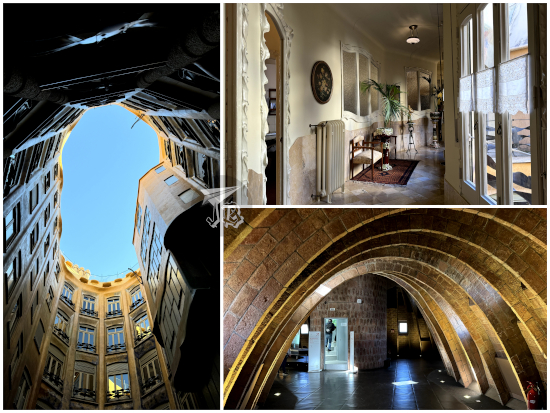
We were to continue on my Modernisme route, visiting one of the works of Antoni Gaudí (1852 – 1926), considered the peak representative of the style – to the point that some of his works have been declared Unesco Heritage by themselves as Works of Antoni Gaudí. Gaudí originally found inspiration in orientalism and Neo-Gothic, but as he became more and more established, he turned to nature forms – seeds, branches, bones, catenary shapes… The UNESCO work we wanted to see was Casa Milà, a building commissioned to Gaudí by lawyer Pere Milà in 1906. The building itself was erected between 1906 and 1910, and it was nicknamed “The Quarry” La Pedrera. It is an eight-floor apartment building with a self-supporting façade, electricity, running and hot water. The building was designed around a central patio, and it has a very particular roof-terrace. Some people claim that Casa Milà does not even fit into the Modernisme category, but it should be classified as “organic naturalism”, or even “expressionism” all by itself.

La Pedrera, exterior

I found the building… underwhelming. We had a combined ticket for Sant Pau and Casa Milà at 39 €, but the normal ticket price for the building is 40 €, and this is only for one of the floors with a “recreated apartment”, the attic, and the terrace. At least you get to see the patio as you have to walk past it so you reach the tiny lift in which they cram you to take you to the 7th floor. The experience felt… like… not enough. I was for sure expecting something more.

La Pedrera, Interior

Do not get me wrong, the house is extremely cool, but you get to see really little in comparison to how big the place is. So even if it is pretty, it feels crowded and small, with way too many gift shops crammed in. The terrace is fun, with chimneys that look like ancient warriors – some people say they represent chess pieces, others that they hide religious undertones – Gaudí was very spiritual. Reportedly, they also inspired the stormtroopers’ helmets in Star Wars.

La Pedrera, terrace

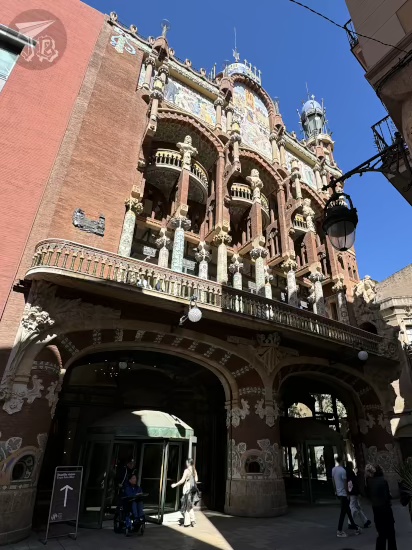
Afterwards, we walked to the music hall Palau de la Música Catalana part of the Unesco Heritage Site Palau de la Música Catalana and Hospital de Sant Pau, Barcelona. The so-called Palace of Music was designed by Lluís Domènech i Montaner a couple of years after projecting the hospital.

Palau de la Música Catalana

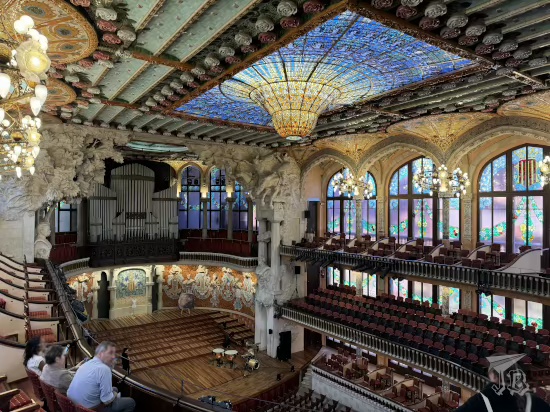
Everything that Casa Milá came short, the Palace passed with full marks. The building has an original entrance designed by Domènech, in dark brick with extensive decoration. The interior is laced with tiles and glass, and tinted-glass windows. The concert hall is amazing. At first, we could not access it, because there was an educative concert for children going on, but we were later allowed to sit at the paradise. There is a huge skylight / lamp in coloured glass, pegasus statues. The concert was incredible too, with four to six musicians playing classical music and… running around the stage too. Lady trotting up the stairs while playing the cello, you have my admiration. I loved everything about the palace, to be honest, except the creaky chairs.

Palau Música Catalana

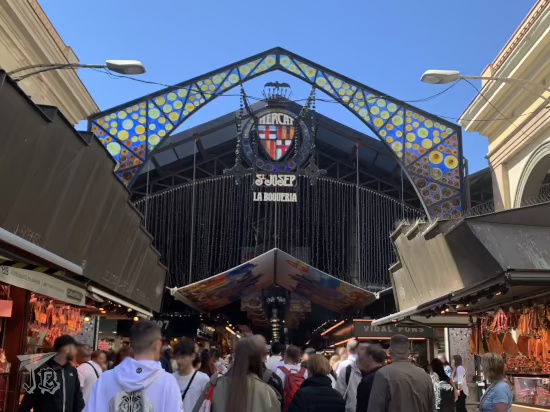
Once we were done in the Palau, we walked to the market Mercat de Sant Josep (St. Joseph’s market), known as La Boquería (The Butcher’s). It used to be a regular marketplace, but now it has turned a touristic attraction. The main entrance is also part of the Modernisme route, designed by architect Antoni de Falguera, who also created the inner metal cover. Though I had half a mind about eating there, the prices were ridiculous, so we ended up at an Asian place a couple of streets down. On the way, I had been excited about the “Barcelona Aqueduct”, but it turns out it’s a modern construction with old ashlars, nothing historical in it at all.

Market La Boquería

After lunch, we had about an hour to kill, and we decided to try our luck in the hobby-shops area. The Norma Comics shop was open, and we spent a while looking at the books there. Then, we headed back to pick up our luggage and commute to the station.

We had to change trains, and there was an announcement that any passengers with a connection shorter than 30 minutes would be escorted to their train. Of course, that’s only PA, and you’re on your own – I asked a worker, who tried to divert us to the suburban trains, not our connection. From that conversation, I think that we were supposed to go out of the system and get our tickets scanned again, but we found our train before that. There was no one else to consult with, so I decided that we would get on it. My sibling was mortified, but we were not doing anything wrong. If anyone checked on us, we had a valid ticket. They had not lived up to their part of the agreement anyway – and I would have told them exactly that, had anyone even thought of scolding us.

But we made it, as I predicted nobody gave us any grief, and the drive from the train station was uneventful. All in all, it was an intense weekend – though I feel I could have squeezed in a monument or two more had we skipped the sit-down meals, but my sibling can’t handle that. All in all, I think everything worked out rather well.

29th March 2025: Tibidabo & Friends {FFVII Barcelona 2025}

It sometimes feels like the alarm clock going off at 6:00 is actually worse than it going off at 3.00… Fortunately, after a hefty dose of coffee, I was able to get on my way, and we got to the station on time to do some reorganising of luggage. The situation with the trains was chaotic due to some projected works on the tracks. They announced that the train would be 12 minutes late, but it actually arrived and left a minute early. The train ride was uneventful, despite a large crowd of loud teenagers from a rugby team who had no idea where the were going, and really dirty toilets in the cars. The train reached Barcelona ten minutes before schedule. However, it did not go into the station until 15 minutes later for some reason – I really don’t understand what was going on with the whole railway system, or how construction in Madrid affected the time to enter Barcelona, but at least we were there.

The first step was dropping off the suitcase. Fortunately, Barcelona Sants has a luggage storage. I decided that for 10 € I could ditch my backpack and not haul it through the underground. Barcelona Sants station was under construction in 2021 and it’s still under renovation, so it took a bit to get to the correct place with the suitcase. Once we could drop the luggage off, we headed off to the underground.

There, we had to queue up to get our transportation cards from a machine – which apparently could not be used in any language except Catalonian. I had a code to input, and with that code the machine spat the tickets. They were convenient to use, and they worked on the underground and the buses without problem. The online discount made them better value for money: a single ticket is 2.65 €, and the 72-hour card Hola Barcelona is 26.30 €, which is reduced to 23.67 € if you order online (a 10% discount which is almost the price of one trip).

I had waited to book activities till the very same week because I wanted a relatively good prediction on the weather. It was not as nice as I had hoped due to the wind that morning, but oh well. Unfortunately though, the eclipse caught us in the underground. I had hoped we would be outside already, but we were over half an hour behind schedule due to the train and the construction in Sants.

I had bought tickets for the amusement park Parc d’Atraccions Tibidabo. A long time ago, from Park Güell, I was trying the zoom of my then-new camera and I was intrigued by its silhouette. I was curious and honestly, I thought it was an interesting place to see. Tibidabo is considered the oldest – or at least longest-running – amusement park in Spain. The first rides opened in 1905 under private initiative, though the park is now owned by the Barcelona city council.

I found a ticket which allowed to see the panoramic area and ride the “classical attractions”. It included the shuttle bus and the funicular Cuca de Llum, opened in 2021, which is not the original from the turn of the 20th century, but a recently renovated one. There’s no way I am getting on a funicular which older than 100 years old. To get there, we took the underground, and walked to the so-called Tibidabo Store, where we exchanged our tickets for bracelets so we could ride the bus to the funicular. The place is a bit out of town indeed.

We reached Parc d’Atraccions Tibidabo around 12:45, a good couple of hours after leaving Sants. Upon entering, it was colder than I had imagined, because it was windy, especially at the top of the mountain. There was no ticket control except for the attractions, so we were able to come and go as we pleased, and i found that was a regular mini-bus that went there. I felt a bit cheated, but I guess the funicular itself was an experience! Good thing that I am not too keen on rides and I decided to only get the basic ticket. It did not feel cheap either (21.50 €). The ticket Pase atracciones emblemáticas allowed us to wander around and ride the ‘emblematic’ rides – i.e. the classic one – and see the museum.

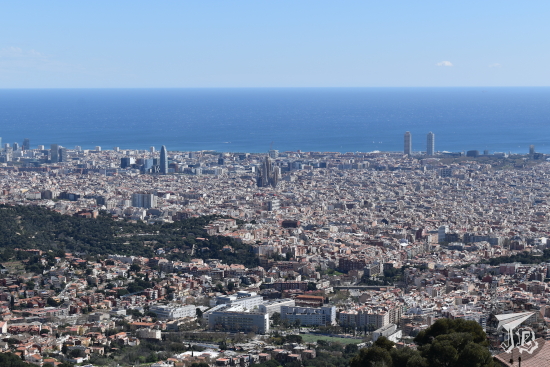
Barcelona from above

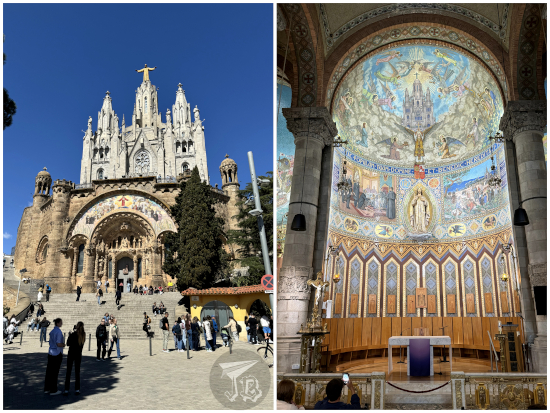
We first had a look at the city of Barcelona underneath. The view was not particularly different from the one in Parc Güell, except I’m more familiar with the layout by now. We then turned to snoop around the Temple of the Sacred Heart of Jesus Temple Expiatori del Sagrat Cor, a Christian church designed by Enric Sagnier i Vilavecchia (1858-1931) in a mix of Neo-styles, halfway between a Disney Castle and a classic cathedral. Construction was carried in two phases: 1903 – 1911, and 1915 – 1951. The upper towers were built later on, and work continued until 1961. The outer lower area is Neo-Romanesque, and the upper one Neo-Gothic; the inside is Neo-Byzantine, with mosaic walls. It has stairs a the sides to move from one level to another, and a lift inside. All in all, the whole building is… weird.

Sacred Heart Basilica

We ambled around for a while, and finally decided to have an early lunch, so we could avoid the family rush. My sibling wanted a proper sit-down, and we found the only option offering actual tables. The service was terrible – we never got glasses nor cutlery. We had to ask for napkins twice I think. Thrice for the bill after ordering two bottles of water and two burgers Hamburguesa de mejilla ibérica con pepinillo (Pulled pork and pickles burger). The service was so bad that the waiter decided to give us a complementary 15% discount on their own volition.

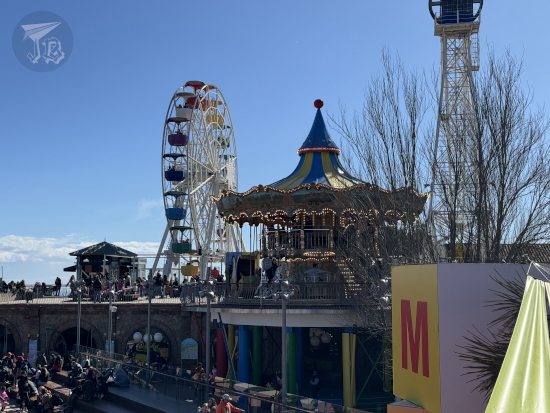
After lunch, we queued to ride the carousel and the Ferris wheel, and we saw the Automatons Museum, which was really interesting. The oldest piece dates back from 1880, and the newest from 2005. There used to be automatons sprinkled through the park for almost a century, but they were housed in their current home in 1982 to protect them from the weather.

Tibidabo Panorama

Automaton Museum

Around 15:00, we came down from Tibidabo. We had to share one ticket to get into the funicular, and the doors closed on me. I had to go to customer service to wait for someone to give me a replacement one. We undid all the way back to Sants to pick up our luggage, then we went back to the underground to meet with my friends E**** and P***o near their house to celebrate an important event in their family. We stayed with them for a few hours, then dropped by the supermarket to buy dinner for the next day, and took a bus towards our hotel.

We checked in, dropped our stuff in the room, cranked up the heating, and went to have dinner. We ended up at a Japanese franchise because the website said they had okonomiyaki, which they didn’t. At least they had dorayaki to compensate.

When we came back the room was at 19 ºC, and the air conditioning was blowing out cold air. I turned the thing off and went down to reception, where they told me they would call with a solution – either maintenance or a change of room. An hour later, without having heard from them, I went down again and a different receptionist told me the only thing that could be done was giving us extra blankets. I asked for three blankets and only got two. But I was too tired to fight – there was an extra towel I could use for added warmth. I defrosted in the shower and went to bed.

1st January 2025: The Return {Vienna, Silvesterkonzert 2024}

We got up for breakfast at around 7:30, but the cafeteria wasn’t open yet, so I had to (gasp) pack before I had coffee. That was not fun. The breakfast room opened around 8:05, and I could finally have my caffeine fix. We had been discussing all three days about the automatic pancake machine in there, so I decided to try it. Basically, you waved at it, and it made the pancakes. They were not the most delicious thing ever, but there was Nutella to go with them…

Pancake making machine

As we were already packed, there was not much left to do after breakfast. We went up to the room to collect the luggage and back down to reception. We had a transfer arranged at 9:00 and we were ready with a few minutes to spare. Check-out was fast, and off we went towards the airport, after saying goodbye to the nice Spanish lady with the card issue. I’m not sure if it had snowed outside Vienna or what we saw on the trees was hoarfrost, but everything was white once we got onto the motorway. I totally missed whatever our driver was saying because I was trying to take pictures of the landscape – but he talked a lot.

Trees covered in white ice and snow

When we reached the airport, the check-in counters were not open yet. We were flying with Iberia, which does not have a permanent crew there, the counters did not even have the lights on. It took them longer to open the counter than to actually check us in, and the worker was confused because we were only checking in three suitcases even if we were four people. The poor lady looked absolutely exhausted – maybe she had stayed up late.

Security was “collapsed with a crowd” and they told us to go through the kids gates – I don’t think I have seen any “collapsed” security so empty… But we made it through okay. We found our gate at literally one end of the airport, and left our things with one of my parents while we scattered off to look for lunch. The flight was at noon, so we had to buy something either at the airport, or on the plane. I found myself a chicken sandwich that looked rather nice. I would later learn the word for “spicy mayo” in German… Good thing I got a Coke to go with it. I also bought a “no kangaroos in Austria” magnet because I did buy a tote bag last time I was around, but I can’t seem to find it.

Airport in winter weather

The flight back took off on time at 12:20. It was uneventful, we just landed at 4S instead of 4. We knew this was going to happen this time, so we had counted on it – in the end, that was the reason I managed to convince my family to have lunch on the plane. We did not get out of the airport up until 16:00, what with picking up the luggage and all. I think I made it home around 19:00, and boy was I beat. I love my family, but travelling with them can be a bit too much…

29th December 2024: Arrival, Karlskirche & Prater {Vienna, Silvesterkonzert 2024}

With our plane boarding at 8:10, we aimed to be at the airport around 6:30, which was a successful endeavour. We had our boarding passes but we needed to drop off some luggage. As we needed formal wear, neither of us could just make do with a simple backpack or trolley. We had decided to bring a carry on each, and two large suitcases – one per room – for coats, jackets, dresses and so on. The travel agency had checked us in the day before, and we had separate seats, but that was not important since it is just a short trip early in the morning.

Once in the terminal, it turned out that Iberia did not have a drop-off counter as my parent was expecting, so we had to queue with the people who needed to check in, including non-Schengen and intercontinental travellers. We decided that two of us would line while the other two could sit down and wait for us. We stepped into the cordoned area, and suddenly… one of the attendants directed half of the queue out and into another area of check-in counters. All in all, it took us around 35 minutes to drop the luggage off. Not efficient, Iberia. Not efficient.

Luggage successfully checked in, we went past security, found our gate, and sat down for breakfast. We went to the gate early, and queued to be the first in our group because… I’m not even sure why, but it was too early in the morning to fight. I napped about half of the journey, and also took pictures of the landscape from above. Once we left Spain behind, the mountaintops were covered in snow, and the valleys in fog. This was a clue of how cold it would be when we landed in Vienna. We had a maximum temperature of around +3ºC throughout the trip.

From the plane window Flight Madrid - Vienna

We disembarked and made our way to baggage claim, where our suitcases were among the first few to come up, which is always a great feeling. Afterwards, we went out and found the people responsible for picking us up – the representatives from Blaguss DMC, the local agency which manages Viajes El Corte Inglés and Tourmundial in Austria and Hungary. First, they handed us our our hotel voucher, schedule, and tickets!! Upon opening the envelope to check that everything was correct, we found out schedule with a Vienna tour the following day that my parents swear they had never heard about – the truth is that it appears in the documentation as optional. The driver in charge of taking us to the hotel was… a character. My biggest regret though is that I did not run for a Costa Coffee while we were waiting for the other travellers to come out, but I only saw the sign when he had started moving.

We arrived at the hotel Elaya Hotel Vienna City West around 13:00. It was a four-star hotel that felt like it had dropped at least one and a half, and it was not any of the ones listed in the original documentation. There was neither a bar nor a restaurant, and the staff was not exactly friendly. I know it’s not nice to work during the holidays, but come on. I don’t think requesting two keys for a two-people room was that outrageous. At first, neither card worked to open my door, but after trying three times each card, both sides, I managed to get it open. And more importantly, though the warm option of the air-conditioning did not work, I figured out how to turn on the radiators.

The hotel room was… sad. It had a little terrace overlooking the interior yard, and two windows – the blinds were unmoveable on one and broken on the other. We unpacked, got freshened up, and went back down to find a place to grab a bite to eat. I approached reception to ask for a recommendation, and there was a Spanish lady trying to get the check-in attendant to help her with her card – she seemed to have the same problem I had had. She had no English at all, so I tried to help her out. The attendant just huffed and left to check the room herself, and I guess she managed to get the card working. When she came back, I asked for any restaurants around, and she pointed us up the street. We found a Greek place seemed okay, and that is where we ended up – at restaurant Mythos, which had very friendly staff, and decent food.

Afterwards, I would have gone towards the city centre. However, my parents needed a break and wanted to move as a group. Thus, I stayed in the room – we did not leave the hotel until 16:30, and by that time it was already getting dark. We walked to the underground stop Pilgramgasse. It was supposed to be just ten minutes away, but was a bit longer, I think we took a wrong turn.

The Pilgramgasse station dates back to the original 1899 Valley line, before electricity and all. The entrance was cast in iron, and it looked very cool. There, we bought seventy-two-hour tickets, which are awesome because you only have to validate them once, and then you can use all the transportation options in the city for 72 hours. The price of the pass was 17.10 €, so not that expensive – one trip is 2.20 €, so aside from the convenience, it is value for money if you plan more than seven trips. Though we did take more than that, the best thing is just being able to waltz down to the platforms without having to validate each time. It was also great that the frequency of the underground service was 8 minutes at the longest, and that was on Sunday evening!

We used the underground to find our stop next to Musikverein Wien (Vienna Music Society), where the concert would take place on the 31st. This was to gauge the time to get to the station and the underground system. Once we familiarised ourselves with the transport though, we realised that there was a better route. It included a change, but the station was much closer to the hotel, and the total time was around the same if you accounted for walking times. The Musikverein stands next to Karlsplatz, so once there we just had to cross the street to find ourselves in front of the church Rektoratskirche St. Karl Borromäus or Karlskirche, dedicated to Saint Charles Borromeo.

The cathedral was originally designed in 1713 by Johann Bernhard Fischer von Erlach. When he died, his son took over directing construction and altered some of the plans. Though the building is Baroque, it displays a mixture of elements – the dome, a Greek temple portico façade, monumental columns based on Rome’s Trajan Columns… The altarpiece was erected by Ferdinand Maximilian Brokoff after the elder Fischer’s design. It portrays the Assumption of Saint Charles Borromeo, the nominal saint, into Heaven. There were Christmas trees on both sides of the altar, which I found strange – I had always thought that the Christian church was not a fan of them.

Karlskirche Vienna

The dome is frescoed with a scene featuring Charles Borromeo, the Virgin Mary, and the Cardinal Virtues, by Johann Michael Rottmayr. Hanging from it, there was a modern art installation by artist Cerith Wyn Evans called Forms through folds (ascending)…. This sculpture is part of the Karlskirche Contemporary Arts Program, started in 2018. That was… weird, and really out of place amongst the Baroque frescoes.

We climbed to the upper levels. The first floor hosts a choir model and the organ, built between 1739 and 1847. Technically you can also access the treasury, but it was locked away. We continued up and stepped into the terrace, which yields to a bit… underwhelming… panoramic view of Karlsplatz and the city. Vienna is a great city, but the Karlskirche is not really looking at the scenery from above.

We should have tried the Vienna Museum next to the church then, but instead took the underground to the classical amusement park Prater, where we had dinner reservations a couple of hours later. Originally a hunting ground, Prater was the area where the 1873 World Exhibition was held. Some of the current buildings were erected at that time. In 1897, the first rides, attractions and puppet theatres were established – including the Ferris wheel Wiener Riesenrad, which is the current symbol of the park. Prater was severely damaged throughout World War II, due to bombings, trenches and fire, but it was eventually reconstructed using records from local artists who had drawn or photographed the area in all its glory. Nowadays, it is considered an actual park, which just happens to have rides on it, and part of it is protected as “green land”. The actual amusement park is called Wurstelprater. There are tons of attractions, rides, snack stalls, and there were even some musical activities going on.

Viena: Prater

But of course, it was Vienna, in a late December evening. It was late and cold. And dinner reservation was hours away. We almost decided to give it up and go back to the hotel, but we found somewhere to have a drink and warm up instead. Finally, we made our way to the Rollercoaster Restaurant, the place where we had – thankfully – reserved in November. It was packed. There were around 50 people waiting to come in, and most of them did not have a booking, and were turned away – there was even a group of people checking every 15 minutes if there was an opening. We took ten minutes to get to the front of the mob to finally get our table, but we were sat around 20:15. I was so happy I had pushed for the reservation! It made me further convinced that anything in the city centre or near a tourist spot might need a reservation, which in turn made me worried about the 31st “winging it” decision.

The Rollercoaster Restaurant works with a system of rails that hang from the ceiling and connect the kitchen to the different tables. The food is prepared by human chefs and distributed by two huge robotic arms. Once placed on the rails, it rolls and slides and gets to the right table – much like suitcases inside an airport distribution system. We were also on time for one of the robot shows, where they turn off all the lights and play music while the robot arms “dance”, and it was surreally fun. One of my parents was horrified, because they are more on the traditional side of things, but the rest of us had a lot of fun! The food was all right, too. I ordered baked schnitzel fingers served with potato salad, Gebackene Schnitzel mit Erdäpfelsalat, and we shared some baked Emmental with cranberry sauce Gebackener Emmentaler mit Preiselbeeren. I kind of wanted some apple strudel, but my portion was good enough, so I decided not to get any.

Vienna Rollercoaster Restaurant

We left around 21:30, and headed back to the hotel using the underground system. This time, we came out at a stop much closer to the hotel, Zieglergasse, which was neither pretty nor classical, but nearby and functional. Afterwards, there was just a shower and bed. I could not sleep right away though, because my mind was latching onto the group trip the following day. My parent had decided that we would just not show up – we had tried to warn the representative, but the driver said it was not his responsibility. I kept thinking that if we were not there, everyone else would wait for us and that was not a nice thing to do. It did not feel right. Maybe I’d meet the lady with the key problem, I thought, and warn her that we would not be tagging along. Hopefully.

Yes, I know. I worry too much.

11th October 2024: Istanbul Airport {Türkiye, October 2024}

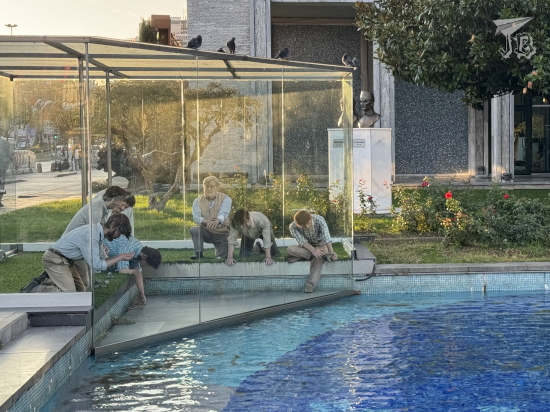
Since I had woken up early the previous day, I had also woken up early today, and I was caffeinated and ready about one hour before pick-up time. Considering that they were picking me up at 8:30 for a 13:45 flight, I decided to go for a walk in Istanbul | İstanbul before I got stuck at the airport. The Aqueduct of Valens was close to my hotel, and to get there I had to walk in front of the building of the Istanbul Metropolitan Municipality T.C. İstanbul Büyükşehir Belediyesi Başkanlığı. In the town hall yard there is a fountain with a glass case and several figures inside, reaching for the water. It is the July 15 Sarachane Monument Saraçhane 15 Temmuz Anıtı, which recreates a picture taken on the 15th of July 2016 during a coup attempt. It is supposed to represent a group of civilians Muslim men performing ritual ablution before facing off the rebel military forces at the call of President Erdogan. I was not sure if taking pictures of it was a security risk, but there were no guards around…

July 15 Sarachane Monument

I continued on towards Bozdoğan Kemeri (Aqueduct of the Grey Falcon), the part of the Aqueduct of Valens Valens Su Kemeri that can be driven and walked underneath. I stepped through the arches, and then turned towards Sarachane Park Saraçhane Parkı, which was empty except for a few cats and hooded crows (Corvus cornix) which expected me too feed them…

Aqueduct of Valens

cats and crows from istanbul

I went back to the hotel, gathered my things and came down to reception – both my driver and I were there at the same time, around 8:20. I guess we managed to avoid all traffic jams, because we reached the airport about 9:30. Upon entering the terminal, there was a first security control which X-rayed all the luggage, then I could access the check-in counters. I had done my check in online, but I printed my boarding pass in the kiosks anyway, and dropped off my luggage. The employee at check-in, holding my passport and boarding pass in her hand, asked me if I had a boarding pass. Obviously, she was not having the best of days, either.

I then went to passport control to clear immigration, which took about half an hour, and then the standard airport security check, which was fast because I found a “no need to take your electronics out” queue. Everything was extremely expensive in the airport. I did buy a bottle of water, but the prices put me off an ice cream, so I munched on some crisps that I had not eaten for dinner the previous night and I had packed exactly for this.

Truth is that Istanbul airport has a museum, but entrance was 13 € (note, not Turkish lira – 13 €). And at that point I decided that I was done feeling like a cash cow and introducing euro into the economy. I spent my remaining lira in the duty free shop, and found a copy of The Little Prince in Turkish for my and my parent’s collection.

We boarded around 13:00, and the process was not as efficient as the way in, but it was easy. We got lunch on the plane – happy to report I have finally internalised that pasta on planes tends to have peppers in the sauce and that upsets my stomach, too. I watched a movie and a half, and spent the rest of the time with one I had watched before as I would not have time to finish it.

Landing was smooth, but it took 61 minutes exactly from touchdown to getting out of the arrivals lounge, what with waiting for the luggage and so. And that was the end of the trip.

Maybe the bad project I mentioned at the beginning of the report was cursed, and thus the circuit was doomed, but it has been honestly one of the most disappointing trips I’ve taken – rushed, with bad information, and horrible customer service. I complained to my travel agent, who was horrified. It has really, really put me off anything organised for a while, and left me with a bad taste in my mouth. Of course, there have been good times, and awesome places, so it was not a complete disaster. Just not what I wanted, or what I thought I was buying when I chose it.

Would I come back to make up for it? I don’t know. As I was writing, I did wish I could go back to Cappadocia and Pamukkale to satisfy the geology nerd in me. Istanbul was not a city that made me feel particularly welcome, so I could skip that. Maybe in 20 years or so, if Türkiye is still a somewhat laic place, I might consider it. But the world is big, and there are many other places to explore… And the Turkish guide kept complaining that “all the good stuff was taken to Germany” so… that might be an option.

10th October 2024: The Trojan Horse & Bursa {Türkiye, October 2024}

We had to leave by 5:30 to go see the Trojan Horse. The reason why I had chosen this particular circuit was because it included “Troy”. The only thing I got to see of Troy was the Truva Heykeli Trojan Statue, – the horse which was used by Warner’s Bros to film the movie Troy in 2004. Not a damn ruin, not a damn rock, let alone be near the archaeological site. Damn it, did I choose the circuit badly or what? I do wonder what people thought of us taking structures of the stupid thing at 6:40 in the morning. As we drove north, we saw the Galipoli Peninsula, place of a huge battle between the Ottoman Empire and New Zealand and Australia regiments belonging as part of the British troups.

Çanakkale Trojan horse

We continued towards the city of Bursa, the first capital of the Ottoman Empire, and another of the World Heritage Sites – Bursa and Cumalıkızık: the Birth of the Ottoman Empire. It started off as a settlement around 5,200 BCE, which evolved into a Greek city. Under the Byzantine reign, it was a city known for its garrisons and its silk manufacturing centre. It is considered the origin of the Ottoman Empire, and throughout the period, it flourished through its local silk production. Following the foundation of modern Türkiye, it became an industrial city.

Our first stop was the Grand Mosque of Bursa Bursa Ulu Cami. Its first stone was set in 1399 an important building in the early Ottoman architecture as it found its own style. It is a rectangular building with a fountain from the 19th century at the centre – originally this area was open but it is now closed with glass, forming a skylight. It has two minarets. The interior is mostly white, but at the same time, quite decorated with calligraphy, medallions and vegetal themes.

Interior of the Great Mosque Bursa

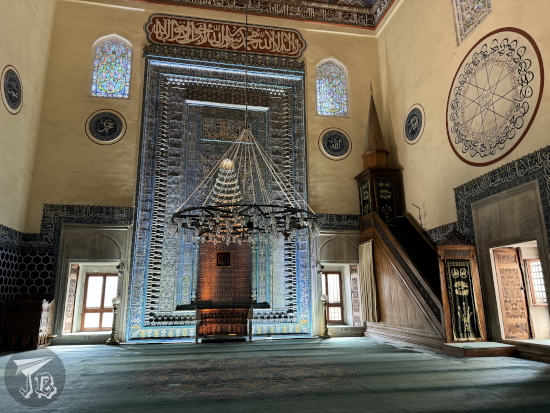
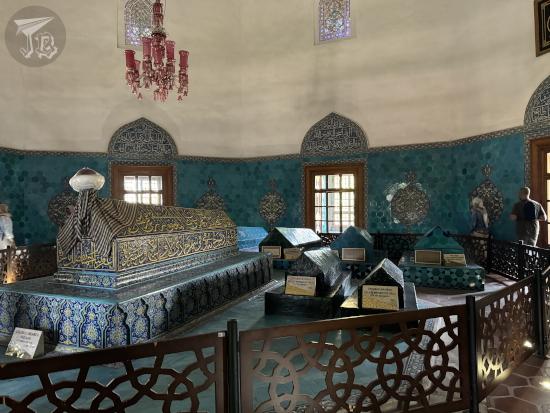
Then we drove to the Green Mosque Yeşil Camii complex. It was commissioned in 1412 by Sultan Mehmed I Çelebi, who is buried in the adjacent Green Tomb Yeşil Türbe – along with his children and their caretakers. Both the mosque and the mausoleum have beautiful decoration in blue-green tiles with gold inserts, which create the motifs and calligraphic inscriptions.

Mihrab of the Green Mosque Bursa

Bursa Green Tomb

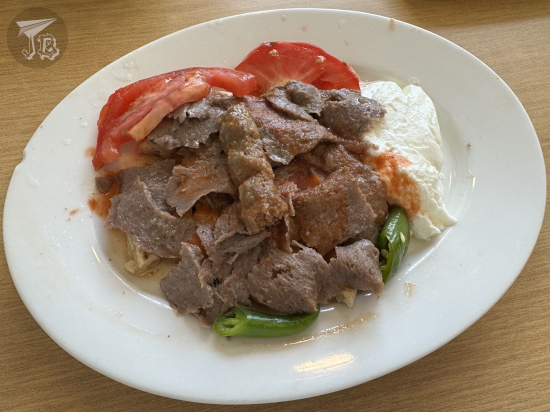
Next to the mosque stands a building which calls itself a Silk House, but is just a huge souvenir shop, nothing even close to the actual Silk Bazaar. Afterwards, we went for lunch, lentil soup and a traditional Bursa kebap İskender kebap, making this another sort-of actual Turkish meal. It uses meat cooked on a vertical rotisserie (döner kebap) on pita bread, with tomato sauce, yoghurt and sheep’s milk butter – which was poured at the table. Dessert was a honey pastry.

İskender kebap

Then we continued off back to Istanbul | İstanbul. We got there around 16:00 and I was considering maybe heading out to a church-turned-mosque to see some of the most important museums but… at that point it felt more like a self-imposed obligation that something I really wanted to do because I would enjoy it? It was more of a feeling of “you should do it because you are not going to come back to this country”. But the truth was that I really did not want to do it. I was disappointed in the whole trip experience, and in a way, I did not… I don’t know… care anymore? No balloon over Cappadocia, not enough time for Pamukkale travertines, no Troy. Whatever.

The nice group from the trip invited me to hang out with them for a walk. Together, we walked to the Grand Bazaar Kapalı Çarşı. Then we continued towards Sultanahmet Square Sultanahmet Meydanı, from where we crossed Gülhane Park Gülhane Parkı until we reached the coastline İBB Sarayburnu Parkı, the point in which the Golden Horn and Bosphorous Strait come together. On our way back, we stopped around Sultanahmet Square Sultanahmet Meydanı to take some pictures.

Gülhane Park at night

Bosphorous at night

Sultanahmed square at night

Finally, I headed back to my hotel – Hotel Bi·setun, the same as the first two nights – to order dinner, have a shower and get ready for the return trip.

9th October 2024: The Asclepieion & the beach {Türkiye, October 2024}

We left around 8:00 towards Pergamon Ancient City Pergamon Antik Kenti, another of Türkiye’s World Heritage sites – Pergamon and its Multi-Layered Cultural Landscape, still in the city of Izmir | İzmir (in Türkiye, “city” and “province” are interchangeable, apparently). The origin of the city dates back to the 8th century BCE – though there were legends about a mythological foundation by the son of Heracles. Pergamon flourished and became the capital of its own kingdom, until it eventually fell in Roman’s hands. The most important archaeological area is the acropolis – though the Great Altar, which is currently located in the Pergamon Museum of Berlin, in Germany. I had had a tired / silly moment the night before and packed the camera battery charger with the battery still in it, and I almost had a heart attack when the camera would not work. Fortunately, it made a lot of sense after I opened the battery receptacle.

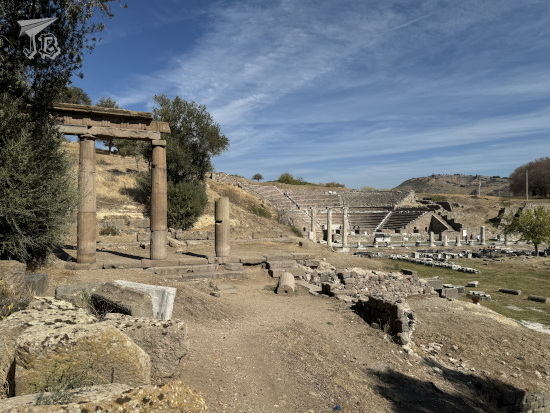
We did not get to go to the Upper or Lower Acropolis, but we could see the theatre, one of the steepest theatres in the world – built in the 3rd century BCE with capacity for about 10,000 people. We stayed down at the foot of the acropolis, in the Sanctuary of Asclepius Asclepieion [Ἀσκληπιεῖον] – a healing temple dedicated to the demigod Asclepius, the demigod who learnt the art of medicine from the centaur Chiron and became the first doctor in “history”.

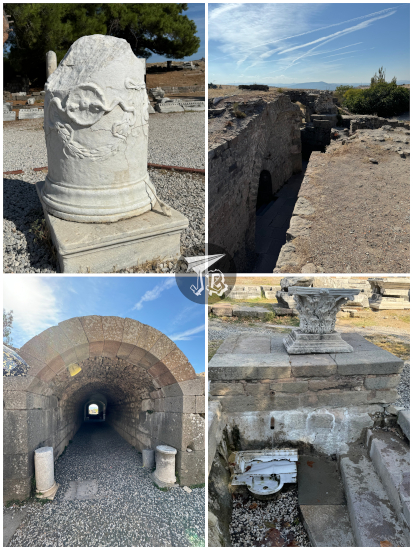
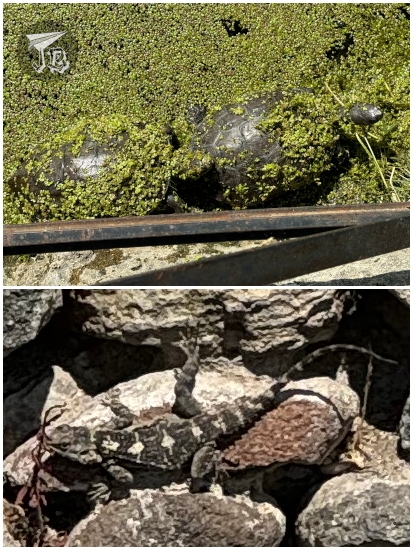
The Asclepieion worked with a holistic approach to patient care, giving thought to tranquillity, water, and activities such an art and theatre performances. The theatre is one of the best-preserved structures in the Asclepieion of Pergamon, though there are many others – such as 70 metre long cryptoporticus a tunnel that connected the baths, sacred pools – with a healthy population of frogs and tortoises – and fountains. I also found a lizard chilling out – or baking out, considering the temperature (remember, I had packed for… autumn, not for almost 30 ºC at noon every day…). Some famous ruins include

Pergamon Asclepieion ruins

Pergamon Asclepieion tortoises and lizard

Pergamon Asclepieion theatre

I wandered around for as long as I could, but again here was no time to explore everything – though this time I came pretty close. We left at around 12:30. This was the only visit we had on the day, as we were directly driven to the hotel in Çanakkale. On the way, we saw the Red Basilica Kızıl Avlu just before leaving Izmir, and glimpsed the island of Lesbos from the bus.

Iris Hotel was in the middle of a residential area – to the point that the bus barely passed through some of the streets. There was nothing interesting around to see in kilometres, so to… compensate, I guess, the hotel had a small mini zoo of deer and fowl.

Sunset at Çanakkale beach

Behind the hotel there was a private beach with a stunning sunset, but nothing around to explore or do. Çanakkale is located to the west of Türkiye, at the end of the Dardanelles Çanakkale Boğazı, the natural straight that joins the Aegean Sea with the Sea of Marmara, just south of Istanbul. The sea was warm, but I only got in up to my knees. At night, I watched a monster movie in Turkish. That… was an experience.

8th October 2024: Ephesus {Türkiye, October 2024}

It is not paranoia if they are really after you. And I am paranoid enough not to set a foot onto a bus before I make sure my suitcase is on board with me. So, guess who had to wrangle their suitcase down the stairs, since the hotel staff did not do it? Yep, I did. At least down is easier than up. Anyway, we were our merry way by 9:00, and continued until noon, when we were ushered into a “typical fur-working centre” which was… I don’t know how describe it, to be honest. But neither typical nor traditional are words I would use.

First, we were taken into a room with a catwalk and given notepaper to write down the numbers of items we liked. For about an hour, four or five models showed off anything but typical leather items, a lot of them reversible. Then, we stepped into the shop. I touched some of the items – they were extremely thin and weightless, which was weird. The prices were extremely high, too, even taking into account “the 70% discount because we were special”. I am happy to report I was at no point approached by any salesperson – again, maybe I do not look targetable to Turkish people?

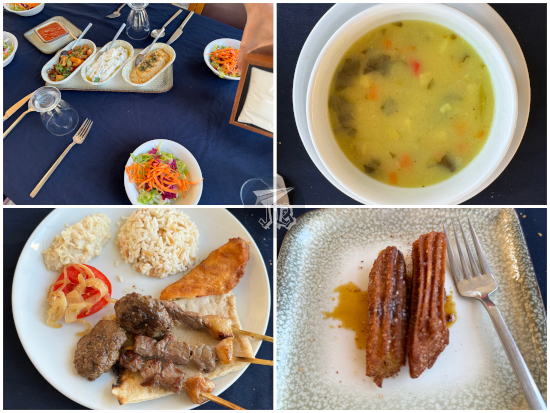
Lunch was okay, it had some nice dips and a soup, then another sad-meat main dish – albeit with your very own pita bread! Dessert was the only one I liked – a churros family treat called tulumba.

Lunch at Ephesus

Afterwards, we continued onto our way to Ephesus, which belongs to the current settlement of Izmir | İzmir, and is an archaeological site considered World Heritage. Coincidently, it was more than warm. It was scorching. We were there for two hours and a half, from 14:30 to 17:00. Again, leaving way before closing time to reach the hotel around 17:30, and yet this was the archaeological site where we spent the longest!

Ephesus was a city in ancient Greece – which back then included several areas of what is now Türkiye. Ephesus was founded around the 10th century BCE, and it became home to one of the Wonders of the Ancient World, the Temple of Artemis, which was built around 550 BCE. It was controlled by the Romans between 129 BCE and 395 CE, and during this period, it became an important site in Christianity starting the year 50 CE or so – with the apostle Paul of Tarsus living there, and reportedly being home of “the seven churches of the Apocalypse”. The city suffered attacks from the Goths, and was damaged by earthquakes before being finally abandoned in the 15th century.

Some of the ruins in Ephesus, including Trajan's fountain and the entrance to the therms

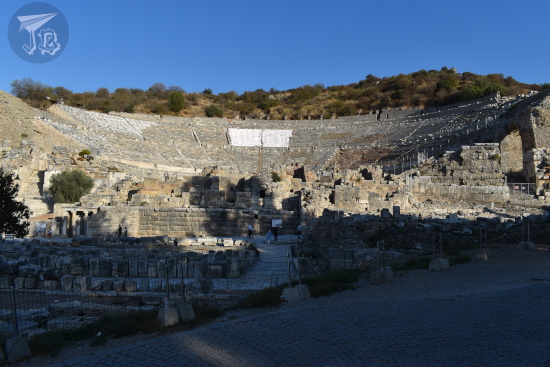
Though the temple of Artemis was off-site and it has been destroyed, many monuments from different periods still stand or have been restored. There are two theatres, a small odeon, and a larger one – with the large one being probably the greatest in the ancient world, seating 25,00 people. There were two agoras, one for commercial meetings and the other one for business. During the Roman times, the Gate of August was built to honour the Emperor.

Since the temple is long gone, the most important building remaining is the Library of Celsus, rebuilt from the pieces left. Tiberius Julius Celsus Polemaeanus was one of the Ancient Greek governors of Roman Asia, who paid for the library himself around the year 125 CE, and is actually buried underneath. The library once held up to 12,000 scrolls in 180 square metres.

Celsus library Ephesus

Ephesus theatre

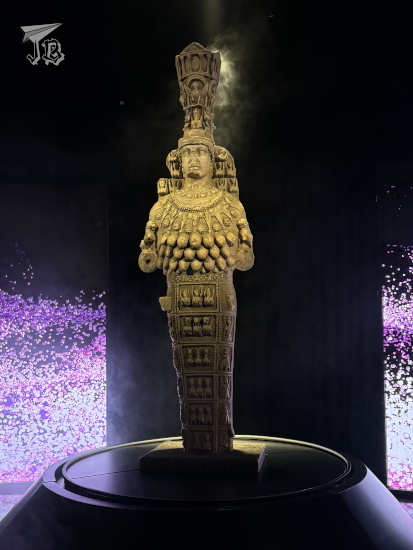
The guide kept hurrying us up, saying that he had a surprise for us – which turned out to be an immersive show about the history of the city, and after that we had to leave. The film was okay, but I would have much preferred to have more time to wander and see the real thing. The only item that was real – I hope, though it was probably a copy – was the final statue of Artemis.

Statue of Artemis Ephesus

We left afterwards. We did not get to stop by the place where the temple used to stand. We did not see one of the most famous sites outside the city either – the so-called house of the Virgin Mary because, according to the guide, “it was a recycled myth”, it was probably the house of Artemis’ priestesses. Which in my view made it even more interesting, but oh well…

Ephesus Hitit Hotel had an outdoor swimming pool that I dipped into, but it was too cold to stay for a long time. I also tried to go out of the hotel to find something to see, but the street did not seem safe. To the point that our bus driver actually saw me going out and came to ask me if I was all right…

7th October 2024: Pamukkale {Türkiye, October 2024}

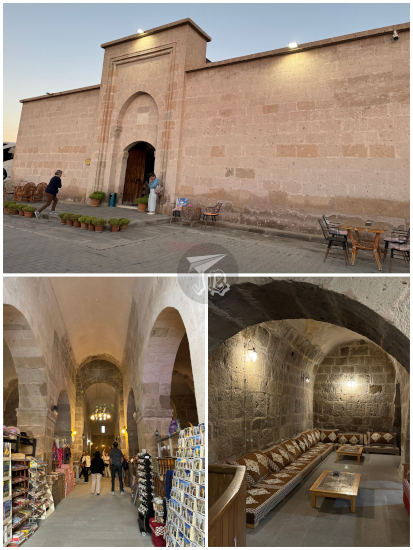
Upset as I was, it took a long time to fall asleep, and I nearly had a heart attack when the hotel’s automatic wake-up call made the landline ring at 4:20 – half an hour before my alarm clock was set. We left around 5:40, and it was cold at that time, though it would get really hot during the day. Around sunrise, we reached our first destination – a caravanserai (kervansaray in Turkish, کاروانسرای, kārvānsarāy], in original Persian). Between the 2nd century BCE and the 15th century CE, Europe and China were communicated through the Silk Road, a network of trade routes frequented by caravans. Caravanserai were roadside inns built alongside those trade routes. They were fortified inns which protected the traders from bandits and weather, providing food and water. In Turkish, they are also called han.

Öresin Han (also called Tepesi Delik Han, “the han with a hole on the roof”) is a restored caravanserai / han. It was built in 1188, according to a plate that was recovered during restoration. The works lasted between 2007 and 2010, saving the building from literal ruins (and the aforementioned hole on the roof). Nowadays, it is a shop and inn for tourists. It has thick walls and a vaulted interior to withstand the weather and possible attacks.

Cansaverai

We continued on the road for hours until an early lunch at noon, then drove to the World Heritage Site Hierapolis-Pamukkale, a combination of historical site and geothermal activity. First and foremost, there is the travertine formation. Travertine is a sedimentary rock made out of calcium carbonate which precipitates from fresh water – basically, the material stalactites are made of. Sometimes, in thermal areas, they deposit in cascade form with lakes and waterfalls.

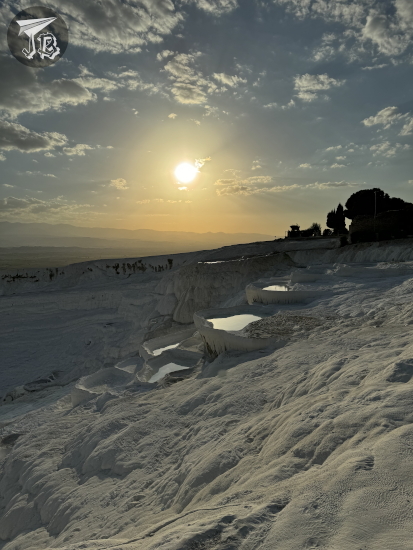
The Pamukkale travertine formation Pamukkale travertenlerinde is a terrace formation around 2,700 metres long, 600 metres wide and 160 metres high. The local thermal water oozes onto the surface at a temperature between 35 and 100 ºC and saturated with calcium carbonate. At the surface, carbon dioxide degasses and the calcium carbonate precipitates into a gel that will crystallise into travertine. Unfortunately, the waterfalls have been mostly drained now to feed pools at the hotels.

Even from the Classical era, the travertines have attracted visitors to the point that a thermal spa was founded around the 2nd century BCE, which eventually became the town of Hierapolis. In the year 133 BCE, Hierapolis was incorporated into the Roman Empire.

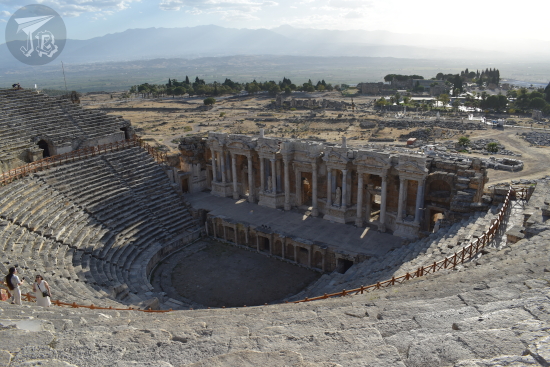
We had some time to wander around the place, but way too short to actually see even a quarter of what was on display, which was frustrating – but this would again happen at every archaeological site. Along one of the nice ladies from my group, I saw the Roman baths, then basilica, now museum, which contains the smaller items unearthed – sculptures, friezes, sarcophagi. We then climbed up to the Temple of Apollo Apolion and the Temple of Pluto Ploutonion – which are closed off as the cave underneath them emits asphyxiant carbon dioxide due to the geothermal processes.

Hierapolis museum

Hierapolis theatre

There is also a swimming pool on site, and after hiking up to the theatre it might have even been inviting, if not for the fact that you could actually step onto an area of the travertines to experience them first-hand. I of course took the chance, and was surprised at how… non smelly it was, used to sulphur thermal waters in Japan.

Pamukkale travertines

Travertines Pamukkale

I did not understand why we had to leave so early, because then we just ended up at another hotel with nothing around – thinking back, I have reached the conclusion that the guide was overworked, and he kept a schedule of going to sleep early and getting up early too, that is why we were at all the hotels at 18:00 at the latest; not an excuse, but an explanation. We were at Colossae Thermal & Spa Hotel around that time. The hotel did not have a lift, and most of our rooms were on the first floor. The hotel staff brought the luggage up, and we were reassured it would be taken down again the following morning. I… had a feeling it would not.

In accordance to the thermal and spring water reputation of the region, the hotel had a thermal centre. It comprised a swimming pool, a warm pool and a jacuzzi inside. Outside, there was an actual thermal water / mud pool – which was great for relaxing, but at 33 ºC, I could not stay for long (and I tried not to feel guilty as I knew the water is deviated from the travertines). By this time in the trip, too, I had inserted myself into a group of nice people, and made acquaintances with a nice couple, which was good because it’s always useful to have someone telling you that you’re about to get into the shower with your glasses on…

5th October 2024: From Istanbul To Cappadocia {Türkiye, October 2024}

The alarm clock went off at 5:40 and I was ready for pick up in 15 minutes. The guide had changed my pick-up time from 6:25 to 6:00, but apparently was the only one who had been informed about the rescheduling. The travellers in the rest of the hotels in the area had no idea, which made it absolutely pointless because we had to wait for them anyway.. For this leg of the trip we were 16 people, and the description of the day said we would “visit the Atatürk mausoleum in Ankara and see the Salt Lake” on our way to Cappadocia. A quick calculation yields to about 733 km of trip from Istambul to Avanos.

We left Istanbul and went on the road. We took a couple of breaks on the way, and around 12:30 we reached Mustafa Kemal Atatürk’s mausoleum Anıtkabir in Ankara. Mustafa Kemal Atatürk is often called “the founding father of modern Türkiye”, and served as the first president of the Republic, between 1923 and 1938. The Ottoman Empire had participated in World War I, and after its defeat, the Allied powers wanted to divide the country among themselves. Atatürk spearheaded the Turkish War of Independence, and upon victory, he abolished the Sultanate and proclaimed the Turkish Republic. He made a lot of changes – primary education became free and compulsory, the Latin alphabet replaced the Ottoman writing, women obtained equal rights, the country became secular and started industrialisation, the language was strengthened, and surnames were adopted.

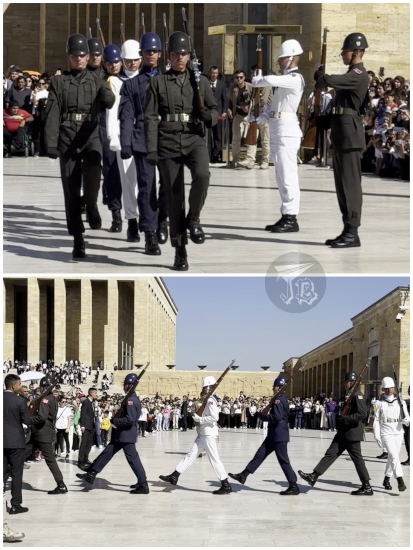
Upon Atatürk’s death, it was decided to build a mausoleum in Ankara – Anıtkabir. There was a design competition which was won by Emin Onat and Orhan Arda, though modifications were added later on. It is a massive complex with a courtyard, stairs, the tomb hall, and exhibition rooms. The theoretical entrance to the area is an avenue lined with lions and trees, though due to security, you enter from the opposite side. The Hall of Honour holds a symbolic sarcophagus, and the actual tom is located 12 metres underneath. On the corners, there are small ethnographic exhibits. The whole complex is made out of reinforced concrete and is decorated with marble, travertine, reliefs, frescoes, carvings… Everything looks golden. Around 13:15, we saw the changing of the guard in the ceremonial courtyard.

Mausoleum of Mustafa Kemal Atatürk

Change of the guard at theMausoleum of Mustafa Kemal Atatürk

Then we headed off for lunch, a bowl of lentil soup and a plate of flattened “meatballs” and rice, and continued on our way. Around 17:00 we “saw” the Salt Lake indeed – we guessed its existence from a service station a few kilometres away. We reached the Suhan Cappadocia Hotel & Spa in Avanos, in the region of Cappadocia. We would be using that as base for two days. One of the things to do in Cappadocia is seeing sunrise from above. However, since the group was not complete, the guide did not offer the possibility for sunrise the next day, he just gave us the Wi-Fi password (which only worked in the lobby), and the dinner / breakfast / day trip for the morning, and left.

Riding a balloon in Cappadocia is the thing to do. It allows you to see the structures called “fairy chimneys” from above as the sun rises, and since the landscape is so unique, I was really excited. Geologically, Cappadocia is a very interesting place – some thirty million years ago, volcanoes Erciyes, Hasan and Melendiz erupted repeatedly. Over thousands of years, ash rained on the ground, creating an elevated plateau of around 17,671 square kilometres. The ash hardened into tuff (a porous rock that I have seen in Neapolitan architecture) before it was covered by a layer of basalt. Both types of rock weathered, but tuff erodes faster than the upper basalt – creating sort of mushroom-like rock formations. As you can imagine, being the geology geek I am, visiting all these was one of the things I was looking forward the most. I had even put aside a budget “just for the balloon”, as it can get quite expensive, and I wanted to remain reasonable.

I dropped off the luggage and decided to go get something to eat before I hopped into the shower – else I would not get any food at all. Dinner was a buffet, and it was overrun. The food was weird… there was a huge dessert buffet, and a lot of breads, but nothing that really grabbed my attention but a few dollops of cacik (Turkish tzatziki). Back in the room, I tried to find a TV channel with something I could understand – and was not related to Israel bombing or being bombed. I did not even find the BBC…

2nd October 2024: MAD → IST {Türkiye, October 2024}

I had a Turkish Airlines flight at 12:00, and a strong recommendation to get to the airport three hours in advance. Back in July 2024, the outage of Microsoft systems caused chaos at the airport, and apparently the system has not completely recovered. Thus, my travel agent insisted on the three-hour margin. Since the flight was not an insane time, my parent had offered to drive me to the airport, but they “don’t believe in being at the airport three hours beforehand”. In the end, I negotiated a drop off a bit after 9:00.

I got to the baggage drop counter, which should have been a fast affair, but it was held up by a passenger who was checking in firearms – I was in the plane with a party of hunters. It was a bit creepy, because at some point they opened the gun cases for everyone to see, in the middle of the check-in line. Finally, Turkish Airlines opened a second counter while someone dealt with this traveller. I had my boarding pass, and my luggage was about 13 kg. I had packed an extra pair of shoes, long sleeved T-shirts, jeans and a couple of sweatshirts, along with a long cardigan that can be used as outerwear, blanket or even pillow as the situation requires – and I knew there were a lot of bus hours to come.

After checking in the luggage, I went through security and passport control, and found a seat until it was time to board. The boarding process was extremely efficient and fast, and we took off on time. We got lunch on the plane, and there was on board entertainment, so time passed quickly. Upon reaching Istanbul International Airport, there was a passport control upon exiting the plane, but I’m not sure what they were checking for, as everyone got waved through. Most passengers went onto connecting flights, and I headed off to immigration. I obviously chose the wrong line, as it took me a long time to clear it. I got my passport stamped – a brand new passport, and they stamped it, upside down, on page number 19, because why bother, I guess.

Welcome to Istanbul

After clearing immigration – I was not even aware of customs – I had to go to a particular gate to meet the representative from Oxin Travel outside the airport. I had bought an e-sim for my phone to have “unlimited internet for ten days”, so I activated that on my way, and it worked very well. When I went out the gate, I was supposed to look for a person with the travel agent’s logo, but I was surprised that there was actually a woman screaming my name. I was the only passenger on the tour that came on that flight.

She took me to the car park, where she left me alone to find our driver. When she came back, she told me about Istanbul’s day trips and sent me the information via WhatsApp, and recommended stuff to do. I booked both day trips because the whole point was having to plan little and save mental energy. Hindsight being 20/20, I regret that choice.

The drive to Istanbul | İstanbul took just above one hour, 20 minutes of that were spent trying to get out of the airport. It was already dark when we arrived in town, and I was able to catch a glimpse of Galata Tower Galata Kulesi. We reached three-star Hotel Bi·setun around 19:00 maybe, and the representative and the driver left to have me do the check-in on my own – good thing that she had confirmed on the phone that the hotel was expecting me, because the way we pulled into the area made it look a bit shady.

During check-in, the hotel kept my passport, and that was a bit creepy. When I got to the room, I found that the hotel had a nice system where you could order food through a special webpage – it was like an outsourced room service that could be paid by credit card, which was extremely convenient. I ordered a pacanga pastry paçanga böreği, similar to a quesadilla, and a lentil soup mercimek Çorbası.

I then went down to reception to buy a bottle of water and retrieve my passport. After the food arrived, I ate, had a shower and settled down to sleep. It was a rather uneventful journey, to be honest, but somehow it did not feel… smooth. The bit about being the only person picked up at the airport was weird, and communicating with the representative via WhatsApp a bit awkward.

14th September 2024: The long way back {Escapade to Cádiz, September 2024}

I woke up before dawn and took a train out of Cádiz to El Puerto de Santa María to spend a few hours with a friend. We had breakfastand caught up, and I headed back to Cádiz around noon for food and my train back.

I returned to the area where the market Mercado Central de Abastos de Cádiz stands, and found a place for lunch Cervecería Boquerón Barbudo for puntillitas fritas, which is a dish of battered and fried squid, and one last tortillita de camarones before heading back home.

Tortillita de camarones and puntillitas

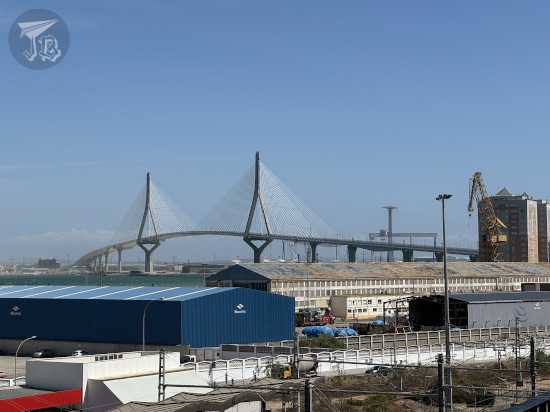
I had some time to kill before the train, and I thought about walking back towards the beach, but there was a strong wind coming from the west – nothing unusual, this wind even has a name, Poniente. Instead, I headed towards the harbour. I wanted to reach a specific quay to take pictures, but it was too hot and I was carrying the backpack. I ended up turning towards the city at the last pedestrian crossing in sight. I climbed up the stairs to the station and went out the other side. There, I found a lookout above the harbour and the bridge Puente de la Constitución de 1812, a cable-stayed bridge which joins Cádiz and Puerto Real which was built between 2007 and 2017. It measures just above 3 km, with 37 pillars, and there is actually a removable part in order to let ships of unlimited size to go through. As what I actually wanted was to get a sight out of said bridge, it worked well.

Constitution bridge Cádiz

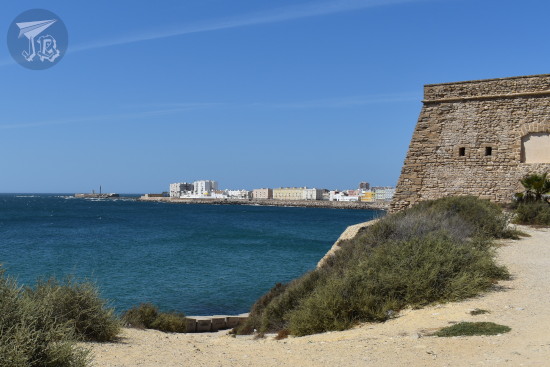
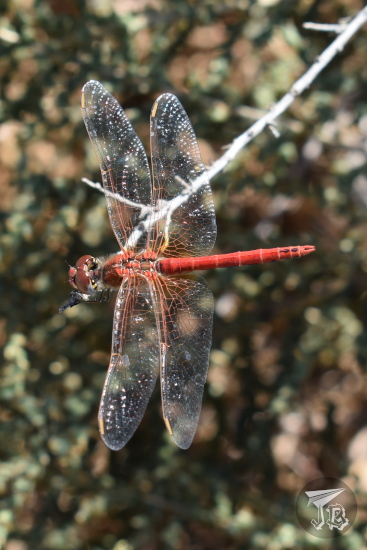
I walked towards Puerta de Tierra once more, to look at the temporary monument to the Phoenician gods – still garish. I walked alongside the wall until I reached the sea front promenade Paseo Marítimo, from where I could see the castle Castillo de San Sebastián and the bridges that lead to it. There was also a (tiny) swarm of damselflies which seemed to pose for pictures.

Puerta de Tierra (Semana Fenicia)

San Esteban Castle

Damselfly

I finally headed off towards the station to take a string of trains in the opposite direction I had done on Wednesday. First, I took the medium-distance train towards Seville, where I had an hour or so. I bought a sandwich and a soda to go (at exuberant prices, of course), and an ice-cream (at McDonald’s, with a regular price) while I waited. Then, the AVE took me to Madrid, which I reached a few minutes early, even. I hurried towards the commuter train system, hoping to catch a good connection, but – surprise, surprise – it did not let me in.

I had to go queue for help, and an employee let me through, assuring me that the system would let me out. Not trusting that, upon arrival I asked a security guard what I should do, and he said that the gate would be open if my pass did not work. To no one’s astonishment by now, the pass did not work, and the gate was closed. And of course, there was no Renfe employee to man the exits at nearly 23:00. I called for assistance on the inter-phone, and after a minute of ringing without an answer, I gave up and scurried after someone as they went out. Because, really, it was absolutely ridiculous.

All in all, it was a good trip. Cádiz was still an open chapter in my life, and I had always been worried that I would be overwhelmed by sadness if / when I returned to the area. Fortunately, that was not the case, and I was able to enjoy the escapade, along with getting my paperwork. However, the stupid commuter train thing was frustrating. Because Renfe, if the combined ticket works, why doesn’t it work? And if it doesn’t work, why are we told it works? Confusing, isn’t it? I had the same feeling.

11th September 2024: The long way there {Escapade to Cádiz, September 2024}

In order to reach Cádiz, I had to take one commuter train to Madrid Atocha. There, I either needed a high-speed train directly to Cádiz, or a connection via Seville. I chose this last option, because it was less than half the price round trip. The train company RENFE has three types of trains: the commuter trains Cercanías, the long distance system and the medium distance system, and I had to use all three.

Since I worked until the early afternoon, I bought a ticket for the 18:00 AVE (long distance and high speed). In order to be covered by the train company’s delay coverage, my Cercanías train to get to Madrid had to arrive an hour before departure, so at 17:00. The 16:00 train got there at 16:59, and I did not want to get caught in a technicality if there was a problem, so the aim was taking the 15:30 train. In the end, I was able to get on the 15:00 one, which left at around 15:20…

When I bought the ticket, I was issued a QR code which should have allowed me in and out of the commuter train systems as well as the long- and medium-distance ones. However, it just would not work. At first I thought because maybe it was a tad too early, but it turns out… It just did not work on either station – it did not let me either in or out the commuter train system. During the train rides, I had to take care of the process to check in online and get the codes to access the hotel and the room. It was a one-star hotel, the only thing I had found at a reasonable price for three nights that allowed me to check in late – the last train was due to arrive at 22:28. Since they did not have a physical reception, everything was done electronically.

After I talked to someone to let me out in Madrid Atocha, I went for ice-cream outside the station, and a sandwich to go so I could have dinner on the train or after arrival. Then, I went back to check out a magazine shop and buy the September numbers of National Geographic and Muy Interesante, both of which talked about dinosaurs, and there went my idea to be productive during actual travelling time. It turned out all right though, because in three out of the four long rides I ended up seating backwards, which means I get motion-sick if I look at a screen for too long.

After going through security into the AVE boarding area, I tried to find out how to connect with the final train, and I was told that there would be “someone waiting for me to take me to the other train”. I was highly sceptical of this, so once in the AVE I tried again. Once more I was told that there would be someone waiting to signal “connections”.

Guess what? There was nobody. However, I managed to easily find the correct track and my seat with a few minutes to spare – fortunately, I was travelling light. It is possible that the train waited for passengers that were coming from the AVE, but I made it without a problem – I wish I could say without stress. I had however checked online in my hotel, and if I missed the second train, the company would take responsibility, so worst case scenario was having to sleep in Seville on RENFE’s dime, and getting to Cádiz the next morning.

Fortunately though, there were no hiccups. When I finally arrived in Cádiz, about 15 minutes late, I walked towards the hotel, which was less than fifteen minutes on foot. It was around 23:00 when I walked into the room, so the whole trip took about eight hours.

The hotel was a refurbished traditional house built around a patio. The lift – which I used just twice – was just big enough for one person and you had to keep your finger on the button or it would stop. The walls in the common area were covered with azulejo ceramic tiles. The code reader in the main doors reacted quickly. However, it took me a couple of tries to get the code reader at the room working. There were two steps at the room that would threaten my safety if I got distracted – just before and after the door.

The room was bigger than expected for a one-star hotel, it looked reasonably clean, and it had enough sockets. There was a table, which was a little wobbly but did not fall during my stay there, and a small fridge which would be very handy.

What would a normal person do? Eat their sandwich, have a shower and go to bed, right? I did have the sandwich, but almost immediately I went out again. I had to say hello to the Atlantic Ocean. I was closer to the harbour, but instead I crossed the whole city centre until I reached the promenade Paseo del Vendaval, thus called because the little bit of the Atlantic in front of the town is called Mar del Vendaval (Sea of the Gale). The weather was not hot, but humid, and my long sleeves got a bit stuck to my skin. I had forgotten that sensation. I also had a weird feeling of familiarity. A lot of things had changed, but the layout of the town was still the same, so I sort-of knew where I was, though nothing was exactly what I remembered…

Promenade in Cádiz

I walked along the promenade and reached the cathedral Catedral de la Santa Cruz, where I hung out a little. Then headed out for the square where the town hall Casa Consistorial stands. It was way past midnight, so I thought I should head back to the hotel. This time I had no problem making either pin code work, and took the stairs to get to my room on the third floor – it was good exercise after so long crammed in a train. I then finally took my shower and went to sleep.

Cádiz at night

11th & 12th September 2023: 23h 45min in London (England) for Yoshiki’s “Under the Sky”

Considering that Japanese musician Yoshiki recently got his hand- and footprints enshrined at the TCL Chinese Theatre in Hollywood, I guess he’s not one of my obscure artists any more. Yoshiki is a Japanese drummer and classically-trained pianist who, alongside vocalist ToshI, founded the band X Japan in 1982. They started as a heavy metal band, and eventually shifted over towards progressive rock. Their flashy looks probably gave way to what is now called Visual Kei (V-kei) [V系], though they had dropped them in the mid 1990s, before they disbanded when vocalist ToshI left the band basically to join a cult. In 2007, X Japan reunited.

Yoshiki, born Hayashi Yoshiki [林 佳樹], is considered one of the most influential Japanese artists of all times. Aside from a musician, he is also a songwriter, composer, producer, and fashion designer. He collaborated with Stan Lee for a special four-issue comic collection called Blood Red Dragon, and with international musicians and bands such as Bono (U2), Roger Taylor and Brian May (Queen), KISS, and Sarah Brightman. He composed the theme of the 2013 Golden Globe Awards, worked on the soundtrack of Saw IV, and has composed music for anime such as Saint Seiya and Attack on Titan. Within Japan, aside from tons of collaborations and solo works, he became “mainstream” when he played a concert to honour former Emperor Akihito upon the tenth anniversary of his enthronement in 1999. He also has a Hello Kitty line named and modelled after him, Yoshikitty. And I’ve been using one of his songs as my alarm clock since roughly 2010 (since 2015 it is Born to be free).

Back in 2017, Yoshiki hosted a Q&A in several cities throughout the world, including Vienna (Austria) for special showings of his documentary film on X Japan. The documentary should have premiered in the scheduled March 2016 concert, but when that was postponed, the film went on to be shown at different events festival. When I went to Vienna, I had already travelled to see it in X Japan concert in London and the Beefeater In-Edit festival in Barcelona (and owned the blu-ray).

In 2020, as the Covid-pandemic lockdowns eased up, Yoshiki organised an online concert on a bunch of rooftops, connecting with different artists and having others over, to celebrate his birthday on the 20th of November . Now, he has made a documentary out of the event, called Yoshiki: Under the Sky, which has “premiered” four times, the third of them in London on 11th September 2023. As the London announcement only came mid-August, it was a challenge to get everything running, but I managed to find doable flights and a hotel near the venue. I was able to buy a second-row seat for the cinema, which was pretty good too.

On the 11th of September, trying not to reflect too much on the date, I left the house around 5:00, and right as I merged into the motorway, it started pouring. There was more traffic than usual because the plane was an hour later, but I managed to make it to the airport a bit before the time I had booked to enter the parking lot – yay accuracy. I went through security and passport control without issues, and had to walk to the end of the terminal for my flight, which was also uneventful. Upon landing at London Stansted Airport, we had to wait for a bus because the escalators were broken or something, but I was outside around 9:30. I bought breakfast at Costa Coffee, and settled to wait for a friend I had met in Vienna, A****d. Her flight was due half an hour after mine, so we had decided to hang out for the day. She agreed to tag along to the Natural History Museum – I wanted to go back to the the Jurassic Park 30th Anniversary #NHMxJURASSIC store before it closes down at the end of the month. I really really wanted the rubber ducky cosplaying as a velociraptor, but I feared that if I got that one, I would end wanting to collect rubber duckies… I bought get a limited-edition “opening weekend ticket”, which had been out of my budget on my previous visit, and a titanosaur coin that I had not seen when I visited the exhibit.

A****d had never been to the museum, so we took a tour of the highlights – dinosaurs (of course) and other fossils, the “journey inside the earth” (escalator that goes into the inner core of the planet), the historical building, and Cadogan gallery… Unfortunately, the hall of mammals had recently closed for renovations, so we could not visit that one.

Natural History Museum London

Afterwards, we took the underground and got off at Leicester Square to have a late lunch in Chinatown. We found a little place for lunch. I ordered some rice and duck, which was nice but the duck had a lot of shattered bones. We looked for a place she had known that sold ice cream taiyaki, but sadly we did not find it.

London Chinatown

We located the cinema where the film was showing, Odeon London Covent Garden, but there was nothing going on yet, there was not even a poster announcing the film. After taking pictures, we continued down the block to snoop around the Forbidden Planet London Megastore, one of the biggest comic, manga and related merchandise shops in the world. Luckily, they had few things I wanted badly, and the ones they did were stupidly expensive, so I was able to get away with all my money, yay me!

A****d had decided that she would go back to the airport after the film, but I had taken a hotel a few minutes away from the cinema, right in front of the university and a few minutes away from the British Museum. I dropped by to check in, then we backtracked to Leicester Square as the museum was already closing for the day at 17:00. As we walked by the cinema, they were setting a poster for Under the Sky outside.

We decided to do something a bit silly and headed off to the The LEGO Store Leicester Square, two stories dedicated to selling LEGOs, either in sets, or just blocks. There are also different decorations – for photo-ops – made with oversized blocks, which include Shakespeare in the park, a Bobby, a Buckingham palace guard, a whole Aston-Martin with a Bond sculpture – you can actually go into the car – and lots and lots of Harry Potter. It was a bit disconcerting that they were already displaying Christmas sets!

Lego Shop London

Then, we crossed the street for the M&M’S Store London, which has four floors. The ground one has a recreation of the Beatles crossing Abbey Road, with M&M’S. There was a logo asking “which M&M’S colour are you?” which I thought was a little silly, until I found the orange M&M’S section, whose motto seems to be “I’m scared of what might happen if I relax”. I connected immediately. Next time over I should totally buy a mug or something. Also, there was no Christmas decoration yet, as they were preparing for Halloween. Oh, and they were looking for staff, offering “London liveable wages”.

M&Ms Shop London

We came out and it was 18:00, the Swiss glockenspiel at Leicester Square was chiming. The glockenspiel is a Swiss-themed clock which was built in the 1960s as part of the Swiss Centre, a ploy to drag rich British tourists to the country. The centre failed, and the clock was taken away, but it was eventually restored to the area in 2011. I could have sworn it was playing Poncelli’s Dance of the Hours?

Swiss Clock Leicester Square

Leicester Square is built around a sculpture of Willian Shakespeare, and the gardens around him hold a number of statues dedicated to cinema, Scenes in the Square. We spotted Mary Poppins, Don Lockwood (Gene Kelly’s character in Singin’ in the Rain), Charles Chaplin, Paddington Bear, Harry Potter, and an Indiana Jones which is supposed to be temporary. Apparently, there are a few more I should be checking out for, but that’s okay because I’ll be coming back to Chinatown eventually, and it’s just a few blocks away.

Statues of cinema figures in Leicester Square + Willian Shakespeare

We headed back towards the Odeon London Covent Garden cinema, and we reached there around 18:20. Another poster had been put up, and some fans were already waiting. We met another friend of hers, M**, who told us she had found a sitting area inside, so we sat and chatted away for about an hour. The staff was extremely friendly and did not peep a word of complain, even if we did not buy anything.

Yoshiki Under The Sky at Odeon Covent Garden London

Finally, we were allowed into Screen 2 and found our seats. I lost count of how many people tried to get away with ignoring the seating numbers. Nobody did. I had a second-row seat, pretty centred. The film was introduced by some film producer who explained what we were going to see as if we had just accidentally wandered into the cinema.

There was supposed to be a trailer for Yoshiki’s upcoming concert in October, which was not shown. We had a few in-house adverts before the documentary started. Through the film, Yoshiki talked a little about the power of music, and how he had come together with all these great musicians to create a world-class event, very Covid-compliant. All the songs featured were either composed by Yoshiki himself, or had been arranged by him in some way. Perched on an LA rooftop, he mostly played piano, but occasionally he donned the drums.

The narrating thread of the whole film is life. Yoshiki was a sickly child, and his father committed suicide when he was ten years old, so he grew up with the idea of death deeply ingrained in his brain. As the film goes on, he speaks about how music can bring people together, and how it is important to find the strength to go on. Halfway through the film, he talks about recently losing his mother and how he cried for days. At some point a voice is introduced. It is a regular John Doe who once reached out to Yoshiki on Twitter as his dying wife had just entered palliative care. The man asked for some encouragement for her, and he got it, from Yoshiki and a lot of the fans, until she passed away. There was a heart-wrenching Zoom call with the man, who spoke about how overwhelmed he was by all the support he received. Unfortunately, she passed away.

The documentary runs for an hour and a half, and it’s a mixture of the Yoshiki’s thoughts, the performances alongside different artists, each in their corner (or rooftop) of the world, and a bit of conversation with them, or a making-of. I was familiar with most of the featured musicians, but not all.

Sarah Brightman: Miracle. Sarah Brightman has had an extremely long career and is an excellent soprano – my first memory of her dates back to the 1992 Olympics. She collaborated with Yoshiki on Miracle in 2018. I was really sorry I was not able to go to any of her performances back then.

Jane Zhang: Hero. The original version of Hero was sung by Katie Fitzgerald for the soundtrack of Saint Seiya: Legend of Sanctuary. Though Saint Seiya was my favourite anime as a kid, I had wandered away from it. The song featured in the film actually made me want to go to see it, and eventually dragged me back into the world. Zhang did a good job, but I personally prefer Fitzgerald’s version.

SixTONES: Imitation Rain. As a music producer, Yoshiki must have realised a bit ago that the Japanese boy-band panorama was dire. For long years, the boy-idol company Johnny’s Entertaining (JE) had dominated the business, with bands as SMAP or Arashi. However, an extremely protectionist policy and the open secret that the director had sexually abused some of the boys, lead to the company losing power. I have no doubt that this is why Yoshiki decided to create and produce a boy-band, and thus looked for the six young men that comprise SixTONES. Having followed some of JE’s bands back in the day, I can see how they would tap into the niche (serious flashbacks to KAT-TUN circa 2005, to be honest).

Scorpions: Wind Of Change. Formed in 1965, Scorpions paved the way for a great deal of the big names in 1980s hard rock such as Guns N’Roses, Mötley Crüe, Helloween, Megadeth… And Yoshiki is a little fanboy of theirs, of course.

Sugizo: La Venus. Sugizo is one of X Japan’s members, who took over guitar duties after they reunited. While the band was separated, original guitarist Hide died in “mysterious circumstances” – either accidentally or by suicide. For a long time, Yoshiki claimed that Hide’s death was an accident, and on this film he for the first time acknowledges otherwise. Thus, Hide was the second person in Yoshiki’s circle to take his own life. Sugizo, who also plays violin and is a member of an insane number of bands, including LunaSea, is credited by Yoshiki as the reason X Japan could come back together, which made him very embarrassed. They played a rendition of La Venus without lyrics, with Sugizo on violin.

Hyde: Red Swan. Hyde is without a doubt one of the best rock vocalists in Japan. He was originally the voice of L’Arc~en~Ciel, when they were still a thing. He worked alone for a few years, then he and KAZ founded VAMPS, and finally he went solo again. Red Swan was a collaboration between Yoshiki and Hyde for the anime Attack on Titan!, released as “Yoshiki feat. Hyde”. Yoshiki explained how the red swan represents rising even covered in blood. After this collaboration, there was a second single, released as “Hyde feat. Yoshiki” with the song Zipang, in English and Japanese, which I personally find even more powerful. The significance of Red Swan in Under the Sky comes from how many versions there are on YouTube, especially as anime songs tend to be translated. Thus, it ties in with the concept of coming together through music.

St. Vincent: New York. St. Vincent is known for her clear voice and her complex arrangements, with lots of instruments playing a part. She is considered one of the best guitarist in the 21st century. Yoshiki arranged her song New York for piano and vocals, which made it extremely powerful. All LA artists were invited to sing on Yoshiki’s rooftop, as it would have reduced the logistics involved.

Nicole Scherzinger: I’ll be your love. Scherzinger was the lead singer of the Pussycat Dolls between 2003 and 2009, but before that she had already performed with Yoshiki with this very same song.

The Chainsmokers: Closer. They are an American electronic DJ pair: Alex Pall and Drew Taggart, whom I honestly know nothing about other than they do electronic remixes. They have some supporting musicians.

Lindsey Stirling: Forever Love. She is a violinist who performs and dances at the same time. I had never heard of her either, but she did feel the music. Regarding her, Yoshiki said that she made him realise that not all songs need lyrics and vocals. She did a great job.

Yoshiki and fans: Endless Rain. In a way, Endless Rain is the emotional ballad that keeps showing up in anything X Japan related – and breaking people’s hearts. A while back, there was a request on social media for fans to send recordings of themselves singing the song, which were used for the film. Hearing a Ukrainian girl singing “endless rain lets me forget all of the pain, all of the sadness” was soul-wrenching. Once more Yoshiki circled back to the idea of music bringing music together, along with living, just keep living.

Yoshiki Q&A in London, 11th September 2023

The Q&A afterwards was awkward. The guy who carried it out – Toby Amies – had done his homework but it was not a Q&A, it was an interview by someone who had just learnt about Yoshiki, and was curious, so he had a ton of questions, most of them absolutely unoriginal, such as hey, I’ve just discovered V-kei, explain that to me! Or “do you prefer piano or drums?” which we hear every time – I could swear that Yoshiki was a bit annoyed at that one. The only input that the audience had, before Yoshiki was even in, was “are the Last Rockstars coming to Europe?” (we know the answer to that: never) and “When is the next X Japan album coming out?” (we know the answer to that, too: also never), but when the interviewer got around to ask those, he messed them up! At some point Yoshiki explained the meaning of the title “Under the Sky” – basically, we’re not in Heaven yet, we are underneath. As he was leaving, he was kind enough to sign autographs and take pictures with fans.

After the film, we took a bunch of selfies with other fans in front of the poster(s), then moved on. I went back to my hotel for a shower and a few hours’ rest. The bathroom was tiny but hot water did its job, and I could not find the cereal bar I had packed for dinner. The bed was extremely soft, and the carpet smelt strongly as England is in the middle of yet another heatwave, and my nose clogged – I need to remember to start packing my allergy pills. I did not sleep much if at all, and I ended up leaving the hotel before 5:00. I had to decide between breakfast at London Liverpool station or catching the Stansted Express at 5:25. I decided to go for the train and have breakfast at the Stansted Costa, so I boarded, found a seat, and settled down for a travel nap.

Ten minutes away from the airport, as we left Harlow Town, the second-to-last stop, there was an announcement. We were informed that the train would terminate at Bishop’s Stortford, the last stop before Stansted Airport. There were technical issues at the terminus platform, and the train could not reach it. Passengers should vacate the train at at Bishop’s Stortford and ask the platform staff for instructions. The instructions were that we had to fend for ourselves to reach the airport as there was no alternative transportation provided. It was chaos for a second, with everybody scrambling for buses, taxies and so. I was near a young woman who was going to Uber and had some extra seats. She asked if anyone wanted to tag along and I said yes. She said it would be free because her company would reimburse her, so I was lucky on that account, and I arrived at the airport a bit after 6:30. I waved my Uber-companions good-bye and headed to Costa Coffee for breakfast, feeling relieved that I had decided against waiting for the 5:40 train in London Liverpool.

After a sandwich and a vanilla latte, I passed security, where I had to go through secondary screening because… no idea. There was like no metal on me whatsoever. Then the scanner complained about me having something in my pocket – my damn handkerchief! Seriously, now. This has happened a few times. Where do people keep their hankies / tissues if not a pocket??

A****d had not yet departed when I was through, so we could hang out for a little longer – it’s fun that we had only met in person for a few hours in 2017 and we hit off so well. We even had gates in the same area of the airport, so it was cool. This is the first time that I have done the “going to the airport early in the morning” in London, but to be honest there was a 100 € difference between that flight and the next up, since the whole thing was announced and happened so fast. I asked for a refund from the Stansted Express, and now I’m wondering whether to cancel the train for my next trip to London as they’re threatening with strikes on those days… (ETA: I received a full refund, and there was no major incident during the following trip).

The trip back was uneventful except the road was stupidly full when I drove off the parking lot. I napped most of the plane ride, and I had a Coke before 9:00. Talk about living wildly, especially considering how all this happened in 32 hours, and I was in London for less than 24! My only regret was not taking the camera, but I was trying to pack extra-light this time around.

22nd July 2023: Half a morning in Naples {Southern Italy, July 2023}

For my last half-day in Naples, I had free entrance to the catacombs Catacombe di San Gaudioso, one of the monuments in the Catacombe di Napoli (Catacombs of Naples) network. These are in a really bad part of town that the cooperative is trying to revive – and they say they’re being successful. San Gaudioso – Saint Gaudiosus of Napoli – was a North African Christian bishop who fled persecution into Naples. His relics were buried in the Catacombs of San Gennaro and then transferred to his own around the 6th century. The Catacombs of San Gaudioso were “popular” at first, but they became abandoned, until eventually they were rediscovered and entrusted to the Dominicans in the 17th century. The Dominicans took over and developed a rather morbid interment tradition for the nobles and clergy. The body was drained, then buried. A wall would be built in front of the tomb, and the deceased person’s skull placed on it, with the frontal bones facing forwards. The body was fresco-painted as a skeleton underneath, with symbols and writings around it. Today you can see those frescoes, but the front part of the skull has been smashed away. There is also the actual tomb of Saint Gaudiosus and other 17th century paintings left. If you ask me, the guide went a bit into… excessive graphic detail about the body preparation.

Catacombs of San Gaudioso

The catacombs were restored and open to the public in 2017. They are accessible though Basilica di Santa Maria della Sanità (Basilica of Saint Mary of Healthcare), the Baroque church that was built by the Dominicans once they were entrusted the catacombs – with the money they had from the noble family’s interments. The church connected directly with the catacombs through a hole under the back area of the altar. There was a wedding, so we could not snoop around much. In the sacristy, there is a presepe which, aside from the standard Nativity scene, has scenes from everyday life, legends of Napoli and mythology touches.

Baroque church Santa Maria de la Sanita

I walked back towards the Historic Centre of Naples Centro storico di Napoli thinking that maybe I could get an early lunch, but the nice places were not open yet, and the smell was a bit on the overwhelming side. I went into Via San Gregorio Armeno – the Christmas alley – again. It was Saturday morning so the “good” shops had brought out what they offered and I finally got to see what makes the area famous.

Neapolitan nativiy figures

I finally decided to go towards the station, grab a bite to eat there, and head off to the airport. I had seen a huge bookshop near the food court, and I found something to entertain myself. I tried another piece of typical Italian food – a focaccia stuffed with cheese and greens. And then I realised that I had not had any real Italian ice cream! That was easily solved though…

focaccia and ice cream

The flight back was uneventful except I got emergency exit seat again, so I had to negotiate an exchange seat. The flight attendant this time was not as efficient as the one I had last time this happened. He had me wait until boarding was complete to find me another seat, which almost ended up with him having a riot in his hands. And here I had tried to board a bit earlier than usual to help the crew out… I will go back to boarding late-ish from now on.

Balance: Pompeii and Herculaneum are fantastic. Some people need to learn some respect and be civil – “no smoking” includes marijuana, don’t prance around with your shirt off in what is basically a ghost town, and for the love of that is holy, don’t poke the buildings. At least I did not run into anyone writing their name anywhere. Naples is not the best city, but it’s not as dangerous as I had worried about beforehand. However, maybe I should have done my planning a bit more carefully. Then again, not being too efficient allowed for downtime and resting, which I might have needed. I recently read that you should relax when you go on holiday?

17th – 22nd July 2023: Southern Italy

Back in May, I booked myself a small trip to the south of Italy. A long time ago, I was in the ancient city of Pompeii (and climbed Mount Vesuvius), and for a few years now, I’ve wanted to come back. I had not really looked seriously into it because affordable flights felt either too short (two nights) or too long (five nights). In the end, I made the calculation that maybe one day for Pompeii, one for Ercolano (Herculaneum) and two and a half for Napoli (Naples) might work out – arriving Monday evening and leaving Saturday late afternoon. I found an reasonably-priced hotel close to the station for the five nights, and then life happened as it usually does. This meant that I ended up without a definite plan – just a few basic bookings – and I seriously miscalculated how rough around the edges Naples really is. Despite it being an area with a “bad rep”, I wanted a hotel near the station to facilitate getting to both Pompeii and Ercolano by train, and because I did not want to connect to a second means of transport when I arrived in town at night.

My flight was due on the 17th of July at 18:30, but it was delayed. Right as I was boarding around 18:45, I got an email stating that my credit card had been denied at the hotel, so unless I provided another one within two hours, the booking would be cancelled. I would be in the air, so I needed to do it on the plane itself. Truth be told, my credit card is due to expire in August, so I don’t know if the error was on the hotel or my bank’s part. Fortunately, upon landing there were no further messages, and as I waited to disembark I tried to access my banking app – to no avail. That made me a tad bit stressed – even if I had cash, I wouldn’t want to get stuck abroad without a working credit card again. My bank has this thing for making all my cards stop working at the same time.

I had booked a ticket for the airport bus, that took merely 15 minutes to get to town. The line, however, was stupidly long. As we waited, taxis and gypsy cabs offered rides, but I did not trust those. The first bus left, and the second one arrived shortly after. It filled up, and there were two groups in front of me. The driver claimed that he only had space for one, so I gleefully claimed “one!” and went ahead. People on board called me lucky, people off board probably hated me.

As we drove off into the road, the first thing I saw was a rat, and that should have been a hint. We stopped off at Plaza Garibaldi in Naples around 22:20, and I did not take 10 minutes to get to the hotel – but boy, they felt long. The city smelt like urine and fishmonger ice, and there were lots of people hanging out who looked up to no good. I finally reached the hotel, the debit card worked, and I had bought a sandwich at the airport so I could have a snack. The air-con worked, and I managed to get the shower working. Things were looking up.

I’ve seen Naples described as charming and chaotic. In principle, I agree with the chaotic part. It has nice things, but it did not feel like a nice “welcoming” city – I would not really call it dangerous, but maybe dodgy or sketchy, and always on the lookout for a naïve tourist to scam or pickpocket. I was not really scared, but uncomfortable more than a few times, which made the whole trip a bit tiring. I decided not to wear headphones to pay more attention to my surroundings. In general, the plan was to start off early in the mornings and be back at the hotel with dinner and drinks in the late afternoon, which turned out to be a good idea. The hotel was small and noisy, but clean, with nice staff, and it became a little refuge, because this is not a town I wanted to go out to take pictures at night of.

Side note – on top of everything, I got caught in the middle of a heat wave – so just assume that from the beginning to the end, it was hot, and I was dripping sweat, unless I was underground. I mean, not even the Archaeological Museum has air conditioning in all the wards… but it does in the basement, which holds… the Egyptian collection. Go figure.

The city of Naples – Napoli in Italian – dates back to a settlement-port established in the 8th century BCE. It was refounded by Greek settlers in 470 BCE and it has been continuously inhabited since then, despite the constant threat of looming volcano Il Vesuvio – Mount Vesuvius – and its temperamental eruptions. There are records of about 50 eruptions, the most famous being the one that buried down Pompeii in 79 CE, though the volcano has been quiet since 1944.

Originally part of Magna Graecia (a network of Greek colonies in in Italy), Naples quickly became one of its most important cities. It became an ally of the Roman Republic against Carthage and it eventually became a Roman colony and part of the empire. Emperor Nero performed in its theatre in 64 CE, it is said that an earthquake hit as he did – he explained that it was the gods clapping at his act – it was in reality a precursor of the year 79 eruption.

After the fall of Roman Empire, the city was captured by the Ostrogoths, and later by the Byzantine Empire. In the year 661, the Byzantine Emperor granted Naples the right to be self-governed by a local Duke, which yielded to the Duchy of Naples and its eventual independence. In the year 1137, the Duchy was annexed to the Kingdom of Sicily, of which it became capital in 1266. In 1282, the Kingdom of Naples was created, though at that time there was a dependency of the Kingdom or Aragón and the city eventually became a part of the Spanish Empire. In the 17th century, Naples was the second-largest city in Europe, and it became the epicentre of the Baroque style.

In 1714, the Spanish “lost” Naples, and for a while it was ruled by Austria. After the French Revolution and the Napoleonic wars, Naples and Sicily combined to become the Kingdom of the Two Sicilies. After 1861, Naples became part of the Kingdom of Italy as part of the Italian unification. This marked the beginning of the decline of the city. Naples was the most bombed city in Italy during WWII, and the first to rise against German occupation. In recent years, it has had issues with waste management, Camorra organised crime, corruption, poverty and high unemployment.

In 1995, the Historic Centre of Naples was declared Unesco World Heritage Site, due to the great number of historical monuments of standing importance – archaeological sites, churches, palaces, castles… Naples has turned to tourism as a source of income, both legit and not so much. Different attractions are managed by cooperatives that employ local people at the same time they open historical sites for visits – which is of course good, but the downside is a lot of guided visits and places you can’t see on your own.

I arrived late on Monday, and I had decided not to book Pompeii for my first day, just in case there were delays. I decided to dedicate Tuesday 18th to Naples (which lead to discover that the Archaeological Museum closed on Tuesdays), Wednesday 19th to Pompeii, Thursday 20th for a half-day trip to Ercolano, and the rest of the time to Naples itself. If I had done a bit more research and timed things better, I could have fit another half-day trip. However, on the bright side, this meant I did not become too tired.

26th March 2023: The long way home {Belgium, March 2023}

Instead of returning from Brussels the same way, I had decided to take an earlier plane back home, from Brussels Charleroi instead of Brussels Airport. That way D****e and I could hang out a little longer, too. We had free breakfast at the hotel that day since we had had a bit of an issue with her check in, and the manager had offered that as compensation. It was pouring rain, so we did not do anything before we headed off to the airport, which we did with plenty of time. Brussels Charleroi is serviced by a bus company, and when we got to the stop, a bus was leaving – that was okay, we were aiming for the following one.

We reached the airport around 11:40 and queued up to pass through security, who decided they needed to test my shoes for drugs. It took me forever to be able to pack again after taking the camera and liquids out, but we were inside without issue before 12:30. We sat down for a drink, and then went off to find D****e’s gate. She was inside at the right time, but her flight ended up delayed as she had to fly to France, whose people are striking at the moment.

I found my own gate, and sat down to wait. When it was boarding time, a mob formed, and as it dissipated, I approached – it turns out that my flight was not boarding! Instead of leaving around 15:00, we did not take off till 16:15. During this time there was no estimated take-off time, nor any information. Internet said over two hours, so I decided to venture it to the food court to grab a snack. When I finished, I went to the bathroom and when I came back, the ground crew were getting ready to board us. It went fast, and the return flight was uneventful. We never got any explanation for the delay.

When I landed, the usual exit was blocked, so I had to go all the way back to the next terminal and backtrack. In the end, I was commuting for around nine hours for a 120 minute flight. Talk about efficiency… The best thing though was that with all the excitement and tiredness I did not even notice that Europe had shifted into (out of?) daylight savings time, which usually breaks havoc with my system. All in all, it was a nice weekend, albeit a bit tiresome at points. It’s hard to find water-resistant walking & concert shoes.

2nd January 2023: Lies or oblivion? {Egypt, Winter 2022-2023}

I was awake at 6:40 to be ready for a half-day trip. However, the phone call that the tour guide had promised the day before never came. I was distressed because this gave way to two options. Either the tour guide had lied to me, or someone had forgotten that I existed. Neither was a happy thought. I tried to cheer myself up with a cup of Espresso from the room complimentary bar, and around 8:30 I went to have a quick breakfast. I was not hungry and to be honest quite upset. I had insisted five times about this beforehand.

A bit after 9:00 I tried to call the ground agency, Galaxia Tours, and I texted them through the website. But around 9:20 I said screw it. The hotel had a mini travel agency – I had noticed this because we had made an attempt to go see the light and sound show at Giza on the 30th, which the tour guide had walked around. Instead of telling us “you won’t have the time” he had deflected every question we asked about it.

Had I had more time to organise things, I would have hired the mini-agency to take me back to the Egyptian Museum, the Museum of Egyptian Civilisation, or even the Valley of the Whales. However, since the tour guide had mislead me, I was out of time. Then again, the hotel was not in actual Cairo, but in Giza [الجيزة], and a nominal 20 minutes away from the Giza Plateau and thus the pyramids, so I hired a tour over there. And, believe it or not, I ended up… on a “camel” – actually a dromedary – for a few hours.

I had been resisting doing a dromedary ride of any kind out of concern for animal welfare, especially after seeing how they were treated at the Petra site in Jordan. However, this time it looked like it was the best option to spend my three hours around the pyramids, introducing Moses the dromedary (Camelus dromedarius).

Moses the dromedary kneels looking at the camera over his shoulder. He exudes personality

I checked out at the hotel, left my luggage at reception, and was driven towards the The Pyramids of Giza Archaeological Site [مجمع أهرامات الجيزة]. My driver was a bit creepy, so I tried to keep it light. We arrived at a backstreet next to the Great Sphinx [أبو الهول] entrance, from where I had a great view. This entrance was a bit different from the one we had used on the 31st next to the tourist bus parking lot. Most people using this entrance were Egyptians, and they were thoroughly patted down. Upon entry though, the view was astonishing – the Sphinx, and Pyramid of Khafre standing right behind it, the Pyramid of Khufu [هرم خفرع], the Pyramid of Menkaure, with the Pyramids of the Queens peeking to the side.

A front view of the sphinx, with three pyramids behind it. The pyramids decrease in size from right to left

Riding the dromedary was easier than I thought. The trickiest part was managing his kneeling down and standing back up – I did get a cramp on the very first standing up – but it was mostly a matter of leaning forward and backwards. Through this new walk around the Giza Plateau I got to see the modern cemetery on the left, then we moved onto the archaeological site itself. From this side, I saw the path that joins the Great Sphinx with the Funerary Temple of Khafre and the Pyramid of Khafre. I also got to see the Tomb of Queen Khentkawes I [مقبرة الملکه خنتکاوس] and the Central Field of Mastabas and rock-cut tombs. It was weird, having such a vantage point of view! I got used to the rocking very quickly, so I got a few good pictures.

Two views of the archaeological area of Giza, with pyramids in the background and low, excavated tombs in the foreground.

My guide – and Moses – took me to a a different Panoramic Point of the Pyramids, the picture perfect one, a few metres south of where we had been the previous day – this spot is not reachable from the bus, but I honestly cannot calculate if I would have had the time to get there and back the previous time – it’s hard to estimate distances in the desert, and the pyramids are too big to gauge good references.

A general view of the area of Giza. All the big three pyramids and the small six are visible.

We rode around the Pyramid of Menkaure, and actually passed between two of the Pyramids of the Queens.

A collage showing the approach to the Pyramid of Menkaure. The smaller pyramids of the Queens are in the foreground, and the camera seems to go through them until it focuses on the bigger pyramid.

Then we moved on towards the Pyramid of Khafre. Coming closer was really cool, as I could see the granite blocks that would have made the pyramid smooth back in the day, along with the rest of some columns. Also, two sides of the pyramid are actually somewhat sunk in the ground, with a vertical wall of rock-cut tombs. I know I was paying for it, but being able to walk around the pyramid felt special, and allowed me to feel awed at the size and technology again, considering these were built about 4500 years ago.

The pyramid of Khafre. The top is still smooth as granite blocks have not fallen. At its foot, you can see the granite blocks that have fallen, some aligned next to the pyramid so you can guess how it would be smoothed. Another picture shows the moat like structure around the pyramid - it is the back-wall of some tombs

The Pyramid of Khufu stood to the left, and we continued our ride towards the Central Field of Mastabas and rock-cut tombs and the Tomb of Queen Khentkawes I.

A view of the Great Pyramid from behind.

A number of basement-like structures excavated in the desert. They are the tombs of the nobles and the pyramid builders.

I dismounted again and walked into the Valley Temple of Khafre [معبد الوادي لخفرع]. This time, not running and with fewer people, I got to see the megalithic structures for real. I also could go to see the rump area of the Great Sphinx of Giza.

Collage showing the sphinx with the pyramid of Khafre behind it; the megalithic temple through which you access it; then a lateral view of the sphinx and a view from the rump.

Afterwards, there was an “essence shop” experience, but as I told the lady I would not be buying anything, she dispatched me really fast. My driver got only creepier in the way back, so I tipped him and ran off to the reception of the hotel, where I sat down to wonder whether someone would pick me up from the hotel, or they would forget me like they had for the dray trip. Fortunately, I spotted some people I had seen during the New Year’s Eve party, and it turns out that they had the same pick up. That was good, because handling the transfer for Cairo Airport – and the airport itself – would have been more stress than I was willing to deal with. I actually think I was forgotten indeed, but this family was not – I did approach the representative they pointed out, and made him aware of my existence. Firmly.

At 14:05, we were off on the mini bus towards the airport, and it took a bit over an hour. Meanwhile, they gave me a questionnaire to fill in – I tried not to get personal, nor attack anyone, but I was very sincere about the things that had gone wrong. Being forgotten is not a nice feeling.

We reached the airport past 15:00. There were two security controls for luggage, and one pat down. In the second control, the guards got money to let a group go before me, and the guard actually gestured that money would make things go faster. However, waiting had an interesting consequence… I met the people who went on the day trip, to Saqqara again, and they entered other pyramids there. So there had been another day trip – and again, lied to, or forgotten about?

But I had had my own fun, so I did not let that rile me up. I checked in, dropped my luggage, got my exit visa and settled down to wait – I was now just destined to have to listen to We wish you a Merry Christmas on loop for as long as it took to board. I got myself a cheese sandwich for lunch – this was past 16:00 by now, I was a bit hungry after only a fast breakfast. Cairo Airport is anything but traveller-friendly. Half the shops were closed, but without signs, so they just yelled at you if you walked in. There are no sitting areas next to the gates, just the shops, and I did not want to sit on another floor and rely on their English to know when boarding was ready, so I just walked up and down “a few” times. I was lucky enough to be next to the gate when boarding started – with yet another X-ray control, getting separated by sex, and being frisked. And yet, you have to take off your shoes, but you are allowed water bottles on the plane… Weird.

We finally took off around 19:30 for very uneventful five-hour flight. We got dinner on the way, which was unexpectedly nice, and I had a window seat, extra water, and got to see Cairo goodbye.

An aereal view of a city at night. The streets are lit, and light pollution diffuminates in the background. There is a black line in the middle, north to south - the Nile.

Overall balance: things were left unseen, and maybe one day I’d go back to see the rest of the Valley of the Kings, the Valley of the Queens, and the new Grand Egyptian Museum. Possibly the Valley of the Whales. But I don’t really feel I must come back any time soon. It was the adventure of a lifetime, and I am very grateful I got to live it. I do admit, however, that I dropped by my travel agent’s to make it known that someone had either forgotten me, or lied to me, and that I was not happy – similarly to what I had done with the questionnaire. I don’t know if I’ll ever get a reply, but I have to say the experience has left me not feeling up to trusting anyone with my travelling for a little while. Though I had to admit, my first solo experience with a group was all right… nice people all around, so I’ve been lucky in that department.