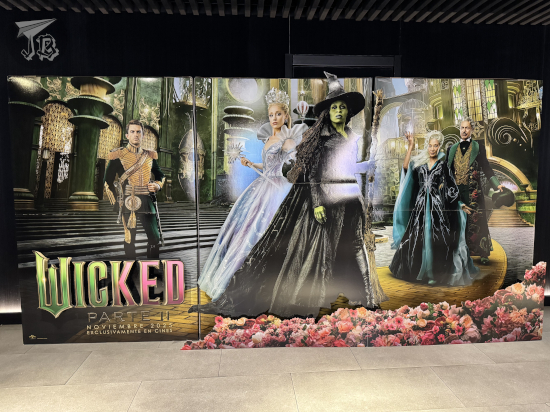
3rd & 4th October 2025: Wicked Madrid (Spain)

I am not a big fan of musicals – not because of the genre, but because in general the stories don’t seem to appeal to me. However, I like Wicked. Just before the first instalment of the movie duology was released, it was announced that the musical was getting a Spanish version. I was on the fence as to whether buy tickets or not, because I have often come across horrible translations into Spanish. After a lot of pondering, I decided to get an opening-day ticket, which I purchased in late November 2024. If in the end I backed up from attending, I could always give it to someone else, as it was sure to be a full house. Thus, I got a spot for Wicked: El Musical in Nuevo Teatro Alcalá in Madrid. However, once the film was released and I got to read the subtitles – I’m a visual person, I can’t ignore subtitles no matter how much I try – I became a bit more apprehensive.

In March 2025, I received an email advertising the option to get a VIP upgrade, Experiencia Premium Wicked, which included early entry, the booklet, a guided tour of the theatre, and what was de-facto dinner in the VIP lounge (which had its own private toilets). It was convenient, so I purchased it. Since I had originally bought the ticket on presale, some kind of discount was applied to it. I can’t be sure how much due to the anything-but-transparent Spanish ticket pricing. The nice seat on row 13 had a face value of 84.90 €, there was a fee of 6.79 € and a discount of 17.98 €, yielding to a final price of 74.71 € for the seat. The Premium upgrade was 29.90 €, value for money for the convenience only. Thus in total, I paid 104.61 €, without even being sure I was going to attend – I think my nibling was praying I would back out in the end and gave them the tickets…

I was not completely sure what to do with myself that day. I got a hotel because the 21:00 session would wrap up late, especially on opening day. The theatre Nuevo Teatro Alcalá was not in a convenient point to drive to. Trains would not be running any more when I reached any station, but the underground would. The only affordable but private room I found was 20 minutes away on said underground, but a big city would still have reasonably-full trains around midnight on a Friday in what is climatologically late-summer. The hotel was relatively close to the largest cemetery in Madrid, Cementerio de La Almudena, which reportedly holds some masterpieces of funerary architecture. I thought that it being October, it might be an appropriate visit, following a cultural itinerary provided.

On the day of, I set towards Madrid so I could reach the hotel a bit around check-in time, at 15:00. I dropped my luggage and set off towards the graveyard. Cementerio de La Almudena is the largest cemetery in Western Europe. It opened in 1884, though it was officially inaugurated in 1925. There were several architects involved in the design, but the current appearance is due to Francisco García Nava, who substituted previous styles with different Modernisme trends. Looking from above, the cemetery is designed as an adorned Greek cross, a design that eventually yielded to the creation of a secondary civil cemetery across the street.

I had wanted to visit for a while, but once there, I found Cementerio de La Almudena oppressive. Though there are green areas, it had nothing on the nature feeling northern Europe cemeteries give off. The niche walls felt overcrowded and cold, and the paved paths seemed designed just for vehicles and not people. I mean, the cemetery is big enough that it has its own bus stops inside, but there was something off about it. It was not a Victorian Garden, I guess. Since I was not enjoying myself, I decided to cut the visit short. I left after an hour, and headed towards the Central District.

La Almudena graveyard, with some neobyzantine decoration and traditional cross-decorated graves

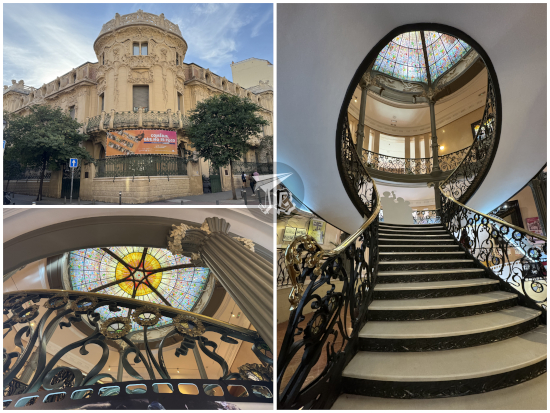
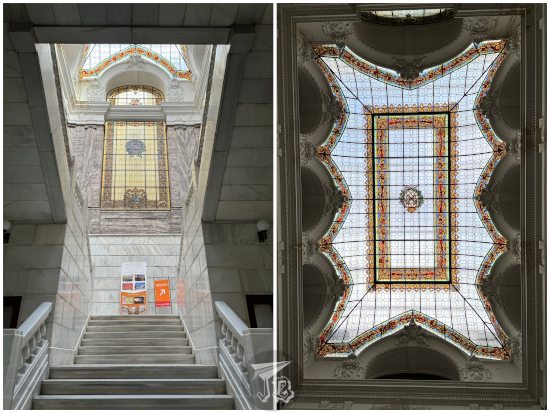
When I reached my underground stop, I saw there was a matcha bar nearby, but upon reaching it, there was long a queue outside – it turns out that it belongs to a TikTok influencer – and I decided to just go to Starbucks instead. I had a vanilla drink sitting at a park, then headed out to one of the few buildings representative of Modernisme in Madrid, the manor Palacio de Longoria. It was running an exhibition on the history of Spanish comedy cinema. I am not a fan, but exhibitions are the only way to visit the manor. The building was designed by José Grases Riera and built in 1902. It features a central staircase with a colourful skylight which is always cordoned off, but it is incredibly beautiful.

Longoria Palace, a Modernisme building with a stunning skylight with a red stair in a sun and a blue stela. It is over a staircase with an intrincate railing.

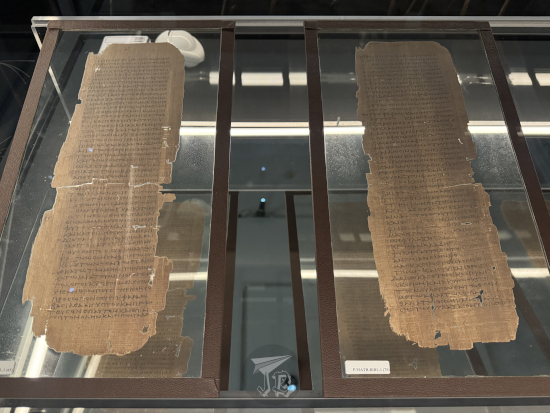
My next stop was the national library Biblioteca Nacional de España for an exhibition I wanted to see in July, but it was not running. It turns out that the temperature control in the room had broken down, and the exhibits were removed for safety. The exhibition El papiro de Ezequiel. La historia del códice P967 (The Ezekiel Papyrus. History of Codex 967) displays part of the oldest surviving document preserved in the National Library of Spain, and discusses its history. The document is a Greek translation of some of the books of the Bible, copied on papyrus probably in the 3rd century CE. It was discovered in the necropolis of Meir (Egypt), probably in the 19th century, and sold by the page to different institutions and collectors around the world between 1930 and 1950. Its excellent conservation is probably due to it being sealed in a vase until it was dug up.

The Spanish National Library is depositary of several sheets, which were originally bought by private collector Pénélope Photiadès. Upone her death, her collection of around 350 papyri, now called Papyri Matritensis, was bequeathed to the cultural organisation Fundación Pastor de Estudios Clásicos. As for the rest of the original codex, 200 out of 236 pages are accounted for in different places around the world. The pages in deposit in Madrid contain the oldest version of Ezekiel’s prophecies

The Book of Ezequiel is part of the Hebrew Bible [Tanakh, תַּנַ״ךְ] and the Christian Old Testament. Ezequiel was an Israelite priest, considered one of the 46 prophets to Israel, who lived around the 600 BCE. His prophecies or visions revolve about the fall of Jerusalem and its eventual restoration. In-between, there are prophecies against other nations or rulers who had wronged the Israelites.

Regardless of the importance of their contents for the Abrahamic religions, it was really cool to see something that old. Especially considering that all those centuries ago, someone thought the writing was important enough to have it preserved and protected for the future. The exhibition is held in a round room, with photographies of all the known pages and their location. At the moment, there are five collections – Cologne, Princeton, Dublin, Madrid and Barcelona.

The exhibition displayed five sheets mounted over mirrors so both sides could be seen. Alongside, there are other translations of the Bible, and a small display on how to write on papyrus. The whole collection was displayed in a circular room, so it felt really immersive. It was really cool.

Ezequiel papyrus - two pieces of papyrus with ancient writing on it

The weather was nice and I still had time, so I headed out to the park Parque del Retiro. This large park in the centre of Madrid originates in a Royal possession in the 15th century, and it opened to the public in 1767 under the reign of Charles III (Carlos III). Today there are several buildings remaining, alongside the royal gardens, now the large green area. There are ponds, fountains, sculptures and extremely old trees – which end up being a potential hazard when it’s too hot, too cold or too windy. This yields to quite the controversy when the park closes during summer due to the risk of collapsing branches. Parque del Retiro is considered a historical garden and part of the Unesco Heritage Site Paseo del Prado and Buen Retiro, a landscape of Arts and Sciences.

I finally headed off towards the nearby theatre Nuevo Teatro Alcalá. I ended up joining a loose group of people waiting for the theatre to open, and I got shoved away by a group coming out from a taxi. Later, one of the ladies would claim that she was there before anyone else – everyone who had seen them pushing me knew she was lying, but obviously her group needed to go in first. Ironically, though they made it to the hall first, I ended up reaching the theatre and the VIP lounge way before them. The irony.

Teatro Nuevo Alcalá with the promo of Wicked for the musical.

Upon entrance to the hall, I received my VIP lanyard and booklet. I am not well-versed in Spanish musical theatre actors, but I’m told the cast is really popular. First, we were shown inside the hall, where we had an introduction to the building and the play. Wicked is the musical adaptation of the eponymous book by Gregory Maguire (1995). The novel is in turn based on the world created by L. Frank Baum, The Wonderful Wizard of Oz (1900). While the original book is aimed to children – I read somewhere that it was conceived as the first “US-based fairytale”, later adaptations would take a turn towards more mature audiences.

In The Wonderful Wizard of Oz, a normal child from Kansas, Dorothy (with her little dog too), ends up in the magical world of Oz after being flown away by a tornado. There she partners up with a Cowardly Lion, a Tin Woodman and a Brainless Scarecrow. Together they travel to meet the eponymous Wizard, who promises to help them if they kill the Wicked Witch of the West.

The book has been both praised and reviled throughout its history. While the original story gives no room to think that the Wicked Witch is anything but gratuitously evil, the very way the protagonist party is just sent to kill her may sound… strange. It did to me when I was young and read the story for the first time. Other versions just have the Wizard tell the party to bring him the Witch’s broom.

It might have also been like that for Maguire, whose novel focuses on the evil witch, whom he names Elphaba. In the novel, Elphaba is ostracised and radicalises as she grows up, which leads to her fall into evil. In the musical, she is not really evil, but the circumstances around her life and powerful people’s manipulations make her a scapegoat. She chooses her own path rather than either give in or become a victim.

The original musical features music and lyrics by Stephen Schwartz and book by Winnie Holzman. It first opened on Broadway (after a San Francisco try-out) in 2003 – and it has run since then, except during the Covid pandemics. In 2005, it went on tour in the US, staying on different cities for literally hundreds of performances. The London production opened in the Apollo Victoria Theatre in 2006 – I have seen that one twice, in 2018 and 2022. There have been two German productions (2007 – 2011 and 2021 – 2022). There have also been runs in Australia, New Zealand, Japan, South Korea and Brazil. Between 2013 and 2015, the first Spanish adaptation was staged in Mexico City, though I cannot be sure the translation is the same as the Mexican one. The Spain version is considered a “non-replica production” as the setting is different. For starters, there is no dragon hanging above the stage and no map of Oz on the curtain.

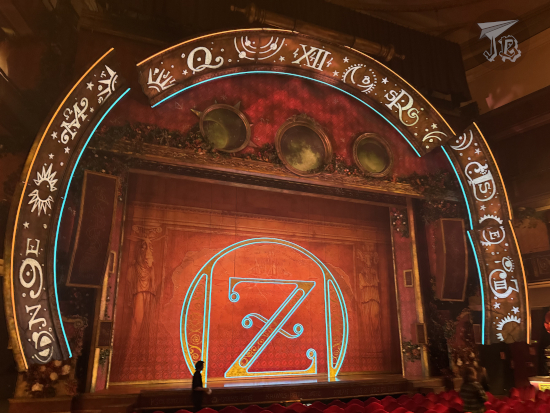
Wicked stage, surrounded by a circle of runes and a stylised Z in the middle

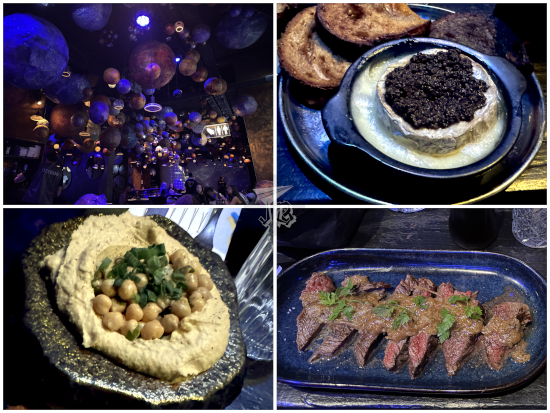
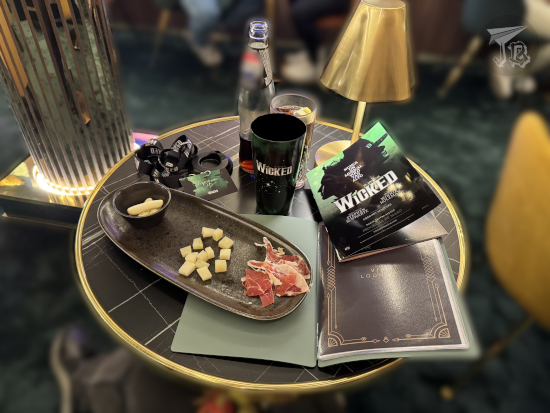
We did not hear any of this at the small explanation, but we learnt that they have 140 pairs of shoes. Then, we could go up the stage to get our picture taken with the giant Z on the curtain. I was amongst the first to get up there, so I also was lead to the VIP room quite early – remember the lady from before? I beat her every time, I did not even try, but it amused the hell out of me to realise it. To be honest, I had chosen the VIP experience not only because I’m a snob, but because it included what could be counted as dinner – cheese, ham and breadsticks with a drink before the play. And also the private bathroom, which was great. Ten minutes before curtain the waiters started telling us, along with taking orders for the drink during the break.

VIP package at Teatro Nuevo Alcalá - cheese, ham, breadsticks, soda, a commemorative grass, the program, and the menu.

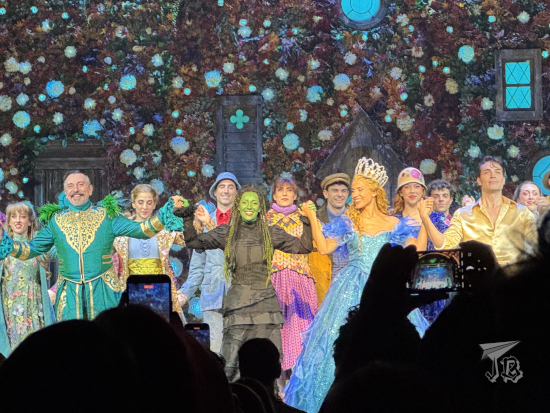
I was at my seat at 20:55, and the theatre was not full yet. The play started a little late, and I was a bit apprehensive, to be honest, because as mentioned before Spain has a less than stellar record with translations, but adaptors David Serrano and Alejandro Serrano have done a general good job. Main singers included Cristina Picos as Elphaba; Cristina Llorente as Glinda (that must have been confusing during rehearsals); Guadalupe Lancho as Madame Morrible, Javier Ibarz as the Wizard and Xabier Nogales as Fiyero. The latter was, in my totally-non-expert opinion, the weakest performance. When trying to sing with both the witches, his voice was barely audible, and he just did not have the… charm nor the presence. There is more to Fiyero’s character than choosing a cute actor, I think. There is one line that defines Fiyero in Dancing through life, which hints that there is more to him than the deeply shallow character he plays. After babbling about being brainless and shallow, when the “Ozdust ballroom” is mentioned, he sings that in the end “dust is what we come to”.

The play was well carried by the main characters, despite a couple of wardrobe malfunctions with Glinda’s dress and Chistery’s wings. The translations of the songs and the jokes were mostly on point. An exception was “magic wands, are they pointless?” – that one either completely flew over the translators’ heads, or they tried to localise it – and failed. The lyrics were well-chosen, carrying as much parallel in form and meaning as the originals. Unfortunately, the song that suffered the most was Defying Gravity, which just… can’t be easily done. It was decent though. In general, I’d give the effort an 80%.

The main cast of the Spanish Wicked musical greeting after opening day

During the break, I returned to the VIP lounge to skip the bathroom lines, and have a snack (popcorn) and my second drink. I have to say that the VIP experience is much more value for money than the London one, even if it catered to way more people – maybe because it was opening day. After the event was over, I made it to the nearby underground station and… the trains were crowded. I’ve seen fewer people on the platforms on a random weekend morning. Maybe in the future, I can drive closer to Madrid and park somewhere with an underground station so I won’t need to book a hotel.

However, staying over had a few advantages. When I woke up in the morning, I headed towards a cosy café (as cosy as a franchise can be), Santa Gloria, to order a “glorious latte with vanilla” whipped cream and cinnamon, and a salmon-on-avocado toast, which was delicious. Afterwards, I took the underground to meet up with some family members (amongst them my very-disappointed nibling). Their house is actually quite near the Museo del Aire y del Espacio, Museum of Aeronautics and Astronautics and we headed there to spend the morning.

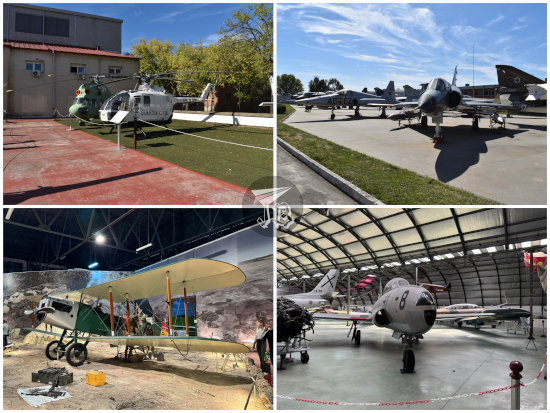
The Museum of Aeronautics and Astronautics is a space where the Spanish Air Force preserves historical aircraft. It is located in the neighbourhood of Cuatro Vientos (Four Winds), close to the military air base. Since it was established in 1975, the site has expanded its collection to 200 aircraft. There are seven hangars full of stuff and almost 70,000 square metres of exhibition. Along with all the actual preserved items, there are reproductions of important planes in history, models, engines, uniforms… I know next to nothing about the history of aeronautics, but it was really cool to see all the machinery and even go inside a couple of planes. There were even a few items from space exploration.

We were there from around 11:00 until closing time, 14:00, and it was barely enough to have a quick look at everything. There are guides who show you around, and it might be interesting to take a visit with one of them in the future.

Several aircraft at the Cuatro Vientos - helicopters and military planes, along with a historical biplane.

I had seen there was a big shopping centre nearby, but we got lost and then caught in a traffic jam, so we ended up having a very late lunch before everyone headed home for the day. Oh, but the mall had a Lego store where I could get stamps on my passport. When the salesperson asked me how many I wanted, he was somewhat surprised that I said I wanted all of them…

26th July 2025: Gladiators in Alcalá de Henares (Spain)

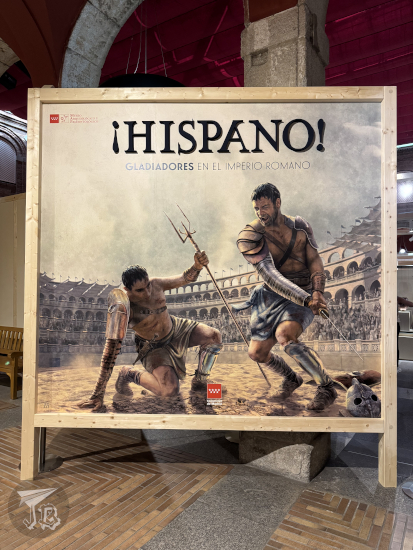
I am weird. Give me an exhibition of things I’ve seen (from the MAN) or I’m planning to eventually see (from the Roman Museum in Mérida), and – even if it is nearby – I won’t feel like coming. Add a thirty-minute historical recreation, limited-time only and I’ll be all in. The archaeological museum Museo Arqueológico y Paleontológico de la Comunidad de Madrid MARPA, in Alcalá de Henares, was running an exhibition on gladiators from Hispania called ¡Hispano! Gladiadores en el Imperio Romano (“Hispanian! Gladiators in the Roman Empire”. I have no clue what the exclamation mark is doing there). It’s not like I was not interested, it was just… not really drawn to it.

Gladiator exhibition poster, showing two Roman fighters in the Colosseum

However, I did hear about the historical recreation just about it was going to end. And you know how I am with “now or never” feelings. The way it was organised made it a bit of a challenge though – tickets were free but handed over at 15:00 for three sessions: 16:00, 17:00 and 18:00, and I had no idea when people would queue or whatever. I arrived at the museum around 13:30, and asked at reception. They told me that people usually started queueing around 14:30, and thus I decided to head there around 14:15 to secure entry.

Meanwhile, I checked the exhibition out. The majority of the pieces were reproductions, but there were a few originals. The most important real artefacts came from the Mérida Roman Museum, which as far as I know is closed at the moment. There was a guided visit going on, and I reasoned that a bunch of those people would also want to see the recreation.

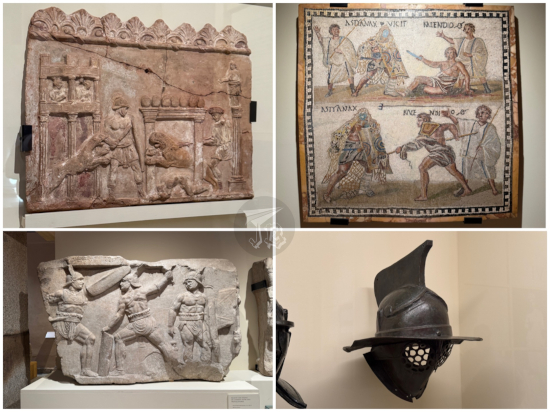
The collection included reliefs, mosaics, and some sculptures. There was also a copy of the Roman Law from the MAN. In glass cases, helmets and weapons – most of them real – were displayed. In the centre there was a round amphitheatre where the recreation would take place. It was a small exhibition.

Exhibits in the Gladiator show: reliefs and a mosaic showing men fighting, and a helmet.

Afterwards, I wandered the rest of the museum for a bit, and around 14:15 I went to queue, displeasing the security guard who said that lining started at 14:30. That was not what I had been told. I offered to move, but he muttered “never mind”. What is with security suddenly going weird when there is queueing involved? I’d never had any kind of problem with the MARPA staff before.

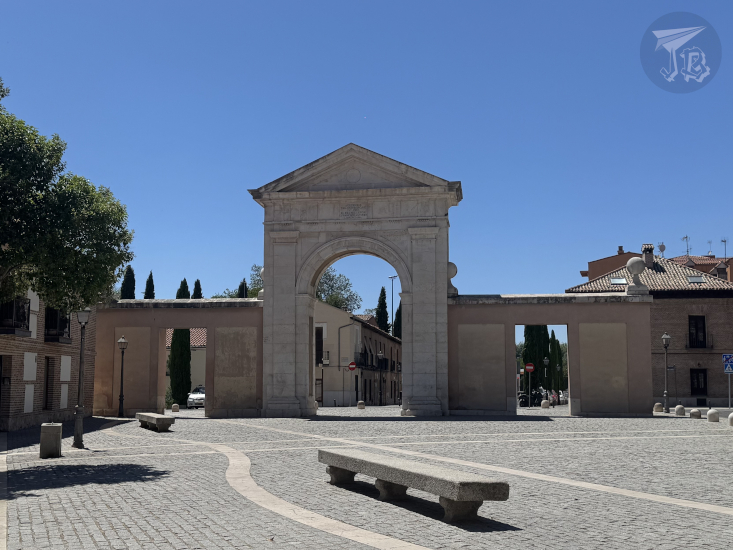
At 14:55, I got my free ticket and headed outside the museum for a quick bite. I had planned to try a typical pastry, but all the patisseries close from 14:00 to 16:00, which was inconvenient. I ended up having yoghurt ice-cream instead. I had never seen the main street Calle Mayor or square Plaza de Cervantes so empty, but I guess that was because of the heat. Afterwards, I walked towards Puerta de Madrid, an 18th-century monumental gate that took the place of the actual wall gate. Coincidentally, the structure shows up in the 1960 gladiator film Spartacus.

Main street in Alcalá de Henares, during summer mid-day. The only shadows is under the covered area behind the columns at the sides

Puerta de Madrid - monumental entrance to Alcalá de Henares

I went back to the museum and we were soon admitted into the “theatre” that doubled as arena. The recreation was carried out by the historical recreation group Antiqva Clio. There were three actors: the lanista, and two gladiators. There was a kid running around too, but he was sort of the mascot, and a lady in plain clothes helping out.

The recreation started introducing the concept of ludus (plural ludi): a gladiatorial school, where the gladiators were housed (kept) and trained. The owner or lanista selected the fighters – slaves, criminals or free men – and assigned them to a category, either heavy-weight or light-weight.

The lanista was the owner of the school. He invested in the gladiators and their training. Gladiators who were slaves or criminals could eventually buy their freedom if they won enough fights. Once the gladiator entered the ludus, they took the “Gladiatorial oath”, which was akin to “we accept to be hit, burnt, chained and killed by the sword”. Which… was not the expected one, right? To get it out of the way from the get-go, apparently the whole Ave Caesar! Morituri te salutant (Hail, Caesar, those who will die salute you), was popularised in the 19th century, and there is only evidence that it was said in real life as Avē Imperātor, moritūrī tē salūtant, once. It was in the year 52 CE on Lake Fucinus (not even a circus), where a group of criminal and prisoners sentenced to death were to fight on a naumachia (mock naval encounter) until there were no survivors.

Anyway, back to what I learnt. After swearing the oath, gladiators chose a fighting name, and got right into the fray. They trained together and became a sort of family, even taking care of each other and their relatives. Gladiators tended to specialise, as there were different classes with styles and weapons, and the ones who fought each others were different from those trained to hunt beasts. Fighters trained with weighed weapons so the fight would seem much smoother on the show. They were well-fed and even a little chubby so there could be wounds and blood without jeopardising their lives too much. As a matter of fact, when a gladiator died, his lanista had the right to monetary compensation for “loss of investment”.

The standard Roman circus games, ludi circenses, were sponsored by an editor, a sort of promoter who paid for everything. He hired the gladiator schools ludi to offer free entertainment to the people around him. The games started with Wild Beast Hunts (a fighter who was trained in this was called a venator or a bestiarii), then came executions, then the gladiatorial fights (munera) happened.

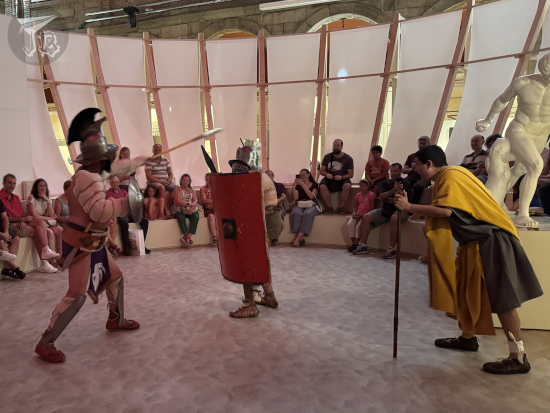
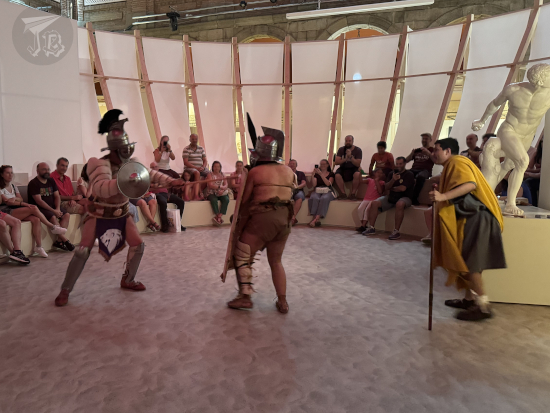
The gladiators who fought each other were paired: a light-weight versus a heavy-weight, and each fight took about ten minutes. There were different classes of gladiators, and we had an example of a murmillo (Leandrus) and a hoplomachus (Pintaius). The murmillo was a heavy weight-gladiator, equipped with a large shield and a sword. He was the defensive party. The hoplomachus was the light-weight and thus the aggressor. He carried a spear and a small shield. In general, one was “too armed to move” and the other one was “not armed enough” to somehow balance their differences. Both wore helmets with bad visibility in order to increase the drama.

Gladiator in fight pose, hiding behind a large shield

Gladiator with a small shield and a spear

There were two more figures in the games, the rudis, sort of a referee, and the lorarius, who made sure the fighters gave everything they could using a whip to motivate them. Though there was a risk that fighters might die during the fights, it was not the common thing. The winner received a laurel crown, a palm, a purple coat, a silver tray, and a bag of money. The loser could be pardoned or killed, but the whole thumbs-up, thumbs-down thing? That is not historically accurate either. If a winner gladiator was ordered to kill a loser who came from the same ludus, he made sure to do it as quickly as possible.

When a gladiator had won 10 fights, he had enough money buy his freedom and leave the life completely, though he could continue fighting and even assume another role in the ludus, such as a trainer or doctor of sorts. There is no historical information about how a fight was refereed, but here they did a first-to-reach-three-hits scheme. The lanista divided us in two groups to cheer for each gladiator, and the one on my side lost. Apparently Antiqva Clio‘s fights are not staged. The members of the recreation group actually train (with non lethal weapons of course) to learn how to fight, and whomever wins has won. No idea, but I felt sorry for the guys, who had to do it again in 30 minutes, and they were exhausted.

Gladiators fighting. The light-weight is launching his spear forward

Gladiators fighting. The light-weight's spear has made contact with the heavy-weight's shield.

Afterwards, we could take pictures with the gladiators – and they let me hold the weapons, since “my mum was not around to grant or deny permission”. In the end, I just headed home. The walk to the car was a bit scorching though… The price you have to pay for an easy parking spot is a ten-minute walk that… gets hard towards the end of July.

But there was a limited-edition activity and I had got to do it. Good job me.

18th July 2025: In the University of Saragossa {Dinosaur Eggs Loarre & Zaragoza, July 2025}

I woke up and for the first time in days I put on “person clothes” (for the city) instead of “scarecrow clothes” (for hiking & working in the field). Before setting off on the trip, I went to the sales to buy some jeans that would work for sitting on rock or walking through thistles and dry grass, and while they are not particularly nice, they are comfortable and resistant. Saragossa / Zaragoza was still waking up as I headed for breakfast to a bakery close to the hotel, Pannitelli Original Bakery, which I had chosen for two reasons. One, they opened at 7:30, which gave me plenty of time to walk to the university afterwards and two, they had waffles, I had seen them online. I wanted waffles, and a big coffee. I had both (and some orange juice, just because I could).

It turned out that not driving to the university Universidad de Zaragoza had been a great idea. Though it had been my first thought (dump the car there, then walk to my accommodation), I was lucky that in the end I was able to reserve my parking spot with the hotel. It happens that access to campus is restricted to working staff. Students can drive into the parking lot ten times in the school year. And on top of that, there was a farmers’ market for some reason.

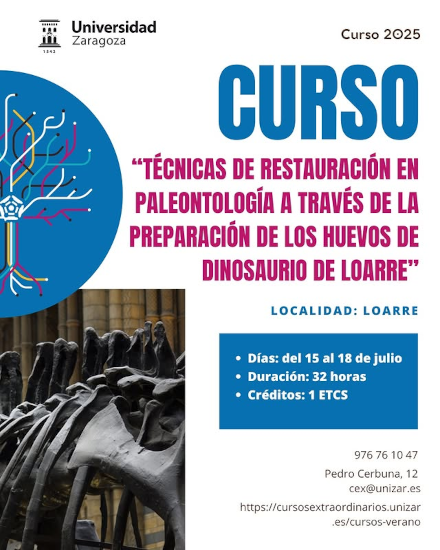
Having 20 minutes to walk, I was the first one there, and I sat down in the rock garden of the Earth Sciences building to wait for everyone else for the last day of the course Técnicas de restauración en paleontología a través de la preparación de los huevos de dinosaurio de Loarre: Palaeontological Restoration Techniques through the preparation of Loarre dinosaur eggs. By 9:00, when class was to start, I was the only one besides the teachers who had managed to arrive. Everyone else had either got lost, left Loarre late, or was taking forever trying to park. So yay me being lucky for once (and for the 20 € which the hotel parking cost for the whole stay).

The first chunk of the morning was a tour through the Rock and Hard Material Preparations, 3D Printing and Scanning Service (Servicio de preparación de rocas y materiales duros, impresión y escaneado en 3D) in the university. They have two main lines of work. One is to make thin translucent sections out of specimens so they can be studied under the microscope, and the other is digitalising and making 3D models and copies of items so they can be lent or studied through a computer. The inner works of the department were explained by Raquel Moya Costa, who not only described in detail all her complex machinery, she also gave each of us a 3D printed T-Rex charm from the Dino Run Game!

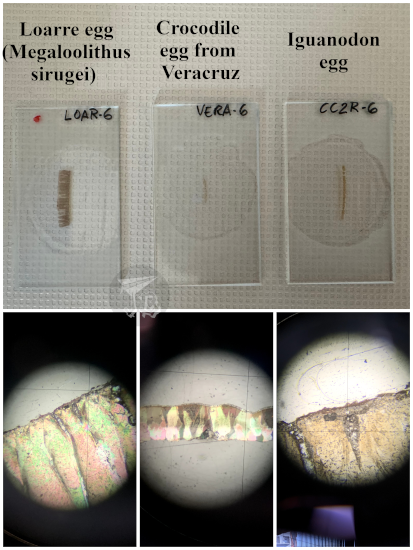
We then moved onto the Petrology lab to look at thin sections on the transmitted-light microscopes – preparations of a sauropod eggshell, a crocodilian eggshell and an iguanodon eggshell. There were other preparations we could snoop around if we promised not to take pictures and publish them. We also got to play with the 3D copy of one of the first eggs recovered from Loarre. Much less heavy than the real thing, for sure.

Microscope used in geological studies

Microscope preparations and how they look under the microscope. There are three egg specimens: one from Loarre (sauropod), a crocodile and an iguanodon, The crocodile is the thinnest, and the sauropod is the brightest and more complex

Then a bit of chaos ensued as we got distracted by the shiny exhibits of the Palaeontology department, and a couple of post-docs offered to show us their lab and what they were working on. Having finished all the activities of the course, the coordinators had organised an extra visit to the Natural Science Museum Museo de Ciencias Naturales de la Universidad de Zaragoza (which might have actually been my fault as I asked how come that would not happen, considering that most of the region’s fossils are officially deposited there). A few people left first, but some of us got delayed looking at the lab specimens, and then we had to hurry to the museum…

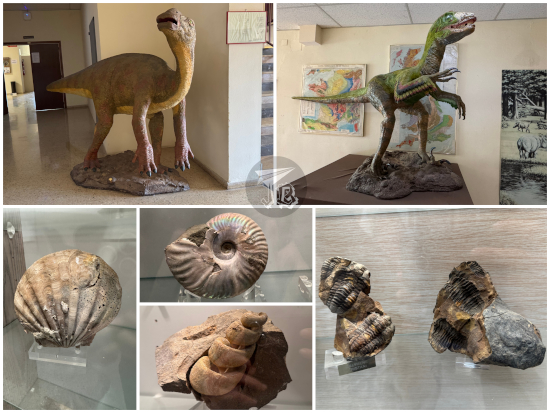
Zaragoza Natural Science Museum: Exhibits in the Geological science building. Replicas of dinosaurs and invertebrate fossils

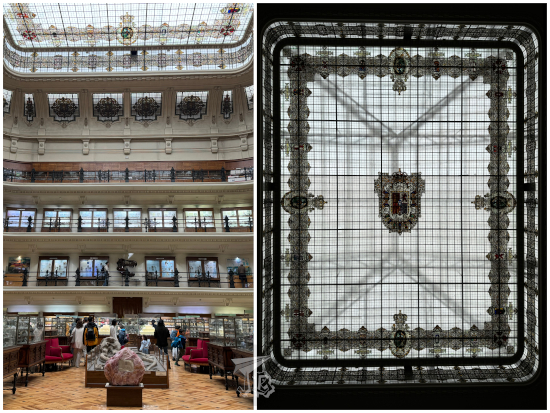
Once we were at the site of the Museo de Ciencias Naturales, we were taken on an express visit of the palaeontology ward by Ester Díaz Berenguer, curator of the collections. The museum is located in one of the historical buildings of the Zaragoza campus. Designed by Ricardo Magdalena in 1886, it was erected with academicist criteria, in brick, with large windows and striking symmetry. It opened in 1893, and during the 20th century, it served as Faculty of Medicine. When the university moved to the newer campus, the building was refurbished as cultural spot and seat of the government body. The basement was turned into the exhibition site of the Science Museum, which has three main areas – palaeontology, natural science, and mineralogy.

The palaeontology ward of the museum comprises nine rooms. The first one is an introduction to the science and the concept of fossilisation, and the following ones run through the Earth’s history, from the Precambrian to the Quaternary. The Precambrian is the earliest “calculated” period in geological time, and spanned from 4567 to 539 million years ago (give or take). Though we cannot pinpoint when life actually originated, it was already there when this “supereon” gave way to the Cambrian. During the Ediacara Period, at the end of the last Eon of the Precambrian, the Proterozoic, the earliest complex multicellular organisms that we know about thrived in a state that has been called “The Garden of Ediacara”. The word “garden” tries to evoke the idea of the “Garden of Eden” as there was no active predation and life just… existed.

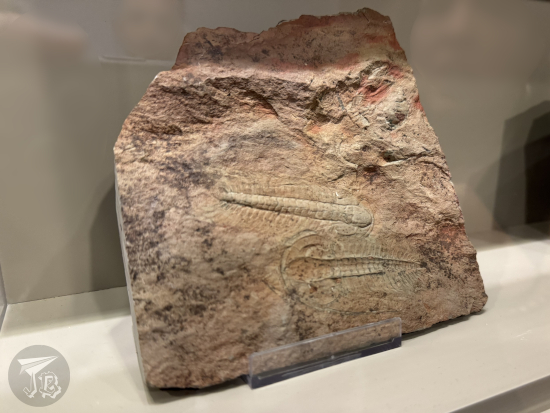
The next rooms focus on the “Cambrian Explosion”, a term used to refer to the point in geological time when living things took over the planet. At first, this brand-new life was comprised of ocean-dwelling invertebrates. In the room there are impressive trilobites from the Murero Palaeontological Site, which I had actually planned to drive through on my way back. But not only animals appeared, so did plants – organisms which produced a new toxic gas that would change the planet forever: oxygen. To the side of this area there is a curtained room, the “aquarium”.

Zaragoza Natural Science Museum: Two trilobites from the same species showing slightly different shapes, thought to be a male and a female

Here you can see the cranium of Carolowilhelmina geognostica, a fish which lived around 392 million years ago, during the Devonian period. It was a placoderm, a group whose main characteristics were being covered in armoured plates, and having developed an actual jaw and true teeth. The specimen is not just the holotype, it is the only known fossil of the animal. The cranium alone measures almost 45 cm, and by its shape, palaeontologist speculate that the animal was probably a predator of invertebrates. A first fragment of the fossil was found in Southern Aragón in 1971 by palaeontologist Peter Carls. Carls kept returning to the site to search for the rest of it every summer, until in 1986 he unearthed the rest of the skull, which was finally extracted in 1993.

Zaragoza Natural Science Museum: skull of an ancient armoured fish

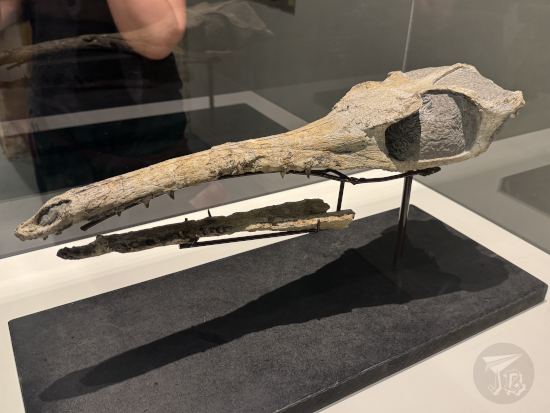
The following room is devoted to the Mesozoic, and it hosts another of the museum treasures, the skull of the holotype and only specimen of Maledictosuchus riclaensis, the “Cursed Crocodile from Ricla”. This crocodilian lived in saltwater around 163 million years ago, during the Middle Jurassic. It had flippers instead of legs, and probably ate fish. The fossil was found during the construction of the high-speed railway between Madrid and Barcelona in 1994. It earned the name of “cursed crocodile” because despite the fact that it was the oldest crocodilian found in Spain, exceptionally preserved on top of that, it took 20 years until someone could tackle its study and description. The “curse-breaking” researcher was Jara Parrilla Bel, one of the post-docs who shown us her lab work at the university.

Zaragoza Natural Science Museum: Skull of an ancient crocodile

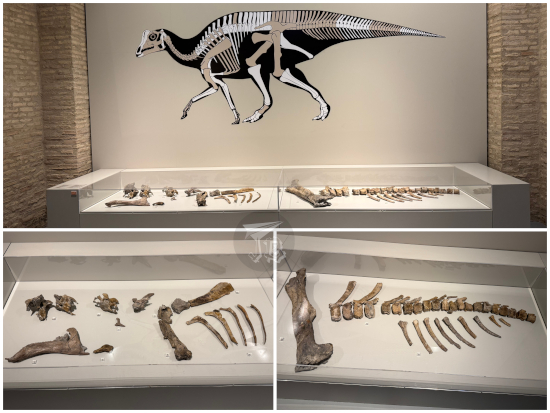
Of course, the “stars” of any palaeontological exhibit are dinosaurs. The museum hosts several iconic pieces, amongst them replica of the feet of the first dinosaur ever described by researchers belonging to the local university Universidad de Zaragoza, Tastavinsaurus sanzi (a titanosaur), a whole specimen of the Mongolian Psittacosaurus (a small ceratopsian), and a good part of an Arenysaurus ardevoli, a hadrosaur which lived in the Pyrenees area around 66 million years ago, during the early Maastrichtian; the rest of the specimen is located in Arén, where it was located, and which is one of the museum’s satellite centres, just like Loarre’s museum-lab. In the same room there were trunks of fossilised wood that could be touched, and a skull of the extinct crocodile Allodaposuchus subjuniperus.

Zaragoza Natural Science Museum: Skeleton of a small Mongolian dinosaur

Zaragoza Natural Science Museum: some bones from a hadrosaur, including the tale, hind hip and some ribs

After a small room with an audiovisual representing the impact of the meteorite and the K-Pg mass extinction (which we skipped due to time constraints), there was an exhibit of the spread of mammals. The specimen of honour in this exhibit is the ancient sirenian Sobrarbesiren cardieli (holotype, and the topic of our guide’s thesis). This species lived during the Eocene, around 45 million years ago. Sirenians (manatees and dugongs) are a type of marine mammals whose closest relatives are elephants – and not other ocean-dwelling mammals. After life spread through land, a number of mammals went back to water, and it looks like this species is a snapshot on the readaptation process: it was already completely aquatic, but it still had four functional limbs. Its hind legs had started reducing and its tail was getting flat. It was a strict herbivore, eating sea grass, but less efficiently than current sirenians.

Zaragoza Natural Science Museum: Skull of an ancient sirenian.

There was also an impressive aquatic turtle of the genus Chelonia, several remains of Gomphotherium angustidens, an elephantimorph, and smaller pieces including crabs, sea urchins, gastropods and even insects. Several of these specimens are holotypes, too.

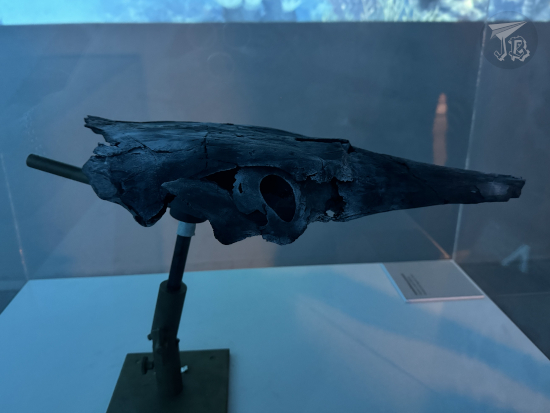
The final area was almost contemporary considering when we had started. It hosted remains of cave bears (Ursus spelaeus, 40,000 years ago), the skull of an aurochs (Bos primigenius, a species that actually lived until the 1600s), evidence ancient hyena nests, micro-invertebrate bones, mammoth defences… These animals coexisted with human beings, whose skulls comprise the ending room before moving onto the “nature collections” which we did not visit because a) the course had after all to do with palaeontology and b) it was closing time – quite literally, museum security was turning off lights behind us since the museum shut down at 14:00.

Zaragoza Natural Science Museum: Skull of an ancient bull, curved mammoth defence, a pile of bones from a hyena nest and several human-ancestor skulls

We had a mini closure “ceremony” in the hall of the building – coordinators Miguel Moreno Azanza and Lope Ezquerro Ruiz thanked us for attending, we clapped and thanked them back. Then we all went off to have a drink, a snack and a chat. A bit after 16:00, when most students had already left and the professors had been joined by university staff, I took my leave.

Palaeontological Restoration Techniques through the preparation of Loarre dinosaur eggs

Hopping from shadow to shadow to avoid the sun and the heat as much as I could, I headed downtown. On my way I made an exception regarding the walking in the shade when I found the only remaining gate of the original Medieval Wall, today called Puerta del Carmen. Calling it “original” is a bit of a stretch though. While it is in the same place as the first gate, it actually dates from the early 1790s, and it follows Neoclassical patterns.

I also stopped at Starbucks for a Vanilla Frappuccino – I’m on a bit of a matcha remorse trip due to the alleged shortage, so I’ve reverted to my old drink of choice. With a temperature of around 38 ºC, I reached the most important square in town, Plaza de Nuestra Señora del Pilar, where the namesake basilica is. I kid you not, what was running through my head was “I’ve got a 0.5 zoom on my phone now, I’ll be able to take a nice picture of the whole building with its towers…”. Only to find said towers covered in scaffolding. I was able to take the picture, but it could have been nicer. I entered the Cathedral-Basilica of Our Lady of the Pillar Catedral-Basílica de Nuestra Señora del Pilar, a Baroque / Neomudejar catholic temple which is considered the first-ever church dedicated to the Virgin Mary. I sat at the chapel for a little bit, but when I was ready to have a walk around the church, there was a call for mass, so I did not do it out of respect.

Chapel of Our Lady of the Pillar, a baroque chapel for the workshop of a small figurine of the Virgin Mary carrying a child and standing on a pillar

Instead, I strolled to the former exchange building Lonja de Zaragoza, which has been turned into a free exhibition centre. The building is Renaissance with a touch of Neomudejar, and it is considered the most important civil architecture construction erected in the whole area of Aragón during the 16th century.

I had read that there was an exhibition on Asian culture called Tesoros. Colecciones de arte asiático del Museo de Zaragoza – Treasures: Asian art collections from the Zaragoza Museum. At the moment, the Zaragoza Museum is closed and has loaned a few of its artifacts to be displayed elsewhere. This one exhibition displays items that were originally part of personal collections and were donated to the museum. The Colección Federico Torralba, comprises religious items and art pieces from China and items from Japan. The Colección Víctor Pasamar Gracia and Colección Miguel Ángel Gutierrez Pascual have woodblock prints – landscapes, noh [能], kabuki [歌舞伎], even modern ones. The. Finally, the Colección Kotoge displays lacquered tea bowls (chawan [茶碗]). There are also modern calligraphies, paintings, and the compulsory samurai armour. The regional government has undertaken buying artefacts to engross the Asian collections. Though they looked a bit out of place in the historical building, the items were fantastic – and you could even make your very own “woodblock print” at the end.

Zaragoza exchange ceiling, decorated with architectural flower-like patterns

Though the exhibition was the reason I had wanted to go downtown, after I left the (nicely air-conditioned) Lonja, I still had some time to do stuff. I wandered back into the cathedral for a bit – between the 17:00 mass and the 18:00 mass, and left before the second one started.

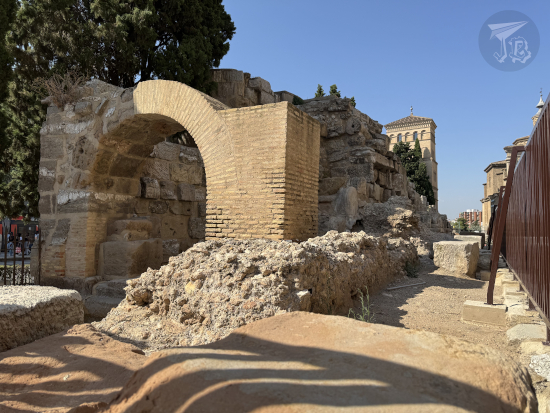
I continued towards the Roman Walls Murallas Romanas de Zaragoza, which sadly have had to be fenced off because people have no respect (I vividly remember a mum letting her toddlers to climb all over them one time I visited). At the end of that square stands the marketplace Mercado Central de Zaragoza, a wrought iron architecture building designed in 1895 by Félix Navarro Pérez. Being a Friday evening, in the middle of summer, many of the stands were closed, so it was not crowded.

Zaragoza Roman ruins

Iron and glass architecture market

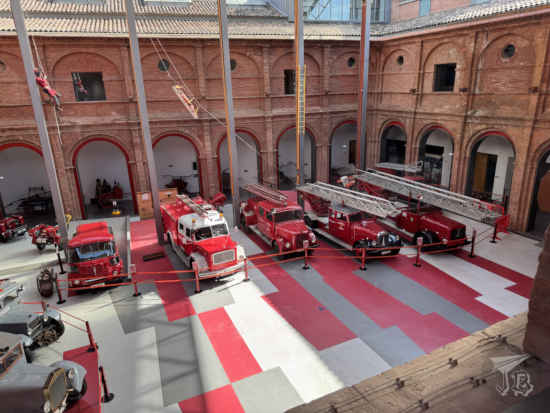
I continued towards the Fire and Fireforce Museum Museo del Fuego y de los Bomberos, where a nice gentleman wanted to give me a guided visit which I declined. Honestly, I just wanted to look at the old fire trucks (and actually, support any initiative by firefighters if it helps fund firefighting). It is a little quaint museum located in part of a former convent, the other half is an actual fire station. The exhibition covers documentation of historical Zaragoza fires, firefighting equipment, a collection of helmets, miniatures, and quite an impressive collection of vehicles used to fight fire. There were two immersive rooms, one which showed damage to a house and another about forest fires. I really enjoyed it, though I only had a quick visit – they closed in an hour, and I was the only guest along a family.

Firefighting museum: collection of vintage vehicles in a brick cloister

On my way back towards the hotel I walked by CaixaForum Zaragoza, where they were running the Patagonian dinosaurs Dinosaurios de la Patagonia. Seeing the Patagotitan on the balcony made me want to go in, but I had already seen it, and I knew I was just on a palaeontology high.

Patagotitan installation on a balcony

I headed back to the hotel – crossing a couple of quite unsavoury neighbourhoods – and bought some fast food dinner again. It was stupidly early, but after eating I could have a shower and relax on the bed while I studied the route for the following day. Furthermore, it was so hot I really needed that shower, and I knew I would not be going anywhere after taking it. Thus, I showered and plopped down to watch the Natural Science Museum’s YouTube Channel after I had learnt how to get out of the city.

17th July 2025: Hands on in the lab! {Dinosaur Eggs Loarre & Zaragoza, July 2025}

I got up around 7:30 and got dressed. I finished packing and before breakfast I took my luggage to the car, as I was leaving Loarre in the evening and I had to clear the room. Since I was outside, and the sky was clear, I went to explore the village a little more. There were some fountains and older farmhouses – one of them had been transformed into the rural hotel which never replied to my query. Some buildings had decorated their windows with cute homemade mascots.

Old Loarre Townhall, turned hotel (this is where I stayed)

Walk around Loarre: rhino mural, fountain, old house, wash house

At 8:30 I went back to the Hospedería de Loarre for breakfast. Since there was nobody at reception, I asked the lady at the restaurant what to do with the key when I left the room. I had my coffee(s) and toast, grabbed what I needed for the day, dropped off the key, and headed to the museum-lab for the third day of the course Técnicas de restauración en paleontología a través de la preparación de los huevos de dinosaurio de Loarre: Palaeontological Restoration Techniques through the preparation of Loarre dinosaur eggs. Today was the day when we would work hard at the laboratory.

The Restoration Lab in Loarre

Once again we got divided in three groups. One group opened a cast jacket using a radial saw – no way I was going to try and operate heavy machinery. Opening the jacket is the first step to study what it has been protecting, now that it is safe in the lab. The cast is removed in layers, and the rock is processed so the matrix (everything which is not actual fossil) is removed from around the eggs. Afterwards, there are two jobs. One is going through the discarded matrix / sediment for any and every interesting thing that can be found. The second is cleaning up the fossilised egg or eggs from any extra sediment to reveal their actual shape and colour.

I started with the cleaning crew (again). Under Ester Díaz Berenguer’s guidance, we worked on chemically removing sediment from a fossilised egg using alcohol diluted in water and brushes. It was a slow but very Zen work – wax-on-wax-off kind of thing. The others in my group sounded a bit frustrated with the task, but I guess it’s because they were younger people and more impatient? I know that I did not finish cleaning one shell fragment after an hour, but I was just… aware that fossil prep was a slow process?

Chemical clean up of fossil egg using a brush

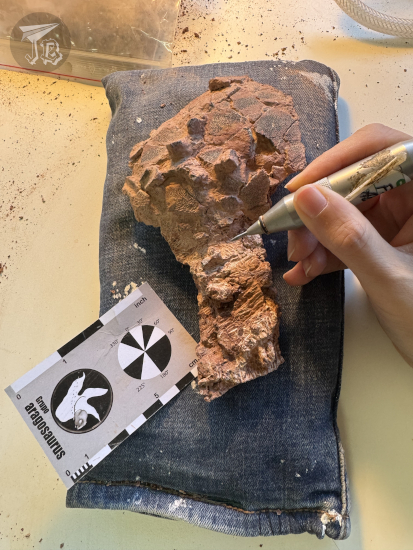
My second activity was also cleaning, but this time mechanically, using an air pen to remove as much of the remaining matrix as possible without damaging the general structure. This step would actually happen before chemical clean-up. The air pencil is a pneumatic tool so you really don’t have to press against the rock, to see the sediment peel away. It’s even more Zen than the chemical clean up – unless you’re working on a fragile bit. The important thing is to always clean away from the shells. I worked on that for another hour or so, and I even got to use some gluing materials to make sure a crack did not cause a problem – that was the bit that was more stressful, worrying I might damage the fossil.

Mechanical cleaning of fossils using an air pen

We had a short break which I used to go to the car to organise the car boot – I had thrown all my things there, but a classmate had asked me to drive him to Saragossa, and I had to adjust for his luggage to fit too. Then my group moved onto studying the removed matrix from a jacket, under the direction of Manuel Pérez Pueyo. This consists on checking bags upon bags of broken rock bits to find anything that could be an eggshell. Though the main find of the Santa Marina site are the sauropod eggs, there are eggs belonging to other species – crocodilians and theropods. You weigh some sediment, spread it on a tray and move it around until you’ve taken out anything that can be useful to science. You have a microscope handy in case you need it. I am proud to report that during my three rounds, I did not miss anything key (before you discard your sediments, you call an expert to recheck). I did not find anything out of the ordinary, but I pulled out a couple dozen egg shell fragments.

Sediment being checked for loose egg shells

At the end of the morning, I snooped around what they were doing on the opened cast jacket, and someone was using the air pen on it, trying to locate the eggs. The jackets are opened upside down, so there’s a bit of detective work to find the fossils again. In order to protect the eggs, the casts are made big enough to protect them from any saw, so casts may be huge (and of course heavy). Thus, a lot of cleaning work is required at the lab, which translates in an insane amount of time. The palaeontologists must find an equilibrium amongst protection, weight, and lab-work when deciding on the size of the cast.

Upside down cast jacket that has just been opened. The job is cleaning out all the sediment around the eggs.

For lunch, all of us went to Casa Lobarre, the village restaurant, I think a concession from the town hall, as it is in the same building. The inside is decorated with reproductions of Romanesque frescoes and painted to look like a castle, as it was used as the set in a film some time ago (Kingdom of Heaven, 2005 I think. Don’t quote me on it). They offered a set menu with the choice of a (hearty) starter, a main course, and a dessert, drinks included. It was a big lunch! I ordered stuffed courgette and assorted grilled meats. The food was quite all right, especially for the price, and the desserts were handmade.

Afterwards, we had two lectures. One was given by Manuel Pérez Pueyo, who explained to us the hard science data of the Garum facies, which could be the key to understanding the last dinosaurs surviving in Europe. He also talked about the K-Pg limit and dinosaur extinction. He also made a comparison between the little Santa Marina site with the American Hell Creek formation – as the presentation said… size matters. That’s why there have been so many dinosaurs found there, compared to the more humble sites in Spain.

The final lecturer was José Ignacio Canudo Sanagustín, the director of the University of Saragossa’s Natural Science Museum Museo de Ciencias Naturales de la Universidad de Zaragoza. He explained how a museum works (I was reminded me of the visit to the inner works of the geomineralogical museum in Madrid), and the museum-lab status. The Saragossa Museum, as an institution, is the custodian of the Loarre fossilised eggs, even if they stay in the Laboratorio Paleontológico de Loarre. This is not unique to this village, as there are several similar schemes in place all throughout Aragón, known as “satellite sites” or “remote halls”.

Canudo also talked about counterfeit fossils – a reason why I only buy my fossils during Expominerales or Expogema, I don’t trust random vendors. Then, he moved onto the topic of the Museum itself – how it works, what kind of items they hold, how they came into the museum, and a little pride-flex, that they are home to a whooping 319 holotypes (the specimen that is used to describe a species), mostly from the Aragón region. The museum only exhibits a tiny proportion of the treasures that are deposited there for their protection and research.

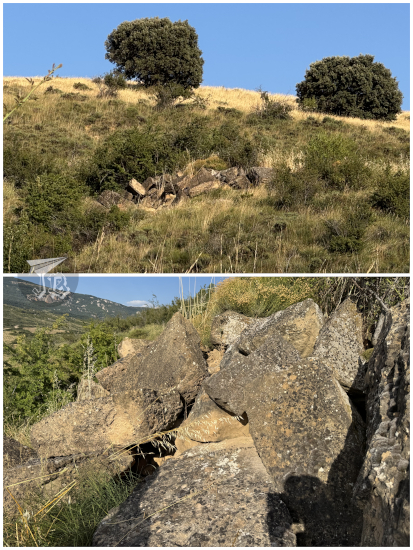
Towards the end of the evening, we hopped onto the vans yet again to head to the middle of nowhere for some amazing views of the castle. No, really. We were headed to another “palaeontological site”. It turns out that a few years ago, a farmer was ploughing his land and found a few slabs of rock which he discarded to the side. These slabs held footprints from hornless rhinoceros from maybe 15 – 10 million years ago. The slabs are haphazardly stacked with the footsteps on the underside, which is great for conservation. Also, the way is so unkempt that nobody would get there to damage them for kicks and giggles, which is good too. We had to waddle through thistles and dry plants about hip-height to get there, then climb up the rocks so all of us could get a look. Afterwards, we found a shaded spot to talk – and the professors brought cold drinks (and chocolate) again for the hike. They were crazy prepared.

Loarre castle

Here’s the thing with the rhino footsteps – scientifically, they’re out of place, so they have lost a good part of their intrinsic / purely scientific value. But legally, they must be protected and conserved. So, what to do with them? It would be expensive to move them, and once they were transported, where would they end up? Neither the lab nor the museum were willing to take them on… Each of the coordinators told us about pros and cons of different actions. In the end, what we were brought to realise was the big discrepancy between what must be done (considering the law), what should be done (considering the science) and what can be done (considering the money). The museum-lab has an idea or two about what to do with them, and I wish they succeed. I really hope the rhino footsteps become well-known some day. That way I can boast I knew them before they became famous…

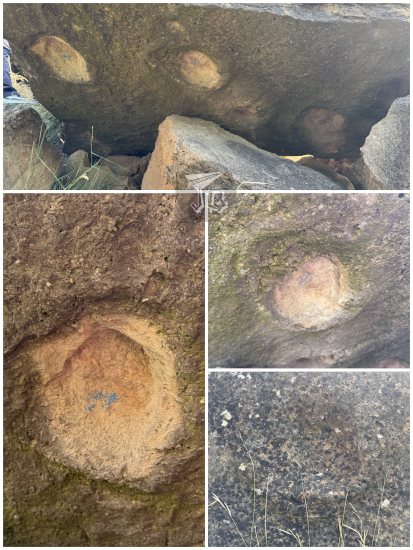
Slabs of rock in the middle of a hill.

Ancient rhinoceros footsteps

Technically, the day was over then, but the coordinators asked for our help with some stuff – getting the jacket we had extracted from Santa Marina into the lab, and moving one of the display cases to change the exhibit inside. We happily complied with both, being the first to see the new display in the museum. Are we special or what?

New exhibit in Loarre, which has exchanged a jacket for two prepared eggs

Afterwards, my classmate and I set off towards Saragossa Zaragoza. We arranged that I would drive him to my hotel and he would get a taxi from there. The drive from Loarre to outer Zaragoza takes about an hour, but once you get into the city itself, all bets are off. Furthermore, Google Maps had given me some strange instructions to enter Saragossa, but fortunately, traffic was light, as I had predicted / hoped. The hardest part getting to the hotel parking lot – I had to go to the hotel first (and find a parking spot for that) to check in, and get the key to the parking lot, then drive there. Of course, the only place I could drop off the car near the hotel was a one-way street in the opposite direction from what I needed, with no convenient turns allowed. In the end, it took 20 minutes to be able to leave the car, but it was really the most convenient option. Zaragoza is really not made for visitors to park in the streets, even if the hotel was far from the centre. It was the closest to the university as I had been able to find so the next day was nice and easy.

It was insanely hot, sticky hot, and I needed some dinner. I found a nearby fast food place and headed back to the hotel room with take-out. I finally had a long shower – this was a bit of a theme during this trip, wasn’t it? The room was small and a bit claustrophobic (honestly, it reminded me a little of a prison cell), and the air-conditioning machine was right above the bed, so it was a bit tricky to find the correct temperature / fan combination. I was tired, but stupidly alert, so it took a while to fall asleep.

Palaeontological Restoration Techniques through the preparation of Loarre dinosaur eggs

16th July 2025: Santa Marina Palaeontological Site {Dinosaur Eggs Loarre & Zaragoza, July 2025}

In our second morning in the Loarre course Técnicas de restauración en paleontología a través de la preparación de los huevos de dinosaurio de Loarre: Palaeontological Restoration Techniques through the preparation of Loarre dinosaur eggs, we met at 9:00 in the museum-lab Laboratorio Paleontológico de Loarre. The first thing we did was pick up our PPE – glasses, earplugs, facemask and work gloves. For the day we would be cared for by Miguel Moreno Azanza, Lope Ezquerro Ruiz, Ester Díaz Berenguer, Manuel Pérez Pueyo and Laura De Jorge i Aranda.

Miguel Moreno Azanza and Lope Ezquerro Ruiz are the course coordinators. The former is holds a PhD in Geology and is a Postdoctoral fellow in the Saragossa university Universidad de Zaragoza. He is the egg expert and the leader of the works in Loarre. Ezquerro Ruiz is now a Lecturer at another University, Universidad Complutense (Madrid), but he has not lost contact with the dino-egg world. He is the expert sedimentologist, described as an “all-terrain geologist”. Ester Díaz Berenguer did her doctorate about ancient manatees, once dug a sauropod skeleton all by herself, and is the Natural History collection curator in the Natural Science Museum of the University in Saragossa. Manuel Pérez Pueyo holds a postdoctoral position in the university Universidad del País Vasco and is currently away in Romania, studying the same kinds of sediments the Loarre eggs are found in – he is the K-Pg Limit expert. And finally, Laura De Jorge i Aranda is the de facto boss – she is the main restorer and conservation expert in the lab, so what she says, goes. If she ever stays still for long enough to finish saying it, because she must be related to the Duracell bunny…

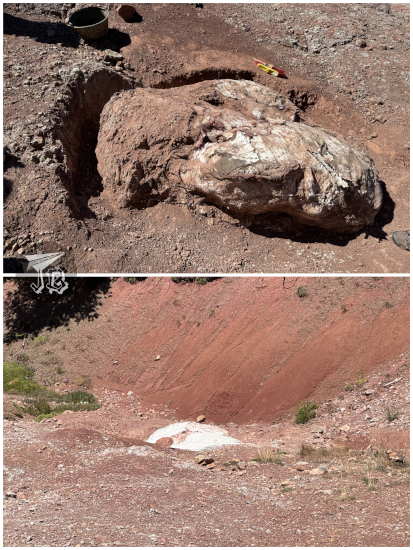
We hopped onto the vans, and drove / bounced off towards the actual palaeontological site: Yacimiento de Santa Marina, the outcrop where the eggs were first found. Around 6 km away from the village, the area of the site is around 500 square metres, and eggs could be found from the surface (originally, those have been excavated now) to almost 2 m deep. It is mainly comprised of red clays hardened into actual rock, whose age is disputed between around 70 and 66 million years ago. Fragments of egg shells can be found on the surface, easy to tell apart. While the clays are mainly reddish, the egg shells are dark grey / blue, three millimetres wide, clearly rounded and with clearly-visible pores on the outer surface. And no, finding one of the dozens of them that we saw never got old. They have found six or seven groups of eggs there, so the upcoming steps are extracting them and working out if the groups are actual nests or just casual accumulations due to transport or other causes.

Yacimiento de Santa Marina - red hard unforgiving rock full of dinosaur eggs if you dig hard enough

There were three jobs to do around the site – cleaning up an area where eggs had already been found to check for more, repairing a cast jacket which had been damaged, and extracting a cast jacket which was ready to be transported to the laboratory. I started with the clean-up team. There, we used the “small” equipment (cleaning brushes, paintbrushes, and screwdrivers) to remove sediment and small rocks trying to see if there were more eggs around or underneath the one that had been removed. It was a definite maybe.

A spot in the ground where an egg was found. It has to be cleaned (swept) to check if there are more eggs or eggshells

The professors had brought Coke, Aquarius and pastries for breakfast at the mountain hut next to the hermit church Ermita de Santa Marina, which lends its name to the site, and thus we had a break around noon – the museum-lab team had brought us snacks and drinks. Afterwards, my group moved onto recasting a jacket which protects what could be a whole nest inside. The whole thing is massive and thus heavy, so difficult to move. While the logistics for that are being taken care of, the cast jacket protects the fossils inside, and the whole thing is kept buried to prevent weathering.

In Spanish, the cast jackets are called momias, mummies, as they are wrapped in gauze or similar before. Unfortunately, that degrades with time and weather. In order to protect the fossils, three of us applied a layer of cellulose (read: wet toilet paper) first, while the other two made burlap stripes that would go between the cellulose and the plaster. Later, another group would make and apply the new cast, and the following day the professors came back the next day to rebury it for extra protection.

Giant cast protecting fossil eggs before and after getting some TLC and new plaster

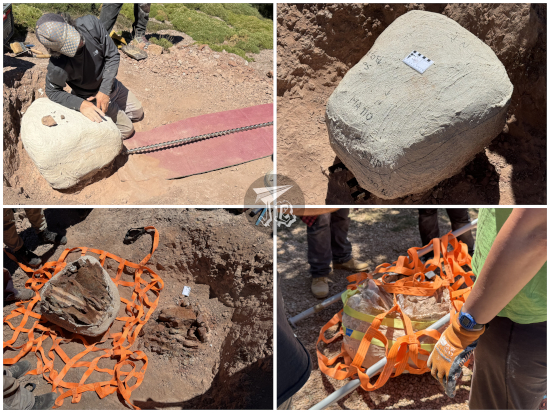
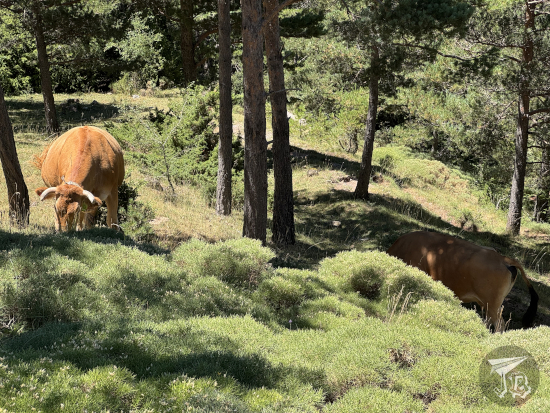
My group’s final job was breaking a plaster cast off the ground. As we worked on the other two spots, the other groups had taken a hydraulic hammer and a giant drill to the rock surrounding the cast to get it ready for extraction.. I got to work on the drill – while one of my peers pushed the tool into the rock, I was in charge of keeping the drill bit steady. Afterwards, I could hammer one of the stone-splitting wedges into the holes we had drilled, and a group-mate hammered in the other two. The cast was labelled and extra information was written on it: level, north, which side was up. After that, the whole thing was torn off the stand (by sheer blunt force, aka someone pushing it) and rolled onto a net that had to be hauled up the outcrop and then into the van, all that under the incredulous look of a herd of free-range cows which grazed nearby.

Jacket cast of a fossil being broken off the ground with a giant drill, and then transported using a net.

Two cows grazing

The strongest people around loaded the cast and carried it out, then put it in the van. They needed someone to take pictures of the process and I volunteered for that. By then, it was way past 14:30, which meant we were too late to have lunch in Loarre, where apparently it is only served between 14:00 and 15:00. Calls were (sort of desperately) made to find somewhere which would feed our large group lunch. We ended up in the restaurant at the campsite Camping de Loarre, which happily let us have some food there. They offered stuff to share, but we preferred to have individual plates. I think we all wanted something we really… wanted, so we just chose from the main dish options.

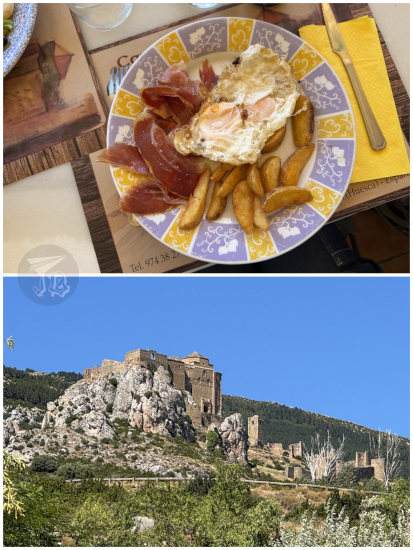
I ordered fried eggs with ham and chips. While I prefer my eggs runny, they were adequate. Since I had drunk a Coke for breakfast, I had an isotonic drink instead, and some of the communal water. As I was finishing, I overheard that they had ice cream inside… watermelon ice cream. It was exactly what I needed for dessert. While I was paying, the waiter asked something about whom to charge for the water, so I took care of that. It was still cheaper than buying all the soda and snacks the professors ended up providing.

Camping de Loarre: eggs with ham and a view of the castle

After lunch, we headed back towards the village, where we had a lecture by Laura De Jorge i Aranda on the theory of fossil restoration, conservation and preservation. One of the most important things she mentioned was documentation – as we had seen with the cast we had broken off. Once in the laboratory, the plaster is opened, the sediment classified for later study, the eggs cleaned mechanically and chemically, and any crack sealed with special glue. Every step of the way is documented. Finally, the fossils have to be packed for transport or preservation, and the sediment must be combed for anything of interest it might be hosting, such as loose egg shells (from either titanosaurs, crocodilians or theropods).

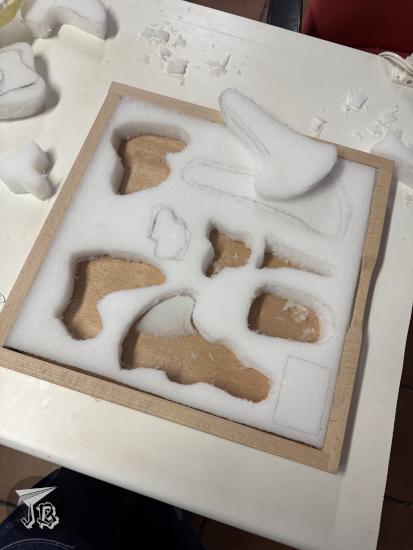
We moved then to the museum-lab to apply what we had just learnt in our first hands-on visit to the restoration laboratory. We were provided with a bunch of fossils (newly-discovered spinosaurid bones, so new that they are unpublished and thus cannot be shown) and Ester Díaz Berenguer guided us to make fossil beds with polyethylene covered with tissue. These were to go into fireproof drawers for conservation in the Natural Science Museum in Saragossa. The fossils are laid out on the polyethylene, traced, and the bed is carved for them with scalpels and cutters – remembering to also carve spaces for fingertips, so picking up the item is easier in the future.

A tray with cuts to fit the different fossil bones that we cannot show for scientific reasons, so it just looks like we cut a bunch of holes with weird shapes

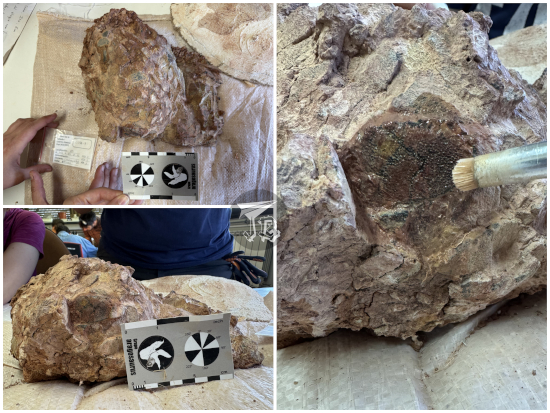
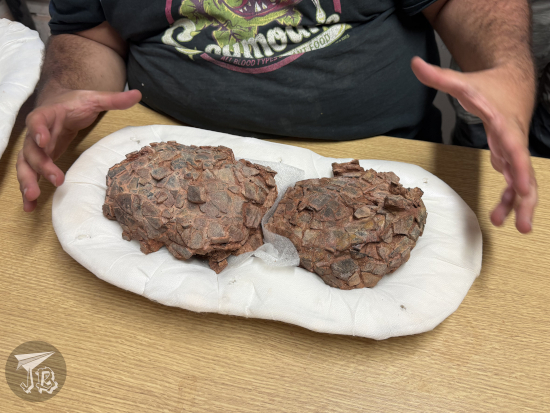
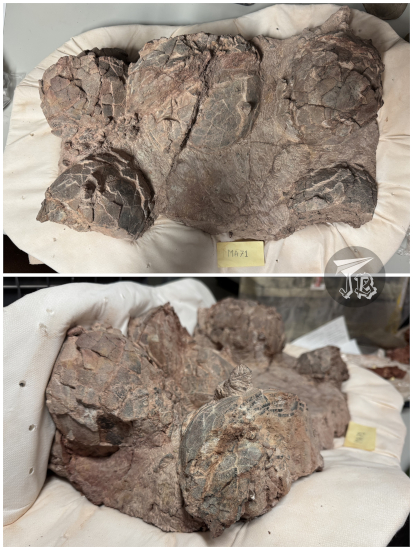
After that, Miguel Moreno Azanza showed us some of the prepared eggs. One of the specimens was a couple of eggs stored together (one of them might have a baby inside!). These were found in another site, Collado de la Tallada, which apparently is “easier to dig in”, but we were playing level pro in Santa Marina. Another was a group of five eggs together, which could have been a nest. They are criss-crossed by mini-faults. We were able to snoop around other eggs, as the professors chuckled something like “Don’t worry, you’ll work on them tomorrow”.

Two titanosaur sauropod eggs in a case. They look about as big as the palaeontologist's hands each. They are deformed and broken but have a vague egg shape.

When I signed up for the course, I expected that the “practice” would be standing there while an expert did something. Maybe we would all get one egg shell to touch and share amongst us. That would have been really cool already. But by now I had dug, protected, drilled, pushed, and held fossils. I was ecstatic. The course had blown up my mind already, and there were still two and a half days left.

A titanosaur sauropod egg nest with five or six eggs, deformed and cracked by the passing of time.

I went back to the hotel Hospedería de Loarre to shower, have a snack, and pack all my things as I had to clear the room the following morning. I also studied off the route to get to Saragossa in the evening after the course. During the planning stage, I had considered whether I wanted to go to Saragossa on Friday morning before the lessons or Thursday evening after them, and in the end I decided to drive on Thursday.

On the one hand, it meant driving after the whole day of class, probably tired, and around dusk. On the other hand, it allowed me to do the drive without a time limit constraint, park directly at the hotel, and it might mean less traffic. Furthermore, sunset was at 21:00, and it should be bright enough for a bit still after class. In the end, I decided in the end that it would be less stressful. Thus, Wednesday was my last night in Loarre.

Palaeontological Restoration Techniques through the preparation of Loarre dinosaur eggs

14th June 2025: The road to Loarre {Dinosaur Eggs Loarre & Zaragoza, July 2025}

The closer the day came, the more nervous I got. First, there was the drive. It would be a long drive on my own, during the pre-holiday rush, and I had to go around Zaragoza (Saragossa), which has a notorious knot of connections. I had studied the route up and down with both Google Maps and my Sat-Nav. However, I could not control traffic nor other drivers. And secondly, that weekend there had been torrential rain alerts in the area. The last thing I needed was a flash flood.

I pumped fuel before I went to work in the morning as I had a cheap petrol station on the way. When I finished at 15:00, wrapped up, said my goodbyes, and headed off. I had a swing of water and set on the road, with the goal of taking a break in an hour or so. I had over 360 km to drive through, most on the A2 speedway, then a national road, and a final local road. The first 20 km or so were the worst, with lots of traffic and lorries because I was right in the middle of a logistics hubs. For the next 100 km or so, as I went north, I had the pleasure of getting caught in a few “lorry overtaking lorry” instances (sometimes even “lorry overtaking lorry overtaking lorry” ones, when there were three lanes), with the slowest lorry going at 110 kph and the overtaking one at 111 kph on a 120 kph speed limit.

I was surprisingly not tired, but I forced myself to make a stop around 17:30 to have a caffeinated drink and one of the sandwiches I had prepared, then continued on. I found some construction work which created a traffic jam that got us to a near stop for about 20 minutes around 18:00, maybe. I managed the Zaragoza exchange and drove successfully onto the following speedway (A-23) – from there, it was about another hour. When I reached Huesca, the exchange was easier, just a turn left into the national network (A-132). The last 34 km were on the local road (A-1206 – the lower the number, the “better” the road is), and took a bit longer than expected due to getting stuck behind a tractor and a harvester for the last stint. I finally reached Loarre around 19:20. I found a convenient (and legal) parking spot in one of the outer streets, and walked to my accommodation.

The hotel Hospedería de Loarre is located right in the Main Square of the village, roughly a three-minute walk away from the street where I had parked, and four minutes from the main road. When I checked in, the worker made some conversation and asked me why I was in town. Upon explaining that I had come for the course Técnicas de restauración en paleontología a través de la preparación de los huevos de dinosaurio de Loarre: Palaeontological Restoration Techniques through the preparation of Loarre dinosaur eggs, I was told that I was “the one from close-by”. Considering that I had driven for over 360 km, that shocked me. The worker explained that the previous people who had checked in before me, who were also there for the course, came from Chile and Mexico! I was the one from close-by indeed, and one of the three people from the course staying at the Hospedería. The network Red de Hospederías de Aragón comprises a group of hotels in historical buildings within areas with high tourism potential. The Loarre one is located in a palatial house, the former town hall, which was rehabilitated recently.

After check-in, I went for a walk for an hour or so. I saw the church Iglesia de San Esteban and the cross that marks the end of the village Cruz de Término. I also found the laboratory or “museum-lab”, Laboratorio Paleontológico de Loarre, which is a tiny building painted in bright colours and silhouettes of sauropods (though it shall soon move to a bigger one).

Romanesque church

Building with dinosaurs painted on it, the museum-lab in Loarre

The castle Castillo de Loarre was not too far away (walking route was about an hour). I had visited it before, so I did not need to see it again, but I would have liked a picture of the walls that I was unable to get due to a lack of perspective. Unfortunately, as I considered the hike, a storm cloud rolled by. There was ominous thunder, and a few raindrops fell. If I continued on my walk, I was sure I would get drenched. If I decided to go back, the second I got out of the shower and into the pyjamas, it would stop raining. The area had been on alert due to rain and flash floods all weekend too…

Loarre castle from the valley

A huge thunderclap helped me decide to head back.

Storm rolling in over the cultivated fields near Loarre

When I pulled up my toiletries, the sun lotion had not been well-closed, so I had to wash all the stuff. At least my chapstick wouldn’t get sunburnt? Then, I headed into the shower, and when I came out, it had indeed stopped raining. However, the cloud was still there, and I did not trust it… Oh, well. There would be other chances, I thought.

Palaeontological Restoration Techniques through the preparation of Loarre dinosaur eggs

6th July 2025: Brihuega, Yela & Cívica (Spain)

I was supposed to go to Madrid, as I had a free ticket to see the restoration of the façade of the local museum Museo de Madrid up close, but I ended up cancelling due to having been in Madrid the previous day. I really did not care much about the visit, but I had signed up because it was a limited-time thing, and to be honest, I get FOMO when I read “for so long only”. However, I had heard somewhere that there was a chance that the lavender fields would be left fallow the upcoming years, so I guess I felt FOMO in the opposite direction. I had already visited the lavender fields in Brihuega, collectively known as Campos de Lavanda de Brihuega during sunset a few years back, and while in theory the view is prettier, I found that the lavender did not look… purple enough. Maybe it was the angle of the light, maybe it was too late in the summer already, but the flowers looked greyish. Thus, I wanted to see them during normal light once.

The lavender sown around Brihuega is Lavandula angustifolia, a herbaceous plant native to the Mediterranean areas. It grows in small bushes with narrow leaves, and it is popular for its uses – it can be applied in traditional medicine, in the kitchen (as herb or tea) and commercially, to produce lavender essential oil, which has hundreds of cosmetic uses: perfumes, soaps, balms… While it was the region of Provence, in France, which put “lavender watching” out as an activity, for the last 15 years or so, the village of Brihuega has made a name for itself during July as a tourist destination.

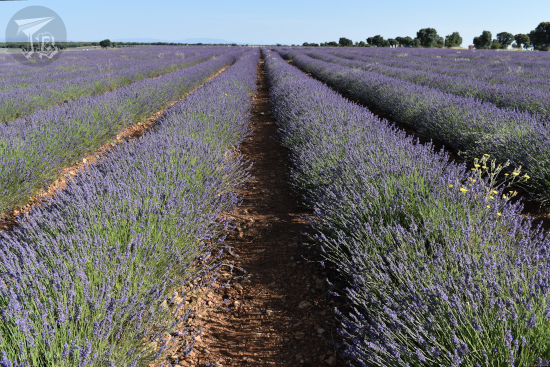
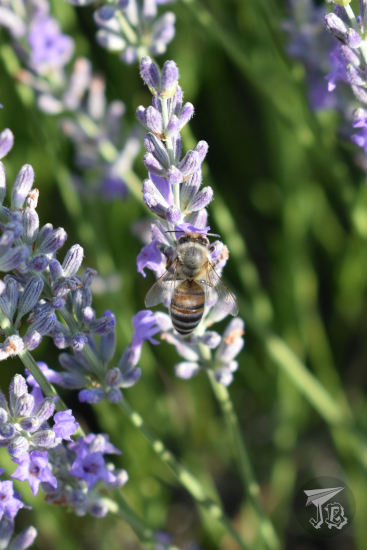
I drove to the fields and I reached the makeshift parking lot around 9:00, when there were few cars and just a bus of tourists. I wandered around for around an hour and a half, doing my best not to damage the plants and get a good picture or two – including macros of bees. For the first while, I stayed in a smaller field to listen to the sounds, but then I moved onto the bigger fields for better views.

An inmense field full of purple lavender flowers with some patches of green because the photographer is too short to get the great angle with endless purple

Lines of flowering lavender bushes that reach the horizon

Close up of a lavander plant and a blurred background of endless purple

Close-up of a bee on a lavander flower

 
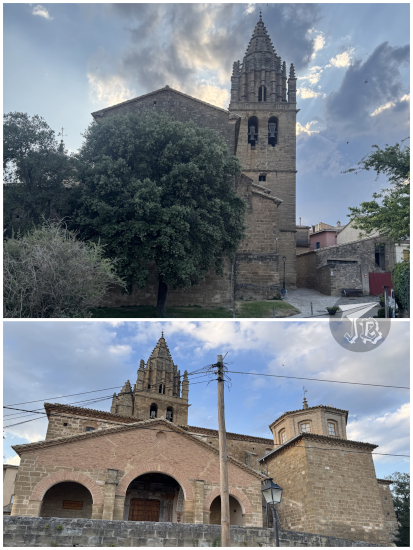
When I felt I was done, I hopped back on the car and set off towards a nearby place I had always wanted to see. The Sat-Nav sent me through Yela, a tiny hamlet with a Romanesque church Iglesia de Nuestra Señora de los Llanos and two medieval fountains. Technically, it is a neighbourhood of Brihuega, and it has a horrible road. However, it was still better than driving through Brihuega itself, which I had to do on my way back.

Reconstructed Romanesque church

Fortunately, I did not come across any other car in the opposite direction, but I did breathe in relief when I got to the larger road, from which I accessed Cívica, population 14. There are remains of a Roman villa, and in recent times rumours spread of Medieval knights and Jews in hiding, but this Brihuega district is famous due to a structure built in the mid 20th century.

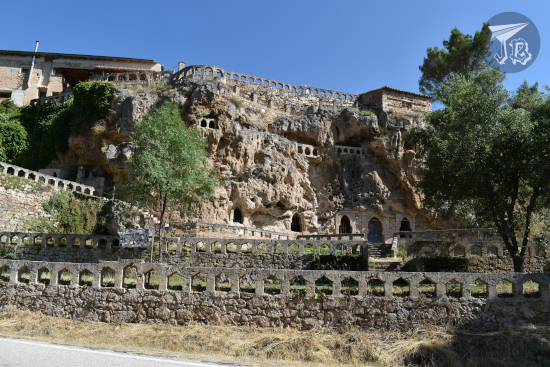
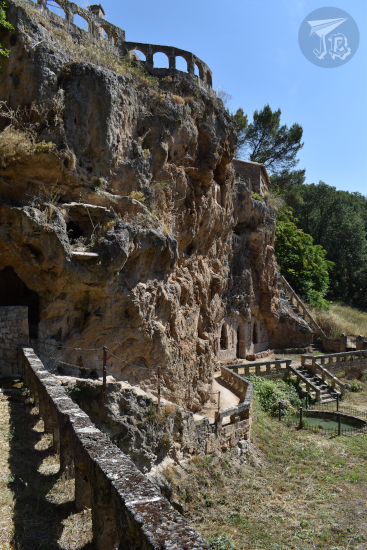
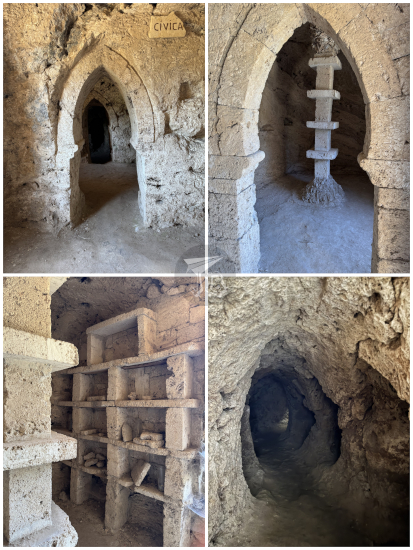
Though quite a few websites rant on about the “mysterious ruins” in the hamlet, their history is well-documented and widely known in the area. Between 1950 and 1970, a priest from a nearby village convinced a number of neighbours to buy the rocky land lot and work on it. He wanted a sanctuary, a bar, a chapel, all of the above at the same time. It was to be a magnificent complex. What the priest managed was to transform a karst rock wall with natural caves into an interesting façade with carved interiors that would serve for celebrations and debauchery. During the 1980s, it was all the rage amongst celebrities and rich people to go partying there, though it eventually lost its importance and closed down. Its ownership was inherited by a group of siblings who did not find it worth of any effort. A few years ago, it was bought by an entrepreneur who hopes to turn it into a rural hotel – and who shows it around at weekends for 2 € per person. There was a phone number to contact them for a visit, but I had no signal. Fortunately, I ran into the owner as he was starting a visit, so I joined in.

The façade of what can be called Caserío de Cívica has several arched doors (similar to the Visigoth arches in the Brihuega wine caves), balconies and stairs. The interior hosts bars and shelves. Deeper areas, the original caves, can double as wine cellars where drinks could be kept cold when they were still served. Though the Internet keeps saying that “the ruins are abandoned”, this is no longer true – they can be visited by appointment or at the weekend, especially if you are lucky enough to have signal to phone the owner so he shows them to you.

First we were shown the original bar, outside the property itself. Then we went in towards the second bar and the “caves”. Afterwards, we visited the party area, including the booths, which today are a dishevelled garden. Finally, we climbed all the way up to the modern caserío (homestead). Thus, the visit starts on the ground floor, next to the road, and you ascend through the different levels – the garden, the balcony and the upper area, where you can actually walk into one of the natural caves used for food storage in the past. To be honest, after reading so many conspiracy theories on the Internet, hearing the actual mundane story of the “ruins” was almost disappointing. However, it was really cool to check the inside, something that could not be done before – at least not legally.

Cívica, a venue built into a vertical wall, with balaustrades and balconies, from the ground

Cívica, a venue built into a vertical wall, with balaustrades and balconies, from the garden

Cívica, a venue built into a vertical wall, with balaustrades and balconies: walking around the balconies, which were carved into the rock itself

Cívica, a venue built into a vertical wall, with balaustrades and balconies: walking into the halls and tunnels

After the tour, I hopped into the car, and the Sat-Nav directed me back through the village of Brihuega itself. If driving there is difficult already (I ended up having to park outside the town last time), with the lavender activities, and it being a weekend, traffic was chaos. I was lucky I had the right of way so I could leave quickly, and I was soon on the speedway, having watched the lavender and learnt the secrets of Cívica.

31st March 2025: More Modernisme and the way back {FFVII Barcelona 2025}

For our final day in Barcelona, I had planned some more architectural visits. I had adjusted my planning considering the underground issues the previous day, but it turned out, it had been a Sunday-only thing. We had breakfast and on check-out, the manager asked how the stay had been. To his merit, when we told him about the issue with the air-conditioning, he apologised and offered us free breakfast in compensation. After we declined – timed entry visit – he advised us to write a complaint letter for a discount next time. I didn’t think it was necessary.

Since the station we had to change at was open, there was no issue with the underground, so we were half an hour early. I had booked a locker for the luggage in the centre of town, as the hotel is very convenient for attending a concert at CCIB, but quite far from… everything else, really. The locker system was convenient: you book online and get a code which opens both the place and your assigned locker. I found it more trustworthy than leaving the bags in a random shop which “looks after luggage”. However, about a month later, there was a complete outage in Spain, which made me second-guess the convenience of these things, as I heard about a lady who could not go home because her luggage was inside one of those lockers. We’ll see whether I dare use them again.

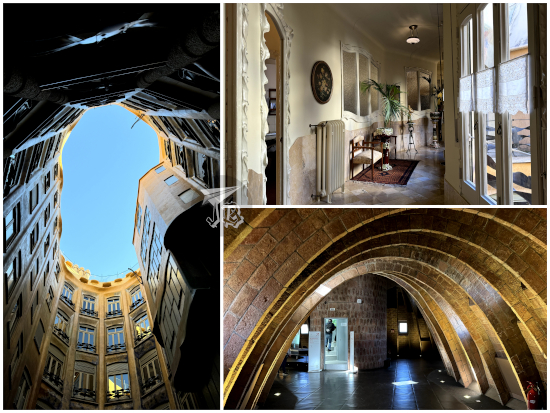
We were to continue on my Modernisme route, visiting one of the works of Antoni Gaudí (1852 – 1926), considered the peak representative of the style – to the point that some of his works have been declared Unesco Heritage by themselves as Works of Antoni Gaudí. Gaudí originally found inspiration in orientalism and Neo-Gothic, but as he became more and more established, he turned to nature forms – seeds, branches, bones, catenary shapes… The UNESCO work we wanted to see was Casa Milà, a building commissioned to Gaudí by lawyer Pere Milà in 1906. The building itself was erected between 1906 and 1910, and it was nicknamed “The Quarry” La Pedrera. It is an eight-floor apartment building with a self-supporting façade, electricity, running and hot water. The building was designed around a central patio, and it has a very particular roof-terrace. Some people claim that Casa Milà does not even fit into the Modernisme category, but it should be classified as “organic naturalism”, or even “expressionism” all by itself.

La Pedrera, exterior

I found the building… underwhelming. We had a combined ticket for Sant Pau and Casa Milà at 39 €, but the normal ticket price for the building is 40 €, and this is only for one of the floors with a “recreated apartment”, the attic, and the terrace. At least you get to see the patio as you have to walk past it so you reach the tiny lift in which they cram you to take you to the 7th floor. The experience felt… like… not enough. I was for sure expecting something more.

La Pedrera, Interior

Do not get me wrong, the house is extremely cool, but you get to see really little in comparison to how big the place is. So even if it is pretty, it feels crowded and small, with way too many gift shops crammed in. The terrace is fun, with chimneys that look like ancient warriors – some people say they represent chess pieces, others that they hide religious undertones – Gaudí was very spiritual. Reportedly, they also inspired the stormtroopers’ helmets in Star Wars.

La Pedrera, terrace

Afterwards, we walked to the music hall Palau de la Música Catalana part of the Unesco Heritage Site Palau de la Música Catalana and Hospital de Sant Pau, Barcelona. The so-called Palace of Music was designed by Lluís Domènech i Montaner a couple of years after projecting the hospital.

Palau de la Música Catalana

Everything that Casa Milá came short, the Palace passed with full marks. The building has an original entrance designed by Domènech, in dark brick with extensive decoration. The interior is laced with tiles and glass, and tinted-glass windows. The concert hall is amazing. At first, we could not access it, because there was an educative concert for children going on, but we were later allowed to sit at the paradise. There is a huge skylight / lamp in coloured glass, pegasus statues. The concert was incredible too, with four to six musicians playing classical music and… running around the stage too. Lady trotting up the stairs while playing the cello, you have my admiration. I loved everything about the palace, to be honest, except the creaky chairs.

Palau Música Catalana

Once we were done in the Palau, we walked to the market Mercat de Sant Josep (St. Joseph’s market), known as La Boquería (The Butcher’s). It used to be a regular marketplace, but now it has turned a touristic attraction. The main entrance is also part of the Modernisme route, designed by architect Antoni de Falguera, who also created the inner metal cover. Though I had half a mind about eating there, the prices were ridiculous, so we ended up at an Asian place a couple of streets down. On the way, I had been excited about the “Barcelona Aqueduct”, but it turns out it’s a modern construction with old ashlars, nothing historical in it at all.

Market La Boquería

After lunch, we had about an hour to kill, and we decided to try our luck in the hobby-shops area. The Norma Comics shop was open, and we spent a while looking at the books there. Then, we headed back to pick up our luggage and commute to the station.

We had to change trains, and there was an announcement that any passengers with a connection shorter than 30 minutes would be escorted to their train. Of course, that’s only PA, and you’re on your own – I asked a worker, who tried to divert us to the suburban trains, not our connection. From that conversation, I think that we were supposed to go out of the system and get our tickets scanned again, but we found our train before that. There was no one else to consult with, so I decided that we would get on it. My sibling was mortified, but we were not doing anything wrong. If anyone checked on us, we had a valid ticket. They had not lived up to their part of the agreement anyway – and I would have told them exactly that, had anyone even thought of scolding us.

But we made it, as I predicted nobody gave us any grief, and the drive from the train station was uneventful. All in all, it was an intense weekend – though I feel I could have squeezed in a monument or two more had we skipped the sit-down meals, but my sibling can’t handle that. All in all, I think everything worked out rather well.

30th March 2025: Sant Pau, Verne & a chocobo {FFVII Barcelona 2025}

The Barcelona hotel charged 20 € per day and person or breakfast, and I was not willing to pay for that, and so I told my sibling. They had no option but to accept since they had decided to delegate all planning and credit-card’ing on me. Instead of booking with breakfast, I brought cold latte bottles and snacks – good for taking headache medicine, which I did. After a quick breakfast, we set off. As we left, I asked at reception if they could do something about the air conditioning.

We headed towards the underground. It should have been an easy twenty-five-minute commute, but one of the stations was half-closed. We had to go outside and walk towards the other entrance to change lines, which was strange and consumed a ridiculous amount of time. We had to be at the ticket booth of our booked visit ten minutes before the allotted time, and we barely made it – though they did not seem to care. When I was looking at tickets, I found a combined ticket that saved us 10 € for two iconic buildings in town that I had not visited before. That however implied exchanging vouchers for tickets, thus the extra time.

We reached the former hospital of Saint Paul Sant Pau Recinte Modernista ten minutes after I had anticipated, right at the time we had to be there. Sant Pau is a huge hospital complex erected between 1901 and 1930 by architect Lluís Domènech i Montaner (1849 – 1923). Domènech favoured Modernisme, and is considered one of the most influential architects in shaping it. He designed buildings which balanced functionality and decoration, with lots of mosaics and polychrome. Though the precinct had been a hospital since the Middle Ages, it was completely redeveloped for the early 20th century project. Today, it is half of the Unesco Heritage Site Palau de la Música Catalana and Hospital de Sant Pau, Barcelona.

Hospital San Pau from the street

The hospital is considered one of the most important, and largest, complexes in the local Modernisme style. The complex was designed with 26 buildings, 12 of them pavilions for patients, separated by sexes and kind of disease. The pavilions were connected by underground tunnels, leaving space for gardens and open spaces between structures. It was originally conceived to be self-sufficient, closed off to protect the rest of the city.

Hospital San Pau, outside

The buildings are erected in brick, and decorated with ceramics both inside and outside, some of them forming complex mosaics on the roofs and ceilings. After a new hospital was built next to the original one in 2009, the complex was recovered as a museum in 2014. We could visit the pavilions, the tunnels, and the administrative building. The whole enclosure is magnificent, and incredibly large. It took over two hours to see everything we were allowed to visit and I loved every second of it. Well, except the pavilion with political propaganda.

Hospital San Pau, interior

Afterwards, we headed out towards a fun restaurant I had found online – Verne Barcelona, decorated simulating Captain Nemo’s Nautilus from the novel Twenty Thousand Leagues Under the Sea by French writer Jules Verne. We shared a cone of tempura vegetables and I ordered a “Submarine” – a sandwich made from toasted brioche bread – called Turtle, with battered squid, sauce and salsa (I just don’t understand how they are supposed to resemble a submarine…).

Verne Barcelona

We headed back towards the hotel, stopping at a Starbucks for a coffee – a matcha in my case – because I helped my sibling dress up for the concert. We had been carrying the cosplay after all, of course they were going to wear it!

We were in Barcelona to attend the Final Fantasy VII Rebirth Orchestra World Tour, to be held in the CCIB – Centre de Convencions Internacional de Barcelona. Final Fantasy is an expanded video game anthology which set off in 1987. Since then, it has spawned 16 main games and countless spin-offs, media, plushies, and remakes. One of the most famous games is the seventh instalment, Final Fantasy VII, released in 1997. The game is set in a cyberpunk dystopia where energy is obtained by draining the Planet’s life-force. Gameplay follows the adventures of a party which opposes the system, embodied by the electric company Shinra, while at the same time trying to stop the main antagonist – mad soldier Sephiroth – from destroying the Planet itself.

Since 2015, Final Fantasy VII has been under redevelopment into a trilogy using modern graphics. The first game was Final Fantasy VII Remake, released in 2020, whose music had its very own World Tour in 2021. The second instalment, Final Fantasy VII Rebirth came out in 2024, and its music event – Final Fantasy VII Rebirth Orchestra World Tour – began almost immediately, ending precisely with our concert.

We were at the queue already when doors opened, but not early enough, so we needed to line again for the merchandise booth, almost an hour. It was in that queue where something amazing happened. When we attended the previous concert Final Fantasy Distant Worlds 35th Anniversary – Coral –, we were stuck at the merchandise queue for about an hour too and by the time we reached the front, they had ran out of most of the items. That included what I wanted the most – the chocobo plushies. Chocobo are a recurring species in the Final Fantasy franchise, large birds that can be ridden in-game, and in real life be sewn into cutesy toys.

It turned out that in 2023 the last chocobo plush had been bought by the guy who was sitting behind me. I might have made some jokes about stealing it and running away, and he promised to get me one for the next concert. I of course filed that under “one encounter silliness” and forgot all about it.

Well, he did not.

In that queue, two years later, he found me, and he gave me a chocobo plush. He actually found my sibling, who was easier to identify due to the cosplay. I was absolutely flabbergasted. Gobsmacked. Never in a million years would I have expected something like that to happen. Just… figure that everything that went on afterwards was coloured by a feeling of puzzlement and amazement at this stranger’s kindness over a silly plush I wasn’t able to buy two years before.

Chocobo!

We got to the front of the line over an hour later, almost at the time of start. I only wanted a programme, and we were seated around 20:50. I am good at choosing seats, by the way. We were dead centre at a great distance from the stage.

Setlist:
  First part:
  1. The Unknown Journey Continues
  2. FFVII Rebirth Opening
  3. Main Theme of FFVII – Battle Edit
  4. A New Journey Begins: Grasslands / Junon / Mt. Corel
  5. Crossing the Planet: Corel Desert / Gongaga / Nibel
  6. Queen’s Blood
  7. Stamp – Rebirth Medley
  8. Rufus’s Welcoming Ceremony – A New Leader
  9. Costa del Sol – Fun in the Sun
  10. Custom Valkyrie
  11. End of the World Medley
  12. Cosmo Canyon – Sanctum of Planetology
  13. Bare Your Soul
  14. Welcome to the Gold Saucer
  Second part:
  15. Loveless Symphonic Suite – Gift of the Goddess
  16. No Promises to Keep – Loveless Ver.
  17. Galian Beast
  18. J-E-N-O-V-A Lifeclinger
  19. Sephiroth Reborn Symphony
  Encore:
  20. One-Winged Angel – Rebirth Medley
  21. Aerith’s Theme – Return to the Planet Medley

Final Fantasy VII Rebirth orchestra playing

The orchestra was directed by Eric Roth. It was all right, I enjoyed it. However, I don’t think it was as powerful as the first one I saw, but that one was the first post-Covid event so it was emotional in other ways. Then again, I am not a gamer. I just watch gameplays on the Internet… I was a bit disappointed by the arrangement of One-Winged Angel, it felt… too elegant. What I love about the song is the pure chaos it represents, after all.

In attendance was composer Masashi Hamauzu [浜渦 正志 | Hamauzu Masashi]. He started working for Square Enix in 1996 under Nobuo Umematsu, the main composer of Final Fantasy VII music. Hamauzu’s first direct work related to the saga was the Chocobo’s Mysterious Dungeon soundtrack in 1997. He was in charge music for the Final Fantasy VII spin-off Dirge of Cerberus and alongside Mitsuto Suzuki, he has worked in both Final Fantasy VII Remake and Final Fantasy VII Rebirth.

After the concert, we joined the VIP queue for pictures and autographs. Though I had brought the CD from the time before – when I did not get the pamphlet – I was equipped this time. And I even managed the Spanish – English – Japanese cacophony without messing up either of them. That’s a first for me, I think. I got my programme autographed on the setlist page, and then my sibling and myself headed back to the hotel. For 179 €, I keep thinking the VIPs should at least get their own merch queue, or an item to get signed. I guess there are lots of people to get paid…

Eric Roth and Masashi Hamauzu signing autographs

Something that surprises me a lot about this area of Barcelona is that not even the McDonald’s at the shopping centre is open after 23:00, so I always make sure we buy something to snack after the concerts. The room was at least not freezing, though not particularly welcoming either. I had a hot shower, and that finally got rid of my headache, just in time for bed…

9th March 2025: Expominerales 2025, the other half of the weekend’s plans (Madrid, Spain)

Since I had to be in Madrid to watch the fantastic concert by the Wiener Sängerknaben, the plan had been to attend the yearly Expominerales mineral fair in the Mine and Energy Engineering School Escuela Técnica Superior de Ingenieros de Minas y Energía (ETSIME) that same day. However, the fair closes on Saturdays between 14:00 and 16:00 for a lunch break, so since the weather was so horrid, I decided not to wait. On Sunday, the weather forecast was slightly less miserable, and in the end I was lucky with only some gentle rain as I walked between the train station and the Engineering School, nothing like the sleet deluge the previous day.

Expominerales fills the ETSIME with stalls selling minerals, fossils and crystals offered by reputable sellers. Here I’ve seen the biggest megalodon teeth in my life, held a plesiosaur vertebra – which I regret not buying when I had the chance – and discovered that moldavite exists – and which I regret not buying when I had the chance… do you spot a pattern here? I did not break it anyway, because in the end I cannot afford most of what is sold, and I already own most of what I can…

Overlook of ETSIME during Expominerales

I arrived at the School shortly after the exhibit opened around 10:00, and the area was still pretty empty. There were fewer stands than the previous years I’ve been there, and the moldavite stand was not there. Actually, there were very few meteorite-related stands this time around. I did see amazing modern-times frog fossils from Owens Lake. Owens Lake is called Patsiata in the Mono Native American language. In 1913, the lake dried out when the water from the Owens River was redirected and with years it has become a deadly salt flat, a source of alkali sand storms with a side of carcinogen materials. One of the minerals found in Owens Lake is trona, a crystal formed by the precipitation of sodium carbonate, making it a type of evaporite. In 2023, an atmospheric river caused floods in California, filling the lake up for the first time in over a century. The floods damaged infrastructure and created a surge of floodwater to the lake, which eroded surfaces and dragged a lot of small hibernating animals towards the lake, where they were killed instantly. Their soft tissues were quickly replaced by trona salt before the bodies even decomposed, creating a perfect cast of the poor critters. There were two on display at Expominerales and they were creepy!

Something else that caught my eye (and was actually within my doable price range) was a polished abalone shell. The Korean abalone (Haliotis discus) has been used for centuries in the art of najeonchilgi [나전칠기], which refers to decorating items with mother of pearl. The abalone can be polished in full, creating a whole iridescent body of nacre. These mollusks used to be collected by haenyeo [해녀], traditional female divers from the Jeju province, but most of them are farmed for food today. A small polished abalone came home with me.

Items from Expominerales

The School opens its classic museum during the exhibit, and I always enjoy visiting it. However, after wandering around for a bit (and spending some money), I moved onto what basically is the next building over to the ETSIME, the Spanish Mining and Geology Institute IGME – Instituto Geológico y Minero de España, which hosts the Geomineral Museum Museo Geominero. The original design of the building was conceived by Francisco Javier de Luque, and work started in 1921. Though a congress was held there in 1925, construction went on until 1941. The building has not been extensively restored, but it presents deviations from the original plans, and even from subsequent ones.

The museum is hosted in the former hall, and to get there, first you have to go through a very bored security guard – who first asked if I was sure I wanted to be there. Once inside the building, one goes up the main staircase towards the gallery underneath a glass-and-iron skylight with the logo of the Mining Institute. It was designed by Luque himself and created by the Madrid workshop La Veneciana, a glassware shop dating from 1876 and which, under a different name, still exists today.

Entrance staircase to the Geomineralogical museum

The museum is an open area, located underneath another incredible skylight. The displays are hosted in wooden cabinets in the main floor. The upper balconies can be accessed through spiral staircases and are protected by metalwork railings. One of the details I absolutely adore are the glassworks displaying geological sample cores of different surveys. I’ve never seen the library, but I was once part of a group which was allowed to play with some of the “lesser value” items they have as part of a training session, and that was super fun. The museum is probably one of my favourite spots in town.

The Geomineralogical Museum

From the architecture point of view, I like the building and the skylights. However, there are way more things to love in the museum, such as the wooden cabinets, full with samples of minerals, fossils and meteorites. The museum’s collection are divided into “Mineralogy and Petrology”, “Flora and Invertebrate fossils from Spain”, “Vertebrate fossils from Spain”, “Foreign fossils”, “Systematic invertebrate palaeontology”, “Micro-palaeontology”, “Fossil resin”, “Fossil tracks”, “Stromatolites”, and the “special exhibits”. One of these is a complete cavern bear (Ursus spelaeus), another one is an Ibex (Capra ibex). The last two have honour spots, with their own display.

When you come into the museum, one of the first things that you see, in front of the door, up on the first-floor balcony, is the cast of the most complete Tyrannosaurus rex skull ever found – Stan. Specimen BHI 3033, Stan, was found in 1987 and excavated in 1992, in South Dakota’s Hell Creek Formation. Stan lived around 65 million years ago, in the Cretaceous period. We know he fought for his life more than once – his ribs were broken and healed, two vertebrae were fused together, and he suffered a bite to his snout. Stan remains one of the most complete skeletons ever found, and probably the most-often cast. The skeleton made mainstream news when it was auctioned at Christie’s in New York due to money disputes among partners of the original owner-firm, Black Hills Institute. An anonymous buyer paid $31.8 million for it in October 2020. In 2022 it was disclosed that the Department of Culture and Tourism of Abu Dhabi had bought Stan for their projected new Natural History Museum.

On the ground floor there is a mastodon fossil Anancus arvernensis found in the 1990s. These animals related to modern elephants lived throughout the Miocene and went extinct in the Early Pliocene (two million years ago). The could have been around the size of a modern African bush elephants, but their tusks were mostly straight. They would have lived in steppe with dry and warm climate, but close to water. The fossilised bones were recovered are dated around 3.2 million years ago, and were dug from the Las Higueruelas site between 1948 and 1991.

Exhibits at the Museo Geominero

After I wandered the museum for a while, I left towards my train which was delayed… 43 minutes. Fortunately, so were the ones that had to pass before, so I ended catching one in the right direction after only a twenty-minute wait. And then I got junk food, because some days have to end in junk food…

22nd February 2025: Architecture in Madrid, and folklore in Guadalajara (Spain)

By now, reaching Madrid by train without anything remarkable to comment on is actually remarkable all by itself – there were actually no problems for once. I had booked a spot for a visit at noon, but since I don’t trust the rail service, I hopped on a train to be at Atocha Station around 10:00, and for once I was there right on time, maybe even a minute early!

As I walked up the street Paseo del Prado, I passed by the exhibition centre CaixaForum, where the Patagotitan still stands. Since it was still winter, the trees on both sides had little to no leaves, and I could see it from the opposite side. I of course said hi.

Patagotitan skeleton

My first stop was the church Iglesia de San Jerónimo el Real, dedicated to St. Jerome, a late Gothic – early Renaissance building erected between 1502 and 1505. It belonged to a monkhood whose original monastery stood near the river. The stagnant waters caused illnesses among the brethren, who asked the Catholic Monarchs for a new location. The church for the new community was created from brick and masonry, and towers were added in the 17th century. The interior is decorated with two gothic altars to the sides, but no main altarpiece, as the original one has been lost to time. Instead, there is a painting by Rafael Tegeo La última comunión de San Jerónimo – Saint Jerome’s last communion – created in 1829.

Monastery Monasterio de Jerónimos

Afterwards, I headed towards the National Museum of Anthropology Museo Nacional de Antropología, a small museum dedicated to the diversity of cultures in the world, particularly the Americas, Philippines, Africa and the “Far East”, focusing on traditions, culture and religion. It is covered by my national museum card.

At the moment, the museum is running a temporal exhibit on art based on myths, legends, and sacred texts from India, Caminos místicos. Tradiciones vivas del arte de la India – Mystic Paths. Living Traditions of art from India. I was curious about it, but not expecting how much I liked it in the end. The pieces of the exhibit were mostly based on Hinduism (Sanātana Dharma, सनातन धर्म), the oldest religion in the world. According to Hindu tradition, the Supreme Being Brahma exists as themself, but also as the manifestation of the deities Brahma the Creator, Vishnu the Sustainer and Shiva the Destroyer, all of who at the same time have different avatars (avatāra, अवतार) or incarnations. One of the core principles of Hinduism is the concept of cosmic cause-and-effect justice, karma [कर्म]. Another is reincarnation (saṃsāra, संसार), an eternal cycle of life and death until the individual is liberated from it through self realisation or illumination. The religion is based on values like righteousness, truth, love, peace, and ethical conduct, and it is quite open to other beliefs and ethics.

Religious Indian Art pieces

The Museum of Anthropology’s permanent exhibition has a lot of items from the Philippines on the ground floor, probably due to how long(1565–1898) the islands were a Spanish colony. There are clothes, tobacco items, ritual objects, and a small sample of how the local culture was throughout the 1800s. To the back, there is a room dedicated to the religions of Asia and the Middle East – Hinduism, Buddhism and Islam. The first floor is dedicated to Africa, combining a number of traditional exhibits with modern photographs of the traditional people’s way of life – baskets, pottery, leather and wooden objects, ritual masks… The second floor holds items from the Americas, especially from South America. Some of them include a Mexican Día de los Muertos (Day of the Dead) altar, Andean Carnival masks, Sioux-Lakota clothes, Inuit coats…

Religious icons and traditional masks

I remember visiting the museum when I was a child, and then feeling disappointed in it when I returned as an adult. This time around, I found the permanent and temporal exhibitions quite interesting, so it’s a good thing I headed there. It also helped make time until noon, when my next visit was due, to the only Ministry that can be visited – albeit not freely, by appointment and paying a fee – as it is a historical building.

The current Agriculture Ministry is housed in the historical building known as Palacio de Fomento – Palace of Development. Its plans were originally drawn by architect Mariano  Belmás y Estrada, aiming for an Arts and Craftwork School. Later, Eduardo Saavedra y Moragas took over to turn the design into a university. Finally, the project ended in the hands of architect Ricardo Velázquez Bosco, who erected the building between 1893 and 1897 to house the then Ministry of Development.

The Palace is an impressive construction. The original design had three floors, which have now been turned into five. From the outside, the building looks white and orange-brown, but a more focused look reveals decorative tiles by Daniel Zuloaga, who also collaborated with Velázquez Bosco in the ETSIME. The entrance is flanked by two caryatids and roof above there is a sculpture group – Glory and Pegasi La Gloria y los Pegasos, a bronze copy of an original marble by Agustín Querol.

Palacio de Fomento, outside

Once you enter, you find yourself in a huge majestic hall, where we had to check in, since the building is a working Ministry. The email said to be there at 11:45 to go through security. I got there at 11:40 and went in at 11:44. They took my name (they did not care about the ticket) and they put my stuff in the X-ray machine. I had to go through the metal detector and when I asked whether I had to remove my belt, I was just told to put my hand over the buckle… So much for security, I thought, because I did not beep. Then I realised that I must look quite non-threatening as quite a few people were thoroughly searched as they set off the machine.

Beyond the hall where we were checked in, there is an imperial staircase in marble, and a vaulted frescoed ceiling. From there, we visited some offices and meeting rooms, and the portrait gallery – from which the ministers who held office during the Franco dictatorship had been removed. Finally, we visited one of the side inner courtyards, covered in a skylight with some ironwork.

Palacio de Fomento, inside

After the visit was over, the security guards saw us out and locked the doors. I walked around the building, because I had honestly never realised it was square. As the place was next to the Retiro Park, I had been considering looking for some archaeological spot they had opened. However, there were more ideas – Guadalajara was having the Botarga parade, and it was the fair weekend in Tendilla, though, a phone call informed me that traffic was horrid and that it was not a good idea to head there so late in the afternoon.

Eventually, I decided on the Parade. I bought some sandwiches and headed for the train. Though I got rained upon, it cleared up, and at 18:00 I was in Guadalajara to have a look at the traditional Parade of Carnival characters Desfile de Botargas – “creatures” from the whole area which meet up in the capital the Saturday before carnival, despite each character having its own schedule wherever it is rooted. The parade was a bit late, so I could talk the local botarga group – El Manda (the Order-giver), Los Mandaneros (the Order-receivers), and the Botarguilla (Little Botarga) – into posing for me. I watched and took pictures from two spots, but the parade moved really fast because they only had thirty minutes to do the route – last year they took well over an hour for that. I decided I did not want to run for it that much… I have to remember to find myself a vantage point next year, instead of trying to get the beginning of the parade…

Guadalajara Botargas

Heifferette from Riba de Saelices

Botarga Parade 2025

I got “attacked” a few times, and ended up with soot all over my face, but at least I avoided the guy painting people with mustard… The botargas seemed to zoom in on children and cameras, and so did the devils Diablos (from Luzón) and the heiferettes Vaquillas and Vaquillones (Villares de Jadraque, Robledillo de Mohernando, Luzaga, Riba de Saelices). It was fun. One of these days I might have to try to follow the botargas in their own villages…

4th January 2025: Bye Bye, Murderbird. MARPA, Alcalá de Henares (Spain)

While it was great to have the Concavenator fossil (a.k.a. Murderbird in my headspace) in the Dragon Hunters exhibit in Alcalá de Henares close enough to visit at will, the time had come to see it move on. Just in case there was any information I was missing, I decided to book a guided visit to the exhibit. As it was scheduled for 12:00, I decided to look for something to do beforehand, and I found guided visits to the monastery Monasterio de San Bernardo at 10:00. I had seen the building before, as it stands next to the MARPA, I just had never given it much of a thought.

The monastery was established under the patronage of Cardinal Bernardo Sandoval y Rojas around 1620. He bought land cheap because it was near the Moorish quarter. The church was erected in brick with decoration in stone on the outside. The inside has an elliptical dome, and it was heavily damaged in a fire during the Civil War, so it had to be restored – the work on it was a Rehabilitation prize in 2019. Most of the decoration of the church was lost and today walls and roof are just white and gold. The building is attributed to architect Juan Gómez de Mora.

There is a free-standing ciborium in gold, with a number of sculptures of Saints instead of an altarpiece. Behind the altar and ciborium, there are a number of paintings – they were created by Italian artist Angelo Nardi. Nardi was born in the late 16th century, and studied in Venice before moving to Madrid, where he became a Court Painter. His style evolved from late-Renaissance (mannerism) to Baroque, and he is known for his expressive faces. He was friends with Velázquez, and famous for being quite kind, though his style eventually fell out of grace. He painted most of the pictures in the church, although some of them are now out of order as they were moved during the Civil War.

The visit was interesting albeit a little underwhelming. It felt a bit weird to be the only visitor and having the whole thing explained to me – that has only happened once before, in Recópolis. However, that was epic, because I ended up getting the whole archaeological place for myself. The monastery was more of a serious experience – and it did not rain on me. But still it felt… colder. And like being in an exam, the guide kept asking me questions about history, architecture and hagiography.

Monastery of San Bernardo in Alcalá de Henares

I had a bit of time before my following visit, so I decided to run to the Sala Museográfica de la BRIPAC, a tiny museum about the history of the Army’s Parachuting Brigade. The Brigade was created in 1953, and the parachuters participated in combat for the first time in 1957. In its origin, it was established in Alcalá, so there is a historical connection there. The hall hosts uniforms, flags, medals, and reports about the peace missions in the 1990s. I am not much of a fan of Armed Forces museums, but today the BRIPAC is considered a peace corps. The museum opened in February 2023, on the 70th anniversary of the foundation.

BRIPAC exhibit

I still had a bit of time, so I dropped by Plaza Cervantes, which was full with Christmas lights and shoppers at the small market. There were food stalls, a small bookshop, some rock shops… Nothing really caught my eye though.

Plaza de Cervantes Christmas

I finally headed back towards the Archaeology and Palaeontology museum MARPA Museo Arqueológico y Paleontológico de la Comunidad de Madrid. It was one of the last chances to see the exhibition on the history of palaeontology “Dragon Hunters” Cazadores de Dragones with a guided visit, and I figured out that maybe I could learn anything new – despite the fact that I’ve been there a few times and bought the book. We had a nice fun guide who relied a lot on asking questions to her audience. Apparently I was the only one with… some knowledge of… anything she asked – what’s with guides in Alcalá de Henares trying to have you do their job? I felt a bit sorry for her so I answered her questions – with a higher success rate than the ones from the Monastery, to be honest. She did not impress me with the depth of her knowledge, to be honest. She actually looked at me a bit panicky when I asked her t confirm that the T-Rex replica was a cast of the famous Stan.

Cazadores de Dragones entry in the cloister of the MARPA

I stayed back for a bit longer after the visit ended. I’ve ranted on and on about the Concavenator before, both the fossil slab and the actual-size reconstruction. I just loved having both so at hand. When I was young, the scientific community came to the conclusion that “birds descend from dinosaurs” but today it is actually believed that birds are actual dinosaurs. And since the poor beast has such a ridiculous name, I’ve just been calling it “Murderbird” or “Murderchicken”, for kicks and giggles.

There were these two little kids who kept grilling their dad about the skeletons, and the poor man was a bit overwhelmed. I decided to give him a hand with the questions and explained a little. I thought that was it, but the smallest child pointed at the Concavenator and blurted out “can you tell us more things about that one??” He was so eager that I just took the family to see it and told them a few things further. The family was on their merry way in five minutes – four-year-olds only have so much attention span. The kids were happy, the parents were relieved and I got to geek out about dinosaurs with appreciative public. I think the interaction was an all-around win.

Murderbirds: T-rex and Concavenator

At first I had thought that I would be staying in Alcalá for an exotic lunch, but I was not really feeling up to it. With great sadness, I said goodbye to the Concavenator and moved on to drive home.

31st December 2024: A clumsy morning yielded to an unbelievable evening {Vienna, Silvesterkonzert 2024}

When we walked out of the rooms to go down and have breakfast, my parent’s alarmed face made me worried. They informed my sibling and myself that “it had snowed”. That was spooky for a second – until I ran to the window and saw that the “snow” was just a very thin layer of scattered white powder. It was safe to go out, even with my senior parents. We had breakfast and we got ready to go out.

Snow in Vienna

At some point, my family “caught” that I like Natural History museums, so they really, really thought I wanted to go to Vienna’s Natural History Museum – Naturhistorisches Museum Wien, and just wouldn’t listen to “No need, I’ve been there already, Their reasoning is that I had mentioned it before, which I actually had, to inform them that the Venus von Willendorf was there. That is where we ended up, and I was happy to oblige – the museum has rocks, meteorites, fossils and dinosaur animatronics. All right up my alley.

The museum’s oldest collection 250 years. In 1750, the Holy Roman Emperor Francis I bought what at the time was the largest collection of natural history objects at the time – around 30,000 objects. That same decade, the Emperor founded the Schönbrunn Zoo and the botanical garden, and he ordered the first scientific exhibition to be held. Upon his death, the collections were donated to the state, and the first museum according to the Enlightenment principles was founded – and soon expanded.

The museum building was also commissioned by the Emperor. It was designed by architects Gottfried Semper and Carl Hasenauer, with an identical exterior to the nearby Museum of Fine Arts. Works began in 1871, and the institution officially opened in 1889. Though it was indeed originally designed as a museum, it feels more like a repurposed palace, with decorated ceilings and monumental staircases. It has 39 halls with almost 9,000 square metres of exhibits, still keeping the 19th century outline. We just did halls 1 to 13: mineralogy, petrography, meteorites, palaeontology and prehistory galleries, including the Venus von Willendorf. The 11-centimetre figurine was made in limestone around back to 30,000 years ago. It is a nude woman of large proportions, and even if she does not have a face, she is mostly anatomically correct and has plaited hair.

My family was fascinated by the collections, and I guess I felt a teeny bit smug about that – considering how much fun they poke at me because natural history museums are very high on my priorities when I visit a new place (see: my first time in Brussels).

Natural History Museum Vienna

Natural History Museum Vienna

We left the museum after a couple of hours, around noon. We did not stay at the Silvestermarket at the square, but headed out towards the Imperial Butterfly House Schmetterlinghaus. It comprises half of an Art Nouveau greenhouse turned tropical botanical garden and butterfly zoo of sorts. I really love the iron-and-glass architecture of the building – and I would have loved to have had lunch in the brasserie that fills the other half of the greenhouse. The building was designed by architect Friedrich Ohmann and erected in 1901 as part of the Hofburg Palace and is, next to the Burggarten palace.

Most of the butterflies we saw, if not all, were forest giant owls Caligo eurilochus, very large butterflies originating from the Americas – they can live from Mexico to the Amazon basin. They have marks like big eyes in its back wings (hence the commmon name), and the inner wings are blue. They are pretty, and they seem to like fruit, as they gathered around the feeders to snack on it. The sad part is that they only live around 24 days.

Schmetterlinghaus

We then headed to the restaurant Centimeter, near the Rathouse (town hall) to have lunch. It is a place that has a lot of things measured – you can order sausages by the metre. I was somehow was not feeling hungry, so I decided to get Gebackener Emmentaler mit Sauce Tartare und Preiselbeeren, breaded and baked Emmental cheese with tartare sauce and cranberries. After lunch, we expected the Silvestermarket next to the Rathaus to be open, as it was one of the places to be for New Year’s Eve. We were wrong! That was a bummer, because in hindsight we could have cancelled the reservation and just stayed at the market in front of the Natural History Museum. That was a bummer, but at least we were warm.

Gebackener Emmentaler

We headed back towards the hotel, and we stopped by the supermarket next door to buy something for dinner. I grabbed myself some pre-emptive sushi, because I was pretty sure that my family was not going to find what they wanted – basically stuff like they would get at home. After half an hour of going back and forth, they decided to settle down with sandwiches and more sushi. We also picked up some chocolate thingies that would end up being more coconut than anything else. Not that I have anything against coconut, but I do not appreciate it replacing chocolate unannounced.

We took the groceries to the hotel, and had a bit of downtime before got ready for the main event. During that time, I went on the online airline webpage to make sure that the travel agent at El Corte Inglés had checked us in. The check-in was done, but someone had made a typo on my parent’s email address so we had not received the boarding passes. I retrieved them and downloaded onto my phone to distribute later.

A bit past 18:00, we left for the Wiener Musikverein, the Viennese Music Association, home to the Vienna Philharmonic Wiener Philharmoniker, where we would attend the 2024 Silvesterkonzert. It was a bit strange to head to such an event using the underground, but that was the most efficient means of transport, to be honest. We ran into the Spanish lady and her husband again – and that was great because that way we could take pictures of each other without having to get a stranger to do so.

Vienna Musikverein

The Musikverein was designed to resemble an Ancient Greek Temple in a Neoclassical style, following plans by architect Theophil Hansen. The building was inaugurated in 1870, and it has a small decorated entrance, very underwhelming staircases, a small chamber music hall, and the main music hall, the Großer Musikvereinssaal or Golden Hall. Walking in there was… surreal. It’s a hall I’d seen so often on TV, and it actually felt… I don’t know, a bit… pale. Less bright than on the screen. Maybe it was that the flowers were white and pink, so they did not pop. And it’s not like I know anything about flowers, anyway. I was just happy they were artificial enough not to trigger my allergies, it would have been awkward to sneeze all throughout the concert…

Vienna Musikverein Golden Hall

Though the “New Year Concert” is the one that everyone knows, there are actually three concerts with the same set list – the Preview Voraufführung on the 30th, the Silvesterconcert Silvesterkonzert on the 31st, and the New Year’s Concert Neujahrskonzert on the 1st. I honestly would have thought that it would be full of wealthy people and they would be all cool as cucumbers, but it turns out, a whole bunch of us were just excited noobs taking pictures of every and anything. My family’s seats were on the second floor balcony. I just couldn’t believe everything that was going around around me, nor where I was. I bought the programme, because I really wanted something physical from the soirée, aside from the ticket.

The Vienna Philharmonic was founded in 1842. It is formed by the best musicians from the Vienna State Opera. It is actually run by the musicians themselves. Every year, a conductor is chosen to direct the concerts, and for the 2025, it was Italian Riccardo Muti. Maestro Muti was born in Naples in 1941, and studied in the Classical Lyceum. He proceeded to move onto studying Piano, then Composition and Conducting. He began his career in 1968 as the music director of the opera festival Maggio Musical Fiorentino. He conducted the New Year’s Concert in Vienna in 1993, 1997, 2000, 2004 and 2018 before this year. In 2011, the Philharmonic awarded him Honorary Membership. He is also a bit of a troll.

The concert had two parts, including the encore:

First part:
  1. Johann Strauß I. Freiheits-Marsch, op. 226 – Freedom March
  2. Josef Strauß Dorfschwalben aus Österreich. Walzer, op. 164 – Village Swallows from Austria, waltz
  3. Johann Strauß II. Demolirer-Polka. Polka française, op. 269 – Demolition Men’s Polka, French Polka
  4. Johann Strauß II. Lagunen-Walzer, op. 411 – Of friends, Waltz
  5. Eduard Strauß Luftig und duftig. Polka schnell, op. 206 – Airy and fragrant, fast Polka

Second part:
  6. Johann Strauß II. Ouvertüre zur Operette “Der Zigeunerbaron” – Overture to the operetta “The Gypsy Baron”
  7. Johann Strauß II. Accelerationen. Walzer, op. 234 – The Acceleration, Waltz
  8. Josef Hellmesberger (Sohn) Fidele Brüder. Marsch aus der Operette “Das Veilchenmädl” – Fidel brothers. March from the operetta “The violet girl”
  9. Constanze Geiger Ferdinandus-Walzer, op. 10 [Arr. W. Dörner] Ferdinandus, Waltz
  10. Johann Strauß II. Entweder – oder! Polka schnell, op. 403 – Either … or! Fast Polka
  11. Josef Strauß Transactionen. Walzer, op. 184 – Transaction, Waltz
  12. Johann Strauß II. Annen-Polka, op. 117 – Polka Ana
  13. Johann Strauß II. Tritsch-Tratsch. Polka schnell, op. 214 – Chit-chat, fast Polka
  14. Johann Strauß II. Wein, Weib und Gesang. Walzer, op. 333 – Wine, Woman, and Song

Encore:
  15. Johann Strauß II. Die Bajadere, Polka schnell, Op. 351 – The Bajadere, fast Polka
  16. Neujahrsgruß (New Year’s Address)
  17. Johann Strauß II. An der schönen blauen Donau, Walzer, Op. 314 – The Blue Danube
  18. Johann Strauß I. Radetzky-Marsch, Op. 228 – Radetzky March

Vienna Silvesterkonzert 2024

Honestly, what can I say? It’s nothing and everything like what you watch on TV. The music was fantastic, but somehow it felt like the conductor did not do much, the orchestra did whatever they wanted, not in a bad way. They knew exactly what to do and just did it. I know next to nothing regarding classical music, but they made it feel absolutely effortless. I am not sure how much work they do on their own and how much they do with the conductor, but I can tell had Riccardo Muti a blast. At some point, when he was coming in and out, he knocked over some of the viola or bassoon’s music sheets all over – he was very apologetic about it. Also, although neither photographs or videos are not permitted (mine are totally… sneaky, you see), one of the ladies in the first row was shamelessly filming, and he winked and waved at her. Furthermore, he would just… jump during some of the polkas, which is a feat considering the man is 83 years old.

The concert always ends with Strauß’s Radetzky-Marsch, and the public is invited to clap along. Muti completely had the concertgoers in his pocket, controlling them (us) with a finger and a look. It was amazing to watch. All in all, he was absolutely… not careless but carefree. It was great to see, somewhat magical in a way.

Vienna Silvesterkonzert 2024

The concert felt much much shorter than the two and a half hours it lasted. We went down to the first floor for pictures during the intermission, and we were not the only ones. However, I think we kind of… snuck past the intern or something, not sure we were supposed to be allowed on that floor. People were having champagne but I only cared about seeing everything. I might be a bit… weird. I make no apologies. I really loved the experience. They say it is a once-in-a-lifetime experience, but to be honest, I would just try the lottery every year from now on. I mean, I now have the right clothing for it…

After the concert, we went back to the hotel where we had our dinner. To be completely fair, there was a part of me that would have totally wanted to go out to watch fireworks and Vienna’s way to celebrate the New Year – and then be an absolute wuss, freeze my butt off and need to come back to the hotel. But the grass is always greener on the other side of the fence, and since I did not get to see it… It must have been the most interesting thing ever! It’s okay though, because I got to see the concert, and it was already my once in a lifetime most interesting thing ever… But it took me hours to get to sleep, so maybe I could have explored some, because in the end I’m greedy and I want it all.

30th December 2024: A planned and packed day {Vienna, Silvesterkonzert 2024}

It was a crisp morning in Vienna when we got up. We went down for breakfast and it was not particularly well stocked. The coffee was… weak, so I decided to mix a cappuccino and a black coffee to get me the energy I needed for the day. I tried some local cake, but I did not enjoy it, so I decided to stick to bread and croissants. Thankfully, I did run into the lady from the day before, and her husband, during breakfast, and told her about our plans – that way at least someone in the group would know not to wait for us and we would not delay anyone. Apparently, we were not the only ones who had made their own plans either, as the excursion had been marketed as “optional” and yet it seemed to be “a given”. Even better, we came across the driver from the day before (despite him saying he had nothing to do with the trip), and we could tell him that we were not coming, either. As we stepped out, it was freezing – literally below zero – but sunny during the whole day.

We took the underground at Zieglergasse and headed towards the city centre. I asked my parent to use their phone for GPS and maps in order to keep my battery for as long as I could so I could be taking pictures throughout the day, so they would be guiding. Our first stop was the Hofburg – the former imperial palace – and the Sisi Museum. Empress Elisabeth of Austria (1837 – 1898) was the wife of Emperor Franz Josef I of Austria. She married the Emperor when she was just 16 years old, and was stifled by court life. She spent most of her time travelling and avoiding royal duties. Her perceived eccentricity – today we would call it depression – and assassination in 1898 helped create an image of a romantic heroine in the media that has reached today, especially through actor Romy Shenider’s portrayal in the 1950s.

Hofburg

The museum tells about her life by showing objects, portraits and reproductions of her clothes. Then, you step into the former imperial apartments, which have been refurbished with furniture from the 19th century to make them look real. The audioguide was… corny to say the least, and I kind of skipped most of it because I got bored.

Sisi Museum and Royal Apartments Vienna

I proposed the church of Saint Michael first, and then the National Library. However, my parent had been intrigued by the church that stood at the exit of the underground. Thus, we headed there. The Wiener Minoritenkirche, Friars Minor Conventual Church, is officially the Italian National Church of Mary of the Snows Italienische Nationalkirche Maria Schnee. The church was erected between 1276 and 1350, and it was one of the first gothic churches in Vienna, following a French pattern. There were many subsequent reforms, including rebuilding the bell tower and the spire again and again – today the bell tower is flat and the spire is gone. The interior altar is Neogothic, by Ferdinand Hohenberg. Since it was still around Christmas time there were Nativities and Christmas trees.

Wiener Minoritenkirche

Afterwards, we headed towards St. Michael’s Church Pfarre St. Michael. It started as a late Romanesque or early Gothic building, maybe in 1221. The following two centuries saw Gothic annexes added. The crypt was built in the 16th century. The organ was built in 1714. The Rococo high altar was sculpted by Karl Georg Merville, and it represents the Fall of the Angels after the War in Heaven, when Lucifer was banished; underneath, there is a Byzantine Virgin Mary from the Cretan school. The outer façade was rebuilt in a classicist style in 1791. Construction officially finished in 1792. The crypt is accessible in a guided tour, but considering it has about 4,000 bodies, some of them mummified and on display, I think I’m happy we did not take it.

Michaelkirche Vienna

I proposed going to the Library again, because it was cold and there would be toilets there. My parent took over guiding with their phone, and my sibling and I got distracted as we passed by the Stallburg, where we caught a glimpse of the Lipizzan horses chilling out.

Instead of reaching the Library, my parent decided that we wanted to see the Augustinian church Augustinerkirche, a mix of 14th century Gothic and 18th century Neogothic. The original church was engulfed by the Hofburg as it expanded, and in 1634 it became the official imperial church. May Habsburg weddings were officiated there, and a chapel to the side, called the Herzgruft (Heart Crypt), contains the hearts of the members of the dynasty, from Ferdinand IV in 1654 to Archduke Franz Karl in 1878.

Augustinerkirche

I did not get to go to the Library, but we walked past the Hotel Astoria, which opened in 1912. it was built in the a late Art nouveau style known as fin de siècle (end-of-century). At the time it opened, the hotel was the latest, with electricity, bathrooms and all!

We reached the pedestrian / shopping street Kärntner Straße, the neuralgic centre for Vienna shopping. There we… met the card-not-working lady and her husband again, in what would become a funny number of encounters. We also saw the Swarovski shop. We entered it because we thought it would be warm – and hey, it had a toilet, which was handy, considering we had left the hotel over four hours before. Swarovski is an Austrian glass producer, known for its crystal glass, used in jewellery, decoration, watches, accessories. The company was founded in the late 19th century with the idea of “making a diamond for everyone”. Since then, it has produced thousands of items – from Christmas decorations to sculptures to collectible tiny figurines to whole dresses for the Vienna Opera. The place was halfway between a shop and a museum – and we might have spent a bit more than we had planned there, especially considering we were not planning to spend anything.

Swarovski flagshop Vienna

We reached DO & CO Restaurant Stephansplatz, located on the top floor of the post modernist structure Haas House, constructed in 1990. Most of the building is a hotel now. The restaurant has a fun view of the cathedral Domkirche St. Stephan. My parent and I discovered the restaurant because the opening scene of Austrian TV series Kommissar Rex, which ran between 1994 and 2004. It follows the story of German Shepherd Rex, a police dog which is “transferred” to the homicide department after his original handler dies… at the DO & CO terrace. It is such a naïve series, I just love it. Think The A-Team ingenuity with an adorable GSD saving the day every time and stealing sausage rolls as a self-reward. In a later series, Rex would move to Italy, and there is currently a Canadian reboot too…

There were no doggies in DO & CO, but both service and food were superb. They had butter and bread, and small receptacles with different types of salt, and a note on how they should be used. For lunch, I ordered kalbsbutterschnitzel – delicious minced veal butter patties with cream, accompanied with mashed potatoes, fried onion rings and a small leaf salad. For dessert, I had an ice latte that I should not have had, but I saw it pass by and I was smitten. We snuck a number of pictures from the restaurant, too.

DO & CO Vienna

After lunch, we went into St Stephan’s cathedral Domkirche St. Stephan. The building is a mixture of Romanesque and Gothic, and it was initiated around 1137 and completed 1578, and as many as four construction stages can be seen – the first Romanesque towers, the later Romanesque church, the Gothic Choir, and the outer, newest additions. The roof is tiled with as many as 230,000 pieces, one side shows the mosaic of a double-headed eagle, and the other the coat of arms of the city and the country. The bell tower has twelve bells, and the interior hosts as many as 18 altars (plus the ones in chapels). The cathedral was built in limestone, so it looks darker than other churches its size (107 metres long, 70 metres wide and 137 metres high).

The high altar was built in marble by Tobias Pock in the 1640s in the Baroque style. It depicts the stoning of Saint Stephen, church patron and the first Christian martyr. He was stoned to death by the Israelites after a rather inflammatory speech in front of the Sanhedrin, defending Christ’s teaching versus the traditional Jewish ones. According to the Bible, this would have happened a couple of years after Jesus’ death, and before the Roman persecution.

St Stephan’s cathedral

My parents were tired and they decided to head off towards the hotel, while my sibling and myself stayed behind. We wandered around Stephansplatz, Rotenturmstraße, and Kärntner Straße, checking out the Christmas lights and decoration until we reached the Popp & Kretschmer fashion store. They are a luxury women’s clothes firm, which draw tourist crowds during Christmastime to see their huge bow decoration, which makes the whole building look like a present. They call it the Vienna Bow.

Christmas decoration - Vienna Bow

We also looked at the Vienna State Opera Wiener Staatsoper, which was prepared to celebrate the new year, with a neon display saying (in English) “Hello 2025”. It was stupidly cold though, so we might have stayed in an underpass for a few minutes longer than necessary.

Afterwards, we headed towards the Sacher Hotel. The five-star hotel was founded in 1876 by the son of a famous confectioner. When the founder died, his wife, Anna Sacher, became manager. She turned the hotel into one of the most refined in the world, catering exclusively to the aristocracy. This management lead the hotel to bankruptcy, and she had to sell the business to new owners, who restored it to its former glory. The hotel serves “the original Sacher-torte”, a chocolate cake coated with dark chocolate icing, and a thin layer of apricot jam in the middle, served with unsweetened whipped cream. It was reportedly invented by the father of the founder, and the recipe is kept a secret. There are other versions of Sacher-torte, but the hotel is the only one with legal standing to call theirs original.

We had a 17:30 reservation at Café Sacher, in the hotel. Sacher Hotel actually has two cafés. The more modern one faces Kärntner Straße and is called Café Bel Étage. It had a long queue – Christmas is peak season in Vienna, as we were quickly learning – but I had been informed that reservations accessed through a particular door. However, that was not where our reservation was – I swear, I did not see the different name anywhere. The historic Café Sacher had an even longer line, and no special door. I dared ask the doorman at the hotel how to get there, and he gave me a huge grin and said “skip the line, go through the exit”. Boy, that was… awkward. Very, very awkward. I though the people just outside would lynch us!

Staff came to check on us, and since our reservation at the Café Sacher was valid – I made the reservation in July, literally as soon as the spots open – we were shown into one of the small salons. The café has a perfect offer – Sacher Sweet Treat: a perfect slice of original Sacher-torte with whipped cream, a non-alcoholic hot beverage and a bottle of Römerquelle mineral water for 22.5 € (31.5 € with a glass of the in-house champagne, Original Sacher Cuvée). I ordered mine with sencha senpai, Japanese green tea. I enjoyed the cake more than I had thought I would, and the tea was great. The staff was incredibly nice, too. They must have been used to silly tourists.

Sacher & Sachertorte

We left the Café Sacher and headed towards the Spanish Riding School Spanische Hofreitschule. For my sibling, this was a core-memory event, so they insisted we got really, really good seats for the Gala Performance Galavorführung at 19:00, on the parterreloge – the box at ground level. The Gala performance is the longest exhibition the Riding School has, and it lasts 90 minutes, with a break. The horses were gorgeous, and the riders looked very cold, but everything felt strangely… cold. I think I liked the exhibit in Jerez Riding School better.

The Spanish Riding School, considered the oldest horsemanship school in the world, was established during the Habsburg Monarchy in 1565. It is dedicated to the breed and training of Lipizzan horses. Lipizzaners are a breed of riding horses developed during the Habsburg empire. It derives from Arab, Bavarian, Spanish and Neapolitan breeds. They were selectively bred so most of them are grey with white coats – albeit there is always a bay stallion in the Spanish Riding School. The breed itself might be traced to eight stallions in the late 1700s, and it was developed in Slovenia. The horses are considered so precious that they were evacuated during WWI, and “rescued” by the US army during WWII. “Lipizzan horse breeding traditions” has been considered Unesco Intangible Cultural Heritage since 2022.

Once bred, foaled and fledged, the Lippizaners are trained. This is done at the Spanish Riding school. The traditional horse training methods used by the school can be traced back to Ancient Greece, and like many other things, they re-flourished during the Renaissance period in the 16th century. The goal of Classical training was to prepare horses for warfare as part of the calvary. Horses train for six year after they turn four.

In Vienna, the Lippizaners are housed at the Stallburg, which is technically part of the Hofburg Palace. It is a Renaissance building from around 1560, originally conceived as a residence but that was later converted into the Imperial Stables. The Winter Arena was built in 1735, and has remained unchanged since then – including the chandeliers. The arena is presided by a painted portrait of Emperor Charles VI.

Vienna Riding School - winter Arena

There was something weird in the atmosphere that made it not feel all that… fun. Before every performance, a lady walked to the centre of the arena to introduce the exercises movements in German and English. The performance was pretty though. I tried to sneak a picture or two, but I was unsuccessful – and a bit worried they would kick me out if the venue. There were a total of six different numbers, and the show, including the introductions, was organised as follows:

  1. Alle Gänge und Touren der Hohen Schule – “All Steps and Movements of the High School”: four riders and stallions in individual choreographers, including the one dark stallion in the stable, with classical movements.
  2. Am Langen Zügel “Schools on the Ground: On the Long Rein” – the riders guide the horse from the ground, they are not on top of the horse, with movements such as piaffe and pirouette.
  3. Pas de Deux “Step by Two” – two riders-horses pairs work in tandem, mirroring each other.
  4. Arbeit an der Hand und Schule über der Erde “Working Hand and Airs Above the Ground” – with three main movements: levade, capriole and courbette. Four horses work with their riders on the ground, and two of them with the riders on the saddle, but without stirrups. When horses perform well, they get a sugar treat from the rider.
  5. Am Zügel “Schools on the Ground: Curb Reins” – only one horse and his rider, who only holds two out the four reins in their left hand, and they hold the riding crop upright in their right hand, a commemoration of the military heritage of the horse riding tradition.
  6. Schulquadrille “School Quadrille” (or Das Ballett der weißen Hengste “Ballet of the Eight White Stallions”) – eight horse-rider pairs have to coordinate with each other for a choreography, ending in the Radetzky-Marsch.

When the exhibition came to an end, we tried to go to the toilets. You had to scan your tickets and pay 50 cents. Really. Two hundred quid for the tickets and they charged fifty cents for the toilets, which were filthy on top? A total rip-off.

I got my sibling to the hotel, and then I left again to meet up with my friend D****e and her father Fr***, who were also in Vienna for a few days. They were even staying in a hotel close to ours, so it seemed that we had planned it in advance. We spent a couple of hours in a small eatery – Gschamster Diener – where they introduced me to kaiserschmarrn, fluffy shredded pancakes with raisins, powdered sugar and cinnamon.

Kaiserschmarrn

I eventually had to go back to the hotel and my room. There, I spent an hour trying to find a place to book lunch for the following day. After deciding not to plan anything on the 31st, my parents had a change of mind and suddenly I found myself tasked with planning and finding a place for lunch. Most restaurants were either closed or booked off. I was not a happy camper, but in the end I managed to find something… somewhat decent. My sibling suggested the Natural History Museum, the Butterfly House and the Library before lunch. I was absolutely sure that was impossible to cram three things in the morning. We would not even do the entire Natural History Museum, but at least we would be somewhere warm. I resigned myself not to see the Library, had a shower and went to bed.

29th December 2024: Arrival, Karlskirche & Prater {Vienna, Silvesterkonzert 2024}

With our plane boarding at 8:10, we aimed to be at the airport around 6:30, which was a successful endeavour. We had our boarding passes but we needed to drop off some luggage. As we needed formal wear, neither of us could just make do with a simple backpack or trolley. We had decided to bring a carry on each, and two large suitcases – one per room – for coats, jackets, dresses and so on. The travel agency had checked us in the day before, and we had separate seats, but that was not important since it is just a short trip early in the morning.

Once in the terminal, it turned out that Iberia did not have a drop-off counter as my parent was expecting, so we had to queue with the people who needed to check in, including non-Schengen and intercontinental travellers. We decided that two of us would line while the other two could sit down and wait for us. We stepped into the cordoned area, and suddenly… one of the attendants directed half of the queue out and into another area of check-in counters. All in all, it took us around 35 minutes to drop the luggage off. Not efficient, Iberia. Not efficient.

Luggage successfully checked in, we went past security, found our gate, and sat down for breakfast. We went to the gate early, and queued to be the first in our group because… I’m not even sure why, but it was too early in the morning to fight. I napped about half of the journey, and also took pictures of the landscape from above. Once we left Spain behind, the mountaintops were covered in snow, and the valleys in fog. This was a clue of how cold it would be when we landed in Vienna. We had a maximum temperature of around +3ºC throughout the trip.

From the plane window Flight Madrid - Vienna

We disembarked and made our way to baggage claim, where our suitcases were among the first few to come up, which is always a great feeling. Afterwards, we went out and found the people responsible for picking us up – the representatives from Blaguss DMC, the local agency which manages Viajes El Corte Inglés and Tourmundial in Austria and Hungary. First, they handed us our our hotel voucher, schedule, and tickets!! Upon opening the envelope to check that everything was correct, we found out schedule with a Vienna tour the following day that my parents swear they had never heard about – the truth is that it appears in the documentation as optional. The driver in charge of taking us to the hotel was… a character. My biggest regret though is that I did not run for a Costa Coffee while we were waiting for the other travellers to come out, but I only saw the sign when he had started moving.

We arrived at the hotel Elaya Hotel Vienna City West around 13:00. It was a four-star hotel that felt like it had dropped at least one and a half, and it was not any of the ones listed in the original documentation. There was neither a bar nor a restaurant, and the staff was not exactly friendly. I know it’s not nice to work during the holidays, but come on. I don’t think requesting two keys for a two-people room was that outrageous. At first, neither card worked to open my door, but after trying three times each card, both sides, I managed to get it open. And more importantly, though the warm option of the air-conditioning did not work, I figured out how to turn on the radiators.

The hotel room was… sad. It had a little terrace overlooking the interior yard, and two windows – the blinds were unmoveable on one and broken on the other. We unpacked, got freshened up, and went back down to find a place to grab a bite to eat. I approached reception to ask for a recommendation, and there was a Spanish lady trying to get the check-in attendant to help her with her card – she seemed to have the same problem I had had. She had no English at all, so I tried to help her out. The attendant just huffed and left to check the room herself, and I guess she managed to get the card working. When she came back, I asked for any restaurants around, and she pointed us up the street. We found a Greek place seemed okay, and that is where we ended up – at restaurant Mythos, which had very friendly staff, and decent food.

Afterwards, I would have gone towards the city centre. However, my parents needed a break and wanted to move as a group. Thus, I stayed in the room – we did not leave the hotel until 16:30, and by that time it was already getting dark. We walked to the underground stop Pilgramgasse. It was supposed to be just ten minutes away, but was a bit longer, I think we took a wrong turn.

The Pilgramgasse station dates back to the original 1899 Valley line, before electricity and all. The entrance was cast in iron, and it looked very cool. There, we bought seventy-two-hour tickets, which are awesome because you only have to validate them once, and then you can use all the transportation options in the city for 72 hours. The price of the pass was 17.10 €, so not that expensive – one trip is 2.20 €, so aside from the convenience, it is value for money if you plan more than seven trips. Though we did take more than that, the best thing is just being able to waltz down to the platforms without having to validate each time. It was also great that the frequency of the underground service was 8 minutes at the longest, and that was on Sunday evening!

We used the underground to find our stop next to Musikverein Wien (Vienna Music Society), where the concert would take place on the 31st. This was to gauge the time to get to the station and the underground system. Once we familiarised ourselves with the transport though, we realised that there was a better route. It included a change, but the station was much closer to the hotel, and the total time was around the same if you accounted for walking times. The Musikverein stands next to Karlsplatz, so once there we just had to cross the street to find ourselves in front of the church Rektoratskirche St. Karl Borromäus or Karlskirche, dedicated to Saint Charles Borromeo.

The cathedral was originally designed in 1713 by Johann Bernhard Fischer von Erlach. When he died, his son took over directing construction and altered some of the plans. Though the building is Baroque, it displays a mixture of elements – the dome, a Greek temple portico façade, monumental columns based on Rome’s Trajan Columns… The altarpiece was erected by Ferdinand Maximilian Brokoff after the elder Fischer’s design. It portrays the Assumption of Saint Charles Borromeo, the nominal saint, into Heaven. There were Christmas trees on both sides of the altar, which I found strange – I had always thought that the Christian church was not a fan of them.

Karlskirche Vienna

The dome is frescoed with a scene featuring Charles Borromeo, the Virgin Mary, and the Cardinal Virtues, by Johann Michael Rottmayr. Hanging from it, there was a modern art installation by artist Cerith Wyn Evans called Forms through folds (ascending)…. This sculpture is part of the Karlskirche Contemporary Arts Program, started in 2018. That was… weird, and really out of place amongst the Baroque frescoes.

We climbed to the upper levels. The first floor hosts a choir model and the organ, built between 1739 and 1847. Technically you can also access the treasury, but it was locked away. We continued up and stepped into the terrace, which yields to a bit… underwhelming… panoramic view of Karlsplatz and the city. Vienna is a great city, but the Karlskirche is not really looking at the scenery from above.

We should have tried the Vienna Museum next to the church then, but instead took the underground to the classical amusement park Prater, where we had dinner reservations a couple of hours later. Originally a hunting ground, Prater was the area where the 1873 World Exhibition was held. Some of the current buildings were erected at that time. In 1897, the first rides, attractions and puppet theatres were established – including the Ferris wheel Wiener Riesenrad, which is the current symbol of the park. Prater was severely damaged throughout World War II, due to bombings, trenches and fire, but it was eventually reconstructed using records from local artists who had drawn or photographed the area in all its glory. Nowadays, it is considered an actual park, which just happens to have rides on it, and part of it is protected as “green land”. The actual amusement park is called Wurstelprater. There are tons of attractions, rides, snack stalls, and there were even some musical activities going on.

Viena: Prater

But of course, it was Vienna, in a late December evening. It was late and cold. And dinner reservation was hours away. We almost decided to give it up and go back to the hotel, but we found somewhere to have a drink and warm up instead. Finally, we made our way to the Rollercoaster Restaurant, the place where we had – thankfully – reserved in November. It was packed. There were around 50 people waiting to come in, and most of them did not have a booking, and were turned away – there was even a group of people checking every 15 minutes if there was an opening. We took ten minutes to get to the front of the mob to finally get our table, but we were sat around 20:15. I was so happy I had pushed for the reservation! It made me further convinced that anything in the city centre or near a tourist spot might need a reservation, which in turn made me worried about the 31st “winging it” decision.

The Rollercoaster Restaurant works with a system of rails that hang from the ceiling and connect the kitchen to the different tables. The food is prepared by human chefs and distributed by two huge robotic arms. Once placed on the rails, it rolls and slides and gets to the right table – much like suitcases inside an airport distribution system. We were also on time for one of the robot shows, where they turn off all the lights and play music while the robot arms “dance”, and it was surreally fun. One of my parents was horrified, because they are more on the traditional side of things, but the rest of us had a lot of fun! The food was all right, too. I ordered baked schnitzel fingers served with potato salad, Gebackene Schnitzel mit Erdäpfelsalat, and we shared some baked Emmental with cranberry sauce Gebackener Emmentaler mit Preiselbeeren. I kind of wanted some apple strudel, but my portion was good enough, so I decided not to get any.

Vienna Rollercoaster Restaurant

We left around 21:30, and headed back to the hotel using the underground system. This time, we came out at a stop much closer to the hotel, Zieglergasse, which was neither pretty nor classical, but nearby and functional. Afterwards, there was just a shower and bed. I could not sleep right away though, because my mind was latching onto the group trip the following day. My parent had decided that we would just not show up – we had tried to warn the representative, but the driver said it was not his responsibility. I kept thinking that if we were not there, everyone else would wait for us and that was not a nice thing to do. It did not feel right. Maybe I’d meet the lady with the key problem, I thought, and warn her that we would not be tagging along. Hopefully.

Yes, I know. I worry too much.

7th November 2024: The Spanish Cultural Heritage Institute (Madrid, Spain)

I know you do not believe me when I say I don’t like guided visits, but they are the only way to do some stuff – such as stepping into the Stonehenge circle, or basically anything managed by the Madrid city hall. The Spanish Cultural Heritage Institute Instituto del Patrimonio Cultural de España IPCE is a governmental organisation whose functions are preservation and conservation of cultural items, research, communication, and safekeeping of the documents in its archive. It can only be visited on certain dates, by appointment, and with a guided visit. I managed to secure a free Thursday visit at noon, so I headed out to Madrid. Surprisingly, neither trains nor underground had issues, so I was over an hour early on site. The IPCE is located in its own building in the area known as “University City” (Ciudad Universitaria), close to the Fine Arts faculty – by design – and the President’s official residence – by chance.

The headquarters building was commissioned in 1965 to architects Fernando Higueras and Antonio Miró. The architects’ original project had to be severely modified, but it became a very different structure. Construction was stalled for years, and the building was not usable until 1985 – when new remodelling was tackled. The building is circular, nicknamed the “Crown of Thorns” (La Corona de Espinas) because at the top there are “spikes” of sorts. Top-view, the structure is divided in 30 sectors, with 56 semi-sectors and four empty ones for the main access staircase and gate. It has four floors and at least one basement. It was built in concrete and glass, with some cork floors, but lacking plaster or any kind of concealment for the structural items. The centre of the building is an open space with a glass dome, and serves as reception. Unlike the original project, this space is covered with a glass vault. The interior has a lot of plants, even three small “gardens” mainly with hanging plants. The building is considered an important cultural asset BIC (Bien de Interés Cultural), and these plants are protected along with the structure.

Spanish Cultural Heritage Institute building

The visit consisted of an introduction to the building and the work which is carried out there. We saw the model of the original project – the only similarity is that it was also vaguely circular. We climbed the stairs to the upper floors to snoop at the rooftop and the “thorns”, and then rode the lifts down to the basements to see some X-rays of paintings and sculptures. Back on the main floor, we were shown into painting restoration workshop – they were working on Maerten de Vos’ Abundance, having repaired the work and erased some extra (puritan) clothing to make the goddess Ceres look less… naked. Finally, we were invited into the library, which is round and has three levels. It has natural light due to its own skylight, a decorative glass dome in the middle of the main open area.

Spanish Cultural Heritage Institute inside

The visit started at noon, and it lasted two hours. Heading out to the centre of Madrid would take around half an hour of walking and underground. Thus, it gave me the opportunity to book a late 15:00 lunch. Since I was lucky with my connections, I was in the Cuzco neighbourhood almost half an hour in advance.

It was the perfect opportunity to go get some groceries at the Chinese supermarket Ibero China Madrid in the street Calle General Margallo. While I needed some items, I was distracted as I walked the “geek” fizzy drink aisle. There is a company called Ocean Bomb which makes sodas – sparking water, yoghurt drinks and bubble milk tea with “creative packaging”. I was aware of them because a friend collects the Sailor Moon ones and we checked for them in London in 2023. Well, now I went and found myself some Saint Seiya sodas – Gemini Saga (grape yoghurt flavour) Aries Mu (apple yoghurt flavour) and Virgo Shaka (peach yoghurt flavour). They were out in 2023, but I had not heard about them, it is the first time I saw them. And of course, I bought them (I have no idea if they are official or not, but the publicity I found afterwards has the Toei stamp on it, so I’m hoping they are).

For lunch, I had a reservation at Comic Planet. Last time I was there, a member of the party was late, so in order to keep the table, we ordered appetizers. They were great, but afterwards there was no stomach-space for dessert. And dammit, I wanted some dessert – particularly, I wanted pancakes. I had been looking at coming back to Comic Planet for a while just to have them, but it never worked out. This was finally my moment. I had a lemonade, some nachos – which were delicious – and I finally got to eat my pancakes – which are green and called Hulkcakes, and come with whipped cream, brownie and shortcake crumbles , and around ¾ of a strawberry. I ended up extremely full, but happy.

Comic Planet lunch

Oh, and I was confused because it was early November but… already Christmas in Comic Planet!

Comic Planet Christmas decoration

I left the restaurant and headed towards the archaeological museum Museo Arqueológico Nacional, which is running a temporal exhibit regarding Nature in Ancient Greece “Between Chaos and Cosmos: Nature in Ancient Greece” Entre Caos y Cosmos. Naturaleza en la Antigua Grecia. It hosts over one hundred pieces of classical Grecian art. Most belong to the museum’s own collection, acquired from the 19th century collector Marquis of Salamanca, and some are national and international loans. Since a large percentage of items were original and not replicas, it was really cool. Then again, I have to admit I have a thing for Grecian vases, especially with mythological motifs.

Entre Caos y Cosmos. Naturaleza en la Antigua Grecia

The exhibition was not big, so later I used my National Museums card Tarjeta de Museos Estatales to go and take a walk around the permanent exhibition. There is a loaned exhibit from the Mont’e Prama archaeological site in Sardinia, Italy. Mont’e Prama was discovered in 1974, unearthing remains from the Nuragic culture (1800 – 700 BC). This Bronze Age civilisation created large sculptures called the Giants if Mont’e Parma (Giganti di Mont’e Prama), depicting wrestlers, archers, warriors and boxers. One of these colossi Il Pugilatore (The Boxer) has been brought to the MAN for display for a few months. Boxers were characterised for having a glove with metal reinforcements on their right hands. Il Pugilatore is the largest sculpture, two metres tall and 300 kilograms heavy – which has been travelling across the world to promote the archaeological site. There was… something imposing about the whole thing, and not even its size. Some kind of… presence there. It made me want to visit Sardinia, to be honest (and it is much, much affordable than Easter Island…), so I guess the promotion… worked?

Il Pugilatore

I took a stroll through the permanent collection afterwards, especially the Iberian and Talayotic areas, because I am fascinated with them these days – and I shall make the most out of my pass for as long as I can. It was getting dark though, and the commute to the IPCE had taken long, so I headed back.

Museo Arqueológico Nacional

22nd October 2024: Antwerp & Starset’s Immersion {Belgium October 2024}

The weather was clear but crisp in Antwerp [Anvers | Antwerpen] when I left the hotel to grab a coffee at a small supermarket at the station. I walked right up to the Cathedral of Our Lady Onze-Lieve-Vrouwekathedraal. The interior was spacious, with a feeling of light and openness, with pointed arches. One of the key features of the cathedral is the art it houses, particularly the four paintings by Peter Paul Rubens (1577 – 1640), the most important Flemish Baroque artist, known for his nude characters, whether mythological or biblical. There are four of his works in the cathedral – The Elevation of the Cross, The Descent from the Cross, The Assumption of the Virgin Mary and The Resurrection of Christ. The cathedral boasts that it contains more “masterpieces”, both classical and contemporary, but they pale in comparison.

The cathedral is 123 metres long, and its tower is 123 metres high, giving it a special proportionality – which would have been even more spectacular if the second tower had ever been completed. The nave has a “secret” skylight that can only be seen if you are standing right underneath – this is supposed to represent the presence of God. The building is considered late Brabant Gothic, with some Baroque decorations. The stained glass windows are mainly Neo-Gothic, since the originals were destroyed. Underneath the nave there is a Medieval crypt.

Antwerp Cathedral interior

Art in Antwerp Cathedral

Afterwards, I headed out for the Plantin-Moretus Museum Plantin-Moretusmuseum, a Unesco Heritage Site. It is a museum on the history of book printing, especially from the 16th century printers Christophe Plantin (founder) and Jan Moretus (heir and son-in-law), located in their former house and workshop. The collection includes original printing presses and typesetter letters, drawings and paintings by Rubens, and hundreds (thousands?) of books printed throughout the centuries, and even some manuscript codexes. There were Bibles, atlases, medicine books… It was absolutely fantastic – though taking pictures was hard due to the lightning (so forgive the strange angles).

Plantin-Moretus Museum

Plantin-Moretus Museum books

I was feeling a bit woozy, probably because I had not eaten anything solid in 24 hours. Thus, I found a supermarket and bought a few items to have lunch, dinner, and breakfast the following day. I was heading back to the hotel, but I became distracted as I walked by the Stadsfeestzaal. Now a shopping centre, it used to be an exhibition hall, built at the end of the 19th century. It burnt down in 2000, and in 2007, it reopened after restoration as a shopping centre… which was celebrating Hallowe’en.

Antwerp festival hall

I ate a sort of pizza bread, warm from the supermarket, on the way, and some sushi when I got to the hotel. It was an unorthodox combination, but it made me feel fine again. I saved a salad for later, and I got some rest and got ready for Starset’s concert Immersion: The Final Chapter. I reached the venue Trix Zaal around 16:20, and I was… second in the VIP queue. The VIP passes were issued around 18:30, with a staff member taking our names and checking IDs. Doors opened at 19:00 and the curtain literally fell at 20:15.

Starset Inmersion poster

I once had to describe Starset and I did it as “weird”. Not in a bad way. They have a futuristic image, with an emphasis on a future rather terrifying technocratic dystopia. The concerts carry out a narrative – the New East is a sort of mental empire that controls everything through a device implanted in your mind. Their music videos are independent though. Their music style is hard rock or alternative metal, I’d say.

When I first saw them in Japan, they were officially four members: Dustin Bates (lead vocals, keyboards, soundboard, guitar), Ron DeChant (bass, keyboards, backing vocals), Brock Richards (guitars, backing vocals) and Adam Gilbert (drums, percussion) – those were the ones I met for the sainkai. They are currently touring with Zuzana Engererova (cello), Siobhán Richards (violin, keyboards), and Cory Juba (guitar, synth). I am very happy to report that the touring members are – at least for the two concerts I’ve attended in Belgium are present for photographs and meet and greets.

I enjoy Starset concerts a lot, I kind of feel the music. Besides, there are a bunch of songs that hit my soul really hard. Out of this concert’s setlist, I particularly love Carnivore and TokSik. However, Trials, Monster and My Demons are the ones that touch me really deep.

The stage was set with a bunch of rotors between the musicians and the audience, and there was a lot of neon and smoke to help with the visuals. The concert took about two hours, with a break in between to take down the rotors (in a matter of minutes). The “final chapter” the tour title refers to turns out to close down the futuristic plot and kickstart a present one with… time travel. And it makes total sense!

Setlist:
  1. Unbecoming
  2. Carnivore
  3. Manifest
  4. Perfect Machine
  5. Frequency
  6. Trials
  7. It Has Begun
  8. Waiting on the Sky to Change (Downplay cover)
  9. Devolution
  10. Infected
  11. Telekinetic
  12. Brave New World
  13. Faultline
  14. Monster
  15. Degenerate
  16. Echo
  17. Die For You
  18. Halo
  19. My Demons
  20. TokSik

Starset concert snapshot

Starset concert snapshot

Starset concert snapshot

Starset concert snapshot

Starset concert snapshot

During the concert, the person who had been first at the VIP queue had a bucket with a glow in the dark message asking for guitar picks. They caught an extra one and gave it to me afterwards! I was extremely grateful! After the encore, VIP pass holders could stay behind to take the official photograph and get some items signed.

I had brought a printed copy from my photograph from the VIP event at the previous concert. Whilst last year the VIP experience was a pre-concert acoustic, this time around it was afterwards, and it consisted on “hanging out with the band”. I had heard about it before, but I could not imagine how that went. First, we lined up for the official photograph. They built up a backdrop for the. After the picture was taken you got a signed poster and the QR to download it, and off you went back to the floor. I was talking to the people I had queued with when I suddenly looked up and saw Cory within the crowd. How can these guys be so tall and at the same time so sneaky? Because I swear, Dustin is 2.5 times me and I never saw him coming.

I asked each member to find themselves in the photograph and they signed it for me. Some asked when it was from, and I explain the one from the previous year. Though technically they could sign two things, I forewent the CD I had because the photograph was easier to hold on its own. I praised Zuzana on the girl-power vibe she and Siobhán had going on for the tour and she was happy “someone noticed”. Trust me, it is very noticeable. It was extremely weird and fun to be chatting with all the members like that. I am not sure it makes sense, but I am a bit intimidated by the interactions with Japanese stars – I would blame it in Japanese being my third language, but both Miyavi and Yoshiki are fluent in English. I could blame it on all rules being broken after the stint on the floor of the Royal Albert Hall, I guess. Or maybe it is just different with American artists, since I had the same feeling with Misha Collins – “approachable and human”.

Though the manager had said “no selfies”, towards the end, when he was the last around and a bunch of people had left already, Dustin (vocals) took a few with the fans who remained. I was one of the lucky ones. Then we ran into Andy (drums) at the bar and we were chatting for a while longer. We also took a selfie, yay us.

Afterwards, I undid the way towards the hotel. I walked because it was actually shorter than taking public transport. It was after 23:00, and the streets were mainly deserted as it was cold, but I had no incidents. I had to walk fast to keep myself warm, so that helped reduce the time out. I was also glad I had bought myself dinner, as I thus I did not have to look for a fast food place open at the time and I could head directly into the shower.

All in all, the whole experience was fantastic and I had a blast, or two. Thank you, Starset, for such an awesome event, and all the nice fans who had zero issues with switching to English whenever I was around, and especially to the person who gave me the pick.

21st October 2024: Bruges & Antwerp {Belgium October 2024}

It was raining in Bruges [Bruges | Brugge] when I woke up, but it was supposed to stop by the time the monuments started opening. I asked reception to take care of my bag and I left around 9:30. I thought I would retrace my steps from the previous day, but when I got to the Church of Our Lady, it was not open yet, thus I took a small detour and explored its surroundings. I walked around the area taking in the scenery, and crossed Boniface Bridge Bonifaciusbrug, one of the iconic bridges overlooking traditional wooden and brick houses which face the canal. In front of the church stands the hospital-turned-museum Apotheek Sint-Janshospitaal. It was closed because it was a Monday, but the building was pretty.

Bonifacebridge

The Church of Our Lady Onze-Lieve-Vrouwekerk opened at 10:00 and I wanted to at least see the free area. The church is famous for having a statue by Michelangelo, but that was in the museum area, which I did not visit. The church also displayed original frescos and a small Via Crucis.

Church of our Lady Bruges

I then walked towards the city centre and Saint Salvator’s Cathedral Sint-Salvatorskathedraal. The cathedral is made mainly out of brick, along with tuff and limestone. The oldest bricks date from the 14th century, made outside the city and brought via the waterways. It was not originally built as a cathedral, but took over the role when the actual one one was destroyed in the 18th century. Instead of rebuilding it, the city made Saint Salvator the next cathedral in the 19th century. Unfortunately, shortly afterwards, there was a fire and the roof collapsed. English architect Robert Chantrell was in charge of the restoration, and he chose to build the neo-Romanesque tower that looks something like a Lego set. Later, a peak was added to the tower which makes it even more… Lego-like.

Saint Salvator Cathedral Bruges

The cathedral has an organ originally built in the 18th century, and has been expanded thrice since then. The altar is surrounded by Flemish tapestries. Underneath the nave, there is a crypt where you can see the oldest bricks and a number of 14th century tombs, decorated with paintings in the fresco technique. They feature angels, Jesus, the Virgin Mary and Saint John. There is a small building adjacent to the cathedral with a closed off cloister which holds the treasure, full of works of art.

Saint Salvator Cathedral 14th century tombs

Afterwards, I headed off back towards Market Square Grote Markt. It was raining on and off, so I decided that maybe I could check out the Belfry of Bruges Belfort van Brugge – it turns out that the museum is… climbing the belfry. The belfry was originally built in 1240, though it burnt down and it was rebuilt forty years later. It has an octagonal end cap which was added in the late 1480s. After a few built and destroyed wooden spires, a stone neo-Gothic parapet was added in 1822. The tower is 83 meters high (366 steps, yes, I counted, I got 364) and contains a carillon with 23 bells (27 tons, no, I did not weigh them), and a total of 47 bells. Believe it or not, I was up there when the carillon stroke noon. That was awfully cool. There were also great views of the city.

Bruges Belfry

Bruges from the Belfry

There was a clearing in the clouds and very low chance of rain for the next hour or so, and thus I decided to find one of the official providers of boat tours on the canals. These are sanctioned by the town hall and all of them have the same price and the same route, so any one would do. The one I found first was De Meulemeester Boat Tours Rondvaarten De Meulemeester. The tour departed and arrived from Dock no. 5 (Wollestraat 34). We sailed to Jan van Eyckplein (Jan van Eyck Square) and the edge of the Lake of Love Minnewater. On the way we did not only see the most important monuments facing the water, we also came across Bruges’ famous swans. In the 15th century, keeping swans was a symbol of status, and they were added to the city as part of its image as a flourishing trade point. Today they’re still maintained by the city, which has actually taken them off from the canals for quarantines before. There were quite a few tours going on at the same time, and the boat captains seemed to know each other – or at least have enough familiarity for some banter.

The canals of Bruges

After the boat ride, I found the Gothic Bruges city hall Stadhuis van Brugge, one of the oldest city halls in the historical region. It was built in a late Gothic style between 1376 and 1421, but it has been modified and renewed a few times – and since at this time I had decided that Bruges was a city to come back on a non-Monday, I decided to leave it for the next time, hoping that Antwerp would have better weather – a bit less cold at least.

Next to the town hall stands the Basilica of the Holy Blood Basiliek van het Heilig Bloed, which is supposed to hold a Relic of the Blood of Jesus Christ. I only visited the Romanesque chapel underneath, because I had just seen two huge groups of people go in.

It was then around 13:45, and I had decided to take the 14:25 train to Antwerp to try and make it to the last entry to Chocolate Nation. At the station, however, I decided to get a Belgian waffle with dark chocolate and strawberries. The waffle shop was out of strawberries, so I got a berry mix instead. That killed all my appetite, to be honest, but it was delightful. I even got a little Belgian flag on it – and good thing that I did not order whipped cream, because it was so filling that I was not able to eat anything else throughout the whole day. I regret nothing.
Belgian waffle

The train was on time and off I went to Antwerp [Anvers | Antwerpen]. I reached the stunning Antwerpen-Centraal railway station Gare d’Anvers-Central | Station Antwerpen-Centraal. The weather was not much nicer than in Bruges though, and it was still raining. I dropped my luggage off at the hotel, and went back to the station to take some pictures – I like hotels near travel hubs. Afterwards, I headed off to Chinatown / Van Wesenbekestraat, but the only interesting thing there was the pagoda gate.

Antwerp Central station

I headed towards the historical centre and stopped by the Cathedral Cathedral of Our Lady Onze-Lieve-Vrouwekathedraal, which belongs to the Unesco World Heritage Site Belfries of Belgium and France. It is credited to architects Jan Appelmans and his son Pieter Appelmans. Both of them are honoured in a metal monument within the wall of the cathedral, which was erected in the Gothic style. The cathedral was never completed to its original concept, and only one of the two projected towers was ever finished. The church was damaged in several scuffles with time – as recently as WWI – and it was completely restored between 1965 and 1993. It had already closed, but I was counting on that.

Antwerp cathedral by day

I continued off to Main Square Grote Markt, which was almost empty due to the weather. There stands the Antwerp City Hall Stadhuis Antwerpen, a few guild houses, and Brabo Fountain Brabofontein, which represents a legend – a giant who cut off the hands of boatmen received the same fate by hero Silvius Brabo.

Antwerp Grote Markt by day

Then, I continued off towards the edge of river Scheldt, on whose banks Het Steen, a Medieval fortress dating back to the early 13th century. It is what one could call the Antwerp Castle from Wagner’s’ operas, and it was built as a way to control the river. It is currently used as a visitor centre.
Het Steen

It was getting dark already and none of the monuments were lit, so I decided to get back, as it was raining rather hard. The second I saw reached the station though, the illumination was turned on. I decided to go to the hotel and wait the rain out, as it was supposed to clear out in about an hour. It did, so I retraced all my steps back towards the Cathedral of Our Lady Onze-Lieve-Vrouwekathedraal and the Main Square Grote Markt. I even reachedHet Steen, but it was not lit.

Antwerp cathedral by night

Antwerp Grote Markt by night

Though it was cold, it had fortunately stopped raining for the time being, and I could take my walk leisurely. I turned in for the day afterwards.

12th September 2024: Cádiz {Escapade to Cádiz, September 2024}

My paperwork-related appointment was at 9:30 in Cádiz itself, and I got up around 7:30. I left the hotel, but unfortunately the café where I had expected to have breakfast was closed. Thus, I instead headed out towards the promenade Paseo del Vendaval to see the ocean again. I turned to my right, in the opposite direction from the previous night, and I walked towards the central beach in town – Playa de la Caleta, a mostly-rocky area with tidal ponds and a long bridge called Puente del Hierro which leads to an old castle Castillo de San Esteban. I chased a few birds on the way for photographs. They were not at all cooperative.

I reached the former bathhouse Balneario de Nuestra Señora de la Palma y del Real, built in 1926 from an original design by Enrique García Cañas with one main access and two corridors that form a semicircle towards the ocean, and end in domes. It was build directly onto the beach, in reinforced concrete, with a style gravitating among Art noveau, eastern historicism and local decoration with azulejo tiles. It was abandoned in the 1970s, but restored for administrative use in the 1990s.

I ventured away from the ocean into the narrow streets of Cádiz downtown until I got to the town’s theatre Gran Teatro Falla, in the Neomudejar style. It was built between 1884 and 1905, on and off due to lack of funds, after a design by Adolfo Morales de los Ríos and Adolfo del Castillo Escribano. The theatre is one of the key spots during Carnival festivities. The Cádiz Carnival is one of oldest and most famous in Spain, known for its groups of people who parade the town in costume to sing simple songs that make fun of every- and anything, normally current affairs – coros, cuartetos, comparsas and chirigotas. The great Carnival contest is celebrated in the theatre, and prizes are awarded in each of the categories. The carnival brings in about 400,000 visitors each year. I tried to get to visit the theatre, but I did not manage to do so.

Paseo del Vendaval & Gran Teatro Falla Cádiz

Around 09:15 I decided to try my luck with the paperwork issue, even if it was early for my appointment, and I was successful. Since it was an important document, I ran back to the hotel to drop it there, and then headed off to the square Plaza de La Mina, where the local museum Museo de Cádiz stands.

It is said that Cádiz is the oldest Western city, founded around the 9th century BCE. Mythologically, it is associated with Hercules’ Columns and the city of Tarsis. The oldest archaeological remains date back to the 7th century BCE. The now-peninsula was originally a small archipelago where the Phoenicians settled down as it was a strategic point for commerce and mining of copper and tin, naming the settlement Gadir. It was later conquered by Carthaginians, whose march to Rome led by Hannibal started there. When Carthage lost the war, the city was taken over by Romans and became Gades in the 2nd century BCE.

As the Roman Empire declined, the city was invaded by the Visigoths, then the Byzantine Empire, and again by the Visigoths. In the year 710 CE, it was the first stronghold to fall to the Moorish conquest of Spain. After the Christians took it over again, it became a key point in commerce with the American territories.

In 1755, Cádiz was damaged by a three-wave tsunami caused by the so-called “Lisbon Earthquake”, 8.5 degrees in the Richter scale. In 1812, during the Napoleonic Wars, the Spanish patriots wrote the first Spanish Constitution, and throughout the 19th century, it was key in the numerous wars and battles through the return of Alfonso VII, the Republic and the Restoration of the Monarchy periods. However, during the 20th century, the city decayed suffering from lack of infrastructures, and rampant unemployment. Thus, it is happy to focus on tourism and the money it brings.

The Museo de Cádiz tries to follow this trail of history, but only the archaeological floor was open. The most important artefacts date from the Phoenician, Roman and Moorish periods. Of particular interest are two Phoenician sarcophagi which were found in completely different areas, but are presented as a couple of sorts, and a complete dowry. From Roman times, they exhibit a few dozen amphorae, sculptures and columns. Finally, the remains from the Moorish domination are quite colourful in comparison with everything else. The second floor of the museum was closed, so I was done earlier than expected.

Cádiz Museum

Thus, I decided to push my luck a little and try to get to the archaeological site called Cueva del Pájaro Azul for the 10:30 visit in English. The place is a former flamenco tavern built within the repurposed dry docks of the Phoenician Gadir. Most of the structure has been covered in brick and barely the original shape can be traced back, enough to calculate that the dry docks served war ships. While building new stairs, they did find part of the original Phoenician harbour though, the most important remain that survives. The tavern itself might be considered of minimal historical importance as it was a considerable cultural hub in the 1960s.

Archaeological site Cueva del Pájaro Azul

To keep in the mood, I decided to visit the archaeological site Yacimiento Arqueológico de Gadir, making a stop for a coffee first. Unfortunately, the site was closed that day. Thus, I decided to check out the Roman Theatre Teatro Romano de Cádiz – it might feel a little back and forth, but distances in central Cádiz are small and I wanted to prioritise Phoenician remains (I said I lived in the area, but all these archaeological remains are newly discovered). The theatre is the second largest one in what was Hispania, and dates from the 1st century BCE. It could host up to 10,000 people, and the stage, stands and the vomitorium (corridor underneath the seats) can be visited. There is an extra room with miniatures of the different stages of the history of the theatre.

Roman Theatre Cádiz

I left behind something called “The Elf’s Alley” Callejón del Duende, the narrowest street in town, now closed off. Very near both the alley and the theatre, I found the old cathedral Catedral Vieja de Cádiz officially Parroquia de Santa Cruz. This was the original cathedral of the town, commissioned by king Alfonso X around 1262. The original building was destroyed during the scuffles between the Spanish and the English at the end of the 16th century, and a new one was erected a few years later in a mixture of the Renaissance and the Baroque styles.

Former cathedral of Cádiz

Next to the old cathedral stands the museum of the cathedral Casa de la Contaduría. The museum comprises a number of rooms disseminated in a conglomerate of buildings dating back from the 16th century – including the tower of the old cathedral and a Mudejar courtyard. The museum holds – obviously – religious items: paintings, sculptures, mass paraphernalia, codexes…

Cathedral Museum Cádiz

Afterwards, I crossed the city centre all over again, and reached the park Parque Genovés, a sort of botanical garden and the largest park in the old town. It has a small lake with a waterfall and a man-made cave with a lookout of the town and the ocean.

Park Parque Genovés in Cádiz

Then, I had booked lunch in the café of the Parador de Cádiz – Hotel Atlántico, a cute not-so-little place called La Tacita del Atlántico. I had set my heart on a grilled urchin dish – erizo de mar relleno y gratinado con huevos de arenque ahumado which I combined with a salmorejo (a creamy soup with a base of tomato and bread, garnished with ham and hard boiled eggs), though the dish had a local twist salmorejo cordobés, huevo y mojama. The urchins were delicious, but the salmorejo was lacking. I liked the idea of exchanging the ham for salt-cured tuna (mojama), but overall I found the food overpriced and the service mediocre. On my way out, I stopped by reception to get my stamp for the Red de Paradores rally.

Lunch at La Tacita del Atlántico

I stayed at Parque Genovés for a bit after lunch, then headed out towards the “new” cathedral Catedral de la Santa Cruz. The cathedral was built between 1722 and 1838, in a mixture of styles – Baroque, Rococo and Neoclassicism. It was erected in an assortment of materials, from noble marble to the humble local piedra ostionera, a sedimentary rock with a high concentration of seashells (biocalcarenite). The interior has three naves, and a Latin cross floor plan, over whose crossing there is a has dome, covered by golden tiles on the outside. The main altar is neoclassical.
Underneath the cathedral stands the crypt, and one of the towers can be ascended, leading to a great view of the town. The tower has very few stairs, most of the way is done on a ramp. Unfortunately, though, the cathedral is in rather poor state, and a net is cast under the ceiling to prevent debris from falling. I also climbed the tower since it was included in my combo ticket.

Cathedral of the Holy Cross in Cádiz

View of Cádiz from the cathedral tower

Behind the cathedral, I found myself back at the promenade Paseo del Vendaval, and I walked towards the beach Playa de la Caleta. In historical times, it was the natural port for Phoenician, Carthaginian and Roman shops, now it is a small-ish beach in the heart of the city. It is located between two of the castles of the old city, and its most characteristic structure is the bath house I saw in the morning.

The beach has a sand area where most people sunbathe, but there is a long bridge separated in two sections – one directly built upon rock, Puente de Hierro and the other with arches to let the water flow through, Puente Canal. At the end of the half-kilometre of bridges, stand the ruins of the castle Castillo de San Sebastián, which today includes a working lighthouse, and an archaeological site. The first structure in the ancient island dates back from 1457, and the castle itself was built in 1706. Though it was warm and sunny, I walked the bridges and around the castle walls.

La Caleta Beach Cádiz & San Sebastián Castle

Upon my “return to mainland”, I passed by the bath house again and I reached a second castle, Castillo de Santa Catalina. The outpost, in the shape of a five-point star, was built towards the end of the 16th century to defend the city form sea warfare. In later years, a church and a sacristy were added, and from the 18th century onwards it was used as a prison. Today, it mostly hosts cultural or cinema-related events.

Santa Catalina Castle, Cádiz

I continued on my walk around the city, left behind a knee cramp, the Parador de Cádiz and Parque Genovés until I reached the bulwark Baluarte de la Candelaria and the park Jardines Clara Campoamor. From there, I went on towards a second bulwark and the remains of the city walls Baluarte y Murallas de San Carlos. The bulwark was built towards the end of the 18th century to protect the harbour. Not far from there stands the square Plaza de España with the monument to the 1812 Constitution Monumento a la Constitución de 1812, the political response to the Napoleonic invasion. A bit further away stands the fountain Fuente de la Plaza de las Tortugas, with lots of cute turtles as decoration.

San Carlos Bulwark and Walls Cádiz

Monument to the 1812 Constitution Cádiz

Turtle fountain in Cádiz

At this time I decided to get an early dinner around 18:30, so I bought some fast food to take to the hotel. That is when the ant invasion started. It was something I was not expecting – one or two bugs is workable, but this was a whole nest out for my fries. It was not nice. I decoyed them into bathroom and decided to have the room cleaned the next morning.

I set off again about 20:15 to look for a place to watch the sunset at the beach Playa de la Caleta, which did not disappoint, and I sat there until the sun disappeared beyond the water line. Luckily, I made it today, as it would be ridiculously windy the following day.

Sunset at La Caleta, Cádiz

I then found the street Calle the la Virgen de la Palma, at whose end stands the small church Parroquia de Nuestra Señora de la Palma. It was built in the 18th century and it hosts a sculpture of the Virgin Mary credited with stopping the waters during the 1755 tsunami. In the street, there is a signal marking the highest water point, but there were so many restaurants and people that it was impossible to find it!

Sculpture of the Virgin Mary

I went back to the hotel afterwards to have some sleep – I was beat. I did manage to make a stop at a supermarket to buy coffee and pastries for breakfast the following morning though. Because one late latte per trip is enough.

20th August 2024: The VIP treatment in Tendilla (Spain)

The catholic church in Tendilla is dedicated to the Assumption of Mary, thus the name Iglesia de la Asunción. It was designed in the 14th century CE, financed with money from the Mendoza family, one of the most important clans at the moment. It was projected as a great work, possibly the biggest church in the area – though Tendilla is a tiny hamlet now, it was an important villa during the Middle Ages, and the counts that ruled the enclave were very invested in it.

Church of the Assumption of Mary in Tendilla

The church was never finished – construction went on and off until the 19th century, when it was finally given up. Only one tower was erected, though two were projected, and this bell tower is separated from the building by a patio. The open area is actually a part of the nave that was not built in the end. The interior was decorated with a Baroque altarpiece, which still stands today.

Though still in use, the church has been gravely affected by time. The façade has greatly deteriorated in the last thirty years or so. The false floors have started collapsing and the roof is in dire need of repairs. The village is working on raising funds for a renovation.

A couple of relatives are very involved in the process, and at some point they offered to show me the inner areas of the church. I accepted, and was given the real VIP tour – they opened the church just for me too!

The temple is mostly Romanesque in style, aside from the Baroque altarpiece. The modern altar has been refurbished in marble. The altarpiece is golden wood, Baroque with columns, paintings and sculptures. To both sides of the altar, there are small rooms, connected to each other underneath the altar stairs. One of them has been transformed into the sacristy, the other one used to be an office, but now it is not in use because the floor is collapsing. Behind the altar, these two rooms give way to spiral staircases that ascend to the upper spaces, called La Gloria – Glory – and El Infierno – Hell – both of them unfortunately very abandoned and covered with pigeon excrement, feathers, rest of nests, and even dead pigeons. We climbed up to the Glory, but the Hell staircase is a bit unstable and crumbly, so we did not get far on that one. I scared the hell out of a pigeon though – it was mutual.

Church of the Assumption of Mary in Tendilla

Church of the Assumption of Mary in Tendilla

I climbed to the choir for a couple of pictures, and then we went up the bell tower together. It was a bit thrilling to do so, because I’ve seen that tower very often, but never gone up. It was all in all really cool – especially being alone and allowed complete freedom of pictures, including lightning and flash.

Afterwards, we went to the family home and had lunch. Later, in the yard, we “hunted” for the local fauna, including wasps, damselflies and wall lizards.

Wall lizard

Damselfly